Baby Bird Alphabet Game

bird-alphabet-4

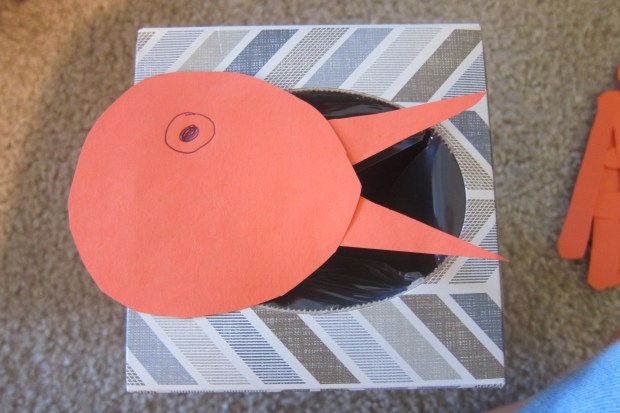
I promise this is going to be my last bird-themed post for the time being, after our Koala Crate sparked a whole host of ideas. I’ve been working with Travis lately on recognizing lower case letters, in addition to the upper case ones with which he’s become quite familiar. To make a game of it, we “fed” alphabet worms to a very hungry baby bird!

You’ll need an empty tissue box to put the game together. Either wait until you have an empty one lying around or… let your toddler have what I refer to as a “sacrificial” tissue box – the magic of watching your child play with the tissues as a special treat is worth the waste on rare occasions!
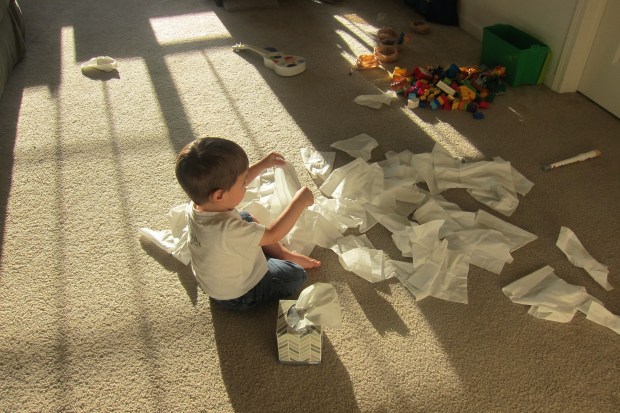
bird-alphabet-2

While Travis played, I cut out a circle and two triangles to be the bird’s head and beak, and 26 little strips of paper for “worms,” adding both the upper and lower case letter to each strip.
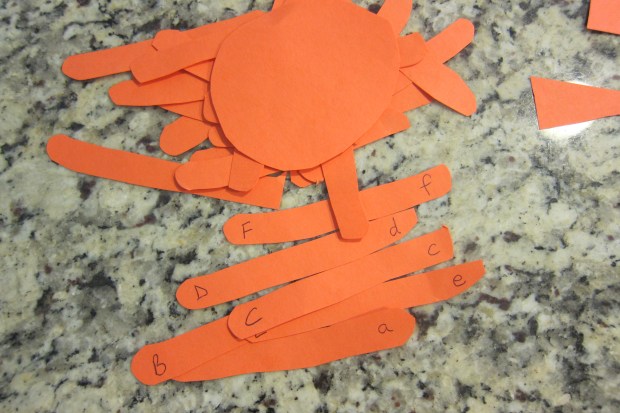
bird-alphabet-3

Once the bird was taped in place, I told Travis his baby bird was hungry. He’s familiar with the idea of baby birds eating worms from our summer balcony residents, so latched right on to the game. At first he was just stuffing in the worms, but he slowed down once I asked him which worm his bird was eating.
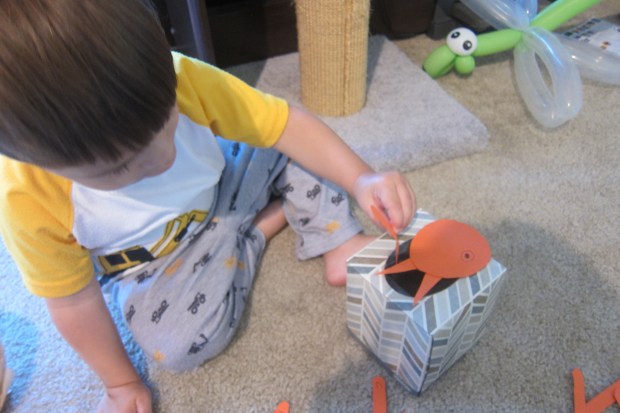
bird-alphabet-5

It dawned on him that each was labeled, and he was very excited to report what he found. “Big H and tiny h!” he would say, before adding to the box, and so on. He dumped out the box and played several more times before moving on to other toys, and also returned to it later in the day… a sure sign of success.
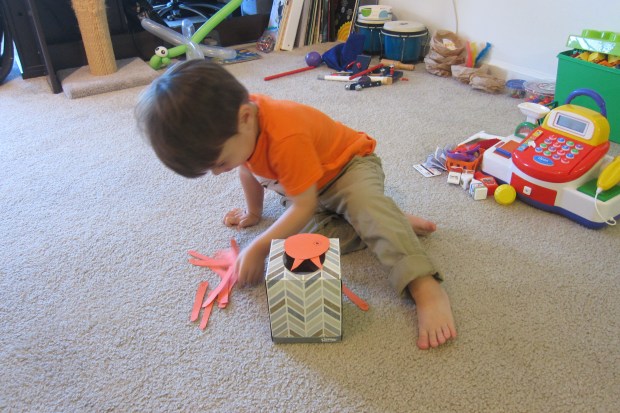
bird-alphabet-7

Bird Nest Counting

bird-nest-counting-3

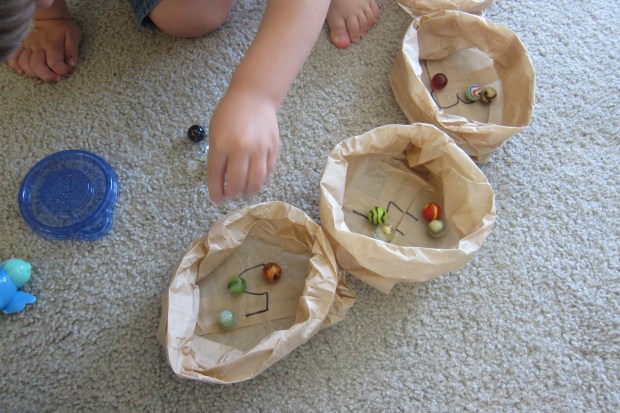
This little project was so charming. Rather than just teaching toddlers to count by rote, it’s a great way to teach the concept that each number is one greater than the number before.

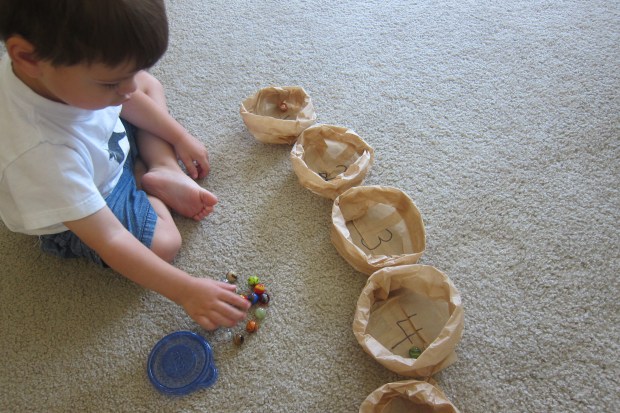
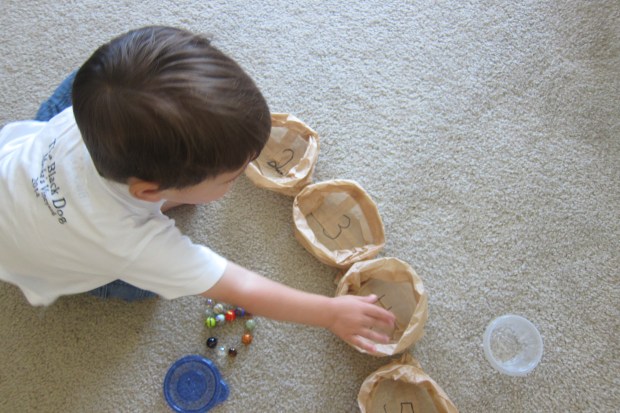
Roll brown paper snack bags over until you’ve made 5 (or more) little “nests.” Use a sharpie to number the nests 1 through 5 (go higher for preschoolers!). You can use whatever you like or have on hand as the eggs to fill your nests. We used marbles, because Travis loves to play with them, but because marbles are a choking hazard, please use judgment about your own child – pretty rocks or colorful pom poms would also make beautiful “eggs.”

bird-nest-counting-2

Now it’s time to fill each nest with the correct number of eggs! Travis gets a little fuzzy when filling containers as high as 4 and 5, but I could see his brain latching on to the concept that the nests with higher numbers required more marbles to be filled correctly.

bird-nest-counting-1

As soon as we finished, he said, “let’s do it again!” Dumping the marbles was half the fun, and we played several more times. A great little game with a nice educational component.

Numbered Stars Flashlight Game

numbered-stars-2

This whimsical game adds a touch of magic to your toddler’s bedtime routine, while sneaking in some early learning!

Cut stars from yellow construction paper and number from 1 to … however high you can get your child to count! I didn’t want to tax Travis all the way up to 20 soon before bed, so made stars as high as 12.

Once it’s dark enough, enlist your toddler to help hang the stars on the wall, then provide him or her with a flashlight.

numbered-stars-1

Now it’s time to hunt for the stars in sequential order. As he shined his flashlight on number 1, I would ask Travis, “What’s next?” and he eagerly began the hunt for 2, ad so on. Being able to pin a star in the spotlight was a thrill every time. Ok, so he didn’t always go in order, but he did always proudly read off the number he found.

numbered-stars-3

To add to the “star-lit” magic, we set up our little campfire (care of Koala Crate) and pretended we were really outside with the stars overhead.


Introducing Zero!

zero games (4)

Travis and I had some toddler math fun this week, playing with the concept of zero.

He’s familiar already with “empty” and “nothing,” thanks to the age-old trick of hiding an item in one hand but not the other, and having a child guess which hand is full. Whenever I reveal the empty hand, I’ll splay my fingers and say, “I’ve got nothing!” He cracks up every time.

So it only seemed a small step from there to introduce the concept that nothing is another way of saying zero. To play with the idea, we did a few easy games.

zero games (1)

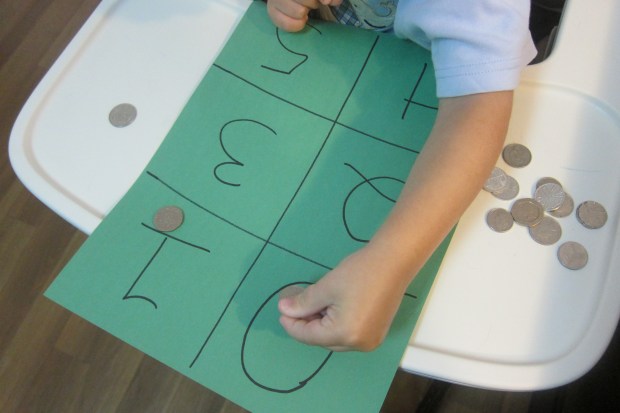
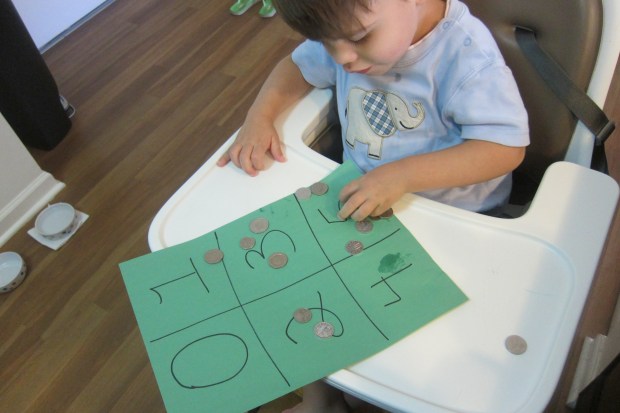
Label a piece of construction paper with 6 squares, numbered 0 to 5. Give your child pennies or other tokens, and see if he or she can put the correct number on each square. The 0 square should stay empty of course! Travis was great at leaving the zero blank, although his counting got creative on squares 4 and 5, still tougher concepts than 1 and 2!

zero games (2)

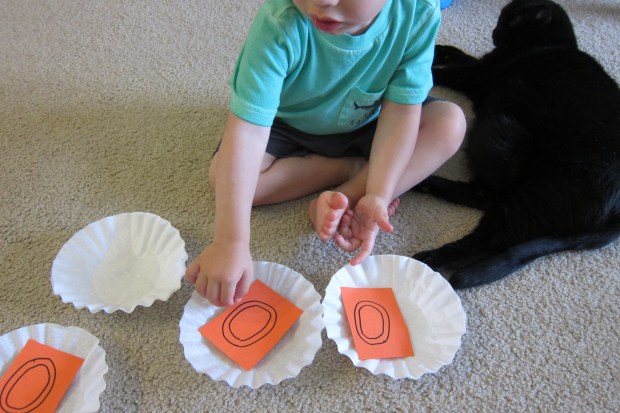
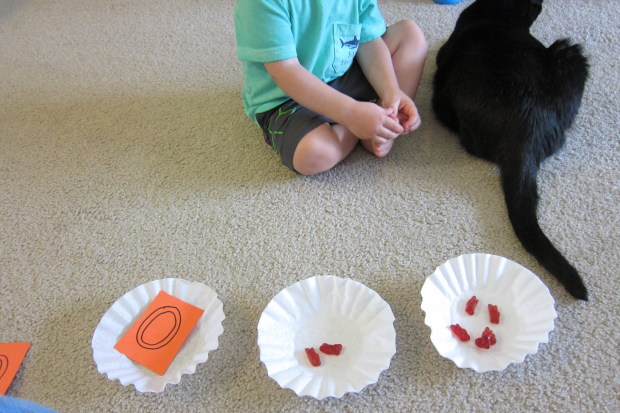
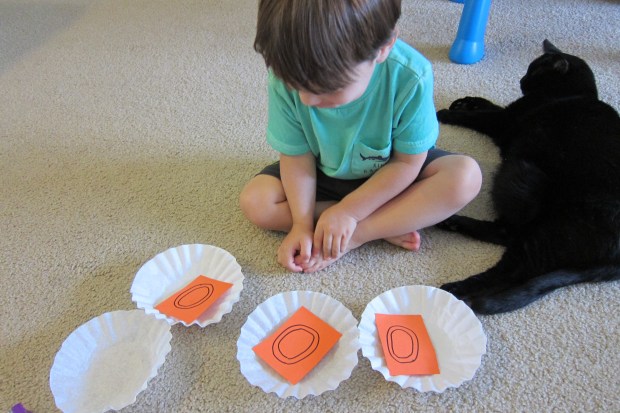
The second game involved eating Fruity Bunnies (no hardship there!) a favorite snack. Choose any treat or small candy that your child loves, and lay out 3 to 4 bowls, some filled with the snack, some without. Your toddler then gets to put a big 0 in the bowls that have no snack.

zero games (3)

As he continued eating, more and more bowls got a 0, making this a little introduction to the idea of subtraction, as well. Travis had so much fun laying down his orange 0 cards that he almost didn’t mind when the bunnies were gone!

zero games (5)

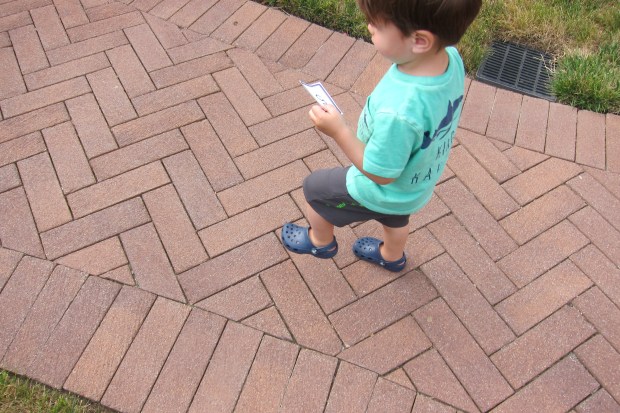
Finally, we played a game outside with cards numbered 0 to 5. If Travis drew a 5, he had to march 5 steps, and so on (his counting got a little creative here, too, of course!)

zero games (7)

But if he drew the 0, he had to… freeze! 0 steps. A cute movement-play way to introduce the idea of nothing.

zero games (8)

Roll and Color

Roll and Color (3)

I had so much fun with this little project because it counts as Travis’s first “board game.” Although he didn’t quite understand the full concept, it was a nice way to introduce him to multi-player games, and I look forward to playing it with him as he gets older.

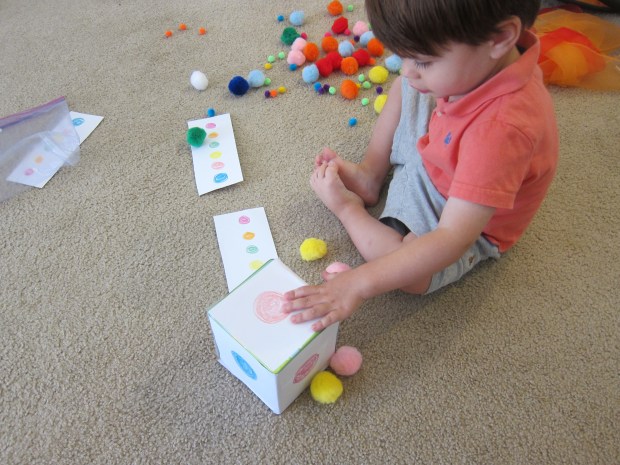
The big excitement for toddlers comes for the out-size die – made from an old tissue box! Cover the box with white paper, and color in one dot on each side, in 6 different colors.

Roll and Color (1)

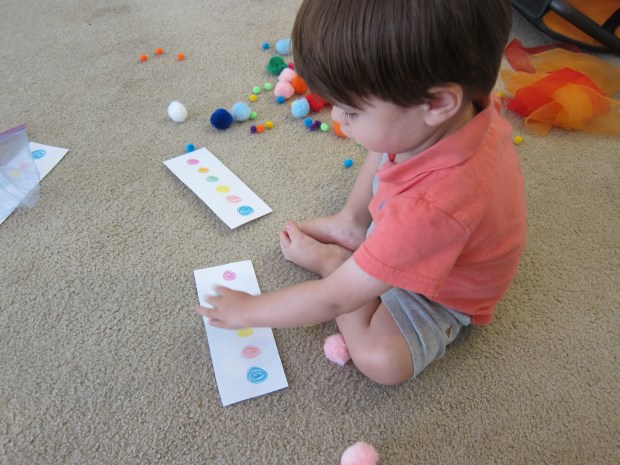
Mark those same 6 colors on strips of paper – these are each player’s “score cards.”

Now give that big die a toss!

Roll and Color (2)

When it lands, have your toddler tell you what color he or she sees, then select a matching pom pom. A roll of green, for example, means you can place one green pom pom on your score card. The first player to collect all the colors “wins.”

Roll and Color (4)

Of course, Travis and I played a modified version, rolling and selecting pom poms, but we didn’t keep score. As mentioned, though, I liked introducing the idea of a board game to him.

Roll and Color (5)

If you try this with a preschooler, I’d love to hear how the game goes in the comments!

Letter Find

Letter Find (1)

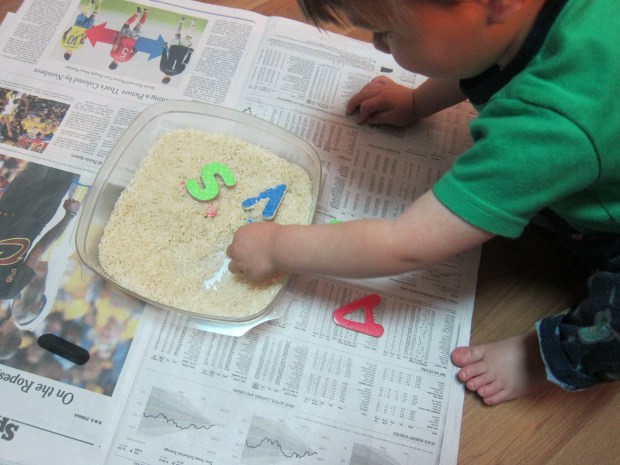
The rice in our rain stick project this morning reminded me of a game I’ve played with Travis a few times before, one that’s well worth setting up again! Your child will absolutely love the tactile play with dry rice; meanwhile you’ll sneak in a little early learning with letter and word recognition.

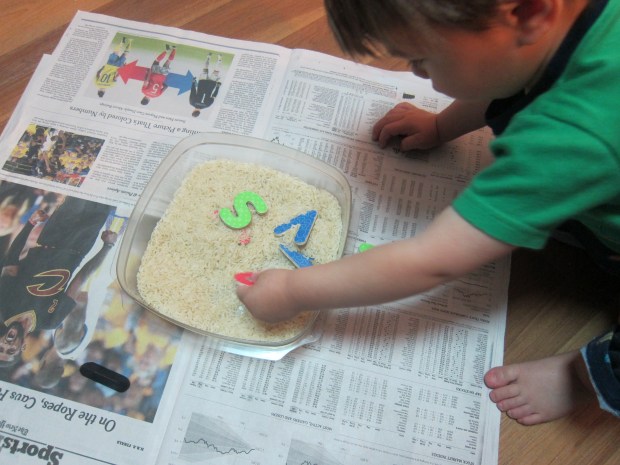
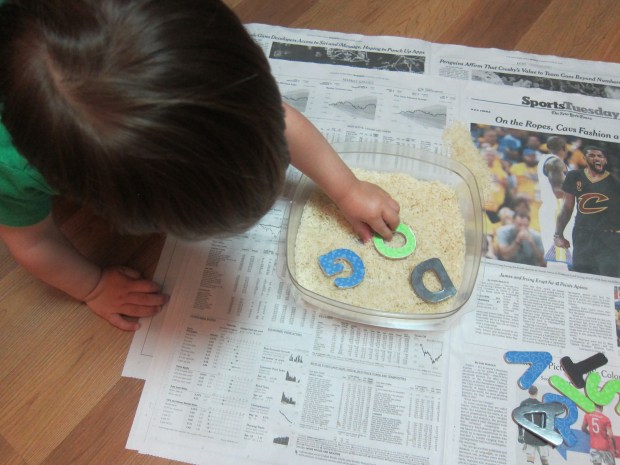
Bury alphabet magnets in the rice and have your child dig through and discover which letters are “hiding.” A great first word to play with is his or her name. Travis correctly identified all the letters, and when I placed them in order, he was able to tell me it said Travis.

Letter Find (4)

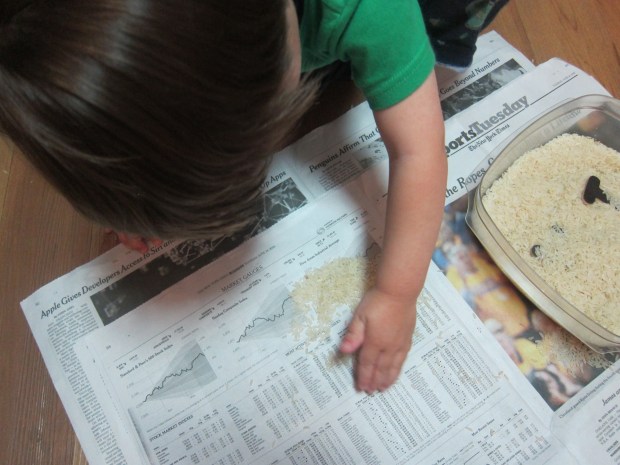
We played with a few other simple words as well, like DOG and CAT, but after that Travis was more interested in pouring handfuls of rice in and out of the tupperware container. Fine by me, except that I didn’t want rice all over the kitchen floor!

Letter Find (2)

It turned into a great reminder of why I love signing with Travis. I pointed out that rice on the floor was a “no” and rice on the newspaper was a “yes,” saying and signing the words. He quickly latched on to the concept, and we had much easier clean-up that way!

Letter Find (3)

Hey Diddle Diddle

Hey Diddle Diddle (5)

Travis and I are having a bit of a moon-themed week, so the popular nursery rhyme “Hey Diddle Diddle” has been forefront in my mind. This game is a fun way to introduce not only the lyrics to this childhood favorite, but also to teach about spatial concepts. In case you need a parental brush-up, the words are as follows:

Hey Diddle Diddle, the cat and the fiddle

The cow jumped over the moon.

The little dog laughed to see such sport

And the dish ran away with the spoon.

Tape a picture of the moon to a piece of construction paper or poster board and present to your little one, along with a cut-out of a cow. You can then ask your child if they’ve ever really seen a cow jumping over the moon. Travis took right to the game, moving his cut-out cow above the moon on the paper.

I turned it into a bit of a quiz, which he proceeded to ace! Could he put the cow under the moon? Yup!

Hey Diddle Diddle (3)

Next to the moon? Yup! I found it very interesting that when I asked for the cow “over the moon” a second time, he covered the moon like it was peek-a-boo instead of putting the cow above the moon, as my adult brain would have.

Hey Diddle Diddle (2)

We then got a little silly, having the cow “dance” next to the moon and “jump” across the paper.

Hey Diddle Diddle (4)

To continue the fun, I taped our moon picture to the wall and put the cow on a popsicle stick, so Travis could return to the game a few times over the course of the afternoon.

Hey Diddle Diddle (6)

You can also act out the riddle in 3-D by having your child jump a stuffed toy cow over a ball to represent the moon.

Can you think of fun ways to act out the remaining lines of the nursery rhyme? Please share ideas in the comments!