
This activity is somewhat of a repeat from when Travis created his own board game in preschool. But now that he’s older, we delved much more deeply not only into how to design a game from start to finish, but also talked about what made a game successful!
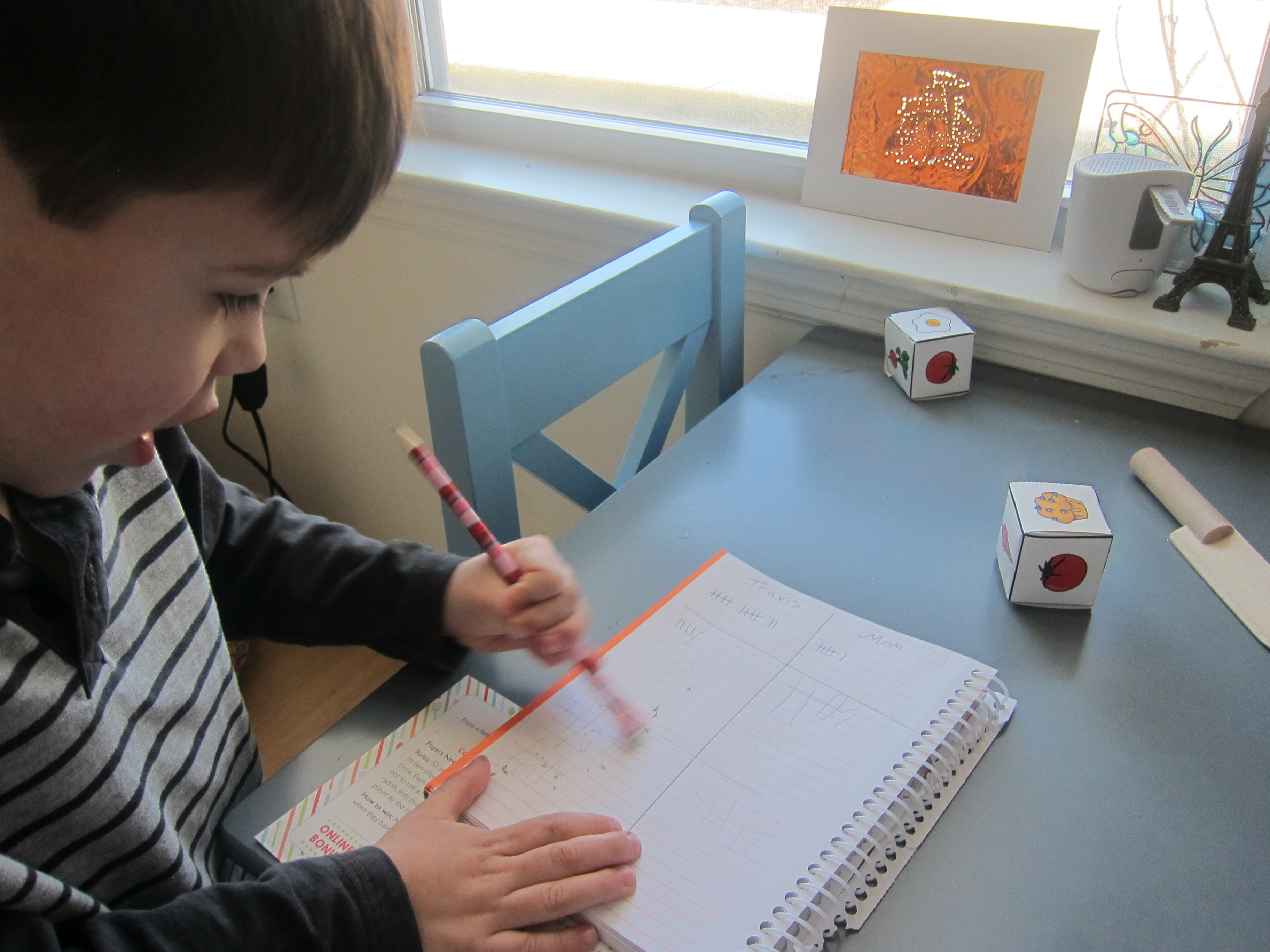
To start, we explored two classic games. First up was Dominoes, playing a round with the set we have at home. I had never actually read the real rules before, and when we looked them up online, they were so convoluted I confess even I didn’t quite understand! That was a good jumping off point to talk about what made a game fun and/or challenging.

Next, Travis listened to a read-through of Jumanji, which is a fantastical game of course but a great way to talk about the rules, including what was similar to real-life games, and what was different. (Note: We also watched the movie, but there are scenes that are quite intense and I don’t recommend it for young children).

After all that, it was time to design his own game! Raddish Kids had a lesson plan including an Inventor Inspiration Guide to help kids decide what to base their game around. This involved a ranking system based on likes (food, hobbies, favorite shows or books), but this was all too complicated for my first grader. Travis knew what he wanted to base his game around anyway: Star Wars!
We quickly came up with a game called ‘Race to the Death Star’. The shape of this iconic Star Wars base helped us decide how to configure the game, as a spiral of galaxies closing in on the Dearth Star in the center.

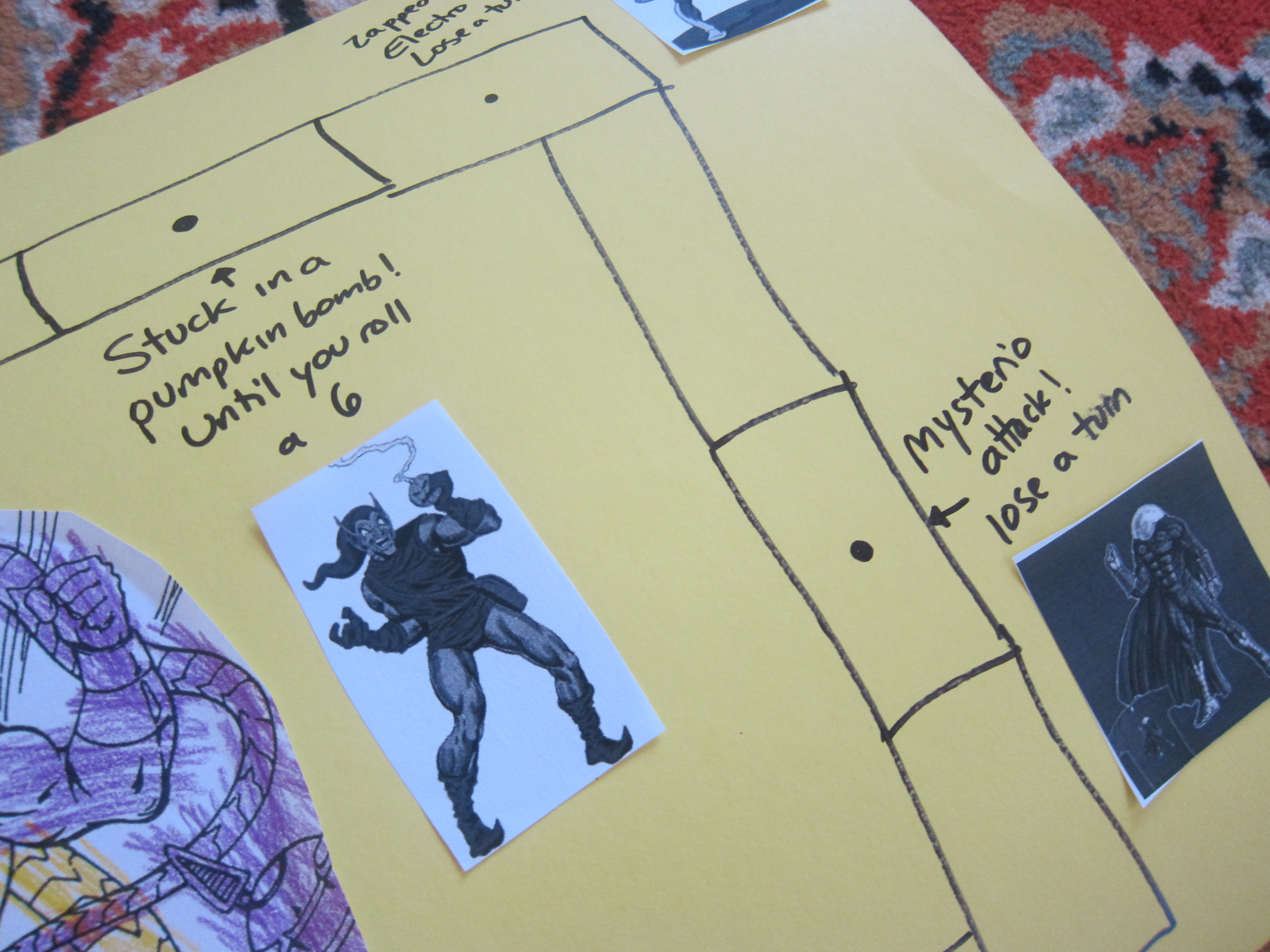
I started gluing down squares of construction paper as the spaces on a large sheet of poster board, and we filled in the ideas as they came to us. Spaces contained events with either a boon (letting the player move forward) or a set-back (which required moving backwards). If a player landed on top of another player, that person had to wait in one of the corner planets until rolling the correct number on the dice.

To make it through “hyperspace” between galaxies required an exact roll. All in all, it actually made for a great board game! Travis loved it so much that we immediately played 3 rounds. He decided on Lego figures as our playing pieces.

As a final component of learning, we explored games that can be played virtually. Travis watched a suggested link of 20 games to play over Zoom, and then we really did Zoom his grandmother to play ‘Zoomed In’ (a game involving close-up images that players take turns guessing). This was such a neat bonding activity and the full video is worth a watch if your kids are currently Zooming relatives and friends.
There was lots more in the lesson plan from Raddish Kids, including suggestions to reinvent an old game with new rules, explore the idea of interactive books like Press Here, or learn the history of a classic board game. But my first grader was gamed out, so we’ll just be here busy playing ‘Race to the Death Star’!





 joyful parenting