Build a Cool House

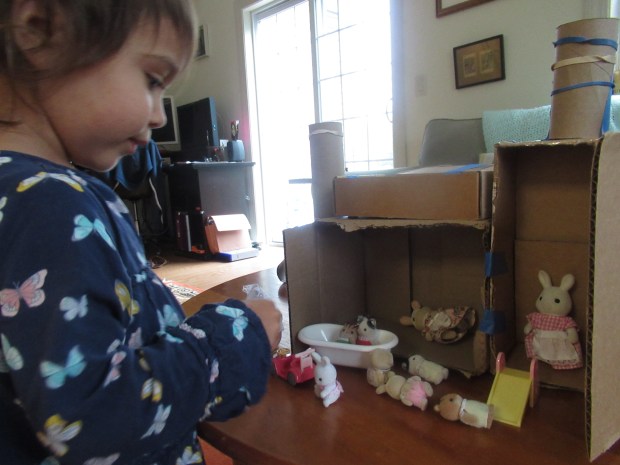
This prompt from Parents magazine was the perfect project for a rainy summer day! We raided the craft bin to build a house. What kind of house you ask? It can be made of anything and for any toys your kids desire. To wit, my toddler loved it for her Calico Critters, and my son loved it as a Lego fortress!

To start, I pulled out a bunch of old delivery boxes in various sizes, as well as other building materials like empty cardboard tubes, craft sticks, pipe cleaners, masking tape, and rubber bands.

To start, we taped a few of the boxes together in a configuration that took shape piece by piece. Older kids can design their own layout. With two-year-old Veronika as the guide, I taped things together according to how she wanted it.

She loved “helping” as we added towers and turrets from the paper towel tubes and toilet paper tubes. There was a even a secret room around back.

A few craft sticks taped together made neat fences.

At this stage Veronika used it as a house for little cats and bunnies. We added some of her toy furniture inside, and it kept her so busy and playful!

Later when big brother Travis got home, he immediately wanted to tape on a few extra towers. He also used the pipe cleaners for decoration. Pom poms, paint, and anything else that strikes your kids’ fancy can be added as embellishments, too!

Needless to say it was soon a fortress for his Lego figures.

Let your children’s imaginations take the lead on this one, because it’s the perfect project for open-ended play.
Upside-Down Water

Yes you can turn a cup of water upside down without spilling it! This nifty “magic” trick is sure to wow family and friends, and can be done with no fancy materials or supplies.

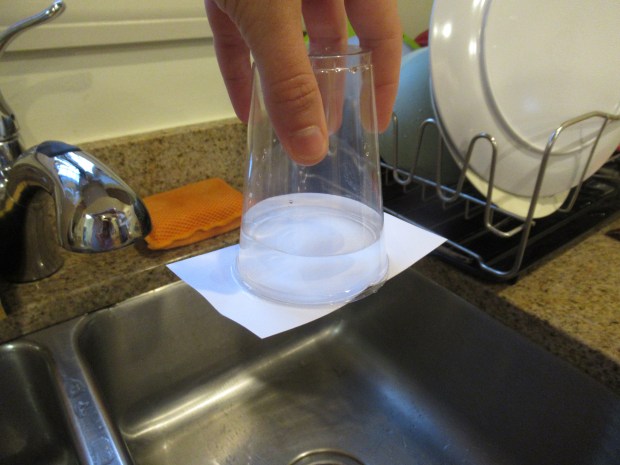
To start, fill a small plastic cup about half way with water. Place an index card on top.

Flip the cup over with your hand firmly holding the index card in place (it’s okay if a little water spills out), and make sure the index card is saturated.

Slowly remove your hand and… the index card sticks, without the water pouring out. There’s definite wow factor here, but it’s all thanks to the simple fact that water molecules like to stick together. Air can’t get in the cup as a result, equalizing the pressure, so the heavy water doesn’t pour down.

Travis also got a kick out of the way the index card pops off if you squeeze the cup even slightly, breaking the bonds of those sticky water molecules.

Want more cool water tricks this summer? Check out our old fun poking holes in plastic bottles, or playing with sticky string!

Flying Sheet of Paper

The next time you plan to make paper airplanes with the kids, throw in this little STEM exercise, first!

The idea is to hold a piece of paper (loosely from the top two corners) at about level with your chin, curling the paper slightly toward you at the top. Then blow down as hard as you can. Before we actually did the exercise, I challenged Travis to write down his hypothesis (fancy word!): Would his breath blow the paper down toward his chest, or up toward his nose?

His guess, surprising me because it is counter to logic, was… Up!

Well, it turns out he was right ,and the answer is thanks to some neat science. When the molecules above the paper move faster from your breath, the air pressure is becomes lower. That means the higher pressure air under the paper pushes it upward. So the paper billows up instead of down!

The same principal can be applied to the wing of an airplane, hence all this science before we got around to making our paper planes. Of course the next thing we did was to fold up lots of paper planes to soar all around the house!

My Tree Journal

Today, Travis embarked on a project that will actually be a year-long process: To find a tree to follow and document the changes and differences across the seasons. This beautiful project truly teaches children to feel the wonder of nature, connect with a living natural thing, and become observant little scientists!

It all started with a picnic lunch at our local arboretum. I let Travis lead the way to the tree he deemed worthy of our picnic in the shade, and that sealed the deal of which tree he’d be observing.

The next step was to check out the label under the tree; he’d chosen a sweet cherry! This was exciting, since not as familiar to him as a maple or oak. If you’re not at an arboretum with labeled signs, consider taking along a nature guide or check out websites to identify your child’s tree.

He immediately decided the tree’s name was Chersie and drew Chersie’s picture on the front of his journal. We also made sure to snap the first of what would be our seasonal pics, in this case Chersie verdantly green in summer.

Travis went over to the tree with wonder. “It spoke to me!” he said. I asked him what the tree had told him. “It said, ‘I love you’,” he reported seriously. My tree whisperer! We marveled at how the bark was rough in patches, but smooth in others, and at all the bugs that were making Chersie their home. Travis said he missed the tree already on the drive home.

Once home, we printed the Summer photo using our Zink printer, which he then glued into the tree journal.

I will update this post with pictures from the fall, winter, and spring, so stay tuned!

Stop and Eat the Flowers

This adorable idea from Highlights is one of those times when it’s perfectly okay to let the kids play with their food.

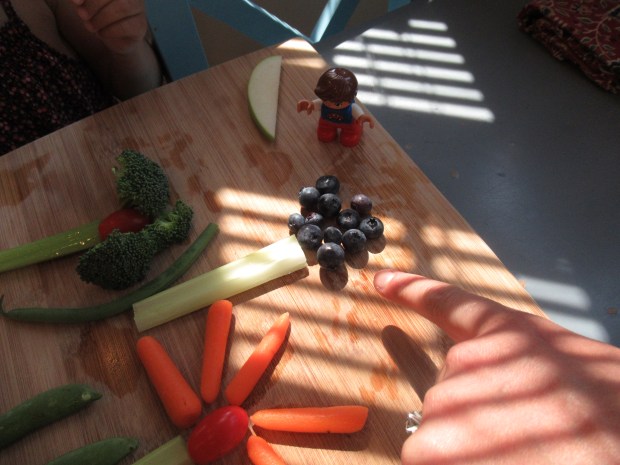
Just before Travis got home from school, I prepped a big platter of veggies and fruits that could be used to make a veggie “garden”. This can include almost anything, but we used an assortment of:

Celery

Snap peas

Cherry tomatoes

Baby carrots

Green beans

Broccoli

Green apple

Blueberries

I set out the plate, along with a cutting board for a “canvas”, and invited Travis to form the items into flowers.

There was so much room for variety here! The long green shapes like celery and green beans were perfect for flower stems. The slightly shorter snap peas could be grass.

Rounder shapes (cherry tomatoes, blueberries) worked nicely as the center of flowers, and we played around with ideas for petals, such as baby carrots or fuzzy broccoli trees.

This “flower” with a cluster of blueberries made me think of delphiniums!

Be careful though, because you’ll probably have garden “pests” who gobble up the flowers only moments after they’ve bloomed.

Little Passports: Antarctica

LP Antarctica (3)

Travis’s package this month from Little Passports was a bit different, in that it featured a whole continent (Antarctica!) instead of a country. We knew we were in for an icy good time.

LP Antarctica (2)

Needless to say, this one was easy to spot on the map! The booklet included information on the southern lights, Edward Shackleton’s failed venture to the South Pole, and more, making for a nice mix of STEM and historical information. All of the activities were at the right skill level for my 6 year old.

Souvenir:

It’s not Antarctica without penguins, and that’s precisely what the kit included: a little stuffed penguin that immediately needed to be hugged and cuddled. Little sister Veronika was smitten, too!

LP Antarctica (4)

Further Activities:

Unfortunately, there weren’t any other suggested activities, either online or in the booklet. So we decided to make a cute sensory tray for plastic penguins and orca whales with salt and ice.

LP Antarctica (6)

I thought it might be fun to “learn” more about Antarctica through penguin movies, too, though given the choice of Happy Feet and Penguins of Madagascar, it’s unclear how much learning happened. Still, rain outside was a good excuse for a cozy movie day!

LP Antarctica (5)

Recipe:

Finally, we ate just like explorers, thanks to the provided recipe for Sledging (sledding) Biscuits.

Sledging Biscuit (2)Ingredients:

  • 1 cup flour
  • 1/2 teaspoon baking soda
  • 1/2 teaspoon salt
  • 2 tablespoons Earth Balance butter
  • 1/4 cup cold water
  1. Combine the flour, baking soda, and salt in a bowl. Add the butter and use your fingers to mix until the mixture is like coarse crumbs.
  2. Slowly add the cold water, then knead with your hands until the dough comes together. It’s soft and springy, and wonderfully workable!
  3. Roll the dough out into a 1/4-inch thick rectangle, then cut into 6 smaller pieces. Place on a baking sheet and prick each cracker several times with a fork. Bake at 375 degrees F for 15 minutes.

You can serve these plain, but the kids loved them with extra Earth Balance butter on top! To finish our make-believe trek as arctic explorers, we noshed on some vegan jerky with the biscuits, too.

Moon Journal

The last time Travis made a moon journal, he was still in preschool, meaning I was in charge of the drawings, and he was mostly along for the ride! As a first grader, this time he was in charge of the project from start to finish, not only enjoying the art aspect, but understanding on a deeper level, too.

We started when the moon was a waxing quarter, Travis eagerly peered out the window at the night sky and chose his colors carefully before proudly presented his first drawing. Don’t forget to add the date!

Each successive night for a week, we checked on the moon just before bed. Travis took careful stock of how the moon had changed since the night before: the first night a thumbnail, the second night bigger but not quite half, and so on. He also marveled at how the position in the sky changed (by the end of the journal, he had to switch windows!)

Aside from frustration one night about cloudy skies, he loved the process.

We ended when the moon was just shy of full, and he proudly made a giant yellow circle.

This is a great way for kids to observe so much about how the moon changes, not just its size and shape, but also where it is in the sky, what time it appears, and more.

Sunny-Day Clay

We’ve made homemade playdough before, but haven’t ever tried our hand at homemade clay! This version comes together fairly easily and has a fantastic texture.

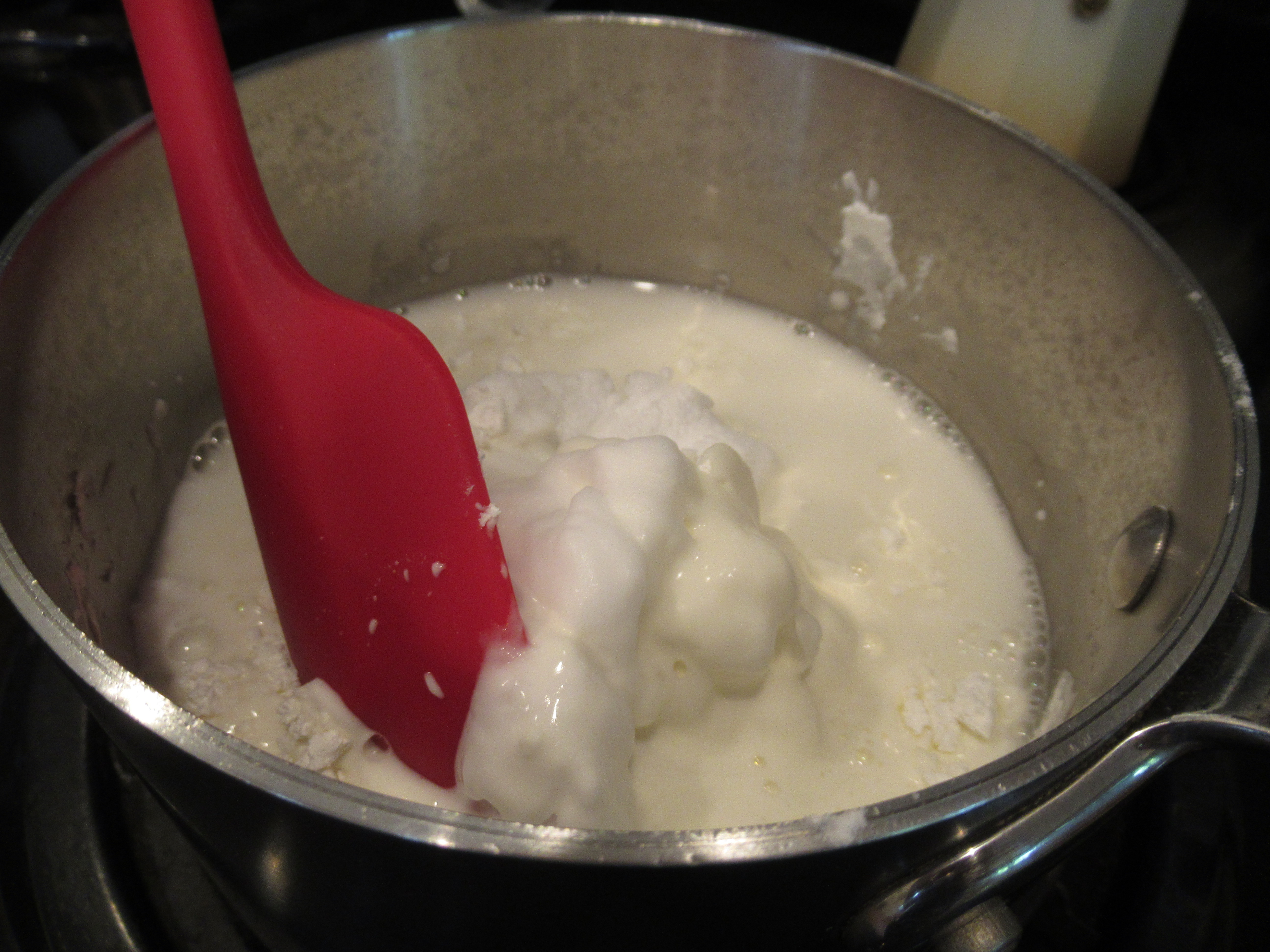
To start, have your kids squeeze in some quick math by helping measure out 2 cups baking soda, 1 cup cornstarch, and 1 and 1/4 cups water into a saucepan.

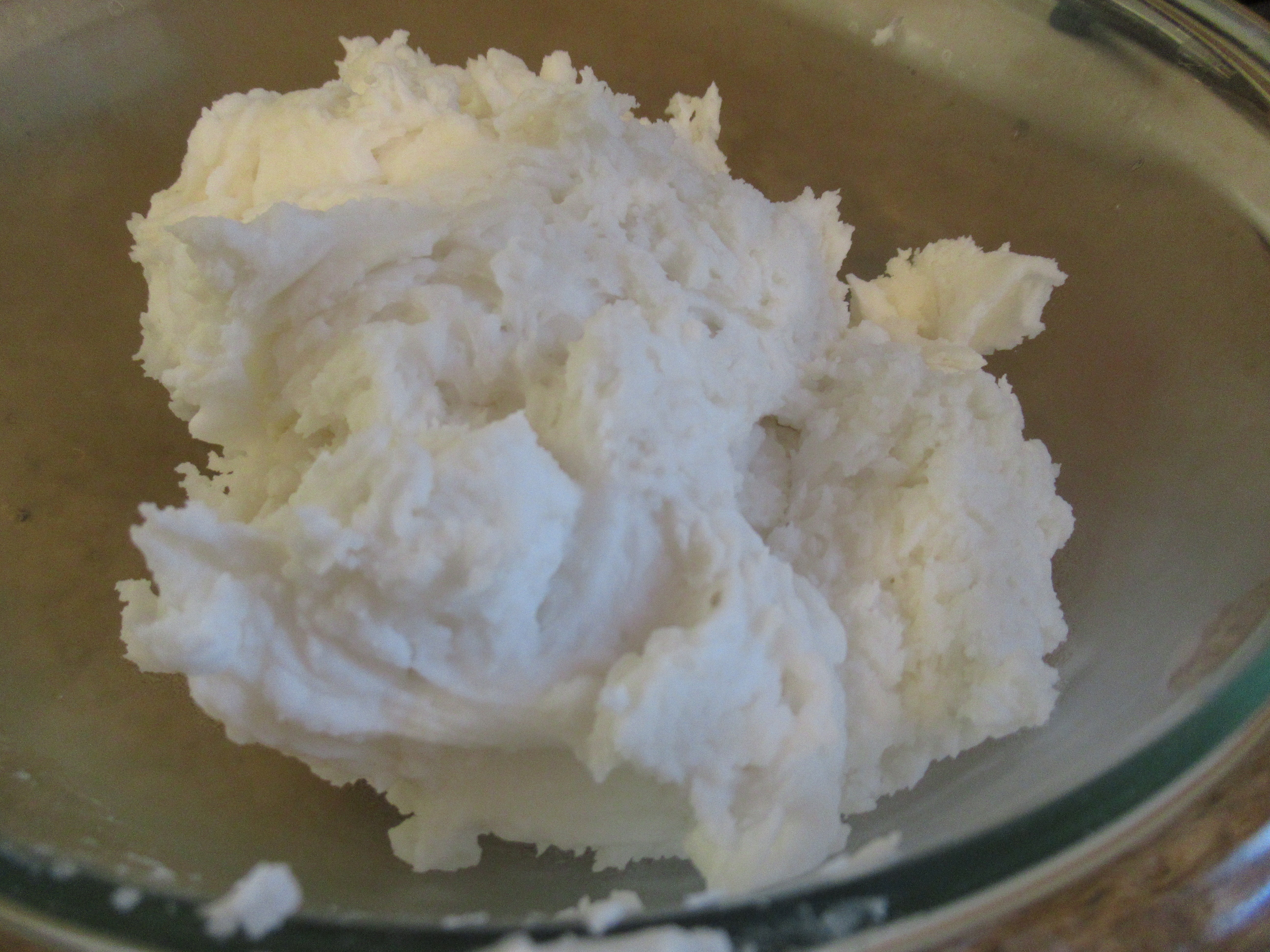
Cook the mixture over medium heat for about 5 to 10 minutes. By the end, it should pull away from the sides of the pan and look almost like mashed potatoes. Let cool completely.

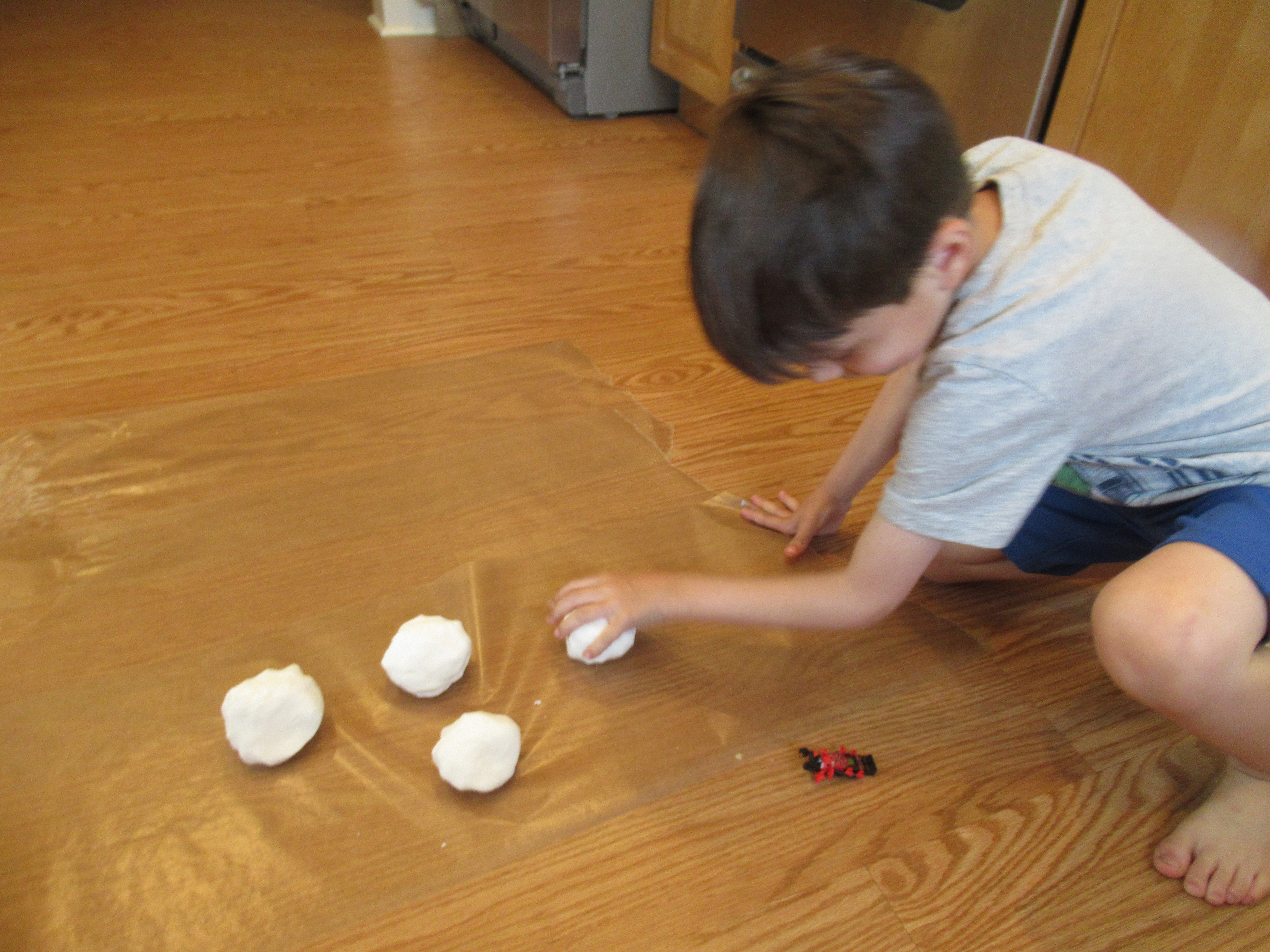
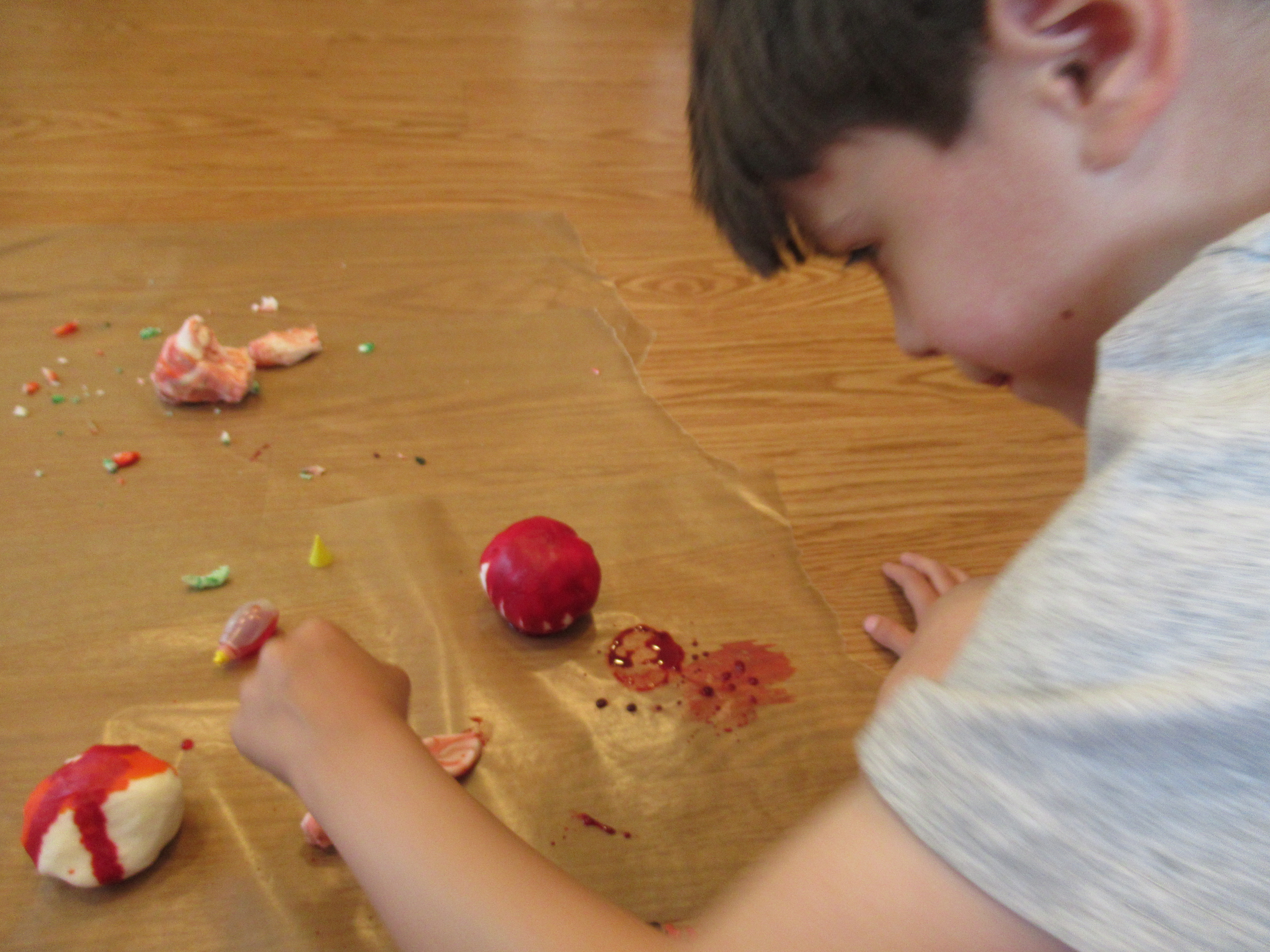
We divided the clay into 4 portions, with the intention of adding a different color to each portion before starting to roll out sculptures.

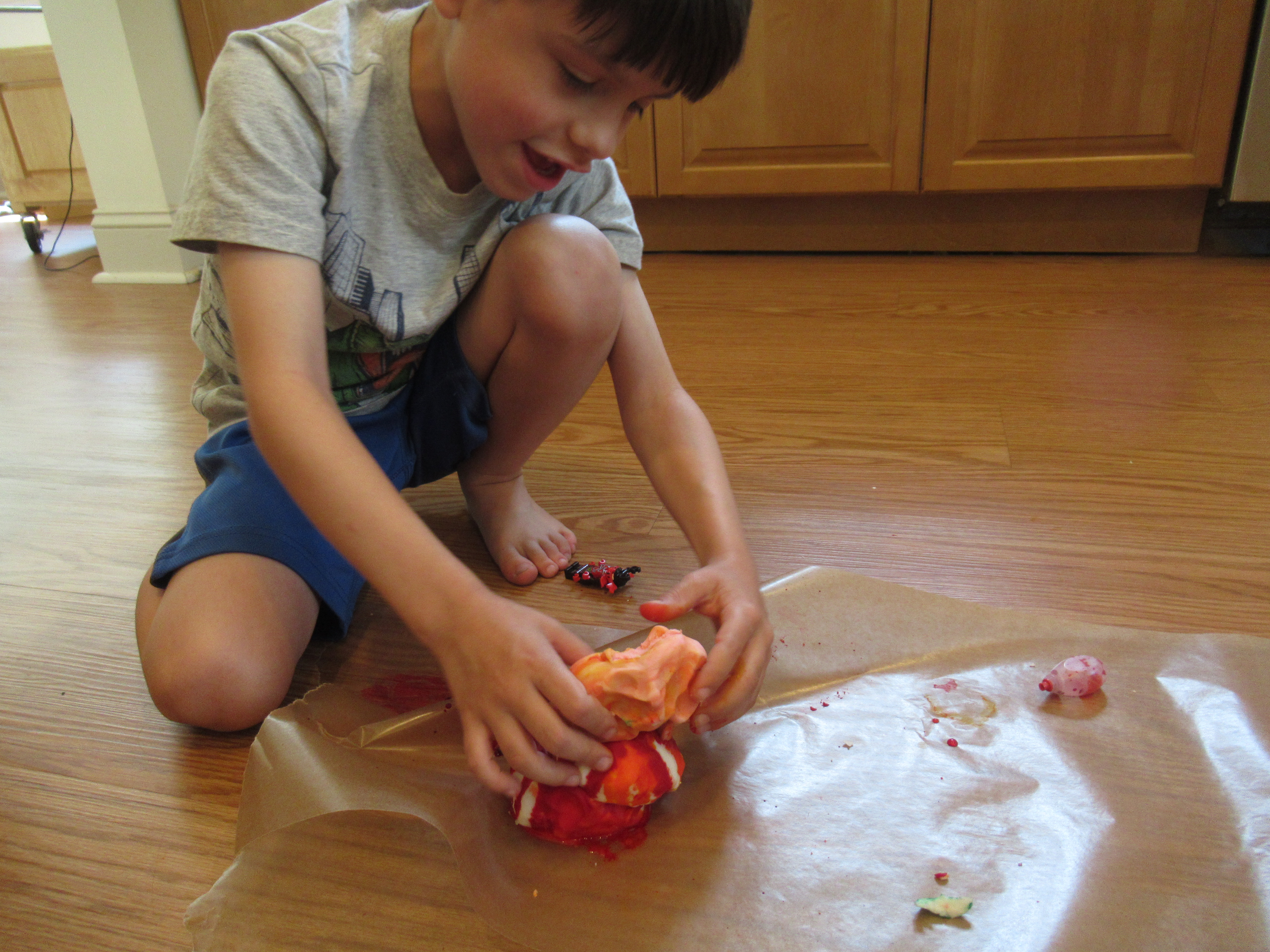
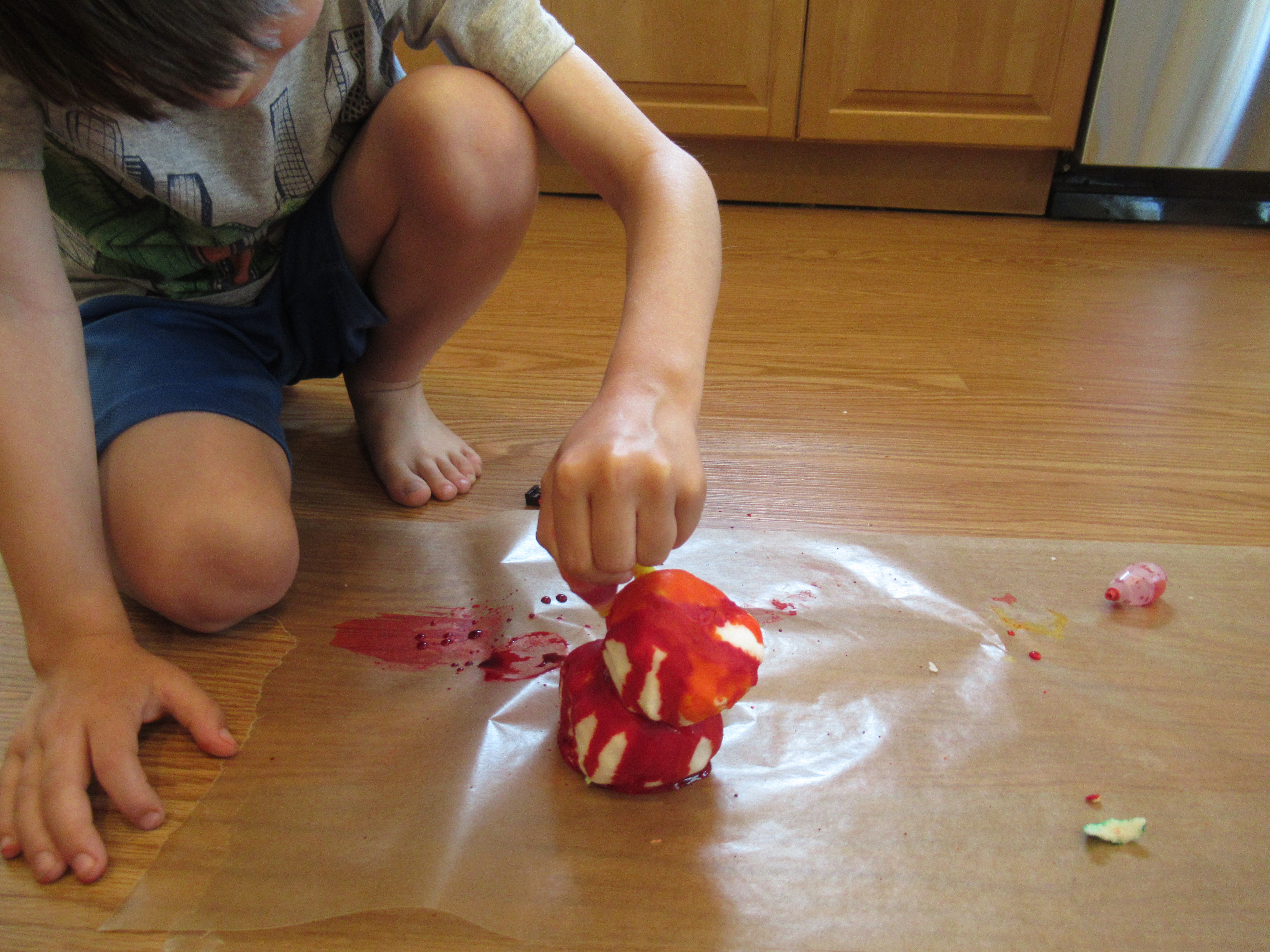
Travis thought it was much more fantastic fun to squeeze tons of food coloring onto the white clay, however, which meant soon we had a goopy mess!

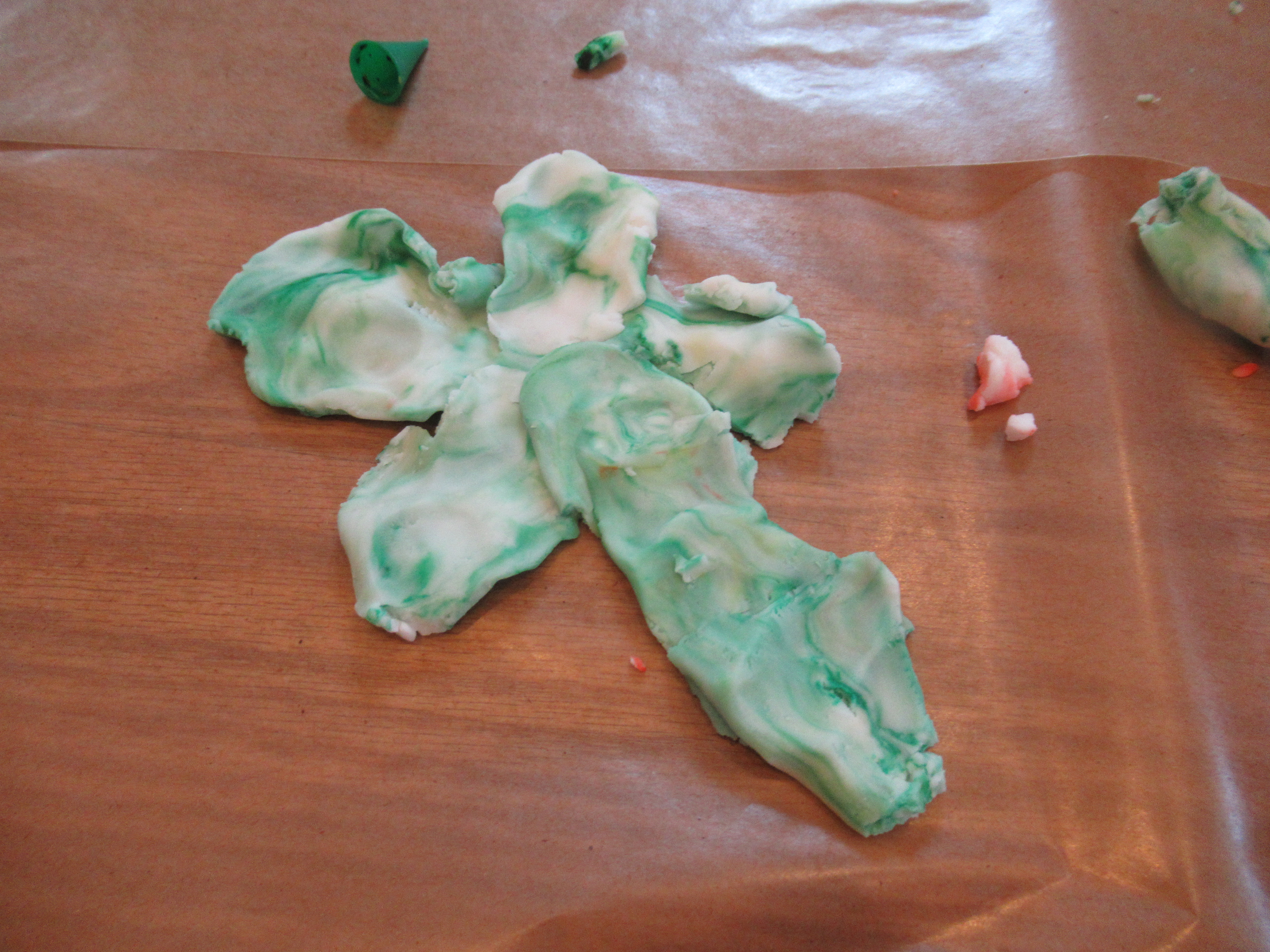
There was a brief moment where the subtle color in the clay was just right…

(I managed to snap a quick pick of this shamrock)

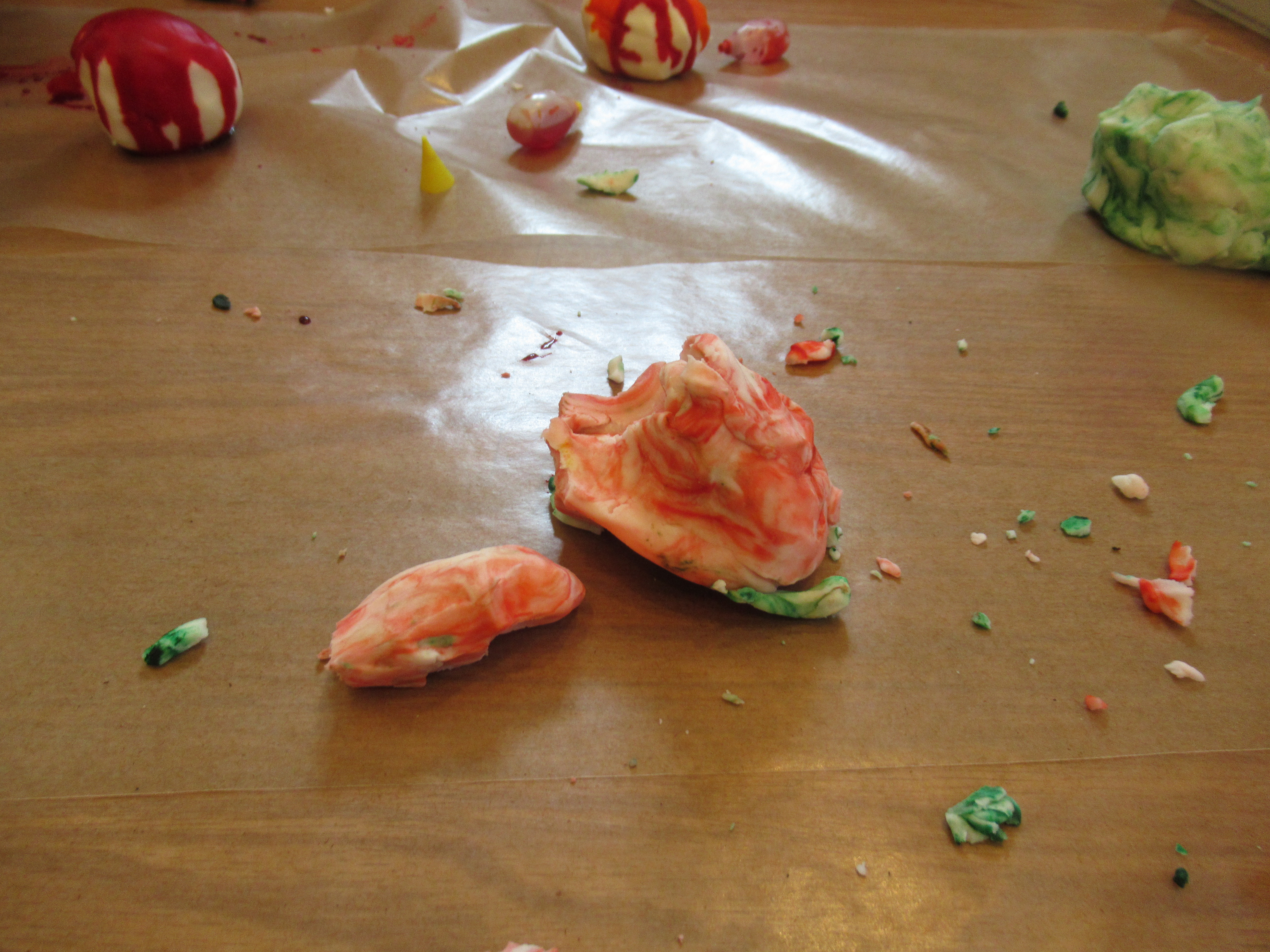
…before there was so much food coloring that the clay became a squishy mess. This thrilled Travis of course, but for actual sculpting and building purposes, I rather wish we’d left it white!

As a side note, the texture of this homemade clay is wonderful. I find that store-bought clay has a tacky feeling and sticky residue, whereas this was silky smooth.

Sprout Some Beans

Sprout Some Seeds (5)

Spring is the classic time of year when elementary school kids learn about gardening, parts of the plant, and the process behind sprouting seeds. Although we’ve planted seeds in the past, Travis and I tested out a step-by-step method this year for a scientific spin on the activity.

To start, soak kidney beans in a cup of warm water for about 3 hours. Drain.

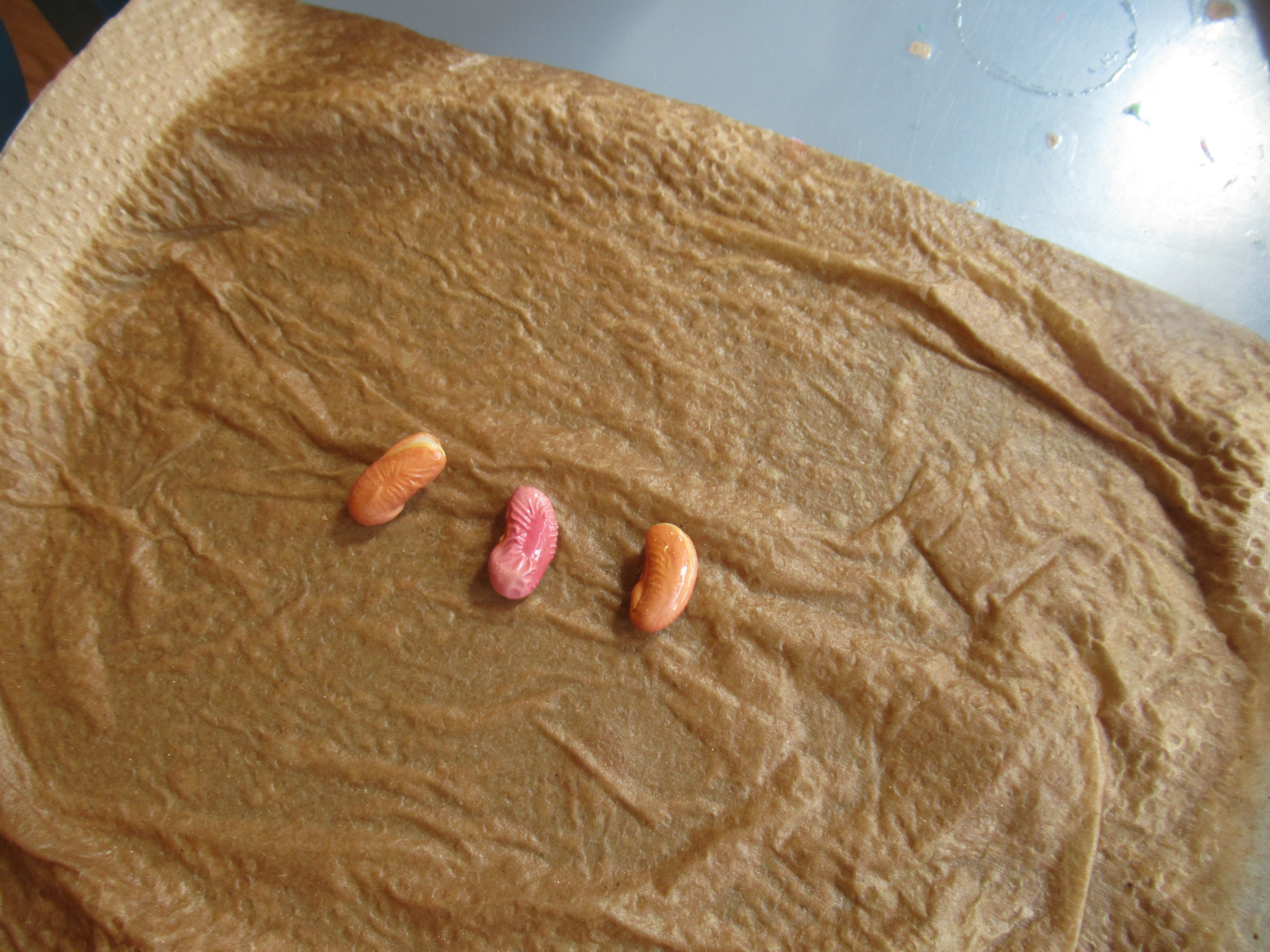
Travis selected a few of the beans to place on a wet paper towel. Fold the towel up over the beans, then place inside a zip-top plastic bag and seal. We set this inside a cabinet for 2 days. (Note: Any similar warm dark place will work fine).

Sprout Some Seeds (1)

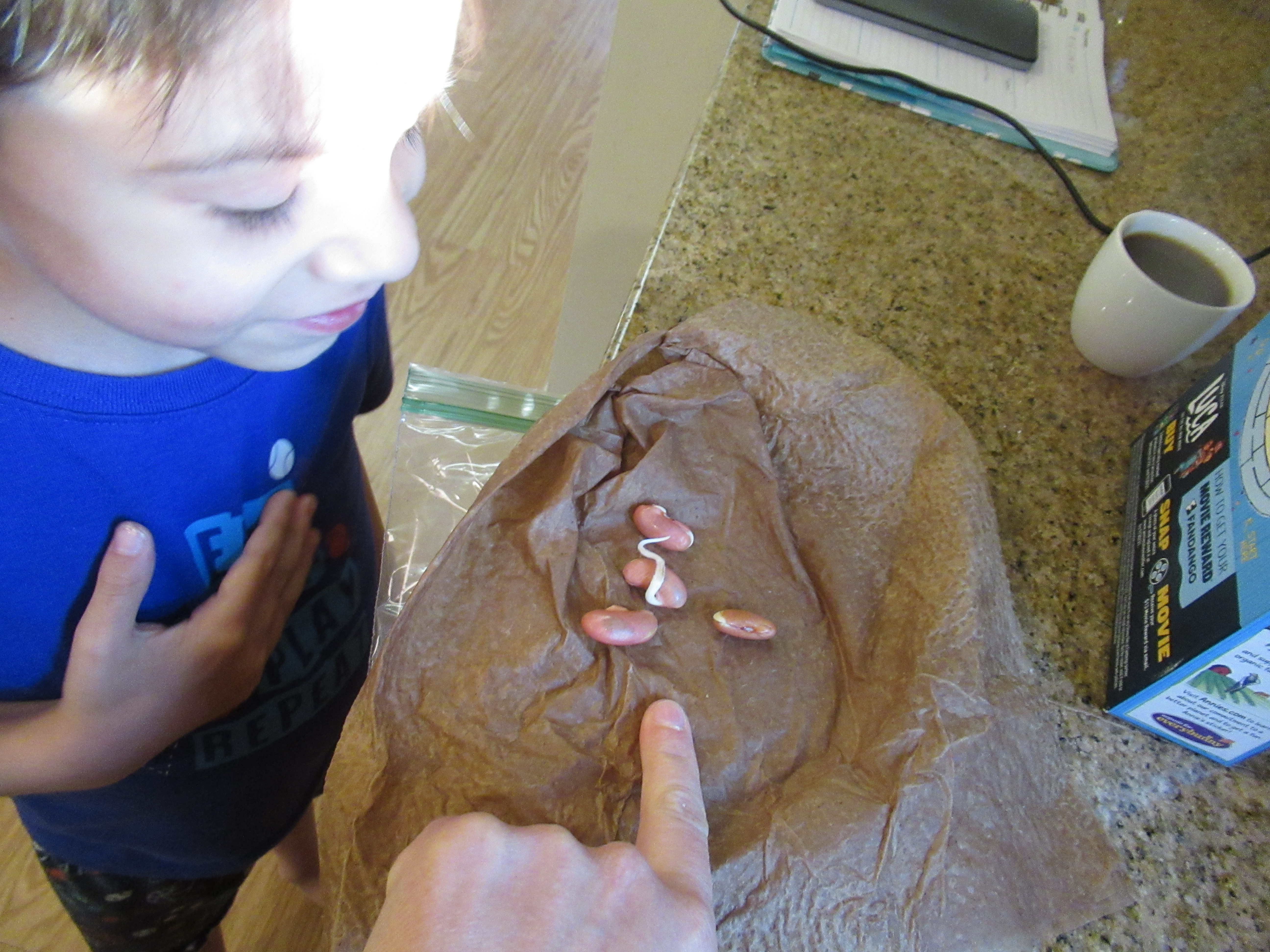
Two days later, we checked to see if the roots had started to grow.

Sprout Some Seeds (3)

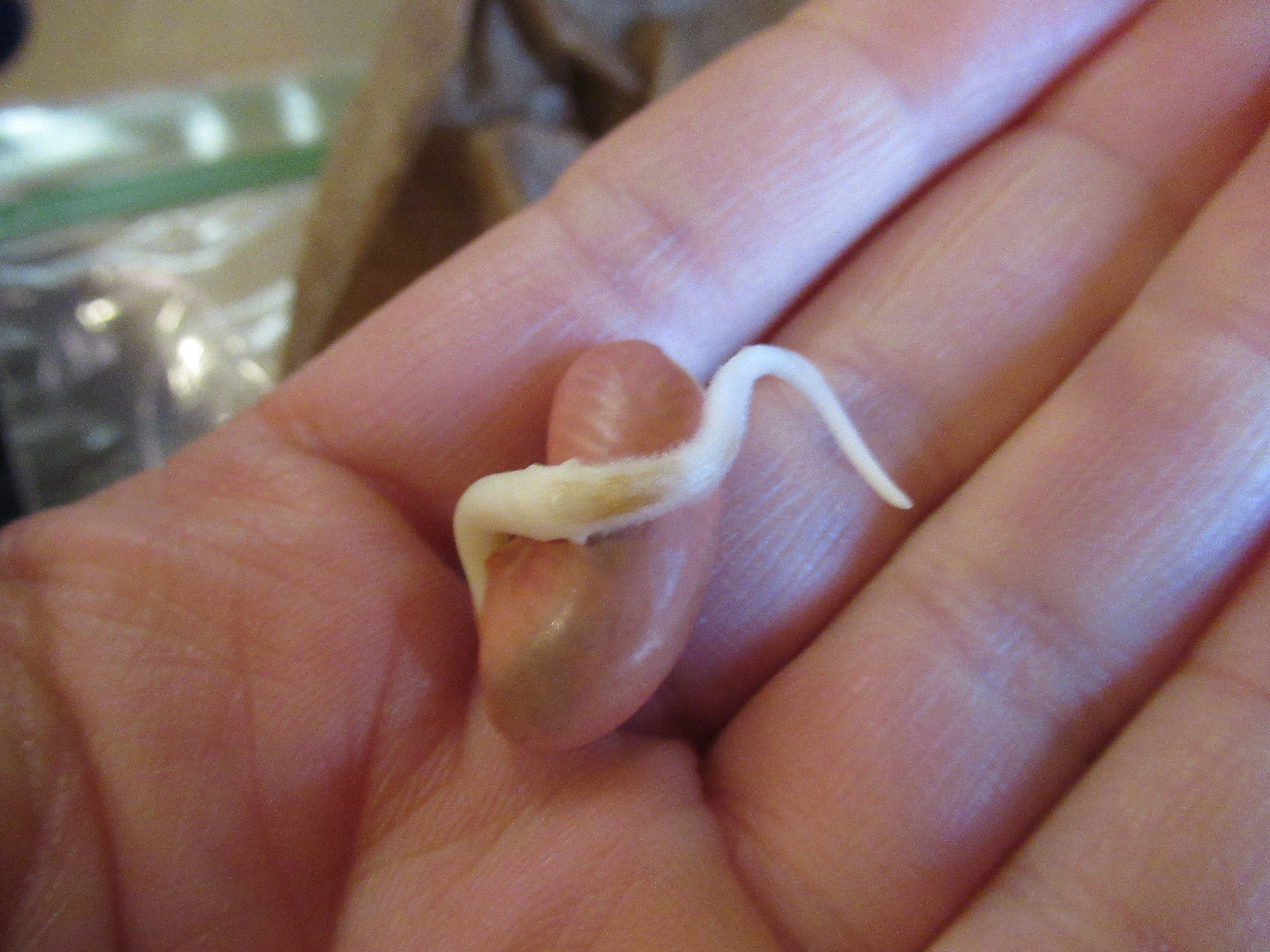
They sure had! Travis was amazed at the curly root we could see coming from each bean.

Sprout Some Seeds (4)

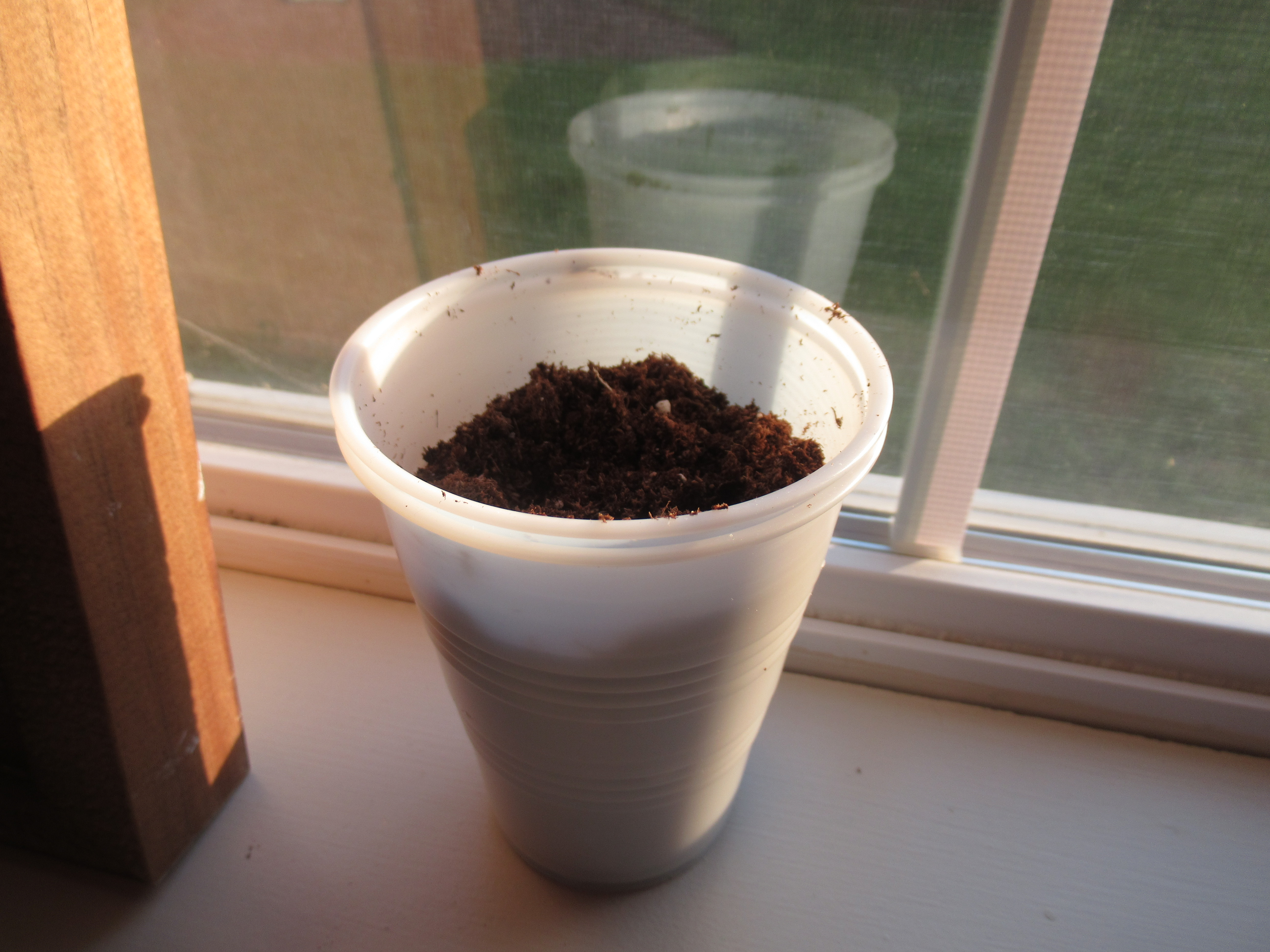
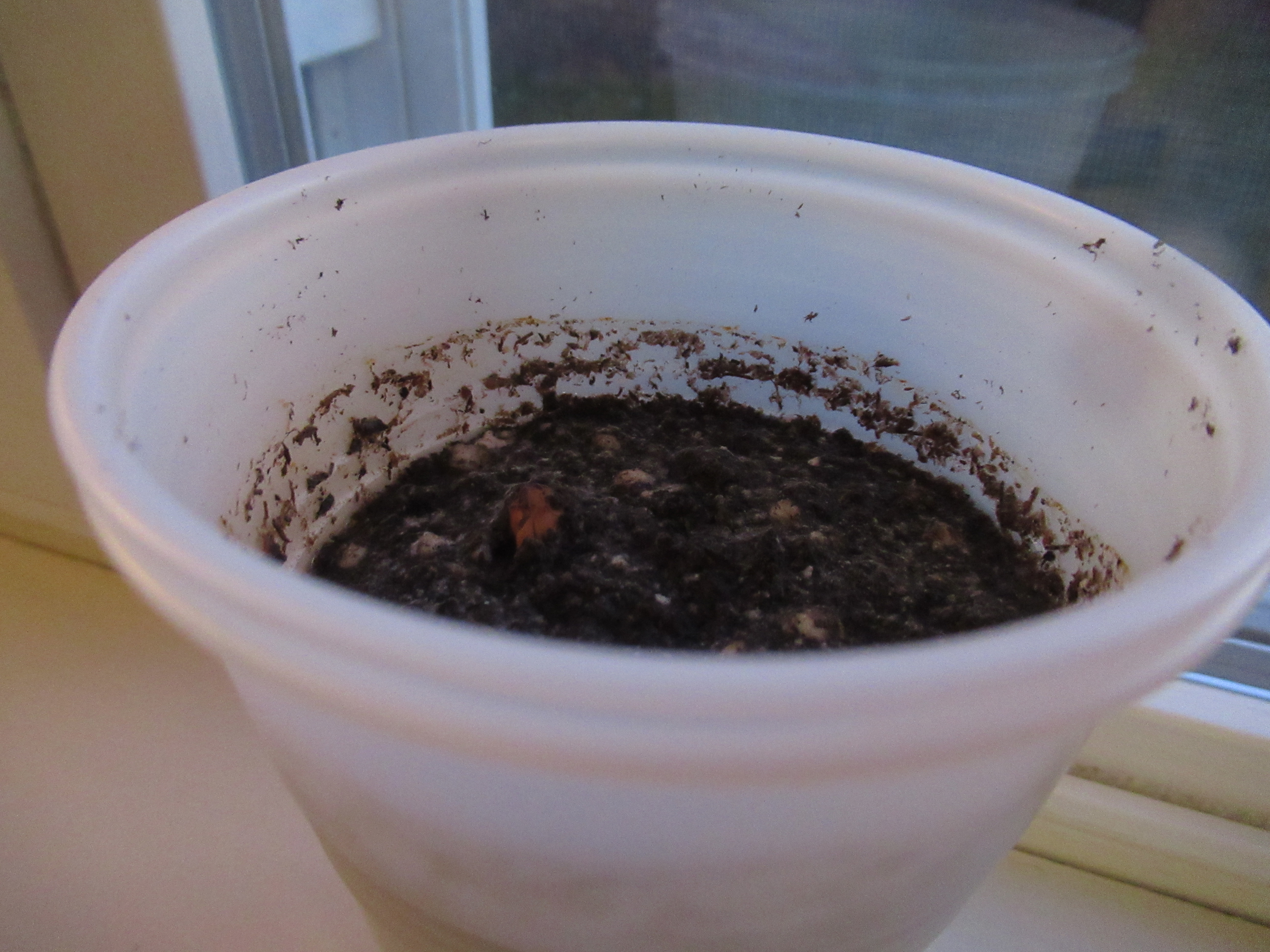
Now, plant the seeds in a bit of dirt with the root pointing down. Set some place sunny and add a little water each day. Then just watch the plants grow!

Sprout Some Seeds (6)

In addition to the hands-on portion of the activity, I had Travis write down a few things about the experiment, to work on conceptual knowledge. First, he listed all the supplies that were needed. His list included:

Dirt

Cups

Paper Towel

Plastic Bag

He also answered conceptual questions, like what happened after each consecutive step, or his observations at the end. A perfect project for a budding (ha) scientist.

Target Practice

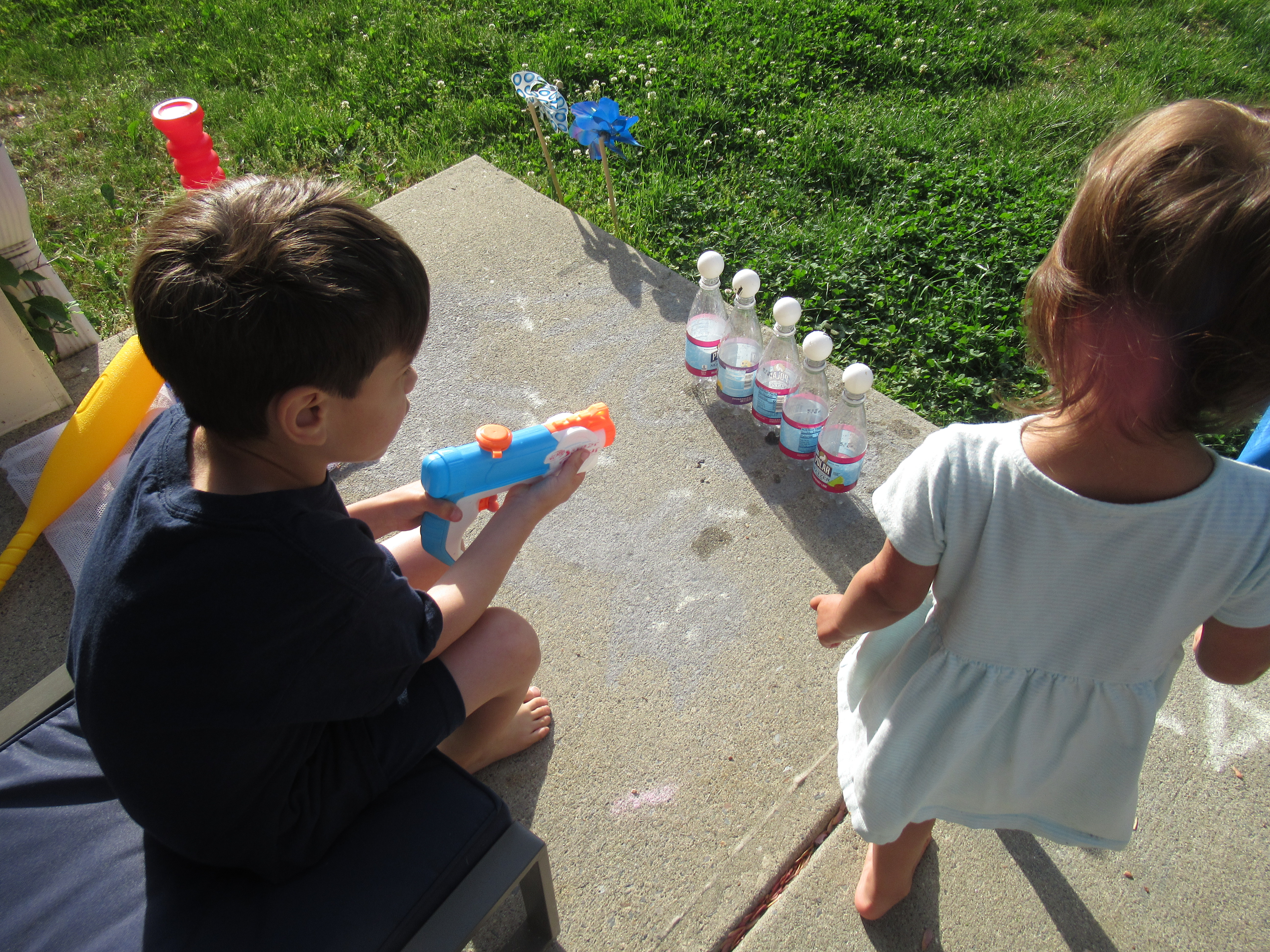
Kids seldom need an excuse to bring out the water guns on a hot day, and today we had temps above 80 shortly after breakfast. Here was a fun way to combine water play with some hand-eye coordination.

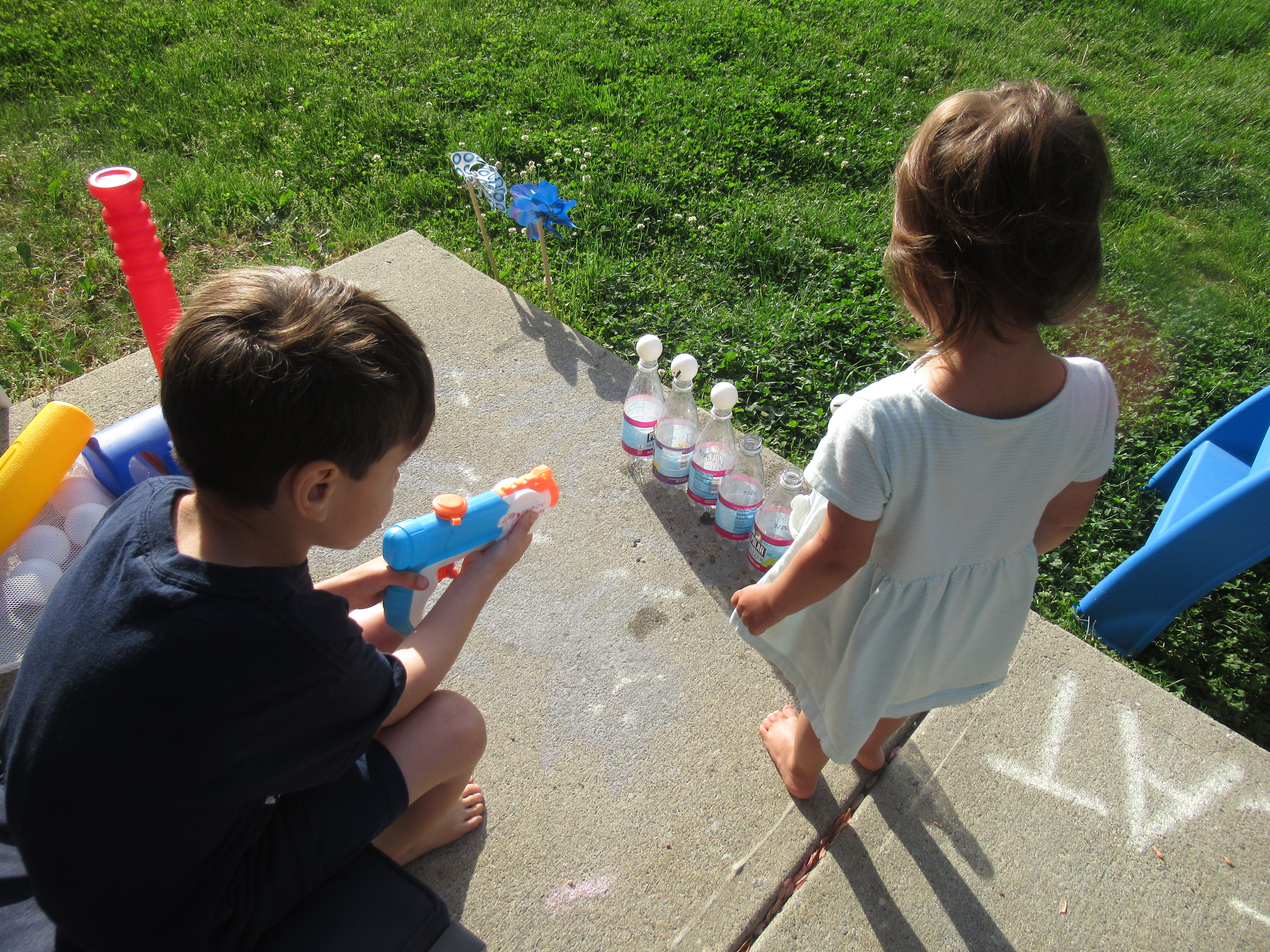
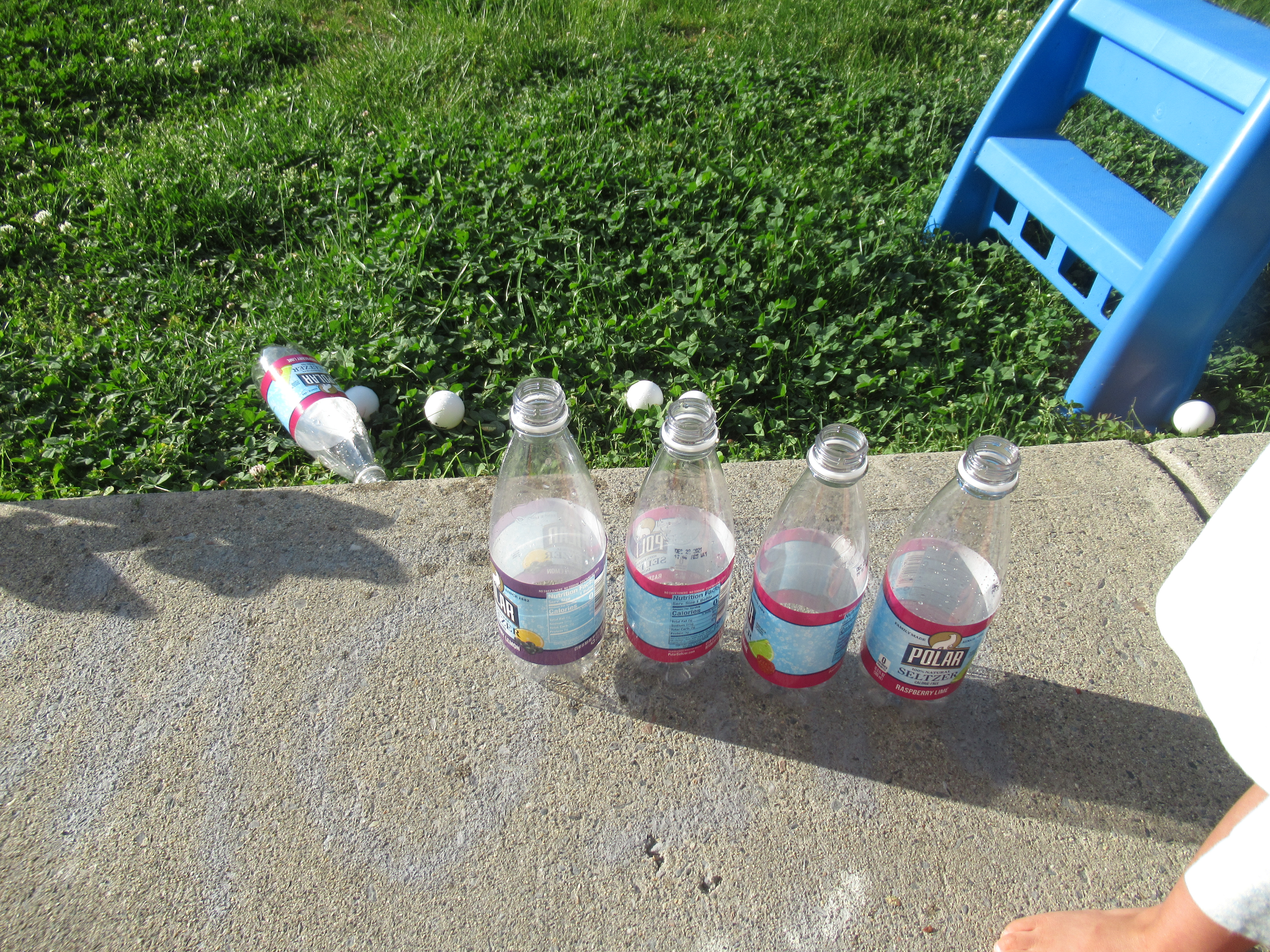
As targets, I set up a few empty plastic water bottles in a line on the patio and then placed a ping pong ball on top of each.

I showed Veronika how to take aim with our smallest water gun. It was hard for her to pull the orange handle by herself, but a mommy-daughter team could knock off the balls.

Big brother Travis wanted a turn, and was so proud to squirt water right on target, watching the balls go bouncing into the grass.

Needless to say, pretty soon the kids wanted to water the grass, the patio, their feet, and more! A special note to add that this game was for water fun and to cool off only.