The final lesson to go with Travis’s Game Day recipes from Raddish Kids was an in-depth look at baseball… with a little art and drama thrown in!
First, I read Travis some facts about the game and we watched a quick video of the rules. Bedtime stories like Pete the Cat Play Ball! by James Dean, I Got It! by David Wiesner, and F is for Fenway by Jerry Pallotta all introduced the imagery and lingo of baseball and its stadiums.

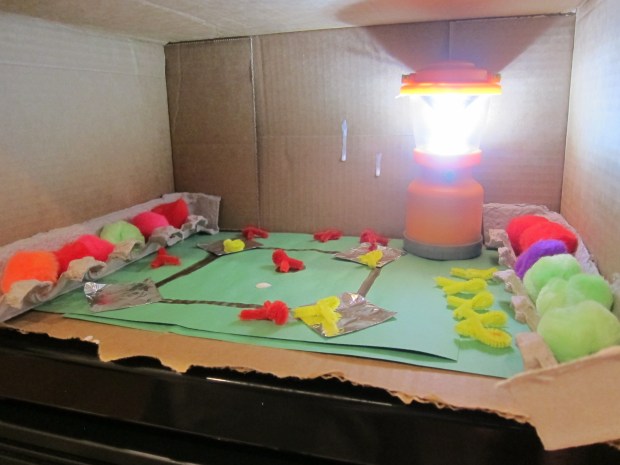
Even more fun was making a diorama of a stadium! I pulled together supplies, including a large box, construction paper, craft sticks, glue, markers, an egg carton, and tin foil.
We looked at images of Fenway and other baseball fields and I asked Travis what we’d need. Raddish included a full worksheet to fill out before beginning the diorama, but with an eager kindergartner and a one-year-old getting into all the supplies, we had to work a bit more quickly than that!

Travis noticed what I hoped he would right away: We needed green on the bottom for the field. We glued down green construction paper, then I drew on the baseball diamond dirt with brown marker.

The baseball field is a great chance to talk about shapes, in general. The dirt lanes form a diamond, the pitcher’s mound is a circle, and the bases needed to be squares. Travis chose shiny tin foil for the bases, a nice touch!
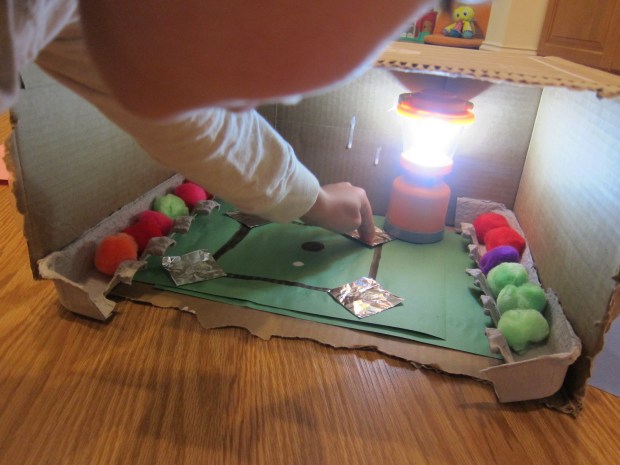
I helped him think about what else his stadium needed. Soon we had an old egg carton glued on the sides as the bleachers with little pom pom “spectators”. Pipe cleaners were our players.

Travis’s proudest contribution was adding a mini lantern to be the stadium spotlight.
The worksheet suggested adding food or drinks, which older kids can carefully craft. Travis was quite proud to glue together two craft sticks, crossed to look like soft pretzels.

Next up: the drama portion! We watched a few suggested clips of movement in baseball, ranging from the best catches of all time, to how to slide into base, to how to throw peanuts in the stands. Travis then put on his acting shoes. Here is his baseball movie, in three parts:
Batting!
Sliding!
Tossing peanuts!
What a fantastic way to get kids up and moving on a rainy evening. There’s lots more that older children can do with this lesson, whether making a painting or collage representing baseball or reading biographies of famous players.
We intend to finish the lesson with a baseball movie (Angels in the Outfield is a great pick for younger kids) and a game on TV once the World Series starts!



 joyful parenting