Early Explorers World Coins

LP Money (20)

Welcome to our third journey with our Little Explorers subscription! This month’s kit was all about currency and money from around the world.
LP Money (2)

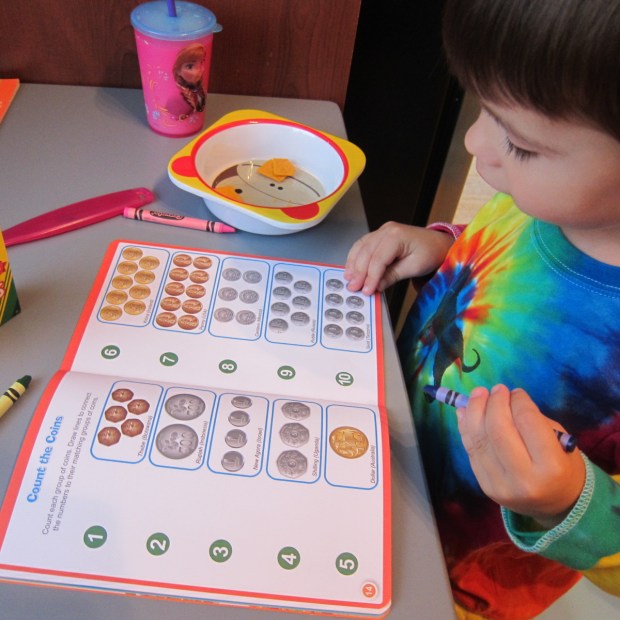
In many ways, this experience was the opposite from last month’s Natural Wonders; Travis had very little interest in the learning booklet, until I eventually corned him into it over snack. But he loved all the other activities and goodies inside, whereas “natural wonders” were a bit abstract.
LP Money (15)

As a result, he was also much more interested when we found the spots on our map that corresponded to our stickers this month.

LP Money (3)

World Coins Craft:

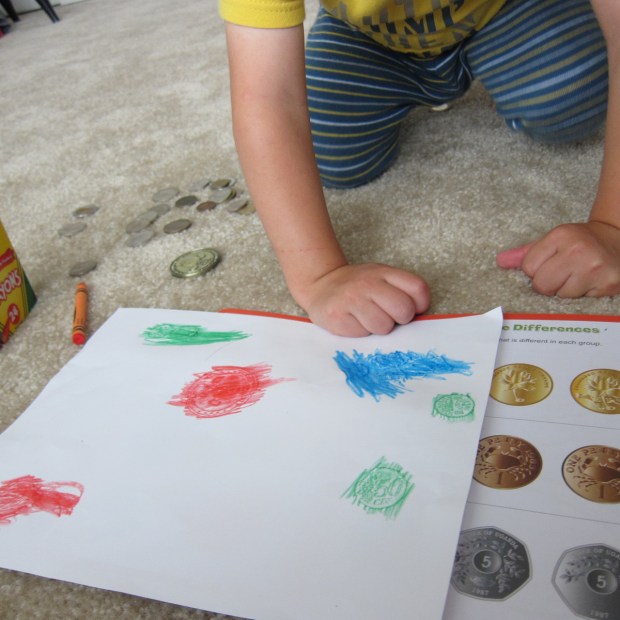
We dove right in with coin rubbings the moment the kit arrived. Travis already has a budding coin collection of pre-Euro European currency, so we pulled those out and got right to it. He was fascinated watching the images appear, both trying it himself, or asking me to do some and watching the imprints emerge. Super simple, but super fun!
LP Money (7)

World Coins Science:

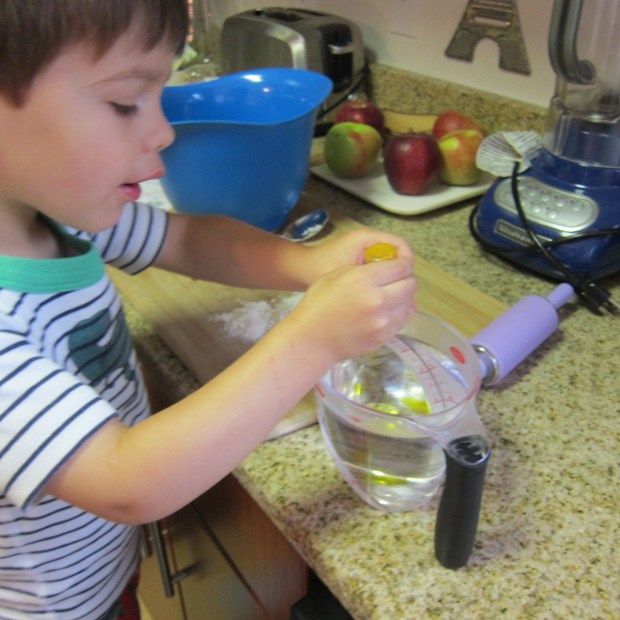
The suggestion from the booklet to make salt dough coins was a huge hit. First we watched how coins are made, and then I asked Travis if he wanted to make our own coin press. He couldn’t wait! We scooped the flour, poured the salt, added yellow tinted water (in the hope of making gold coins, although it didn’t really show up), and then stirred.
LP Money (10)

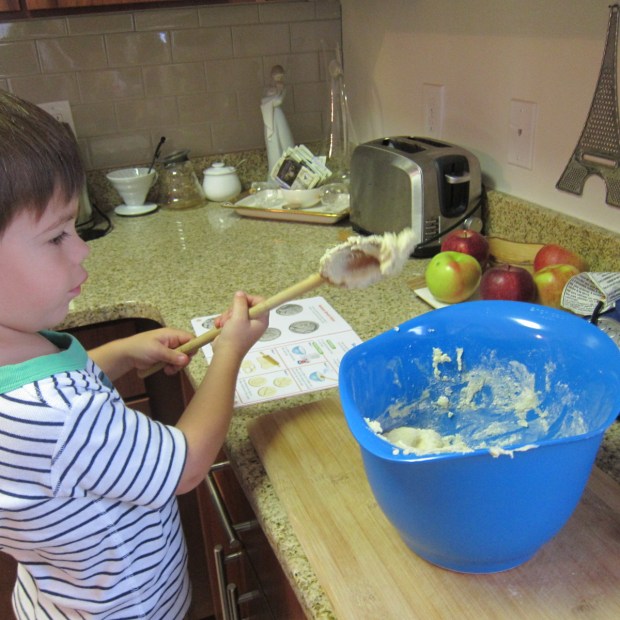
One note of caution: the booklet recipe said to add 2 cups water to 1 cup flour and 1 cup salt, but it became clear after pouring in 1 cup of water that this was not the amount needed! We had to backtrack and add lots more flour to avoid a watery mess, which made this truly a good lesson in the chemistry of baking.
LP Money (11)

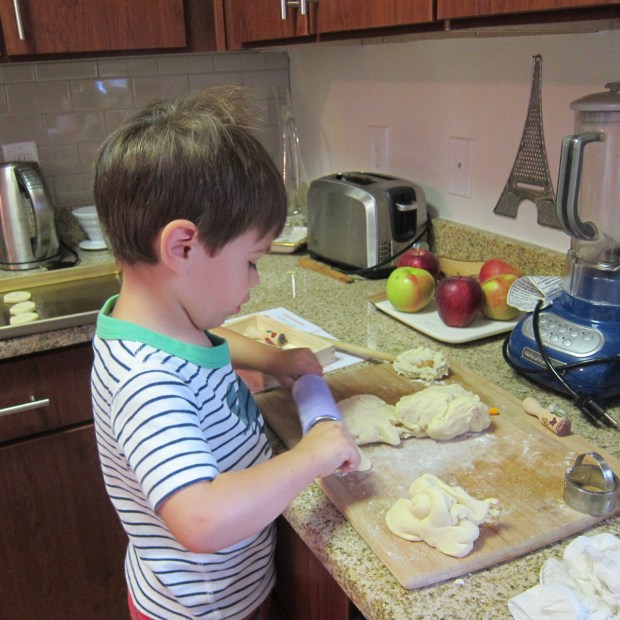
Once we had a workable dough, we rolled our coins, cut out circles, and used stamps to make designs.
LP Money (13)

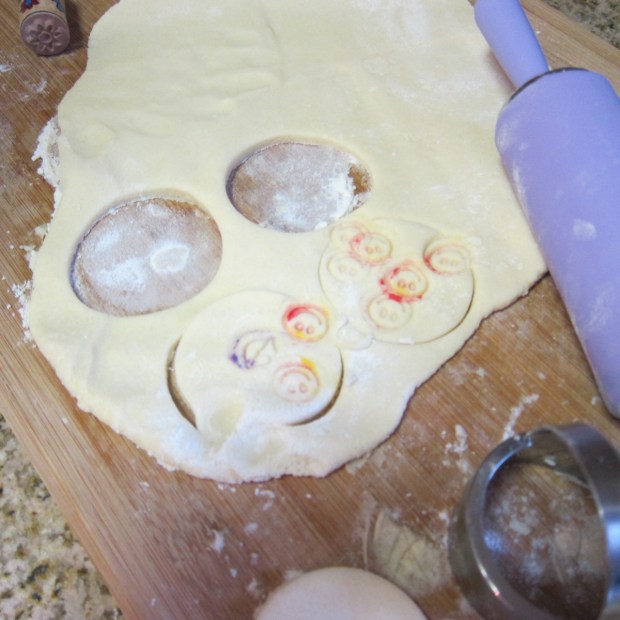
When he saw happy face stamps, Travis declared that those coins were from “Happytown!”
LP Money (12)

To preserve the coins, bake at 325 degrees F for 1 hour.

LP Money (16)

World Coins Keepsake:

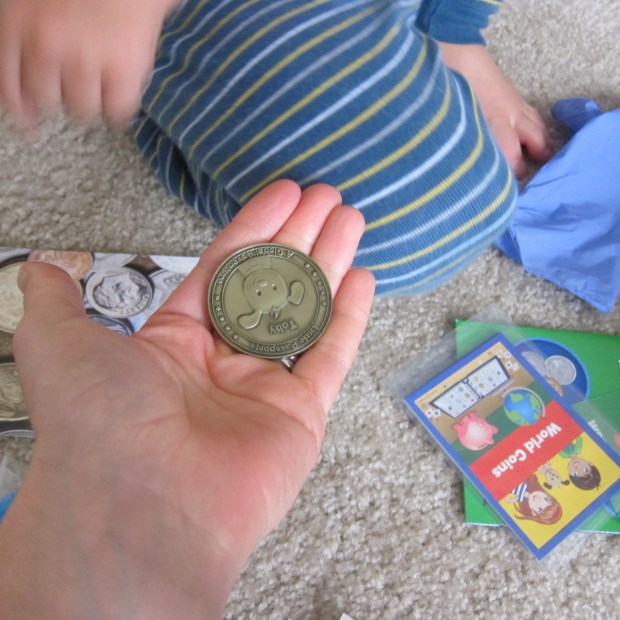
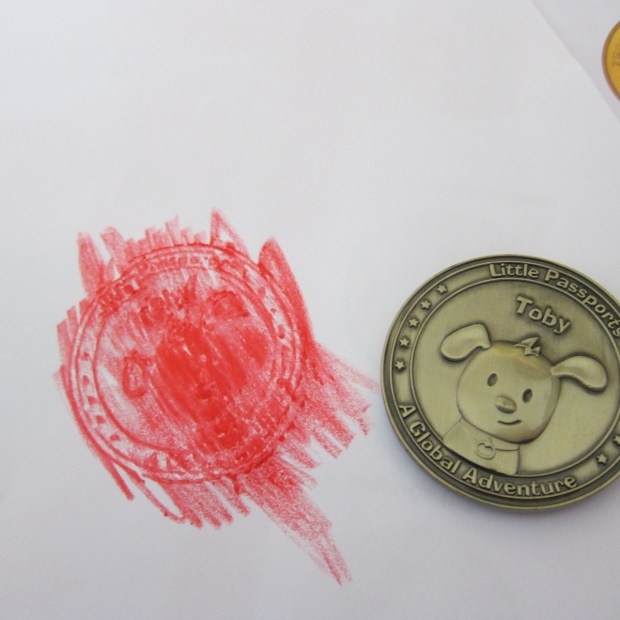
Travis loved his Toby coin and coin purse mementos. The latter will be perfect for gathering other coins in our collection as it grows. And of course we did a rubbing of the Toby coin!
LP Money (5)

World Coins Field Trip:

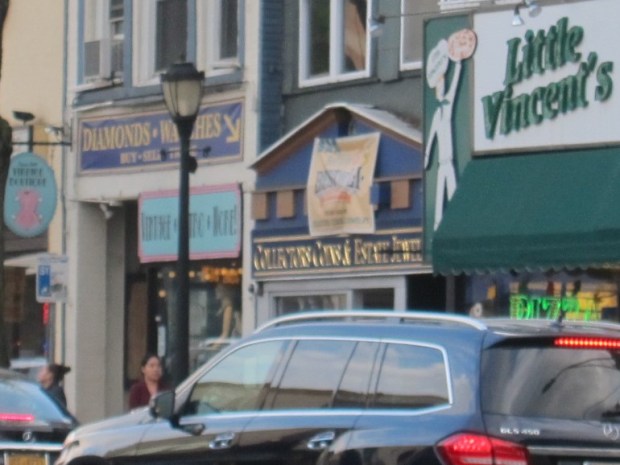
Although not a direct suggestion from the booklet, we decided it would be fun to build Travis’s collection with a few new special coin, stopping into a local coin shop.
LP Money (22)

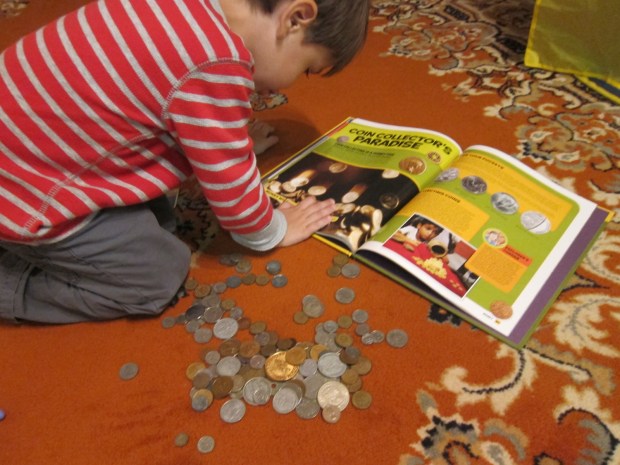
We came home to see what new treasures we had!
LP Money (24)

If you’re anywhere near the U.S. Mint in Philadelphia or Denver, then lucky you! Here is your chance to go visit. We settled for this online tour.

World Coins Further Activities:

As always, the booklet was full of ideas to further your little explorer’s explorations. We sneaked in a math lesson by counting the coins in his collection thus far. Travis so proudly counted all by himself up to 27 as we slipped coins into the Toby purse!

LP Money (17)

You could also try sorting in any way you want – by shape? By color? Here was our (roughly) gold and silver division.

LP Money (18)

The booklet also got us talking about which was our favorite coin and why. Travis simply adored the Roo on Australia’s gold dollar and deemed that his favorite. I was very taken with the seven sides of a thebe coin from Botswana, which I’d never heard of before.

LP Monday (10)

Finally, we headed to the library to see what more we could learn. To my surprise, there actually are quite a few quirky and fun children’s books that make this subject matter anything but dry.

LP Money (21)

In sum, you can bank on having fun with this one!

Early Explorers Natural Wonders

LP Natural a

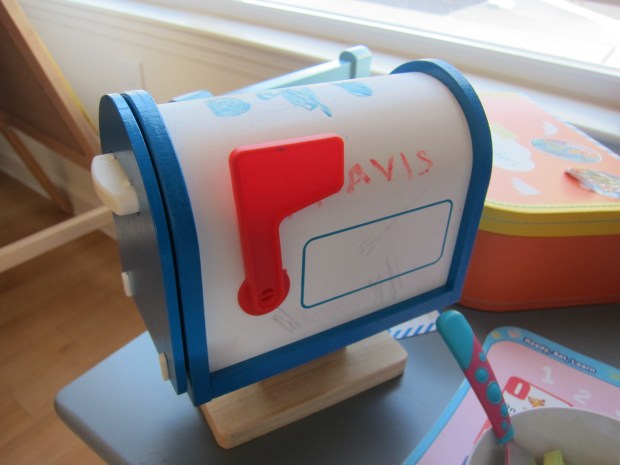
Welcome to our second journey with our Little Explorer subscription! Each month we receive a new topic to learn about. Now that Travis understands the learning journey we’re on, I set the stage for him…Max and Mia’s letter was waiting in his mini mailbox! He loved discovering their letter, and diving right in.

LP Natural (1)

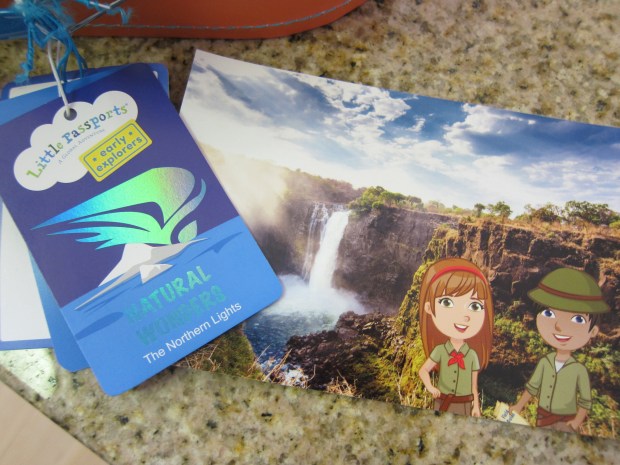
Our Natural Wonders kit contained the standard items that were now familiar from our Oceans pack – a luggage tag, a postcard, an activity booklet, and stickers for our wall map. Thanks to our stickers this month, we learned about the Chocolate Hills, Northern Lights, Paradise Harbor, and Glowworm Caves.

LP Natural (3)

Instantly we needed to find YouTube clips of these strange-sounding wonders! The Glowworm caves were a huge hit.

Natural Wonders Craft:

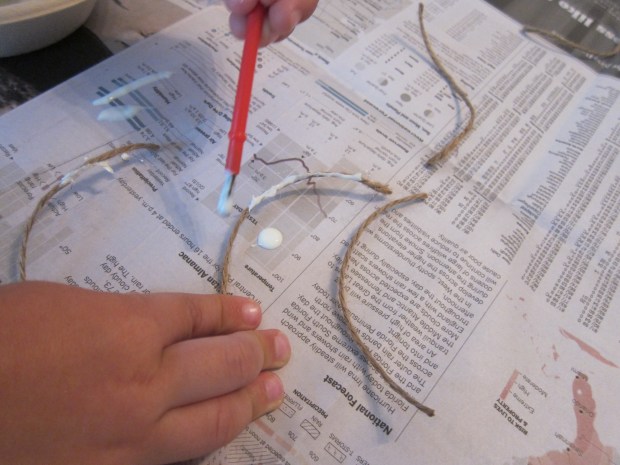
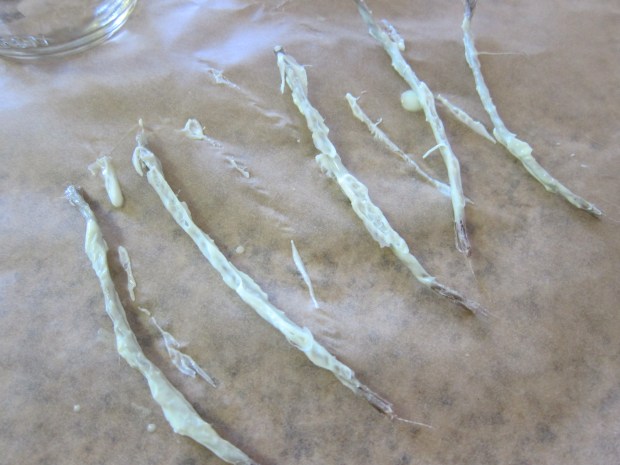
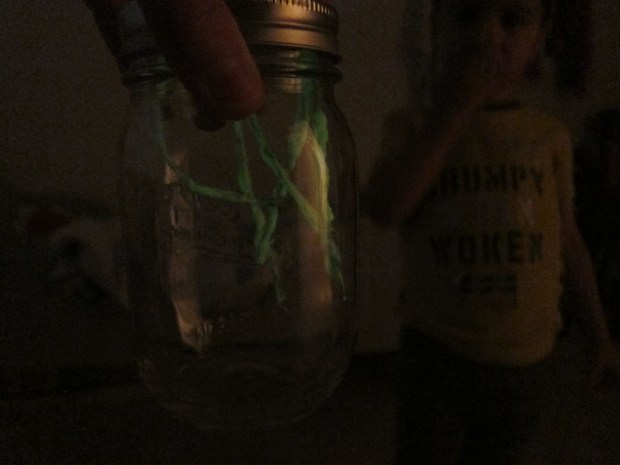
The suggested craft this month was to make our own glowworm cave, using string and glow-in-the-dark paint. The craft ought to have been easy, but we really struggled with this because I only had thick twine on hand – whoops! If you paint very thin string, and you’ll likely have better luck.

LP Natural (10)

It took three coats of glow-in-the-dark paint before we were satisfied.

LP Natural (14)

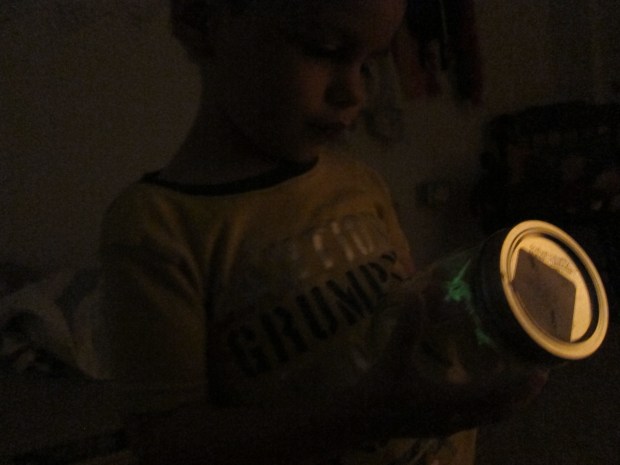
Then we glued the “worms” (which are actually beetles, who knew?!) to the lid of a mason jar. Again, we had lots of trouble because our strings were so stiff. I wrestled our glowworms onto the lid with the help of lots of glue and lots of tape. Then it was time to see them glow.

LP Natural (19)

Wonder indeed!

LP Natural (17)

Natural Wonders Science:

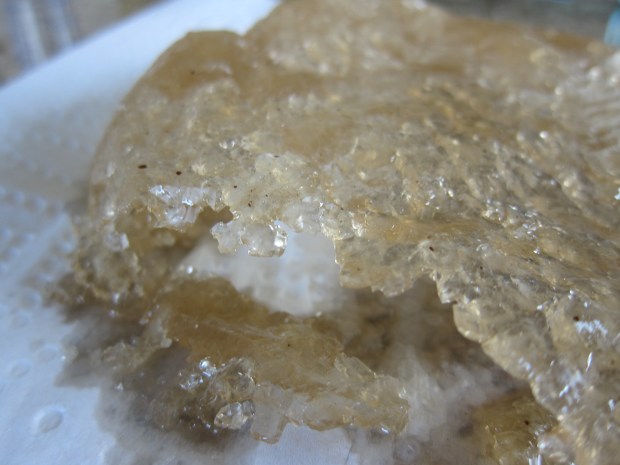
This month’s booklet did not include a science project, but Little Passport’s blog contained a timely post. We could make our own geode, and it would be edible! The craft was so intricate and neat that I devoted a separate blog post to it.

LP Natural (22)

I was thrilled when we happened upon this geode at a local exhibit purely by happenstance, and Travis could view a real world comparison.

LP Natural (21)

Natural Wonders Keepsake:

The little present tucked into our kit this month was a big hit – his very own pyrite rock. As a parent, I loved seeing Travis with his first “fool’s gold” since I remember proudly having one in my rock collection as a child.

LP Natural (2)

We later found a store where Travis could select his next wonder!

LP Natural maybe.jpg

Natural Wonders Field Trip:

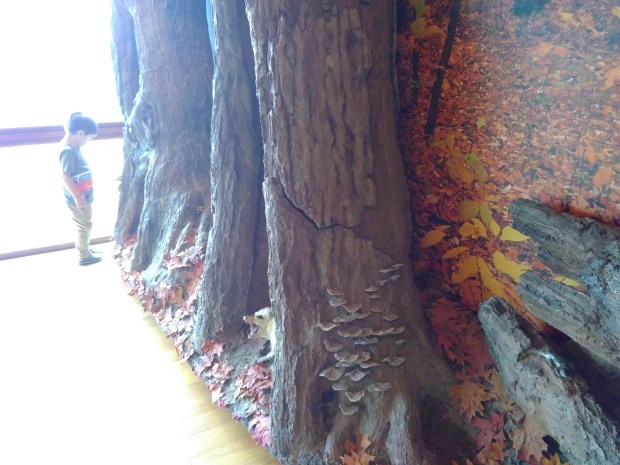
A natural history museum was the obvious suggestion, of course. The one closest to us unfortunately didn’t have the big “wonders” I was hoping for – no collection of geodes or different habitats – but it did have great exhibits on our local ecosystem.

LP Natural (23)

It was a reminder that even the most ordinary-looking trees can be full of wonder, as Travis discovered in a “lift a flap” tree full of bugs and animals.

LP Natural (22)

Natural Wonders Further Activities:

As we were quick to learn, Little Explorers mailing is intended as just the beginning; there is lots more to explore as parent and child, and the only limit is how much time you want to devote to each kit! I found myself disappointed as we worked our way through some of the items below; we don’t live near any of the great “wonders” Max and Mia talked about in their pictures, and I wanted Travis to experience something grand. But I was soon reminded instead that wonders come in all shapes and sizes…and Travis wasn’t feeling disappointed in the slightest!

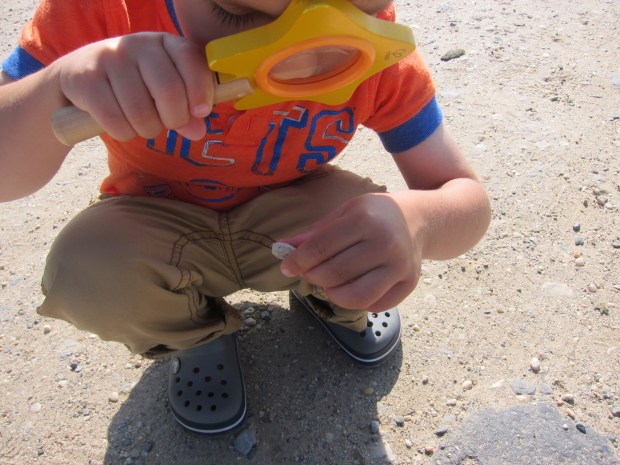
Rocks, of course, are everywhere, and sometimes as marvelous to behold as grand formations. A trip to a local park is all you need for some exploration! We might not have found any fool’s gold, but we did have fun looking through a magnifying glass…

LP Natural (6)

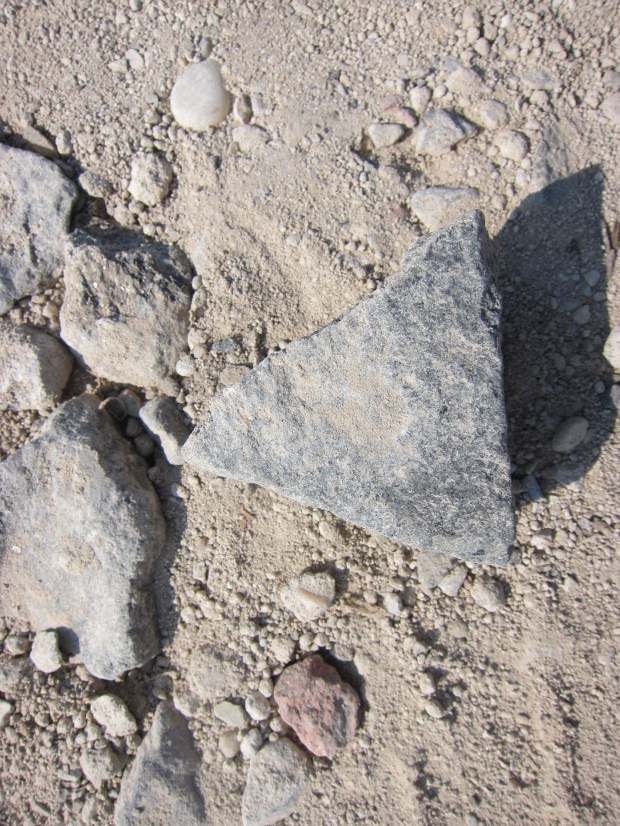
Finding neat shapes (a perfect triangle!)…

LP Natural (9)

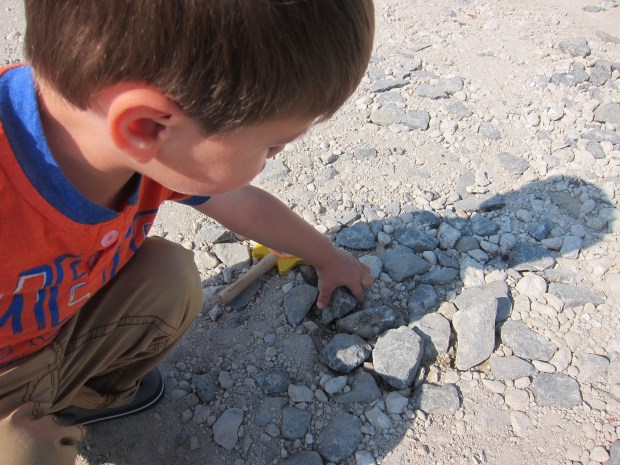
And pondering the difference between rocks that were stuck in the ground versus those that were loose for Travis to pull out.

LP Natural (8)

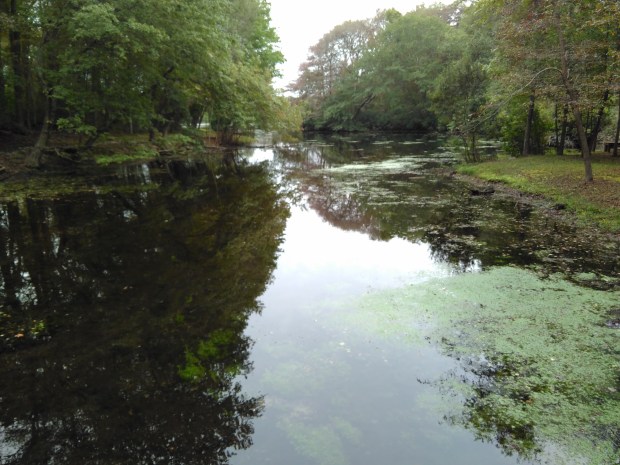
The next suggestion was to pick any natural wonder near you and visit. This doesn’t need to be anything fancy; a lake, river, or waterfall counts. We live near plenty of coastline, but surprisingly few lovely ponds, so that is where Travis and I headed.

LP Natural (30)

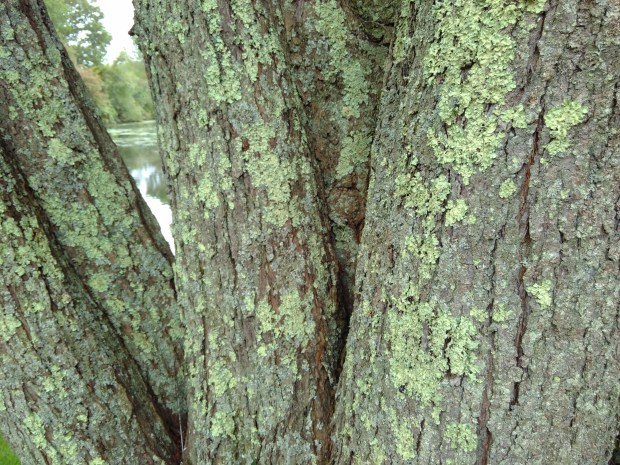
We spotted lots of other wonders as we walked – lichen on trees:

LP Natural (26)

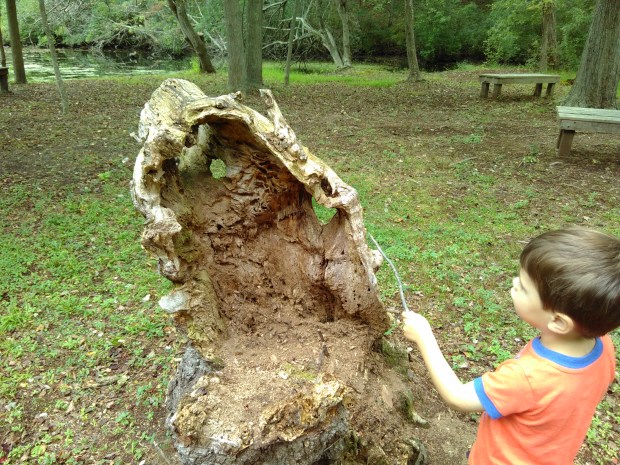
An incredible old stump:

LP Natural (31)

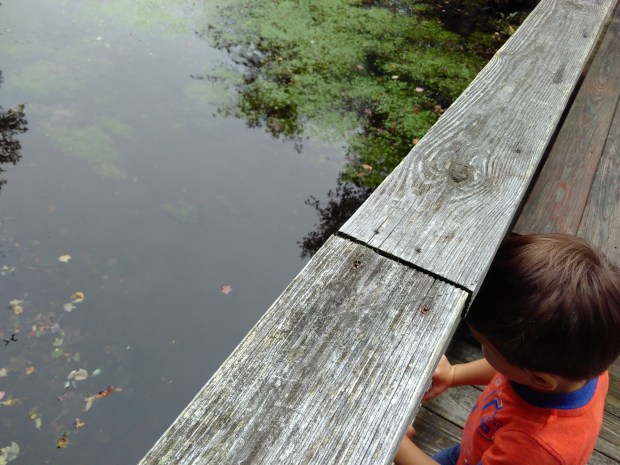
And leaves that floated downriver in a gentle current:

LP Natural (29)

Okay, so the stream was no Victoria Falls, but we loved watching our little red leaf disappear under the bridge and then pop out on the other side!

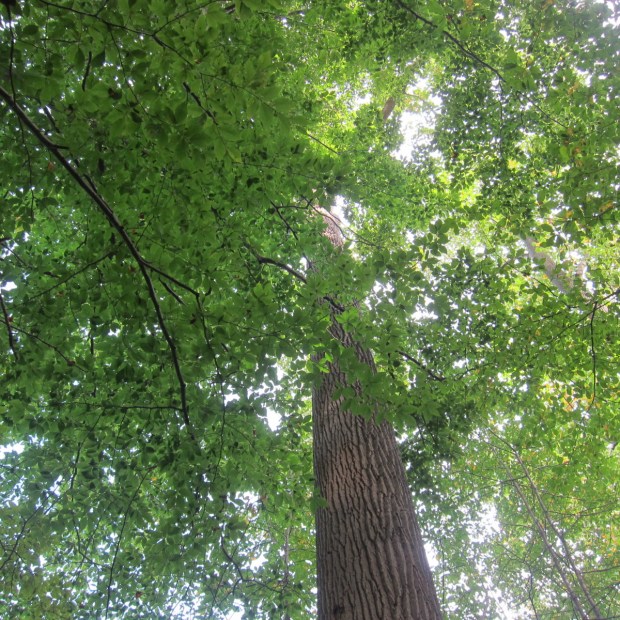
Finally, we went off in search of the tallest tree in our local area. A newspaper article tipped us off that this 167-foot-tall specimen was only 30 minutes away, so we set off to the swamp preserve to locate it.

LP Natural (32)

I’m actually not sure we found the exact right tree, but Travis marveled as we looked up at the canopy! Plus we found this:

LP Natural (34)

We finished off all this tromping with some armchair exploration, looking up Max and Mia’s suggested wonders online and learning neat facts. For example did you know Old Faithful has erupted more than a million times, since it became a National Park in 1872?

In sum, the lessons in this month’s kit were kind of advanced for Travis, but opened up a realm of curiosity and exploration, and served as a reminder that wonders are around every corner if you look for them.

LP Natural (25)

Early Explorers Ocean

LP Oceans.JPG

Anyone who has followed along on our Koala Crate adventures knows that I love subscription boxes. We’ve just begun a new subscription, now that Travis is old enough to try out Little Passport’s Little Explorers set, aimed at ages 3 to 5. And of course I have to document our adventures!

Little Explorers presents a theme about our planet/geography each month to kids with “materials that encourage creativity through play.” Unlike Koala Crate, which supplies all your materials, Little Explorers is more of a guide, which took a little getting used to. We’ve discovered, though, that this leaves lots of room for exploration – appropriate for a company that is all about, well, travel and exploration!

LP Oceans (1)

Each month comes with a luggage tag to affix to your child’s suitcase, stickers for a wall map, an activity booklet, a postcard, a game or keepsake, and lots of suggestions for further learning. The activity booklet has been fantastic for things like simple mazes, matching games, dot-to-dots, colors etc., all great preschool activities. Our map stickers this month had us talking about icebergs, orca whales, penguins, lobsters, and more!

Ocean Craft:

The suggested craft this month was for a homemade jellyfish. We’ve tried to make this creature a few times before but the instructions from Little Passports are by far the best I’ve come across. First we needed to paint a paper plate. Travis chose green and pink for his jellyfish.

LP Oceans (3)

After the paint dried, we glued on 15 yarn “tentacles.”

LP Oceans (6)

Travis had fun with leftover yarn pretending to be a wiggly jiggly creature while we waited for the glue to set.

LP Oceans (5)

I added tape across the tentacles for extra reinforcement. We glued on two googly eyes as the final touch, and then it was time swim around him around. Travis insisted that the jellyfish have a smile.

LP Oceans (14)

You can also make handprint jellyfish! Travis didn’t want to get his hands messy, but loved watching me create the wriggly creatures by dipping my hand in paint – palm-shaped bodies, and little finger tentacles.

LP Oceans (15)

Perhaps you could make handprint anemone this way as well. These crafts later prompted us to do some jellyfish research online – did you know sea nettle jellyfish grow from the size of a grain of rice to over sixteen feet long?!

Ocean Science:

Next up was some ocean science. Travis and I have examined the way salt makes objects float before, but I have to confess that Little Passport’s suggestion worked even better. Though I normally wouldn’t advocate any activity involving eggs, my non-vegan husband had some in the fridge and I suppose you could say we “upcycled” them for this game.

LP Oceans (7)

Pour ¾ cup water into each of 2 clear glasses. Add an egg to the first glass and you’ll see it sink immediately. Now stir ¼ cup salt into the second glass – Travis marveled at how cloudy it looked.

LP Oceans (8)

We added the second egg and – boink! – it floated back to the top! A very clear illustration of how salt makes objects more buoyant.

LP Oceans (9)

Ocean Keepsake:

The provided game in our package this month was not a hit: a “fishing” game with wooden animals to catch on a rod. The trick of getting the rod into the circle of each animal was very hard for Travis, who mostly just got frustrated. A magnet would have been much easier for little hands! This is one he’ll have to grow into.

LP Oceans

Ocean Field Trip:

On the activity booklet’s suggestion, we headed to our nearest aquarium. Using our Ocean flashcards from “Max and Mia” (Little Explorer’s guides), we hunted out a few things in particular: the coral reef exhibit;

LP Oceans (16)

penguins;

LP Oceans (18)

and a humpback whale. (This last was a fountain statue of a whale; I do not recommend visiting aquariums that house large cetaceans).

Ocean Further Activities:

We added a visit to our local library and found a neat series with one volume for each of the world’s 5 oceans. The subject material was a bit advanced for Travis, but he liked looking at the pictures of sea animals around the world.

LP Oceans (20)

Older kids can have fun drawing their favorite ocean animals. Since Travis’s artwork is still a bit, er, abstract, I printed out a page for him to color instead.

LP Oceans (19)

We hit up a local beach to look for shells on a pretty walk. We even found a horseshoe crab!

LP Oceans (23)

A perfect end-of-summer pause.

LP Oceans (21)

This then prompted us to research seashells and coral online. We made discoveries both interesting and silly. In the interesting category, did you know that 9 out of 10 shells open up to the right? So shells tend to be “right-handed” just like people. This was a neat factoid for my little lefty. In the silly category, we discovered a beach in Australia with whole shells instead of sand – in a pile that runs 32 feet deep! To this Travis loved looking at the pictures and saying, “Ouch!”

In sum, tons of fun and learning was sparked by our first installment of Little Explorers. What else can you think of to learn and play and do with regards to the ocean? Please share in the comments!

LP Oceans (22)