Planter Friend

Plant Friend (5)

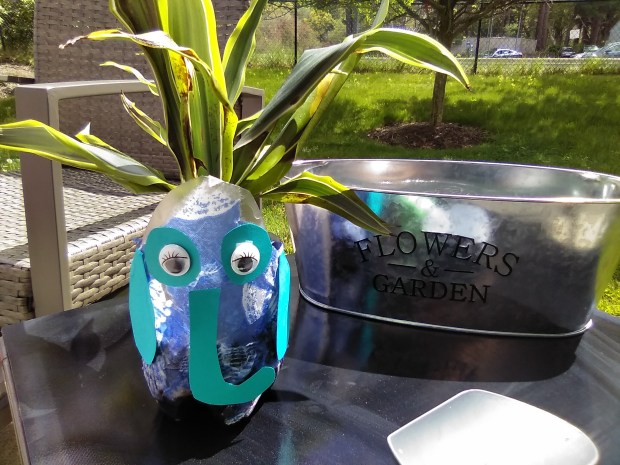
Veronika has been so excited for spring because it means gardening! “We get to water the flowers!” she keeps telling me. Finally we’re getting around to some flowers for our patio, and Veronika helped create her own planter “friend”.

To start, rip a colored napkin into small pieces (which is great for fine-motor skills), and use mod podge to adhere around the bottom of a clean and empty soda bottle. Let dry.

Plant Buddy (4)

Your child can use felt, construction paper, and wiggle eyes to make any animal friend they want. Veronika chose an elephant, so I cut a trunk, eyes, and ear shapes from construction paper.

Plant Buddy (3)

We had purchased a small plant at the market and Veronika very carefully helped transfer dirt and the plant into her new planter.

Plant Buddy (2)

Be sure to add water! This is a great and easy intro to gardening for preschoolers.

Plant Buddy (1)

Plant a Seed

Plant a Seed (8)

Although toddlers won’t grasp the idea of a plant life cycle yet, or how a single seed can grow into a full plant, toddlers do love the components of gardening, namely: water, dirt, and seeds. So today Veronika “planted” her first seed, partly as a sensory experience, and partly for a little science.

Plant a Seed (1)

First I set out a little cup of dried beans for her to play with, simply to explore. She loved transferring these back and forth between two cups.

Plant a Seed (2)

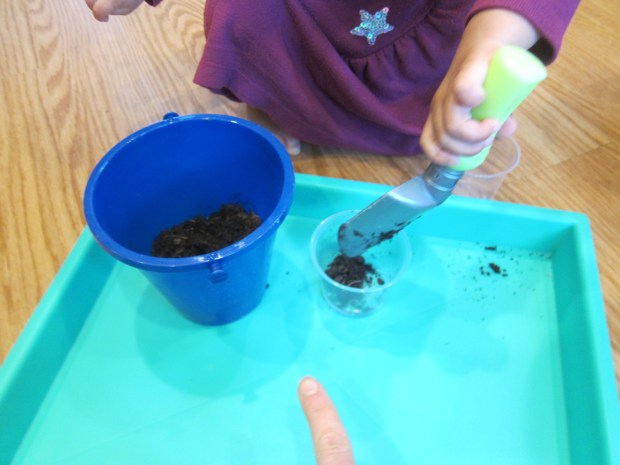
Using a little dirt from the yard outside, we began scooping dirt into one of the cups.

Plant a Seed (4)

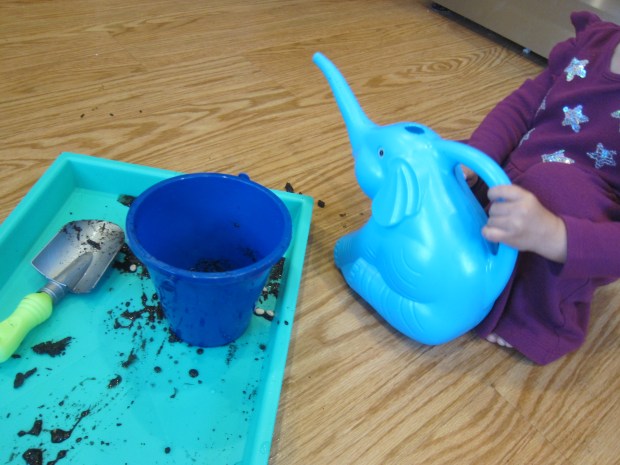
I filled our watering can with just a little water so she could make the dirt damp but not soaked. Of course I knew this would turn into lots of play scooping dirt and pouring water, and that’s exactly what happened. But that was half the fun! A little bug even hitchhiked its way in with the dirt, and she loved watching it on the tray.

Plant a Seed (7)

Before she could tire of the game, I showed Veronika how to sprinkle a few of her bean seeds into the dirt, and press them in gently.

Plant a Seed (5)

We gave them a little extra water as a finishing touch.

Plant a Seed (6)

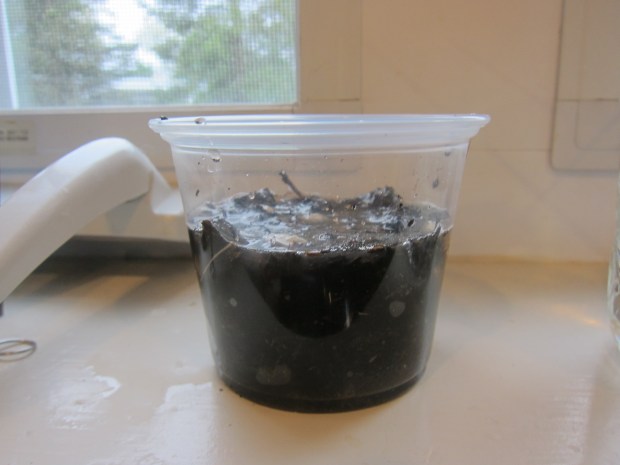
I don’t expect these to really sprout, since we didn’t germinate them properly). But the cup is in a sunny spot on our windowsill, and Veronika looks at it proudly! Either way, the whole process is a fantastic intro to gardening.

Note: If you want to include a little art, use a paper cup instead of a plastic one and have your toddler draw on it first. Or you could even decorate a proper clay pot!

Early Explorers Plants

LP Plants (28)

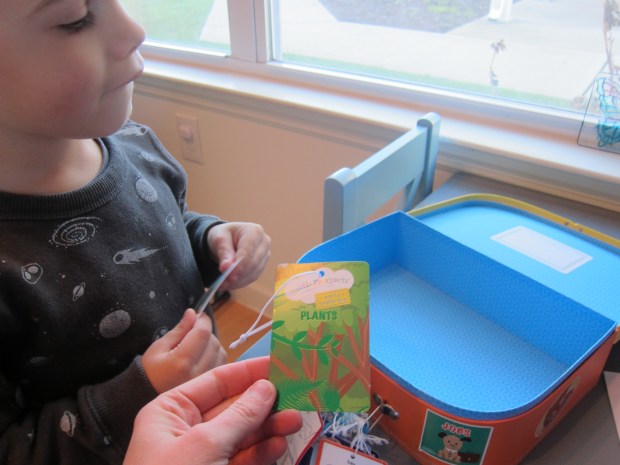
Travis’s mailing from Early Explorers this month was all about… Plants! I worried this topic might be dry for a four-year-old, but as always, Little Passports made it approachable and, well, great!
LP Plants (1)

Travis continues to take to the booklet and its exercises with alacrity now, eagerly telling his dad or friends what unit “Max and Mia” have sent us. To wit, the last time we had a traceable alphabet in our booklet, he did one or two letters grudgingly. This time he wouldn’t let me stop until we’d filled the page.

LP Plants (5)

Plus we had great mazes, coloring, counting, and even early spelling.

LP Plants (16)

And of course the mailing included stickers for his wall map, the flashlight find it, and flash cards with more info. Here’s what else we delved into…

Plants Craft:

The suggested art project was very simple: gather leaves and come home to trace them. Unfortunately it’s not the right time of year where we live! I was able to find a few withered oak leaves and a leaf from a holly plant, which at least showed Travis that different plant leaves have very different shapes.

LP Plants (11)

If it’s spring or fall, you can have a blast with this, and likely make a beautiful collage!

Plants Science:

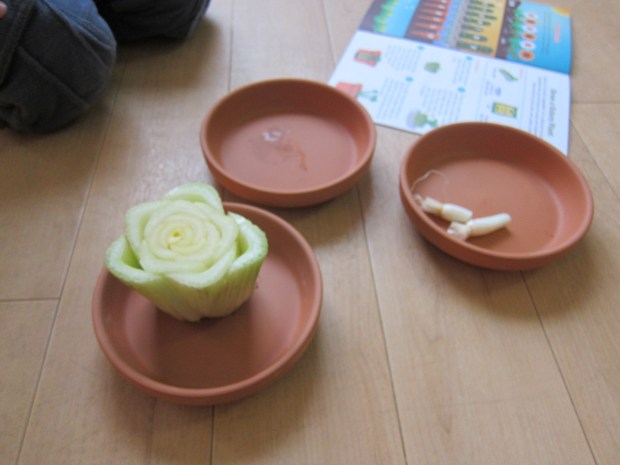
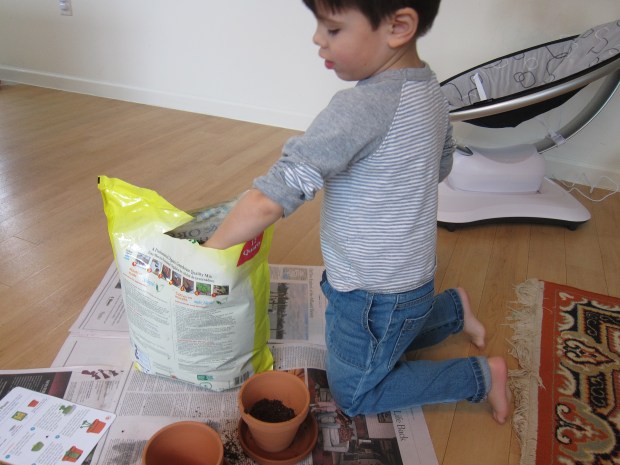
Here’s where the kit really got hands-on, with instructions on how to grow your own celery plant. Travis returned from school to find pots and dirt, and couldn’t wait. First, help your child cut the base off a full stalk of celery. Place the base in a dish of shallow water.
LP Plants (9)

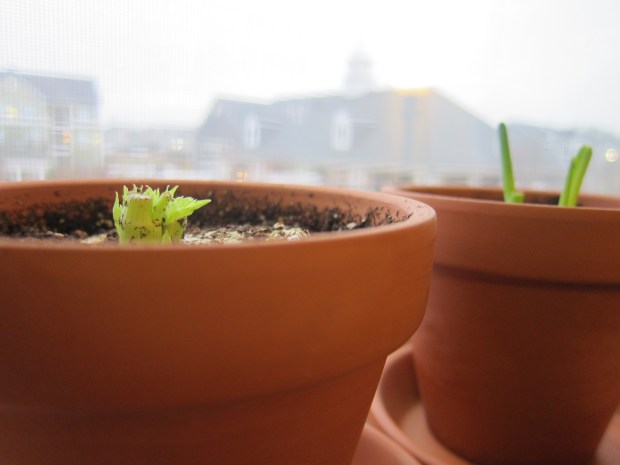
Change the water every few days, and dribble a few drops of water on the top daily. You should start to see new celery growth within a few days.

We waited about five days, then placed the celery in a pot, and covered with soil. The fresh leaf tips should stick up from the dirt. Place in a sunny spot, and water every 3 days or so (I watered daily, which seemed to work fine).
LP Plants (18)

It will continued to grow! You can actually use this celery for soups, salads, or snacks. This is a great way to teach kids where food comes from, and we can’t wait to harvest our little plant!
LP Plants update

Plants Keepsake:

The very first thing Travis wanted this month was his “present”, and he was thrilled to find puffy stickers and a garden background in which to place them, and even more thrilled to learn the stickers are reusable.

LP Plants (2)

He insisted each sticker smelled differently, too. I couldn’t tell a difference, but if so, that is a very clever trick on the part of Little Passports!

LP Plants (3)

As a parental aside, I was a touch disappointed by the repeat keepsake. Perhaps a flower pot or seeds might have been more novel.

Plants Field Trip:

Head off to a botanical garden of course! Since it’s winter here, we visited a favorite local garden, but concentrated on the greenhouse instead of the grounds.

LP Plants (20)

Travis loved the hibiscus room, ready for Christmas! And the cacti were a fast favorite.

LP Plants (23)

It was hard work to convince him that he really couldn’t touch any of the prickles, but I managed. Our garden also had a wonderful find-it hunt for kids.

LP Plants (22)

Your children might also enjoy drawing some of their favorite plants, though Travis opted out of this suggestion.

Plants Further Activities:

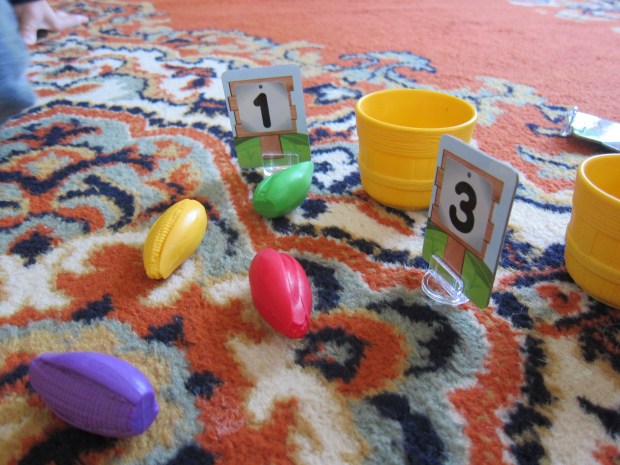
I had previously purchased a game from Little Passport’s website on veggie sorting, and this was the perfect time to trot it out; Travis was delighted by the vegetables he could “plant.”

LP Plants (14)

He loved to play with it, and as a parent, i appreciated the various math concepts we could explore, such as counting out by type or color, or simple math equations.
LP Plants (13)

When that fun was done, we also tried out the celery experiment with potatoes and green onions. It turns out the green onions worked best!

LP Plants (17)

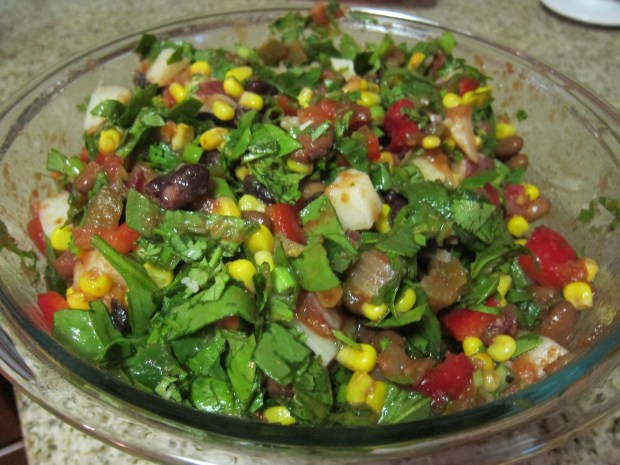
A vibrant bright bean salad was the perfect chance to count the plant-based foods on our plate, especially because it contained multiple plant parts – spinach leaves, corn seeds, potato roots, and more!
Bright Bean Salad (6)

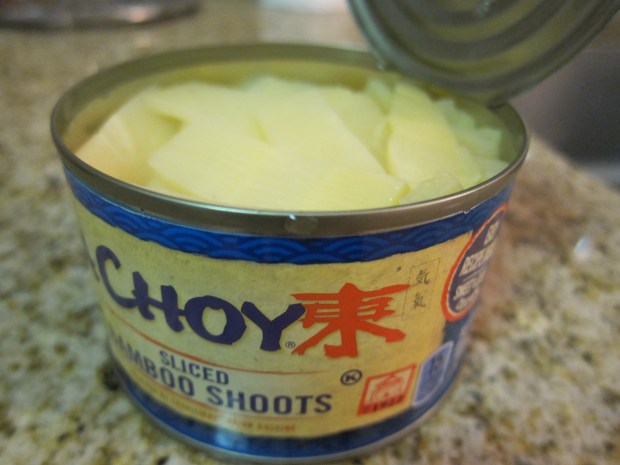
Travis was also eager to try some of the foods he’d read about in the booklet, so this week I picked up bamboo and corn pupusas at the market.
LP Plants alt.JPG

We also took the suggestion to count the plants in our neighborhood. This was interesting for mom, too! Our apartment complex is lined with low bushes, and it turns out there are so many varieties we lost count!

LP Plants (29)

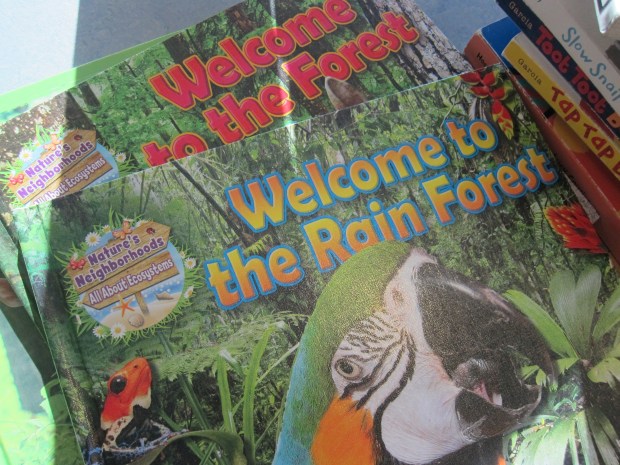
Finally, we headed to the library for a few books on plants. Check your non-fiction section, and see what you find!
LP PLants var


Plantable Paper

Plantable Paper (9).JPG

There’s a little bit of magic to this craft, the idea that flowers can sprout from paper. It’s a multi-day project, but you only need a little time each day to make the magic bloom.

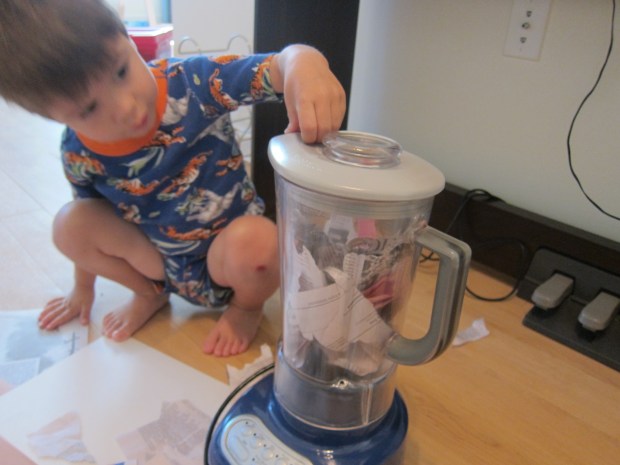
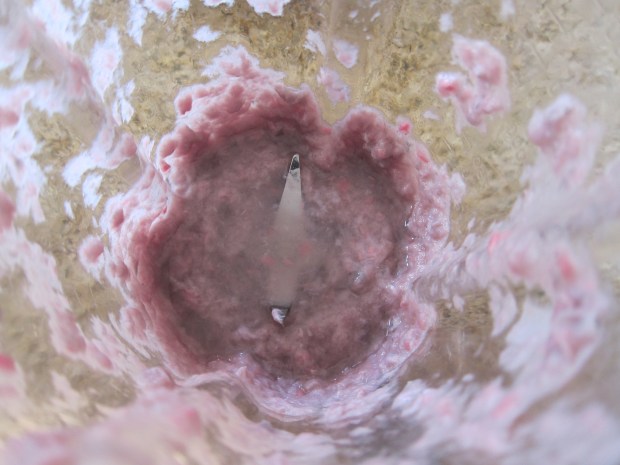
The instructions I had found online for making the paper mush were a bit vague, but worked just fine, so here’s all you do: Fill a blender about halfway with torn newspaper and scrap paper (we used pink construction paper scraps, which gave our final product a nice pink hue). Cover the paper mixture with hot water, then process until you have a mush. Travis loved the novelty of paper in a blender instead of food!

Plantable Paper (1)

Caution: Make sure to remove the center piece of your blender’s lid and cover with a paper towel while blending so steam can escape, otherwise you’ll end up with hot water splatters. Let the mixture stand for about 15 minutes.

Plantable Paper (2)

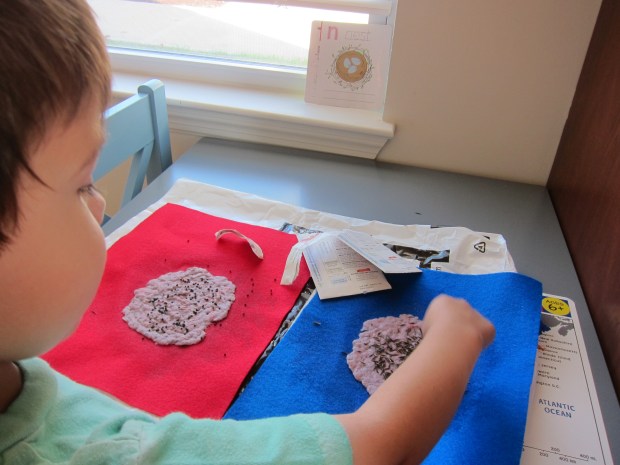
The next step is messy, so cover your work surface (I used a large shopping bag). Place two pieces of felt on top of the bag. Scoop the mush onto the felt, and have your child help you smoosh it into a very thin layer.

Plantable Paper (3)

Then it was time to sprinkle on our flower seeds! We had two very different kinds – cosmos which looked almost like large cumin seeds, and larkspur, which looked more like hard black poppy seeds. I don’t do much gardening, so examining the seeds was fun for Travis and me both!

Plantable Paper (4)

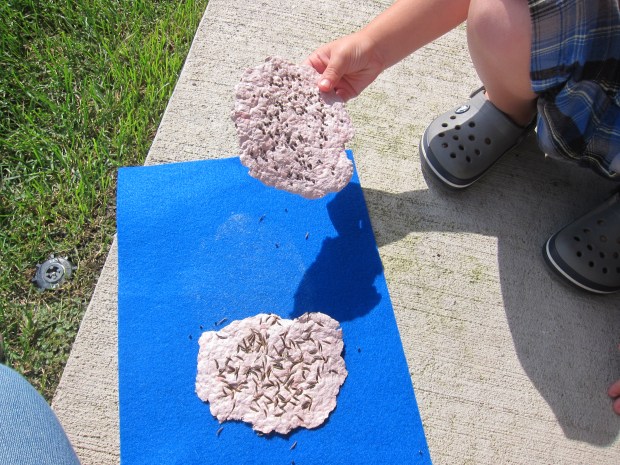
Leave the mixture to dry on the felt. After the first day, I carefully flipped each piece over, then left them to dry some more. By now I could consolidate onto one piece of felt.

After two days, the mushy paper will be completely dry. Remove it from the felt and cut into shapes if desired – hearts felt just right!

Plantable Paper (8)

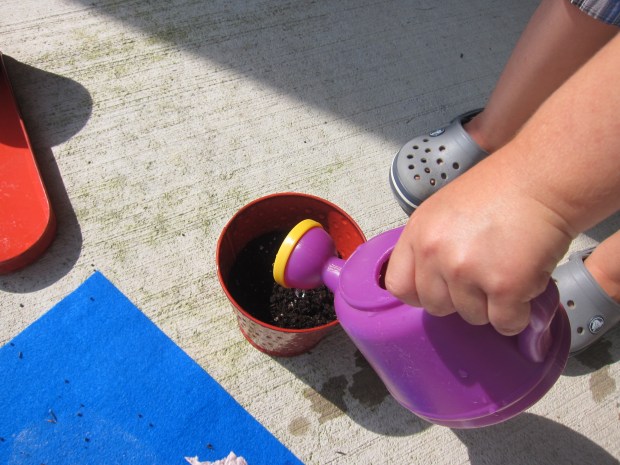
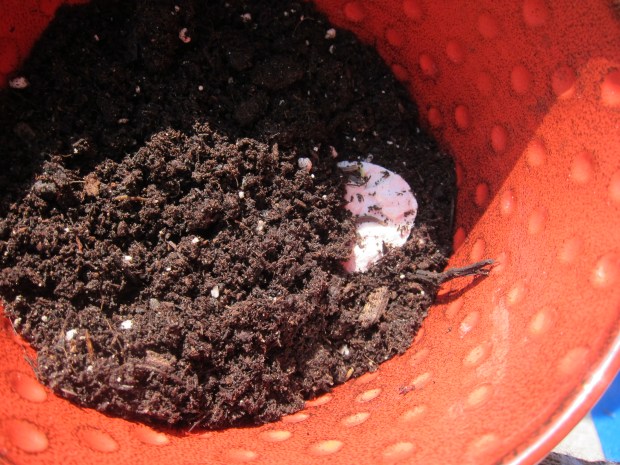
We headed outside with pots and soil, and planted our paper. Travis loved watering them!

Plantable Paper (12)

Now we just need to sit back and wait for the flowers to grow.

Plantable Paper (11)

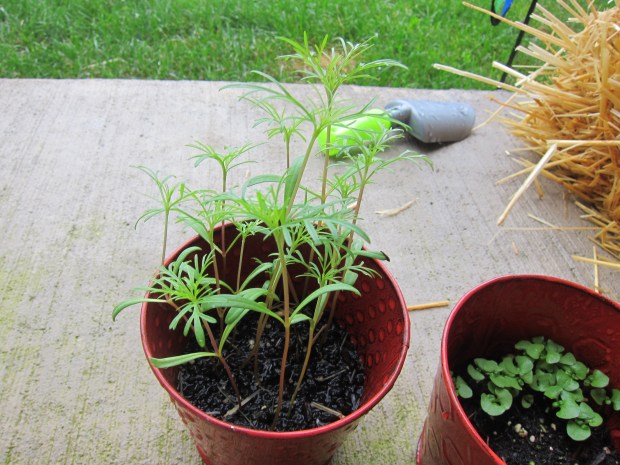
Update: It worked! Here are some beautiful shoots at day 5.

Plantable Paper (12)

Here is the growth after a couple of weeks:

Plantable Paper alt.JPG