Dia de los Muertos Artifacts

Dia de los Muertos (8)

The lesson plan to go with Travis’s “Frightful Fiesta” recipes was all about Mexico’s Dia de los Muertos, or Day of the Dead. As a parent, I appreciated the cultural lesson, as well as the inclusion of crafts and entertainment, all rolled into one lesson plan.

We started with a sort of pop quiz. I printed out iconic images that go along with other holidays (Santa for Christmas, hearts for Valentine’s Day, etc.) and asked Travis which holiday each represented.

Dia de los Muertos (1)

Then I showed him a provided image of a sugar skull. Having learned briefly about the holiday before, he guessed Dia de los Muertos right away!

Dia de los Muertos (2)

As he colored in the sugar skull, we watched a read-aloud of a wonderful children’s book that helped explain the holiday.

The lesson plan suggested drawing along to everything as your child listens to the story, focusing on the bright colors and happiness associated with the holiday, rather than grief.

Dia de los Muertos (4)

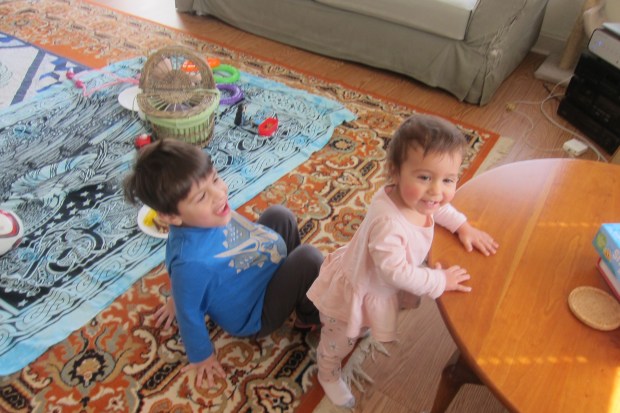
Little sister Veronika wanted to color, too!

Dia de los Muertos (5)

Next came the most beautiful part of the lesson: setting up an offrenda for a loved one. We looked at National Geographic Kids for inspiration, then brainstormed some items that would be dear to our loved one (Travis’s grandfather).

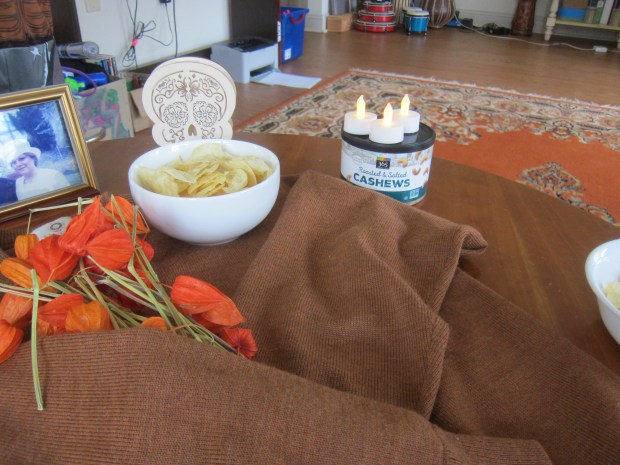
The next day, we put together the offrenda! It included an old sweater of Papa’s, his photo, flowers from the market, battery-operated candles, a sugar skull lantern, and some of Papa’s favorite foods, including cashews, chips, and plantains.

Dia de los Muertos (7)

I loved watching the children interact with the display joyfully (especially stealing the chips to eat!). Having never celebrated the Day of the Dead before, it truly was a moving experience.

Dia de los Muertos (9)

Note: You could also have your children create an offrenda for a deceased pet or a historical figure, if that is more appropriate in your home.

To extend the lesson, we made two crafts. First up, was a Paper Bag Pinata. Fill a sandwich-size brown bag with candy, then fold the top over and tape shut. Cut 6 (18-inch long) strips from tissue paper, and then fringe the edges with scissors.

Make a Pinata (2)

Tape the first strip to the bottom of the bag. Continue taping on the strips, overlapping them so the fringe dangles over the one below.

Make a Pinata (3)

We suspended the pinata from the ceiling, then… Fiesta time! Travis and Veronika loved taking turns whacking at it.

Make a Pinata (4)

Inflatable light sabers weren’t strong enough, but a wiffle ball bat was. Candy!

Make a Pinata (5)

Next we created Papel Picado. This is a fun tissue paper craft that is normally strung up during the festival, and the process is similar to making paper snowflakes. Fold a square of tissue paper in half twice, and then into a triangle. Fold one side down like you’re making a paper airplane fin. Begin making little slits and shapes with scissors. Travis loves fine scissor work like this, so was thrilled that this was the “assignment”.

Papel Picado (3)

Open up for the big reveal!

Papel Picado (4)

We taped them to a string so we could suspend them across one archway in our home, where they looked especially gorgeous when the sun was shining through.

Papel Picado (5)

We finished by watching the movie Coco. This was a fantastic way for Travis to understand the nuances of the holiday. The film is highly recommended for those who have not viewed it.

Dia de los Muertos (11)

Japanese Travel Guide

Japan Travel Brochure (4)After preparing a Japanese meal for dinner, Travis got to learn more about Japanese culture today. This lesson plan from Raddish Kids was a fun extension to the culinary journey we’ll be on this month.

First up was locating Japan on a map. Once Travis pinpointed that it was an island, we discussed how geography can influence culture. Raddish provided talking points like how this has given Japan a strong sense of identity, and a unique culture.

Japan Travel Brochure (1)

Now it was time for fun videos; Travis loved one about the shinkansen (high speed trains) so much that he insisted on watching the full thing, even parts I thought might bore a 6 year old!

Japan Travel Brochure (2)

You can extend the lesson by looking at a map of the rail system, or even turn it into a math lesson for older kids by calculating costs or distances between stations on a pretend journey.

Next up was a video clip of Japanese baseball, and we discussed similarities and differences to games we’ve attended in the U.S.

Japan Travel Brochure (3)

Finally, we learned about the popular genre of anime. Travis picked one to watch before bed, and chose Pokemon! You might also consider renting a classic from your library like My Neighbor Totoro or Ponyo.

Or check out how-to books to draw your own anime!

Japan travel alt

I was so proud of Travis following along with one we checked out.

Japan travel var

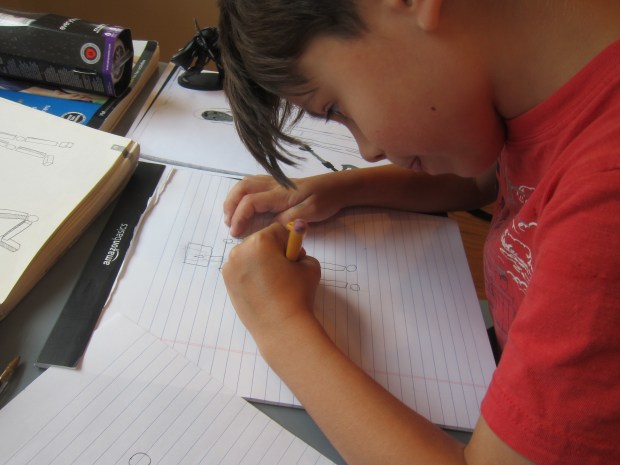
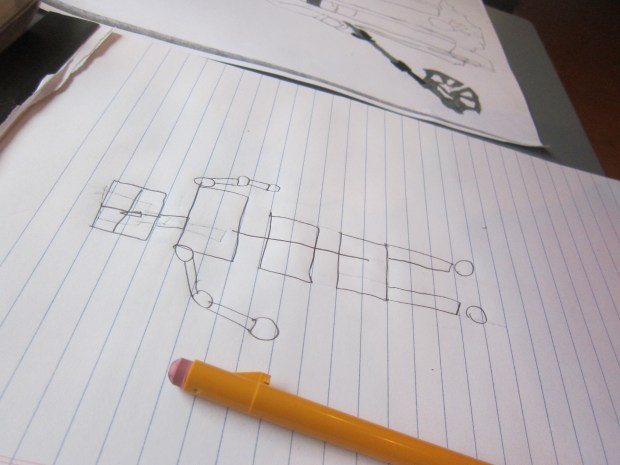
Now it was time for Travis to pretend he was a travel writer explaining this country to another person, and he put together a travel brochure. He was so proud spelling out Japan on the cover. Inside, he drew high speed trains…

Japan Travel Brochure (6)

…baseball players (I thought this one resembled a Japanese calligraphy character!)…

Japan Travel Brochure (7)

…and lots of noodles of course.

Japan Travel Brochure (8)

Helpers and Heroes

Helpers and Heroes (5)

This activity gives purpose to any walk in your town, perfect if your family is outside getting a daily quotient of sunshine during social distancing!

We set off downtown and I assigned Travis the goal of finding signs of any community helpers. The trick here was not necessarily to spot the helpers themselves, which Travis can readily identify (police offices, firemen) but rather signs of them.

First up was a fire hydrant! That was used by the firemen, and Travis gave it a big thumbs up.

Helpers and Heroes (3)

Next we spotted a recycling bin. I pointed out how the bin doesn’t empty itself; we need sanitation workers!

Helpers and Heroes (2)

Now that he had the idea, he began to notice subtler signs, posing by an ATM for bankers, and ladders for construction workers. We also walked past the library, representing the librarians.

Helpers and Heroes (7)

Once we reached the town green, Travis spotted the memorial to local war heroes, which was a moving and apropos moment.

Helpers and Heroes (4)

This would be a great outdoor extension to any school lesson plan on “community helpers”!

Show Love Around the World

Love World (9)

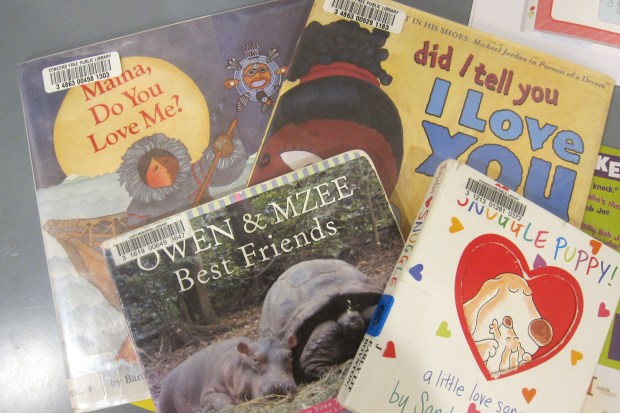
Raddish Kids had a heart-warming lesson this month about different ways that cultures celebrate love, specifically on Valentine’s Day, but also throughout the year. As a kindergartner, Travis is working on learning and showing empathy, so it was a nice lesson to make things concrete. First, we spent a few nights devoting story time to books about love, including:

  • Snuggle Puppy by Sandra Boynton
  • Best Friends (Owen and Mzee) by Isabella and Craig Hatkoff
  • Mama, Do You Love Me? by Barbara M. Joose

Love World (1)

After each one, we discussed the type of love relationship it entailed. Sometimes it was two friends, sometimes a parent and child, and sometimes members of different species! This was a great jumping-off point for talking about what love means, and how we might express love differently towards different people (or animals).

Travis said he shows love to a parent by hugging, but love to a friend by playing.

Love World (2)

Raddish provided lots of links to learn more about other cultures’ love traditions, including silly bits like how to say “love” in Klingon. Some made Travis giggle, like walking barefoot in Slovenia. Overall, though, this section of the lesson was geared towards older children and Travis was too antsy to sit and go through all of the customs.

Instead, we jumped ahead to the project: making up his own love celebration. The provided worksheet helped direct Travis’s thinking, but he gave a lot of silly answers before honing in on a real idea.

Love World (3)

He wanted to celebrate sibling love (aww!) so we ended up combining this with a winter picnic for Veronika.

Love World (5)

I loved watching them play and share the moment together!

Finally, we put together a Love Jar. Decorate any container you like, whether a shoe box or a mason jar or anything in between. Travis drew designs on a mason jar with permanent markers, including hearts and arrows.

Love World (8)

I left out post-it notes by the jar with the idea that he can write down a moment he appreciated or loved each day.

Love World (10)

Reading these out can become a special moment each week! We finished off all the heart-shaped fun with a quick compound word game from Raddish, filling in the blanks on “broken hearts” to complete each word.

Love World (4)

History Behind Hanukkah Traditions

Shining Menorrah Hanukkah (7).JPG

Hanukkah begins tonight, and although it’s not a holiday we celebrate, Travis’s latest Raddish kit contained a yummy traditional recipe (latkes) as well as an interesting lesson plan about the holiday. So we were intrigued to delve into it!

As background, we read a quick poem about Hanukkah and enjoyed the suggested video on the history of the holiday.

Shining Menorrah Hanukkah (2)

There were several suggested ways to craft a menorah, thereafter. We tried a very simple version made simply with painted clothespins clipped to craft paper or folded paper plates…

Shining Menorrah Hanukkah (8)

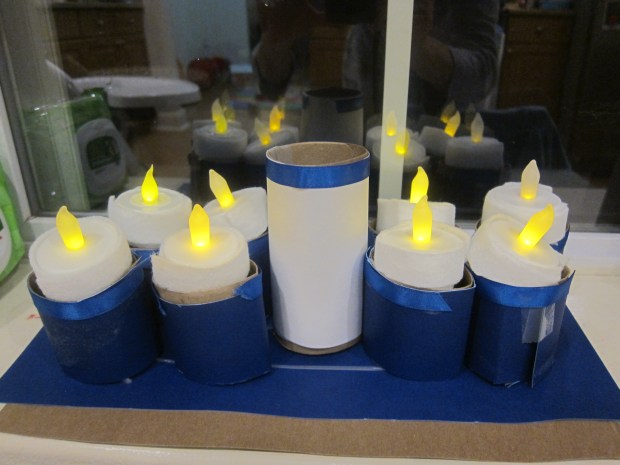
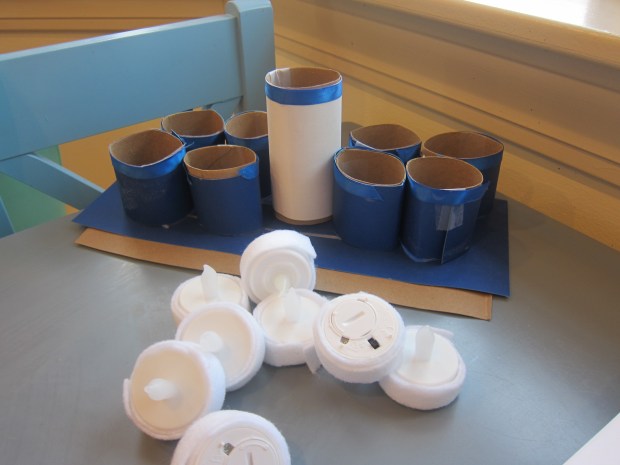
…but then also copied the method we used earlier this month for advent candles. This time, I cut toilet paper tubes in half for shorter candles and we wrapped them in blue cardstock with blue ribbon.

Shining Menorrah Hanukkah (1)

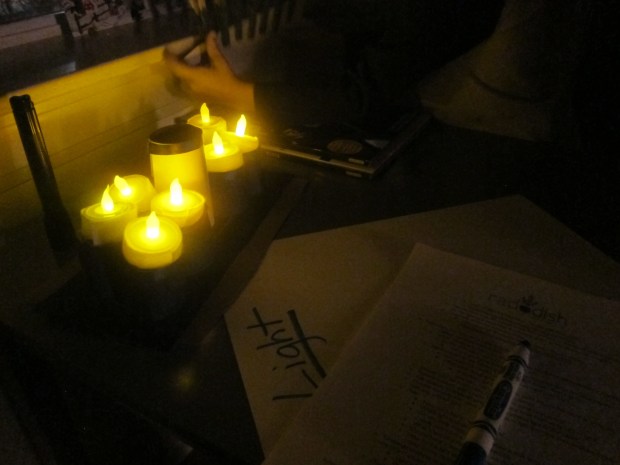
Wrap a taller candle in white cardstock for the center shammash. Add a felt-wrapped tea light to each candle. I brought this menorah to the table for Travis and I to discuss. We counted the candles, and talked about how each one represented one night of the miracle.

Shining Menorrah Hanukkah (5)

Time to light it, making sure to work our way right to left!

Shining Menorrah Hanukkah (3)

To add to our discussion, we waited until dark and then turned out all the lights except the candles. Travis helped brainstorm a list of other light sources, including flashlights, light bulbs, and the sun.

Shining Menorrah Hanukkah (11)

We discussed the differences among them, and he completed the sentence: “Light is important in my life because…” citing the ways it helps him see and focus and feel unafraid.

Shining Menorrah Hanukkah (10)

I was glad this lesson offered the chance to learn about another culture and customs. For bonus fun, don’t forget to play a game of dreidel with chocolate gelt for a reward.


Exploring Patagonia

Patagonia (1).JPG

Here was a very different lesson plan from Raddish Kids, in conjunction with the Comida Argentina recipes Travis has been cooking up. My kindergartner got to learn social studies, all about one region of the world!

Truth be told, the unit was quite simple compared to many Raddish lessons. I showed Travis the Patagonia region on a fantastic map we have featuring elevated surfaces for mountains. He immediately picked up on how mountainous the region was, and also how close to the ocean.

We read a few fun facts about the area, including the discovery of dinosaur fossils. Then it was time for a video!

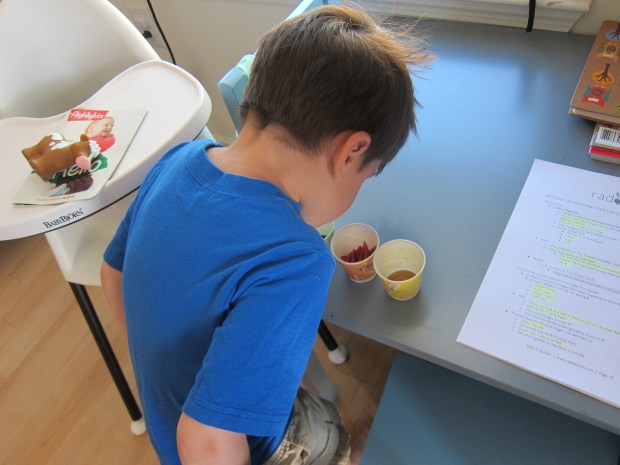
Raddish provided a worksheet for children to draw images of what they learned in the travel video. Travis immediately paused it and said, “Mom, there’s water!” His delight was infectious, pausing the clip every few seconds to draw the glaciers (“silvery mountains!”), desert, flies, or any other things that jumped out to a five-year-old boy.

Patagonia (2)

There are numerous ways to continue the lesson from here. Children are encouraged to present their knowledge while pretending to be something, be that an archaeologist, chef, journalist, or artist.
Because Travis loves YouTube clips, I suggested he be a travel blogger giving his review of Patagonia. But first, he wanted to make those glaciers! He raided the craft bin and wrapped Styrofoam balls in aluminum foil. These were glued to a sheet of shiny cardstock as “ice”. He added dowels as “desert”. All of this received lots of glue on top as snow.

Patagonia (3)

Without further ado, here’s my little travel blogger, enticing you to Patagonia!

Be a Food Historian

Food Historian (8)

Of all the lessons that have accompanied Travis’s Raddish Kids recipes so far, this one was the least accessible to a preschooler. I did my best to adapt it for Travis and it turned out to be sort of his first social studies project!

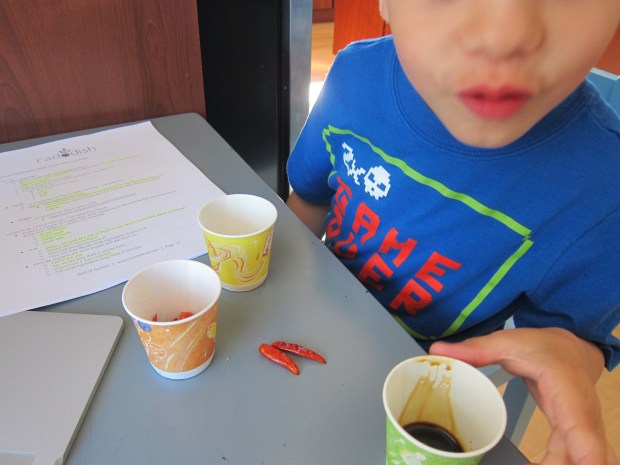
First, I set out some of the Thai ingredients we had used in our recipes and grocery store hunt, and invited Travis to test them out with all his senses. He was almost scared by the smell of little bird chiles!

Food Historian (2)

And incidentally loves soy sauce plain. Invite your child to taste, smell, and touch if appropriate, and add items like lemongrass, sugar, lime juice, or ginger.

Food Historian (3)

Big kids can go in depth here into the history of Thai food and learn that being a food historian is a real job; however, the suggested links from Raddish were heavy on text rather than video.
Instead, I showed Travis images of a few other iconic food/country pairs, including:

  • Tacos & Mexico
  • Baguettes & France
  • Sushi & Japan
  • Pizza & Italy

Food Historian (4)

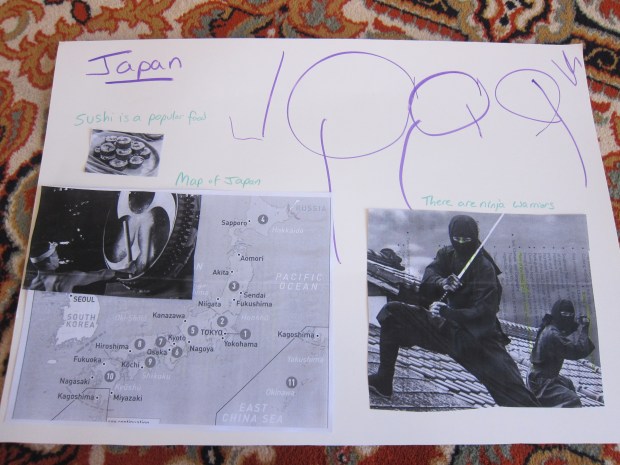
I then asked him which he wanted to explore more in-depth. He’s been very into Japan lately (ninjas, in particular), so chose that pairing. Again, there were many suggested links to web resources for big kids, but these were text-heavy and not of interest to my preschooler.
Instead, we located Japan on a world map. We then thought of a few things he knew about the country and printed out pictures of each.

Food Historian (6)

He helped write the word ‘Japan’ across the top, and we glued down the pictures.

Food Historian (7)

Voila! His first social studies project. I was proud he stuck with me for this lesson, which ultimately ended up being quite cute.

Food Historian (9)


Be a Thoughtful Traveler

Thoughtful Travel (3)

The lesson that accompanied Travis’s Mango Sticky Rice from Raddish Kids was all about etiquette while traveling abroad – big stuff for a small four-year-old! I made it accessible with more of a role-play game and I liked giving him this intro to different customs.

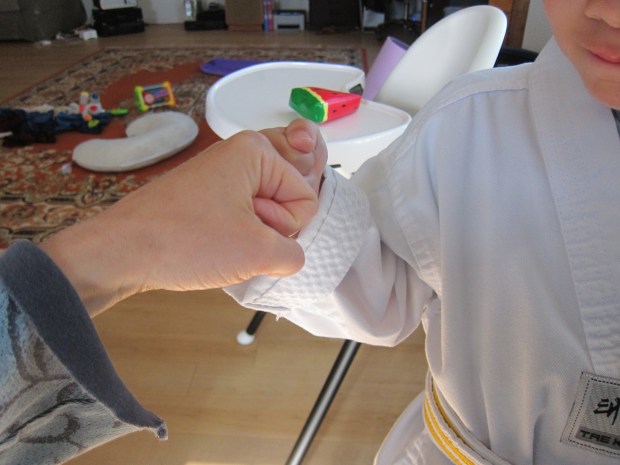
First, I walked up to Travis and gave him a fist bump. Well, this got a look of surprise, not normally how mommy greets him!

Thoughtful Travel (2)

Do something similar to your child, whether a wave, a hug, a high five, or anything out of the norm. I explained that people around the world greet each other differently, and we were headed on a “trip” to find out more!

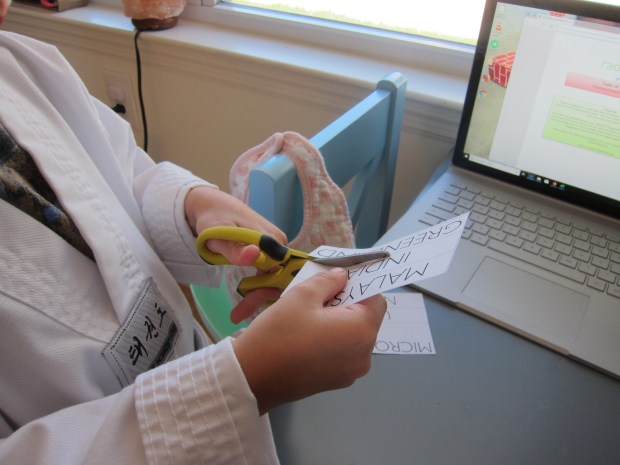
We checked out a good infographic with different greetings, and cut up cards with each country’s name on it.

Thoughtful Travel (1)

I asked him which one he liked best (everything from touching an elder’s feet in India to shaking fists in Niger), and he chose the Maori hongi greeting. To New Zealand we go!
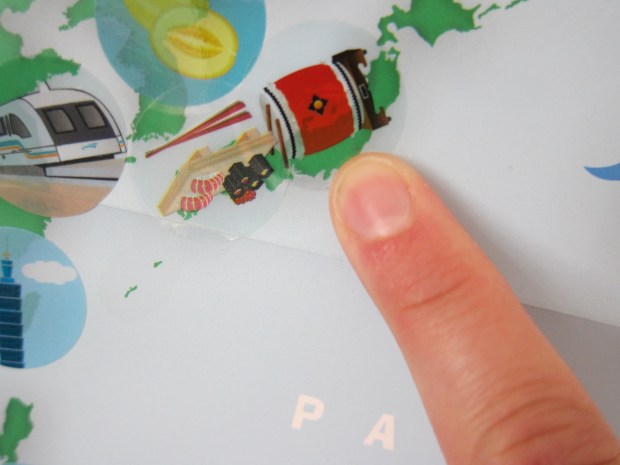
That meant racing to his room to spot New Zealand on the map. “We have to fly far!” he exclaimed. For role-play fun, pack a bag. Travis decided he needed a comic book and a bathing suit.

Thoughtful Travel (4)

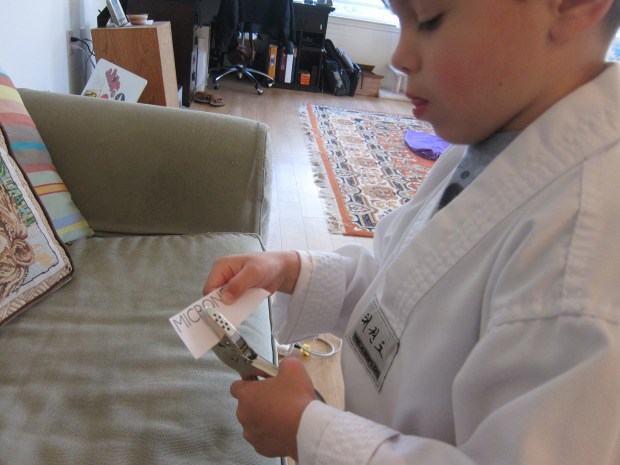
Off to the plane! The country name card became our plane ticket, which he loved hole punching.

Thoughtful Travel (5)

We mimed getting into our seats and flying.

Thoughtful Travel (7)

I could get used to this travel without the hassle! In no time we were in “New Zealand”, and now we could do the hongi.

Thoughtful Travel (8)

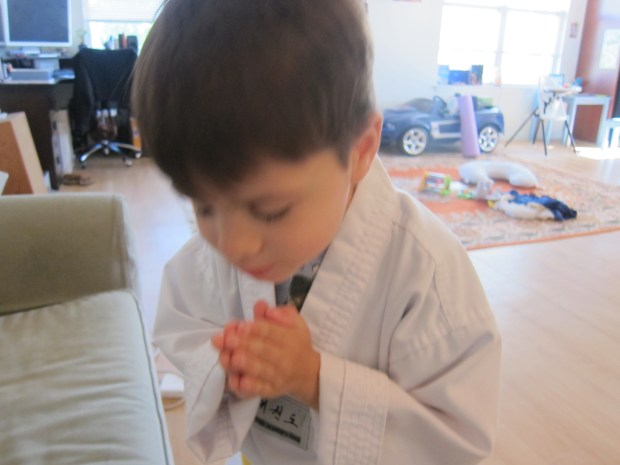
We also tested out a high five, a traditional Thai wai, and more, each time first pinpointing the country on his map, and then boarding our airplane.

Thoughtful Travel (6)

There’s a lot in this lesson that we didn’t do. For extension with older children, ask lots of questions about what it will be like upon reaching their destination. Reflect on what it means to be “thoughtful” in another country. Have your child pick a country and learn the traditional greeting, then design a way to teach their peers about it, whether through a travel brochure, song, dramatization, or other medium. You could even play World Greeting Charades!

What is a Landmark?

Landmark (15)

We’re only in our second month of a subscription to Raddish Kids, but I continue to be impressed with the company’s thorough lesson plans to accompany each recipe. I mentioned last month that the lessons are meant for everyone from preschoolers through big kids, so you’ll need to adapt and adjust accordingly. To wit, I worried Travis wouldn’t get much out of a lesson on French landmarks (to go along with the French dessert we baked), but boy was I wrong!

The idea is to learn about the Eiffel Tower specifically, and then follow-up with a discussion of landmarks in general. So we started with a video clip about the Tower.

Landmark (1)

Travis had so many questions right away: Could you really go to the top? What was the tower made of? How did they light it up at night? He was even more amazed when I pulled out a few old photos from my own trip up to the top!

Next, we looked at pictures of other landmarks. I selected some from a travel magazine, and showed him a mix of man-made (the Great Wall of China) and natural (the White Cliffs of Dover). Now it was time to ask him to define a landmark based on what he saw.

Landmark (2)

This was a tricky question for a preschooler, but he decided it was something you built. I pointed back to the cliffs again, and we settled on this definition: anything that can be easily recognized, that marks a specific location.

We explored further with a fantastic STEM activity, encouraging kids to build replicas of famous landmarks. Duplo was a natural medium for my preschooler, and he loved the challenge.

Landmark (4)

Here is our little Eiffel Tower, replete with a tourist on top!

Landmark (5)

We also tackled London Bridge, the Parthenon, and the Leaning Tower of Pisa.

Landmark (6)

Big kids can get super creative with these, in a wide variety of materials, and aim to be much more exact.

Landmark (8)

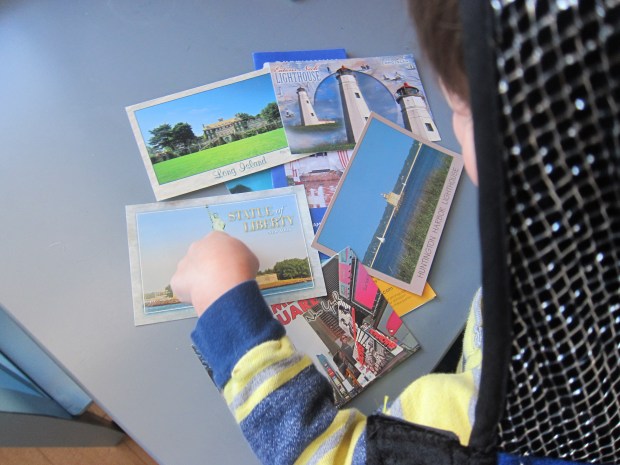
From here, older children can go on to make a brochure, travel blog, or model of any landmark they choose. But Raddish’s suggestion for young kids was to keep things closer to home. I’ll be honest: If I didn’t have a three-month-old, I would have taken Travis to a world-famous landmark in nearby New York City, like the State of Liberty or the Empire State Building.

Landmark (13)

But since that was out of the cards, I asked Travis if he could think of a landmark in our little town, and was so proud when he remembered the bell we pass ever day en route to school, part of a Soldiers and Sailors Memorial Building.

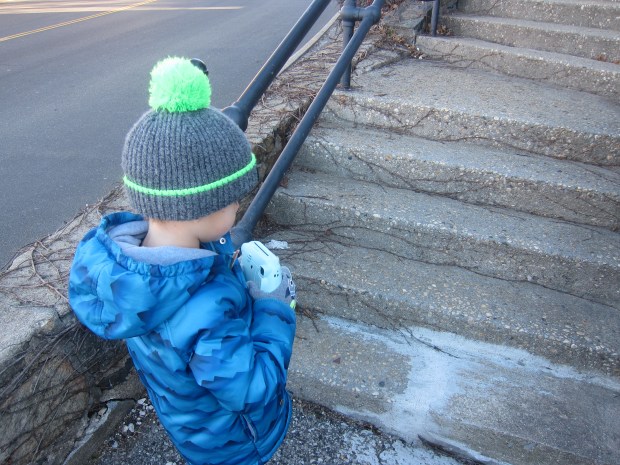
So off we went on a frigid morning for a few pics!

Landmark (9)

Travis loves using our instant camera, so was a happy participant despite temps in the teens.

Landmark (10)

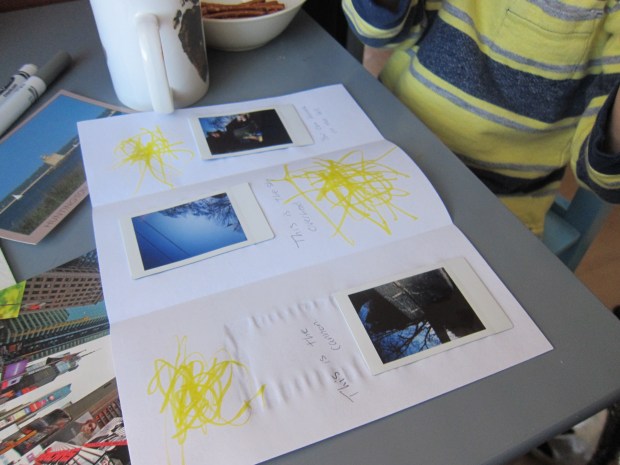
We came home and wove it all together by making a brochure. I showed him a few examples, and soon he was gluing pictures down proudly.

Landmark (14)

In sum, this was definitely an advanced social studies lesson for a preschooler, but I’m glad we accepted the challenge to tackle it. Travis learned so much, and we had a blast in the process.

Landmark (12)