Cartography Kiwi Crate


Kiwi Maps alt

Kiwi Co terms this their Treasure Hunt crate, based around a treasure chest and search for pirate booty. The projects are an excellent jumping off point to teach kids all about the science of cartography, a.k.a. map making. Thanks to the treasure chest and gold pieces, this one is sure to appeal to kids of pretty much any age!
Kiwi Maps (4)

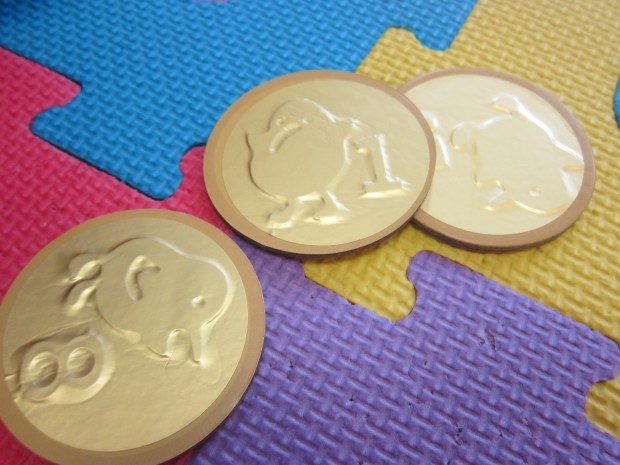
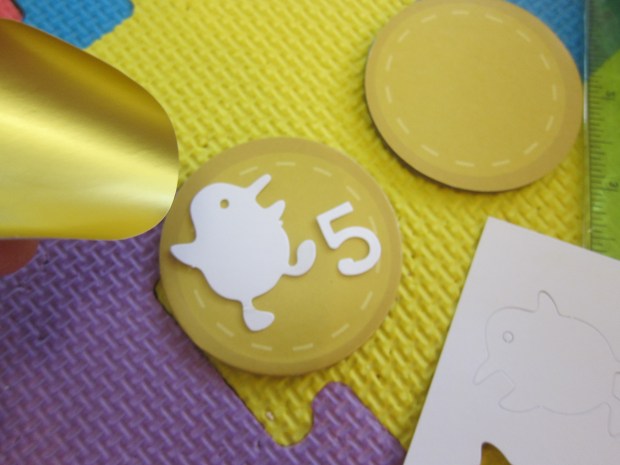
First up was making the treasure, Embossed Coins. Travis pondered very seriously how best to design each of the 3 provided gold coins, popping out templates of Steve the Kiwi and numbers.
Kiwi Maps (1)

He didn’t quite understand how these could become coins until we covered his design with a gold sticker. Press down and – voila! – the design underneath appears!
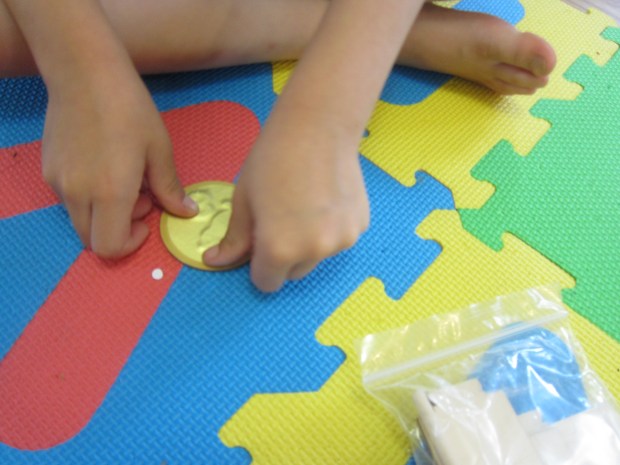
Kiwi Maps (2)

This had definite wow factor, even more so once running over the design with a q-tip for better embossing.
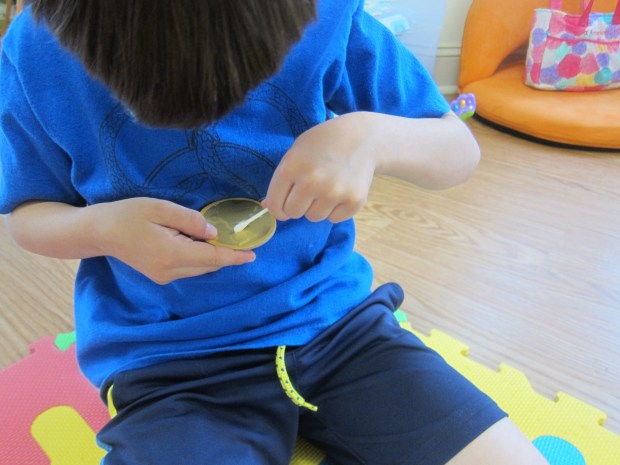
Kiwi Maps (3)

Next, he traded coin minting for carpentry, and put together the Treasure Chest. He was a bit distracted looking ahead (a key! a lock!) but I guided his attention back to building the chest first. This involved slotting together pieces for the base and lid, and lining up letters to make sure each piece was in the right slot. I appreciated how intuitive Kiwi Co made this step!
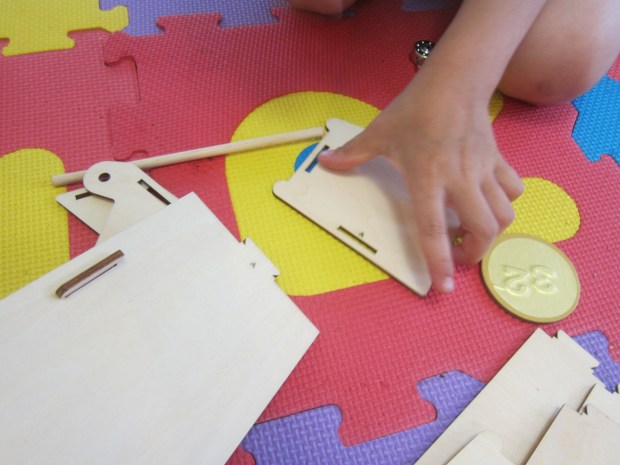
Kiwi Maps (5)

A wooden dowel is then inserted to hold the lid to the base.
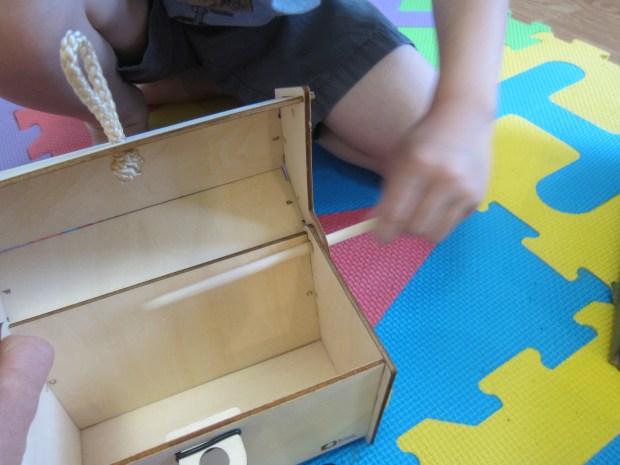
Kiwi Maps (7)

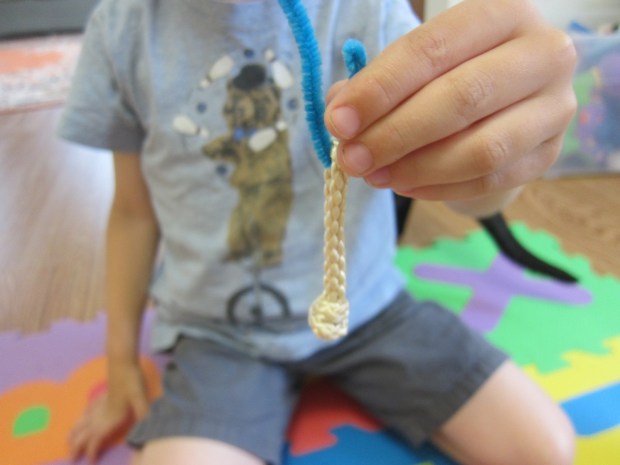
To add a swashbuckling touch, use a pipe cleaner to thread the provided rope through the chest’s latch. Add the silver lock. Travis loved practicing with the key over and over!
Kiwi Maps (6)

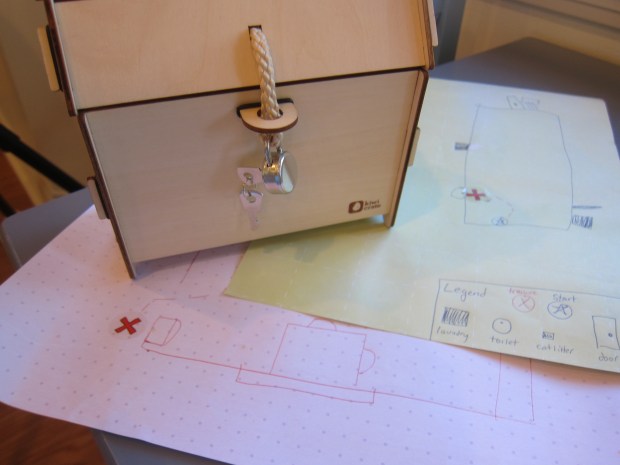
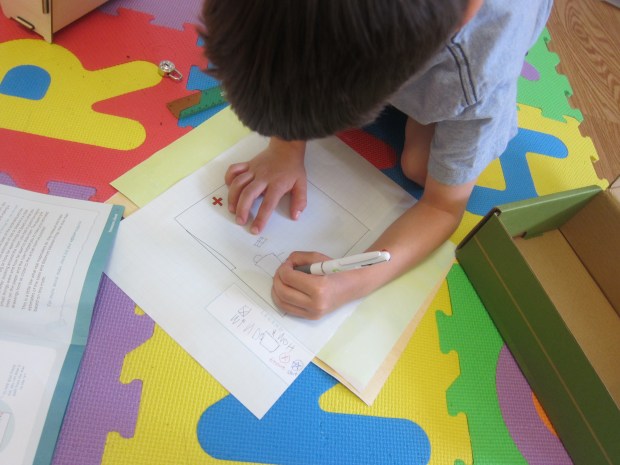
We securely locked away our gold coins and it was time to Make a Treasure Map. This activity was absolutely fantastic for getting Travis to think about how objects look from above. (I had him imagine he was a bird; in what shape would the bird perceive our couch, our coffee table, etc.).
Kiwi Maps (9)

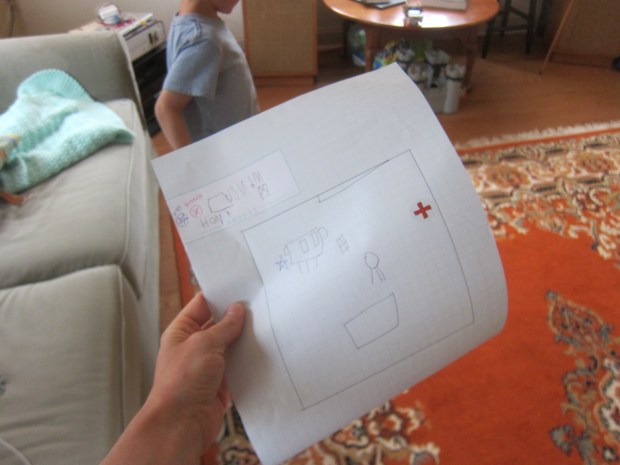
There was a marked difference between his first effort (mapping our living room)…
Kiwi Maps (10)

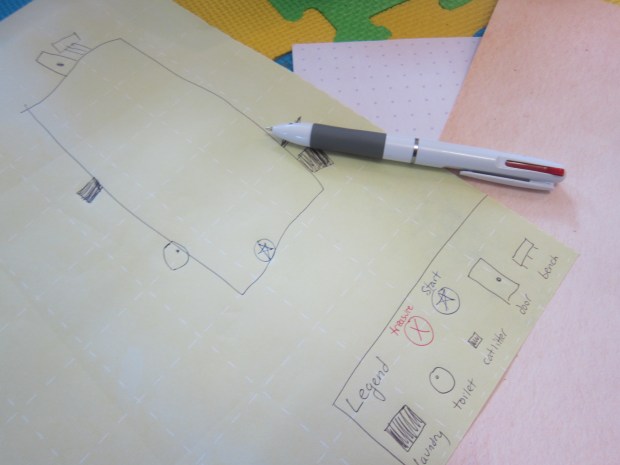
…and his second attempt (mapping the hallway).
Kiwi Maps (11)

The provided pen is one of those fun ones with 3 colors of ink. We added a red X on each map for the treasure and a blue star for the start. He loved then hiding the treasure chest and sending me on a hunt.
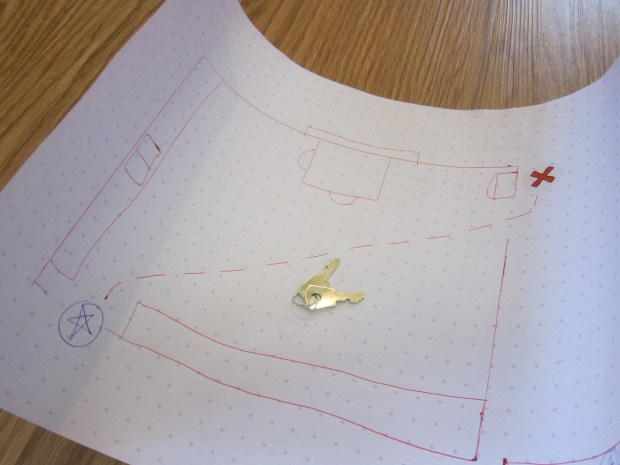
Kiwi Maps (12)

Then we flipped roles; I made a map of the kitchen and he had to puzzle it through.
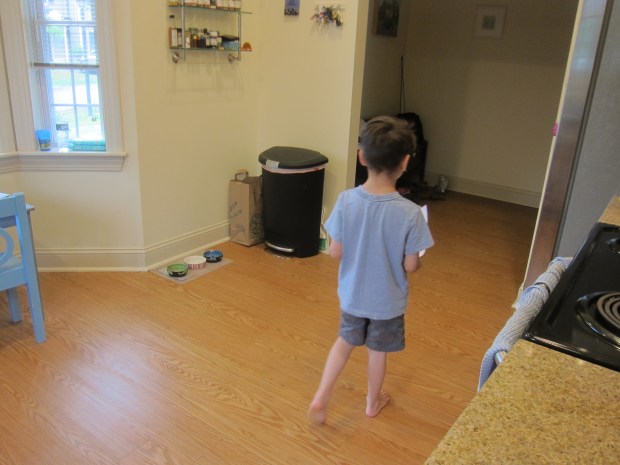
Kiwi Maps (13)

The booklet had a great explanation for kids about how they’re using math in this activity, everything from transferring 3D objects (solids) into 2D pictures, to the ideas of estimation and measurements.

As a bonus, we made Silver Pirate Coins for extra booty. Cut circles from thin cardboard (like a cereal box), then add other pieces of cut cardboard or patterns in glue on top.
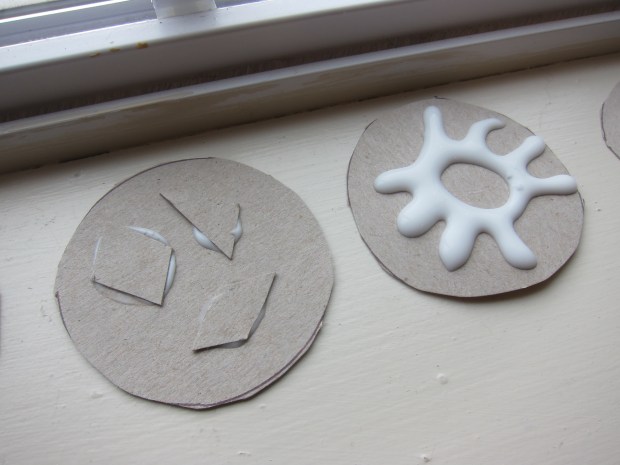
Silver Pirate Coins (4)

Let dry, then cover with foil and use a q-tip again to make your design stand out. We decided this worked way better on the cut cardboard version rather than the glue version.
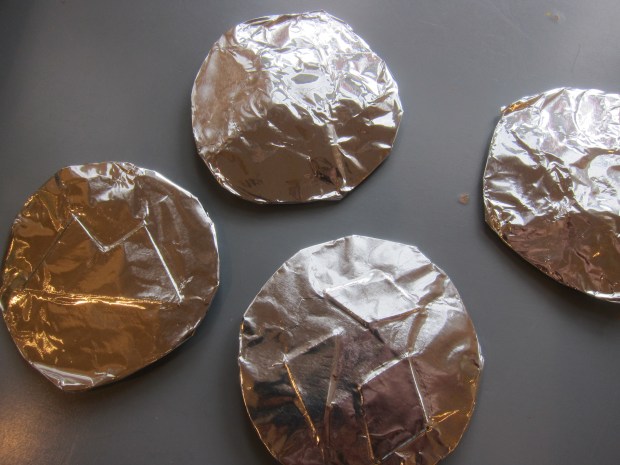
Silver Pirate Coins (5)

As always, Explore magazine had loads more information and activities to try, including another map to draw according to a provided legend.

For some fun reading to compliment this crate, check out Mapping & Navigation by Cynthia Light Brown or Small World: Maps and Mapmaking by Karen Romano Young.

Some Float, Some Don’t

Some Float (6)

When you’re toddler gets older, there will be no shortage of flotation experiments to try for early lessons on density. But for younger toddlers, you can simply introduce the concept of flotation with this simple game of observation. Some things go ker-plunk to the bottom of the water and some things float, and for now that’s all that matters!

I set out a shallow tray of water with a towel underneath for easy clean-up, and then pulled out a variety of objects.

Some Float (1)

Of course Veronika was immediately interested in everything in the pile, including a spoon, a clothespin, a plastic animal toy, a piece of sponge, a key, a wooden block, a comb, shredded paper, and more.

One by one, we dropped the items in the water.

Some Float (2)

“Will it sink or float?” I asked for each one. “It sinks!” I would say happily. Or, conversely, “It floats!” She parroted both these statements back to me, even though it was brand new vocab. But this is precisely how kids learn!

Some Float (3)

Then it was time just to let her explore the objects in the water. She loved squeezing the sponge pieces.

Some Float (4)

And crumpling the paper between her fingers until it disintegrated into our water.

Some Float (8)

The clothespin was fun to scoot around like a little boat.

Some Float (5)

And when she was done, I dumped the water in the sink and wiped the floor dry, and the game was complete!

Some Float (7)

Staying Cool

Staying Cool (1)

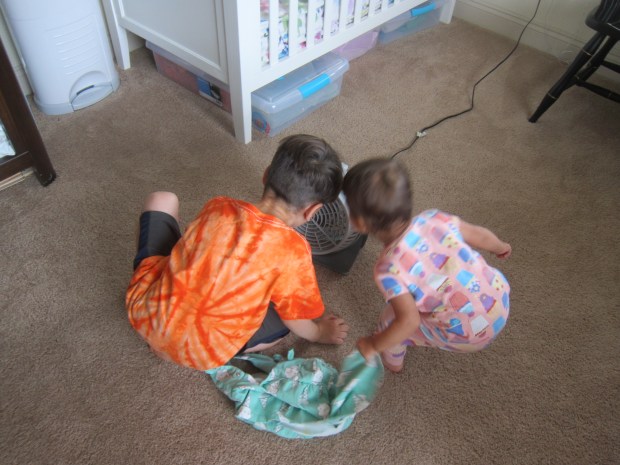
We’re currently in the midst of a heat wave, and are looking for any way to beat the heat. To turn possible-misery into a teachable moment, today I helped Travis explore ways to keep cool, all parked right in front of a nice cool fan!

For this simple STEM experiment, we started out simply by turning on the fan and moving either closer to it or further away. I asked Travis which was cooler, and he rightly noted that being close was best.

Staying Cool (2)

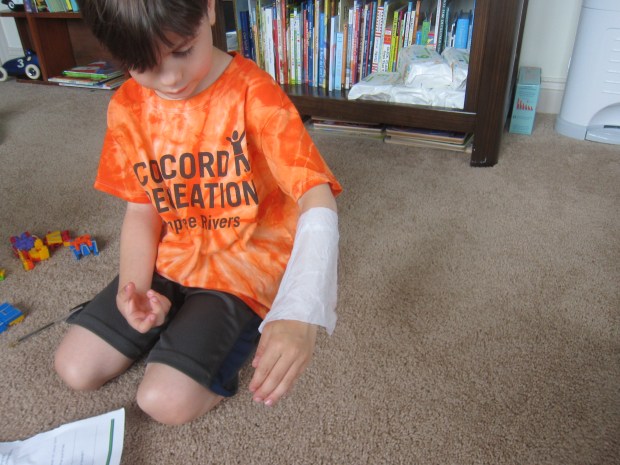
Then we draped a wet paper towel over one of his arms. Now he alternated the wet arm and the dry arm in front of the fan. Which felt cooler? The wet arm!

Staying Cool (3)

So now we had some scientifically-backed ideas to cool down on a hot day: wind and water. We brainstormed other things that might keep us cool, too, like shade.

For a minute there, we beat the heat!

Water Wheel

Water Wheel (4)

This homemade water wheel is easy to make and works so well, arguably even better than the version that Travis put together from a recent Kiwi Crate.

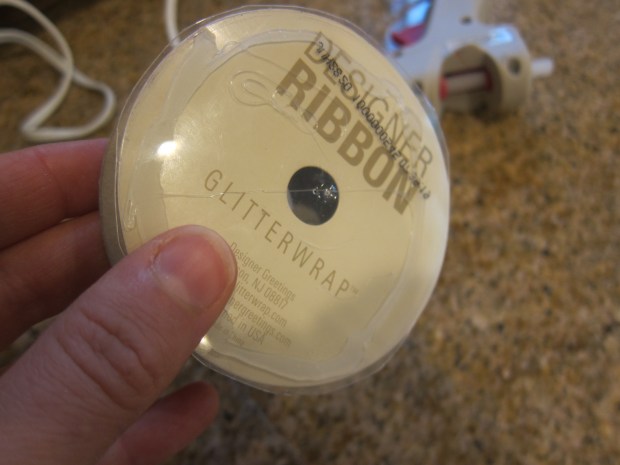
The set up was largely a grown-up job, as it involved hot glue and scissors. Trace an empty ribbon spool onto a plastic lid (such as from a non-dairy yogurt container). Cut out the plastic circle and hot glue onto the spool.

Water Wheel (1)

Pierce a hole through the center with a push pin.

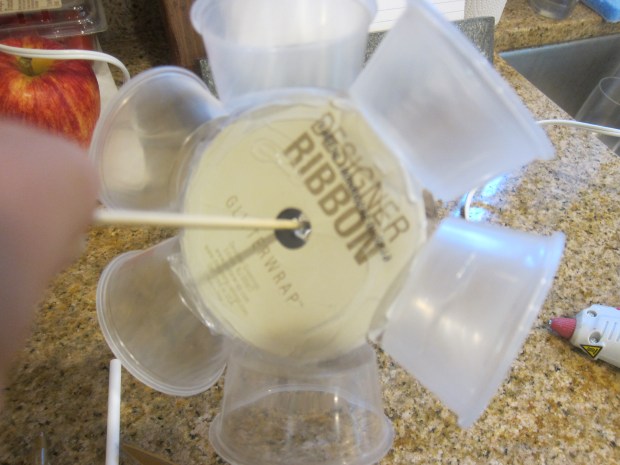
Now use plastic condiment cups as the spokes of your water wheel; hot glue these around the spool as close together as possible. Insert a skewer through the hole you made with the push pin, then slip a straw over the skewer for comfort.

Water Wheel (2)

Time to spin!

Water Wheel (3)

We headed outside and used a recycled water bottle to pour water over the contraption. The water wheel worked so well, even though I had worried gaps between the condiment cups might mean poor performance.

We even later took it up to bath time as a tub toy! Want more water experiments? Check out some of our previous fun with water.

Wind Direction

Wind Direction (2)

Here’s a quick STEM experiment to teach kids how to observe wind direction… with some bubble fun thrown in!

First Travis helped make a bubble solution. The recipe was for an enormous batch (6 cups of water!) and I knew we would never use that much. Instead, I decided to make one-third of the recipe, using the following:

  • 2 cups water
  • 1/4 cup corn syrup
  • 1/2 cup dish detergent

My proportions weren’t exact, but we ended up with great bubbles so I guess it worked! Combine the ingredients in a jar and shake to combine, then let the mixture settle for at least half an hour.

Then it was time to head outside with the bubbles and a compass. I taught Travis how to locate north. He proudly then pointed to east, south, and west. So how could we tell which way the wind was blowing?

Wind Direction (1)

Dip a wand into the bubble solution and see which way your bubbles go. Ours headed west, nice and lazily.

Wind Direction (3)

So if our bubbles were floating west, I asked Travis where the wind was coming from. “East!” he correctly answered.

Wind Direction (4)

This led to almost an hour of play on the patio, blowing bubbles, popping them against our screen door, and otherwise having a blast.

Wind Direction (5)

Which means this is the perfect STEM activity for a summer day.

Wind Direction (6)

Leaky Water Bottle

Leaky Bottle (6)

This easy STEM experiment has major wow factor, even for grown-ups!

In an empty water bottle, poke three small holes with a needle, one atop the other. Many water bottles these days are made of incredibly thick plastic: you’ll want to look for good old-fashioned thin plastic bottles if you’re going to pierce through with the needle easily.

Leaky Bottle (1)

We added a little blue food coloring to the empty bottle just for fun, although the experiment will work just fine with clear water.

Leaky Bottle

Begin pouring water in (a watering can is helpful to use), and of course water will begin trickling out of your three holes slowly. Once your bottle is full, twist on the cap.

Leaky Bottle (2)

The water stops leaking out!

Leaky Bottle (4)

After your child’s initial moment of wow, you can explain what’s going on: the bottle contains both air and water, but for more water to be pushed out, more air has to come in. Once the cap is on, the water molecules bunch together and create enough surface tensions against the tiny holes from the needle. If the holes were any larger, of course, this wouldn’t work so well! Then, once the cap is off, more air comes in and pushes the water right out again.

Leaky Bottle (5)

With that explanation out of the way, now Travis wanted to twist the cap on and twist the cap off over and over… Through three refills of the bottle!

Leaky Bottle (7)

There might have been a giggle factor to this project, too, since yes the bottle looks a bit like it’s going to the bathroom when the stream of water arcs out.

Leaky Bottle (8)

As you can see, both my kids were rapt! A fantastic STEM experiment outside on a hot day.

Leaky Bottle (3)

Water Volcano in a Bottle

Water Volcano (3)

This science experiment is a splashy hit, as long as it works correctly! You’ll teach kids something about air pressure, plus create a fun way to get wet on a hot day.

First, we needed to blow up a balloon inside a bottle…but there’s a catch. Insert the balloon into an empty bottle, folding the edge of the balloon over the bottle’s rim. Huff and puff with all your might and it won’t blow up, because there’s nowhere for the air pressure to go!

Water Volcano (1)

Next, we cut a small slit in the bottom of the bottle. Now, when I huffed into the balloon, it could inflate! It’s fun to watch this inside the bottle, almost like a lung filling up.

Water Volcano (2)

The next part is a bit tricky. Keep your finger over the slit in the bottle, and ideally your balloon will stay inflated because now the pressure can’t escape. With your finger still cover the hole, fill the balloon with water.

When you release your finger, the water explodes!

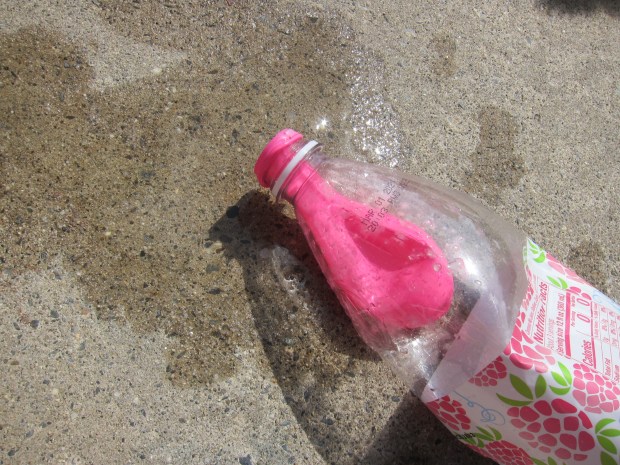
It was tricky to do this solo, though, and eventually we ended up filling the balloon with water before inflating it. Then, we got a mini squirt of water when I released my finger from the slit. You can see our rather unimpressive puddle here:

Are you able to get a huge water volcano? Please share in the comments!

Straw Fountain

Straw Fountain (5)

Here’s a quick STEM experiment that will technically teach your kids about centrifugal force (i.e. the same technology used in commercial water pumps, such as a laundry machine when it’s draining). But even the science is too advanced for your child, there’s the pure fun of spraying water!

To put together the “fountain”, cut a straw to about 2/3 of its length. Snip two holes at even intervals, sniping into but not through the straw, so it now has three segments.

Straw Fountain (1)

Poke a hole in the middle of the center segment with a needle, and then insert a skewer. Fold the other two segments down toward the tip of the skewer; you now have a triangle. Tape it all in place.

Straw Fountain (2)

Fill a glass with water and head some place where it’s okay to get wet! Our patio was perfect. To activate the fountain, just roll the skewer between your palms.

Straw Fountain (4)

Unfortunately it was really hard to capture photos of the fountain in motion, because Travis couldn’t quite master the trick of rolling the skewer quickly enough to make the triangle spin. When I showed him how to do it, on the other hand, our fountain worked fantastic but Travis kept stepping back to avoid getting wet and didn’t take any pictures!

Straw Fountain (3)

Still, it was well worth the effort to make this craft. The D.I.Y. “sprinkler” was just right for a warm spring morning!

Little Passports: Mexico

LP Mexico (22)

We may not be able to travel right now, but Travis journeyed to Mexico this week thanks to Little Passports! He was thrilled when the package arrived, so we wasted no time setting off on the virtual journey. He added stickers to his map, suitcase, and passport as I read him “Sam and Sofia’s” letter from the country.

LP Mexico (1)

The booklet was just shy of too advanced for a kindergartner. He was proud to solve a tricky maze, and enjoyed information about Mexican animals. Online activities included learning familiar Spanish phrases and completing a tricky dot-to-dot with points 1 through 85 of a Mexican landmark.

LP Mexico (14)

Souvenir:

The kit contained a D.I.Y. pinata; any activity that involved candy got a big thumbs up from Travis! The pinata was tricky to put together, so turned into more of a mommy project, following instructions to fold the cardboard cactus shape and glue on strips of provided tissue paper.

LP Mexico (7)

We made beautiful flowers, too, by rolling tissue paper around a pencil tip, then removing from the pencil and pressing down to bend the “petals” outward.

LP Mexico (6)

Travis proudly selected candy at the store to fill the cactus for a mini fiesta. Here he is gearing up for the big hit.

LP Mexico (9)

Even little sister wanted a turn taking a whack.

LP Mexico (10)

Candy! I loved that we did this on a random school night, without waiting for a special occasion, which made it feel extra fun for the kids.

LP Mexico (11)

Further Activities:

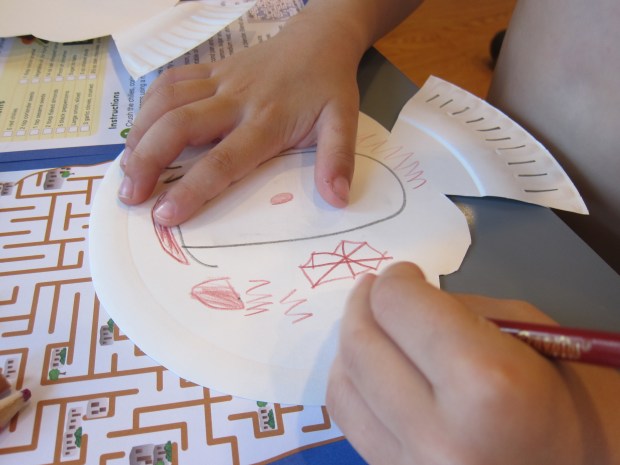
Next up we followed instructions for Day of the Dead Masks. Mark a paper plate in such a way that it forms an 8-wedged pie, then draw cheek ovals on two of those pie pieces nearest the bottom. Cut out around the inner rim of the paper plate.

LP Mexico (12)

Travis was so proud of his decorations!

LP Mexico (13)

Tape to a craft stick for an instant fiesta mask.

LP Mexico (16)

Next we headed outside for Sunshine Art, which was the bonus add-on for this country package. Arrange items on top of the provided plate and special blue-tinted paper, and then lay in the sunshine. You’ll have an image within two minutes!

LP Mexico (17)

We played around with which items worked best. I had hoped Travis would get into the idea of putting together a whole collage, but he lost interested rather quickly.

LP Mexico (19)

Next up was Aztec Guacamole. Travis was thrilled when I came home from the grocery store with 5 ripe avocados. We scooped the flesh into a bowl, and he was in charge of mashing!

LP Mexico (20)

Add 1 chopped tomato, 1 small finely chopped red onion, 1/4 cup minced fresh cilantro, the juice of 1 lime, and 1/2 teaspoon garlic salt. Serve with tortilla chips!

LP Mexico (21)

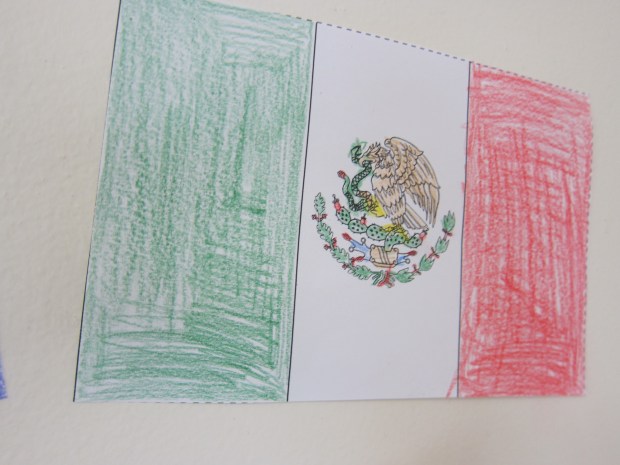
Finally, he colored in the Mexican flag for our garland; this was by far the most intricate flag to date, and he was so proud!

LP Mexico (18)

Recipe:

Who doesn’t love the thought of chocolate for dinner? Travis was quite excited when he learned we’d be making a chocolate sauce (mole); unfortunately we used red chilies that were very spicy. Look for mild red chilies for more kid-friendly results.

Mole Recipe (2)

Ingredients:

  • 5 red chilies
  • 2 teaspoons coriander seeds
  • 1 teaspoon sesame seeds
  • 2 tablespoons slivered almonds
  • 5 black peppercorns
  • 1 large onion, sliced
  • 3 garlic cloves, minced
  • 1 tablespoon cocoa powder
  • 2 tablespoons canola oil
  • (14-ounce) can diced tomatoes
  • 1/8 teaspoon cinnamon
  • 1 tablespoon sugar
  • 5 ounces vegetable broth
  • 1 (3-ounce) dark chocolate bar, chopped
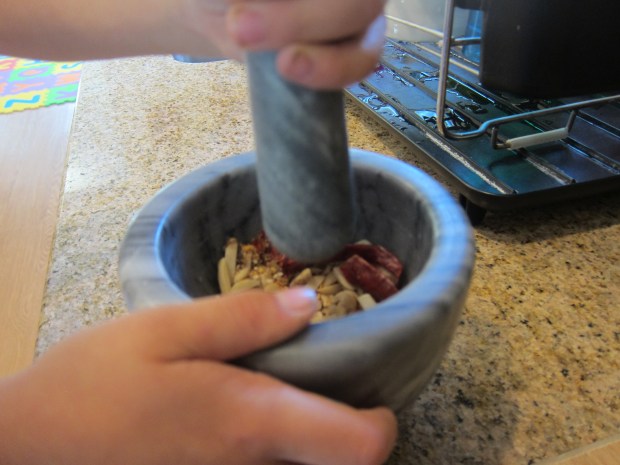
  1. Place the chilies, coriander, sesame seeds, almonds, and peppercorns in a mortar. Crush with a pestle. Transfer the spice mixture to a small skillet over medium heat and dry-fry for 1 minute. Set aside.
  2. Meanwhile, heat the canola oil in a large skillet over medium-high heat. Add the onion, garlic, and cocoa powder; cook for 2 minutes.
  3. Add the tomatoes to the onion mixture, along with the spice mixture, cinnamon, sugar, and vegetable broth. Bring to a simmer, then continue to cook for 25 minutes.
  4. Transfer to a blender and process until smooth. Pour into a bowl and stir in the chocolate, stirring until melted. We served the sauce over vegan chick’n!

Mole Recipe (4)


Make a Rainbow

Make a Rainbow (2)

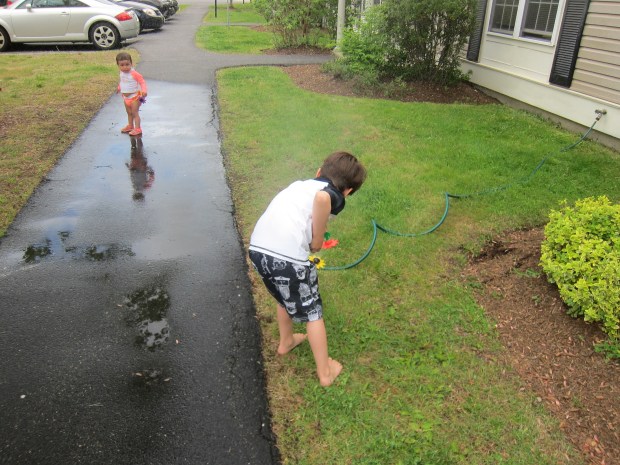
All you need for this little science trick is a hose and a sunny day. We’ve had early hot weather that made us pull out the sprinkler, but it’s also been overcast. Luckily this afternoon the sun poked through!

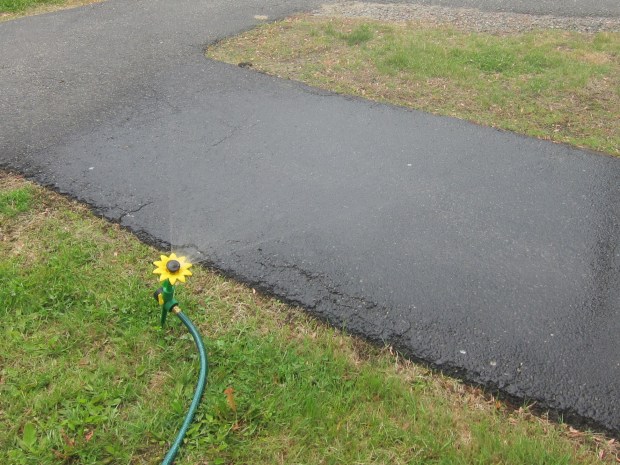
I set up a sprinkler with flower attachments that spray a fine mist. The mist will make it more likely to spot a rainbow, so if you don’t have any sort of hose attachment, you’ll need to use your thumb to change the flow of water.

Make a Rainbow (1)

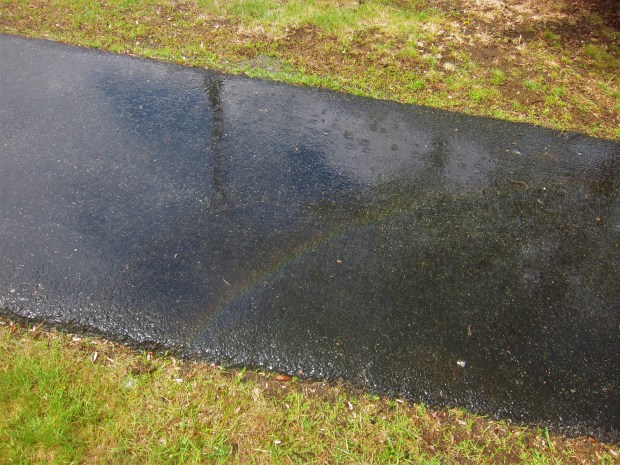
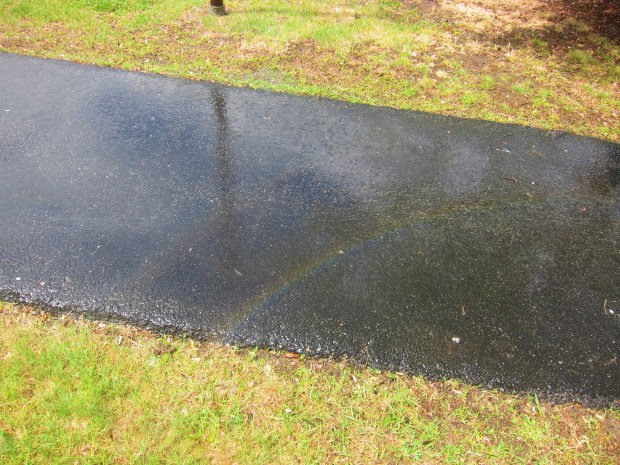
Now aim in the direction of your shadow. A rainbow will appear! This was magical for my toddler, and of course scientific for a my kindergartner. Travis understood that the water was bending the light from the sun and breaking it apart into the full spectrum of colors in a rainbow.

Make a Rainbow (3)

Then just have fun in the sprinkler of course!

sprinkler ($)