Look What I Did!

Travis is learning about “Long Ago” in social studies this year, which has introduced him to the idea of a  timeline. One great way to make a timeline more tangible for young kids is to have them make their own… featuring events from their own life!

The activity started out with a trip down memory lane, to think of big moments in his life so far. This was a great excuse to sit and go through old photos together! Travis loved seeing himself as a baby.

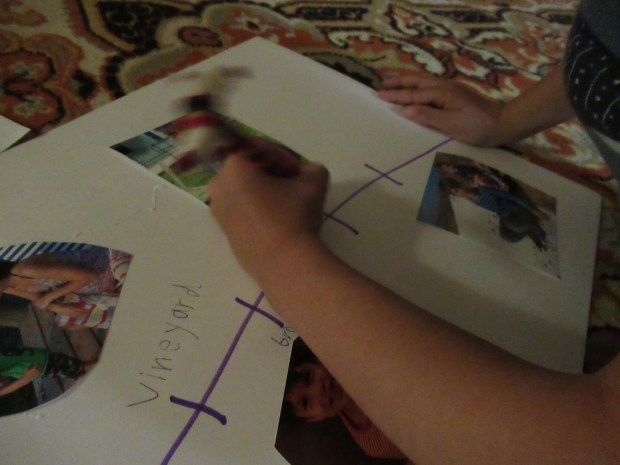
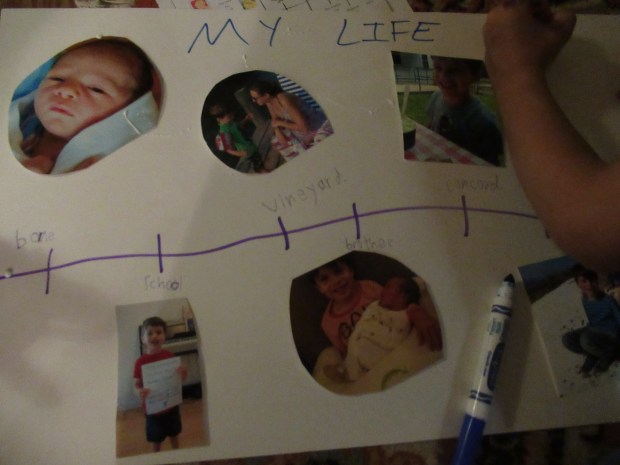
Once we had the photos printed, I challenged Travis to put them in chronological order. We arranged everything on a sheet of poster board, first, before making a big line down the center. Trim the photos to fit, as needed.
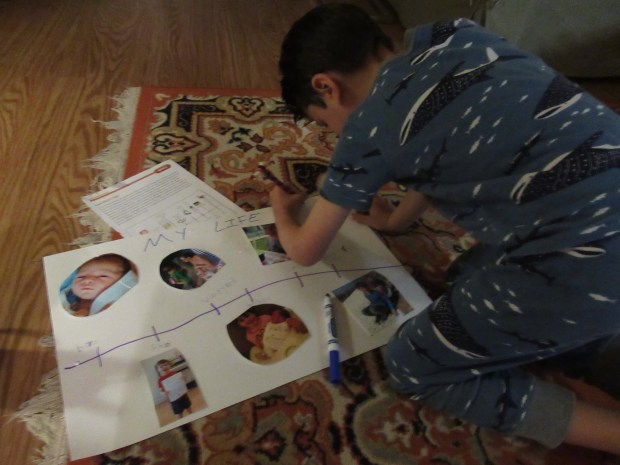
As he glued down each photo, Travis also labeled it, including such lifetime highlights as:

Being born

First day of school

Becoming a big brother

and more!
Little sister wanted to scribble out her own “timeline” too!
The actual events don’t matter so much as the fact that your child will learn to see time chronologically along a line with this project. Not to mention he or she is sure to be proud of all the accomplishments so far!
Not Your Average Paper Clock

Paper Plate Clock (4)

It may be true that analog clocks are gong the way of cursive writing and the dodo bird, but I still hope to teach Travis the valuable skill of telling analog time. This paper plate clock is the best way I’ve found yet to visualize hours and minutes!

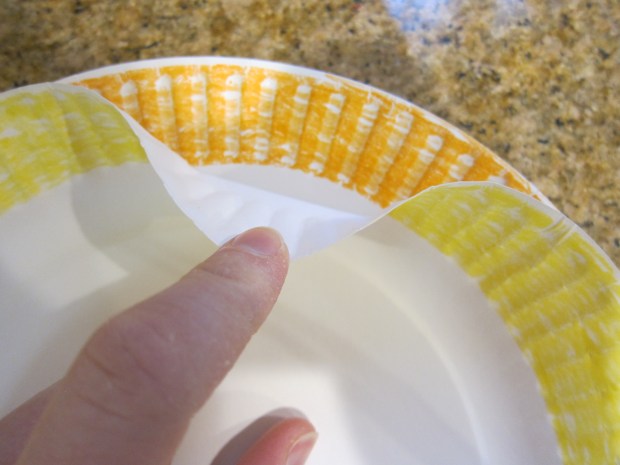
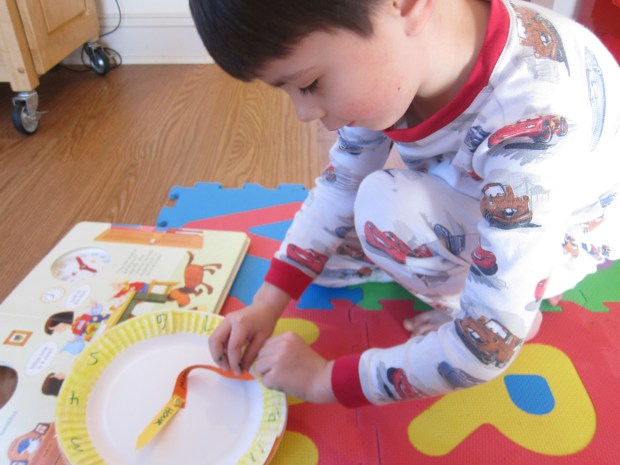
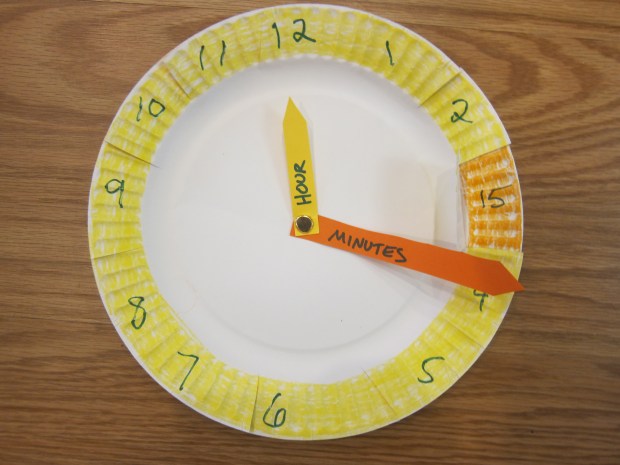
Most of the prep is grown-up work. If you have two different colored paper plates, simply use those, one atop the other. I solved the problem of having only white plates by coloring the rims with crayon, yellow for the hours and orange for the minutes.

Paper Plate Clock (1)

Hot glue the hour plate on top of the minute plate, making sure to glue only the center of the plates, not the rims.

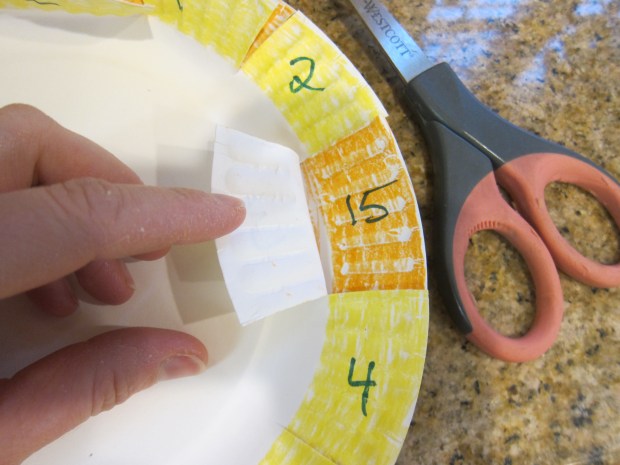
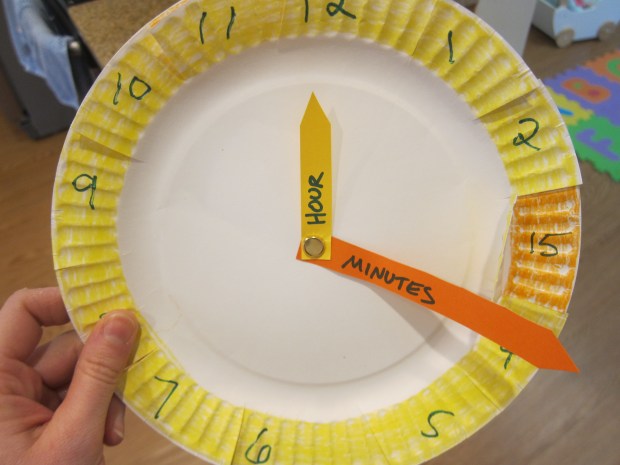
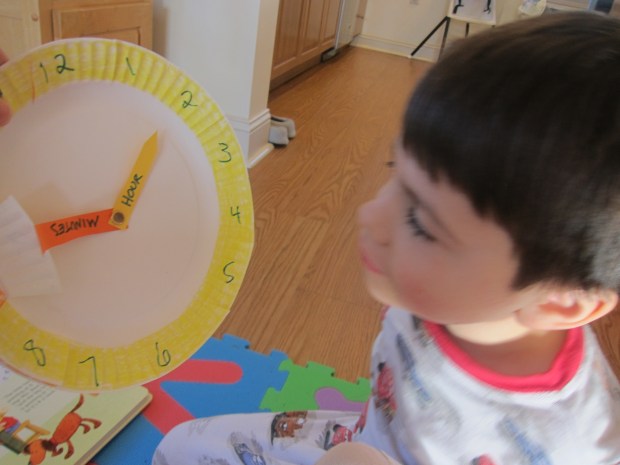
Number the hours, and then cut the rims of the plate so each hour becomes a flap. You might want to make sure you’re numbering at more even intervals than I did in a hurry – whoops!

Paper Plate Clock (2)

Now lift back each hour flap and write the corresponding minute on the bottom plate. I cut out two hands in corresponding colors of cardstock, yellow for the hour and orange for the minute. Insert these into the center of the clock and attach with a brad.

It was time for a time telling lesson!

Paper Plate Clock (3)

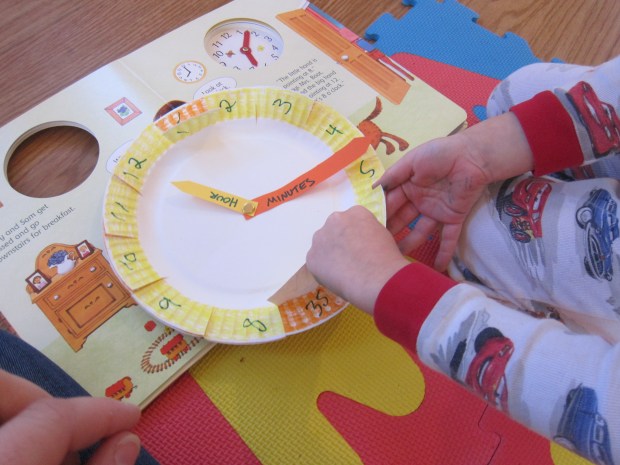
Travis loved how intuitive this clock was! First we practiced skip counting by fives, just to familiarize him with how the minutes would read around the bottom rim.

Paper Plate Clock (5)

Then we had a few practice rounds. Once he latched on to how the yellow hand lined up with the yellow plate and orange with orange, he could answer almost any “pop quiz” I gave him.

Paper Plate Clock (6)

At various points throughout the day, I asked him to read our analog clock on the wall.

Paper Plate Clock (7)

“1, 10,” he said, but I reminded him: “Lift up the 10 and see what’s underneath!”

Aha! “1:50,” he said proudly. I can see how this will be an incredibly useful teaching tool.


After School Routine Clock

After School Clock (4)

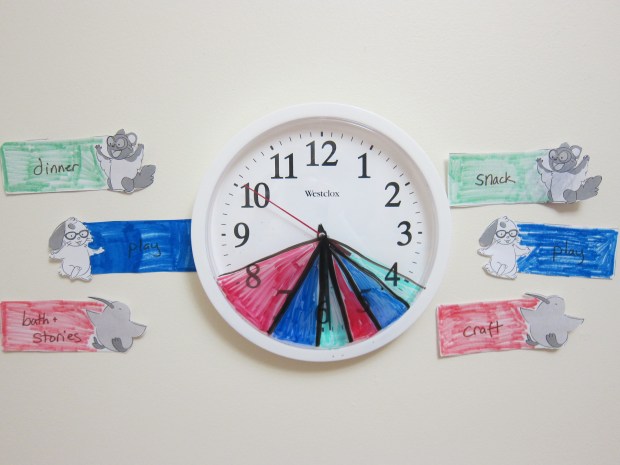
Travis has struggled lately at clean-up time, requesting more and more time to play. We made this cute clock in hopes of keeping things on track in the future! It helped him to visualize how much time was left for current favorite activities, like action figure play and coloring, and helped cut down on protests.

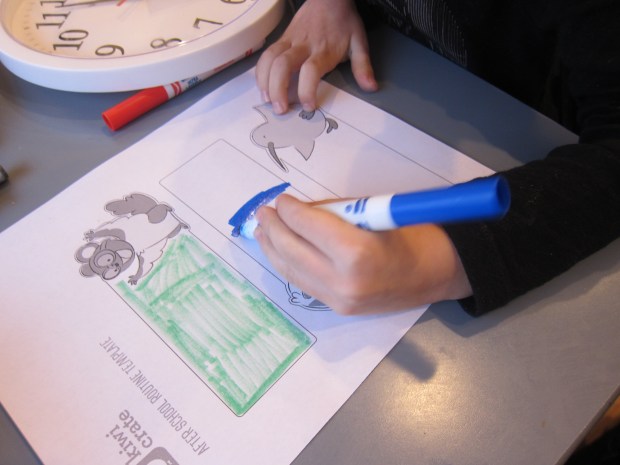
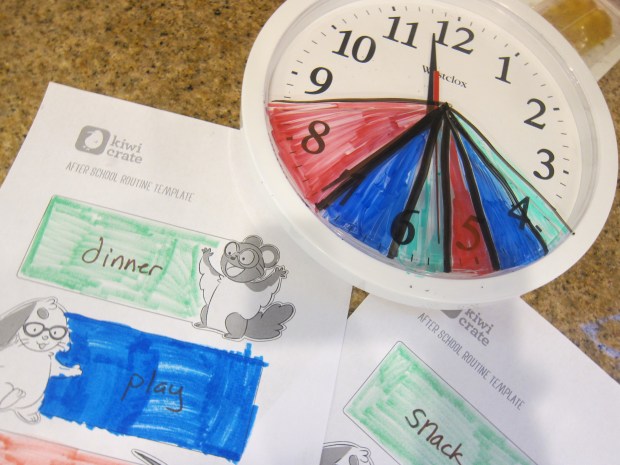
To start, we printed out two sheets of a template from Kiwi Co. Color in with crayon or marker, making sure to use colors that match any dry erase markers you have at home. That limited us to blue, red, and green, but you can use many colors if you have a full rainbow of dry erase. On each rectangle, write in a part of your child’s evening routine with dark marker.

After School Clock (1)

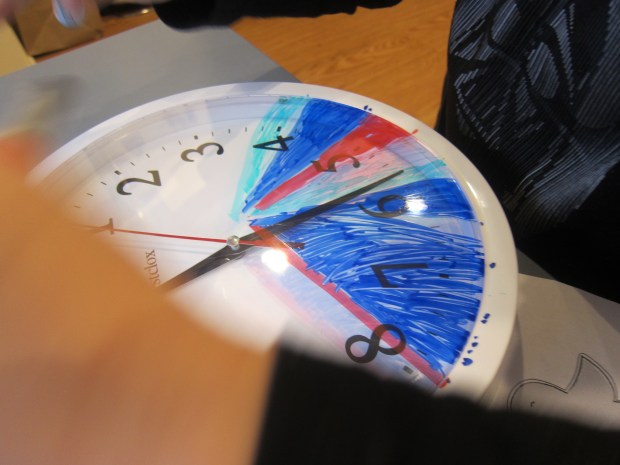
For each slot of time, we colored a corresponding triangle on a white wall clock that I purchased from Amazon. Travis loved being allowed to color directly on the clock!

After School Clock (2)

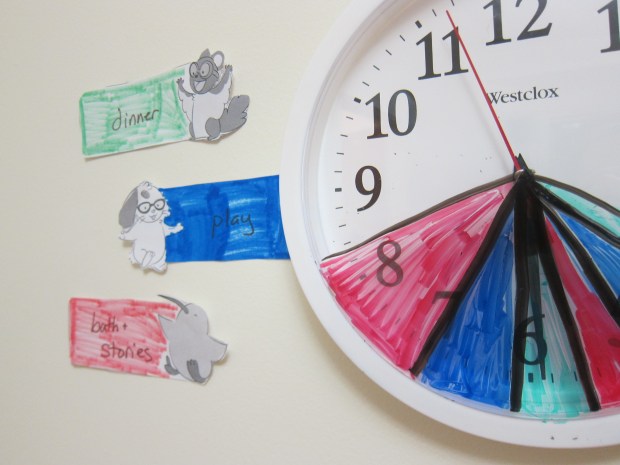
I outlined his triangles in black for a clearer visual, and then mounted the clock on the wall next to the Kiwi templates.

After School Clock (3)

What a great way for him to see how the evening is divvied up! I also love that this project can be adapted as his schedule changes in the future, especially once homework is part of the equation.

After School Clock (5)