Deep-Sea Discovery Kiwi Crate

Kiwi Deep Sea (4)

Travis’s subscription to Kiwi Crate is more welcome then ever these days, providing doses of science and art to our home school lessons. Travis couldn’t wait to dive into his deep-sea discovery crate.

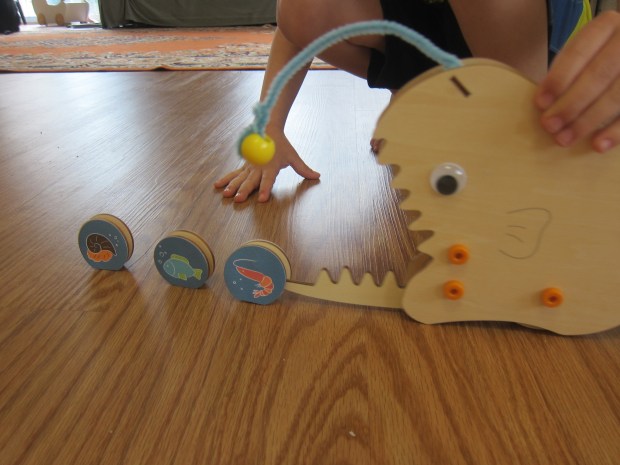
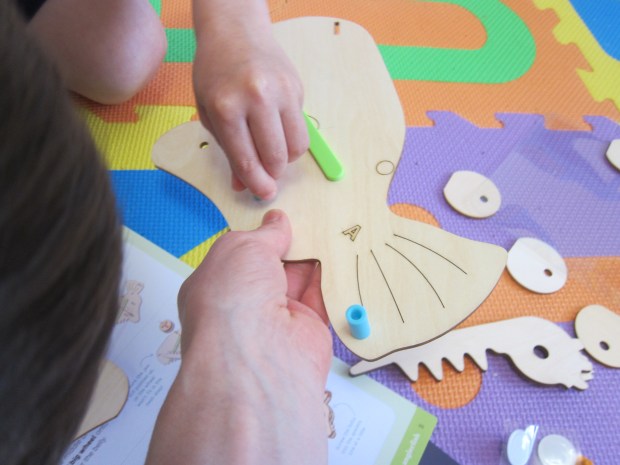
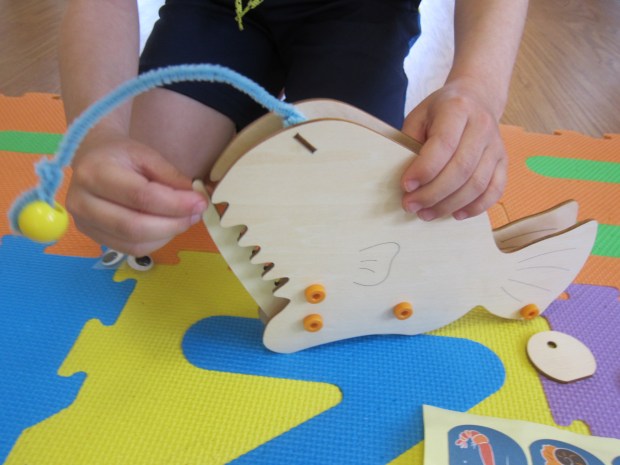
First up was to make the Chomping Anglerfish. Travis has learned about these deep-sea fish before, with their fascinating attached lantern, and this project was big on engineering. He helped work through the steps of assembling a wooden wheel then attaching this to the frame of a wooden fish with bolts and screws.
Kiwi Deep Sea (1)

He felt absolute glee when he realized the jaw could move (thanks to the cogs lining up with those in the wooden wheel), and even more so when he realized this meant the jaw could now eat…
Kiwi Deep Sea (2)

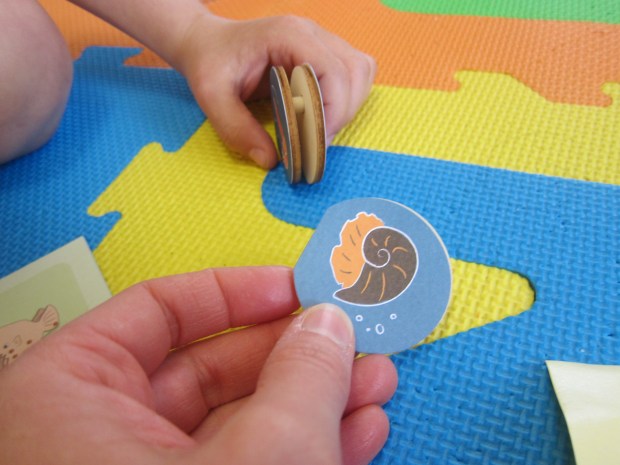
…the prey. Activity number two, to Make the Prey was very simple, just adhering stickers to wooden disks with a peg in between. The wooden jaw hooks onto these pegs so that as the fish scoots along the floor, the jaw lifts up and “swallows” the prey. Just as a cautionary note, the whole apparatus is a bit temperamental and won’t work if the wheel isn’t properly rolling along the floor or if the jaw gets slightly stuck.
Kiwi Deep Sea (3)

But needless to say, it soon turned into a game of chomping up other toys around the house, like Legos!

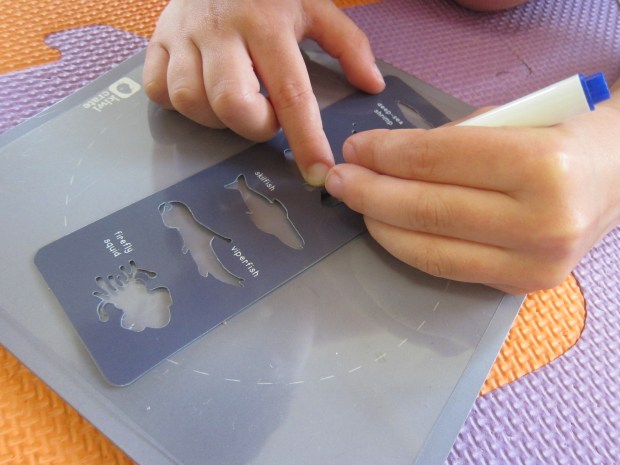
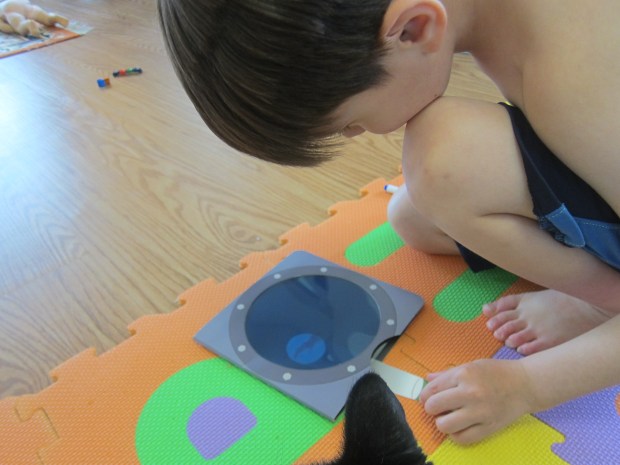
The third project was a Submarine Seek-and-Find. Using the provided stencil, Travis colored in fish shapes onto the provided plastic sheet. A paper “flashlight” then uncovers these creatures lurking behind the dark submarine window.
Kiwi Deep Sea (5)

We had fun “hiding” fish for each other among drawings of bubbles, or making up our own creatures. Travis was so proud surprising me with a giant sea monster. The booklet explains the science of how the finder works, when the white light of the “flashlight” makes your drawings appear even under the dark window.
Kiwi Deep Sea (7)

For some final fun, Travis dressed up as an anglerfish for a game of “hide-and-glow seek”! To make the costume, twist a black pipe cleaner onto a glow stick, and attach to any dark-colored baseball cape with masking tape. Have your child dress in dark clothing and don the cap, and they are ready to be a lurking deep-sea fish!

Hide and Glow Seek (3)

We cracked additional small glow sticks to be the “prey” and took turns hiding these around the house. Travis got quite creative with his hiding places! The goal is to find all the sticks in the dark before the “anglerfish” tags the other player.

Hide and Glow Seek alt

Obviously this game will work best after full dark, as you can see from Travis in the picture above, although we did also play a round before the sun went down.

Hide and Glow Seek (5)

If you want to extend the learning, check out two fun books: How Deep is the Sea from Usborne Books or Super Submarines, by Tony Mitton.

Circuit Science Kiwi Crate

Kiwi Circuits (9)

Travis’s Kiwi Crate has never been so welcome as during this period of home school and social distancing, particularly on a rainy day when we couldn’t get outside for a spring nature walk. The package literally saved the day! Sometimes Travis wants to spread out the projects, but this time he insisted we dive into the crate right away and do all three projects start to finish.

The big concept this month was electric circuits, which Travis has grown to understand recently from a few at-home projects, so I was glad the concept wasn’t foreign to him.

First up was the Lamp: A simple set-up involved attaching a lamp base and LED light holder onto a cardboard base, then inserting batteries into the provided battery pack. Travis connected red wire to red wire and black to black, and his lamp turned on!

Kiwi Circuits (1)

The second project, the Lampshade, was really the only “A” component of STEAM for this crate.

Kiwi Circuits (3)

Travis loved punching the holes along the lines of a Steve the Kiwi template, with a sheet of black paper underneath, since it was similar to punch art he does at school.

Kiwi Circuits (2)

The black paper then slips easily inside the lamp, and Steve glows!

Kiwi Circuits (4)

We put it all together with the Electric Bowler Game. This was definitely complicated, but Travis was determined to put together a circuit board that involved four brads against a wooden plate and wires that slip over the outer brads.

Kiwi Circuits (5)

He slotted the wooden frame together and held it all together with provided rubber bands.

Kiwi Circuits (7)

A wooden dowel in the middle is the switch to deactivate the circuit when needed. 3 silver balls then trigger the circuit; these need to be scuffed with scratchy pads first, although to our disappointment, the booklet did not explain why.

Kiwi Circuits (10)

To complete the game, a wooden board sits on top with a foam bumper. Take turns rolling the three metal balls towards the holes at the end. Once all three metal balls fall into place between the brads on the circuit board below, the circuit is complete, and the lantern turns on!

Kiwi Circuits (11)

Definitely play in a dim room, for the best effect.

Kiwi Circuits (13)

Travis enjoyed the Explore magazine that delved deeper, including an experiment called Let It Flow. What else could complete the circuit in our set-up, other than the three metal balls?

Kiwi Circuits (14)

Three plastic beads failed, as did three marbles. But three strips of aluminum foil did the trick!

Kiwi Circuits (15)

There was no suggested further reading this month, but I recommend Oscar and the Bird: A Book About Electricity.

Kiwi Circuits alt

We also plan to check out I Am Benjamin Franklin when the title is released in October, as there’s sure to be some fun bits about electricity in there!

Ice Lab Kiwi Crate

Kiwi Ice (3)

Travis’s latest crate from Kiwi Co was perfect to receive in winter, all about ice and snow. Specifically, Kiwi used the theme of ice to talk about crystallization.

First up was an Icy Experiment. Before school, Travis filled the provided ice cube tray so the ice would be ready to go when he returned home. As a side note, this ice cube tray is fantastic! Made from easy to unmold silicone, it makes adorable square blocks of ice.

Kiwi Ice (1)

Fill the two provided plastic cups with water, then add 3 scoops of salt to one cup only. Now add the ice cubes to both cups and let sit for 1 minute – don’t stir!

Kiwi Ice (2)

Travis next added 3 drops of liquid watercolor into each cup. You’ll immediately see that the color stays on top in the cup with salt, and floods to the bottom of the one with no salt.

Kiwi Ice (5)

The write-up in his booklet helped Travis understand that the salt had changed the density of the water, i.e. more stuff was packed into the same space, so the ice water stayed on top of the salt water. I told him about the Dead Sea, and how it has so much salt that even people stay afloat, which got a big whoa.

Kiwi Ice (6)

He drew his results, and then we were on to the next project: Crystal Snowflakes. This was similar to an activity we did at Christmas, making crystals in a suncatcher. Combine 1 scoop of provided Epsom salts and 1 scoop of water in a cup, along with 3 drops of the “clear gel”. (Note: We were curious what this gel was! Kiwi does not say). Stir for 30 seconds with a paintbrush until the Epsom salt dissolves.

Kiwi Ice (8)

Now brush over the three plastic snowflake shapes and let sit until completely dry. It will take over an hour but then you should see crystals appear as the water evaporates and the Epsom is left behind.

Kiwi Ice (9)

Oddly, we didn’t have great results. Still, we used the provided yarn to hang the snowflakes in the window, a pretty winter adornment.

Kiwi Ice (14)

We also attempted Explore magazine’s suggestion for a Crystallization Station. Combine 2 scoops of hot water (not boiling) and 2 scoops of Epsom salts in a plastic cup. Travis added blue food coloring so we’d have colored crystals by the end.

Kiwi Ice (12)

Place in the freezer for 10 minutes, then transfer to the fridge overnight. Again, oddly, we had no crystals in the morning, leaving me to suspect something was amiss with our packet of Epsom salts…

Kiwi Ice (11)

So we then turned to the Ice Experiments booklet in the crate, full of further ice exploration for Travis to test. One activity was an oldie but goodie: salt tunnels.

First, make a new set of ice cubes in the square tray. Travis liked towering them into a pyramid on a plate once frozen!

Salt Tunnel (1)

Sprinkle generously with salt and then drip food coloring on. The areas where the salt has melted the ice will become immediately evident.

Salt Tunnel (2)

Two colors made it even cooler!

Salt Tunnel (4)

Travis loved the way this looked and connected his observations to the barrel of salt outside that keeps us from slipping on frozen sidewalks.

Salt Tunnel (5)

As a final experiment, we played Sink or Float, another oldie but goodie. I filled two cups with warm water and we poured a generous amount of salt into one. Ideally you can add salt little by little until no more will dissolve, but since Travis was a bit impatient, ours was supersaturated with salt still on the bottom.

Sink or Float (2)

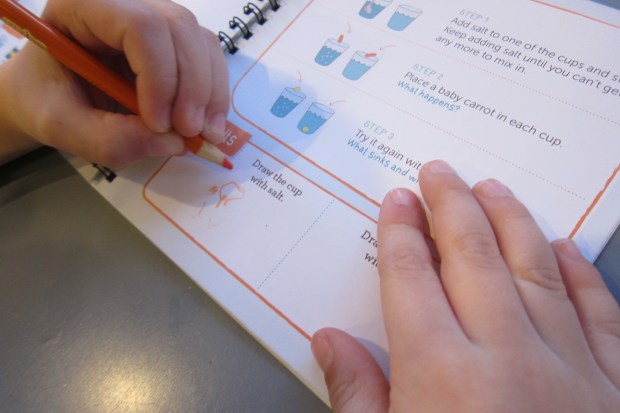
Now drop a piece of baby carrot into each and watch the instantaneous results. Travis loved that one plunked to the bottom and one stayed afloat. He drew the results in the provided “Lab Book,” which made him feel like a real scientist!

Sink or Float (4)

Have fun testing other items, too! Travis tried out Lego figures and marbles.

Sink or Float (3)

Kiwi Co. did not offer suggested reading this time around, but I recommend the following fun books about ice:

  • Ice (Stories Without Words) by Arthur Geisert
  • The Boy Who Invented the Popsicle by Anne Renaud

Kiwi Ice alt

Marble Timer Kiwi Crate

Kiwi Time (7)

Travis’s kit this month from Kiwi Co was all about time, and the different ways humans have devised throughout the centuries to keep time. I’ve simplified the steps we followed in my account below, but the projects could be put together with items from a craft and hardware store.

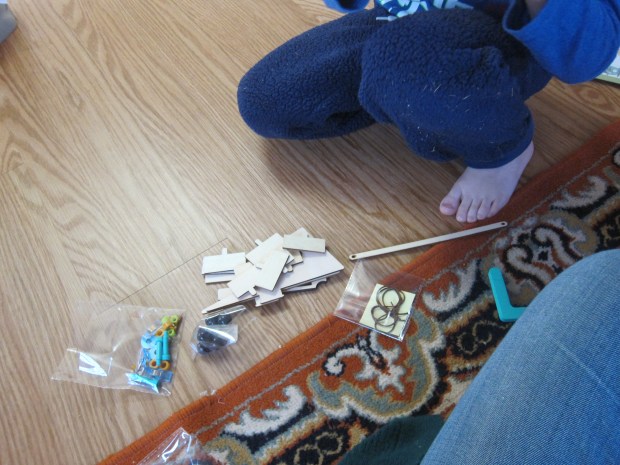
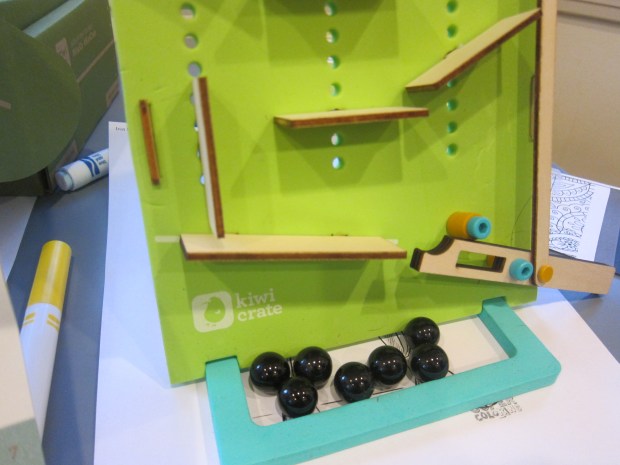
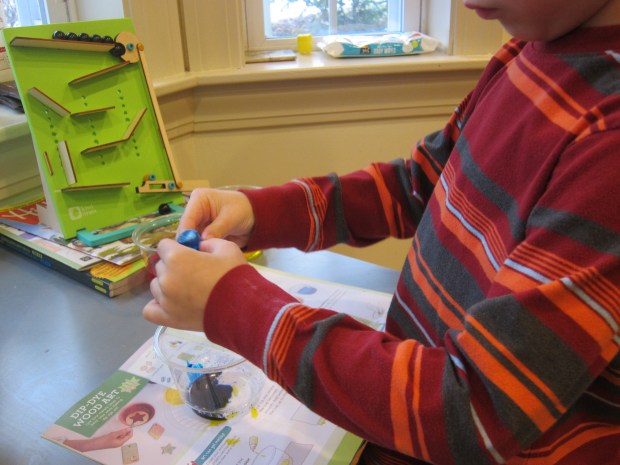
The main project was a Marble Timer. Travis gamely followed complicated instructions for applying nuts, bolts, and wooden pieces to the provided backboard in the proper order.

Kiwi Time (1)

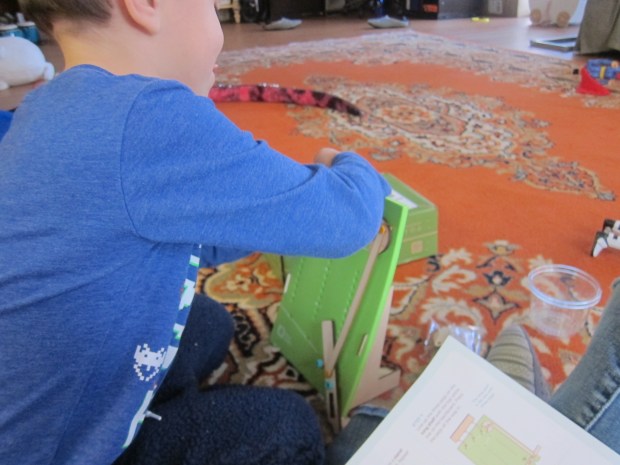
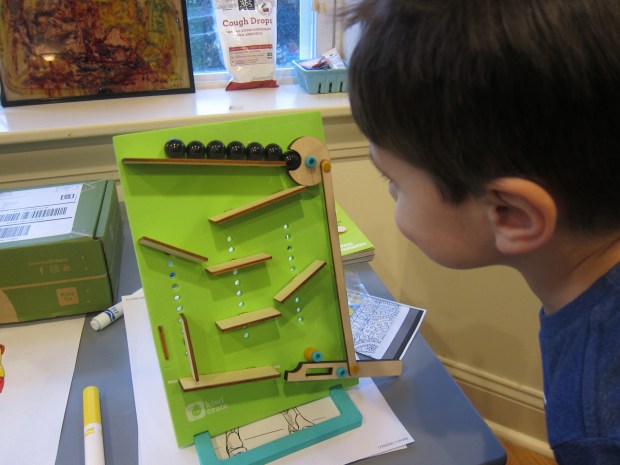
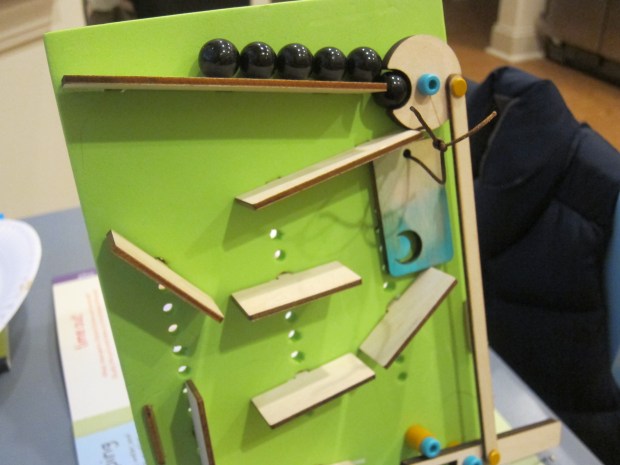
Wooden shelves are then slotted into the holes of the backboard, following handy white lines as a guide. These now make a ramp that the seven provided black marbles can roll down.

Kiwi Time (2)

When one marble reaches the bottom, it falls into the notch of a wooden slat, which triggers the wooden handle, which turns the wooden circle, which then feeds the next marble onto the ramp. The instructions help kids understand how each marble takes the exact same amount of time to complete this course, hence why it can be used as a timer.

Kiwi Time (3)

Unfortunately, our alignment was slightly off, making this project frustrating for Travis. One of us had to keep a finger on the wooden slat at the bottom in order for it to function.

Kiwi Time (4)

But Travis was still able to grasp the concept, and he liked the Marble Timer Experiments that followed: what would happen when he rejiggered the position of the wooden pieces?

Travis loved fiddling with this idea. After a few tries where the marbles dropped straight down or missed the lever, he had a course set up that was much faster than the original “timer”.

Kiwi Time (12)

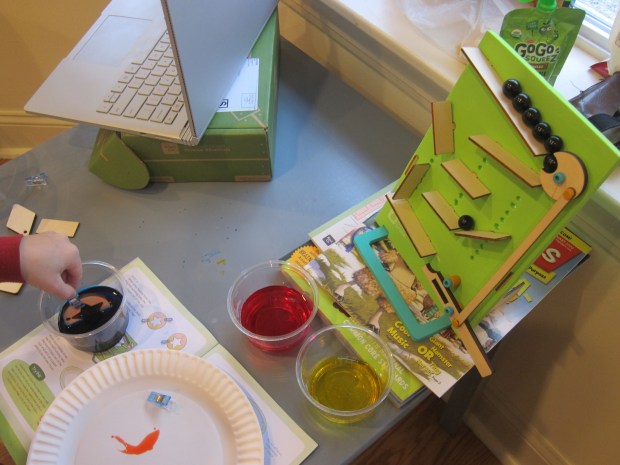
The final project was the A part of STEAM, as often seems to be the case in Kiwi Crates: Dip-Dye Wood Art. First he squeezed the provided liquid watercolors into the provided cups, adding water as instructed.

Kiwi Time (8)

Use a clip to hold wooden shapes into the dye for the length of time it takes the marbles to move through the “timer”.

Kiwi Time (10)

Kids can then experiment with what happens if a piece is dyed for a second round. Again, because our marble timer was slightly wonky, we sort of fudged this step and just counted out seconds.

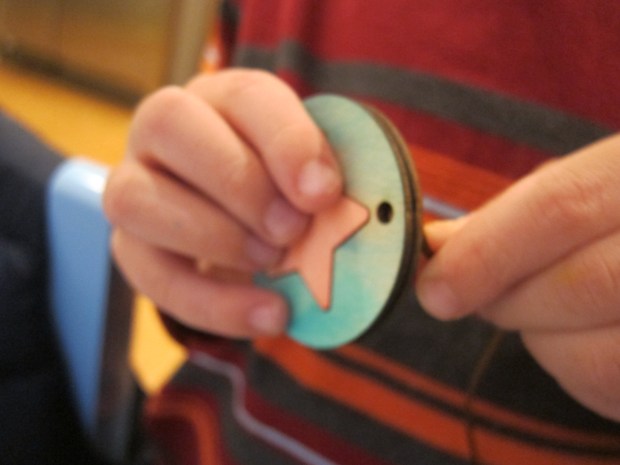
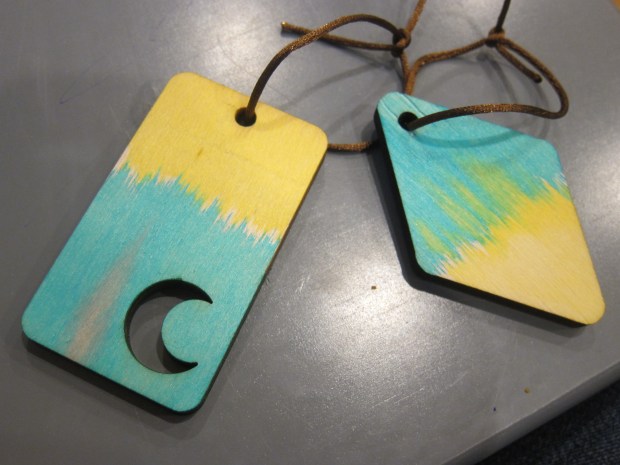
As a nice final touch, Kiwi provided cord to loop through the dyed pieces.

Kiwi Time (5)

The resulting trinkets make great keychains on Travis’s backpack!

Kiwi Time (6)

The booklet this month contained no suggested books for further reading, which was a shame, but Travis did find goodies like time-telling methods through the centuries, a Find It page, and an experiment that turned our to be perfect for his upcoming school Science Fair (stay tuned!).

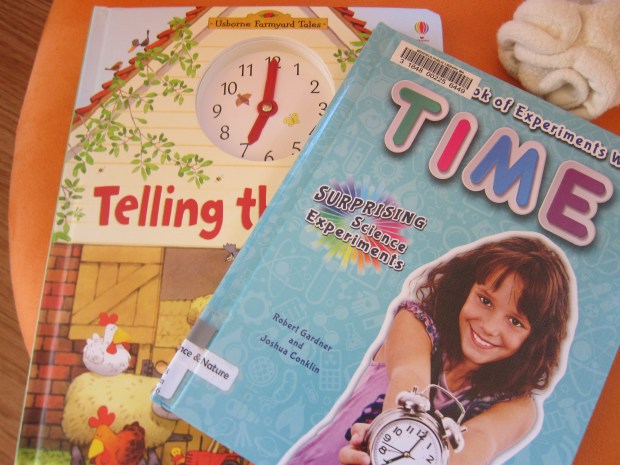
For further reading, I highly recommend Telling the Time from Usborne books and A Kids Book of Experiments with Time by Robert Gardner.

Kiwi Time alt

Mirror Illusions Kiwi Crate

Kiwi Mirrors (17).JPG

Travis’s Kiwi Crate this month focused on mirrors and the tricks of light that allow for illusions. There was a bit of overlap with the Secret Agent crate, so I was surprised it was next in our queue from the company, but he still enjoyed the projects!

First up was making a Trick Box. This very simply involved folding open the provided green cardboard box and slipping in an illustrated insert. (Kids also have the option to illustrate their own insert).

Kiwi Mirrors (7)

Place the insert in the box, then slip in the provided mirror, making sure it is at the correct angle (arrows marked inside help kids to ensure a proper alignment).

Kiwi Mirrors (8)

Peeking through the box now reveals the image in reverse. This was a bit lost on Travis, as he couldn’t read the “hello there” message he’d chosen either forwards or backwards.

More of an impact came from the penny trick you can perform: Drop a penny through the slot in the top and it seems to disappear, when really it is just falling behind the angled mirror. This is a fun one for kids to play a “magic trick” on friends and family.

Kiwi Mirrors (16)

Next up was making a Painted Puzzle. Place the provided wooden squares in a frame, and cover with one of the provided clear stickers. Travis did this a bit differently, attaching all four clear stickers, so our results weren’t perhaps perfect.

Kiwi Mirrors (9)

But the painting method was neat! Travis liked using the paint stampers, which are dipped into provided tiny paint pots. Cover the surface of the wooden tiles, let dry, then peel off the stickers.

Kiwi Mirrors (10)

The painted puzzle can now be taken apart and put back together again. But even cooler is viewing it through…

…Mirror Goggles, the final project. To make these (which look almost like Google’s VR viewer), open up the provided cardboard goggle box.

Kiwi Mirrors (1)

Travis got to exercise his fine motor skills to attach the sides with a brad; add padding foam around nose and forehead for comfort; and place a sticky donut and bead on top. This bead is going to help you keep your head up later, read on!

Kiwi Mirrors (2)

Thread an elastic through the holes on either side and secure with cord stoppers, then attach a mirror to the underside of the goggles with sticky foam. Your goggles are ready for viewing!

Kiwi Mirrors (4)

Wearing them took a bit of practice, with the goal of piecing together your Painted Puzzle or a provided wooden puzzle. I had Travis watch me first, as you really need to keep your head up to have the mirror show you what’s on the work surface below. Don’t tilt your head down for peeking or the bead will fall from the donut!

Kiwi Mirrors (5)

Once he got it the hang of it, Travis thought it was so cool. I loved watching his hands move, forward when they needed to go backwards and vice versa, until he started to understand he was seeing in reverse; it was like observing the gray matter of his brain at work.

Kiwi Mirrors (14)

If it won’t frustrate your kids, have them try writing their name or drawing a picture while wearing the goggles. Full disclosure, this is hard. Here’s my attempt to write his name!

Kiwi Mirrors (15)

There was lots more fun to be had in Explore magazine. First, we made a map (a bit of an overlap from Secret Agent). When read normally, it led him nowhere. Then he looked at it through the selfie feature on my phone.

Kiwi Mirrors (11)

Aha, he spots the treasure…

Kiwi Mirrors (12)

Success!

Kiwi Mirrors (13)

Then I showed him an example of backwards writing (again an overlap from Secret Agent).

Kiwi Mirrors (20)

There’s also a mirror word search for older kids, and a few cool mirror illusions you can try to recreate at home like multiplying apples…

Kiwi Mirrors (19)

…or a disappearing middle!

Kiwi Mirrors (18)

We finished with a bedtime read of two suggested books: Light: Shadows, Mirrors, and Rainbows by Natalie Rosinsky and Mirror, Mirror: A Book of Reverso Poems by Marilyn Singer. The latter features fantastic poems that can be read both backwards and forwards.

Upcycled Picture Frame

Picture Frame Crate (7)

This quick craft was a neat way to recycle one of Travis’s Kiwi Crates (the perfect way to showcase his Puzzle Pictures from the latest box), and is a great way to recycle any of the numerous cardboard boxes that come to your doorstep in this Amazon Prime era!

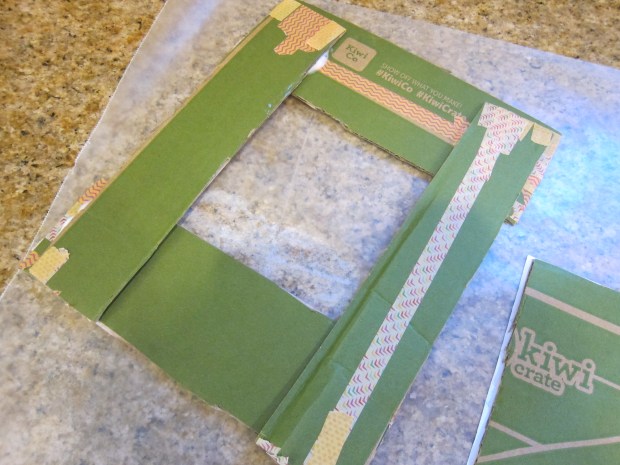
Cut out the bottom of the cardboard crate. Place any art your child wants to frame in the center and trace around it.

Picture Frame Crate (1)

Cut out the resulting cardboard square and tape on the artwork.

Picture Frame Crate (2)

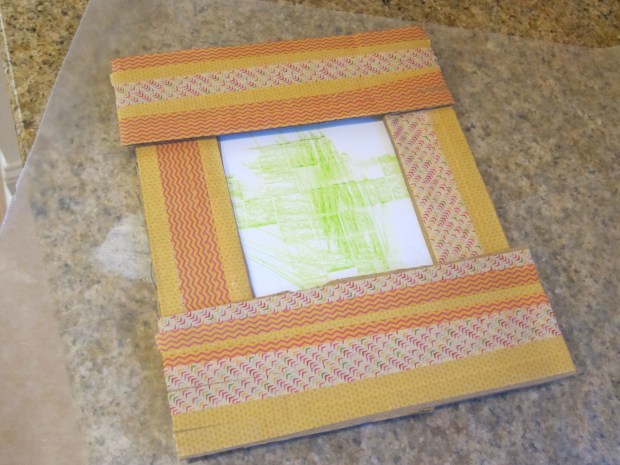
Cut additional pieces of cardboard to be the sides, top, and bottom of the frame. Travis chose to decorate his with strips of colorful tape, but markers would work fine, too!

Picture Frame Crate (4)

It was great motor skills practice to teach him to stretch a piece of washi tape the length of the cardboard piece before tearing off and folding any excess around the back.

Picture Frame Crate (3)

Glue the 4 pieces of the frame together and glue the artwork in the center.

Picture Frame Crate (5)

You can glue a piece of string or yarn to the top of the frame and it’s now ready to display proudly.

Picture Frame Crate (6)

Playing with Puzzles Kiwi Crate

Kiwi Puzzles (27).JPG

Kids will love the puzzles and brain games in this crate from Kiwi Co, which features projects ranging from engineering to art and back again. And parents will go wild when they realize the game you build is based on classic Tetris!

Kiwi Puzzles alt

Travis was perplexed as we worked through the first project, wondering what exactly we were making, and I’ll be honest, so was I. In retrospect, I would tell him first that the goal was to engineer a dispenser that let out one playing tile at a time. That way the process of engineering would have been more inherent to the project, instead of just following the steps. But with that preamble aside…

…the first project was to make a Shape-Stacking Puzzle. To make the game board, fold the plastic stand along the line in the middle so it stands upright.

Kiwi Puzzles (1)

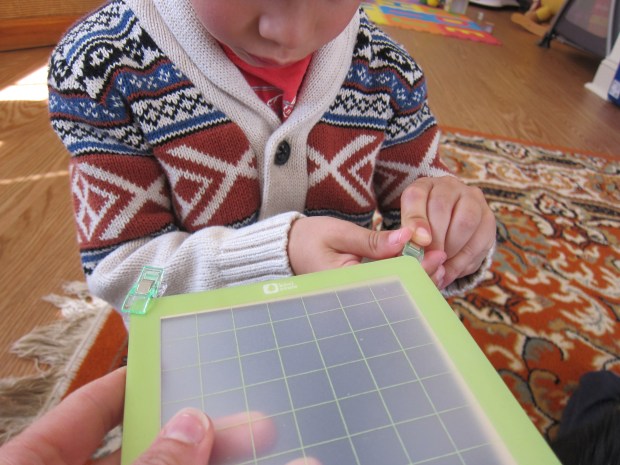
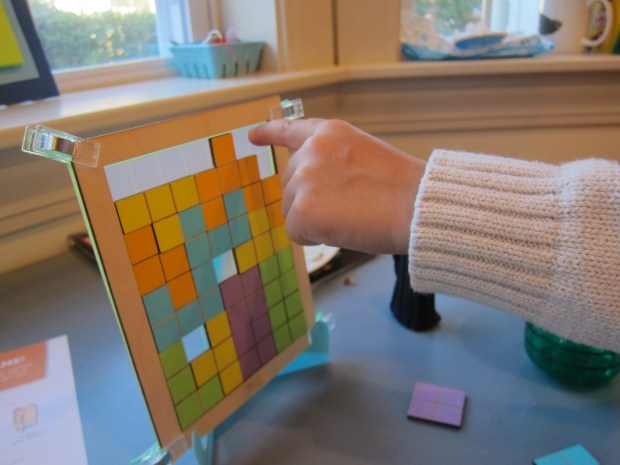
Attach the provided grid paper to the provided wooden frame using a clip in each corner. (Travis liked these clips so much he was bummed there weren’t extras!). Set the frame on the stand and set aside.

Kiwi Puzzles (2)

Preparing the shape dispenser was much more complicated and a touch delicate (our foam tore in a few places, so it didn’t always work correctly). Slot together wooden pieces as side panels and secure with elastics.

Kiwi Puzzles (3)

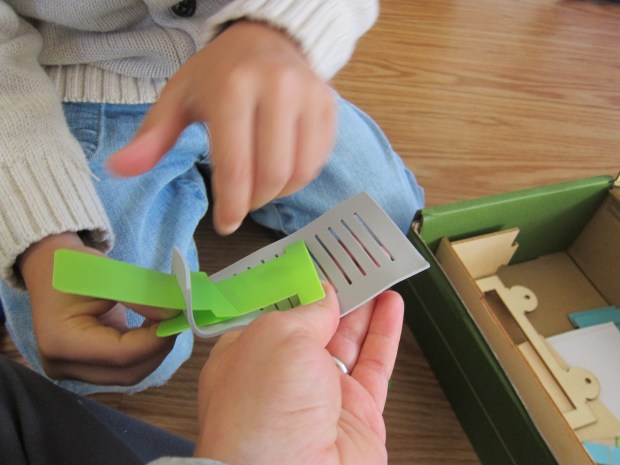
Slip the green “doors” into the slots of a foam piece. This goes into the wooden frame and is secured in place with sticky foam dots.

Kiwi Puzzles (4)

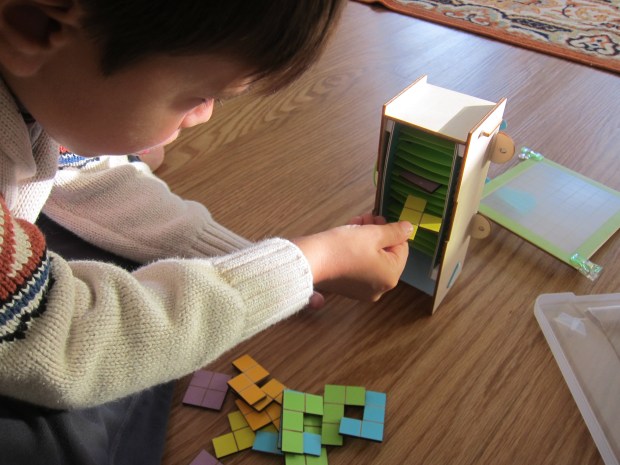
Now add one playing tile to each green door.

Kiwi Puzzles (7)

As you pull out the bottom green door (and this is key) the tile will fall (thanks to gravity). It won’t work, obviously, if you pull a door near the top, because then the playing piece would only land on the green door below.

Kiwi Puzzles (8)

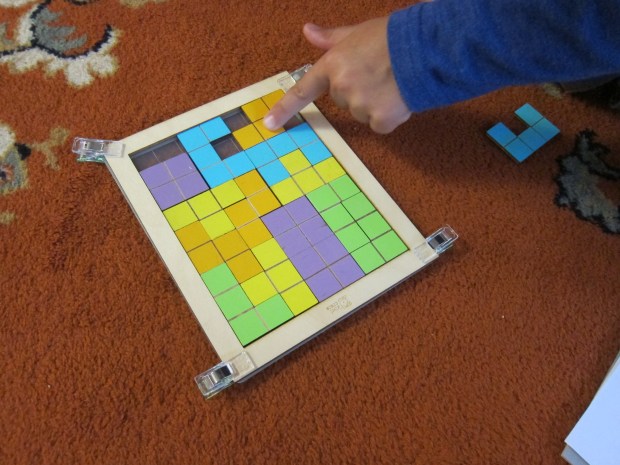
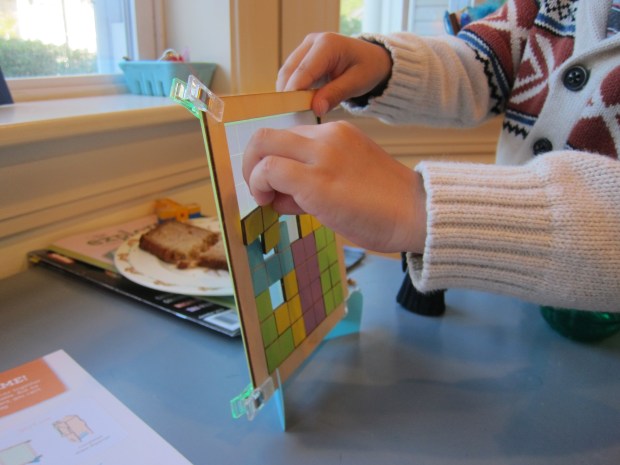
Now it was time to Play a Puzzle Game! I loved watched Travis assemble the resulting Tetris board on his game grid.

Kiwi Puzzles (12)

I remember my brain doing the same quick thinking as a child, deciphering which direction a piece could rotate so it fit just right.

Kiwi Puzzles (11)

The goal is to have the least number of blank squares possible. Travis counted up his squares each time, and his record was 4!

Kiwi Puzzles (13)

With all that engineering done, it was time for the A part STEAM: making Puzzle Pictures. Arrange some of the playing tiles on the provided foam mat. You can make random designs or follow the suggested pictures. Travis chose a robot!

Kiwi Puzzles (28)

Cover with paper and rub with a crayon to reveal your image.

Kiwi Puzzles (29)

After using the tiles, we tried rubbing over other items, like yarn and coins, and testing which came out best.

Kiwi Puzzles (30)

You can also challenge your child to copy the booklet’s designs for a car, dragon, and even Steve the Kiwi, but these were tough for Travis.

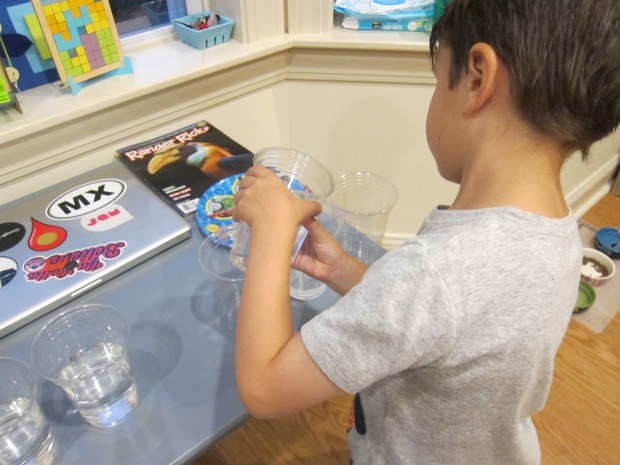
We weren’t done yet because Explore magazine had lots of brain games to test his gray matter. First up: Cup Confusion. Fill 3 clear plastic cups with water and place them next to 3 empty cups. Can you make a pattern of full-empty-full-empty-full-empty by touching only one cup?

Kiwi Puzzles (14)

I was so proud of Travis that he immediately knew to pour water, rather than shuffling cups around.

Kiwi Puzzles (16)

And clearly he was proud, too!

Kiwi Puzzles (17)

Next we did a Connect-the-Shapes challenge in which lines can’t cross…

Kiwi Puzzles (24)

…followed by Fish Sticks. Rearrange these 8 toothpicks so the fish…

Kiwi Puzzles (21)

…changes direction. The catch is that you can only touch 3 toothpicks.

Kiwi Puzzles (22)

He needed a bit of a guiding hand, but our fish turned.

Kiwi Puzzles (23)

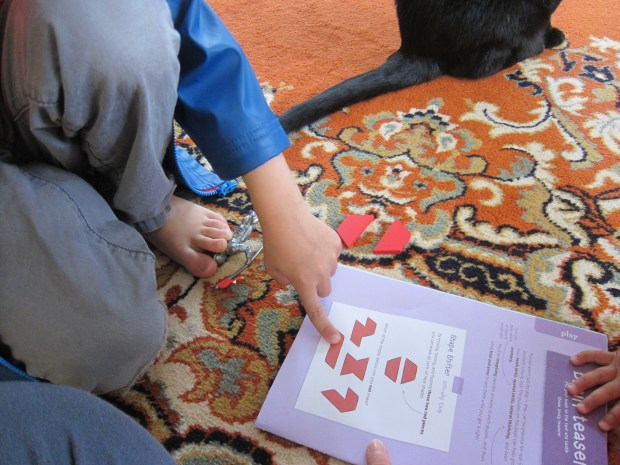
Finally, play Shape Shifter: see if your child can tell which of these pictures isn’t made with two trapezoids.

Kiwi Puzzles (25)

Travis guessed, and then we tested it out!

Kiwi Puzzles (26)

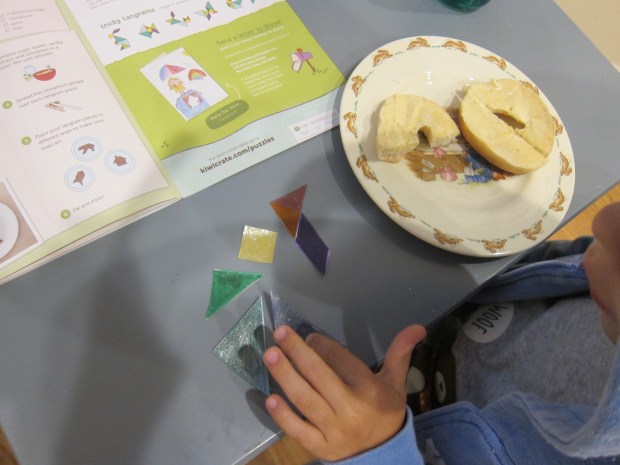
You can also print out a set of tangrams and try to fill in the outlines drawn in the magazine.

Kiwi Puzzles (20)

This task was advanced for my kindergartner, but he could look at the answer key and then build the puzzle with our set.

Kiwi puzzles (32)

A camel!

Kiwi puzzles (33)

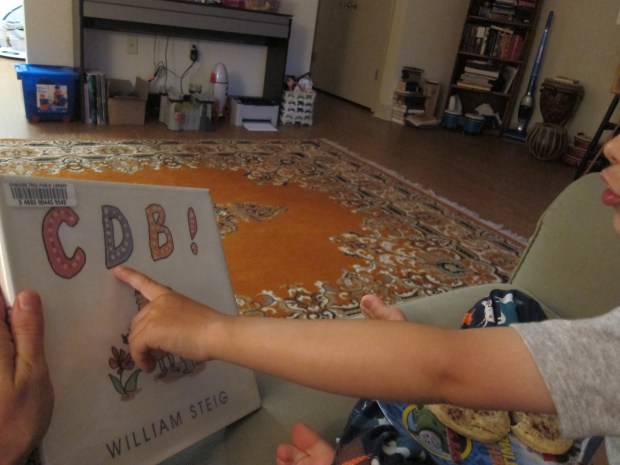
Explore magazine didn’t have any recommended reading this month, but I picked up two fantastic puzzlers from the library. CDB by William Steig had him laughing out loud as he read the letters on each page to decipher a full sentence.

Kiwi Puzzles (19)

We finished up with The Eleventh Hour, a puzzle mystery book I read in my own childhood!

Kiwi Puzzles (18)


Science of Trees Kiwi Crate

Kiwi Trees (1)

Travis’s crate from Kiwi Co. this month was about the way trees and plants take nutrients from the roots upwards, in seeming defiance of gravity. Travis loved every element of this “capillary action” crate… and for good reason!

First, we needed to see capillary action in, well, action, with Capillary Action Art. Using the provided double-sided tape dots and clear slides, Travis attached on three string stems and 3 coffee filter paper flowers.

Kiwi Trees (8)

He added the provided binder clips on either side of the slide’s bottom, and two additional clips to hold everything in place. Clever: now the blender clips meant the slide could stand upright over the provided paint tin.

Kiwi Trees (9)

He dripped liquid watercolors into three of the compartments. There was red and yellow watercolor, and his booklet suggested combining them in the third compartment to make orange.

Kiwi Trees (10)

Almost instantly, the color was bleeding up the stems.

Kiwi Trees (11)

Travis was practically shaking with amazement as he watched this, especially because of how fast it happened.

Kiwi Trees (4)

When it reached the tissue “flowers,” he was ecstatic.

Kiwi Trees (3)

Kiwi must have known this would be a big hit; there are enough materials to do the project twice. Needless to say, we repeated it instantly.

As a nice finishing touch, you can use additional double-sided tape dots to place the slides into a cardboard frame, and save your artwork. Talk about STEAM!

Kiwi Trees (15)

The second activity was to Build a Balancing Tree. This required slotting together two wooden pieces as the trunk, and inserting that into a wooden base.

Kiwi Trees (23)

Wood leaves and roots allow your little engineer to tip the tree one way or another.

Kiwi Trees (18)

At first, Travis seemed disappointed. But then we put the tree to the test in a Tilting Tree Game. Roll the dice to add leaves or roots to one of the four quadrants… but if you roll the (!) symbol, there’s a natural disaster! This can be a tornado (blowing on the tree), earthquake (shaking the box it sits on), or forest fire (removing the leaves from certain colored sections).

Kiwi Trees (19)

Travis cackled every time we thought our tree was nearly complete but then disaster struck.

Kiwi Trees (20)

Okay, so this isn’t perhaps the nicest way to teach kids about natural disasters, but it sure had him thinking about the stability that a tree’s roots provide, and was a ton of fun.

Kiwi Trees (22)

We concluded with two additional activities from the booklet. First, you can demonstrate the most mundane capillary action of all with a paper towel. Pretend to spill a little water or juice on the table (Travis thought it was quite funny that mom made a mess on purpose) and then quickly place a paper towel over it. The fibers act just like the root system of a plant!

Kiwi Trees (6)

Next, we repeated a classic flower-dyeing experiment, but with a slight twist. Use any white flowers for the game, such as carnations or roses. Trim the stems at an angle, then carefully slit the stems down the middle.

Kiwi Trees (12)

Fill two cups with lukewarm water and add 20 drops food coloring (in different colors) to each cup.

Kiwi Trees (13)

Arrange two flowers so that the halved stems dangle one into each cup. I found it useful to use a paper clip to hold them in place, so the flowers didn’t tip.

Within just an hour or two, we could already see a pretty tint… on each half of the flower!

Kiwi Trees (16)

By morning, the colors were vibrant and split evenly down the middle, a fantastic visual of capillary action.

Kiwi Trees (17)

We finished with two fun suggested reads: The Tree Lady by H. Joseph Hopkins and Tell Me Tree by Gail Gibbons. In sum, we loved this crate!

Exploring Stars Kiwi Crate

Kiwi Stars

The topic of Travis’s Kiwi Crate this month (stars and the solar system), is one of his favorite topics, so I had no doubts he would enjoy the projects. The crafts themselves proved to be a little faulty, but we still had galaxies full of fun. What a perfect coincidence that his recipes from Raddish Kids were star-themed this month, too.

First up: a Constellation Lantern. Travis knows quite a bit about constellations, so happily set about making a few pretend versions with the provided black star stickers on the lantern paper.

Kiwi Stars (10)

I made a few real star patterns for him, including Leo the lion (his astrological sign) and some funny ones (Darth Vader’s helmet!).

Kiwi Stars (11)

He popped open the paper lantern frame.

Kiwi Stars (12)

Insert the slots at the bottom of the frame into the provided paper base; fold and then tape to secure shut. Open the paper lantern insert and put this inside the first frame. The pages he had decorated with stars now fit in between these two.

Kiwi Stars (13)

“I can do it myself!” he said confidently, not wanting any assistance.

Adhere the provided foam circle into the bottom of the lantern. Insert the provided tea light (make sure it is on!) and then add the paper lantern lid. A pipe cleaner threaded through holes in the top makes a handle.

Kiwi Stars (14)

From here, we were off to the darkest room we could find in the house to check it out!

Kiwi Stars (16)

Travis loved being in the dark and seeing the stars “glow”.

Kiwi Stars (15)

Next up was a Solar Spinner, a kid-friendly version of an orrery.

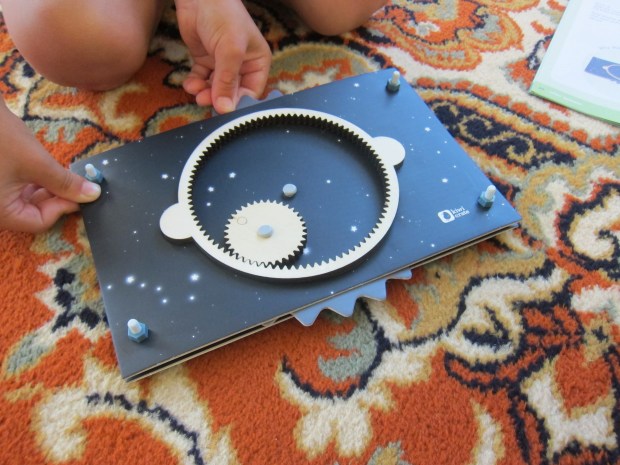
Two interlocking wooden gears are inserted into the provided base and secured with brads. As with the lantern, Travis loved doing all these fine motor skills by himself.

Kiwi Stars (1)

Once the gears were between the two base plates, Travis screwed them together with kid-friendly plastic nuts and bolts.

Kiwi Stars (3)

He gave the machine little test, and watched the wooden gears spin around together. Now we just needed to add the provided sun, Earth, and moon. There are teeny tiny green stickers that kids can add to the blue Earth circle.

Kiwi Stars (5)

The “sun” is a light inserted into a plastic case.

Kiwi Stars (4)

All three orbs attach to the orrery with sticky foam dots.

Kiwi Stars (8)

Travis was smitten with the model he’d made! It also fantastically illustrates to children why sometimes it’s day and sometimes night, as well as why sometimes we see a full moon and sometimes no moon (a new moon). Full moon…

Kiwi Stars (7)

New moon!

Kiwi Stars (6)

Finally, we put together a Making Moonlight model. Stick the sharp end of a pencil onto a Styrofoam ball (not provided in the kit); this will be your moon. Turn on a flashlight; this is your sun!

Making Moonlight (1)

Now we headed into a dark room and I had Travis spin while I held the “sun.”

Making Moonlight (2)

When the flashlight hits the ball, it appears to glow; but of course it’s not really glowing, just reflecting the flashlight. The idea is to show that the moon doesn’t make its own light, but looks “full” when the sun shines on it, and looks “new” when sunlight does not hit it.

Making Moonlight (3)

Travis loved adding lots of “craters” to his moon before he was done with it.

Making Moonlight (4)

As mentioned at the top of this post, the projects were a little faulty in this kit. In order to turn off the lights in both, you had to disassemble them a little. This constant take-apart-and-put-back-together-again meant that neither project lasted long. The top of the lantern and pipe cleaner were soon crumpled and broken, and the model sun no longer adhered to our model solar system.

But we at least got to enjoy both for a short while!

Oddly, there were no suggested books this time around, but it was easy to find some fun reads at the library, including Whose Moon is That by Kim Krans and Zoo in the Sky by Jacqueline Mitton.
Kiwi Stars books

Meanwhile, we can’t wait to explore further with Travis’s real telescope on an upcoming vacation. Our plans include making up our own pictures with what we see in the night sky; comparing how the sky is way out in the countryside versus near a city; and looking for craters on the moon!
Solar Oven S’mores

Solar Smores (9).JPG

Happy National S’mores Day! Travis and I celebrated with a STEM take on this classic summer treat: s’mores cooked in a solar-powered oven made from one of his recycled Kiwi Crates!

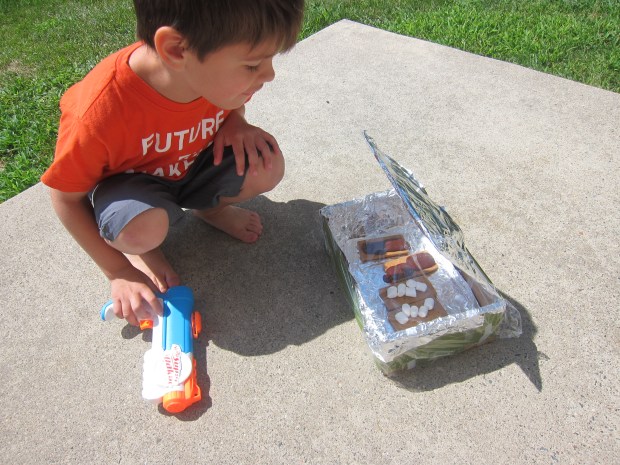
To start, cut the flaps off the top of the Kiwi box (or an old shoebox). Line the entire inside with aluminum foil, and secure with clear tape.

Solar Smores (1)

Place 4 graham crackers on the bottom; we love the vegan and gluten-free grahams from Kinnikinnick.

Solar Smores (2)

Top two of the graham cracker pieces with dark chocolate squares and the other two pieces with Dandies marshmallows.

Solar Smores (3)

Cover the top of the “oven” with plastic wrap and tape down; you don’t want any bugs in there! We placed our oven on the patio in hot sunshine.

Solar Smores (4)

82 degrees ought to do it!

Solar Smores (5)

After 20 minutes, we took a peek. Our chocolate was so hot and melty and perfect.

Solar Smores (8)

The Dandies had softened up, although they didn’t melt all the way down. But these made fantastic s’mores!
Solar Smores (7)