Melted Crayon Planets

Melted Crayon Planet (3)

Here’s a novel way to talk about the different colors of the various planets in our Solar System, while making a neat piece of art. Kids are sure to love this craft because anything involving melted crayons is just cool.

We only had two paper plates, so decided to make a blue and green one for Earth and a orange and yellow one for Jupiter.

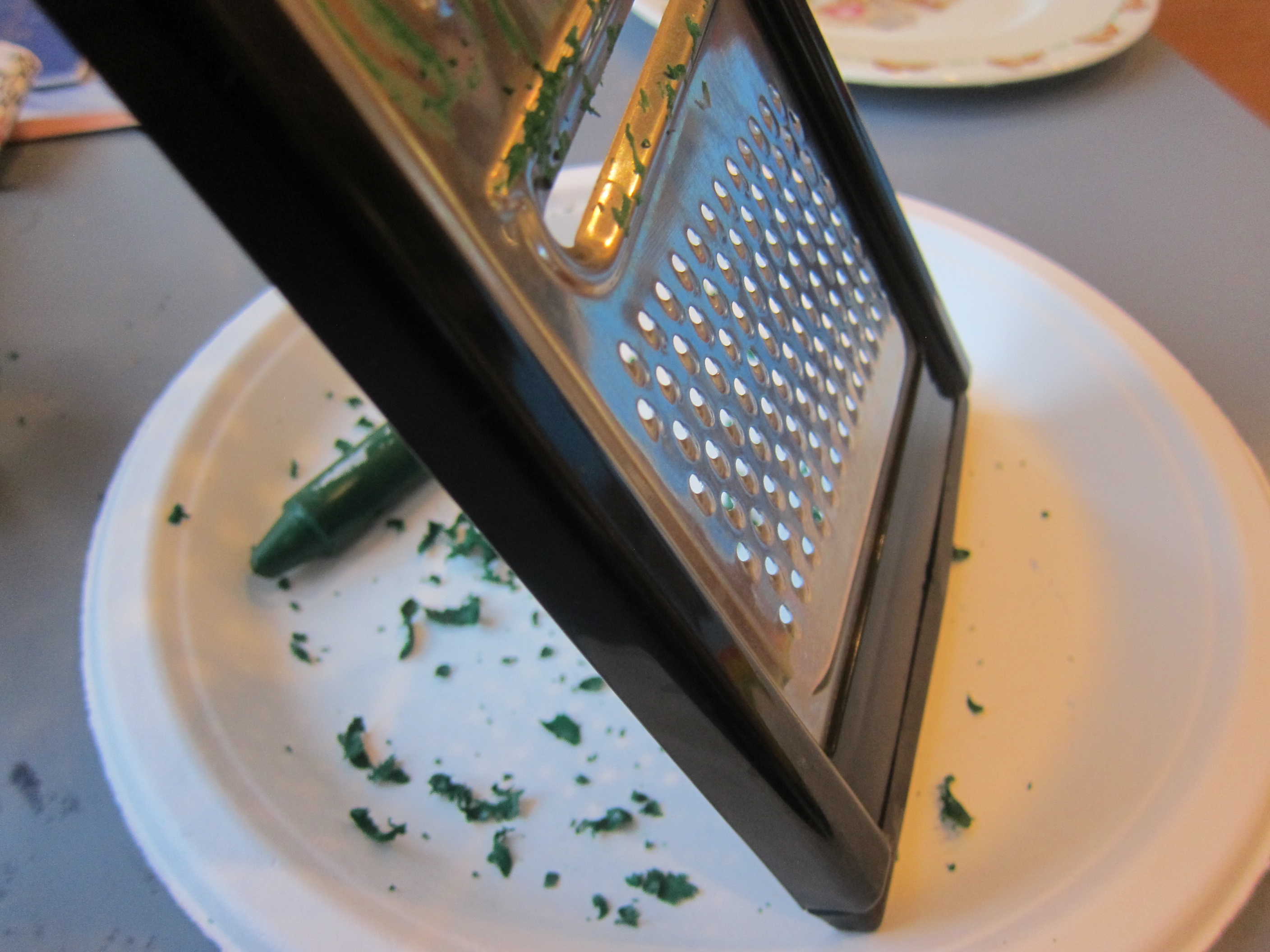
I cut the wrappers from jumbo crayons, and first we tried making small pieces by grating them on the large holes of a grater.

Melted Crayon Planets (1)

This didn’t work that well, so I ended up chopping the crayons with a knife instead. Arrange the pieces as you want them to look on each paper plate, then begin microwaving at about 1 minute intervals until the wax melts (you may need less time, depending how thick your crayon pieces are).

Melted Crayon Planet (2)

As they start to melt, swirl the colors into the design you want with a toothpick. Our Earth came out pretty neat!

Melted Crayon Planet (4)

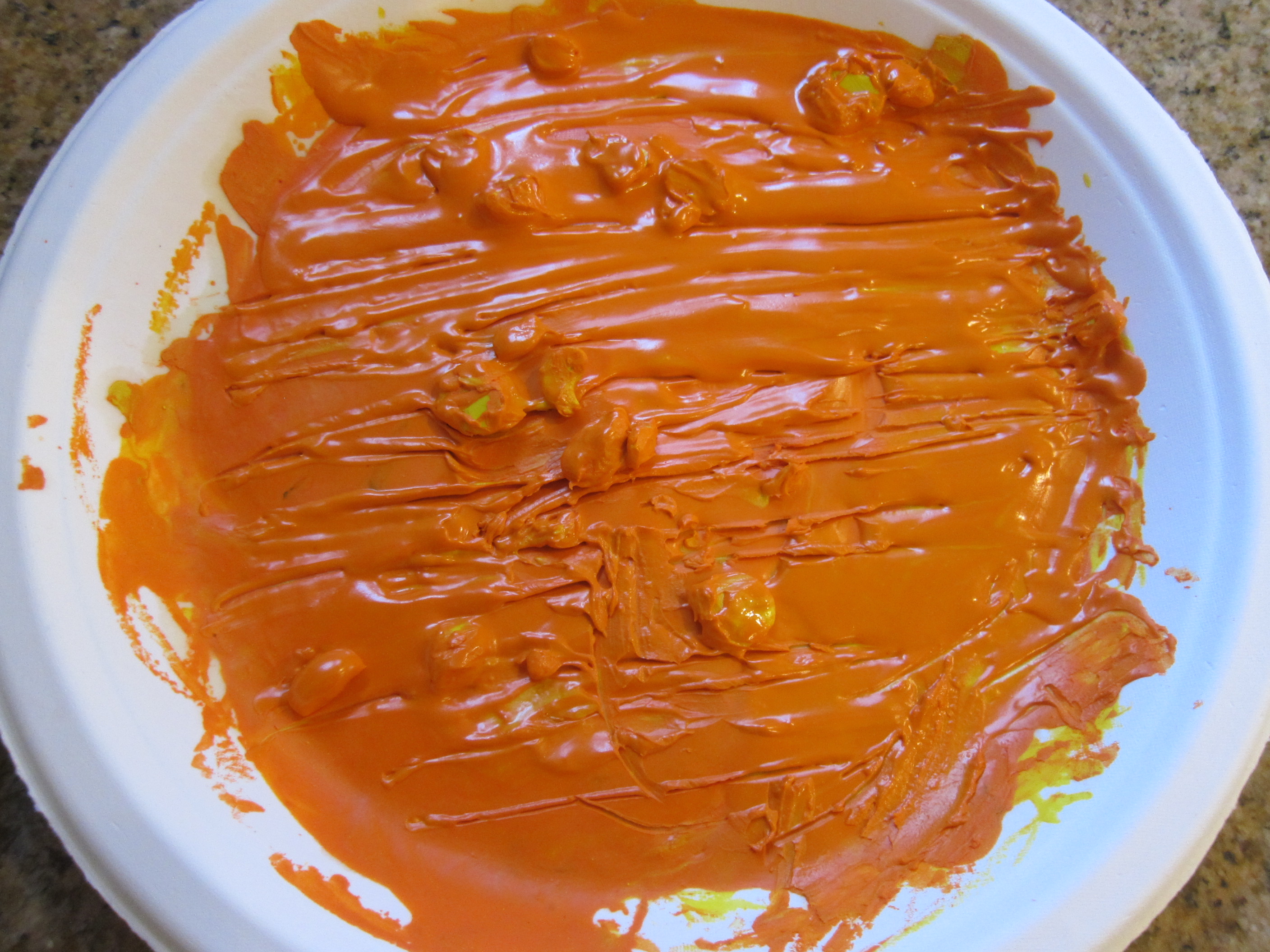
The orange and yellow, unfortunately, mostly just blurred together for Jupiter, but we added next textured lines with a toothpick.

Melted Crayon Planet (5)

Without even a single prompt, Travis realized, “Mom, we need the giant red spot!”. Simply add pieces of red crayon to one portion of your plate for that.

If you have enough plates and crayons, go ahead and make all eight planets!

Pom Pom Planets

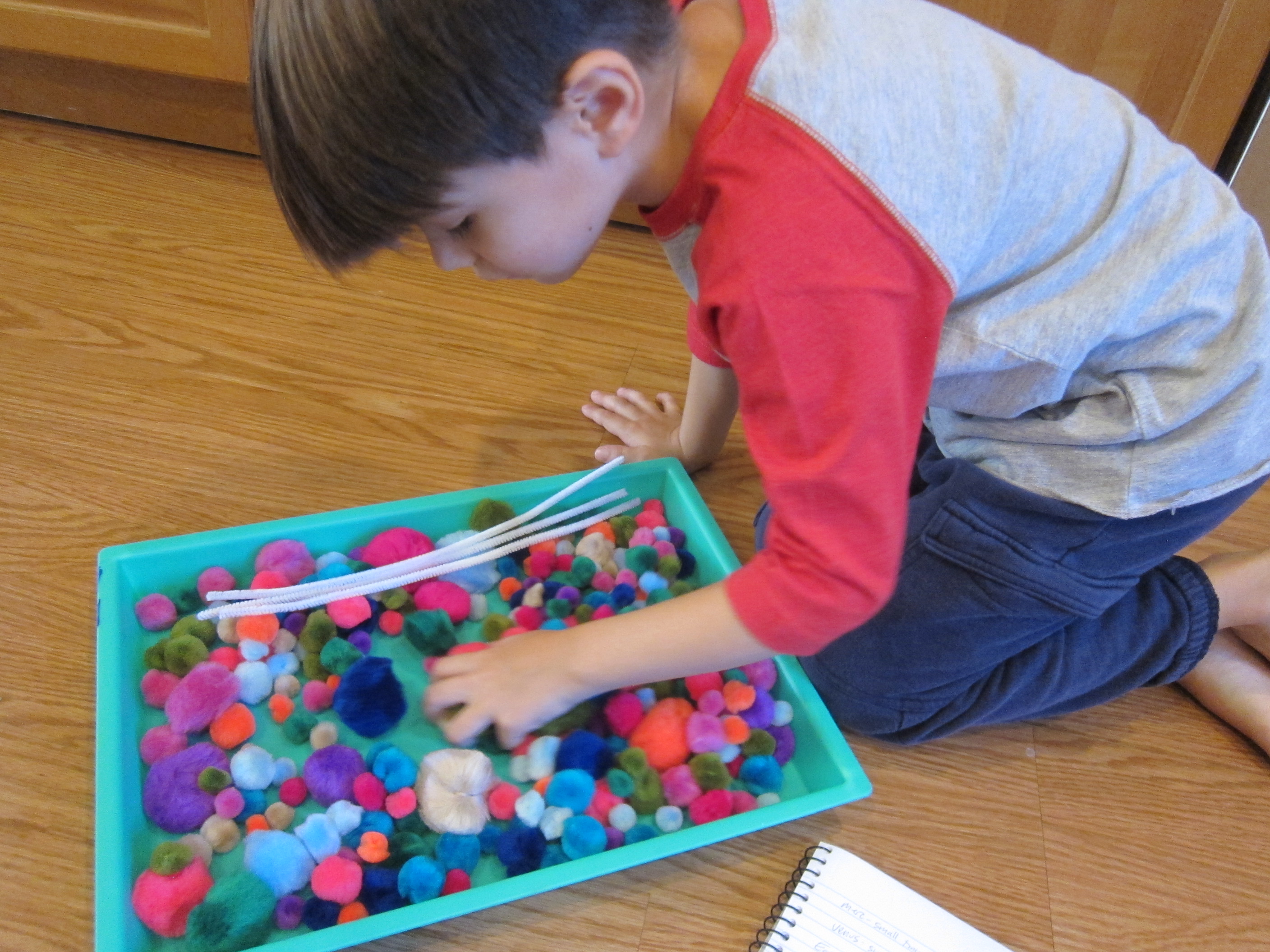
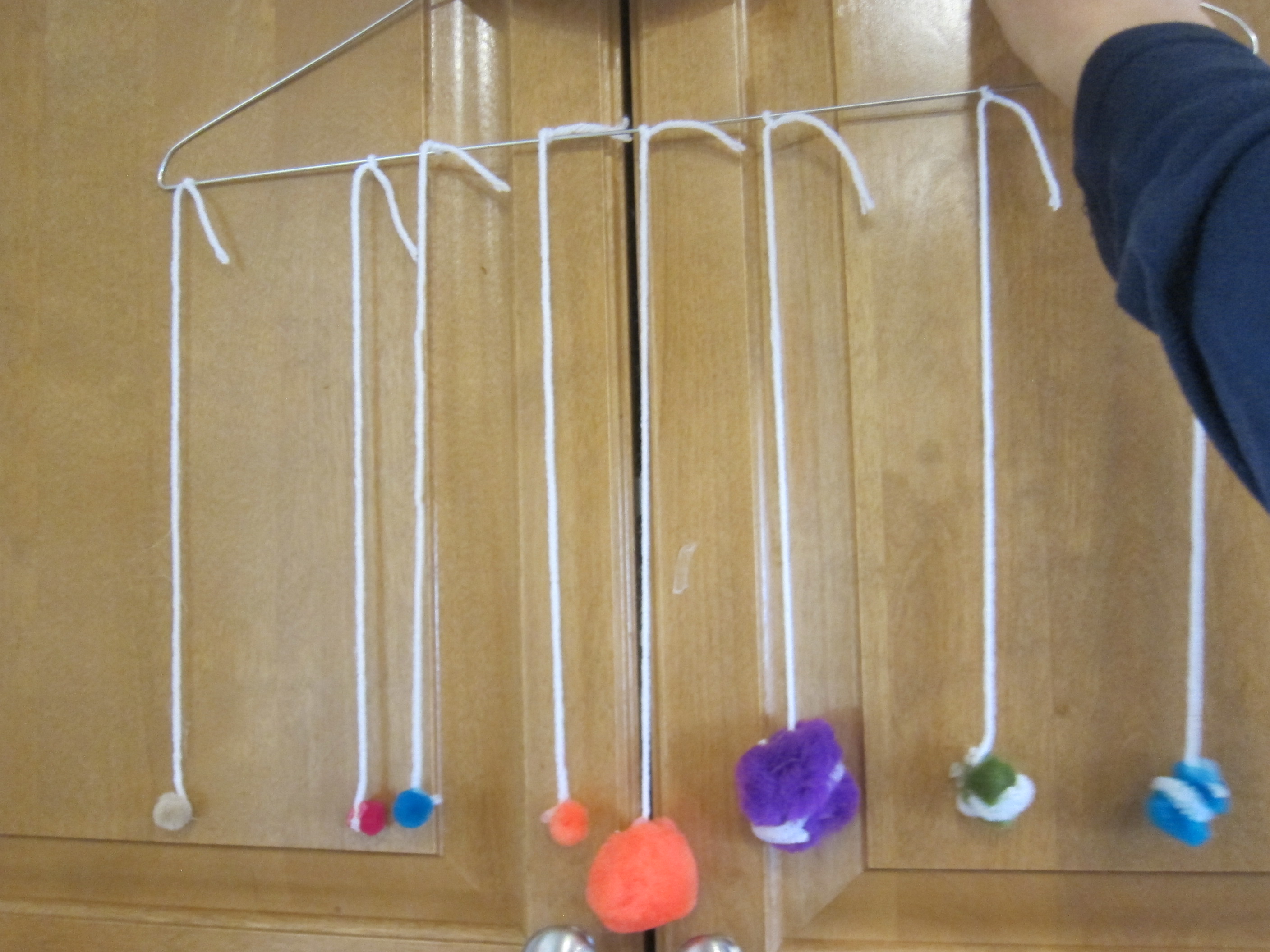
Pom Pom Planets (7)Here’s a quick and cute way to show the scale of the planets (roughly speaking) for kids who are learning about the solar system. Set out an assortment of pom poms in as many sizes and colors as you have, and find the perfect one to represent each of our 8 planets!

I dumped a big bag of pom poms into a craft tray, which immediately created excitement.

Pom Pom Planets (1)

Travis loved searching through this “universe” for each planet. One by one, he located the following:

A small tan one for Mercury

A small pink one for Venus

A small blue one for Earth

A small orange one for Mars

A large orange one for Jupiter

A large purple one for Saturn

A medium green one for Uranus

A medium blue one for Neptune

Note: Your colors and sizes might be slightly different, depending what you have on hand. Gray works equally well for Mercury, and yellow equally well for Saturn. Obviously we wished we had a red one for Mars, but our pack didn’t contain small red.

Pom Pom Planets (2)

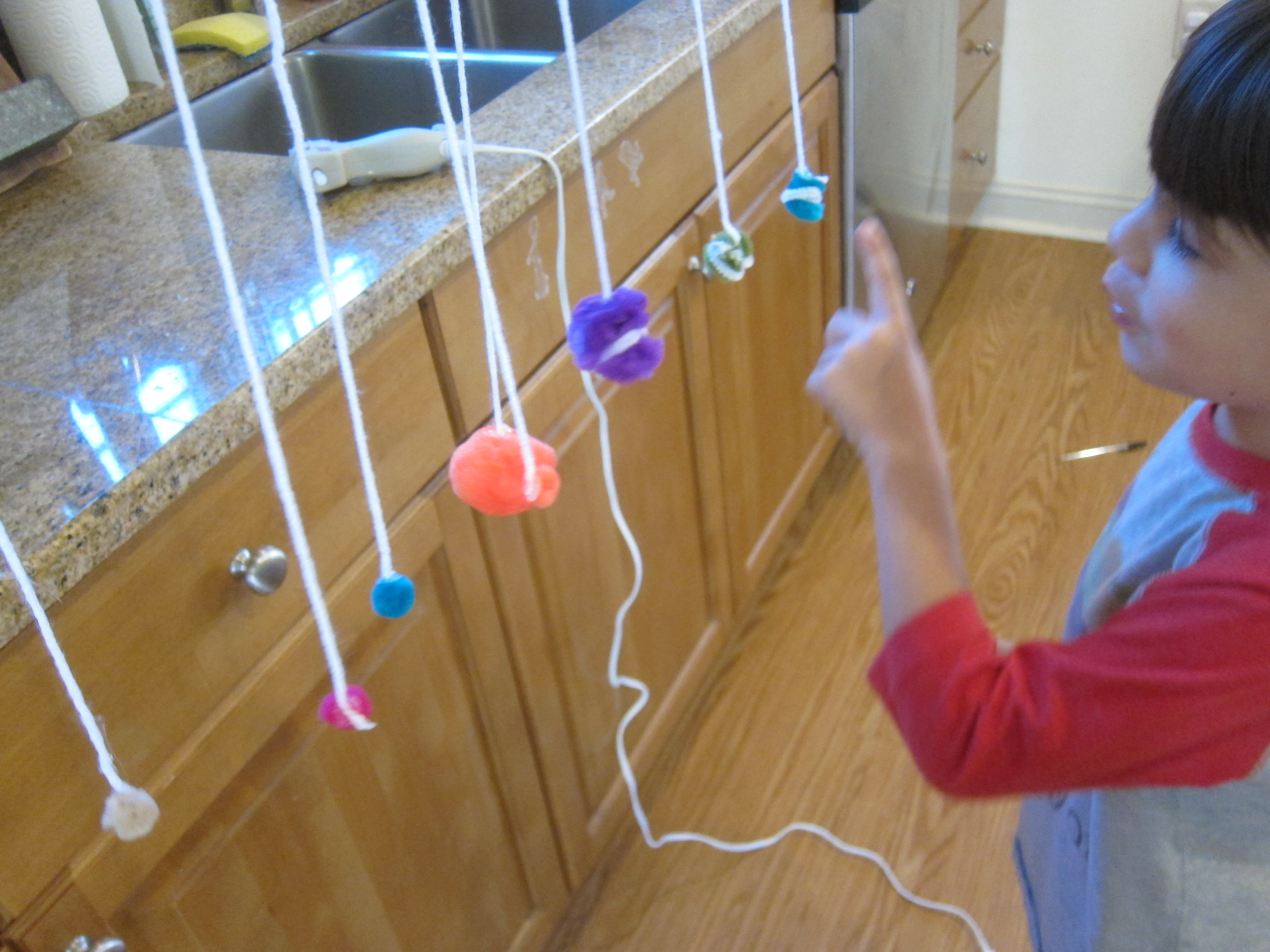
We then wrapped Saturn, Uranus, and Neptune with belts of pipe cleaners to make the rings.

Next we cut 8 pieces of yarn, making sure they were roughly the same length. Tie or glue these onto each pom pom.

Pom Pom Planets (4)

It was time to build the solar system. As I tied each one to a wire hanger, I had Travis tell me which planet should come next, working from Mercury to Neptune. This was great review for a topic we haven’t covered in a while!

Pom Pom Planets (5)

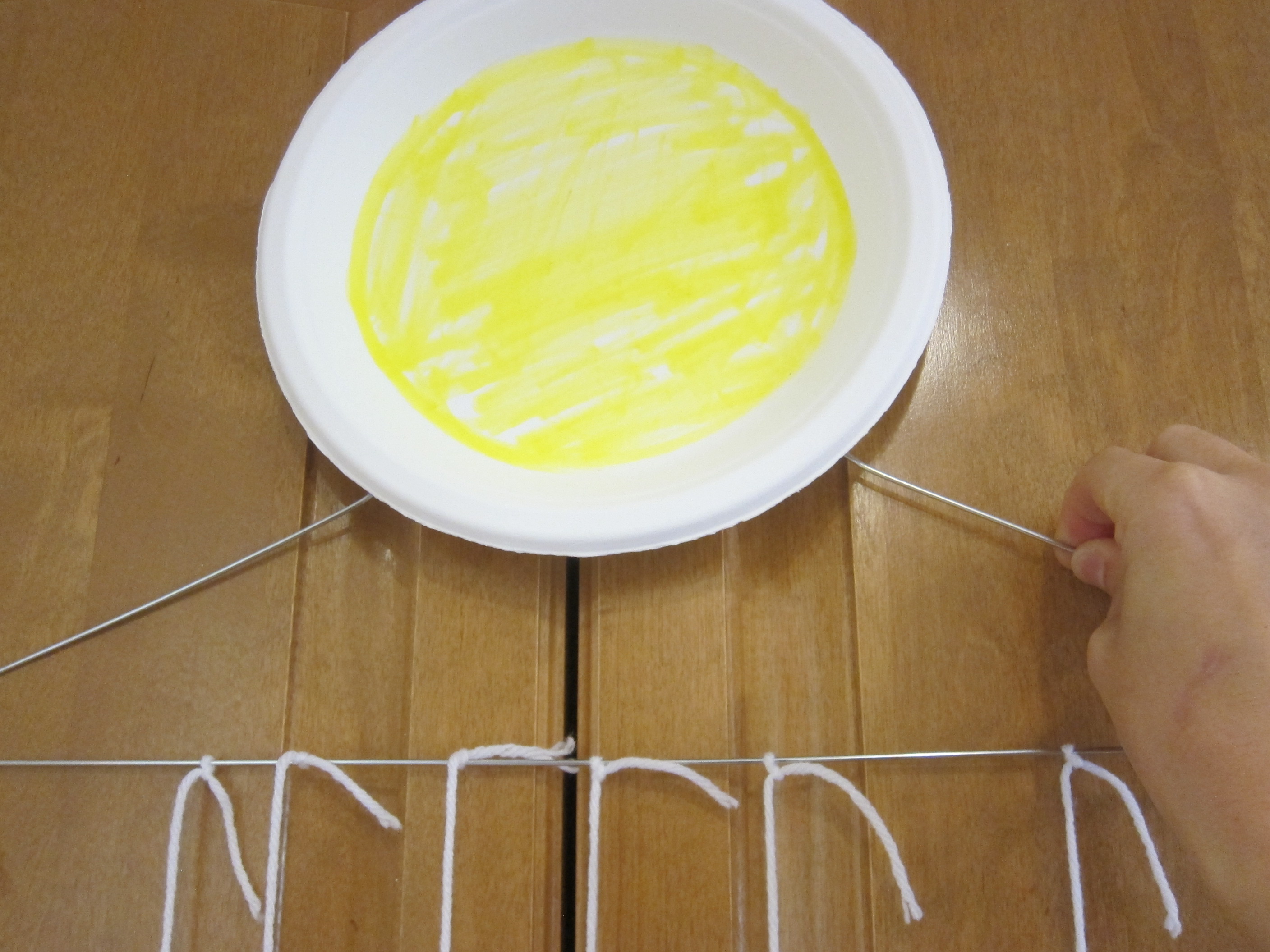
I had originally intended to make a star decoration along the top of the hanger, but Travis was adamant that we couldn’t have a solar system without the sun. He colored in a paper plate with yellow marker, and it was soon proudly affixed atop the hanger.

Pom Pom Planets (6)

It looked perfect against his star lamp!

IMG_0001

Solar System Models

Planets alt

When you’re the only mom who gets her kid up and dressed and backpack packed and lunch made and head to the bus stop and then learn that the Friday before Labor Day is apparently also a day off from school… Well then whoops, you suddenly have a day to fill!

Luckily I had this little project from Raddish Kids up my sleeve, a chance to make two models of the universe: one tiny and one huge!

First I asked Travis what planet we live on. He correctly knew Earth, and was able to name a few facts about it, like how its watery.

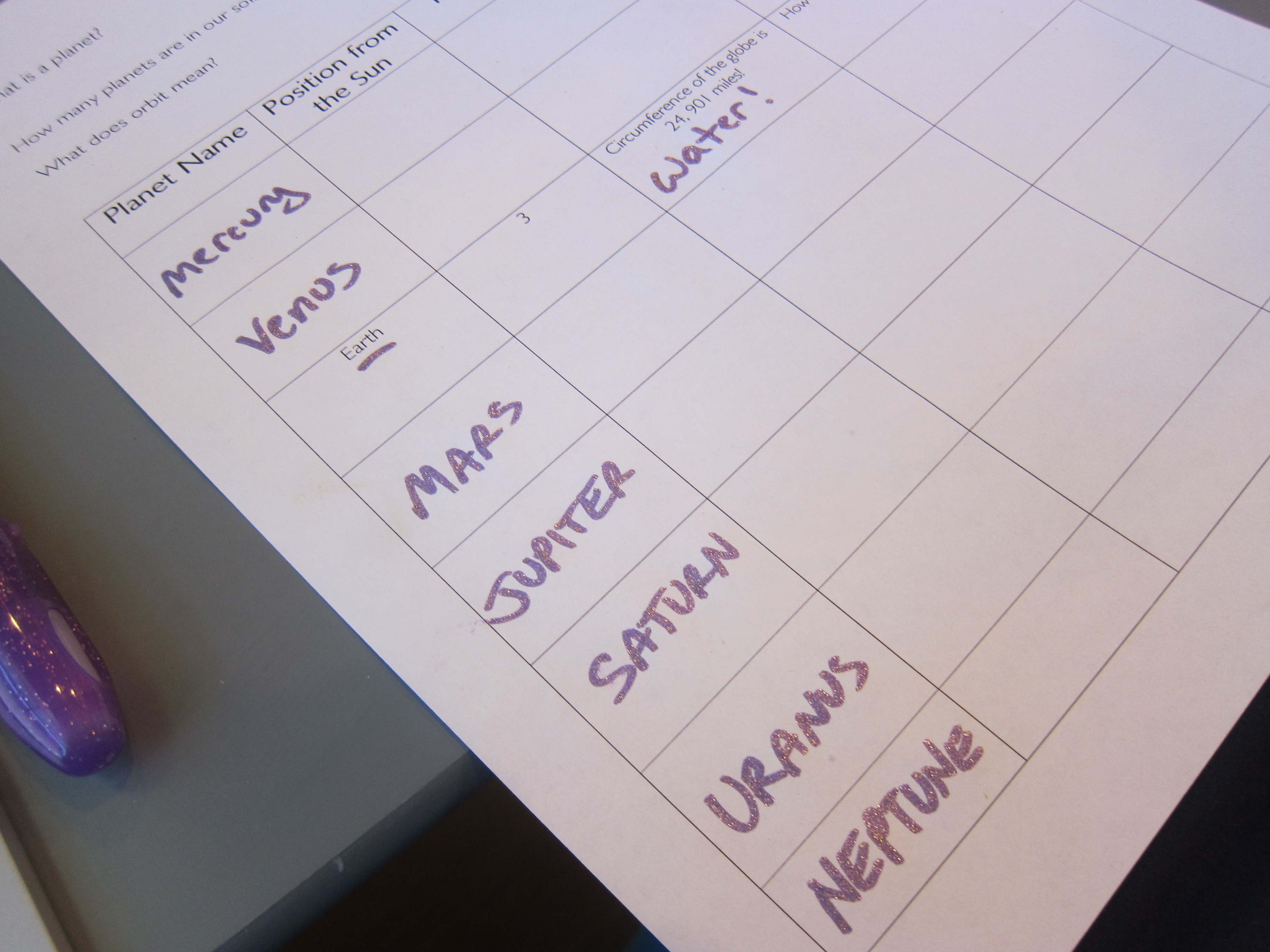
Raddish provided a chart to name the other planets, all of which my budding astrologer could fill in. He proudly gave me a fact about each, which I wrote down (in glittery galactic pens, of course). Filling in the column with further questions about each planet was a bit harder for him to grasp, but big kids can write in any pending querries here, as well.
Planets (1)

After watching a suggested video that helped him fill in a few new facts about each planet, it was time to model!

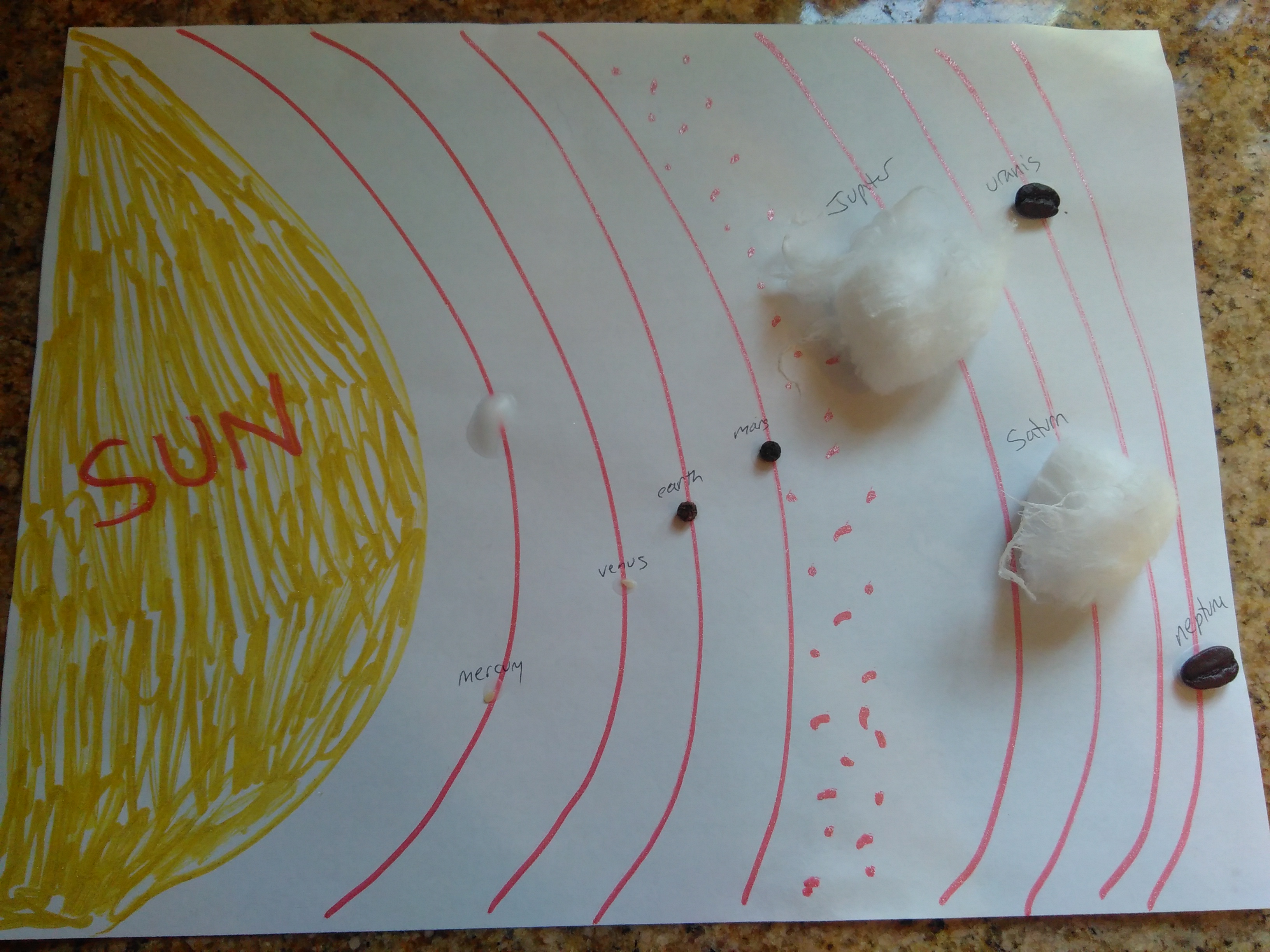
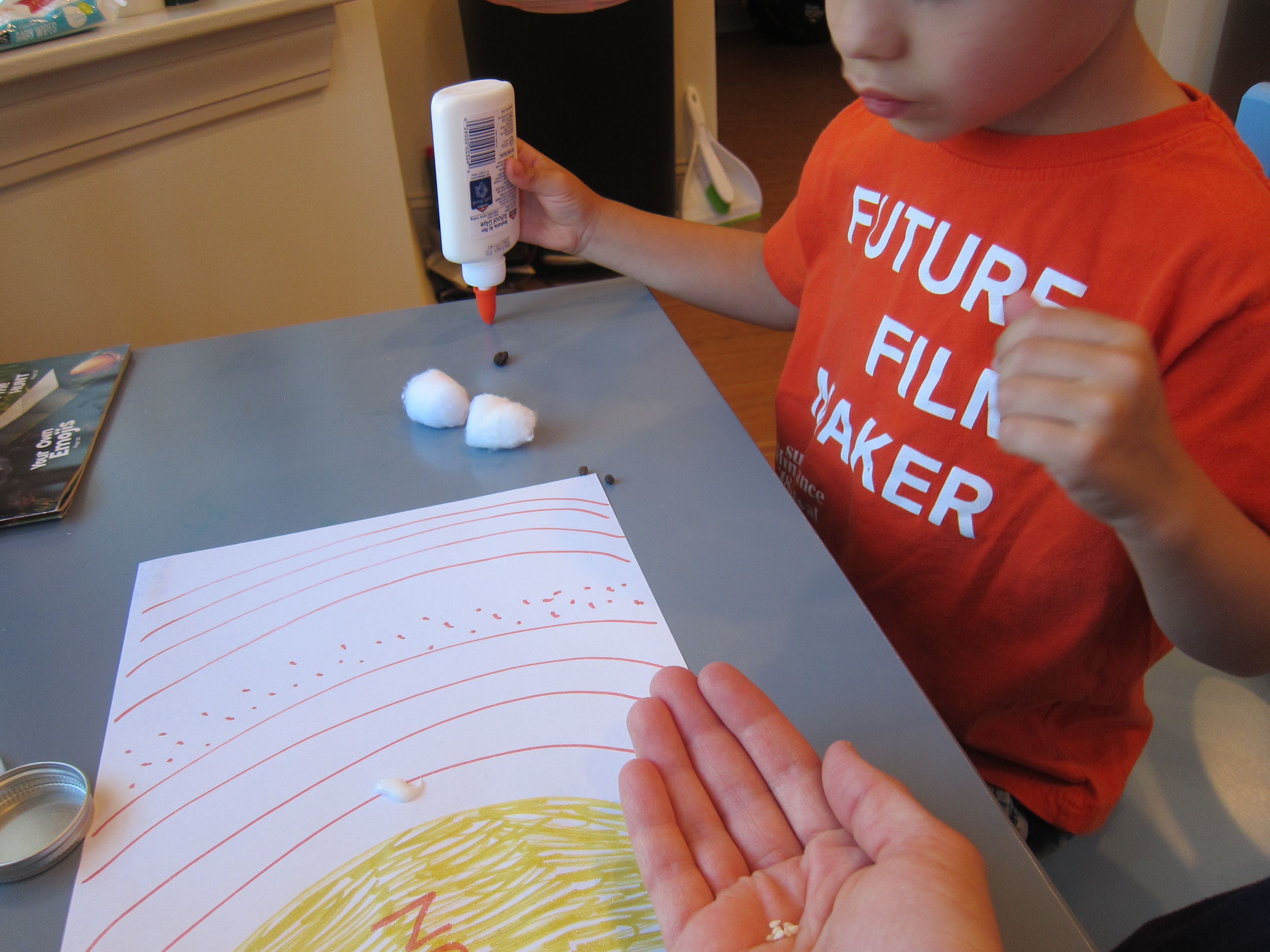
First up was the Tiny Solar System. I drew a half circle on the edge of a piece of white paper and labeled it as the sun. I drew 8 orbits, with an asteroid belt making a wide patch between the fourth and fifth lines.
Planets (2)

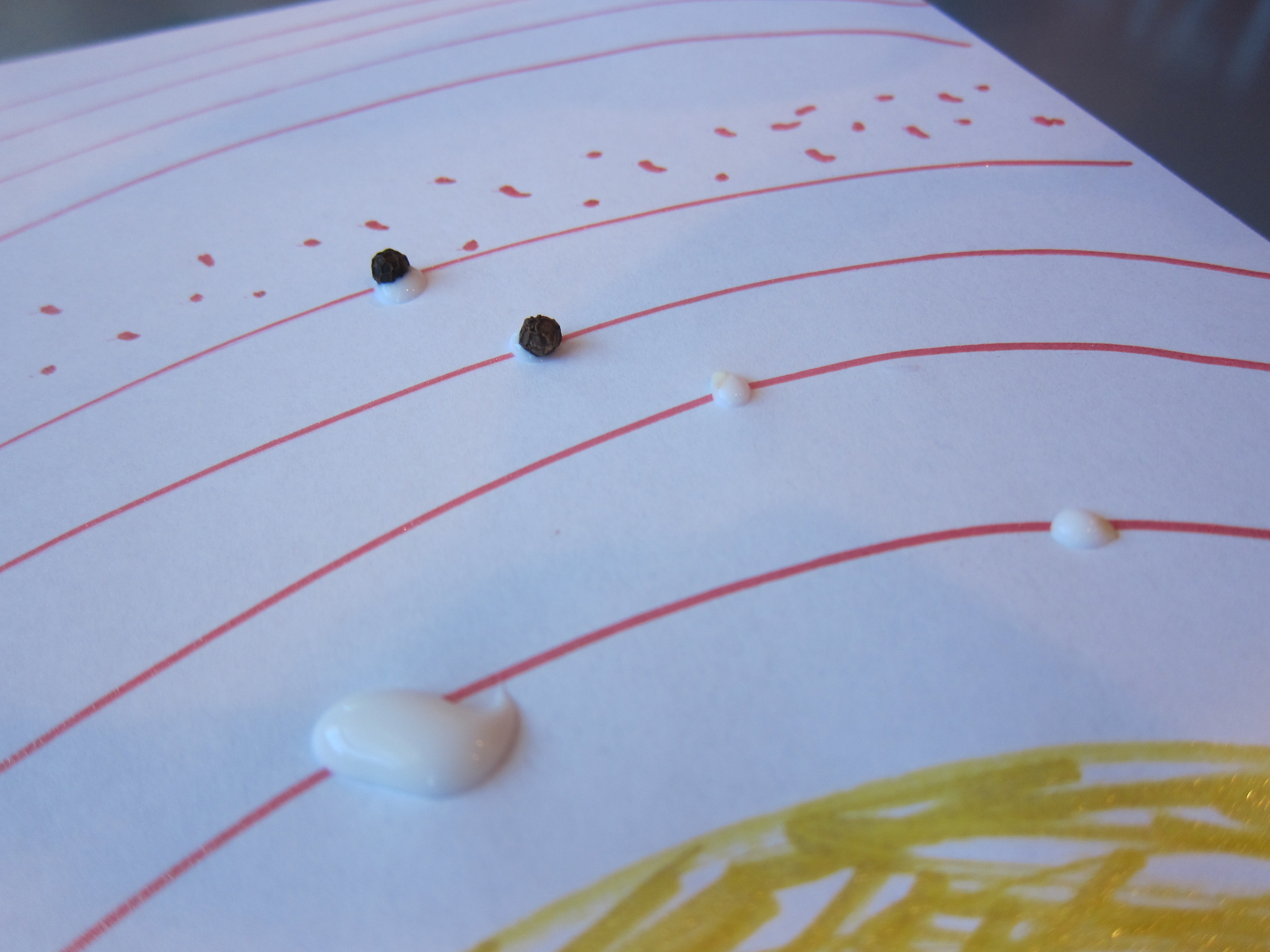
For scale models of the planets, we glued on the following:

2 sesame seeds (Mercury and Venus)

2 peppercorns (Earth and Mars)

2 cotton balls (Jupiter and Saturn)

2 coffee beans (Uranus and Neptune)
Planets (3)

Note: the scale obviously isn’t exact, but the idea here is that the relative sizes of the planets (the enormity of Jupiter, the tininess of Mercury) become apparent. This model also didn’t show the distance between orbits to scale.
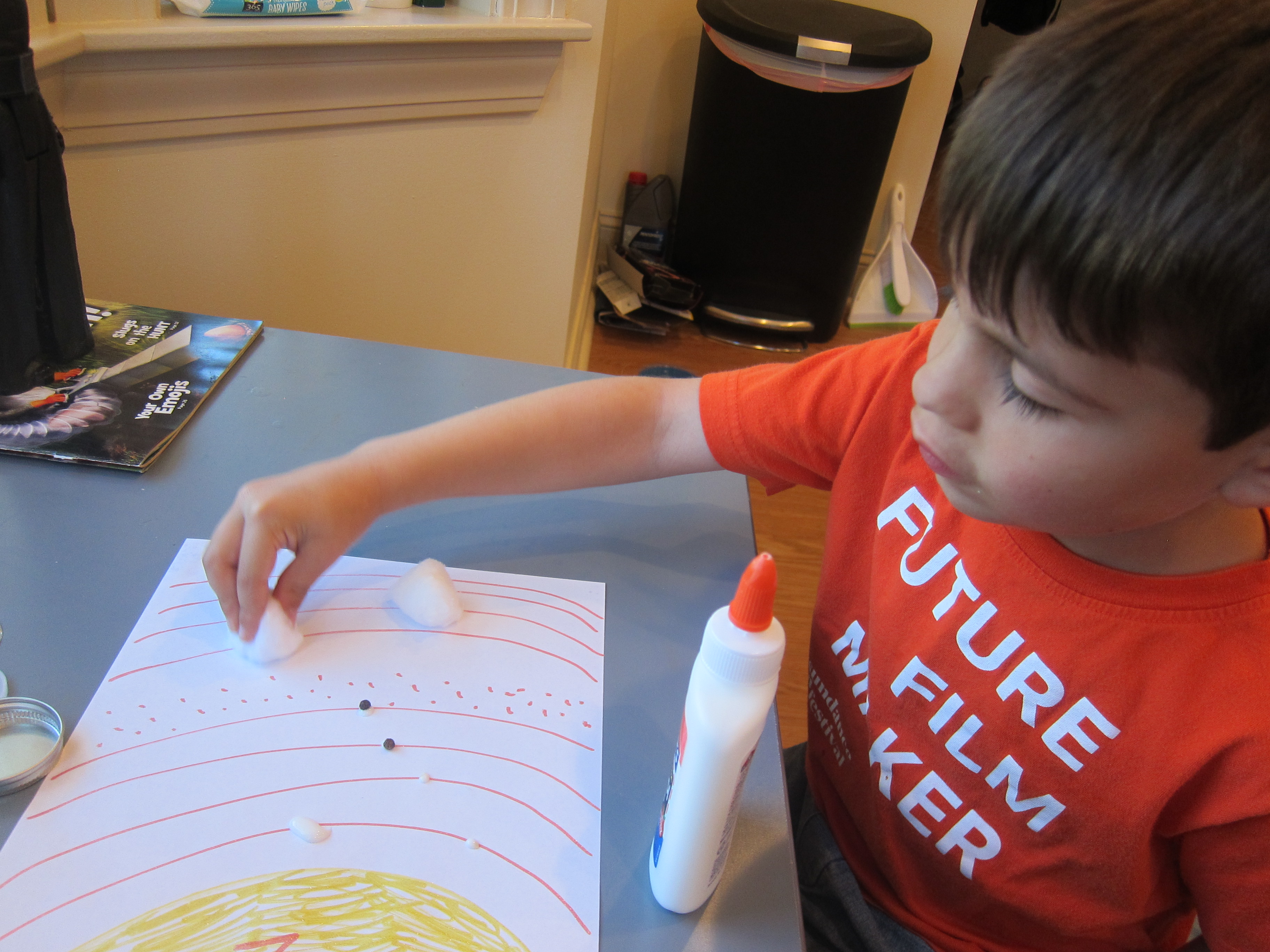
Planets (4)

Travis marveled at the tiny sesame seeds. In fact they were so small we could barely see them until the glue dried!

Now for the Large Solar System! We headed out to the playground with a bag full of balls in various sizes. Travis was very curious as I collected these from around the house, but was soon to see why.

I inflated a silly starfish to be the sun and put this right in the center of a baseball diamond. (Note: A beach ball would work, too, but I liked that the starfish was a sun/star shape).

Planets (5)

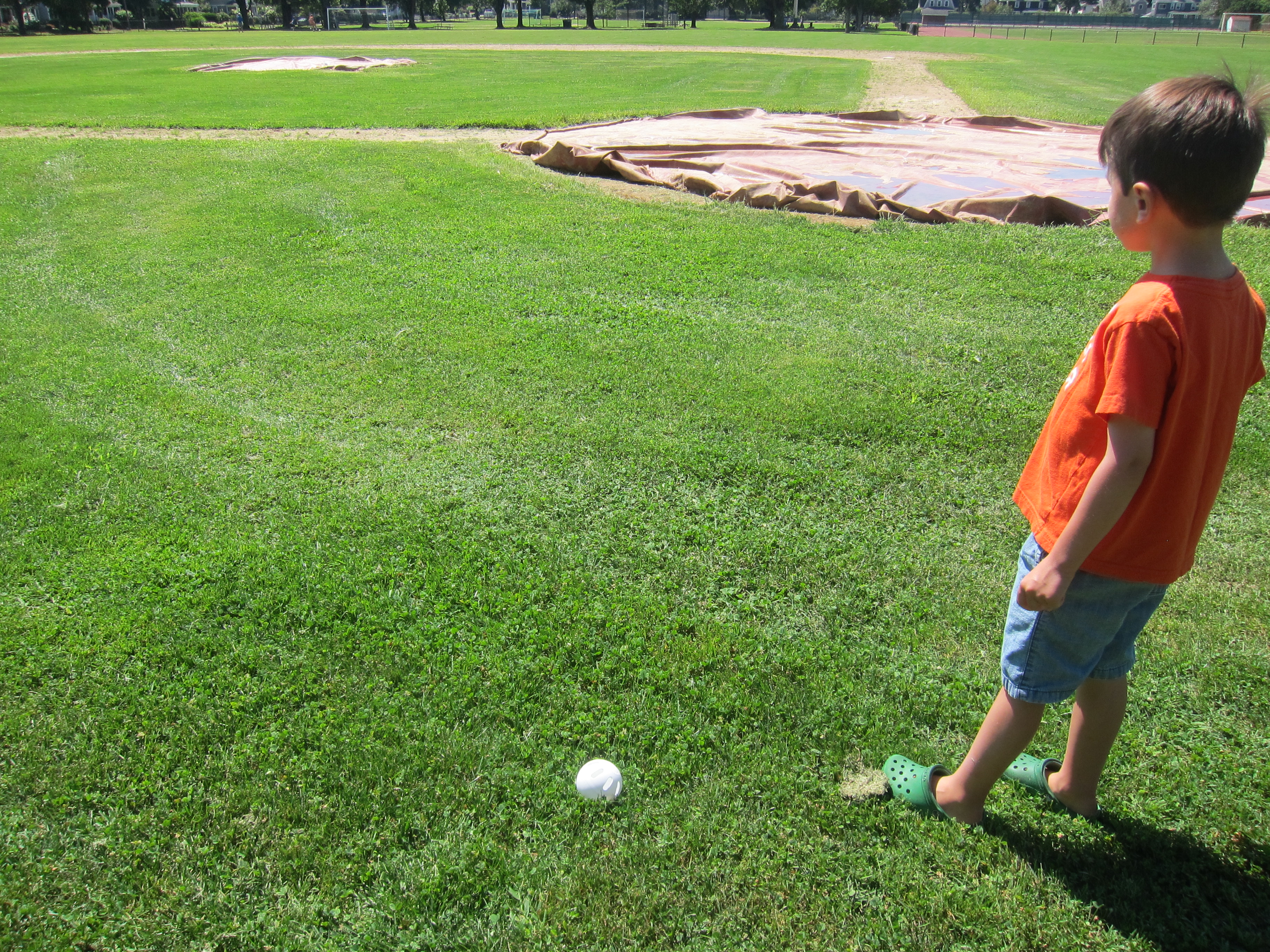
Next we walked out a full 78 steps from the sun holding a wiffle ball as “Neptune.” This took us right to the edge of the baseball field.
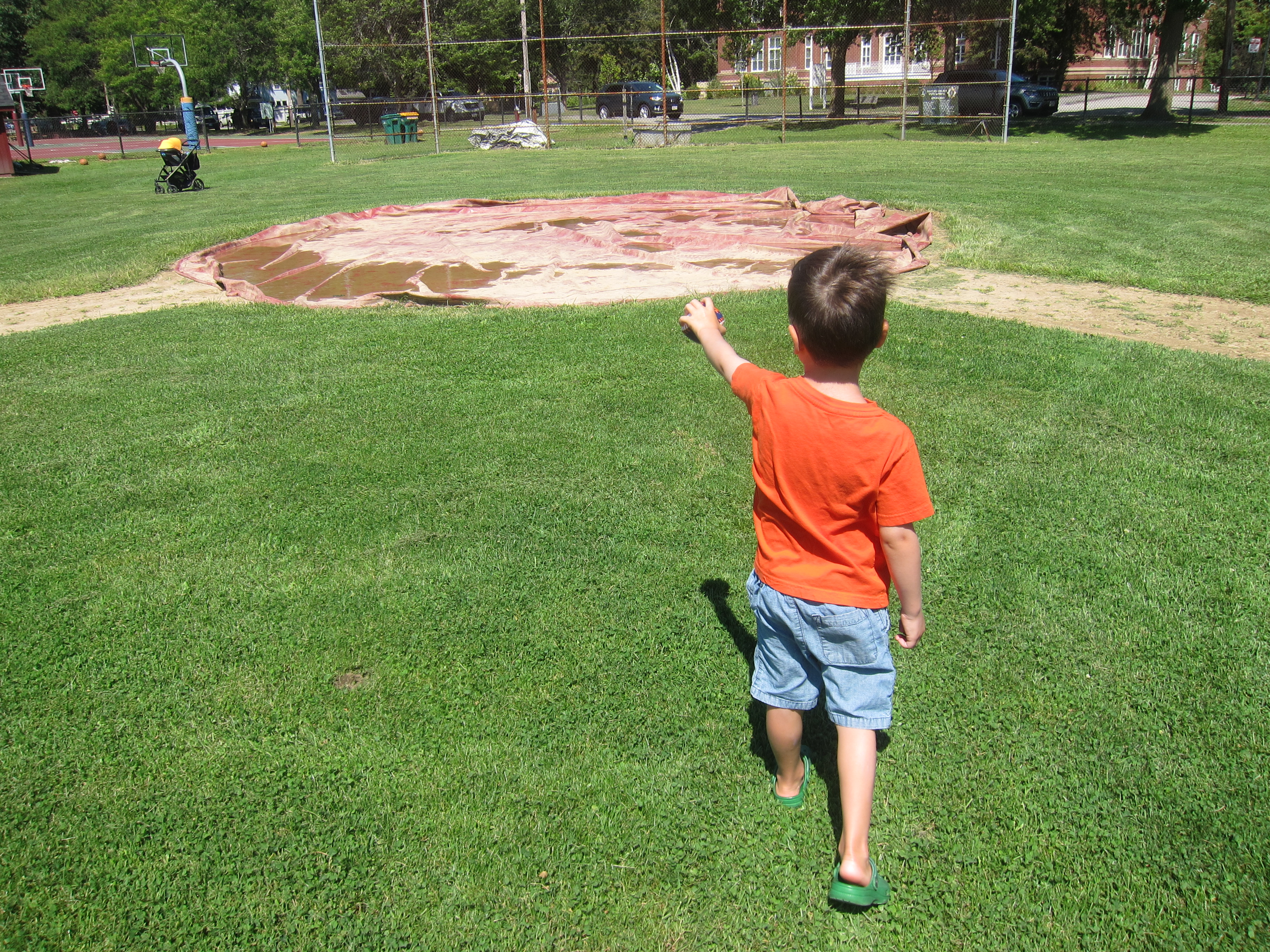
Planets (6)

Repeat with the following:

50 steps: wiffle ball (or tennis ball): Uranus

25 steps: soccer ball: Saturn

13 steps: basketball: Jupiter

4 steps: ping pong ball (or golf ball): Mars

3 steps: ping pong ball: Earth

2 steps: marble: Venus

1 step: marble: Mercury
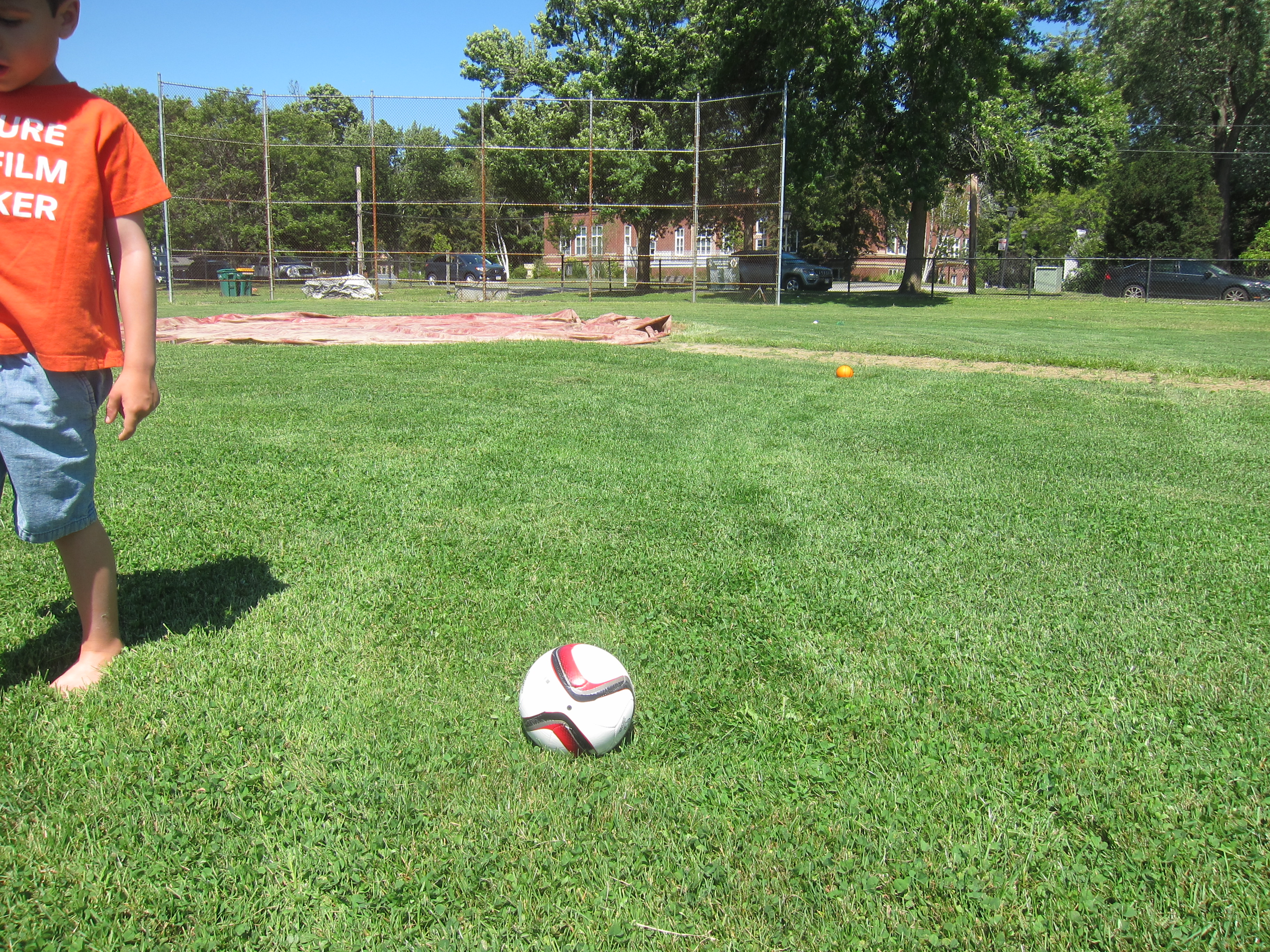
Planets (8)

This exercise is eye-opening even for a grown-up, revealing how truly close our rocky neighbor planets are, and how truly vast the distances are between the outer planets.
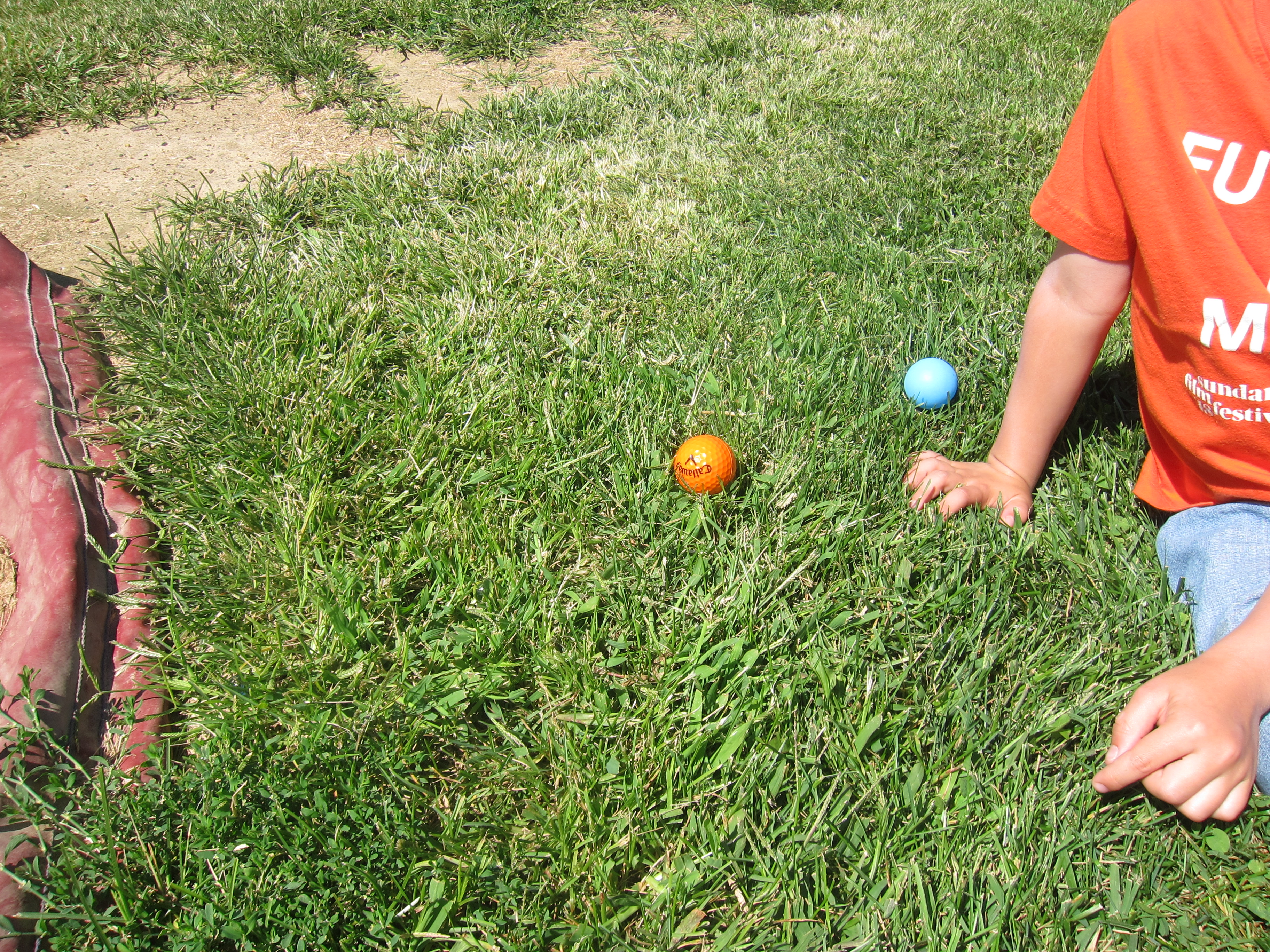
Planets (9)

I shared these fun facts with Travis to highlight the great distance across the baseball field. Each step we’d taken was equal to 36 million miles. A rover took 6 months to reach Mars, that “one step” away, but 12 years to reach Neptune! He seemed impressed, but then wanted to play soccer… There goes Saturn!

On the way home, we made up some corny space jokes.

How did Mars know what Venus was thinking? It red its mind.

Why was Jupiter so stinky? Because it passed gas.

Ha, what space joke will your kid create? Please share in the comments!
Planets (7)

Glowing Planets

Glowing Planets (6).JPG

One of the bonuses about winter’s early sunsets is that even little kids are awake to see the stars and planets. Travis and I talked recently about what it is that makes planets glow; they don’t make their own light the same way stars do, of course, but they do reflect the light of the Sun and thus give off a glow – sometimes the brightest one in the sky!

We came in to make our own glowing planets, thanks to a few simple materials.

glowing planets (1)

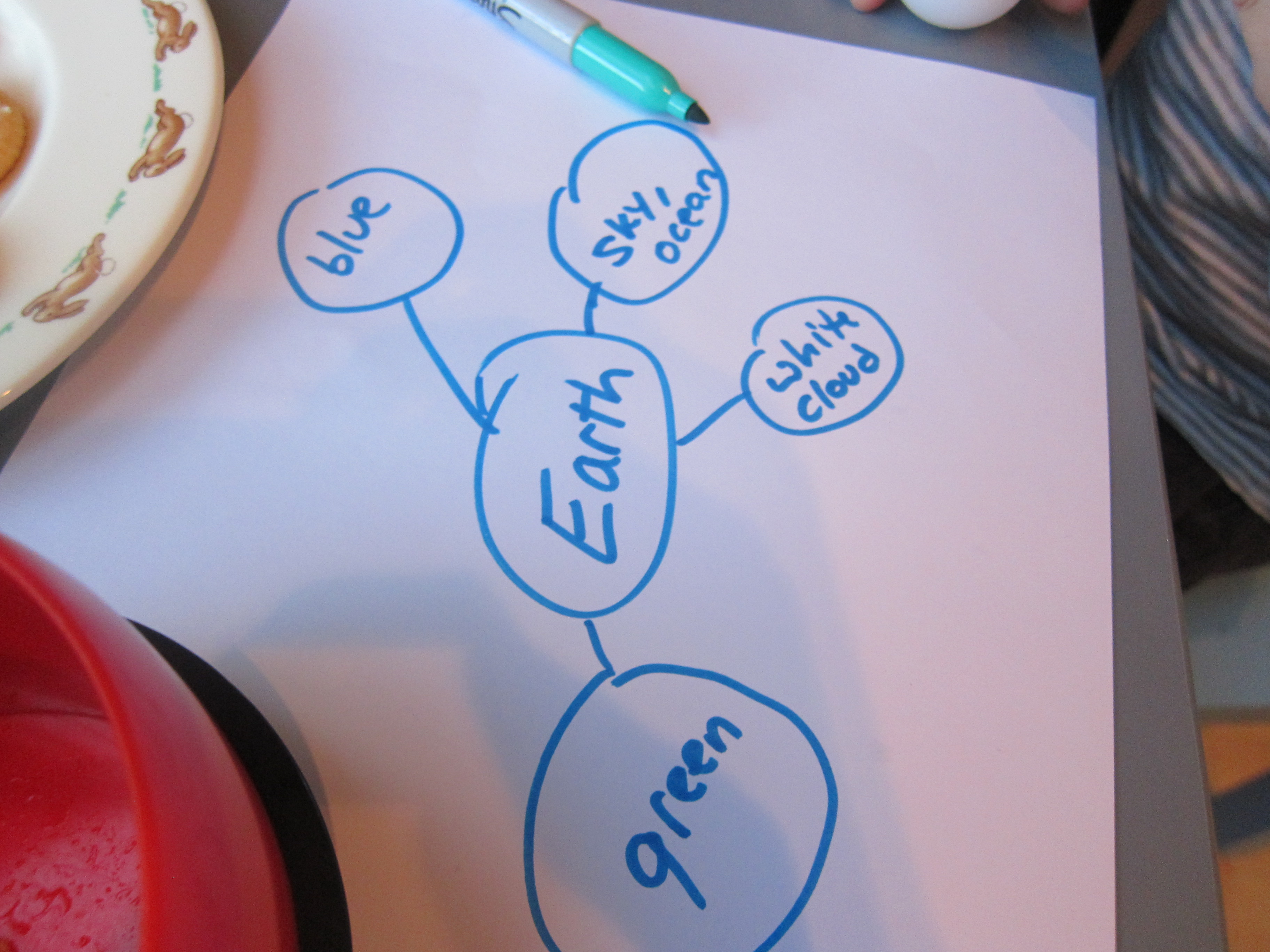
First, I asked which planets Travis wanted to make, and for each, we brainstormed a little diagram of what he knew about it. Earth, for example, would appear blue and green from space, and has oceans and continents.

glowing planets (2)

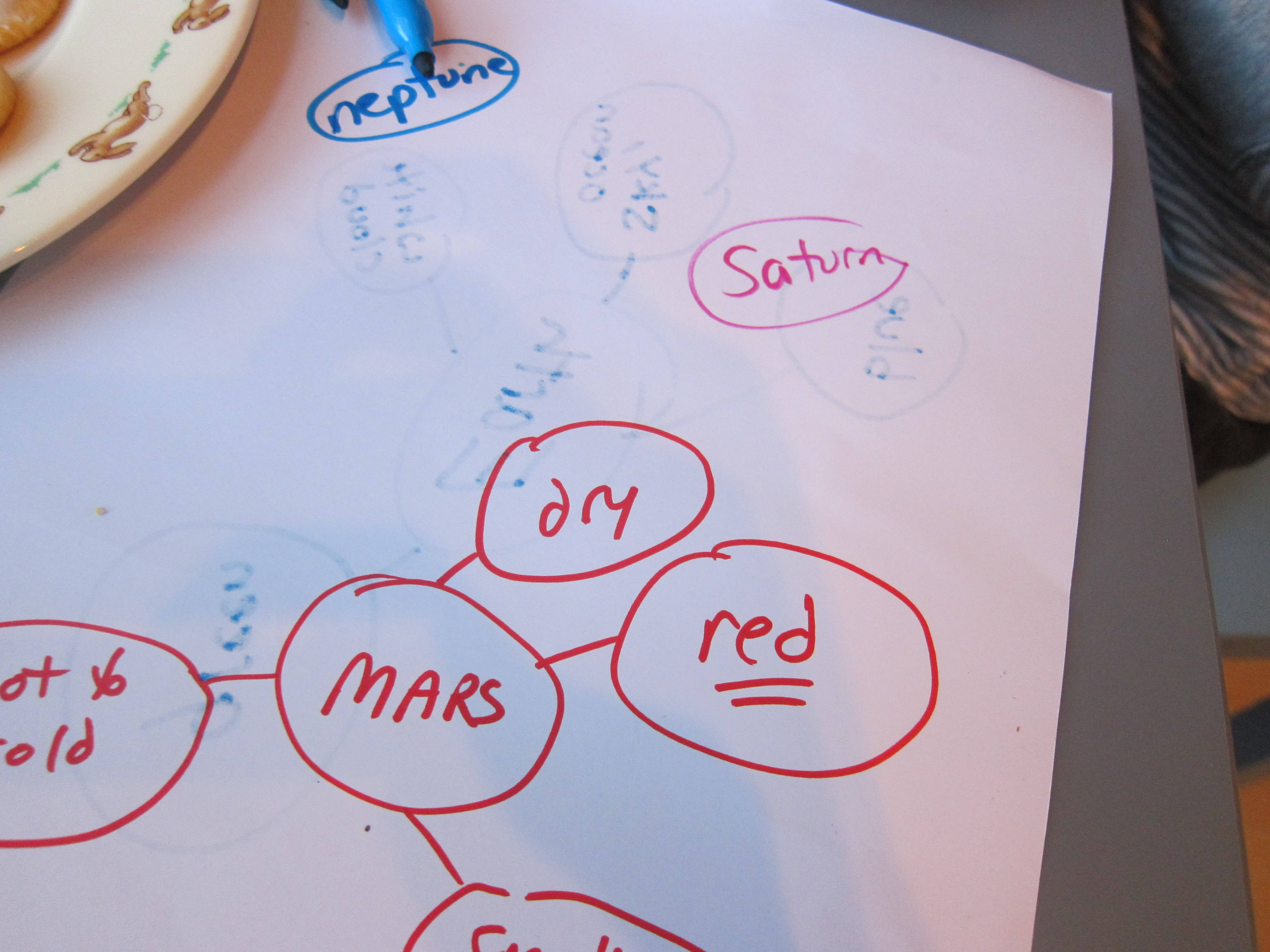
Saturn was made of gases, has rings, and is colder than Earth.

glowing planets (4)

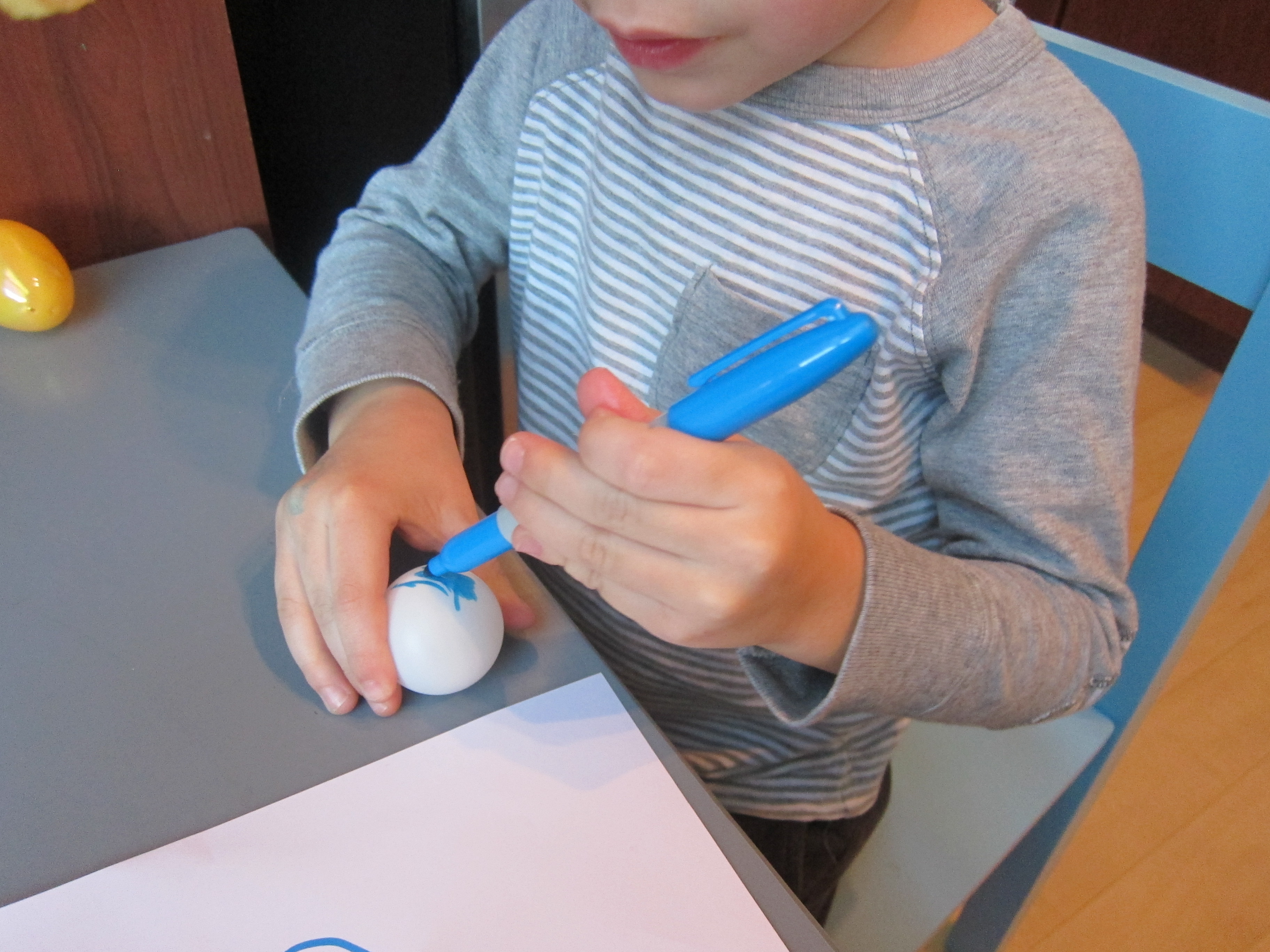
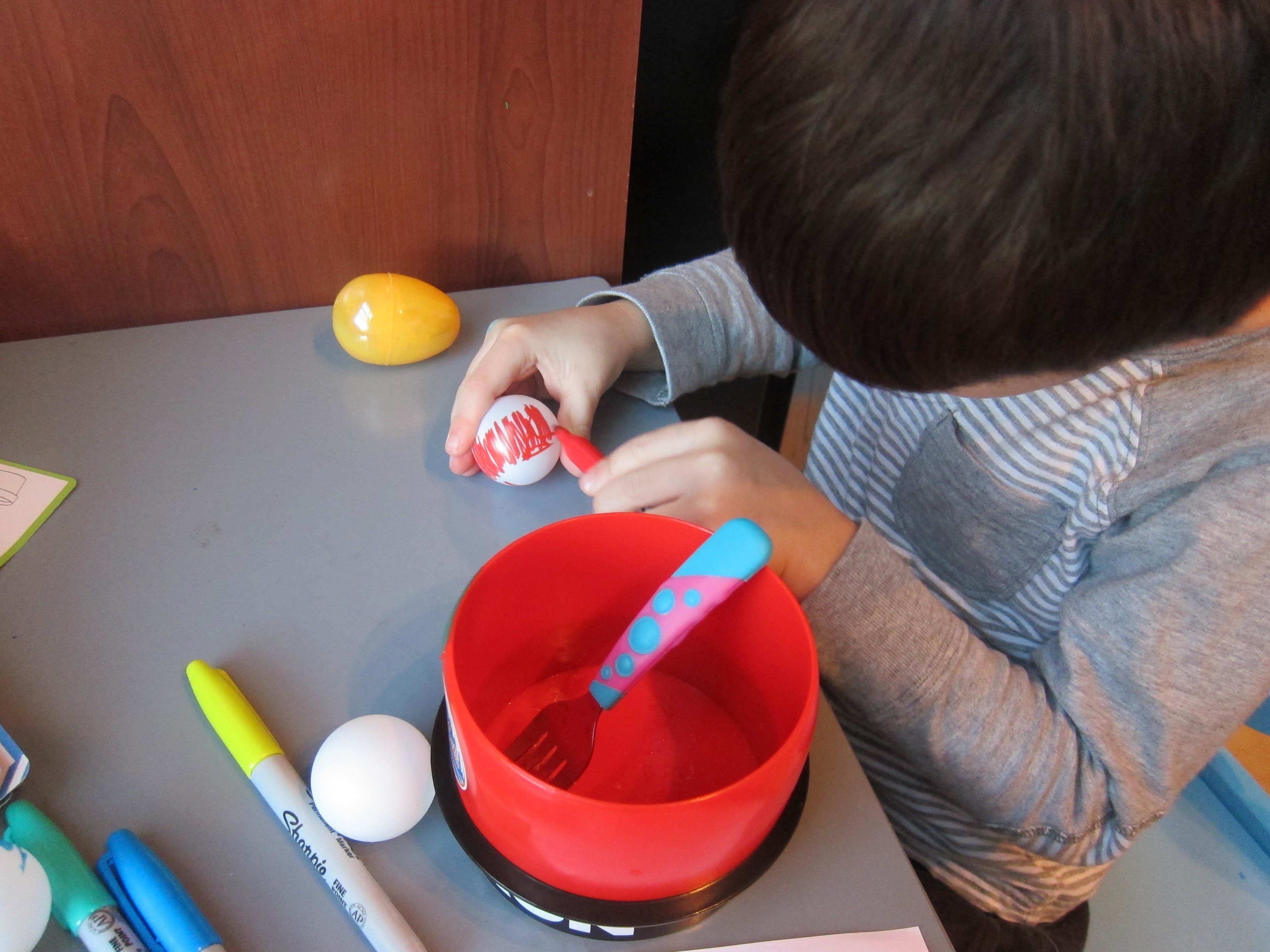
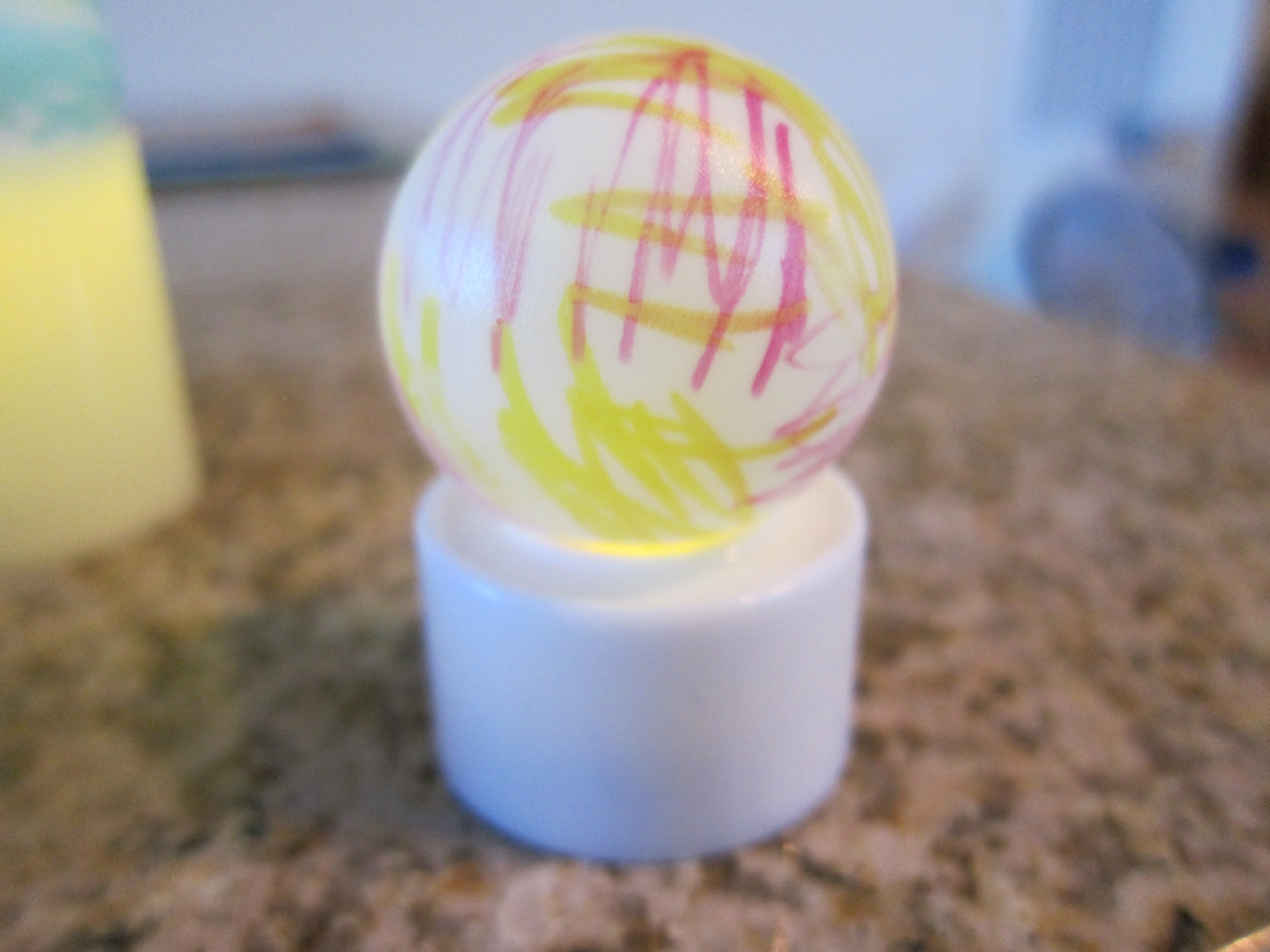
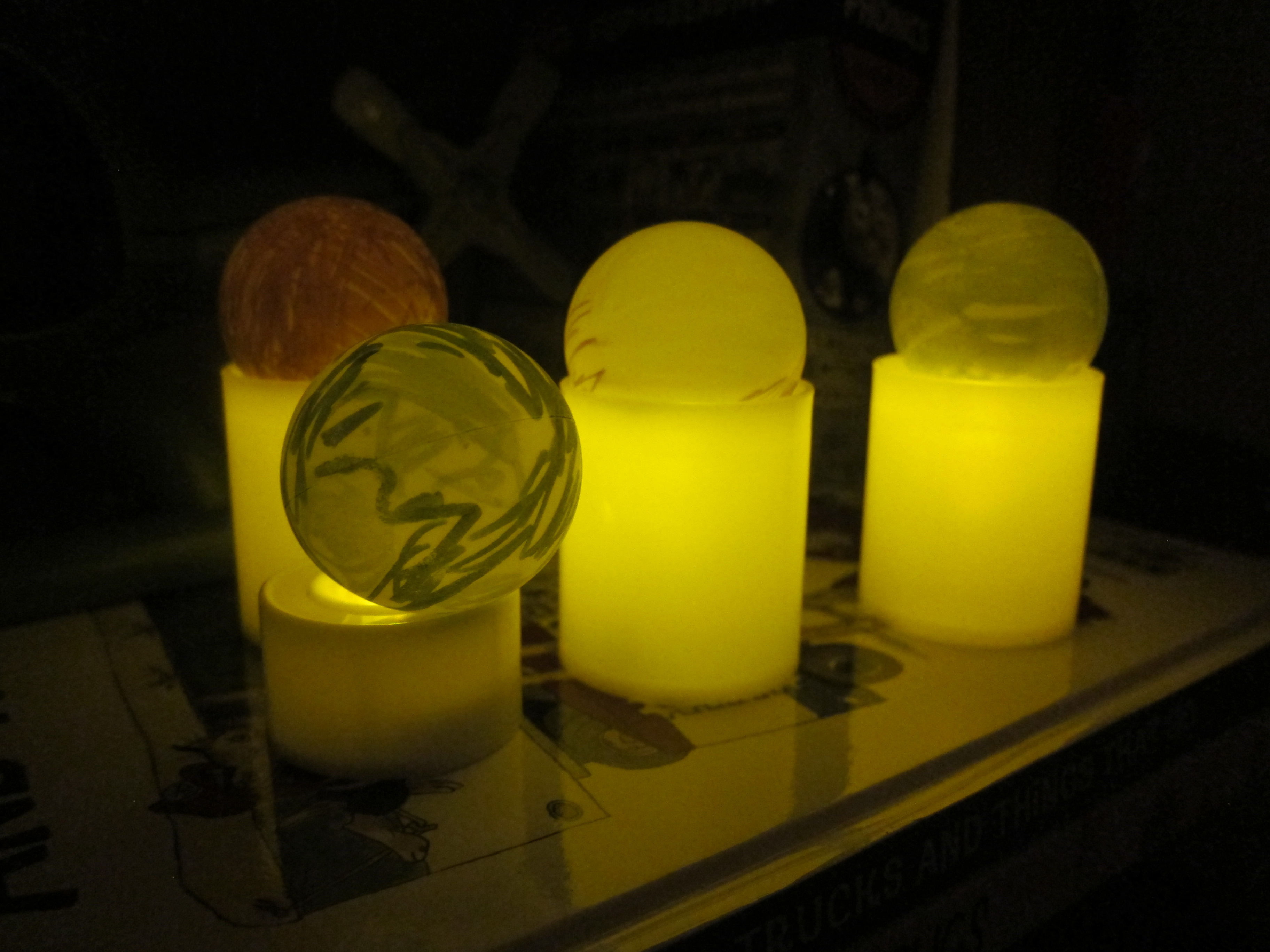
We finished out diagrams for Earth, Mars, Saturn, and Neptune (the four that Travis picked) and colored four golf balls accordingly. Travis loved making Mars bright red! Use permanent marker for the best results.

glowing planets (3)

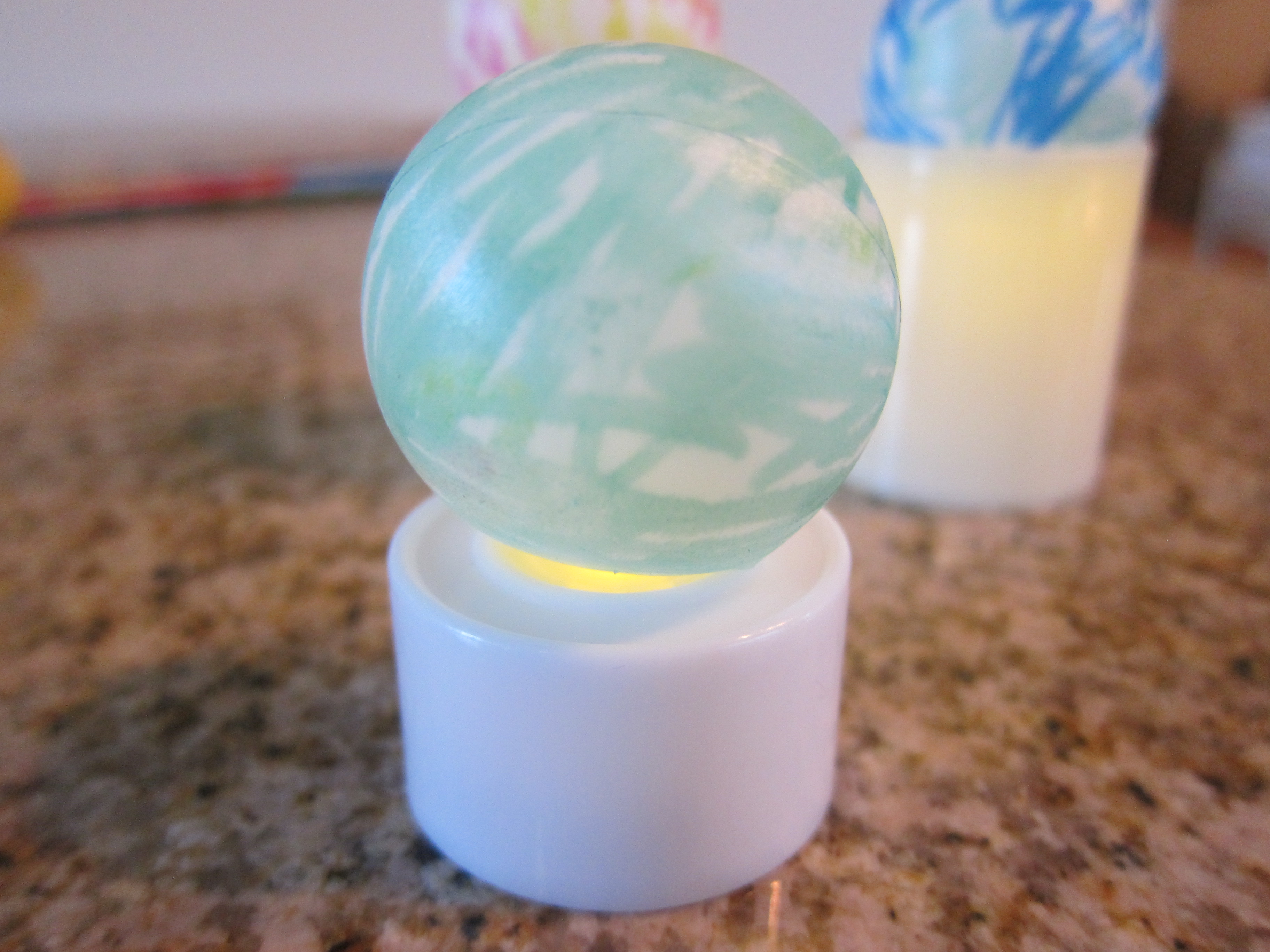
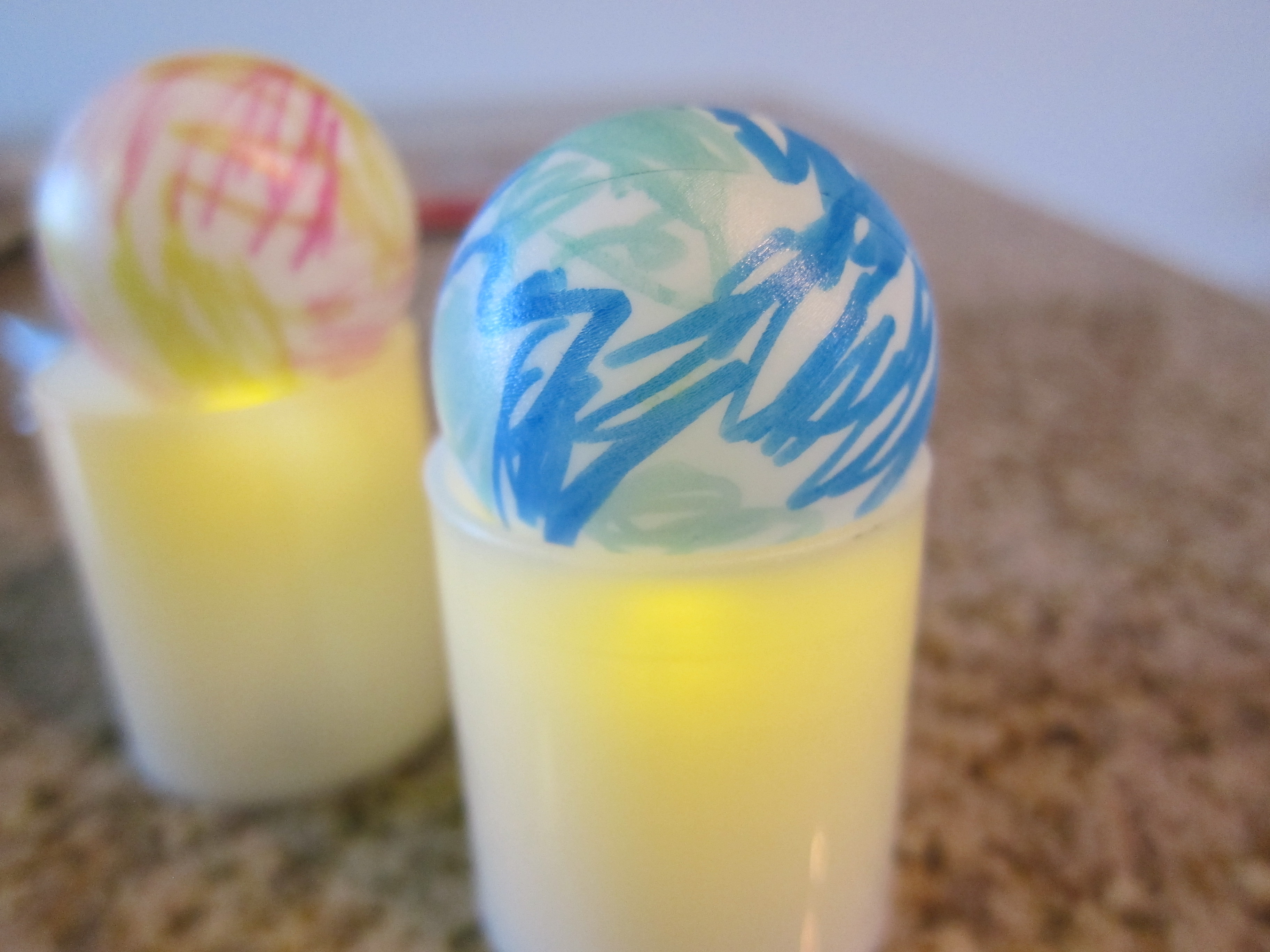
Now make a slit in the bottom of each ball with an X-acto knife (grown-up step), and place over the flame of a tea light.

glowing planets (5)

We found that small tea lights worked better than tall ones, even though we had more of the latter.

glowing planets (8)

Now your planets glow just like the ones in the sky! These were especially fun in the bedroom at night.

glowing planets (9)

All About the Solar System

u-week-8

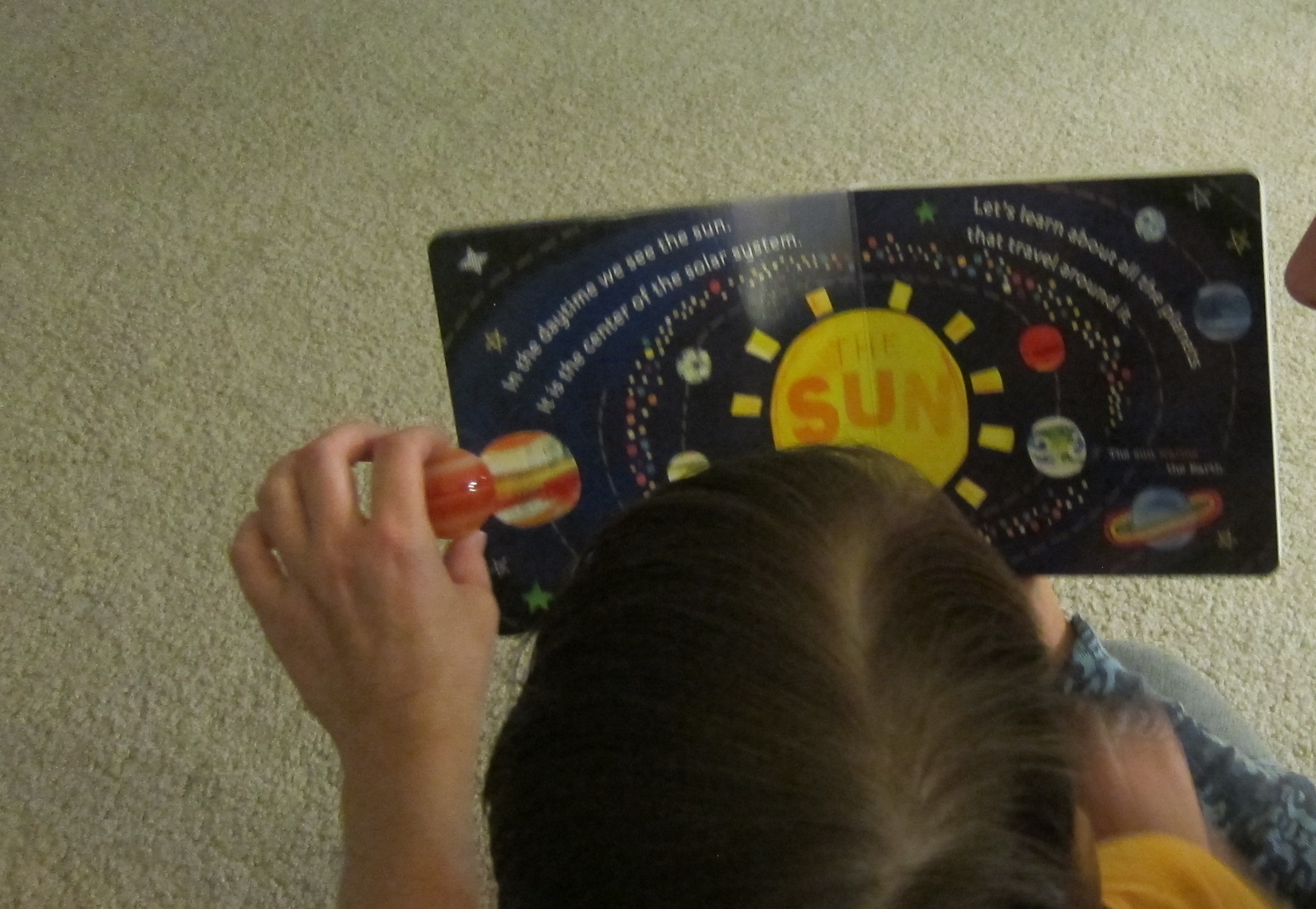
Travis has been very into the solar system ever since receiving a book on the planets for his birthday. Following a visit to the science museum this past weekend, we had fun continuing the planet-themed games at home!

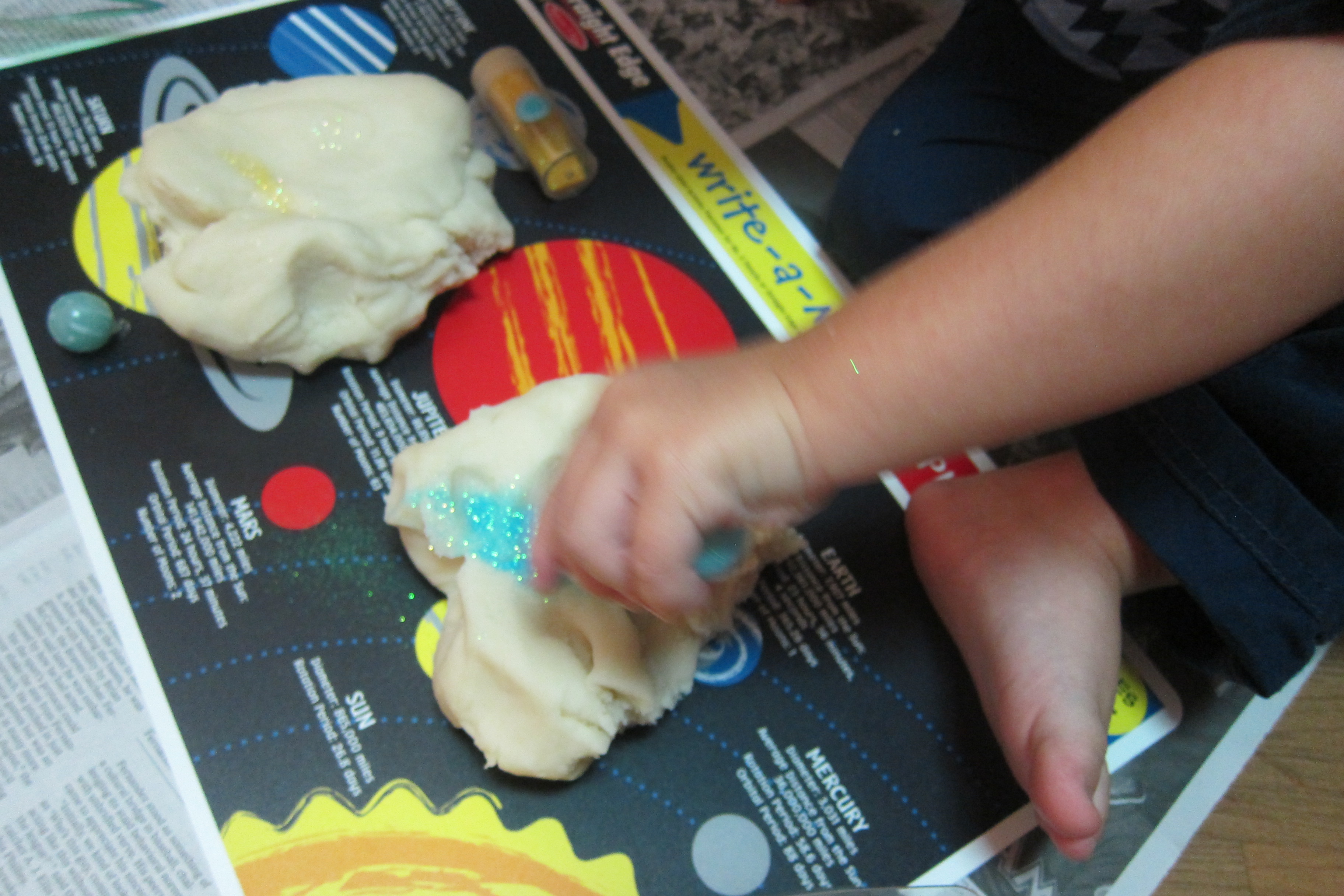
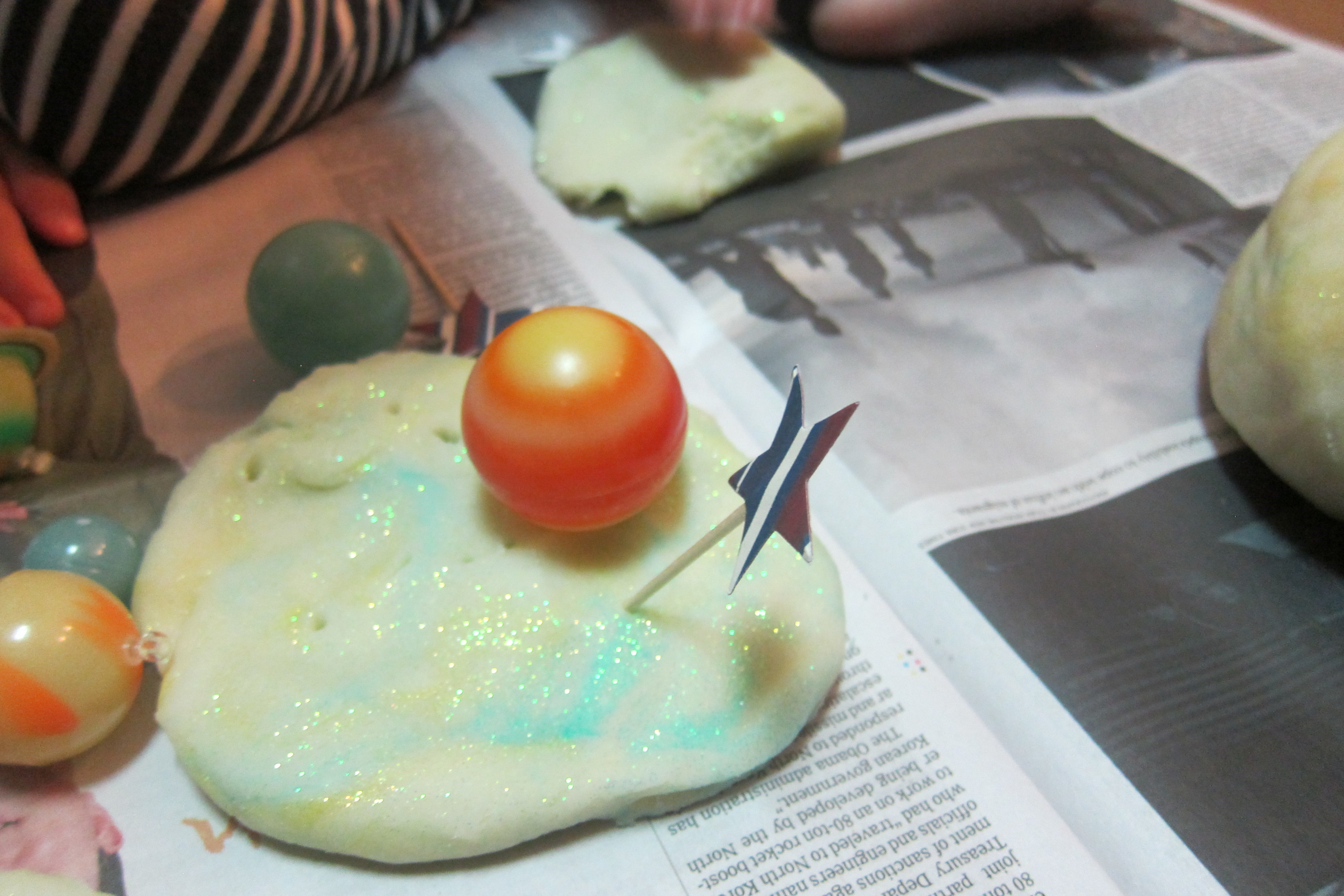
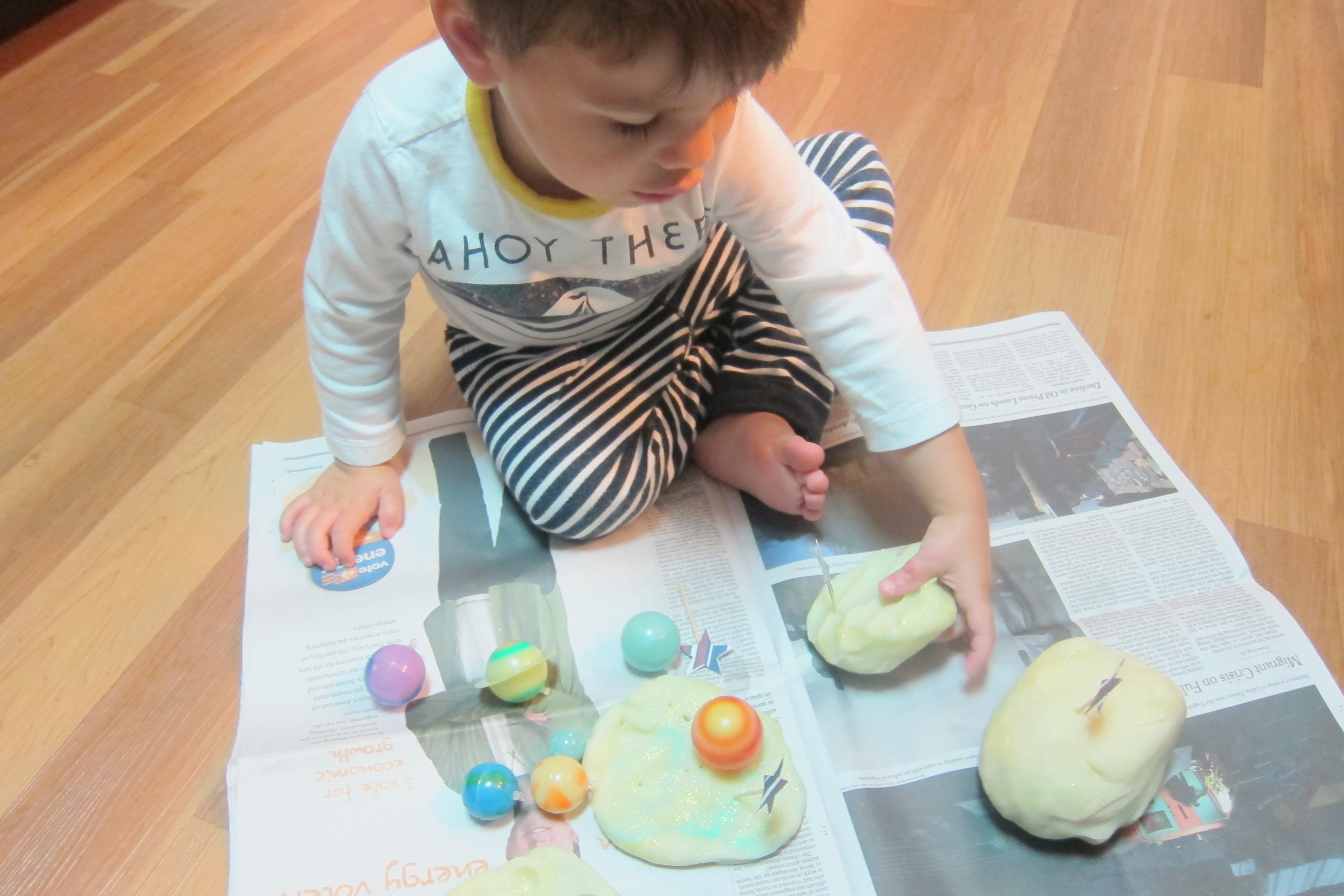
One neat idea is to make “galaxy playdough.” Alas, I did not have black food coloring, but we managed to have fun with the playdough I made following the recipe in the above link, minus the coloring. Then it was time to add “stardust”! Travis loved sprinkling in tons of blue and gold glitter to make our galactic creation.

u-week-12

We used props like model planets and star toothpicks to “explore” our galaxy, making for great fun.

solar-system-5

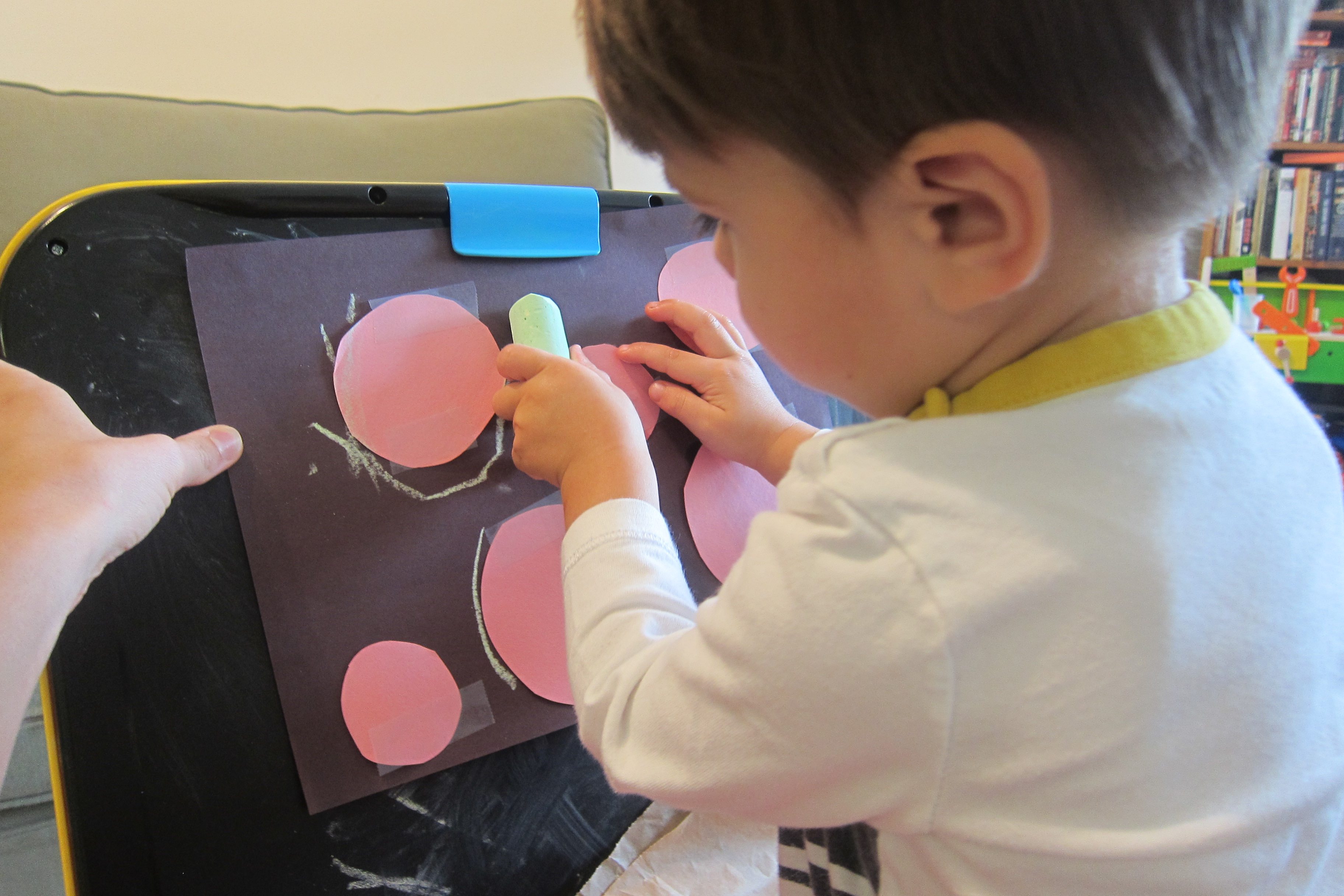
To talk about the relative size of the planets, I set up a simple tracing game. Travis is still getting the hang of tracing, so the result wasn’t as neat as yours will be if your child is preschool aged or up, but we had fun all the same! Cut colored circles from construction paper in various sizes, and tape to a second piece of construction paper, in a different color. Let your child trace around the circles with chalk.

solar-system-1

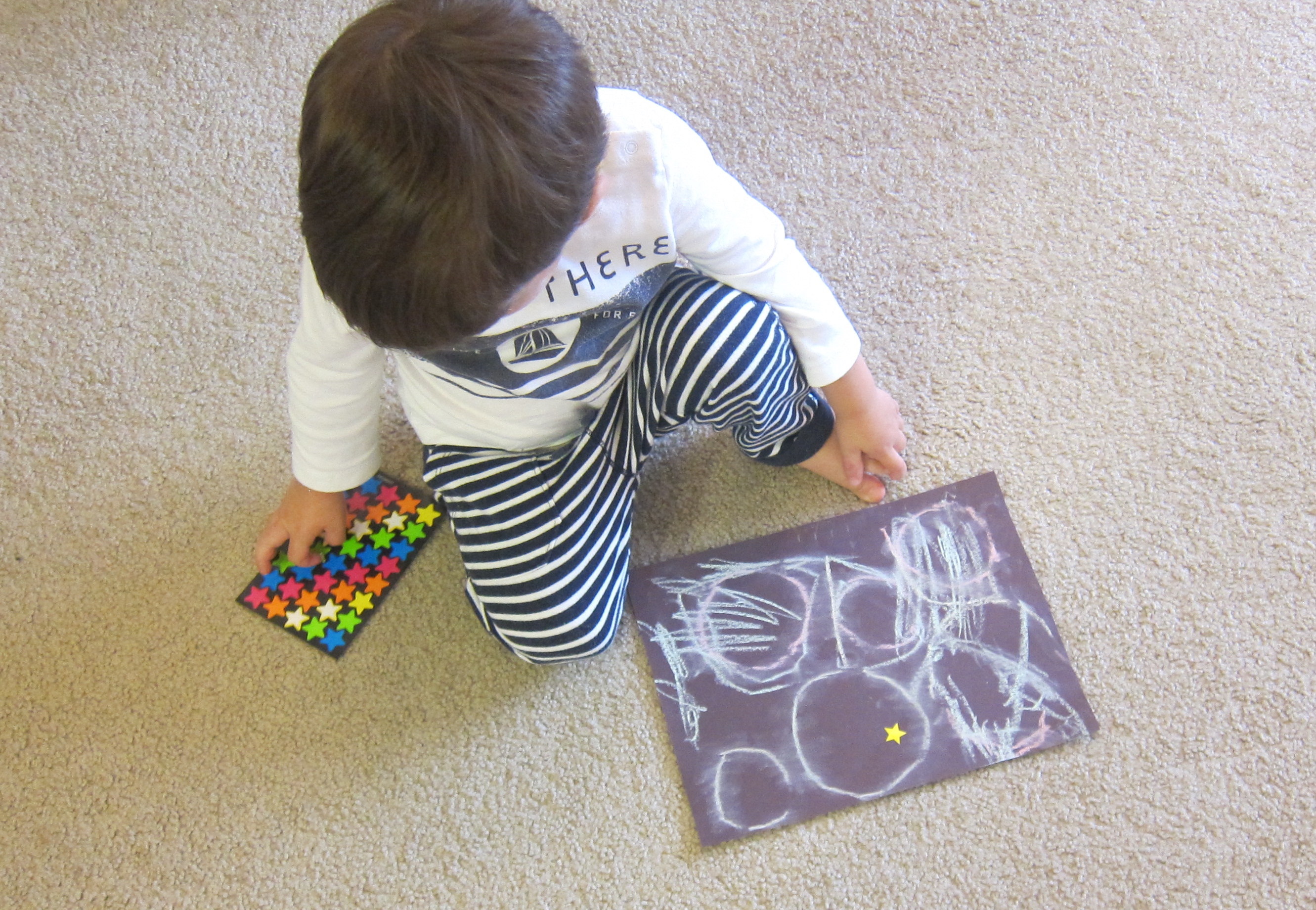
Remove the circles, leaving only the outline of the planets behind. You can smudge the edges of the chalk with your finger for a pulsing planet effect. We finished our “universe” with star stickers.

solar-system-3

What other fun galaxy games have your played with your child? Please share in the comments!

solar-system-4