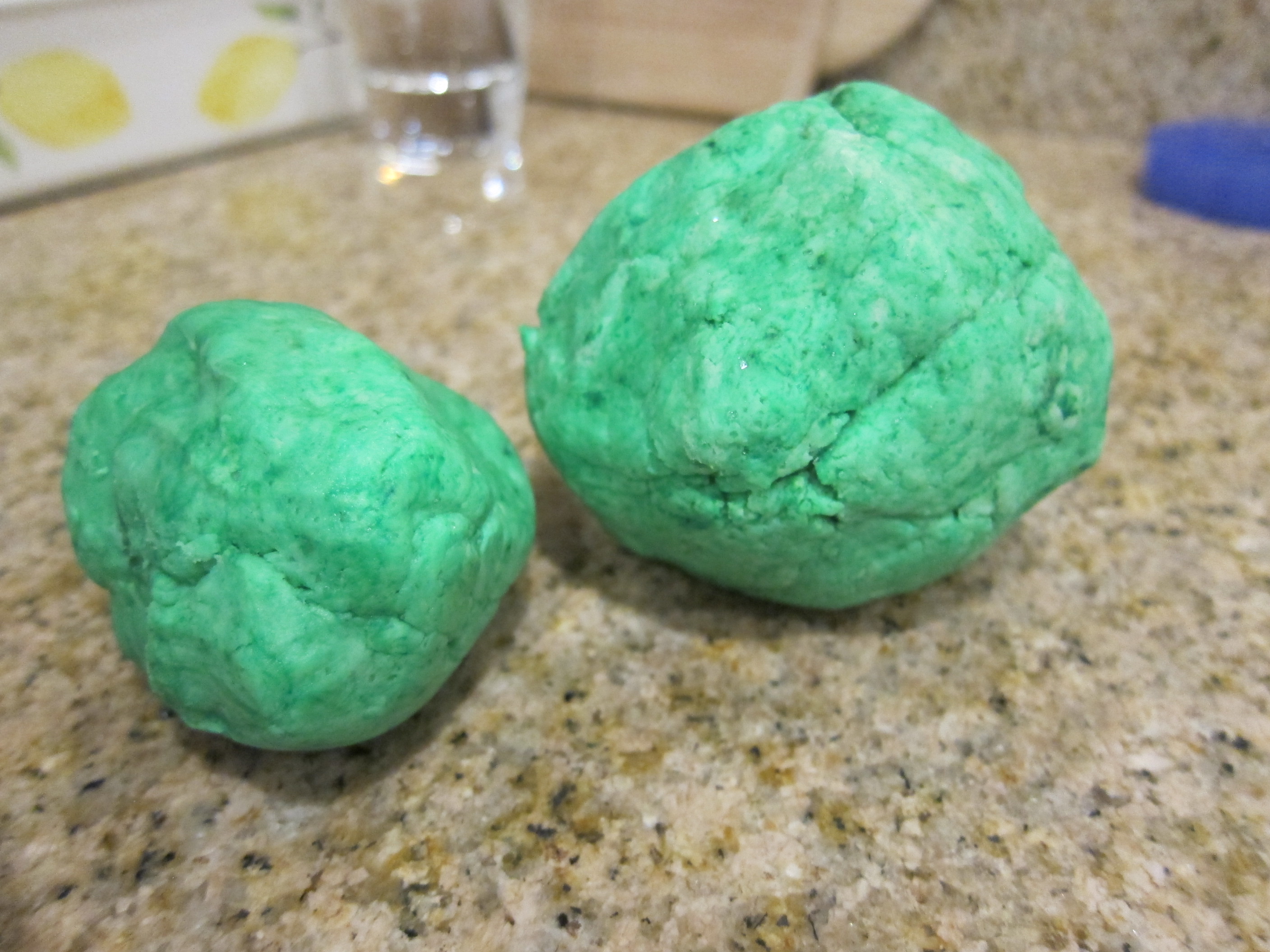
Make Homemade Scented Play Dough

I love this play dough recipe because it come together quickly, and because even a toddler can help out with some of the steps. That means double the play: half the fun is in making it, and more fun is to follow once the play dough is complete.

The first part of the recipe is definitely a grown-up step, though. In a saucepan, combine the following:

1 cup water

1 cup flour

1/2 cup salt

1 tablespoon canola oil

1 tablespoon cream of tartar

Cook over medium heat for about 5 minutes, stirring constantly. It will begin to stick together and pull away form the sides of the pan, and that’s when you know it’s ready. Knead a few times as the play dough cools down, adding a little extra flour as needed.

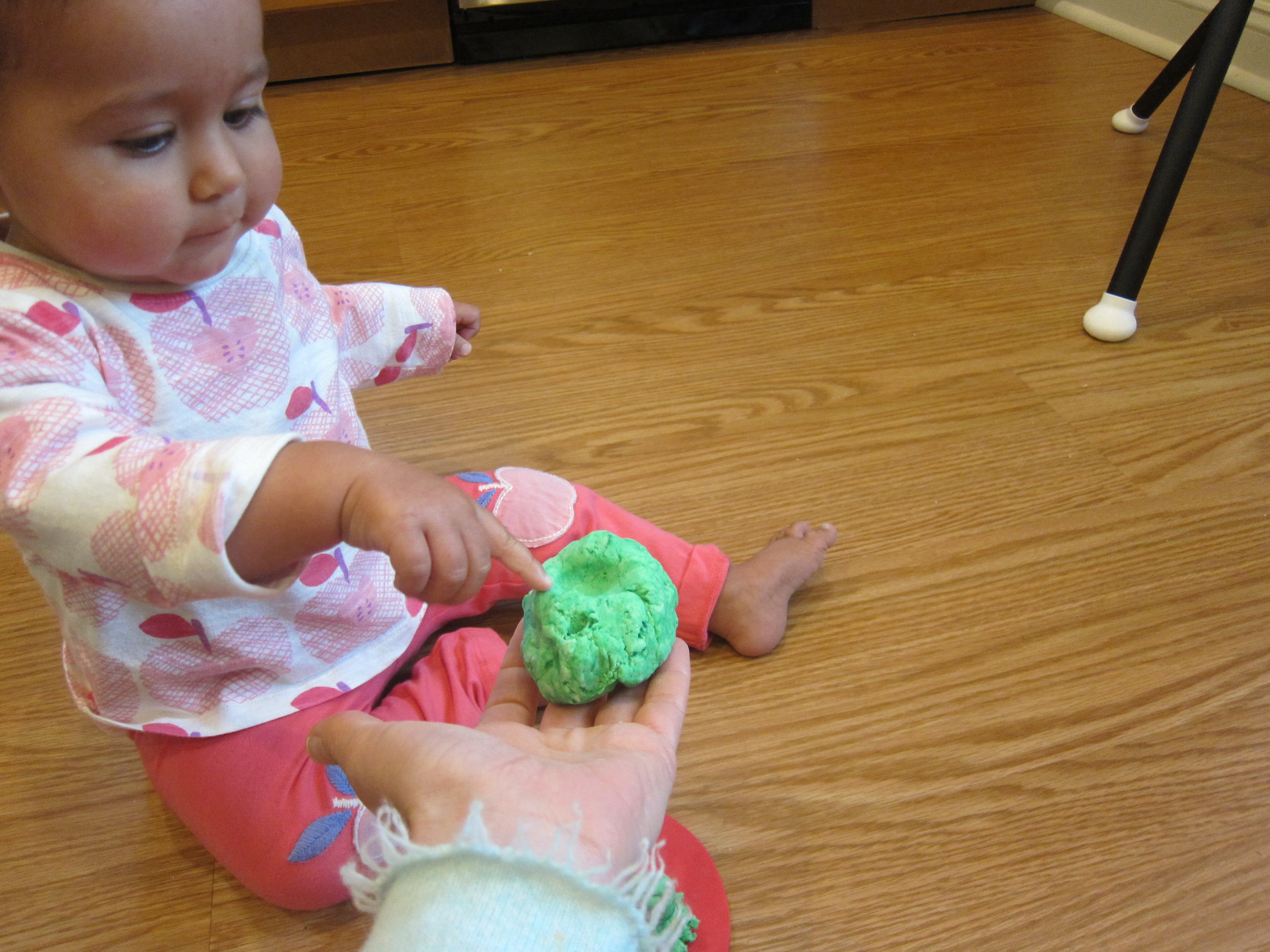
Once the play dough was cool enough for Veronika to handle, I divided it into two portions and set them down on wax paper in front of her. Now you can customize it, in terms of both scent and color! We made one portion that had a few drops of vanilla extract and red food coloring…

…and a second version that had almond extract and yellow food coloring. I was delighted to find that the recipe is incredibly forgiving, too. I accidentally spilled out way more almond extract than needed, and worried the dough would become sticky and unworkable. But with a little kneading, it was still just fine!

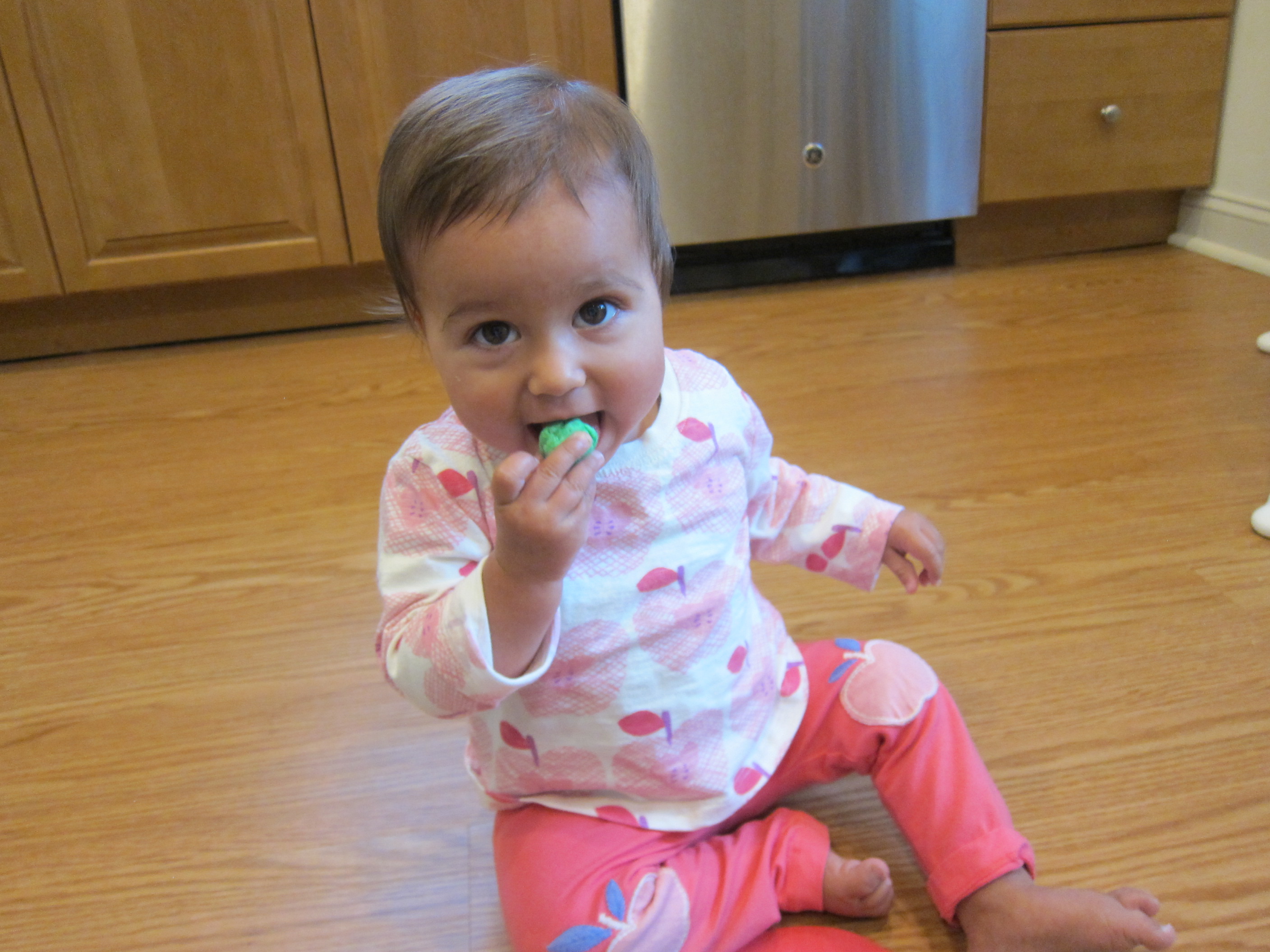
Veronika was involved in all these steps, first smelling the extracts, and then picking the colors. Then I invited her to get her hands right in there. “I’m getting red!” she said with delight, peeking down at her hands.
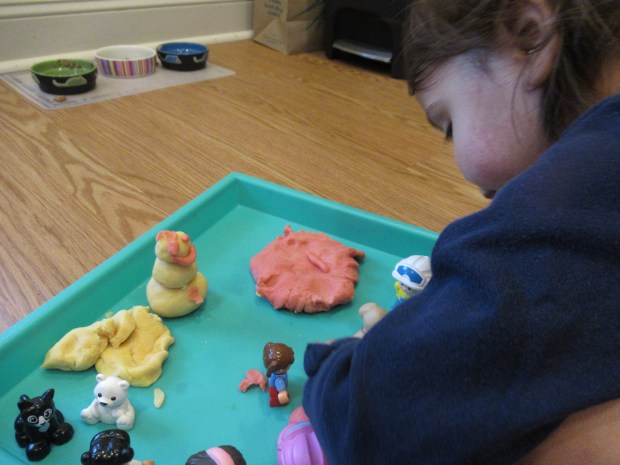
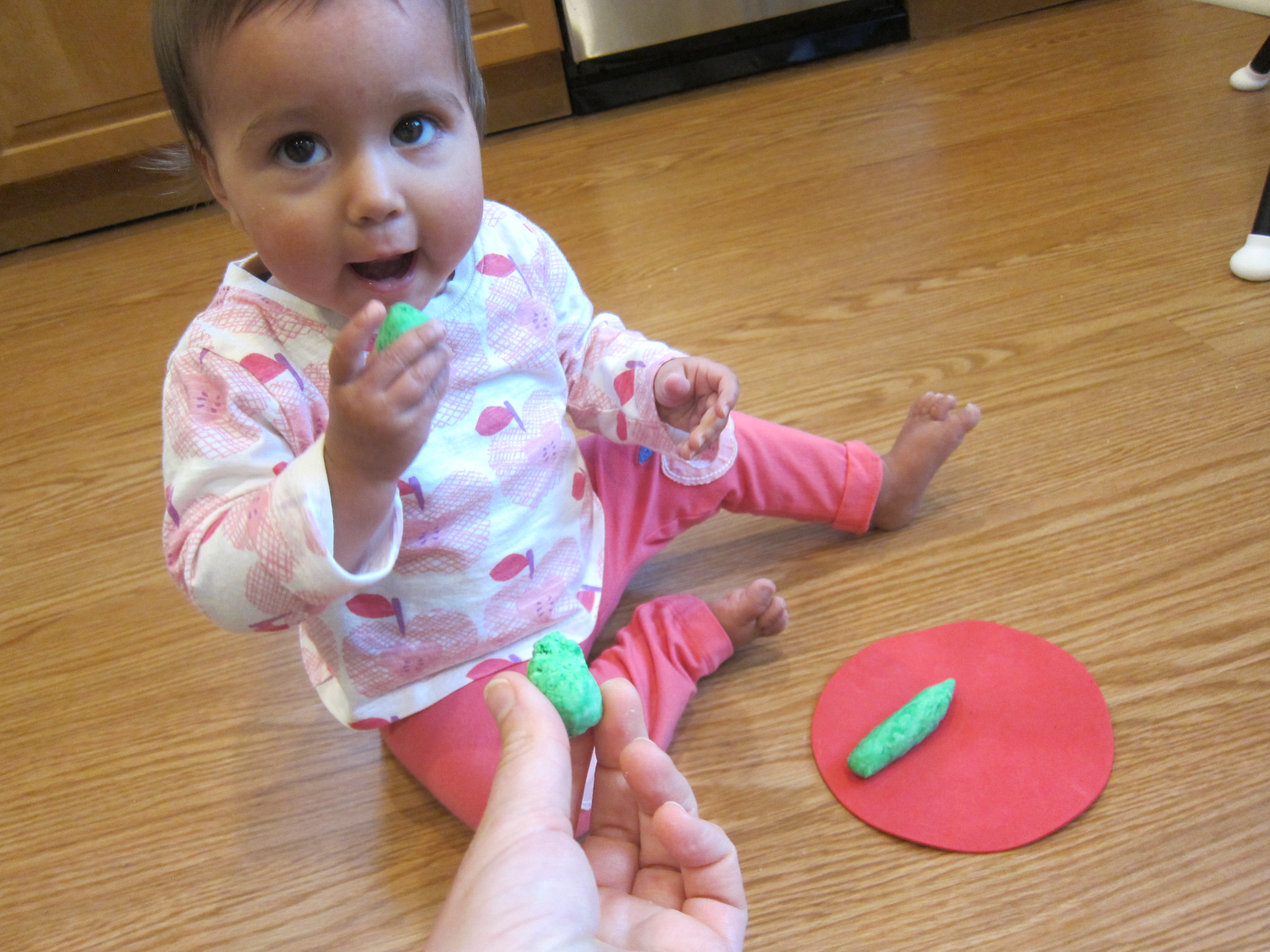
We’d already had so much fun, but now playtime could begin! Veronika quickly brought of lots of plastic toys, and delighted in seeing their footprints.
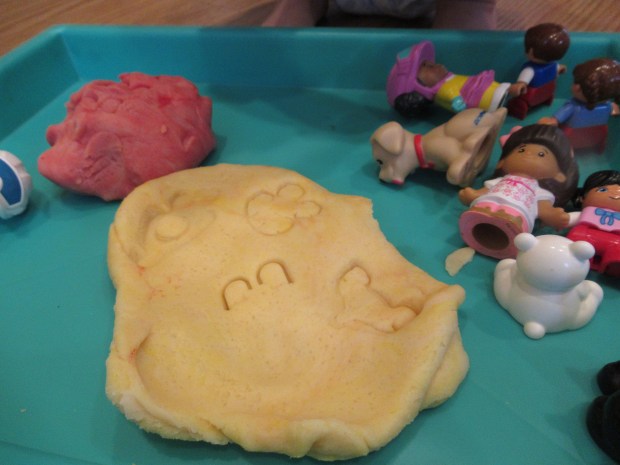
We decorated a play dough snowman, made play dough tea party cookies, and more.

You can store the play dough in an air-tight plastic bag so it doesn’t dry out between uses. That said, no sooner had I packed it away than Veronika was asking me to take it out again!
Penny Playdough

Penny Play dough (8)

This simple twist on playdough play turns your toddler into a mini archaeologist!

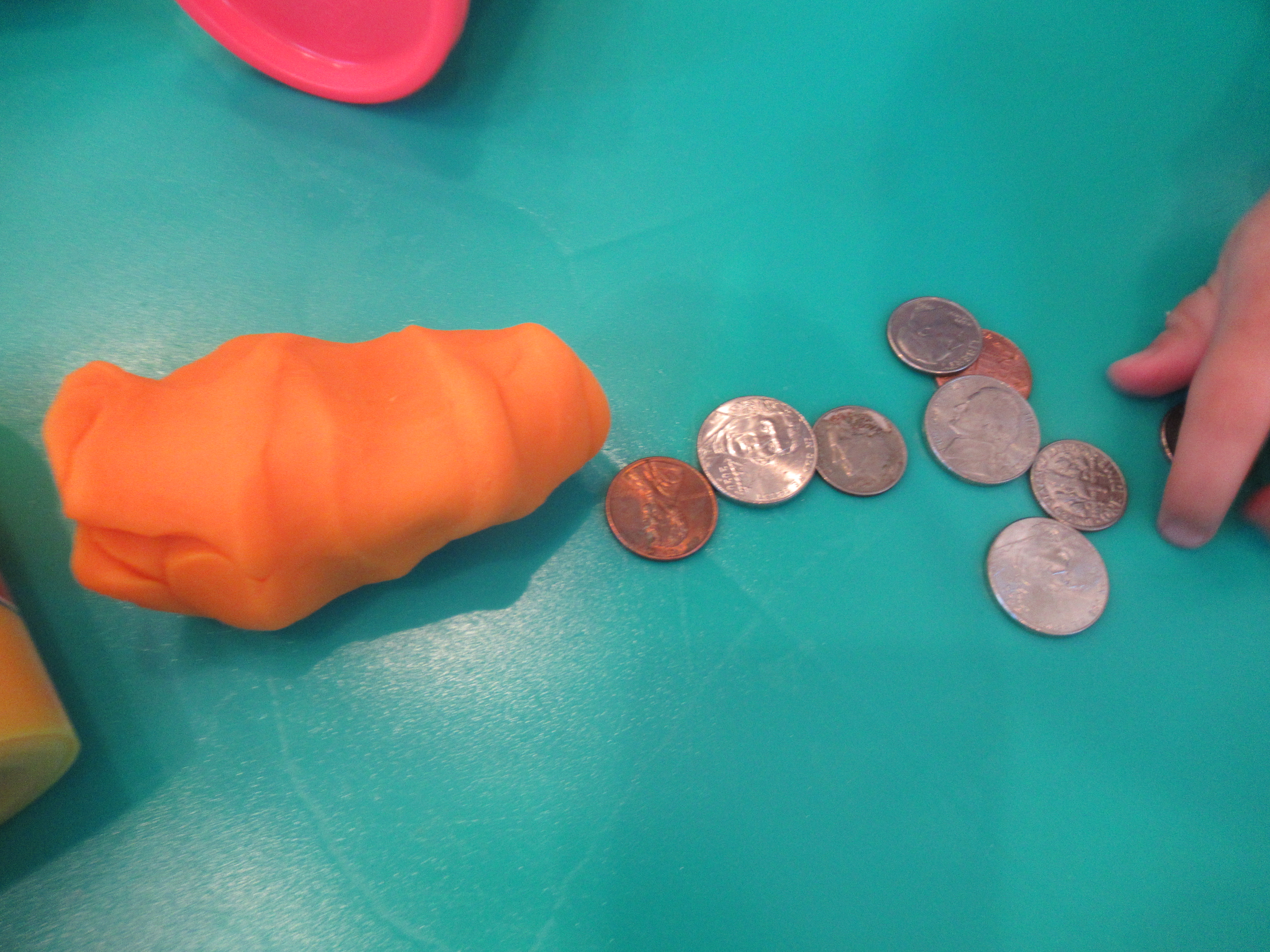
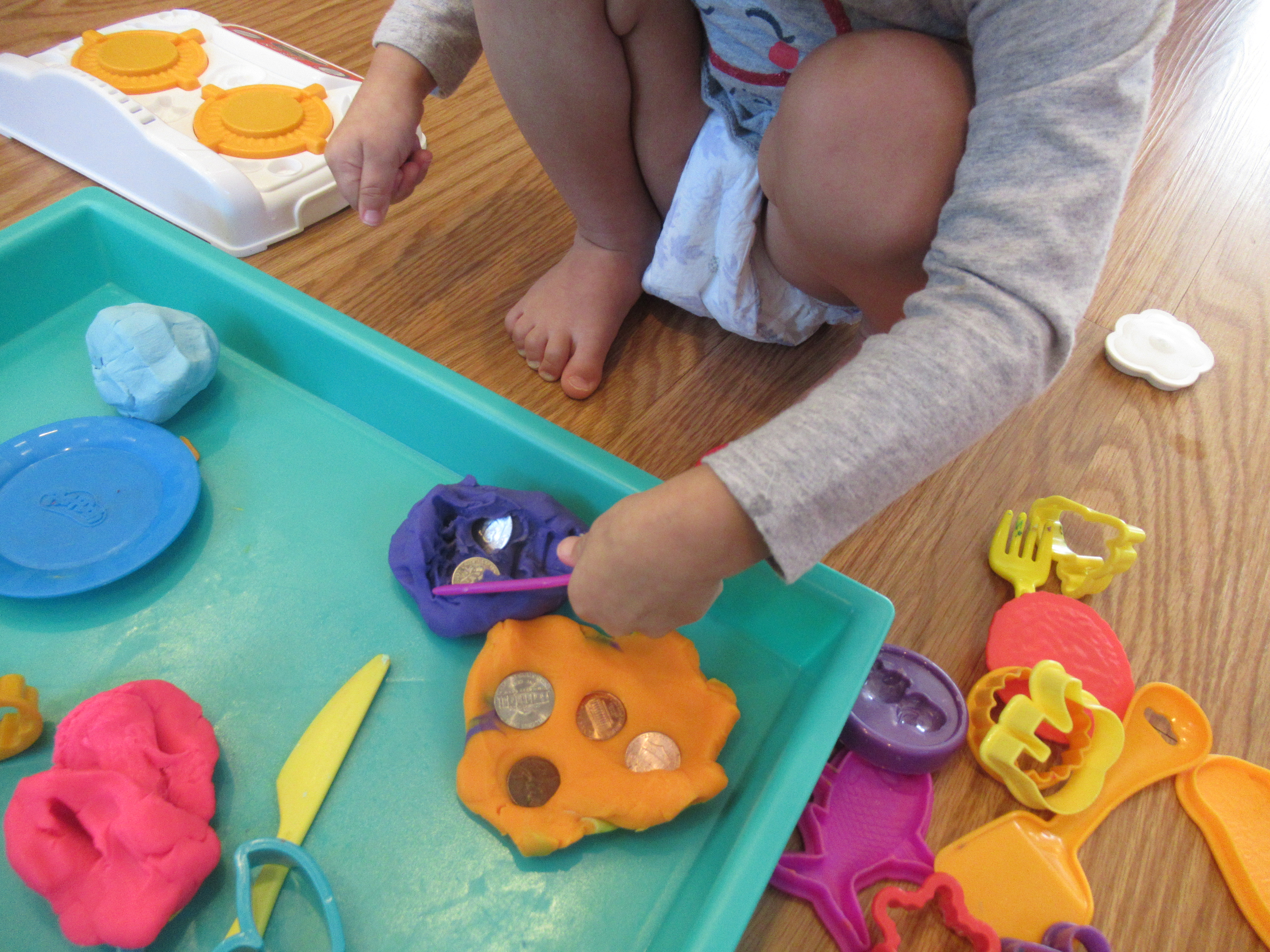
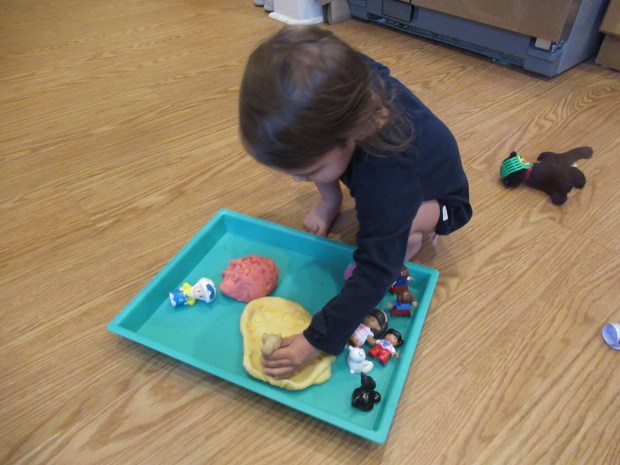
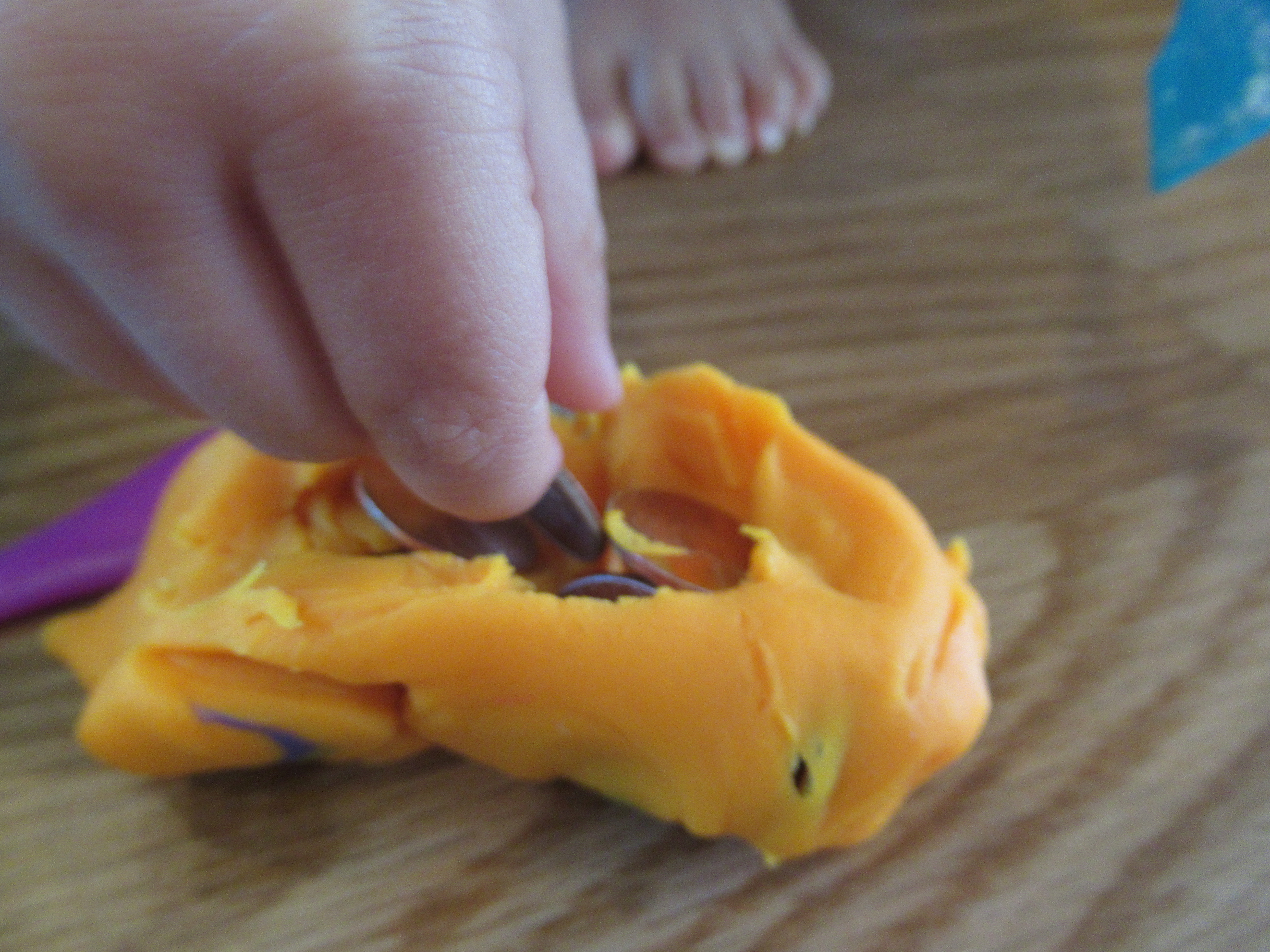
Veronika has wanted to play with playdough every morning this week, so today I wanted to make it a little different. I took the loose change from my wallet (a mix of pennies, dimes, and nickles) and “buried” them in pieces of play dough. I made sure she saw so she knew that “treasure” was waiting for her, although you could also keep it a surprise.

Penny Play dough (1)

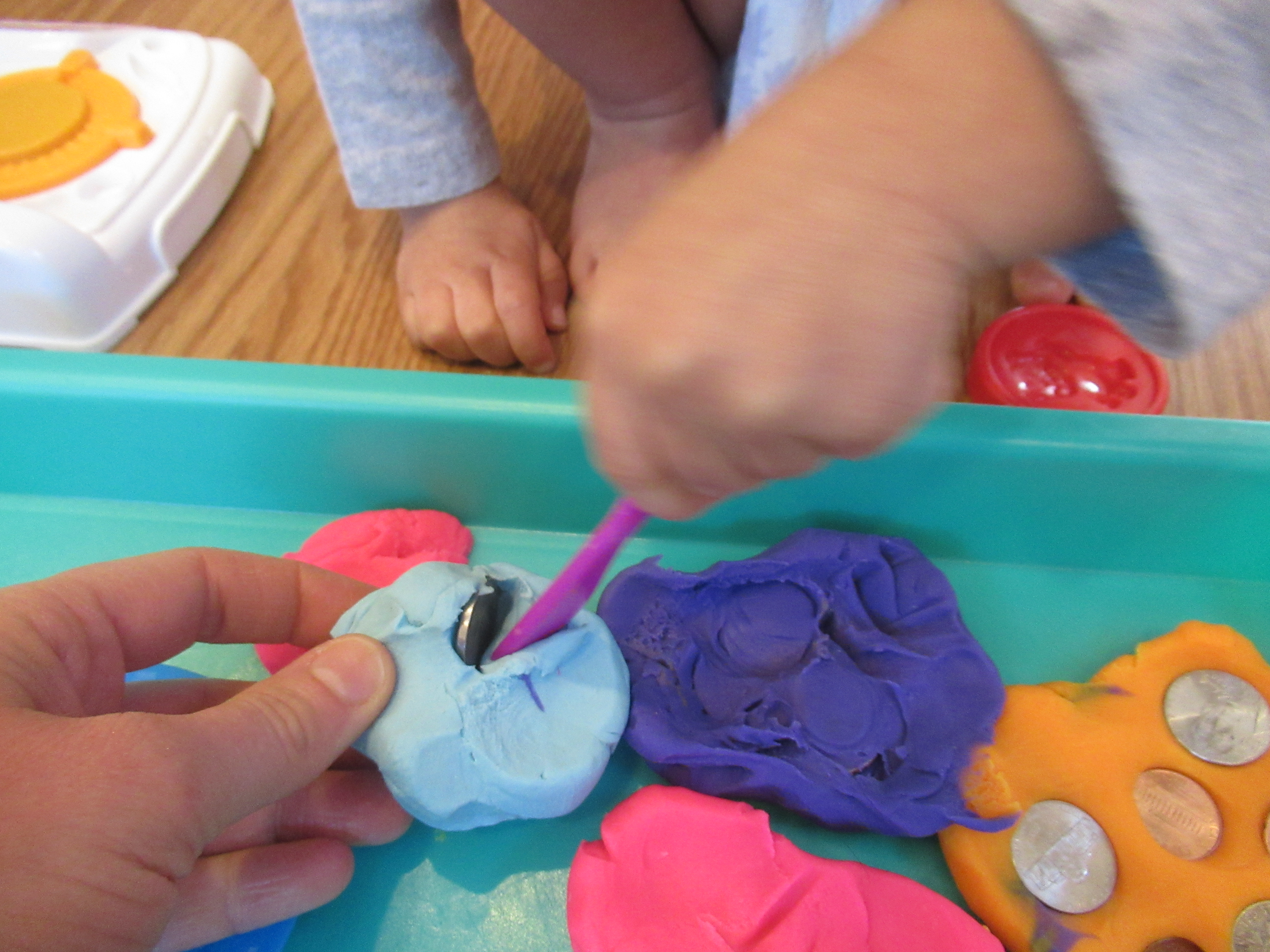
I then pulled out a variety of playdough tools, including plastic knives, forks, chisels, and spatulas. The challenge was up to her to see if she could dig to the coins!

Penny Play dough (4)

She immediately was into the game, testing the different tools to see which worked best. Or sometimes she just used her fingers!

Penny Play dough (9)

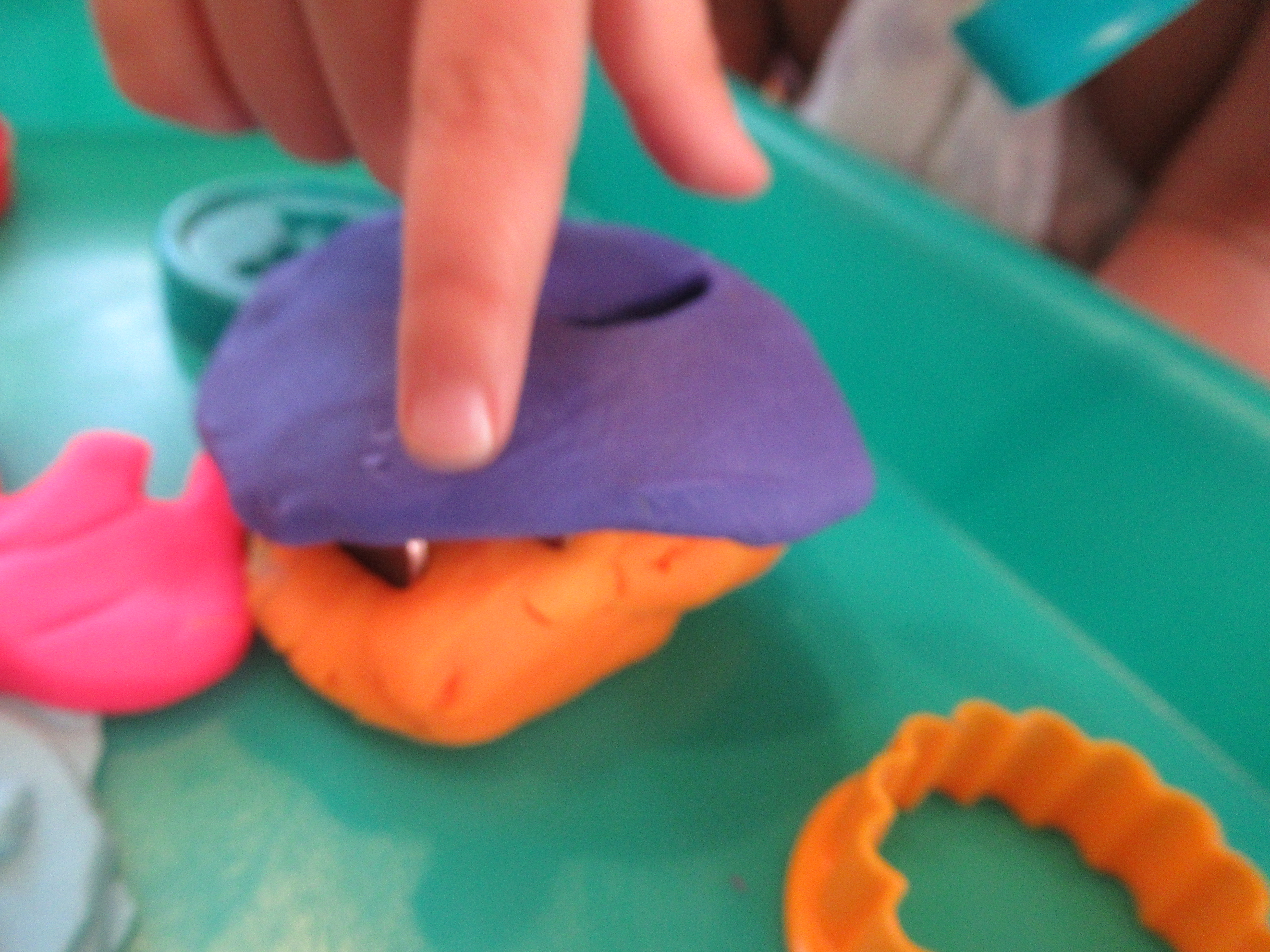
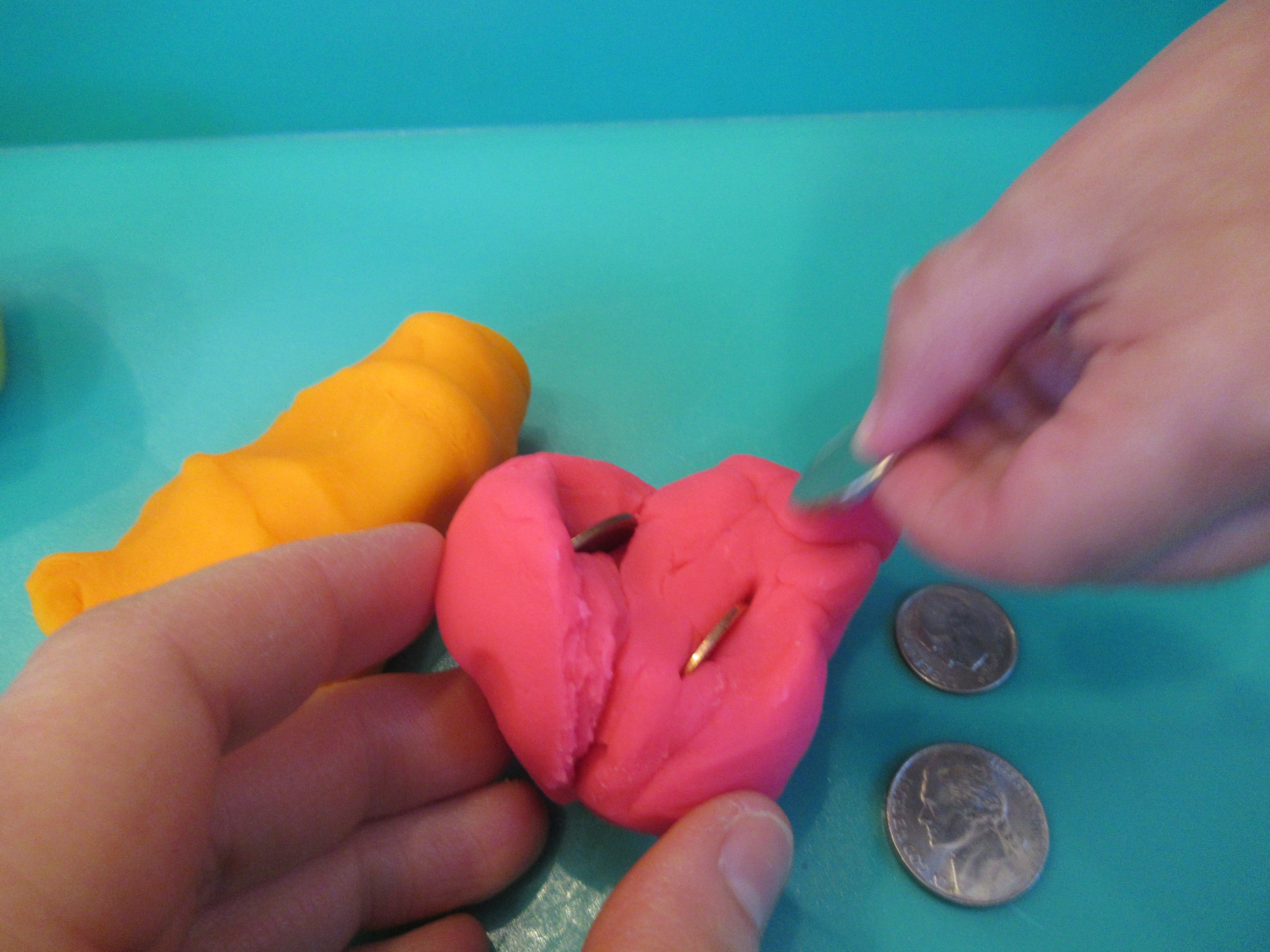
We tried burying the money in different ways, too, sometimes balled up in the middle, sometimes stuck in like little quills that she could pull out. “Help, help!” she pretended the little pennies were crying.

Penny Play dough (2)

This was a great game for imagination and fine motor skills, and kept her so busy for over half an hour!

Penny Play dough (3)

Plate Faces & Playdough Faces

Playdough Faces (9)

Veronika and I played two different games today to learn facial features and emotions. The activities were both so hands on, and she loved them equally!

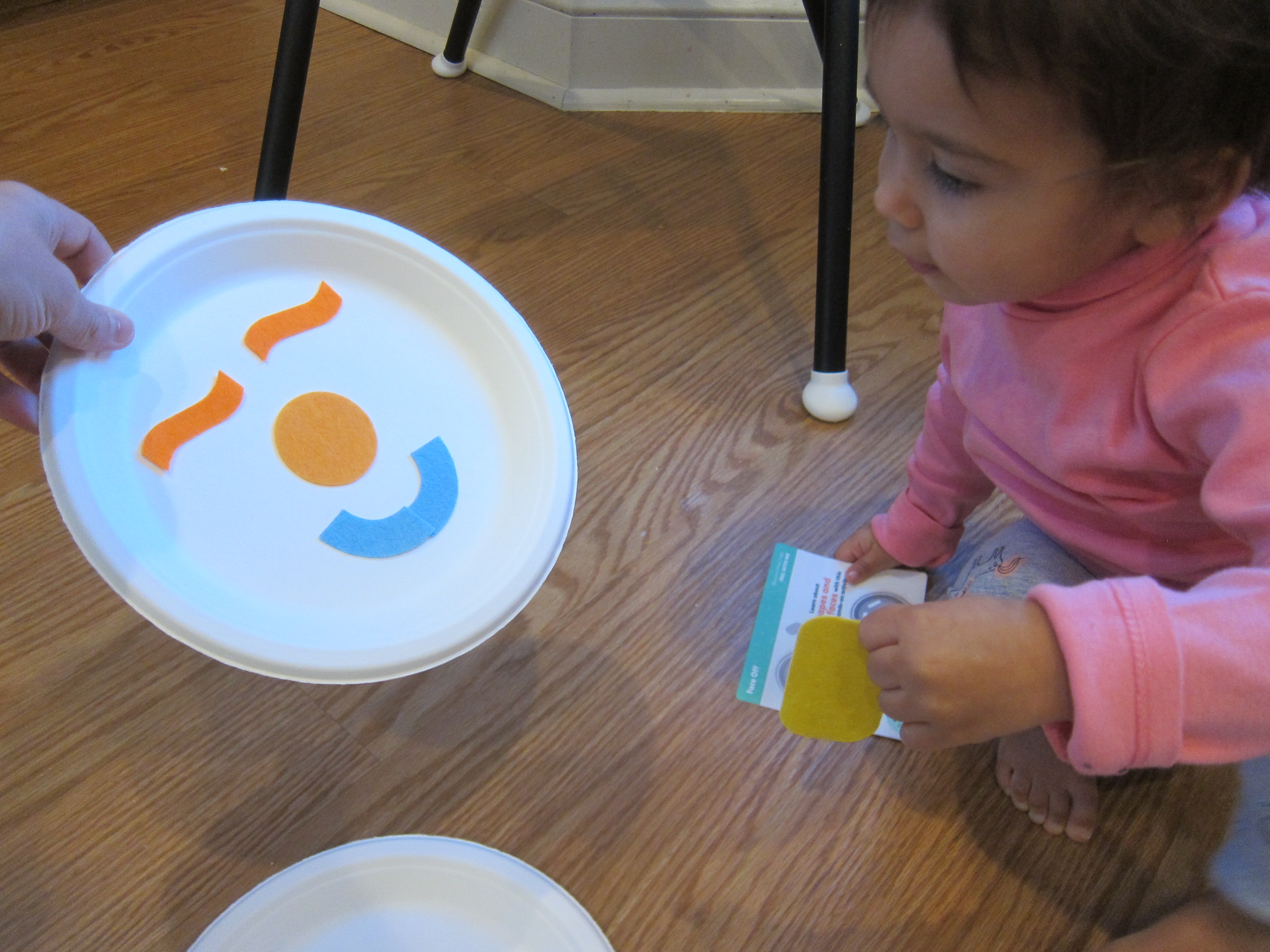
For the first version, I set out blank paper plates and used cut pieces of felt to create features. I simplified the prep work by using felt pieces from a set with pre-cut squares, rectangles, squiggles and more. You could just as easily do this activity with lots of shapes cut from construction paper.

Face Off (1)

I showed her how to arrange the pieces to quickly transform plates into faces. “What’s he feeling?” I asked her for each expression. “He’s happy!” she piped up, or, “He’s sad!”.

Face Off (3)

We could manipulate the shapes to make all kinds of variations, including surprised, silly, sleepy, angry, and more. In addition to the expressions, it was also a great chance to name individual features. “Her mouth is a circle,” I pointed out, or, “Here are her ears.”

Face Off (4)

Pretty soon she was busy designing “faces” of her own.

Face Off (6)

The second game was similar, except this time the sensory experience was squishy playdough instead of fuzzy felt.

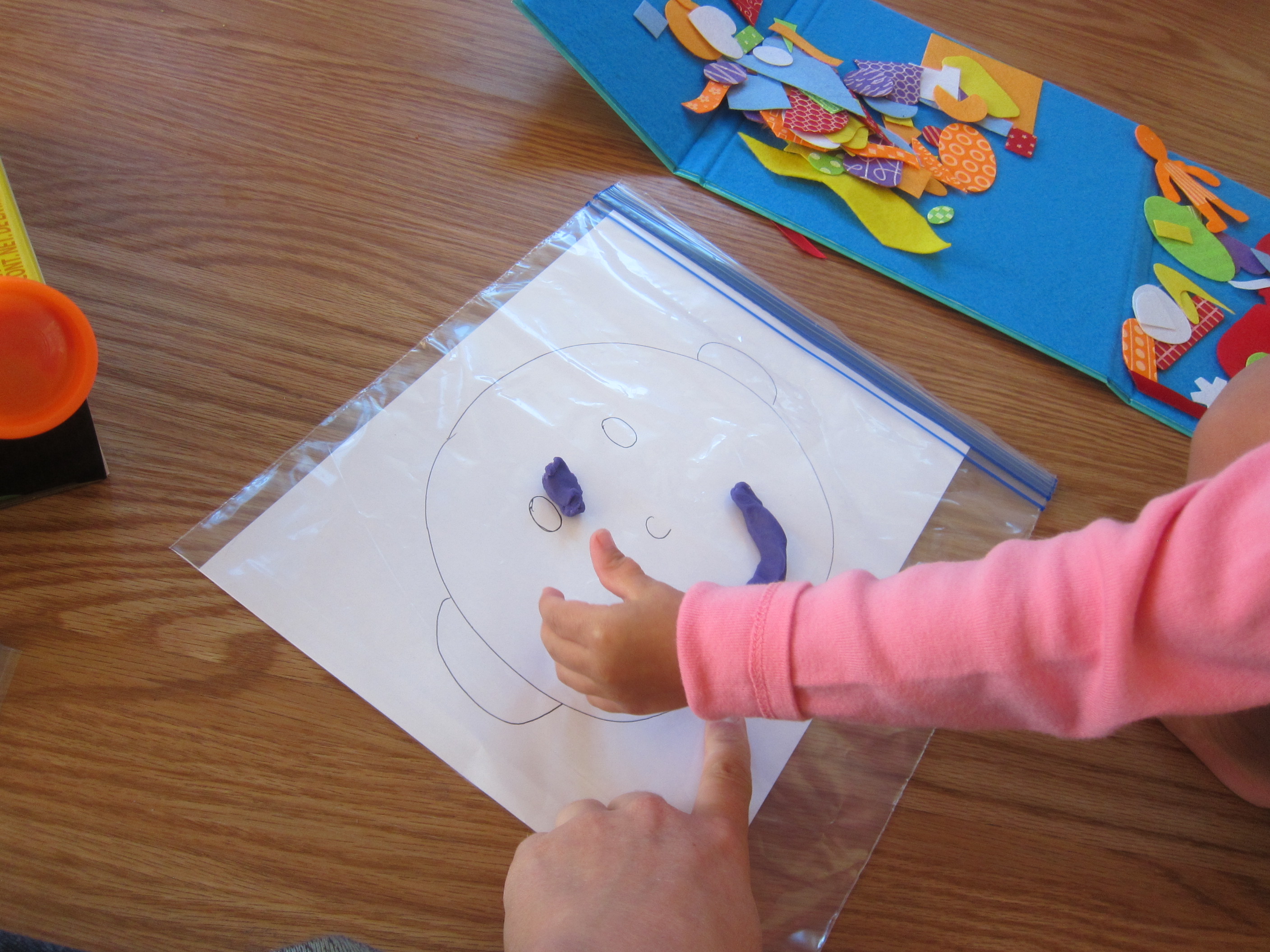
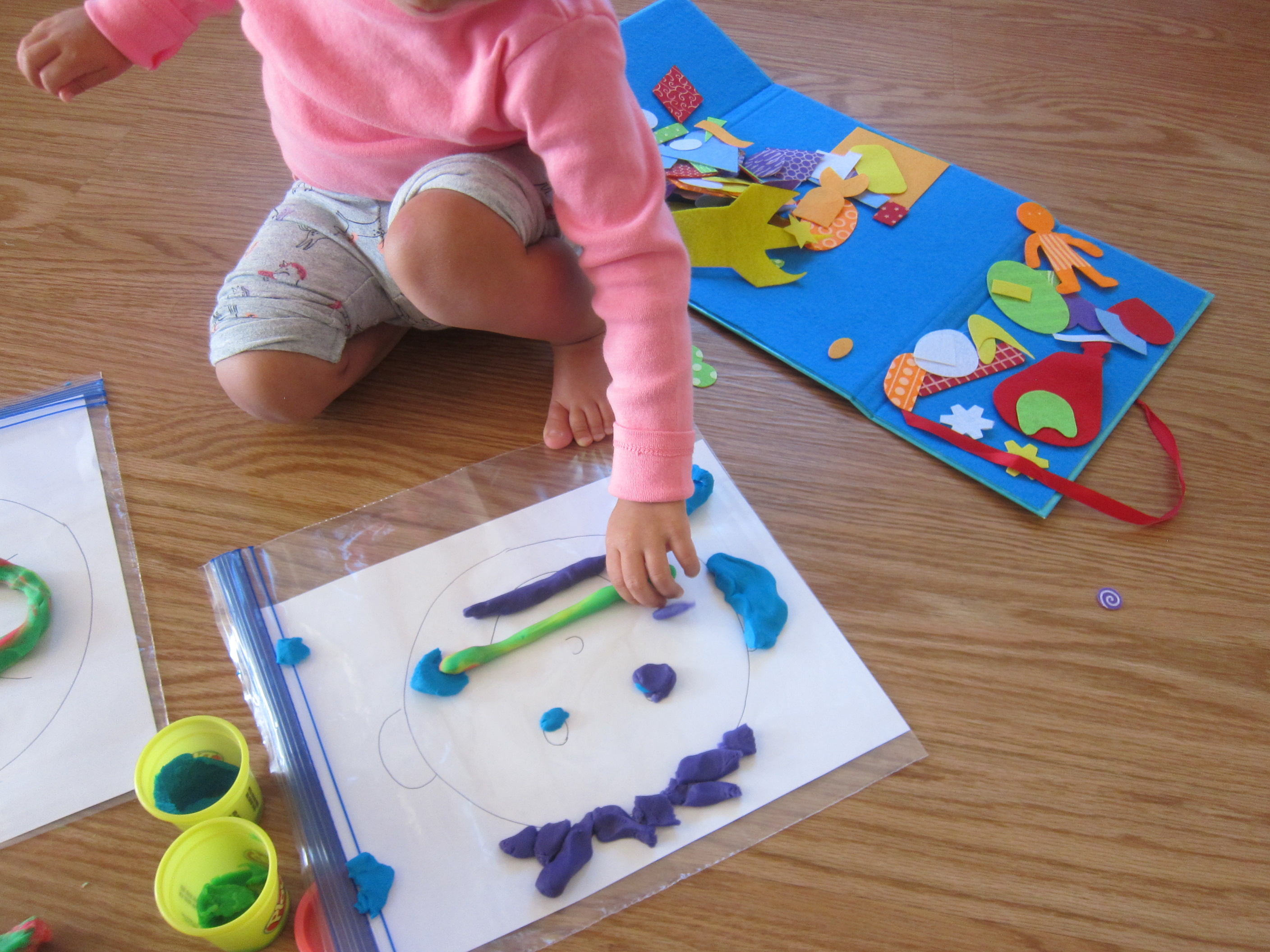
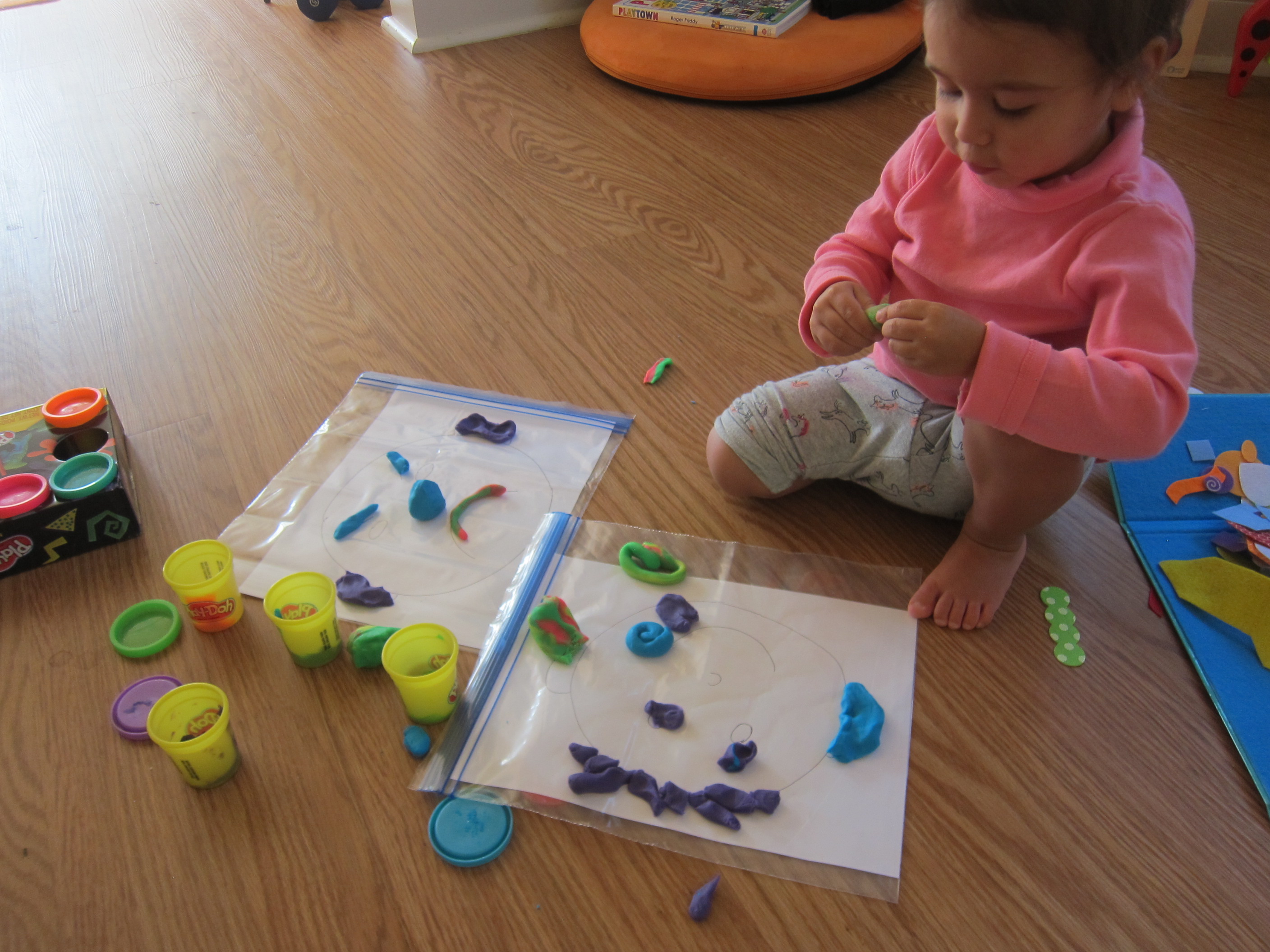
I drew two faces on plain white paper and inserted each piece into a large zip-top bag.

Playdough Faces (2)

Now use playdough and squish against the bag to follow along on the facial features!

Playdough Faces (3)

Veronika got the hang of it quite quickly.

Playdough Faces (4)

Again, there was lots to talk about, including eyebrows, noses, ears, and mouths.

Playdough Faces (8)

But because this time she had to manipulate the playdough, it was great for thinking about how we shape our mouths into a frown or smile.

Playdough Faces (5)

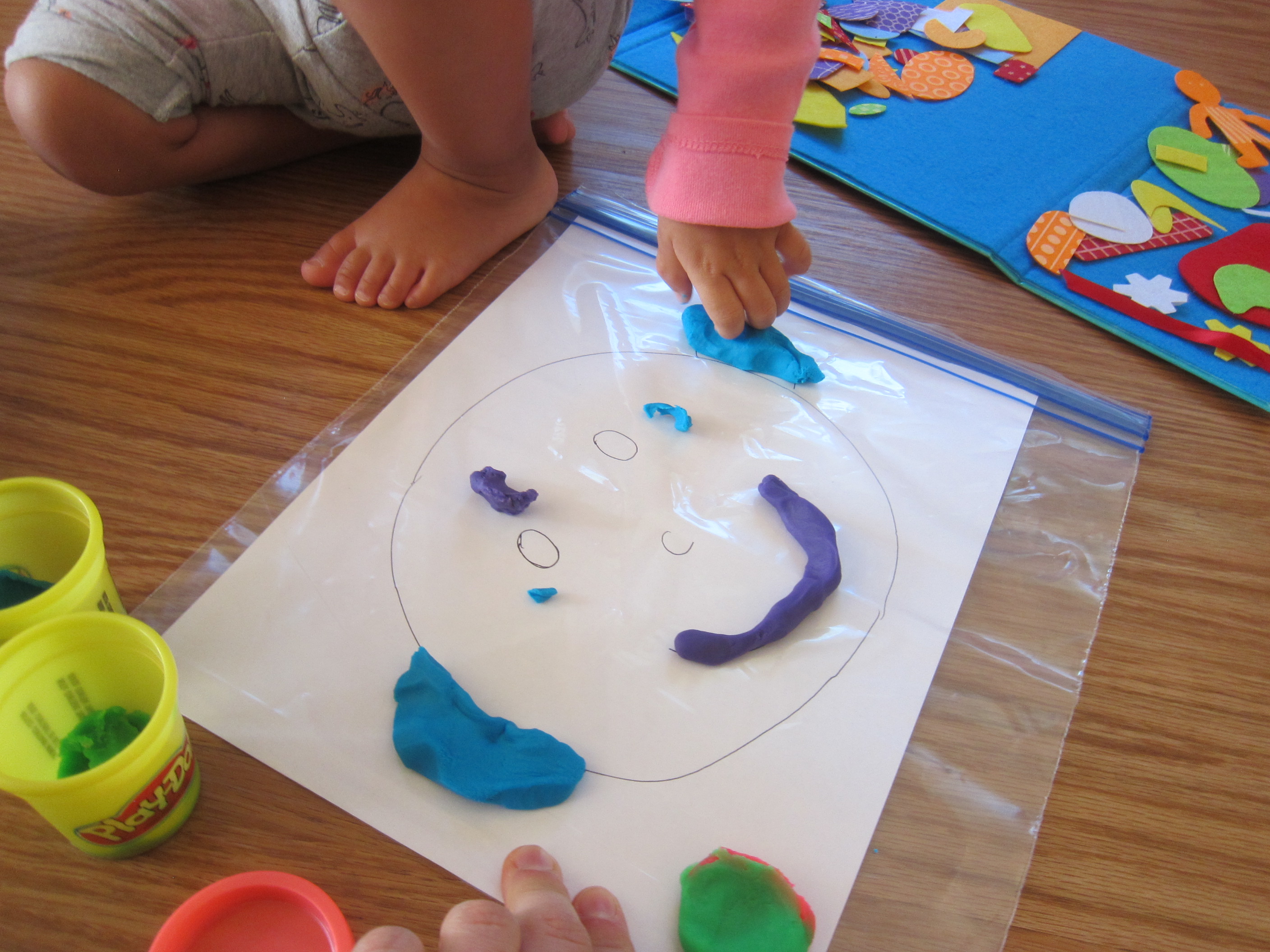
I loved watching her move the frown from the sad face over to our happy face, and stretch it out first into a line.

Playdough Faces (6)

I helped her arc it upwards into a smile. She looked so pleased.

Playdough Faces (10)

The added bonus is that when you’re done with the games, your toddler will have lots of playdough and felt (or construction paper) pieces to play with solo for a while.

Playdough Faces (11)

Halloween Countdown Day 11: Orange Playdough Pumpkins

Halloween 11 Playdough Pumpkins (2)

Playdough is always fun, but even more so if you connect it to the season or a holiday for your kids. Today, we specifically decided to have Halloween playdough fun.

First I pulled out only orange and green playdough, and showed Veronika how to roll little balls of the orange into pumpkins.

Halloween 11 Playdough Pumpkins (5)

Green made cute stems! We then used craft sticks as our “carving knives” to make features in the pumpkins. Veronika thought this was great fun, even though she was mostly just mashing at them while I carved more deliberate triangles and toothy smiles.

Halloween 11 Playdough Pumpkins (1)

We could also roll out long ropes of green playdough to be the pumpkin patch vines.

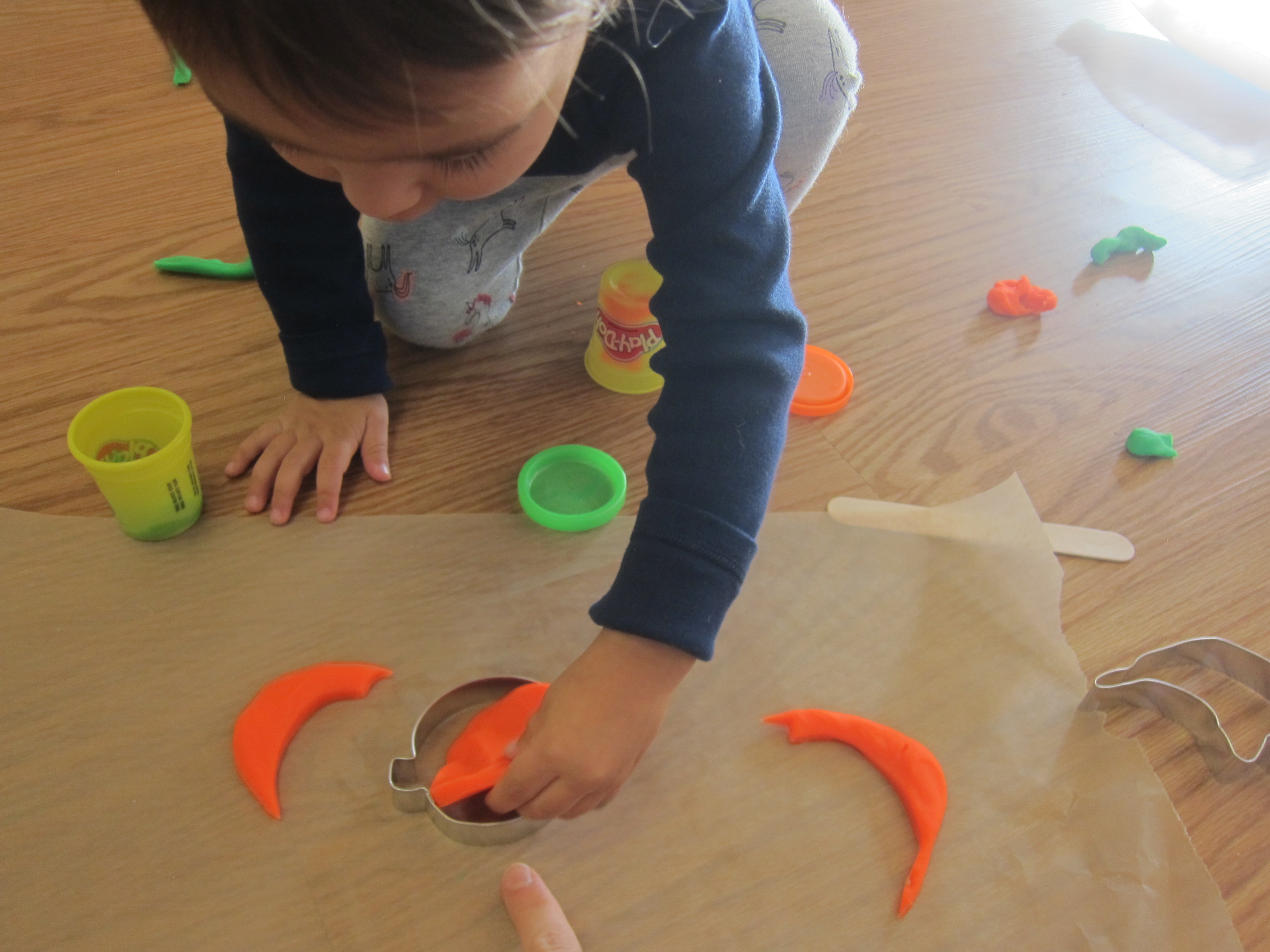
Next, I pulled out a few Halloween-themed cookie cutters. Now we could make flatter versions of pumpkins and ghosts.

Halloween 11 Playdough Pumpkins (6)

Soon we had little ghosts flying through the air.

Halloween 11 Playdough Pumpkins (8)

Big brother Travis wanted in on the action!
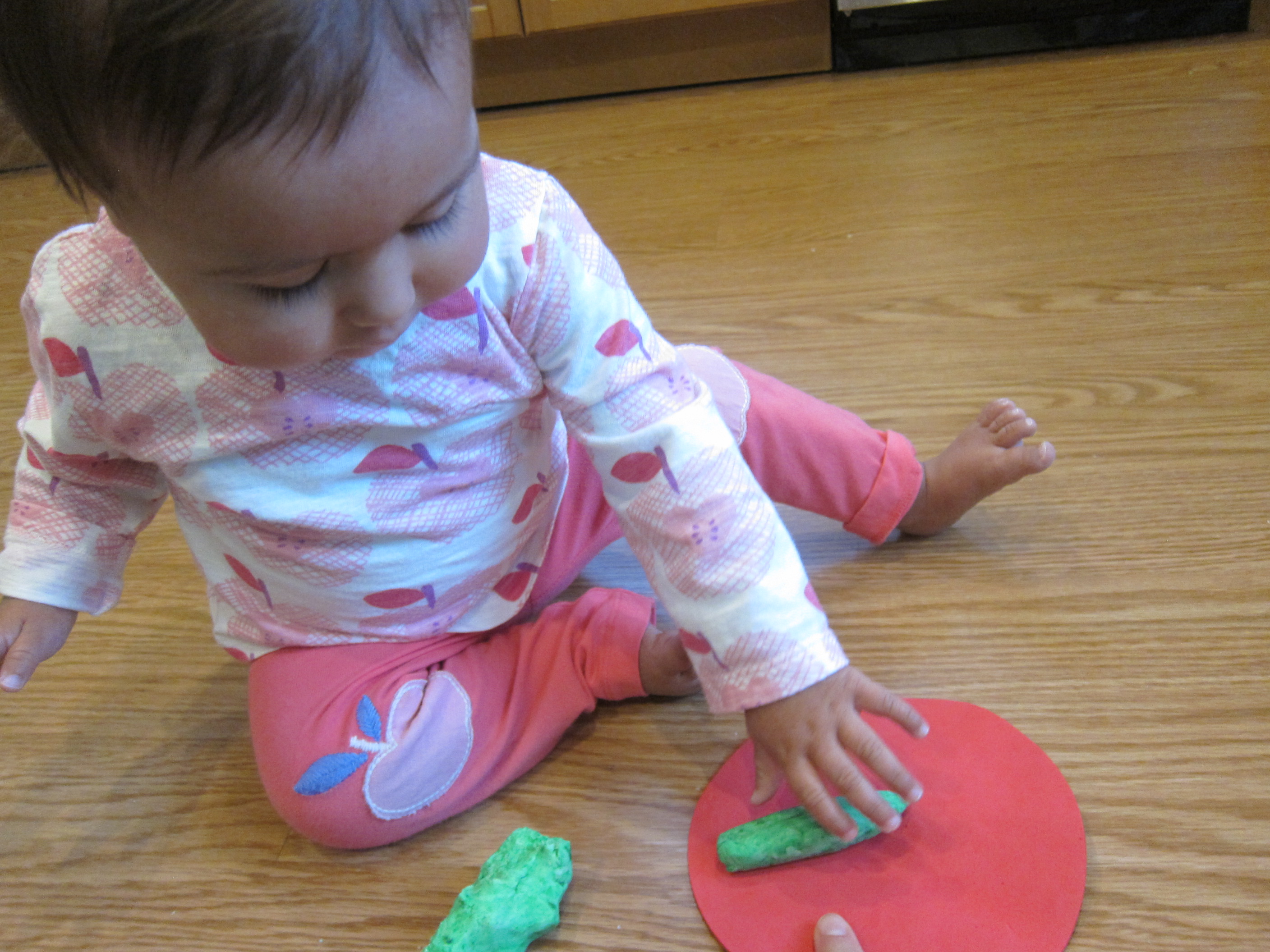
Halloween 11 Playdough Pumpkins (11)

He came over to make lots of pumpkin and ghost shapes, and then used the craft sticks to carve into them.

Halloween 11 Playdough Pumpkins (9)

Pretty soon, the kids were just having wild playdough fun. They were so busy with this step in our countdown to Halloween that I could declare it a mission accomplished.

Halloween 11 Playdough Pumpkins (12)


Playdough Numbers

Playdough Numbers (3)

Veronika can count up to 10 by rote, which is not uncommon for toddlers; it basically means she’s memorized the order of words, but not the meaning behind them. Today I thought it would be fun to draw her attention to the symbol of each number!
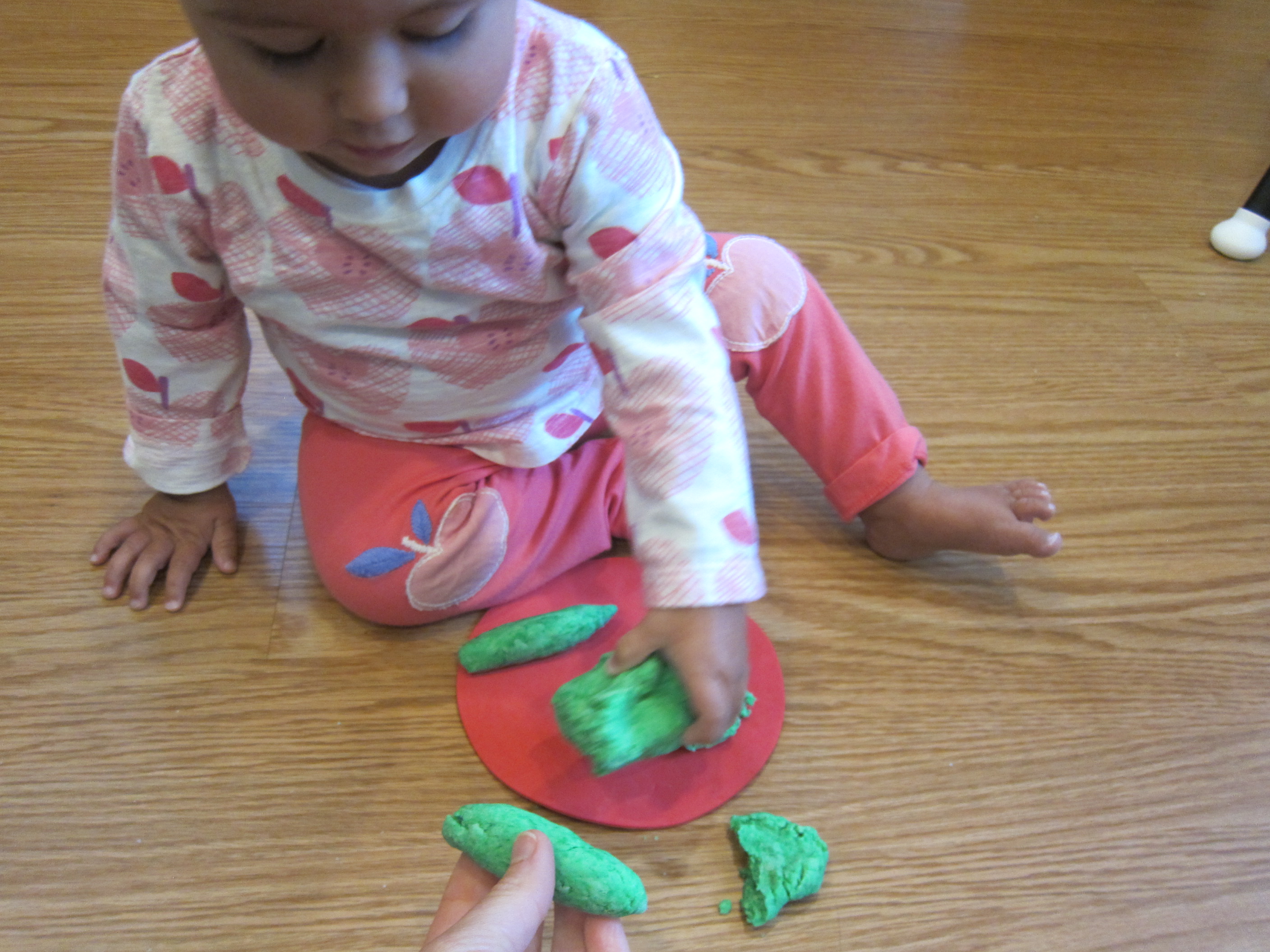
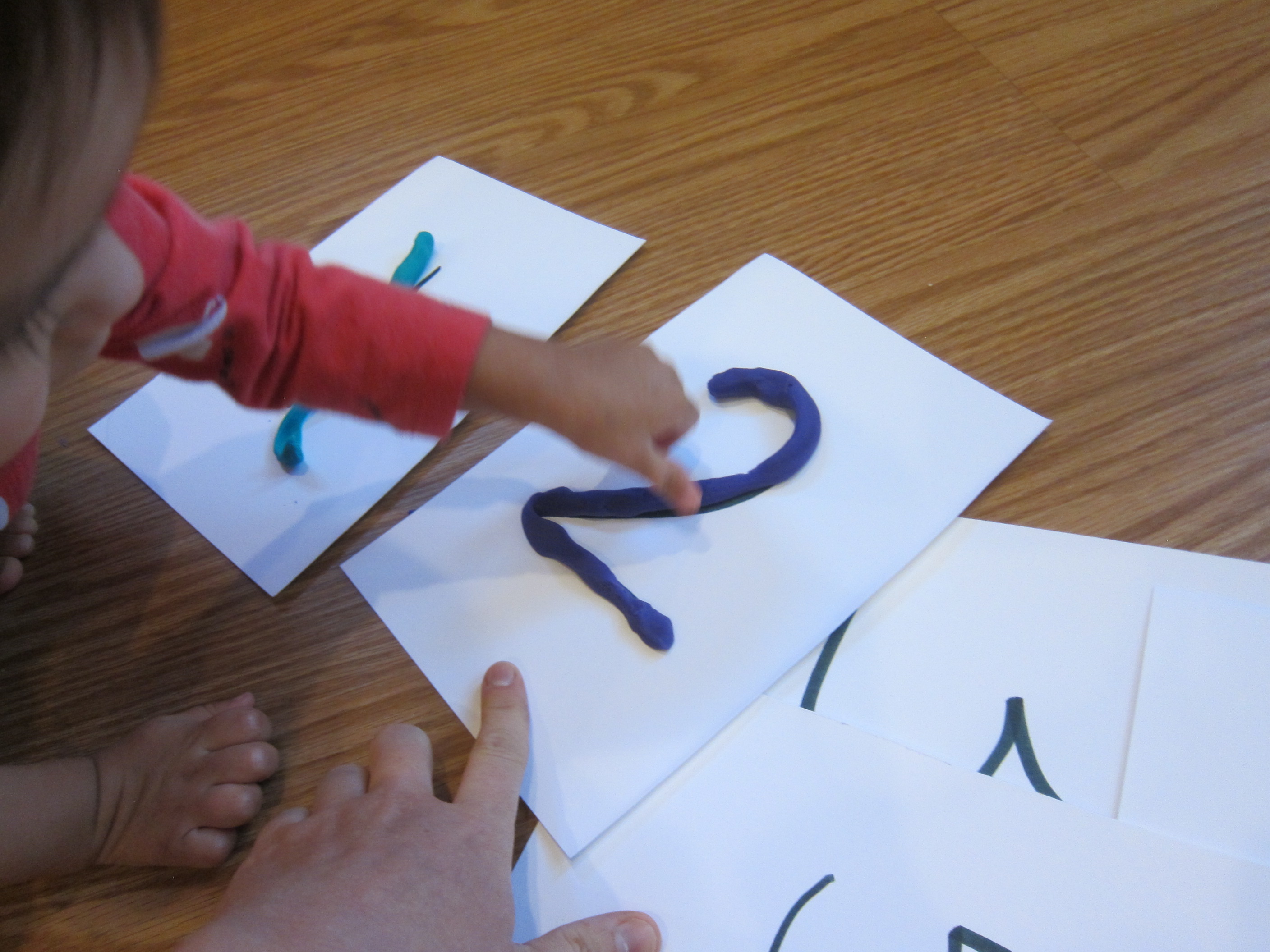
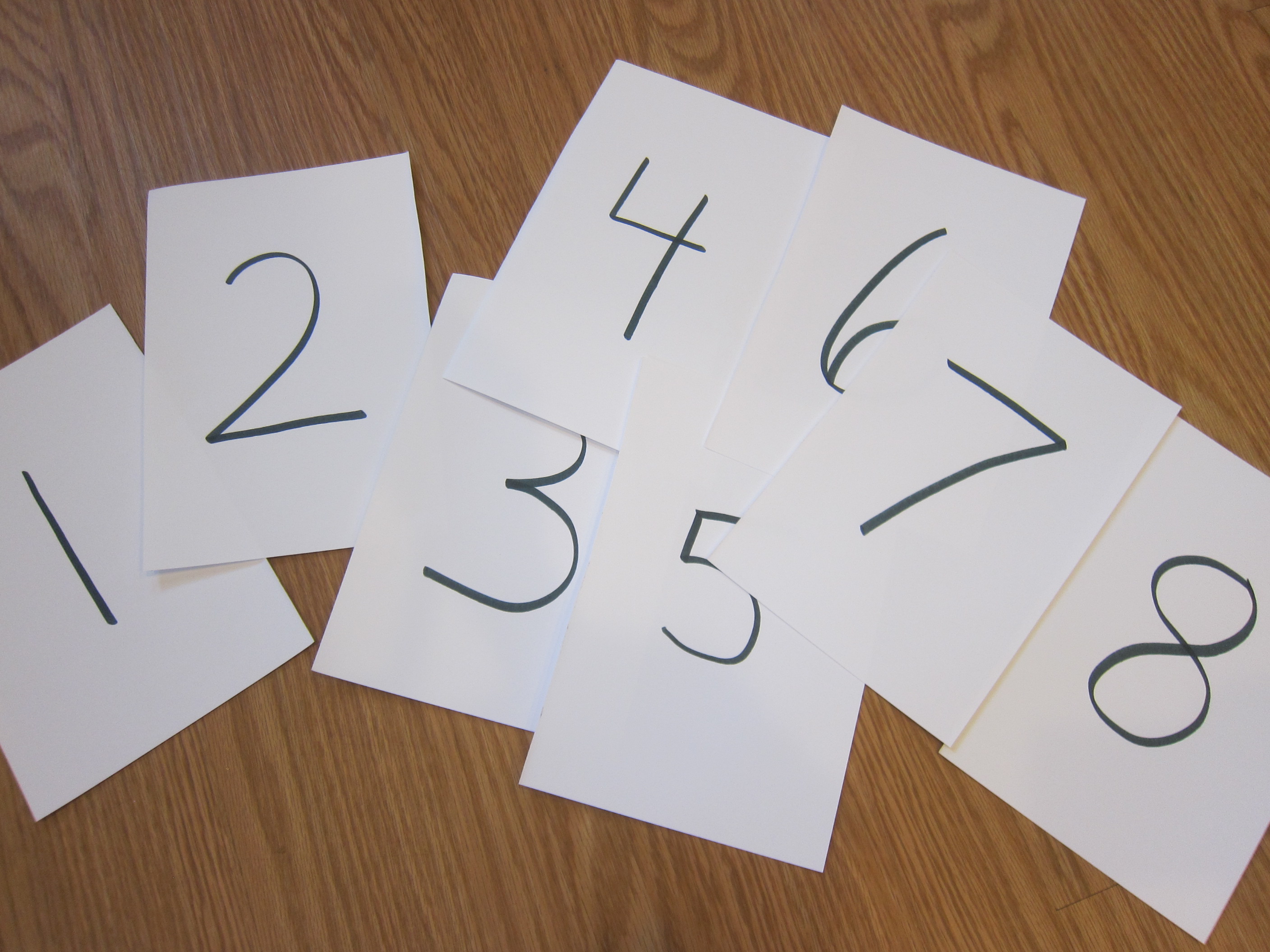
I drew numerals 1 through 8 in thick black marker on sturdy white paper. If you’ll want to reuse the set, particularly with preschool kids, laminate them or cover with contact paper.

Playdough Numbers (1)

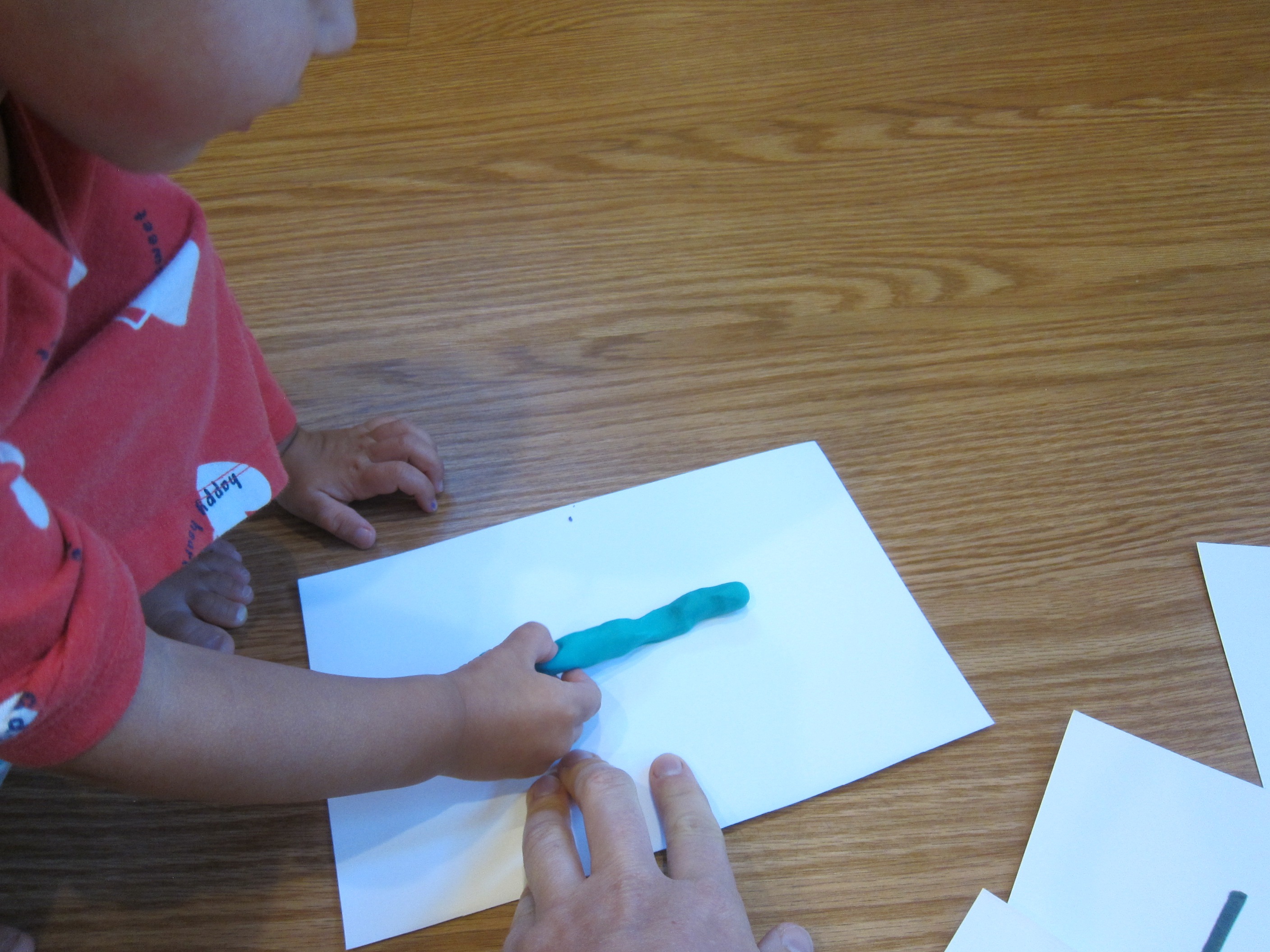
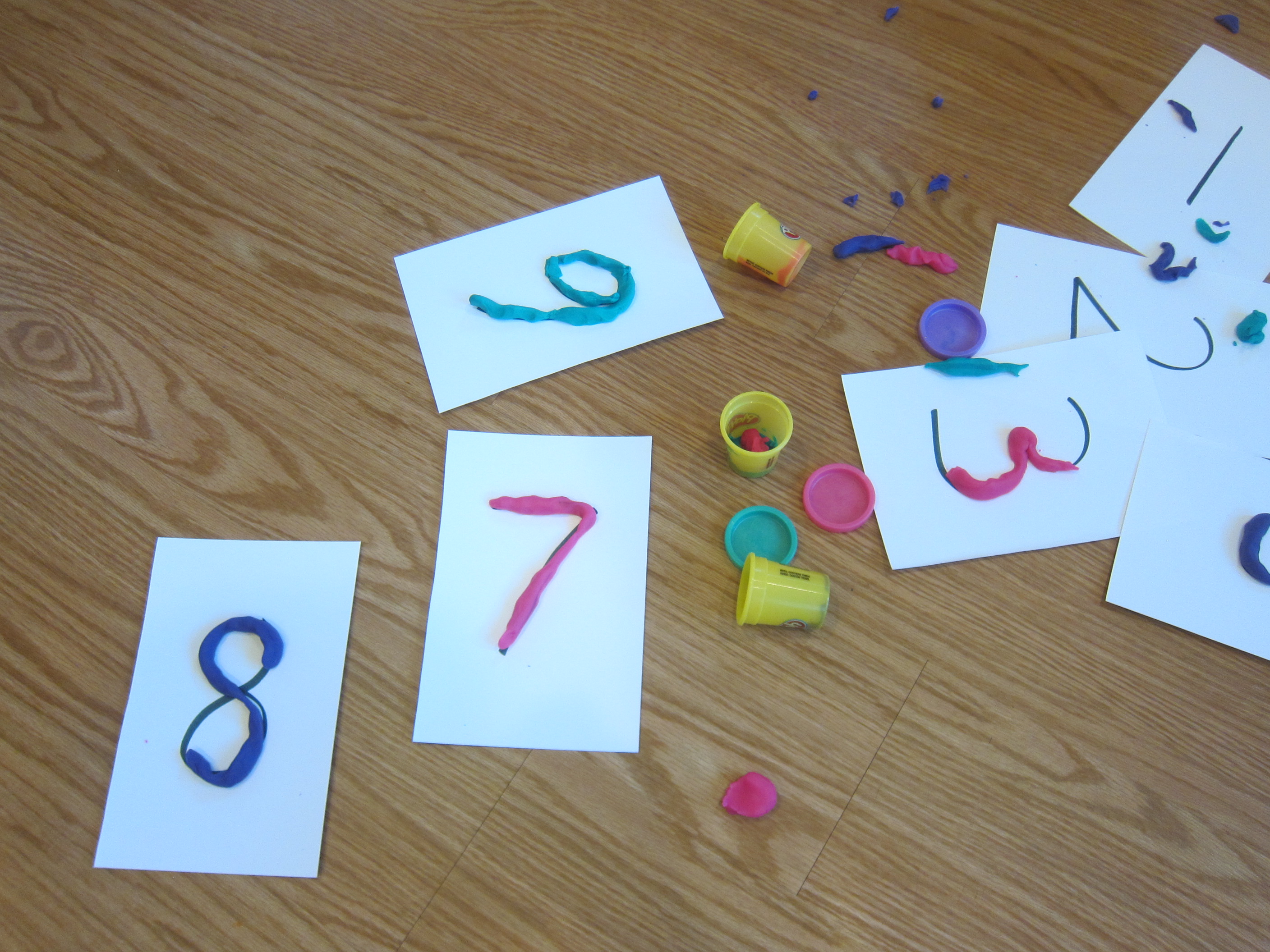
Then show your little one how to roll long snakes of playdough and arrange them over the marker to form each numeral.

Playdough Numbers (2)

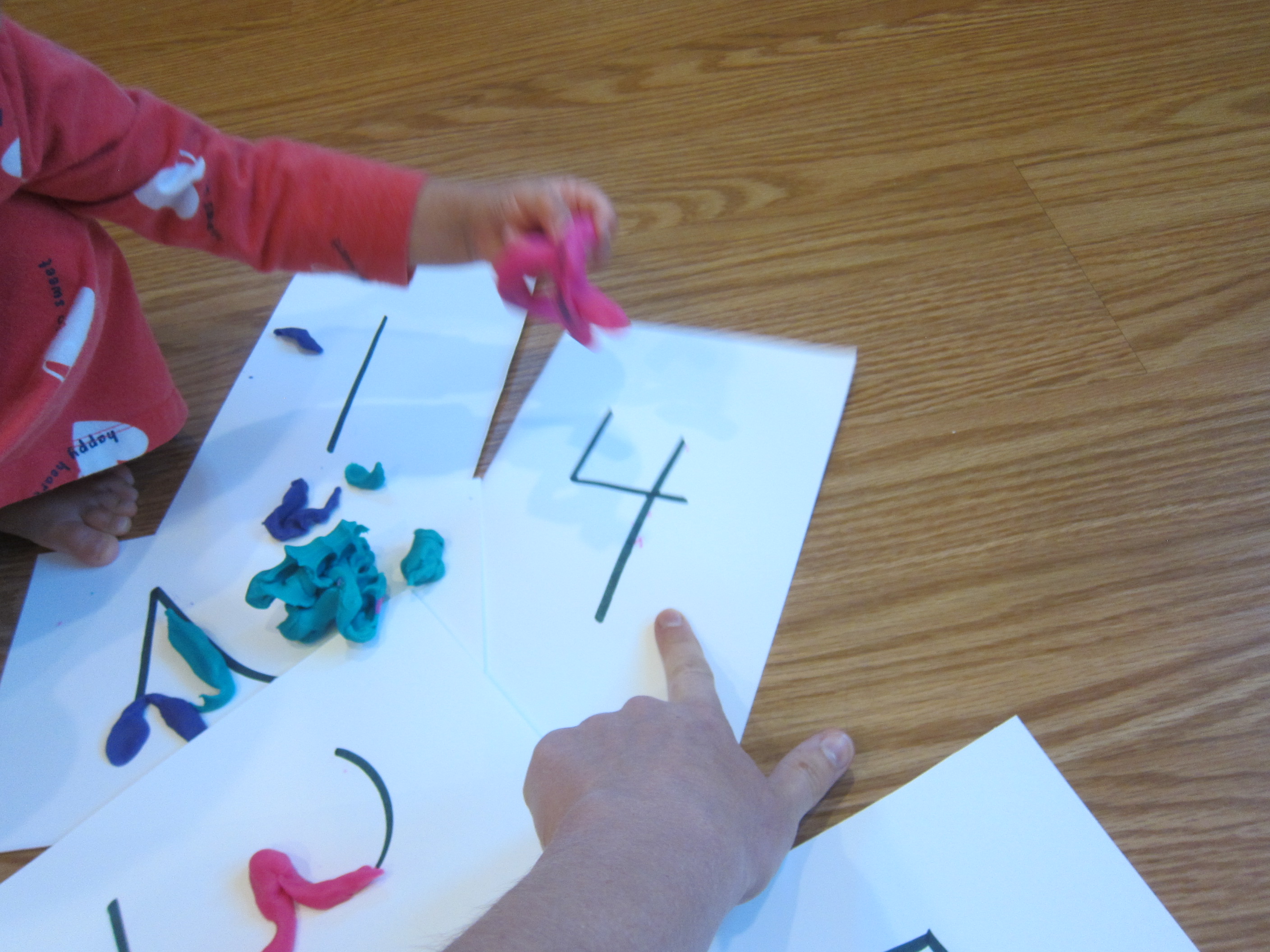
As I worked on each one, I told Veronika the name of the number repeatedly. Of course the playdough lasted about one second before she picked it up and mushed it! But I steadily worked from 1 through 8 in this way.

Playdough Numbers (4)

I didn’t expect Veronika to make the one-to-one connection between word and symbol yet, or to be able to shape the playdough herself.

Playdough Numbers (5)

Rather this activity was more about introducing the concept that numbers have both a word and a symbol that go with them. And she certainly loved the chance to play with playdough!

Playdough Numbers (6)

Homemade Playdough

Playdough (8)

If you’re excited for your baby to play with playdough but don’t like the ingredients in the store-bought stuff, look no further. This easy no-cook dough comes together so quickly I could whip it up before the morning school bus!

In a big bowl, stir together 3 cups flour, 2 tablespoons cornstarch, 1 cup salt, 1 cup cold water, 2 teaspoons food coloring, and 2 teaspoons vegetable oil.

Playdough (1)

Stir to form a dough, then turn out onto a surface and knead until it comes together and feels like playdough. I found it helpful to divide the dough into four smaller portions during this step.

It was time for Veronika to play! We sat down on the floor and I showed her the dough. She seemed hesitant to touch it at first!

Playdough (5)

I made a few shapes for her, showing her how to roll it into balls or snakes, or how to pay it into flat discs.

Playdough (3)

She got into the action a little tentatively, but with smiles.

Playdough (7)

Then of course she wanted to lick it. Uh oh, yucky!

Playdough (6)

Luckily the high salt content means even the most curious kids won’t take more than a sample.

Playdough (4)

Have fun making animals and name them for your baby. We had snakes and perhaps a green frog or two. The playdough will keep in an airtight container or bag for about 1 week. Next time we’ll try a different color.

Playdough (2)

Want a more fall-themed version for your baby? My all-time favorite homemade playdough is pumpkin pie scented.

Play Dough Sensory Bag

Playdough Bag (2).JPG

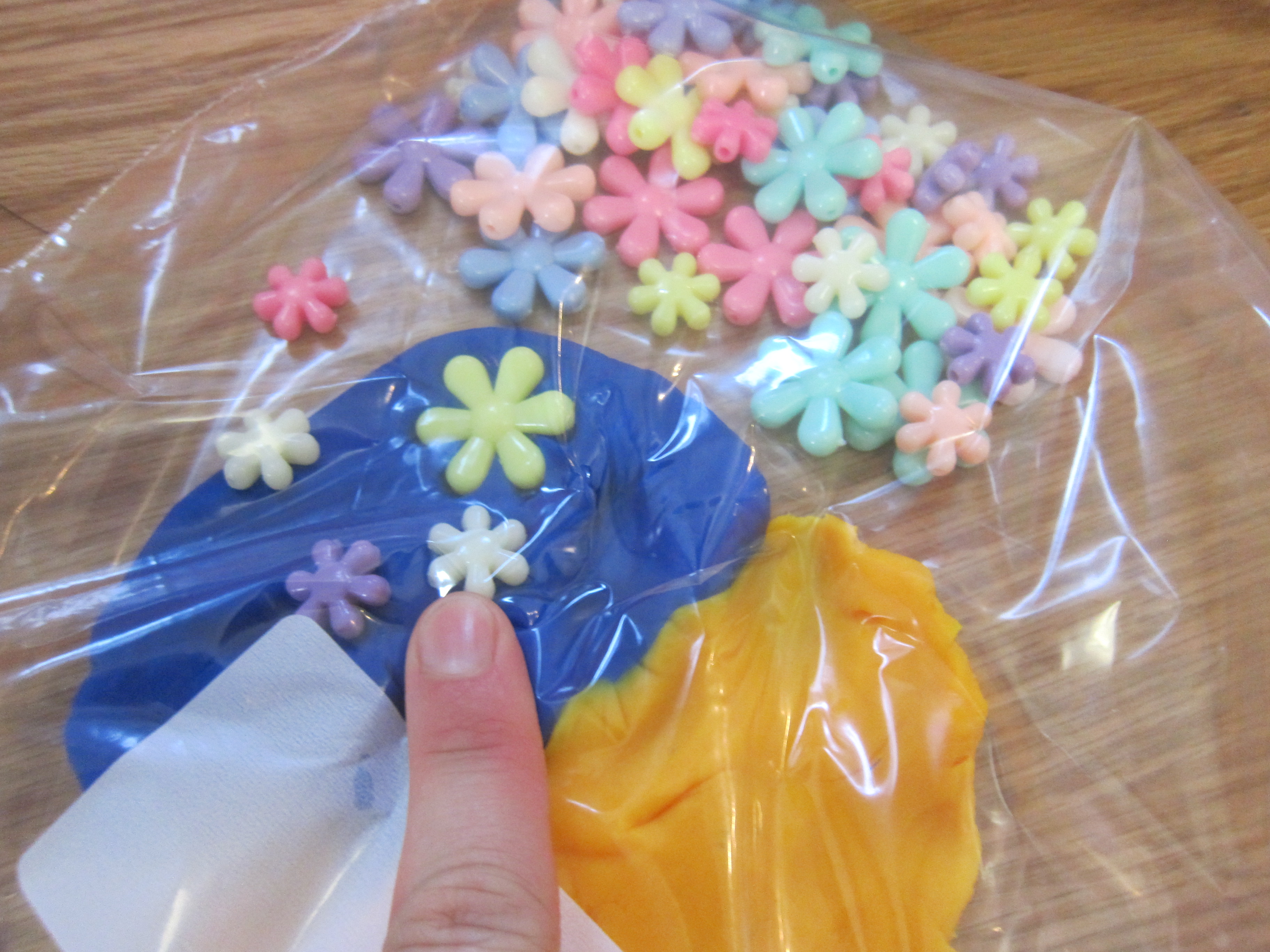
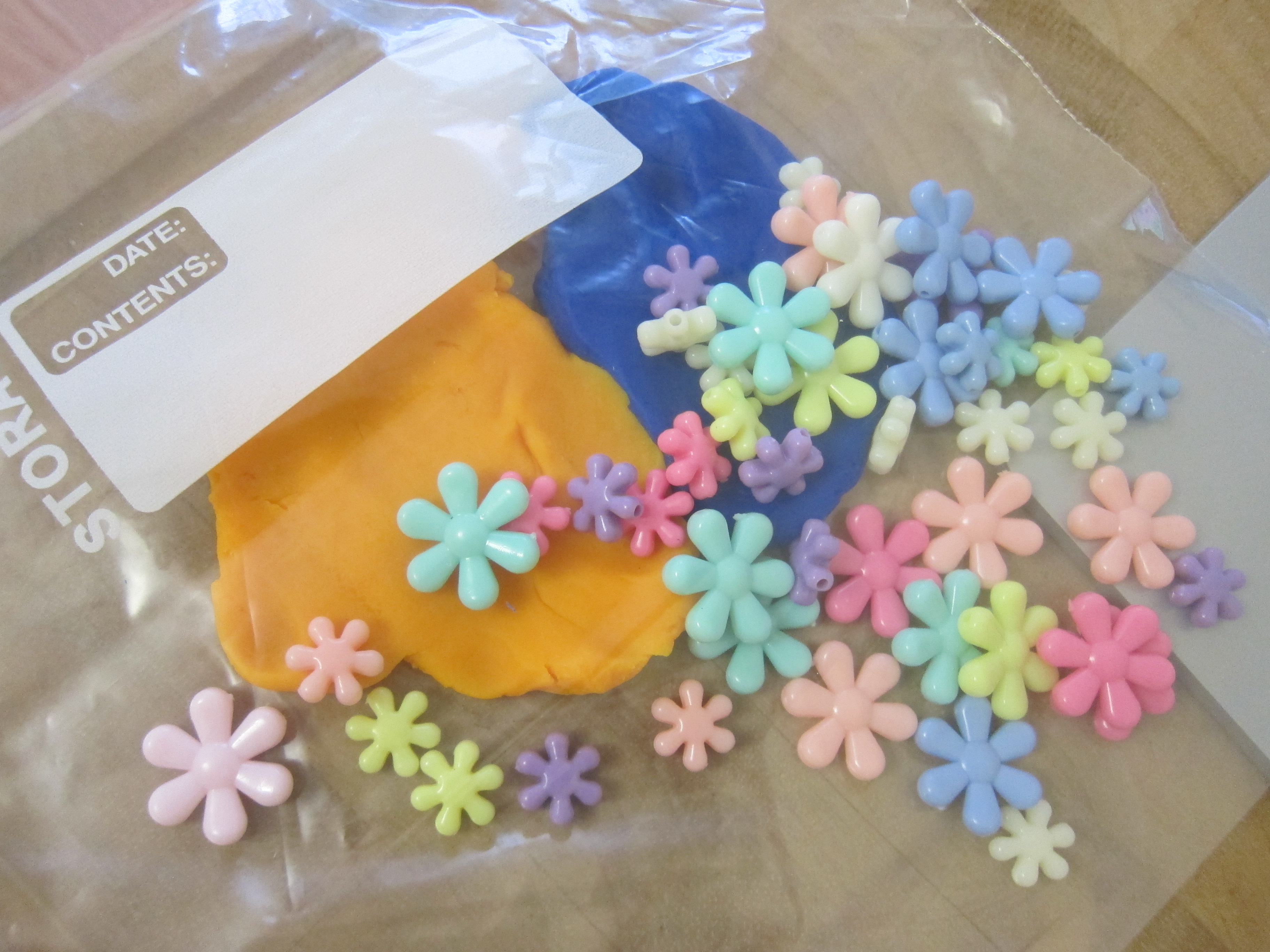
I’ve been on a recent kick of making sensory bags for Veronika, a great way to enable my little imp to play with messy materials that might otherwise end up in her mouth. Safely inside a plastic bag, even the messiest items are a go!

Normally for a ten-month-old I’d whip up homemade play dough for added security, but since it was going in the bag, I used the store-bought kind.

I added a few craft beads in fun flower shapes that she would be able to squish into the play dough. Now it was simply a matter of sealing and watching her squish away!

Playdough Bag (1)

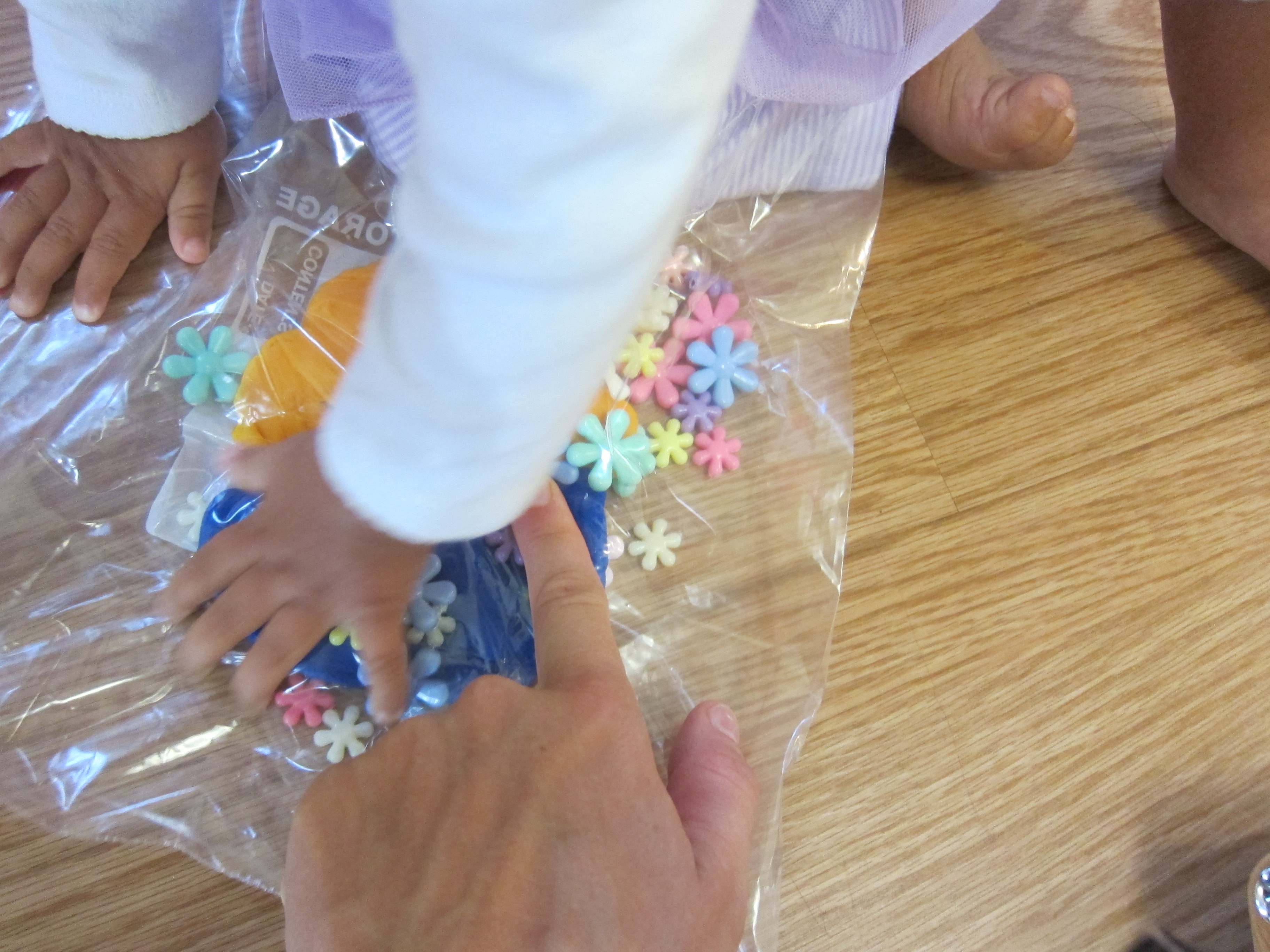
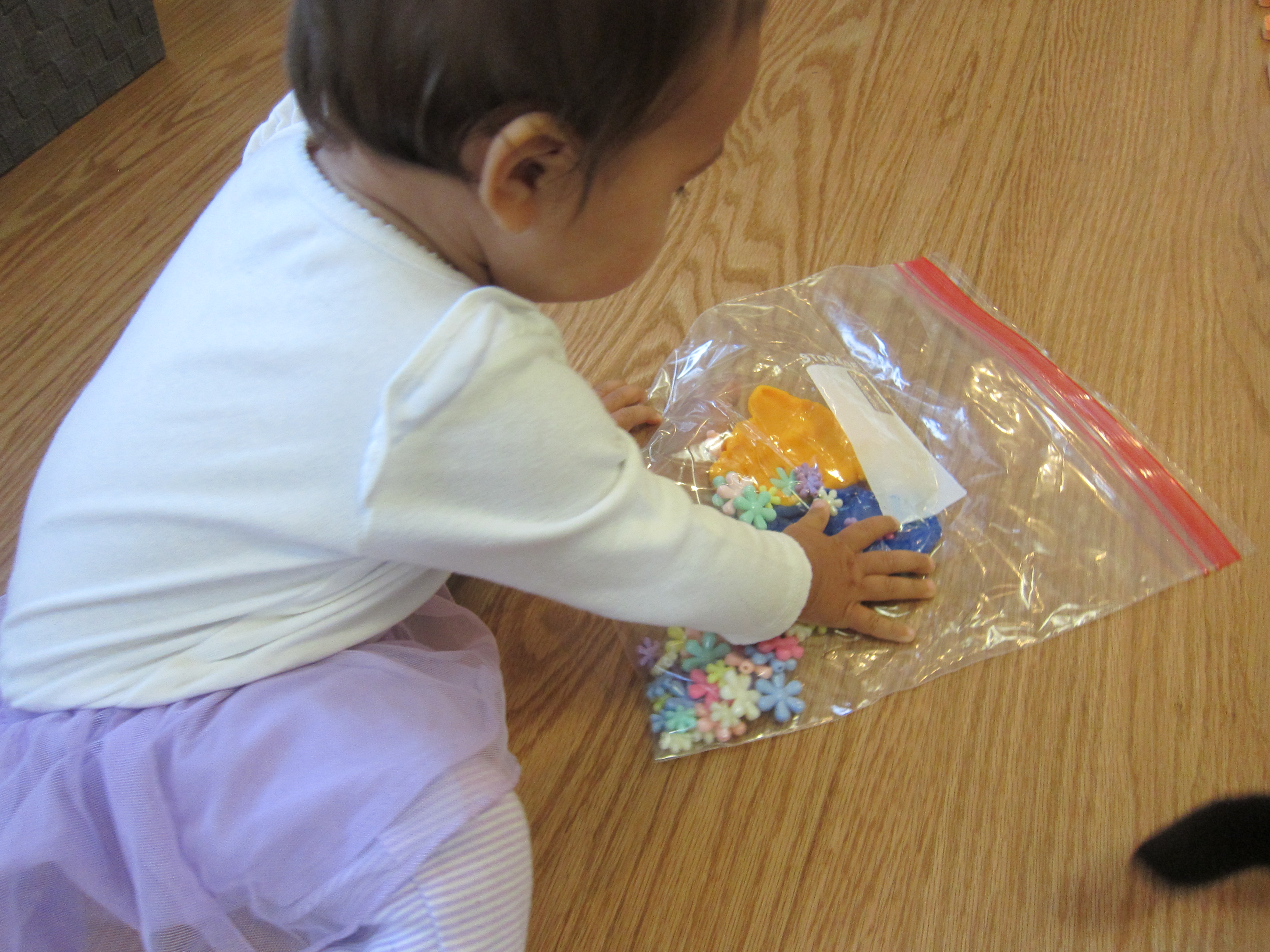
Veronika loved grabbing at the bag.

Playdough Bag (5)

I showed her how to squish the hard beads into the soft dough, talking about texture as we played. The contrast seemed to really interest her.

Playdough Bag (4)

I felt comfortable leaving this one around for her to play with since there was no liquid to spill, even in case of a slight tear.

Playdough Bag (3)

A fantastic way to keep her busy, in sum!

Number Crate

koala number (10)

The Number Crate is by far my favorite crate we’ve received from Koala Crate to date, certainly the most M of the STEM acronym (rather obviously, since the topic was numbers). It wasn’t necessarily Travis’s favorite, but we still had lots of fun!

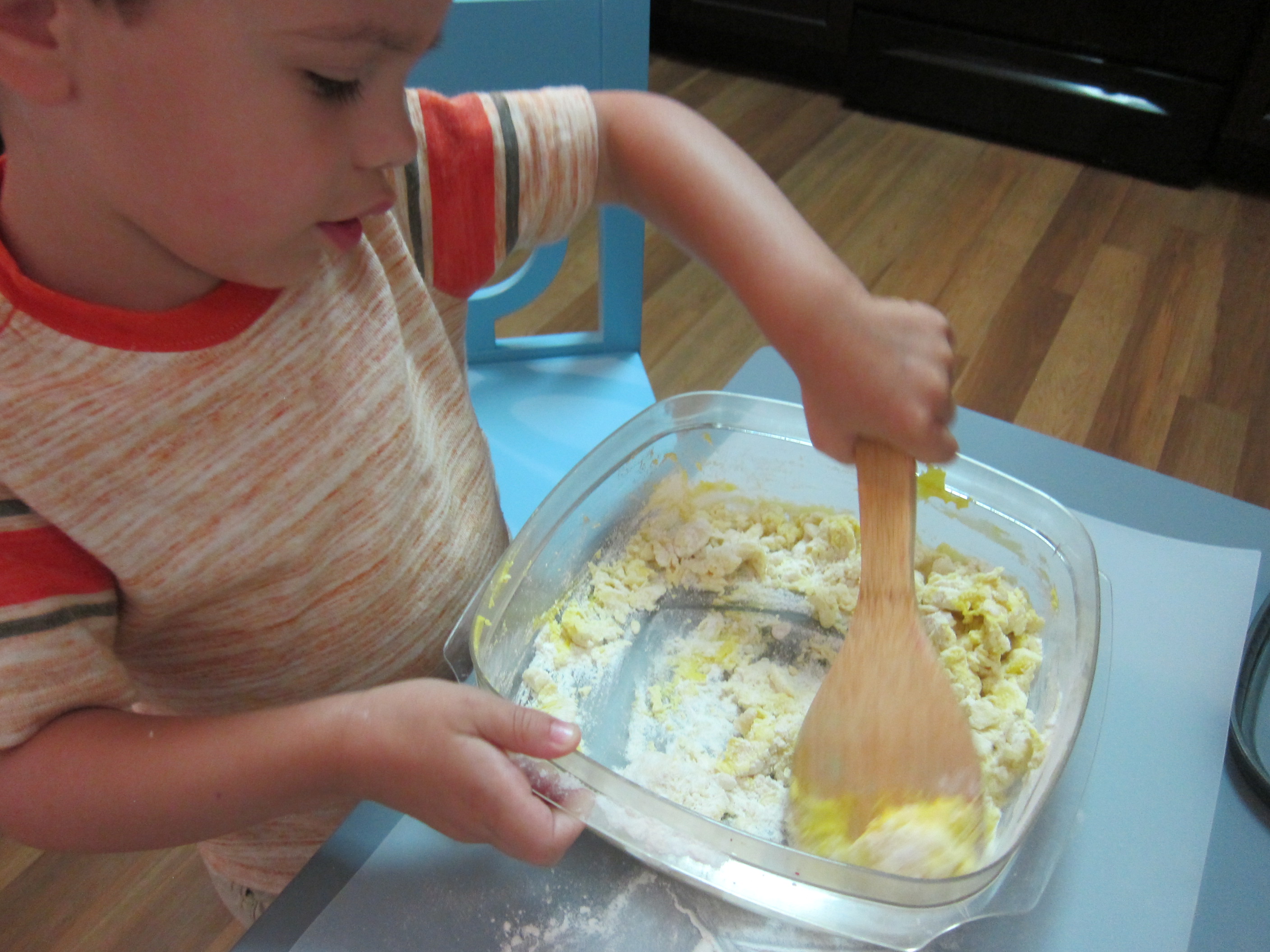
Things started off with scientific mixing and pouring to make Playdough, which he loved. Hmm, what could be in this squishy pouch?

koala number (2)

In a bowl we mixed together our dough conditioner, dough stabilizer, dough concentrate, and dough liquid.

koala number (4)

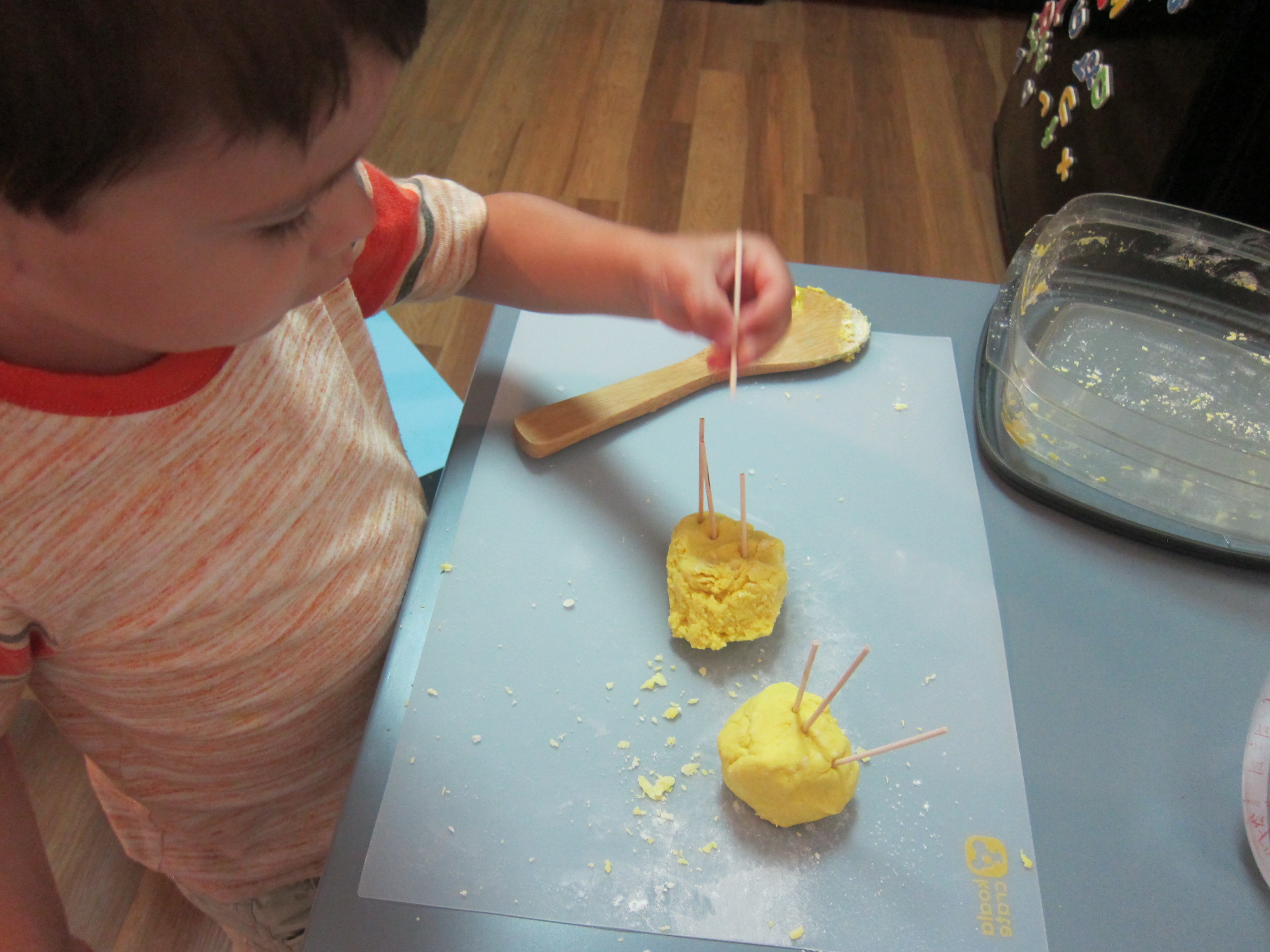
Travis noticed that it smelled like Fruity Bunnies! He immediately fell to kneading and playing with the dough once it was the right consistency. The provided wooden sticks were great for making “abstract art,” as well as cute porcupines and “birthday cakes”.

koala number (6)

I appreciated that the sticks had no pointy end, unlike the toothpicks we normally have around the house.

koala number (5)

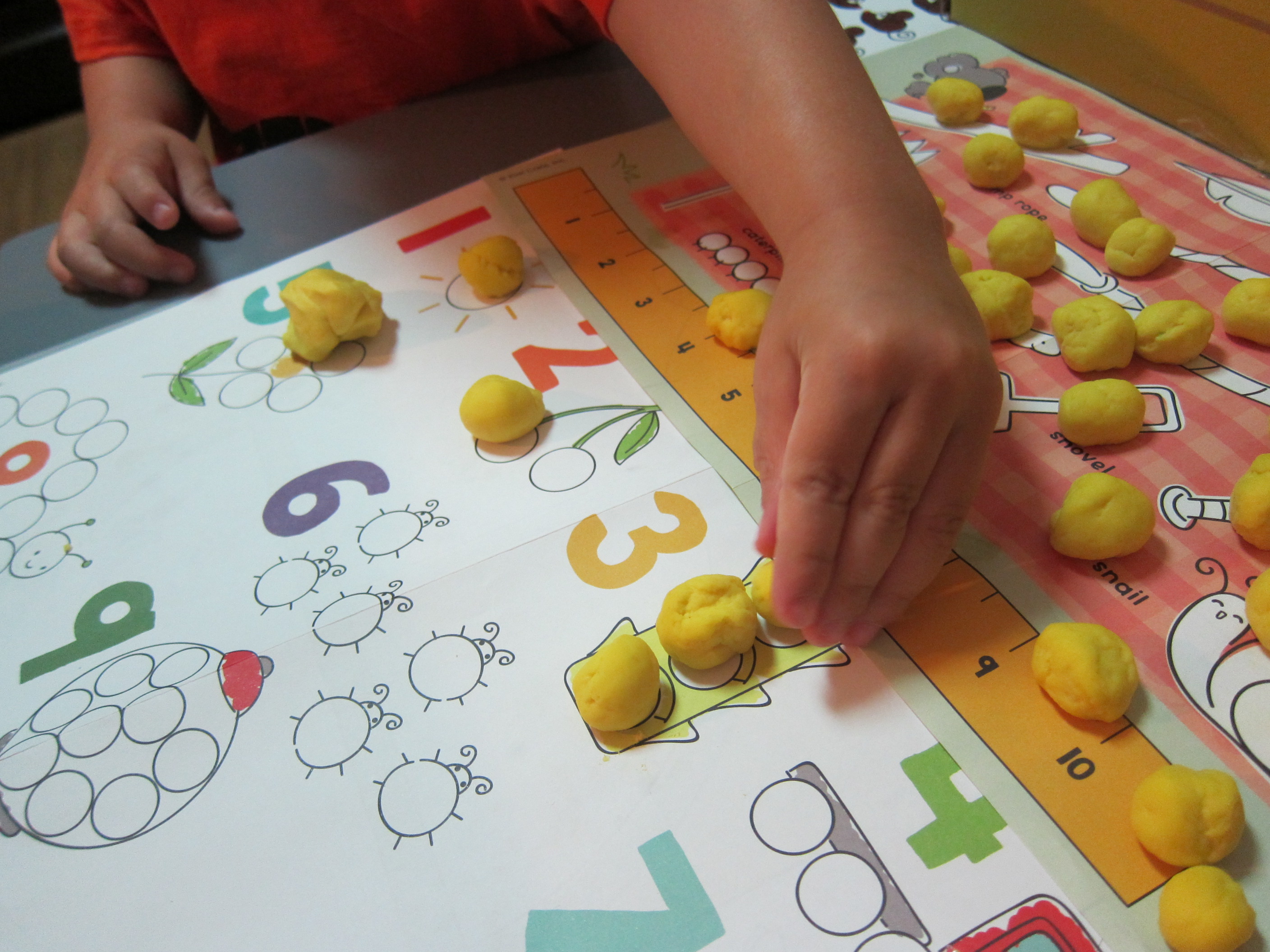
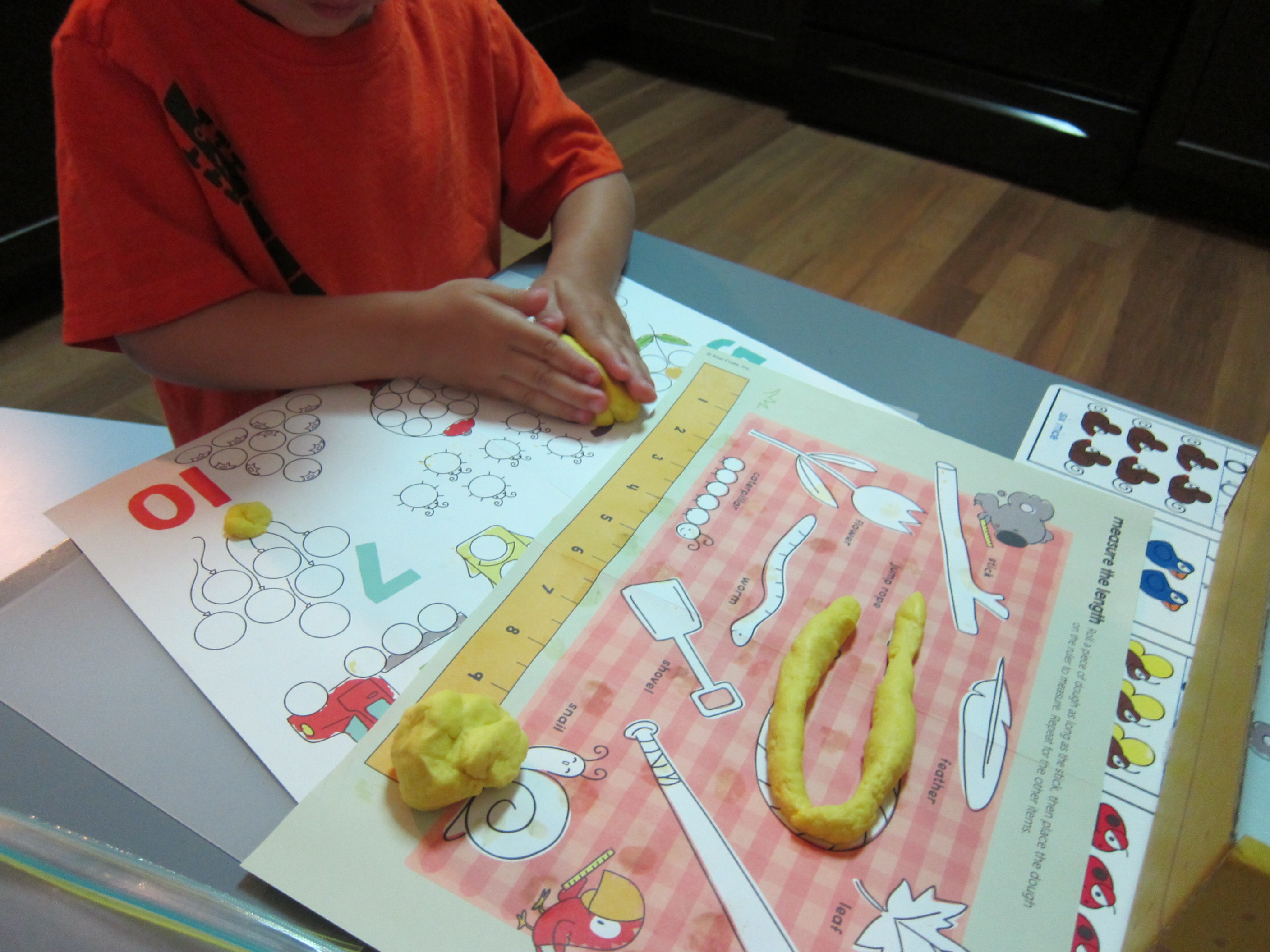
Next it was time to put our playdough to work with the provided Number Activity Mats. Two of these were obviously about numbers – counting balls up to 10 and an intro to measuring. Having a visual cue of each ball he placed while counting really helped Travis count carefully, instead of skipping a number as he’s prone to do!

koala number (14)

The measuring was cute, and great for teaching him to roll long shapes.

koala number (17)

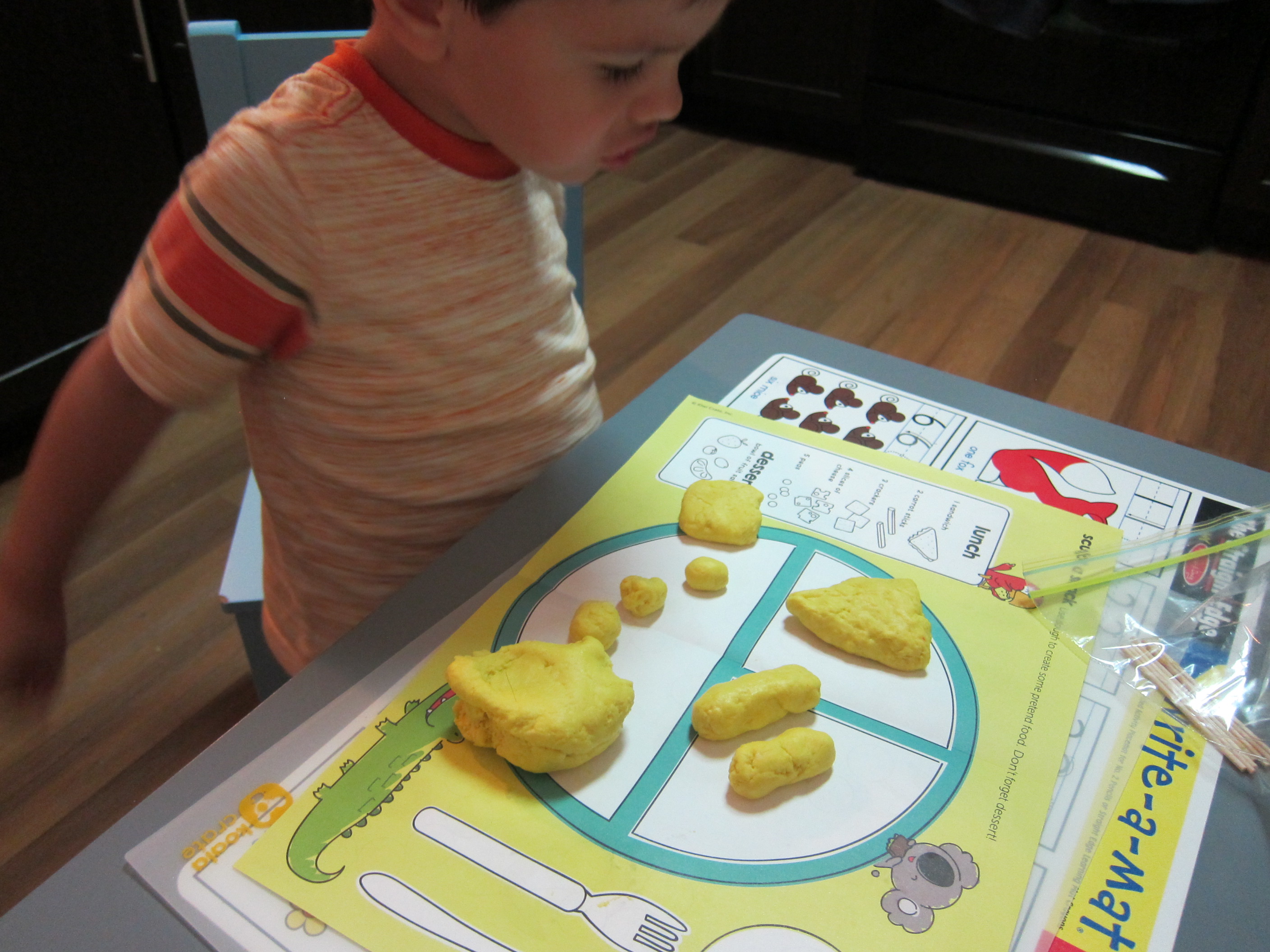
Then we had imaginative fun with play food:

Koala number (8)

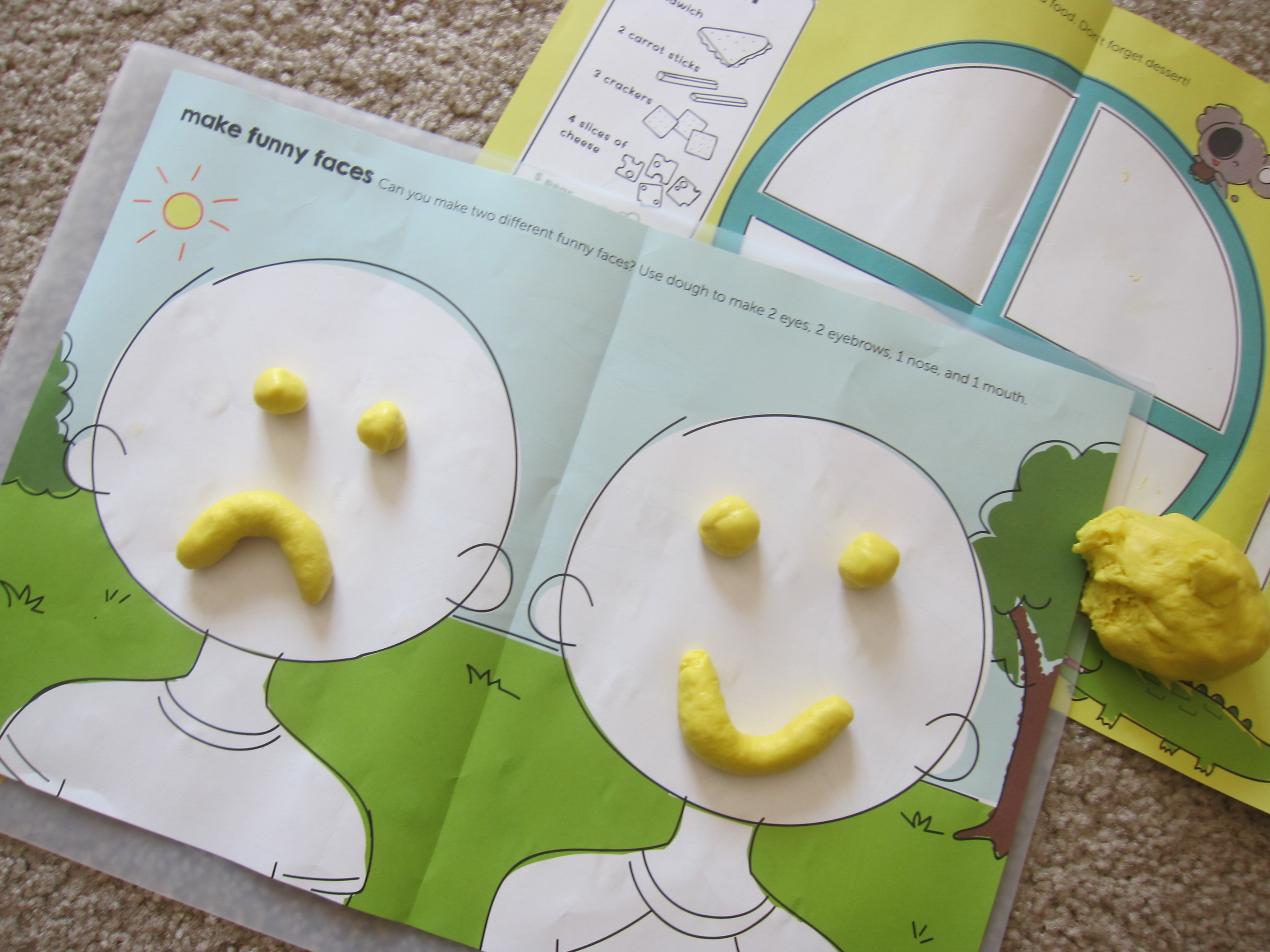
And play faces:

FR week (15).JPG

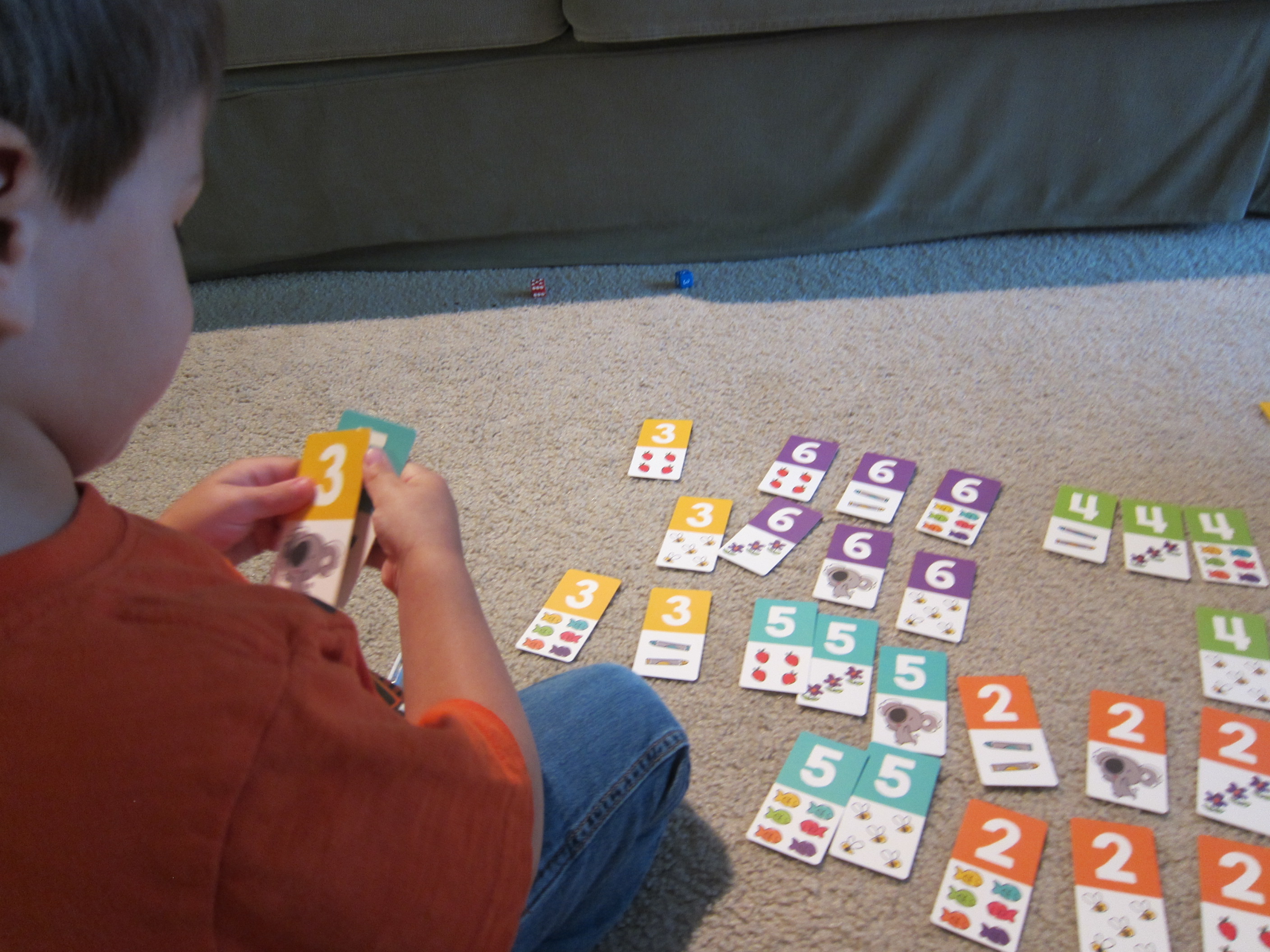
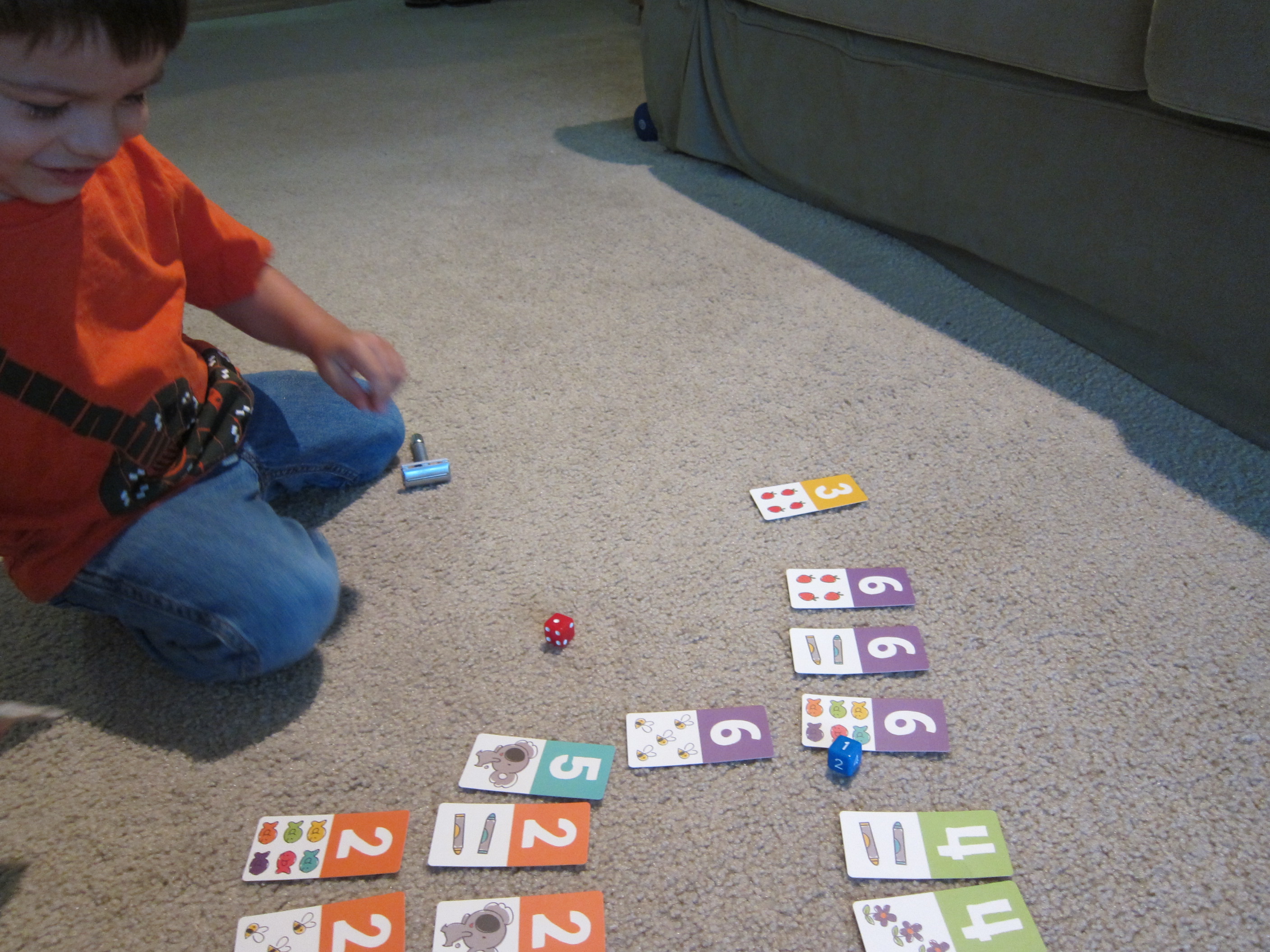
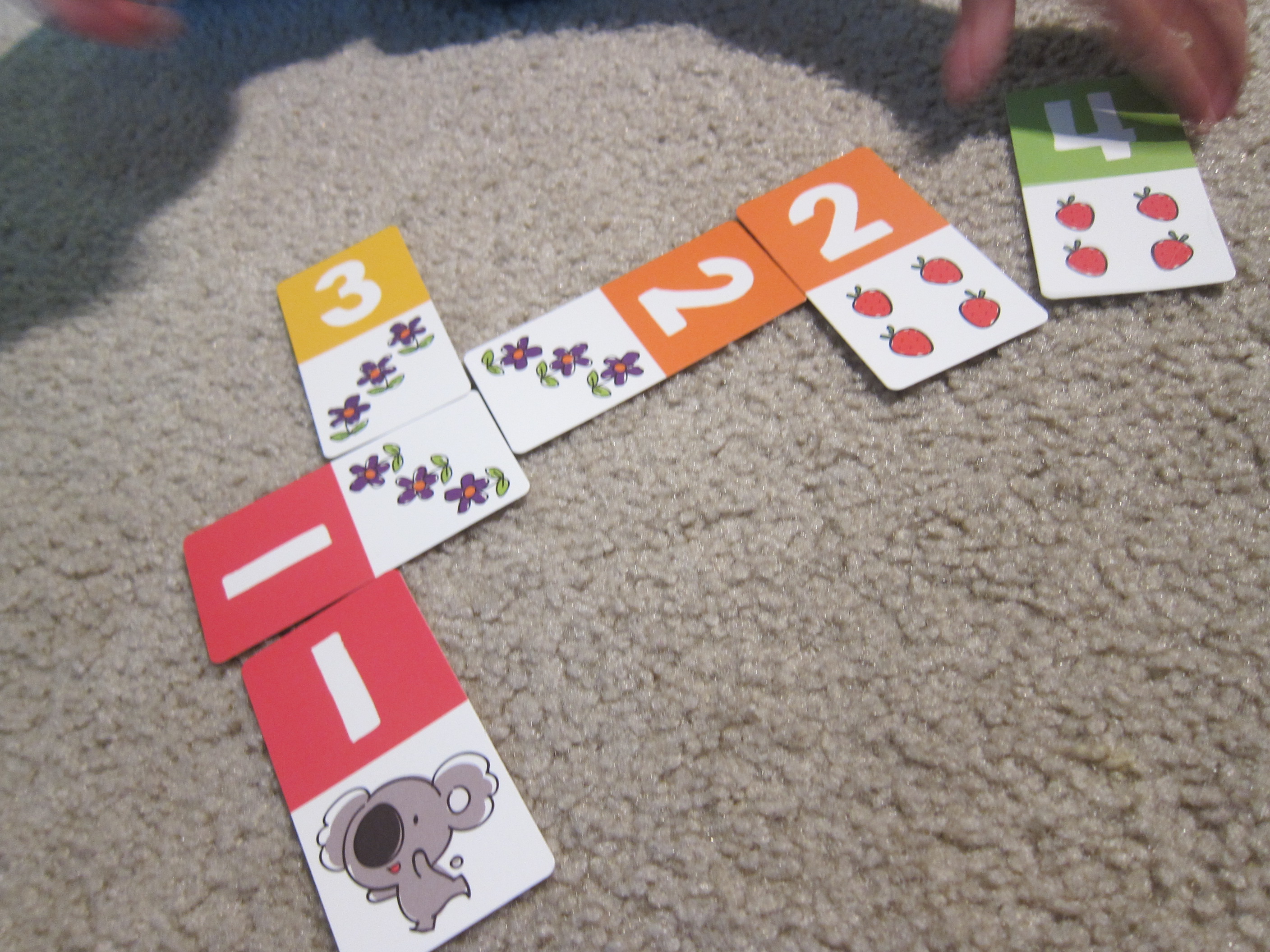
The final element of our crate was Domino Cards and the instructions for two Number Games. You could create these cards easily at home with cardboard and permanent markers! The rules of the game are a bit advanced for those on the young end of Koala’s age spectrum (3 to 5 years). For example, matching up pips on the dice was hard for Travis, as suggested in one game.

koala number (11)

We could, however, make domino mazes by matching numbers or pictures. Overall, the activities in this crate will last us a long time for number learning fun, as Travis grows into some of the suggested games.

koala number (13)

For those who don’t have Koala’s pre-mixed playdough pouches, here is an easy at home (and no-cook!) recipe:

2 cups flour

1 cup salt

1 teaspoon oil

1 cup water

2 drops food coloring

Combine the flour and salt in a large bowl. Add the water, oil, and food coloring, stirring to combine. Knead the dough on a mat or baking sheet until everything is combined. Add a bit more flour if the dough is still a little wet (I ended up adding a generous extra 1/4 cup). Final step? Play!

Koala numbers alt

Travis loved helping stir up this batch, and was arguably way more into the making of both playdoughs than he was the number games that followed.

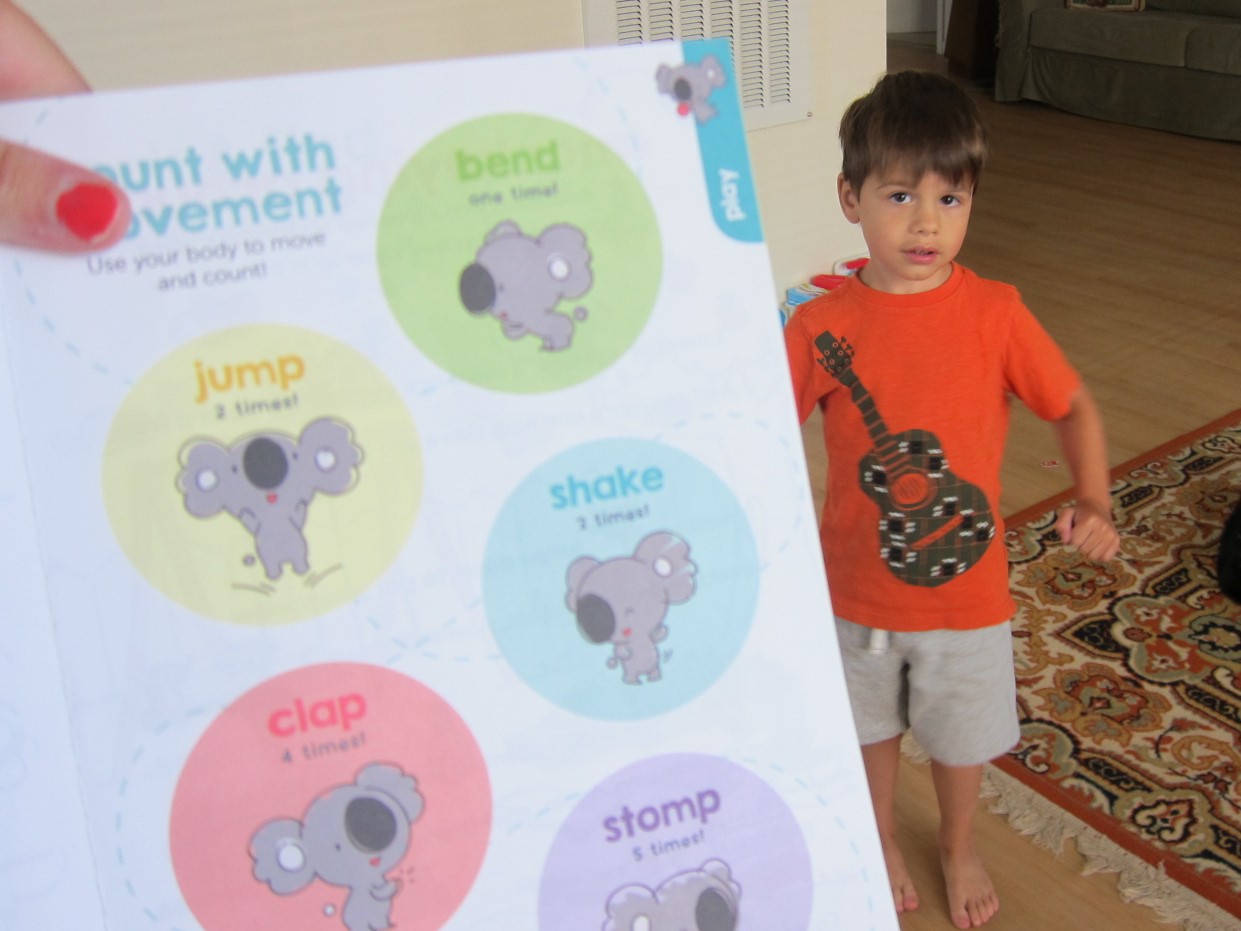
As a final gross motor activity, we counted with movement along to a suggestion in the booklet. Bend 1 time, jump 2 times, shake 3 times… and more!

Koala numbers var.JPG

Play Dough Cupcake Shop

Cupcake Shop (1)

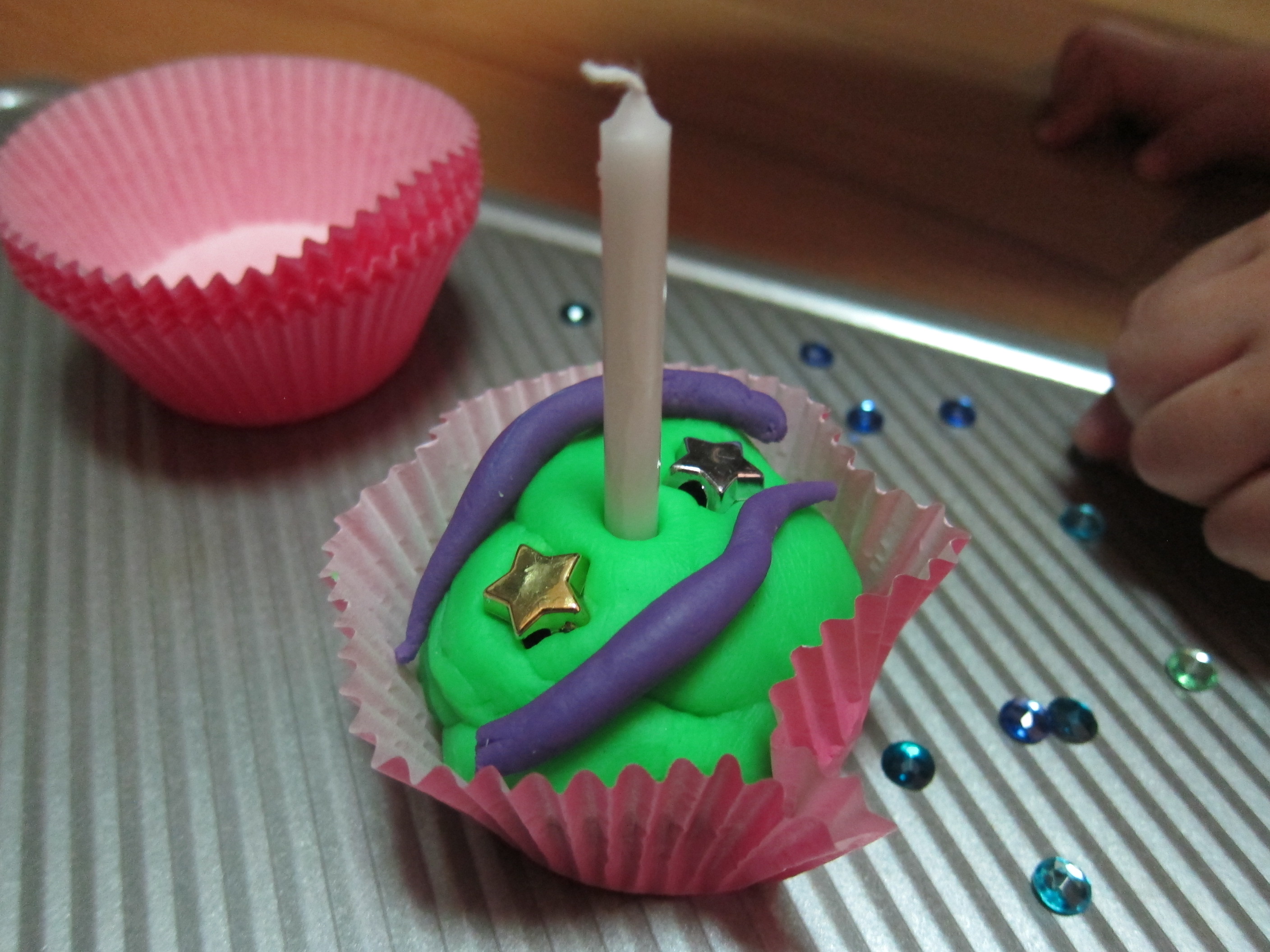
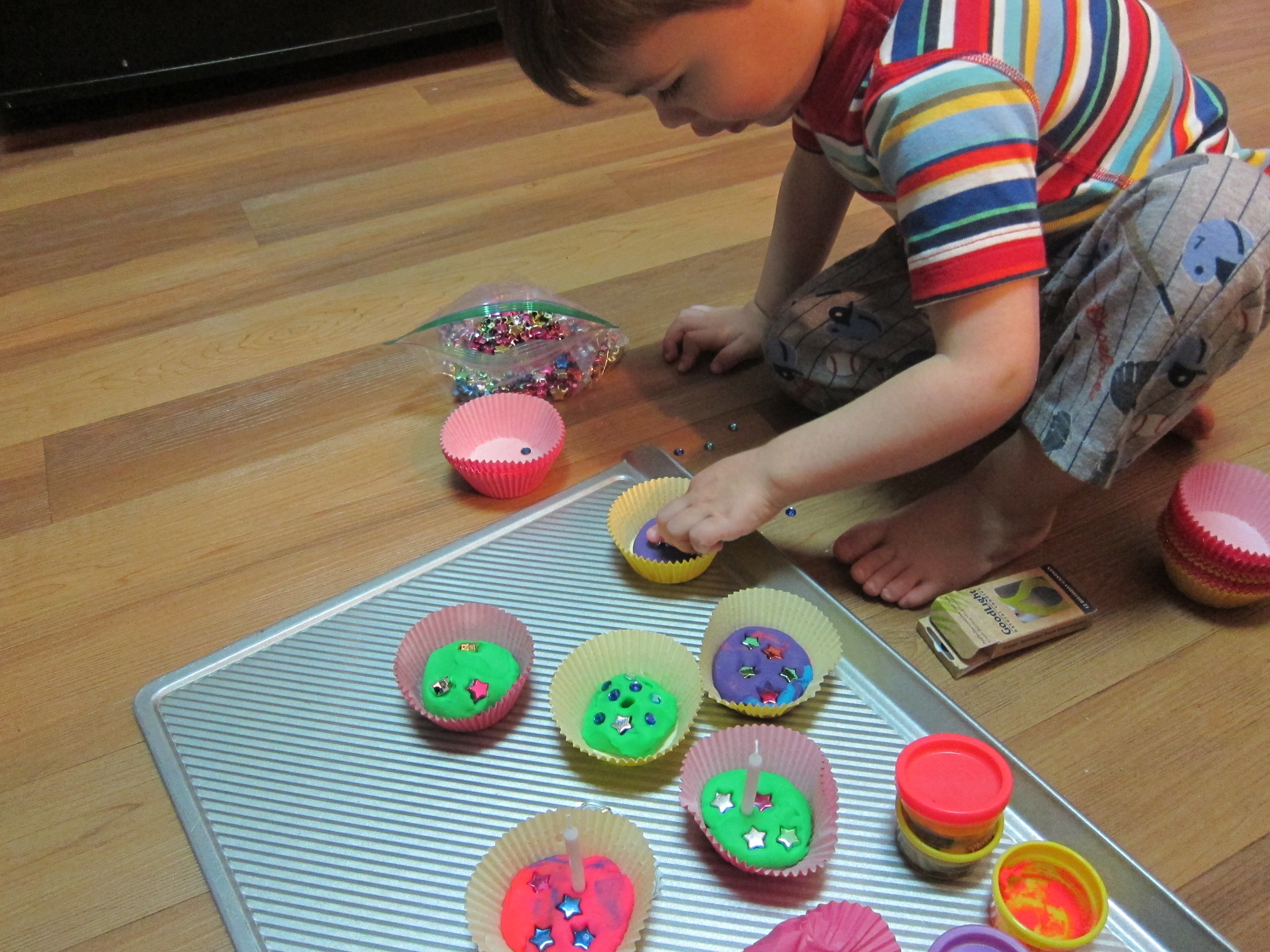
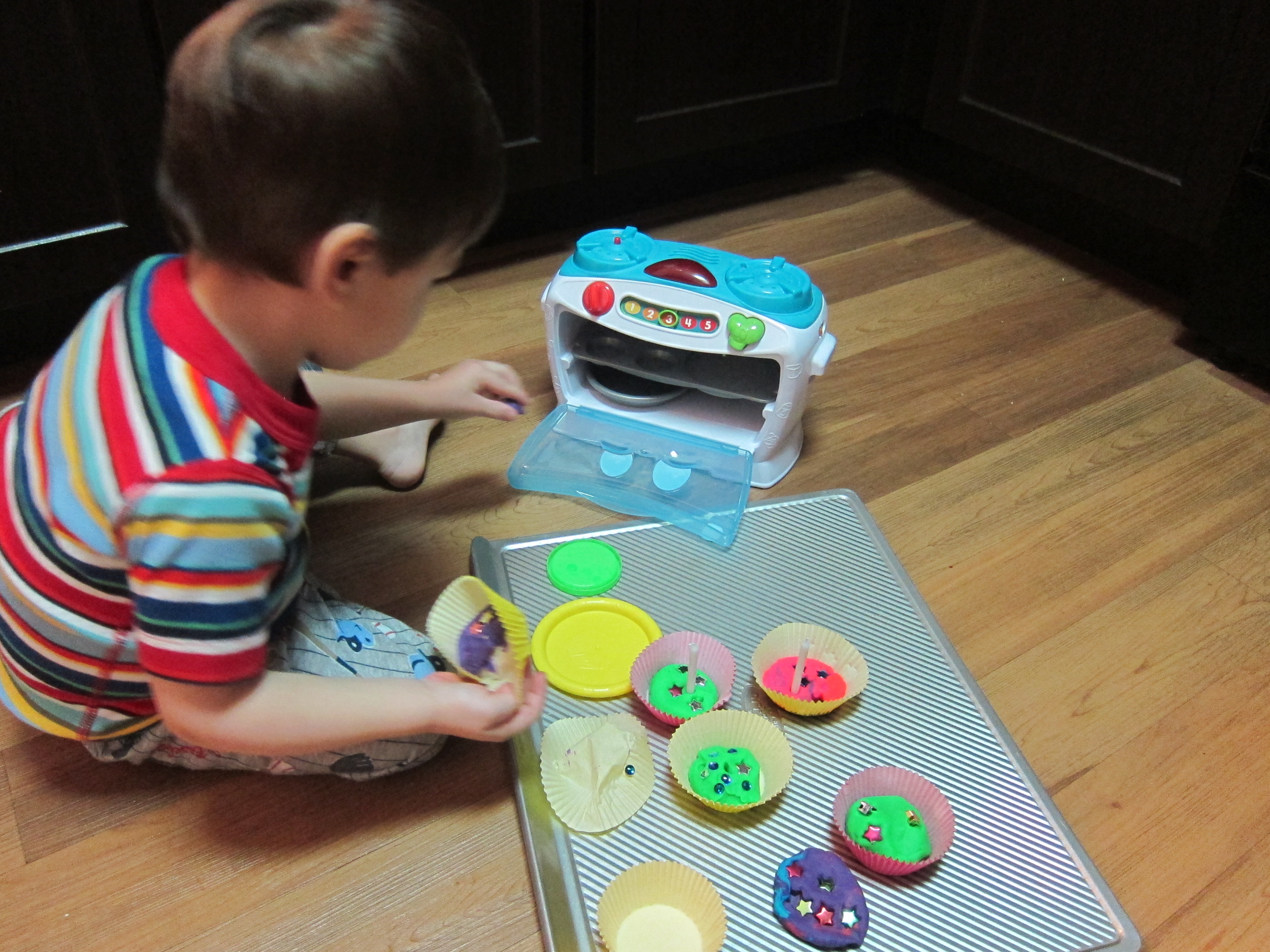
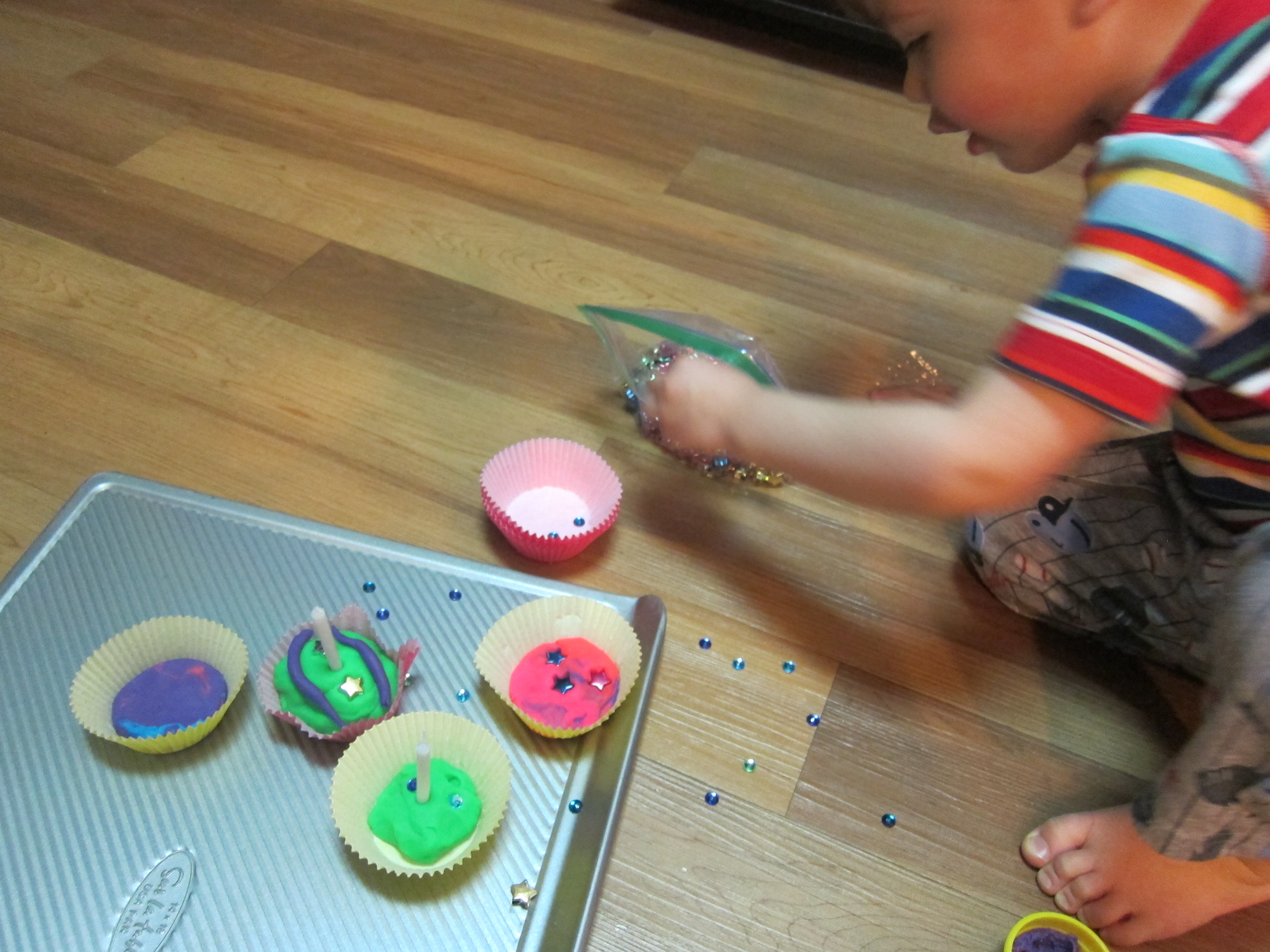
With leftover play dough from a goodie bag, we decided to open up our own birthday cupcake shop this morning! All you need are cupcake wrappers, a few jeweled embellishments, and your imagination.

I shaped our play dough into cupcakes and added to the liners to get Travis started, after which he loved pressing in star beads and jeweled stickers from our craft bin as the “frosting.”

Cupcake Shop (5)

Of course we needed to add a few candles for authenticity!

Cupcake Shop (4)

After a while he wanted to bake his cupcakes, so I pulled out his play oven.

Cupcake Shop (6)

When the cupcakes were finished, he decided they were for daddy, so that got to be dad’s morning surprise!

Cupcake Shop (3)

What imaginative food play have you tried with your play dough? Please share in the comments!

Earth Exploration

earth-explore-5

Since Travis loved volcano play so much recently, this week I took him deeper inside the Earth, to discover all the layers that sit under and produce that molten lava.

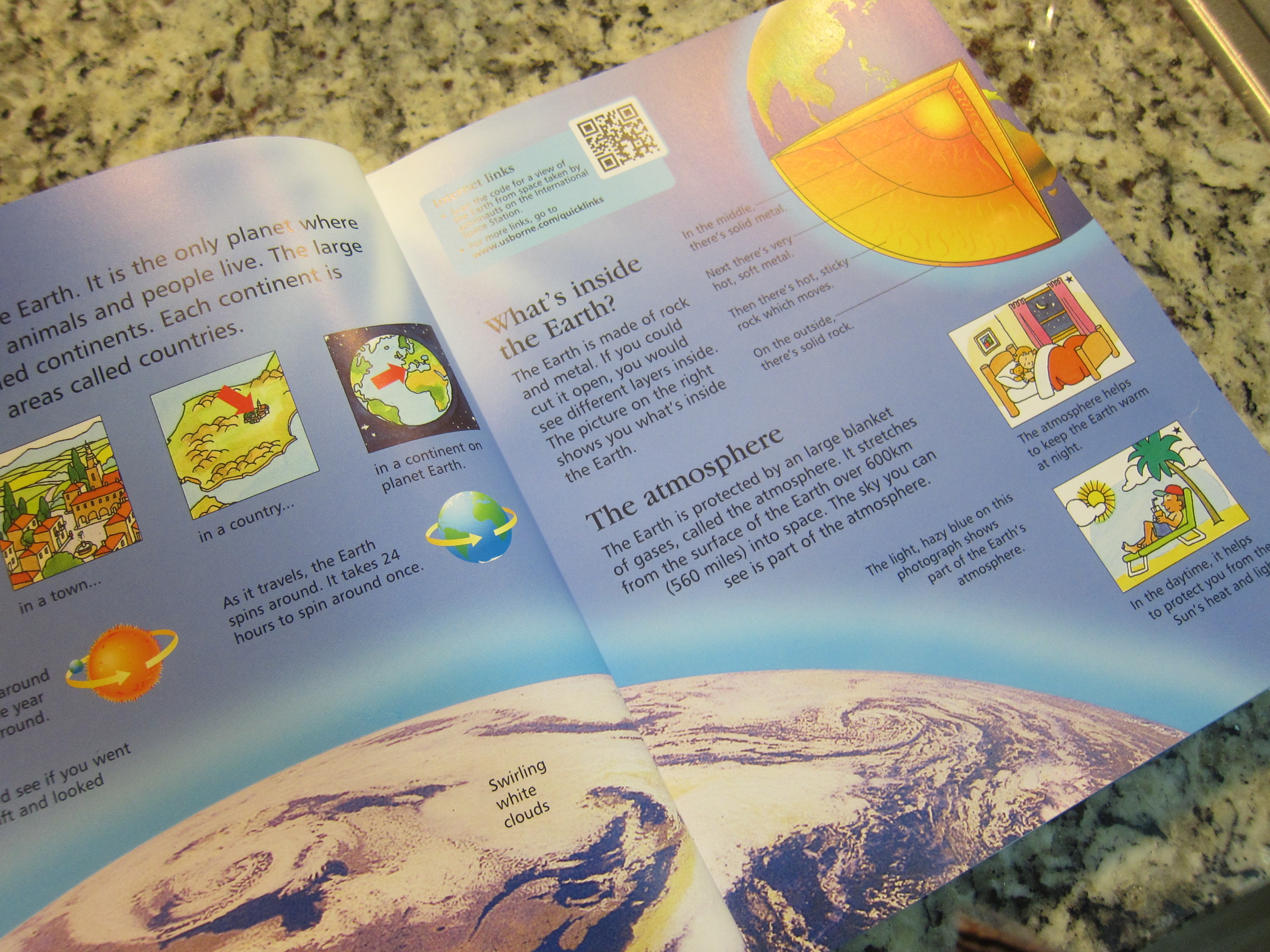
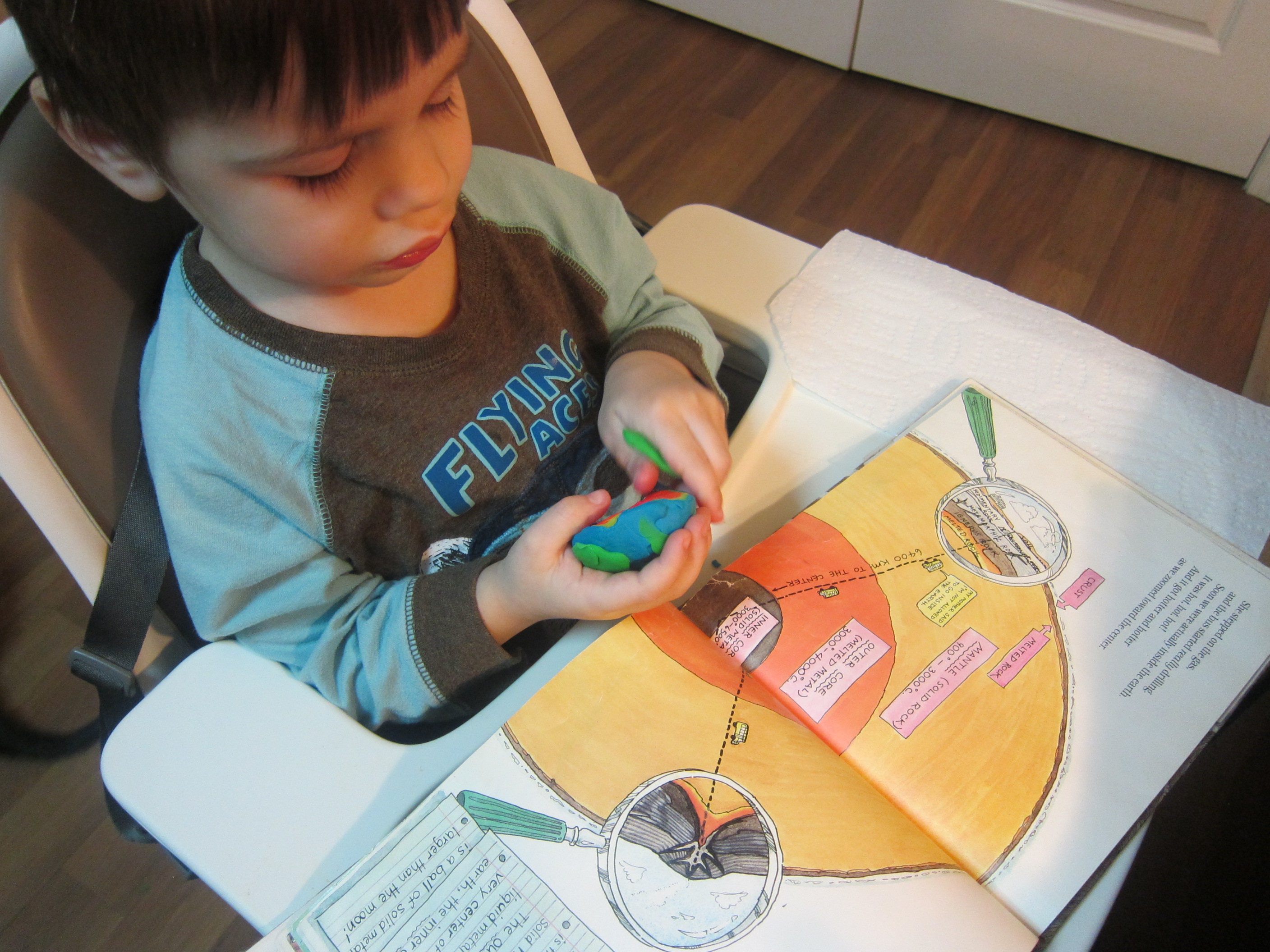
In perfect timing, we just received Usborne Books & More’s Children’s Encyclopedia, which not only had a section featuring the Earth’s layers, but is also QR linked. That meant we could further explore neat (and quirky) videos describing Earth’s layers: from inner core to outer core to mantle to crust to oceans/land.

earth-explore-3

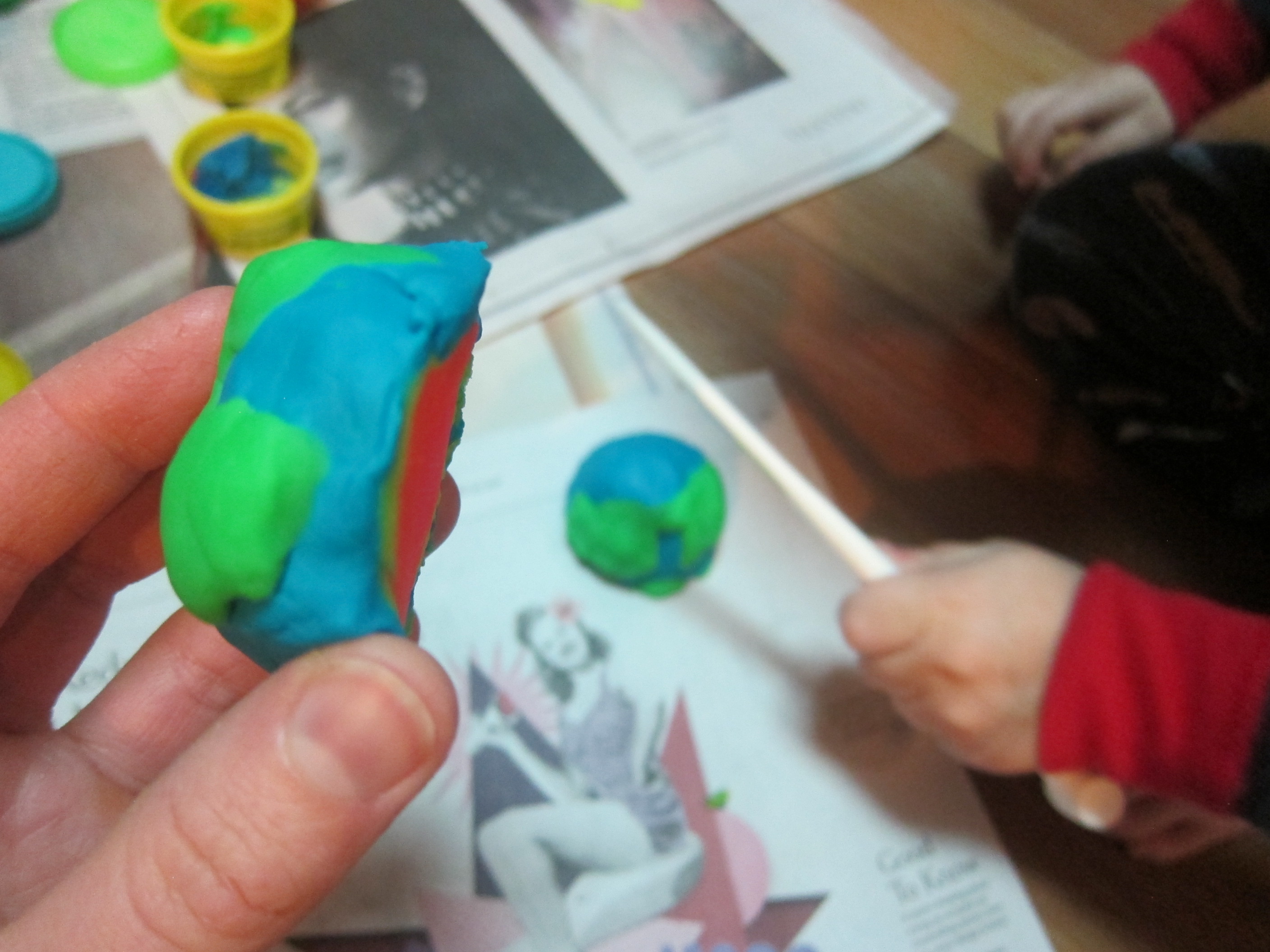
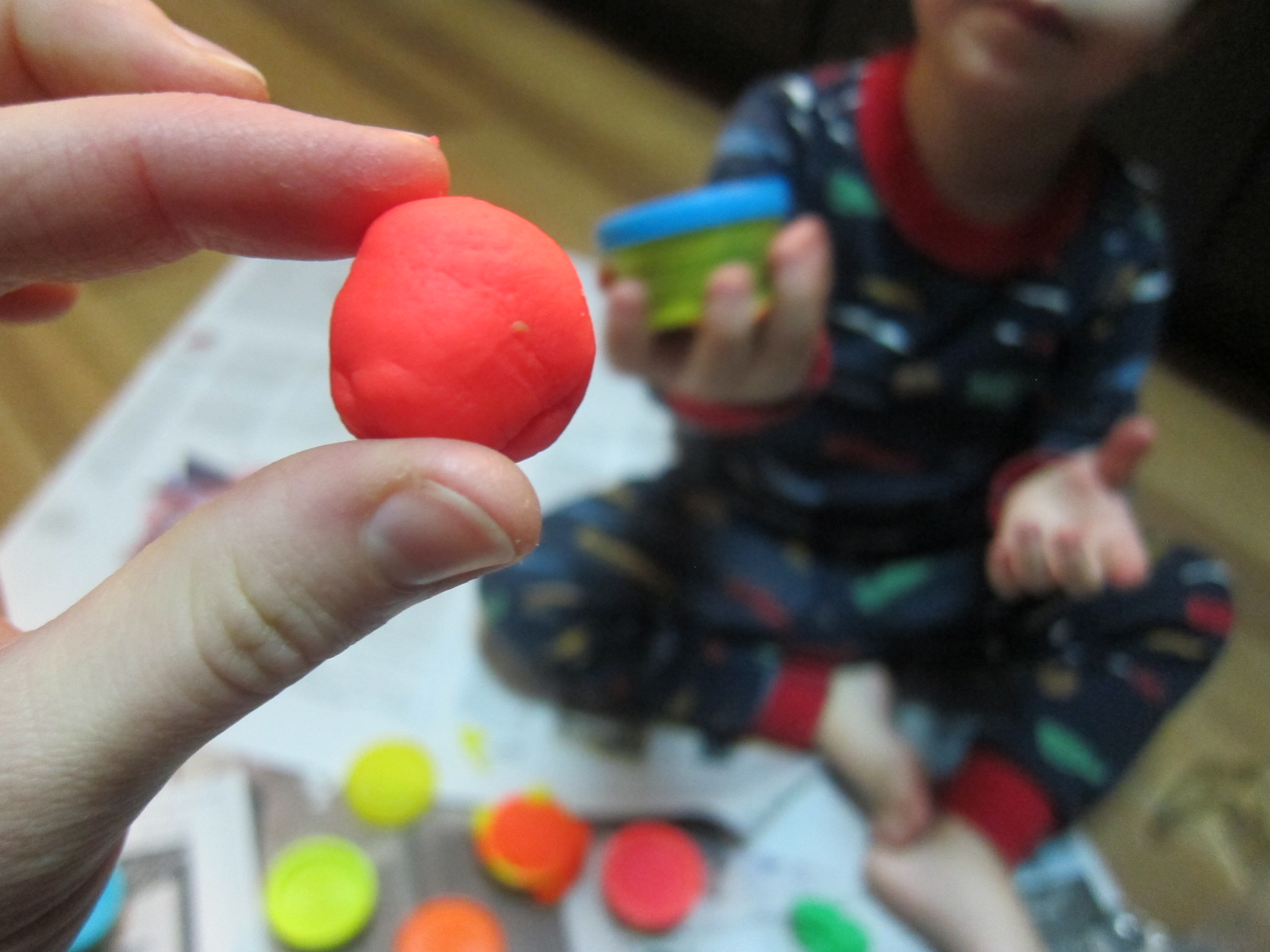
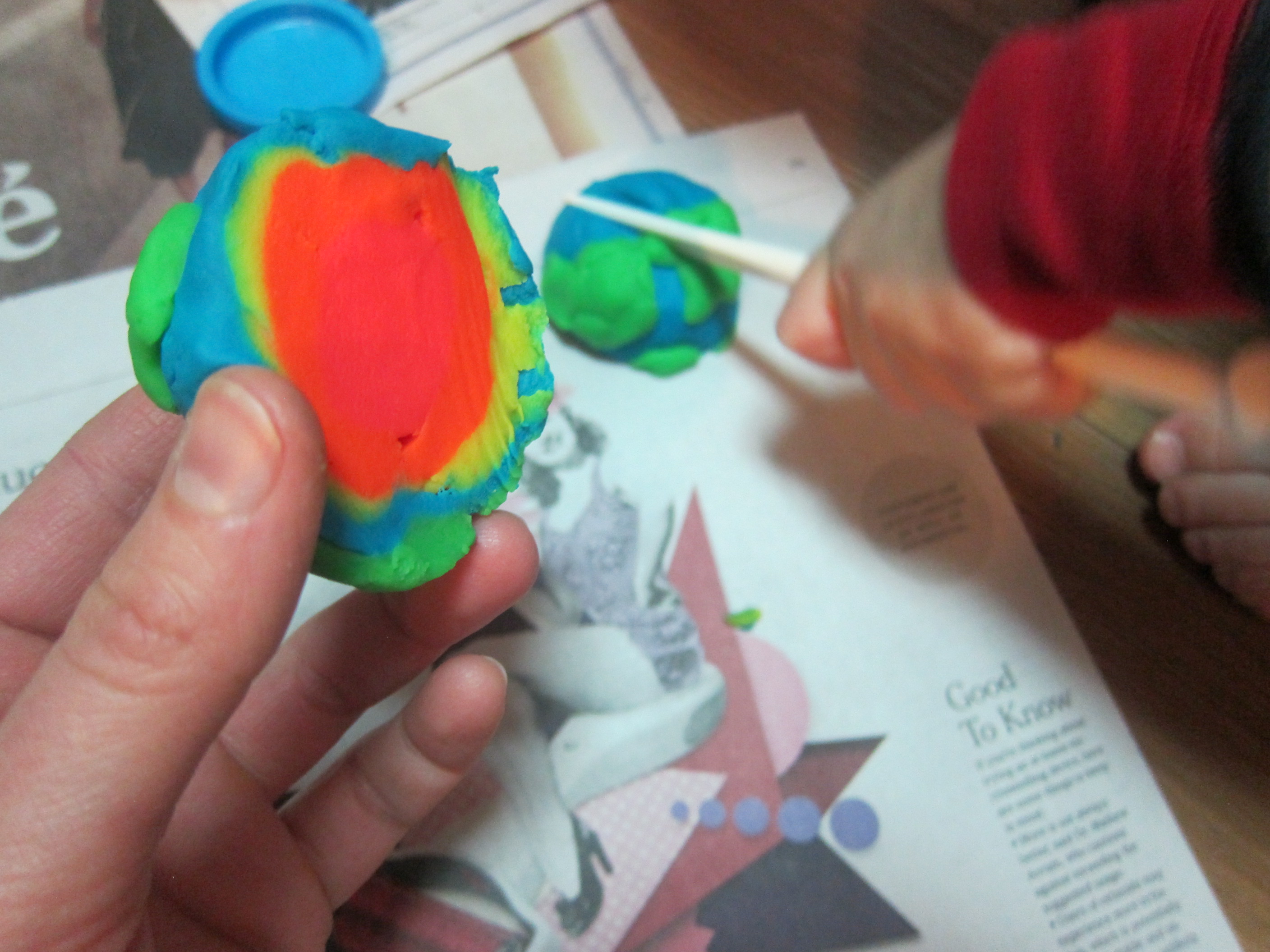
Now it was time to model that out for Travis! I used play dough, starting with a tiny red ball for the inner core, wrapping that in orange for the outer core, yellow for the mantle/crust, and then blue ocean and green continents.

earth-explore-1

Travis was busy playing with play dough on his own while I worked, but then got very excited when I asked if he wanted to slice into the Earth.

earth-explore-4

We used floss to neatly slice it open, so Travis could point to all the different layers.

earth-explore-6

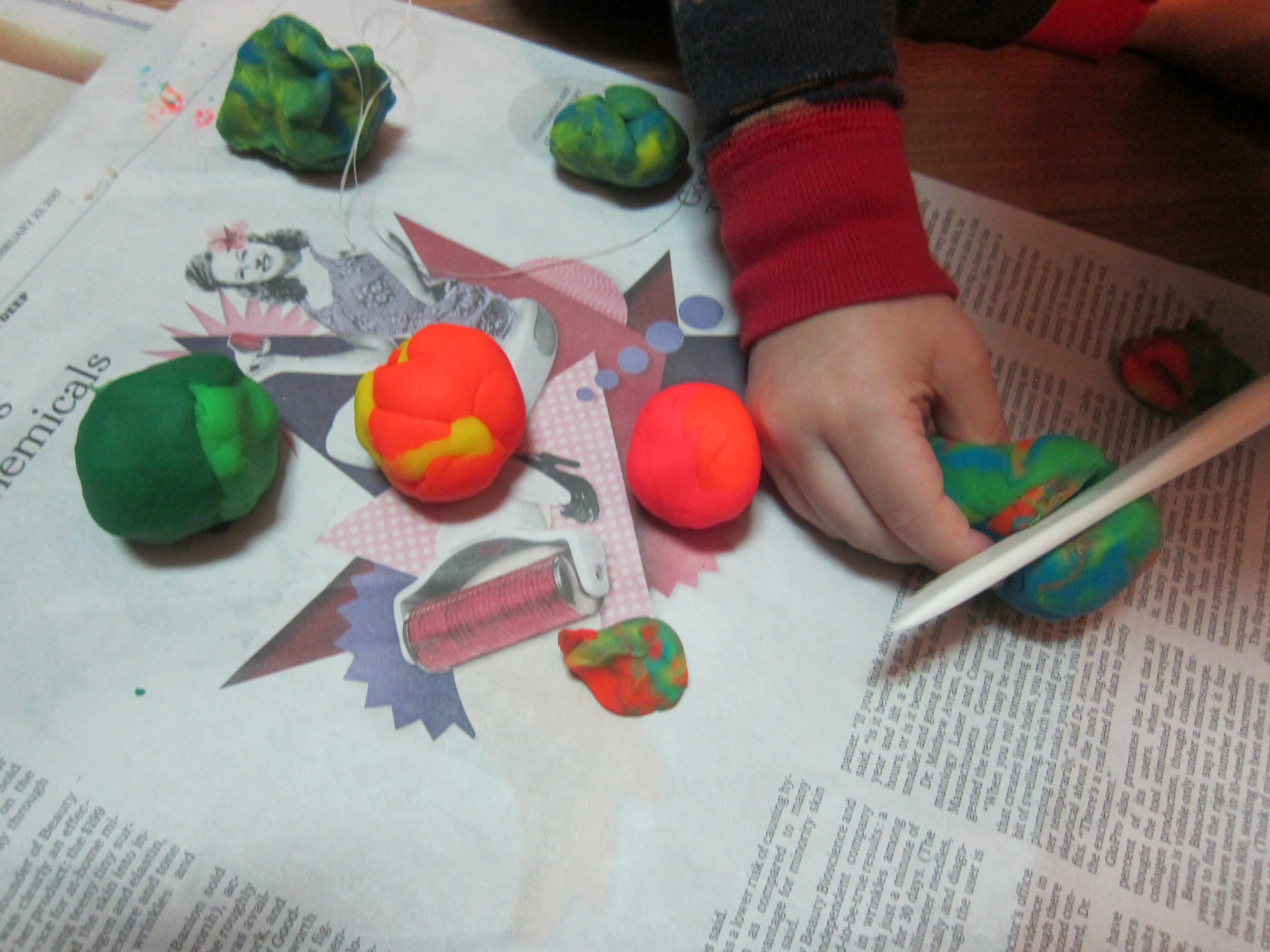
I will confess that it wasn’t long before our planet Earth looked like this:

earth-explore-7

He then wanted to make many mini planets of his own though, and sliced them open with a plastic knife. Although the topic was a bit advanced for a 2.5 year old, it’s never too early to introduce the idea that the Earth isn’t flat, right?

earth-explore-8

Continue your exploration with other kids’ books, including Magic School Bus Inside the Earth, or Usborne’s Shine-a-Light Secrets of Our Earth and See Inside Planet Earth.

IMG_0026.JPG