Cardboard Weave

Cardboard Weave (5)

I’ve been working with Travis on weaving this summer, which is not only great for fine motor skills, but also the perfect craft for Camp Mom. Here’s another version that’s very easy for beginner fingers. The trick? Instead of a tiny needle, your child will weave with a stick!

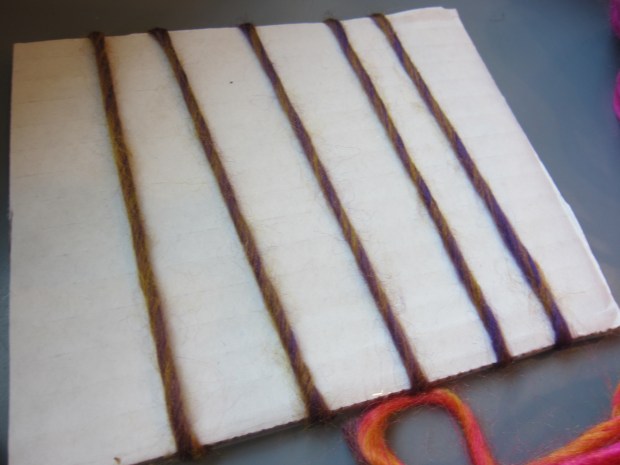
I cut a small square of cardboard from an old delivery box, and wound yarn around it a few times, taping on the back.

Cardboard Weave (1)

Now we took a stick (you can use one from a recent nature walk, if you like!) and wrap a second color of thick yarn around it a few times.

Cardboard Weave (2)

Begin threading over and under the yarn on your cardboard.

Cardboard Weave (3)

Travis was able to do this with no assistance, unlike more delicate weaving projects. He liked the way the stick pulled through at the end of each row.

Cardboard Weave (4)

That said, he did still tire out quickly, so his final product was only a small scrap. Snip the yarn from the cardboard down the middle of the back, and tie the loose ends together. Chances are Travis can find a way to feature this weaving in games with his action figures!

Cardboard Weave (6)

Circular-Loom Woven Trivets

Woven Trivet (7)

I intended for this old-school camp activity to help fill a Camp Mom morning at home, but it required more dexterity than Travis could master as a six year old. Still, both kids adapted the materials involved to play in their own way, keeping us all busy for an hour! I guess that makes it a Camp Mom success.

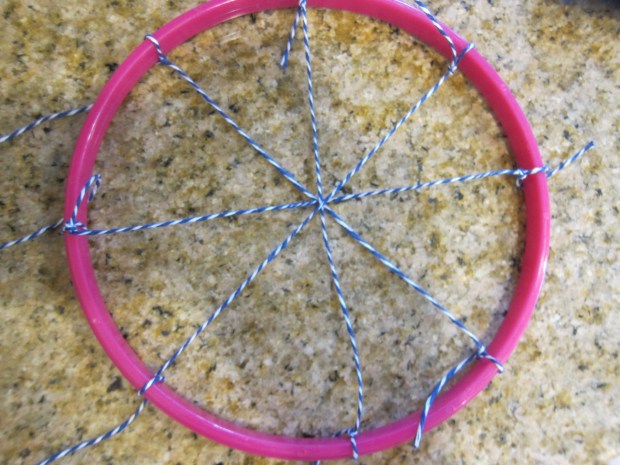
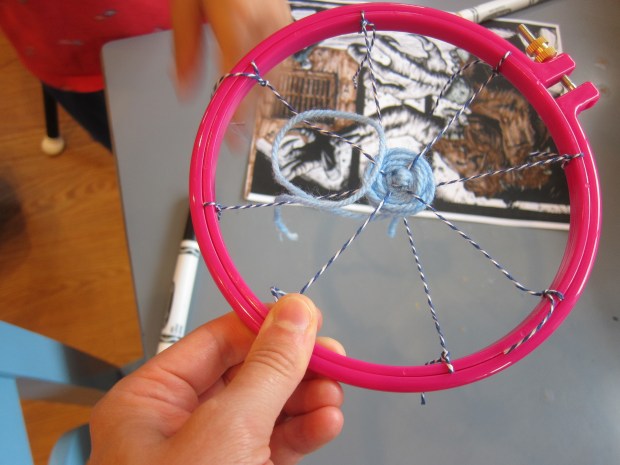
For this camp-inspired weaving project, you’ll need an 8-inch embroidery hoop. Separate the two pieces, and tie 6 pieces of string to the inner hoop so they form a starburst. Replace into the outer hoop and tighten.

Woven Trivet (1)

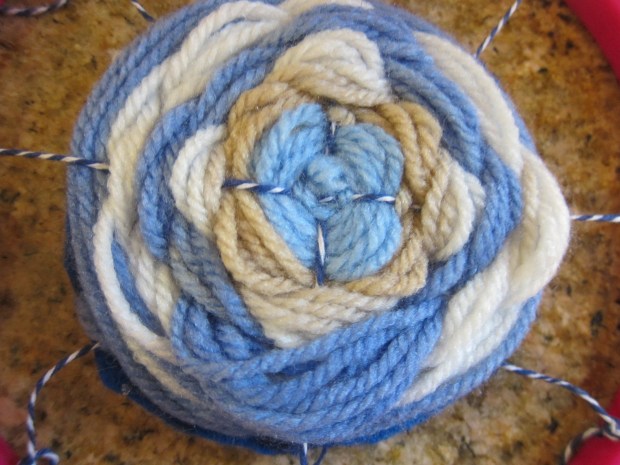
Now start at the center and begin weaving yarn, alternating over and under your starburst threads. I realized right away that this would have been a) quicker and b) much easier with a chunky thick yarn. So after Travis tried his hand at it a few times, I told him I would take over. Our thin yarn took quite a long time to fill up the hoop!

Woven Trivet (2)

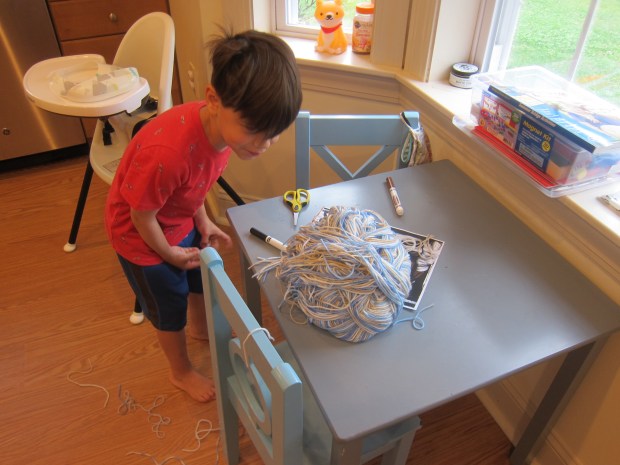
But while I was busy weaving, Travis took the leftover ball of yarn and created an imaginary game involving monsters with tentacles, and pieces of yarn snipped all over the floor.

Woven Trivet (4)

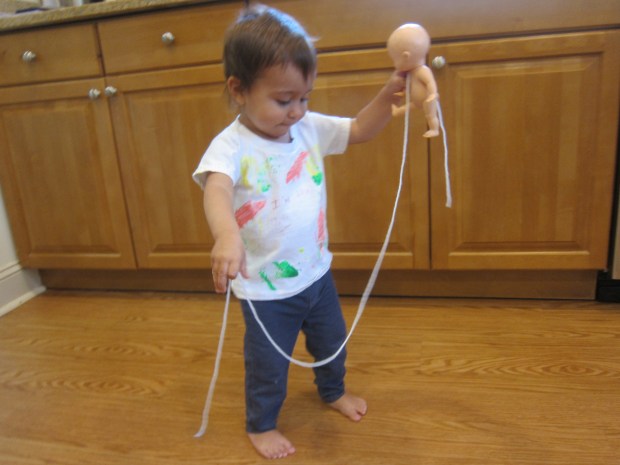
Meanwhile little sister Veronika loved pretending her doll was dressed up in extra strands of yarn! So everyone was happy.

Woven Trivet (3)

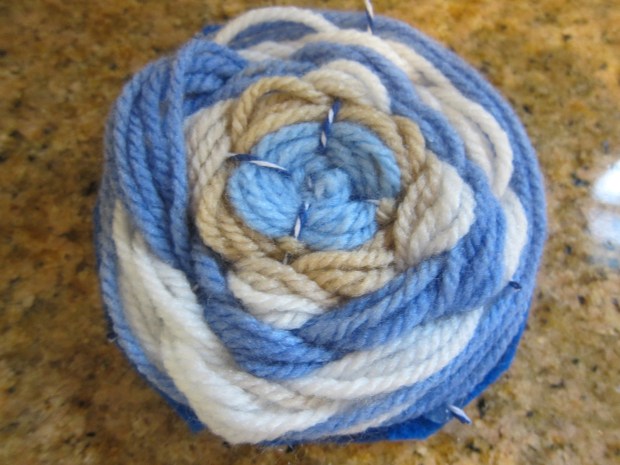
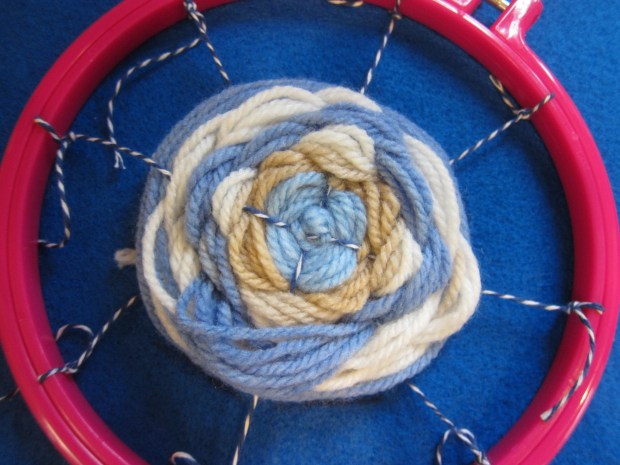
To finish the project, keep weaving yarn, in alternating colors, until your trivet reaches desired size. Every time you switch colors, simply leave the loose threads hanging out the back.

Place the finished trivet over a piece of felt and trace. Cut out the felt, then use hot glue or fabric glue to attach to the back of your trivet, tucking in any loose pieces of string.

Woven Trivet (5)

Cover with parchment paper and a heavy book until the glue has dried completely, then snip the trivet from the strings holding it on to the inner hoop.

Woven Trivet (6)

Ours turned out to be just the right size for either a small pot or tea mug!

Little Passports: South Africa

LP South Africa (17)

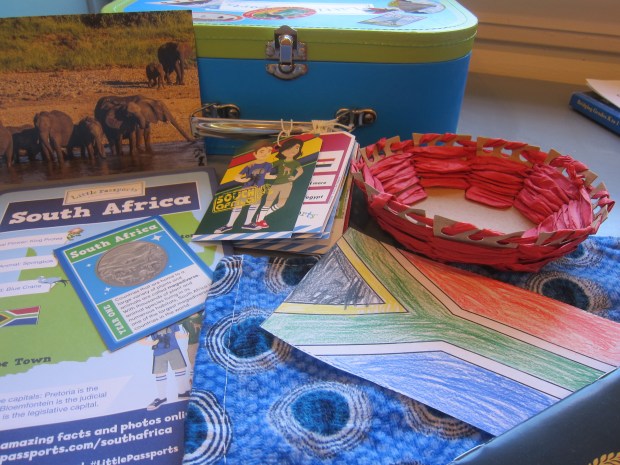
There was lots to like in the latest from Little Passports, all about South Africa. With an emphasis on the country’s amazing animals and safaris, there was also plenty to learn about the country’s history, crafts, archaeological significance, and natural wonders.
LP South Africa (8)

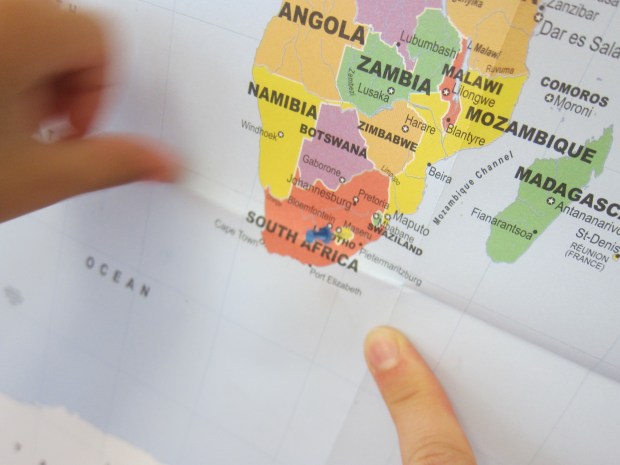
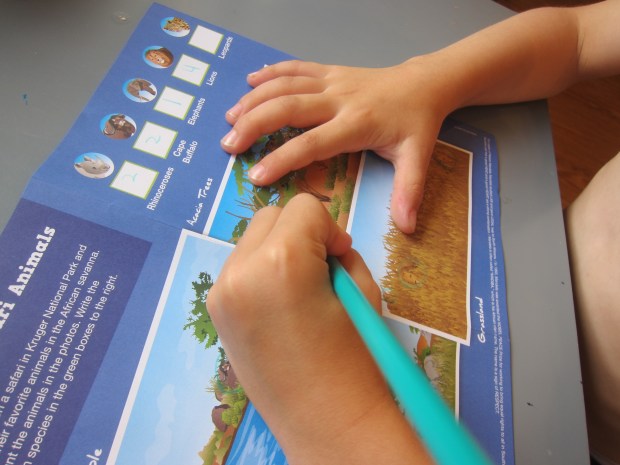
Travis enjoyed this kit’s booklet, including a color activity to learn some Afrikaans, a bit about Nelson Mandela, and a tricky safari animal count! It was all quite doable for a 6 year old, with grown-up assistance.
LP South Africa (14)

Souvenir:

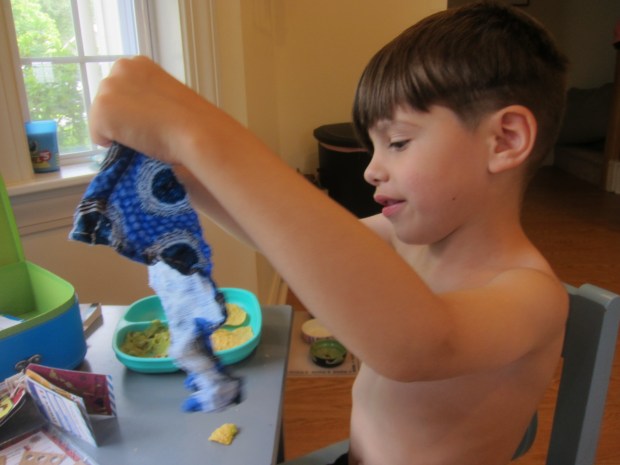
This month’s package from “Sam and Sofia” included not one but two souvenirs. The first was a dehydrated washcloth in the shape of an elephant. Travis was agog with the way it expanded into a square after we placed it in a dish of warm water, and it featured a beautiful indigenous print. He seemed so touched by the gift!
LP South Africa (6)

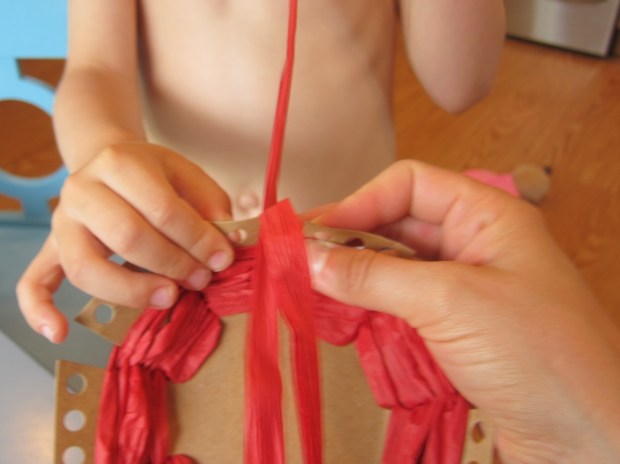
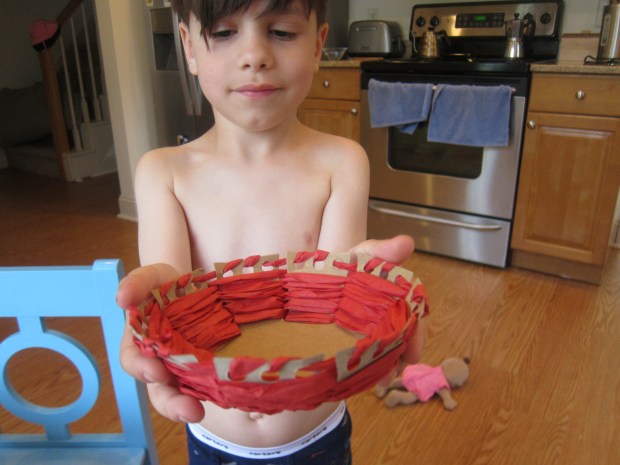
The second souvenir was more of a craft, a basket to weave. Travis did the first round of weaving the provided raffia around the cardboard frame, though I did then jump in to help out (there was a lot of raffia!).
LP South Africa (10)

As I wound, he was fascinated to learn that many cultures still make baskets like this, and by the idea that in some places you can’t just go to a store to buy a basket. He wanted to know what these villages might look like, or how the doors and houses would look.
 

LP South Africa (11)

Further Activities:

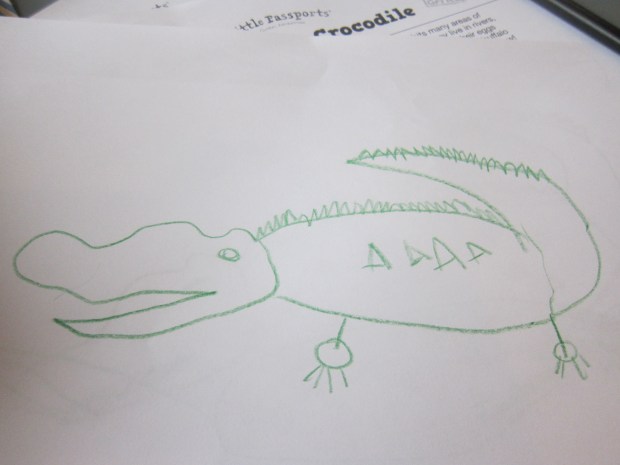
There were fewer crafts suggested in the booklet and online than with previous countries we’ve explored, but Travis enjoyed learning to draw a crocodile step-by-step, a pattern activity about traditional Zulu baskets, and coloring in the country’s flag for his garland.
LP South Africa (16)

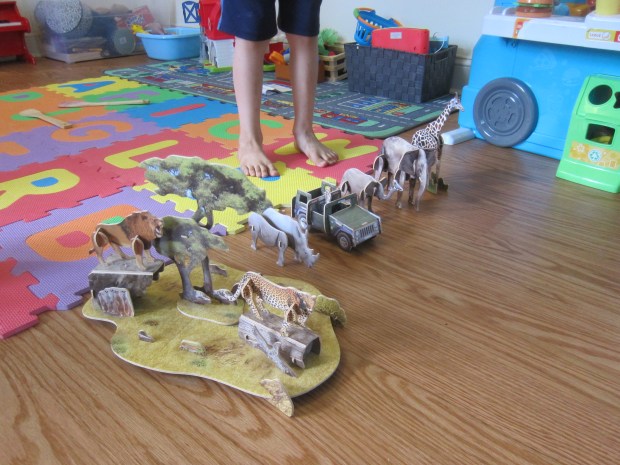
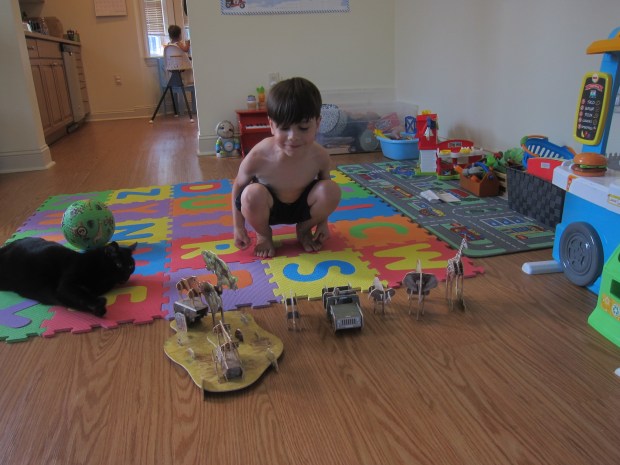
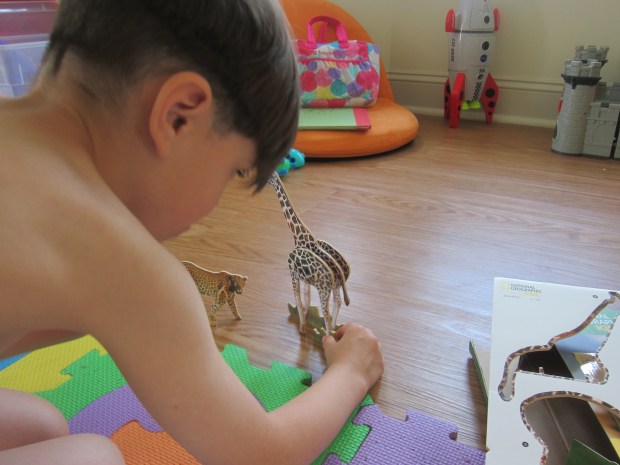
Finally, I surprised Travis with this month’s add-on: 3-D puzzles of safari animals. He not only loved piecing together the giraffe, lion, and other animals the first time through, but then wanted to take them apart and do it again.
LP South Africa (3)

And then again!

LP South Africa (4)

As a bonus, the puzzle comes with an informative book from Nat Geo kids. There was true quality to this product, an excellent add-on option from Little Passports.
LP South Africa (1)

Recipe:

Now all that was left was to explore the country with our bellies! We learned that this particular recipe is the national dish of South Africa, with regional variations throughout the country. Unfortunately, as with previous recipes from Little Passports, it wasn’t very kid-friendly either in preparation or taste (this one is spicy!).

Bobotie (1)

But Travis enjoyed helping shred the apple, and bravely gave it a taste test before deciding it had too much curry powder.

Ingredients:

  • 2 slices of bread
  • 3/4 cup plain almond milk
  • 1 tablespoon Earth Balance butter
  • 2 tablespoons canola oil
  • 1 and 1/2 cups chopped onion
  • 2 tablespoons curry powder
  • 1 tablespoon brown sugar
  • 1 teaspoon salt
  • 2 (12-ounce) packages meatless crumbles
  • 2 Ener-G eggs
  • 1 peeled and grated apple
  • 1/2 cup raisins
  • 1/4 cup blanched almonds
  • 6 bay leaves
  1. Crumble the bread into a small bowl and cover with the almond milk. Let stand for 10 minutes.
  2. Meanwhile, heat the butter and canola oil in a large skillet over medium heat. Add the onion and cook for about 5 minutes, until softened.
  3. Stir in the curry powder, brown sugar, and salt. Add the meatless crumbles into the pan, breaking apart into pieces, and cook for 5 minutes, until browned. Remove from heat and set aside.
  4. Meanwhile, remove the bread from the bowl of milk, squeezing out the excess milk. Set the bread aside, and whisk the Ener-G eggs into the milk.
  5. Add the bread crumbles, grated apple, raisins, and almonds to the skillet. Spoon the whole mixture into a 13×9-inch baking dish. Pour the milk mixture on top, and top with the bay leaves.
  6. Bake at 350 degrees F for 30 minutes.

Bobotie (2)

Weave a Bajau Mat

Bajau Mat (7).JPG

This interesting craft idea from Travis’s Welcome issue of Highlights magazine not only teaches a little about an interesting culture, but was also Travis’s first introduction to weaving. Although a bit advanced for him, it was a neat activity to work through together.

For a little background on the mat, it’s technically called a banig, a mat woven from plant leaves by the Bajau people, who live in Southeast Asia. Traditionally, they have lived in wooden houses on stilts above the sea, and so the zigzag pattern on the mats resembles ocean waves. Neat! We wanted a turn.

Instead of leaves, you’ll be using poster board and cardstock. Highlights recommended using a full 11×22-inch piece of poster board, but I knew that would be too big a canvas for Travis’s attention span.

Bajau Mat (1)

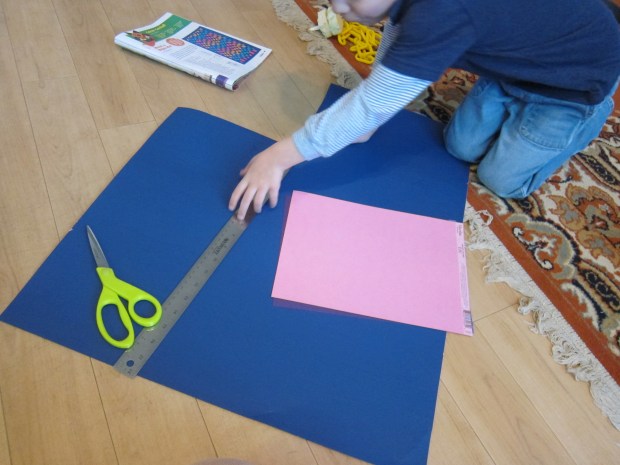
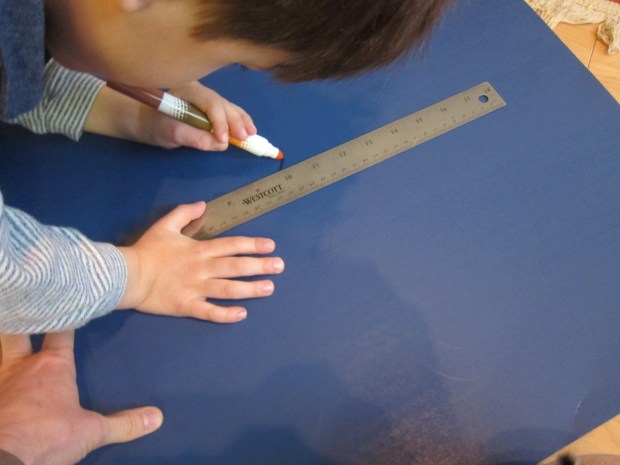
Instead we cut a piece of poster board to about half that, at 10×11-inches. He liked doing the measuring!

Bajau Mat (2)

Cut the poster board into strips about 1/2-inch wide, leaving a border about 1 inch long at the top. Great scissor practice.

Bajau Mat (5)

Now fold two sheets of colored cardstock in half, and then in half again. Travis was my expert creaser.

Bajau Mat (3)

Cut these cardstock pages on the diagonal into strips, then unfold; you’ll now have a zigzag.

Bajau Mat (4)

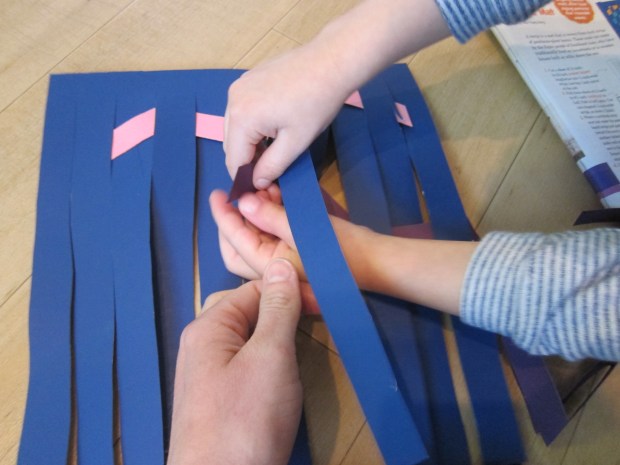
Working with one strip at a time, weave into the poster board, alternating under and over. Push the first zigzag up to the top, then repeat with the remaining strips. Travis did tire out, but watched as I finished up the weaving.

Bajau Mat (6)

Cover the edges of the mat with duct tape to secure and voila! A beautiful homemade mat. Ours was too small to really be a floor covering, of course, but it quickly became a prop for Travis’s action figures in his games.