Soda Teeth Experiment

Soda Teeth (3).JPG

Need a way to discourage your kids from drinking dark, sugary sodas? If you’re having a hard time convincing them that it’s no good for their teeth, look no further than this science experiment.

If your children are old enough to have lost baby teeth, then that’s truly the best material for the activity; just make sure you play before the Tooth Fairy pays a visit, or they’ll be confused!

At only 4, Travis hasn’t lost any teeth, so we needed another material that would tarnish in soda like tooth enamel. The online suggestion was… eggs!

That means I need a little caveat before the post, because now it sounds very vegan-unfriendly. We also needed a can of Coke, and one of Sprite, two sodas we wouldn’t actually be drinking in our household anyway. But in the name of science, the sodas were purchased, and eggs were borrowed from my mother-in-law!

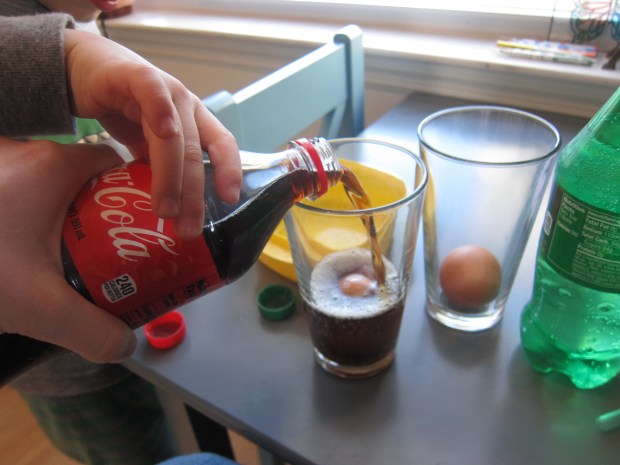
With that vegan caveat out of the way, it was time to be scientists. We filled one glass with Coke and another with Sprite.

sodateeth28229

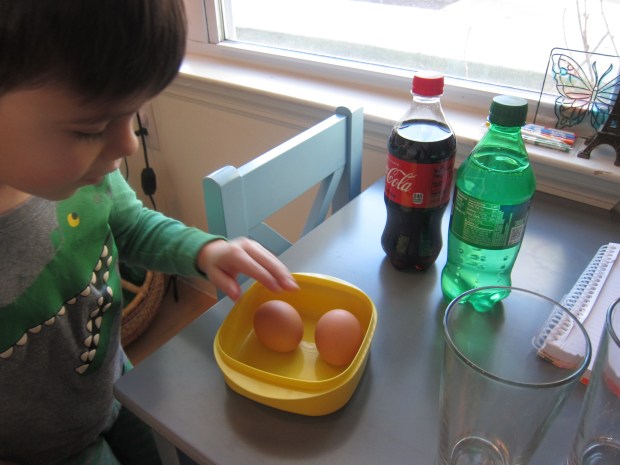
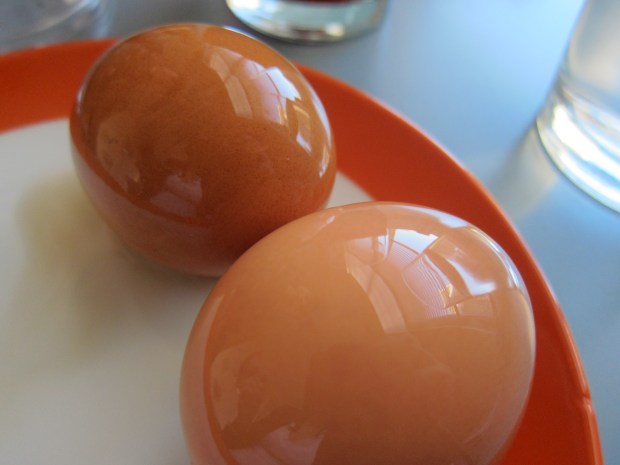
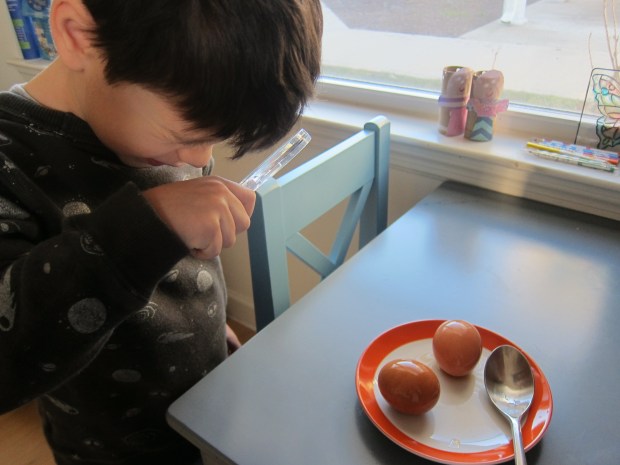
Travis was very curious about the eggs, so we checked them out before adding one to each cup.

sodateeth28129

He loved seeing the way the sodas bubbled. “And that would hurt my teeth!” he surmised. He’s onto something…

sodateeth28629

Then it was just a matter of waiting. We set up a chart, with a column for each soda and a row for each day we’d observe. This was a nice chance for Travis to practice writing his numbers.

sodateeth28429

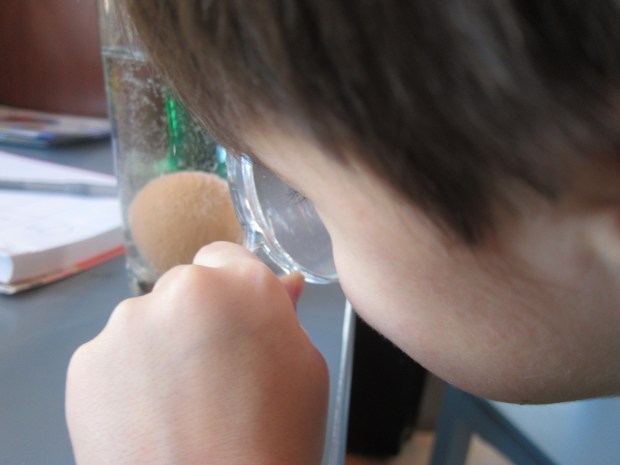
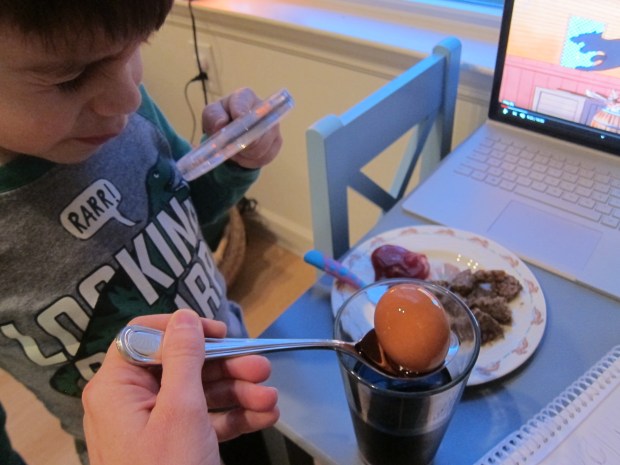
Every day, we used a big spoon to scoop out the eggs and observe. You can definitely break out the magnifying glass each day, too.

sodateeth28529

The first thing he noticed was that the bubbles faded by Day 1. The eggs, however, had changed very little.

sodateeth28729

By Day 2 we wondered: was the Coke egg a little darker?

Finally by Day 4 it was obvious; the coke had tarnished one egg. (Hopefully Travis’s take-away is not that he should drink lots of clear soda!).

sodateeth28829

I reminded him that what we saw in the egg was similar to what we’d see in a tooth. So avoid sodas to avoid discoloration and decay.

sodateeth281029

Overall, we liked the STEM aspect of this project, but I think it would have been clearer for him with real teeth. Perhaps we’ll have to do it again when he loses his first!

sodateeth28929


Pretend-Play Hot Cocoa

fake cocoa (6)Ok, so this cute little craft won’t really warm the kids up during the polar vortex, but it will get their imaginative juices flowing! We loved this pretend play idea from High Five magazine.

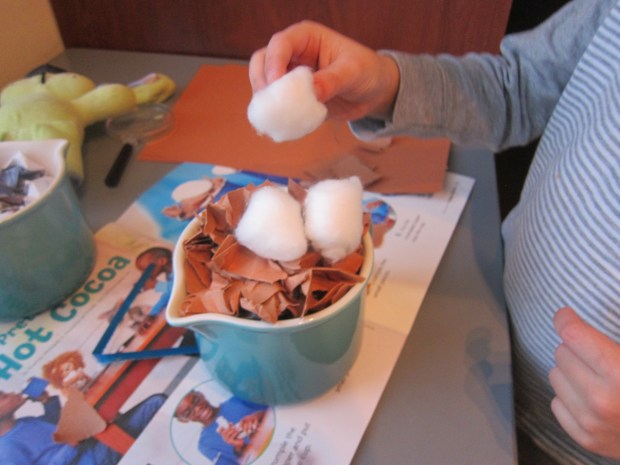
I set up a table for Travis with all the materials we’d need: newspaper, brown paper, cotton balls, and big mugs for our “cocoa”.

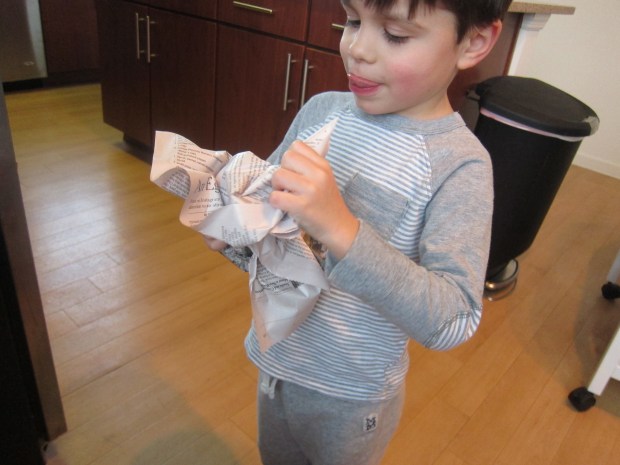
First we needed to wad up a piece of newspaper for each cup.

fake cocoa (1)

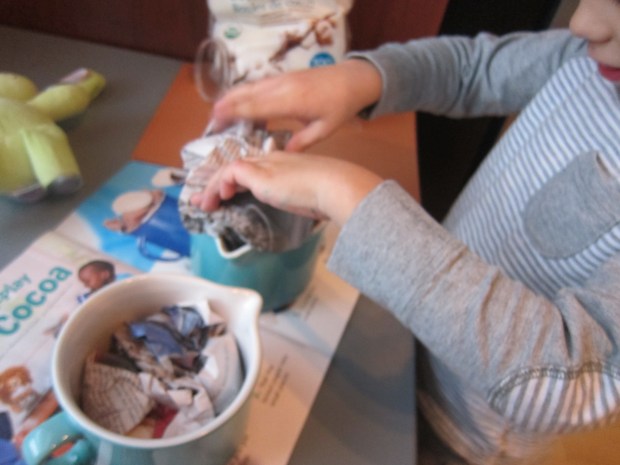
Stuff in a mug to make a base.

fake cocoa (2)

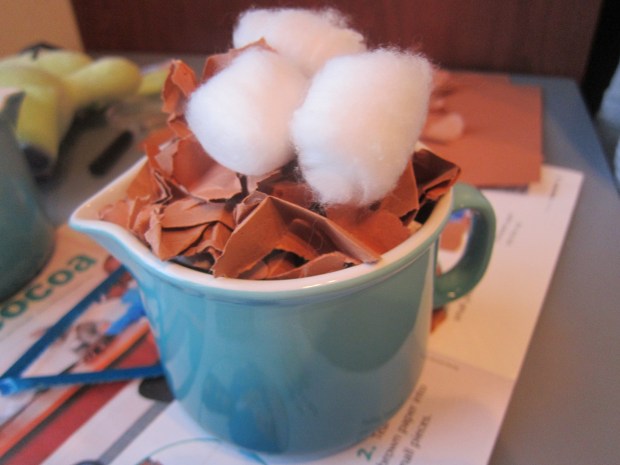
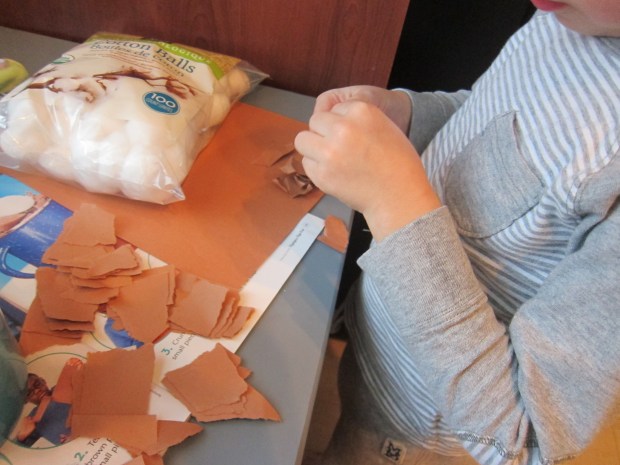
Next, rip brown construction paper into pieces; smaller is better. Once you have a lot of pieces, crumple each up.

fake cocoa (3)

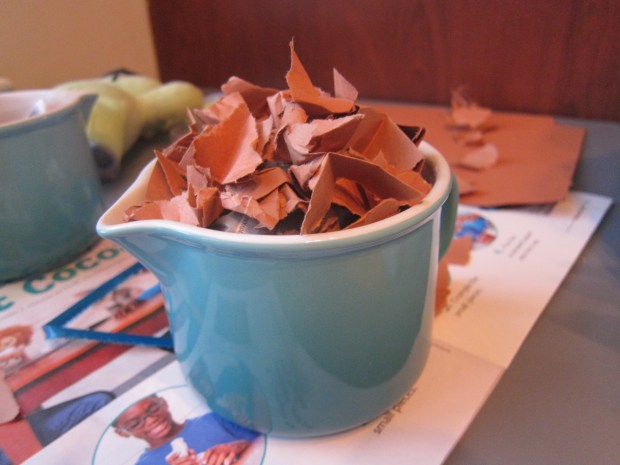
Add these pieces to your mug, and you’ll have a chocolaty cup of cocoa!

fake cocoa (4)

Travis loved adding “marshmallows” (soft cotton balls).

fake cocoa (5)

We thought it would be neat to trick his dad with this one, telling him we’d made him cocoa. Surprise! It wasn’t really meant to drink.

We also set up a little cafe for a few stuffed animal friends.

fake cocoa (7)

Travis did tire of the game rather quickly after that, but some kids may want to run their “hot cocoa stand” for a while. Have fun serving up drinks, making a full cocoa cafe, and more. I’d love to hear about it in the comments!


Haircut Doll

Haircut Doll (6).JPG

This craft is fantastic on so many levels, whether you want to give your kids some practice with scissors, help alleviate fear of the barber shop or hairdressers… Or your kids just want to have fun and pretend it’s a day at the salon!

I made the craft for Travis, but your child might be interested in helping step by step. First, I used a hole punch to punch about 12 holes around the rim of each of two empty toilet paper rolls.

haircut doll (1)

You can use any color yarn you like for the hair. We stuck with realistic yellow and brown, but why not green or rainbow!

haircut doll (2)

For each lock of hair, thread a strand of yarn through a hole and knot to secure.

haircut doll (3)

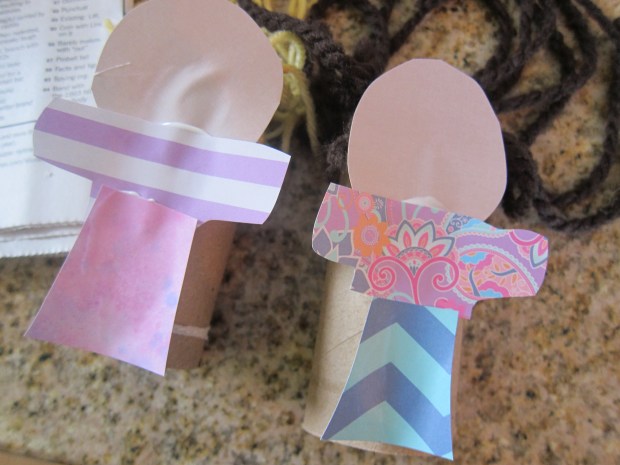
Once the hair was on, Travis helped pick out clothing patterns for each doll.

haircut doll (4)

I cut patterned paper into shapes for tops and bottoms. Finally, I added a round face for each with googly eyes glued on.

haircut doll (5)

Once the glue dried, it was time to head to the barber shop!

haircut doll (8)

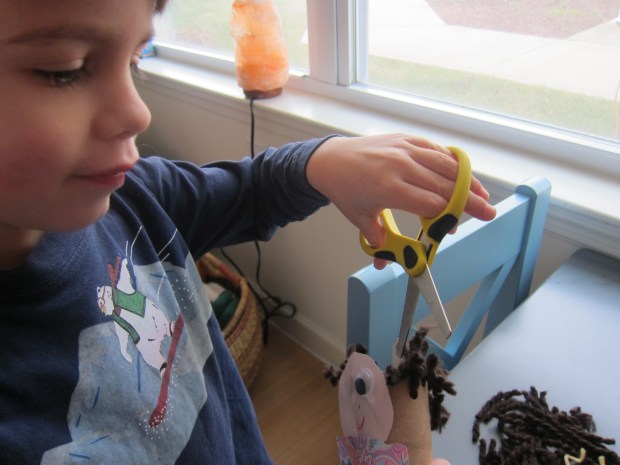
This craft marked a milestone for Travis, moving up from his plastic safety scissors to preschool scissors (these still have a blunt tip, but the blades are real metal). He was so proud!

haircut doll (9)

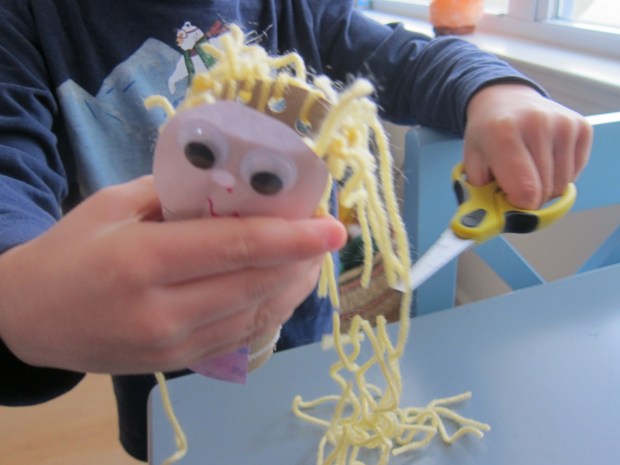
He didn’t miss a beat before the snipping began. He loved pretending he was his own barber, making a mess of hair on the floor.

haircut doll (10)

I watched in delight as the haircuts grew ever shorter.

haircut doll (11)

Until we had a buzz cut!

haircut doll (12)

Then Travis decided he wouldn’t be satisfied until each figure was bald!

haircut doll (13)

(Alas, you’ll notice they lost their eyes in the process, too).

haircut doll (15)

Overall, this was a fantastic activity: a craft; a fine motor skill builder; an imaginative game, and a way to alleviate fears all in one.

haircut doll (7)

Early Explorers Music

lp music final

What did Max and Mia send from Early Explorers this month? Travis was eager to see when he found the envelope waiting at his lunch table. We instantly were doing the flashlight find-it, and he trotted off to put the stickers on his map (for region-specific instruments like didgeridoos and bagpipes) without my help!

lp music (22)

The activity book contained great examples of more than/less than, counting, mazes, and other favorites we’ve come to expect.

lp music (5)

Music Craft:

The craft in the booklet was a rainstick – a simple project similar to those we’ve put together in the past. But it featured a neat aluminum foil coil on the inside!

lp music (6)

Tear off a piece of aluminum foil about twice as long as a paper towel tube. Compress with your hands into a long snake.

lp music (8)

Now twist the snake, almost into a double helix shape.

lp music (7)

Cut a circle of construction paper larger than the end of the tube, and glue around the edge. I recommend a rubber band or two as extra security, especially if your child will want to shake the rainstick before the glue dries!

lp music (9)

Now slip in the aluminum helix. Spoon in a few spoonfuls of rice – you don’t want it to be too full. Now seal the other edge of the tube.

lp music (10)

Shake up a rainstorm! The booklet contained information on the history of this instrument, notably that they are traditionally made of bamboo tubes filled with stones, which Travis thought was neat.

Music Science:

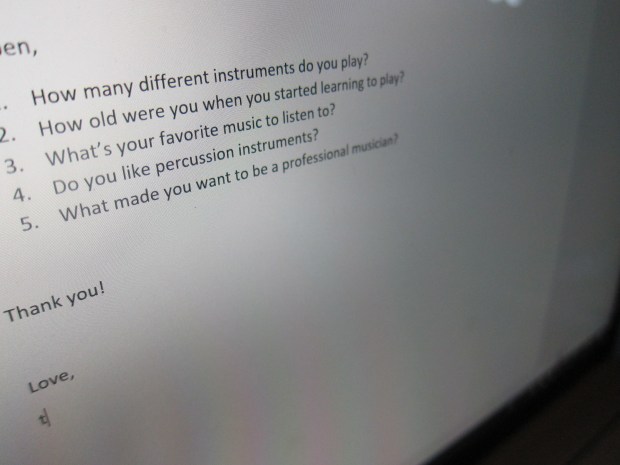
Ok, there wasn’t anything in the booklet that could classify as STEM this time around, so we explored a social science… Interviewing a musician! This is a great way for kids to delve further into what it’s like to live surrounded by music. I connected with a man we’d heard play at a local festival last spring, and he was happy to answer a few questions Travis typed up.

lp music (21)

Music Keepsake:

The treasure inside for Travis this month was a little music box to wind. He was thrilled to have his own, since he loves an old music box from my childhood. This one is great because kids can watch and understand the mechanism of dots and moving metal bars that produce each note. It plays Twinkle Twinkle, which will be a familiar and comforting tune.

lp music (1)

Music Field Trip:

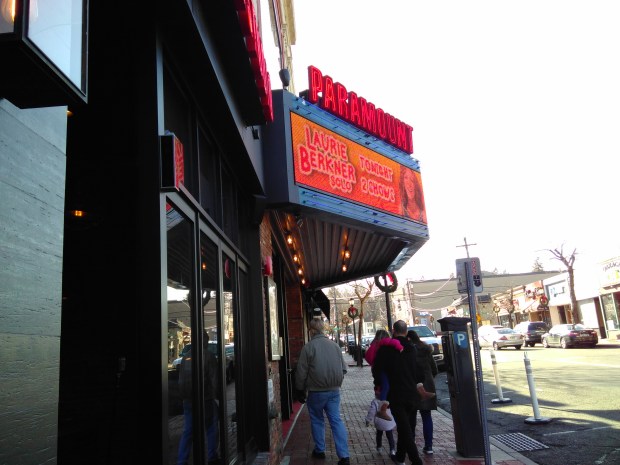
Check out a local concert, of course! This can be anything from a small, kid-friendly show at a venue near you, to a blockbuster show. We were lucky enough to have a big name in town – Laurie Berkner!

LP Music (25).jpg

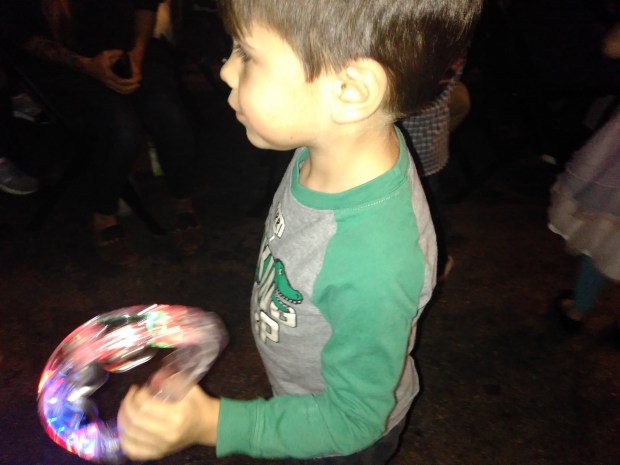
Travis loved dancing in the aisles with his tambourine.

lp music (24)

It was a fantastic opportunity to see a real musician strumming a guitar on a big stage.

LP Music (23).jpg

Music Further Activities:

First, we had to have a family sing-along. I loved that this crate got us pulling out our old bag of musical instruments. For a toddler who loved music, Travis plays instruments surprisingly rarely now, and it was a great chance to jam and sing to old favorites.

lp music (15)

Next, we headed to a local music shop, hoping to find some neat instruments. A few were familiar of course, but Travis loved this huge rainstick…

lp music (20)

…and could listen to a plethora of sounds by spinning the knob on a synthesizer.

lp music (17)

Check out the mandolin and banjo!

lp music (18)

We also looked up world music online, finding a great library of clips at allaroundthisworld.com.

lp music (14)

Travis also has a chime toy from Little Passport’s shop. We spent some time with it, a great early intro to a piano and playing notes. Children can play along by color to classics like London Bridge and Jingle Bells.

lp music (13)

We also were inspired to learn lyrics to favorite songs that we’ve heard, but might have misheard (otherwise known as a mondegreen). Aha, so that’s what they’ve been saying…

lp music (12)

French Flash Cards

Flash Cards (9).JPG

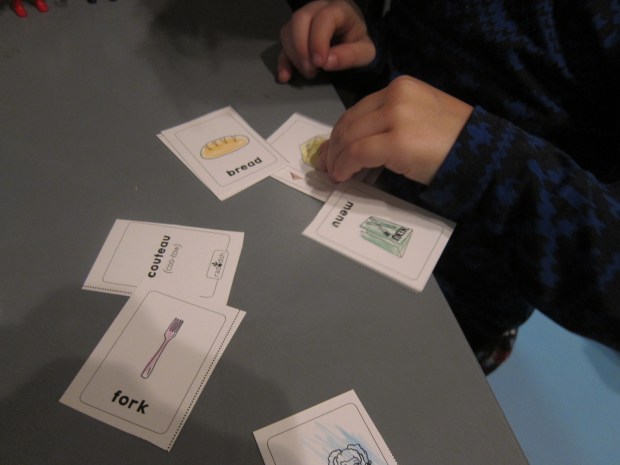
Our bonus activity this month from Raddish Kids was French flash cards to color and play with. The cards lend themselves nicely to all ages; big kids who can read may get a bit more out of them than my preschooler did, but Travis has the advantage of being at that age where his brain is like a sponge for language.

To start, we needed to color them in. As we drew, I told Travis each cards word in English and then in French.

flash cards (2)

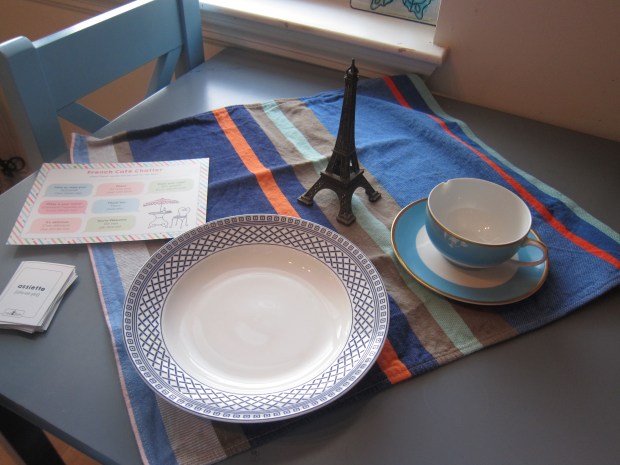
To make things accessible to my non-reader, I set up his table as a little French cafe!

flash cards (4)

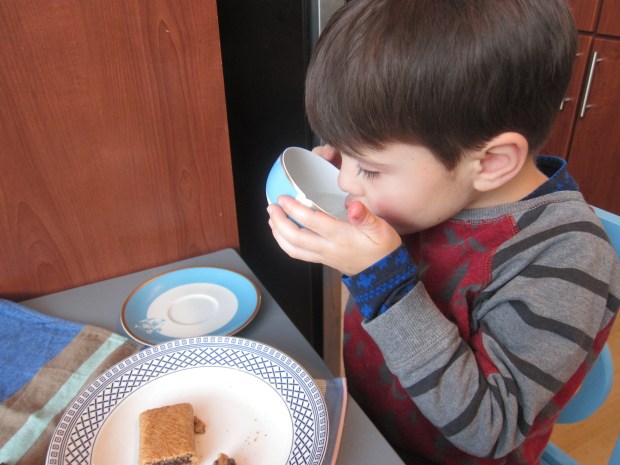
The set up, including a proper cup (verre) to drink his water (eau), which made it feel special.

flash cards (6)

We practiced our French pleases and thank yous, and introduced ourselves. Enchante!

flash cards (5)

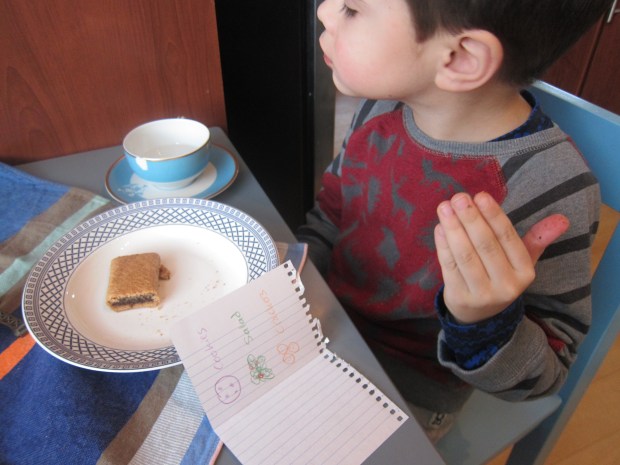
Although it was hard for Travis to remember the French phrases, being given so many so fast, he did a good job of echoing each one back to me. We even drew up a menu (carte) to place his order. Cookies s’il vous plait!

flash cards (7)

Bigger kids will likely take to the memory game right away, placing all the flash cards on the table and remembering the French word on the back. For Travis, we went through them a few times, but I knew it was a lot of words to send his way at once.

flash cards (3)

Hopefully if we practice, he’ll start to pick up this beautiful language. Thanks for the bonus, Raddish!

Grocery Store Scavenger Hunt

grocery hunt (1)

As an expansion to our French-themed Raddish Kit, Travis and I headed off with a scavenger hunt card to discover some of the most common ingredients in French cooking.

On the way there, I gave Travis a quick lesson on French food shopping. Having spent time in the country, I eagerly told Travis how different types of ingredients were sold in different markets. So although we were headed to a big grocery store, we still shopped department by department!

grocery hunt (3)

First up was the produce, or what might be found in a village marche (farmers’ market). Travis was very proud finding mushrooms, the first item on our list.

grocery hunt (2)

We also picked up a number of spices, including fresh tarragon, rosemary, and thyme. Take the time to savor the smell of these!

Bread would have been purchased at the boulangerie of course, and Travis loved pulling a long baguette from the bread counter. And although we didn’t buy it, he had fun stopping by the cheese counter (fromagerie), since we’ve never paused to look at such a display together.

grocery hunt (5)

He was so proud holding up our list once everything had been checked off!

grocery hunt (6)

Make a Model Lung

model lung (6)

This neat visual of how a lung and diaphragm work together can be made with just a few simple household items. It was a great dose of STEM learning on a stormy day cooped up inside.

You’ll need to start with a sturdy plastic bottle. At first I assumed larger was better, and tried a family-sized club soda bottle… but our balloon wouldn’t fit in the next step, so be aware! You really need a single-serving bottle (16 ounces), either of water or soda.

Carefully cut the bottle in half. This was definitely a grown-up step, and I cautioned Travis that the edge of the bottle was a bit jagged. Keep the top half; recycle the bottom of the bottle.

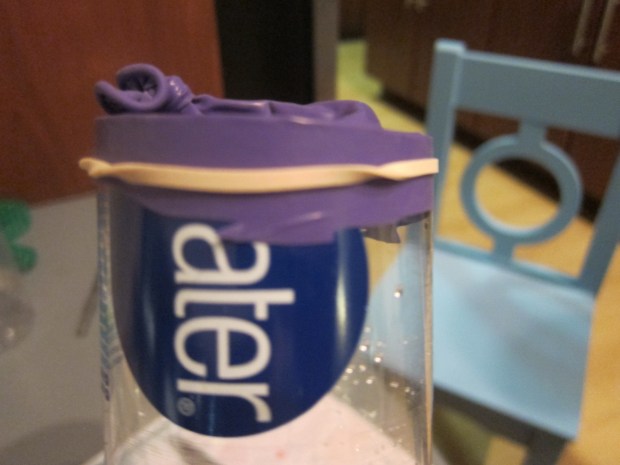
Tie a knot in an uninflated balloon, and snip off the top of it. Stretch that top over the end of the bottle, and secure with a rubber band.

model lung (1)

Your bottle might squash a bit, but that’s fine as long as no air can get in.

model lung (2)

Now slide a straw into a second balloon. Secure them together with a rubber band, making sure the balloon is attached, but not so tight that air can’t get in. Travis tested with a few huffs!

model lung (4)

Now push the balloon into the neck of the bottle, and use a little clay around the straw to hold it in place.

model lung (5)

Holding the bottle firmly, pull down on the bottom balloon. The balloon inside will inflate!

model lung (7)

Explain to kids that this movement replicates what happens when you breathe: when your diaphragm moves down with each breath in, it makes room for your lungs, which then fill with air.

Travis’s favorite part of the activity was trying to get the balloon to “hiccup”, which you can do by pulling the bottom balloon a few times quickly. The balloon in the bottle will jump, which is what happens when you get a case of the hics.

All in all, this was a great addendum to the fun we had with our My Body crate from Kiwi Co.

Discovering Fire

Discovering Fire  (7).JPG

I had doubts that Travis would be interested in the final lesson plan to accompany our Fireside Feast Raddish Kit, specifically to accompany the Rosemary Focaccia recipe. But he proved me wrong, and it was a reminder we never know what our kids will love until we try an activity out!

The topic at hand seemed a bit advanced: learning about cavemen’s discovery of fire, and then role playing the discovery. There is a wonderfully detailed lesson plan to accompany this, if you are working with big kids!

For Travis, I knew we’d need to watch a video clip, first, or none of it would make any sense to him. He started out scared, since we’ve only ever talked about fire in safety contexts! But this, I explained to him, was finding good fire. We brainstormed what it might be good for. Light in the home, heat for food, safety from big animals, warmth in the winter. And my favorite suggestion of his: for marshmallows, obviously!

discovering fire (2)

Next we talked about other key inventions in human history. This was big thinking for a four year old. I was so proud of him when he came up with trains. Yes, wheels and transportation, I explained. We also settled on bags and containers, for transporting things like water and food; and tools.

He loved it so much that we explored further with an additional (somewhat silly) video.

Raddish’s lesson plan then encourages students to act out the discovery of fire with grunts and gestures. We tried grunting, but Travis quickly told me it hurt his throat, so our cavemen spoke English.

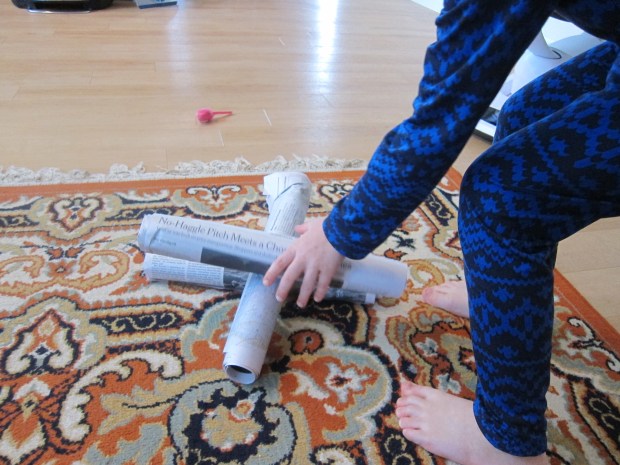
To make it concrete for him, we rolled up paper logs for a campfire.

discovering fire (4)

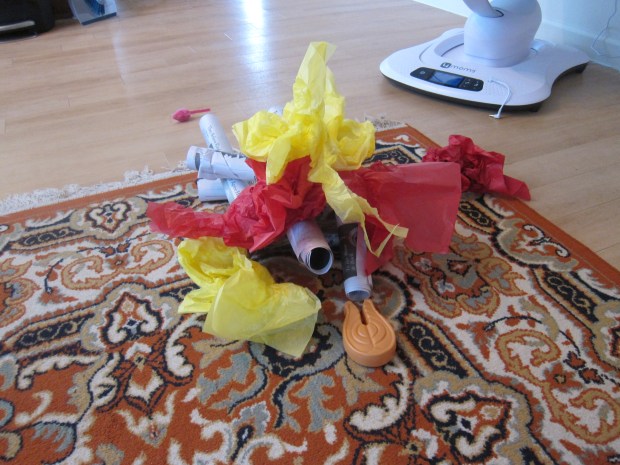
Next we scattered about tissue paper flames. I challenged him to discover the fire, and see how he would bring it back to his campsite! Here’s my little caveman at work:


He did it!

discovering fire (5)

We could also put tissue paper inside one of the newspaper tubes as a torch.

discovering fire (6)

Overall, this touched off a fantastic morning of learning and play – thanks for the unexpected delight, Raddish!

discovering fire (1)

Yummy Bones

yummy bones (6)

After a fantastic time with his first Kiwi Crate, Travis enjoyed playing doctor again to make… edible bones!

The recipe from his Kiwi Explore magazine was very loose, with no precise measurements. So let your surgeon work with the ingredients to his or her taste.

First, you’ll need a tube of breadstick dough. This can be hard to find pre-made and vegan, so I purchased a roll of pizza dough. If you have breadstick dough, check the heating and baking instructions on the package.

yummt bones (1)

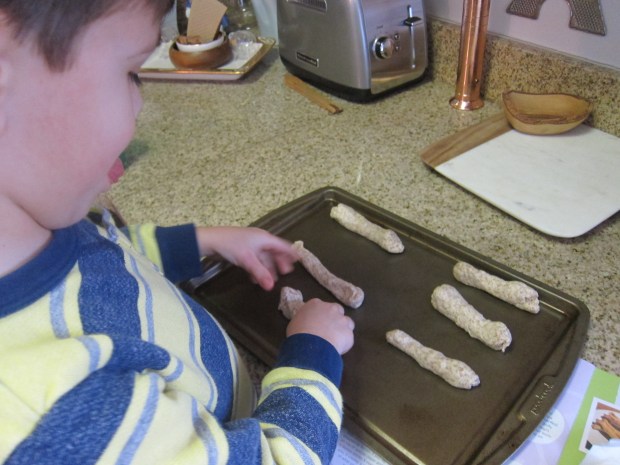
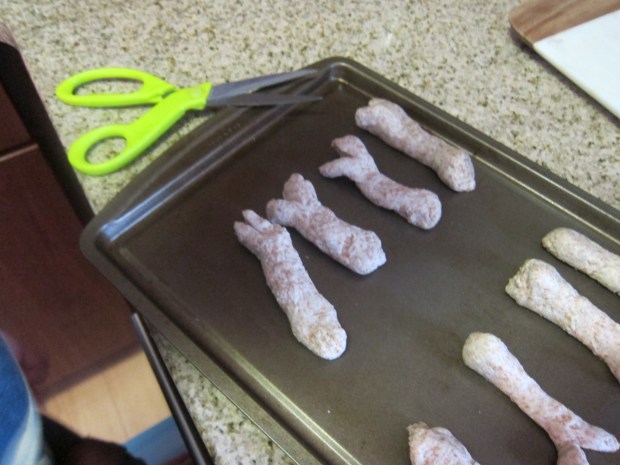
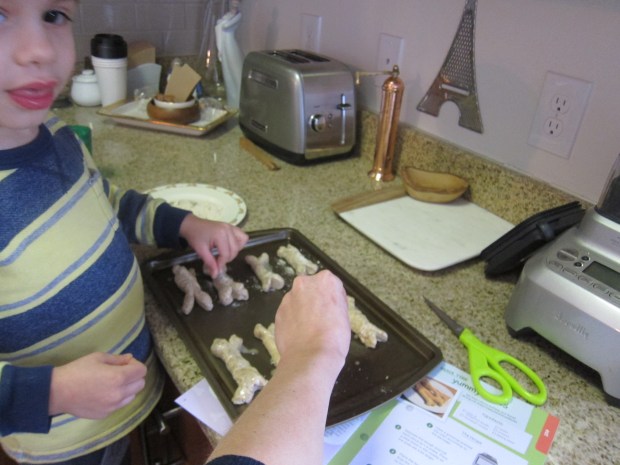
For our dough, we first rolled into “bones” (the same way that you roll clay or playdough into snakes).  Travis loved deciding what was a leg bone, an arm bone etc. Squeeze the middle, so the ends are slightly thicker.

yummy bones (2)

Use kitchen shears to snip the ends of each snake, dividing them outward into a bone shape. Travis was so proud to do this step, with a little grown-up help.

yummy bones (3)

Now brush with a little melted butter (we used Earth Balance) and sprinkle with a little vegan Parmesan (we used Go Veggie).

yummy bones (4)

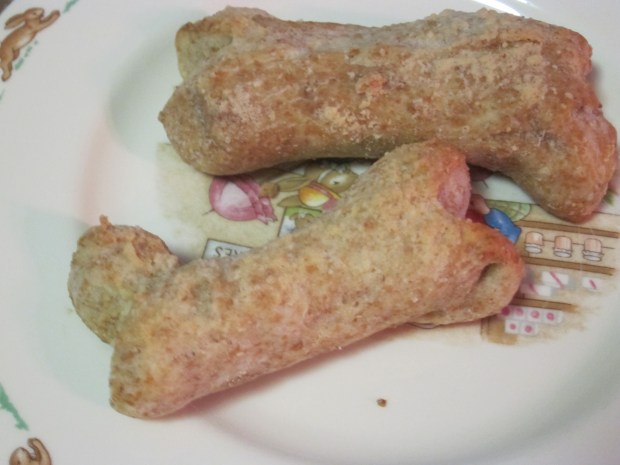
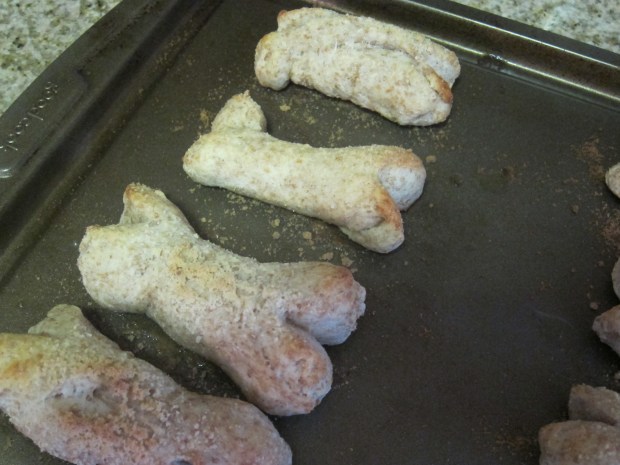
After 12 minutes at 425 degrees F, these bones were ready to eat!

yummy bones (5)

They’re great plain, or we discovered we also liked them dipped in marinara sauce.


My Body & Me Kiwi Crate

kiwi body (28)

Travis is officially a Koala Crate graduate! I loved that there was even a certificate in the first Kiwi Crate he received, moving him up to this kit intended for ages 5 to 8. We can’t wait to start blogging his journey.

kiwi body (1)

At four and a half, Travis is on the young side for Kiwi, but I knew he was ready – he’s been bored of his final few Koalas, either unimpressed or not challenged by the crate’s topics. His glee for this first Kiwi box spoke for itself!

We opened it up to find a kit all about the body and anatomy – big topics for my big boy – and the projects did not disappoint.
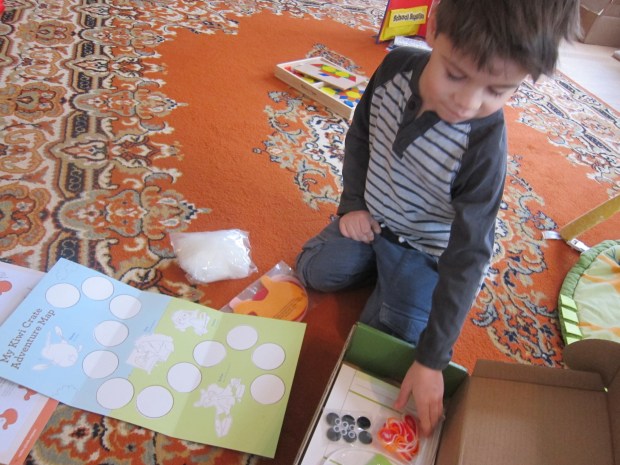
kiwi body (2)

He couldn’t wait to get started on the first activity: Make Plush Organs. “Is this what my brain looks like?” he asked, pulling out the pink felt shapes. I explained it was the right shape, yes, and he wanted to know what the lines represented which got us talking about the folds of the brain, the brain’s functions, and more. Exciting stuff! There was also a felt template for a heart and a stomach.

kiwi body (3)

To make the organs, we’d need to lace them together. The lacing holes are much smaller and closer together than in a Koala kit, but to my great delight, my boy not only was able to do it with hardly any assistance, but stuck with it through all three organs.

As we laced, we pretended he was a surgeon. “Is this really what surgeons do?” he asked, and I pointed out the very real similarities: patching up people’s organs, and stitching them up at the end.

When you have only about 4 or 5 holes left in each organ, take time to stuff in the provided roving. I asked Travis to divide our pile of roving into three roughly equal piles at the outset, so he’d know he had a enough. A good quick math lesson.

kiwi body (4)

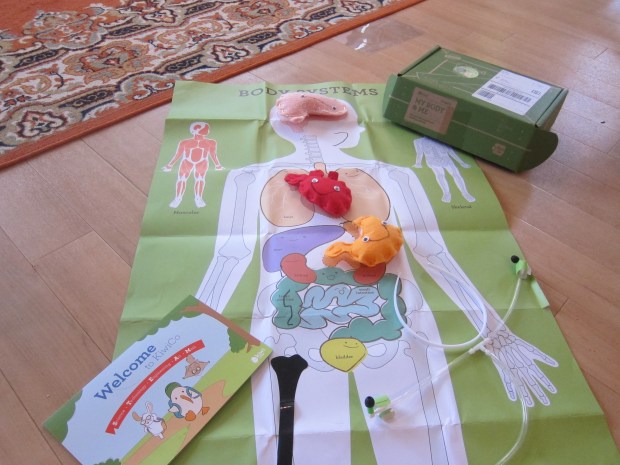
Now we unfolded the huge anatomy poster that came with the kit – whoa!

kiwi body (13)

There was an outlined space for each organ we’d made. Velcro dots adhered them to the poster, for easy removal at any time.
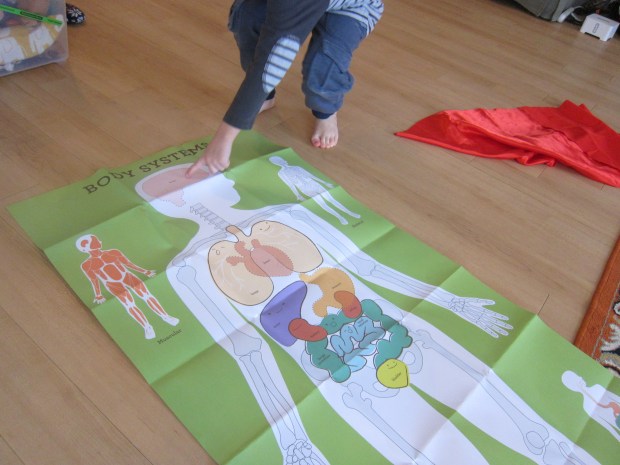
kiwi body (5)

We also added smiles and stick-on googly eyes.

kiwi body (6)

I let Travis decide where the smile and eyes should go on each, ceding the project to him more completely than I ever did with Koala.

kiwi body (12)

Now on to the next project: Create X-Rays.

The kit contained a clear sheet that could go over any bone on the anatomy poster, oto which your child sticks reusable bone stickers.

kiwi body (7)

None of these line up with the bones exactly, but any extra space can be filled in with a provided erasable marker. This of course leaves your child free to make “breaks” in the bones.

kiwi body (8)

To make the x-ray come through, place the sticker-covered sheet over specially-provided glow paper. Make sure the clear sheet goes on the rough side of the paper. Now place it in a sunny spot or directly under a lamp with the bones on top. Within 5 minutes, you’ll have a faint x-ray that shows up in a dark room.
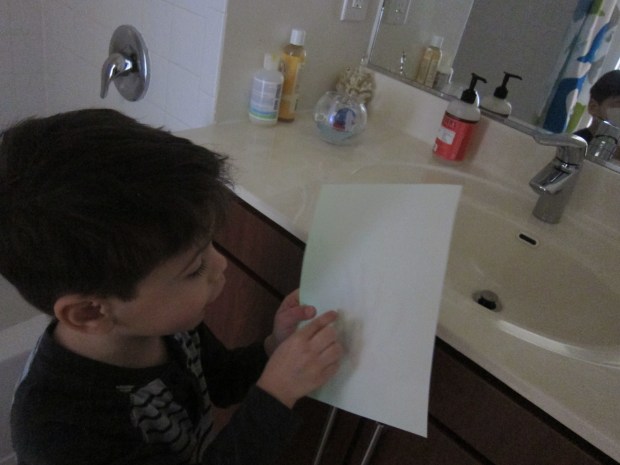
kiwi body (10)

Travis was thrilled, setting up multiple x-rays and proudly giving his doctor’s diagnosis to each.

An indication that this kit really is for bigger kids: there were many tiny metatarsal stickers for doing an x-ray of the hand, but Travis was undaunted, and needed just a bit of mommy help.

kiwi body (9)

We had fun designing breaks, as well as using the clear sheet over other organs on our anatomy poster for tracing. And of course your child can draw any picture they like on the sheet, which erases in a pinch.
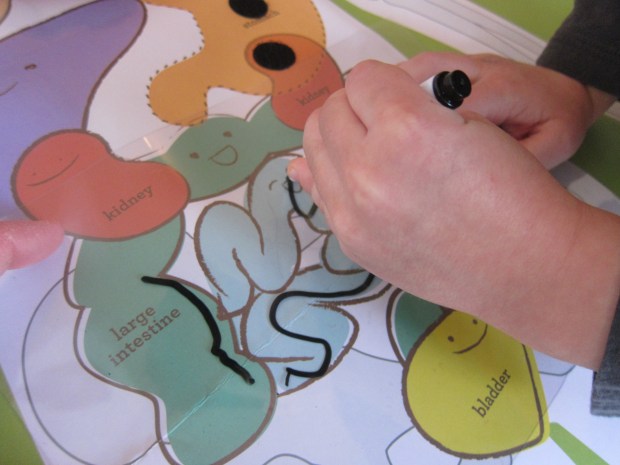
kiwi body (11)

Finally, we experimented with other items on the sheet. Note: this is just like making sun prints, but much faster; I’m quite curious to know what is in the special glow paper!  We used buttons, a key, and toys for neat shadows.

kiwi body (23)

Finally it was time to Build a Stethoscope:

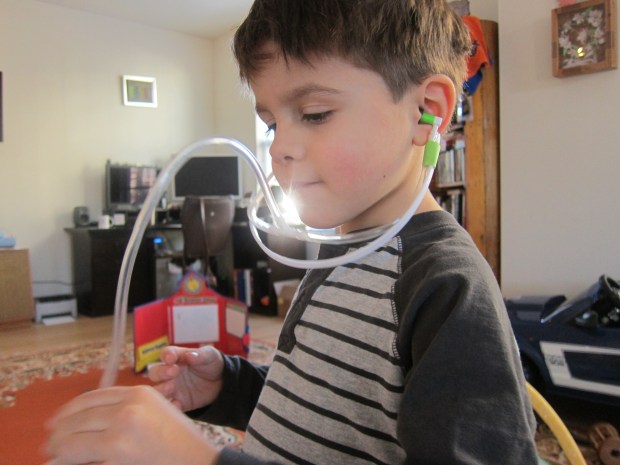
This project involved a lot of fine fingerwork, using three plastic tubes (two short, one long), T and L connectors (I had him look at these and tell me why they were named thus!), a funnel, and soft earbuds.

kiwi body (15)

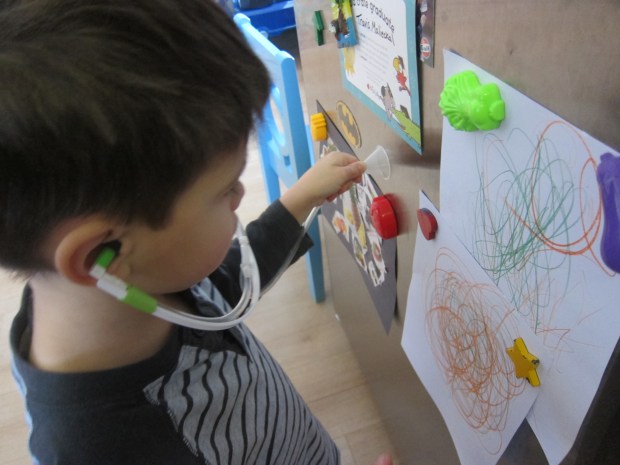
I helped Travis push the tubes onto the connectors in the proper order, then we slipped on the ear buds.

kiwi body (14)

Now it was time to check our heart beats!

kiwi body (16)

Travis looked so happy when he could hear his own.
kiwi body (17)

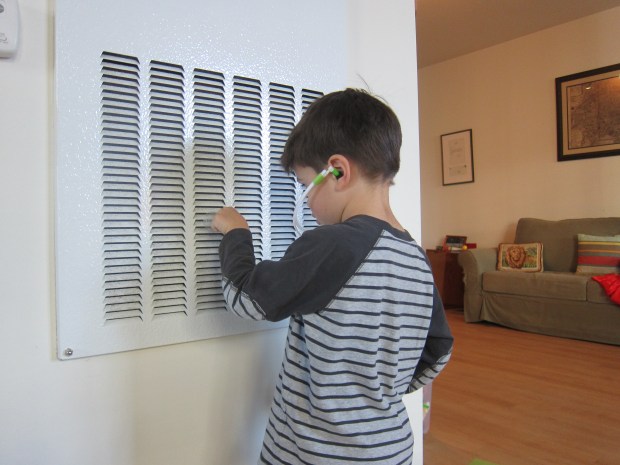
Then we tried it out in funny places around the apartment like the air vent…
kiwi body (18)

…and the fridge.

kiwi body (19)

Travis was frustrated when he couldn’t really hear my heartbeat, but he did love giving mock check ups. Kids will love that they can dry-ease the exam card after each “patient.” You can also get silly and use the stethoscope to listen to a tummy after a snack, and catch any stomach grumbles.

Koala came with an Imagine magazine, and now with Kiwi we have Explore magazine. It was fun to have a whole new format to check out together, with new characters in the stories.

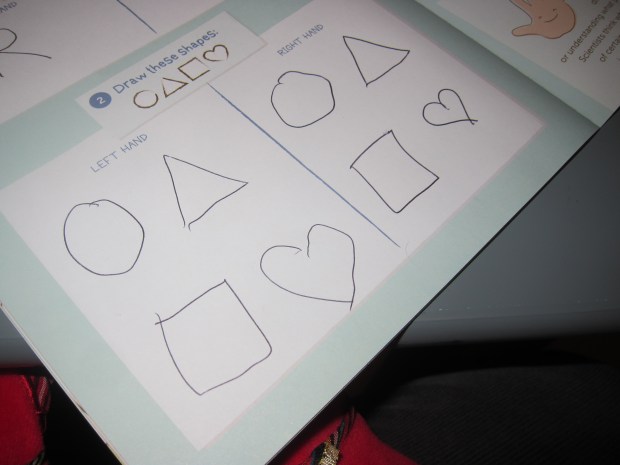
We read the magazine together, and I helped Travis with its explanation of handedness. I challenged Travis to write and draw with both hands.
kiwi body (25)

He was a bit frustrated, so I showed him my own left versus right handwriting in the booklet, and he practiced on a tablet.

kiwi body (26)

Turns out he has a dominant eye, too, which the booklet explains is really a thing!

Overall, we loved this kit. We’ll be checking out the two suggested reading books: My Amazing Body by Ruth Martin and Parts by Ted Arnold. Can’t wait for the next crate to arrive!