Sky Colors

Sky Colors (4)

Travis’s latest issue of Highlights magazine included an interesting article about why the sky appears blue even though sunlight contains all colors. (Spoiler: nitrogen and oxygen scatter blue light more so than the other colors). We then played with this quick way to visualize what’s going on right here at home!

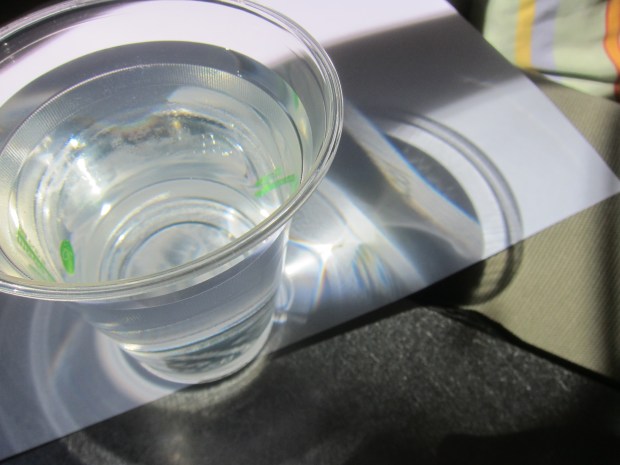
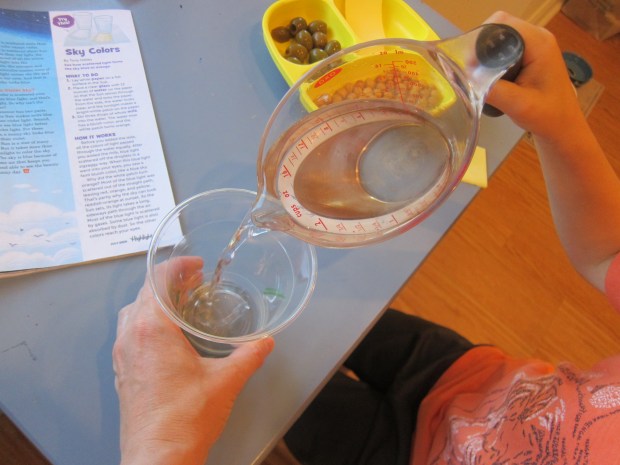
Fill a clear plastic cup with 12 ounces water.

Sky Colors (1)

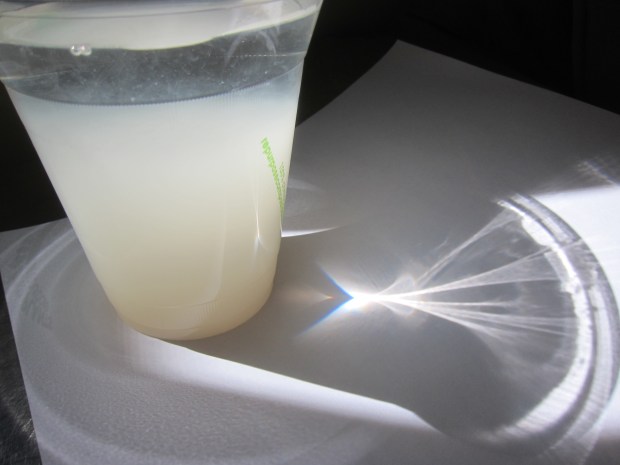
Place the cup on a sheet of white paper in direct sunlight. We immediately noticed that a bright spot of white light (a.k.a. all the colors) appears on the white paper.

Sky Colors (2)

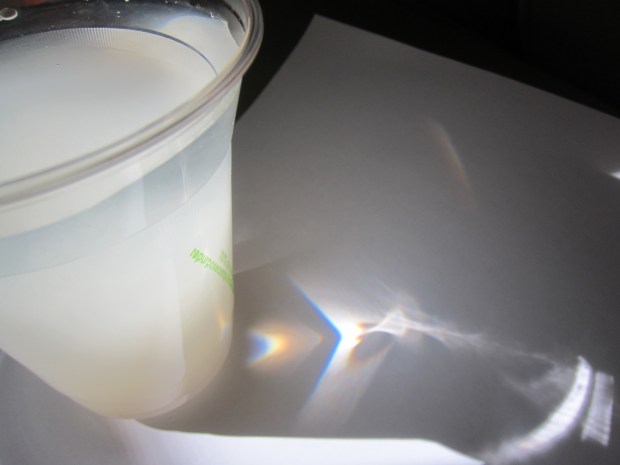
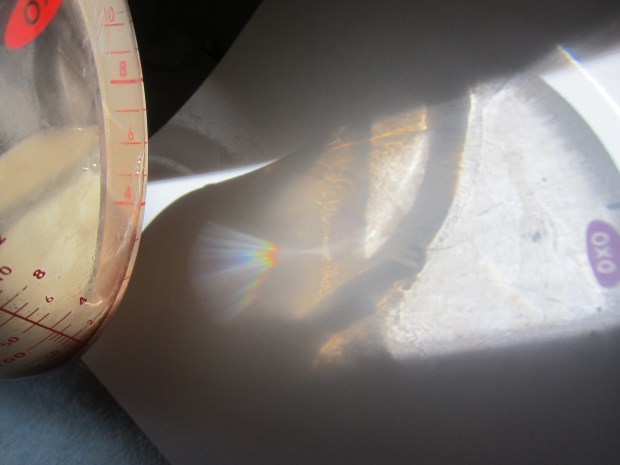
Now we added three quick pours of almond milk to the cup. This makes the water a little blue-ish, because now blue is scattered more than the other colors just as in the air. The color on the paper, on the other hand, changes to orange, since this is opposite from blue on the color wheel.

Sky Colors (3)

I explained to Travis that this is a lot like what we notice at sunrise and sunset, when reds and oranges are allowed to come through.

Even though we could see the blue tint/orange paper a little, it wasn’t terribly pronounced. We’re wondering if perhaps this trick works better with dairy milk? If you use cow’s milk, please share your findings in the comments!

Sky Colors (5)


Glow-Bee

Glow-Bee (5)

Next time your kids want to toss a disc back and forth, don’t just play Frisbee; play Glow-bee. All you need are a few glow-in-the-dark sticks to take a regular game up a notch.

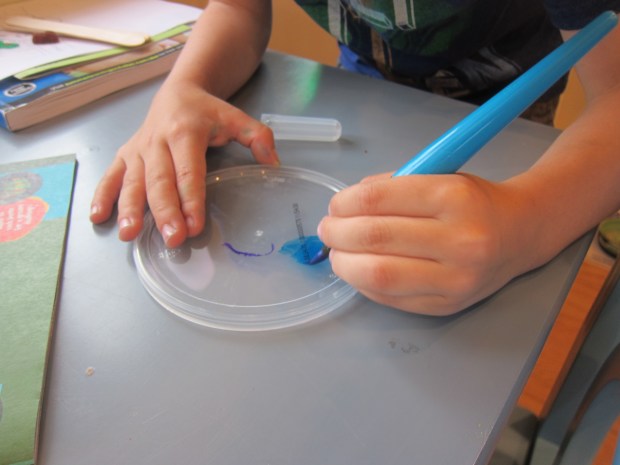
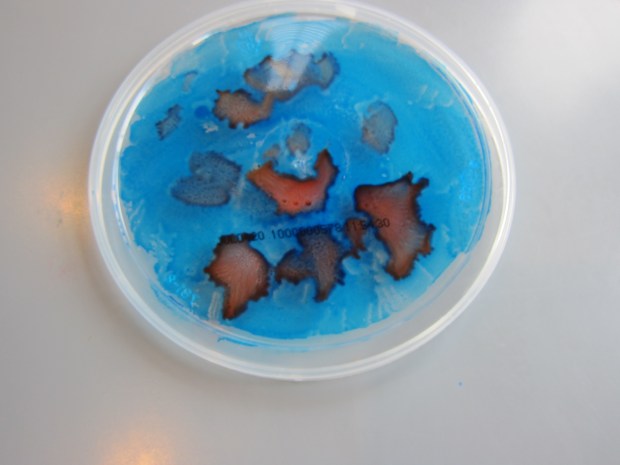
First, Travis used paint markers to decorate a clear plastic lid. We used one from an empty yogurt container, although a larger lid might have been better.

Glow-Bee (1)

Let the paint dry completely.

Glow-Bee (2)

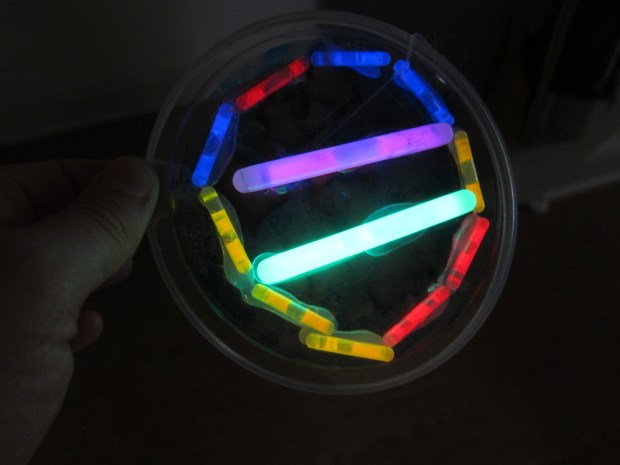
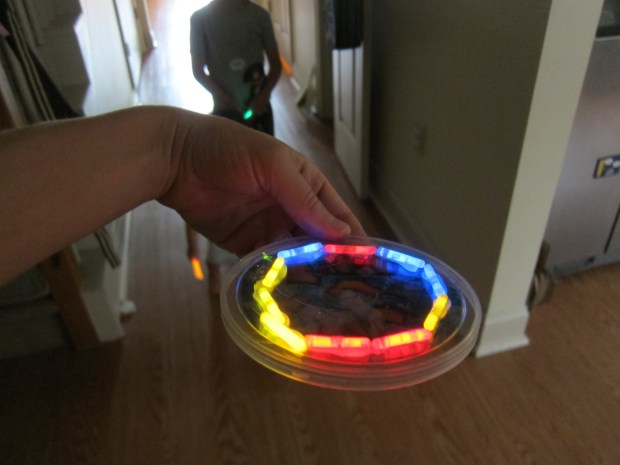
Wait for it to get dark, then add glow sticks! Snap them just before playing, and use hot glue to adhere to the decorated lid.

Glow-Bee (4)

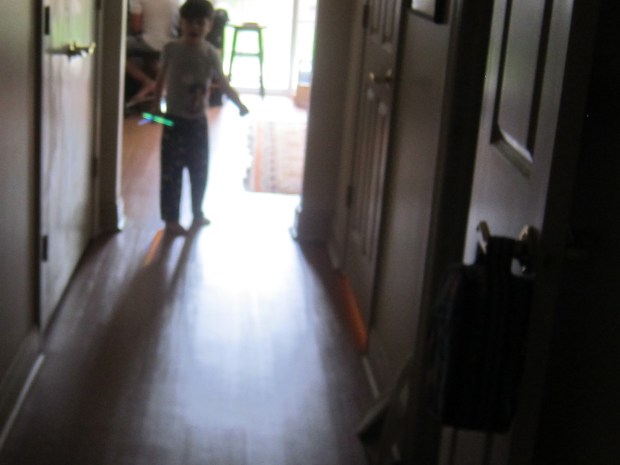
This was so fun to toss, even though it wasn’t pitch black.

Glow-Bee (6)

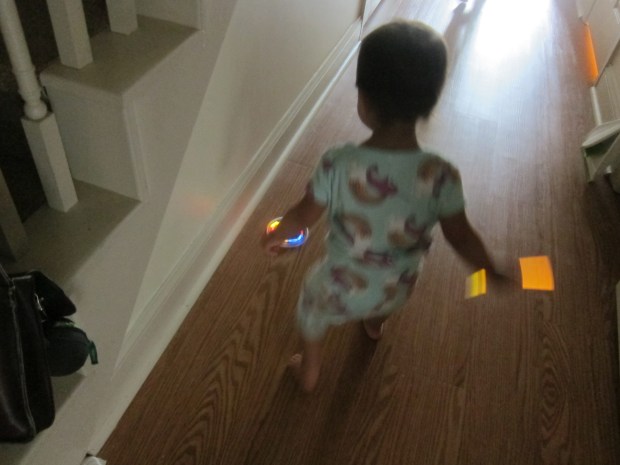
The streaks of light still made it look like a little comet shooting through the halls.

Glow-Bee (3)

A fun way tire ’em out with a little exercise, right before bed.

Cartography Kiwi Crate


Kiwi Maps alt

Kiwi Co terms this their Treasure Hunt crate, based around a treasure chest and search for pirate booty. The projects are an excellent jumping off point to teach kids all about the science of cartography, a.k.a. map making. Thanks to the treasure chest and gold pieces, this one is sure to appeal to kids of pretty much any age!
Kiwi Maps (4)

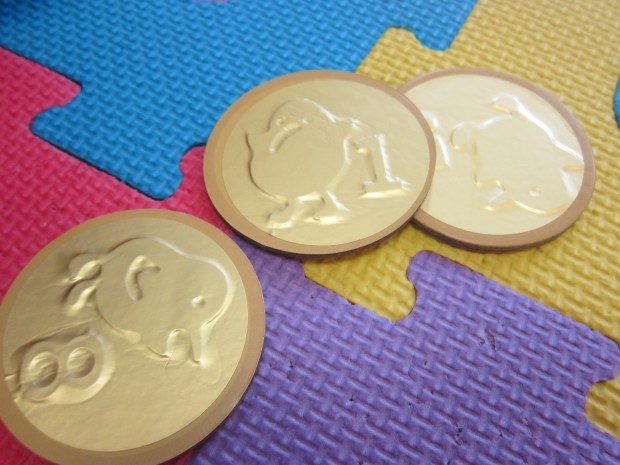
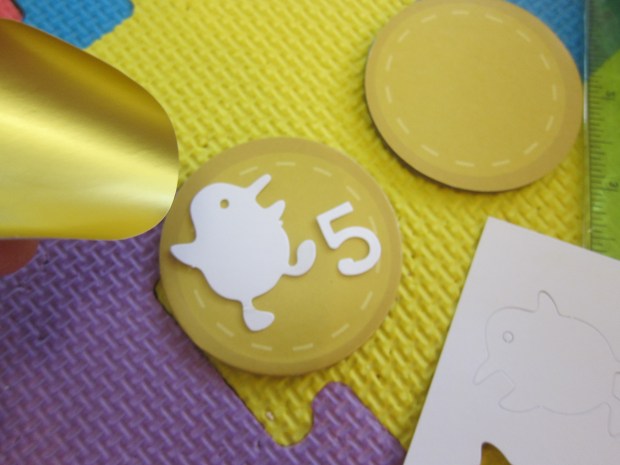
First up was making the treasure, Embossed Coins. Travis pondered very seriously how best to design each of the 3 provided gold coins, popping out templates of Steve the Kiwi and numbers.
Kiwi Maps (1)

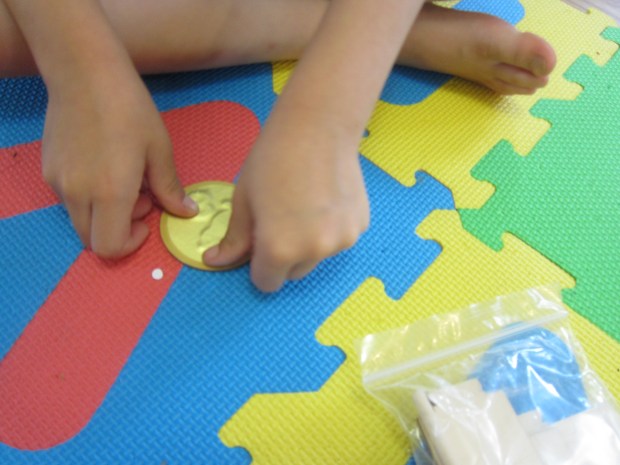
He didn’t quite understand how these could become coins until we covered his design with a gold sticker. Press down and – voila! – the design underneath appears!
Kiwi Maps (2)

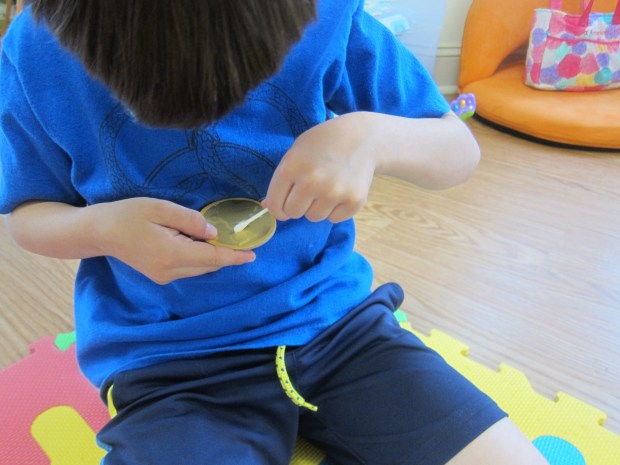
This had definite wow factor, even more so once running over the design with a q-tip for better embossing.
Kiwi Maps (3)

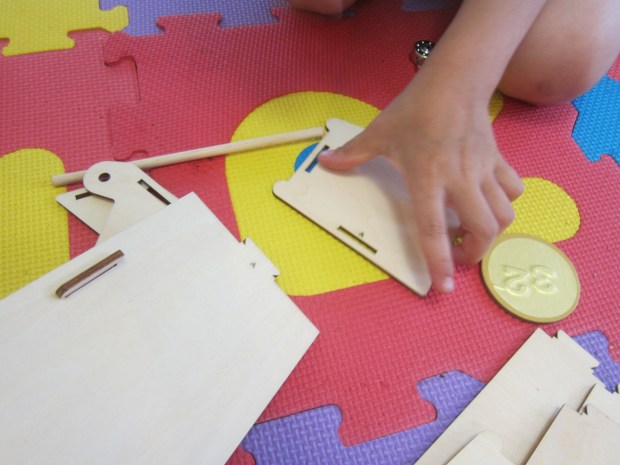
Next, he traded coin minting for carpentry, and put together the Treasure Chest. He was a bit distracted looking ahead (a key! a lock!) but I guided his attention back to building the chest first. This involved slotting together pieces for the base and lid, and lining up letters to make sure each piece was in the right slot. I appreciated how intuitive Kiwi Co made this step!
Kiwi Maps (5)

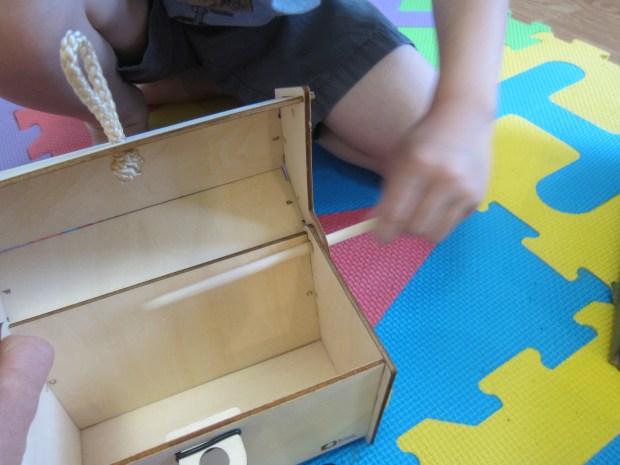
A wooden dowel is then inserted to hold the lid to the base.
Kiwi Maps (7)

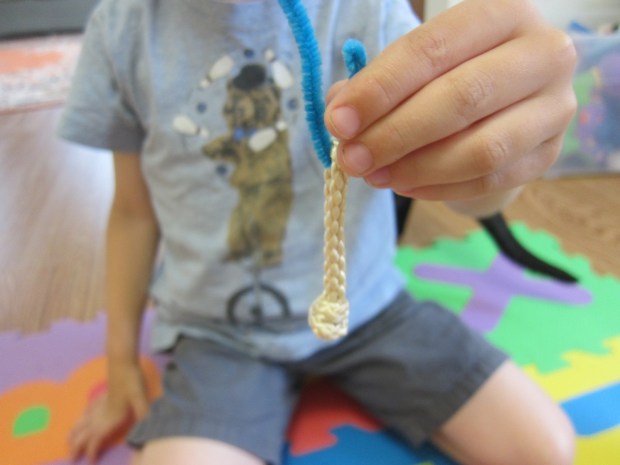
To add a swashbuckling touch, use a pipe cleaner to thread the provided rope through the chest’s latch. Add the silver lock. Travis loved practicing with the key over and over!
Kiwi Maps (6)

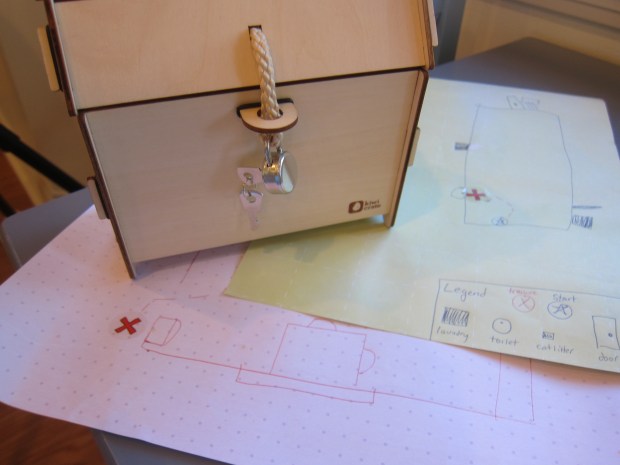
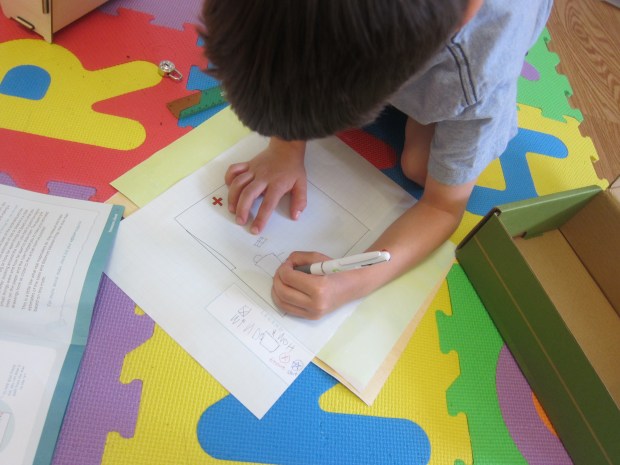
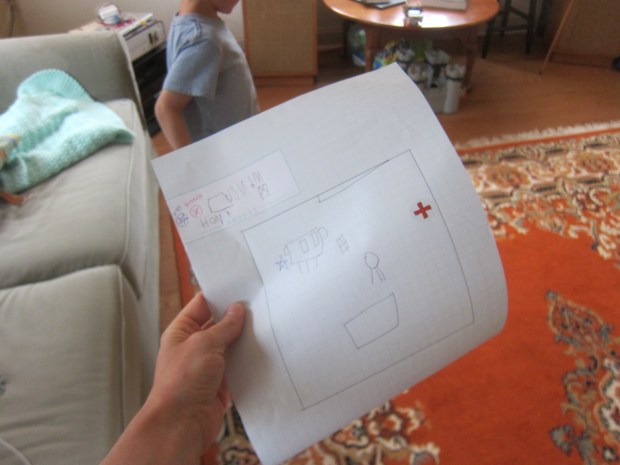
We securely locked away our gold coins and it was time to Make a Treasure Map. This activity was absolutely fantastic for getting Travis to think about how objects look from above. (I had him imagine he was a bird; in what shape would the bird perceive our couch, our coffee table, etc.).
Kiwi Maps (9)

There was a marked difference between his first effort (mapping our living room)…
Kiwi Maps (10)

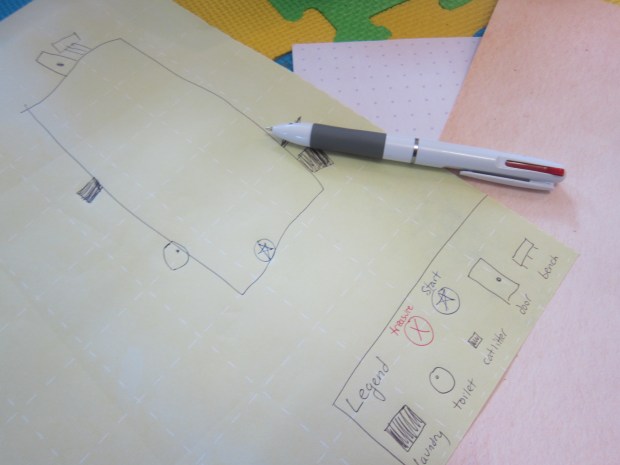
…and his second attempt (mapping the hallway).
Kiwi Maps (11)

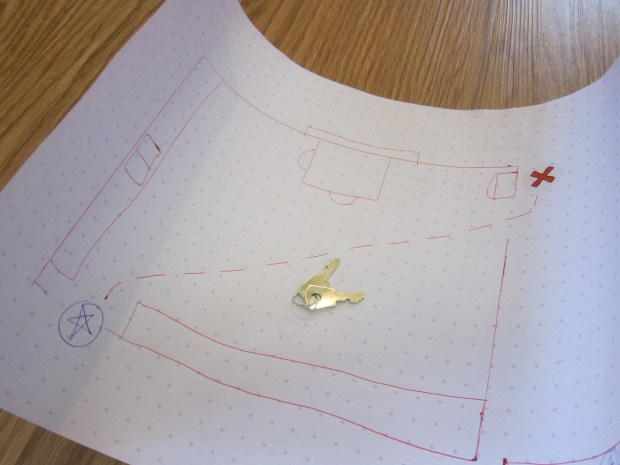
The provided pen is one of those fun ones with 3 colors of ink. We added a red X on each map for the treasure and a blue star for the start. He loved then hiding the treasure chest and sending me on a hunt.
Kiwi Maps (12)

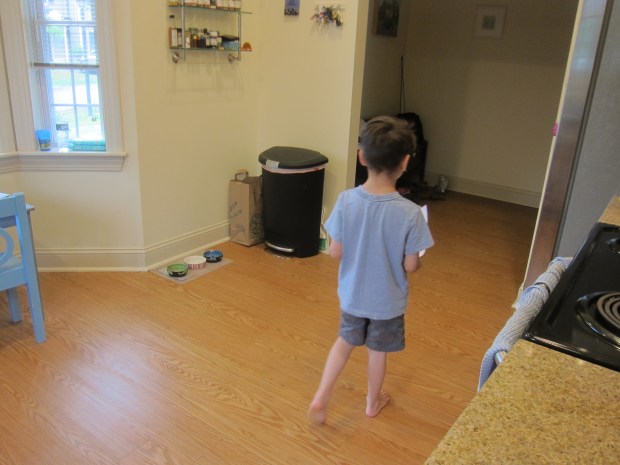
Then we flipped roles; I made a map of the kitchen and he had to puzzle it through.
Kiwi Maps (13)

The booklet had a great explanation for kids about how they’re using math in this activity, everything from transferring 3D objects (solids) into 2D pictures, to the ideas of estimation and measurements.

As a bonus, we made Silver Pirate Coins for extra booty. Cut circles from thin cardboard (like a cereal box), then add other pieces of cut cardboard or patterns in glue on top.
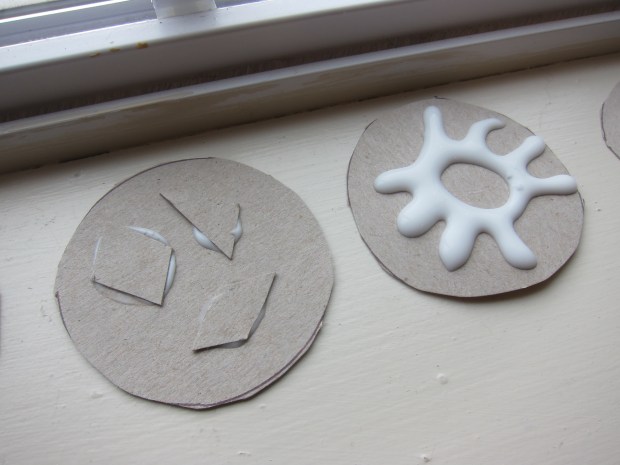
Silver Pirate Coins (4)

Let dry, then cover with foil and use a q-tip again to make your design stand out. We decided this worked way better on the cut cardboard version rather than the glue version.
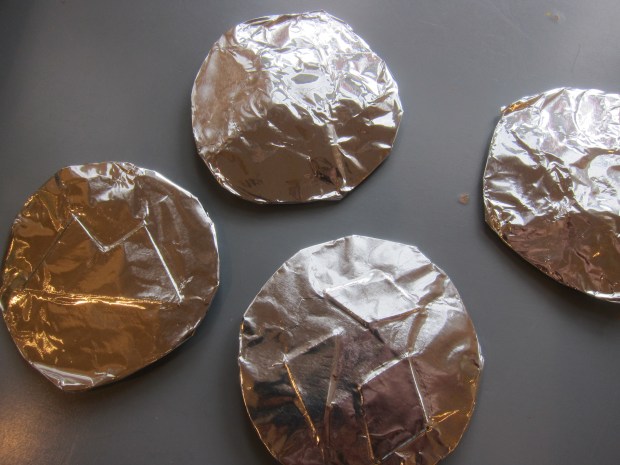
Silver Pirate Coins (5)

As always, Explore magazine had loads more information and activities to try, including another map to draw according to a provided legend.

For some fun reading to compliment this crate, check out Mapping & Navigation by Cynthia Light Brown or Small World: Maps and Mapmaking by Karen Romano Young.
Smokey Bear

Smokey Bear (9)

Heading in to summer, it was fun and informative to lead Travis through a lesson on Smokey Bear and outdoor fire safety today. This little lesson plan was the kick-off to Travis’s “Edible Elements” kit from Raddish Kids; we’ll soon be making recipes that rely on elemental power (think fire and ice!) during preparation.

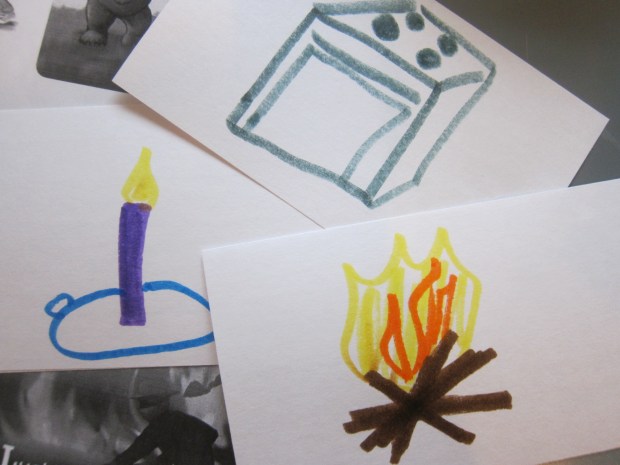
But first up: the fire safety lesson. I provided Travis with pictures on index cards as we talked about safe ways to use fire, both indoors and out (the oven, a campfire). Older kids can come up with a list without this parental prompt.

Smokey Bear (1)

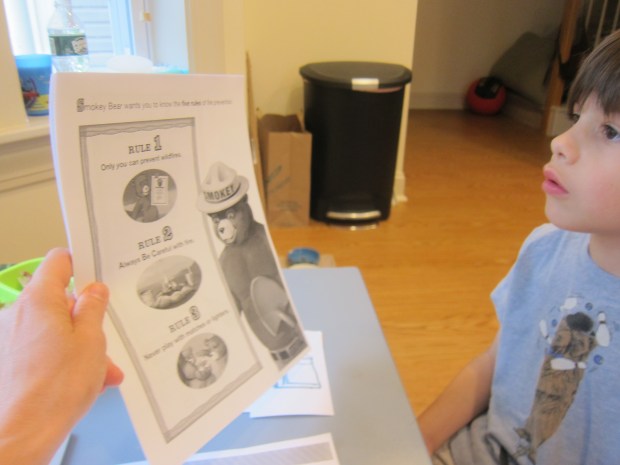
We then watched a video from Smokey Bear, and I read facts about Smokey’s origins. Turns out he was based on a real rescued cub!

Smokey Bear (4)

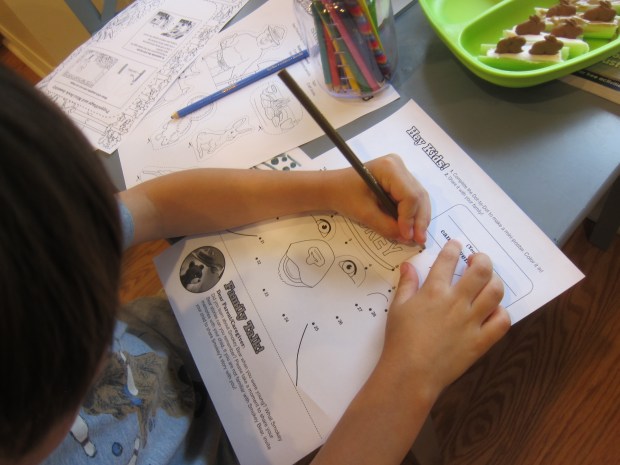
Travis enjoyed activities including a dot-to-dot…

Smokey Bear (6)

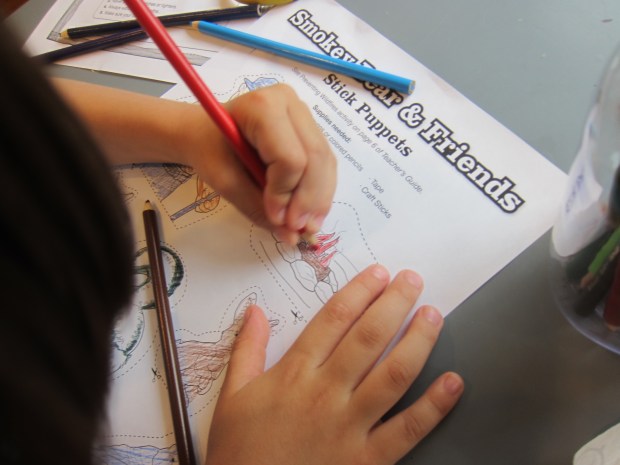
…and forest puppets to color.

Smokey Bear (8)

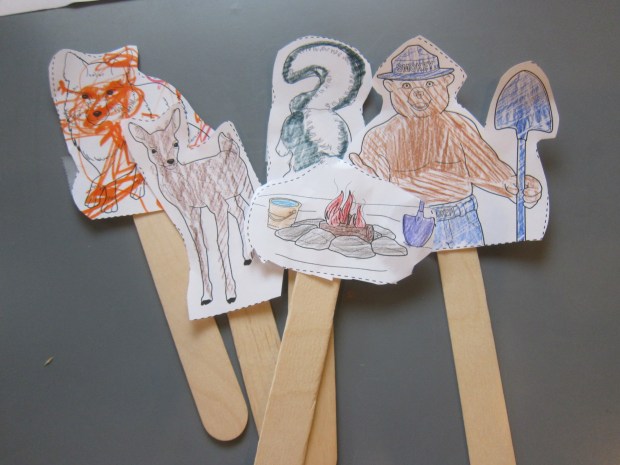
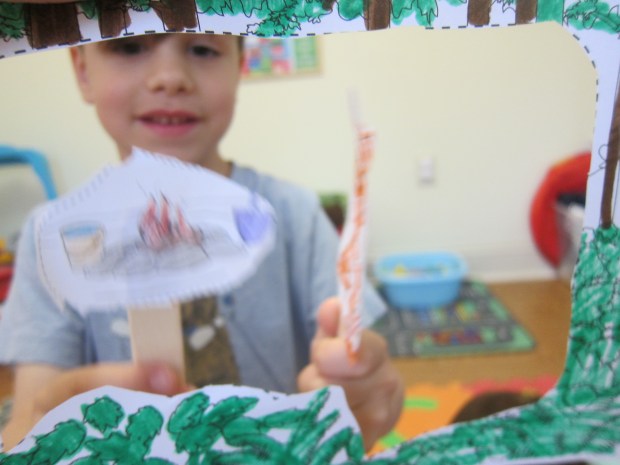
Then it was time for a puppet show! Oh no, Travis’s sneaky fox stole the water to douse the campfire. He then decided the skunk could spray it out! I loved that these puppets fired up (ha) the imagination and the learning.

Smokey Bear (10)

Big kids have so many options for extension here, whether creating their own PSA about fire safety on poster board or video; learning about the fire alert system; writing a letter to Smokey; or even learning about a historical fire like the Chicago Fire of 1871.

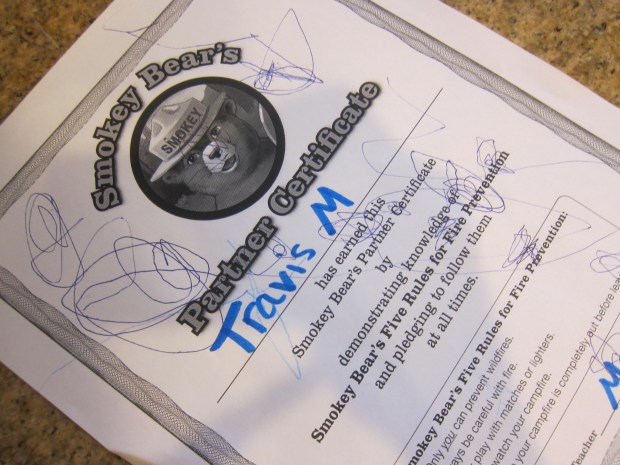
But for my kindergartner, we kept things light and not scary… and he earned a certificate to boot!

Smokey Bear (11)

Ice-Dyed Pillowcases

Ice Pillow (6)

I was trying to channel old-school camp with this craft today, although it was sort of a fail for Travis. But at least it got us outside in the morning sunshine in these weeks before real camps safely reopen!

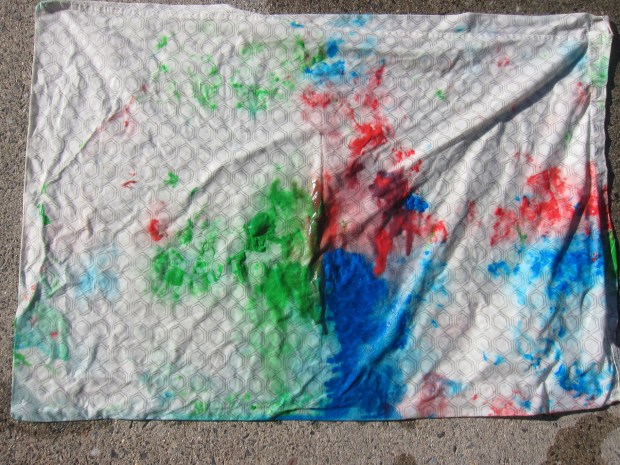
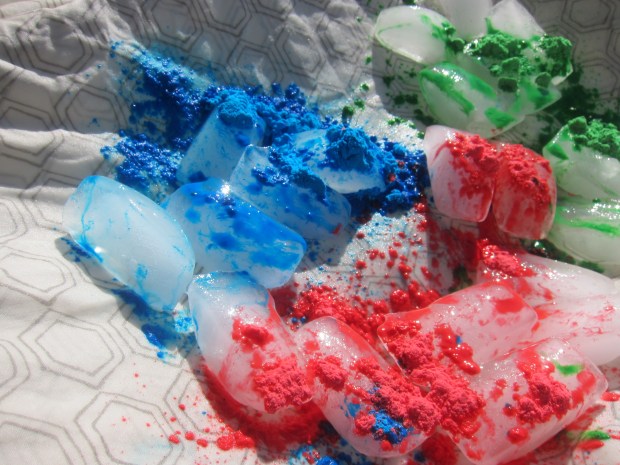
The idea was to dye pillow cases with powdered paint and melting ice, putting the heat of the sun to work for us.

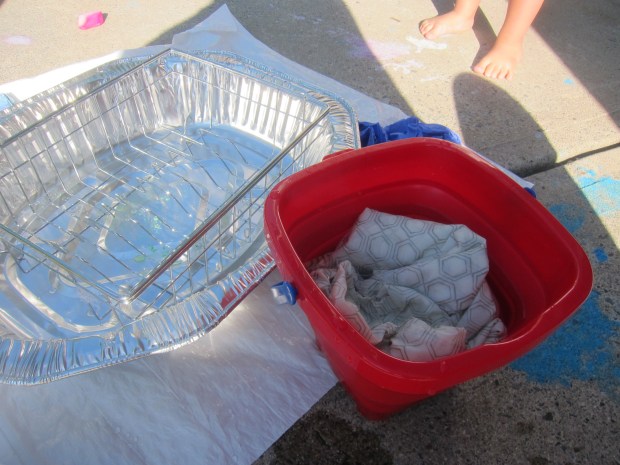
I placed a disposable aluminum tray on the patio (with a garbage bag underneath to catch any paint drips), and then placed a rack in the tray.

Ice Pillow (1)

Wet your pillowcase thoroughly, then ring out and place on the rack.

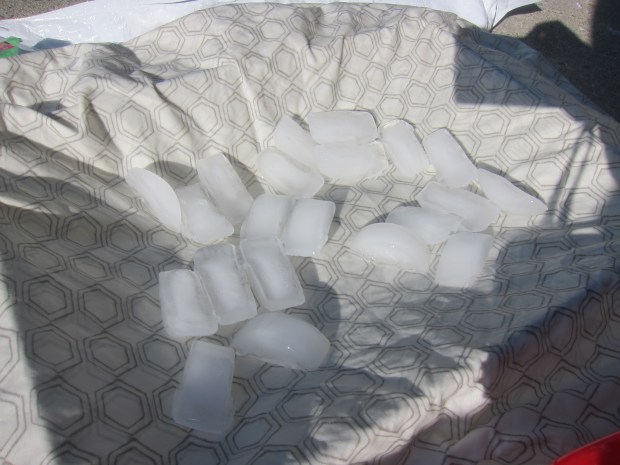
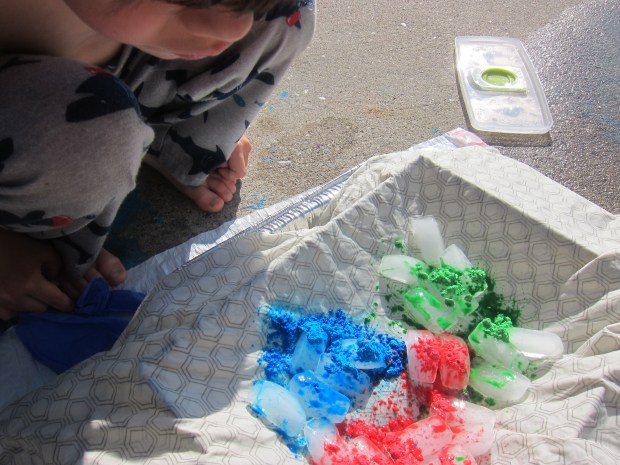
Cover the pillowcase with ice. We put on latex gloves (which the kids always think are hilarious to wear), and sprinkled the ice liberally with the powdered paint.

Ice Pillow (2)

As the ice melts, the color starts to run into the fabric. Travis thought this was neat to watch for about, oh, one minute.

Ice Pillow (3)

Then we got a bit impatient and folded the pillowcase over the ice so that the color transferred to other parts of the fabric, instead of waiting to dye it section by section.

I saw pictures of this craft where it looked more like deliberate designs had been made (i.e. geometric shapes), but I have no idea how this is possible. Perhaps by folding the pillowcase into a square or triangle, and letting color seep through all the layers? If you try, let us know how it turns out in the comments!

Ice Pillow (4)

Note: Because I didn’t want the paint to stay on the pillowcase, we used washable powdered paint. Be sure to use a fabric paint or permanent powder, if you want your design to last beyond the “camp” day.

Ice Pillow (5)

Staying Cool

Staying Cool (1)

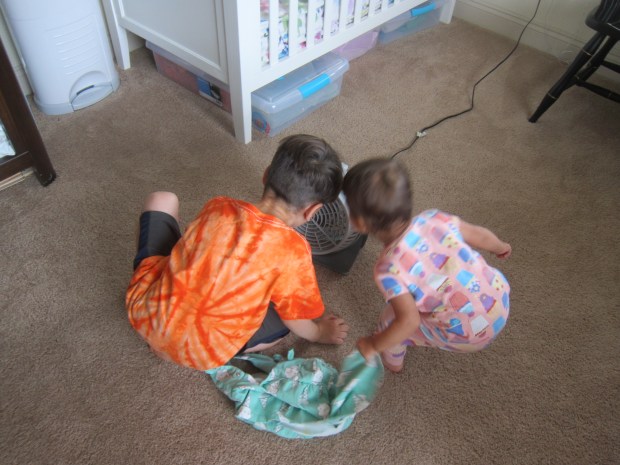
We’re currently in the midst of a heat wave, and are looking for any way to beat the heat. To turn possible-misery into a teachable moment, today I helped Travis explore ways to keep cool, all parked right in front of a nice cool fan!

For this simple STEM experiment, we started out simply by turning on the fan and moving either closer to it or further away. I asked Travis which was cooler, and he rightly noted that being close was best.

Staying Cool (2)

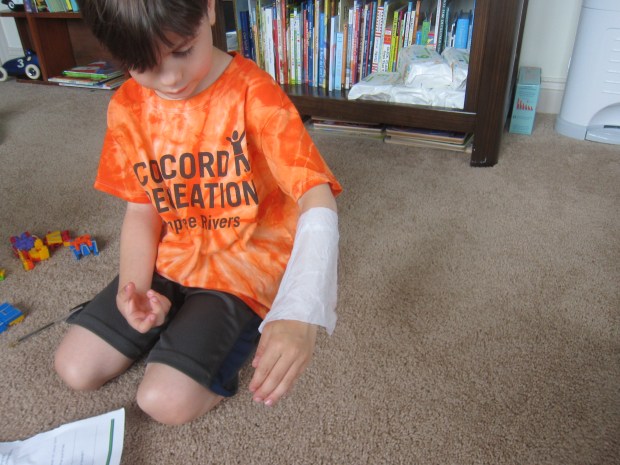
Then we draped a wet paper towel over one of his arms. Now he alternated the wet arm and the dry arm in front of the fan. Which felt cooler? The wet arm!

Staying Cool (3)

So now we had some scientifically-backed ideas to cool down on a hot day: wind and water. We brainstormed other things that might keep us cool, too, like shade.

For a minute there, we beat the heat!

Just Dance

Just Dance (6)

We had some great musical fun today, starting with this prompt: what mood was Travis in, and what music food that mood. In other words, what was his current theme song? Though I might have hoped the answer was something joyful and bouncy (I’m always up for rocking out to Can’t Stop the Feeling) I was not at all surprised that Travis picked Duel of the Fates from Star Wars. Hey, it fit his mood!

Just Dance (3)

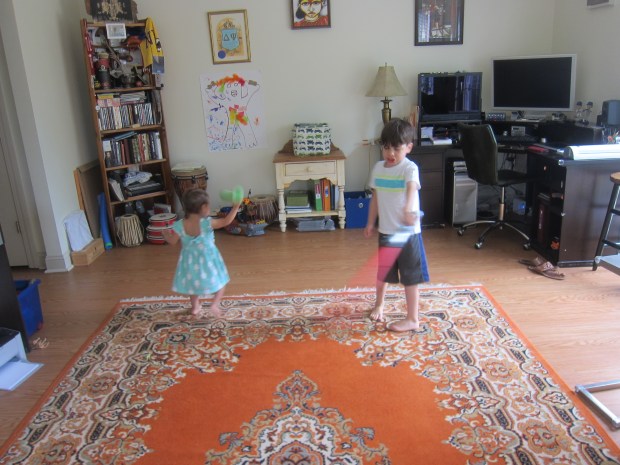
So we got the music going and I challenged Travis to come up with two dance moves, one using just his hands, and one using just his feet. We soon had a little arm roll followed by a kick for 4 beats.

I encouraged him to think of the next steps. We talked about the term “choreography”, and soon had a routine involving twirls, waving feather boas in the air… and then improvising!

As the final touch, we raided the dress-up bin. Costumes would be a must!

Just Dance (2)

From here, the “dance” turned more into acting out this movie scene, too. What followed was half-acting, half-interpretive dance, and little sister joined in.

Just Dance (4)

With light saber props, of course!

Just Dance (7)

There are so many ways to elaborate on this activity. Have your child pick a song as their “theme” of the moment… or write their own song! Vary the costumes each time, or add props. Make it more of a dance routine, or more of a play as you act out a story to music.

I would love to hear about your dance fun in the comments, so please share! Without any further ado, here is The Travis:

Water Wheel

Water Wheel (4)

This homemade water wheel is easy to make and works so well, arguably even better than the version that Travis put together from a recent Kiwi Crate.

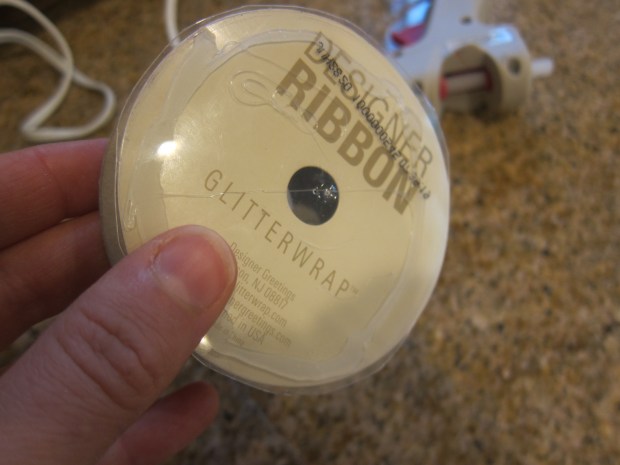
The set up was largely a grown-up job, as it involved hot glue and scissors. Trace an empty ribbon spool onto a plastic lid (such as from a non-dairy yogurt container). Cut out the plastic circle and hot glue onto the spool.

Water Wheel (1)

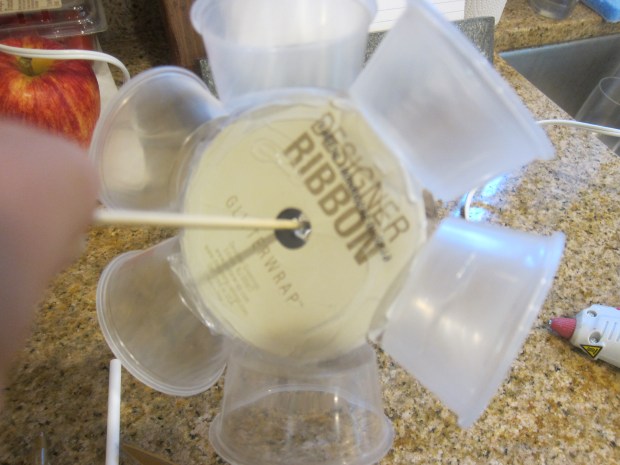
Pierce a hole through the center with a push pin.

Now use plastic condiment cups as the spokes of your water wheel; hot glue these around the spool as close together as possible. Insert a skewer through the hole you made with the push pin, then slip a straw over the skewer for comfort.

Water Wheel (2)

Time to spin!

Water Wheel (3)

We headed outside and used a recycled water bottle to pour water over the contraption. The water wheel worked so well, even though I had worried gaps between the condiment cups might mean poor performance.

We even later took it up to bath time as a tub toy! Want more water experiments? Check out some of our previous fun with water.

Summer Scavenger Hunts

Summer Scavenger (7)

Summer is here and school is out, but there’s still so much to learn on any excursion outdoors. To wit, we headed off on a nature hunt today with a three-part agenda for exploration.

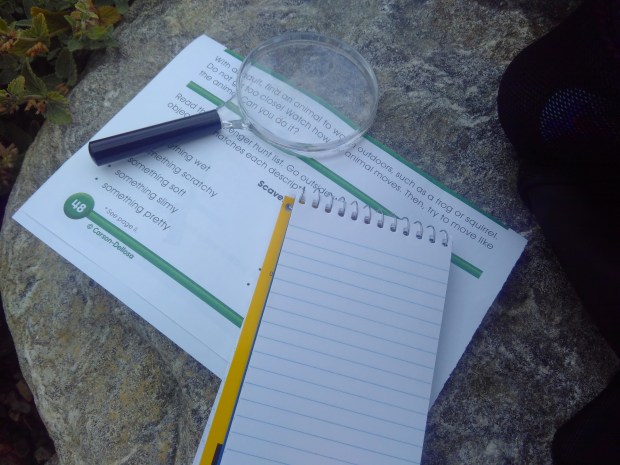
First, I simply announced that we were off to explore: What did Travis hope to find? After some initial thought, he settled on butterflies and bees. To make the hunt exciting, I gave both kids their own little notebook to draw in (though obviously little sister’s drawings would be more of a scribble), a pencil to take notes, and a magnifying glass. It was time to look and discover!

Summer Scavenger (2)

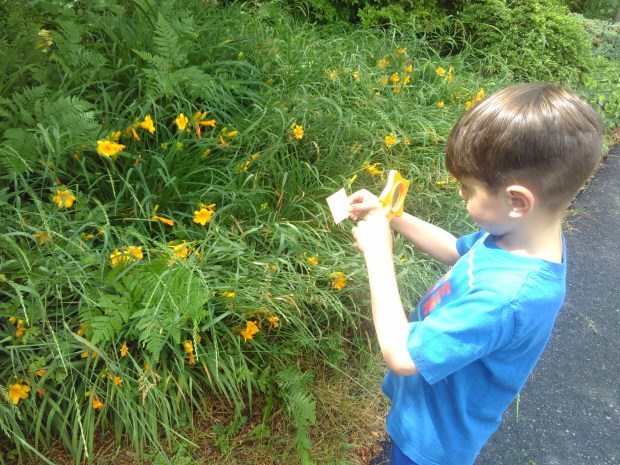
Travis was soon rewarded with a white butterfly, plus lots of bees buzzing among the flowers.

Summer Scavenger (3)

He loved pausing on a bench to draw a flower!

Summer Scavenger (4)

For the second part of the hunt, I gave his search a little more direction with a list of things to find. The categories and his answers were:

  • Something wet: a puddle on a rock
  • Something scratchy: a plant stem
  • Something soft: fern leaves
  • Something slimy: wet lichen on a tree
  • Something pretty: flowers
  • Something dry: tree bark
  • Something from a tree: a leaf on the ground
  • Something tall: a rock
  • Something hard: a tree trunk
  • Something blue: a blue jay

He enjoyed the challenge a lot, and pulled out the magnifying glass for most of the items he found.

Summer Scavenger (7)

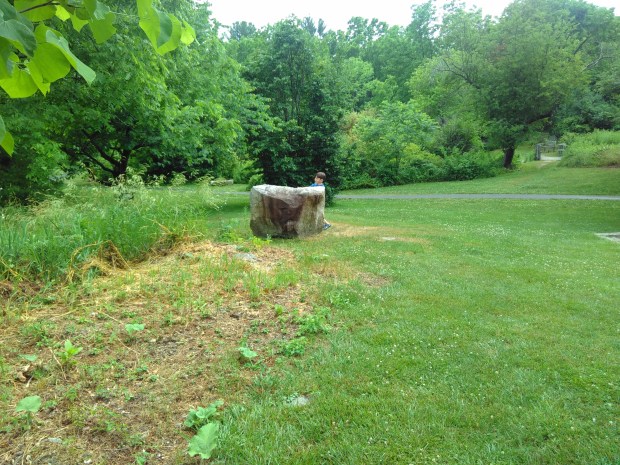
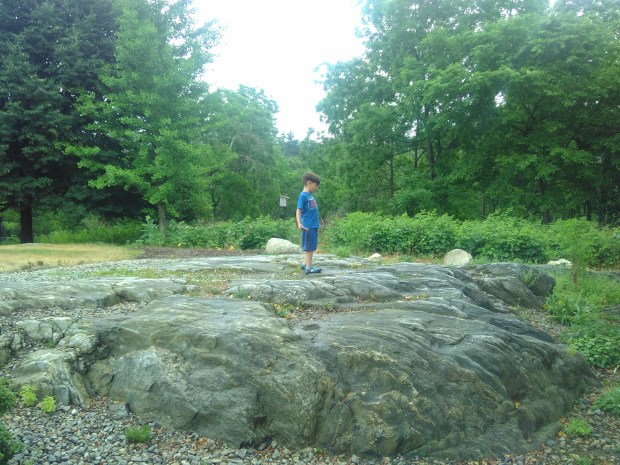
“I see something tall!” he shouted proudly, running to a big rock.

Summer Scavenger (11)

Oddly, the hardest to find was something slimy, though we thought a recent rain storm might have turned up lots of worms.

For the final part of the lesson, it was time for a rainbow hunt. I recommend bringing along paint chips (free at hardware stores) for this activity, and working your way through ROYGBIV. Travis very carefully compared his samples to the flowers and other items that he found, rejecting these flowers as not a true yellow for example.

Summer Scavenger (8)

He took it very seriously until each color was checked off the list!

Summer Scavenger (14)

How are you enjoying nature so far this summer? Please share in the comments!

Summer Scavenger (5)

Wind Direction

Wind Direction (2)

Here’s a quick STEM experiment to teach kids how to observe wind direction… with some bubble fun thrown in!

First Travis helped make a bubble solution. The recipe was for an enormous batch (6 cups of water!) and I knew we would never use that much. Instead, I decided to make one-third of the recipe, using the following:

  • 2 cups water
  • 1/4 cup corn syrup
  • 1/2 cup dish detergent

My proportions weren’t exact, but we ended up with great bubbles so I guess it worked! Combine the ingredients in a jar and shake to combine, then let the mixture settle for at least half an hour.

Then it was time to head outside with the bubbles and a compass. I taught Travis how to locate north. He proudly then pointed to east, south, and west. So how could we tell which way the wind was blowing?

Wind Direction (1)

Dip a wand into the bubble solution and see which way your bubbles go. Ours headed west, nice and lazily.

Wind Direction (3)

So if our bubbles were floating west, I asked Travis where the wind was coming from. “East!” he correctly answered.

Wind Direction (4)

This led to almost an hour of play on the patio, blowing bubbles, popping them against our screen door, and otherwise having a blast.

Wind Direction (5)

Which means this is the perfect STEM activity for a summer day.

Wind Direction (6)