Pasta Artist

Pasta Art (3)

Travis read about pasta artist Linda Miller Nicholson in his latest Highlights magazine, and we were so intrigued with the article that we went on to check out her Instagram. Talk about wow! We knew we couldn’t recreate anything close to her masterpieces, but thought it would be fun to try some pasta art of our own.

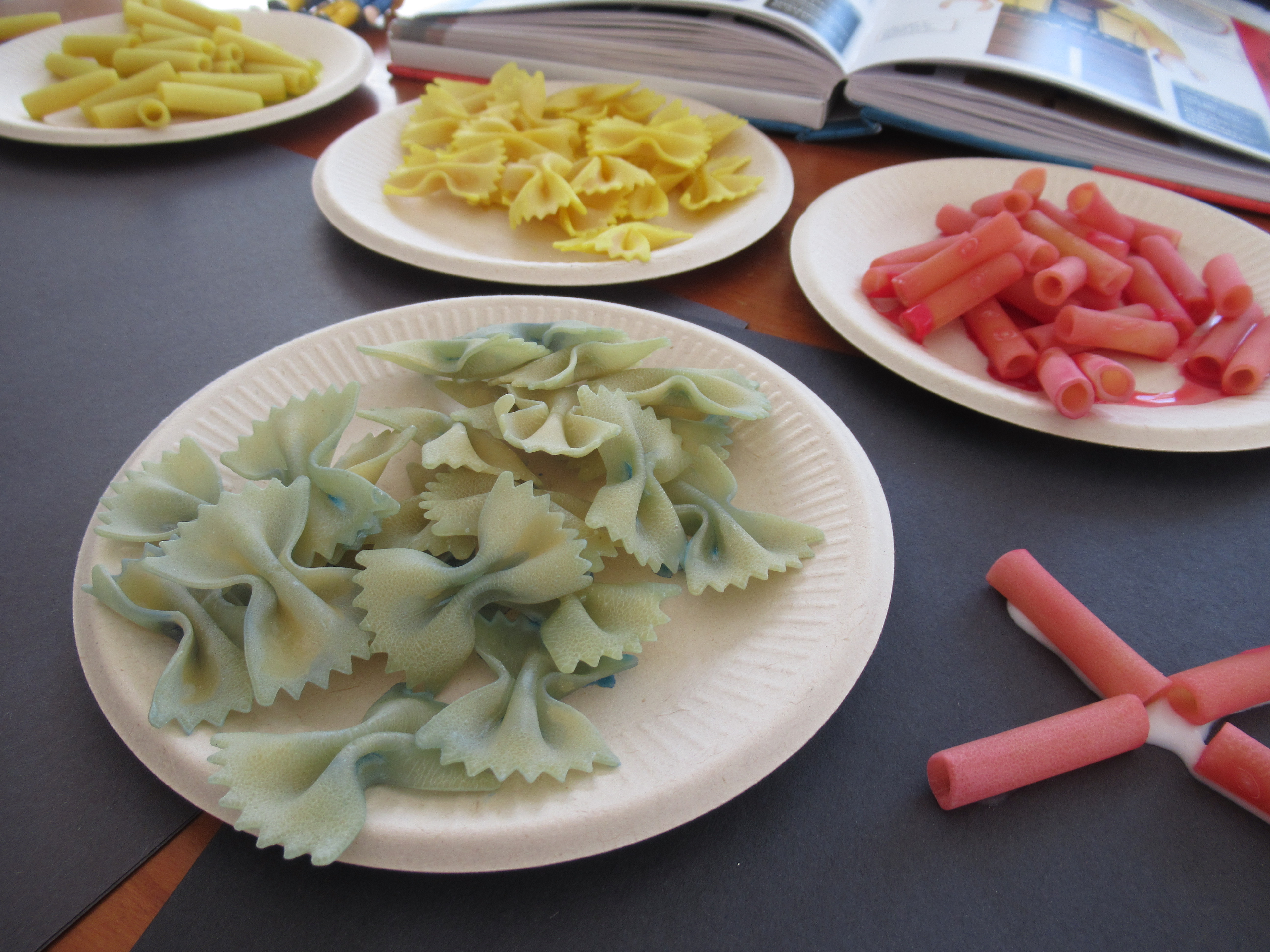
Nicholson uses plant-based dyes right in her pasta dough, but in a pinch, I placed a little bit of dry pasta in small zip-top bags, then added all-natural food coloring (think yellow from turmeric and red from beets) and a tablespoon of white vinegar to each bag. Seal and shake the bags to coat the pasta, then let dry on paper plates.

Pasta Art (1)

From here, you could color or paint directly on the pasta, or glue the various pieces down into pictures of other things. Travis predictably wanted to make Star Wars creations, so we tried our hand at pasta x-wing fighters and Darth Vader wielding a red ziti lightsaber.

Pasta Art (4)

If your kids try pasta art, we’d love to hear what they create in the comments!

Pasta Art (2)

Magic Inflating Balloons

Magic Inflating Balloon (5)

It turns out that helium isn’t the only gas that can inflate balloons. You’ll wow your kids with a bubbly explosion of baking soda and vinegar for this “magically” inflating version.

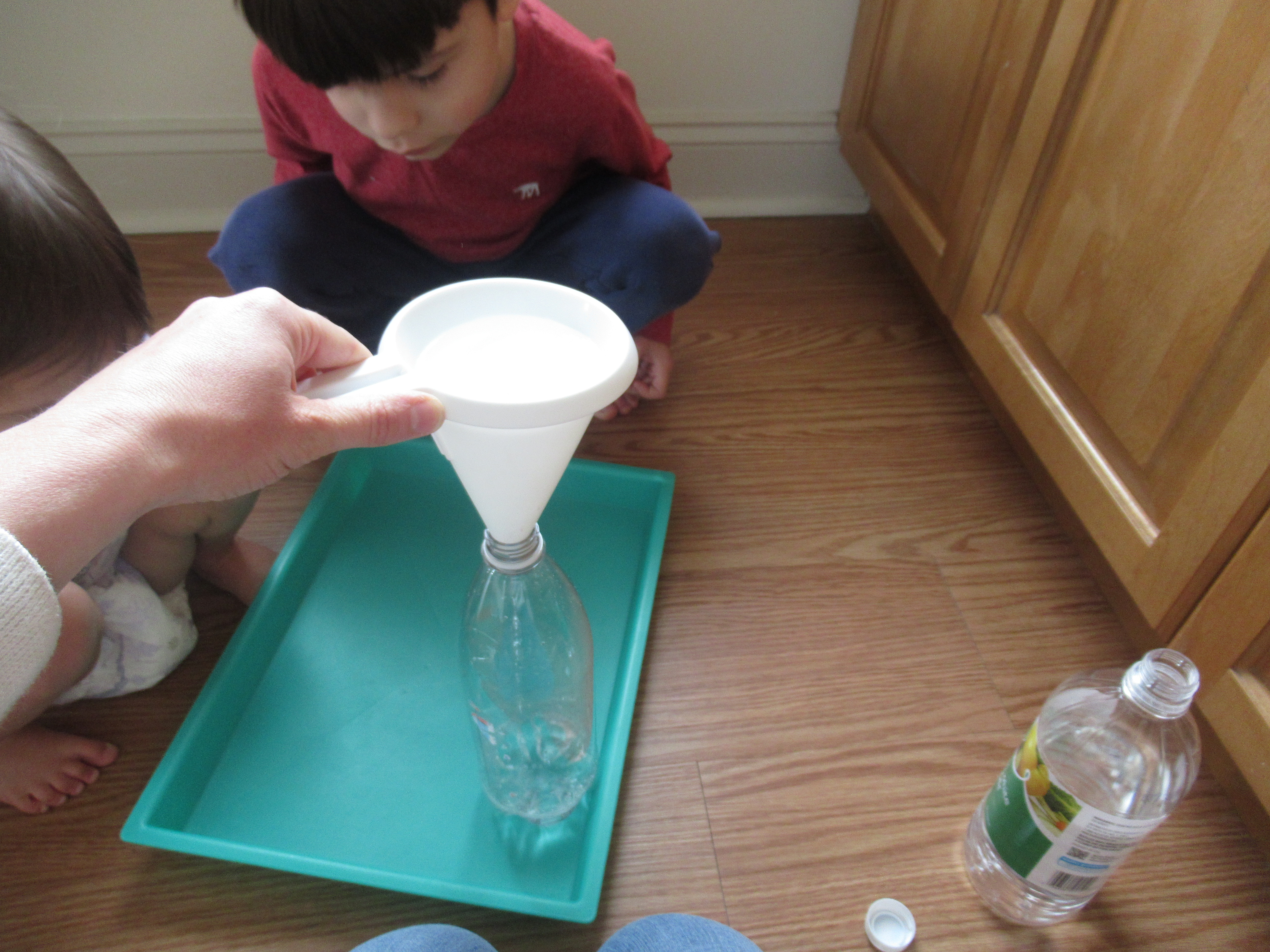
To set up, I first added white vinegar to an empty water bottle, using a funnel to avoid spills. Set aside over a tray.

Magic Inflating Balloon (1)

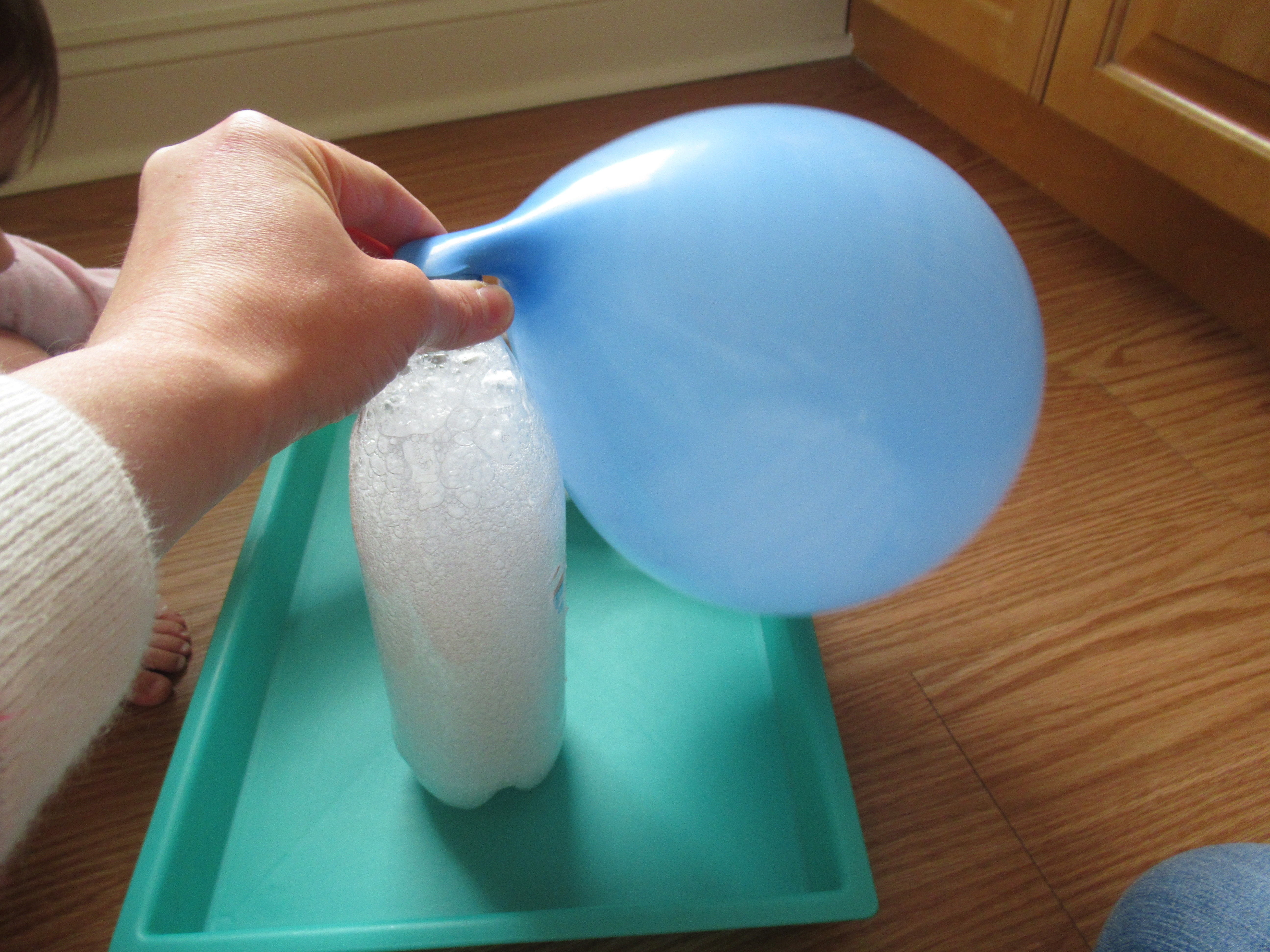
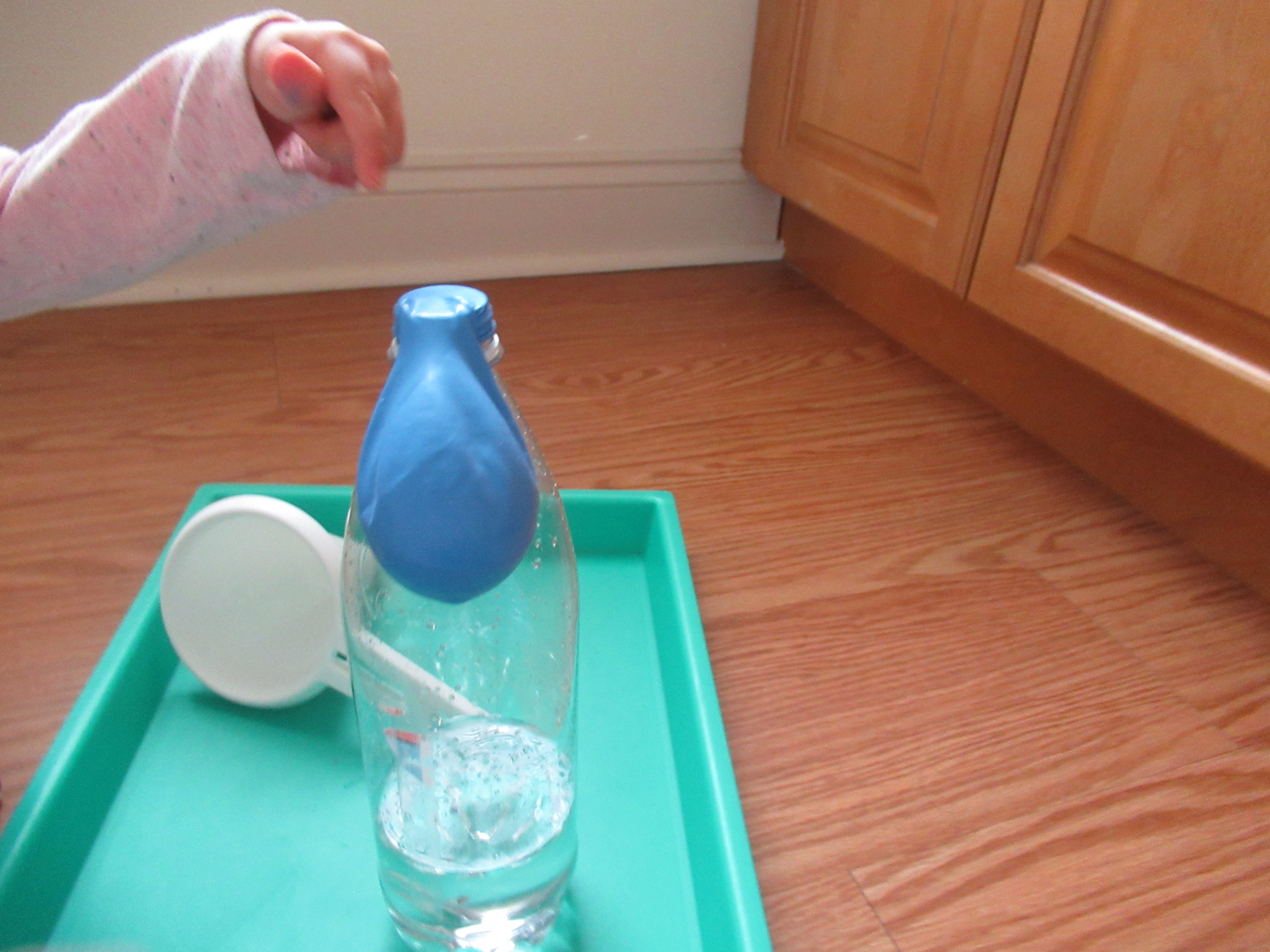
Slip the end of an uninflated balloon onto the funnel and add baking soda (I didn’t measure, but we probably poured in about 1/4 cup. Now carefully fold the lip of the balloon over the top of the bottle, but make sure you don’t upend the baking soda just yet.

Magic Inflating Balloon (3)

Stand the balloon upright so the baking soda pours down into the vinegar, then be ready for the reaction. As the baking soda and vinegar react to create gas, the balloon inflates.

Magic Inflating Balloon (4)

This made for such a bubbly, fizzy, dazzling reaction! I worried that the balloon might pop off the bottle if there was too much pressure that built up, but luckily this didn’t happen. Still, I was glad we had a tray underneath the experiment, just in case.

Magic Inflating Balloon (6)

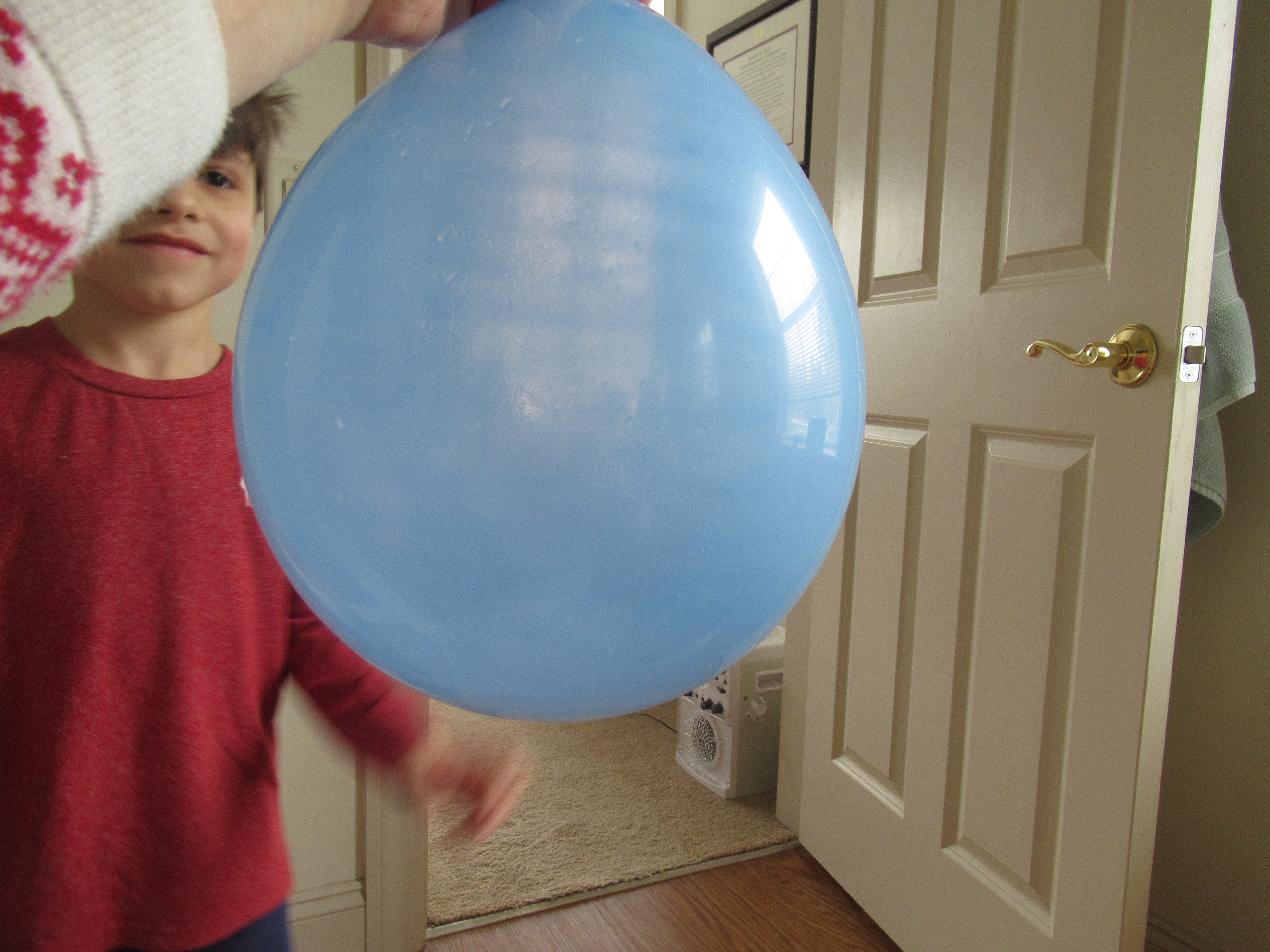
Travis was thrilled when he put his arms around the inflated balloon at the end, almost disbelieving that we’d blown it up so big. Just be aware that this isn’t the best balloon to knot off and play with after, as some liquid will remain inside.

Cranberry Invisible Messages

Cranberry Messages (6)

If your kids are no longer surprised by the way baking soda and vinegar react, they’ll be charmed with the way a new ingredient can reveal secret messages thanks to acids and bases: cranberry sauce!

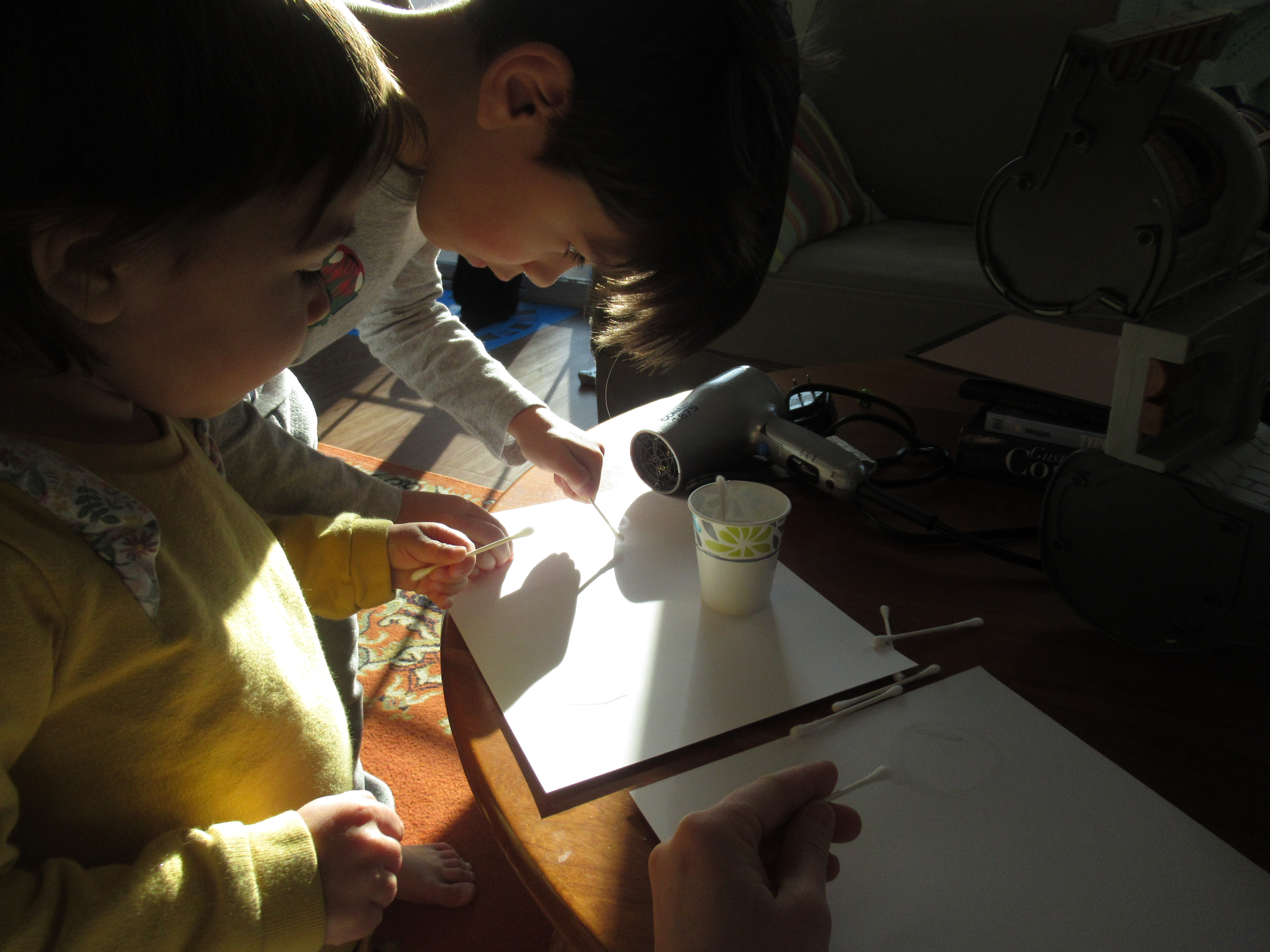
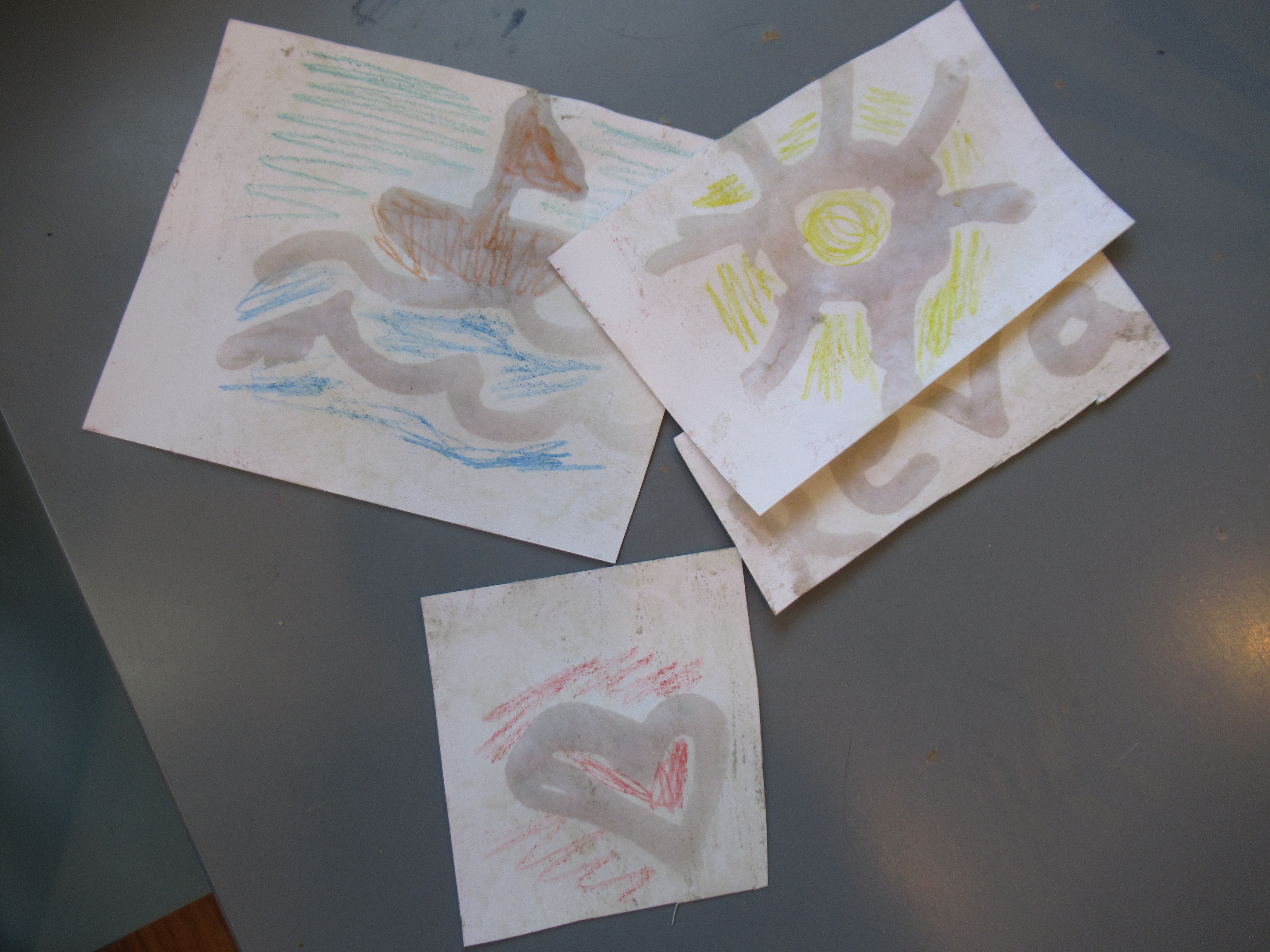
First, I stirred 3 teaspoons baking soda into a little warm water in a paper cup. We used q-tips to write out “secret codes” on thick white paper. Travis wrote down the names of favorite characters, Veronika scribbled, and I made a few drawings that I knew would work well for the big reveal, like boats and suns.

Cranberry Messages (1)

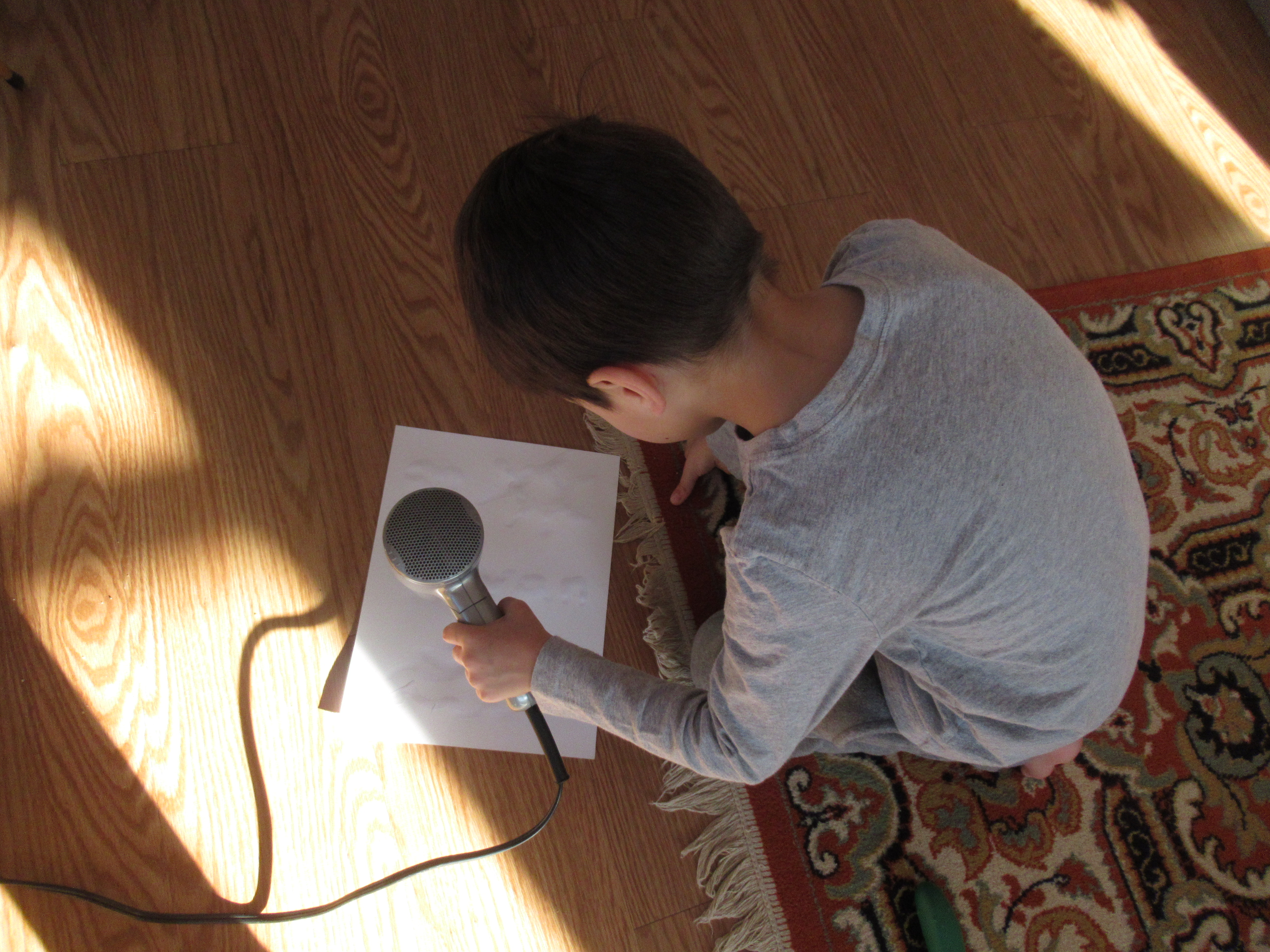
You can let the messages dry naturally, but hair dryers are so much more fun of course. Travis jumped at the chance to set the dryer to low and wave over the pictures.

Cranberry Messages (3)

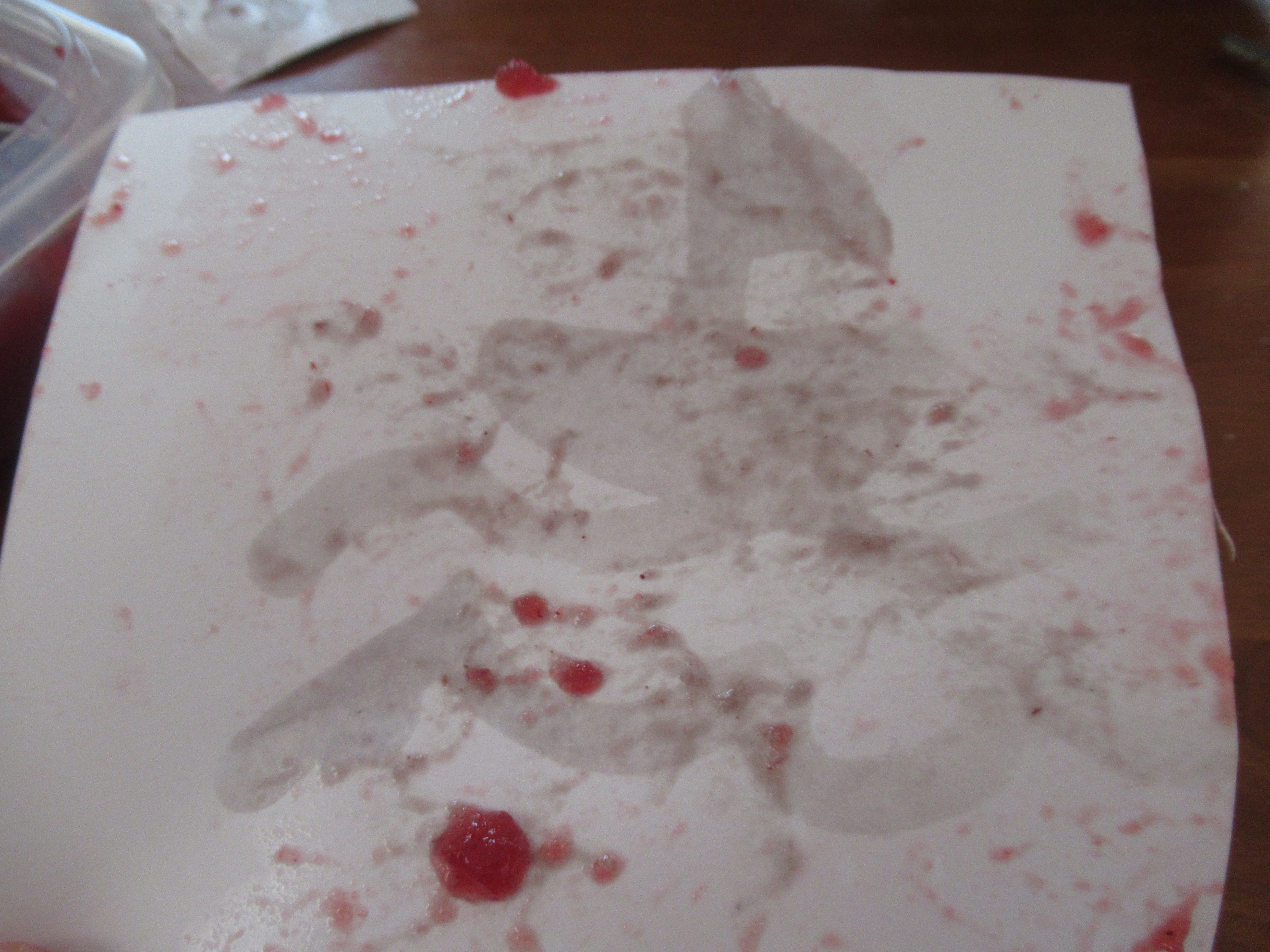
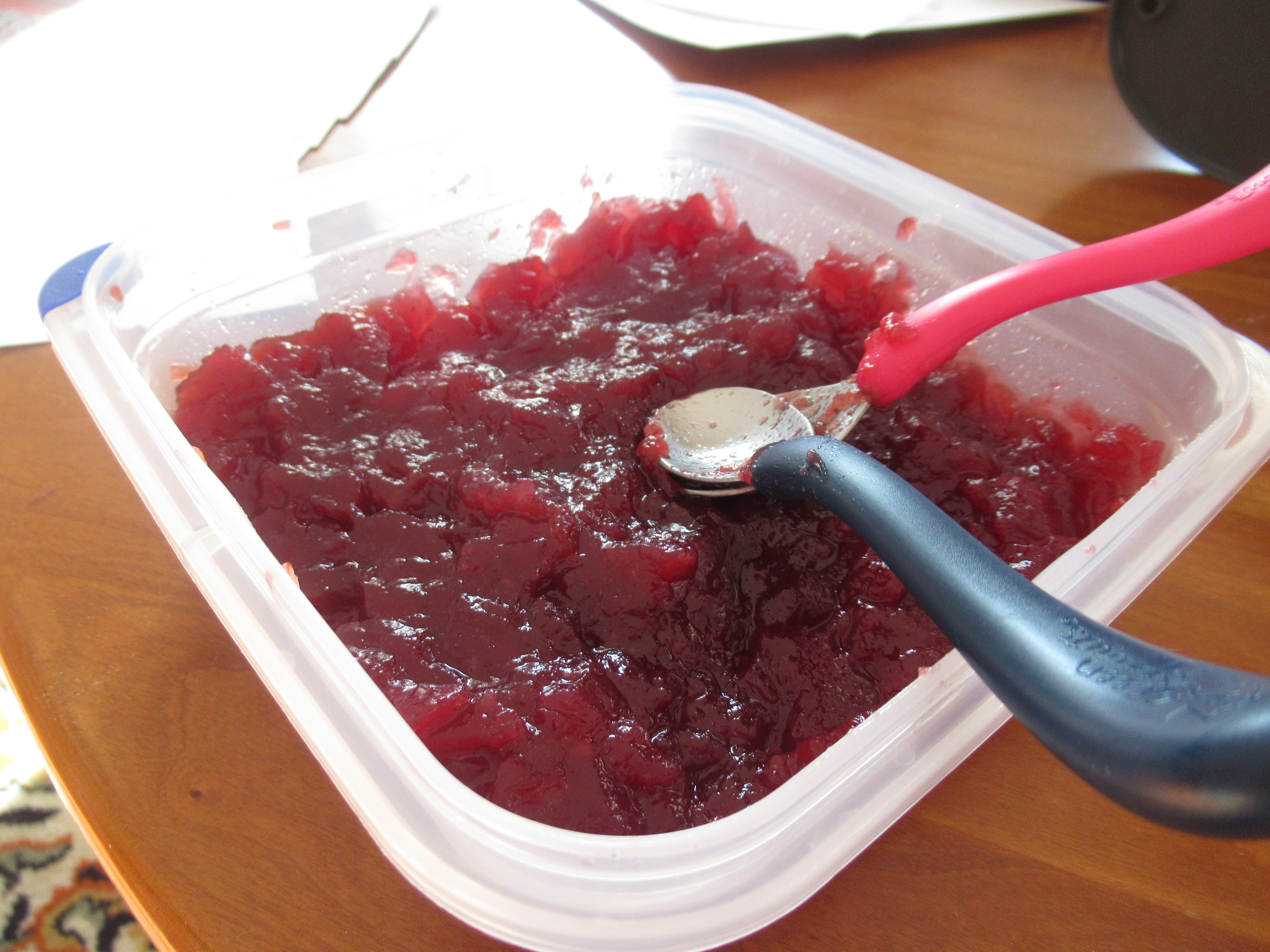
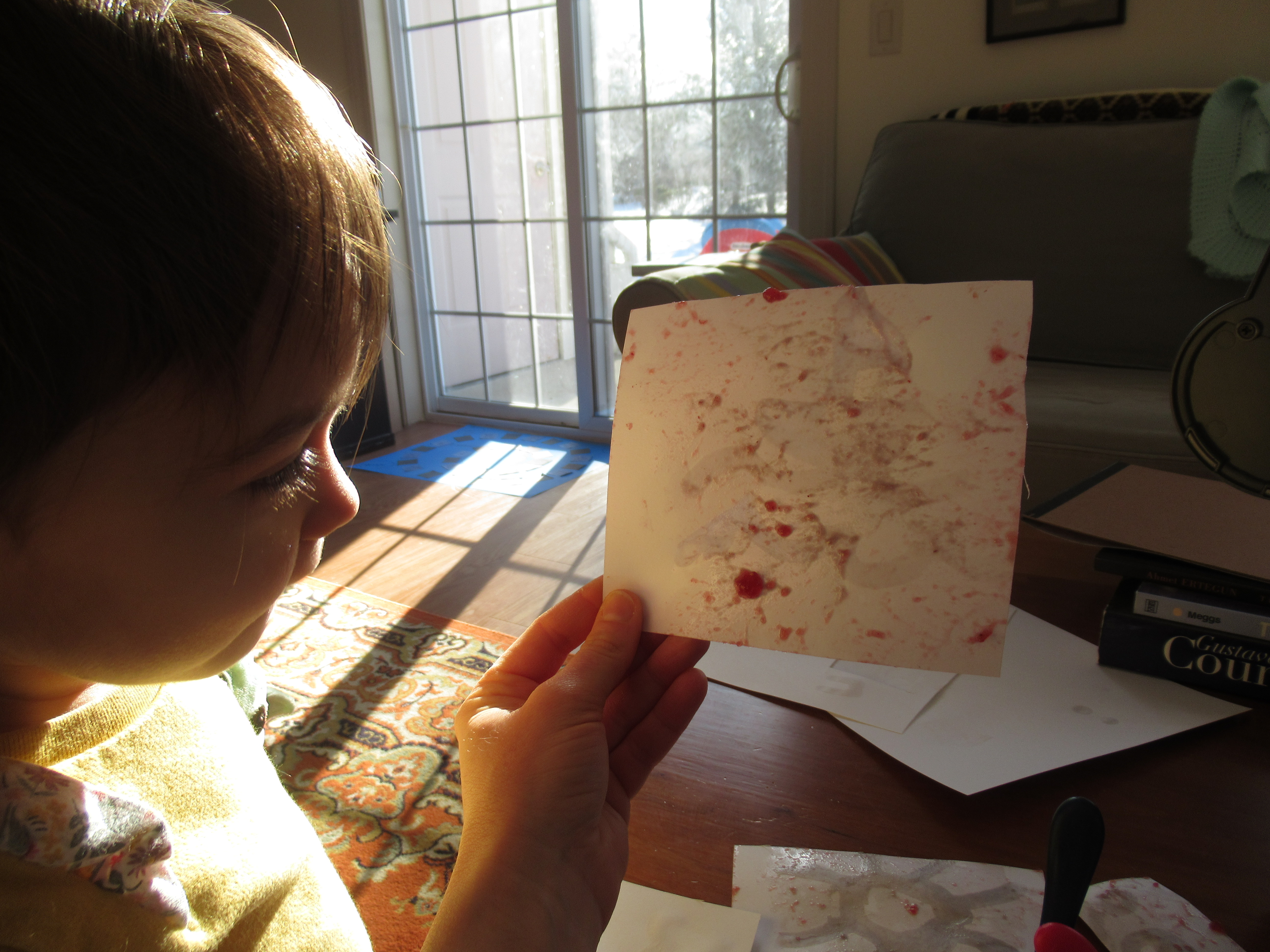
For the reveal, I emptied a jar of cranberry sauce into a container and smoothed it into an even layer. Press your pictures firmly into the cranberry sauce (but don’t submerge), then lift up to see what appears!

Cranberry Messages (4)

Simply wipe off any excess cranberry sauce and the pictures are ready.

Cranberry Messages (5)

Kids can end the activity here, or add color with colored pencils for a pretty final result if you want to add in a little arts & crafts.

Cranberry Messages (7)

Rules of the Game

Create a Board Game (8)

This activity is somewhat of a repeat from when Travis created his own board game in preschool. But now that he’s older, we delved much more deeply not only into how to design a game from start to finish, but also talked about what made a game successful!

To start, we explored two classic games. First up was Dominoes, playing a round with the set we have at home. I had never actually read the real rules before, and when we looked them up online, they were so convoluted I confess even I didn’t quite understand! That was a good jumping off point to talk about what made a game fun and/or challenging.

Create a Board Game (1)

Next, Travis listened to a read-through of Jumanji, which is a fantastical game of course but a great way to talk about the rules, including what was similar to real-life games, and what was different. (Note: We also watched the movie, but there are scenes that are quite intense and I don’t recommend it for young children).

Create a Board Game (3)

After all that, it was time to design his own game! Raddish Kids had a lesson plan including an Inventor Inspiration Guide to help kids decide what to base their game around. This involved a ranking system based on likes (food, hobbies, favorite shows or books), but this was all too complicated for my first grader. Travis knew what he wanted to base his game around anyway: Star Wars!

We quickly came up with a game called ‘Race to the Death Star’. The shape of this iconic Star Wars base helped us decide how to configure the game, as a spiral of galaxies closing in on the Dearth Star in the center.

Create a Board Game (4)

I started gluing down squares of construction paper as the spaces on a large sheet of poster board, and we filled in the ideas as they came to us. Spaces contained events with either a boon (letting the player move forward) or a set-back (which required moving backwards). If a player landed on top of another player, that person had to wait in one of the corner planets until rolling the correct number on the dice.

Create a Board Game (5)

To make it through “hyperspace” between galaxies required an exact roll. All in all, it actually made for a great board game! Travis loved it so much that we immediately played 3 rounds. He decided on Lego figures as our playing pieces.

Create a Board Game (7)

As a final component of learning, we explored games that can be played virtually. Travis watched a suggested link of 20 games to play over Zoom, and then we really did Zoom his grandmother to play ‘Zoomed In’ (a game involving close-up images that players take turns guessing). This was such a neat bonding activity and the full video is worth a watch if your kids are currently Zooming relatives and friends.

There was lots more in the lesson plan from Raddish Kids, including suggestions to reinvent an old game with new rules, explore the idea of interactive books like Press Here, or learn the history of a classic board game. But my first grader was gamed out, so we’ll just be here busy playing ‘Race to the Death Star’!

Create a Board Game (6)

Fizzing Colors!

Fizzing Colors (7)

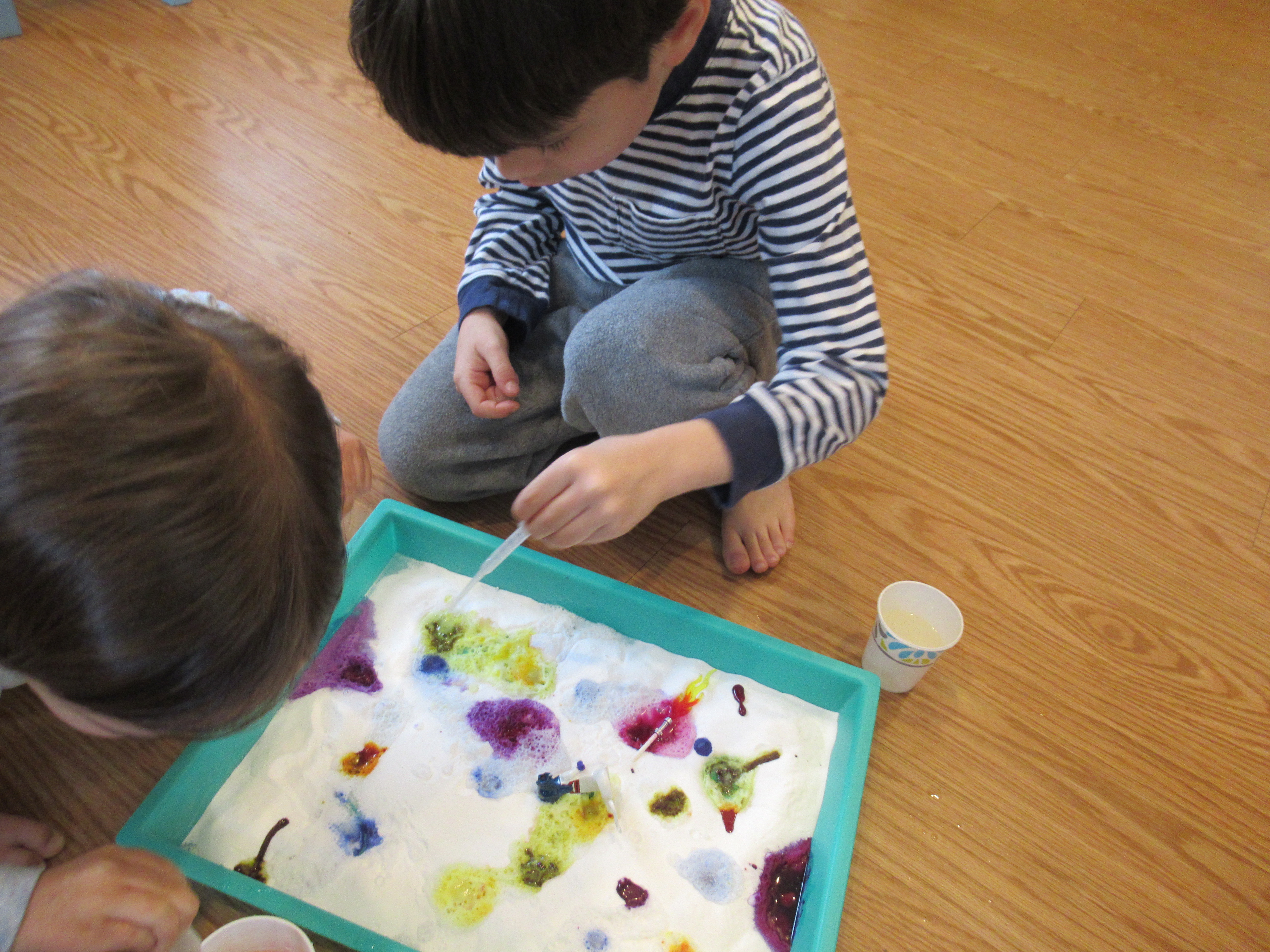
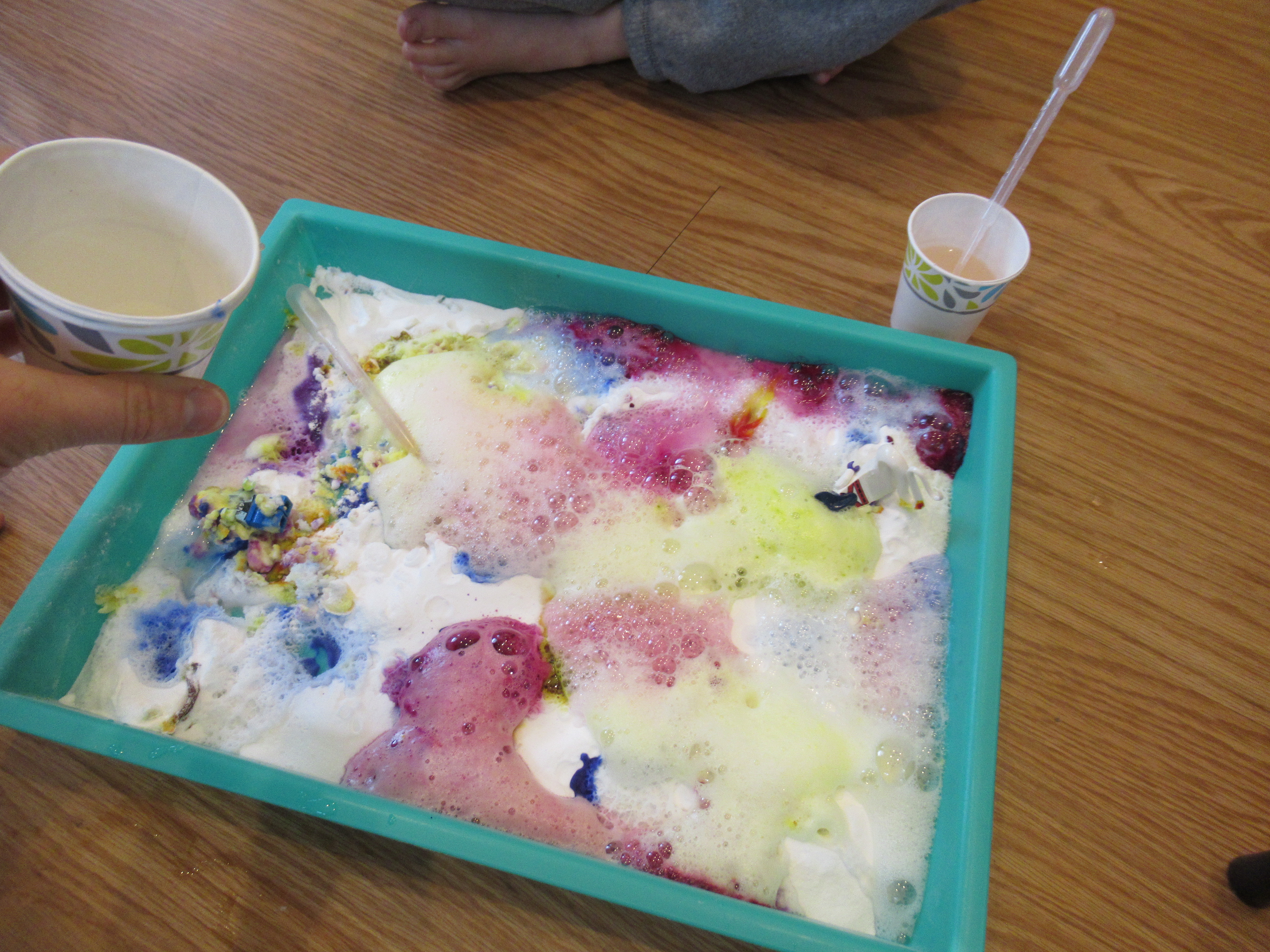
This variation on classic baking soda-and-vinegar eruptions had a beautiful artistic side to it, worked fine motor skills for my toddler (thanks to eye droppers), and came with a heaping dose of imagination (for my 6-year-old). Needless to say, big kid and little kid alike were enraptured until we’d gone through – yes – an entire box of baking soda and bottle of white vinegar.

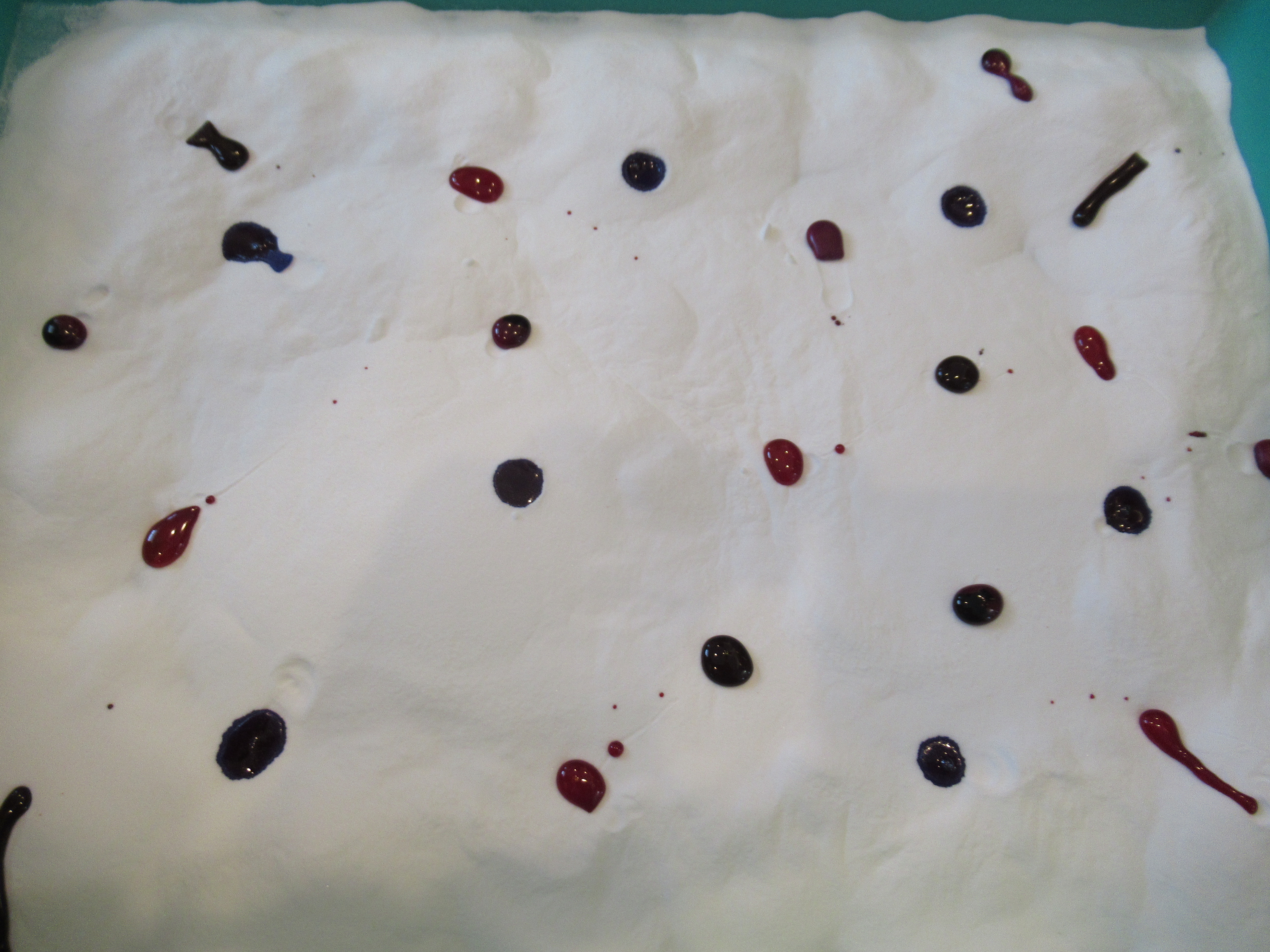
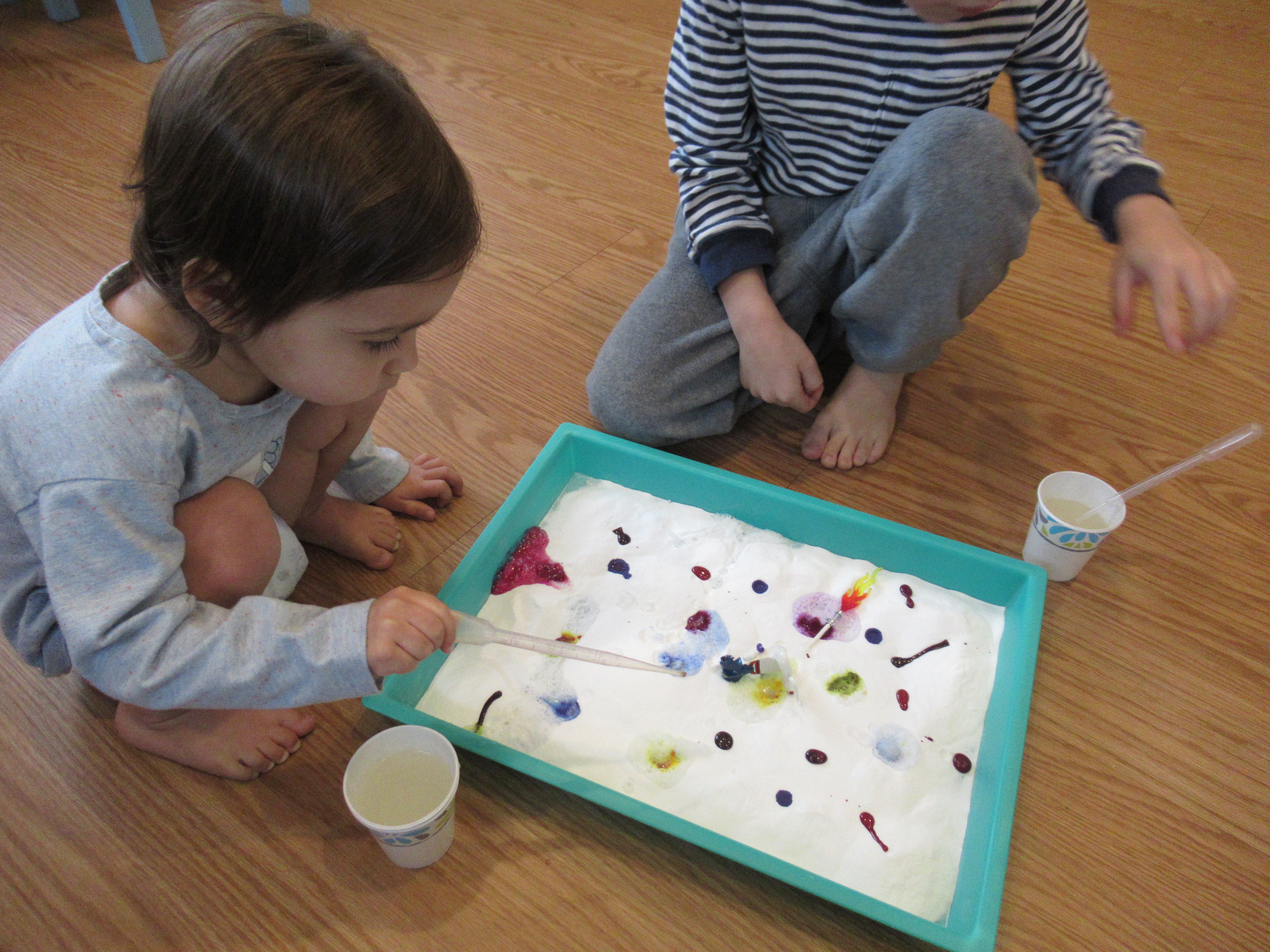
Technically you don’t need to use that much. Fill a tray or pie pan with about 1 cup baking soda, or more if desired, then add drops of food coloring at intervals. The more you space out and vary the colors, the prettier the result!

Fizzing Colors (1)

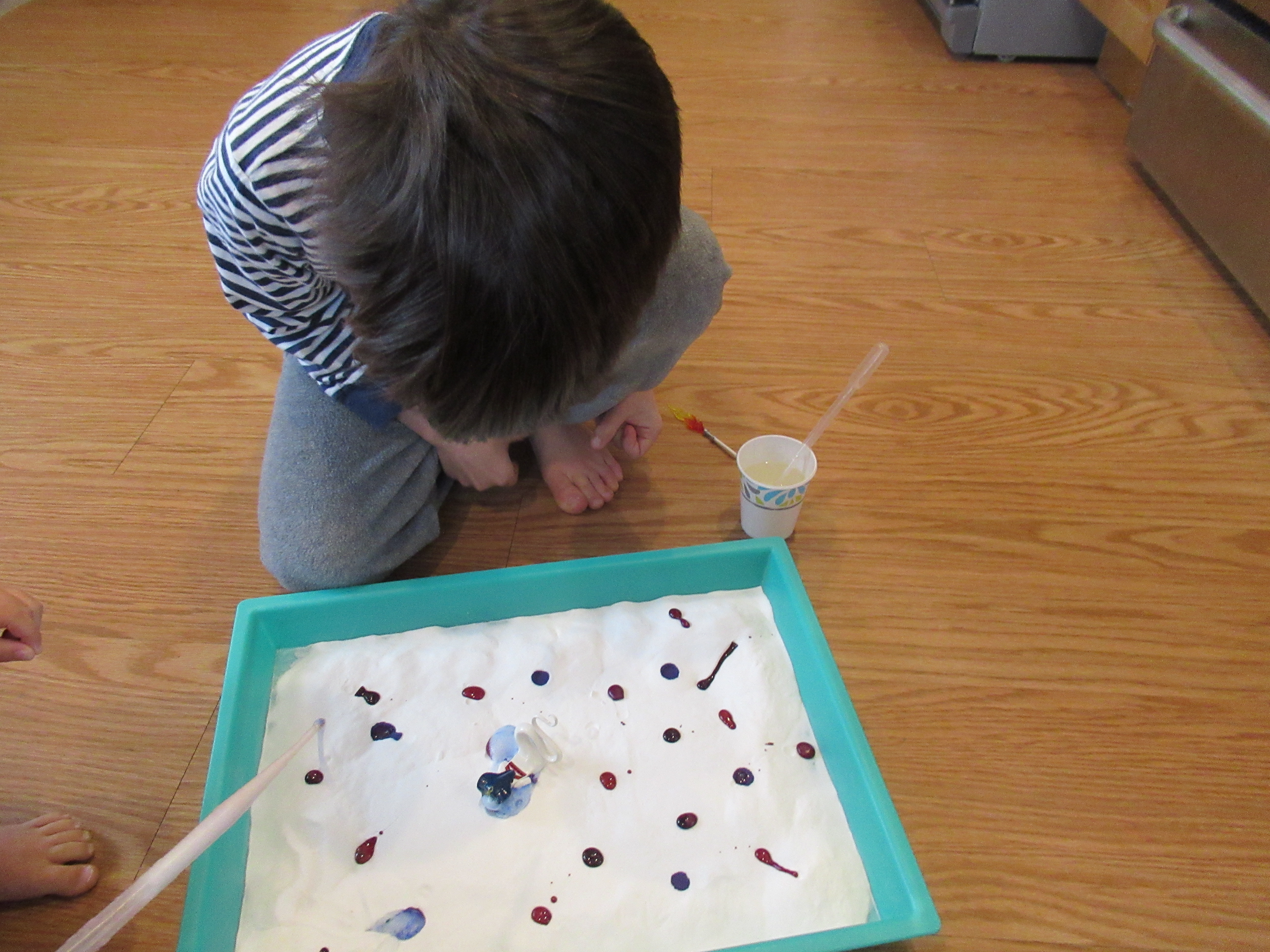
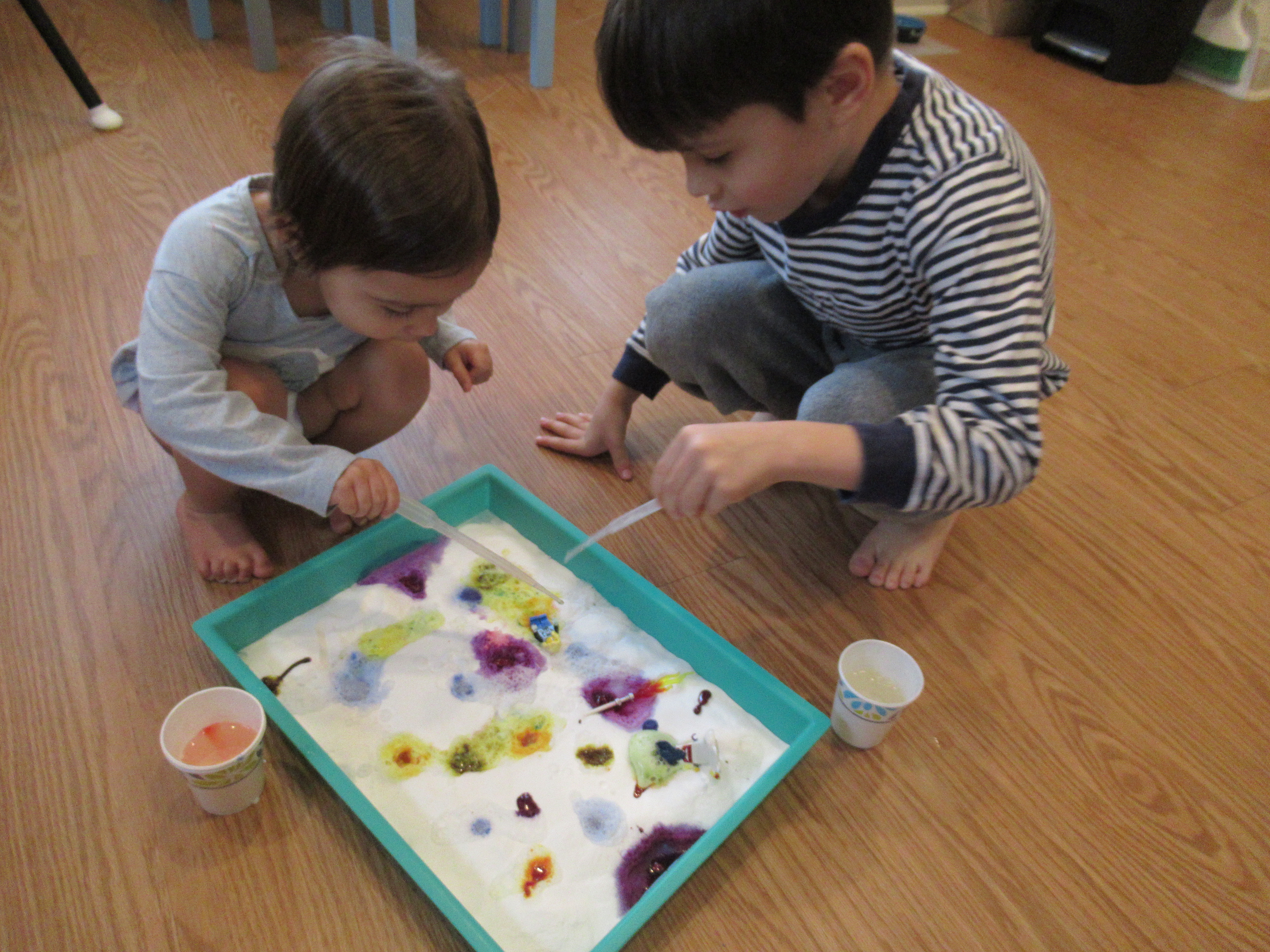
I then handed each kid a cup of white vinegar and a pipette and showed them how to squirt directly onto the dots of color.

Fizzing Colors (3)

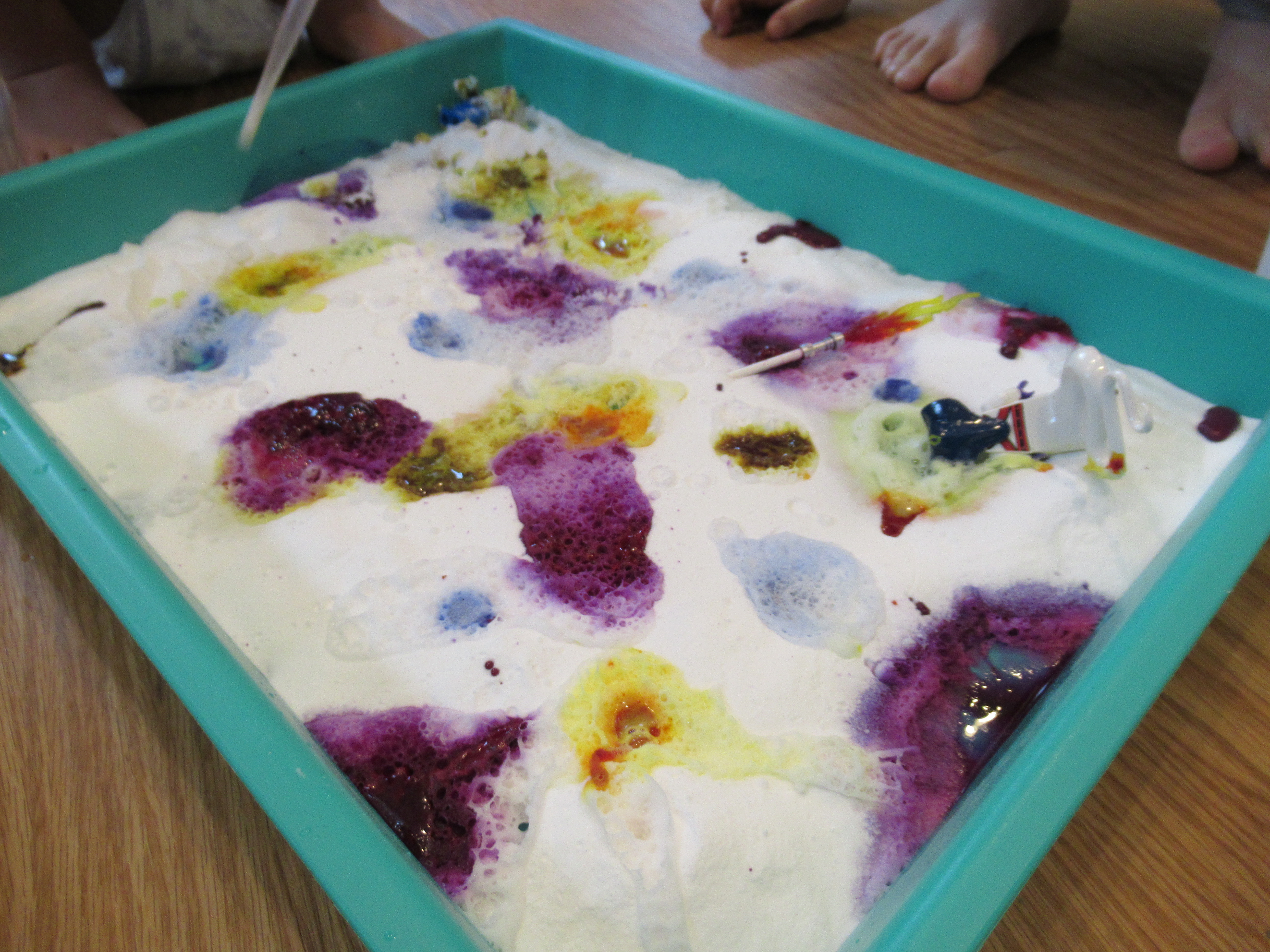
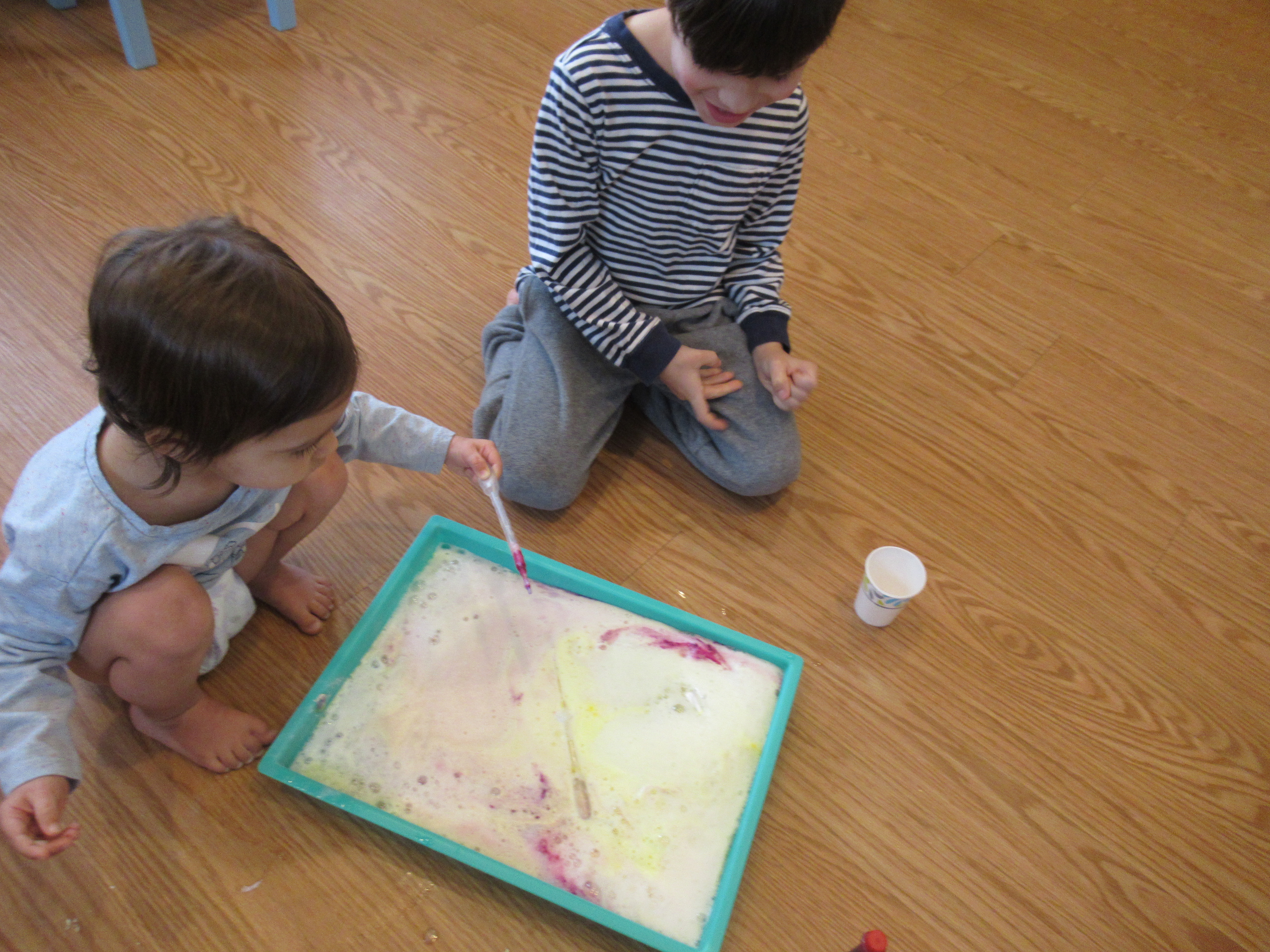
Of course fizzy reactions occur immediately, and the more your kids fill in the tray, the more it starts to look like a work of art.

Fizzing Colors (9)

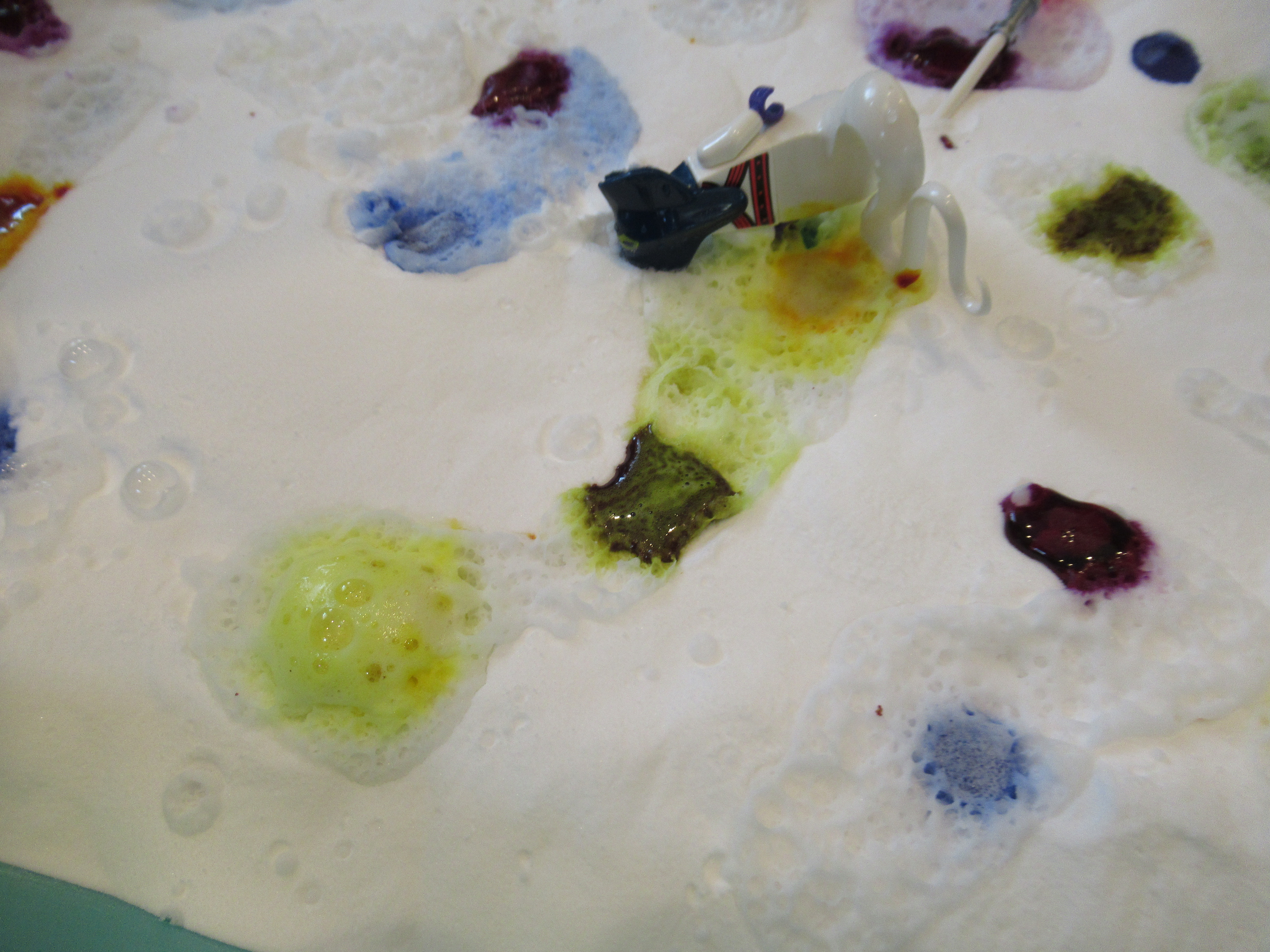
Then Travis wanted to trap a few Lego toys in the bubbles. Here’s where the imagination came into play, with a big game going on in his head!

Fizzing Colors (6)

At this point, we dropped caution to the wind and started adding lots more of everything. First we squirted in additional drops of food coloring. Then, the kids started pouring in the vinegar straight from the cups.

Fizzing Colors (10)

Their glee was so evident, and I loved watching them tackle the project together, seeing how many fizzy explosions they could make at once.

Fizzing Colors (8)

Needless to say, it was a bubbly fizzy wonderland.

Fizzing Colors (13)

This activity was so simple, but a delight for all ages.

Fizzing Colors (5)

Indoor Dinner Picnic

Picnic Dinner (2)

If the winter weather or the lack of safe indoor restaurant options has your family feeling a little down, here’s the perfect hack: conjure up sunny summer weather and have an indoor dinner picnic!

You can go all out with this or keep it simple or anywhere in between. The key elements are a good meal, a picnic blanket on the floor, and a little bit of novelty.

To wit, I set out our favorite summer picnic blanket in the living room and told the kids we’d be eating a picnic dinner on the floor. The excitement was immediate! For props, we pulled out the picnic blanket (even though we didn’t technically pack dinner up in it), and also pulled out a few toys that would normally be played outside in a meadow (think soccer bolls, wiffle bats, or jump ropes). Your kids can even play a few of these sports before dinner, if there’s room!

Picnic Dinner (1)

We set out a build-your-own-baked potato dinner spread that the kids could mix and match, and set a movie on in the background, and everyone forgot for a moment that the weather outside was frightful!

Picnic Dinner (3)

Looking for other ways to mix up dinner during the long winter? Consider breakfast for dinner, eating while the family plays a new game, dining on finger foods only, or preparing a top-your-own-pizza night! What would you serve at your picnic dinner? Please share in the comments!

Story-Starter Maze

Story Maze (3)

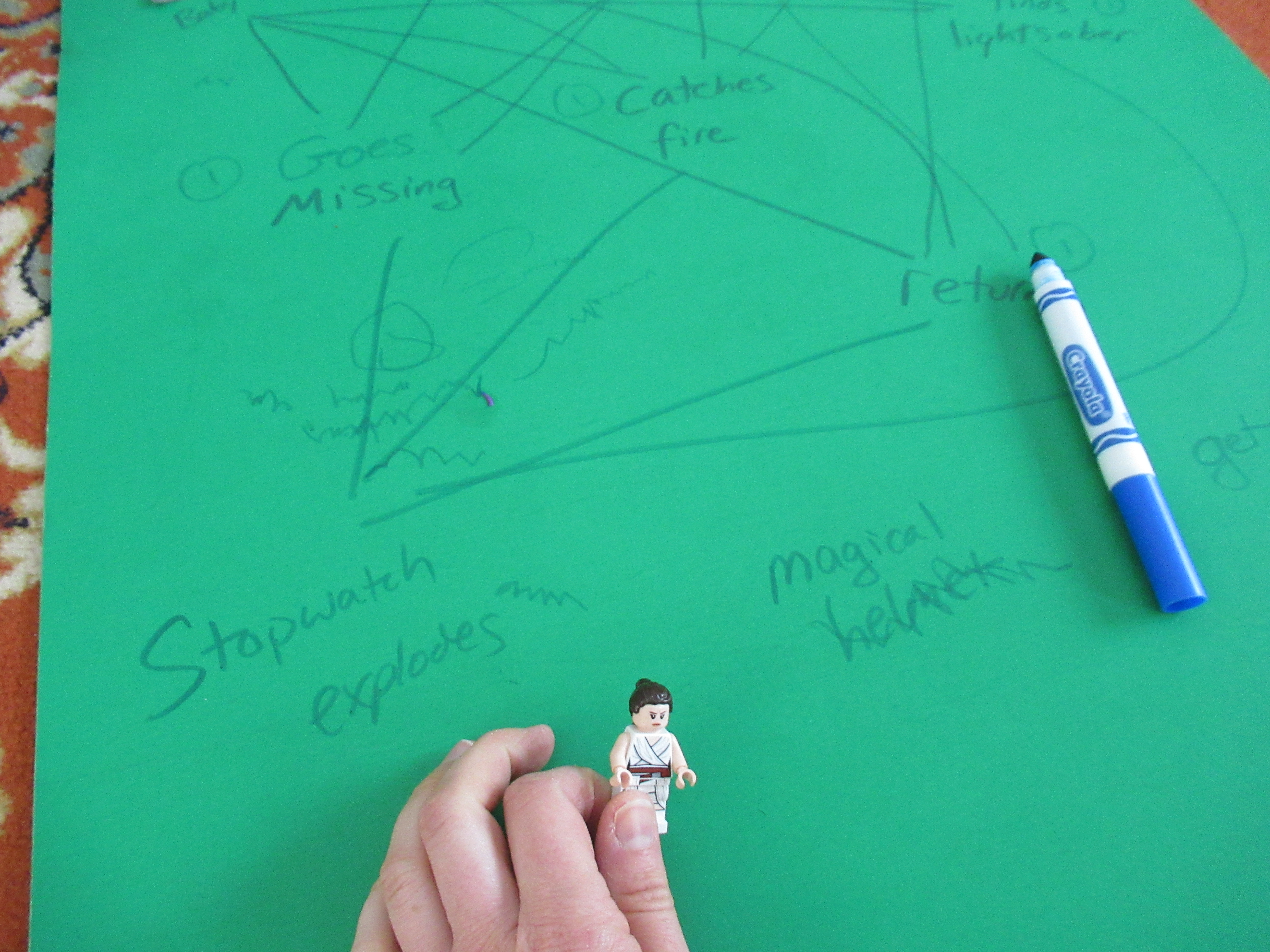
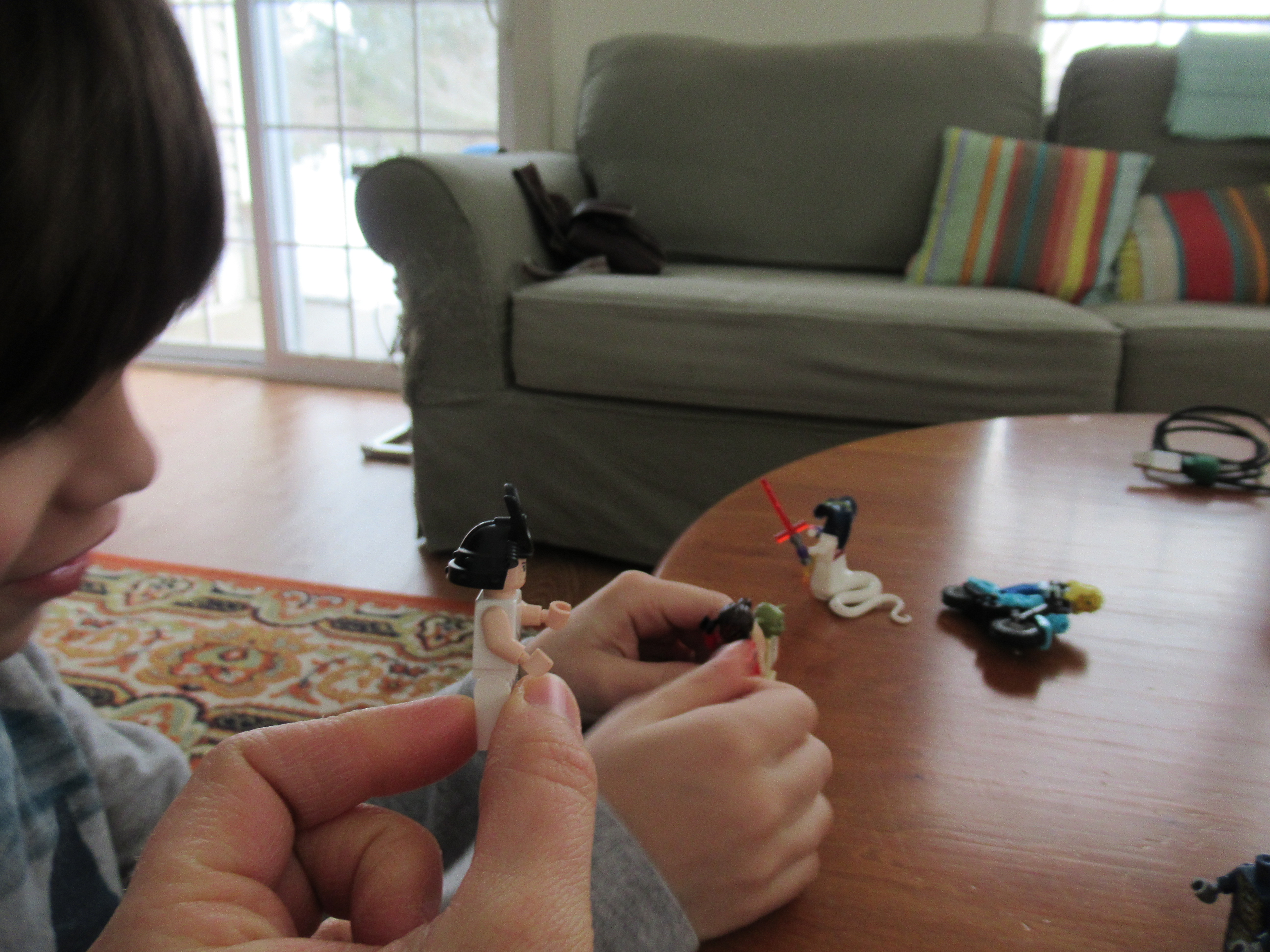
Travis loves to play with his Lego minifigures, but let’s face it; after a long cold quarantined winter, he’s in a bit of a story rut. If your child is similarly lamenting a lack of new ideas for the same old toys, try this story-starter maze idea!

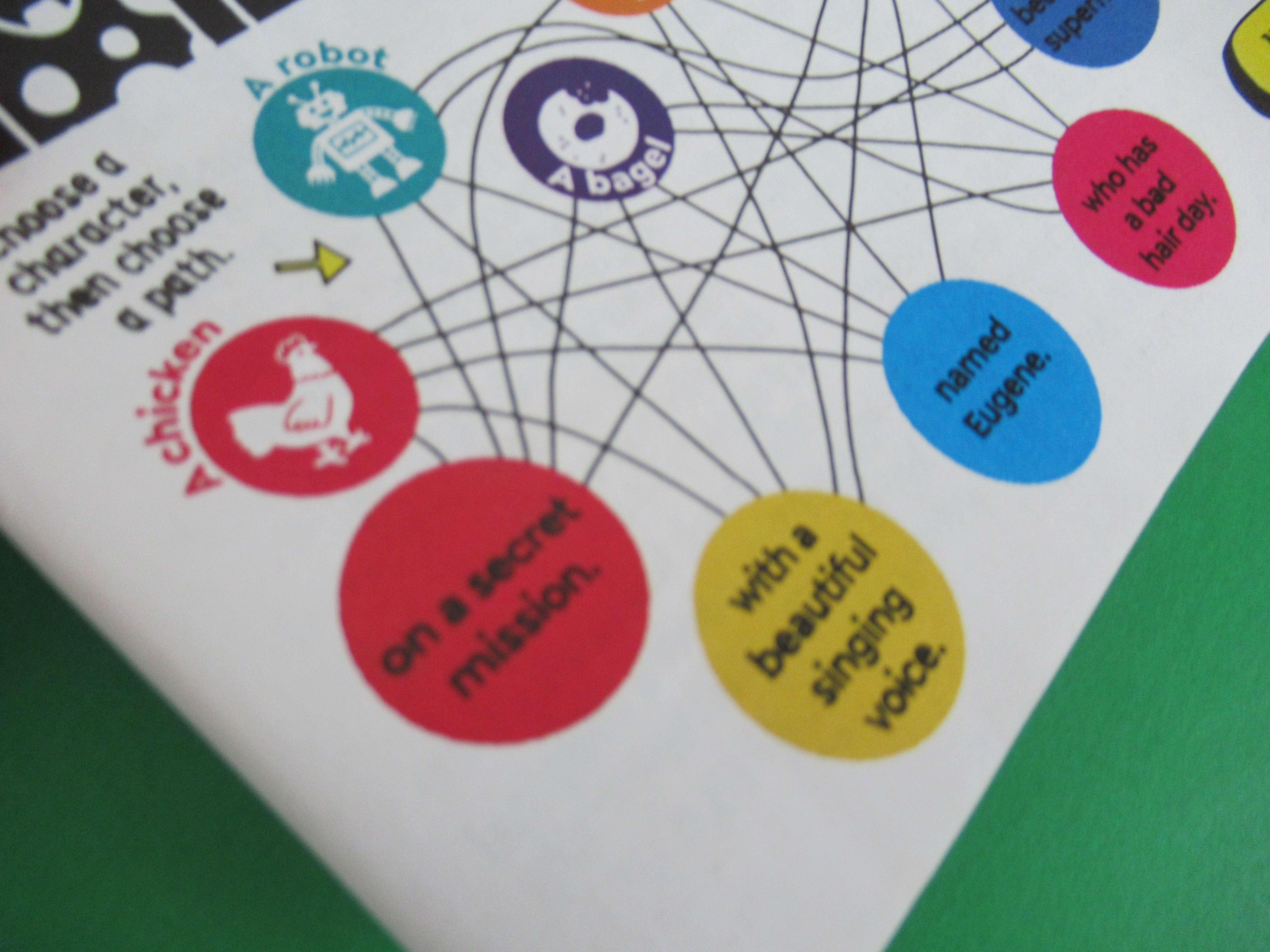
We spotted the idea in Highlights magazine, where threads led from starting characters (a chicken! a bagel!) to ideas (“becomes a super hero,” etc.) The idea is that if kids mix and match the threads (the magazine version had 5 characters and 5 plot lines), then over 25 stories appear.

Story Maze (1)

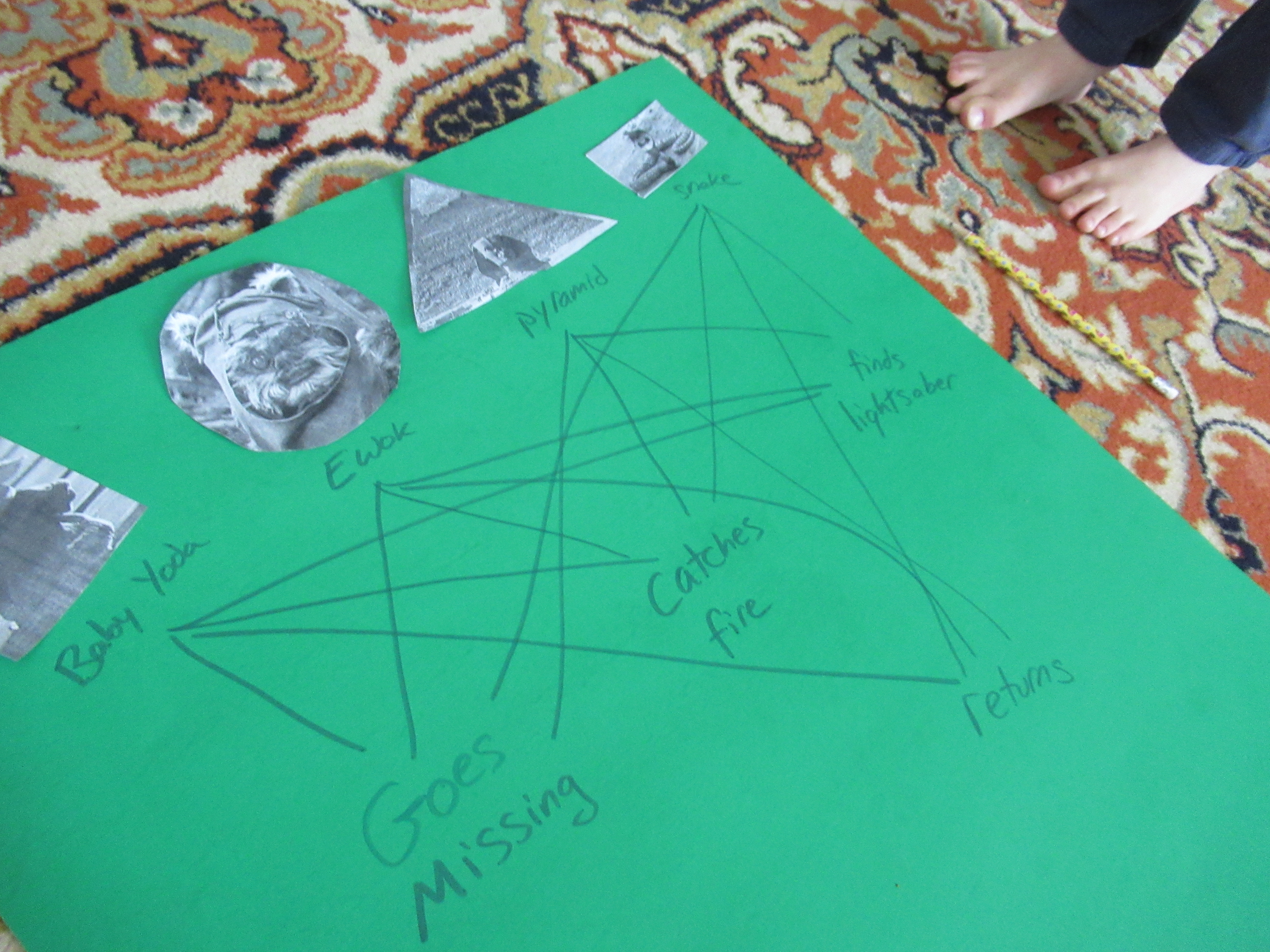
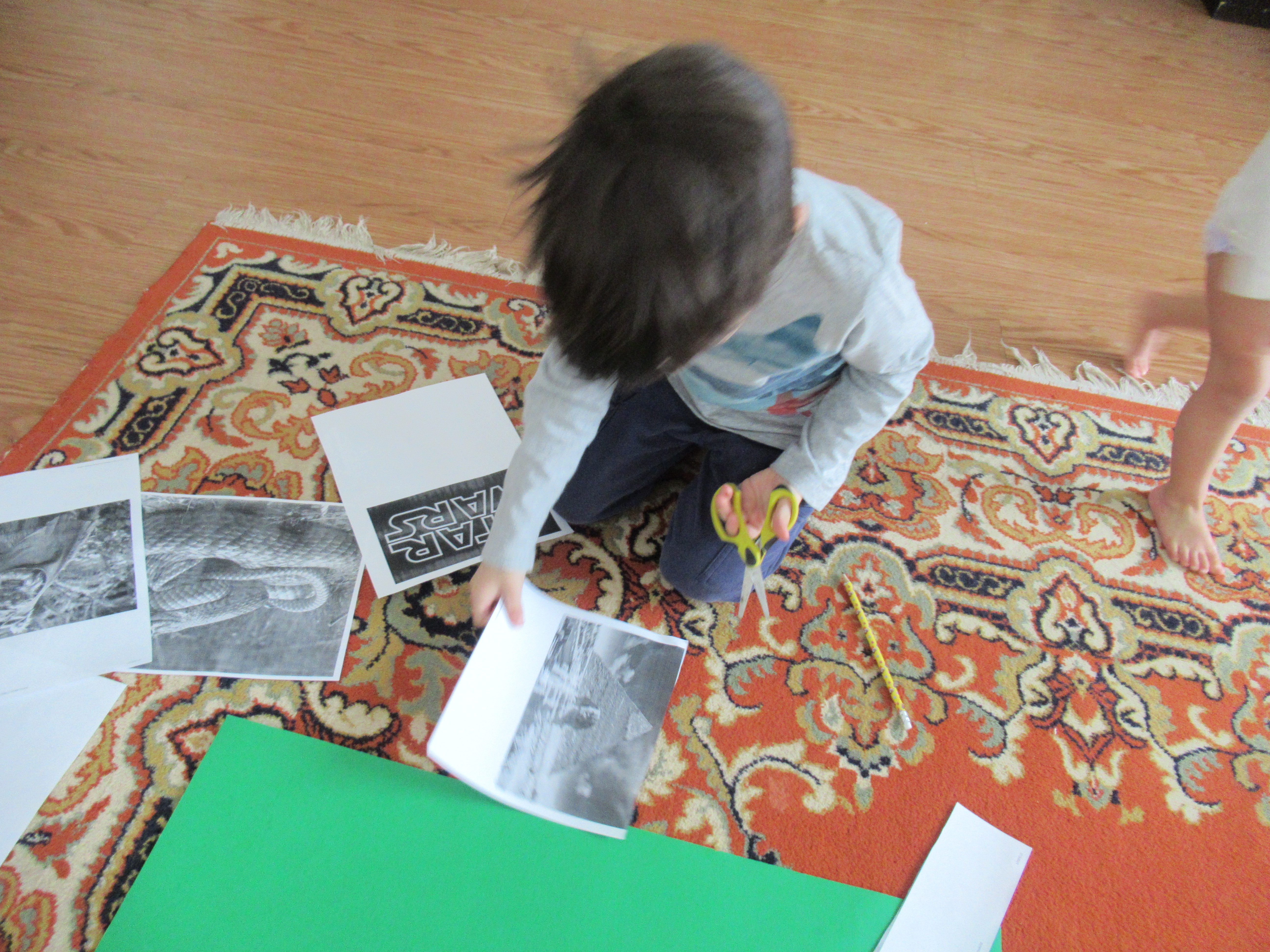
Travis immediately wanted to make his own version. We came up with 4 starting characters and printed out pictures of each to glue at the top of a large piece of poster board.

Story Maze (2)

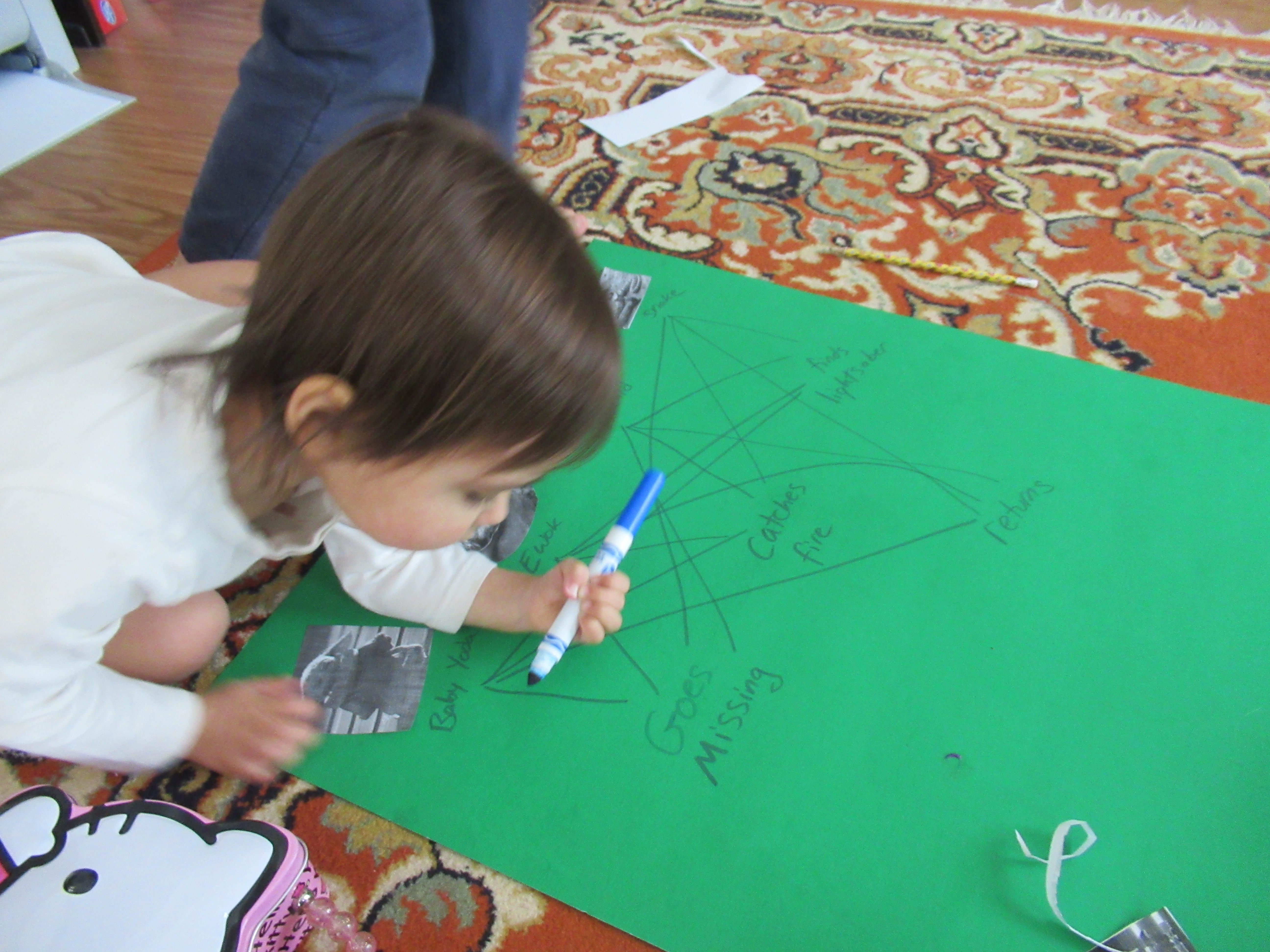
Next, he came up with 4 plot twists, and we drew lines connecting his starting characters to each idea. I was proud of his inventiveness, for example making a “pyramid” one of the starting characters. Encourage your kids to get equally silly; the main character can definitely be a thing, and not a person! Now he had 16 directions in which his Lego game could go. Little sister Veronika wanted to help connect all the dots, too!

Story Maze (4)

The poster board perfect for adding ideas as they came to him throughout the afternoon, marking off additional branching plot points and connecting it all in a big spidery maze.

Story Maze (7)

So the next time Travis tells me he’s not sure what story to act out, I need only point him in the direction of the story maze poster hanging on the wall!

Story Maze (8)

Baking Soda-Powered Boat

Baking Soda Boat (3)

Here’s a fun way to propel a boat forward, thanks to the fizzy reaction between an acid and a base. It’s an easy and quick STEM lesson with an automatic payoff.

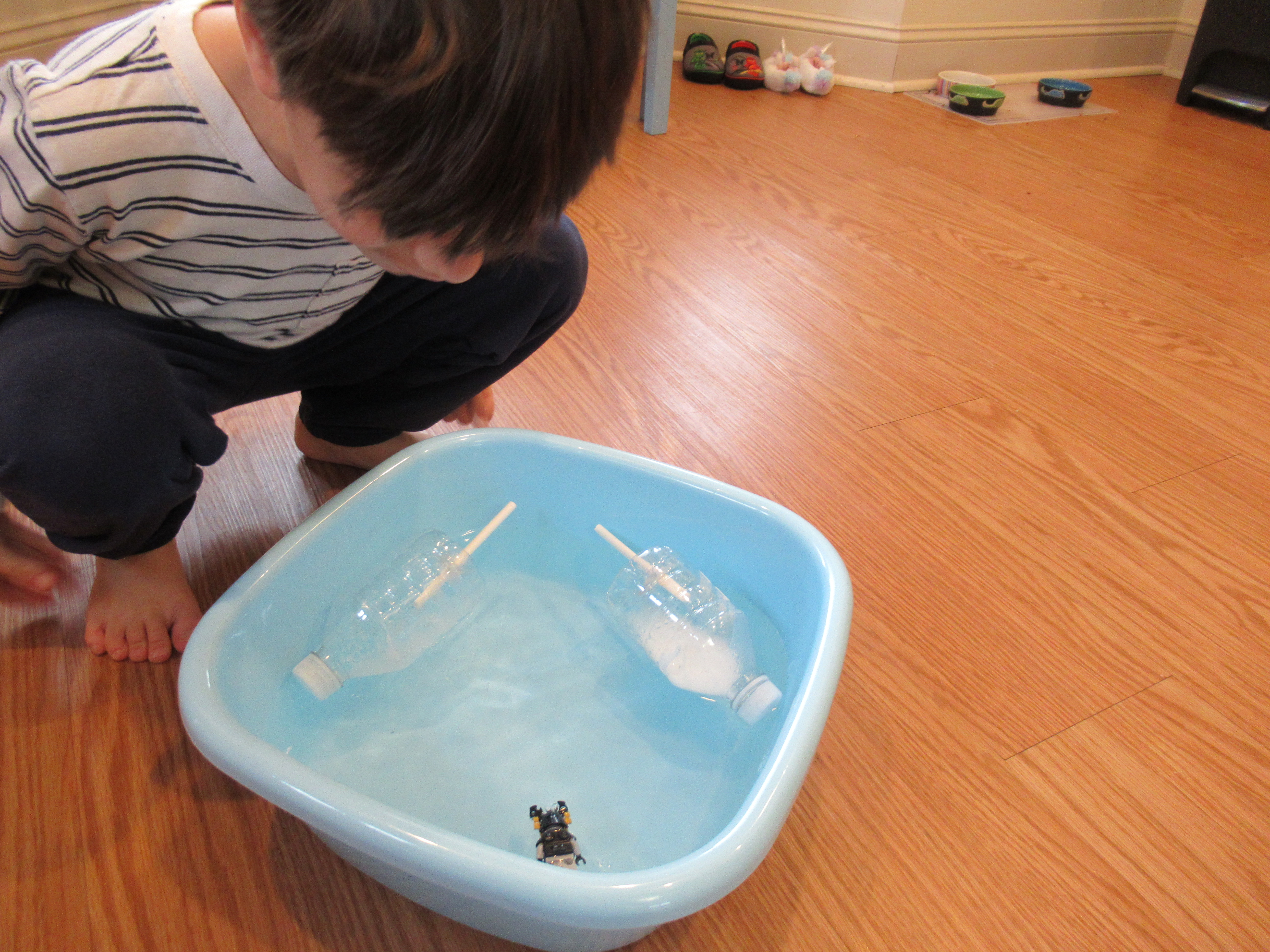
The set-up requires a little grown-up work. First, cut a small hole in the bottom of an empty water bottle. Cut a straw in half and insert into the hole, then close up any open gaps with hot glue.

Baking Soda Boat (1)

To make the “fuel” for the boat, pour a little vinegar into the bottle. Make sure the straw is on the top of the bottle as your pour, so none spills out. Now spoon in a little baking soda, but don’t let the two substances mix yet! Screw on the bottle cap, then set your “boat” down in a basin or bathtub filled with water. The acid and base mix, and the boat zooms forward.

Baking Soda Boat (4)

Note: Make sure the straw is in the water for this part, or the experiment won’t work as intended. We learned this after round one!

Baking Soda Boat (5)

Next time, we would do this experiment with a larger water bottle (making it easier to keep the baking soda and vinegar separate until the right moment), and we’d also do it in the tub so the boats have more room to zoom. But Travis still loved watching the little motion we achieved!

DIY Bath Bombs

DIY Bath Bombs (7)

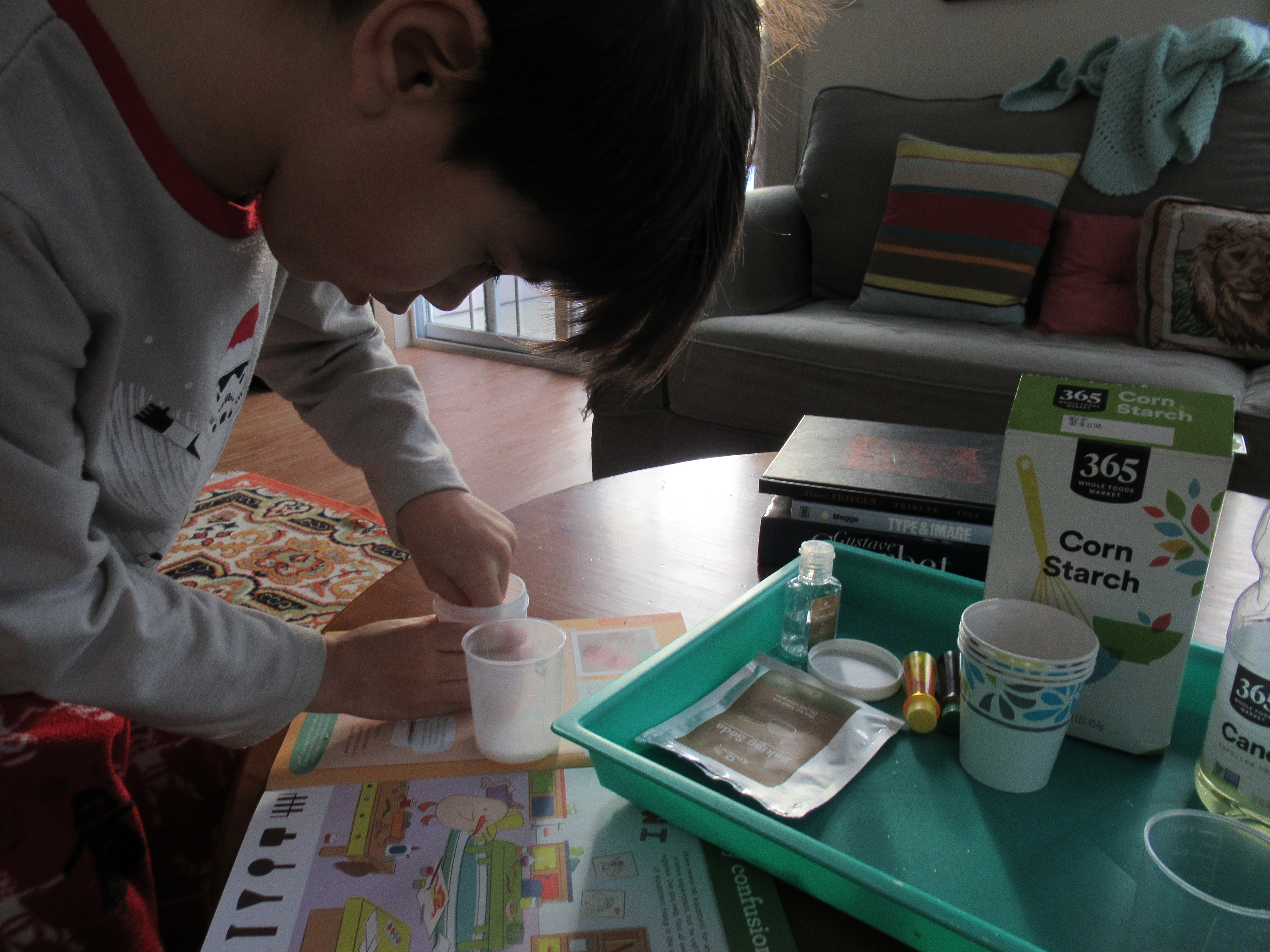
Both my kids love bubble baths, so today we decided to mix up the bubbly fun with a homemade bath bomb! You can make this concoction entirely from ingredients found in your kitchen; look for citric acid in the baking aisle.

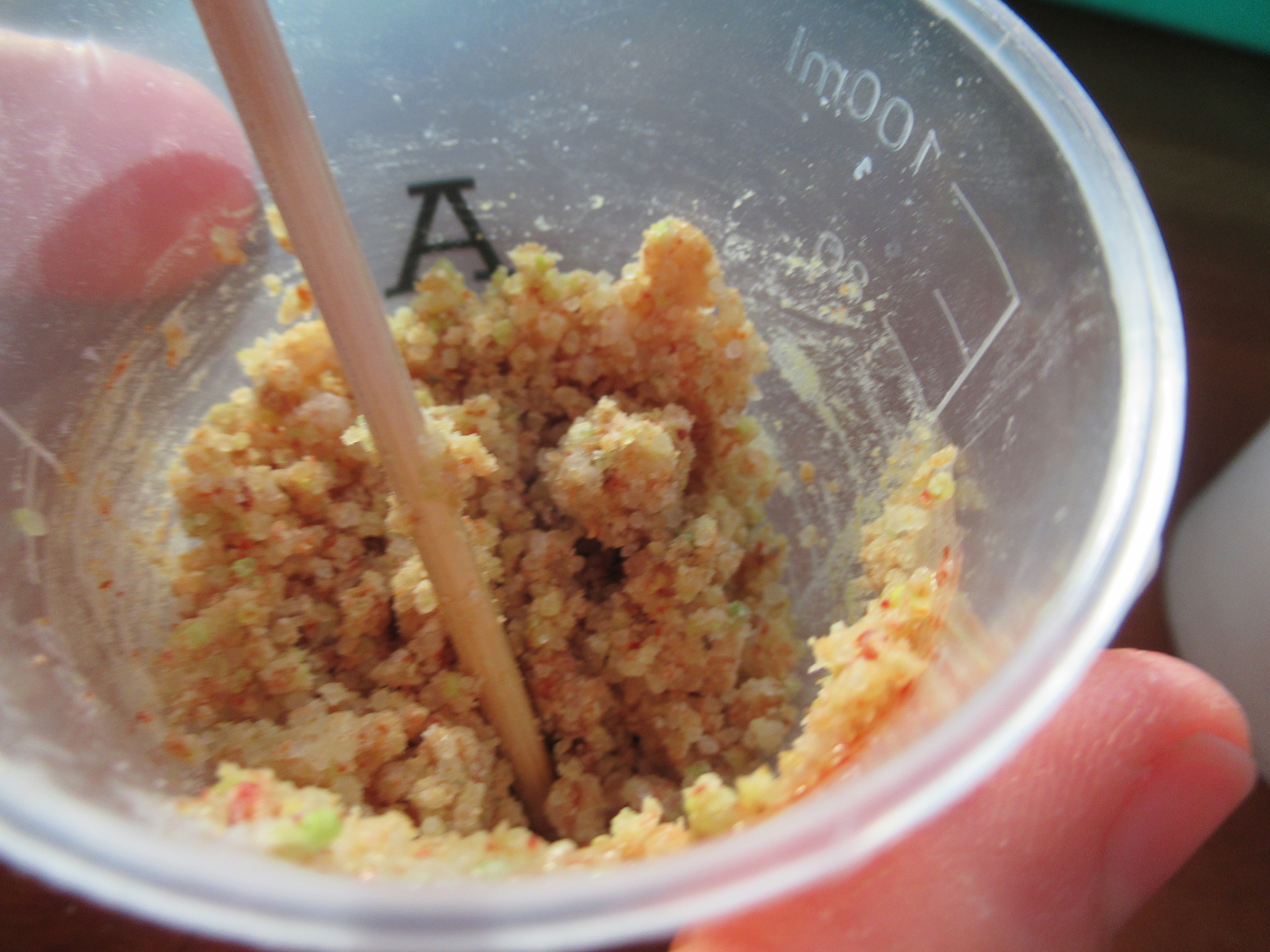
First, Travis helped measure out and stir together 2 and 1/2 teaspoons citric acid, 2 and 1/2 teaspoons baking soda, and 1 teaspoon cornstarch.

DIY Bath Bombs (2)

Add about 2 drops of food coloring (we used green!), followed by 1 and 1/2 teaspoons canola oil; the mixture is still crumbly at this point.

DIY Bath Bombs (3)

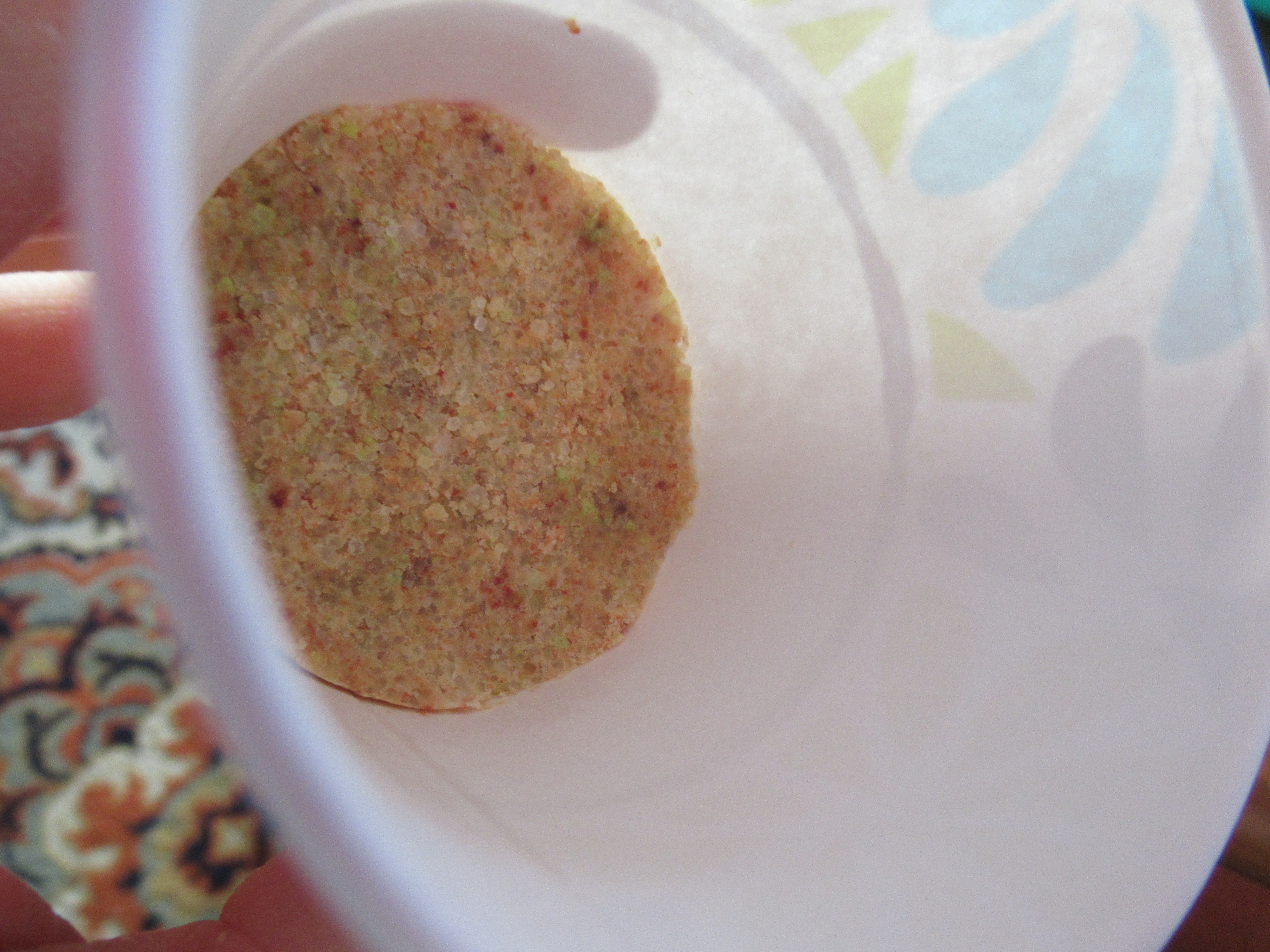
Spoon into a small paper cup, then press firmly with the back of a spoon to pack down. Let dry for at least 8 hours.

DIY Bath Bombs (4)

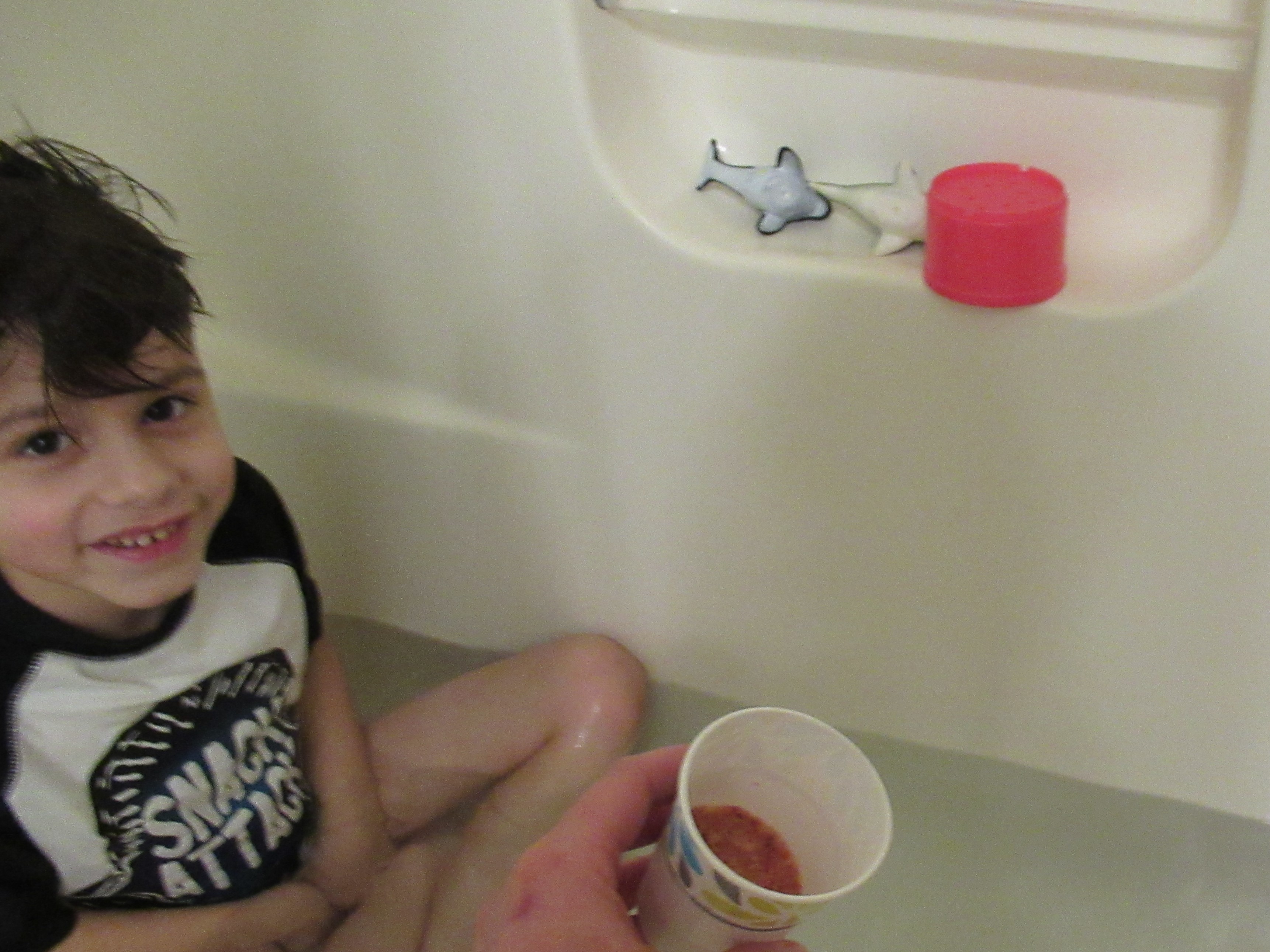
At bath time, tear away the paper cup. Toss in the tub and watch it fizz! Truth be told, the big reveal of the moment was a little less exciting than Travis had hoped for, but it still made for a neat bubbly reaction.

DIY Bath Bombs (6)

Color-Changing Lemonade

Color-Changing Lemonade (5)

This fun STEM snack idea from Kiwi Co has a “wow” factor thanks to the fact that red cabbage acts as a pH indicator. In other words, it will turn acids (like lemon juice) pink. Just like that, a glass of yellow lemonade becomes a glass of pink lemonade!

First, soak about 1 cup torn red cabbage in 1 cup very warm water. Add 1 cup sugar, stirring until dissolved. Let stand for about 30 minutes. Strain the cabbage mixture through a fine-mesh sieve over a cup. Set aside.

Color-Changing Lemonade (1)

In a second cup, whisk together 1/2 cup lemon juice and 1 cup cold water.

Color-Changing Lemonade (2)

Pour a little cabbage mixture into a glass and add ice. Fill with the lemon mixture, then start to stir as you add the remaining cabbage mixture.

Color-Changing Lemonade (3)

Pink lemonade!

Color-Changing Lemonade (4)

Note: The kids declared that the lemonade tasted a little “funny”, which is no doubt the result of a little cabbage flavor. So you may find that this drink works more as a novelty than as the best glass of cold lemonade your kids will ever have.