Nature’s Alphabet

Nature alph v

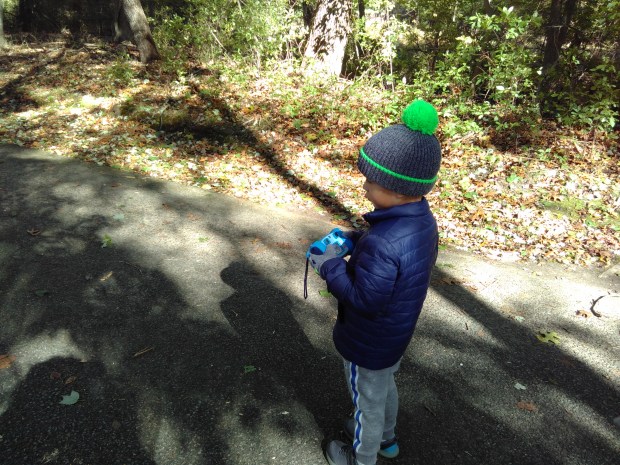
How do you keep the alphabet fresh and fun for a preschooler who knows all his or her letters? Search for the letters outside, of course! This nature activity will challenge your child’s brain to see letters in whole new ways, all while getting some fresh air.

Take about a crisp fall day – we needed to pull out our winter coats, but the sunshine was gorgeous.

Nature alph (3)

First we made a list of the alphabet so we could keep track as we hunted. This is a good chance to review all the letters, or sing the ABC song if your child is learning alphabetical order.

Nature alph (1)

If your child has a camera or nature notebook, this hunt is also a great opportunity to use both! Travis is so proud whenever he takes pictures, although I had my camera, too, to catch closeups of the letters we spotted.

Nature alph (2)

Don’t try and find the letters in order – you’ll drive yourselves crazy. Instead, we stretched our eyes and imaginations, and saw what came to us.

Nature alph x

A few are easy, like x’s and A’s.

Nature alph a

Don’t forget to look up! There was a D in the curve of the branches when we looked up at this tree.

Nature alph d

Travis thought the three holes in this leaf looked like an M


Nature alph m

If we squinted, this funny shape in a tree’s trunk became a Q.

Nature alph q

Y’s are relatively easy to spot (think of Y-shaped sticks), but we liked finding them in shadows, too.

Nature alph y

We loved this spiderweb sparkling in the sunshine. No letter was immediately evident, but perhaps you can make out E’s or F’s marching along the side.

Nature alph f

In sum, this hunt was a great way to spend the afternoon outside together, and sneak in some learning! We didn’t find every letter, but we had fun trying.

Nature alph o

Alphabet Rocks

Alphabet Rocks (3)

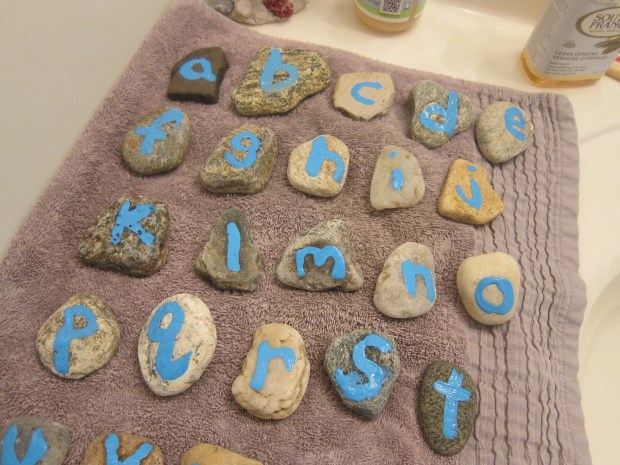
I’ve been wanting to make these adorable letter-learning rocks for Travis for weeks now, but it required finding 26 relatively smooth stones, and we simply hadn’t had a chance to get to the beach. Finally on a sunny spring weekend we headed to the shore, perfect for collecting rocks.

Sands (3).JPG

Travis adored the collection process, finding rocks and shells and other treasures along the way. Do take care in selecting your rocks. You need them to be large enough and flat enough to paint the letters of the alphabet. Ultimately some of mine worked better than others!

Alphabet Rocks (1)

Once home, we washed the rocks and left them to dry overnight. The next day I painted them with lower case letters using acrylic paints. You can alternate several colors if you prefer. My original plan was to alternate blue and gold paint, but the gold didn’t show up well on several rocks, so all blue it was!

For a decorative touch, add dots of white paint around each letter. Once dry, make a black dot in the center with a sharpie.

Alphabet Rocks (2)

Now the rocks were ready for play!

Alphabet Rocks (4)

There’s so much you can do with these. In addition to just spelling sight words (your child’s name, go, stop etc.) we used the rocks for two specific purposes.

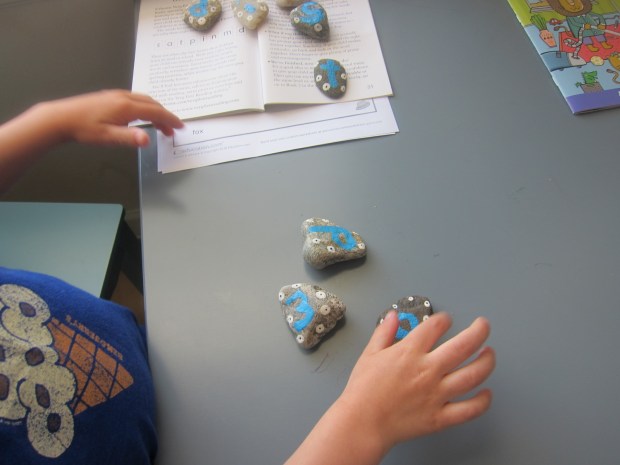
The first was as a learning aid to our Usborne Starting to Read Pack.

Alphabet Rocks (5)

Travis is very tactile, so having to select the rocks that went with each word on the page helped reinforce what he was seeing.

Alphabet Rocks (6)

We also loved using the rocks as a supplement to activity worksheets from Education.com. If you’re not familiar with the site, it’s full of activities and lesson plans for children, ages preschool through middle school. For example, kids will love to discover and learn new words with reading-to-picture match up sheets. Be sure and check out Education.com more learning resources just like the one we used.

For our purposes, Travis first found the alphabet rocks that corresponded with each word before we matched it with its picture.

Alphabet Rocks (8)

This made it so much more tactile and engaging for him than a two-dimensional activity.

Alphabet Rocks (9)

Overall, these rocks are a fantastic tool to reinforce letter learning and early reading. How do you plan to use the rocks? Please share in the comments!

Storytime Crate

Koala Storytime (14).JPG

My hunch seems correct, that these Koala Crates are growing more sophisticated as our subscription moves along. To wit: the storytelling box we received tackled excellent preschool skills, including the parts of a story, the flow of narrative, imagination, and basic letters/handwriting.

Travis carried the box in from the package room so there was no stopping him – nor time to gather myself together as the adult assistant! – and next thing I knew we were setting up our puppet theatre.

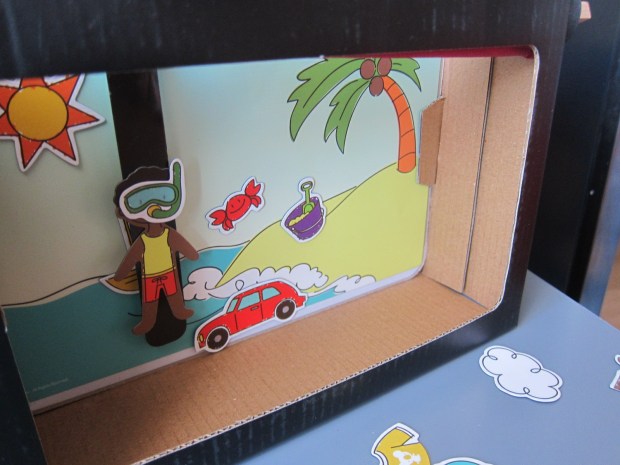
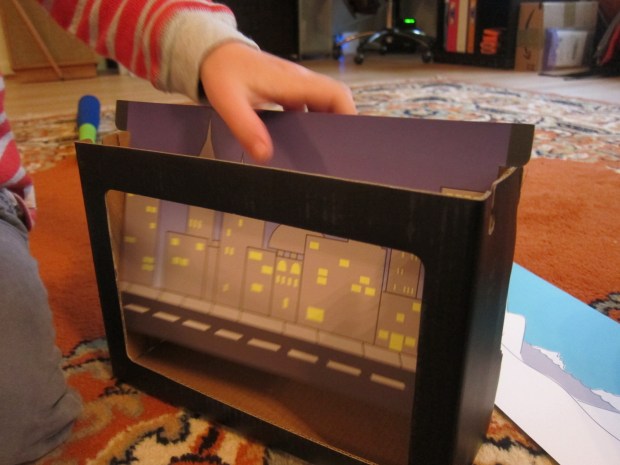
The theatre is easy to slot together, simply adding a white magnetic board background, scenery inserts, and a curtain to the provided cardboard “stage.”
Koala Storytime (3)

We talked about what might happen in each scene… What would he see in the city, for example? Lots of helicopters, he decided! Already I loved the dialog that this crate was opening up.

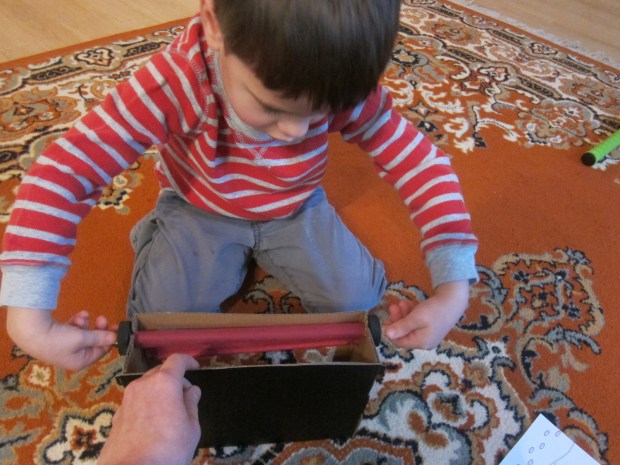
The curtain comes on a rod that slots into place and then is secured by foam circles, and can twist up or down.
Koala Storytime (4)

As a slight fault in design, the curtain is very easy to twist up, but was really frustrating for Travis to twist down. I managed to curb a tantrum and found that it worked best while twisting with one hand and gently tugging on the curtain with the other.

Crisis averted, and very quickly we were moving on to the Dress-Up Puppets. This craft would be hard to replicate at home – you’ll have to buy magnet sheets and do a fair amount of coloring and cutting.

Koala Storytime (6)

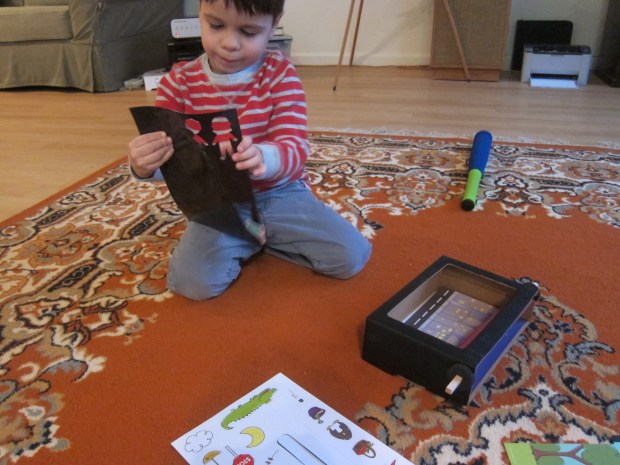
I was thankful to Koala’s efforts as we punched out all the characters, clothing, and props. The props stick right to the magnetic white board hiding behind our scenery!
Koala Storytime (5)

For the people, place on a magnetic strip, then dress them as you’d like.

Koala Storytime (12)

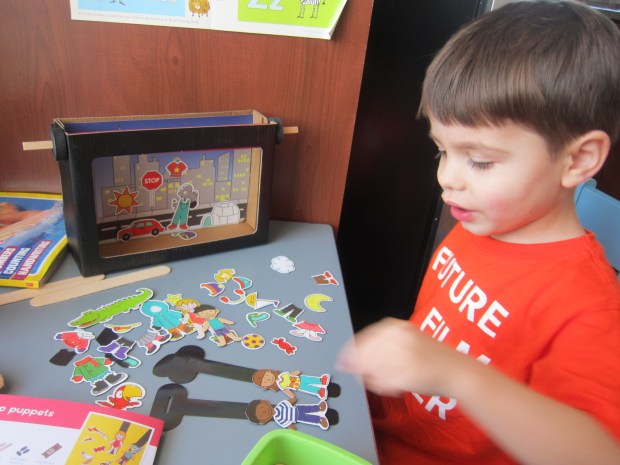
Travis and I had a great time selecting a background and discussing which props made the most sense in each scene.
Koala Storytime (13)

I loved the imagination that followed. Here was a story line about two friends who share a snowsuit when one was cold!
Koala Storytime (16)

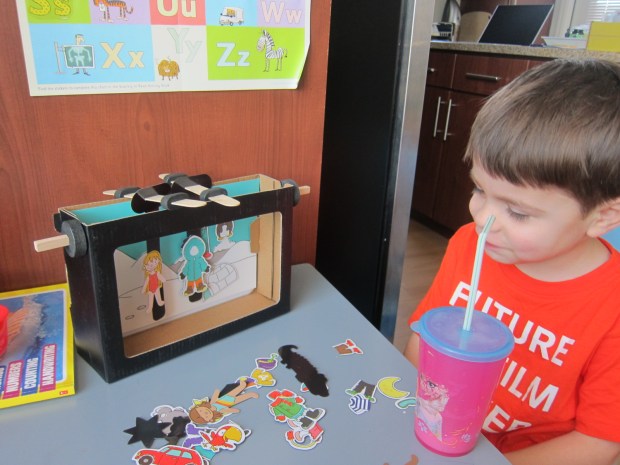
He loved being silly, too, like putting a car in the icy mountain setting, having a crocodile chase people at the beach, and dressing this little character in a cloud:

Koala Storytime (15)

The third activity in the kit was alphabet cards and Alphabet Card Games to go with them. Mommy was excited about this one, Travis a bit less impressed. First, they are fantastic for handwriting practice. The white board slides out of the puppet theatre, and becomes an erasable board, thanks to the provided dry-erase marker. I was really glad for this prompt to practice handwriting. Show your child a letter, then either have them write it or guide their hand, for those just learning.

Koala Storytime (19)

Another option is to show your child the picture on each card, and have him or her tell you what letter it starts with, great for phonetic skills.

IMG_0009

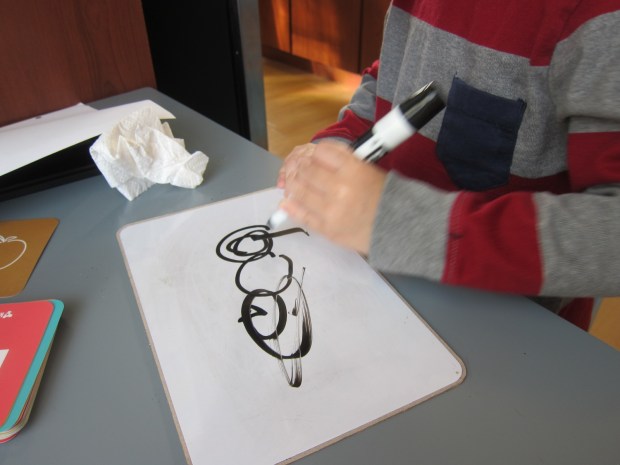
Or, ask your child for another object that starts with the letter. Here’s Travis drawing an ant for a.
Koala Storytime (20)

And of course he loved cleaning the board with a paper towel. I can see us having fun with this deck of cards for a long time to come!

Koala Storytime (21)

The Imagine booklet also included great creative prompts to get your little storytelling acting, like being in a dark cave, or eating a birthday cake.

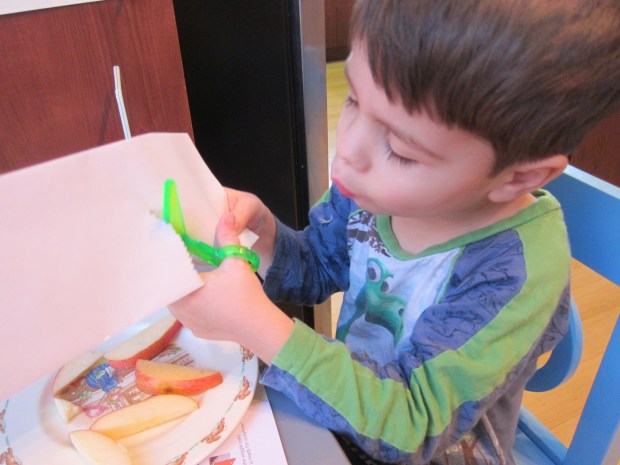
Finally, we put together suggested monster bookmarks, great for marking your place in a book as your enjoy many a storytime together. First, trim the corner from a business envelope.
Koala Storytime (8)

Use remaining parts of the envelope to cut out teeth.

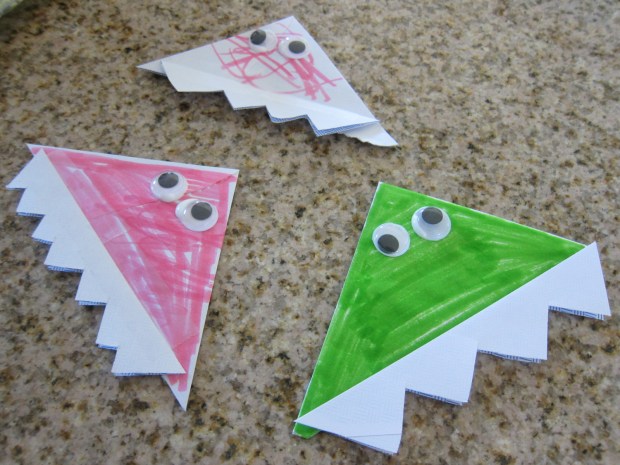
Travis made pink monsters, and I colored in a green one.
Koala Storytime (9)

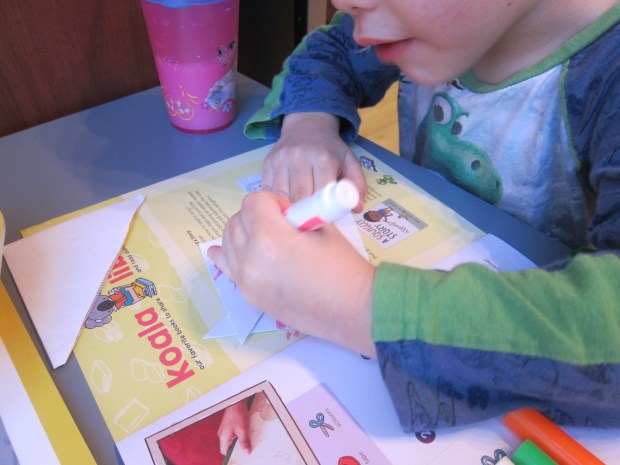
To finish, simply tape the teeth on with clear tape, then glue on two googly eyes.
Koala Storytime (10)

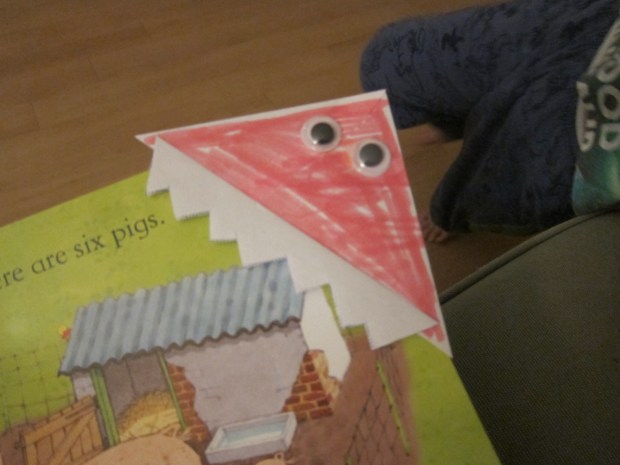
We won’t forget which page we’re nibbling – er, reading – now!
Koala Storytime (17)

In sum, this felt like the most “advanced” crate in terms of topic. Can’t wait to see what’s next Koala!

Giant Alphabet Mat

GIant Mat (2)

This giant alphabet mat turns letter-learning into big fun. Much bigger than our alphabet parking lot, it’s a great visual and physical way to engage children with learning the alphabet. You can tailor the games on the mat to suit everyone from 2-year-olds to preschoolers!

First, lay an unused shower curtain liner on the floor and make circles for all the letters of the alphabet; I traced a plate to make the circles even. Write in the upper and lower case letters in each circle.

Giant Mat (1)

Your possibilities for play are almost endless, from here! First, try walking along the letters as you sing the alphabet song. You could also ask toddlers to toss bean bags into a designated circle, or ask them to hop to a specific space, if they are just learning their letters.

Travis still mixes up a few tricky lowercase letters, so our best use for the mat was to have him find the right spot for our set of lowercase magnets.

GIant Mat (4)

Because we’re into all things cars over here lately, he decided the best way to play was to load up his jeep and have it deliver each letter – whatever works!

Giant Mat (6)

Another great variation for pre-readers and kids learning to recognize the sound each letter makes is to find a toy in your home that starts with each letter.

Giant Mat (5)

I will confess: Travis wasn’t nearly as interested in this giant playing board as I thought he would be. But we’ll set it aside and try it again another day. Let me know what your kiddos think of the mat!

Giant Mat (7)

Letter Match Parking Lot

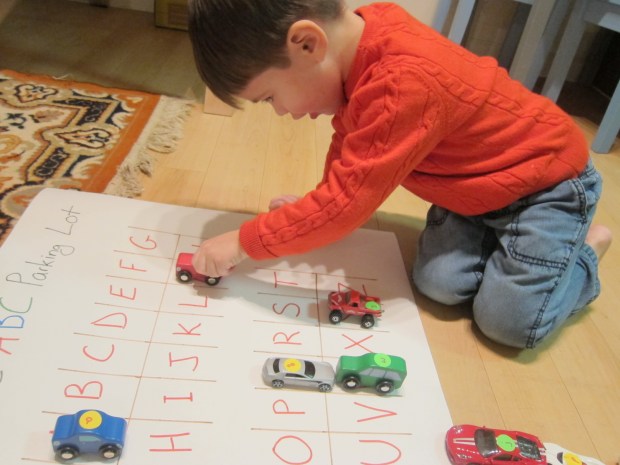
Parking Lot (11)

This game is by far the best way yet I’ve found to get Travis excited about matching upper and lower case letters. He knows his upper case with no trouble, but still mixes up some of the lower case toughies, like d and b, n and u, or p and q. Start your (toy) engines and your little ones will be matching all their letters in no time!

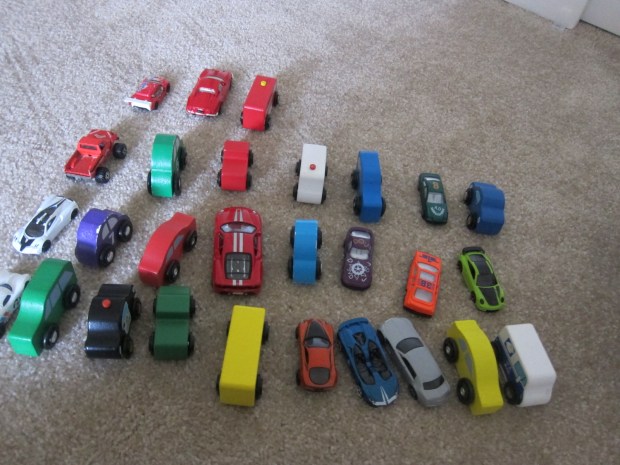
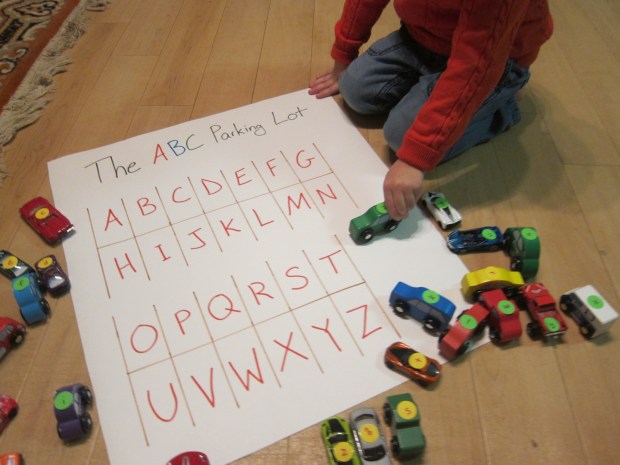
To prepare the parking lot, we first needed to make sure we had 26 cars in the house. I thought we might be a few short, but it turns out we had more than enough – where do all these cars come from? Travis was thrilled when he saw them all lined up.

Parking Lot (1)

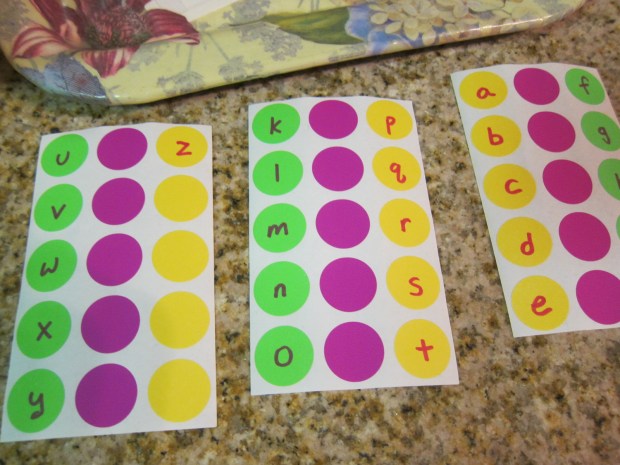
Write out the lower case letters on stickers, and apply one to each car; set aside.

Parking Lot (2)

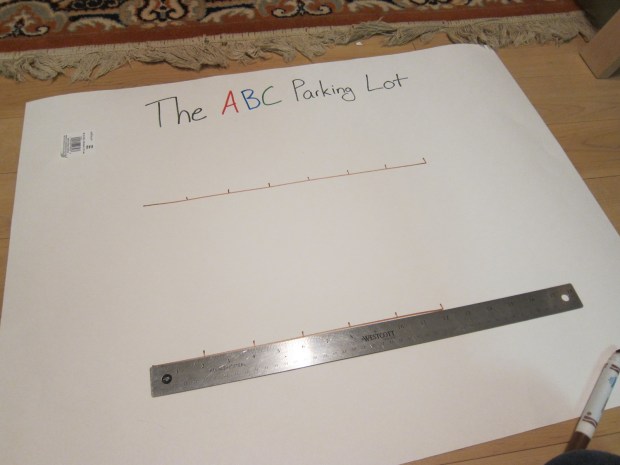
Next I set up the parking lot, drawing 26 spaces on a big sheet of poster board.

Parking Lot (3)

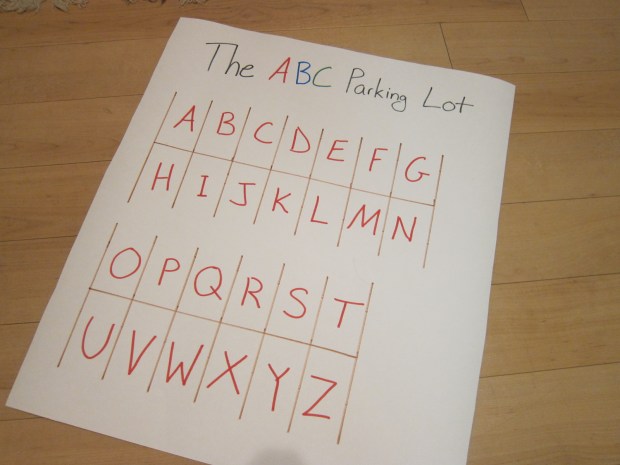
You can use a ruler if you want your lines to be nice and neat. Label each parking space with capital letters, A through Z.

Parking Lot (4)

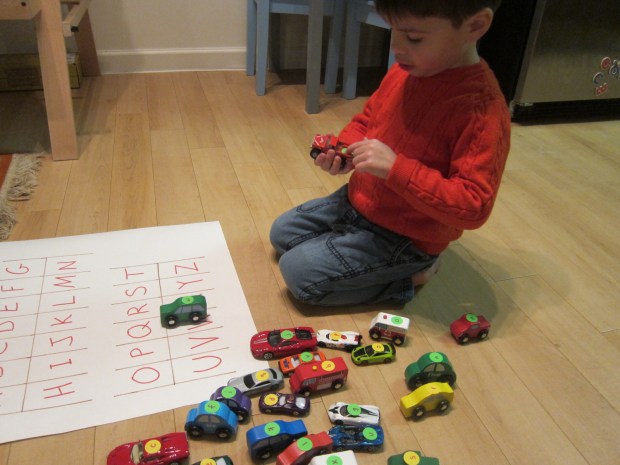
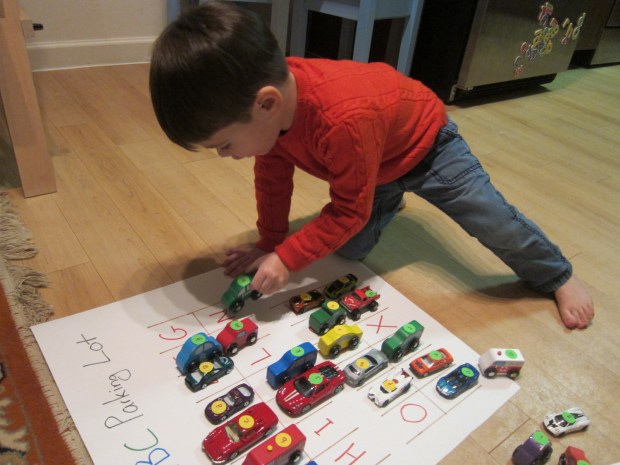
Now it was time to drive our cars in. Travis has dragged his heels with other letter matching games but to my delight, he thought this was just about the best game in the world. Each car received a driver’s name, and drove proudly to its assigned spot.

Parking Lot (6)

I was happy I only had to correct him a couple of times, on some of those tricky mirror image ones mentioned above. Little m finds a spot!

Parking Lot (8)

He found it a little difficult to locate the right capital letter a few times, especially when the lot was empty at the beginning. It was helpful to sing the ABC song together, so he knew whether the letter would be near the top row or bottom.

Parking Lot (5)

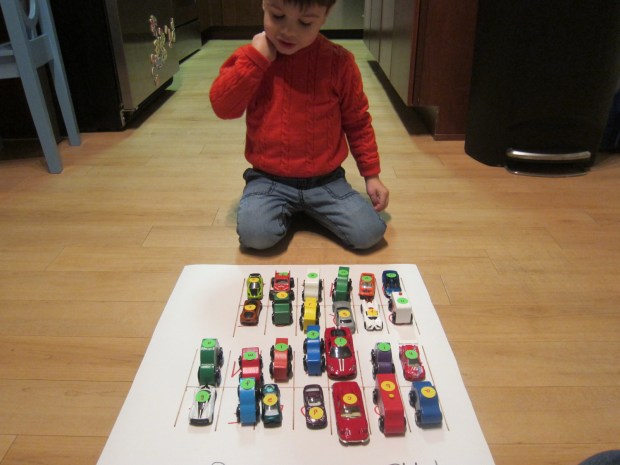
Because you can’t have a game without a hefty dose of preschooler imagination thrown in, he soon decided that it was a snowy parking lot, and all of the cars would need to shovel out.

Parking Lot (10)

No sooner did we park them all than he wanted to do it again!

Parking Lot (12)

What’s your favorite way to match capitals and lower cases with your preschooler? Please share in the comments!

Mitten Match: Alphabet Game


Mitten Match (5).JPG

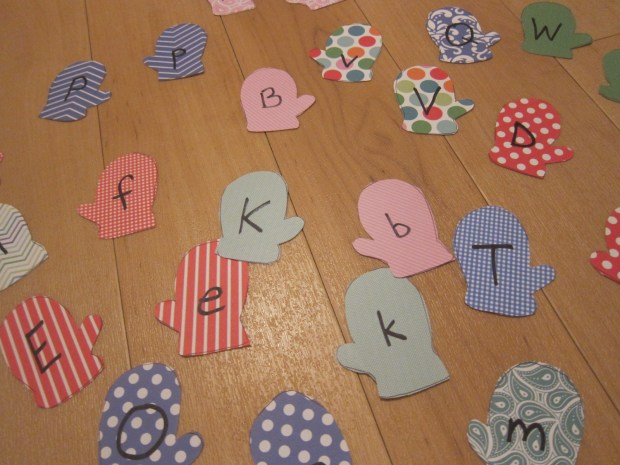
Here’s a cute and seasonal alphabet match game to keep little mind’s sharp over winter break!

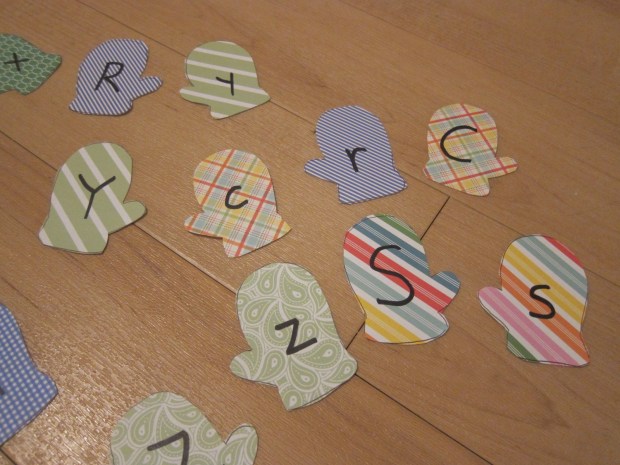
You’ll need 52 mitten shapes to play the game, labeled with all the letters in both upper and lower case. So yes there’s quite a bit of parental prep-work, but you can spread out the task over the course of an afternoon.

Mitten Match (2)

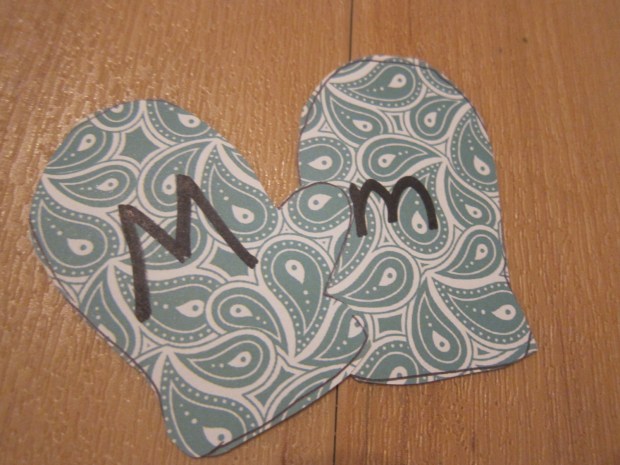
First, I printed out a mitten template (just Google and dozens will pop up), and traced a pair of mittens onto paper for every letter. You can trace onto any paper you like; colored construction paper would be pretty, although white paper would work just fine. I have a pad of patterned paper which worked great because each letter pair could have its own distinct pattern. This served as a cue for finding matches if Travis was in doubt, later on.

Label each mitten pair with the capital and lower case of each letter. Cut out.

Mitten Match (6)

Now it’s time to play with your mittens, and there’s no right or wrong way to do it!

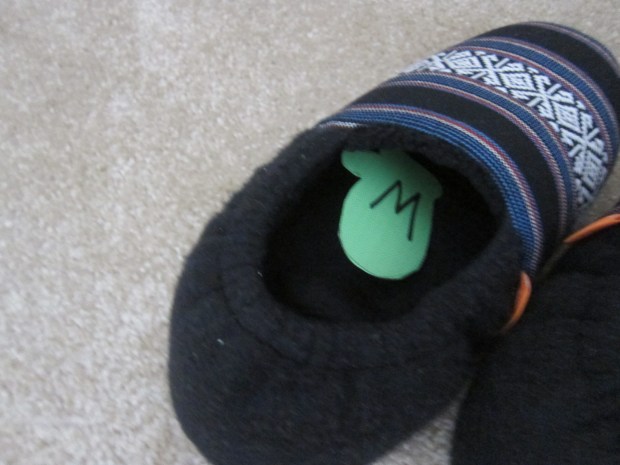
You can set up a hide-and-seek around the house. If playing this version, choose just a few mitten pairs – 26 letters would require a lot of patience and good hiding spots.

Mitten Match (3)

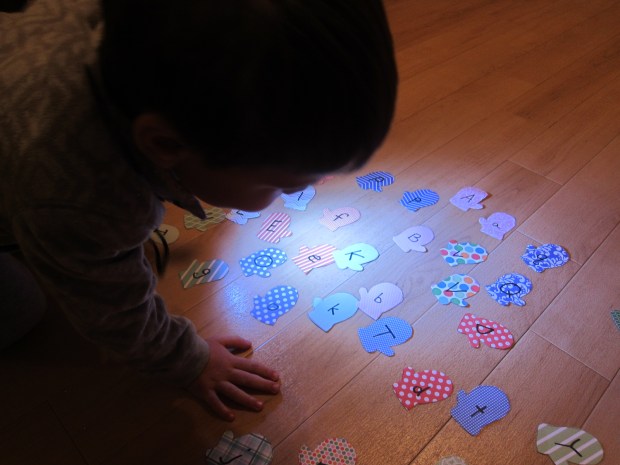
Travis balked a little at the learning aspect of the game, until we found ways to make it exciting. Before bed, I showed him an upper case letter, and he used a flashlight to pinpoint the matching lower case, for example.

Mitten Match (7)

Even more fun, Travis loves loading up toy trucks and cars like they are dump trucks, and I encouraged him to load all the mittens – but only once he had an upper and lower case match.

Mitten Match (8)

He was so thrilled that he went through all 26 pairs, proudly showing me each before it was loaded up into the truck.

Mitten Match (9)

How else will you play with your mittens? Please share ideas in the comments!

Mitten Match (4)


Sight Word Train

Sight Train (5)

I’m on the lookout these days for snekay ways to get Travis to spot his name among a jumble of letters. This time the learning made its way into train set play!

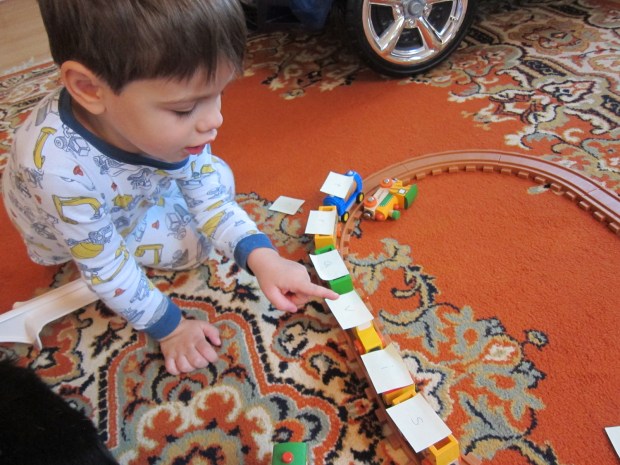
Set up any train track pieces you have (you don’t need anything complicated, just a simple loop), and then set out train pieces. Affix a small post-it note with a letter to each individual train piece.

As mentioned, our first game was to hide the letters of Travis’s name, and see if he could spot them among a jumble of train cars.

Sight Train (4)

The next step was to line those letters up in order!

Sight Train (7)

We also spelled a few simple words; think of easy sight words like yes, no, cat, dog, mom, dad, etc. Because Travis currently loves airplane pilots, we spelled out a-c-e.

Sight Train (3)

Travis is still more comfortable with upper case letters than lower case, so I focused just on the latter today. But really the only limit here is when you run out of post-it notes!

Sight Train (6)

For bigger kids, you can even write full words on the post-its and have them line up their train cars to form a simple sentence.

Cardboard Learning Tree

Learning Tree (11)

This is a great activity that combines seasonal holiday crafting with a little learning. If you play your cards right, the kids won’t even know you’ve slipped in some education with their fun!

For the shape of your tree, you can either paint a large piece of cardboard (holiday gift delivery boxes, perhaps?) or poster board. We chose poster board because I knew it would be easier to cut out the tree. Either way, Travis was thrilled when I said I needed the entire thing painted green.

Learning Tree (2)

We left the paint to dry overnight, and the next day I cut out the tree shape.

Learning Tree (3)

Next we gathered supplies for the “ornaments.” Use holiday-themed cookie cutters or other shapes, and trace the outlines on colored construction paper.

Learning Tree (4)

Don’t worry if your kids don’t trace perfectly, you can always neaten up the lines when cutting the shapes out later.

Learning Tree (5)

The next step was even more fun: laminating the cards. Although this step is optional, it will definitely make your paper pieces last longer. Travis adores whenever he’s allowed to help laminate, so this was a big hit.

Learning Tree (7)

I cut out the shapes, and set them aside.

We hung our tree on the wall and added a brown piece of construction paper as the trunk.

The final step was to add Velcro strips to our tree and ornaments. Place the soft side of the Velcro on the tree at random intervals, then attach one rough Velcro piece to each ornament. Travis loved this even before we added the learning element, hanging his ornaments and then changing their positions.

Learning Tree (10)

There are so many games you can play from this point on! First, I numbered the ornaments one through twenty with a wipe-clean marker, for a number search game.

Learning Tree (12)

A simple wipe with a paper towel and we could play alphabet games. One suggestion is to hide the letters in your child’s name, and have them pinpoint those on the tree.

Learning Tree (13)

As an alternative, write the upper and lower case of a batch of letters, and have your child find the pairs.

In full honesty, Travis was way more into the mechanics of this game (taking on and off the ornaments, wiping them clean with paper towels), than he was with the learning games, but we’ll play again over the course of the next few weeks!

Magnetic Fishing Game

Magnetic Fish (8)

Disappointed with the mechanics of two recent fishing games, we decided to make our own version instead!

As a bonus, this activity was less about the “fishing” and more about a little learning that I wanted to sneak in.

While Travis slept, I cut lots of fish from construction paper – you can use a template or just freehand the shapes.

Magnetic Fish (1)

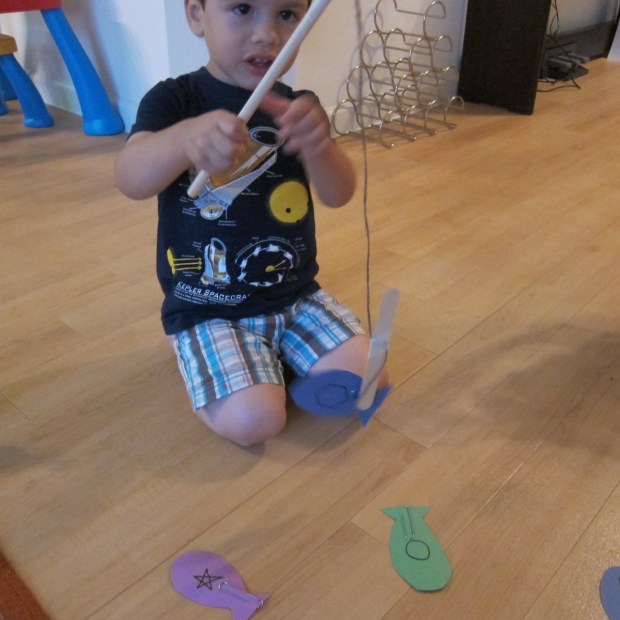
Some of the fish received a letter, and others a shape, and then each one got a paper clip to make it magnetic.

For the wand, tie yarn to a wooden dowel, and secure the yarn with tape. Tie the other end of the yarn onto a magnet. I have a craft stick with a magnet glued to the tip, which makes for sturdier “fishing“, so used that here.

Magnetic Fish (3)

Now it was time to go fishing! (Or, as we like to say in this vegan household, “rescue” the fish).

Magnetic Fish (5)

For kids just learning the alphabet, you can simply ask them to find any letter at random. For older kids, this is a great name recognition game. We found T-r-a-v-i-s in both caps and lower case!

Magnetic Fish (6)

Next up was a shape hunt, which Travis loved. There are so many other variations you could do with this game, such as finding fish of all one color, or finding the biggest and smallest fish.

Magnetic Fish (2)

Travis ultimately decided that he liked fishing in a slightly different way, affixing the magnet to the paper clip by hand, then tugging up. Either way, I loved that this activity got him playing and learning at the same time.

Magnetic Fish (7)

A Week!

A week (17)

I can hardly believe it, but we’ve reached the end (beginning) of our Letter of the Week journey, begun last September. Twenty-six letter weeks (plus a few holiday weeks) later, I can say I have loved every step of this project. Travis can identify every letter, and understands the concept that letters are connected to words, the very first step toward reading. In addition, these weeks have helped me to be creative and joyful as a parent, deciding what would fill our activities and games based on the current letter each week. So please, go back through all my letter posts and I hope you enjoy as much as we did!

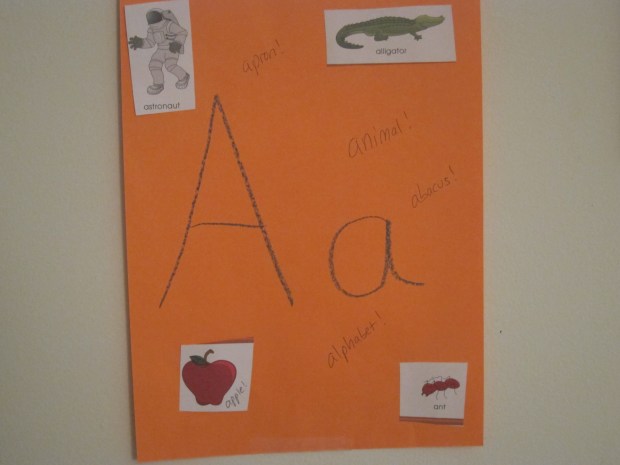
But first, don’t forget to take a look at our A week…

A week (2)

Animals: Pull out all your animal toys of course, whatever you have. You’re guaranteed to have some lying around, whether stuffed animals, plastic animals, puzzle animals, and more. In addition, we went back to old favorite games like an animal safari this week, and then acted out animals with a game of charades.

A week (6)

Put your child’s toy animals in a bag or bin, and take turns selecting. Act out the animal you selected and let the others guess what you are.

A week (9)

Apron: Pop a toddler-sized apron over your little one’s head and have them join you in the kitchen this week!

A week (13)

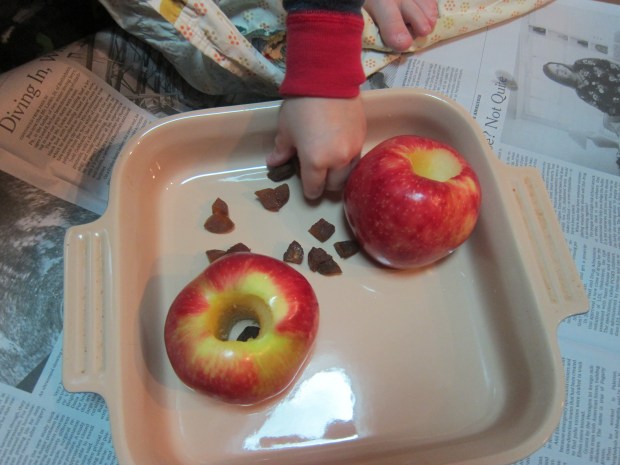
For bonus points, make sure your main ingredient starts with an A, as in the stuffed baked apples we put together.

Acorn Jewels (6)

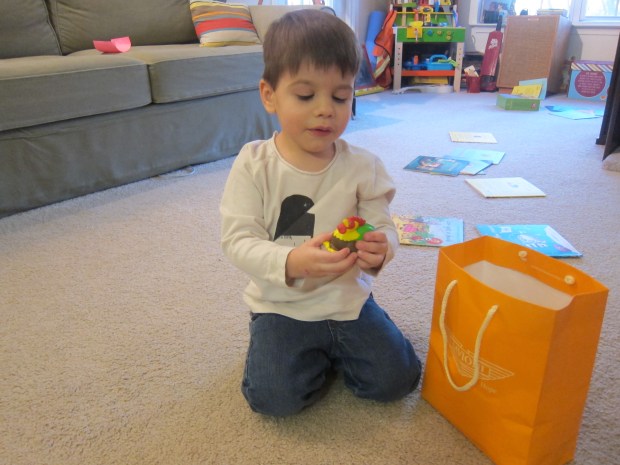
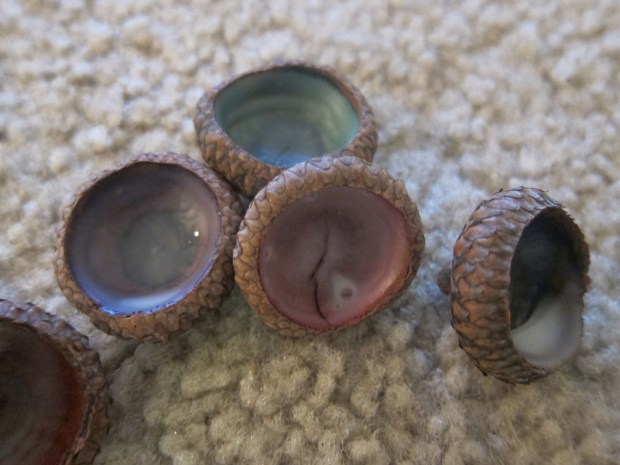
Acorns: We used a little collection of acorn caps (gathered at last week’s bird sanctuary!) and turned them into acorn jewels. Acorns lend themselves to any number of arts & crafts, so if “jewels” aren’t your cup of tea, fashion them into whatever your child will like best.

aquarium (1)

Aquarium: For our field trip of the week, we headed to a local aquarium! (Please note that I do not recommend facilities keeping dolphins and whales in captivity).

A week (14)

Alphabet: How appropriate that A week could also be a sort of recap week, since alphabet begins with (of course) A. We put together an alphabet flower garden, played with alphabet tiles, and searched for alphabet beads in a big bin of colored rice.

A week (7)

And some extras…

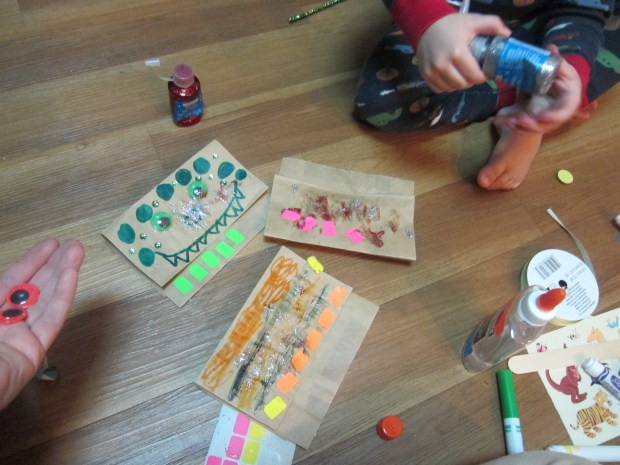
Fine art: The suggestion from Letter of the Week was to assemble paper bag animal puppets. I wanted to Travis to have full range of creativity, so rather than assign him a specific animal to make, I let him create and then built off his design to finish our puppets. He loved using glitter glue and stickers, and we wound up with an alligator and a tiger.

A week (12)

Food: In addition to painting with apples, we ate them in the form of applesauce. Travis also enjoyed animal crackers, avocados, and alphabet soup

A week (10)

Songs: Ants Go Marching is a big hit around here, and we also watched the clip of April Showers from Bambi (which brought back nostalgic memories!).

Books: Some favorites this week included apple books (Secrets of the Apple Tree and The Apple Pie Tree by Zoe Hall), Let’s Be Animals by Ann Turner, Eating the Alphabet by Lois Ehlert, and Alligator Wedding by Nancy Jewell. Check out your library’s non-fiction section for a cute intro to astronauts as well!

A week (15)

Math: An abacus was the perfect tool to help Travis visualize his age. I started by showing him two beads for his own age, then showed my age, my husband’s, and the ages of his friends and cousins. He loved seeing two ages in comparison (i.e. himself versus his 6 year old cousin). For preschoolers, you can use your abacus for early addition lessons as well!

A week (16)

All’s well that ends well… Thanks for reading along on this journey!