Ice Lab Kiwi Crate

Kiwi Ice (3)

Travis’s latest crate from Kiwi Co was perfect to receive in winter, all about ice and snow. Specifically, Kiwi used the theme of ice to talk about crystallization.

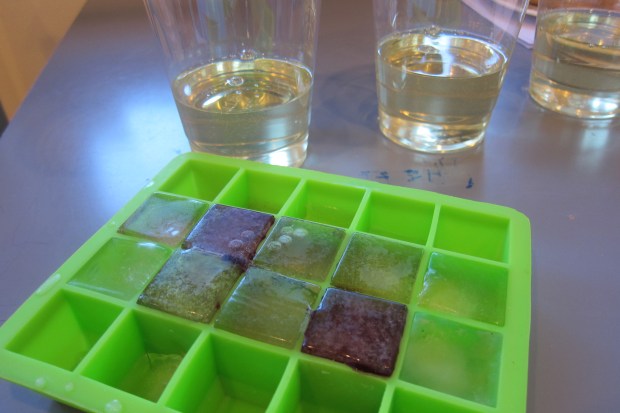
First up was an Icy Experiment. Before school, Travis filled the provided ice cube tray so the ice would be ready to go when he returned home. As a side note, this ice cube tray is fantastic! Made from easy to unmold silicone, it makes adorable square blocks of ice.

Kiwi Ice (1)

Fill the two provided plastic cups with water, then add 3 scoops of salt to one cup only. Now add the ice cubes to both cups and let sit for 1 minute – don’t stir!

Kiwi Ice (2)

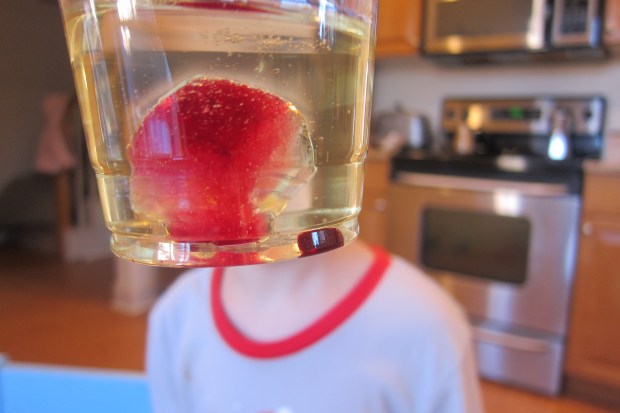
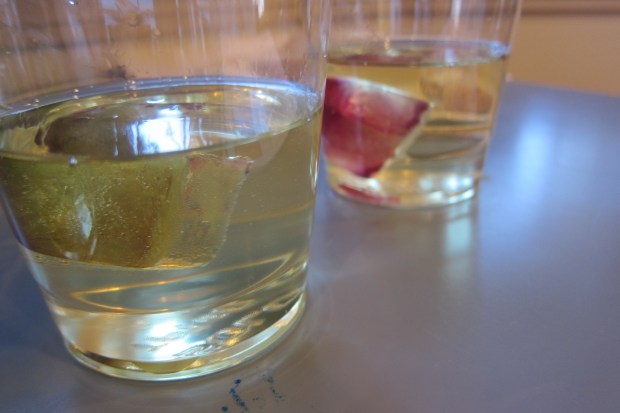
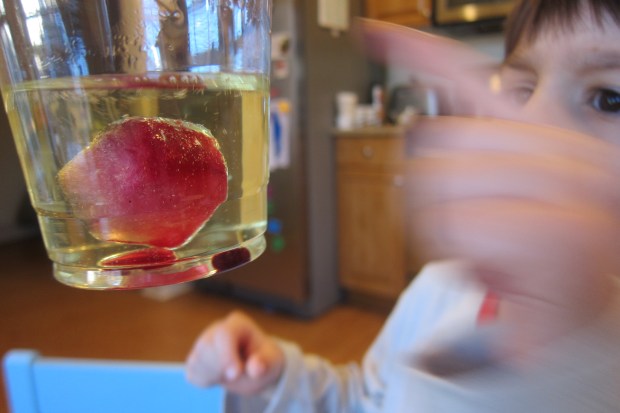
Travis next added 3 drops of liquid watercolor into each cup. You’ll immediately see that the color stays on top in the cup with salt, and floods to the bottom of the one with no salt.

Kiwi Ice (5)

The write-up in his booklet helped Travis understand that the salt had changed the density of the water, i.e. more stuff was packed into the same space, so the ice water stayed on top of the salt water. I told him about the Dead Sea, and how it has so much salt that even people stay afloat, which got a big whoa.

Kiwi Ice (6)

He drew his results, and then we were on to the next project: Crystal Snowflakes. This was similar to an activity we did at Christmas, making crystals in a suncatcher. Combine 1 scoop of provided Epsom salts and 1 scoop of water in a cup, along with 3 drops of the “clear gel”. (Note: We were curious what this gel was! Kiwi does not say). Stir for 30 seconds with a paintbrush until the Epsom salt dissolves.

Kiwi Ice (8)

Now brush over the three plastic snowflake shapes and let sit until completely dry. It will take over an hour but then you should see crystals appear as the water evaporates and the Epsom is left behind.

Kiwi Ice (9)

Oddly, we didn’t have great results. Still, we used the provided yarn to hang the snowflakes in the window, a pretty winter adornment.

Kiwi Ice (14)

We also attempted Explore magazine’s suggestion for a Crystallization Station. Combine 2 scoops of hot water (not boiling) and 2 scoops of Epsom salts in a plastic cup. Travis added blue food coloring so we’d have colored crystals by the end.

Kiwi Ice (12)

Place in the freezer for 10 minutes, then transfer to the fridge overnight. Again, oddly, we had no crystals in the morning, leaving me to suspect something was amiss with our packet of Epsom salts…

Kiwi Ice (11)

So we then turned to the Ice Experiments booklet in the crate, full of further ice exploration for Travis to test. One activity was an oldie but goodie: salt tunnels.

First, make a new set of ice cubes in the square tray. Travis liked towering them into a pyramid on a plate once frozen!

Salt Tunnel (1)

Sprinkle generously with salt and then drip food coloring on. The areas where the salt has melted the ice will become immediately evident.

Salt Tunnel (2)

Two colors made it even cooler!

Salt Tunnel (4)

Travis loved the way this looked and connected his observations to the barrel of salt outside that keeps us from slipping on frozen sidewalks.

Salt Tunnel (5)

As a final experiment, we played Sink or Float, another oldie but goodie. I filled two cups with warm water and we poured a generous amount of salt into one. Ideally you can add salt little by little until no more will dissolve, but since Travis was a bit impatient, ours was supersaturated with salt still on the bottom.

Sink or Float (2)

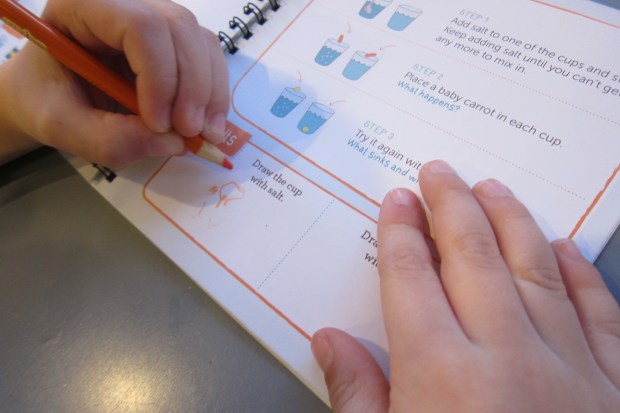
Now drop a piece of baby carrot into each and watch the instantaneous results. Travis loved that one plunked to the bottom and one stayed afloat. He drew the results in the provided “Lab Book,” which made him feel like a real scientist!
Sink or Float (4)

Have fun testing other items, too! Travis tried out Lego figures and marbles.

Sink or Float (3)

Kiwi Co. did not offer suggested reading this time around, but I recommend the following fun books about ice:

  • Ice (Stories Without Words) by Arthur Geisert
  • The Boy Who Invented the Popsicle by Anne Renaud

Kiwi Ice alt

Heavy Bubbles

Heavy Water (3)

This neat experiment with oil and ice is a great way to teach kids about density. If your child has ever noticed how oil and water don’t mix, they’ll love what happens when you try to melt ice in oil.
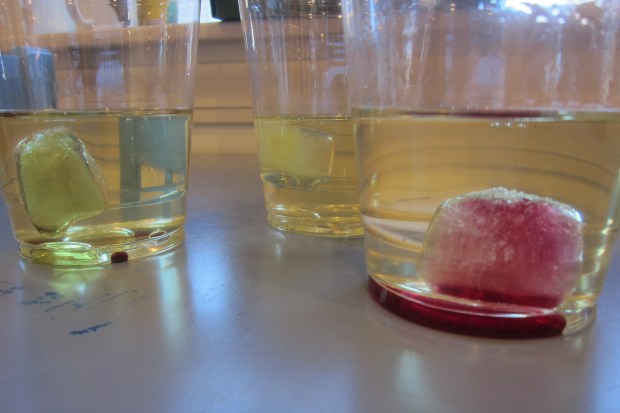
To start, Travis helped fill an ice cube tray. For fun variety in our final results I colored some of the compartments green with food coloring and some red, and left others clear.

Heavy Water (1)

Next we filled three plastic cups with vegetable oil.

Heavy Water (2)

Add an ice cube to each, in your different colors. The ice will start melting off in big blobs. Because water is more dense, those blobs sink down to the bottom of the cup. What fantastic oozy fun to watch!

Heavy Water (4)

I was glad we colored the ice, because the clear ice cube was rather underwhelming to watch, but Travis thought the big globs of green and red were super cool. Quick and easy science, in sum!

Heavy Water (5)

Baby-Friendly Ice Sensory Activity

Baby Ice (2)

Here’s a way your baby can cool off while fitting in sensory play on a hot day!

I took Veronika outside before the sun was too high in the sky, along with a bowl of ice cubes and a few tools.

Baby Ice (1)

First, I simply wanted to see how she would react to the ice. Some babies may want to grab it and really get in there! Veronika seemed a touch nervous about how cold it was but liked the sensation on her toes.

Baby Ice (3)

For added fun, I buried two shape toys in the ice. She loved reaching in and grabbing them out.

Baby Ice (4)

A wooden spoon added to the fun, too. She could “stir” the ice, or tap against the bowl. I put a few pieces on the hot patio and we watched together how quickly they turned to water.

Baby Ice (7)

You can also use measuring cups as scoops. These were fun for her to reach into the bowl with. Or just nibble on!

Baby Ice (5)

Don’t forget about sound! Put a few pieces of ice in one of the measuring cups and shake it for an auditory sensory experience.

Baby Ice (6)

And when you’re done, clean-up simply means dumping out the ice to melt in the grass!

Baby Ice (8)

Ice Boat Races

Ice Boat (2)

This is one of those projects that didn’t turn out quite like we planned, but it got us outside into beautiful summer sunshine, and turned into a separate kind of fun – always a happy ending!

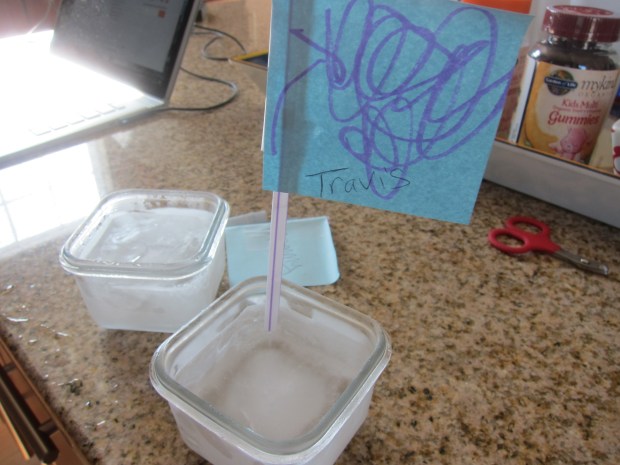
The night before you want to race your boats, freeze water in small containers – tupperware works best. After about an hour, when the water has started to set, insert a straw into each boat to be the mast.

The next morning we decorated flags as the sails and taped to our masts. Run a little warm water on the bottom of the container, and your boats will slip out.

Ice Boat (1)

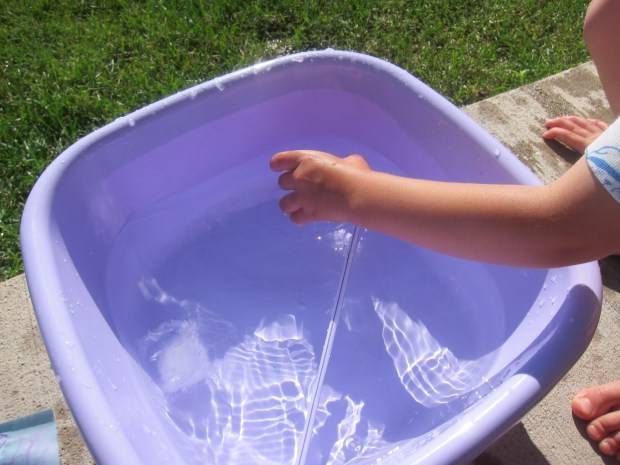
We were sort of set up for disappointment because I didn’t have a large “ocean” for us to race the boats in. An empty sand table or water table would work best, but lacking those, I filled a small craft bin with water.

Oh no, our sails fell off in the water right away!

Ice Boat (4)

Still, Travis got a kick out of huffing through a second pair of straws to move our boats, and see who could sail across the bin fastest. When that didn’t quite work, we paddled the boats with our straws.

Ice Boat (3)

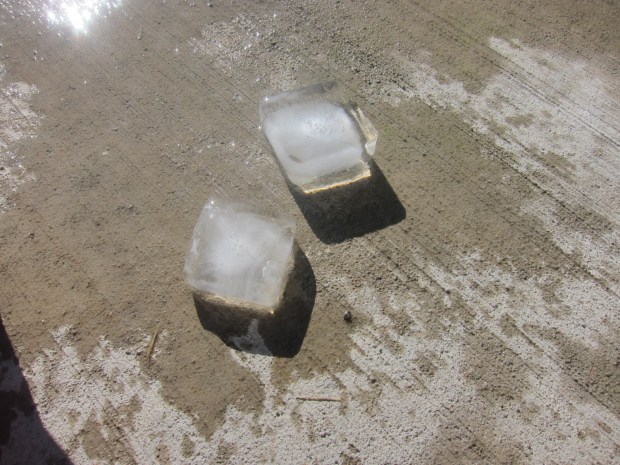
Perhaps more fun, though, was simply holding the slippery “boats”, and then seeing how quickly the ice melted in the summer sunshine. Travis spent the next hour or so on the patio, playing with the water in the bin and cracking apart the ice. So all in all, not a fail!

Ice Boat (6)

Magnetic Ice Science

Ice Magnet (2)

This easy game is such a neat winter-time twist on magnet play!

To prepare, simply place small magnetic items in the compartments of an ice tray, and cover with water. Think small pieces of pipe cleaner, paper clips, metal rings, and similar small items. Freeze overnight.

Ice Magnet (1)

The next morning, I popped the ice cubes out into a baking dish, and invited Travis to see if he could pick up the frozen ice cubes with strong magnets from our magnet set.

Ice Magnet (3)

The results turned out to be so interesting, and lasted us the better part of a half hour! A few items, where the metal poked through the ice already, worked right away. The paper clips were remarkably strong even through a layer of ice.

Ice Magnet (4)

Travis loved discovering what would stick to his magnet already and what needed a wait, for the ice to melt somewhat.

Ice Magnet (7)

For some additional fun – under close supervision! – prop the baking dish between two stools and run your magnet wands underneath; Travis loved watching the magnets slide as if by magic from his wand under the tray.

Ice Magnet (8)

As we played, it became clear that the pipe cleaners were the real puzzle. The slightest bit of water was enough to get in the way of the thin metal strip inside the fuzzy layer.

Travis was the one who suggested we chisel away at our ice cubes to get to them – the perfect idea!

Ice Magnet (9)

We really had to work for that pipe cleaner; the pieces wouldn’t stick to our wand until only the tiniest shards of ice remained.

Ice Magnet (10)

Success at last! Overall, great icy and scientific fun, and Travis enjoyed playing with the magnetic items and wands even once the ice had melted.

Ice Magnet (11)

Ice Lanterns

Ice Lanterns (9)

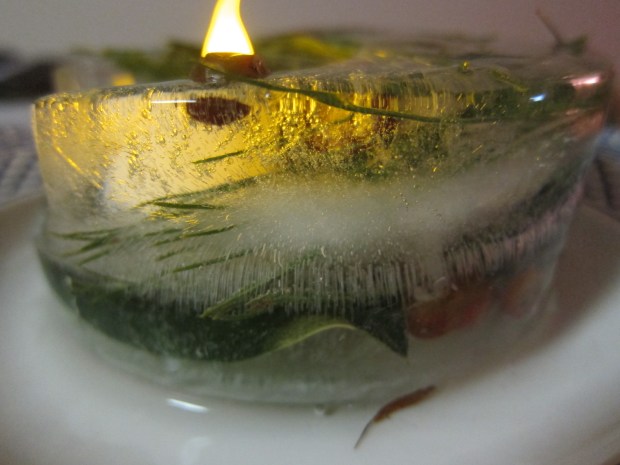
This is a beautiful project to showcase finds from winter nature walks! It’s a multi-day project, requiring two separate rounds of freezing, but kids will love the final glowing result.

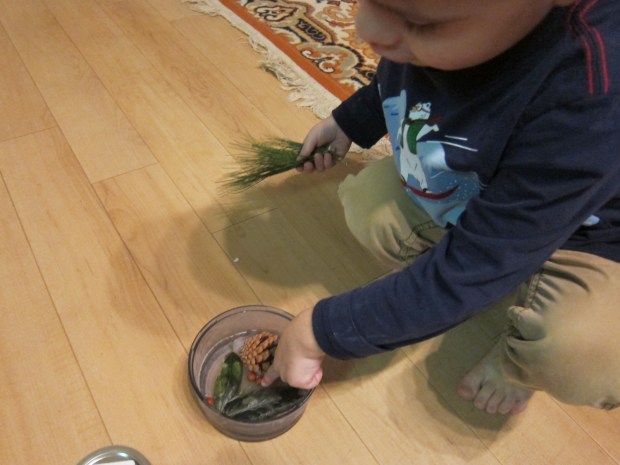
First you’ll need those winter treasures – think holly leaves, little berries, pinecones, and pine needles.

Ice Lanterns (1)

Arrange some of the items in a plastic container (or multiple containers, if you have enough nature items), and fill halfway with water. Freeze overnight.

Ice Lanterns (2)

The next day, Travis was very eager to check out the layer of ice we’d created.

Ice Lanterns (3)

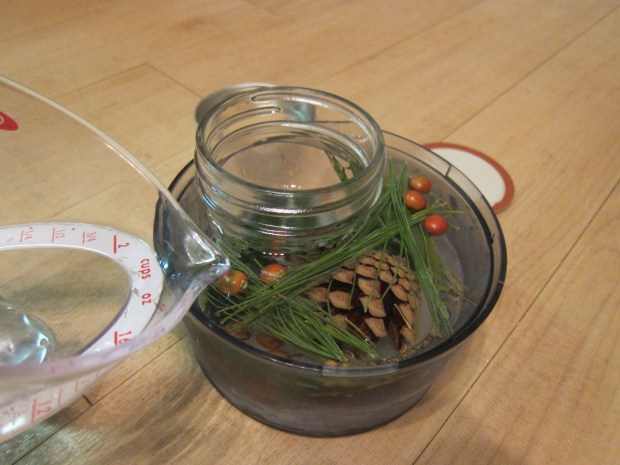
Add a second layer of winter finds over the ice, and also place a glass jelly jar inside. Add water to the top of the plastic container, and freeze again overnight.

Ice Lanterns (4)

Note: If the weather is cold enough, you can even do the freezing outside!

For the final lantern, you need to release the glass jelly jar, leaving behind a hole for a candle. Fill the jelly jar with warm water just for a minute or two, and it should slip out.

Ice Lanterns (5)

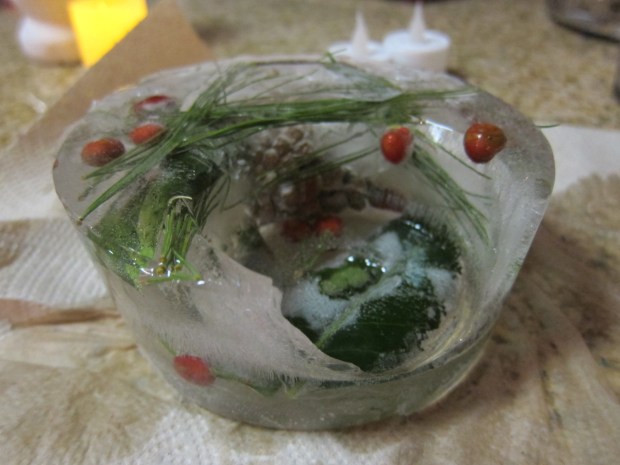
Now run water around the outside of the plastic container, and release your whole ice lantern.

Ice Lanterns (6)

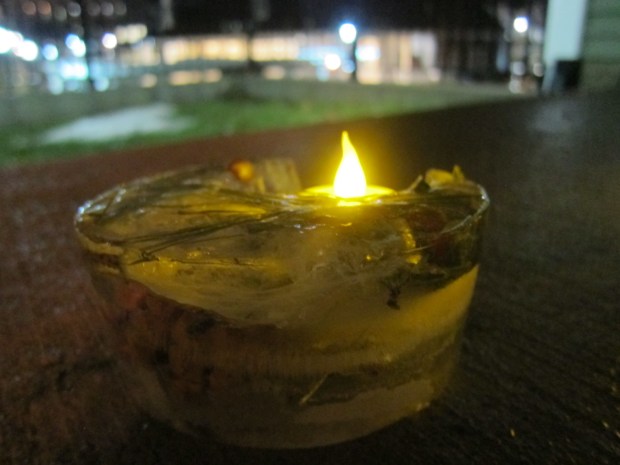
Note: Because our pinecone extended past the middle of our container, our jelly jar wasn’t centered. This didn’t present a problem; it just meant that our final ice lantern wasn’t going to glow as evenly! You can see in the above photo how our candle hole is on one side of the lantern, instead of directly centered.

Finally, place a battery operated tea light inside, and watch the lantern light up the winter night!

Ice Lanterns (7)

You can leave these outside, or take them inside for a warm winter glow.

Ice Lanterns (8)

Salt Painting Ice Sculptures

Salt Sculpture (12)

Not only is this project visually stunning, but it’s a neat way to teach kids why they see salt on the sidewalks and roads in the wake of a snowstorm… bcause the salt helps the ice to melt faster! Bring the concept to life with this fun activity.

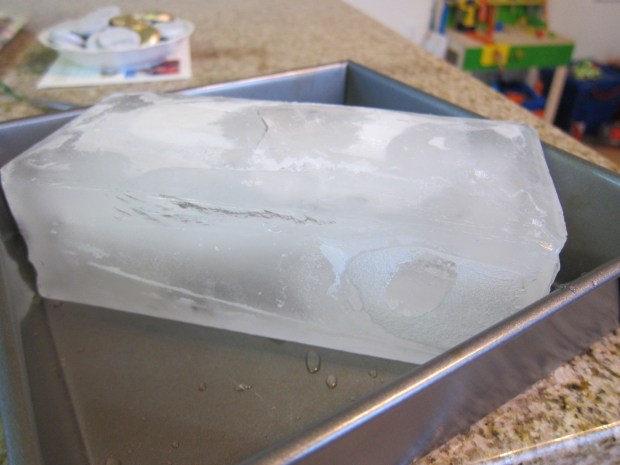
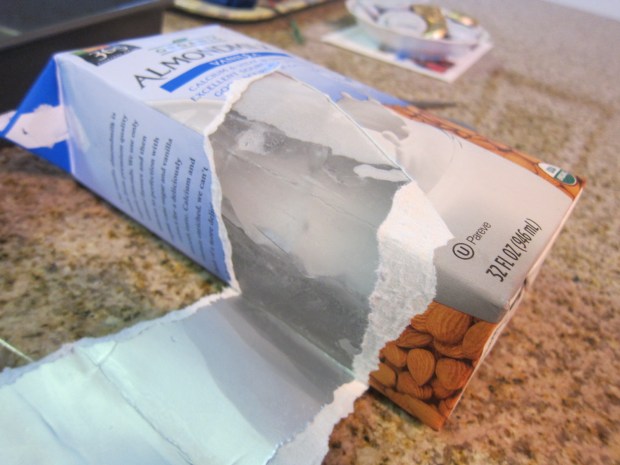
First, fill an empty milk container with water and freeze overnight. In the morning, cut away the box (make a slit with sharp scissors, and the rest will peel away) to reveal a huge ice cube.

Salt Sculpture (1)

Travis was quite impressed – the biggest ice cube ever! Place in a baking tray to catch the mess you’re about to make.

Salt Sculpture (2)

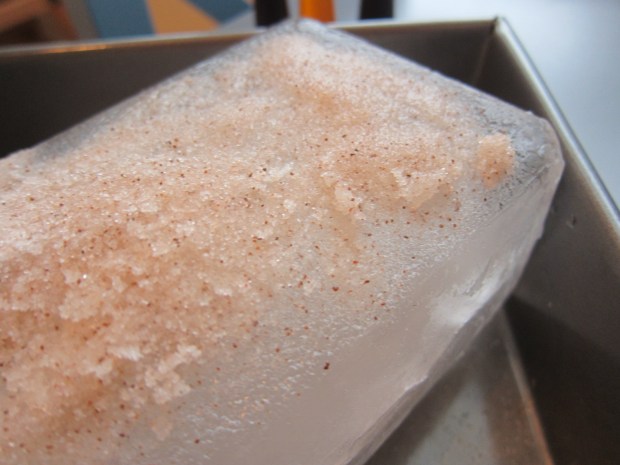
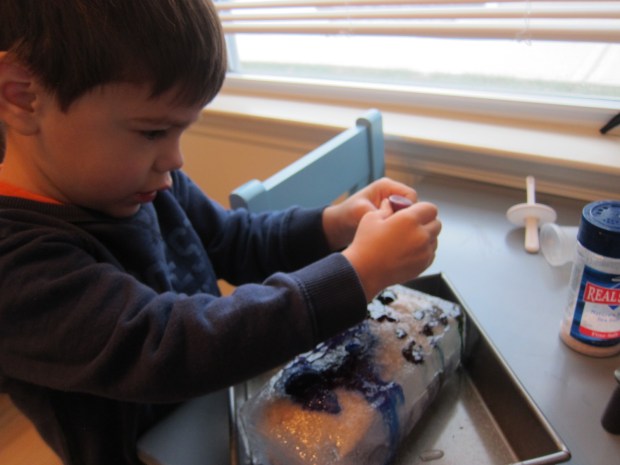
Next, sprinkle a healthy dose of salt over the top of the ice cube.

Salt Sculpture (4)

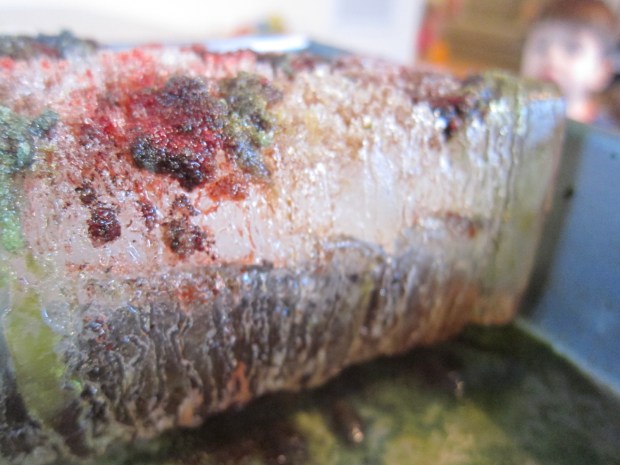
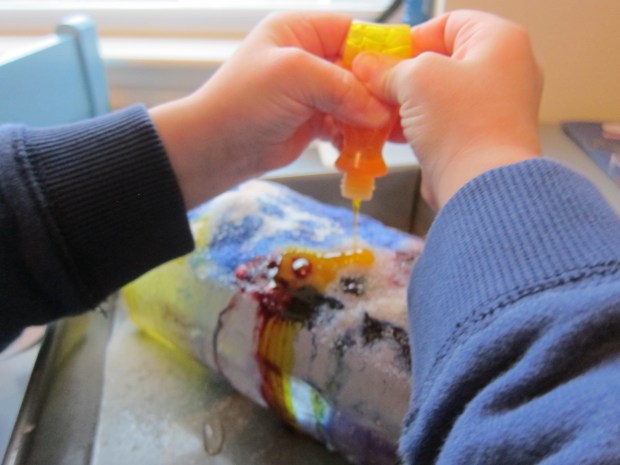
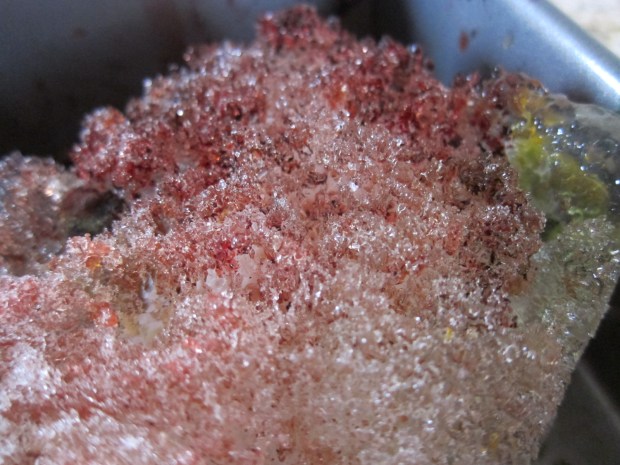
Set out food coloring and invite your child to drip it all over the ice. You’ll soon see runnels of color and salt melting away at the ice block.

Salt Sculpture (5)

The effect is quite stunning! Travis had fun mixing colors, and watching it all run down the sides.

Salt Sculpture (7)

It was his idea to pull out a flashlight; lighting up the rivulets made them appear even cooler!

Salt Sculpture (10)

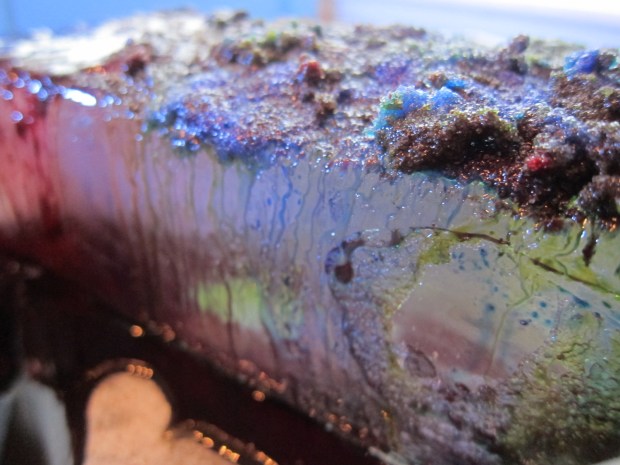
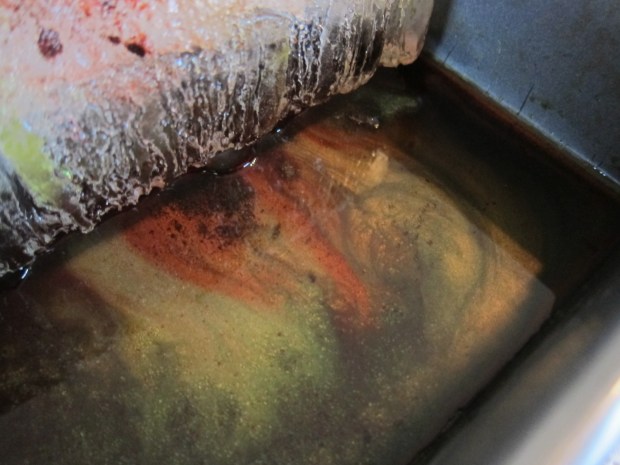
Of course then we needed to add extra salt and more color a few times. We then left the ice block out all morning, and checked on its progress. I had to pour off the melted water a few times, and then we could watch new pools of colored water form.

Salt Sculpture (13)

The craggy surface was fascinating for Travis!

Salt Sculpture (14)

And it turns out we had perfect timing since we got another snowstorm today – and another chance to see salt out on the sidewalks and pavement.


Ice, Water, Vapor

Ice Steam (2)

It’s been quite some time since I hopped over to Hands on As We Grow, but glad I stumbled upon this experiment and remembered what a treasure trove the site is for games and learning!

Parents, use your discretion before embarking on this activity. Kids will need to stand near a burner and hot pot on the stove. If you think they will reach out, wait until they are older. However, if you’ve started to include them as a little sous-chef in the kitchen and they understand the basics of kitchen safety, they are likely ready for it.

Travis loves playing with ice, and today I told him we’d take ice cubes all the way from frozen to steamy vapor. He was so excited to see how it would happen!

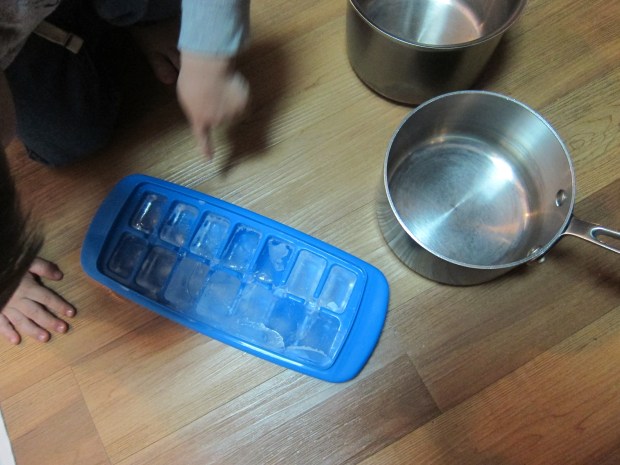
First, have your child help you count ice cubes into two pots. There really was no need to use two, except that it doubled the excitement of watching what happened during the experiment.

Ice Steam (1)

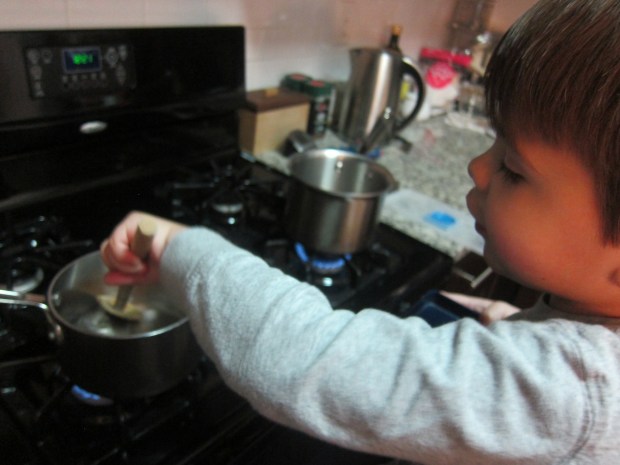
We placed the pots on the stove, where the ice quickly reached the next phase – water! I gave Travis a big wooden spoon to stir with so he could feel the difference between the chunky ice cubes and smooth water.

Ice Steam (3)

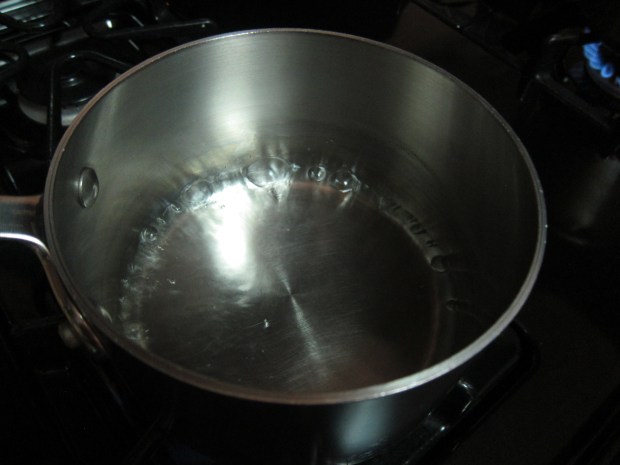
Very quickly, our pots started bubbling and we waited for the steam to appear. We had two ice cubes left over, and added them to the pot when it was at its hottest – Travis couldn’t believe how quickly they melted!

Ice Steam (4)

A great intro to states of matter.

I Week!

i-week-27

I was so happy with the items on our agenda this week, continuing our Letter of the Week journey. The letter I happens to lend itself to games that were right up Travis’s alley. So we started with…

i-week-1

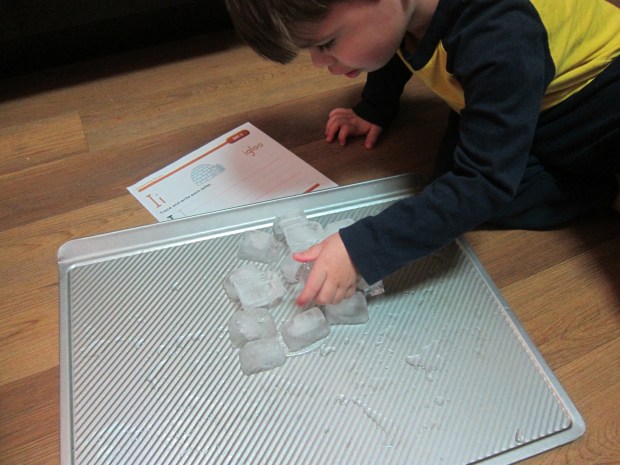
Ice/Igloo: The perfect words for games in the middle of winter, we kicked off the week with icy cold fun, building an “igloo” from ice cubes. When he tired of that, Travis loved watching the ice cubes melt. He would scrape them over a baking sheet, pour the melted water onto a towel, and then return to the task over and over. Endless entertainment!

i-week-21

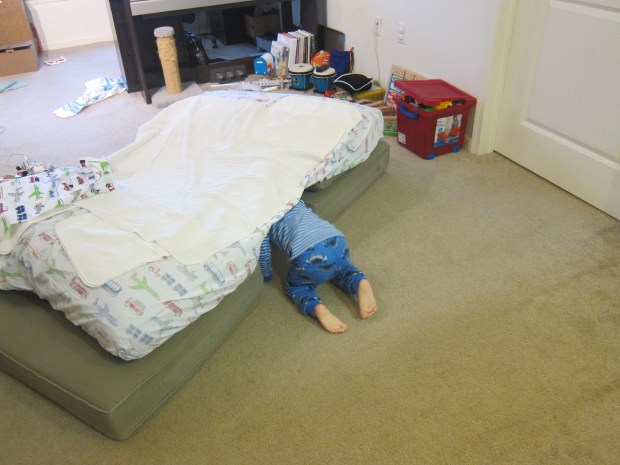
After we discussed what real igloos are, we made a life-size one from couch cushions and white blankets that he could wriggle inside of.

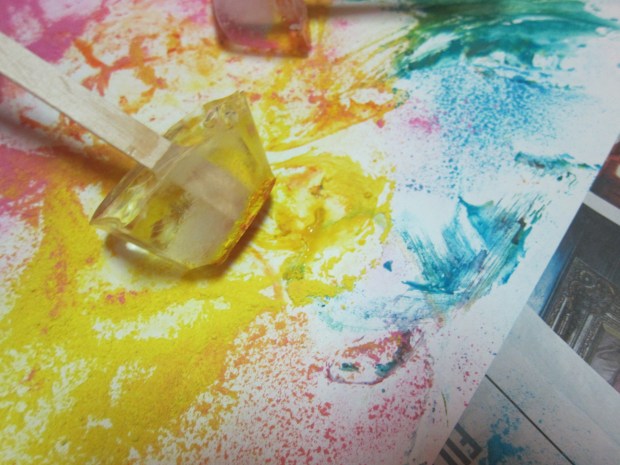
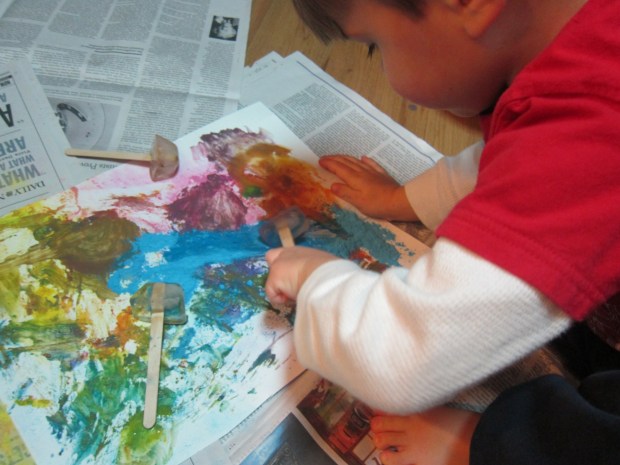
Our ice games didn’t stop there. We’ve painted with frozen paint before, but this time we turned ice cubes themselves into the paint brushes. Simply freeze Popsicle sticks into the cubes of an ice cube tray, and sprinkle powdered paint on paper.

i-week-4

Let your ice “brushes” thaw just a little before applying over the powdered paint; Travis loved watching the colors swirl and mix together.

i-week-6

In addition, we released toys that had been frozen in ice during bath time…

i-week-7

…and made ice luminaries and ice towers, projects so fun that they merited their own blog posts.

i-week-16

Imagine: This word well applies to every week in the life of a two-year-old, but this week I stressed the point whenever we imagined during play. One game that hones imagination is to pull out any hats around the house. As your child dons each hat, have him or her imagine who they are. Travis liked being a “soldier” in a fedora, and also pretended to be the Snowman from the classic video of the same name. We also enjoyed playing with a king’s crown.

i-week-18

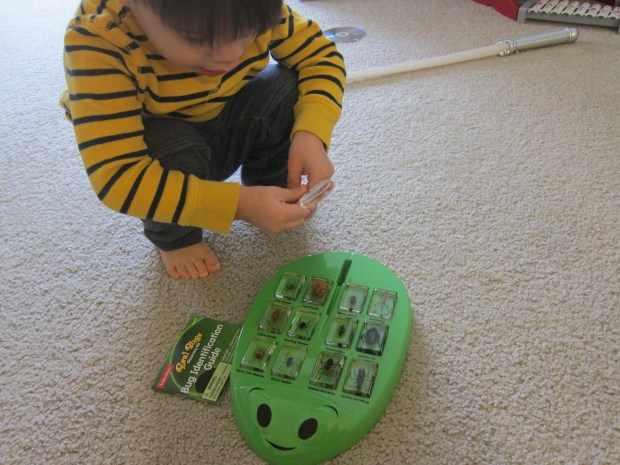
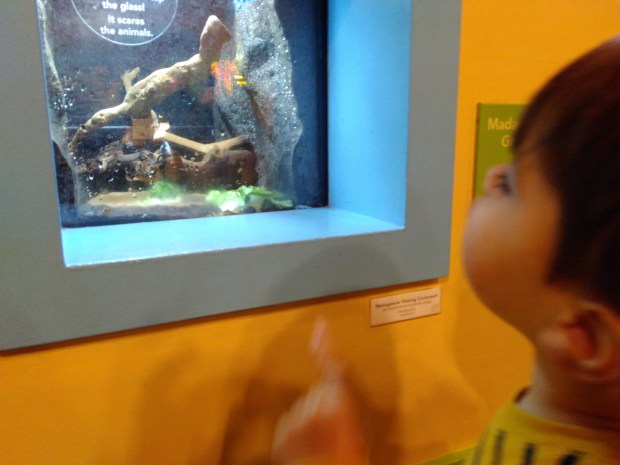
Insects: Travis adores bugs, but this week I taught him that insect is a “fancy” word for bug. We played with the bug kit he has at home, but also took a field trip to the local children’s museum, where he could see cockroaches, stick bugs, and more.

i-week-10

Indoor: I week was the perfect chance to stress the difference between indoor and outdoor voices. Travis latched right on to the concept, and loved waiting just until we were outside of the library to switch from a whisper to a yell.

i-week-25

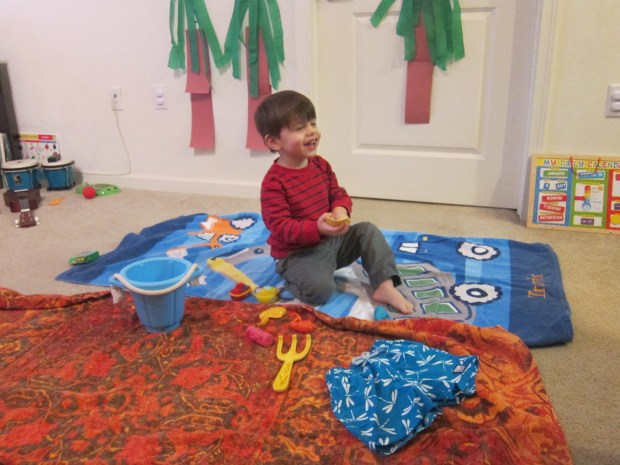
Focusing on the words inside/indoor was also a great way to make indoor winter fun feel special… We set up an indoor beach on a yucky rainy day! We went all out, with palm trees on the wall (use brown construction paper for trunks and green crepe paper for fronds), beach towels, and even bathing shorts worn over pants. I pulled out beach toys and added Hawaiian music in the background as the finishing touch. And of course this was another great game for the imagination.

i-week-14

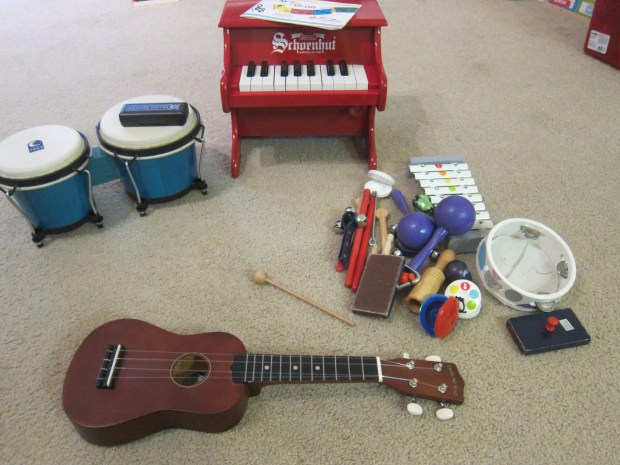
Instruments: I made a big pile of our all instruments, and we got in exercise marching around. We also enjoyed the instruments in the sound room of the children’s museum while there on our insect visit.

i-week-13

Ink: Travis loves stamps and ink pads, so this theme word made for messy enjoyable play. We also talked about how ink can be found in lots of useful things, such as pens and printers.

i-week-8

Iguana: We paid a visit to the resident iguana at a local wildlife rehabilitation facility. Of course, if there are no iguanas near you, it’s the perfect week to read a book about one.

I Spy: A fantastic game for honing observation skills, I suggest starting out with the book I Spy by Edward Gibbs to teach your child the basics of the game. The book features a hole on the last page, through which Travis said “I spy” about all the objects in our living room. Continue the game on car rides all week, for a great way to keep backseat passengers entertained.

As if that wasn’t enough, here were some extras…

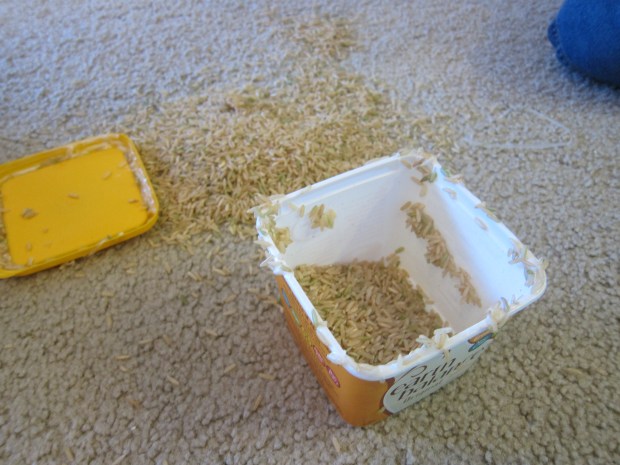
Fine art: My intended project was to make a homemade rhythm instrument from an empty Earth Balance butter tub and rice. Travis helped pour the rice in, after which I glued on the top and let it sit overnight. But when it was time to shake, he just wanted the rice, and peeled apart the glued-on top. So much for that project!

i-week-26

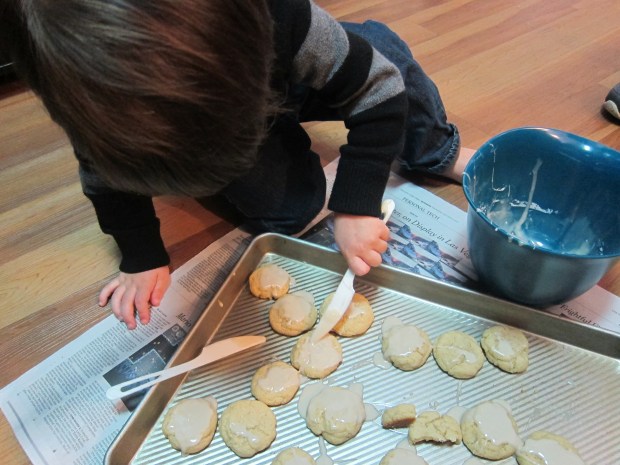
Instead, we put icing on sugar cookies, fitting in our fine motor skills that way.

i-week

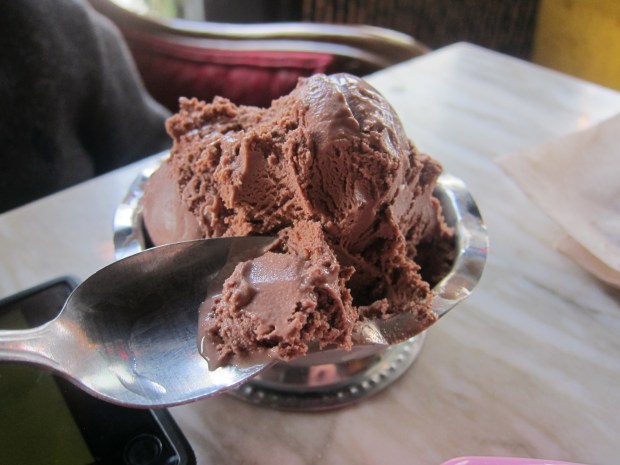
Food: Ice cream was the obvious choice. We headed out for vegan ice cream at a local restaurant for a super special treat. For healthier fare, try making a recipe from Italian or Indian cuisine.

I week (29).JPG

Books: Travis loved three picks from the library: The Indoor Noisy Book by Margaret Wise Brown, The Little Island, by Golden McDonald, and Inch by Inch by Leo Lionni.

Songs: Check out an online clip of Ice Cream from Anne of Green Gables, or – of course – Itsy Bitsy Spider.

Math: Travis loves playing with the ruler on his toy tool bench, pretending to measure things, so this week I introduced the vocab word “inches.” We got out different pieces of Duplo and had fun marking off how many inches each piece was.

i-week-22

That’s all for this time, we’ll see you in Week H.