
What did Max and Mia send from Early Explorers this month? Travis was eager to see when he found the envelope waiting at his lunch table. We instantly were doing the flashlight find-it, and he trotted off to put the stickers on his map (for region-specific instruments like didgeridoos and bagpipes) without my help!

The activity book contained great examples of more than/less than, counting, mazes, and other favorites we’ve come to expect.

Music Craft:
The craft in the booklet was a rainstick – a simple project similar to those we’ve put together in the past. But it featured a neat aluminum foil coil on the inside!

Tear off a piece of aluminum foil about twice as long as a paper towel tube. Compress with your hands into a long snake.

Now twist the snake, almost into a double helix shape.

Cut a circle of construction paper larger than the end of the tube, and glue around the edge. I recommend a rubber band or two as extra security, especially if your child will want to shake the rainstick before the glue dries!

Now slip in the aluminum helix. Spoon in a few spoonfuls of rice – you don’t want it to be too full. Now seal the other edge of the tube.

Shake up a rainstorm! The booklet contained information on the history of this instrument, notably that they are traditionally made of bamboo tubes filled with stones, which Travis thought was neat.
Music Science:
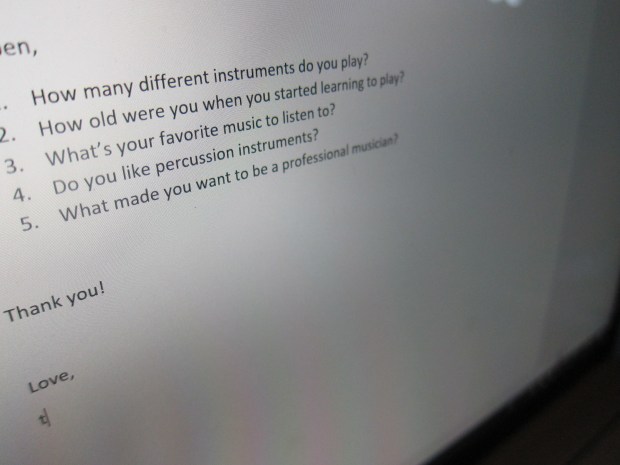
Ok, there wasn’t anything in the booklet that could classify as STEM this time around, so we explored a social science… Interviewing a musician! This is a great way for kids to delve further into what it’s like to live surrounded by music. I connected with a man we’d heard play at a local festival last spring, and he was happy to answer a few questions Travis typed up.
Music Keepsake:
The treasure inside for Travis this month was a little music box to wind. He was thrilled to have his own, since he loves an old music box from my childhood. This one is great because kids can watch and understand the mechanism of dots and moving metal bars that produce each note. It plays Twinkle Twinkle, which will be a familiar and comforting tune.

Music Field Trip:
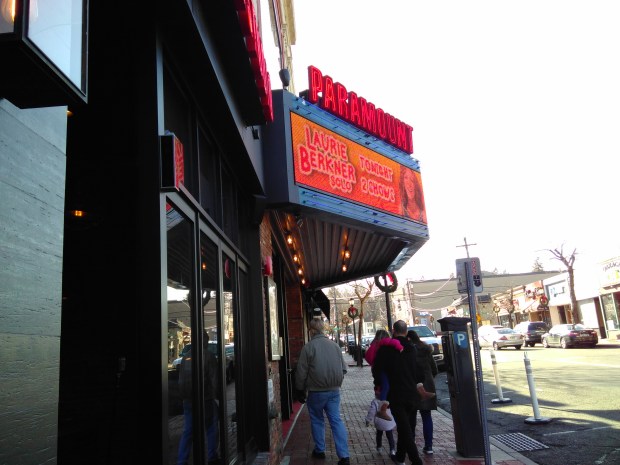
Check out a local concert, of course! This can be anything from a small, kid-friendly show at a venue near you, to a blockbuster show. We were lucky enough to have a big name in town – Laurie Berkner!
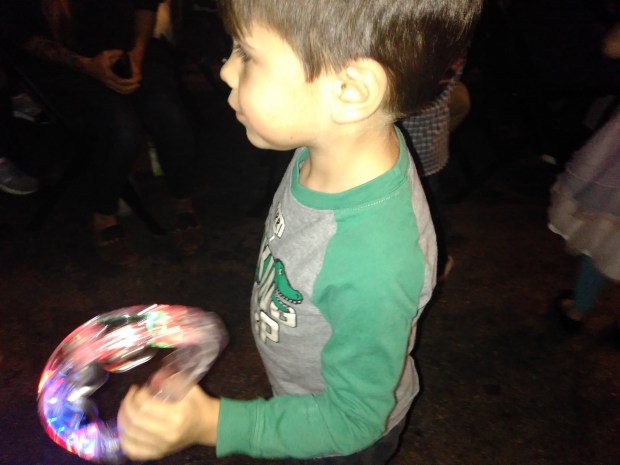
Travis loved dancing in the aisles with his tambourine.
It was a fantastic opportunity to see a real musician strumming a guitar on a big stage.

Music Further Activities:
First, we had to have a family sing-along. I loved that this crate got us pulling out our old bag of musical instruments. For a toddler who loved music, Travis plays instruments surprisingly rarely now, and it was a great chance to jam and sing to old favorites.

Next, we headed to a local music shop, hoping to find some neat instruments. A few were familiar of course, but Travis loved this huge rainstick…

…and could listen to a plethora of sounds by spinning the knob on a synthesizer.

Check out the mandolin and banjo!

We also looked up world music online, finding a great library of clips at allaroundthisworld.com.

Travis also has a chime toy from Little Passport’s shop. We spent some time with it, a great early intro to a piano and playing notes. Children can play along by color to classics like London Bridge and Jingle Bells.

We also were inspired to learn lyrics to favorite songs that we’ve heard, but might have misheard (otherwise known as a mondegreen). Aha, so that’s what they’ve been saying…






 joyful parenting