Sun Catcher Sensory Bags

Sun Catcher Sensory (5)

This easy sensory bag doubles as a sun catcher for toddlers… so be sure to play on a sunny day!

My original intent had been to make several of these bags, using different combinations of primary colors in each. But I quickly realized that my one container of hair gel was only going to fill a single large zip-top bag, so one version it was! If you have hair gel in bulk, by all means make several.

Sun Catcher Sensory (1)

I decided to work with blue and yellow. Squirt the hair gel into the bag and then drip in food coloring so that two separate colors are in opposite corners of the bag. I then taped it to our patio door, which catches the morning sunlight beautifully.

Sun Catcher Sensory (8)

Veronika was entranced!

Sun Catcher Sensory (4)

She loved how squishy it was when she poked at it.

Sun Catcher Sensory (3)

She loved how the colors splashed around when she tapped it with her full palm.

Sun Catcher Sensory (6)

She loved the way we could chase bubbles through it with our fingers.

Sun Catcher Sensory (7)

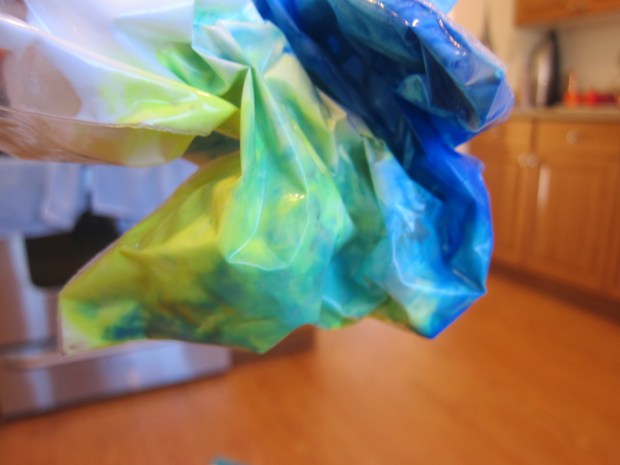
Meanwhile, I loved pointing out the reflections it made on our wall, and how the blue and yellow were combining toward green in the center. Plus I loved watching her sunlit smile as she played.

We left this one up for a few days!


Sun Catcher Sensory (9)

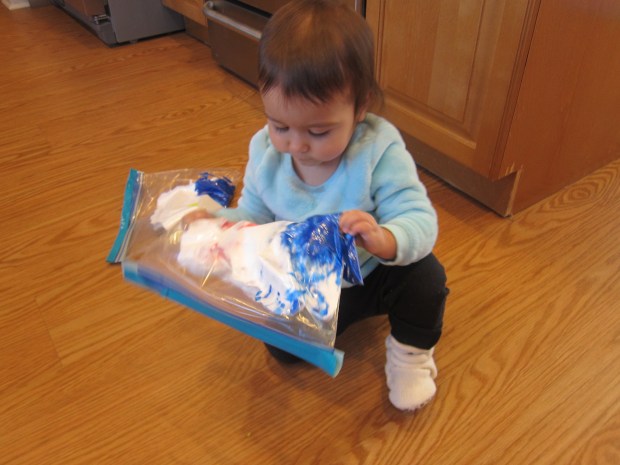
Shaving Cream Color Mixing Bag

Shaving Cream Color Mix (4)

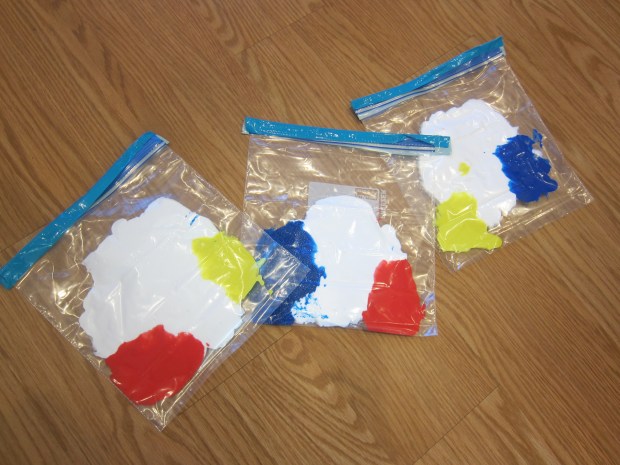
Here’s a spin on a recent color mixing activity Veronika enjoyed for Valentine’s Day. This time the bags were bigger and the whole thing was a lot squishier!

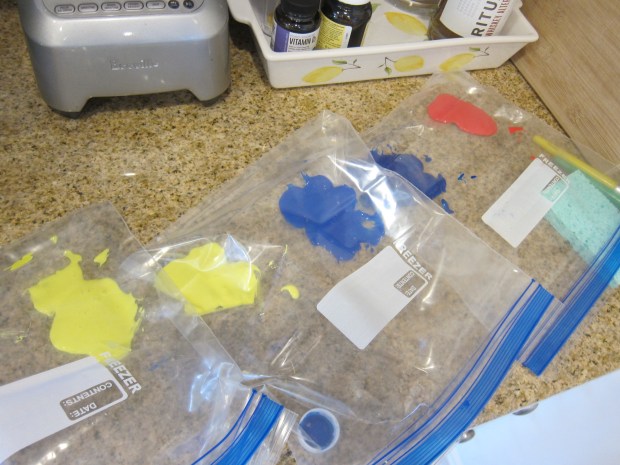
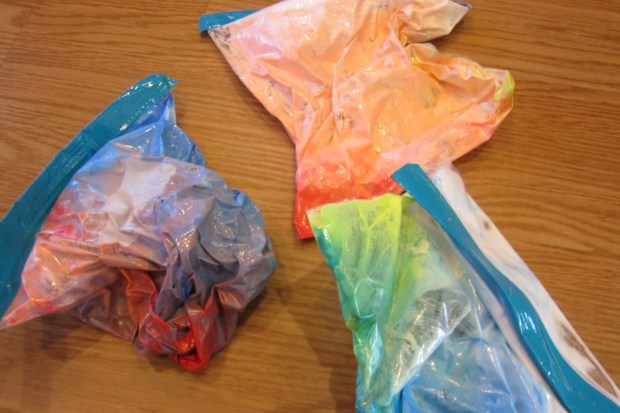
For set up, squirt paint into the corners of three gallon-sized zip-top bags. Each bag should contain a pair of primary colors: red + yellow, yellow + blue, and blue + red.

Shaving Cream Color Mix (1)

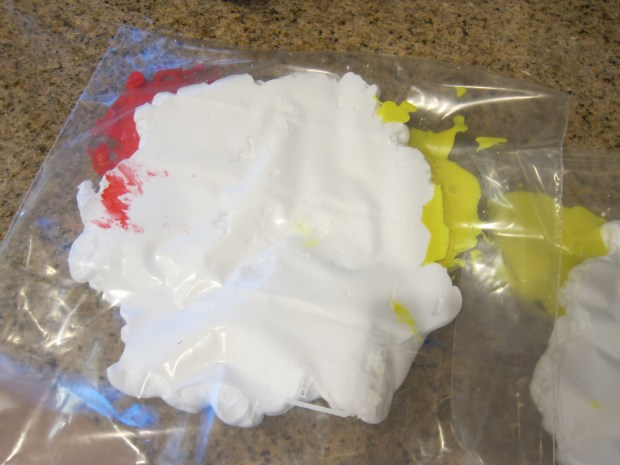
I next squirted a healthy dose of shaving cream into each bag between the two colors.

Shaving Cream Color Mix (2)

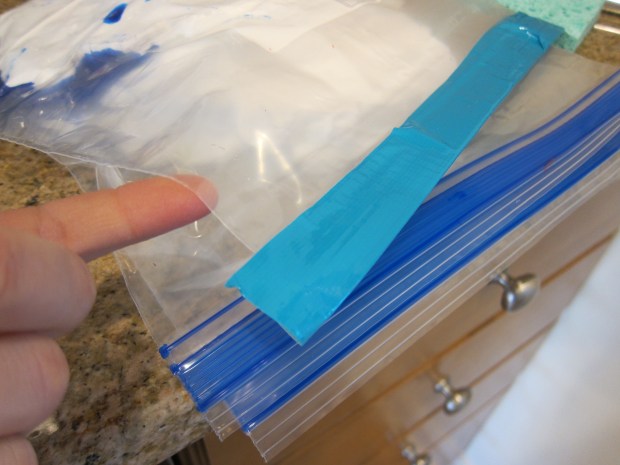
Seal the tops with duct tape for added security, or this could get messy!

Shaving Cream Color Mix (3)

Now it was just up to Veronika. She immediately loved squishing the bags between her palms.

Shaving Cream Color Mix (6)

It turns out they were also a blast to throw up in the air…

Shaving Cream Color Mix (7)

…or behind her back. Ta da!

Shaving Cream Color Mix (8)

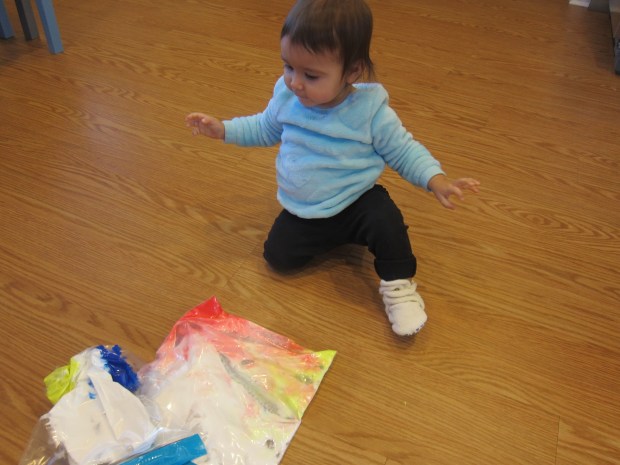
Once she had thoroughly kneaded the bags, the colors started to mix together. It wasn’t as clear a “lesson” on primary and secondary colors as other sensory bags we’ve tried, but the visual effect was still lots of fun and quite pretty!

Shaving Cream Color Mix (9)

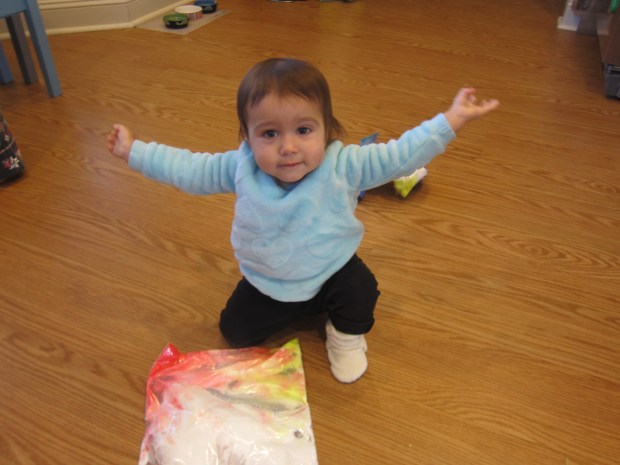
Here is the final, squished and much enjoyed result.

Shaving Cream Color Mix (!0)

Color Wheel Gecko

Color Gecko (12)

This project requires a bit more adult set-up usual, but is so worth the effort for the learning and beautiful final product! It’s a fun way to introduce the concept of primary and secondary colors to kids and has a fun animal theme thrown in.

Geckos or chameleons are the perfect creature to illustrate the color wheel because they can camouflage, or change their color to reflect their surroundings. If you want, start off this project with a read of Leo Lionni’s A Color of His Own – then get crafting!

As mentioned, a lot of the set-up here will be for grown-ups only, unless your kids are 1st grade or above. But Travis pretended he was a teacher giving a lesson on geckos while I worked!

Color Gecko (2)

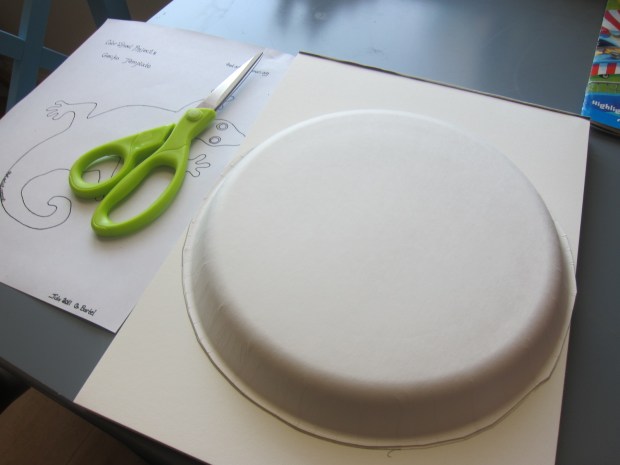
First, trace a circle onto watercolor paper using a paper plate as a guide. Cut out.
Color Gecko (1)

Place the circle over a second piece of watercolor paper, leaving a bit of the circle hanging off the edge (this is the handle that kids will spin later on). Use a pencil to mark where the center of the circle is on the circle itself and on the background paper. If you hold the paper up to the light, you can mark the back as well. Trust me, you’ll want this point as a guide later!
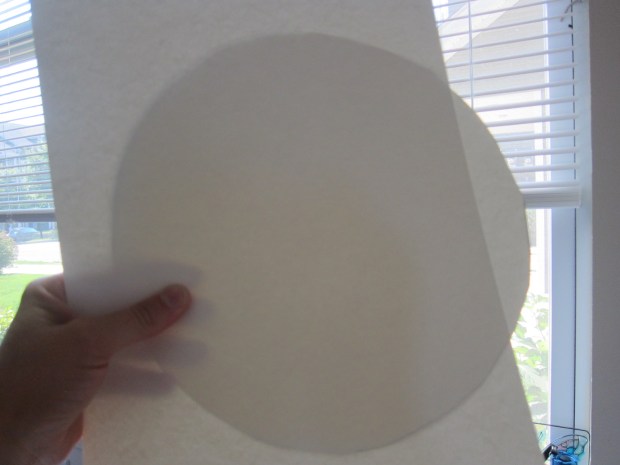
Color Gecko (3)

Cut out the gecko template, and trace onto the background paper, making sure he doesn’t cover that center mark you’ve made.
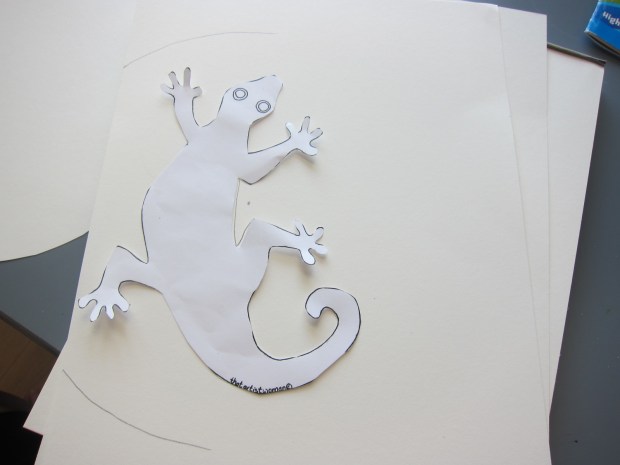
Color Gecko (4)

Now you need to cut out the traced gecko. Grown ups can pierce a hole with scissors and cut out, but if your kids want to do this step themselves, it may be easier to cut in half along the gecko, cut him out, and then tape the paper back together with painter’s tape. See this link for a full demo.

Now it was time to paint! Grab your circle and a set of watercolors. Travis watched as I divided the wheel into six segments and we discussed the primary colors: red, yellow, and blue. Meanwhile, he couldn’t want to start painting his own scene, talking about what colors he chose.

Color Gecko (5)

As I filled in each secondary color on the wheel, I had him guess what we’d make first. “If I have red and add yellow, we get…” “Orange!” he predicted.

Color Gecko (6)

Looks like those art classes are paying off! You can mix up your own version of each secondary color on a paper plate, or just cheat and use watercolors from your set – I won’t tell!

Color Gecko (8)

While Travis continued to paint watercolor masterpieces on blank paper, I painted a background scene for our gecko, a little tree with green leaves, blue sky, and a bit of peachy sunset (on Travis’s request). We left our watercolors to dry overnight.

Color Gecko (7)

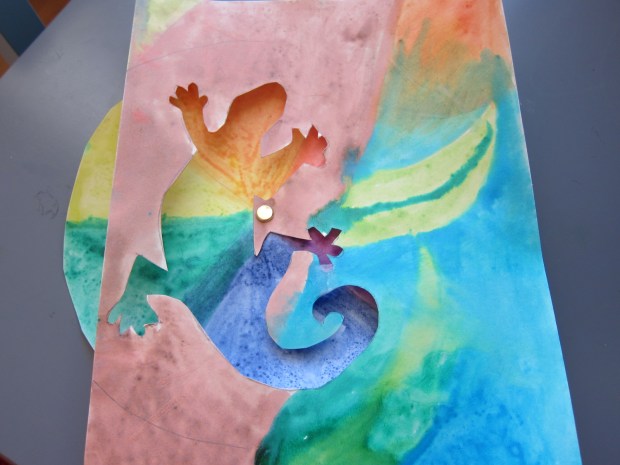
In the morning, poke a paper fastener through the color wheel and your background page, so the ends of the fastener are on the back. Fold over to secure.

Color Gecko (10)

Travis was so excited by the way the colors could spin and how he could watch his little gecko change color. “Now he’s blue! Now he’s green!”

Color Gecko (11)

This project was an absolute delight.

Color Mixing

Color Mixing (5)

I’ve recently discovered the all-natural, all vegetable-based food coloring from Watkins, which I am loving for their consistency and ease of use (no mixing required, as is the case with many natural pigments).

To have fun with the colors, we pulled out this simple game – it’s also a great way to discuss primary (yellow, red, blue) versus secondary (green, purple, orange) colors.

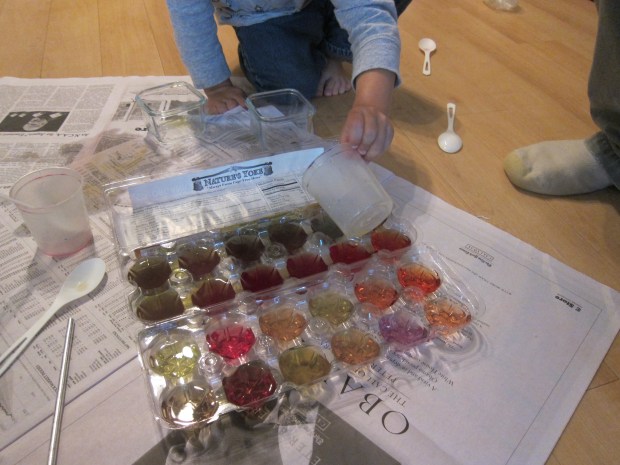
First we mixed our colors in 4 clear cups, one each of red, yellow, green, and blue. Add a pipette or spoon to each. Either one is good fine-motor skills practice.

Color Mixing (1)

We used an upcycled egg carton for the color mixing, giving ample opportunity to make new colors in the multiple compartments of this one container. Place a little clear water in each compartment, then begin adding your colors and see what happens.

Color Mixing (2)

I thought Travis might consider the game a little old-hat (we did something similar back in the spring) but he was so into his creations.

Color Mixing (7)

Watching purple and orange form were big hits.

Color Mixing (6)

He also was very interested in how he could make brown (which he says is his favorite color!), and intrigued when I said he could create it just by mixing all the colors together.

Color Mixing (4)

An easy and fun diversion for a rainy afternoon.