Sensory Pumpkin Decorating

Sensory Pumpkin Decorating (8)

This activity is half sensory bin, half a way to decorate a pumpkin with your toddler without pulling out the carving knives. Which adds up to 100% fun!

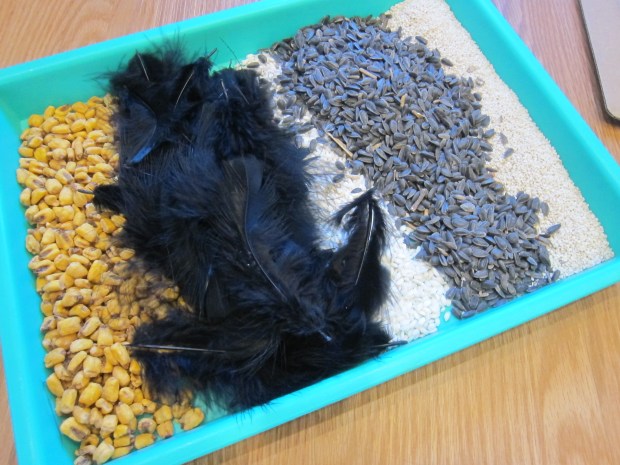
I wanted an assortment of items to decorate our pumpkins, aiming for a variety of textures. I also wanted to stick to a white and black color scheme for Halloween. So in a shallow craft tray, I lined up: dried corn, black feathers, uncooked white rice, black birdseed, and white sesame seeds.

Sensory Pumpkin Decorating (1)

You can mix and match based on what you have on hand, but aim for a nice variety of texture and size. Veronika immediately wanted to dig through the items in the tray with little plastic cups, so things didn’t stay in their “area” for long.

Sensory Pumpkin Decorating (2)

But I loved watching her explore all the texture. She especially seemed to like those fluffy craft feathers!

Sensory Pumpkin Decorating (5)

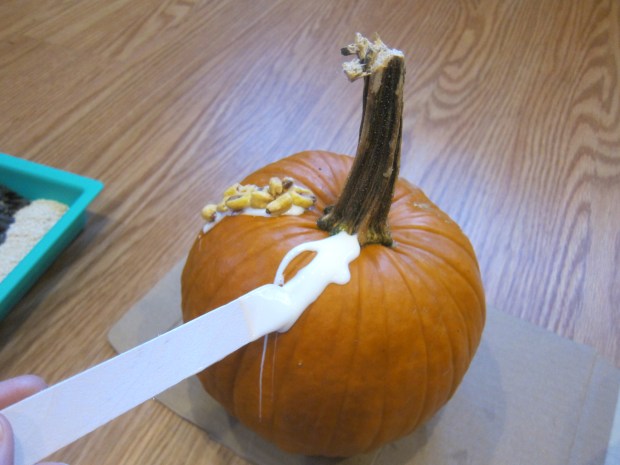
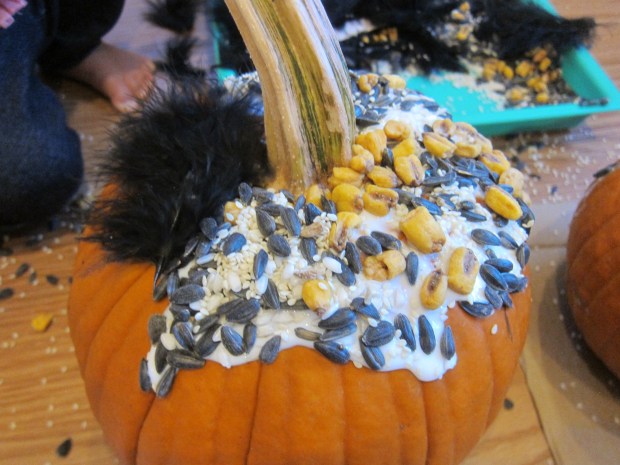
Meanwhile, I set to work making the first pumpkin for her. Add big dabs of glue to a pumpkin with a craft stick, working around the stem. I then sprinkled one of our sensory materials on each portion.

Sensory Pumpkin Decorating (3)

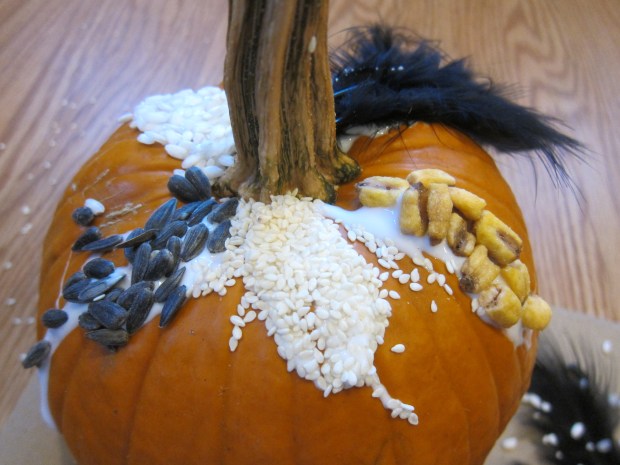
These made a neat ring around the stem once I had finished, and now she could feel along them for a great sensory experience.Sensory Pumpkin Decorating (4)

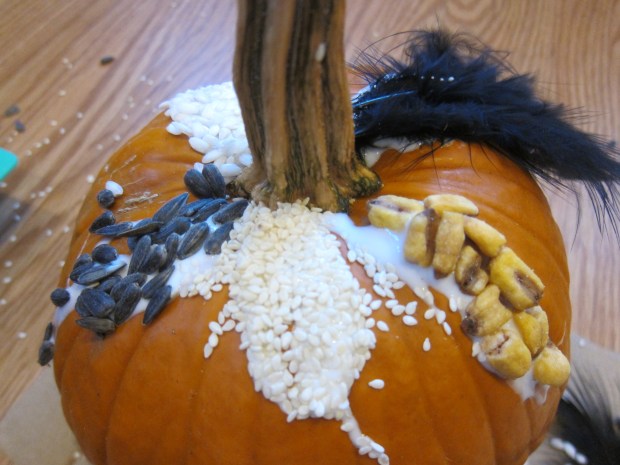
I left the decorating of the second pumpkin entirely up to her. She poured the glue around the top in a full ring, then used her little plastic cup to scoop and pour.

Sensory Pumpkin Decorating (7)

The end result was a neat mishmash of all the items.

Sensory Pumpkin Decorating (9)

I loved that the sensory play was part of both the decorating process and the final product.

Sensory Pumpkin Decorating (10)

Pumpkin Fun with Washi Tape

Washi Tape Pumpkin (8)

Here’s a great for even little kids to help decorate pumpkins, since there are no carving knives required.

I had a pack of decorative washi tape that’s been sitting around forever, so I pulled out all the rolls and broke off pieces of the various colors, arranging them around the sides of a craft tray.

Washi Tape Pumpkin (1)

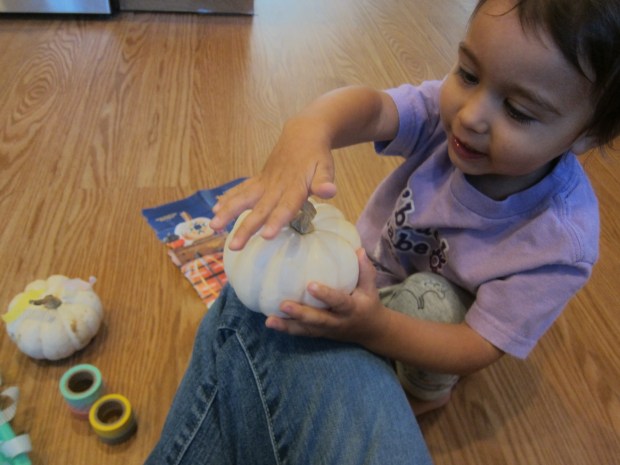
In this way, I figured Veronika would be able to grab a piece and stick on a pumpkin (we used white ones!) without constantly needing me to rip a new piece for her.

Washi Tape Pumpkin (2)

Sure enough, she set to work right away.

Washi Tape Pumpkin (3)

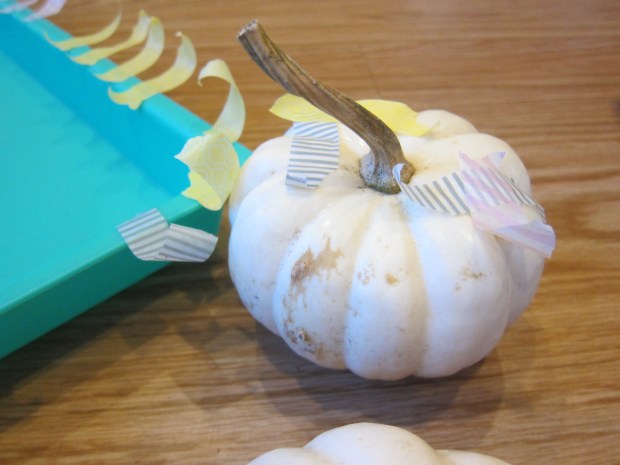
Through trial and error, we determined tricks for how best to washi tape a pumpkin. At first, the pumpkins were a little wet from having rinsed the dirt off, which meant the tape didn’t stick well. So make sure your pumpkins are dry!

Washi Tape Pumpkin (4)

We also discovered that the edges of small tape pieces would curl up; long strips wrapped from stem to bottom worked best. At a certain point, I took over, but Veronika was an eager helper!

Washi Tape Pumpkin (6)

This was a great even-a-toddler-can-do-it way to decorate pumpkins.

Washi Tape Pumpkin (7)

Pineapple Pumpkin (and More Pumpkin Fun)

Pineapple Pumpkin (8)

We had so much fun at the pumpkin patch this year; Travis needed to come home and carve one right away. We even sorted and saved the seeds for roasting (full recipe below). With our final three pumpkins, we got a little craftsier, putting together these three painting projects.

First up was Mr. Pineapple Pumpkin. Paint your pumpkin with a layer of yellow acrylic paint and let dry overnight.

Pineapple Pumpkin (1)

Once dry, I added upside-down V marks with a sharpie to mimic the exterior of a pineapple.

Pineapple Pumpkin (4)

Travis helped glue on two eyes, and we used dot stickers (cut in half and slightly overlapped on the top) for the mouth.

For the pineapple stem, attach two pieces of green sticky-back craft foam together, leaving a sticky overhang on either side. Cut leaf-like shapes into the foam. Attach one sticky portion to the stem, then wrap tightly and use the remaining sticky edge to hold the “stem” in place.

Deck out your pineapple fellow with a blingy pair of shades for the final touch!

Pineapple Pumpkin (5)

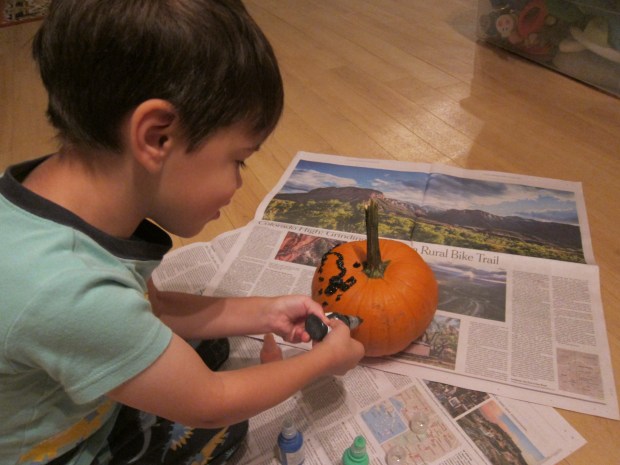
Needless to say, this particular pumpkin craft required significant adult help for a four-year old. For something he could do entirely on his own, I set Travis up with puffy paints and a whole pumpkin.

Pineapple Pumpkin (2)

He loved squeezing out all the colors, which almost looked like goopy spider webs.

Pineapple Pumpkin (7)

Kids who are too young to carve might also love attaching feathers to a pumpkin, or sticking on pre-cut foam shapes for a funny face. Many sets of facial features come available in craft kits, and Travis enjoyed selecting this goofy look.

Pineapple Pumpkin (6)

What pumpkins are adorning your stoop this year? Please share in the comments!

I’ll leave you with this easy pumpkin seed recipe:

Scoop seeds from 1 pumpkin (about 1 cup). Rinse well and pat dry. 

On a baking sheet, drizzle with 1 and 1/2 tablespoons melted butter and sprinkle with 1 teaspoon salt.

Roast at 200 degrees F for 40 minutes. Increase the heat to 325 degrees F and roast a final 5 minutes.


Pumpkin Emotion Learning Tool

Pumpkin Emotion (7).JPG

Okay, we probably should have made this jack o’ lantern-themed craft back in October, but it was still cute to play with here in February! With a lot of big preschooler emotions going on lately, the craft is a fantastic way to get talking about emotions, facial expressions, and sorting through the big feelings your kids might be feeling, no matter their age!

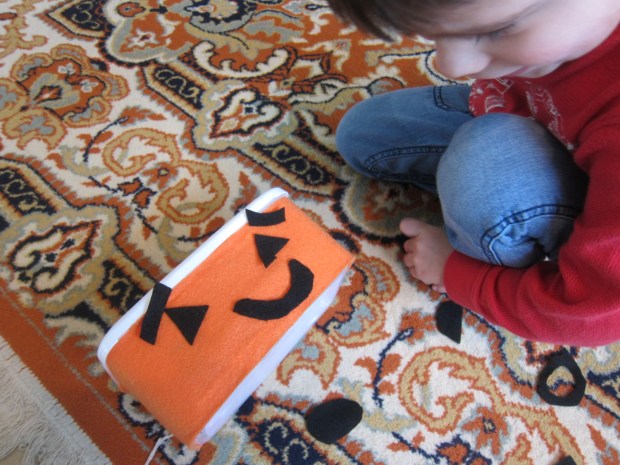
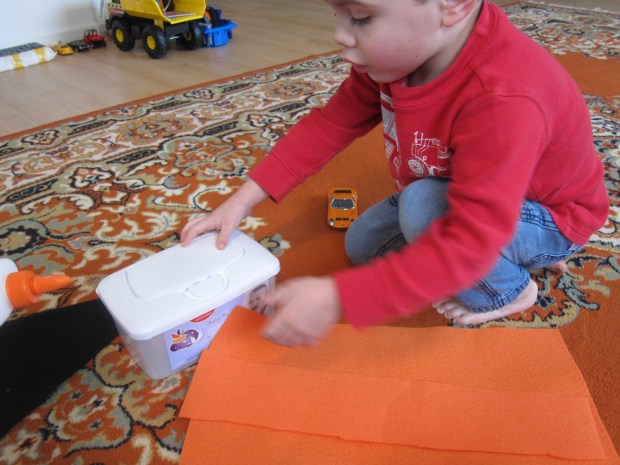
The first step is to upcycle an empty baby wipes container (the kind in a plastic bin), by covering it with orange felt.

Pumpkin Emotion (1)

We tried using regular school glue, but waiting for it to dry proved too much for Travis, so I hot glued the felt on.

Pumpkin Emotion (3)

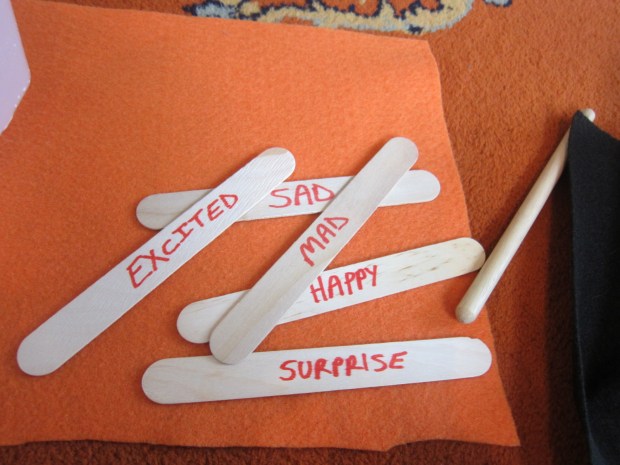
Next, I set out craft sticks and asked him to help me brainstorm emotions. In addition to common ones (sad, happy), he said a few that made me laugh, like “when I’m waiting to play with Daddy’s camera stand.”

Pumpkin Emotion (2)

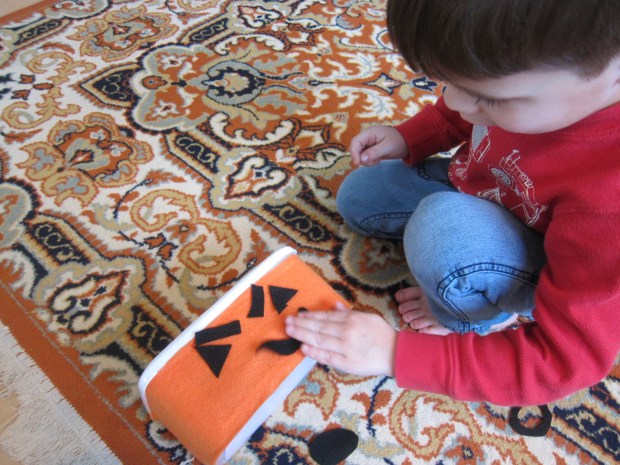
Next, I cut shapes out of black felt to go with the emotions we had created, and set all the pieces out in front of him.

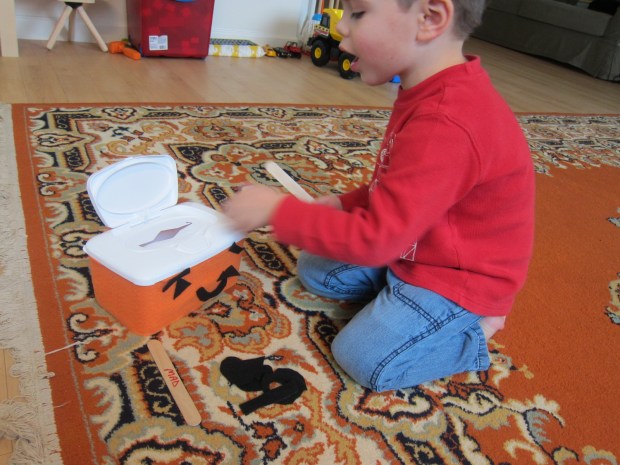
We put our craft sticks in the top of the wipe container, and pulled one out – “surprised” was the first.

Pumpkin Emotion (8)

I asked Travis which mouth went with surprised, and so on. This turned into a great game not only for identifying the emotions we feel, but also what other people look like when they experience those emotions.

Pumpkin Emotion (5)

And of course, it’s just fun to set up the pumpkin with silly faces.

Pumpkin Emotion (6)

As a bonus, all of your craft sticks and felt pieces will store inside the wipe container when you’re done, ready for the next time you want to play.

Pumpkin Emotion (9)

Pumpkin Leapfrog

Pumpkin Leap (2)

Wondering what to do with all those pumpkins from the pumpkin patch? Get in a little exercise before you carve them!

Pumpkin patches are such a fantastic outing this time of year; ideally head to one where your child can truly see where pumpkins come from (attached to the vne), instead of a big lot where pumpkins have been placed in a row.

Fall Bucket (4)

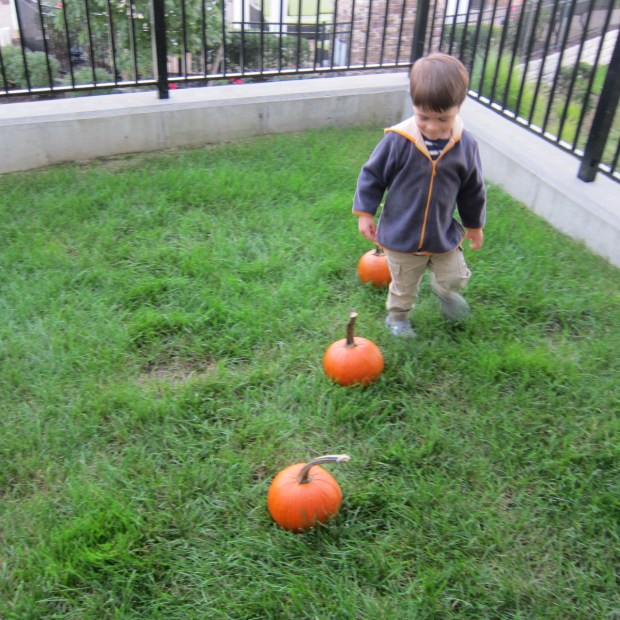
Travis was so proud picking out our pumpkins, especially since he could lift them all by himself. At home, I asked if he wanted to play pumpkin leapfrog, which earned an eager and curious “Yes!”

Pumpkin Leap (1)

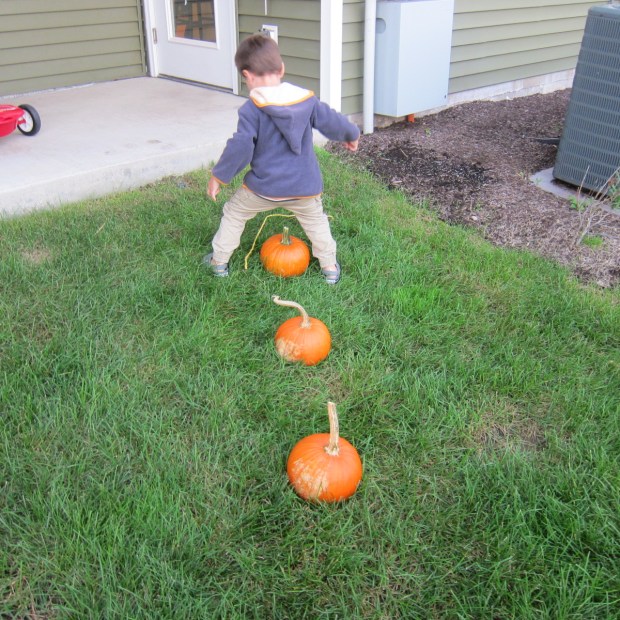
Set your pumpkins up in a line (use as many as you’d like – we had 4, but you could go up to 8 or even higher, if you want to make the course harder), and cut a line of string to mark the start and finish of your course.

Pumpkin Leap (3)

Take turns leaping over the pumpkins, and see how long it takes! You can make this competitive for older kids by using a timer, or just be silly with it for younger ones.

Pumpkin Leap (4)

Next we ran a slalom “S” course around the pumpkins, great for practicing fancy footwork.

Pumpkin Leap (5)

From there, go on and make up your own silly versions. Travis loved straddling each pumpkin, running circles around them, and more.

Pumpkin Leap (6)

The perfect activity to tide us over until its time to carve, and yet another fantastic suggestion from our Barefoot Books Kids Garden set.


P Week!

p-week-16

This week was all about the letter P, as Travis and I continue our journey through the Letter of the Week curriculum. The timing was perfect for fall-themed favorites like pumpkin pie, so consider holding your P week in the autumn, too, if you can!

puppet-s16

Puppets: We had so much fun making various puppets that I devoted a separate blog post to it. Whether you make puppets or use those you already own, pull them all out for a great big puppet show. Travis especially loved returning to our penguin puppet all week – another perfect P word.

p-week-7

Pigs/Ponies: I combined these two animal words for fun with our Little People barn set, giving Travis only the pigs and ponies to play with. To take things a step further, we set up a great farm sensory bin, filled with yellow split peas (a.k.a. “corn”), tractors, pigs, and ponies. Travis loved “feeding” corn to the animals and raking through the box with a fork. Great for sensory play and imagination!
p-week-8

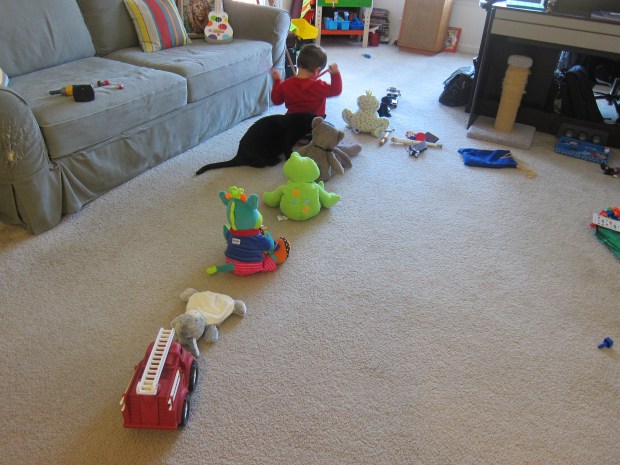
Parade: Put Sousa marches on your computer, line up all your stuffed animals, give them each an instrument, and have a parade! If stuffed animals aren’t your child’s thing, line up cars or trucks instead.

p-week

We added a policeman as parade marshal.

p-week-15

Picnic: Far and away the most magical moment of our week, we took advantage of the warmest day to head to the park. A picnic basket, blanket, and beach ball are the only ingredients you need for a beautiful picnic. Travis loved having a snack outside before playing in the fall leaves!

pumpkin-patch-5

Pumpkin: Halloween is past but fall is still pumpkin season! We baked mini pumpkin pies early in the week, a great hands-on experience. We also made a pumpkin patch: Stuff brown paper sandwich bags with crumpled newspaper, leaving a little room. Tie off the end with ribbon to be the stem, and then use orange paint to cover your pumpkins. We ran out of orange midway, which was the perfect opportunity to show Travis how red and yellow combine to make orange. Once the paint dries, play with your pumpkin patch!

pumpkin-patch-6

(Hint: Add your pigs and ponies here, too).

p-week-13

Puzzle: An obvious one: Pull out all your puzzles and leave them out all week so your child has ample time to puzzle over them.

p-week-12

Piano: Whether you have toy pianos or a real one at home, this is likewise a great opportunity to leave it out so your child can return to it over the course of the week.

After those theme words, here are a few more ideas:

Fine art: Work those fine motor skills by crafting toy food from playdough. But not just any playdough… Pumpkin Pie Playdough! To make this easy at-home batch, combine the following in a saucepan over low heat:

2 and 3/4 cups flour

1 cup salt

4 teaspoons cream of tartar

2 tablespoons pumpkin pie spice

6 tablespoons vegetable oil

2 cups water

Orange food coloring

Cook until the mixture thickens and looks like mashed potatoes. Let cool before kneading and giving to your child for play.


p-week-17

The dough smells fantastic, and is technically edible, but you’ll want to discourage any salty bites! Travis made mini pumpkin pies and cookies for his toy oven.

pumpkin-dough-3

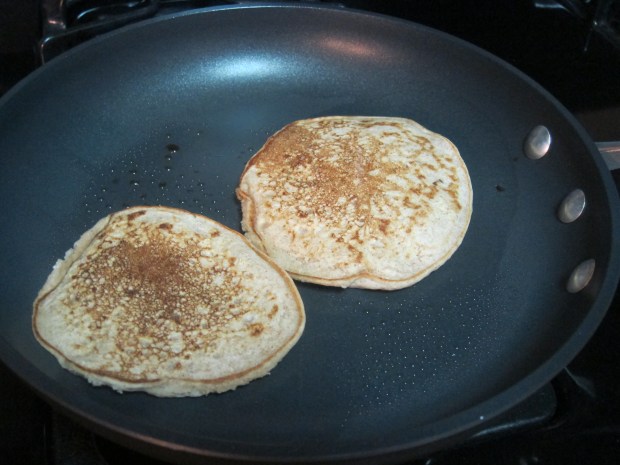
Food: We had to start one morning with pumpkin pie-spiced pancakes of course! There are so many P foods you could probably eat P items and nothing else all week if you wanted to. In addition to pancakes we had: peaches, pickles (which got a surprised and firm “no!”, pretzels, parsnips, pizza, pudding, pears, and pineapple.
p-week-2

Books: The clear favorite from the library this week was The Perfect Pony, by Kimberly Brubaker Bradley. Travis also enjoyed Clifford and the Big Parade, by Norman Bridwell, Penguin Says Please, by Michael Dahl, and The New Puppy, by Laurence Anholt. And of course, read any potty books you have!

p-week-18

Song: A cute one to listen to is Way Down Yonder in the Paw Paw Patch. I also set Pachabel’s Canon to play in the background while we were home one afternoon; Travis barely noticed, but it’s one of my all time favorites and osmosis can’t hurt!

Math: Introduce patterns. Children’s peg boards with pattern cards are a great skill-builder. Your child can copy the pattern cards that come with the peg board, or you can demonstrate something simpler, like a row of red-green-red-green. These toys are fantastic to have around anyway, so consider investing in one.

p-week-4

That’s all for this week!
Pumpkin Peepers

pumpkin-peepers-2

It wouldn’t be Halloween without pumpkins of course, but toddlers are too young for carving… So what to do?

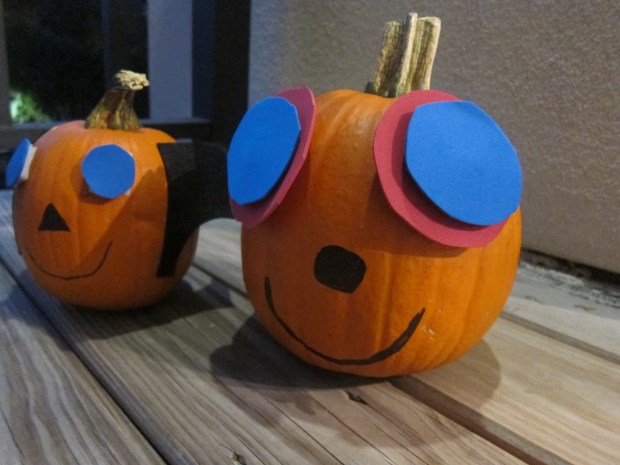
This cute idea, adapted from Parents magazine, couldn’t be easier, and allows toddlers to make a silly face, no knife required.

pumpkin-peepers-1

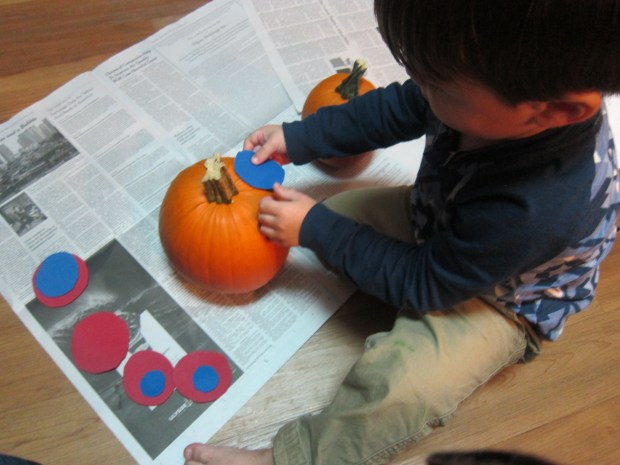
Simply cut various-sized circles from craft foam, and use glue dots or sticky Velcro dots to attach the eyes and a pupil to each pumpkin. We used goofy colors, but you could also stick with a more traditional black and white palate.

To finish the faces, simply use a sharpie for noses and mouths.

Harvest Bowling


Harvest Bowling (1).JPG

Gourds aren’t just for decoration… Help develop your toddler’s coordination with this adorable take on bowling!
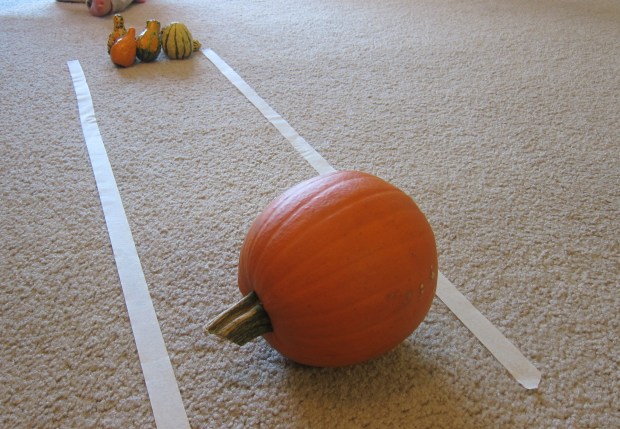
Set up a variety of gourds at the end of a masking tape “alley.” Look for ones that are shaped similar to bowling pins, wide on the bottom and tapering on top.

harvest-bowling-2

Use a small sugar pumpkin as the bowling ball. Adults can give the pumpkin a roll all the way from the end of the alley.

harvest-bowling-3

Kids will likely have to roll from very close, but that won’t dampen their excitement when all the “pins” fall over.

harvest-bowling-4

Strike!