Outer Space Parachute

Space Parachute (5)

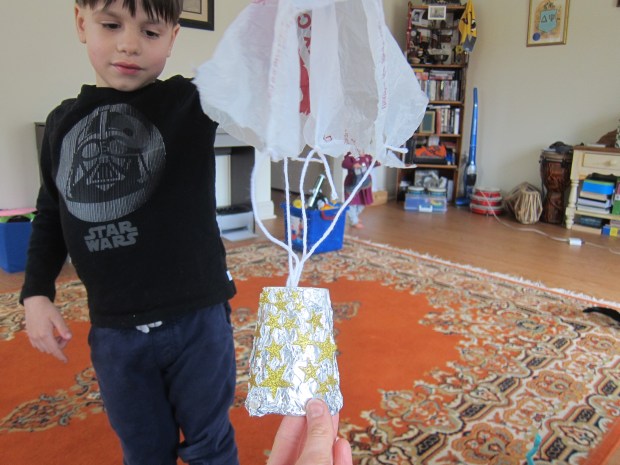
Last summer and fall, Travis and I experimented with a few different ways to make a parachute. For home school “science” today we tried once more, but this time made it outer space-y with a coating of aluminum foil. Travis thought it looked just like the gear used to ease the landing of Mars rovers!

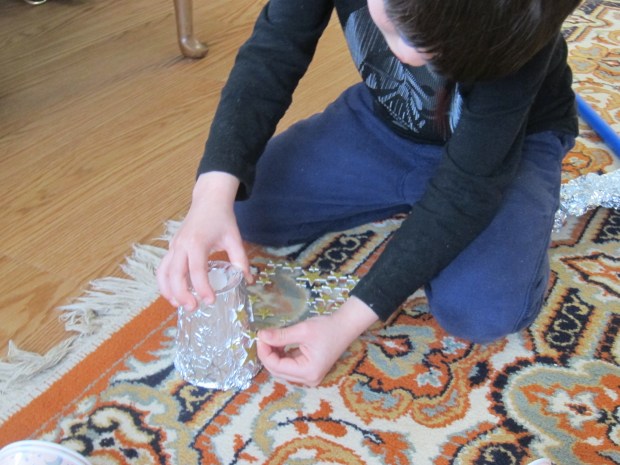
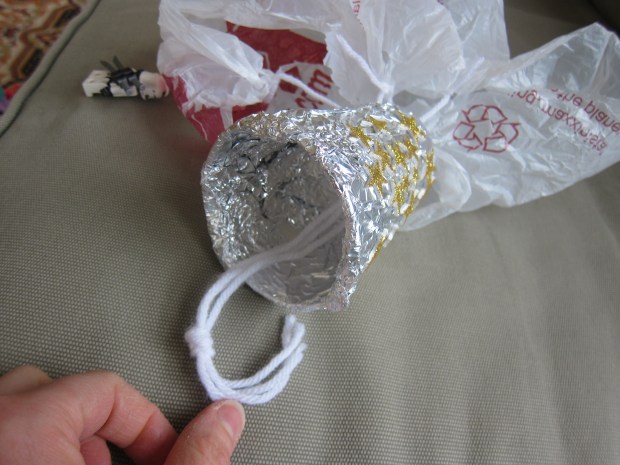
To start, wrap a paper cup in aluminum foil. Travis enjoyed decorating all over with star stickers (in keeping with the theme of course).

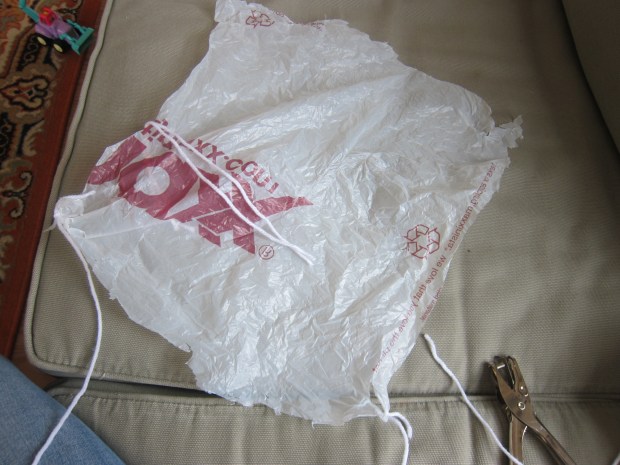
Space Parachute (2)Cut a square from a plastic shopping bag, and then use a hole punch to make a hole in each of the four corners (you may need to rip the bag a little bit, too, to help the hole punch through).

Space Parachute (3)

Cut four equal lengths of yarn and tie one to each corner with a knot. Gather these four strands together and push down through a hole in the top of the cup. Make a fat knot so they won’t slip back out.

Space Parachute (4)

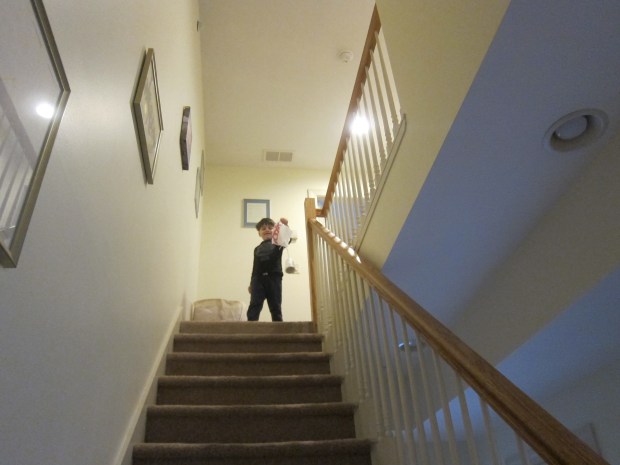
Time to launch! My intrepid explorer bravely climbed the stairs.

Space Parachute (6)

Then it was 3, 2, 1: Blast off!

DIY Sundial

DIY Sundial (7)Of the various ways Travis and I have made a sundial, this was by far easiest for him to keep up with – and the prettiest! Thanks to a vacation day off from school, we were consistent about popping out every hour, too. The secret? Play dough.

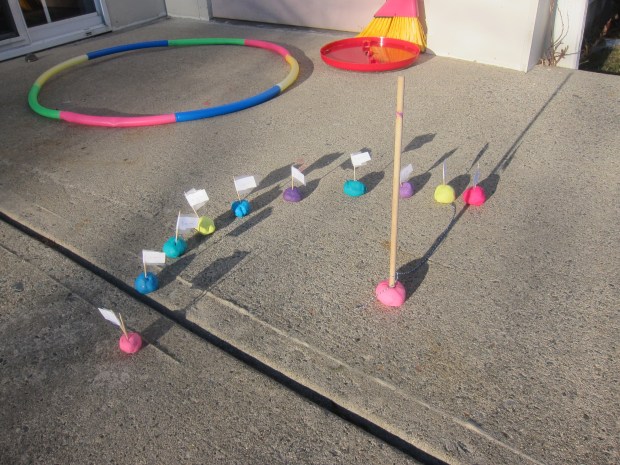
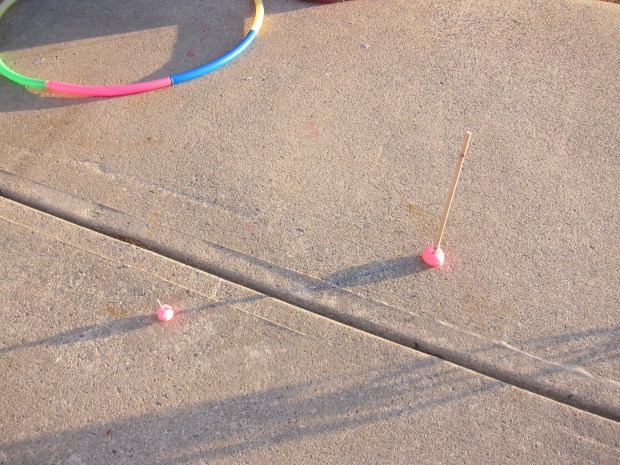
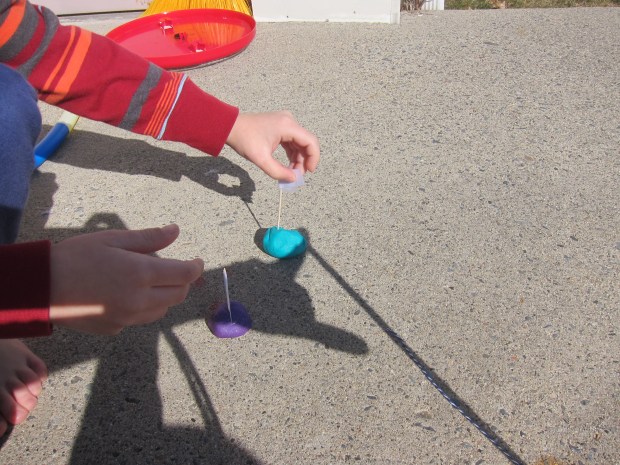
To start, we pushed a wooden dowel in a big blob of play dough. Press the play dough firmly onto an outdoor patio or similar surface. Stretch a line of string for accuracy along the shadow that the dowel casts, and set down a second blob of play dough.

DIY Sundial (2)

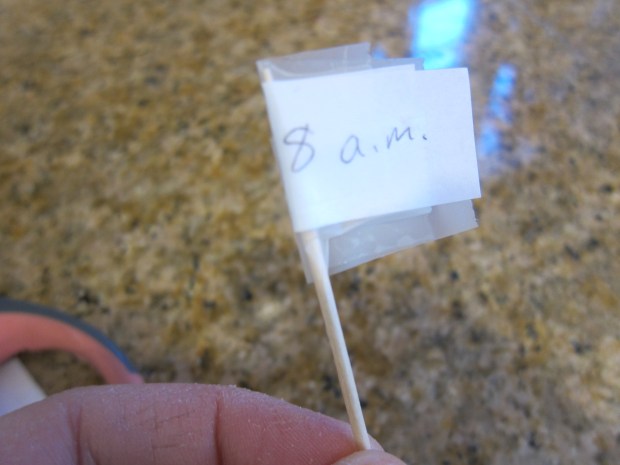
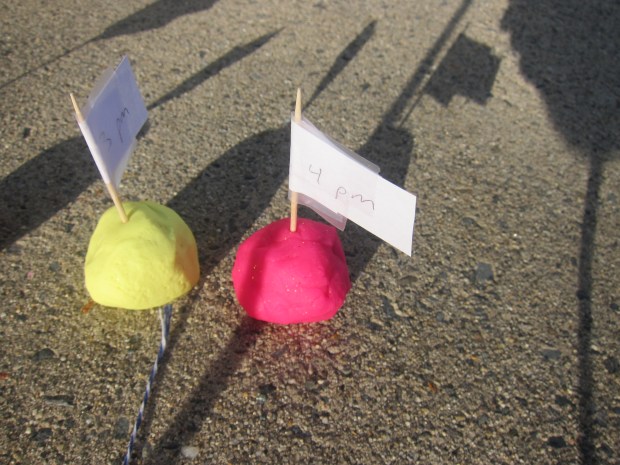
We started at 7 a.m., so marked this off as the first hour: Insert a toothpick, numbered with the time of day. (Note: you can make these “flags” much more elegant than ours, which were just taped-on strips of paper labeled with the hours from 7 to 4 p.m.).

DIY Sundial (3)

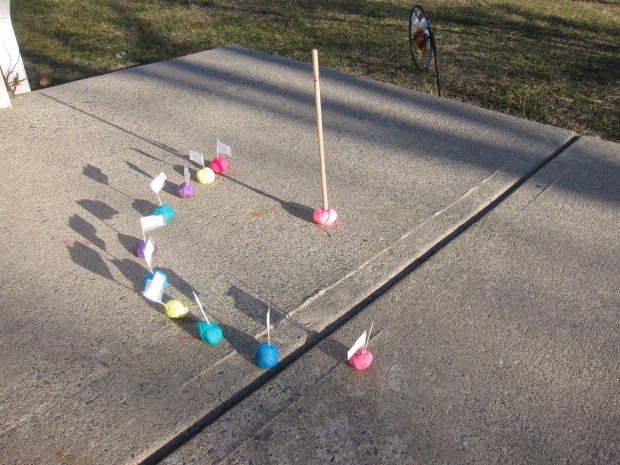
Being as accurate as we could, we dashed out around each hour over the course of this sunny day and set down a new blob of play dough and new toothpick flag. The colors looked great as they accumulated over the course of the day!

DIY Sundial (5)

We lost out winter sun after 4, so that was the final point of our clock.

DIY Sundial (8)

But Travis was wowed seeing this visual arc of how the sun had traveled. Definitely the best sundial he’s made yet.

DIY Sundial (6)

Northern Lights Illuminated

Northern Lights (8)

With a few Swedish recipes to prepare from Raddish Kids this month, Travis and I sat down to learn about the Northern Lights, a neat STEAM lesson alongside the Swedish cuisine.

I started be asking him to picture dancing lights in the sky, and he immediately got very silly imagining twirling reds, greens, and blues. But I told him this really exists! An informative website and video helped him visualize and understand the concepts further. Help your child walk away with new vocab, like solar flare and solar wind.

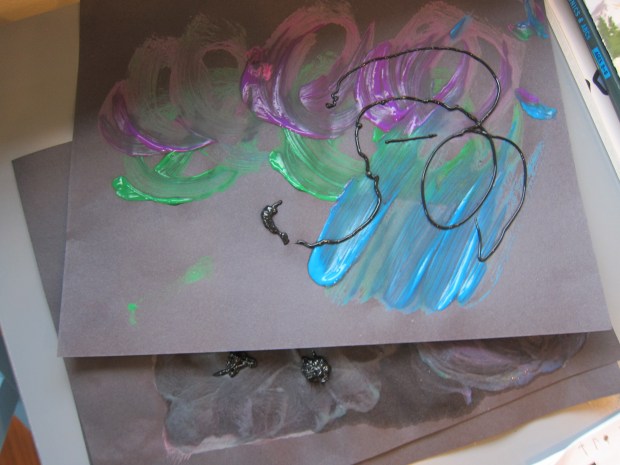
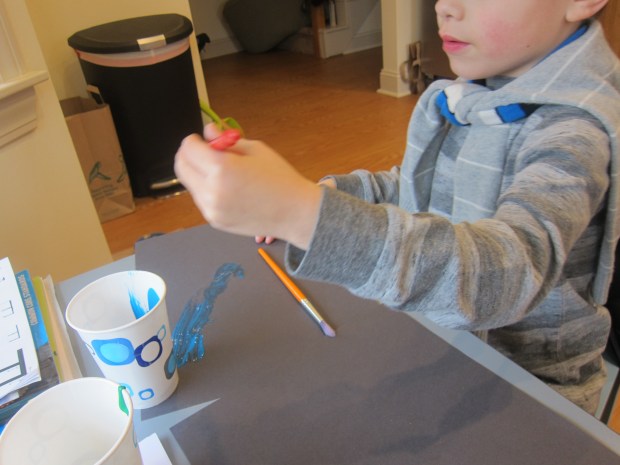
So now it was time to paint the northern lights! Using black construction paper as our background, I invited Travis to craft the lights however he felt inspired. He started with blue paint…

Northern Lights (3)

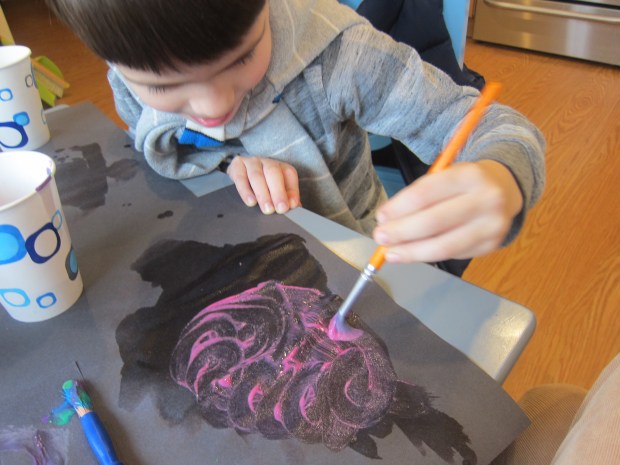
…but soon liked the way that just water looked when swirled on the black page.

Northern Lights (5)

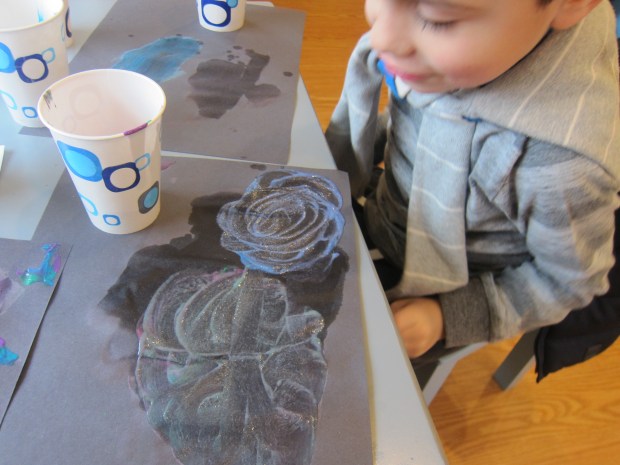
He added in a bit of color, then more water, for a very ethereal effect.

Northern Lights (6)

As we painted, we listened to ambient music from Mannheim Steamroller. Once he finished painting, it was time to dance and be the auroras.

Northern Lights (1)

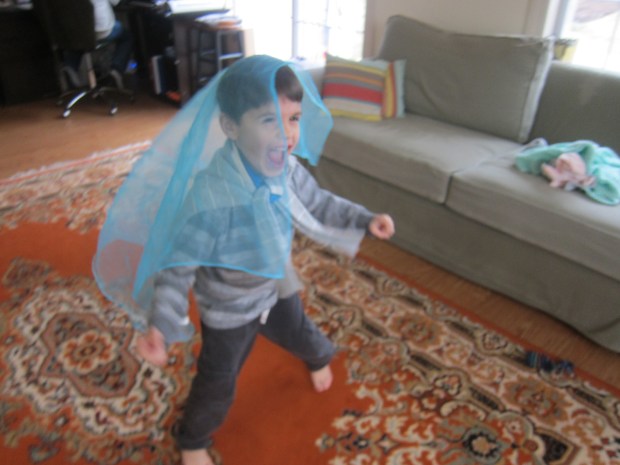
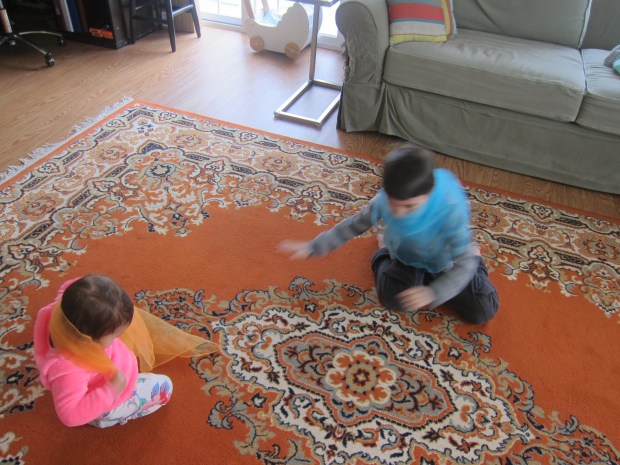
With scarves as props, he got really into his swirly, twirly, silly dance moves. And so did little sister!

Northern Lights (7)

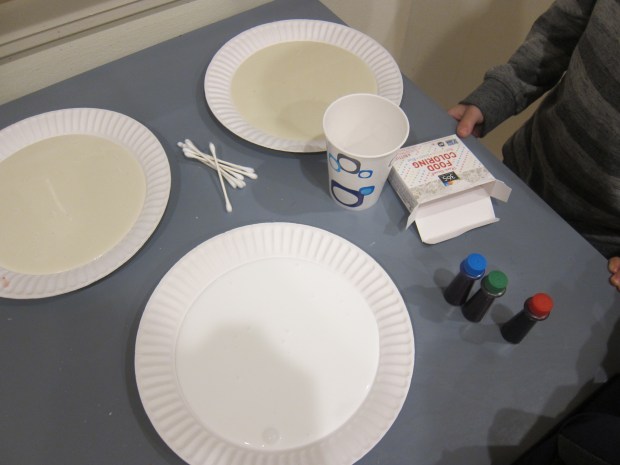
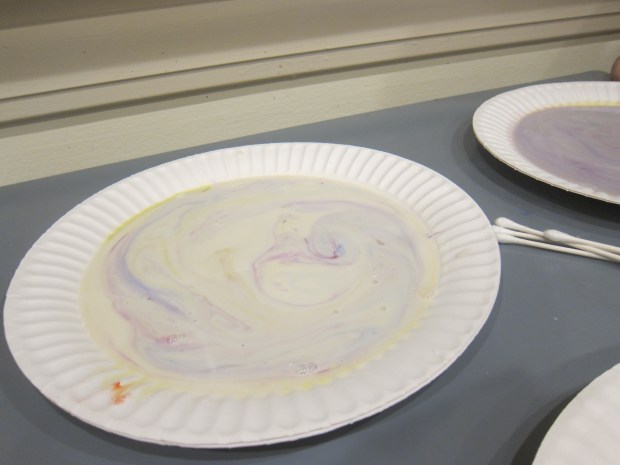
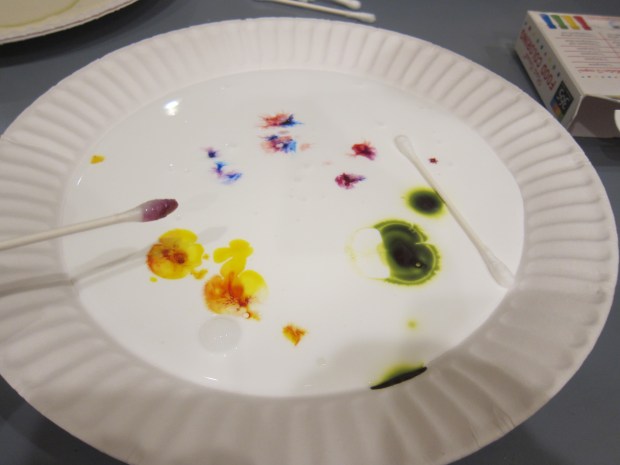
For a final scientific component, we made the “Northern lights” in food coloring and oat milk. Set out paper plates filled with the milk and add a few drops of food coloring to each.

Northern Lights (9)

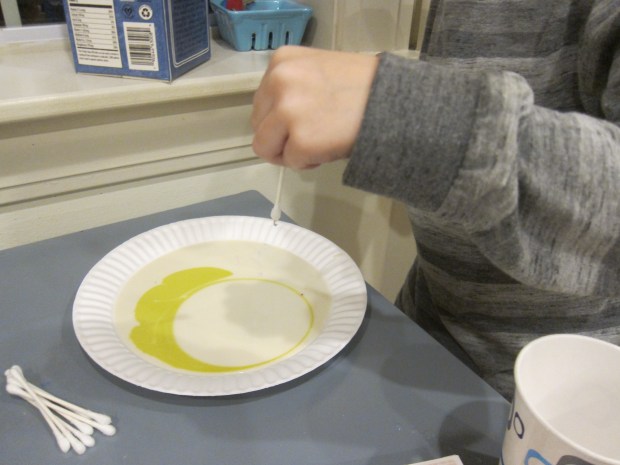
Dip a q-tip into dish soap, then touch this to the milk. The food coloring will dance and skitter and mix.

Northern Lights (10)

This had a big wow factor. I had hoped for it to be a little bit of a science lesson, thinking there might be a difference between our full fat and low fat oat milks in the fridge, but unfortunately that wasn’t the case.

Northern Lights (12)

For variation, we tried it in glue, too. (Note: You can let a glue version dry for a full week, then pull it off the paper plate and hang as a “suncatcher.”

Northern Lights (11)

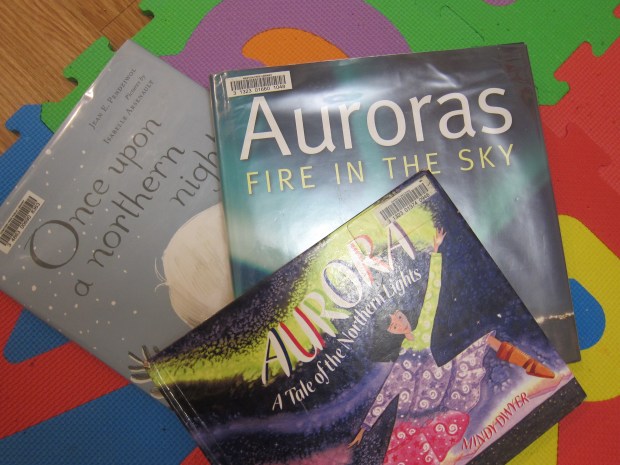
Last up was a little bedtime reading from the library. Check out Once Upon a Northern Night by Jean Pendziwol; Aurora: A Tale of the Northern Lights by Mindy Dwyer, or Auroras: Fire in the Sky by Dan Bortolotti.

Northern Lights alt

I loved that this lesson got Travis to learn, to create, and to get active!


Arcade Kiwi Crate

Kiwi Arcade (8)

Whenever we walk into an arcade, Travis’s favorite game is the claw machine, even though we almost never win. So the instant his Arcade kit arrived from Kiwi Co., I knew it was going to be a huge hit. He got to make his own claw and prizes…and was sure to be a winner this time.

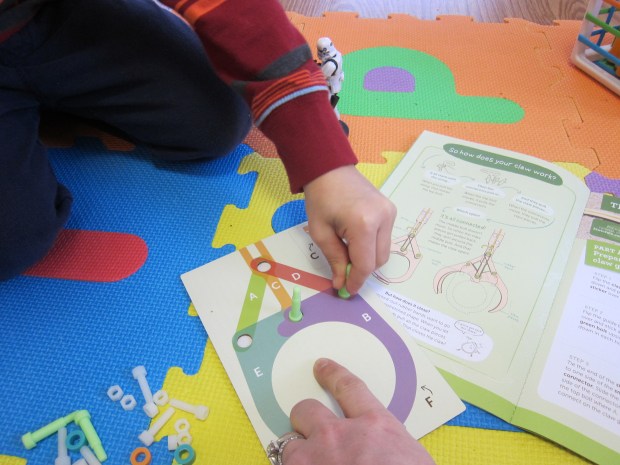
There’s tons of STEM to love about this crate, especially in the first project: The Claw. Start by reading the explanation of how this simple machine works: a string that moves a bolt that pulls a connector that pulls a claw, resulting in the claw opening. The booklet even explains how it closes up again, when stretched-out rubber bands want to revert to their unstretched shape, pulling everything closed again.

To prepare the Claw, Travis followed along layering bolts, wooden pieces, and nuts in the proper order, using the handy color-coded piece of cardboard that is the guide.

Kiwi Arcade (1)

Once assembled, the claw then lifts right up off the guide. A long wooden handle is attached in the same way with a second guide.

Kiwi Arcade (2)

Travis had to test it out on baby sister’s toys right away, of course!

Kiwi Arcade (3)

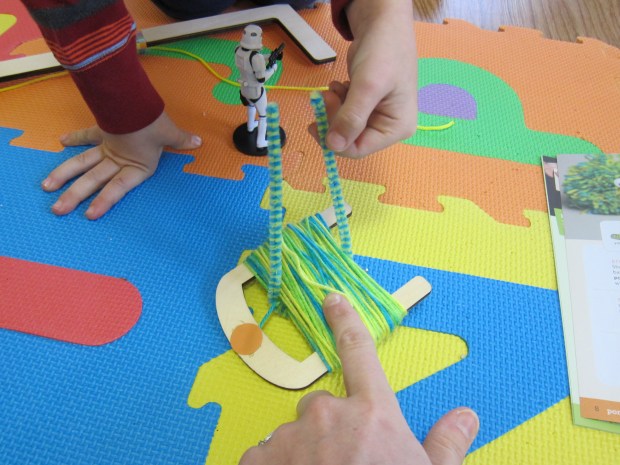
We immediately had to follow up with the next project: Pom-Pom Prizes. This was the artsy part of our STEAM lesson. Attach the end of one provided yarn bundle to a wooden pom-pom winder with a sticker, and loosely wind the yarn around.

Kiwi Arcade (4)

Having made homemade pom-poms, I appreciated how Kiwi took all the guesswork out of this, with yarn that looped along in no tangles. Now secure around the middle with the provided pipe cleaner.

Kiwi Arcade (5)

Slide the yarn off the winder and use scissors to snip open the loops of yarn. Fluff it out and you have a pom-pom! The pipe cleaners now bend down as little antennae and there are sticky-back wiggle eyes to adhere as the final touch. The crate contains enough material to make two. Travis loved these creatures, even before turning them into arcade prizes!

Kiwi Arcade (7)

It was time to put it all together and play the Claw Game. We cut a rectangular hole in the lid of the Kiwi Crate, leaving about a one-inch border, and a second hole on the side, leaving about a 1/2-inch border. Cut a piece of plastic from a gallon plastic bag to fit over the hole in the lid, and tape it on securely.

Kiwi Arcade (9)

We taped on the provided Claw Game decorations, then filled the box with little knickknacks from Travis’s treasure box. And added in the pom-pom prize of course.

Kiwi Arcade (10)
Travis was so proud once he got the hang of it.

Kiwi Arcade (13)

Mommy got the grand prize pom-pom!

Kiwi Arcade (11)

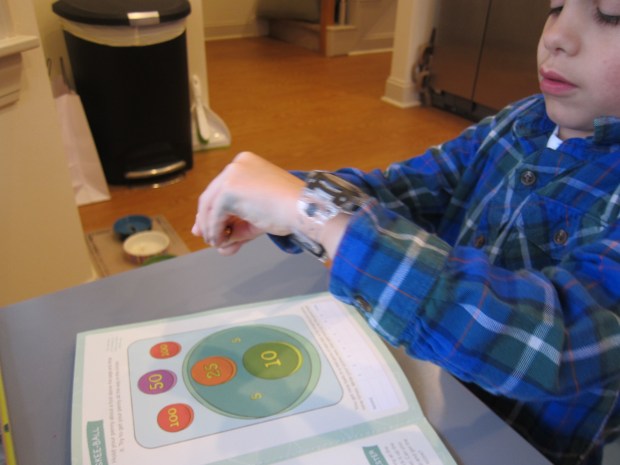
As always, we turned to Explore magazine for extended fun. There is a page filled with “penny arcade” games, a fun riff on the old-fashioned term, where kids can play games on the page with a literal penny.

Kiwi Arcade (14)

Next we made a Laser Maze with crepe paper.

Kiwi Arcade (18)

A big fun house challenge!

Kiwi Arcade (17)

Finally, we made the Tilt-to-Win: Cut empty paper towel tubes to various lengths and cover each in a different color construction paper. Glue construction paper to a large flat box as the background, and glue on the tubes.

Kiwi Arcade (20)

Once dry, add a point value to each tube with marker. Put in a small ball, and take turns seeing how many points you can get in one minute.

Kiwi Arcade alt

This is almost like a handheld pinball machine!

Kiwi Arcade var

The two recommended books are worth investing in, as each contains more ideas than we’ll ever get to for gaming fun. Do check out The Kids’ Book of Simple Machines: Cool Projects & Activities That Make Science Fun and Play These Games: 101 Delightful Diversions Using Everyday Items.

Kiwi Arcade (12)

Crystal Chemistry Tree Crate

Crystal Tree (5)

Of all the holiday projects from Kiwi Co this year, this was by far Travis’s favorite. You can follow along on this project with materials from the craft store and drugstore; do supervise very closely, as chemicals (ammonia in particular) are involved. But the result is stunning!

To start, we needed to prepare the planting pot. Insert a plastic cup into a silver cup, and decorate with the provided red ribbon for a festive touch. The tree is two pieces of cardboard that slot together. Travis “planted” this firmly.

Crystal Tree (1)

He loved the felt ornaments to hang on the tree!

Crystal Tree (2)

As a final decoration, twist together three silver pipe cleaners, and arrange as a star on top.

Crystal Tree (3)

Now it was time for some science. I poured the bluing solution into the plastic cup first. A bluing solution is potassium nitrite and sodium hydroxide dissolved in water. Travis was a good sport listening to all the safety cautions about handling these chemicals

Next I poured in the provided ammonia. He was not a fan of the smell! Finally, we poured the provided salt packet evenly around the tree.

Crystal Tree (4)

Use the provided pipette to drip the solution over the tree branches until saturated.

Only an hour later, I noticed that already a few little sparkles had appeared. Travis went to bed full of wonder at how it might look in the morning.

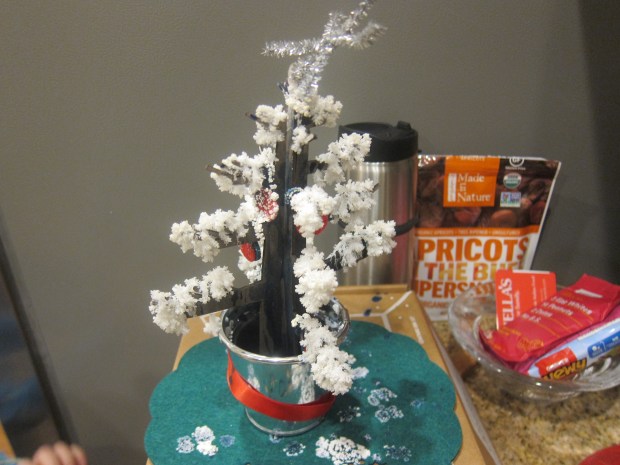
To be perfectly honest, I’d forgotten about it when we came down for breakfast. “Mom, look!” he called out. I, too, was stunned with the white frosty crystals blooming all over the branches.

Crystal Tree (6)

One note of caution: the crystals are very delicate and will fall off at even the tiniest budge, so have your tree some place up high where it won’t get jostled.

Over breakfast, read about what happened. The cardboard soaks up the solution (so a plastic tree, for example, wouldn’t work here), but the liquids evaporate overnight as gases. The salt can’t do this, so it is left behind. Ammonia is present because it helps the evaporation happen faster. And voila – a chemis-tree!

Crystal Tree (7)

LED Holiday Luminary

LED Xmas Tree (6)

This little holiday project actually falls under Kiwi Co’s Tinker Crate designation (for ages 9 and up!) but I knew it would be feasible for my gadget-loving kindergartner with some grown-up assistance.

The very first step is to put the batteries in the provided battery pack. Travis has had practice in this area, but use your judgement based on your child’s age and experience with batteries.

LED Xmas Tree (1)

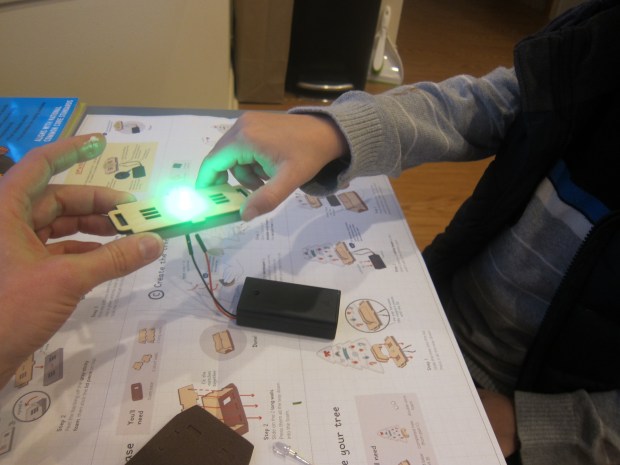
Next we slipped the provided LED light into the wooden base. Kids can choose between a green one or white one, and Travis chose green! I did the actual attaching of wires for him. We tested our battery – success! – before switching off the switch for now.

LED Xmas Tree (2)

Time to decorate the tree: rub sandpaper over the provided plastic tree shape briefly, which will give it the look of “branches”.

LED Xmas Tree (3)

Travis loved decorating the tree with the provided stickers, including ornaments, candy canes, holly berries, and more.

LED Xmas Tree (4)

When he declared it done, we used sticky dots to secure the tree to the provided wooden frame. This is then inserted over the battery and secured into the stand with sticky foam dots.

It was time to turn the battery to “on”. What a beautiful addition to our holiday display!

LED Xmas Tree (5)

Crystal Suncatcher

Crystal Suncatcher (8).JPG

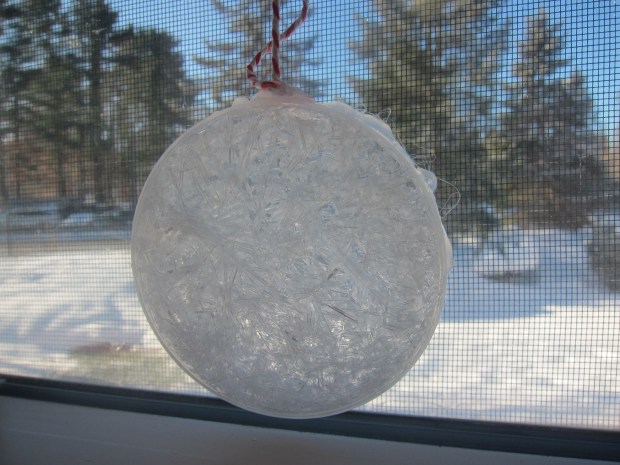
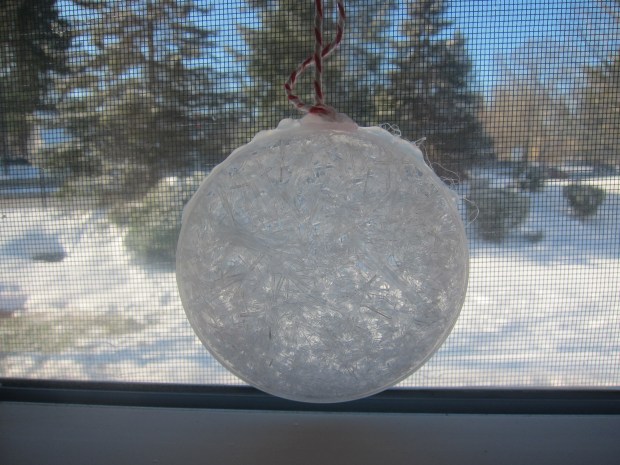
This neat science project will require a few days of patience, but has a beautiful ice crystal reward at the end, perfect for winter!

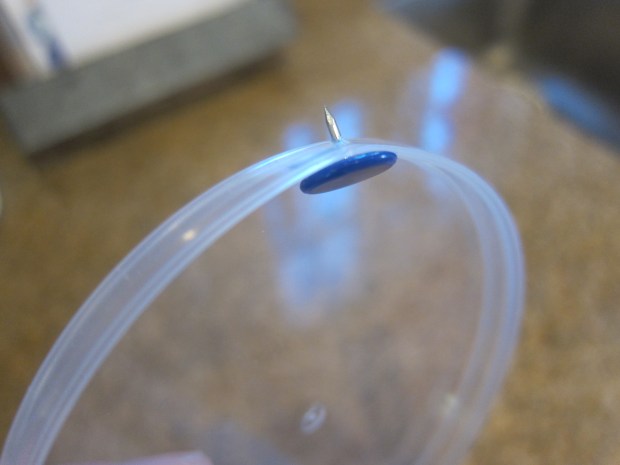
To start, poke a hole through the rim of a clear plastic container (we used the top of a Pringles canister) with a needle or push pin. Make slightly wider with a pen or pencil, then set aside.

Crystal Suncatcher (1)

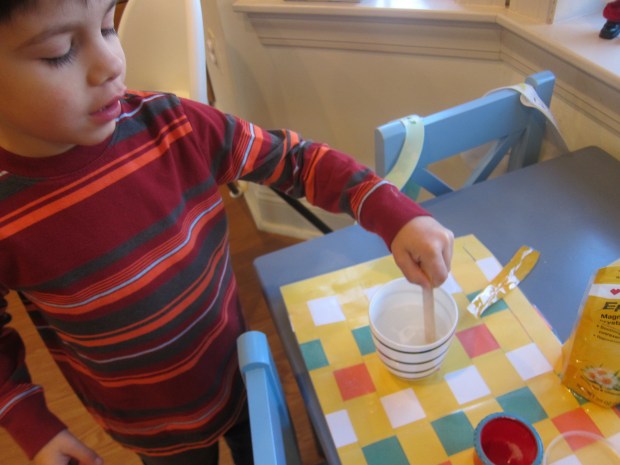
In a microwave safe bowl heat 1/2 cup water for about 45 seconds, or until warm. Add 1/2 cup Epsom salts, stirring until dissolved. Travis loved making this “potion”.

Crystal Suncatcher (2)

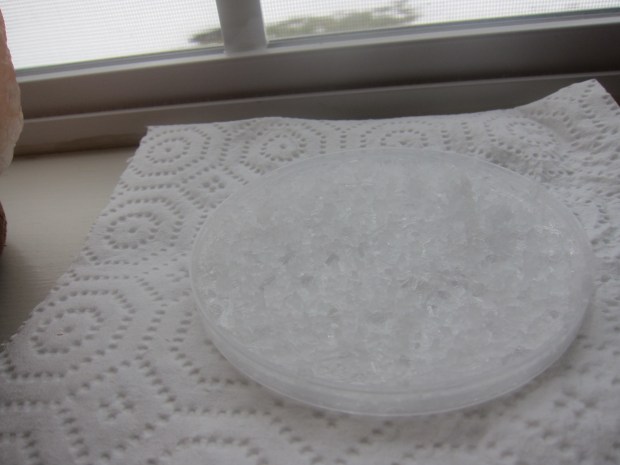
Fill the container lid with the salt solution and set someplace that gets a lot of sunlight. Now wait! Here’s how our crystals looked after 24 hours:

Crystal Suncatcher (5)

And now after 48 hours!

Crystal Suncatcher (6)

The science here is fairly simple. When you stir the Epsom salt into the hot water, it doesn’t disappear of course; it dissolves. But when the water evaporates off, the Epsom salts are revealed again. Hence the beautiful crystals!

To capture your experiment into a work of art, cut the rim off an identically sized lid (again we used a Pringles container). Hot glue them together carefully so as not to crush the crystals.

Crystal Suncatcher (9)

Thread a length of string or yarn through the hole you poked in the beginning. I worried we might crush the crystals because our hole was quite tiny, so we hot glued on our string instead, which works in a pinch! Now it looks like Jack Frost has come to call at our window.

Crystal Suncatcher (7)

Santa’s Sleigh Automaton

Santas Sleigh (5)

I originally purchased this special holiday crate from Kiwi Co thinking it would be fun to put together with Travis. It turns out that it was so complicated even mommy had trouble with it! But we now have a very cool decoration to last until the holiday is over.

The sleigh works as an automaton, a machine that is pushed into motion, and the instruction booklet included neat STEM learning about other examples of automatons (think jack-in-the-boxes or vending machines), and also a detailed explanation at the end about how you’ve built a “cam”. Here’s a rough outline of what we did:

First we made a frame, slotting together the provided wooden pieces and foam stickers to help hold them in place.

Santas Sleigh (2)

We then needed to build the crank part of our cam by attaching wooden circles to a crank in the proper order.

Next up was the part of the cam that would go up and down. This required fitting plastic rods into the wood stand, securing them onto a paper square at the base, and adding a paper straw and foam donut to hold them in place. Here is where the machine seemed a bit faulty, with the paper squares not staying firmly on the wheels of the crank. Hmmm…

But we forged on, adding the felt reindeer, Santa and sleigh (quite tiny!) to each of the plastic rods. Secure them all with the provided string for a leash.

Santas Sleigh (4)

There is a decorated backdrop with felt houses and trees to attach. Now Santa’s sleigh and team are ready to fly!

Santas Sleigh (3)

Travis does indeed enjoy turning the crank, so there is holiday magic (and science!) to be had in the final product.


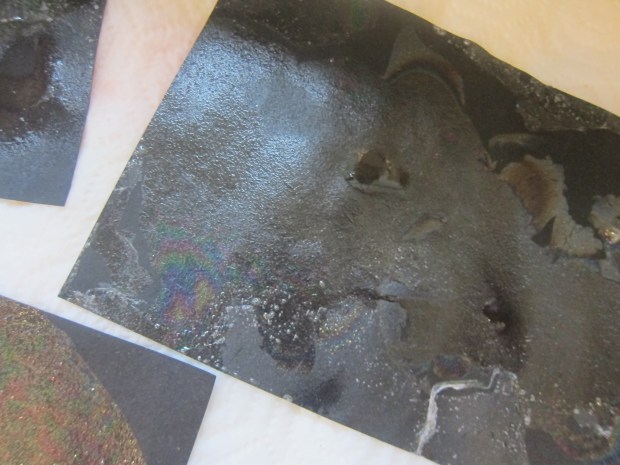
Rainbow Paper Experiment

Rainbow Paper (3)

Here’s a quick project that’s equal parts science and art. It was the perfect follow-up to Travis’s Rainbow Optics crate from Kiwi Co.

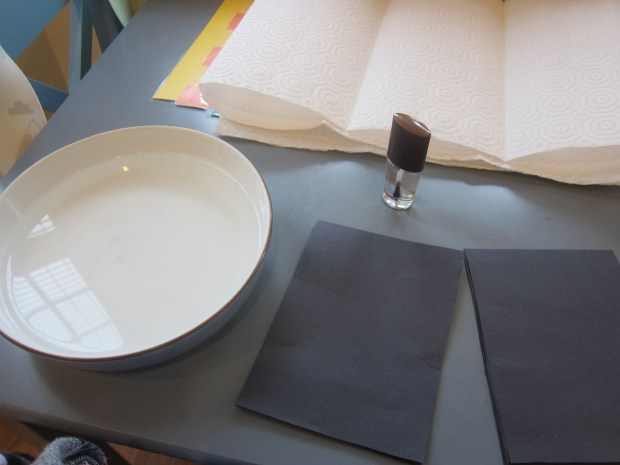
Because it’s a bit messy and you have to work quickly, I gathered all the materials ahead of time. You’ll need paper towels for drying, small squares of black construction paper, a bowl filled with about 1 inch of water, and clear nail polish.

Rainbow Paper (1)

Place one of the black squares in the water, soaking completely. Let float towards the surface. Now it was Travis’s very important job to add 3 drops of the clear nail polish.

Rainbow Paper (2)

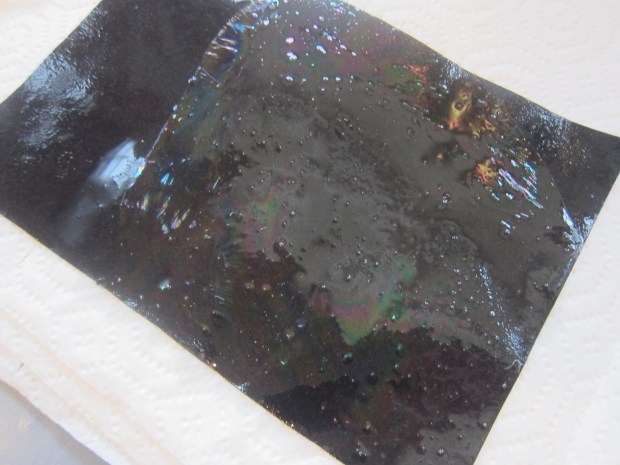
Remove the paper very quickly, pinching it from one corner, and place on the paper towels to dry. Now it was covered in rainbow swirls!

Rainbow Paper (5)

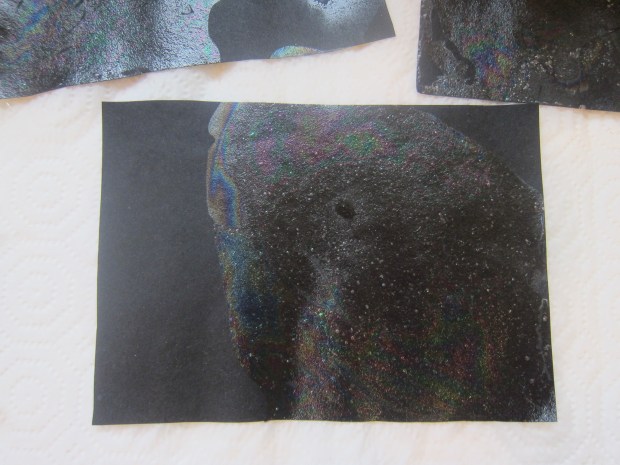
We wanted to make a few more, but found that the nail polish residue made streaks in the water; as a result, each ensuing piece of paper came out a bit messier.

Rainbow Paper (4)

Still, these were quite pretty, and you could glue them onto cardstock for a pretty art print if desired!

Playing with Puzzles Kiwi Crate

Kiwi Puzzles (27).JPG

Kids will love the puzzles and brain games in this crate from Kiwi Co, which features projects ranging from engineering to art and back again. And parents will go wild when they realize the game you build is based on classic Tetris!

Kiwi Puzzles alt

Travis was perplexed as we worked through the first project, wondering what exactly we were making, and I’ll be honest, so was I. In retrospect, I would tell him first that the goal was to engineer a dispenser that let out one playing tile at a time. That way the process of engineering would have been more inherent to the project, instead of just following the steps. But with that preamble aside…

…the first project was to make a Shape-Stacking Puzzle. To make the game board, fold the plastic stand along the line in the middle so it stands upright.
Kiwi Puzzles (1)

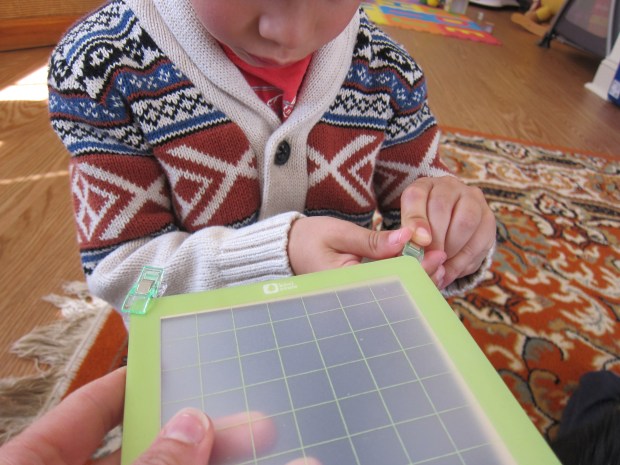
Attach the provided grid paper to the provided wooden frame using a clip in each corner. (Travis liked these clips so much he was bummed there weren’t extras!). Set the frame on the stand and set aside.

Kiwi Puzzles (2)

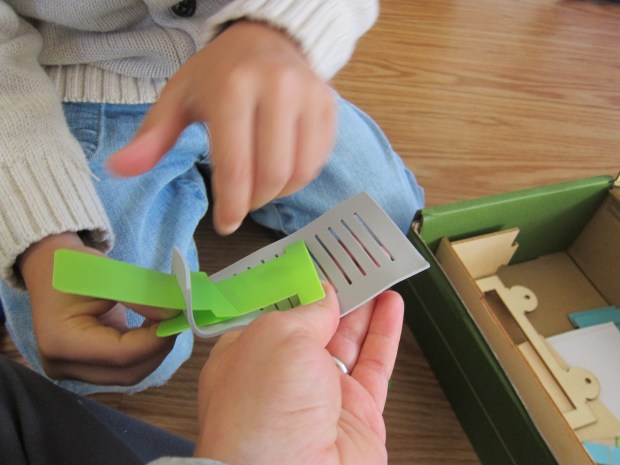
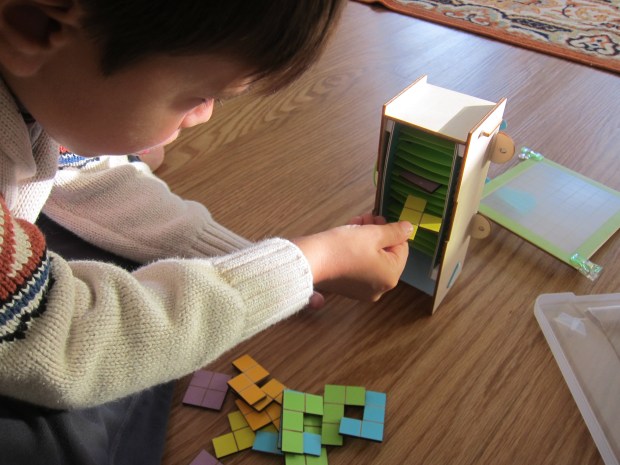
Preparing the shape dispenser was much more complicated and a touch delicate (our foam tore in a few places, so it didn’t always work correctly). Slot together wooden pieces as side panels and secure with elastics.

Kiwi Puzzles (3)

Slip the green “doors” into the slots of a foam piece. This goes into the wooden frame and is secured in place with sticky foam dots.
Kiwi Puzzles (4)

Now add one playing tile to each green door.
Kiwi Puzzles (7)

As you pull out the bottom green door (and this is key) the tile will fall (thanks to gravity). It won’t work, obviously, if you pull a door near the top, because then the playing piece would only land on the green door below.

Kiwi Puzzles (8)

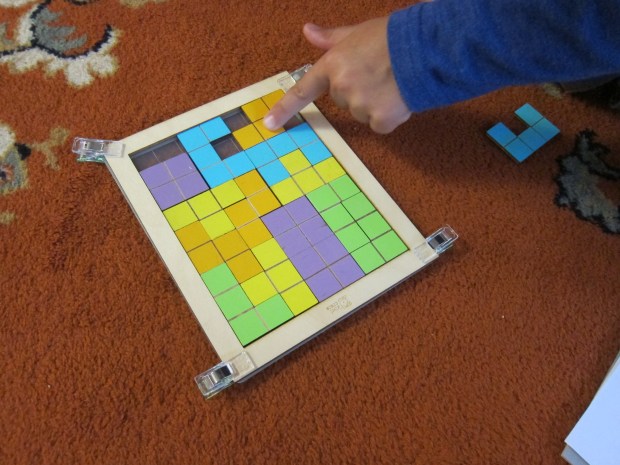
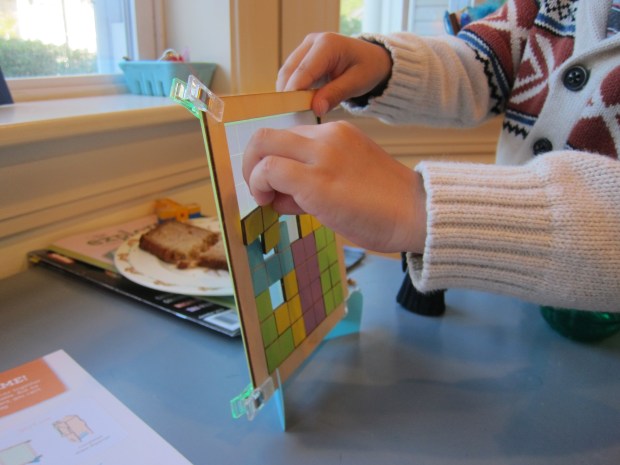
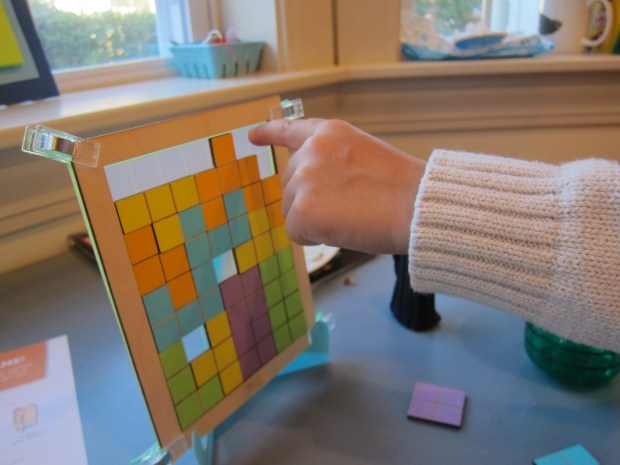
Now it was time to Play a Puzzle Game! I loved watched Travis assemble the resulting Tetris board on his game grid.
Kiwi Puzzles (12)

I remember my brain doing the same quick thinking as a child, deciphering which direction a piece could rotate so it fit just right.

Kiwi Puzzles (11)

The goal is to have the least number of blank squares possible. Travis counted up his squares each time, and his record was 4!
Kiwi Puzzles (13)

With all that engineering done, it was time for the A part STEAM: making Puzzle Pictures. Arrange some of the playing tiles on the provided foam mat. You can make random designs or follow the suggested pictures. Travis chose a robot!

Kiwi Puzzles (28)

Cover with paper and rub with a crayon to reveal your image.

Kiwi Puzzles (29)

After using the tiles, we tried rubbing over other items, like yarn and coins, and testing which came out best.

Kiwi Puzzles (30)

You can also challenge your child to copy the booklet’s designs for a car, dragon, and even Steve the Kiwi, but these were tough for Travis.

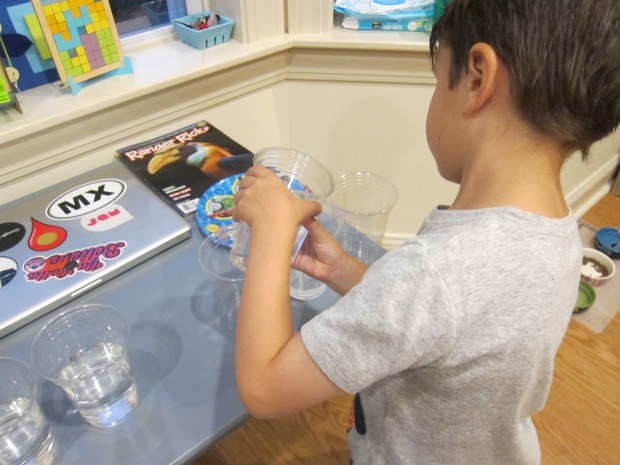
We weren’t done yet because Explore magazine had lots of brain games to test his gray matter. First up: Cup Confusion. Fill 3 clear plastic cups with water and place them next to 3 empty cups. Can you make a pattern of full-empty-full-empty-full-empty by touching only one cup?
Kiwi Puzzles (14)

I was so proud of Travis that he immediately knew to pour water, rather than shuffling cups around.

Kiwi Puzzles (16)

And clearly he was proud, too!

Kiwi Puzzles (17)

Next we did a Connect-the-Shapes challenge in which lines can’t cross…

Kiwi Puzzles (24)

…followed by Fish Sticks. Rearrange these 8 toothpicks so the fish…

Kiwi Puzzles (21)

…changes direction. The catch is that you can only touch 3 toothpicks.

Kiwi Puzzles (22)

He needed a bit of a guiding hand, but our fish turned.

Kiwi Puzzles (23)

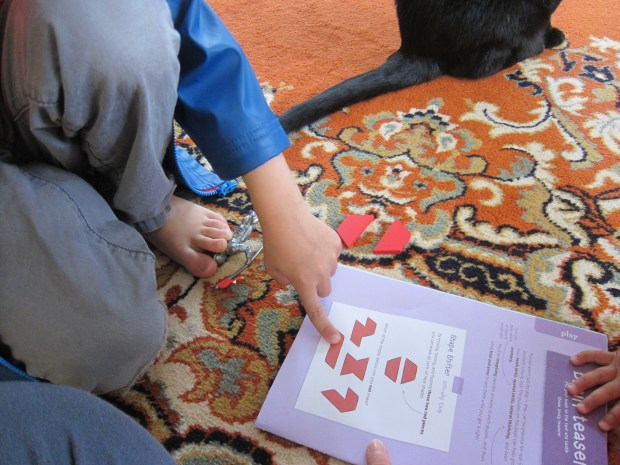
Finally, play Shape Shifter: see if your child can tell which of these pictures isn’t made with two trapezoids.
Kiwi Puzzles (25)

Travis guessed, and then we tested it out!

Kiwi Puzzles (26)

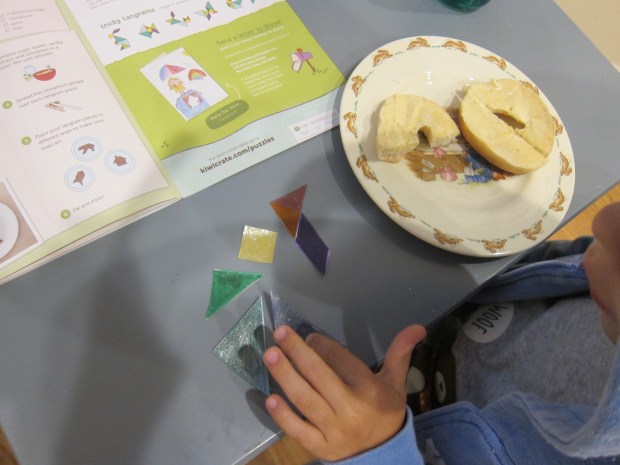
You can also print out a set of tangrams and try to fill in the outlines drawn in the magazine.

Kiwi Puzzles (20)

This task was advanced for my kindergartner, but he could look at the answer key and then build the puzzle with our set.
Kiwi puzzles (32)

A camel!

Kiwi puzzles (33)

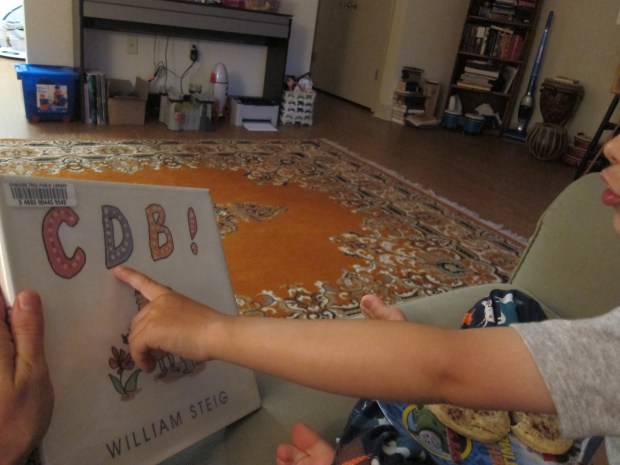
Explore magazine didn’t have any recommended reading this month, but I picked up two fantastic puzzlers from the library. CDB by William Steig had him laughing out loud as he read the letters on each page to decipher a full sentence.
Kiwi Puzzles (19)

We finished up with The Eleventh Hour, a puzzle mystery book I read in my own childhood!

Kiwi Puzzles (18)