DIY Sundial – Two Ways!

Sundial (4)

Summer is the perfect time to give kids a visual of how the sun moves across the sky during the day. Here are two ways to mark off the hours and watch the shadows move!

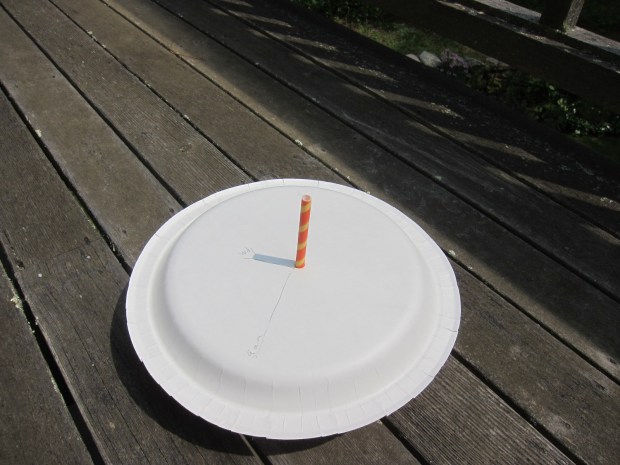
For our first sundial, we poked a straw through a paper plate, and set it securely between two planks of a back deck (alternatively, place in the yard with enough dirt around the straw to hold it firmly in place).

Sundial (1)

It was early when we started, a long 9 a.m. shadow, which Travis helped mark off.

Sundial (3)

We had to work around the sun a little bit (which disappeared behind the clouds a few times), but as we added hours, Travis could see how the shadow not only was shortest at mid-day, but also moved around the plate in a circle.

Sundial (5)

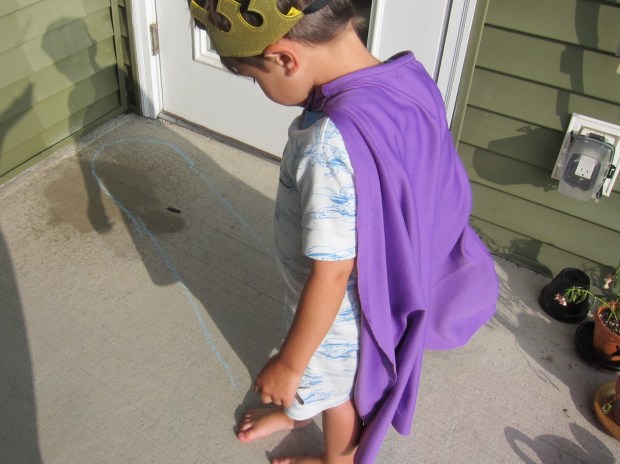
For a full-body experience, turn your child into the sundial! Sketch their outline with chalk at various points of the day, noting both location and length.

Sundial alt

After a full day’s cycle, they’ll be able to see how shadows move.

Make Your Own Raisins

Grapes to Raisins (5).JPG

Ok, you’re melting in a heat wave and hot sunshine… But that will be cause to rejoice if you harness the power of that sun and show your kids how you can turn grapes into raisins.

Two years ago, we actually tried a similar trick using an oven, and I’d been waiting for the chance to make a sun-dried version. Boil a bunch of whole green grapes for 30 seconds, then immediately transfer to a bowl of ice water. Travis loved helping me make the ice water bowl!

Grapes to Raisins (2)

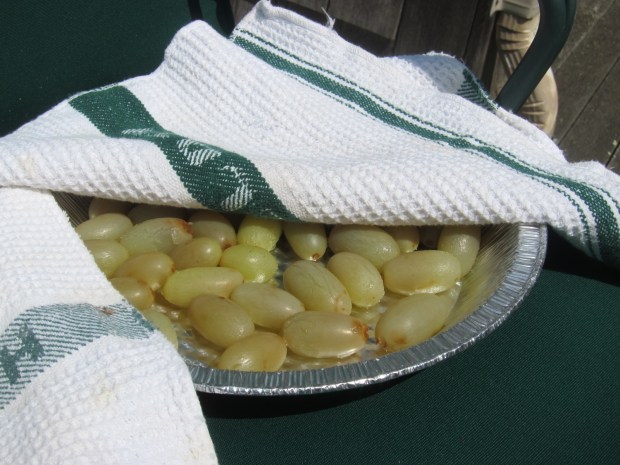
Place the grapes on foil pans, then cover with a breathable cloth and place somewhere outside that gets direct sunlight. Bonus points for weather that’s 85 degrees or above. Let the grapes stand for 3 to 5 days, then see how you’ve shriveled them into raisins.

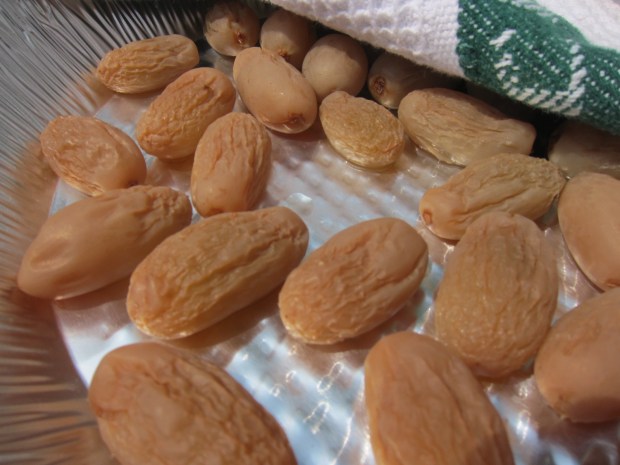
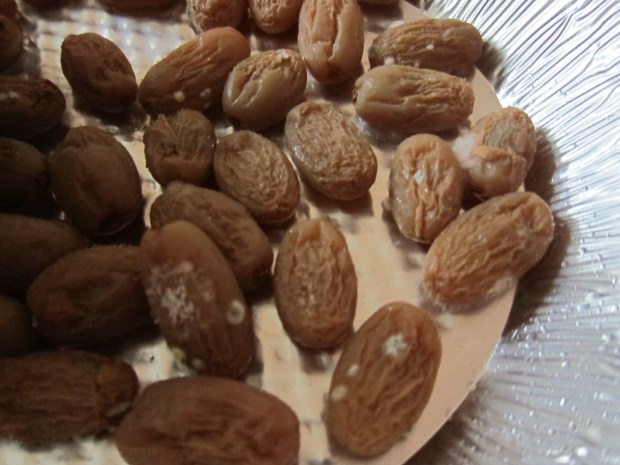
By day 1, the grapes were definitely shriveled and wrinkly on the outside, although still the same size as regular grapes.

Grapes to Raisins (3)

As the days went on, they got smaller and wrinklier but – oh no! A bout of rain caught us by surprise, and our raisins turned moldy before we had a chance to try them.

Grapes to Raisins (6)

So even though we weren’t entirely successful, I can’t wait to hear your stories about sun-dried goodies in the comments.

Exploding Sodas

Exploding Soda (4)

We’re late the to the game on this one, but better late than never! Apparently big kids and science teachers have been exploding diet soda with Mentos for years now, but this activity was definitely new to my 4-year-old, and the perfect summer science experiment. Get outside – some place with lots of room – and then watch the geysers explode!

For the most fun, purchase several large bottles of diet soda in different varieties, so you can compare the height of the geysers (big kids may want to be more scientific about this, measuring off the heights, but we simply had fun).

Exploding Soda (1)

Line up the bottles, and drop five Mentos (very quickly!) into them one at a time. Note: You can drop in as many as seven Mentos, but by five, I had to run in the other direction.


Now here’s the important step – move back! The geyser is going to happen fast, and high.

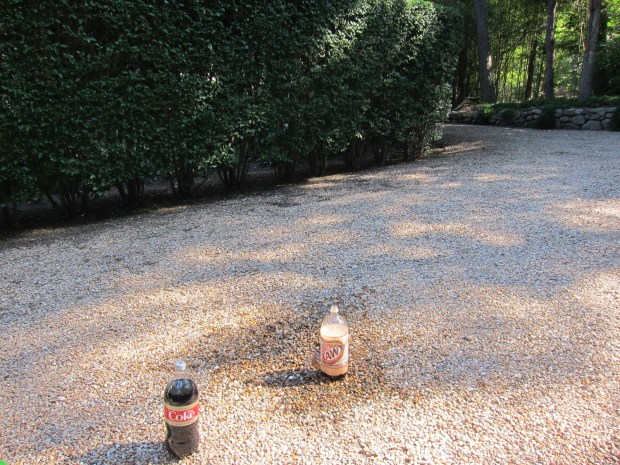
The diet root beer took me so completely by surprise that I only had time for a picture of the aftermath.

Exploding Soda (2)

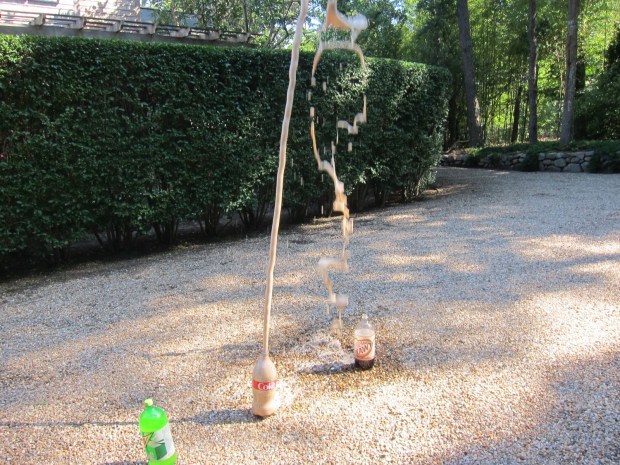
By the diet Coke, I was ready with my camera.

Exploding Soda (3)

Interestingly, diet Mountain Dew only gave us a small fizz.

Exploding Soda (6)

Travis loved hosing off the driveway in the aftermath!

Exploding Soda (5)

Which sodas did you try? Please share in the comments!

Rainbow Density Cylinder

Rainbow Density (7)

Here’s a neat visual way for even young kids to grasp the concept of density. You’ll get messy in the kitchen, mix up some colors, and sneak in some science to boot!

Rainbow Density (1)

While Travis was napping, I set up paper cups and all of the liquids we’d be using for the project, in this order of density:

Corn syrup (or carob syrup)

Maple syrup

Water

Almond milk

Vegetable oil

Dish Soap

Rubbing alcohol

Note: Feel free to adapt this list, depending what you have at home, including agave nectar or honey for non-vegan families.

Travis was so intrigued at the set-up, and we talked briefly about how some liquids sit on top of (are less dense) than others. Was he ready to see how it worked? Yes!

Rainbow Density (2)

We tinted a few of our liquids with food color for a better visual effect: green for the water, red for the dish soap, and blue for the rubbing alcohol.

Rainbow Density (3)

Carefully help your child pour the liquids, in order of density, into a glass container. Thinner containers will work better, such as a recycled jam jars or an old dressing jar.

Rainbow Density (6)

It may take your layers a few minutes to settle, making a rather goopey mixture at first!

Rainbow Density (5)

After we gave it a moment, our layers were more apparent – we loved the hit of bright blue from the alcohol at the top!

Oddly, the blue alcohol layer disappeared when we returned to the jar about an hour later, but here you can see some of the layers even more clearly.

Rainbow Density (9)

Travis had so much fun that I gave him extra cups and additional food color to mix up for some time.

Rainbow Density (8)

A fun afternoon in the kitchen!

Colors Crate

Koala Colors (7)

I was surprised when a color-themed crate arrived from Koala Crate this month. Colors seem so basic compared to other topics our subscription has covered, more like something we’d receive toward the beginning. Happily, we found that the activities and crafts inside were surprisingly complex and engaging. The booklet also felt especially interactive this month, including a color-by-shape page, seek-and-finds, and more.

Koala Colors (1)

First up was the Color Scavenger Hunt, using colored cellophane squares in all shades of the rainbow and a set of dice.

Koala Colors (8)

Roll one for color and one for the number of objects, then hunt for items around the house. Travis loved this little challenge!
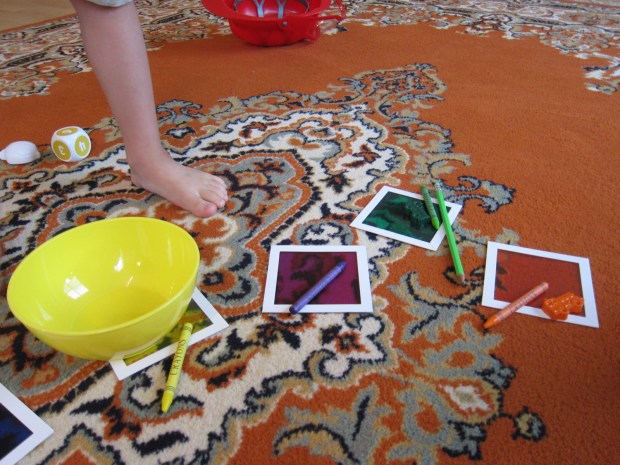
Koala Colors (9)

The squares can be used for multiple purposes when your hunt is done. Roll a color and then think of something in that hue. Here’s Travis drawing a few items he thought of, like lettuce and carrots.

Koala Colors (10)

You can also hold the colored squares in front of familiar objects around the house and see how the colors shift, as with this apple.

Koala Colors (11)

Next we made the Watercolor Banner, which kids decorate first in crayon and then in watercolor (all materials provided in the kit).

We talked about things we see with lots of colors, which soon had Travis drawing nature scenes (flowers, a swamp) on his flags. I added a flag with rainbows and one with stripes.

Koala Colors (2)

Next, use the provided watercolors to paint over the crayons (a neat lesson in “resist” painting techniques).
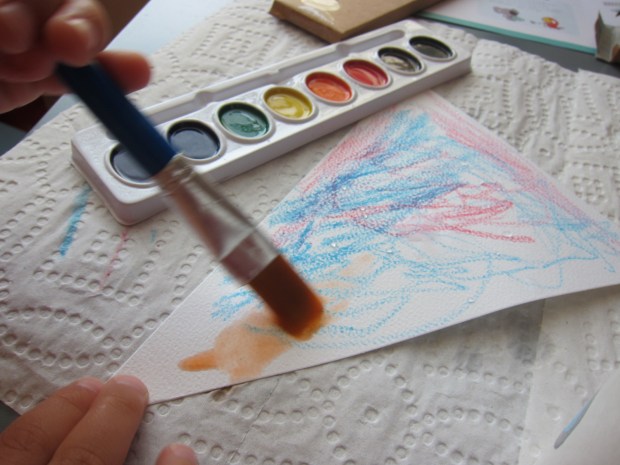
Koala Colors (4)

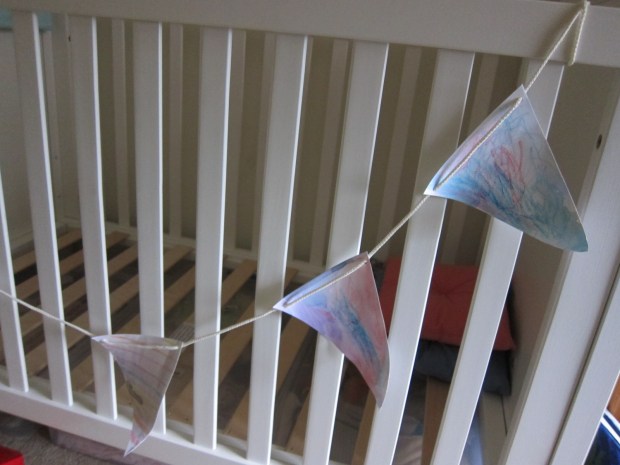
Let dry before threading onto the provided rope, then find a spot to hang your banner. Travis opted for the old nursery!
 

Koala Colors (6)

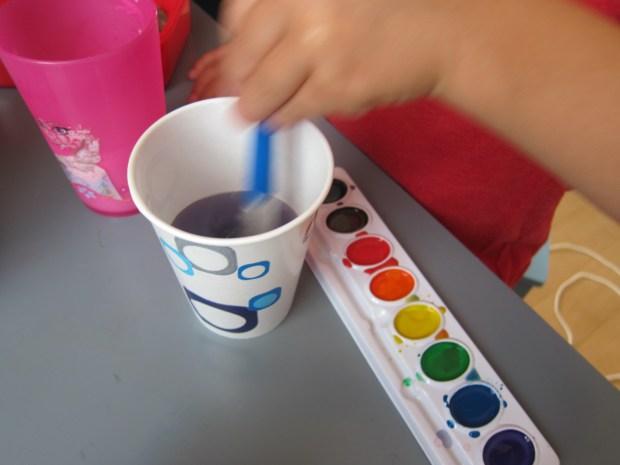
Before you put away the watercolors, have some additional mixing fun. We started with the primary colors (dip your brush in the color, then in a cup of clear water), and I asked Travis what shade he’d like to make. Oh no – he requested white! The only one we couldn’t make. But we mixed up the secondary colors first, and then discovering how to make brown was a big hit.
Koala Colors (5)

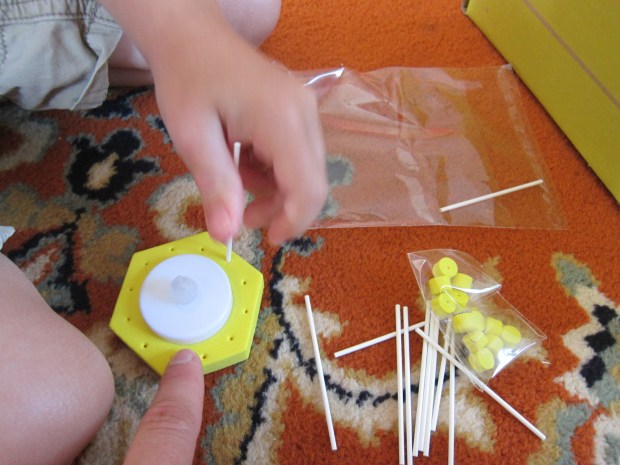
The third craft, a Colorful Luminary, was a hit – and excellent for fine motor skills. Fit the provided tea light into the provided foam base, and add thin craft sticks in a circle around it.
Koala Colors (13)

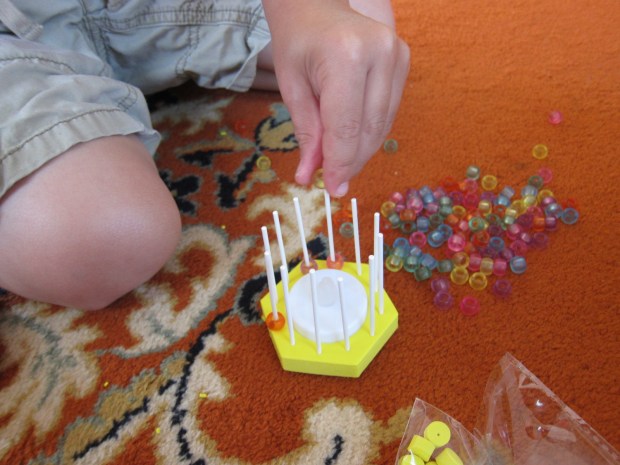
Now add colored beads to each stick. I asked Travis if he wanted to do all one color per stick or arrange them in a pattern, but this was a bit advanced and he preferred randomly threading them onto the sticks.
Koala Colors (14)

Cap each stick with another foam piece to seal the beads in place.
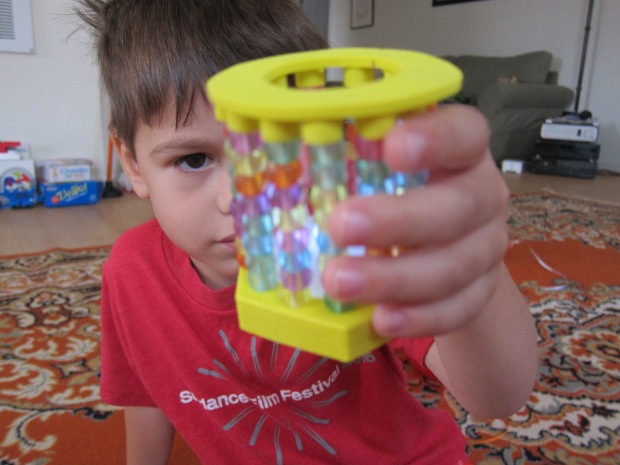
Koala Colors (15)

Find a dark spot, and set the tea light ablaze. Beautiful! We talked about the ways the colors changed when the light was lit versus unlit.
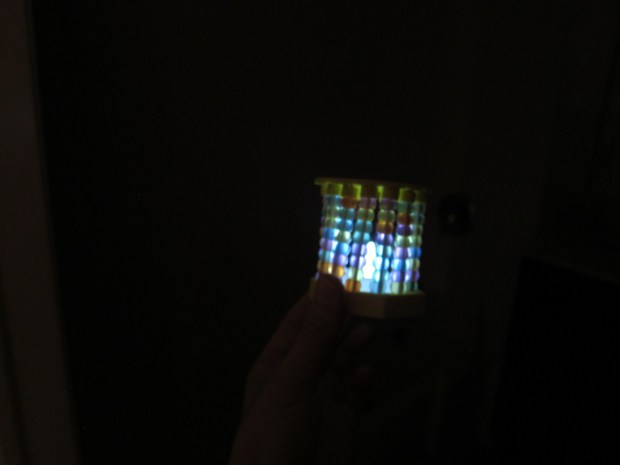
Koala Colors (16)

Before we put away the fun, we repeated an old activity, Dyed Flowers, made by dying white carnations with food coloring. This is a great way not only for kids to see fun colors, but also to witness how liquids travel up a plant’s stem. Fill test tubes or small cups with water, and add food coloring to each. Place a white carnation in each tube, and let sit overnight.
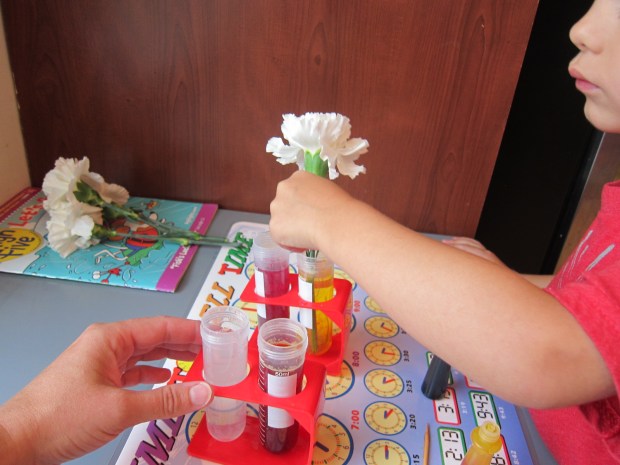
Koala Colors (17)

You’ll have a lovely (though faint) color in each flower by morning. Our red worked best.

Koala Colors (18)

In sum, lots of great activities here, including for kids who learned their colors ages ago.


Leave a Trace

Trace (2)

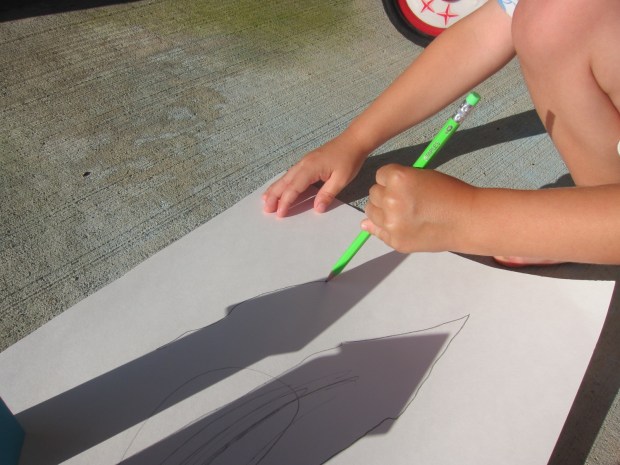
It may be the middle of summer now, but fall is just around the corner, and I’m already thinking ahead to when Travis will start pre-K in September. One of the skills that pre-K teachers emphasize is tracing, great for learning pen control and pre-writing. How to make that fun in the summertime? Use the sun!

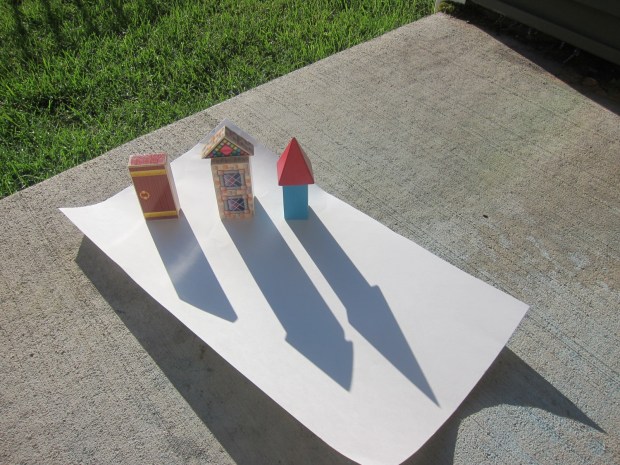
Set a large piece of poster board or craft paper in a sunny spot, and arrange your child’s toys on the paper. For beginning tracers, keep shapes simple.  Building blocks are great, in rectangles, squares, and triangles. Older kids might enjoy the challenge of tracing around complicated objects, like animal figures, cars, or dinosaurs.

Trace (1)

Encourage your child to follow the lines of shadow that the sun casts on the paper. This was tricky for Travis and he didn’t have the patience for it that I hoped on this particular morning, but we got in a little practice!

Trace (3)

If your kids are into it, try coming back to the activity over the course of the day; the shadows will shift (shortest at noon), which is a neat little lesson on the Earth’s rotation.


Dinosaurs Were HOW Big?!


Dino Big (4)

We’ve been having dinosaur fun lately, which led to the question: How big were these giant reptiles, really? It’s hard for kids to have any sort of scale, since most dino toys are tot-sized. So we armed ourselves with a library book, yard stick, masking tape, and a marker, and set outside to find out.

Dino BIg (3)

We started with a fairly mid-sized dinosaur, the Plateosaurus, who came in at a respectable 26 feet long. Already this was quite big!

Dino Big (2)

Next up was Stegosaurus, measuring a full 30 feet long. Travis couldn’t believe it and loved helping me press the tape down onto the sidewalk.

We added a Travis-sized piece of masking tape for a true comparison. Impressive!

Dino Big (5)

Now for the real mind-blower: Argentinosaurus was a whopping 100 feet. I was almost too tired to contemplate putting down that much tape. But we did it. Here’s Travis at the far end to show how big the dino was – look how far away he is!

Dino Big (6)

We labeled each piece of tape with the dinosaur’s name and size. Travis loved scribbling along his archaeological “notes” on the tape as well.

Dino Big (7)

Our neighbors thought we were adorable, and this was a blast!

Blowing in the Wind Experiment

Blow in Wind (5)

This activity is a great way to discover what’s happening right outside in your own backyard. Kids get messy and learn too? A double win.

You’ll need two to three pieces of thin cardboard for the experiment (pieces of old cereal boxes work well). The night before, I painted them yellow so that we’d be able to see anything that clung onto them better than against the brown.

Blow in Wind (1)

When I told Travis we were going to smear vaseline onto the cardboard, he couldn’t believe his luck. (For a non-petroleum option, try Alba). Goopy!

Blow in Wind (3)

I punched a hole in each piece of cardboard and we hung them around our grassy patio area. You can hang just one, or hang several in different sections of your yard if you want to note differences between the pieces.

Now we wait! As we waited, we wrote down guesses of what the wind might blow our way. Travis suggested paper airplanes, so I wrote down “paper” – not too far-fetched as paper from the mail kiosk sometimes blows our way on a very windy day.

After an hour or so, go check it out! Truthfully, we didn’t find much. The most we got was a bit of dirt and what might have been a tiny bug (oops!).

Blow in Wind (6)

But Travis proudly scribbled our “results.”

Blow in WInd (7)

Candle in the Wind

Candle Wind (3)

Now that we’ve the got the wind in our sails (haha), we’re having lots of fun finding out about other properties of wind. Will wind be able to travel around an obstacle in its way? This experiment is an easy illustration of the fact. Parents be aware: You will need a candle with a flame for the experiment to work. Supervise very closely, and only do so if you know your children won’t touch the flame.

Candle Wind (1)

To start, light a small sturdy candle, and place behind an object with square corners – a vase worked well for this step.

Candle Wind (2)

Travis huffed and puffed, but the wind couldn’t reach the candle this way. Onto the next attempt!

Place an object with round sides between your child and the candle, such as a water glass.

Candle Wind (5)

The wind will make it around the sides and poof – out goes the candle.

Candle Wind (4)

Looking for more windy fun? Check out our recent experiment with hot air spinners.


Hot Air Spinner

Hot Spinner (4)

This was the perfect science experiment to do hot on the heels of our wind-themed kit from Koala Crate. You’re illustrating for children that warm air is less dense than cold air. So if you hold something above a heat source (like an uncovered lightbulb), the cold air pushes the warm air up and makes it spiral!

First, draw a circle on construction paper, and then pencil in a spiral shape. Cut out.

Hot Spinner (1)

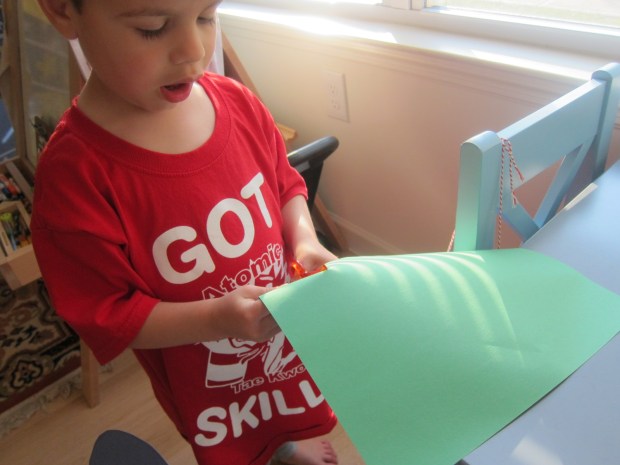
These kinds of projects are great practice for Travis – he gets to mimic my movements (drawing circles, cutting with safety scissors) while I make the version that is precise enough for a science experiment.

Hot Spinner (2)

Next we needed to staple a thread (be sure to use sewing thread; twine or yarn will be too heavy) to the center of the spiral – by far Travis’s favorite part!

Hot Spinner (3)

The next step was a bit tricky to catch on camera! Wrap the other end of your thread around a pencil and hold over a lightbulb (we put a lamp on the ground and removed the shade). Stay still until the spiral comes to a stop, then carefully observe – in moments it will start to whirl!

Hot Spinner (5)

Some good STEM fun to kick off our summer!