Little Passports: Argentina

LP Argentina alt

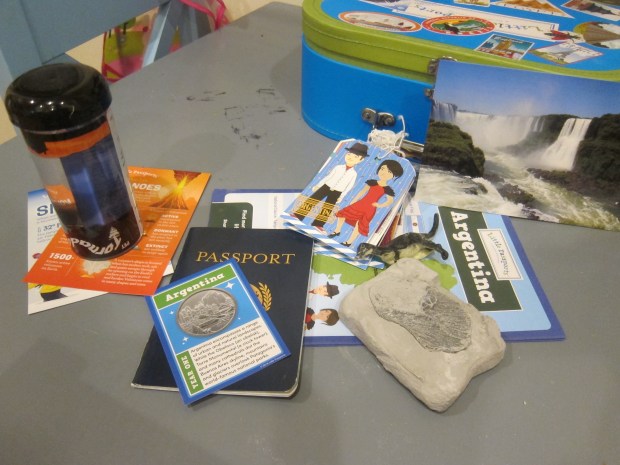
Travis quite enjoyed his Argentina package from Little Passports, particular how hands-on this particular country’s activities were.

LP Argentina (1)

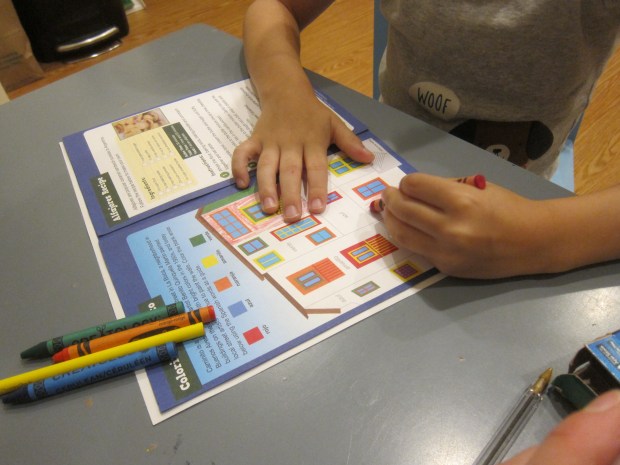
He dove right into the usual fare (a passport stamp, a sticker for his suitcase). The booklet had a few activities that were right at his grade level (learning colors in Spanish, a dot-to-dot) and some that were tricky to grasp as a first grader (adding team scores for Argentina’s national game of Pato).
LP Argentina (9)

Souvenir:

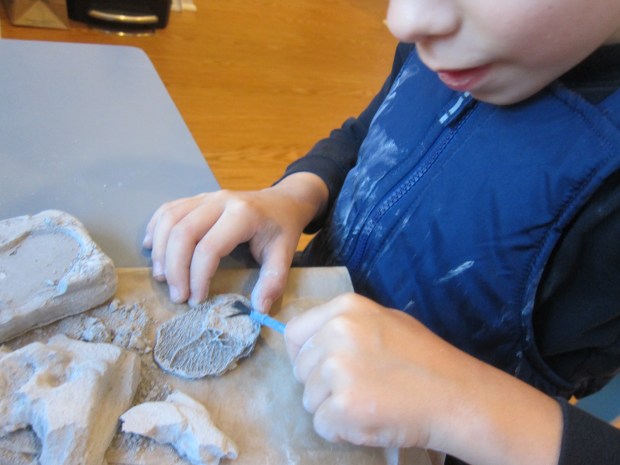
Travis always wants to know what “Sam and Sofia” have sent right away, and this one did not disappoint. After learning that some of the world’s largest dinosaurs have been found in Argentina, kids will have a little fossil kit to dig up their own Gigantosaurus.
LP Argentina (4)

Travis loved alternating between the pick and the brush until he had carefully unearthed the skeleton.

LP Argentina (3)

Further Activities:

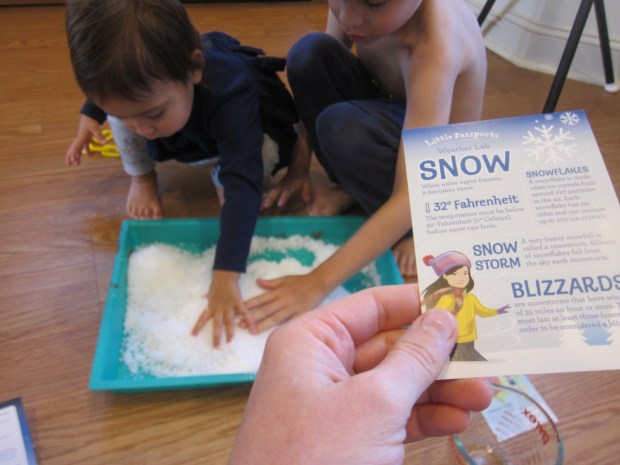
The optional add-on for Argentina was a Weather Lab kit, based on Argentina’s active Andean volcanoes and snowfall in Patagonia. We’re so glad we opted for it! First we made instant snow, which little sister Veronika loved playing with even more than Travis.
LP Argentina (6)

I read them facts about how ice crystals form as the kids played with the neat mixture. Next was a tornado jar which Travis could spin to watch a funnel cloud form.

LP Argentina (11)

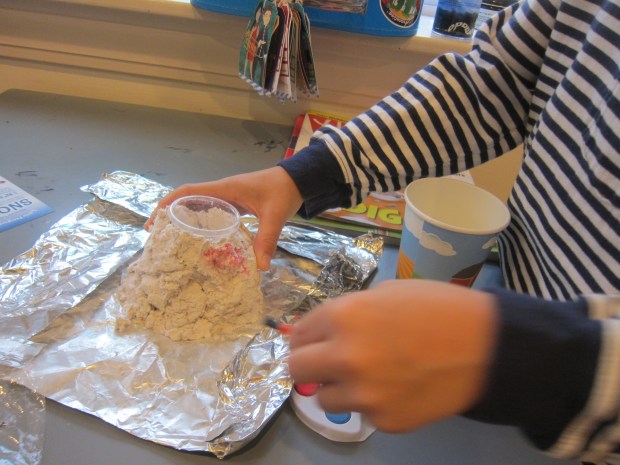
But best of all were the provided materials to make a volcano. We mixed warm water into powdered clay (I was proud of Travis getting his hands in there!) and then shaped a little volcano around the provided plastic cups.

LP Argentina (7)

To be honest, this clay was hard to work with, but we got something vaguely resembling a volcano. Once it dried (which may take a few days), Travis painted it with the provided watercolors.
LP Argentina (12)

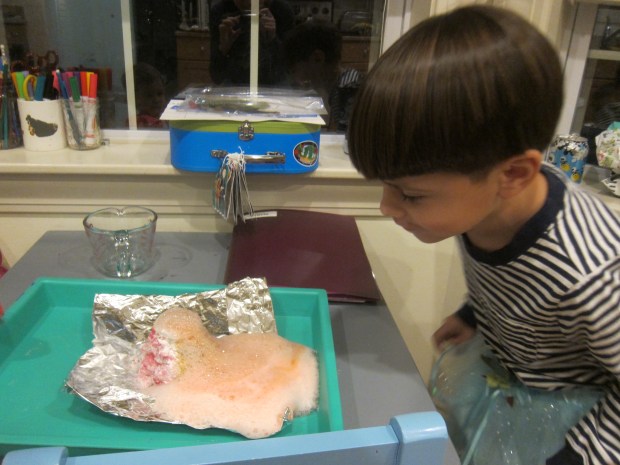
Time for an explosion! Fill that central plastic cup with 1 tablespoon baking soda. Add a few drops of red food coloring and liquid dish soap, then pour in 1/4 cup vinegar.
LP Argentina (15)

Whoa!

LP Argentina (17)

Online, the fun continued with an Argentine flag to color and a picture-search based on the prehistoric paintings in Cueva de las Manos. The latter was definitely aimed at older subscribers, requiring multiplication, but Travis still a learned a little something.

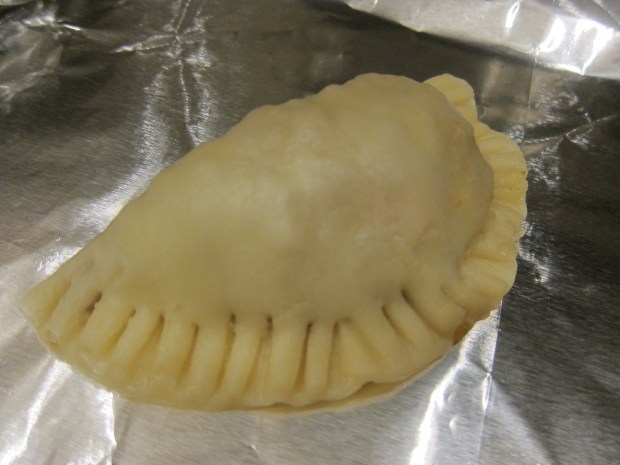
The final website activity was a bonus recipe for empanadas, yum!
LP Argentina (21)

Recipe:

At last it was time for dessert. The dulce de leche-filled cookies called alfajores were tough to make vegan, but we did our best.

Alfajores (2)

Ingredients:

  • 1 and 1/2 cups flour
  • 1/2 teaspoon baking soda
  • 2 teaspoons baking powder
  • 2 and 1/2 cups cornstarch
  • 1 and 1/2 cups Earth Balance butter, softened
  • 1 cup sugar
  • 3 tablespoon ground flaxseed
  • 8 tablespoons warm water
  • 1/2 teaspoon vanilla extract
  • 1 (14-ounce) can sweetened condensed coconut milk
  • Shredded coconut
  1. To prepare the dough, combine the flour, baking soda, baking powder, and cornstarch in a bowl ;set aside.
  2. In the bowl of a stand mixer, beat the butter and sugar until combined. Whisk the flaxseed into the warm water to make vegan egg yolks. Add to the butter mixture, along with the vanilla and beat until combined.
  3. Stir  the dry ingredients into the wet ingredients to form a soft dough. Wrap the dough in plastic wrap and refrigerate for 30 minutes.
  4. Roll the dough to about 1/4-inch thick and use a 2-inch round cookie cutter to make circles. Bake at 350 degrees F for 10 minutes; transfer to a wire rack to cool.
  5. Once cool, spread half of the cookies with a little of the sweetened coconut milk and top with the remaining cookies. Roll the edges in shredded coconut before serving.

Alfajores (5)

Halloween Countdown Day 26: Pumpkin Power

Pumpkin Power (7)

It turns out that October 26 is Pumpkin Day, as if the gourd needs one specific day in a month that seems to be all about it! But we took the opportunity to test an unappreciated ability of pumpkins: to generate electricity!

Pumpkin Power (1)

Much like those old potato or lemon experiments, you can hook up two pumpkins to make a clock run or an LED light turn on.

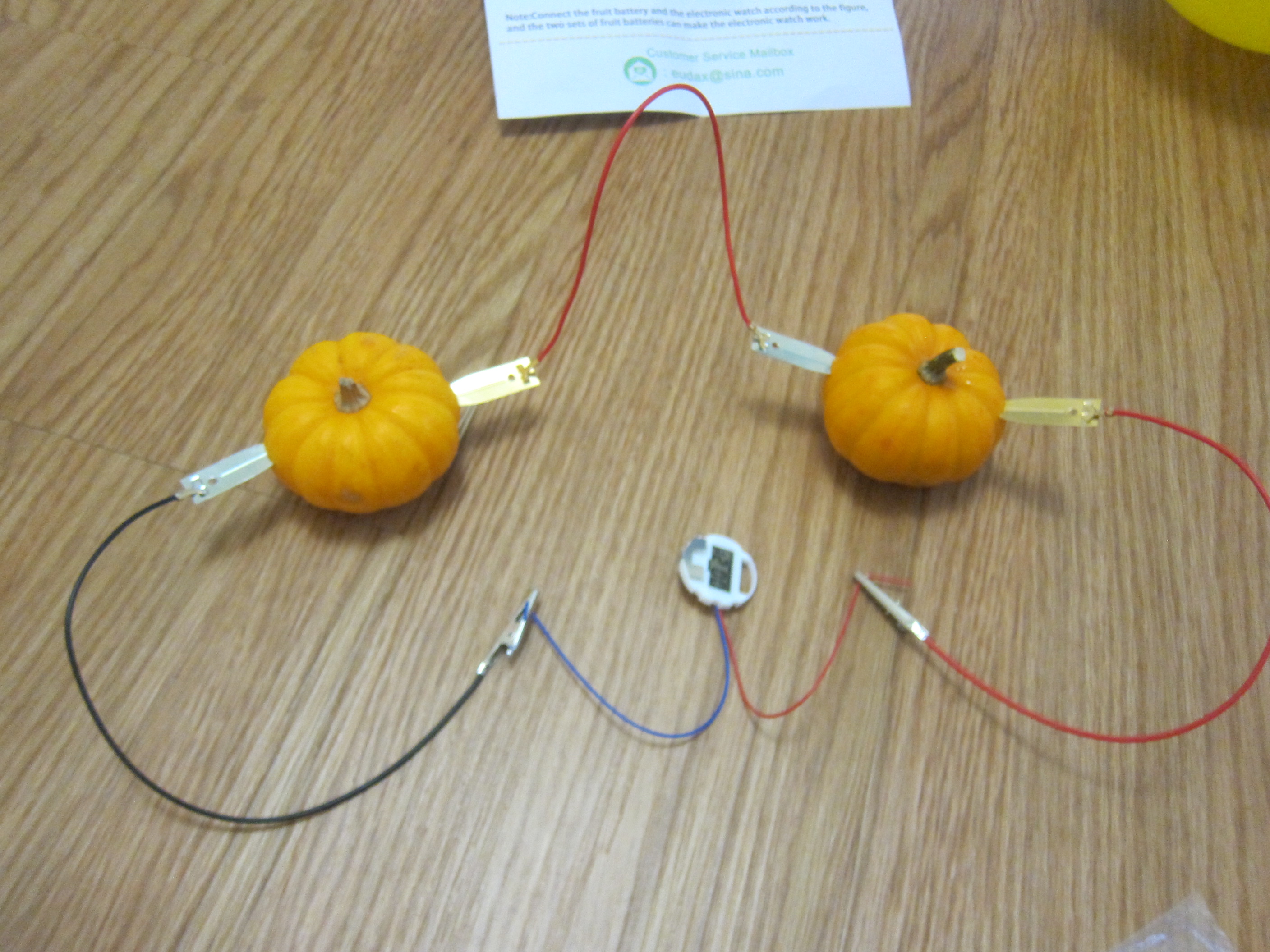
I originally tried to follow online instructions, but had to maneuver things a little differently to line up with the particular items that came in a fruit-battery kit we purchased. The set-up looks like this: lnsert a cooper strip and a zinc strip into each of 2 small pumpkins.

Pumpkin Power (2)

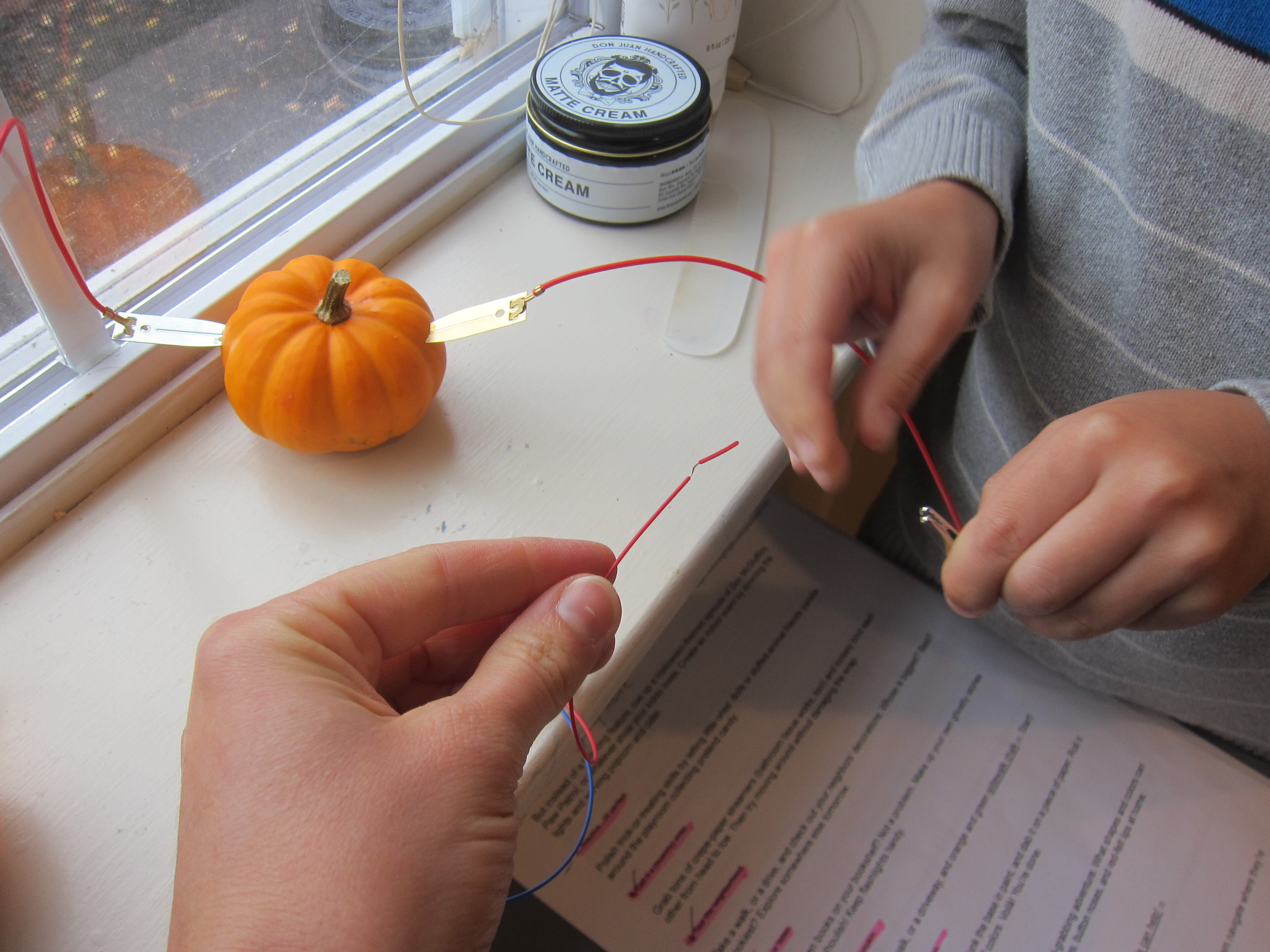
Use an alligator clip wire to attach the copper strip from one pumpkin to the zinc strip from the second pumpkin.

Now, use a second wire with alligator clip to attach the zinc strip from the first pumpkin to the negative node of either a multimeter, clock, or LED light.

Use a third wire with alligator clip to attach the copper strip from the second pumpkin to the positive node of the multimeter, clock, or LED light. Hopefully the photos in this post make all that clearer!

Pumpkin Power (3)

Your circuit should be complete.

Pumpkin Power (6)

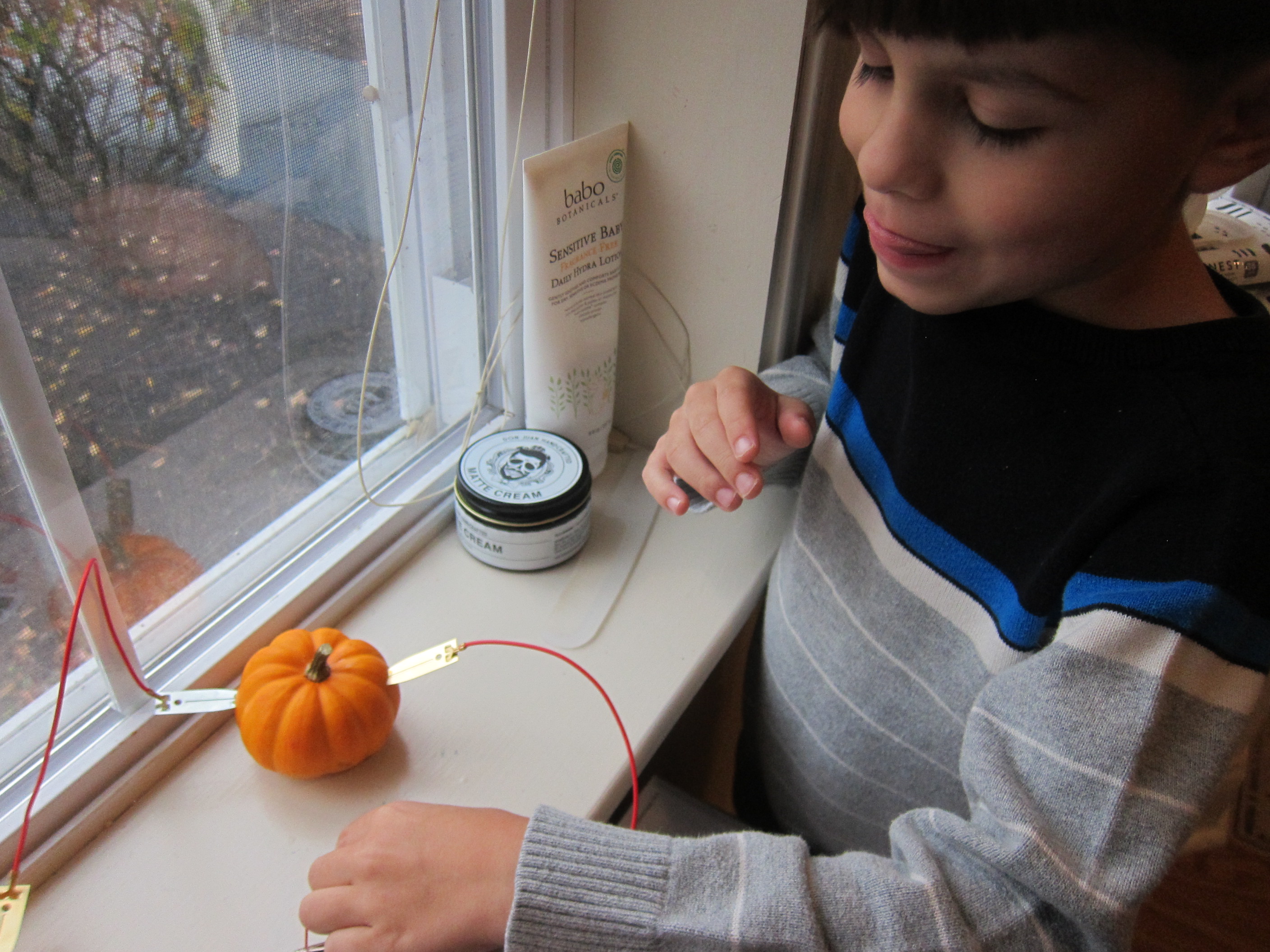
Travis was wowed watching our clock blink on. At one point we left it running for over an hour.

Pumpkin Power (4)

Why does this work? Pumpkin flesh has acid (though not as much as lemons), which means the zinc strip will start to lose electron ions. Those ions travel over to copper, which generates electricity.

Pumpkin Power (5)

Now that’s pumpkin power!

Melted Crayon Planets

Melted Crayon Planet (3)

Here’s a novel way to talk about the different colors of the various planets in our Solar System, while making a neat piece of art. Kids are sure to love this craft because anything involving melted crayons is just cool.

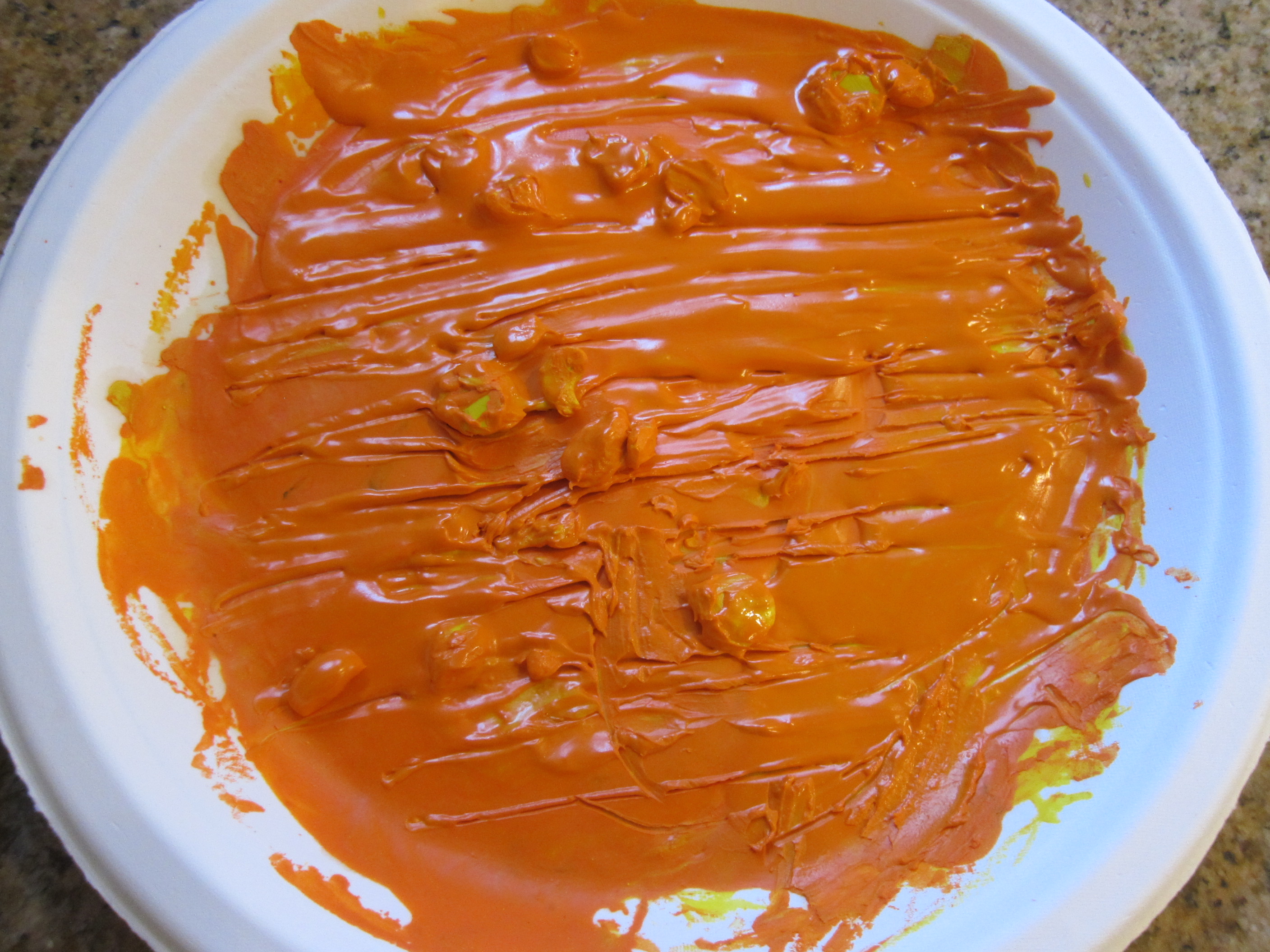
We only had two paper plates, so decided to make a blue and green one for Earth and a orange and yellow one for Jupiter.

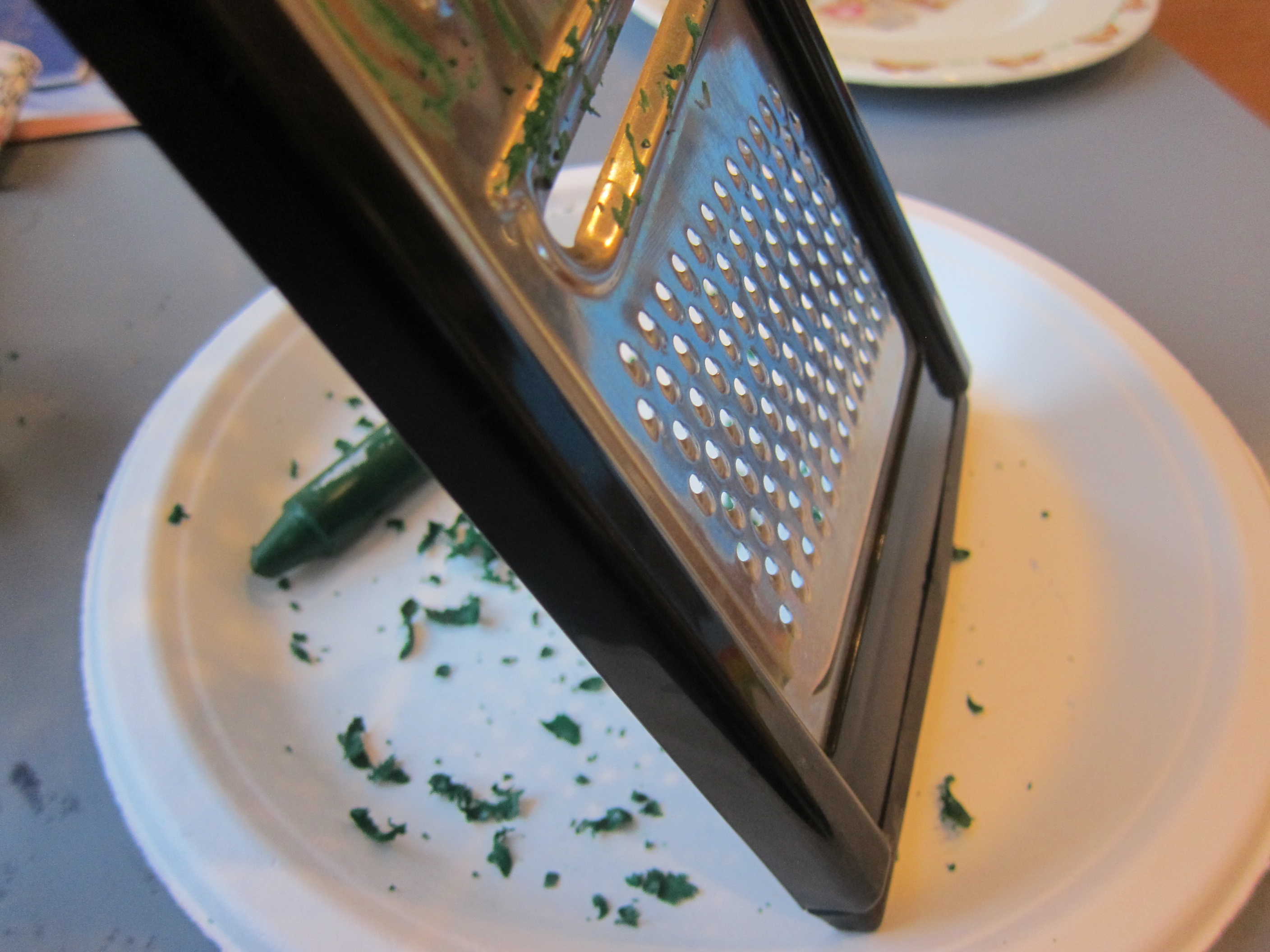
I cut the wrappers from jumbo crayons, and first we tried making small pieces by grating them on the large holes of a grater.

Melted Crayon Planets (1)

This didn’t work that well, so I ended up chopping the crayons with a knife instead. Arrange the pieces as you want them to look on each paper plate, then begin microwaving at about 1 minute intervals until the wax melts (you may need less time, depending how thick your crayon pieces are).

Melted Crayon Planet (2)

As they start to melt, swirl the colors into the design you want with a toothpick. Our Earth came out pretty neat!

Melted Crayon Planet (4)

The orange and yellow, unfortunately, mostly just blurred together for Jupiter, but we added next textured lines with a toothpick.

Melted Crayon Planet (5)

Without even a single prompt, Travis realized, “Mom, we need the giant red spot!”. Simply add pieces of red crayon to one portion of your plate for that.

If you have enough plates and crayons, go ahead and make all eight planets!

Bubbling Cauldron

Bubbling Cauldron (10)

Halloween-themed crates from Kiwi Co have been a huge hit in the past, and this year’s did not disappoint!

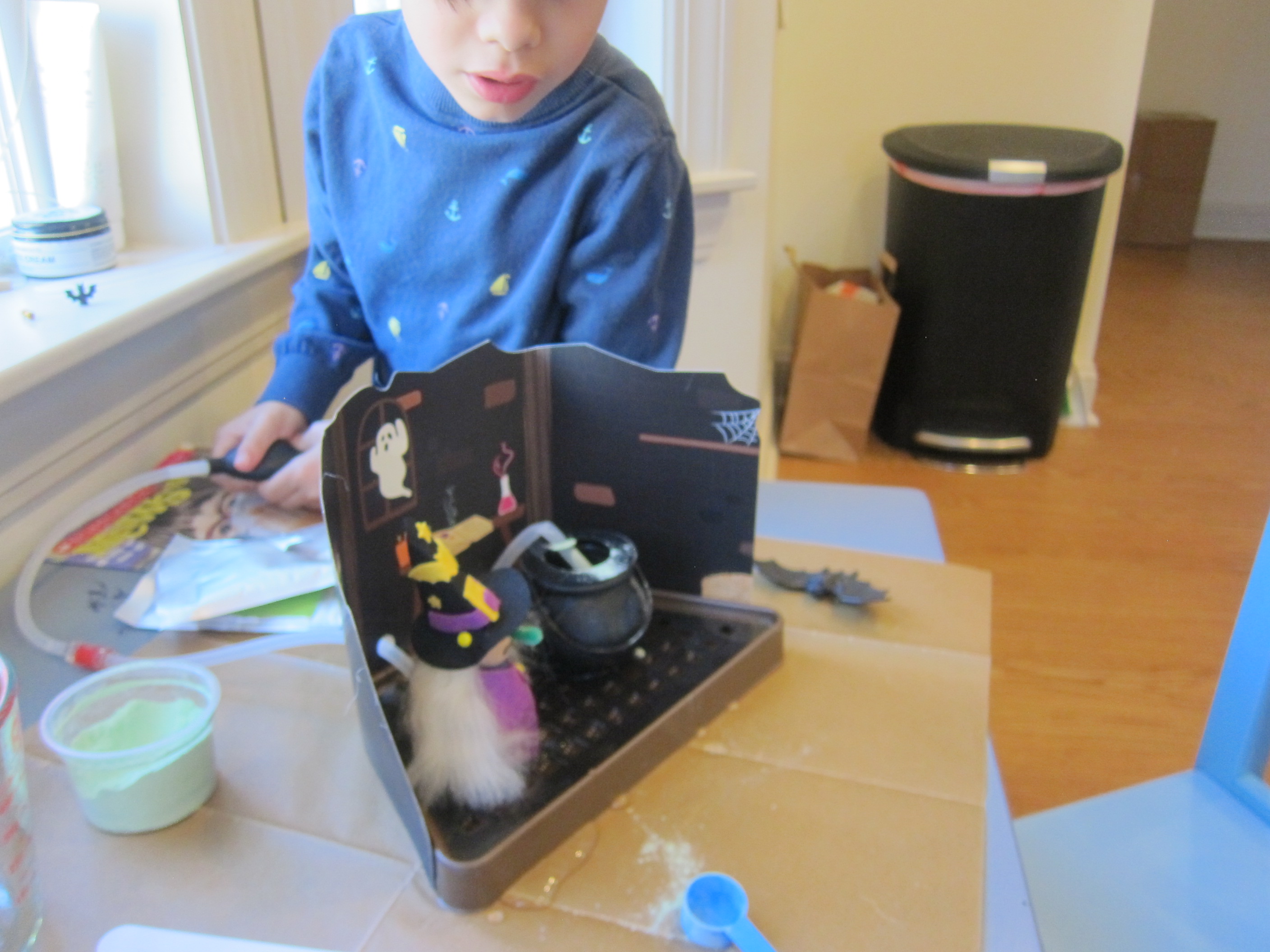
This year we opted for a witch’s Bubbling Cauldron, which relies on that old trick of baking soda plus an acid (in this case citric acid) to make a bubbly explosion.

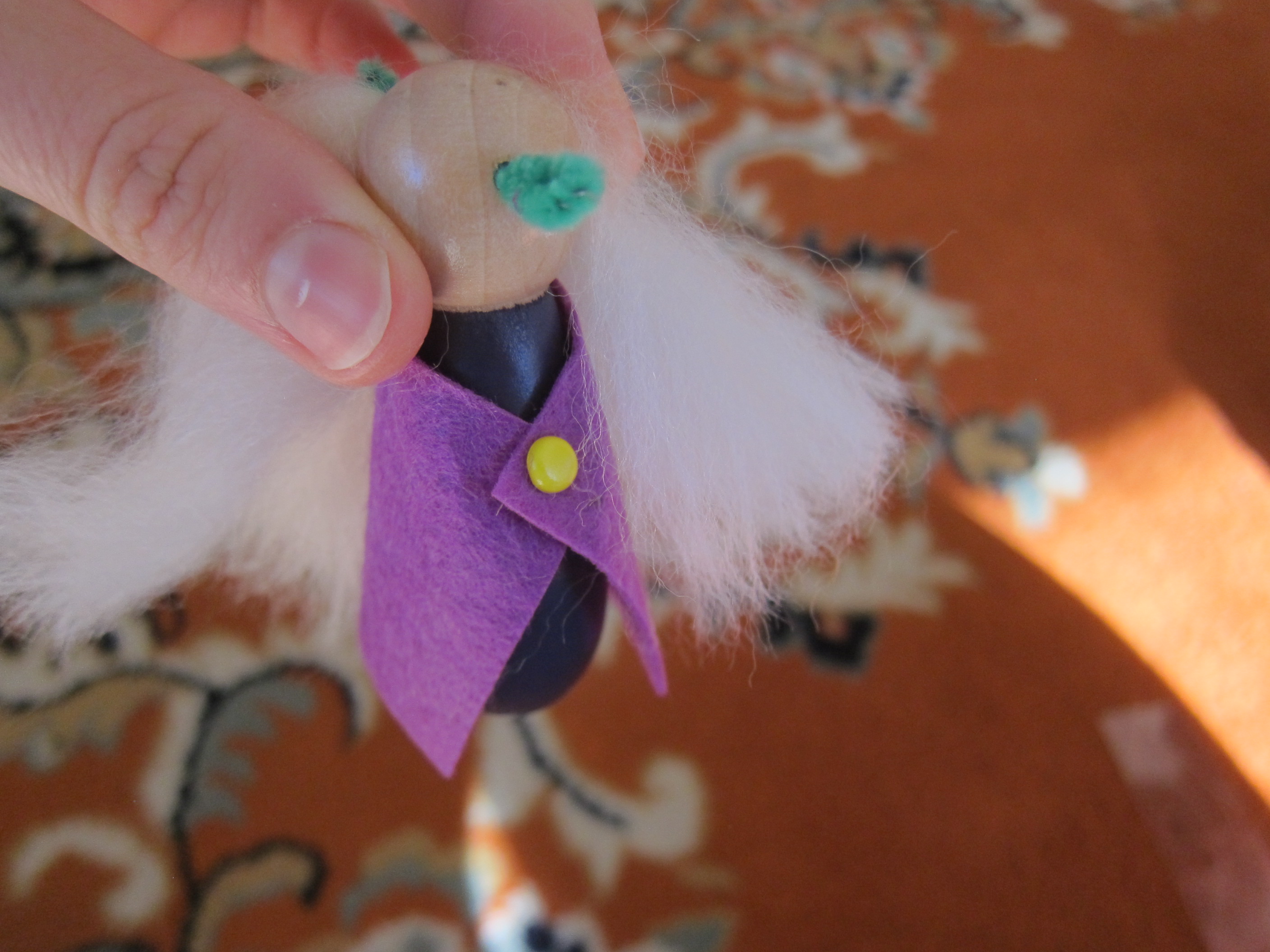
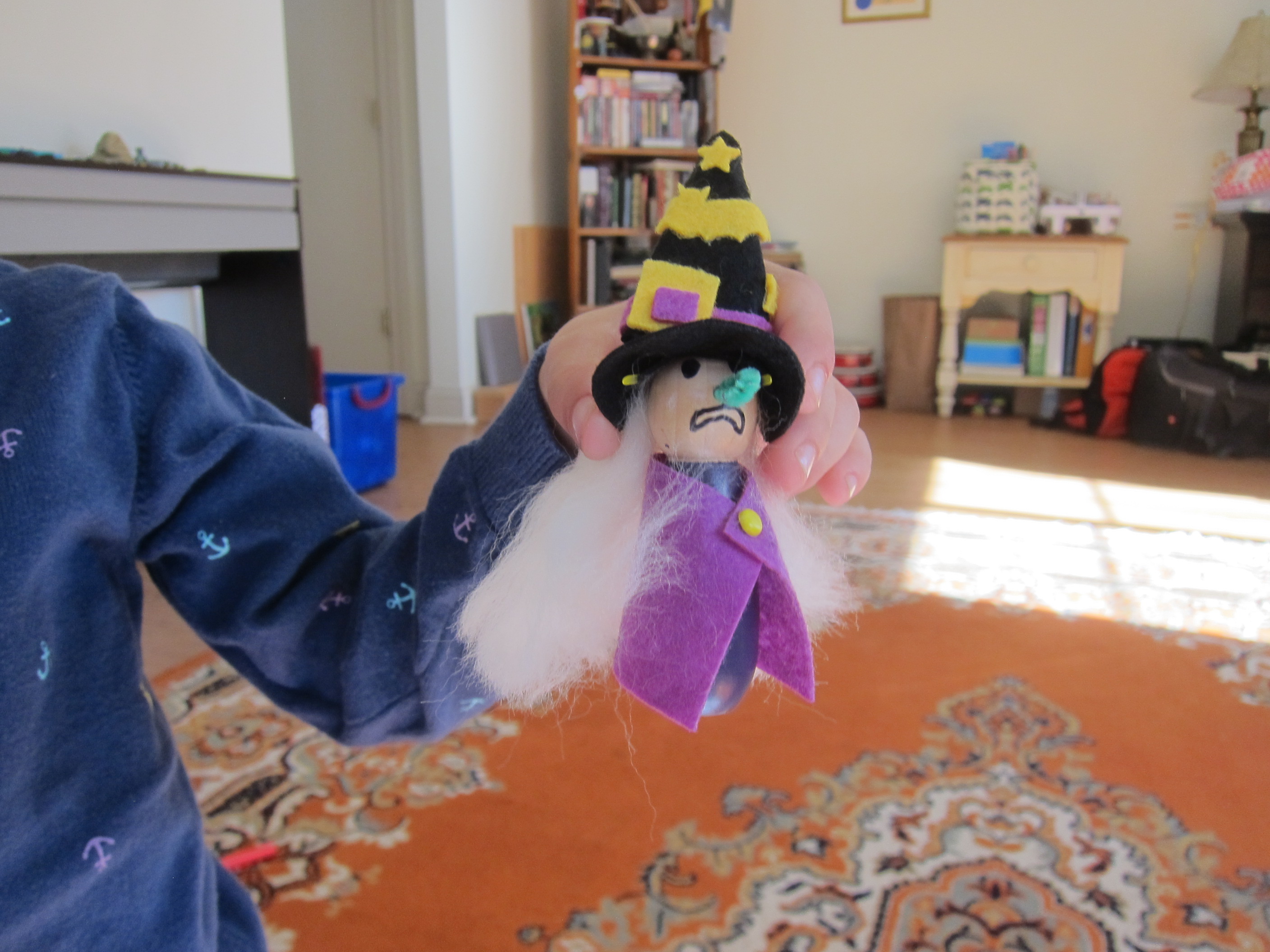
The first step was to Make the Witch of course. Travis helped fold the provided felt pieces into her cape and hat, which he decorated with spooky stickers (bats!), and which then slide onto the wooden peg body.

Bubbling Cauldron (1)

A pipe cleaner forms her warty nose and we added spooky features with black marker.

Bubbling Cauldron (2)

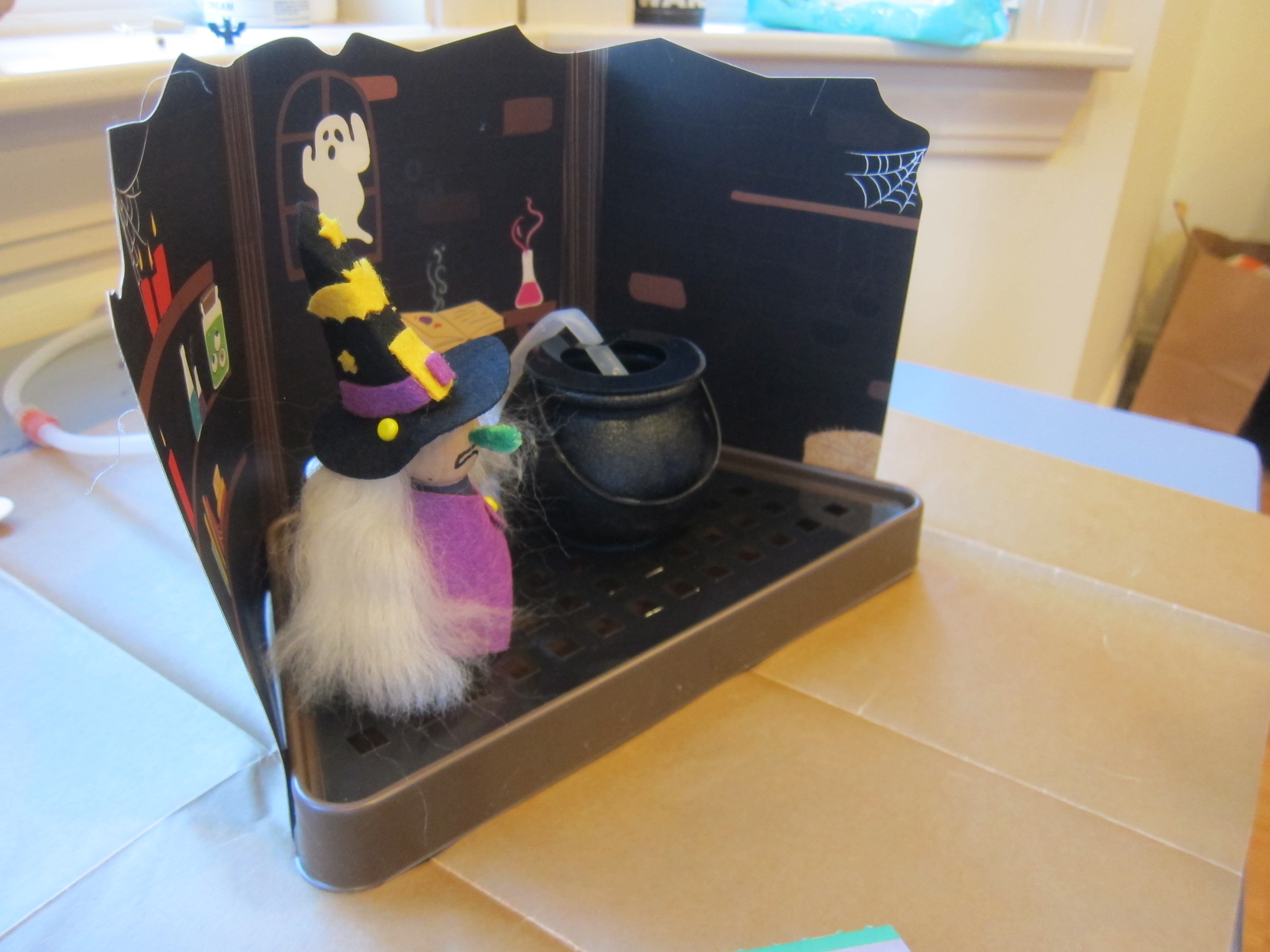
Next he needed to Build the Witch’s Lair. Decorate the provided backdrop with more stickers, then attach to the base with sticky foam dots.

Bubbling Cauldron (3)

The witch and her cauldron are then attached to the base with additional sticky foam.

Bubbling Cauldron (5)

An air pump is then threaded through the back of the scenery. One hose dangles down into the base, and the other dangles into the cauldron (these are helpfully color-coded red and black so your child can be sure the pump is going to flow in the right direction).

Bubbling Cauldron (6)

It’s time for some bubbly science! Pour the provided packets of citric acid and baking soda (colored green!) into the provided cup and mix well.

Bubbling Cauldron (7)

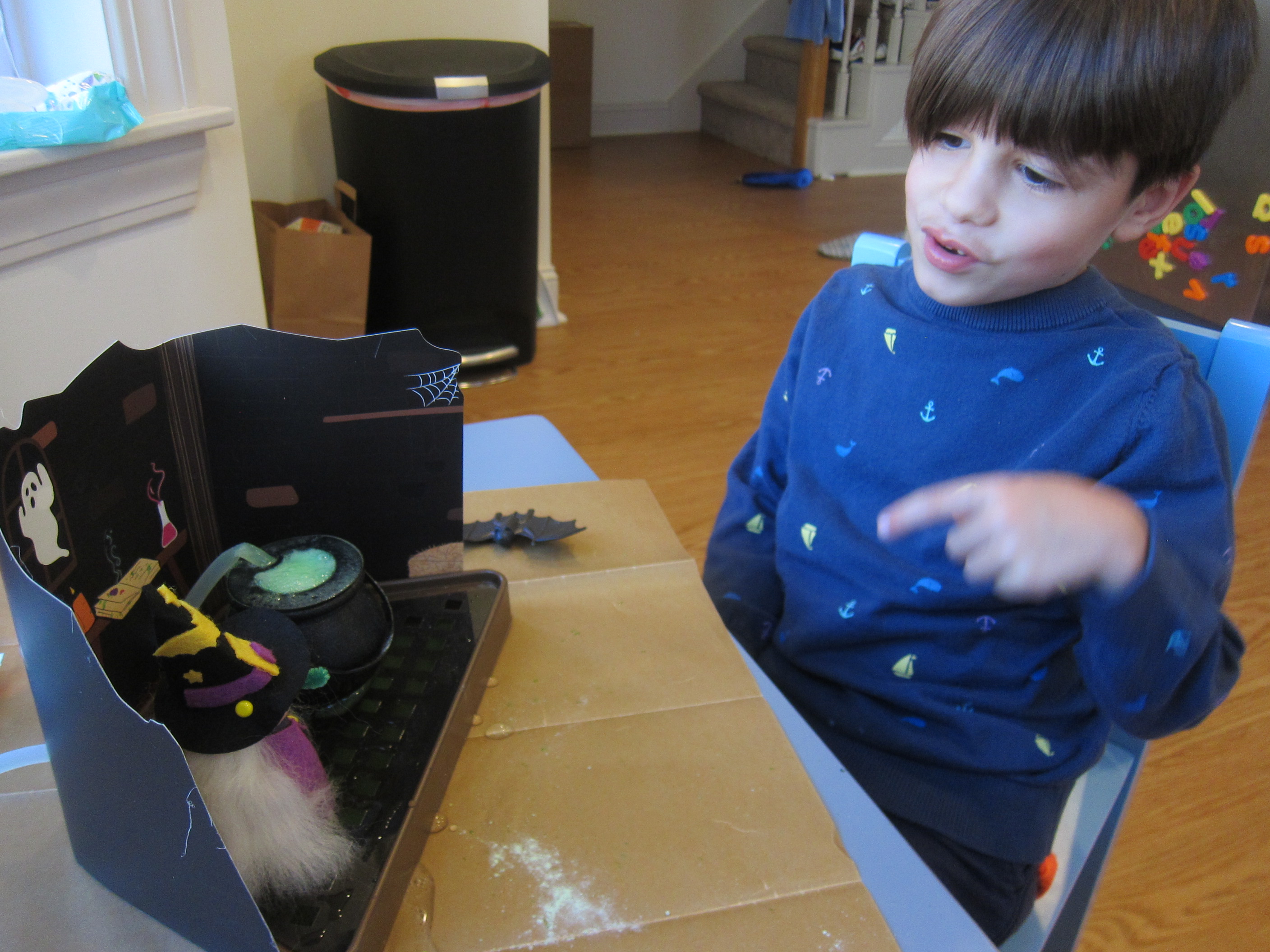
Add 4 scoops to the cauldron; Travis loved being in charge of his own “potion” here. Pour 1 and 1/2 cups water into the holes of the base, and then start squeezing the air pump…

Bubbling Cauldron (8)

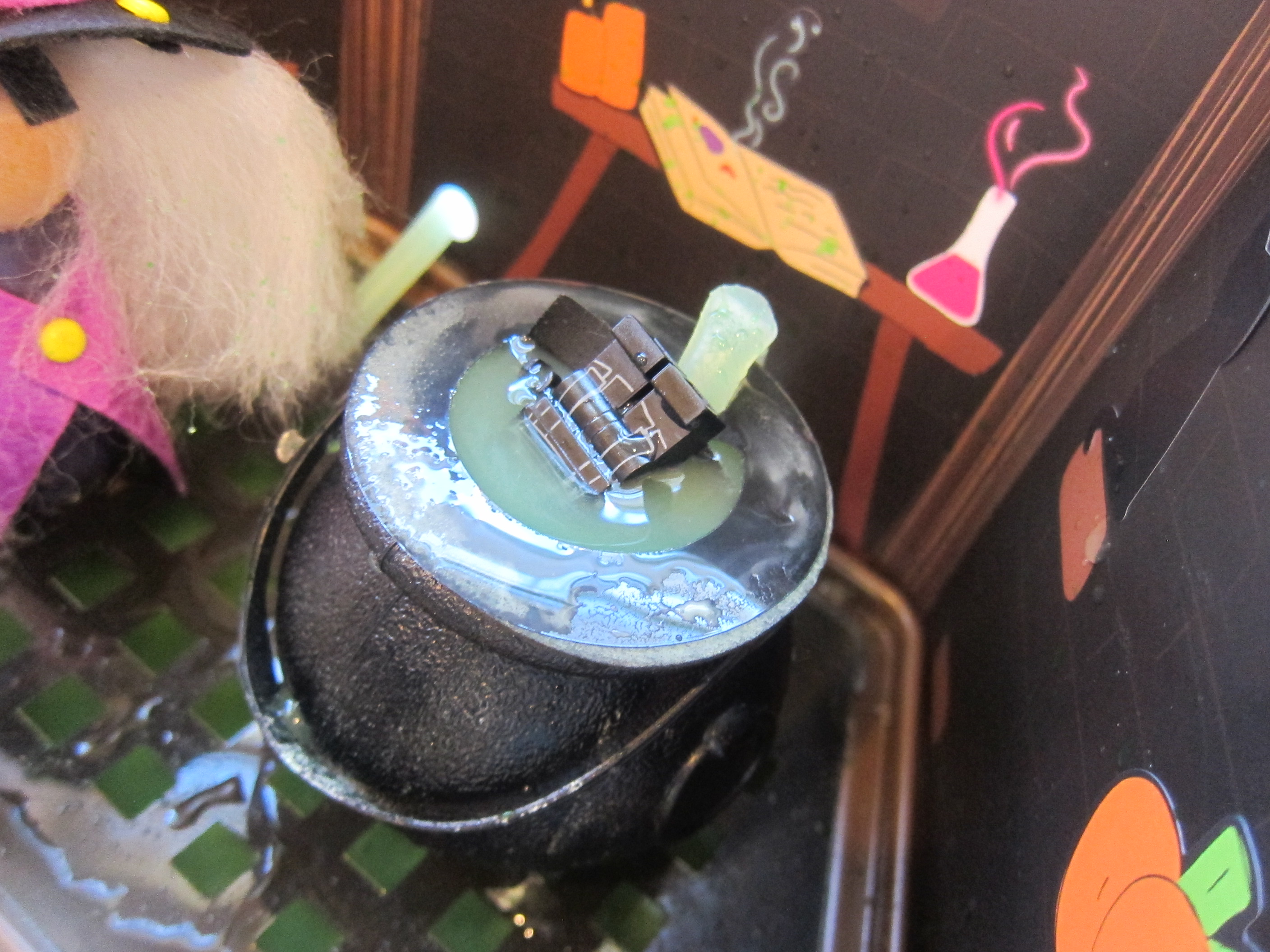
…and marvel at the bubbling cauldron that results!

Bubbling Cauldron (9)

This was so cool and eerie and scientific and magical all at once. And needless to say, pretty soon there were poor Lego fellows drowning in the witch’s pot.

Bubbling Cauldron (11)

A definite win for a Halloween project.

Rubber Band Racer

Rubber Band Rover (3)

This project unfortunately didn’t work as hoped for Travis, namely because we didn’t have a drill bit small enough to make the necessary tiny holes. But we decided to go ahead with the craft because it made the perfect “barge” in his make-believe games.

The idea is to make a racing car that can wind up on rubber bands, similar to the Mars Rover from his recent Kiwi Crate.

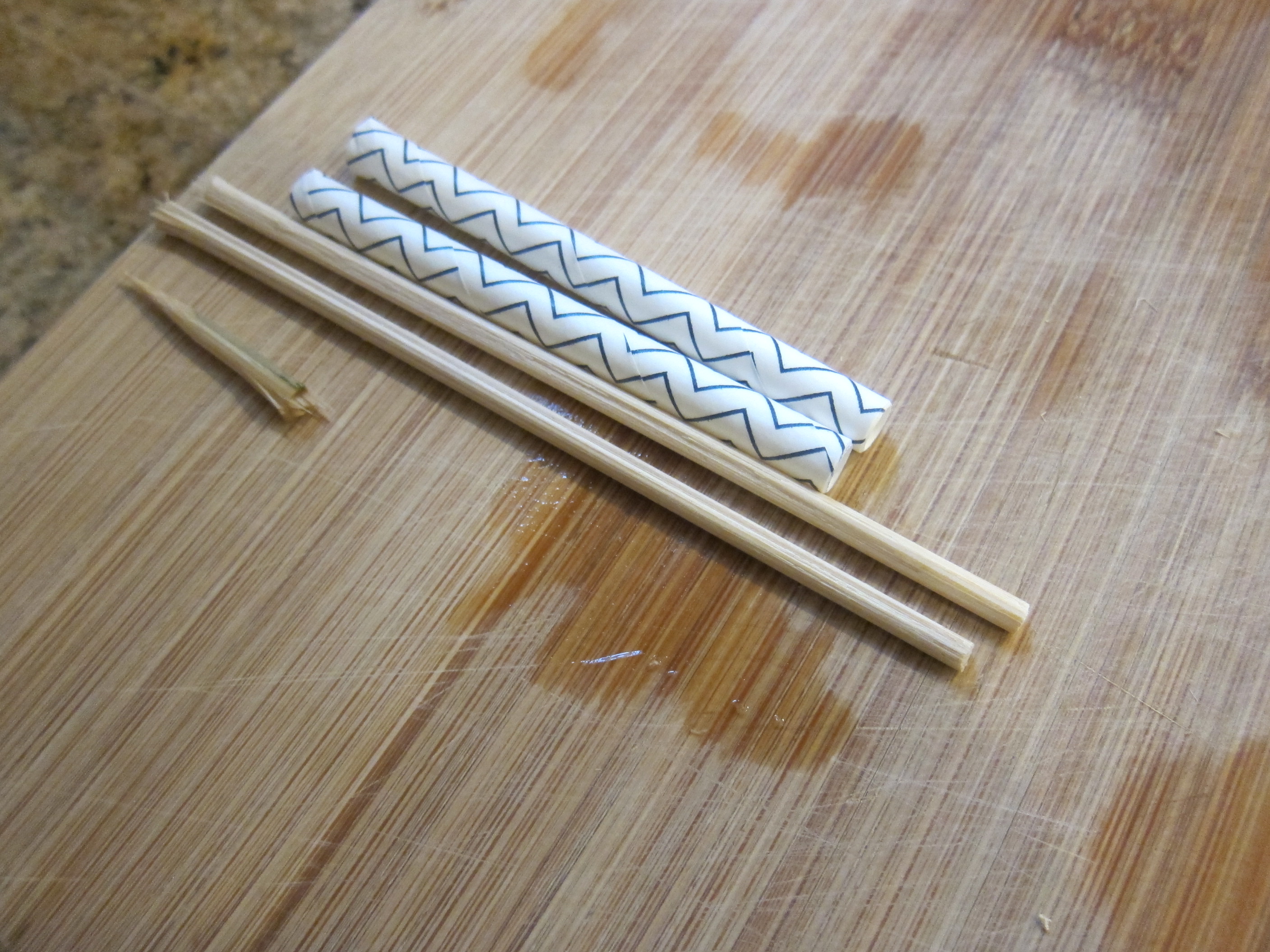
This time we needed to prep all the materials ourselves! Cut the tip from a wooden skewer to measure .75 inch. Cut two additional skewers into 4 inch pieces, and cut 2 lollipop sticks into 2 and 1/2 inch pieces.

Rubber Band Rover (1)

Well already we were in trouble! We didn’t have lollipop sticks. Instead, we thought straws might work, but soon realized this was going to be our first hurdle.

Rubber Band Rover (2)

Take 2 additional decorative straws and mark with a pen 1 inch and 2 inches in from each end (so 4 pen marks per straw). This is where ideally you’ll use a drill to make tiny holes. I tried poking with a straight pin, but this warped the straws. I was able to thread through our first axle (the first 4 inch skewer piece) but not the second.

Thinking quick, we turned to hot glue. We could put the racer together, but the glue meant our wheels wouldn’t turn.

If you have a drill, here’s what you’ll do: thread the skewers through the holes that are 1 inch in, and thread the lollipop sticks through the holes that are 2 inches in. Next use the drill to make a hole in the center of two large round plastic lids and two small round plastic lids (we used the tops from juice and almond milk cartons). Use hot glue to add the .75 inch skewer tip off the center of the back axle.

Since ours was now just a hot glue project, of course this meant that our wheels wouldn’t roll, so we skipped the step entirely of looping a rubber band around the front lollipop stock, to then stretch around the back skewer tip. Need a visual for all that? Check here.

But as you can see, Travis’s vehicle now was Jabba the Hutt’s barge!

Rubber Band Rover (5)

Can your child get the rubber band racer to truly race? Please share in the comments!

Rubber Band Rover (4)

Pom Pom Planets

Pom Pom Planets (7)Here’s a quick and cute way to show the scale of the planets (roughly speaking) for kids who are learning about the solar system. Set out an assortment of pom poms in as many sizes and colors as you have, and find the perfect one to represent each of our 8 planets!
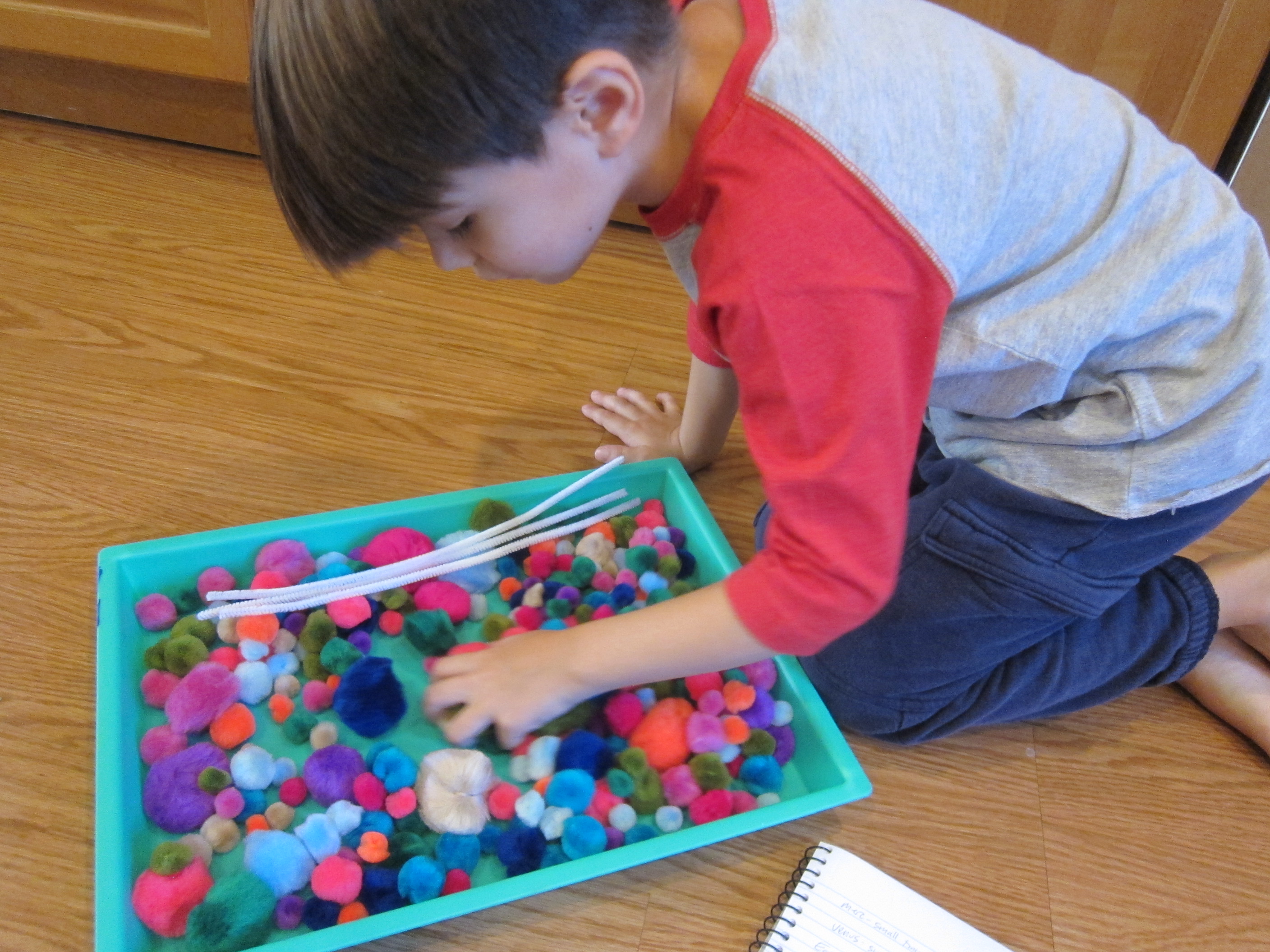
I dumped a big bag of pom poms into a craft tray, which immediately created excitement.

Pom Pom Planets (1)

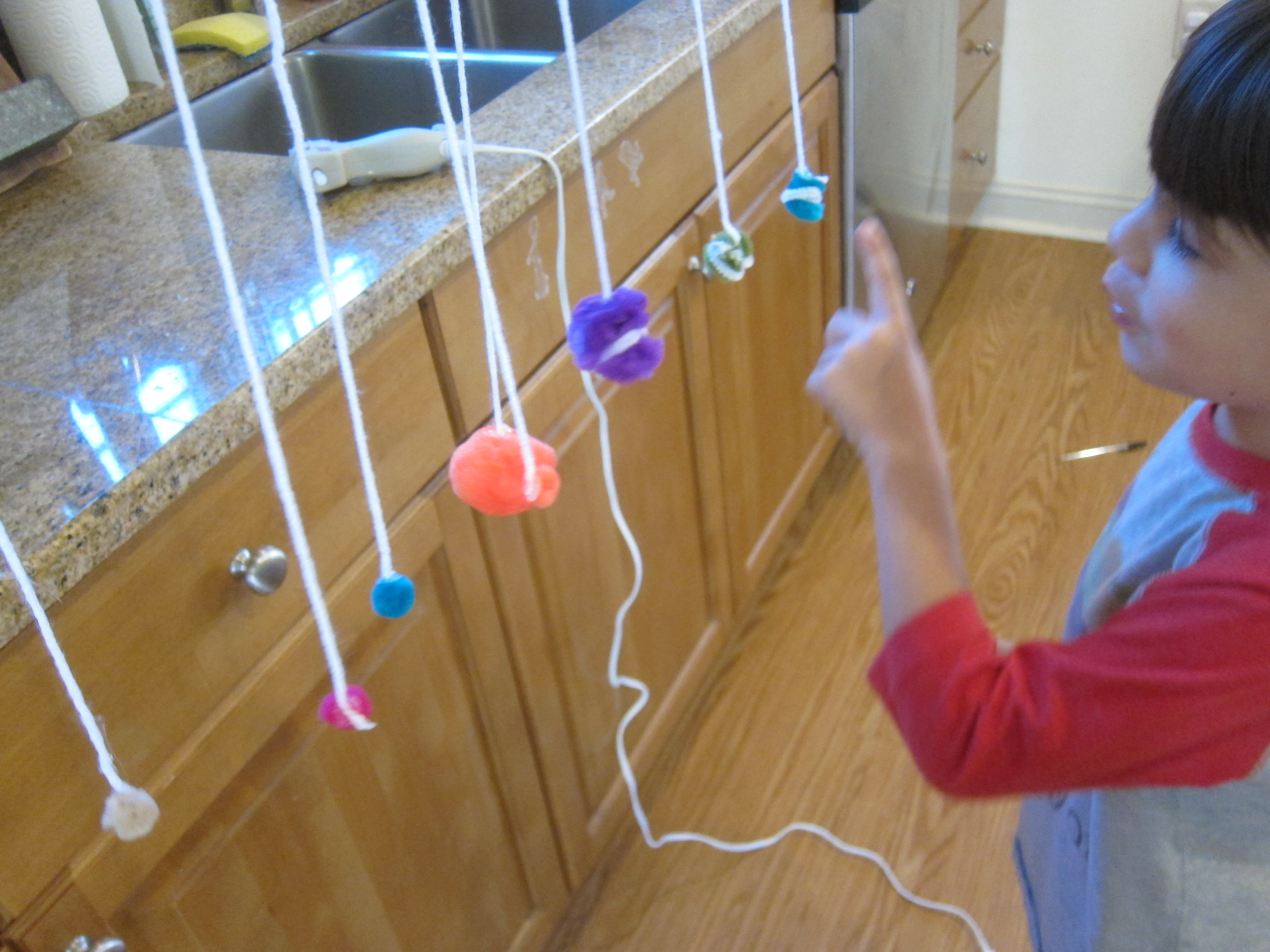
Travis loved searching through this “universe” for each planet. One by one, he located the following:

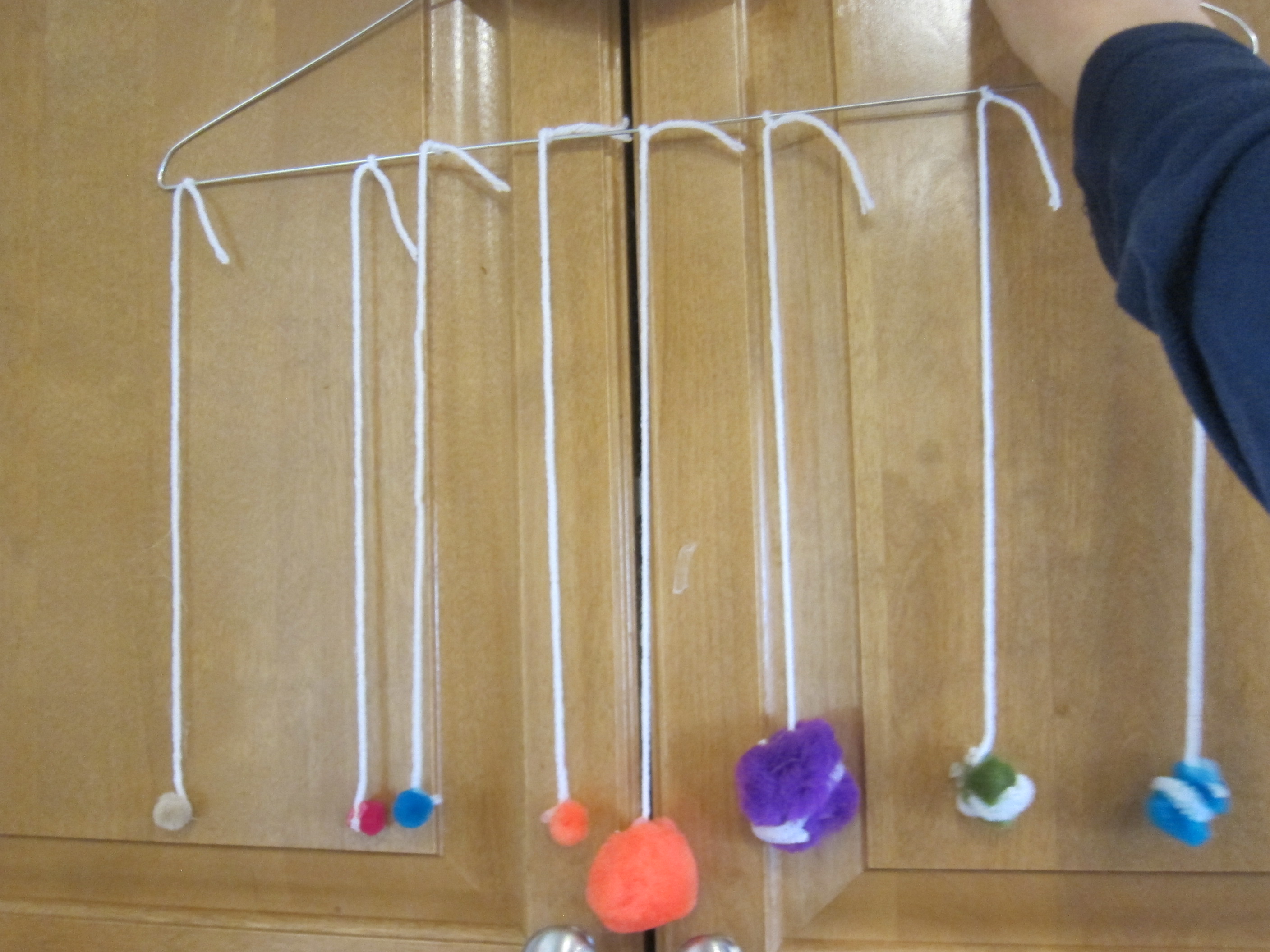
A small tan one for Mercury

A small pink one for Venus

A small blue one for Earth

A small orange one for Mars

A large orange one for Jupiter

A large purple one for Saturn

A medium green one for Uranus

A medium blue one for Neptune

Note: Your colors and sizes might be slightly different, depending what you have on hand. Gray works equally well for Mercury, and yellow equally well for Saturn. Obviously we wished we had a red one for Mars, but our pack didn’t contain small red.

Pom Pom Planets (2)

We then wrapped Saturn, Uranus, and Neptune with belts of pipe cleaners to make the rings.

Next we cut 8 pieces of yarn, making sure they were roughly the same length. Tie or glue these onto each pom pom.

Pom Pom Planets (4)

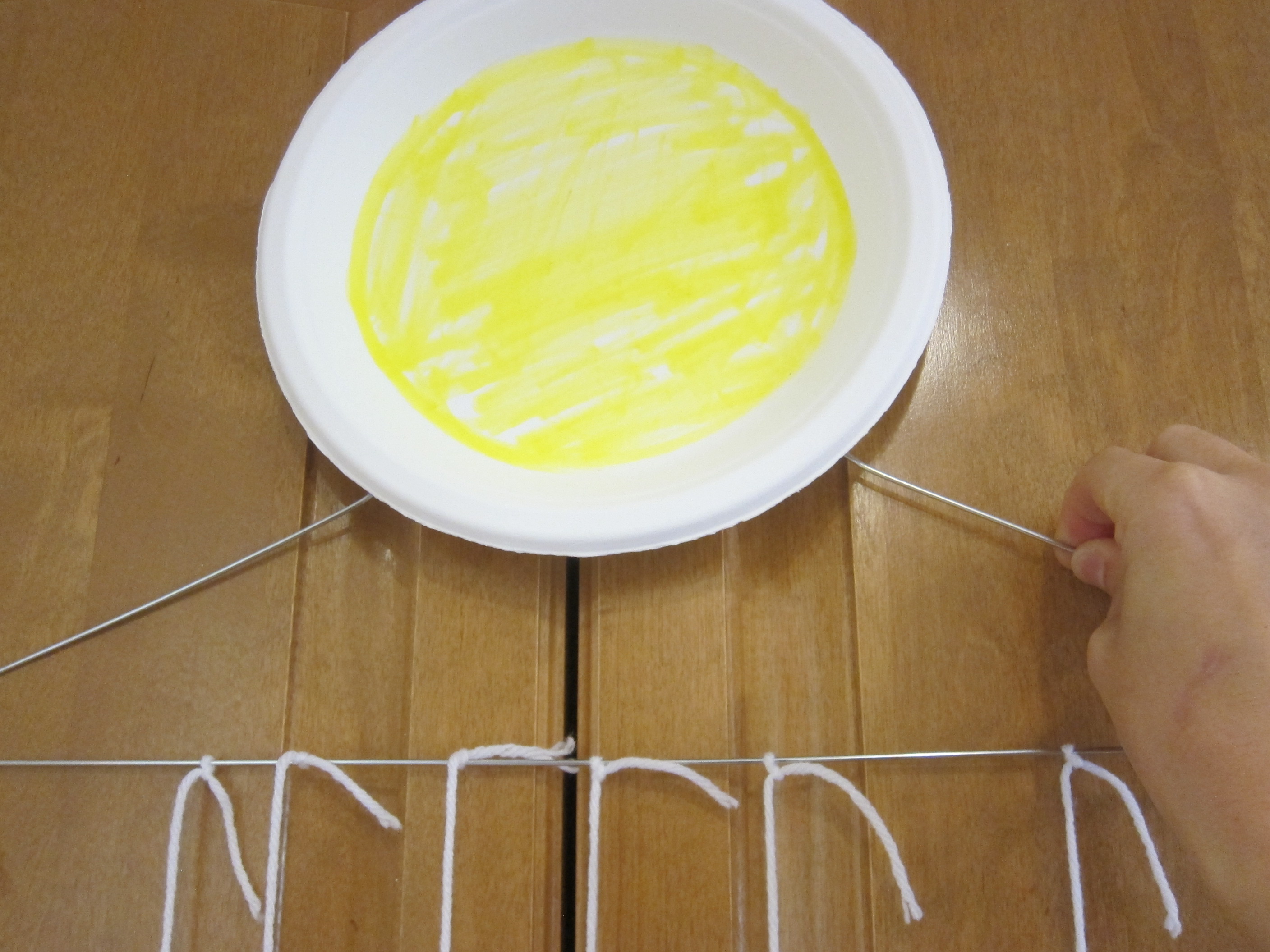
It was time to build the solar system. As I tied each one to a wire hanger, I had Travis tell me which planet should come next, working from Mercury to Neptune. This was great review for a topic we haven’t covered in a while!

Pom Pom Planets (5)

I had originally intended to make a star decoration along the top of the hanger, but Travis was adamant that we couldn’t have a solar system without the sun. He colored in a paper plate with yellow marker, and it was soon proudly affixed atop the hanger.

Pom Pom Planets (6)

It looked perfect against his star lamp!

IMG_0001

Mars Rover Kiwi Crate

Kiwi Mars (9)

Travis has long had a fascination with Mars and the NASA rovers, so he was thrilled to discover this month’s crate from Kiwi Co. A chance to make his own rover! He wanted to know if it could really go to Mars, and although the answer was sadly no, there was lots of fun to be had.

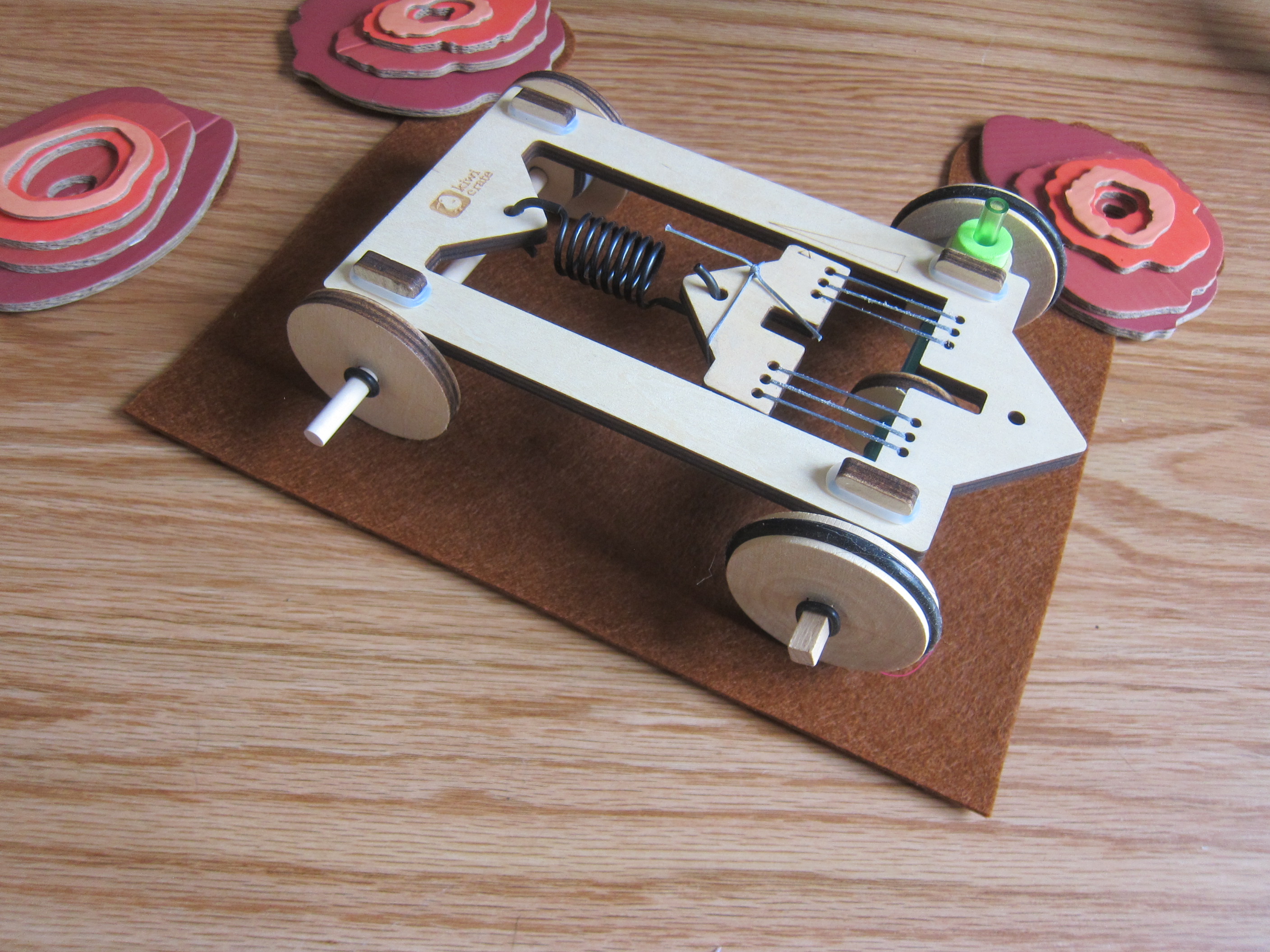
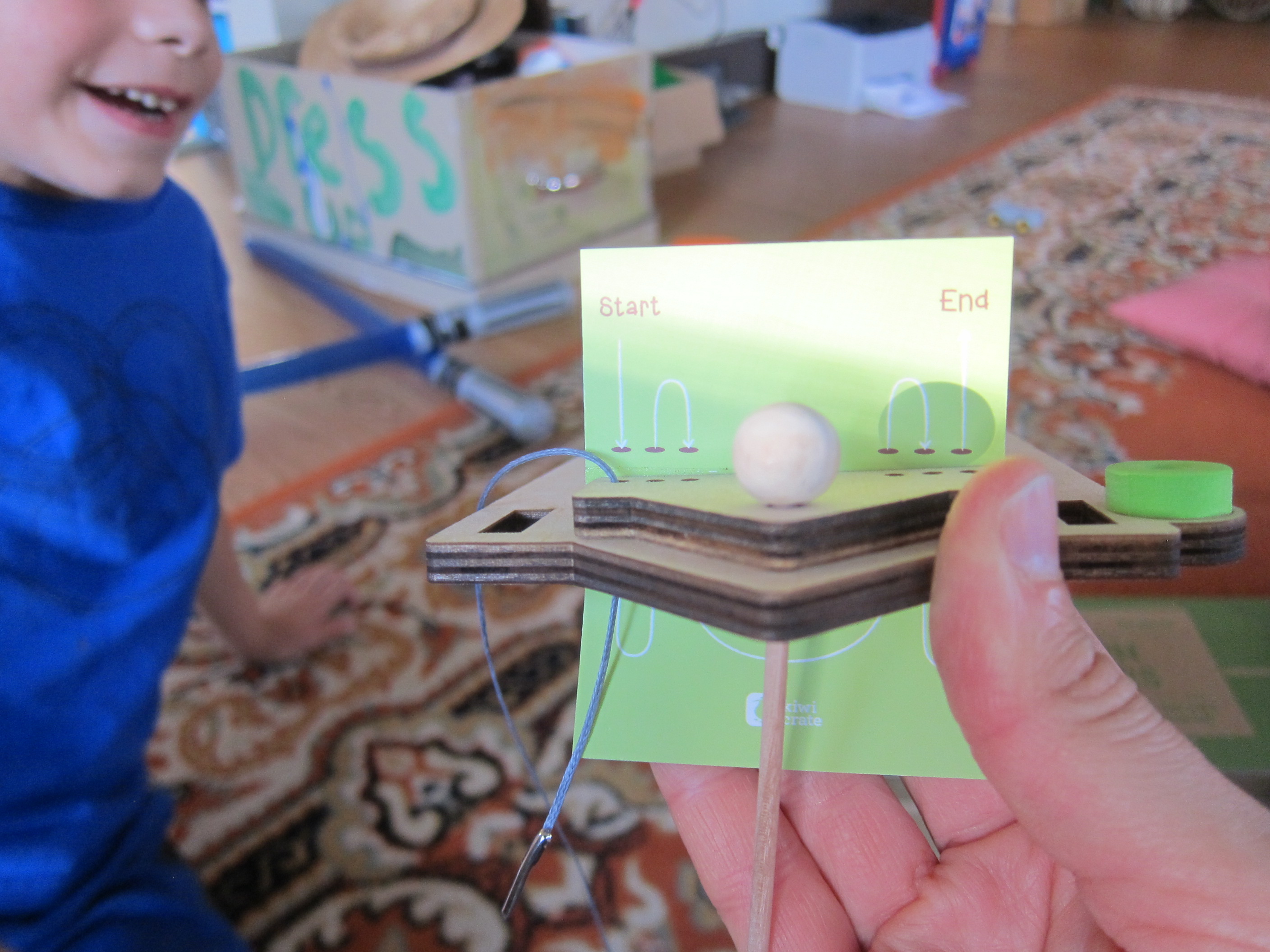
We jumped right in to making the Mars Rover: Travis enjoyed helping with the axles, one featuring square holes and one round so kids can tell them apart.

Kiwi Mars (1)

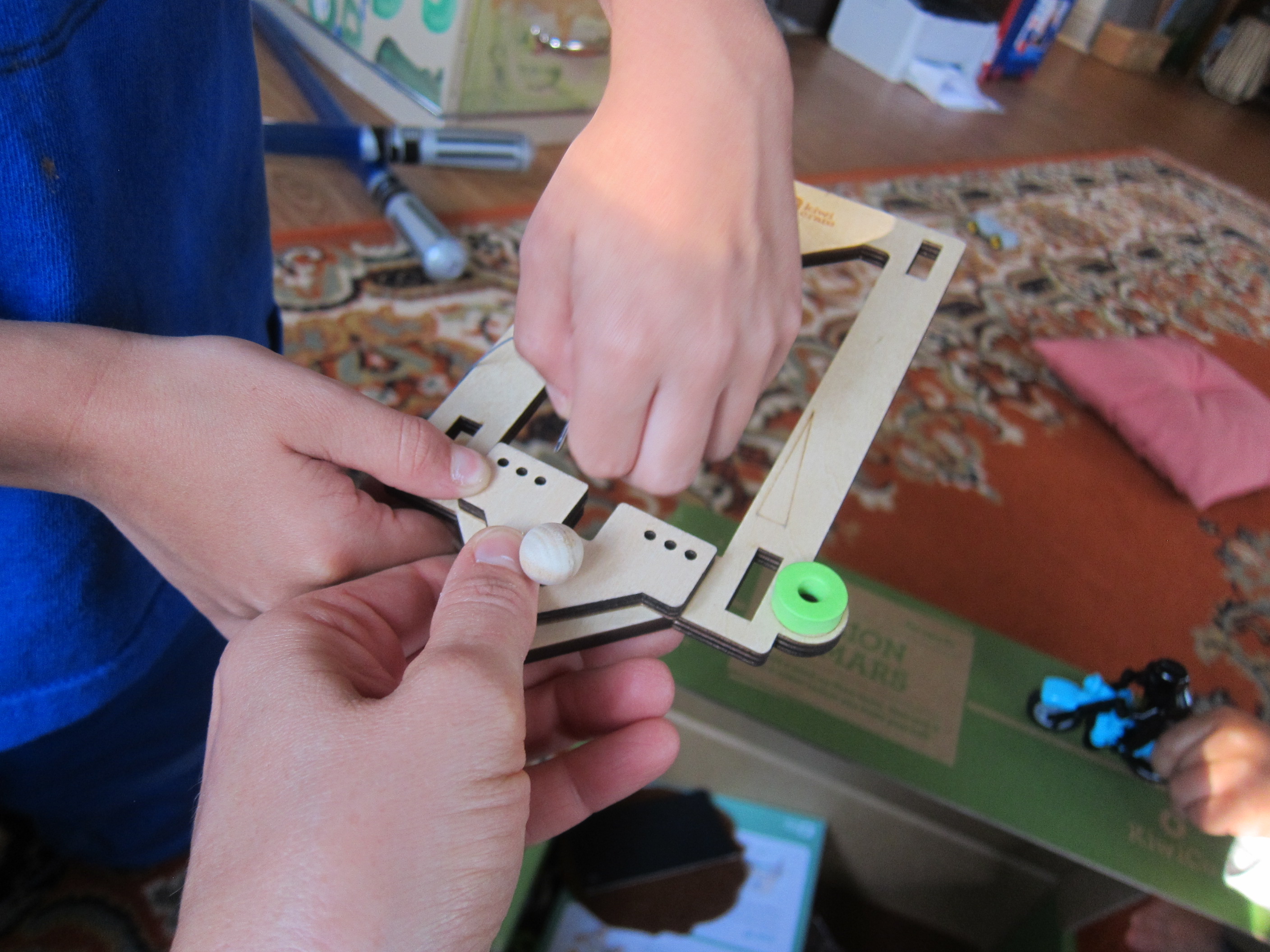
The base of the rover is made from a wood frame, but Travis grew frustrated with the following step to thread through string that attaches the spring.

Kiwi Mars (3)

The tension of this spring is what makes the rover move forward, similar to a pull-back car toy. With a little grown-up assistance, the rover was complete.

Kiwi Mars (4)

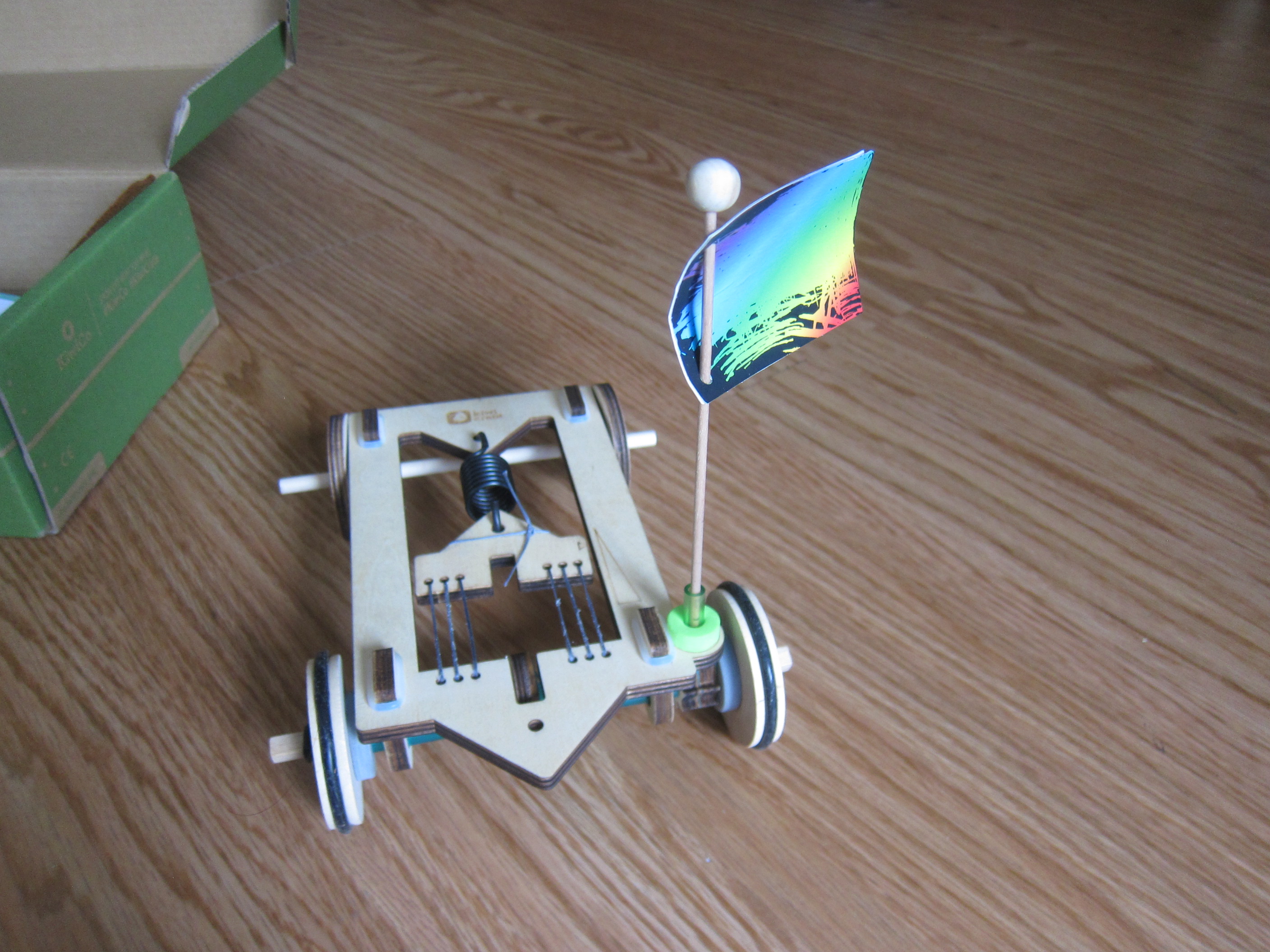
He loved the second part of the project: Make the Flag. Using the wooden flagpole as a scratching tool, kids can scratch off the black surface of the flag to reveal rainbow paper underneath.

Kiwi Mars (5)

The sky’s the limit for what design to put on the flag, but Travis just loved revealing the color underneath and spent such careful time on this.

Kiwi Mars (6)

Once my artist declared his flag done, we threaded it onto the wooden flagpole. Insert the flagpole into the stand on the rover, and then i’s time to wind up and give it a test.

Alas, I can’t say any of us were wowed by the results. Yes, the rover moves forward, but neither very fast nor very far. Perhaps our strings or spring weren’t taut enough?

Still, we forged ahead to make the Crater Course. Layers of cardboard are piled up and put on a felt “Mars” surface. Send your rover over them and see if it can make it across the bumpy ground.

Kiwi Mars (7)

There were lots of suggested ways to vary the course: Space the craters further apart, arrange them in different ways, or pile them on top of each other.

Kiwi Mars (8)

After that, there was still more experimentation to try! We turned to the crate’s suggestion of rubbing cooking oil over the strings, to see if this resulted in a faster rover. Well, no, but the kids thought it was funny!

Kiwi Mars (10)

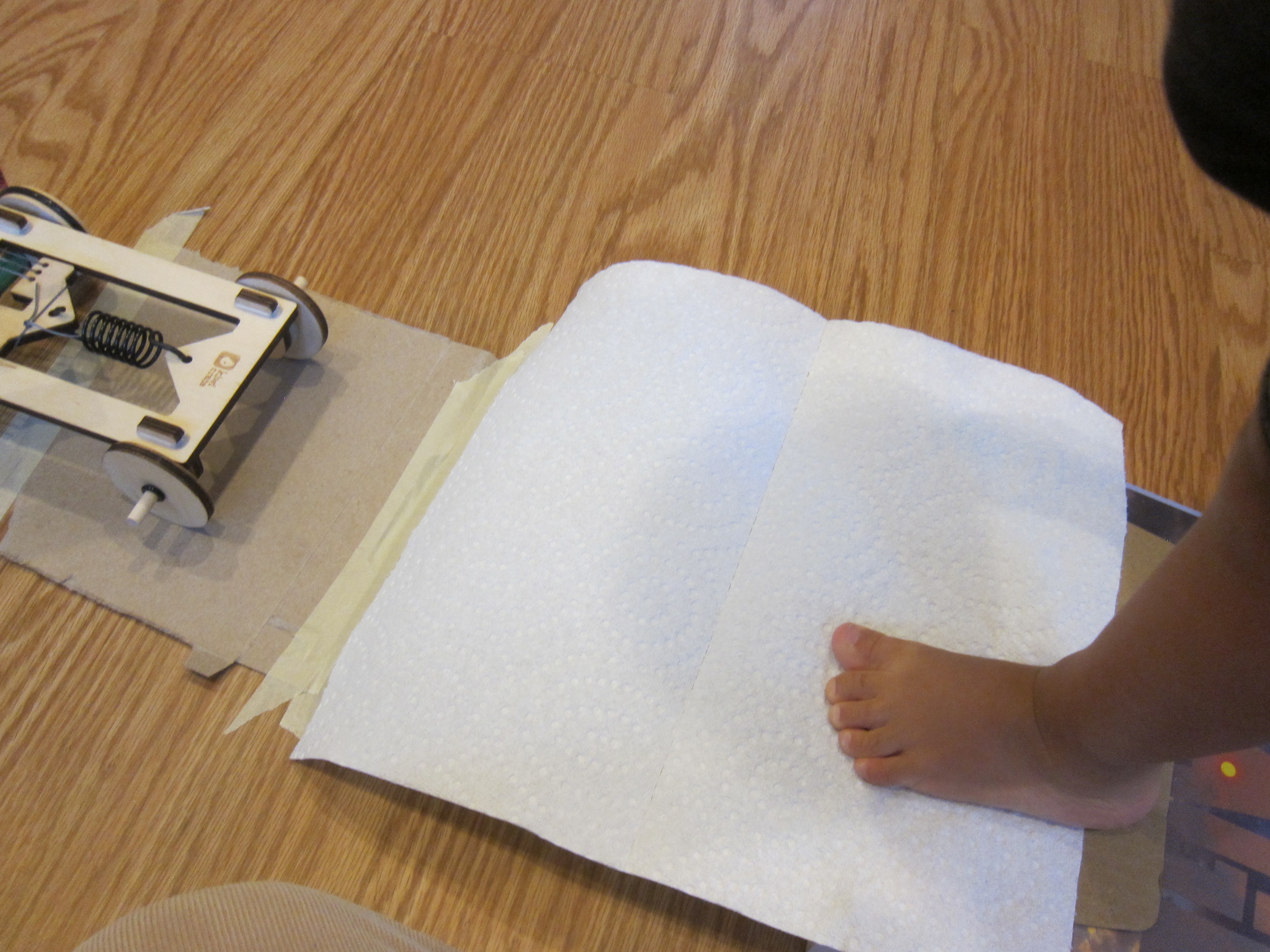
Then we set up a little course for the rover, with a piece of cardboard angled off two books. Could the rover make it up?

Kiwi Mars (11)

Alas, still no, even when we added other items (a paper towel, a fluffy towel) to give it more traction. Well, at least it could zoom down!

Kiwi Mars (12)

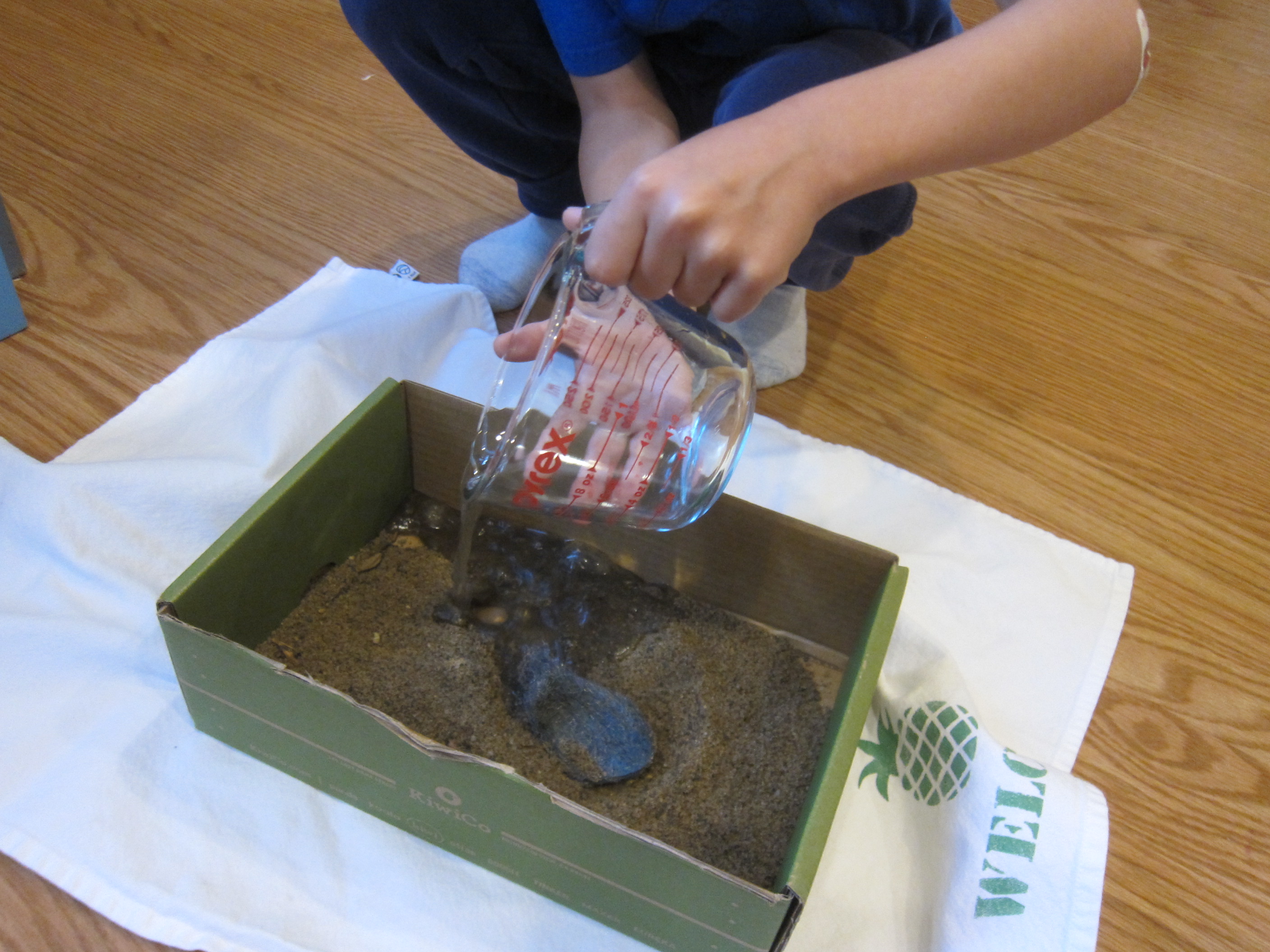
As a final experiment, it was time to make our own Mars sand. We filched some from the playground, then poured it into the Kiwi box.

Mars Sand (2)

Add a little bit of water, along with a steel-wool scrubber. Ideally we’ll see the sand take on a reddish hue in a few days as it turns rusty from the iron, just like the sand on the Red Planet!

Mars Sand (3)

Light-as-Air Parfait

Light as Air Parfait (5)

Here’s a snack with some science behind it! Travis read that shaking dairy cream rapidly would result in whipped cream, thanks to the addition of air. Could we achieve the same with non-dairy creamer? We had to try two times before we were successful, so read on!

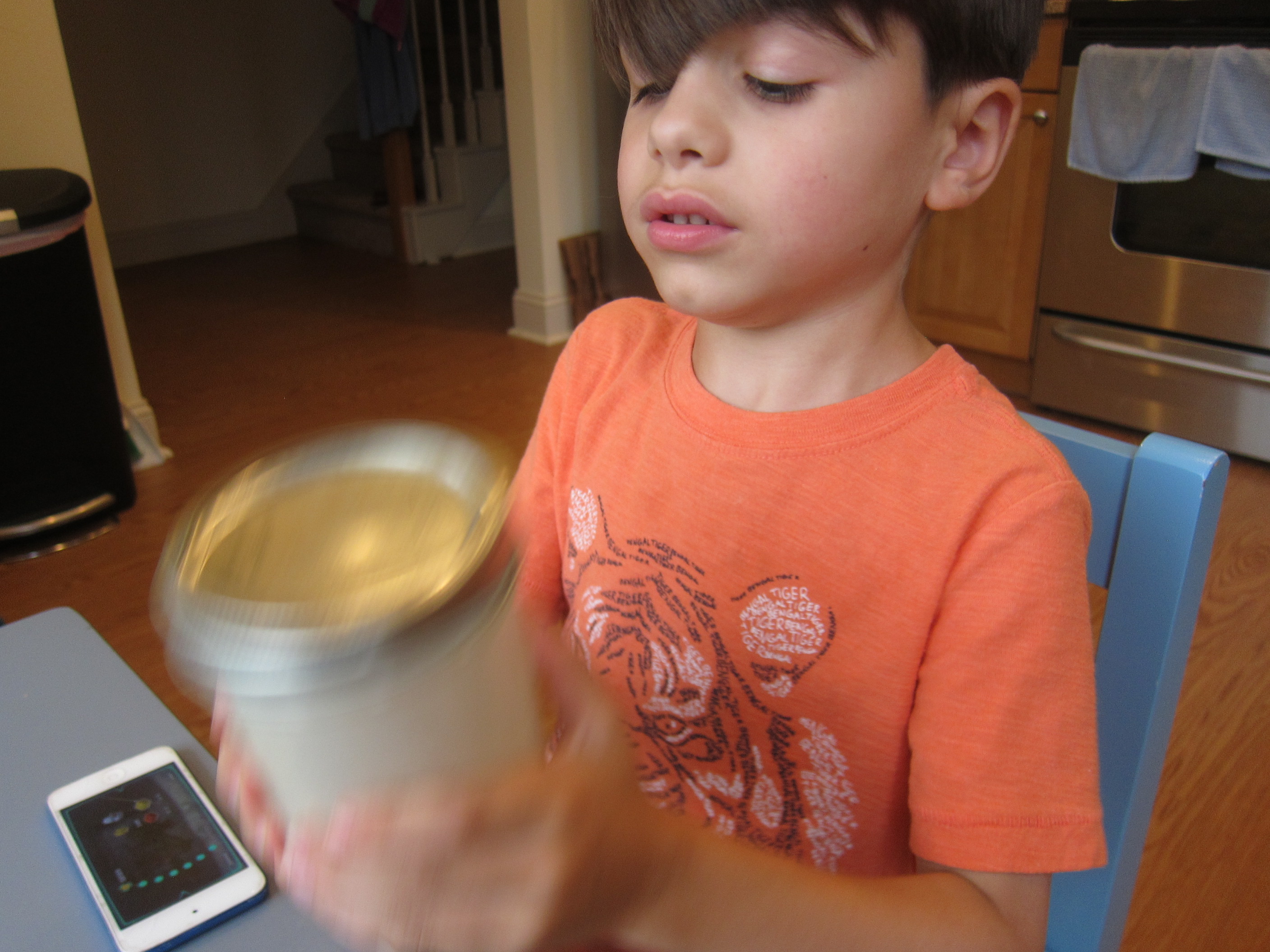
First, we tried a liquid non-dairy creamer, and opted for oat milk. Pour 1/2 cup into a jar with a lid, along with 2 teaspoons sugar and 1/2 teaspoon vanilla extract. Shake for a few minutes (take turns so your arms don’t get tired!) and see if it turns from liquid to solid.

Light as Air Parfait (1)

Well, it turned out that the oat milk didn’t work. For a surer bet, we next turned to full-fat coconut cream. Chill a can of coconut milk in the fridge overnight. Scoop off the solid portion of cream; stop scooping when you hit the watery liquid underneath. Repeat with the same process as the oat milk above, adding the sugar and vanilla, and then shaking.

Well, this time the creamer was firm after just moments of shaking! So the answer is yes, it does work if you choose the right non-dairy alternative.

Light as Air Parfait (6)

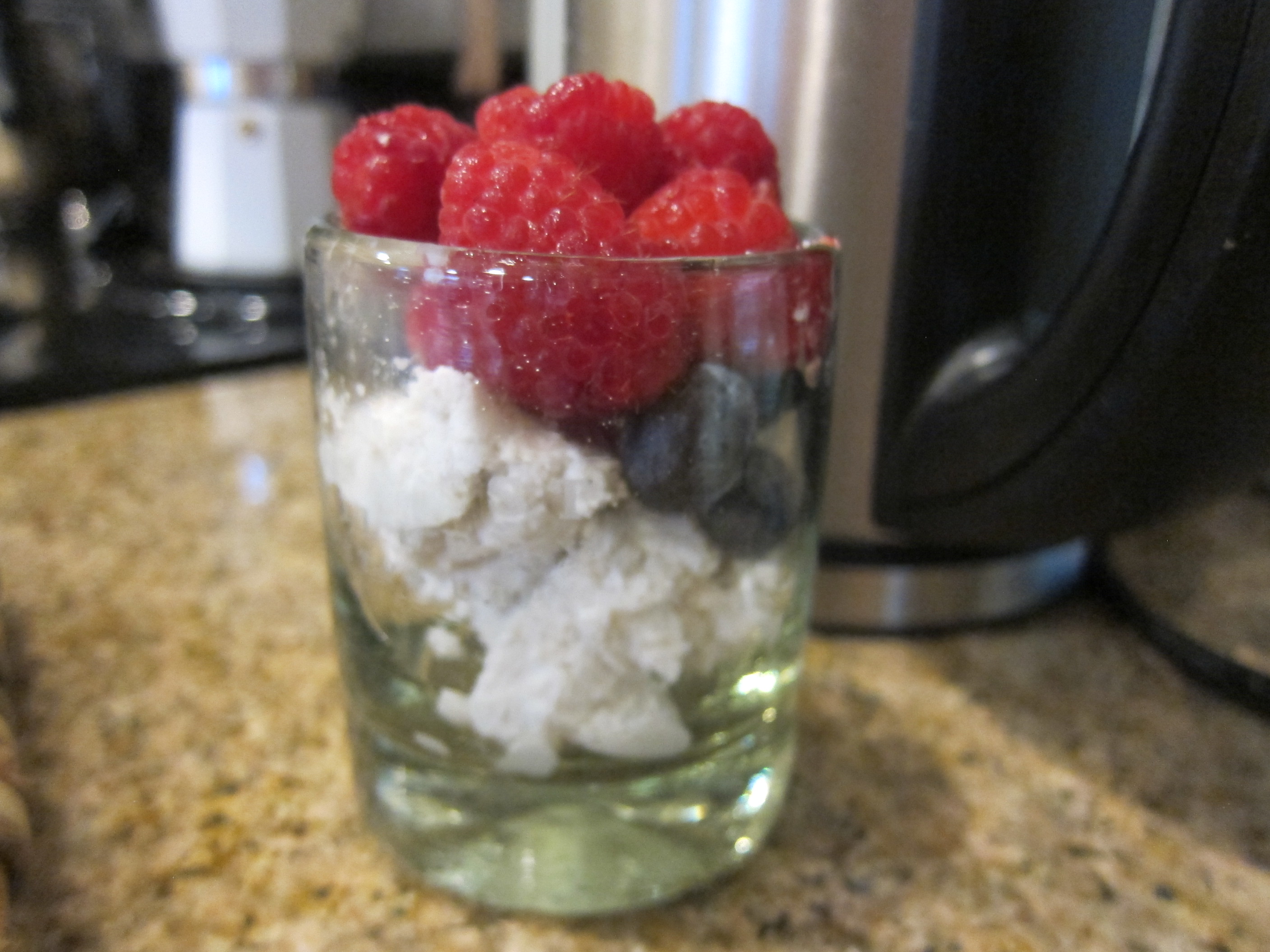
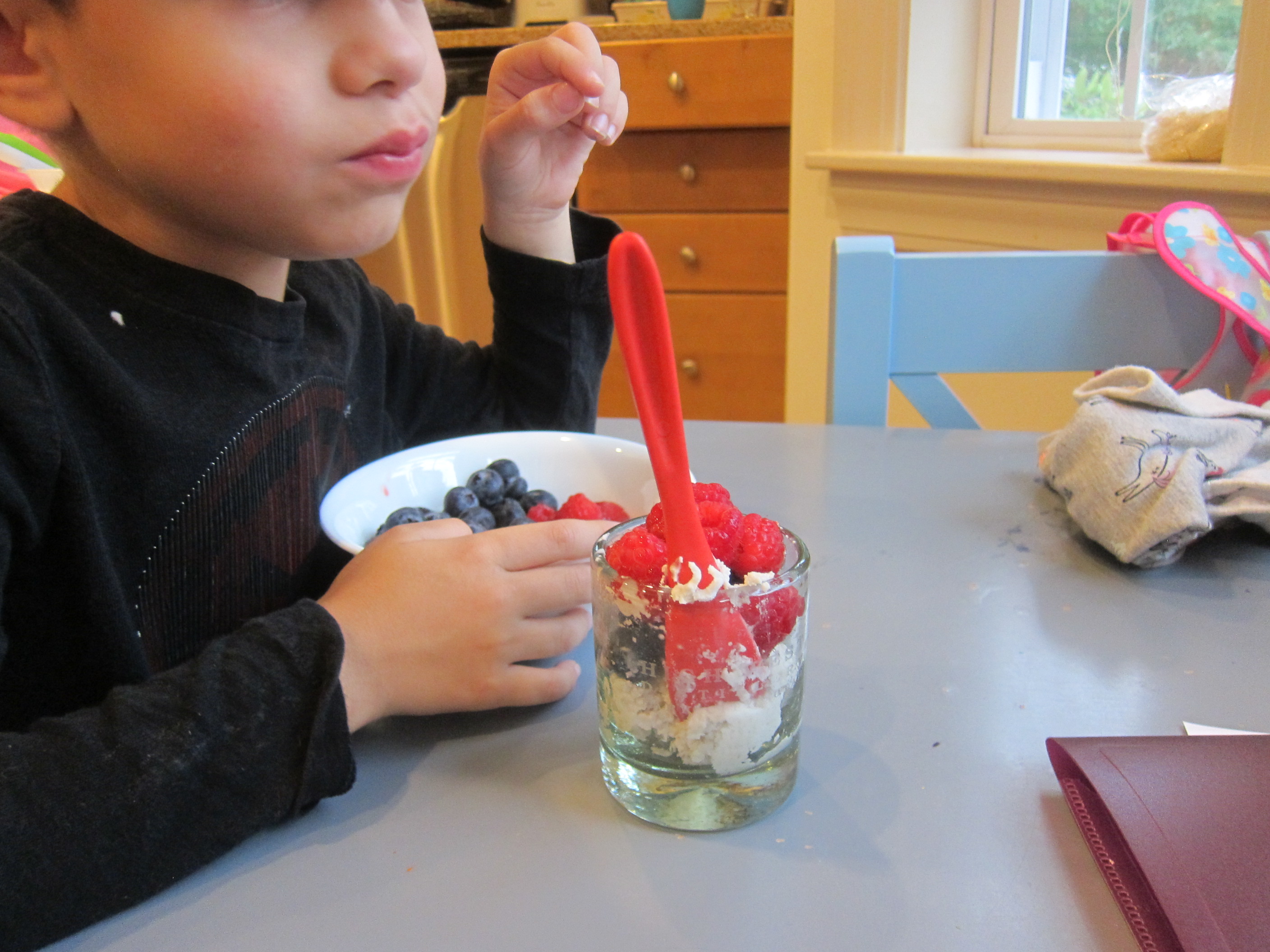
To enjoy the fruits of our labor, we spooned some of the coconut whipped cream into parfait glasses and topped each serving with fresh berries. The perfect reward.

Can you shake other non-dairy creamers into whipped cream? Please share in the comments if you find a successful method!

Bendy Straw Experiments

Floating Ball (4)

I have a pack of bendy straws at home, and this morning Travis and I used them in 3 experiments! Try one or all three, and see which is your family’s favorite.

Pom-Pom Popper:

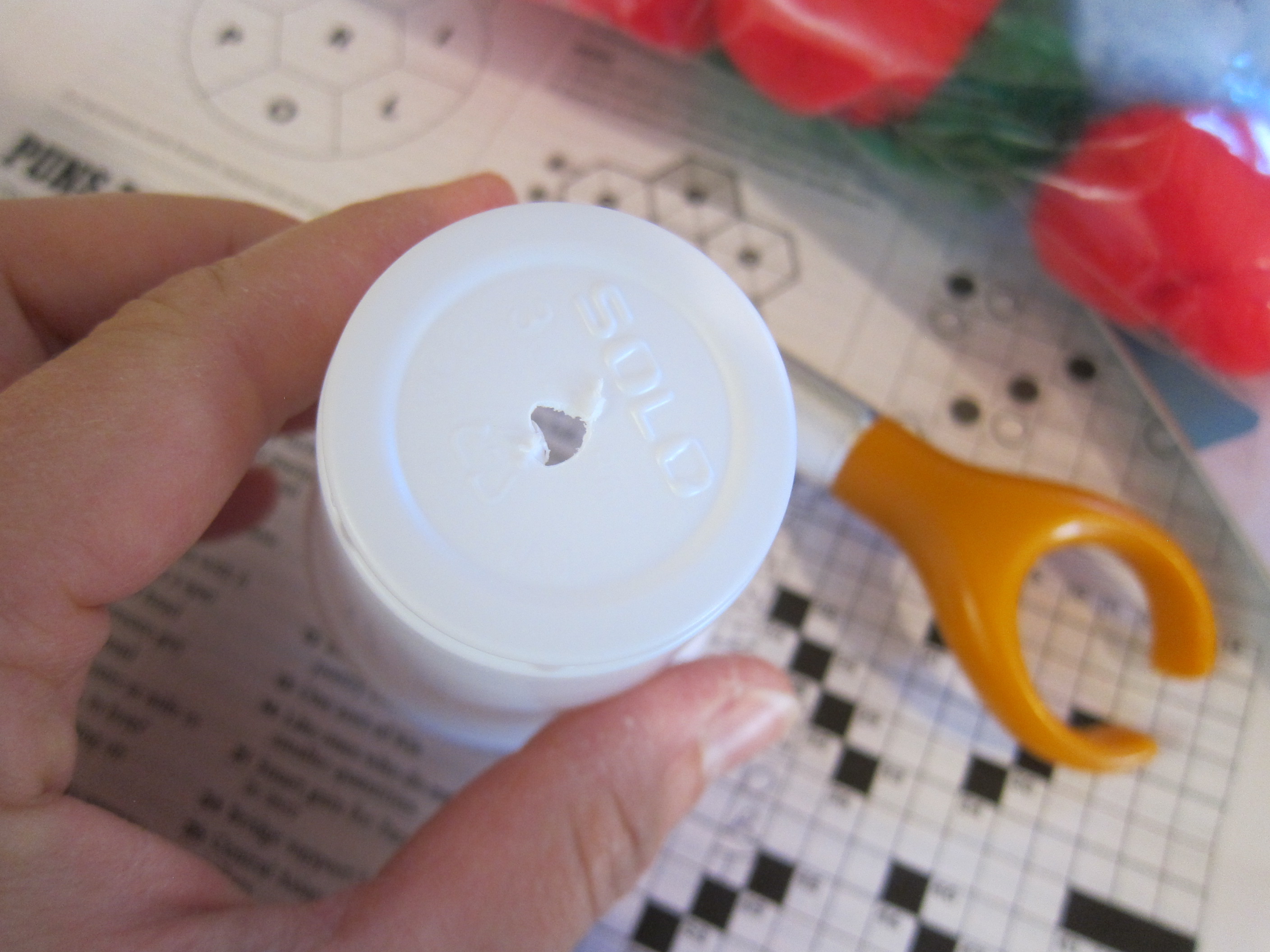
For the first, poke a small hole in a dixie cup. If your cup is paper, kids can punch through with a pencil tip. We had plastic cups so I used a craft knife to make the slit.

Pom Pom Popper (1)

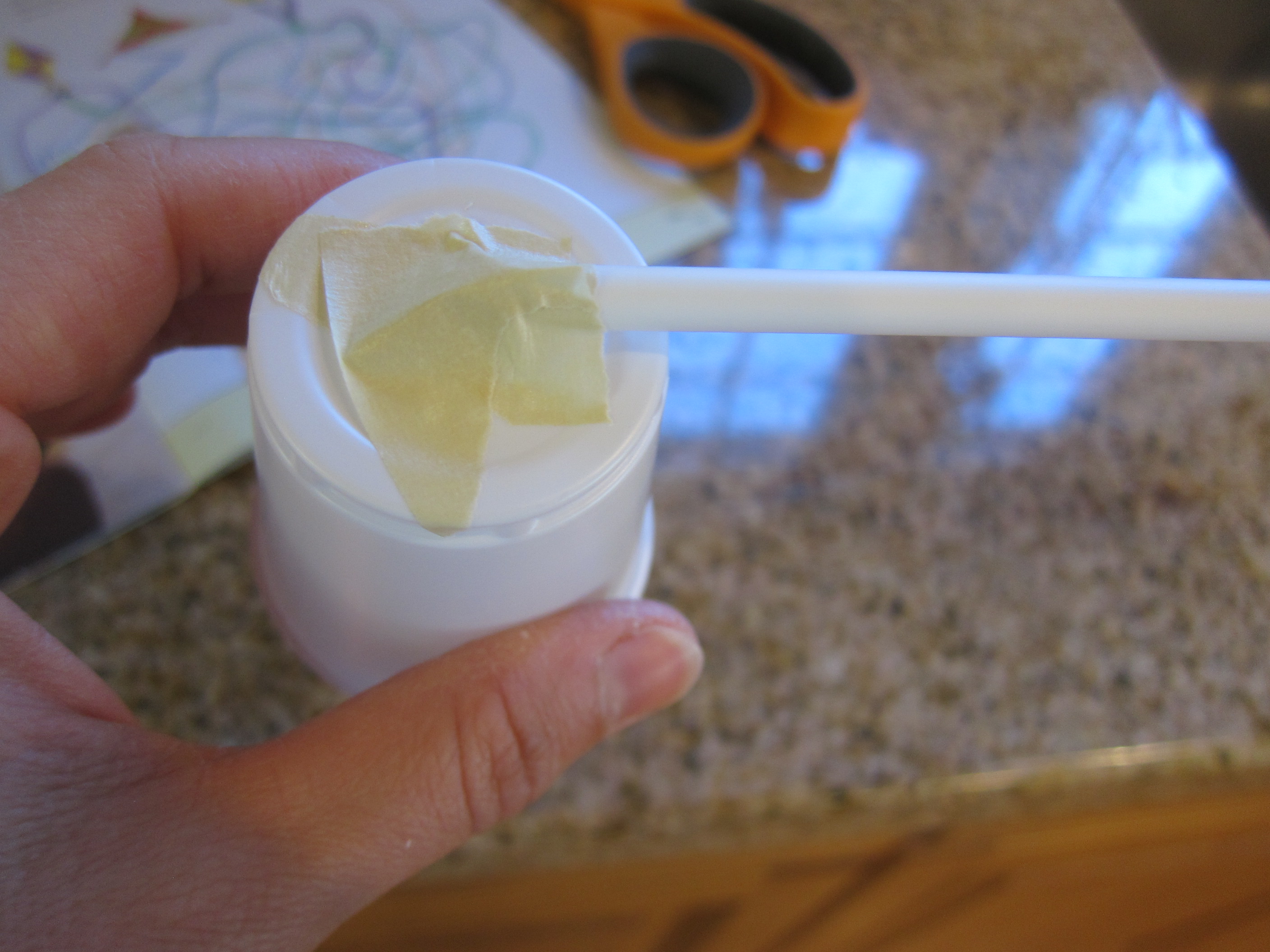
Cut the tip from a bendy straw just before the bend. Insert the bent end into the cup’s hole and tape on.

Pom Pom Popper (2)

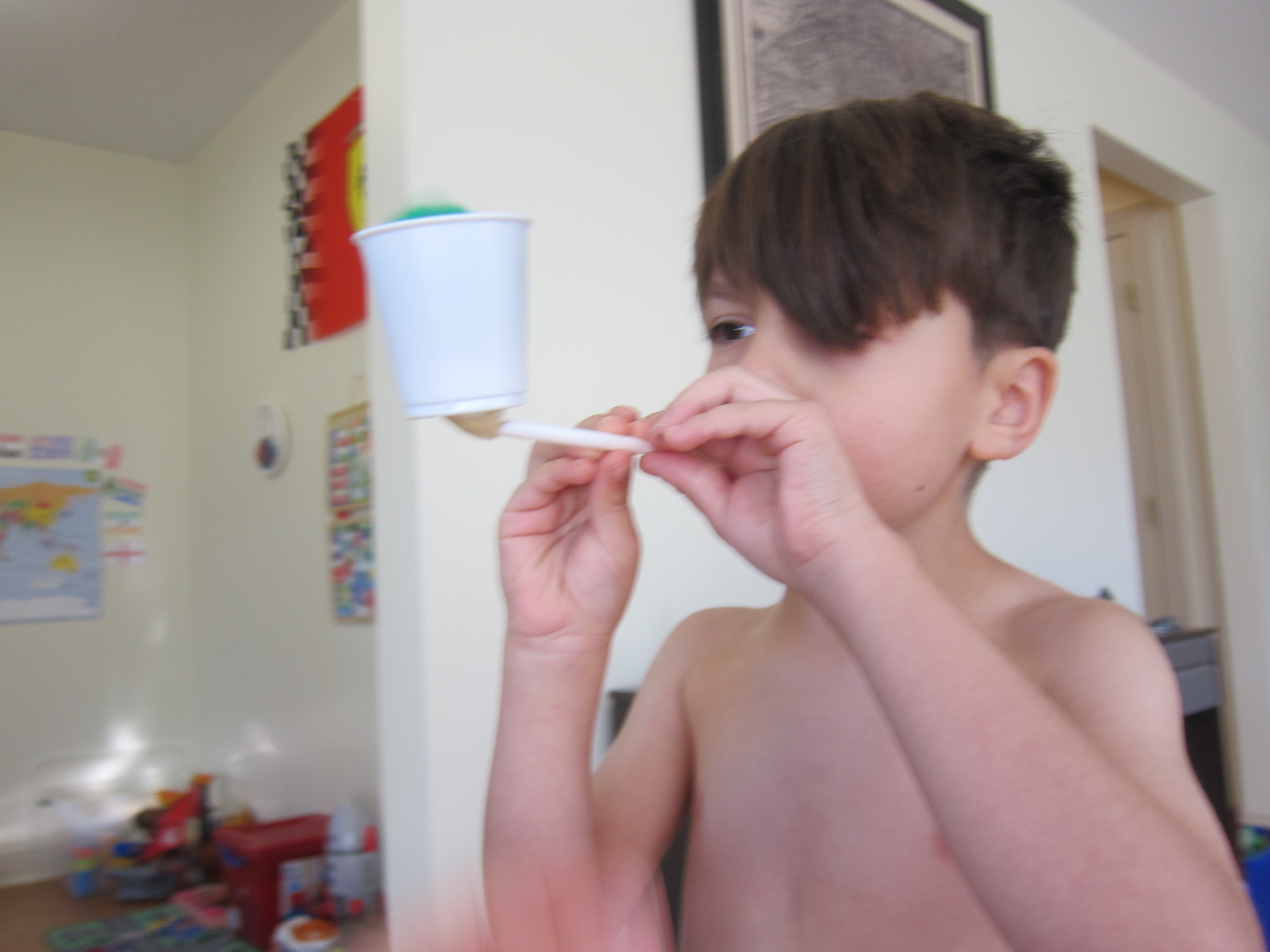
Place a pom-pom in the cup and blow. Some good lung power can really make these jump!

Pom Pom Popper (5)

Travis was so proud when he was able to do it.

Floating Ball:

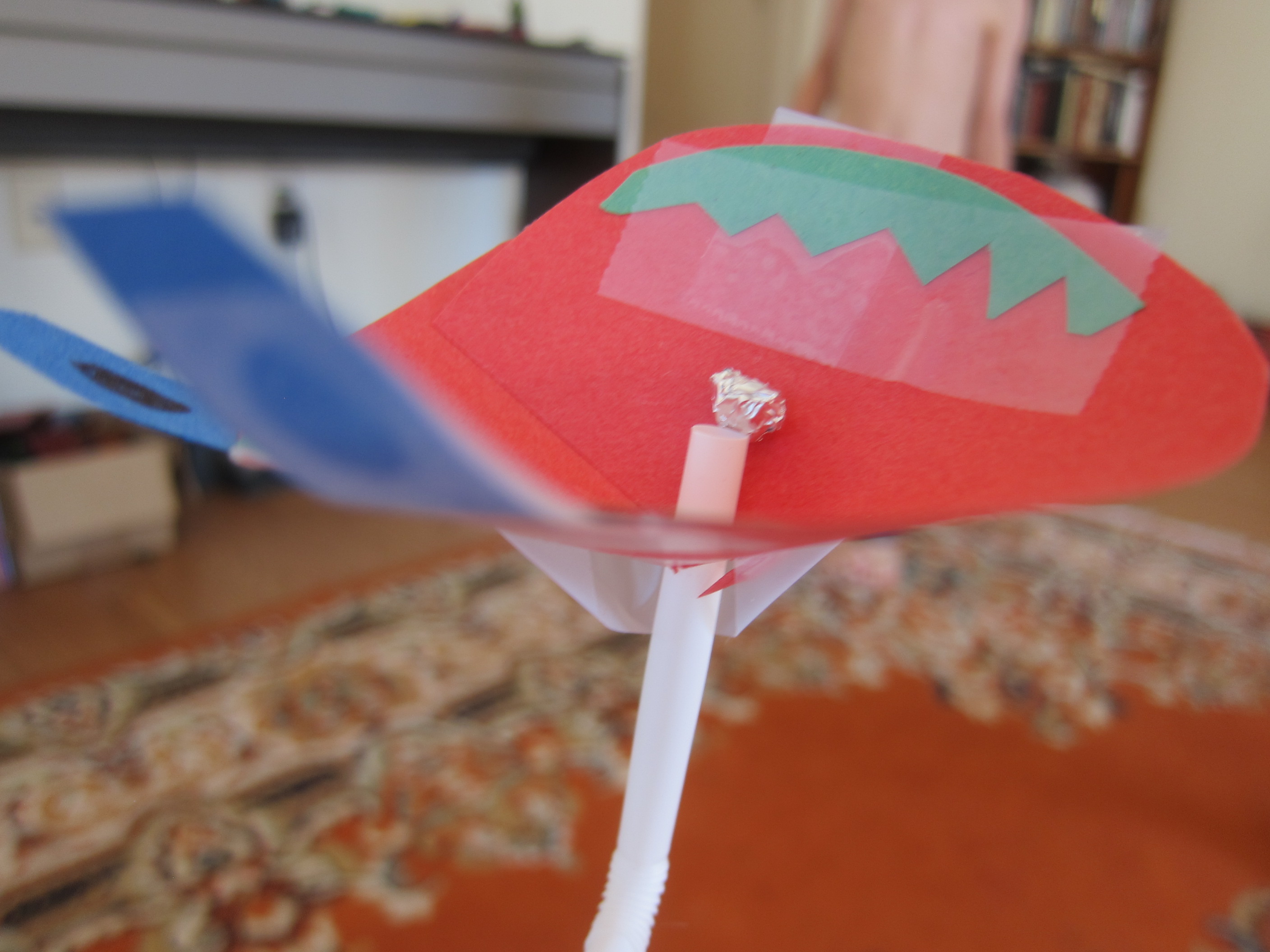
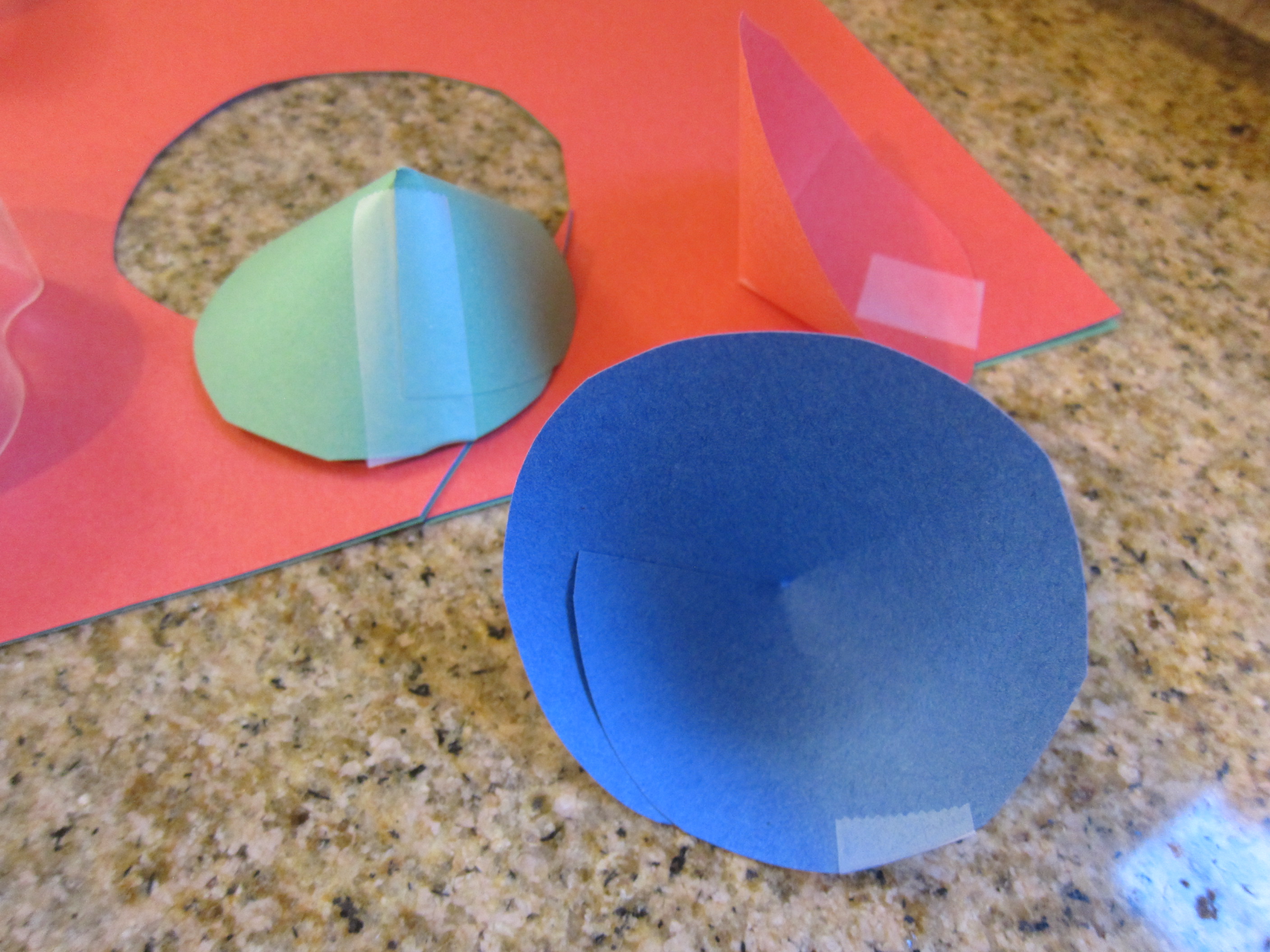
The next experiment was similar, but we got a little craftier. Cut circles from colored construction paper, and cut a slit in each to the center. Fold up into cones, securing with tape.

Floating Ball (2)

Snip a small hole in the tip of each cone and insert the bent part of a bendy straw; tape on for extra security.

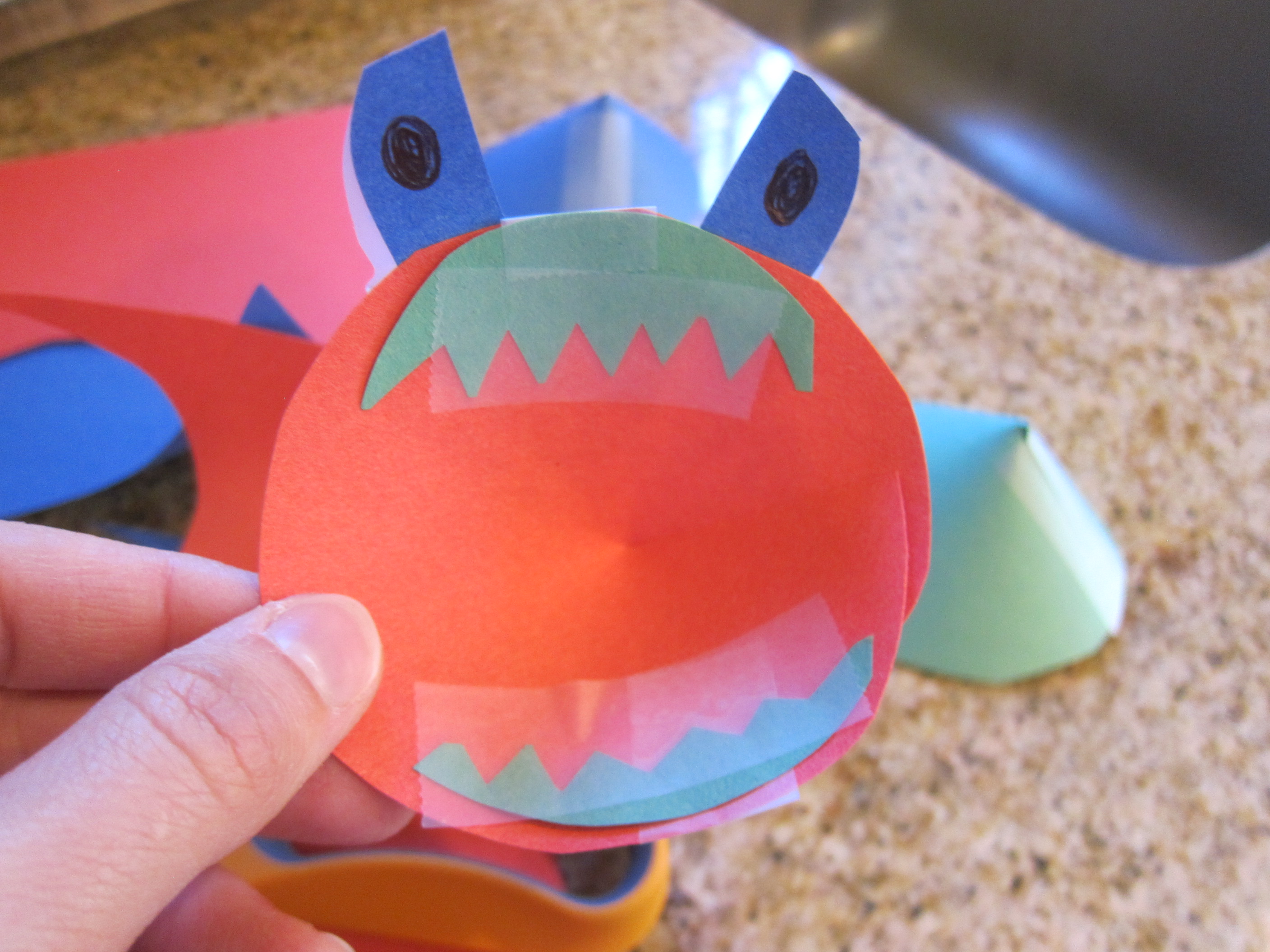
For extra fun, make them monster mouth cones! We cut out teeth and eyes from additional colored paper and taped on the features. If you want a cleaner look, use glue to attach, but Travis was eager to get to the next step of making the monster eat a silver ball!

Floating Ball (3)

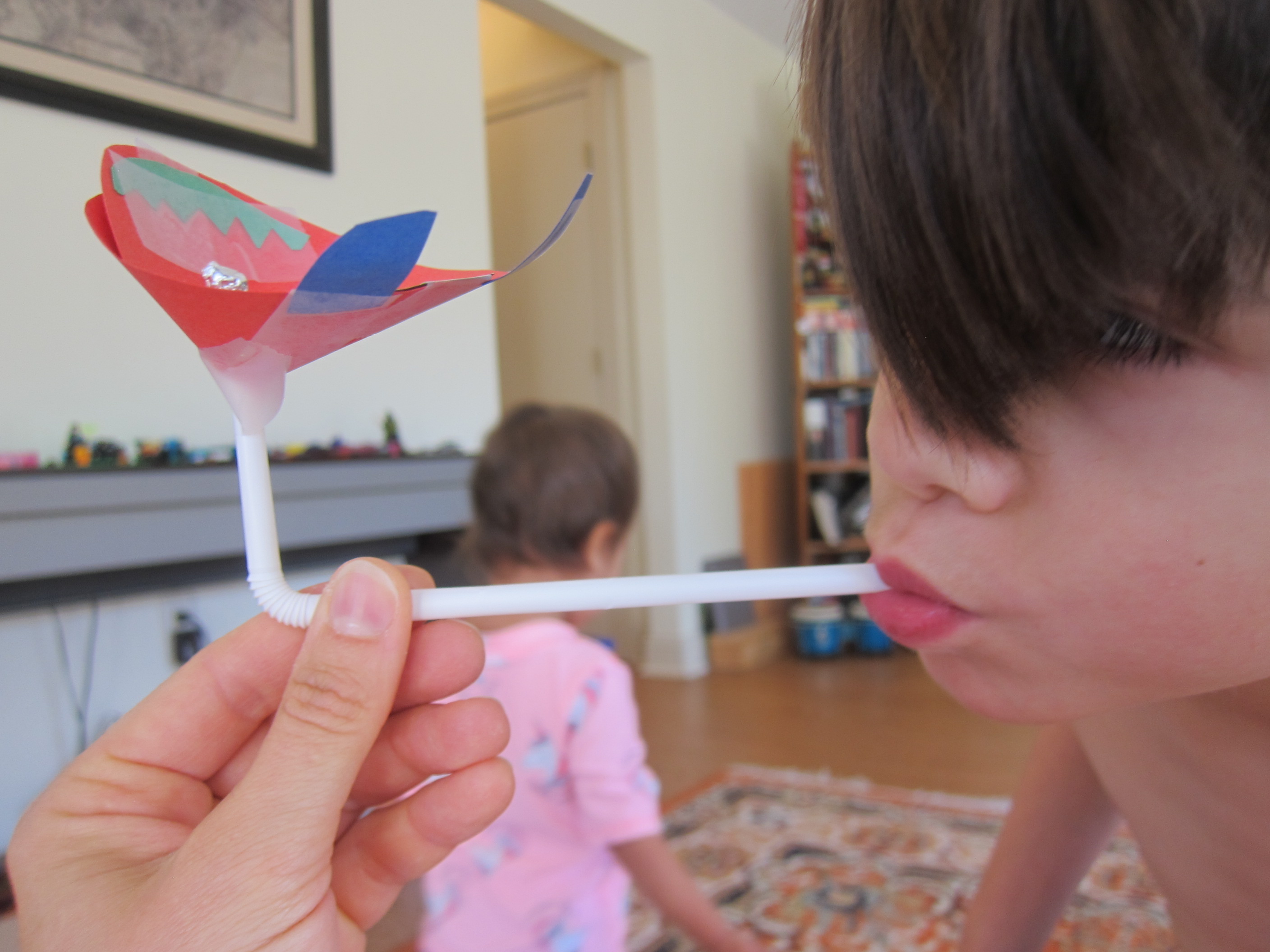
Crumple up a small piece of aluminum foil and place just over the opening of the straw. Huff into the other end and your ball will pop and spin and dance just where the monster can’t eat it.

Floating Ball (5)

Bubble Valve:

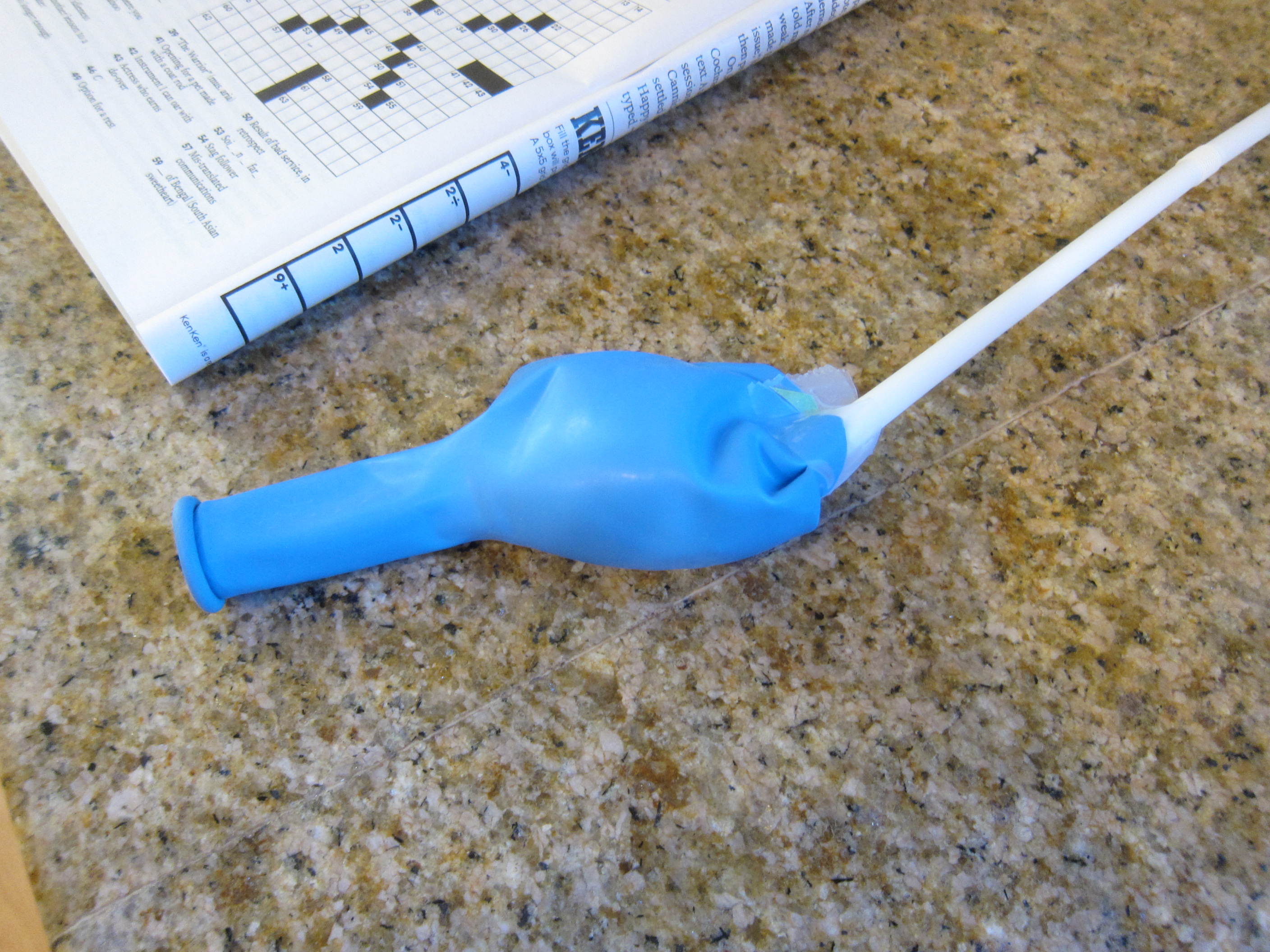
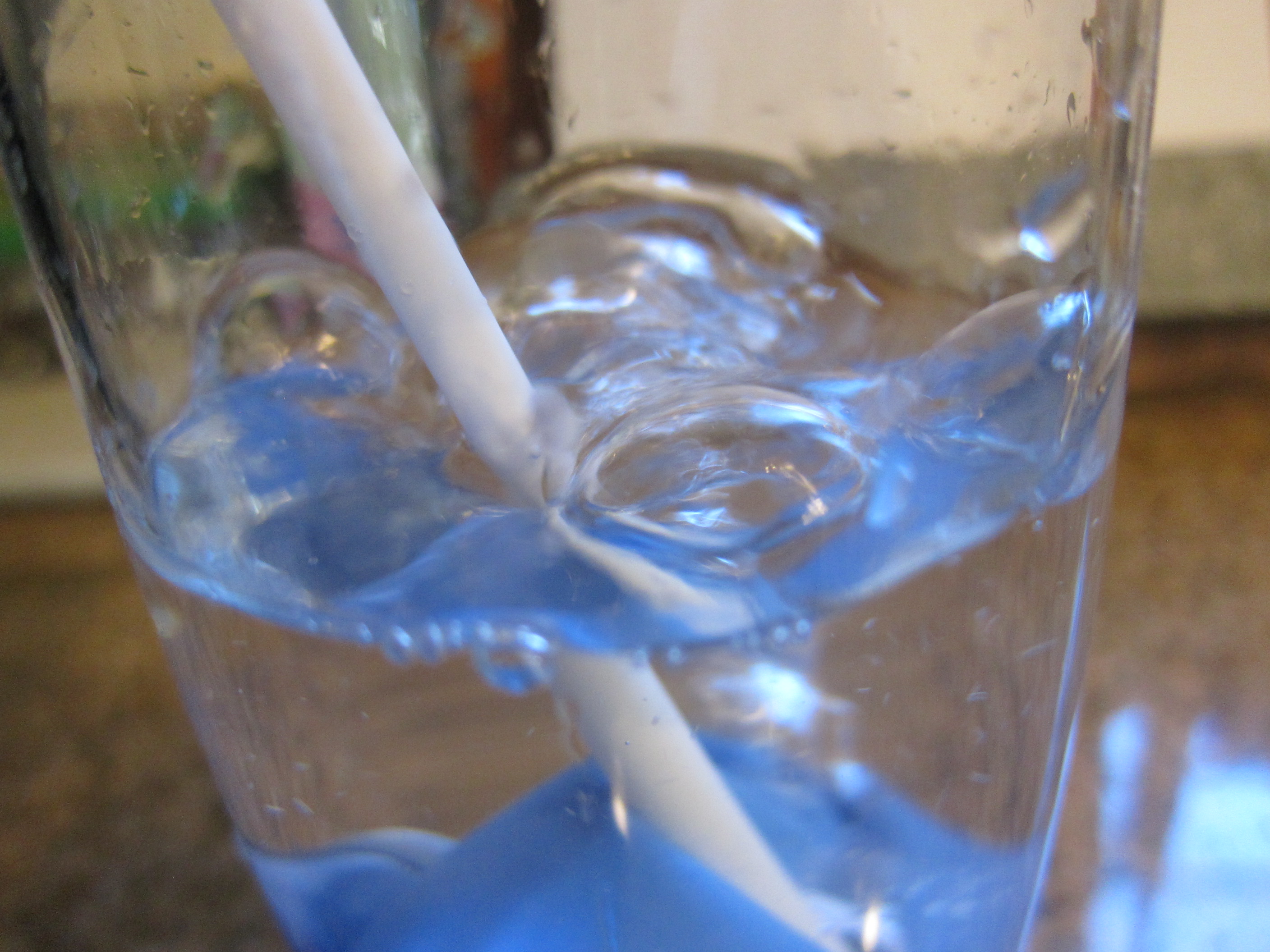
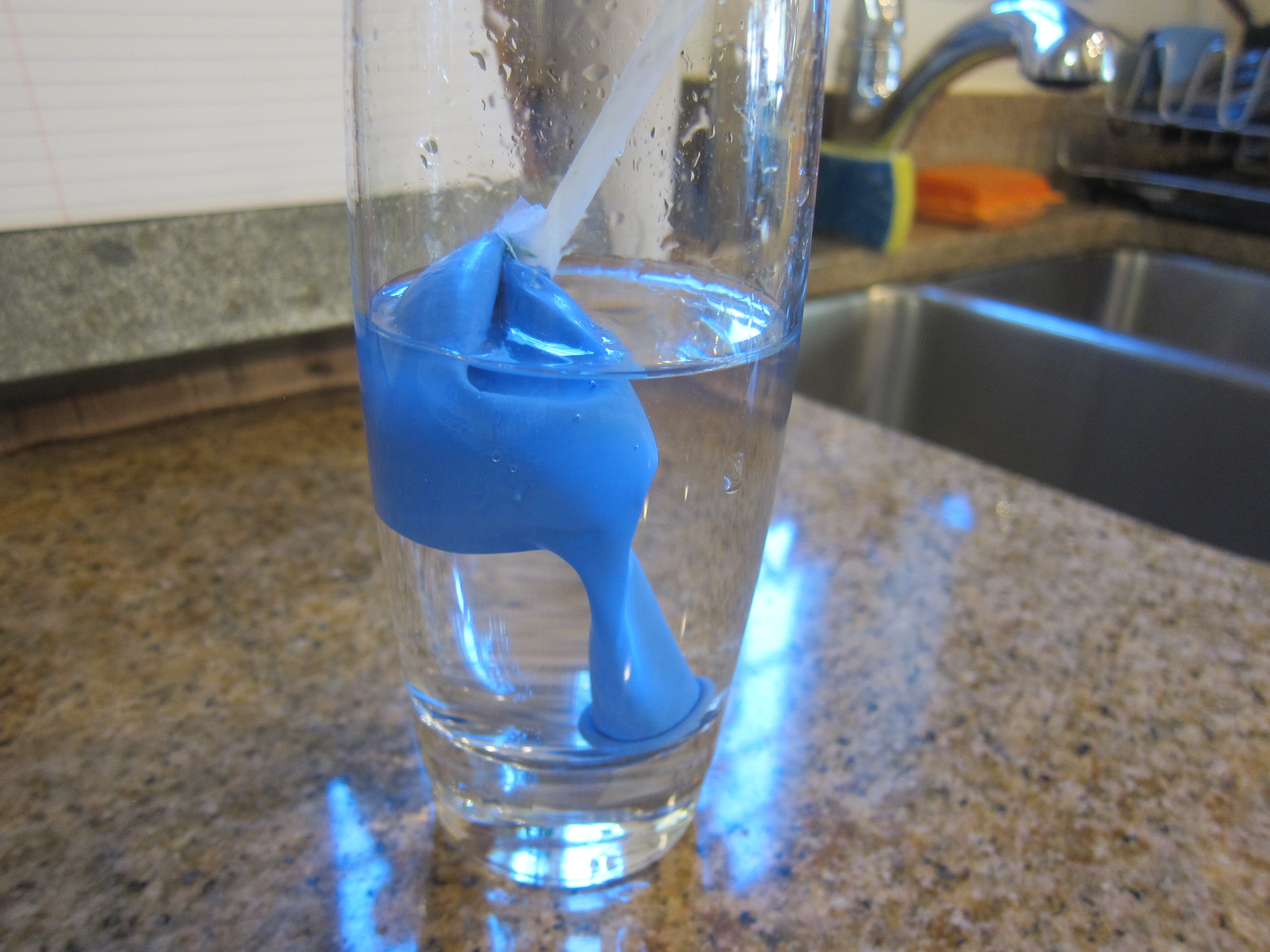
The final experiment was the simplest, but still fun. Cut a tiny slit in the top of an uninflated balloon, just large enough for a straw to fit. Insert the bottom end of a bendy straw. If your hole is a little too large, ideally get a new balloon and start again. This was the last balloon in the house, though, so I taped over a small gap between balloon and straw.

Balloon Valve (1)

Insert into a clear glass of water, then blow into the straw to make bubbles. Try and suck up to get a drink through the straw, too, which is much harder!

Balloon Valve (3)

Travis loved that he was able to do this one, too.

Balloon Valve (2)

Flying Balloon

Flying Balloon (9)

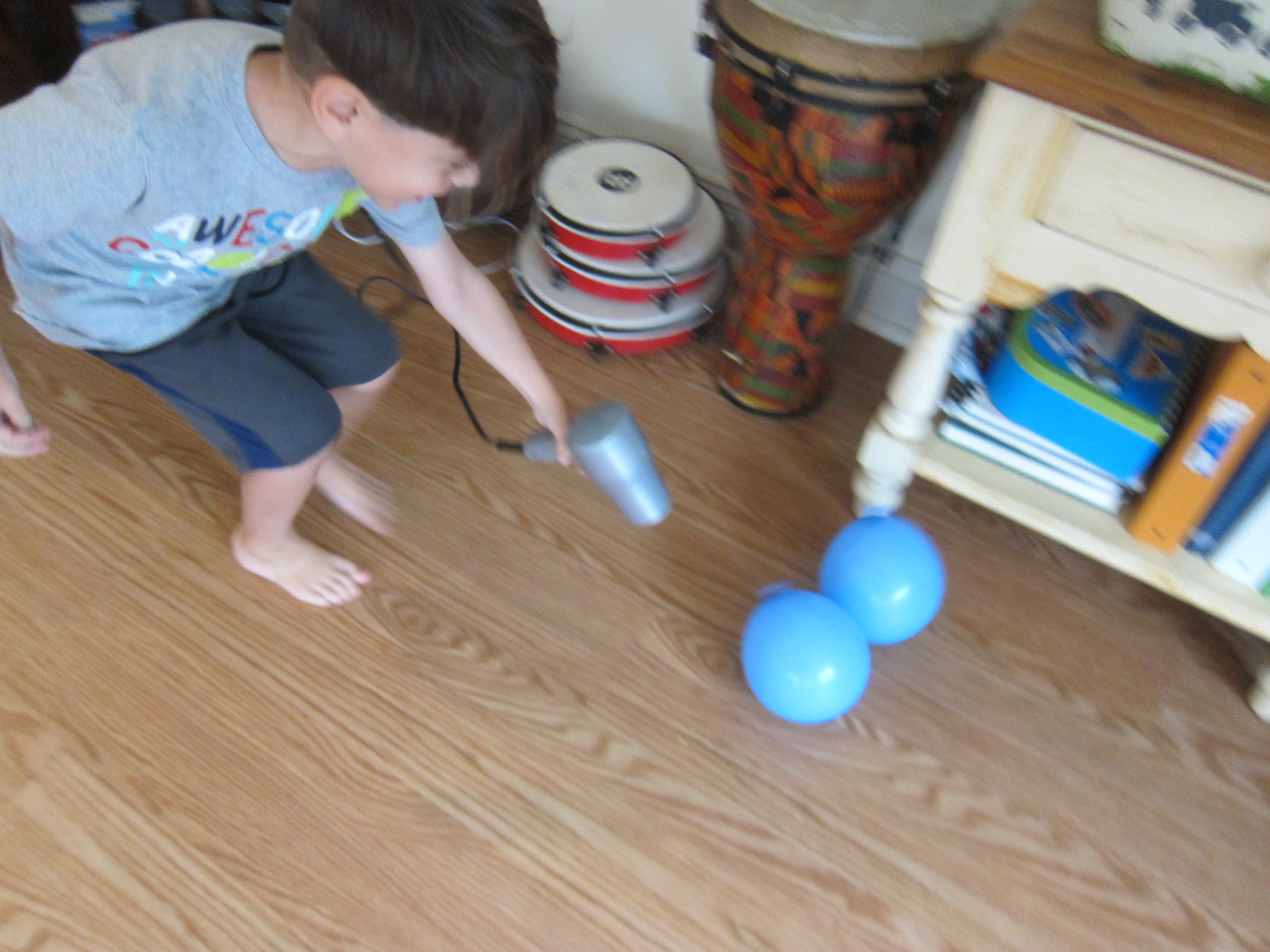
There’s some neat science behind making a balloon fly with a hair dryer, whether the push of the air on the balloon that directs it up, or using “fins” to catch the air and make the balloon hover and spin. But truth be told, Travis and I went light on the science this morning, and more just had fun because, well, balloons + hair dryers = excitement!

Travis was stoked when he saw me pull out the hair dryer for an experiment. After I inflated two balloons, he just liked scooting them along the floor with a flow of air.

Flying Balloon (1)

Meanwhile, I rolled two pieces of construction paper into tubes, securing with tape. Cut the bottom into fringe and then tape onto the balloons. These will act as weights for the balloons.

Flying Balloon (3)

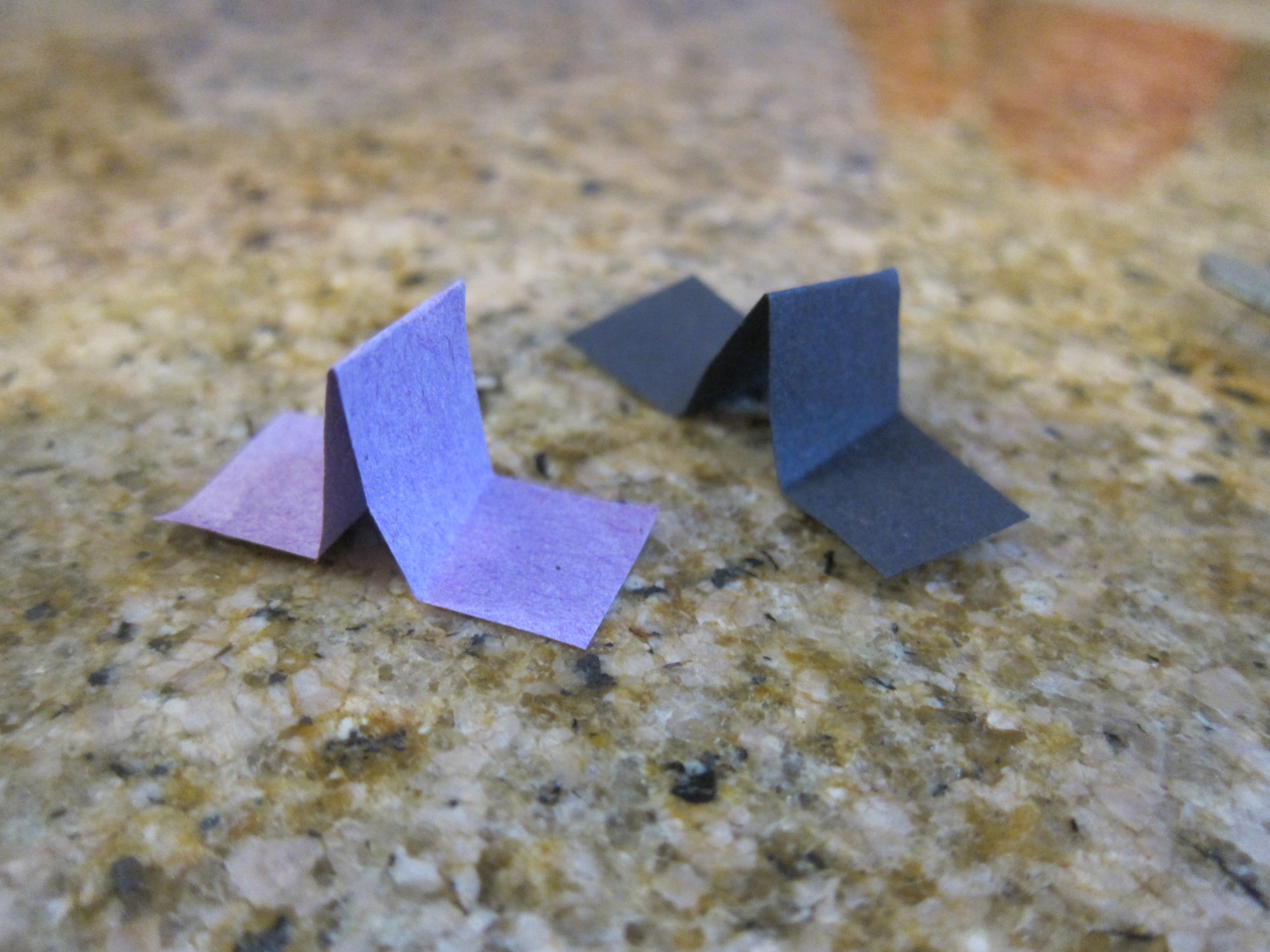
If you want the balloon to spin as well as fly, you’ll need to add fins. Cut strips of construction paper, then fold in half. Bend the ends, so they make little tabs.

Flying Balloon (5)

If you’re going for exact science, you’ll need to wind string around the center of the balloon to mark the equator, then draw two meridians (the horizontal and vertical lines that intersect the equator) with a sharpie. Glue your fins along this equator at a 45 degree angle.

Well, we weren’t that exact. We just used double-sided tape to add the fins in a circle roughly near the balloon’s center.

Flying Balloon (6)

So… it wasn’t perfect, but it did get some spin and some air. It was unfortunately difficult to hold the camera and the hair dryer and launch the balloon, so we never got great photos or videos.

Flying Balloon (7)

But we did have fun!

Flying Balloon (8)