Make a Leak-Proof Bag

Leak Proof (3)

This simple science experiment is sure to produce wide eyes and gasps in everyone from little kids to big grown-ups. Can you really pierce a hole in a bag filled with water, but not produce any leaks? Read on and find out!

First, gather a few sharp pencils, the sharper the better. We gave an extra honing to a few pencils, and set them aside.

Leak Proof (1)

Next, fill a large zip-top plastic bag half way with water, and seal tightly. We did the experiment over the sink just in case.

Leak Proof (2)

I stood Travis up on a stool and told him I could pierce the bag without causing a leak, only half believing it myself.

The pencils slid in surprisingly easily! Bam, three in, and not a drip in sight.

Leak Proof (5)

Travis loved it… and had even more fun pulling the pencils out and watching the fountain that erupts. We had to do the experiment three times it was so much fun.

Leak Proof (4)

Why does it work? It’s all thanks to the power of polymers, long chains of molecules that make up the plastic bag (in this case polyethylene). These molecules seal around the pencils once they are pushed through, preventing any leaks. Remember playing with silly putty as a kid? That’s another example of a polymer. So give your kids a tiny science lesson, and then simply have fun dazzling them. Bonus points if you do this over the floor instead of the sink!


Sponge-Print Wrapping Paper

Sponge Wrapping Paper (8).JPG

Enlist the kids help with gift wrapping this year… not just to wrap up the presents, but to make the wrapping paper first. Not only will they enjoy making this easy DIY gift wrap, but they’ll be so proud when they see gifts presented to loved ones in the paper that they made.

To start, cut sponges into shapes and glue onto old jar lids – the sponge should be cut until about the same size as or smaller than the lid. Simple shapes like triangles and squares are easiest, but get fancy if you’re handy with a paring knife!

Sponge Wrapping Paper (1)

I spread out a leftover roll of craft paper, and Travis immediately set to dipping his sponge stamps into paint…

Sponge Wrapping Paper (5)

…and dotting all over the paper. He liked making “patterns” as he worked.

Sponge Wrapping Paper (4)

Sometimes he spaced the stamps far apart, and sometimes he liked clustering them, so we ended up with a final product that was decidedly his creation.

Sponge Wrapping Paper (7)

We also had fun swirling together blue and white paint to make a light blue.

Sponge Wrapping Paper (9)

Once the paint is completely dry, it’s gift wrapping time!

Sponge Wrapping Paper (10)

What fun wrapping ideas have you used this holiday season? Please share in the comments!

Coffee Candles

Coffee Candle (6)

This is a beautiful and simple project, and to be honest was more of a craft for the grown-up in the room than for Travis! But he loved the materials involved, which were completely novel to him. Whether your little helper actually pitches in with the craft or just plays with the materials, it’s a cozy winter afternoon activity to do together.

The goal was to decorate the bottom of pillar candles with whole coffee beans – a toasty smelling and lovely touch that will add beauty to your holiday decorations or would make a great gift if wrapped up in cellophane with a big bow.

First, Travis needed to investigate the coffee beans. He loved the way that they felt and smelled – it didn’t hurt that we used an intense dark roast!

Coffee Candle (1)

The next cool object was the candles, since I don’t usually have these around the house. He loved the smooth wax, and was very curious how the wick and flame work (adult supervision required around candles at all times, of course!)

Coffee Candle (2)

To decorate a candle, you’ll need tacky glue (not white school glue) so that the coffee beans will hold in place as your little assistant helps glue them on. We decided we liked the beans best with the dimpled side facing outward.

Coffee Candle (3)

As mentioned though, Travis’s interest quickly turned simply to playing with the coffee beans. He was soon delightedly busy with a coffee bean kitchen…

Coffee Candle (4)

….while mama glued on the beans. Since it was just me, I actually switched to using a hot glue gun, which held the beans in place even better than tacky glue.

Coffee Candle (5)

Once the beans are set, place your holiday candles where friends and family can enjoy their sight and aroma too!

Coffee Candle (7)


Give a Super Soup!

Super Soup (5)

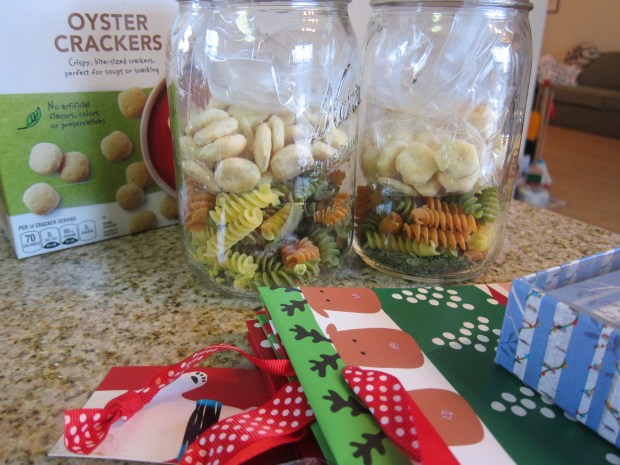
Need a gift for teachers that they’ll actually use? Assemble the dry ingredients for this warming winter soup in a jar, add a hand-made note from your child, and tie it all with a pretty ribbon for a perfect gift. Thanks to High Five magazine for the suggestion!

First, the full recipe, because you’re going to want to make a batch of this soup at home, too:

Super Soup (1)

Ingredients:

  • 1 and 1/2 tablespoons low-sodium vegetable bouillon cubes, crumbled
  • 1 tablespoon dried parsley
  • 1 tablespoon dried minced onion
  • 1/2 teaspoon black pepper
  • 1/4 teaspoon dried thyme
  • 1/8 teaspoon celery seeds
  • 1/8 teaspoon garlic powder
  • 1 bay leaf
  • 1 cup tricolor rotini or fusilli pasta
  • 1 cup chopped carrot
  • 2 chopped celery stalks
  • 1 and 1/2 cups cooked and chopped Gardein chickn
  • 1/2 cup oyster crackers
  1. In a large pot, combine the bouillon, parsley, onion, black pepper, thyme, celery seeds, garlic powder, bay leaf, pasta, carrot, celery, chickn, and 6 cups water.
  2. Bring to a boil, then cover, reduce heat, and simmer for 15 minutes.
  3. Uncover and remove the bay leaf; continue to simmer for an additional 5 minutes.
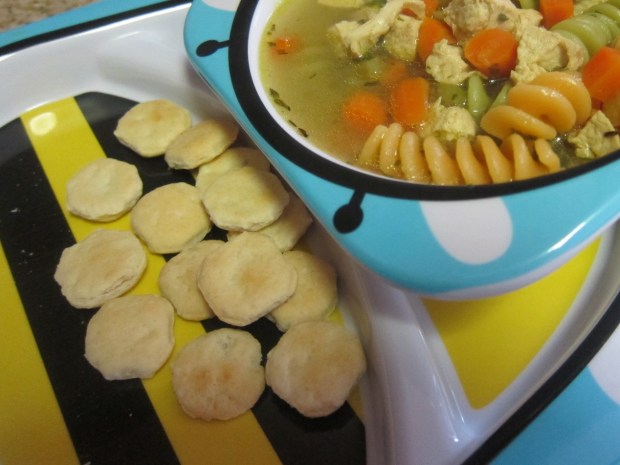
  4. Serve with the oyster crackers!

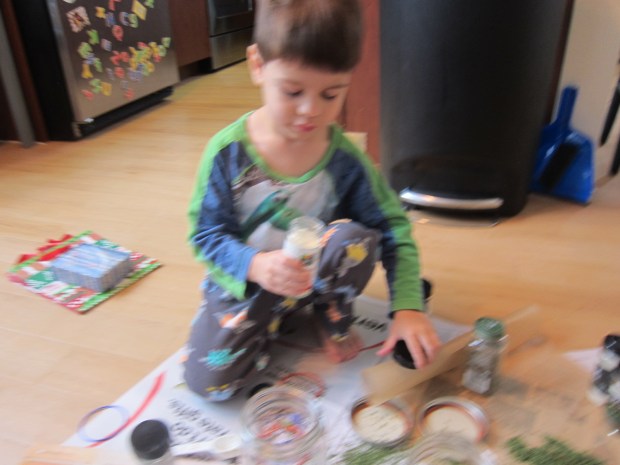
To prepare the soup as a gift, have your child help layer the ingredients from the bouillon through the pasta in a 1-quart clear glass jar. Travis loved adding in the herbs:

Super Soup (8)

And untwisting caps to smell each one before we added it!

Super Soup (11)

Place the oyster crackers in a small zip-top plastic bag, and nest atop the other ingredients. Put the lid on the jar and tighten.

Super Soup (9)

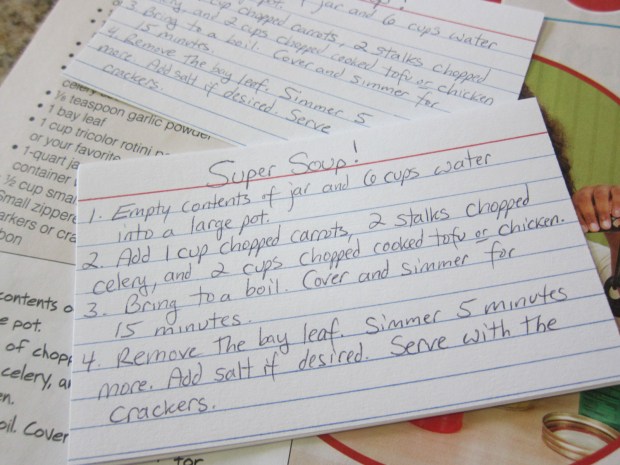
Write out the recipe instructions on a recipe card (Note: teachers will supply their own carrots, celery, and chickn when the time comes).

Super Soup (4)

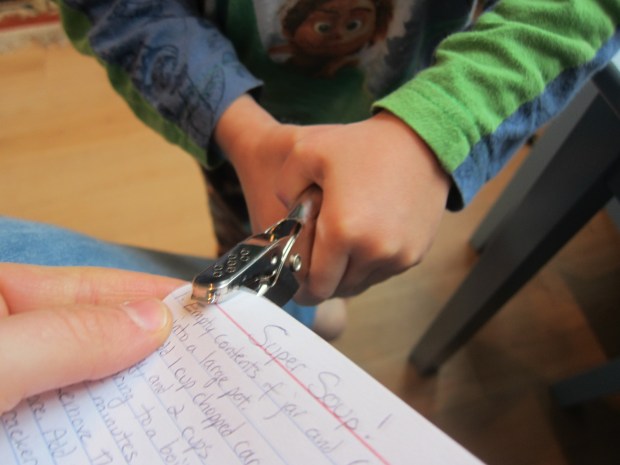
Have your child decorate the index card with crayons or stickers. Of course Travis needed to help punch a hole in each index card.

Super Soup (6)Now slip a ribbon through the hole and secure around the lid of each jar.

Super Soup (7)

Think that your kid’s teacher would prefer something sweet to something savory? Check out the Rocky Road Brownies we used for a gift mix last year!

Don’t forget to save the recipe and make a big pot of this for your own family, too.

Super Soup (2)

Hand-Shaped Dish

Hand Bowl (7)

I’m a sucker for any craft that incorporates the size of a child’s hand. Last year, we made  a wreath featuring Travis’s handprints. This year we switched our art medium to clay. This little dish is perfect for holding holiday candies, and would also make a great gift for grandparents on your Christmas list!

To start, we gathered our materials: air-dry clay and balloons. Balloons and clay first thing in the morning? Travis was in heaven!

Hand Bowl (1)

Blow up one balloon to a size your child can comfortably hold in his or her hand; set aside.

Hand Bowl (2)

Trace your child’s hand onto a piece of paper and cut out; set aside.

Hand Bowl (3)

Now flatten your clay using a rolling pin until it is large enough to hold the handprint.

Use a clay slicing tool or plastic knife to cut around the handprint.

Hand Bowl (4)

Now here’s the slightly funny part: drape the hand over the balloon, and let sit somewhere kids can’t touch it or mess with it until dry.

Hand Bowl (5)

Once dry, remove the balloon and set your hand on the counter as a decorative dish.

Hand Bowl (6)

Don’t forget to inscribe with kids’ names and the year, so you’ll always remember!

Hand Bowl (8)

Symmetry Butterflies

Symmetry Butterfly (9).JPG

In a day with wind chills in the teens, we needed a little reminder that spring always comes after winter! Butterflies always seem to fit the bill, so I set up this butterfly craft in the morning for Travis.

It’s yet another great way to emphasize symmetry found in nature for little kids, a tiny science lesson thrown in with the art.

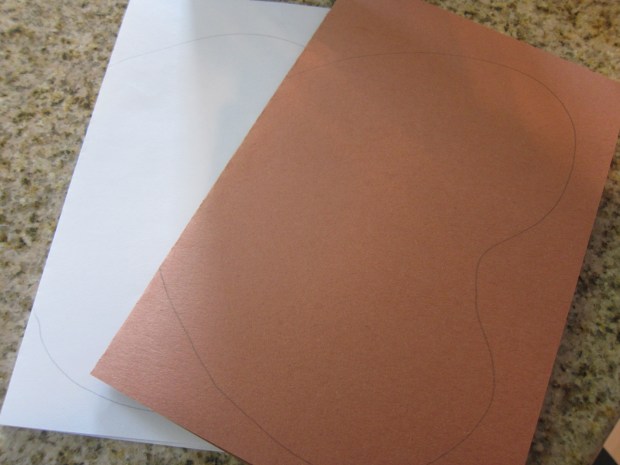
First, I traced a butterfly wing on paper that was folded in half, and cut out. Open up and you’ll have symmetrical wings.

Symmetry Butterfly (1)

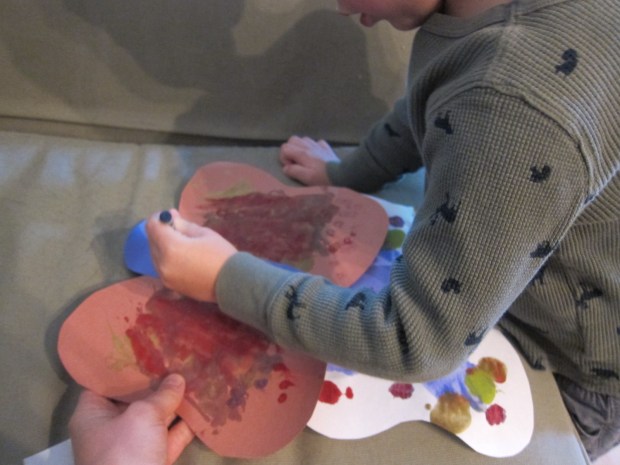
I tried to persuade Travis to paint only on one side of the wings, which he did at first…

Symmetry Butterfly (3)

…but once he knew that was my request, he became impish and painted on both sides. (Don’t worry, the final design will still work; the result just won’t seem as “magical”).

Symmetry Butterfly (5)

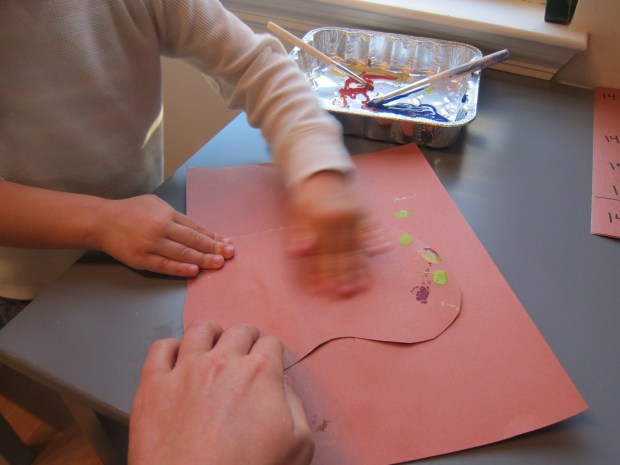
Once your child has finished painting, fold the wings in half and rub firmly to make sure the paint transfers over.

Symmetry Butterfly (6)

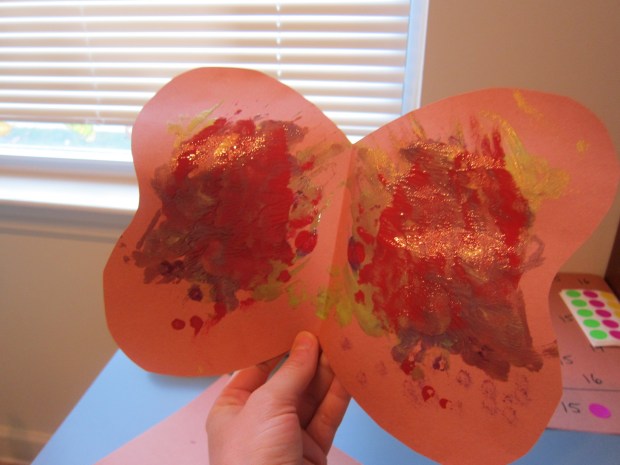
Open up for a symmetrical surprise!

Symmetry Butterfly (7)

I painted one a bit more cleanly for him,  so he could learn from the example.

Symmetry Butterfly (4)

After the paint dried, we added butterfly bodies (cut from additional construction paper) and drew on faces. Travis has just begun drawing noses and mouths, so I loved watching him do this part.

Symmetry Butterfly (8)

Even if the butterflies look a little grumpy!

Symmetry Butterfly (10)

We were out of googly eyes, but sparkly stick-ons worked for eyes in a pinch. Hang your butterflies in the window, and enjoy watching them soar!

Early Explorers Dinosaurs

LP Dino (34).JPG

Unlike many of his peers, Travis has never shown much interest in dinosaurs, but suddenly they seem to be everywhere in his world! His nursery school is doing a dinosaur unit, and we ventured to Dinosaur State Park as part of his Early Explorer’s world discovery unit. Little did we know that our next kit from “Max and Mia” at Little Passports would be all about dinos!

LP Dino (2)

Travis was very into some of the regular items in this month’s kit, adroitly sticking his dino sticker onto his suitcase, proudly matching up each sticker on his map (“Don’t do a thing, Mom!” he commanded me), and eager to check out this month’s flashlight game. He also took right to the activities in the monthly info booklet.

LP Dino (26)

Dinosaurs Craft:

There was no real art project with the dinosaur unit, but the booklet did include a suggestion to draw our own dinosaurs. Since Travis is still making scribbles, I presented him with a dinosaur coloring book instead. He was delighted, and is fast becoming familiar with names like pterodactyl and T. Rex.

LP Dino (23)

He was so proud of his coloring that he raced to hang up his artwork. Soon we had a dino gallery!

LP Dino (24)

Dinosaurs Science:

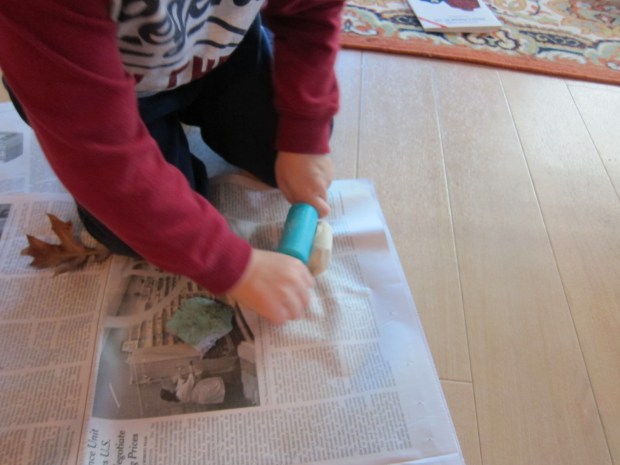
The booklet includes nifty info on fossils to give your child a quick science lesson: fossils aren’t actually the bones themselves, but a hard rock-like “cast” that forms around them. To approximate a fossil, we followed the booklet’s instructions. First, flatten air-dry clay into a circle, then press in a found object.
LP Dino (12)

We used leaves and rocks, but I wish we’d had a shell on hand! Sticks or twigs would work too.

LP Dino (13)

Carefully remove the object, leaving an imprint behind.

LP Dino (14)

Next, fill the cavity with glue. Let dry completely. Once dry, peel off the glue – this is your fossil “cast.”

LP Dino (20)

I was skeptical, but we were able to peel off our leaf and rock imprints quite well. In all honesty, I was probably more into the final result than Travis was!

LP Dino (29)

Dinosaurs Keepsake:

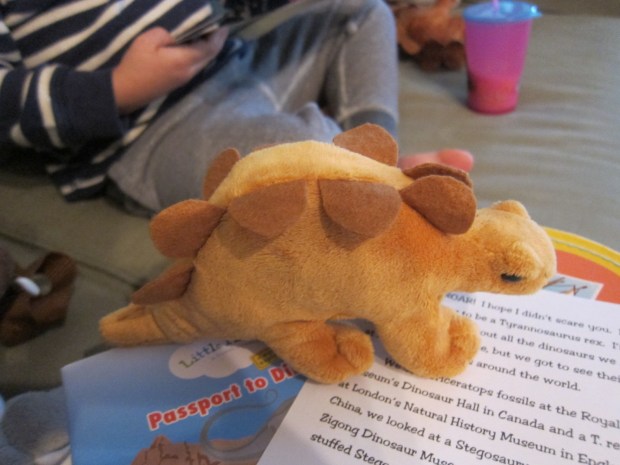
This month’s package came with an adorable stuffed stegosaurus.
LP DIno (3)

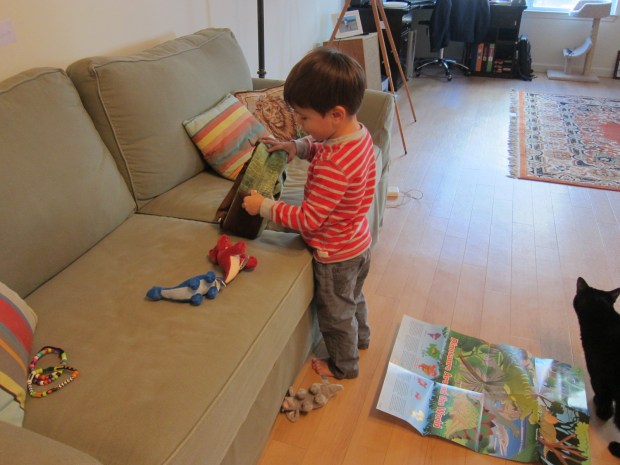
I also opted for the add-on pack of 4 additional plush dino friends, which included a poster describing where in the world dinos have been found. T. Rex now sleeps with Travis every night, of course.
LP Dino (1)

Dinosaurs Field Trip:

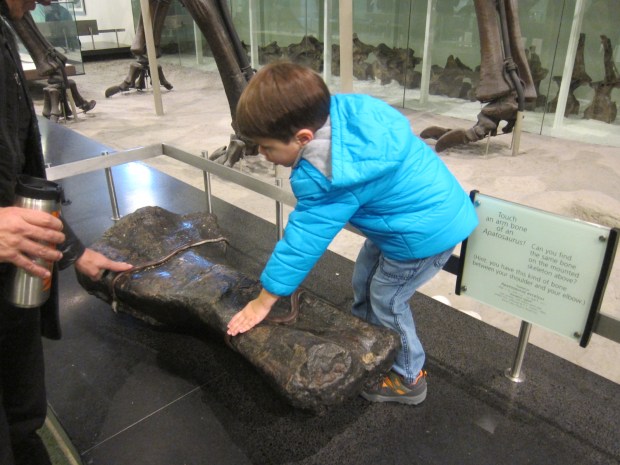
Whoops, we’d just been to a dinosaur footprint park, so needed a new field trip this time! The next obvious answer was to visit dinosaur fossils and skeletons at a Natural History Museum.

LP Dino (32)

If you’re also fortunate enough to live near a place where you child can see full skeletons assembled, do it! Nothing compares to seeing how huge these reptiles were in person.
LP DIno (31)

Dinosaurs Further Activities:

We wanted more dinosaur fun, so I poked around on Little Passport’s blog and dug up this dino excavating activity. It’s something we’ve done before, but not in ages! First, we needed to squeeze dinosaurs through the opening of uninflated balloons (always a stretchy endeavor).

LP Dino (5)

Fill the balloons with water (a funnel is helpful), and then tie off. Freeze overnight.

LP Dino (8))

The next morning I asked Travis if he wanted to excavate our dinosaur egg fossils, and he couldn’t wait! First he needed to hold and explore the frozen balloons.

LP Dino (6)

We started by using hot water and pipettes to thaw out the dinos…

LP Dino (7)

…and we loved whenever a bumpy limb or scale emerged through the ice.

LP Dino (9)Once they were exposed enough, we added tools into the equation. Travis did great chiseling, using a hammer while I supported a screwdriver.

LP Dino (18)

He was thrilled when the ice cracked away from the dinos in big chunks. Freed!

LP Dino (17)

In addition, we checked out a few dino books from the library, and Travis loved matching our plastic dino figures up to the book.

LP Dino (27)

The books were a great prompt to encourage him to imagine life in prehistoric times, asking if he thought it was hot or cold, or what sounds he might hear. He was amazed to learn there would be no noise from car engines or airplanes.

Travis latched on to ankylosaurs as a favorite, so we did some research online and even found cute videos about it!

LP Dino (33)

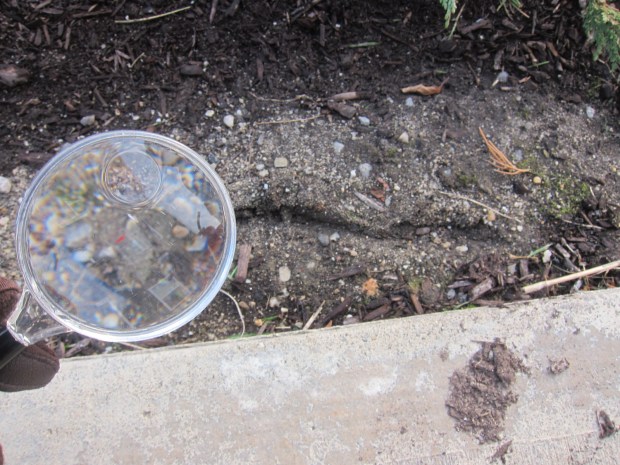
As a final suggestion, we headed outside to see if we could be archaeologists and find any animal prints or plant impressions left in the ground. We thought this trail might have been left by a slug!
LP Dino alt

And even found paw prints.

LP Dino var

Looking forward to our next Explorer adventure!

LP Dino other

Starry Holiday Table Runner

Starry Table (7)

This project is a great way to get kids involved in holiday décor! The result is charmingly homespun and sure to delight relatives or other visitors at your holiday table.

To start, I prepped a star stencil. Ideally, you’ll want to use a real star stencil from a craft store. I printed a star template on paper and cut out the star shapes, which worked in a pinch; if you use this method, however, be sure to have several templates on hand, as each one can only take a coat or two of paint before tearing.

Starry Table (5)

Next we prepped our workspace, unrolling a large length of craft paper, and pouring white paint into a foil pie plate.

Starry Table (1)

Travis loved helping thin the paint with just a touch of water, for a creamy consistency.

Starry Table (2)

Next I showed him how to hold the stencil in one place on the paper, and paint over the exposed open star shapes. He loved the challenge, and although his paintbrush sometimes slopped over the edges, this only added to the charm of our final runner.

Starry Table (3)

Keep moving your stencil until you’ve covered the entire length needed with star shapes. He even pretended he was a professional painter as he worked!
Starry Table (4)

We left the paint to dry, and then I cut the craft paper to form a thinner rectangular runner, with a triangle snipped from each end for a banner-like effect.

Starry Table (6)

The runner is perfect under our advent calendar display while we wait for the day to actually celebrate with relatives, and then we’ll move it to the buffet table!

Starry Table (8)

Missing-Mitten Puppets

Mitten Puppets (7)

We loved this suggestion from our December issue of High Five magazine! What parent of small children doesn’t have an odd mitten or two lying around? Kids always seem to be losing just one of a pair. To prolong the fun, I also purchased a cheap three pack of gloves, so our imaginations could run wild with puppet making. Although mittens would have been ideal, gloves worked just as well for our new puppet friends.

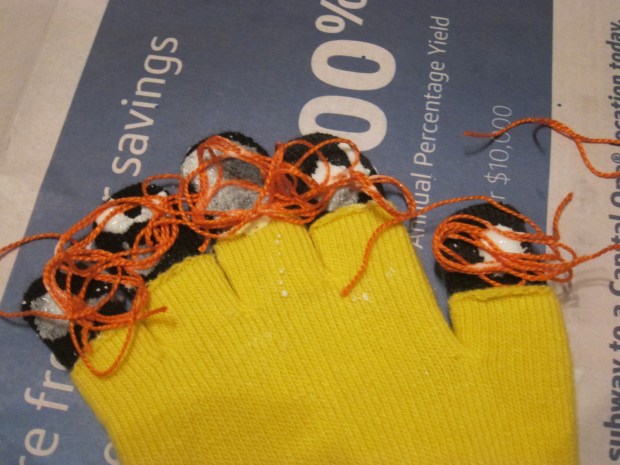
First, we followed the two suggestions from High Five. An old yellow glove received orange thread as a mane, which Travis loved gluing to the fingertips.

Mitten Puppets (1)

We added googly eyes and felt pieces for the nose and mouth. Black thread was perfect for little whiskers.

Mitten Puppets (2)

Felt ears (in pink and blue), a blue felt nose, more googly eyes, and more black thread as whiskers turned an odd blue glove into a mouse. Squeak!

From there, I left Travis’s imagination take over. We had a very abstract elephant covered in orange thread and yellow felt, shown here in the foreground:

Mitten Puppets (9)

He next asked to make a porcupine, so I got out “quills” from brown felt and Travis added a pom pom nose.

Mitten Puppets (5)

Then he decided we needed a black cat, with pink felt ears and facial features. Travis insisted that the cat needed a sparkly pom pom, too.

Mitten Puppets (6)

Then of course it’s time for a puppet show!

Mitten Puppets (11)

What color mittens do you have on hand to turn into animals? Please share ideas in the comments!

Mitten Puppets (8)

Making a Rocket

Rocket (9).JPG

An extra mailing tube from the post office spurred this idea, and turned out to be a huge hit.

Rocket (1)

To turn a simple mailing tube into a rocket, the first thing you’ll need to do is paint it silver using a metallic acrylic paint. Travis has his own agenda more and more these days, a busy three-and-a-half year old. He normally isn’t so into painting, but when I told him we were using “big boy paint” (i.e. non-washable) like real astronauts, he leaped to the task!

Rocket (2)

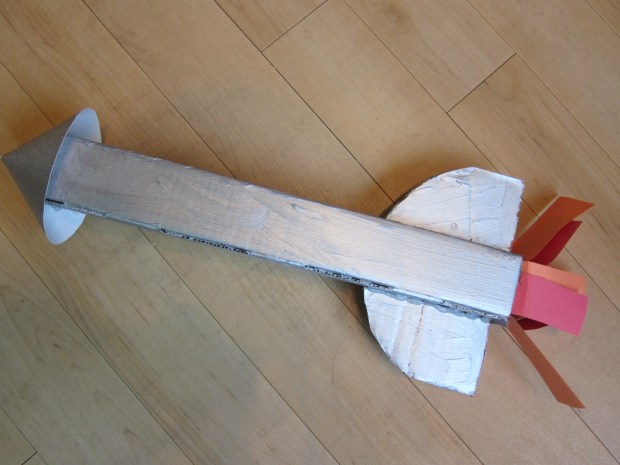
Cut two fins for the rocket from cardboard and paint those as well. Let dry completely.

Rocket (4)

For the flames of the rocket, you can trim lengths of orange and red fabric into strips, hot glue the edge of the fabric onto plastic piping, and insert into the bottom of your rocket. Or you take a vast short-cut, cut strips of orange and red construction paper, and glue them in. Yup, we went the simple way!

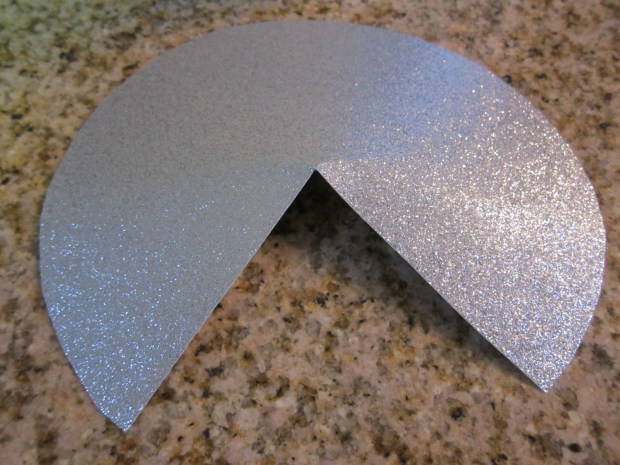
As the final step, I hot glued the two cardboard fins to the body of the rocket, and then made the cap. Cut a piece of shiny craft paper into a circle, and cut out 1/4 of the circle. Fold into a cone, and hot glue onto the top of the rocket.

Rocket (5)

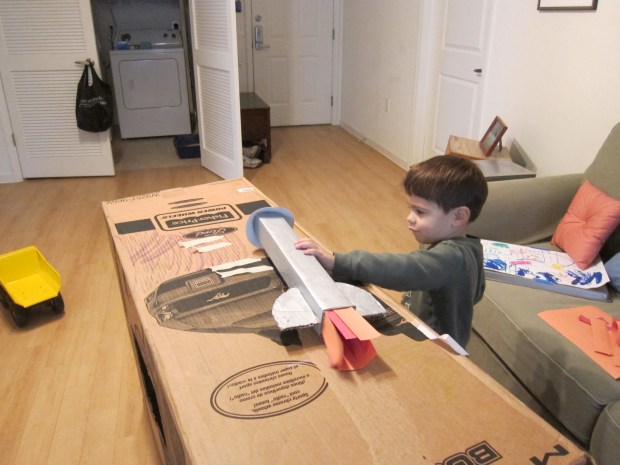
As soon as the glue was cool, it was Travis’s toy to zoom, and oh boy was he exited!

Rocket (7)

It was his suggestion that we launch the rocket off a launch pad, so we repurposed an old cardboard box as our launch site.

Rocket (8)

Definitely a big hit with this three-nager.