Duct Tape City Bus Playset

Duct Tape Bus (11).JPG

This was a project that sounded daunting, and so I put it off for a while. But it turned out to be very easy and very cute. My hesitation stemmed from the fact that I needed to purchase magnet sheets and duct tape sheets (note: not a roll of duct tape), which I couldn’t find at my local craft store. Both are readily available on Amazon, so armed with these supplies, we were off and running… er, driving!

Duct Tape Bus (1)

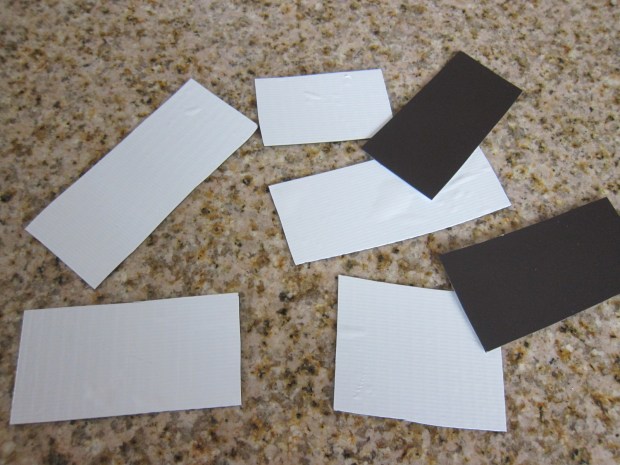
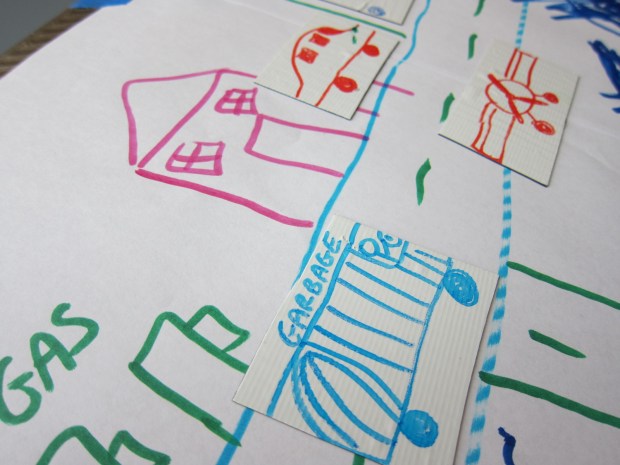
To make duct tape vehicles, peel the sticky side off the duct tape sheet and line up evenly with the sticky side of the magnet sheet. Cut out rectangles to be your cars, buses, and trucks.

Duct Tape Bus (2)

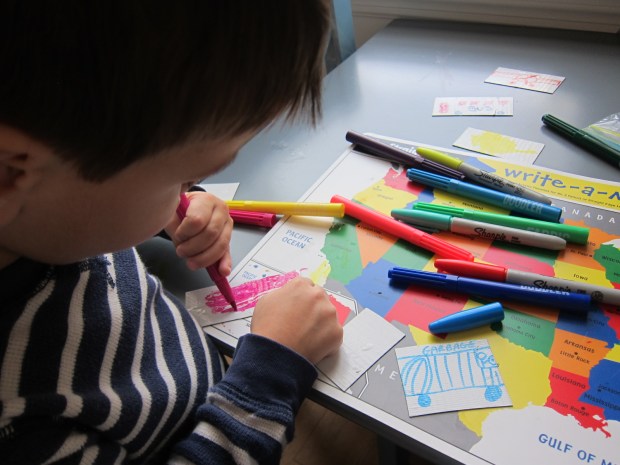
Travis loved the idea of drawing our vehicles. We used permanent marker, and he scribbled away with imaginative designs.

Duct Tape Bus (5)

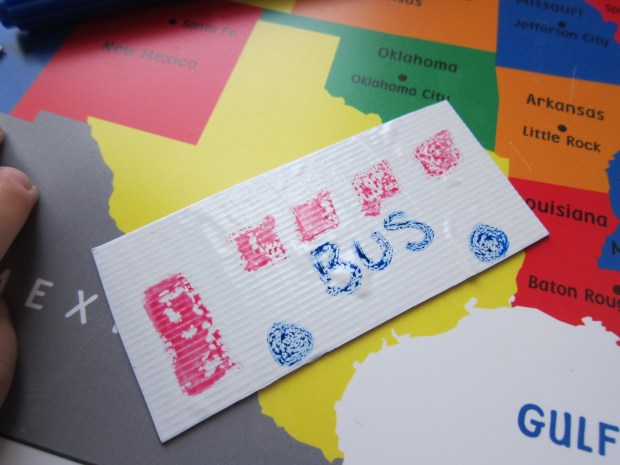
Meanwhile I added a few vehicles that he could readily recognize, including a city bus…

Duct Tape Bus (3)

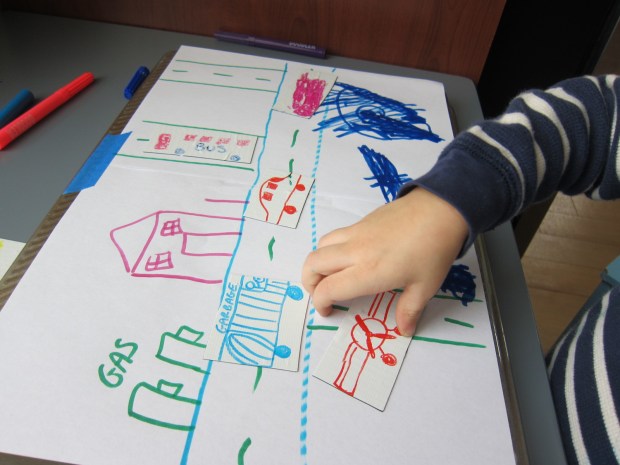
…and a propeller plane (Travis’s current obsession). Garbage trucks and cars rounded out our city neighborhood.

Duct Tape Bus (4)

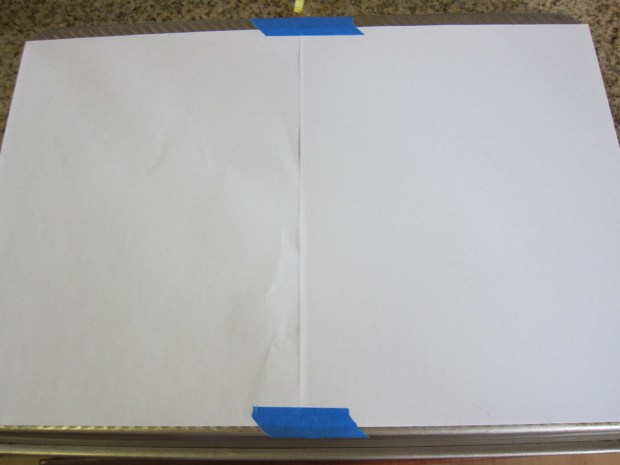
To make your cityscape, tape down two pieces of paper to the back of a baking sheet. Adults and older kids can map out streets and buildings.

Duct Tape Bus (6)

Travis was thrilled to help decorate, and was very focused on drawing a crossing guard. I was so proud when I saw him draw in a nose and smile, his most true-to-life people yet!

Duct Tape Bus (7)

Once your city is drawn, add your magnet vehicles and zoom them along however you like!

Duct Tape Bus (9)

This playset is one your kids can return to over and over again.

Duct Tape Bus (8)


Sight Word Train

Sight Train (5)

I’m on the lookout these days for snekay ways to get Travis to spot his name among a jumble of letters. This time the learning made its way into train set play!

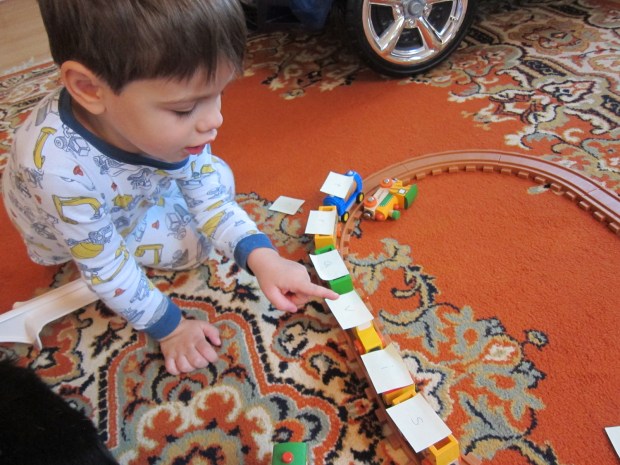
Set up any train track pieces you have (you don’t need anything complicated, just a simple loop), and then set out train pieces. Affix a small post-it note with a letter to each individual train piece.

As mentioned, our first game was to hide the letters of Travis’s name, and see if he could spot them among a jumble of train cars.

Sight Train (4)

The next step was to line those letters up in order!

Sight Train (7)

We also spelled a few simple words; think of easy sight words like yes, no, cat, dog, mom, dad, etc. Because Travis currently loves airplane pilots, we spelled out a-c-e.

Sight Train (3)

Travis is still more comfortable with upper case letters than lower case, so I focused just on the latter today. But really the only limit here is when you run out of post-it notes!

Sight Train (6)

For bigger kids, you can even write full words on the post-its and have them line up their train cars to form a simple sentence.

Sand Pendulum

Pendulum (5)

We snagged this idea from an old Parents magazine article, highlighting STEM projects for kids. The game provides a neat visual introduction to gravity, using the simple concept of a pendulum. Pendulums – any suspended weight that swings freely from a pivot – will always come to rest at an equilibrium position, because of gravity of course. Using colored sand makes it purely fun for kids!

Make sure to cover your work surface with a roll of craft paper or other paper, both to catch your sand designs, and to save you from a big mess at clean-up time.

To set up the pendulum, tie three strings at even intervals around a thick rubber band. Travis had fun exploring the materials while I put this step together. Older kids can help with the tying!

Pendulum (1)

Fit the rubber band tightly under the lip of a kitchen funnel. Gather the three strings together and tie in the middle so the funnel hangs evenly.

Pendulum (2)

Slip the strings over a dowel – whoops, not quite balanced yet!

Pendulum (3)

The next step was a bit tricky, since it requires two sets of hands, and my three year old had his own agenda. But ideally, have your child plug the hole at the bottom of the funnel with a fingertip while you fill it with colored craft sand.

Give the pendulum a slight push, and watch the sand go back and forth. It will swing in increasingly smaller motions until it comes to rest.

Pendulum (4)

As mentioned, ours didn’t exactly work as planned…but leftover sand sure is fun to play with!

Pendulum (6)

If you capture really pretty sand designs, please share in the comments.

Mud Pie Kitchen

Mud Kitchen (2)

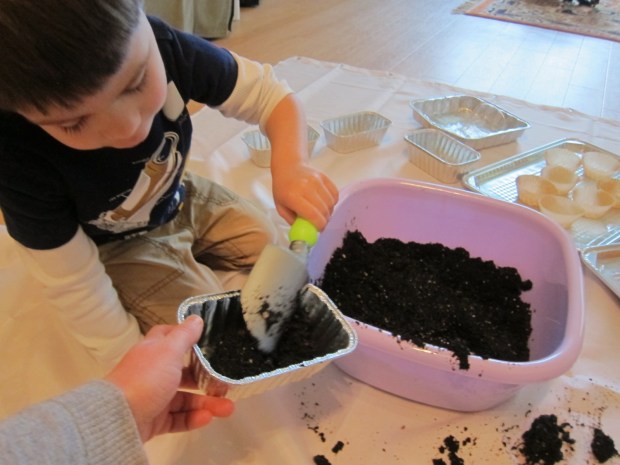
In an ideal world, we would have done this activity outdoors in beautiful summer weather; it’s the kind of activity that can keep your kids happily occupied while you garden or do other outdoor chores. But if a kid needs dirt in the winter, then you bring the dirt inside!

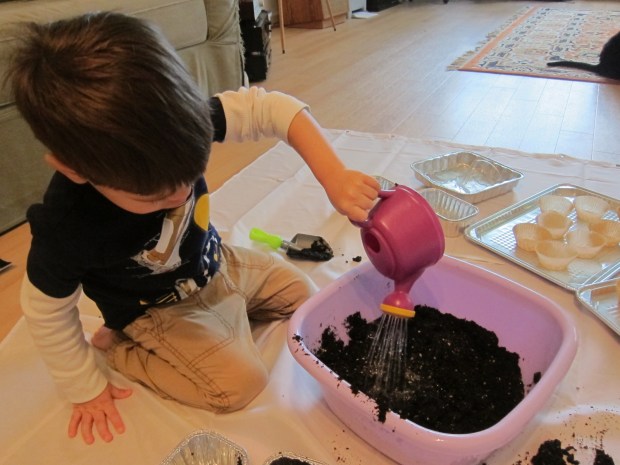
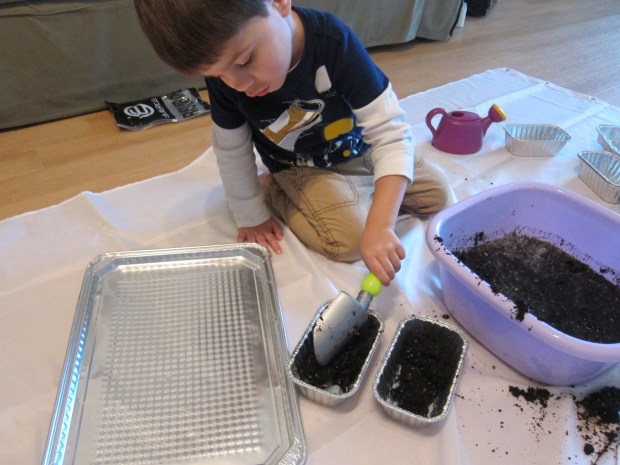
To set up our “kitchen”, I spread an old shower curtain liner on the floor to contain any mess. I then set up a variety of kitchen items. We used disposable foil pans, but you can also use items from a flea market or thrift store. Add in spatulas, spoons, ladles, or other kitchen utensils.

Mud Kitchen (1)

If it’s summer, simply scoop up dirt from your yard and get to work! Here in the winter, we used a leftover bag of potting soil. Travis loved adding water, until we had a nice muddy consistency.

Mud Kitchen (6)

Then it was time to make mud loaf cakes!

Mud Kitchen (5)

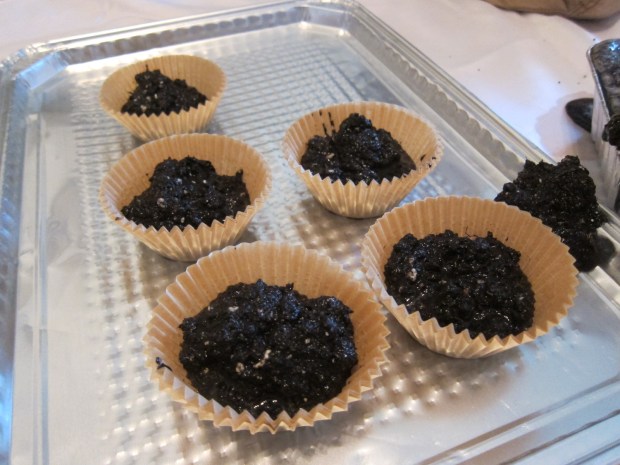
Cupcake liners were a whimsical touch, so we baked a batch of mud muffins.

Mud Kitchen (8)

Travis kept up an imaginative narrative as he played; here is a cake inside of an “oven.”

Mud Kitchen (9)

When he was done, I simply folded the old shower curtain over the muddy pots and pans and put everything into a trash bag – easy as mud pie!

Mud Kitchen (7)

Cardboard Learning Tree

Learning Tree (11)

This is a great activity that combines seasonal holiday crafting with a little learning. If you play your cards right, the kids won’t even know you’ve slipped in some education with their fun!

For the shape of your tree, you can either paint a large piece of cardboard (holiday gift delivery boxes, perhaps?) or poster board. We chose poster board because I knew it would be easier to cut out the tree. Either way, Travis was thrilled when I said I needed the entire thing painted green.

Learning Tree (2)

We left the paint to dry overnight, and the next day I cut out the tree shape.

Learning Tree (3)

Next we gathered supplies for the “ornaments.” Use holiday-themed cookie cutters or other shapes, and trace the outlines on colored construction paper.

Learning Tree (4)

Don’t worry if your kids don’t trace perfectly, you can always neaten up the lines when cutting the shapes out later.

Learning Tree (5)

The next step was even more fun: laminating the cards. Although this step is optional, it will definitely make your paper pieces last longer. Travis adores whenever he’s allowed to help laminate, so this was a big hit.

Learning Tree (7)

I cut out the shapes, and set them aside.

We hung our tree on the wall and added a brown piece of construction paper as the trunk.

The final step was to add Velcro strips to our tree and ornaments. Place the soft side of the Velcro on the tree at random intervals, then attach one rough Velcro piece to each ornament. Travis loved this even before we added the learning element, hanging his ornaments and then changing their positions.

Learning Tree (10)

There are so many games you can play from this point on! First, I numbered the ornaments one through twenty with a wipe-clean marker, for a number search game.

Learning Tree (12)

A simple wipe with a paper towel and we could play alphabet games. One suggestion is to hide the letters in your child’s name, and have them pinpoint those on the tree.

Learning Tree (13)

As an alternative, write the upper and lower case of a batch of letters, and have your child find the pairs.

In full honesty, Travis was way more into the mechanics of this game (taking on and off the ornaments, wiping them clean with paper towels), than he was with the learning games, but we’ll play again over the course of the next few weeks!

Make a Time Capsule!

Time Capsule (6).JPG

Here’s an activity you can do any time of year, in any season, on any day big or small. I saved up the idea for the holiday season when I knew we’d have particularly special days to capture on camera. Either way, all you need is an instant camera (we love the Fujifilm Instax mini!) and your family members, and you have the making of a time capsule.

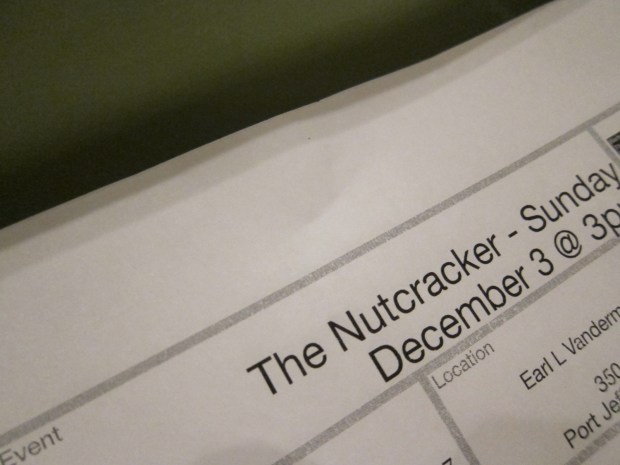
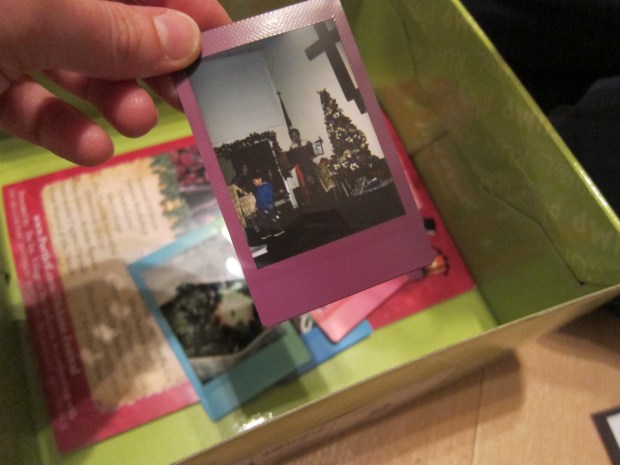
Our particular event was a local Dickens Christmas festival and a performance of the Nutcracker. Travis loved helping take the instant pics as we went along, meaning some were quite blurry, but that added its own charm. Here he is aiming the camera!

Dickens (3)

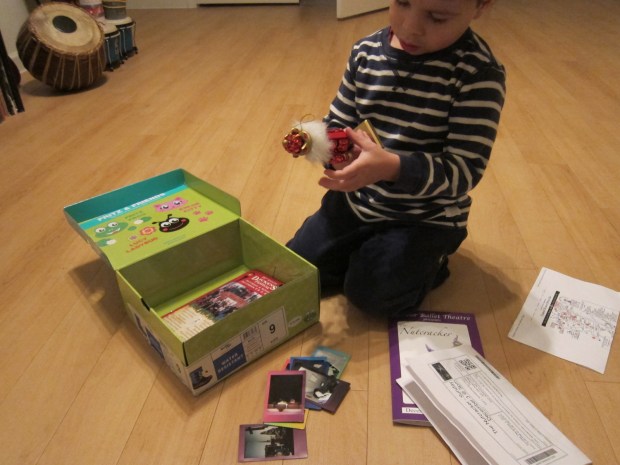
Once home, we sorted through our mementos.

Time Capsule (2)

In addition to pictures, you can add other items from the day, such as tickets to an event…

Time Capsule (4)

…programs, crafts that were made, or souvenirs that your purchased.

Time Capsule (3)

Now seal it all up in a shoebox. Travis loved helping tape down the edges.

TIme Capsule (5)

We put a big note on it to leave it alone until one year from now, and can’t wait to relive the memories!

Time Capsule (1)

What event or day is going into your time capsule? Please share in the comments!

Make Your Own Gummies

Gummies (12).JPG

Many thanks to Glee Gum for helping make this post happen!

Travis and I received a test sample of the company’s Make Your Own Gummies kit, and he adored the project from start to finish. I’m so pleased that I can offer readers of this blog the following exclusive promotion for holiday shopping!

Save 15% on EVERYTHING at GleeGum.com!
Coupon code: JOYFUL
(Offer only valid on web-store orders placed at GleeGum.com. Enter coupon code in the lower left of your shopping cart & hit “apply coupon.” One time only; one coupon code per order. Offer ends 1/31/18 at 11:59 pm ET.) 

Without any further ado, here’s what we thought of the Gummies kit. Although marketed to ages 8 and up, my 3 year old was able to help with each step and to understand the science behind how we made the candy. Here we are opening the box – he couldn’t wait to find out what was in each little packet!

Gummies (1)

The directions were a touch vague at times, but that is my only gripe. Even though I improvised once or twice, the recipe is very forgiving because our gummies still turned out just fine.

In addition to the sweet treat at the end, the kit also includes great factual and scientific information on why you’ve received dried seaweed and seaweed powder as the starters for your gummies. Using carrageenan from seaweed means the company does not have to use gelatin from animal bones. This is a win-win situation, for seaweed farmers in places like the Philippines and of course for the animals! I loved that this vegan project was one Travis and I could share together.

Gummies (13)

So on that note, how does it work? First, we covered our dried seaweed with water and let stand. The instructions were vague here, but I used warm water and let it stand for about 5 minutes, which turned out to be enough.

Meanwhile, select molds for your candy. We decided to use holiday-shaped cookie cutters, but I would use smaller molds next time. (The kit even suggests straws to make gummy worms!).

Gummies (2)

Next, we smoothed the molding starch down onto a plate; a fun step for a three year old wielding a spoon. The kit said to place your molds in the starch and lift out. This seemed odd to me, so we left our molds in – more on that later.

Gummies (3)

Meanwhile, back to the gummies: we mixed together powdered seaweed and water, and added the dried seaweed, which was now somewhat soft and smelled strongly of the ocean – Travis loved the sensory experience! Microwave for about 2 minutes until it foams up. Discard the dried seaweed. We added pink sugar and microwaved for an additional minute.

Gummies (5)

Now pour the gummy mixture over your molds and transfer to the fridge. A wonderful bonus of this activity is that kids barely need to wait – ten minutes is all it takes for the gummies to set!

Gummies (7)

We were rewarded ten minutes later with perfect gummy figures. As the finishing touch, we placed in a zip-top bag and shook with the provided sour mix. It was only 9 o’clock in the morning, but of course my little sous-chef got to taste right away.

Gummies (9)

In sum, this is a fantastic project to share with kids. You’ll get to hone kitchen skills, learn a little science about seaweed, and eat a fantastic snack at the end. If you purchase the kit, please do share your experience in the comments!

Gummies (10)

For more details on the product described in this post, including nutrition facts & ingredients, be sure to visit GleeGum.com You can also check out GleeGum’s Facebook (Glee Gum), Twitter (@gleeguy), Pinterest (Glee Gum),and Instagram (glee.gum) accounts.

Apple Experiment

Apple Experiment (7)

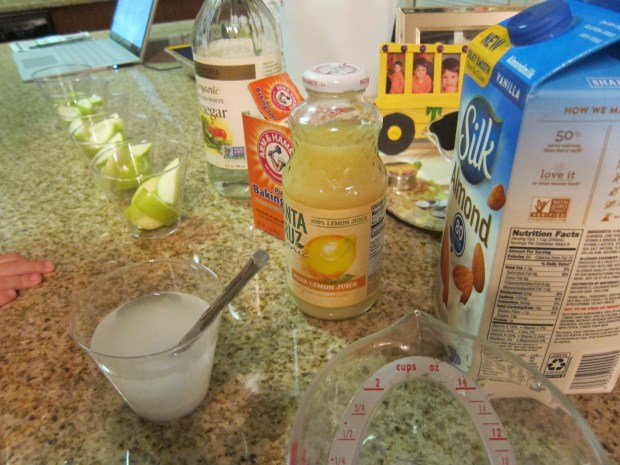
Wondering what to do with any leftover haul of apples from fall apple picking? This experiment introduces kids to several concepts, namely: oxidation (the apple turning brown); PH levels (a quick overview of acids and bases); and of course the fun of making a hypothesis and testing to see if it was correct!

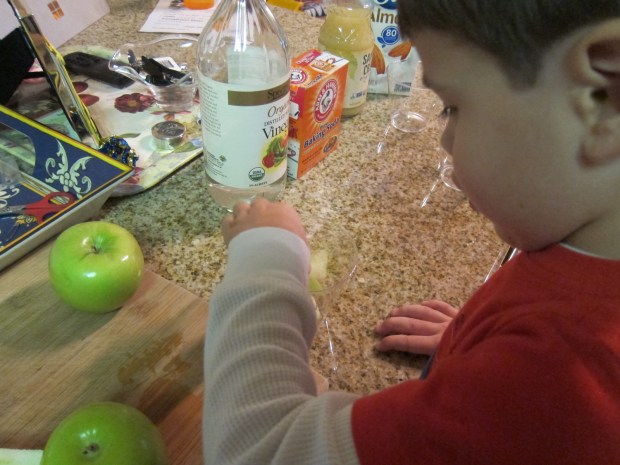
To start, we needed to cut two apples into wedges. Travis insisted on being my helper for this step. Use a butter knife or other child-safe knife.

We then divided the apple slices among 5 cups.

Apple Experiment (1)

Now it was time to add our 5 solutions. Fill one cup each with the following:

Vinegar

Lemon juice

Non-dairy milk

Water

Baking soda solution

Note: for the baking soda, stir about three spoonfuls of baking soda into water and dissolve first, then pour over the apples.

Apple Experiment (3)

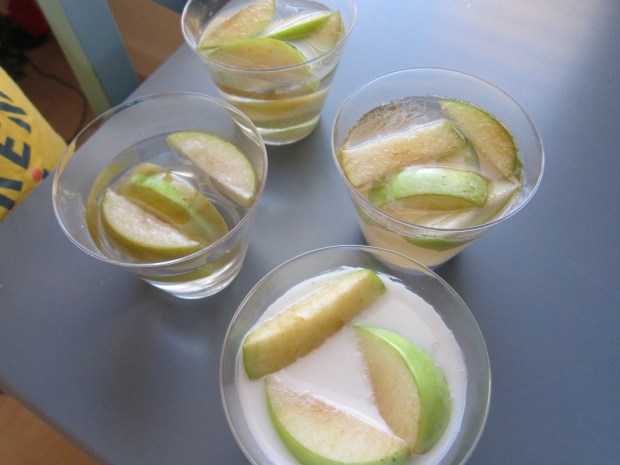
Travis instantly guessed that the vinegar would stop the apple from browning, and ran to share the news with his dad that we had to wait until morning! I loved that he understood a) that we were doing a scientific experiment and b) came up with his own hypothesis with no prompting.

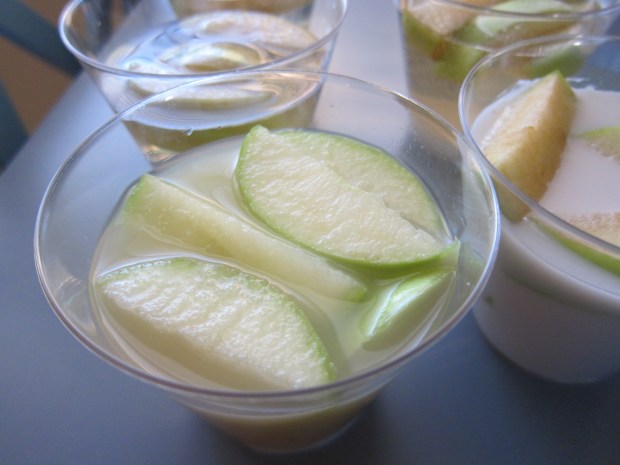
In the morning, it was time to check on our solutions. We discovered that 4 of them had turned quite brown.

Apple Experiment (6)

As grown-ups will have guessed, it was the lemon juice that did the trick. Give your child a quick lesson on how the lemon is acidic, and prevents the enzymes in the apple from reacting with the oxygen in the air.

Apple Experiment (8)

Overall, I found this to be an easy and seasonable way to introduce a few scientific concepts.

Apple Experiment (9)


Making Snot!

Snot (8)

It’s that time of year – cold and flu season that is. Travis was recently upset by his stuffed up nose, so we decided to make snot a little less mysterious and miserable, and a little more fun.

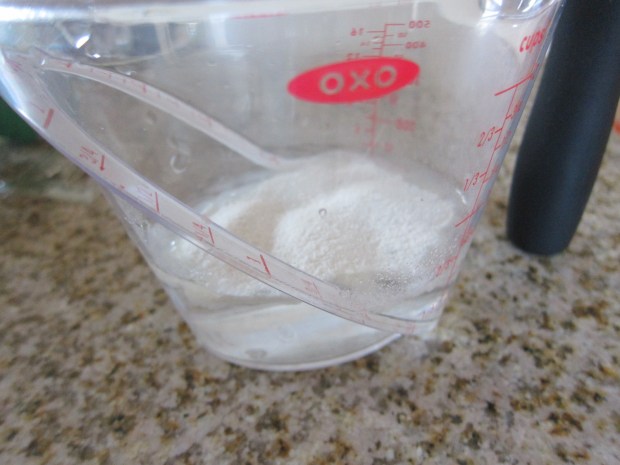
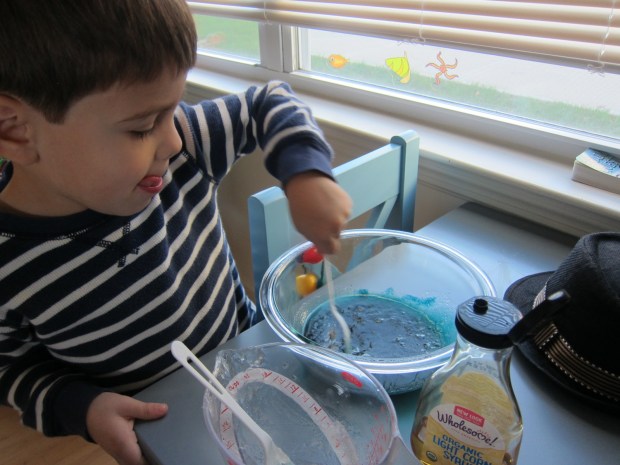
To whip up your homemade snot, sprinkle three packets of vegan gelatin substitute (such as Simply Delish) into 1/2 cup warm water.

Snot (1)

Meanwhile, add 1/4 cup light corn syrup to a second bowl.

Snot (2)

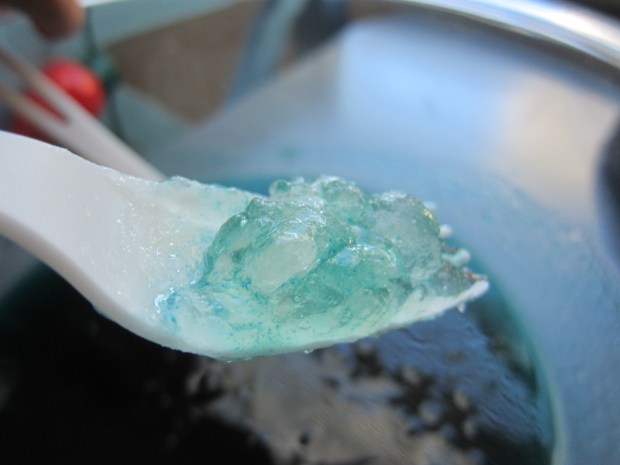
Stir the gelatin with a fork to dissolve the lumps, then add to the corn syrup mixture. This should result in a string, snotty mixture, but Travis liked the look of the lumpy gelatin, which he decided was “boogies.” Hey, whatever makes snot seem fun!

Snot (3)

For extra ick factor, add a few drops of green food coloring, then go wild spooning and scooping through your snotty mixture.

Snot (6)

Travis was delighted at first, and soon became a bit of a mad scientist. He wondered what would happen if we added more corn syrup…

Snot (7)

…And then wanted to add more food coloring. As a result, our “snot” was soon pretty much just goop, but we still had fun with it!

Snot (5)

If you like, you can explain to your child that snot is simply a mix of protein, sugar, and water – nothing to be too upset about, when their little noses do inevitably get stuffed up.

Want more flu season fun games? Check out my past posts on how germs spread and blowing your nose!

Craft Stick Dolls

Craft Stick Dolls (12)

Travis attends an art class where one of the free-play toys is a set of fabric swatches and wooden doll figures to dress up in different patterns. It’s a huge hit with kids in the class, so we recreated it at home!

Instead of fabric, I purchased a pad of decorative craft paper, in dozens of different patterns. For the dolls, we simply used wooden craft sticks!

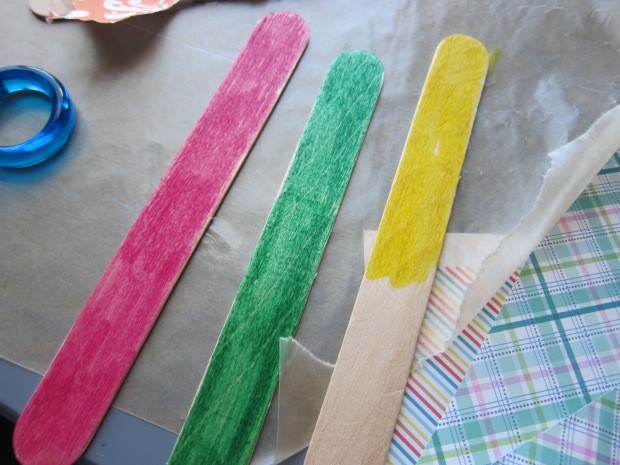
If your child would like to, they can color in the craft sticks first with marker. I colored a few, but Travis decided he wanted the rest left plain.

Craft Dolls (6)

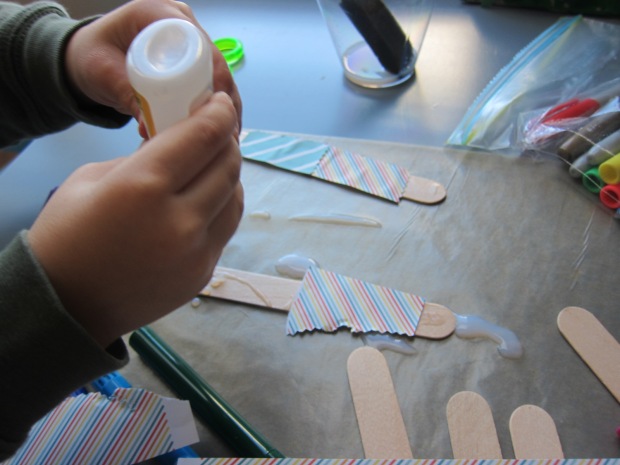
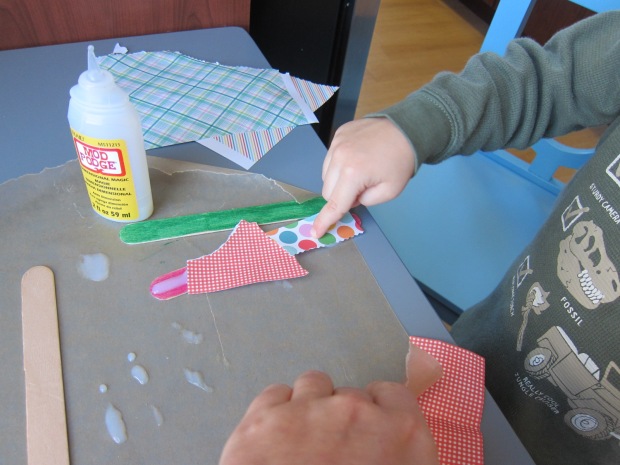
He was way more into applying a layer of mod podge to the craft sticks, proudly squeezing a line of glue down the middle of each.

Craft Dolls (1)

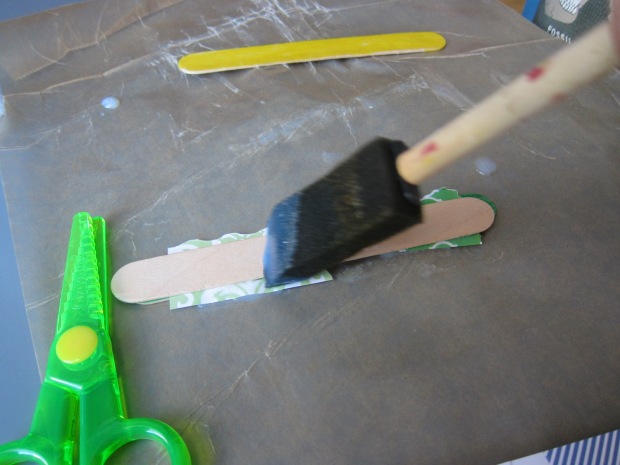
Another option is to brush on the mod podge with a foam brush, which we did a few times, too.

Craft Dolls (9)

Then it was time to dress our dolls! I told Travis he could pick a shirt and skirt for each figure, and he loved selecting “fabric” patterns from the craft paper.

Craft Dolls (4)

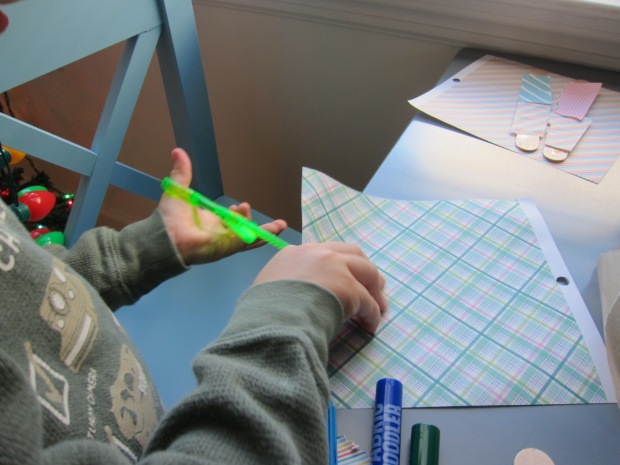
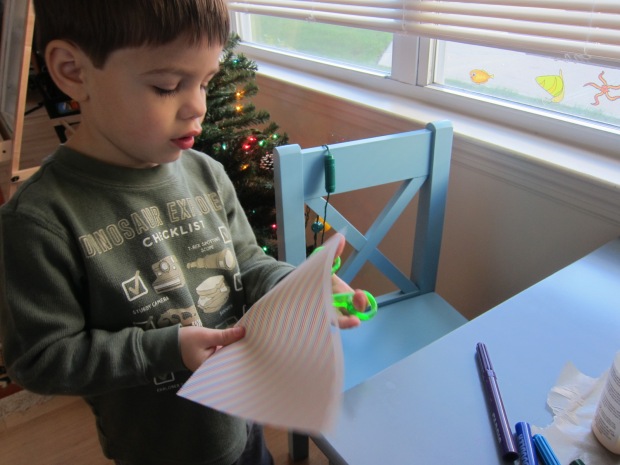
My plan was to cut rectangles out for him, but Travis insisted on cutting pieces himself.

Craft Dolls (2)

And proudly glued them on.

Craft Dolls (3)

As a result, we soon had very inventive fashion designs popping up. This one turned out to be the perfect shape for a skirt!

Craft Dolls (5)

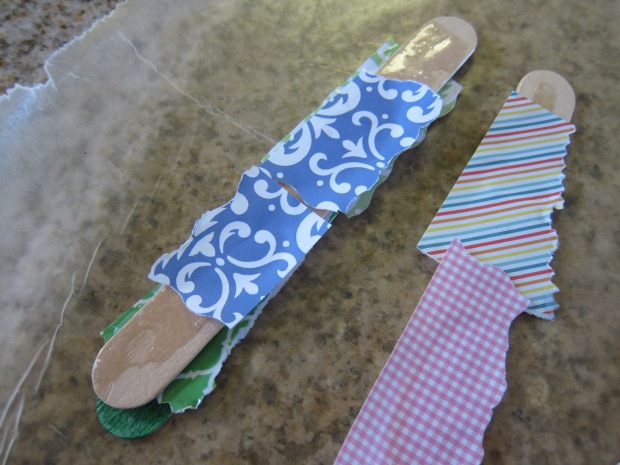
Then Travis layered two popsicle sticks together; I thought the resulting doll looked like she was wearing a kimono.

Craft Dolls (11)

And we even had one wearing pants instead, when Travis made an accidental snip down the middle.

Craft Dolls (10)

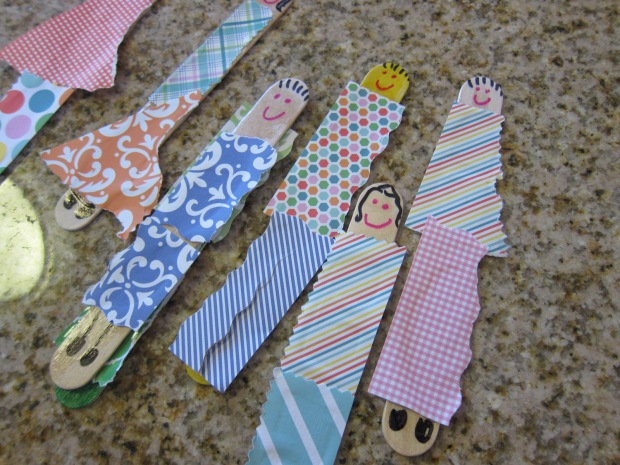
Once the glue dried, I markered in smiles, hair, and shoes on our dolls as the finishing touch.

Craft Stick Dolls (13)

Overall, I loved watching his creativity with this simple activity. Leftover craft paper soon turned into “leaves” around the apartment, so don’t let the inventiveness stop just because the dolls are done!

Craft Dolls (7)