Shofar for Yom Kippur

Shofar (7)

We don’t celebrate Yom Kippur, the holiest day in the Jewish calendar (which begins tonight and lasts until tomorrow), but there was a nice craft to commemorate the holiday in Travis’s Highlights magazine. It was a good chance to teach a little about another culture and have some crafting fun.

As some background, Travis and I learned how a shofar (traditionally made from a ram’s horn) is blown at services to signal the end of a 25-hour fasting period. The day is about repentance and atonement, and this cardstock version of the shofar can hold your child’s apologies and hopes for the year ahead.

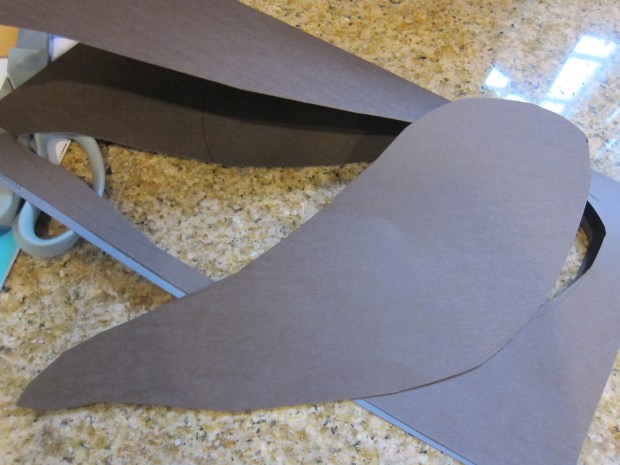
First, I traced a horn shape on brown cardstock twice and cut out.

Shofar (1)

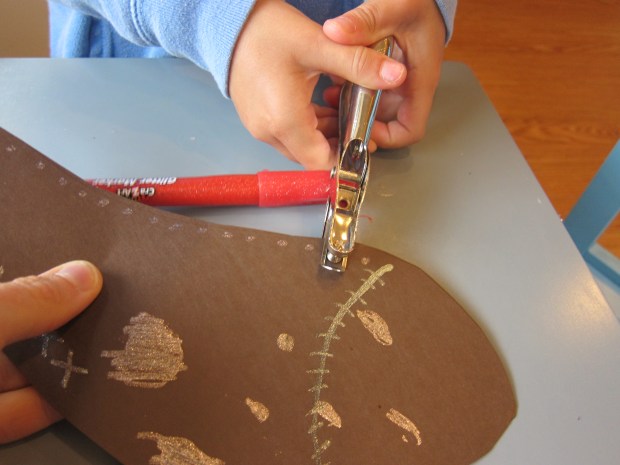
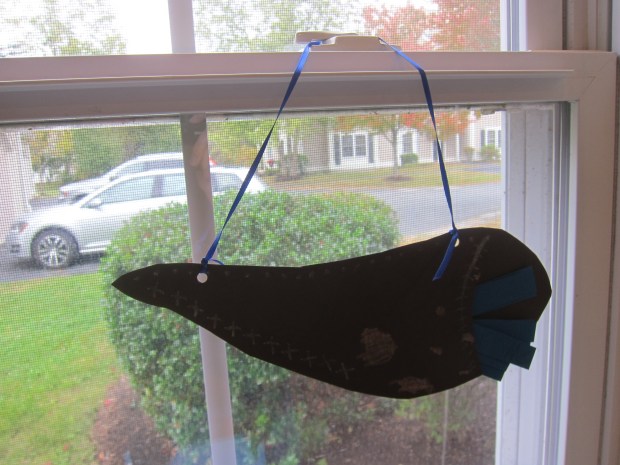
Because our cardstock was quite dark, Travis chose to decorate it with glitter pens.

Shofar (3)

Once decorated, punch two holes near the top.

Shofar (2)

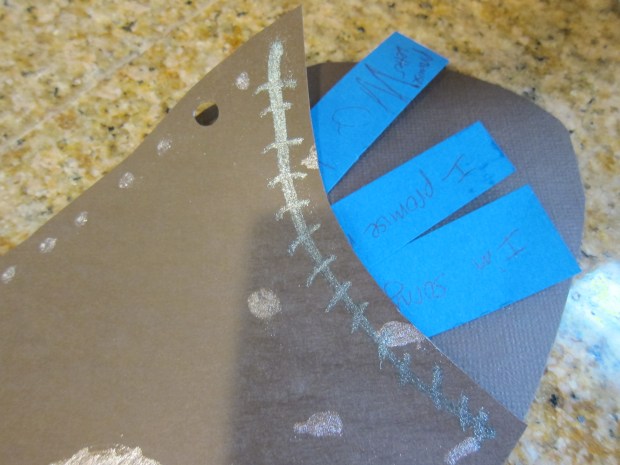
Glue one piece of cardstock to the other, making sure not to glue along the top edge so you are left with a pocket.

Shofar (5)

Into this pocket, we slipped promises and apologies. Travis had some sincere thoughts, like promising not to be naughty at home and promising to be better at wake up time (instead of getting up on the proverbial “wrong side of the bed”). It was a good chance to practice handwriting, too!

Shofar (4)

Slip a blue ribbon through the holes you punched in the top and hang the shofar to celebrate the holiday!

Shofar (6)

Felt Tangrams

Felt Tangrams (3)

Consider me a tangrams convert; these puzzles have turned out to be a fantastic way for Travis to entertain himself in those moments when I need him occupied. If you don’t want to purchase a set from the store, make a quick version from felt!

I cut out the various shapes that make up a tangram set using a different color for each shape. I free-handed the following: large triangles, small triangles, squares, trapezoids, and hexagons.

Felt Tangrams (1)

Now simply print out pictures of tangrams and set your child to work. If the picture printed out big enough, Travis could work right on the paper.

Felt Tangrams (2)

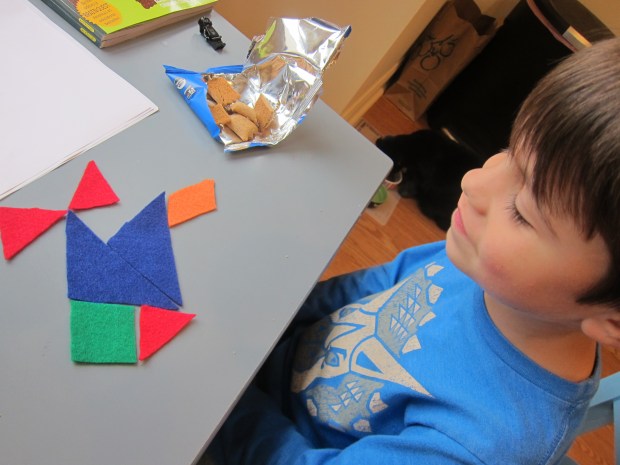
More of a challenge were small diagrams that he then had to design on a surface next to the paper.

Felt Tangrams (5)

Look mom, a helicopter!

Felt Tangrams (6)

This easy project is sure to keep hands and minds busy!


Missing Square Puzzle

Missing Square (5)

Here was a quick puzzle to do with Travis before school. Simply print out the template, color in the shapes, and cut out. Then I presented Travis with the two challenges.

Missing Square (1)

For the first, the goal is to fit the shapes into the large triangle (we made ours pink) in such a way that no shaded squares show through. This was easy, with a tiny bit of help once he had a triangle pushed against the far corner.

Missing Square (2)

We shuffled the pieces and now tried for challenge number two: to fit in the shapes so one pink square remains uncovered. This was trickier, but accomplished with some shifting around. “I did it!” Travis declared.

Missing Square (6)

Hmm, but how is it possible? It turns out the answer lies in the fact that the colored triangle isn’t actually a triangle; it curves slightly, making it a quadrilateral (too much for Travis to comprehend). What I explained to him instead is that the extra area left over in this slight curve is exactly equal to 1 shaded square.

Missing Square (4)

It certainly looked like a little before-school magic!

Missing Square (3)


Upcycled Picture Frame

Picture Frame Crate (7)

This quick craft was a neat way to recycle one of Travis’s Kiwi Crates (the perfect way to showcase his Puzzle Pictures from the latest box), and is a great way to recycle any of the numerous cardboard boxes that come to your doorstep in this Amazon Prime era!

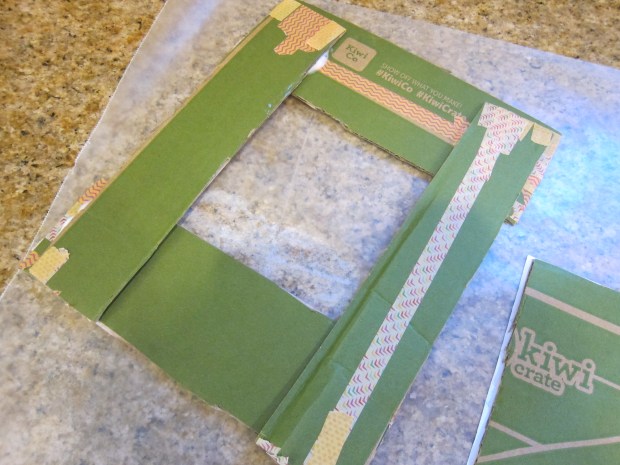
Cut out the bottom of the cardboard crate. Place any art your child wants to frame in the center and trace around it.

Picture Frame Crate (1)

Cut out the resulting cardboard square and tape on the artwork.

Picture Frame Crate (2)

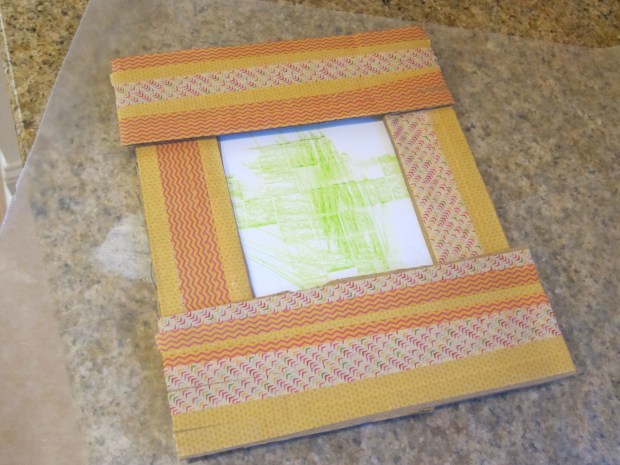
Cut additional pieces of cardboard to be the sides, top, and bottom of the frame. Travis chose to decorate his with strips of colorful tape, but markers would work fine, too!

Picture Frame Crate (4)

It was great motor skills practice to teach him to stretch a piece of washi tape the length of the cardboard piece before tearing off and folding any excess around the back.

Picture Frame Crate (3)

Glue the 4 pieces of the frame together and glue the artwork in the center.

Picture Frame Crate (5)

You can glue a piece of string or yarn to the top of the frame and it’s now ready to display proudly.

Picture Frame Crate (6)

All Kinds of Balls

All Kinds of Balls (9).JPG

Travis and I are about to launch into his Game Day-themed kit from Raddish Kids, featuring a trio of recipes perfect for this time of year. Whether your family loves Sunday football, World Series baseball, or simply watching a local game of youth soccer in the park, there’s no better season for sports and eats!

It seemed fitting, then, to start off with this fun lesson plan on all kinds of balls, and namely: why some bounce and some don’t.

First, we needed to brainstorm a list of balls. I gave Travis a definition of the term: coming up with ideas in a safe space where all ideas are welcome and together we made a quick list. I guided him towards actual sports after his first few ideas were more descriptive (squishy balls, hard balls).

All Kinds of Balls (1)

We went through and talked about which was the biggest (basketball!) smallest (ping pong!) and most colorful (tennis!). Now it was time to watch how some of these were made.

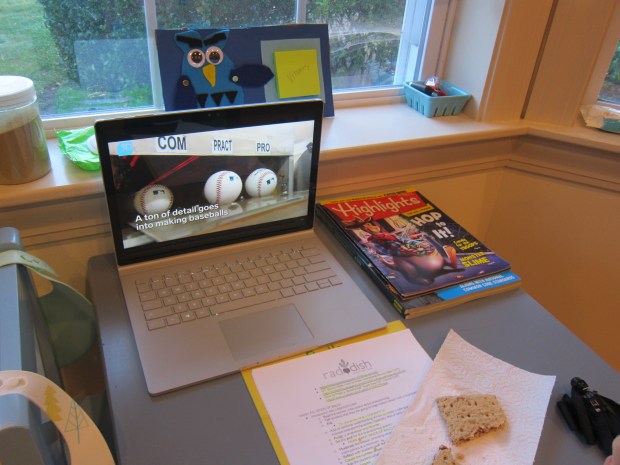
Raddish included links for everything from a soccer ball to a baseball. We added in an old favorite video: check out the bowling ball factory nine minutes in (come for the bowling ball, stay for the jaw-dropping domino demonstration). Travis adores “how-it’s-made” videos like this and was a rapt audience.

All Kinds of Balls (2)

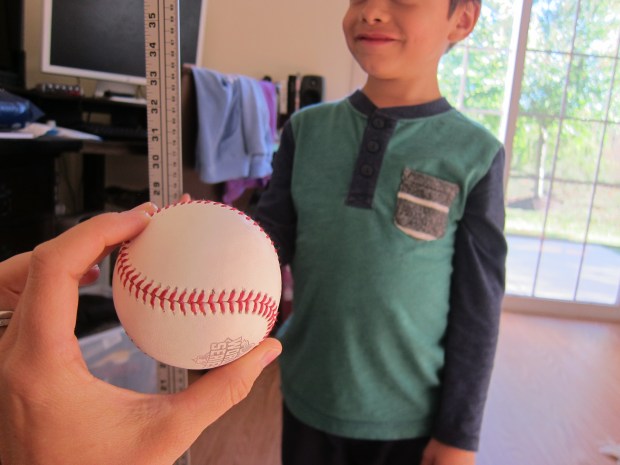
Now it was time to experiment with balls! Relying on what we had around the house, we gathered them into a pile and added a long yardstick.

All Kinds of Balls (3)

Bounce each ball and measure which goes the highest. Our clear winner was a squash ball (36 inches!) while others were duds like the soccer ball and baseball (about 9 or 10 inches).

All Kinds of Balls (4)

This prompted us to talk about why some balls were bouncy, and others not meant to be. (You can guide kids to think about how soccer balls are kicked, baseballs hit, etc., rather than meant to bounce).

For older kids, get into the specifics of kinetic energy here. The lesson was a bit over Travis’s head, but he did like watching a ball bounce in slow motion. We also tried experimenting with which balls bounced best in a certain direction but since all our balls were round (we couldn’t find our football) they all easily went into a target.

All Kinds of Balls (5)

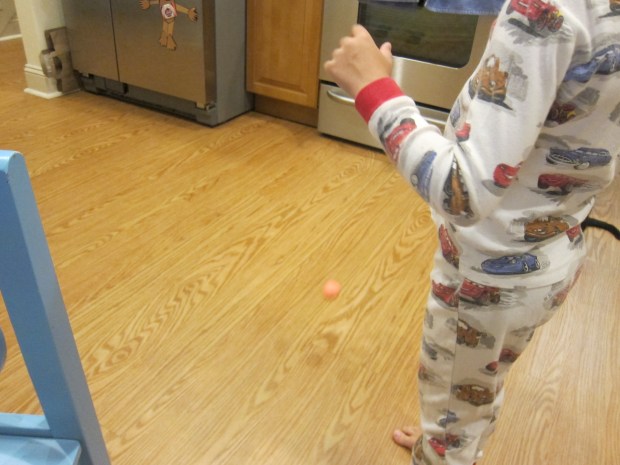
Finally, we bounced them on a wood floor versus carpet, to observe any differences.

All Kinds of Balls (6)

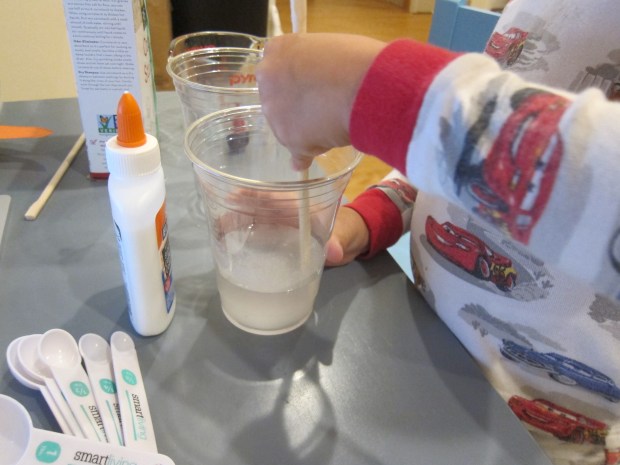
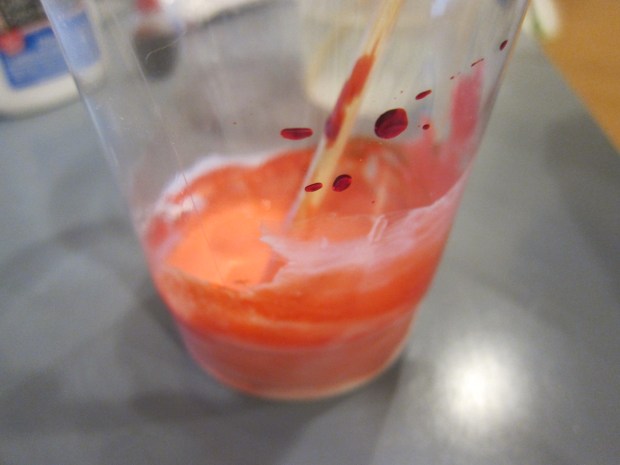
Now for the best part: we made our own ball! Pour 1/2 cup water and 1 tablespoon borax into a clear cup and stir until the borax dissolves.

All Kinds of Balls (7)

In a second cup, combine 1 tablespoon cornstarch, 2 tablespoons glue, and a few drops of food coloring. Travis chose a red ball.

All Kinds of Balls (8)

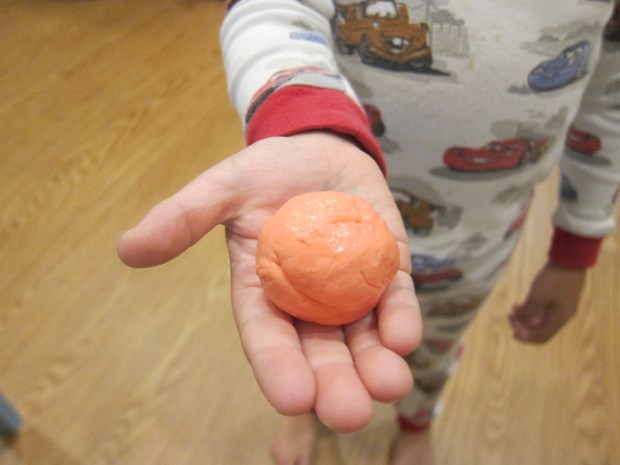
Add the glue mixture to the borax mixture. Your ball will start to firm up immediately. I worked the ball with my hands, dipping back into the borax as needed, until we had a nice round ball. Note: it is safe to touch Borax, but do remind your kids no matter their age that it is inedible.

Travis gave our ball a bounce – it worked!

All Kinds of Balls (10)

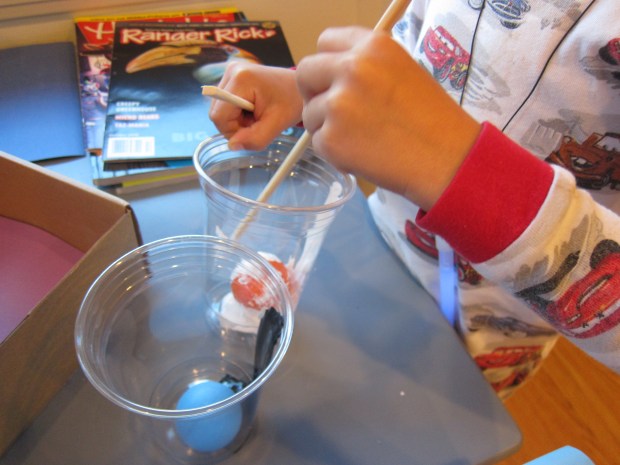
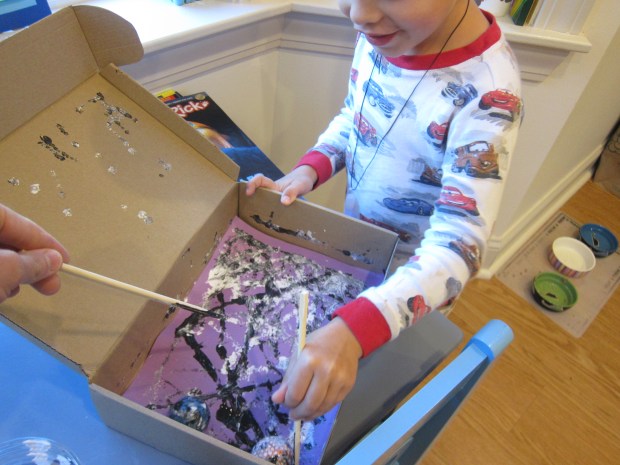
For some final fun, we painted with balls. Roll small balls like golf or ping pong ones in cups of paint.

All Kinds of Balls (11)

Place on a sheet of construction paper in a box. You can close the box and shake it, but Travis preferred to move the ball around with a chopstick.

All Kinds of Balls (16)

We finished with a few fun ball reads including: Round Like a Ball by Lisa Campbell Ernst and Goodnight Football by Michael Dahl.

All Kinds of Balls alt

Tangram Toast

Tangram Toast (3)

Travis had a tricky time of it with tangram puzzles recently, so I made things a little more accessible in the best way possible: edible tangrams!

Toast slices of bread first until nice and crispy, making as many as you’d like for the project. Cut into shapes as shown:

Tangram Toast (2)

In a bowl, stir together 1/2 cup softened Earth Balance butter, 1 teaspoon cinnamon, 1/2 teaspoon vanilla extract, and 4 tablespoons sugar. Travis loved mixing all this up!

Tangram Toast (1)

Through trial-and-error, we found it easiest to make the tangrams while the toast was plain, otherwise our fingers got messy (as we learned while designing a slightly-lopsided house).

Tangram Toast (6)

So instead, we spread the cinnamon butter on after, but first Travis helped design a rocket…

Tangram Toast (4)

…and what could this jumble be?

Tangram Toast (7)

Aha a bird!

Tangram Toast (8)

After the puzzling, he was so proud I gave him a real butter knife to spread our cinnamon-sugar mixture over his own toast pieces.

Tangram Toast (11)

He proudly served up triangles, squares, and trapezoids. This was a great way to get kids puzzling while thinking it’s just a messy fun snack!

Tangram Toast (9)

Magic Chocolate Bar

Magic Chocolate (5)

What’s better than one chocolate bar? One you get to eat twice!

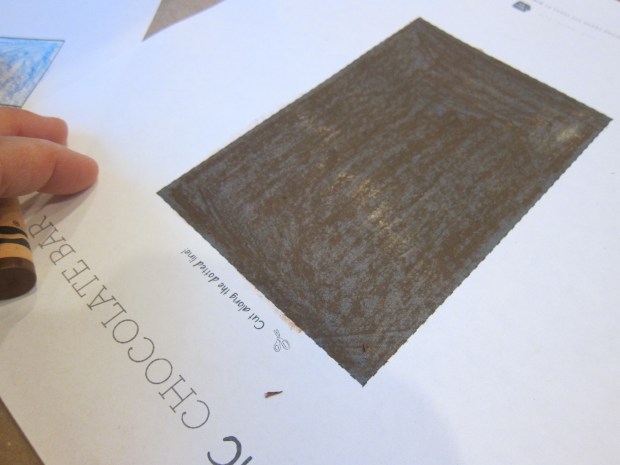
Okay, perhaps not really, but this neat puzzle will have your child thinking hard about shapes and how they fit together. We printed out a chocolate bar template, and cut into 5 pieces along the dotted lines.

Magic Chocolate (1)

I told Travis he was going to “eat” the smallest piece, which gets removed from the rectangle. Now the challenge is to fit the remaining 4 pieces back into a whole rectangle. It was a matter of turning the pieces…

Magic Chocolate (3)

…puzzling…

Magic Chocolate (4)

… and tada!

Magic Chocolate (6)

As a fun reward, we cut up a real chocolate bar in the same way for a little after-school treat!

Magic Chocolate (2)

Make Your Own Jigsaw Puzzle

Make Your Own Jigsaw (4).JPG

Travis had so much fun with the puzzles in his latest Kiwi Crate that we decided to make a few of our own!

Download and print out any puzzle template from online. We found ones we liked showing a teddy bear and a butterfly (and if anyone can find the Steve the Kiwi template from kiwico.com/puzzles, let us know!).

Make Your Own Jigsaw (1)

Coloring in was half the fun. I warned Travis that if he made his butterfly all orange, it was going to be very hard to put back together.

Make Your Own Jigsaw (2)

Soon he branched out to other colors, and added blue so that the butterfly was flying over the ocean. Glue your template to an old cereal box and let dry completely.

Make Your Own Jigsaw (3)

Now it was time to cut up the pieces! Word of caution: This task is quite time-consuming for a 16-piece puzzle. For that reason, and because I worried the 16 pieces would be quite a challenge for Travis, I cut his butterfly into fewer, larger pieces.

Make Your Own Jigsaw (5)

Now puzzle! As mentioned, the butterfly came together quickly.

Make Your Own Jigsaw (6)

Between uneven pieces and tricky outlines, the teddy bear nearly stumped us!

Make Your Own Jigsaw (7)

What would your child make a puzzle of? Please share in the comments!

Make Your Own Jigsaw (8)

Playing with Puzzles Kiwi Crate

Kiwi Puzzles (27).JPG

Kids will love the puzzles and brain games in this crate from Kiwi Co, which features projects ranging from engineering to art and back again. And parents will go wild when they realize the game you build is based on classic Tetris!

Kiwi Puzzles alt

Travis was perplexed as we worked through the first project, wondering what exactly we were making, and I’ll be honest, so was I. In retrospect, I would tell him first that the goal was to engineer a dispenser that let out one playing tile at a time. That way the process of engineering would have been more inherent to the project, instead of just following the steps. But with that preamble aside…

…the first project was to make a Shape-Stacking Puzzle. To make the game board, fold the plastic stand along the line in the middle so it stands upright.
Kiwi Puzzles (1)

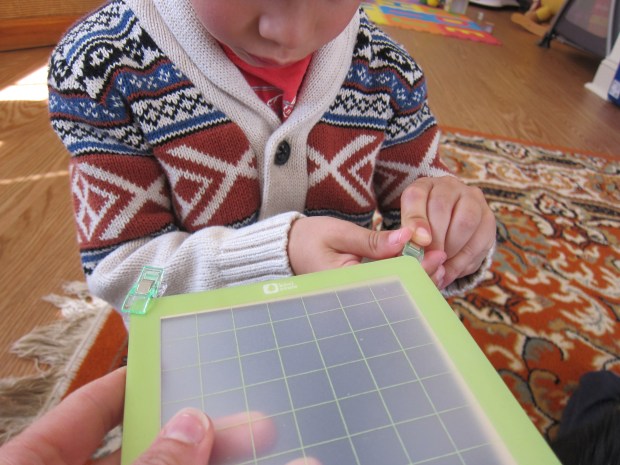
Attach the provided grid paper to the provided wooden frame using a clip in each corner. (Travis liked these clips so much he was bummed there weren’t extras!). Set the frame on the stand and set aside.

Kiwi Puzzles (2)

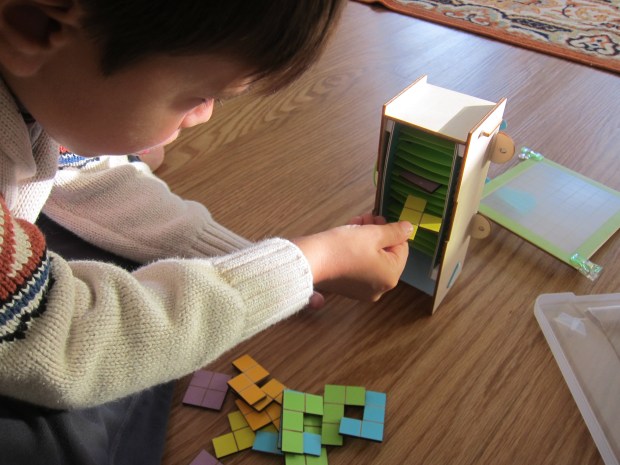
Preparing the shape dispenser was much more complicated and a touch delicate (our foam tore in a few places, so it didn’t always work correctly). Slot together wooden pieces as side panels and secure with elastics.

Kiwi Puzzles (3)

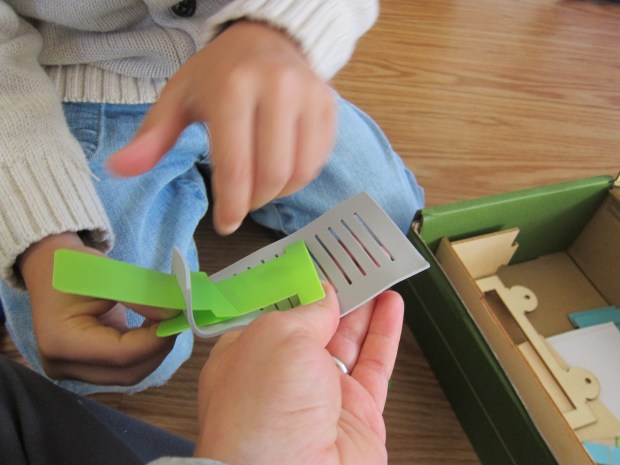
Slip the green “doors” into the slots of a foam piece. This goes into the wooden frame and is secured in place with sticky foam dots.
Kiwi Puzzles (4)

Now add one playing tile to each green door.
Kiwi Puzzles (7)

As you pull out the bottom green door (and this is key) the tile will fall (thanks to gravity). It won’t work, obviously, if you pull a door near the top, because then the playing piece would only land on the green door below.

Kiwi Puzzles (8)

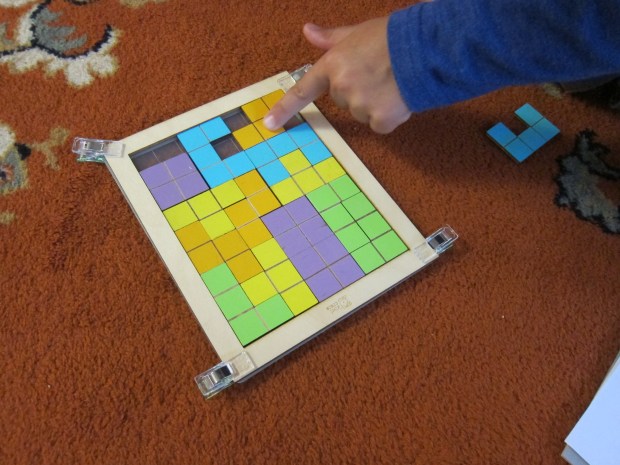
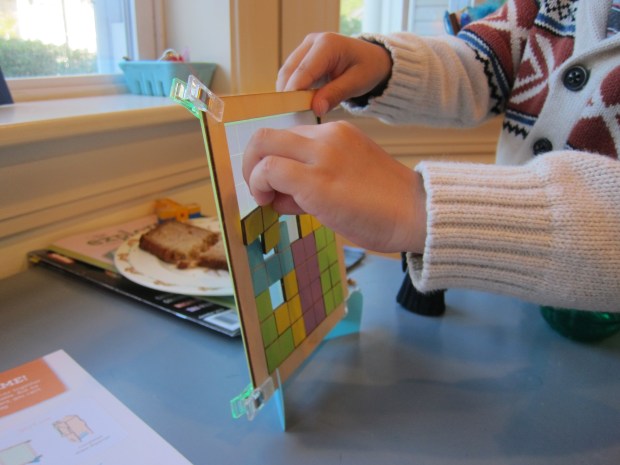
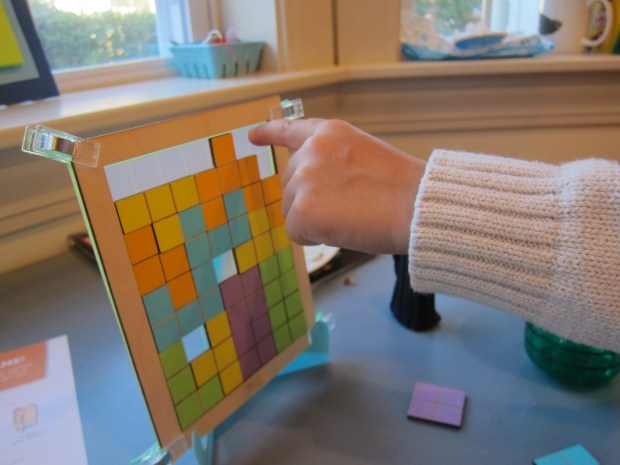
Now it was time to Play a Puzzle Game! I loved watched Travis assemble the resulting Tetris board on his game grid.
Kiwi Puzzles (12)

I remember my brain doing the same quick thinking as a child, deciphering which direction a piece could rotate so it fit just right.

Kiwi Puzzles (11)

The goal is to have the least number of blank squares possible. Travis counted up his squares each time, and his record was 4!
Kiwi Puzzles (13)

With all that engineering done, it was time for the A part STEAM: making Puzzle Pictures. Arrange some of the playing tiles on the provided foam mat. You can make random designs or follow the suggested pictures. Travis chose a robot!

Kiwi Puzzles (28)

Cover with paper and rub with a crayon to reveal your image.

Kiwi Puzzles (29)

After using the tiles, we tried rubbing over other items, like yarn and coins, and testing which came out best.

Kiwi Puzzles (30)

You can also challenge your child to copy the booklet’s designs for a car, dragon, and even Steve the Kiwi, but these were tough for Travis.

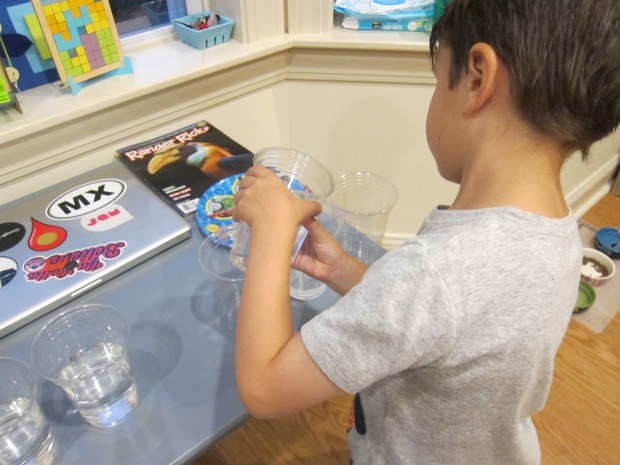
We weren’t done yet because Explore magazine had lots of brain games to test his gray matter. First up: Cup Confusion. Fill 3 clear plastic cups with water and place them next to 3 empty cups. Can you make a pattern of full-empty-full-empty-full-empty by touching only one cup?
Kiwi Puzzles (14)

I was so proud of Travis that he immediately knew to pour water, rather than shuffling cups around.

Kiwi Puzzles (16)

And clearly he was proud, too!

Kiwi Puzzles (17)

Next we did a Connect-the-Shapes challenge in which lines can’t cross…

Kiwi Puzzles (24)

…followed by Fish Sticks. Rearrange these 8 toothpicks so the fish…

Kiwi Puzzles (21)

…changes direction. The catch is that you can only touch 3 toothpicks.

Kiwi Puzzles (22)

He needed a bit of a guiding hand, but our fish turned.

Kiwi Puzzles (23)

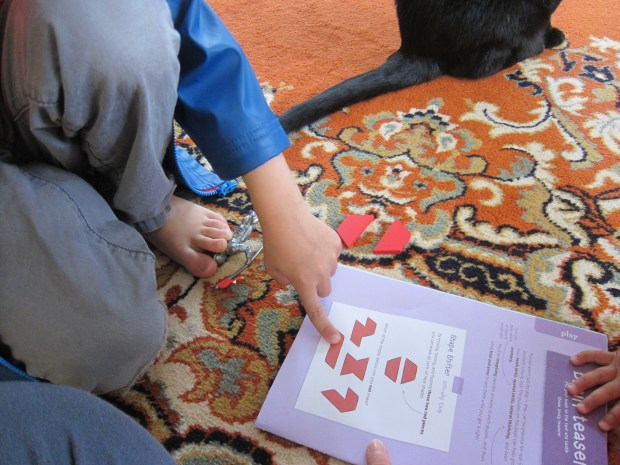
Finally, play Shape Shifter: see if your child can tell which of these pictures isn’t made with two trapezoids.
Kiwi Puzzles (25)

Travis guessed, and then we tested it out!

Kiwi Puzzles (26)

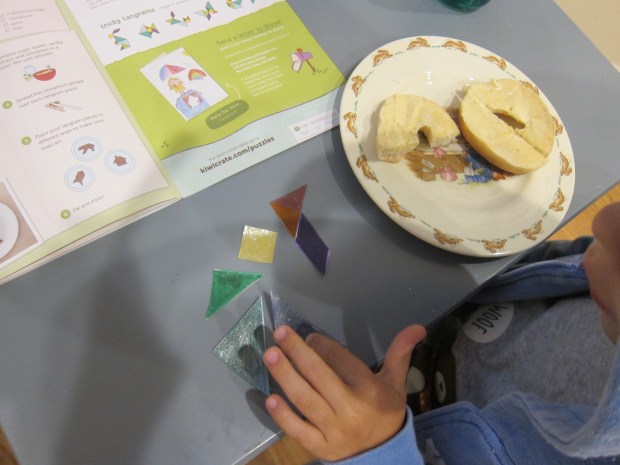
You can also print out a set of tangrams and try to fill in the outlines drawn in the magazine.

Kiwi Puzzles (20)

This task was advanced for my kindergartner, but he could look at the answer key and then build the puzzle with our set.
Kiwi puzzles (32)

A camel!

Kiwi puzzles (33)

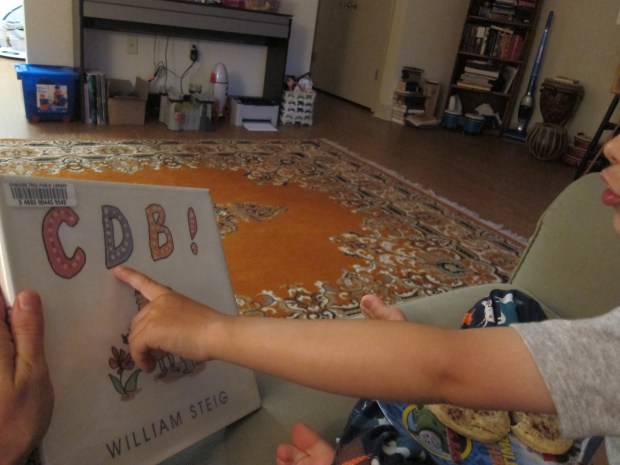
Explore magazine didn’t have any recommended reading this month, but I picked up two fantastic puzzlers from the library. CDB by William Steig had him laughing out loud as he read the letters on each page to decipher a full sentence.
Kiwi Puzzles (19)

We finished up with The Eleventh Hour, a puzzle mystery book I read in my own childhood!

Kiwi Puzzles (18)


Unpoppable Bubbles

Unpobbable Bubbles (4)

There’s some serious “wow” factor to this little bubble experiment, the perfect way to turn a ho-hum morning into something special!

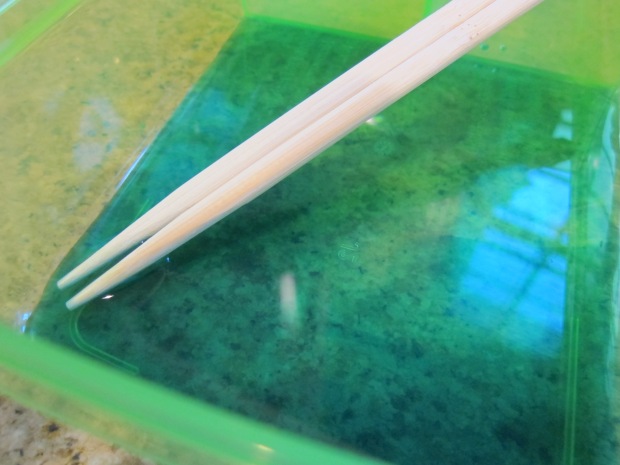
To make the bubble solution, pour 1/4 cup water into a container. Add a little blue food coloring just so it’s easier to see.

Unpobbable Bubbles (1)

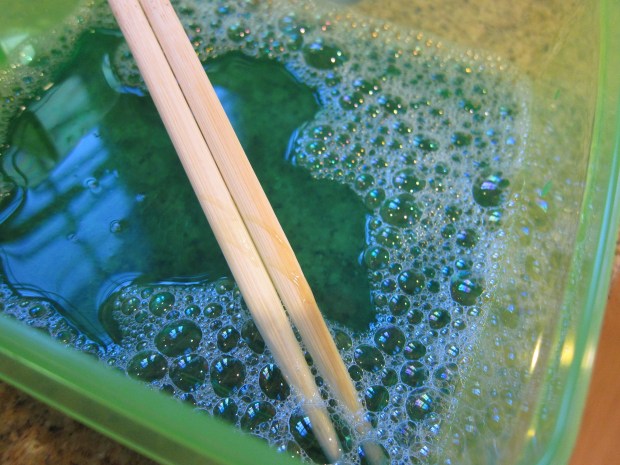
Stir in 1 tablespoon dish soap and 2 tablespoons corn syrup.

Unpobbable Bubbles (2)

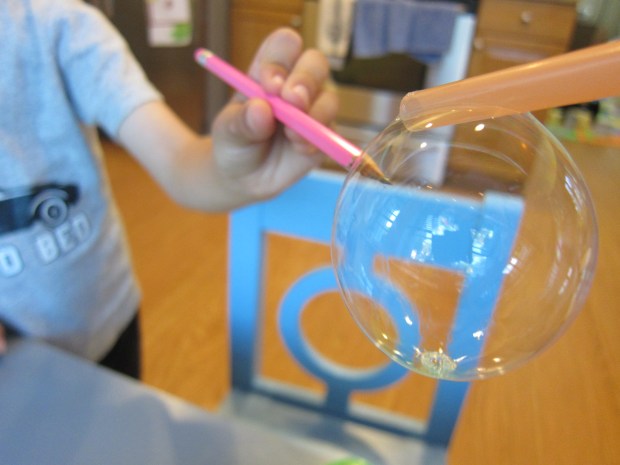
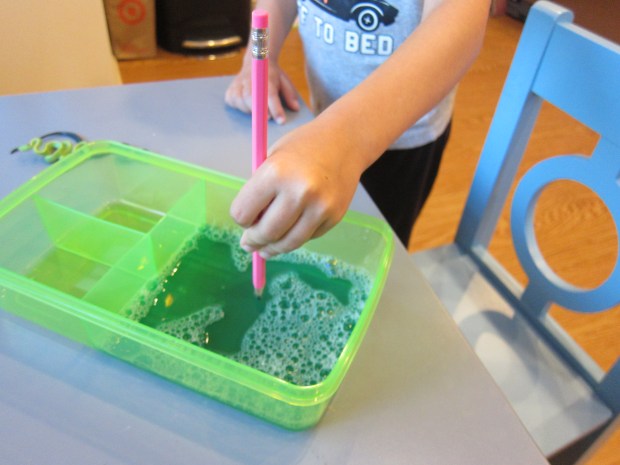
A straw will be your bubble blower, but the secret now is that you also need a pencil.Travis dipped the pencil tip in the solution, as I dipped in the straw and blew a bubble.

Unpobbable Bubbles (3)

He poked the saturated pencil tip into the bubble… and the bubble doesn’t break!

If you want a quick run-down of what’s happening here, basically the “skin” of the bubble merges with the soapy surface of the pencil tip, so that no air gets in and makes the bubble pop. If you try it with a dry pencil, you’ll get a pop right away! We had fun seeing how far in we could poke the pencil.

Unpobbable Bubbles (5)

And then had lots of extra bubble solution to blow out on the back patio!