Counting Critters

Counting Critters (3)

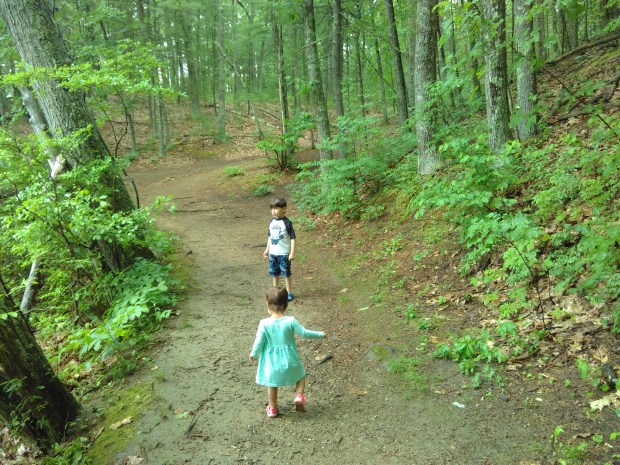
Here’s a quick science and graphing activity to go with your next nature walk! It put a fresh spin on a route we’ve taken quite frequently in the past few weeks.

Counting Critters (7)

The idea here wasn’t to count the number of each animal we saw, but rather to notice groups and then see which group had the most. I was proud of Travis latching onto this idea, meaning it didn’t matter that we’d seen two butterflies; it mattered that when we saw them they were alone, so in a group of 1.

Counting Critters (4)

What else could we spot? We saw lots of chipmunks, but only ever one at a time.

Counting Critters (6)

We saw dogs out for walks. And spiders, which were always alone.

Counting Critters (5)

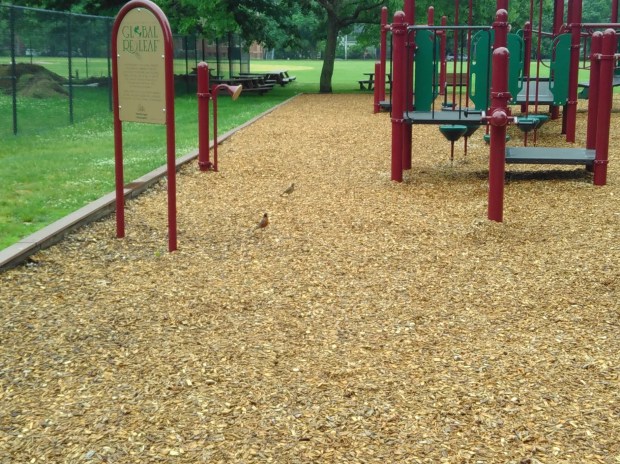
Travis enjoyed the count so much that we continued even once at the playground. Here, we saw lots of birds, and the most we saw in a group was 3.

Counting Critters (2)

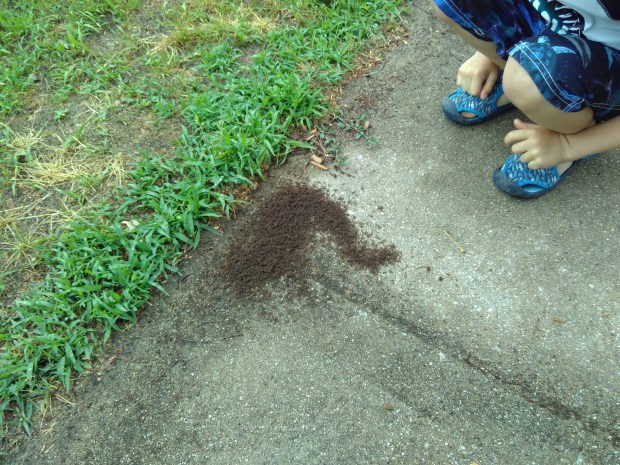
But the winning species? Ants. Travis spotted five together in the woods. We actually then spotted an enormous cloud of ants so big I didn’t bother counting it towards our game; the numbers wouldn’t have fit on our graph paper!

Counting Critters (1)

Once home, I offered to label Travis’s graph, but he wanted to draw the pictures of the animals himself! Then we graphed how many were in each group and could easily see what had the most and what had the least.

Counting Critters (8)

I encouraged him to think about what this said about each species’ behavior. He correctly surmised that ants lived in social groups. Chipmunks and spiders probably lived alone. In sum, this simple activity turned a regular walk into not just a math lesson but a fascinating thought experiment on animal behavior.

Counting Critters (9)

Water Volcano in a Bottle

Water Volcano (3)

This science experiment is a splashy hit, as long as it works correctly! You’ll teach kids something about air pressure, plus create a fun way to get wet on a hot day.

First, we needed to blow up a balloon inside a bottle…but there’s a catch. Insert the balloon into an empty bottle, folding the edge of the balloon over the bottle’s rim. Huff and puff with all your might and it won’t blow up, because there’s nowhere for the air pressure to go!

Water Volcano (1)

Next, we cut a small slit in the bottom of the bottle. Now, when I huffed into the balloon, it could inflate! It’s fun to watch this inside the bottle, almost like a lung filling up.

Water Volcano (2)

The next part is a bit tricky. Keep your finger over the slit in the bottle, and ideally your balloon will stay inflated because now the pressure can’t escape. With your finger still cover the hole, fill the balloon with water.

When you release your finger, the water explodes!

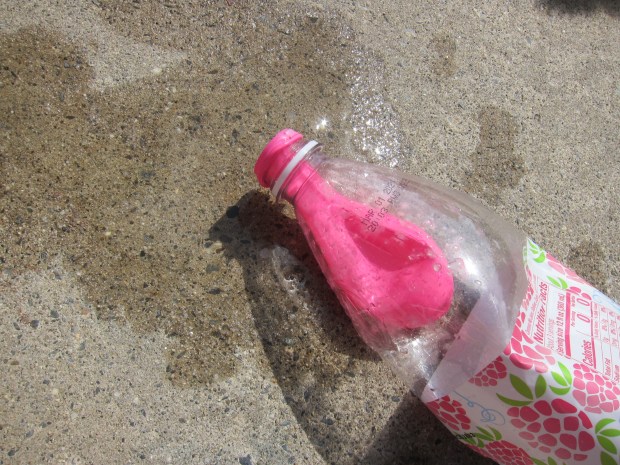
It was tricky to do this solo, though, and eventually we ended up filling the balloon with water before inflating it. Then, we got a mini squirt of water when I released my finger from the slit. You can see our rather unimpressive puddle here:

Are you able to get a huge water volcano? Please share in the comments!

Monster and Creature Straw Paintings

Monster Straw Art (10)

Travis recently learned to make blobs of watercolor paints turn into art with nothing more than a straw, thanks to Kiwi Crate! He loved the activity so much that today we did a repeat, this time creating a set of silly monsters.

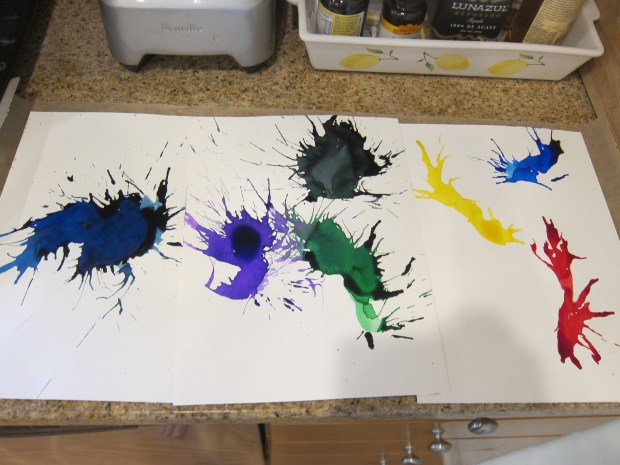
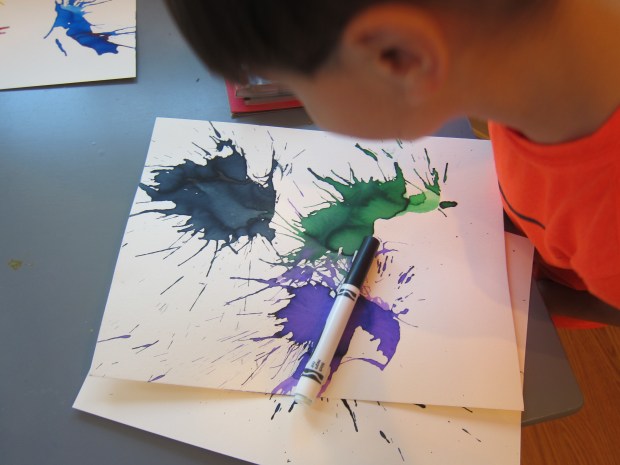
Travis chose three colors of liquid watercolor for the first piece of paper, and we dripped on a nice blob of each. Then he proudly blew through a straw.

Monster Straw Art (1)

He loves that he can do this now, scattering the paint with no fear of inhaling it, which wasn’t the case at first.

Monster Straw Art (4)

We soon had crazy wobbly waving shapes.

Monster Straw Art (2)

We examined them carefully to see what monsters we could identify! Travis loved pointing out antennae, six-legged fiends, holes for their eyes and more.

Monster Straw Art (3)

Of course we needed to repeat with a new set of colors. “I want to make lots!” Travis declared.

Monster Straw Art (7)

For the final piece of paper, he combined two colors (blue and black) in one big blob in the center and huffed out a giant monster with his straw.

Monster Straw Art (8)

Let the paint dry completely.

Monster Straw Art (9)

Once dry, we could add details. I suggested gluing down wiggle eyes, but Travis preferred to add embellishments with a marker, including giant cyclops eyes.

Monster Straw Art (11)

And fire for this one, that reminded us of a dragon!

Monster Straw Art (12)

All in all, this was frightfully good fun.

Monster Straw Art (13)

Moroccan Spices

Moroccan Spices (1)

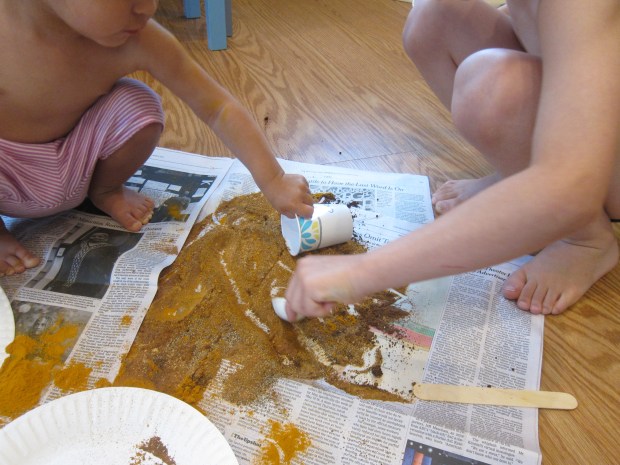
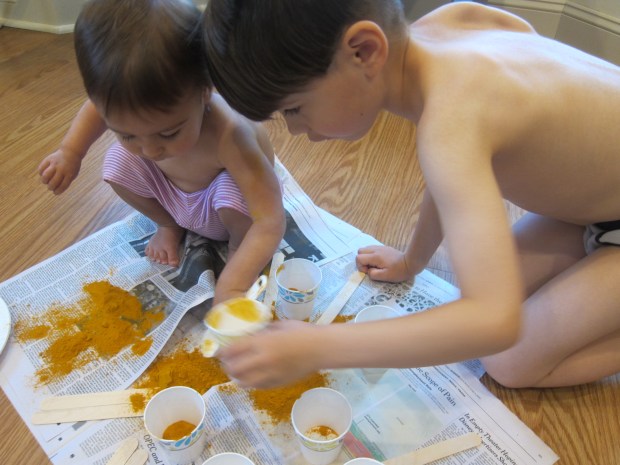
This lesson was a culinary extension to the recipes in the Morocco kit from Raddish Kids. Travis got to pretend to be a spice seller at his very own bazaar! For a kindergartner, the lesson was a mix between learning and sensory play (you’ll notice my toddler was eager to leap in, too). Older kids can take the lesson more seriously, researching spice blends from around the world, grinding their own spices, and using exact proportions to create their own blend.

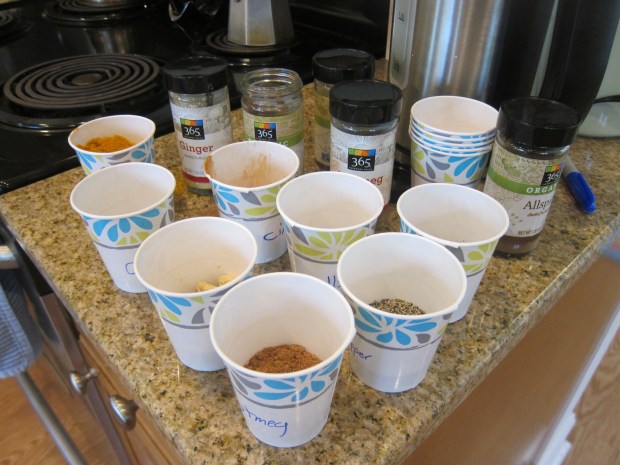
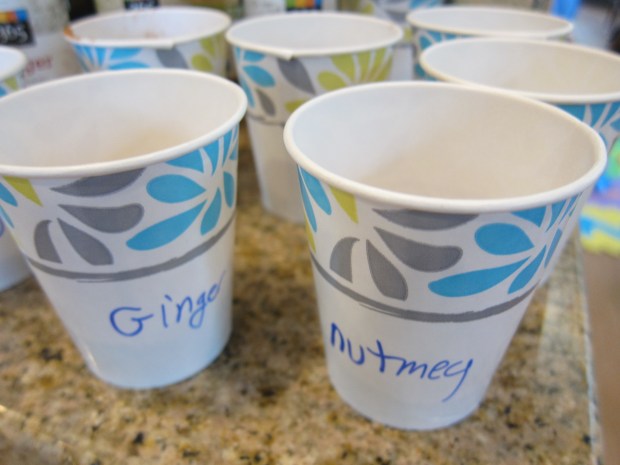
First up was being a scent detective! I poured eight common Moroccan spices into small cups and gave them to Travis one at a time. I labeled each cup just so I wouldn’t forget what was what!

Moroccan Spices (2)

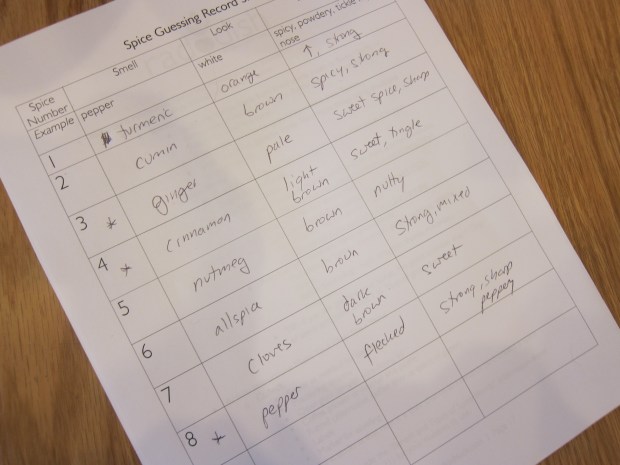
He loved smelling each, summoning up the vocabulary to describe it, and adding tasting notes and color to the provided chart.

Moroccan Spices (8)

He knew three of them without needing to be told (cinnamon, ginger, and black pepper), and I challenged him to think of why he knew these three. He correctly realized it’s because we cook with them often, whereas the other spices were less familiar!


Moroccan Spices (3)

The lesson plan then included facts about spices, where they come from, the health benefits of spices, and information on common blends like Italian seasoning or ras el hanout.

Moroccan Spices (7)

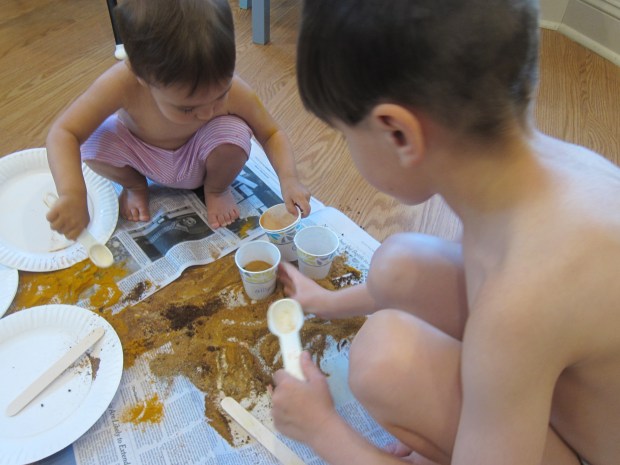
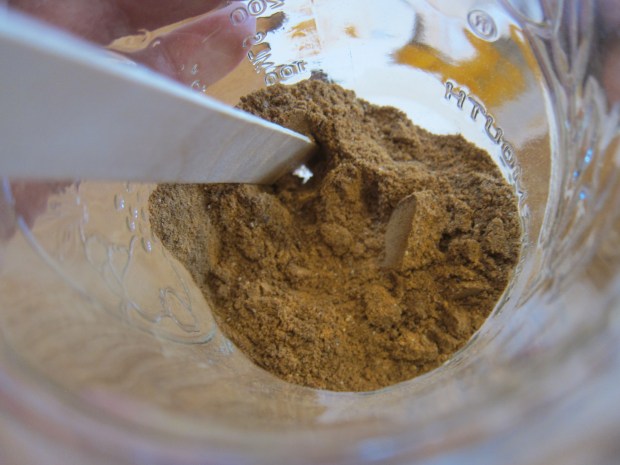
That was all a bit over Travis’s head; instiead, it was time to create his own blend! Mostly he pretended to be a spice merchant, and there was lots of spooning onto paper plates, or pouring in and out of cups. If he gave a spice a thumbs up, we added 3 teaspoons to a glass jar. If he didn’t like it, we added only 1 teaspoon, and if he rated it a medium, we added 2 teaspoons.

In this way we ended up with:

  • 1 tablespoon ground cumin
  • 1 tablespoon ground cinnamon
  • 2 teaspoons ground cloves
  • 1 teaspoon ground turmeric
  • 1 teaspoon ground ginger
  • 1 teaspoon ground nutmeg
  • 1 teaspoon ground allspice
  • 1 teaspoon black pepper

Well, wouldn’t you know, he liked it!

Moroccan Spices (5)

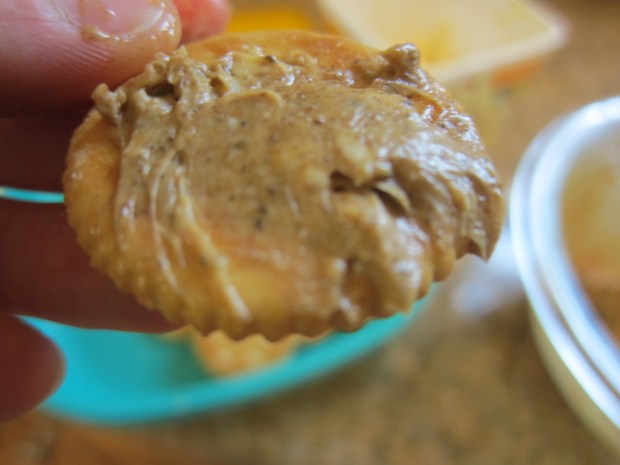
We creamed 1 tablespoon spice mix into 4 tablespoons Earth Balance butter for a spread that worked nicely on homemade bread or crackers. We might try it as a dry rub on tofu, next!

Moroccan Spices (9)

A fun book to read together was My Five Senses, by Aliki. We finished with a virtual trip to a Moroccan bazaar.

Moroccan Spices (6)

Older kids can extend the lesson plan by gifting their spice blend along with a recipe, or researching how spices are grown and harvested.

Moroccan Spices (4)


Saharan Desert

Sahara Desert (3)

As a follow-up to cooking his first Moroccan recipe from Raddish Kids, today Travis learned a bit about part of Morocco’s landscape: the Sahara Desert!

We started the lesson with guided imagery, a nicely different pause. I even had Travis close his eyes and put his head down on the table.

Sahara Desert (1)

I asked him to imagine he was in the desert: What did he see? At first he reported nothing, but then details started to emerge as I asked prompting questions. It was hot, the only plants he could see were cactus, etc. I asked him if it was hard to picture a desert and he said yes, unsurprisingly since he’s never been to one! So it was time to delve deeper.

I pulled up images of the Sahara online, and he marveled at them as we read more facts together. He also watched a video about animals and people who make deserts their home.

Sahara Desert (2)

He was fascinated by pictures of sand dunes when he learned that they weren’t fixed, that the wind could shift them at any point in time. From here, Raddish invites kids to draw, write a poem, choreograph a dance, or otherwise portray what they’ve learned about deserts. Travis chose to make a diorama!

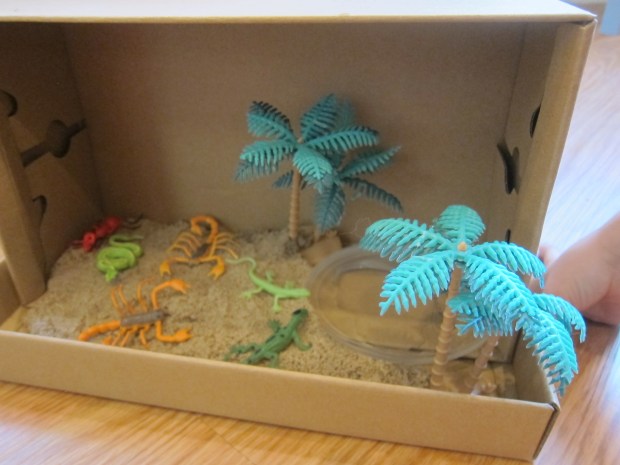
We used kinetic sand as the base inside an empty shoe box, and then added some of his plastic toys, like snakes and scorpions.

Sahara Desert (4)

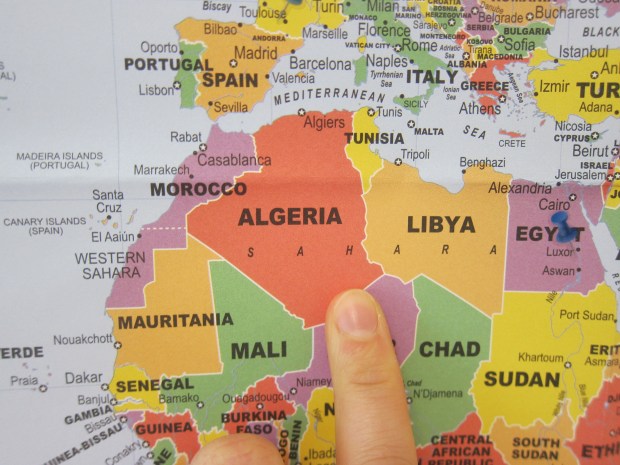
He was especially interested in the idea of an oasis, so added a few trees from a dinosaur set, and a little lid filled with water to be the pond. He loved playing with this, making a rather big-kid lesson approachable even for my kindergartner. Make sure to check out on a map together where the Sahara is!

Sahara Desert (5)

To finish the lesson, we watched a read-aloud of The Seed and the Giant Saguaro, by Jennifer Ward.

Scavenger Hunt

Scavenger Hunt (3)

The purpose of this particular scavenger hunt for Travis, besides just the thrill of seeking for and finding a toy, was to use his directional words. He and I headed to the park with a plastic dinosaur along for company, and took turns guiding one another on the hunt!

For the first round, he hid the dinosaur while I counted to 20. I then asked him to guide me to the hiding spot using lots of descriptive words. Should I go forwards, left, or right?

Scavenger Hunt (1)

Should I look under the truck or inside it? Should I got around or in front of the tree?

Scavenger Hunt (2)

The idea with this particular hunt is not to trick the other person, but to be each other’s guide. It’s a great skill builder for kindergartners learning map reading skills.

Travis loved it so much he wanted to play multiple rounds. He was especially excited to find dinosaur high up in a tree one time!

Scavenger Hunt (4)

Straw Fountain

Straw Fountain (5)

Here’s a quick STEM experiment that will technically teach your kids about centrifugal force (i.e. the same technology used in commercial water pumps, such as a laundry machine when it’s draining). But even the science is too advanced for your child, there’s the pure fun of spraying water!

To put together the “fountain”, cut a straw to about 2/3 of its length. Snip two holes at even intervals, sniping into but not through the straw, so it now has three segments.

Straw Fountain (1)

Poke a hole in the middle of the center segment with a needle, and then insert a skewer. Fold the other two segments down toward the tip of the skewer; you now have a triangle. Tape it all in place.

Straw Fountain (2)

Fill a glass with water and head some place where it’s okay to get wet! Our patio was perfect. To activate the fountain, just roll the skewer between your palms.

Straw Fountain (4)

Unfortunately it was really hard to capture photos of the fountain in motion, because Travis couldn’t quite master the trick of rolling the skewer quickly enough to make the triangle spin. When I showed him how to do it, on the other hand, our fountain worked fantastic but Travis kept stepping back to avoid getting wet and didn’t take any pictures!

Straw Fountain (3)

Still, it was well worth the effort to make this craft. The D.I.Y. “sprinkler” was just right for a warm spring morning!

Little Passports: Mexico

LP Mexico (22)

We may not be able to travel right now, but Travis journeyed to Mexico this week thanks to Little Passports! He was thrilled when the package arrived, so we wasted no time setting off on the virtual journey. He added stickers to his map, suitcase, and passport as I read him “Sam and Sofia’s” letter from the country.

LP Mexico (1)

The booklet was just shy of too advanced for a kindergartner. He was proud to solve a tricky maze, and enjoyed information about Mexican animals. Online activities included learning familiar Spanish phrases and completing a tricky dot-to-dot with points 1 through 85 of a Mexican landmark.

LP Mexico (14)

Souvenir:

The kit contained a D.I.Y. pinata; any activity that involved candy got a big thumbs up from Travis! The pinata was tricky to put together, so turned into more of a mommy project, following instructions to fold the cardboard cactus shape and glue on strips of provided tissue paper.

LP Mexico (7)

We made beautiful flowers, too, by rolling tissue paper around a pencil tip, then removing from the pencil and pressing down to bend the “petals” outward.

LP Mexico (6)

Travis proudly selected candy at the store to fill the cactus for a mini fiesta. Here he is gearing up for the big hit.

LP Mexico (9)

Even little sister wanted a turn taking a whack.

LP Mexico (10)

Candy! I loved that we did this on a random school night, without waiting for a special occasion, which made it feel extra fun for the kids.

LP Mexico (11)

Further Activities:

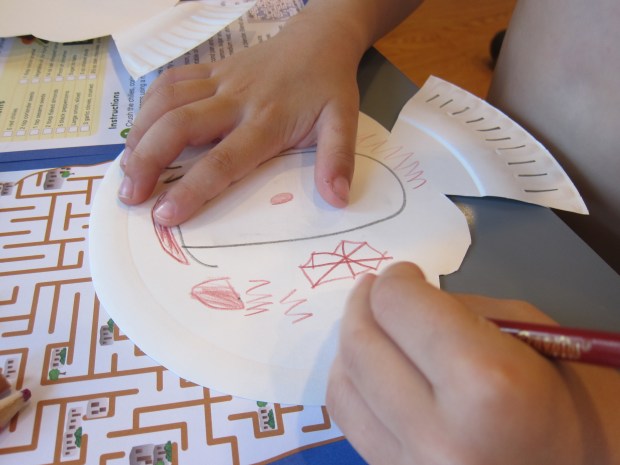
Next up we followed instructions for Day of the Dead Masks. Mark a paper plate in such a way that it forms an 8-wedged pie, then draw cheek ovals on two of those pie pieces nearest the bottom. Cut out around the inner rim of the paper plate.

LP Mexico (12)

Travis was so proud of his decorations!
LP Mexico (13)

Tape to a craft stick for an instant fiesta mask.

LP Mexico (16)

Next we headed outside for Sunshine Art, which was the bonus add-on for this country package. Arrange items on top of the provided plate and special blue-tinted paper, and then lay in the sunshine. You’ll have an image within two minutes!

LP Mexico (17)

We played around with which items worked best. I had hoped Travis would get into the idea of putting together a whole collage, but he lost interested rather quickly.

LP Mexico (19)

Next up was Aztec Guacamole. Travis was thrilled when I came home from the grocery store with 5 ripe avocados. We scooped the flesh into a bowl, and he was in charge of mashing!

LP Mexico (20)

Add 1 chopped tomato, 1 small finely chopped red onion, 1/4 cup minced fresh cilantro, the juice of 1 lime, and 1/2 teaspoon garlic salt. Serve with tortilla chips!

LP Mexico (21)

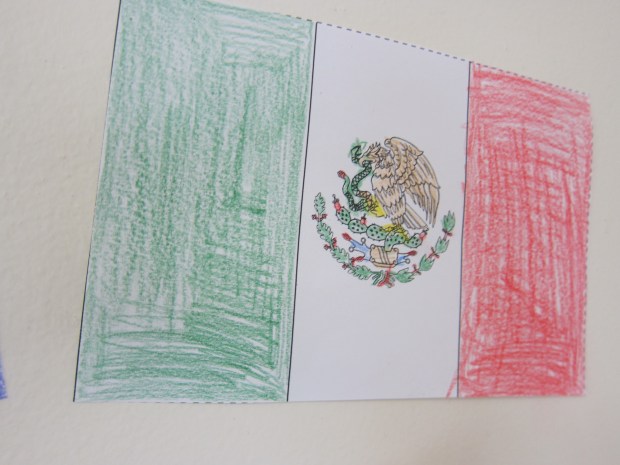
Finally, he colored in the Mexican flag for our garland; this was by far the most intricate flag to date, and he was so proud!
LP Mexico (18)

Recipe:

Who doesn’t love the thought of chocolate for dinner? Travis was quite excited when he learned we’d be making a chocolate sauce (mole); unfortunately we used red chilies that were very spicy. Look for mild red chilies for more kid-friendly results.
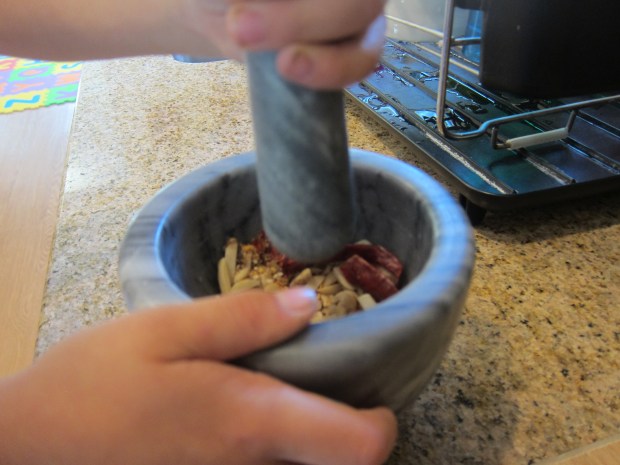
Mole Recipe (2)

Ingredients:

  • 5 red chilies
  • 2 teaspoons coriander seeds
  • 1 teaspoon sesame seeds
  • 2 tablespoons slivered almonds
  • 5 black peppercorns
  • 1 large onion, sliced
  • 3 garlic cloves, minced
  • 1 tablespoon cocoa powder
  • 2 tablespoons canola oil
  • (14-ounce) can diced tomatoes
  • 1/8 teaspoon cinnamon
  • 1 tablespoon sugar
  • 5 ounces vegetable broth
  • 1 (3-ounce) dark chocolate bar, chopped
  1. Place the chilies, coriander, sesame seeds, almonds, and peppercorns in a mortar. Crush with a pestle. Transfer the spice mixture to a small skillet over medium heat and dry-fry for 1 minute. Set aside.
  2. Meanwhile, heat the canola oil in a large skillet over medium-high heat. Add the onion, garlic, and cocoa powder; cook for 2 minutes.
  3. Add the tomatoes to the onion mixture, along with the spice mixture, cinnamon, sugar, and vegetable broth. Bring to a simmer, then continue to cook for 25 minutes.
  4. Transfer to a blender and process until smooth. Pour into a bowl and stir in the chocolate, stirring until melted. We served the sauce over vegan chick’n!

Mole Recipe (4)


Outdoor Opposites

Outdoor Opposites (2)

For both some fresh air and some learning, Travis and I played opposites in the yard today! The goal of the game was that if I did one thing, he had to do the opposite action.

So when I jumped high, he crouched low.

Outdoor Opposites (1)

Then when I ran fast, he moved slow like through molasses. Next, I encouraged him to be the leader. It took a few tries before he became creative with the game, but soon we were playing around with loud/soft, under/over, in front of/behind etc.

What opposites can your child think of? Please share in the comments!

Make a Rainbow

Make a Rainbow (2)

All you need for this little science trick is a hose and a sunny day. We’ve had early hot weather that made us pull out the sprinkler, but it’s also been overcast. Luckily this afternoon the sun poked through!

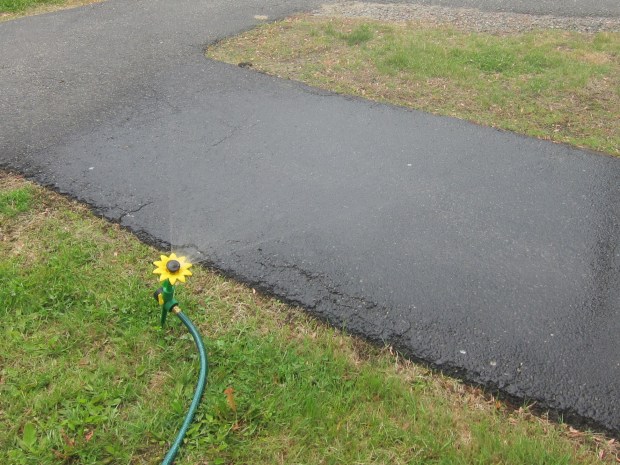
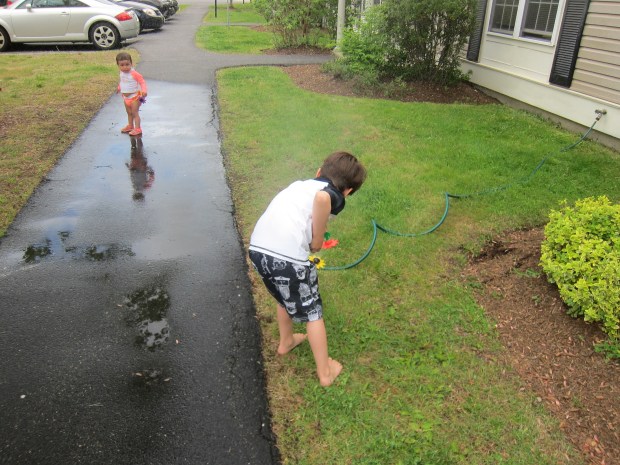
I set up a sprinkler with flower attachments that spray a fine mist. The mist will make it more likely to spot a rainbow, so if you don’t have any sort of hose attachment, you’ll need to use your thumb to change the flow of water.

Make a Rainbow (1)

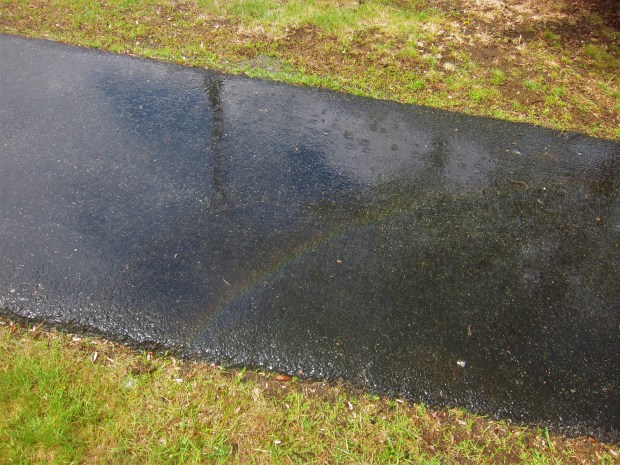
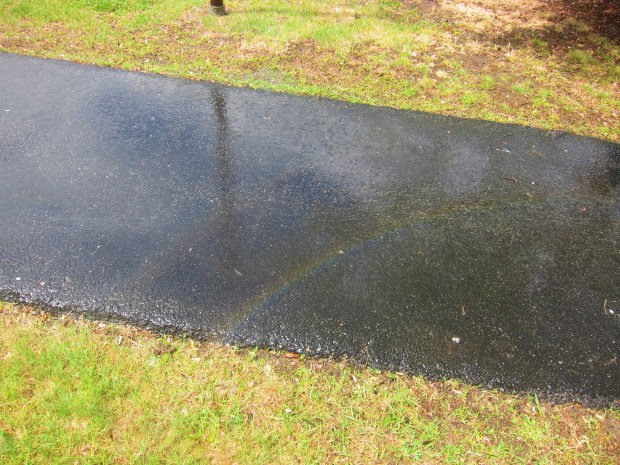
Now aim in the direction of your shadow. A rainbow will appear! This was magical for my toddler, and of course scientific for a my kindergartner. Travis understood that the water was bending the light from the sun and breaking it apart into the full spectrum of colors in a rainbow.

Make a Rainbow (3)

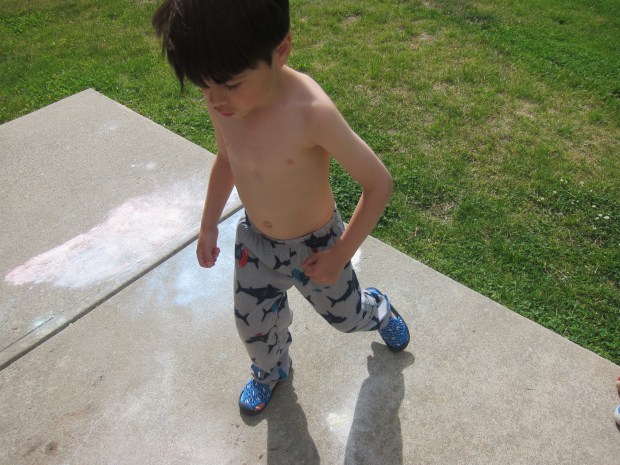
Then just have fun in the sprinkler of course!

sprinkler ($)