Swimming Letters Sensory Bag

Swimming Fish (7)

Here’s a fun way for toddlers to practice tracing as they starting out in letter recognition. Bonus points: the activity doubles as a sensory bag!

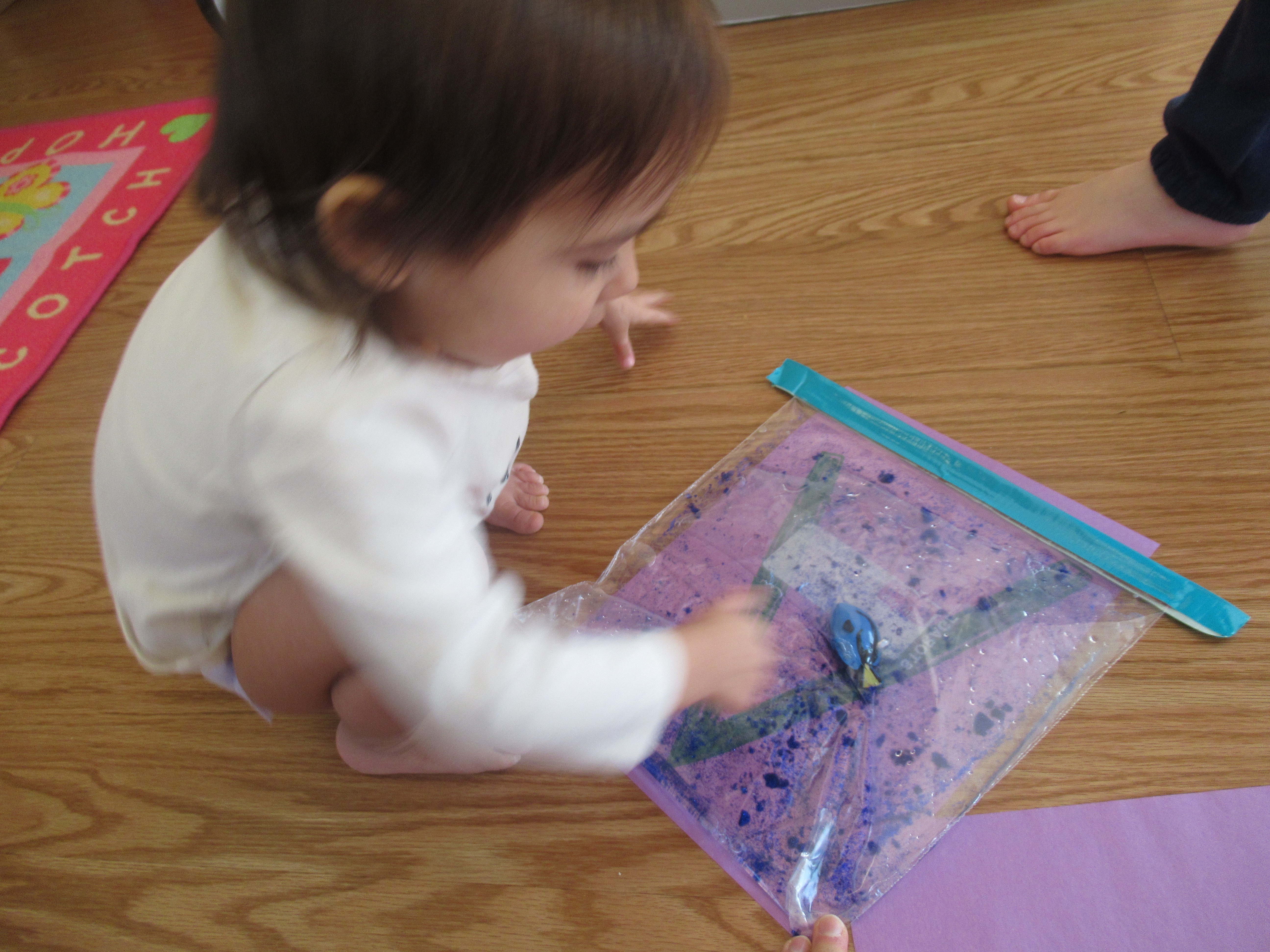
To set up, fill a large zip-top plastic bag with liquid. I made two versions of this, although neither was quite right. The first one had corn syrup and a little blue glitter, but this was a touch too thick. The second one I filled water with a little blue glitter glue, but this was too… watery. I think hair gel would be the perfect in-between solution, and I’ll aim for that next time! Regardless, once you’ve added your liquid and glitter, you’ll need to add the best part: drop in a plastic fish toy.

Swimming Fish (2)

Seal the bag tightly and secure with duct tape. Next, write letters of the alphabet on pieces of construction paper, ideally with a blue background, although I only had purple. Once I had colored the letters in with green marker, they sort of looked like waving seaweed!

Swimming Fish (3)

If you want to, you could go through all 26 letters for your child. Today, I focused on two letters: V for Veronika and T for big brother Travis. Place the fish sensory bag over one letter at a time and show your toddler how to “swim” the fish along the lines to trace it.

Swimming Fish (4)

It’s hard to tell if Veronika really picked up on the learning, or whether she just loved the activity because she was enamored with the fish. She loved making it swim so wasn’t necessarily following the lines, but she could tell me whether she was looking at a V or T.

Swimming Fish (9)

Overall, I loved the idea behind this activity and may return to it when she’s a little older!

Swimming Fish (6)

Squishy Button Sorting Bag

Color Sort Buttons (3)

This cute twist on a regular squishy sensory bag adds the concept of sorting into the mix! Squishing buttons through the hair gel inside will be an absolute delight for toddlers and preschoolers alike.

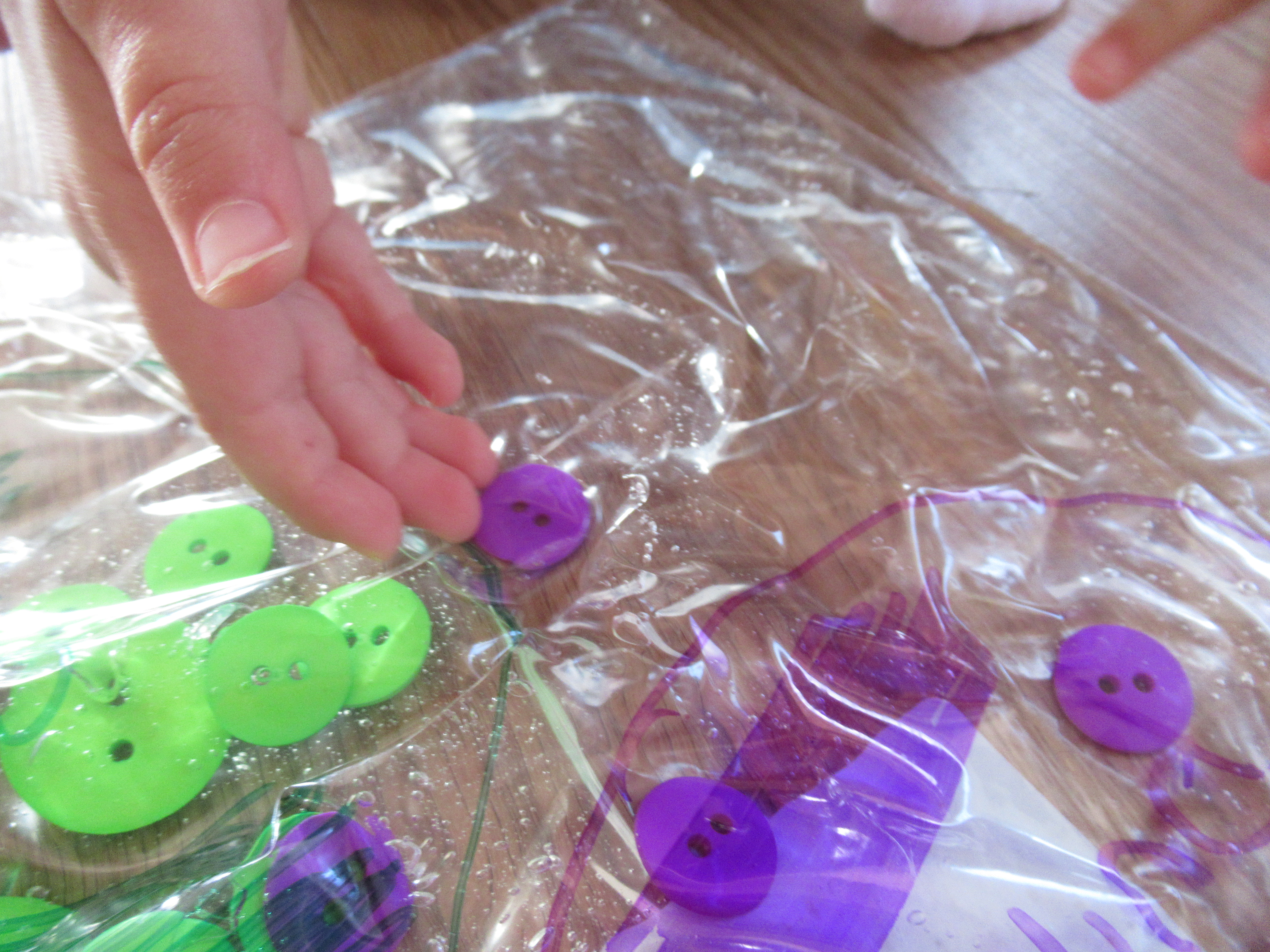
To set up, I drew two circles on a large zip-top plastic bag with sharpies, using colors that corresponded to buttons in our craft bin. Next, squirt in a generous amount of hair gel, then add buttons in at least two colors. (Note: You can make this harder for preschoolers with additional colors). Seal tightly, adding duct tape to the seal if you worry your child might want to open the bag.

Color Sort Buttons (2)

First I just let Veronika experiment with how the bag felt. She loved squishing the buttons through the gooey insides of the bag…

Color Sort Buttons (4)

…or pressing her hands down firmly on top of it.

Color Sort Buttons (6)

Once she’d had time to explore, I showed her that she could nudge the buttons deliberately, each one toward the correctly colored circle. She picked up on the idea right away, although occasionally I had to help her with the fine motor skills needed to scoot a button in the right direction.

Color Sort Buttons (5)

To mix up the activity, I then showed her how the bag looked with the buttons completely sorted. Then it was up to her to scatter them! In sum, this was a nice variation on an idea that never gets old.

Color Sort Buttons (7)

Short and Tall Tubes

Short and Tall (5)

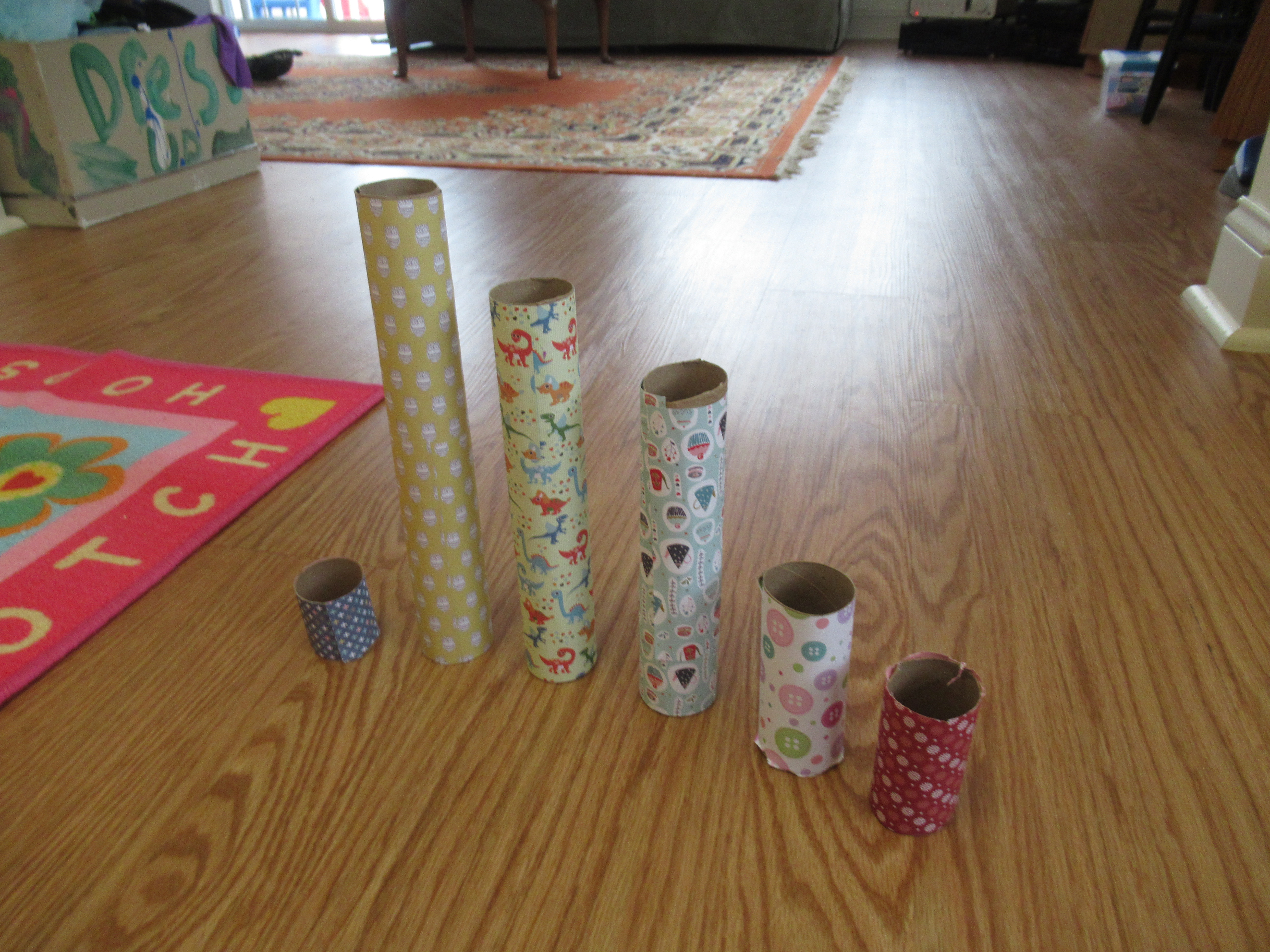
Here’s an easy hands-on way for toddlers to hone their concept of short and tall! I saved up toilet paper tubes and paper towel tubes for about a week, then cut the collection into varying lengths so we had six sizes ranging from shortest to tallest. You can invite your toddler to decorate these with markers, or do as I did and cover in pretty patterned paper.

Short and Tall (1)

First, I simply set out the tubes for Veronika to observe and play with. When I asked her to find me the shortest…

Short and Tall (3)

…she could! Likewise for the tallest.

Short and Tall (2)

For added fun, we read a favorite book about height (Usborne Book’s Taller and Shorter), which compares the heights of animals. Veronika and I pretended each tube was an animal and lined them up in a row as the story went on!

Short and Tall (8)

When I asked her if she could sort all six tubes from shortest to tallest, the concept was clearly too advanced for her, so much so that she sort of tuned out the question.

Short and Tall (7)

That said, she was able to tell the comparative size between two tubes easily (which was shorter, which was taller), and we’ll work up to the next step eventually!

Short and Tall (6)

Sort Colors in a Play Tunnel

Sort Colors Tunnel (3)

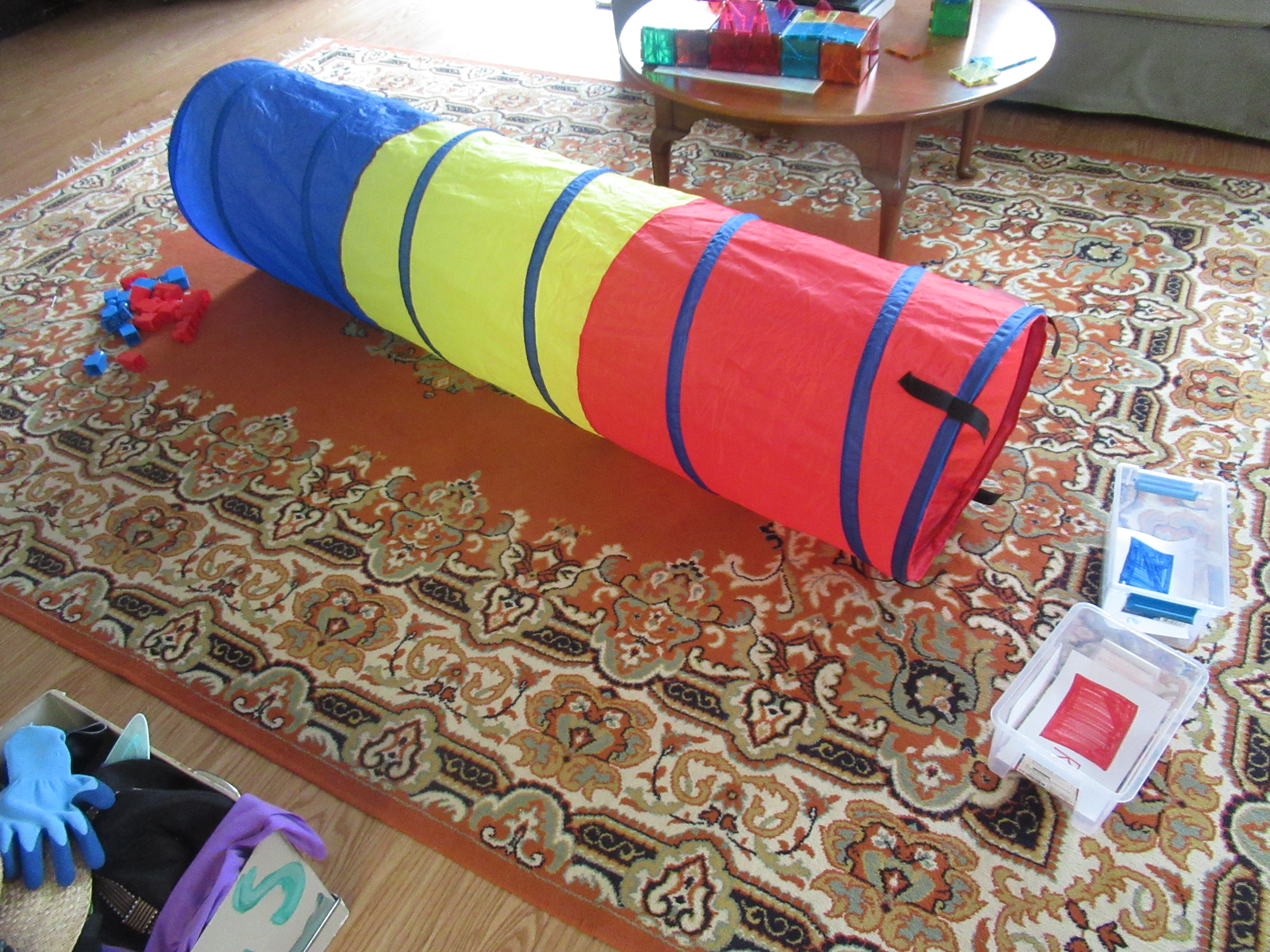
Veronika has sorted colors into separate bins before, and it’s a task she’s become quite skilled at. This new twist on the activity has an added advantage because it incorporates gross motor skills and movement, too! Our play tunnel that has been open in the living room all weekend, so today I thought we could use it for a little learning before folding it up.

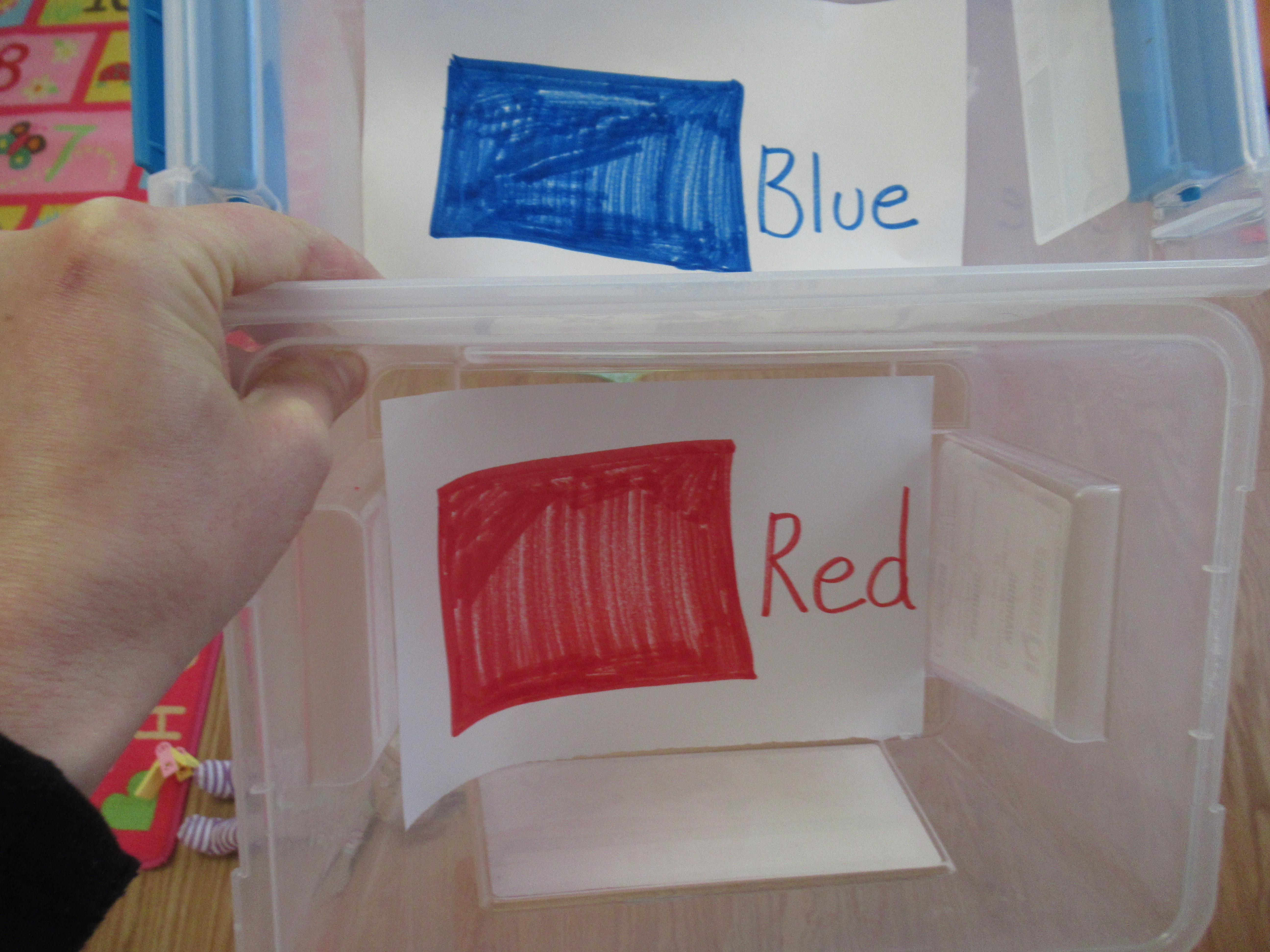
This required a little parental set-up on the front end. I emptied a few toy storage bins and taped down a piece of paper in the bottom of each with the name of a color, as well as a square colored in marker in that corresponding color.

Picture Box (9)

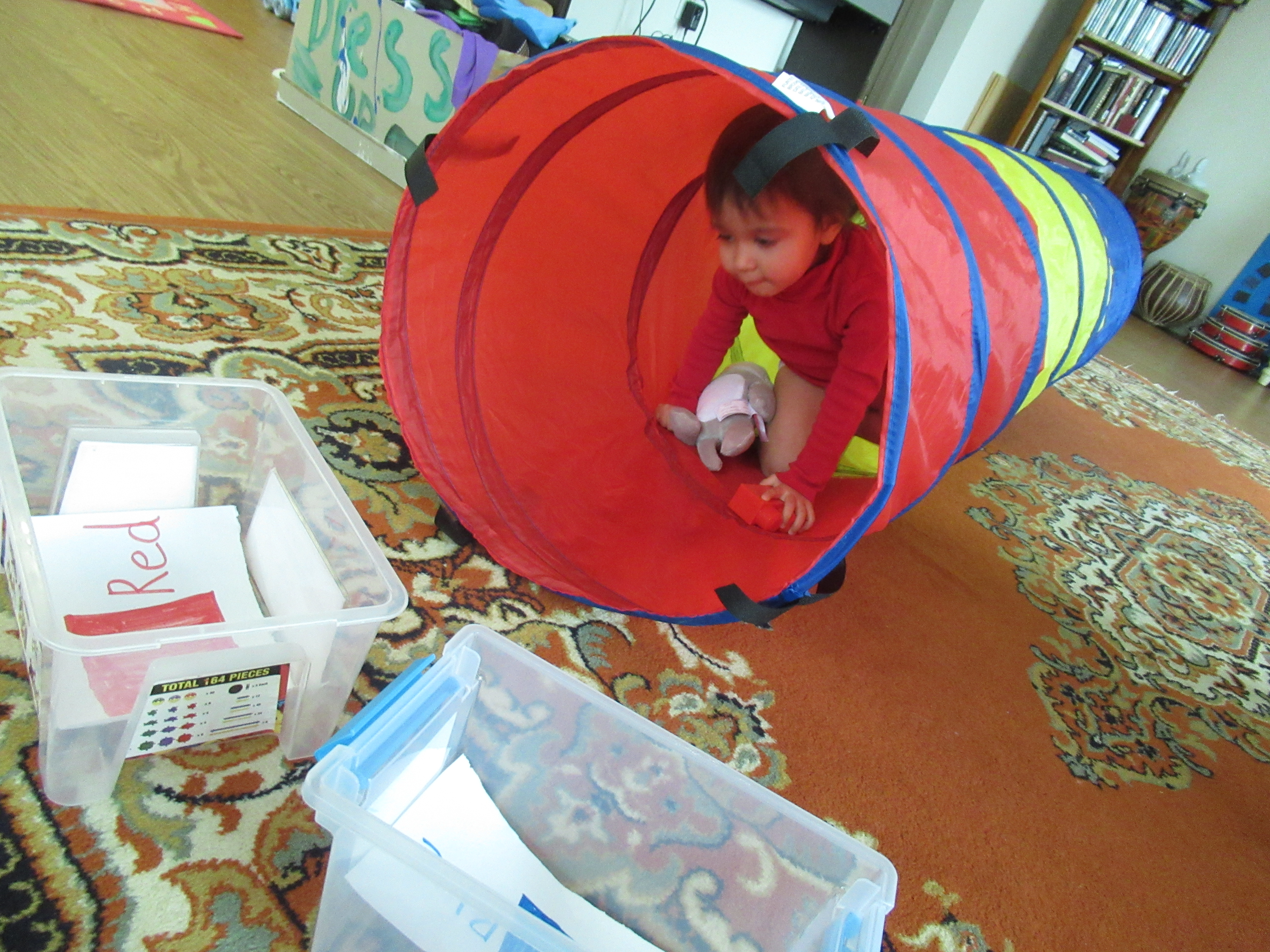
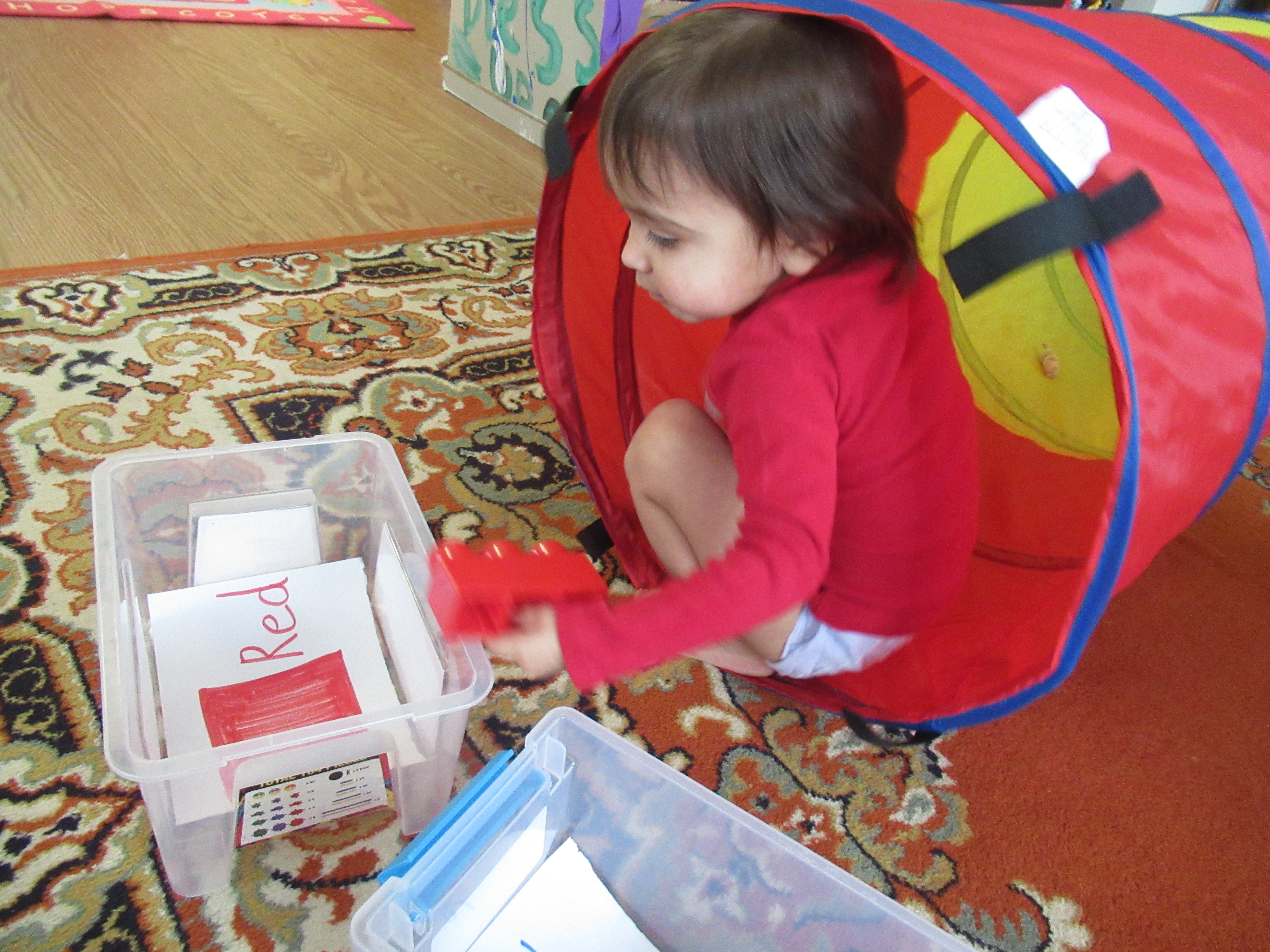
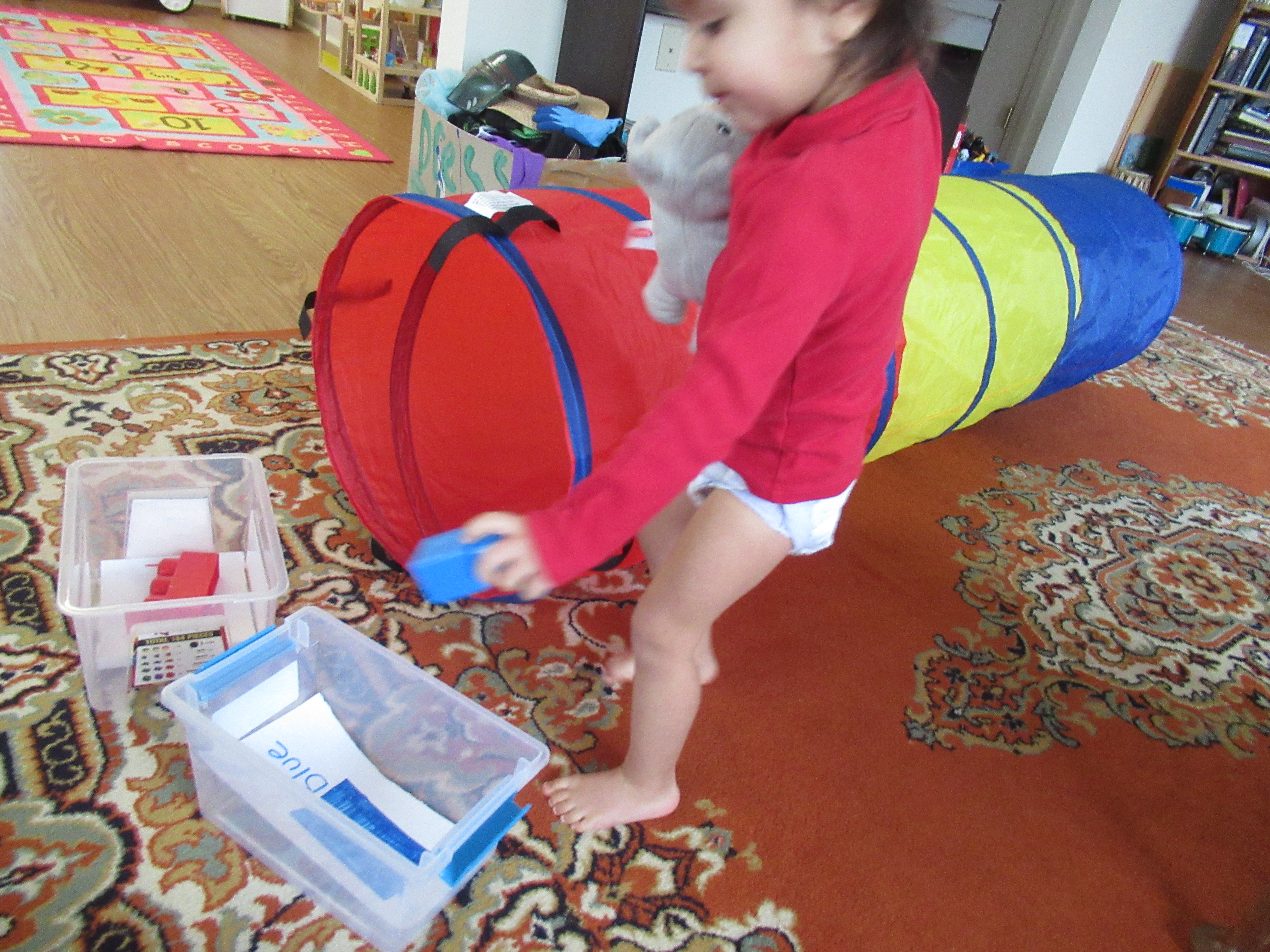
We started out just using red and blue because I wanted to be sure Veronika understood the concept before adding more colors. Stacking blocks from Mega Bloks or Duplo are perfect for this game. I showed her the labeled bins and then we ran around to the other side of the tunnel where a jumble of blue and red blocks were waiting. “Can you put the red ones in the red bin?” I asked her, offering up a red block.

Sort Colors Tunnel (1)

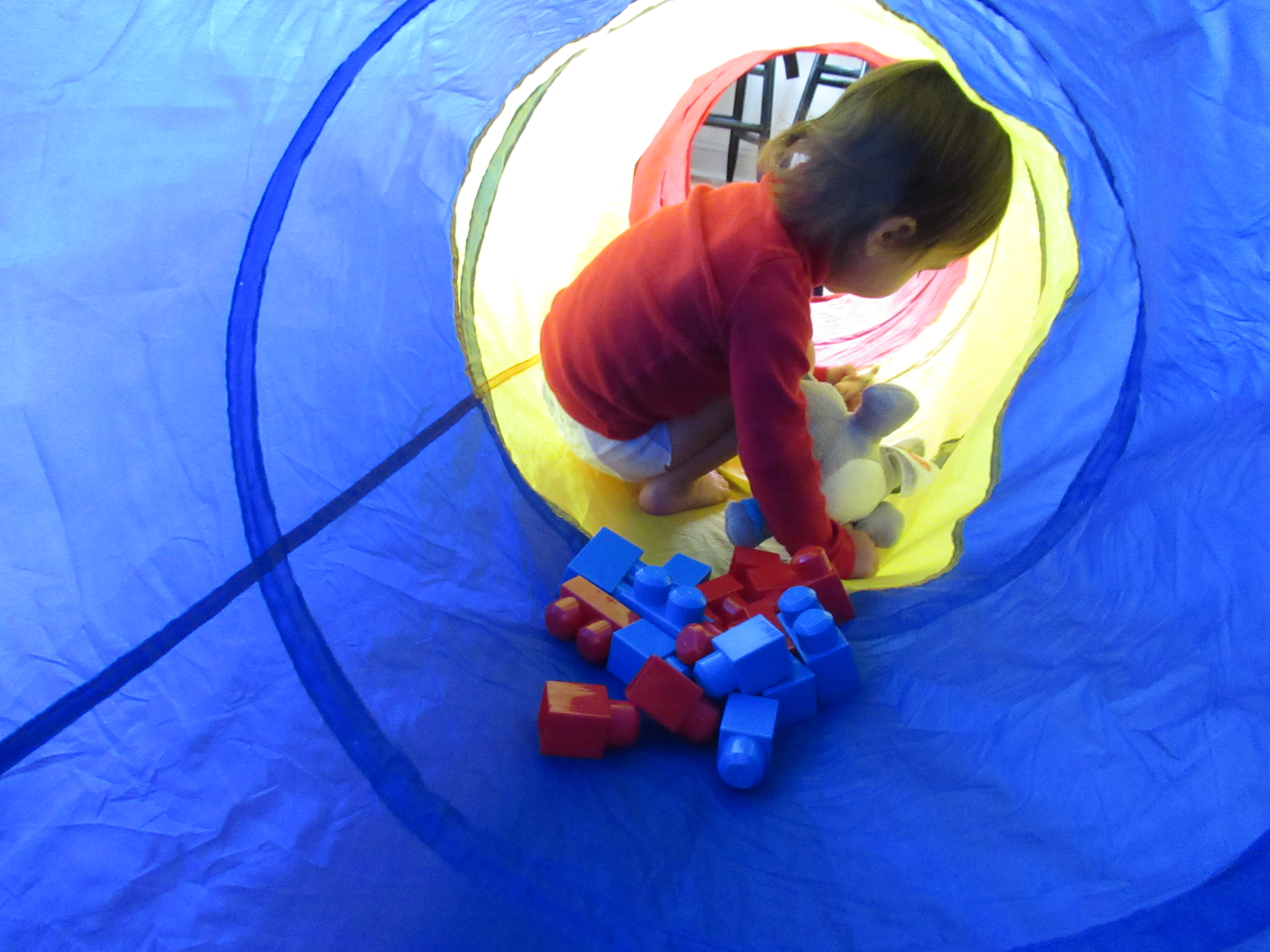
At first she wanted to run around the tunnel, but after I tossed the blocks inside it, she got the idea to crawl through with block in hand. She had her victory target in sight…

Sort Colors Tunnel (2)

Slam dunk!

Sort Colors Tunnel (4)

To be honest, she didn’t always crawl through, sometimes taking the long way around on her feet. But this was always at a run, so it sure still counted as movement play!

Sort Colors Tunnel (7)

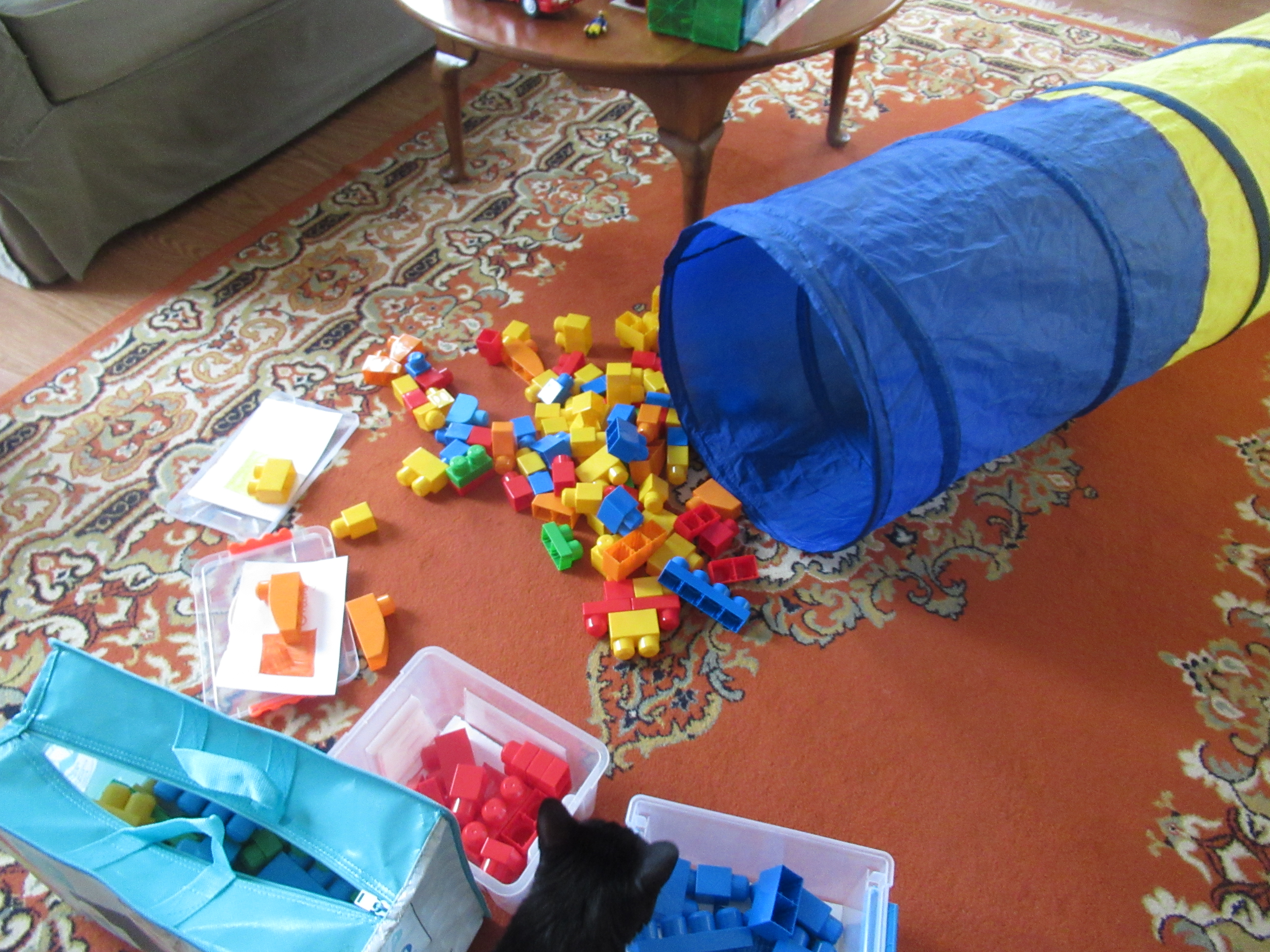
We expanded to orange and yellow blocks next, giving her four choices of bin for each block as she reached the end. When we finished with the sorting activity, she kept busy with all the materials for a while, moving items from bin to tunnel to storage bag to floor and back again.

Sort Colors Tunnel (9)

Monday Through Friday Letter Learning

Mon-Fri Letter (3)

When Travis was two years old, I embarked on an ambitious Letter of the Week curriculum that took us on a journey from Z to A (yes, we went in reverse) full of activities, games, and field trips each week. I have beautiful memories of it, but it’s far too ambitious a project for child #2! That said, Veronika is very into letters right now and I want her to be able to devote a week to each letter, even if not in so immersive a fashion.

I was thrilled, therefore, to find this activity-a-day program at Hands on As We Grow, and this week Veronika tested it out on letter A with a few adaptations for her young age.

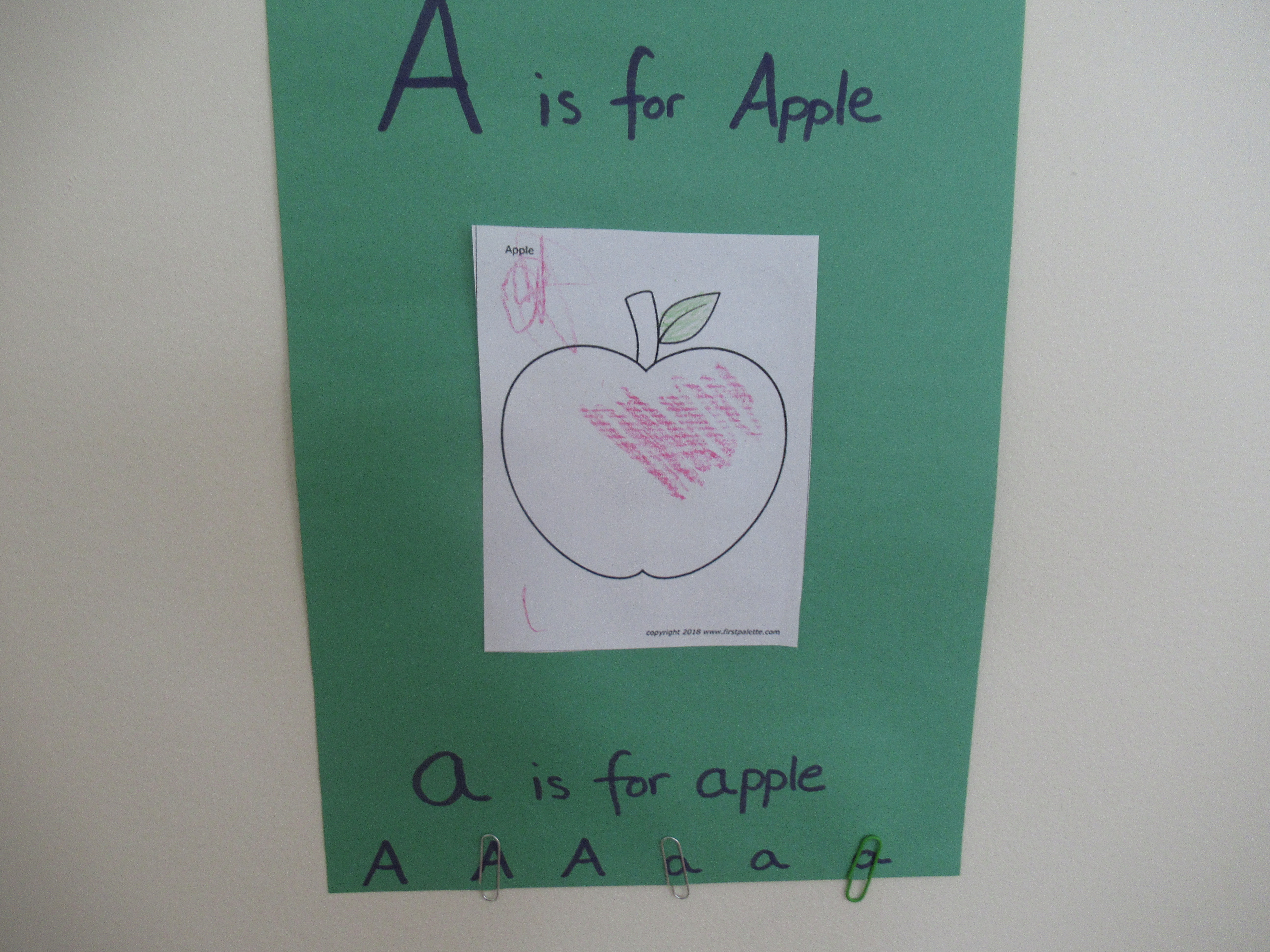
Monday: Letter Poster
Mon-Fri Letter (1)

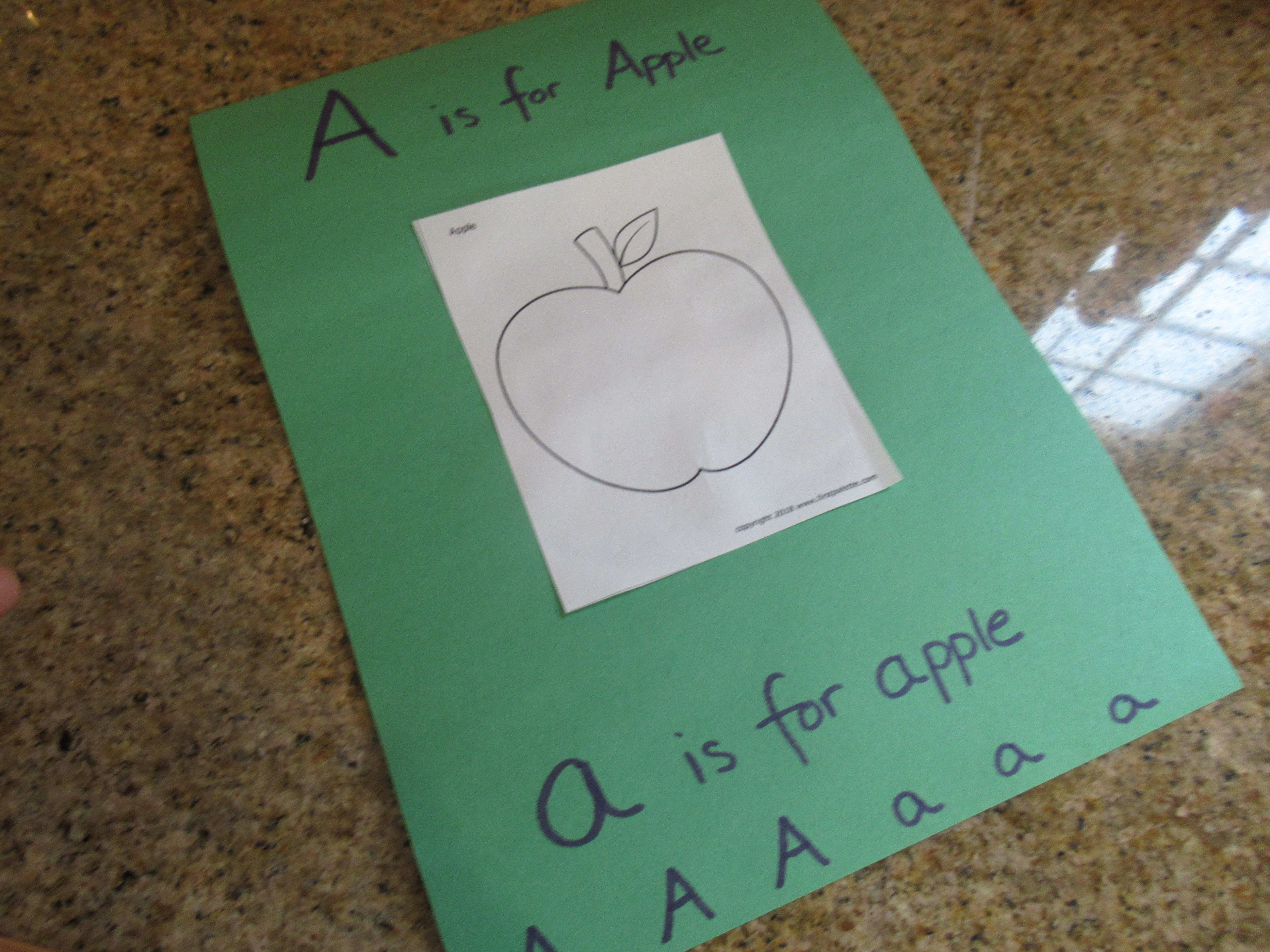
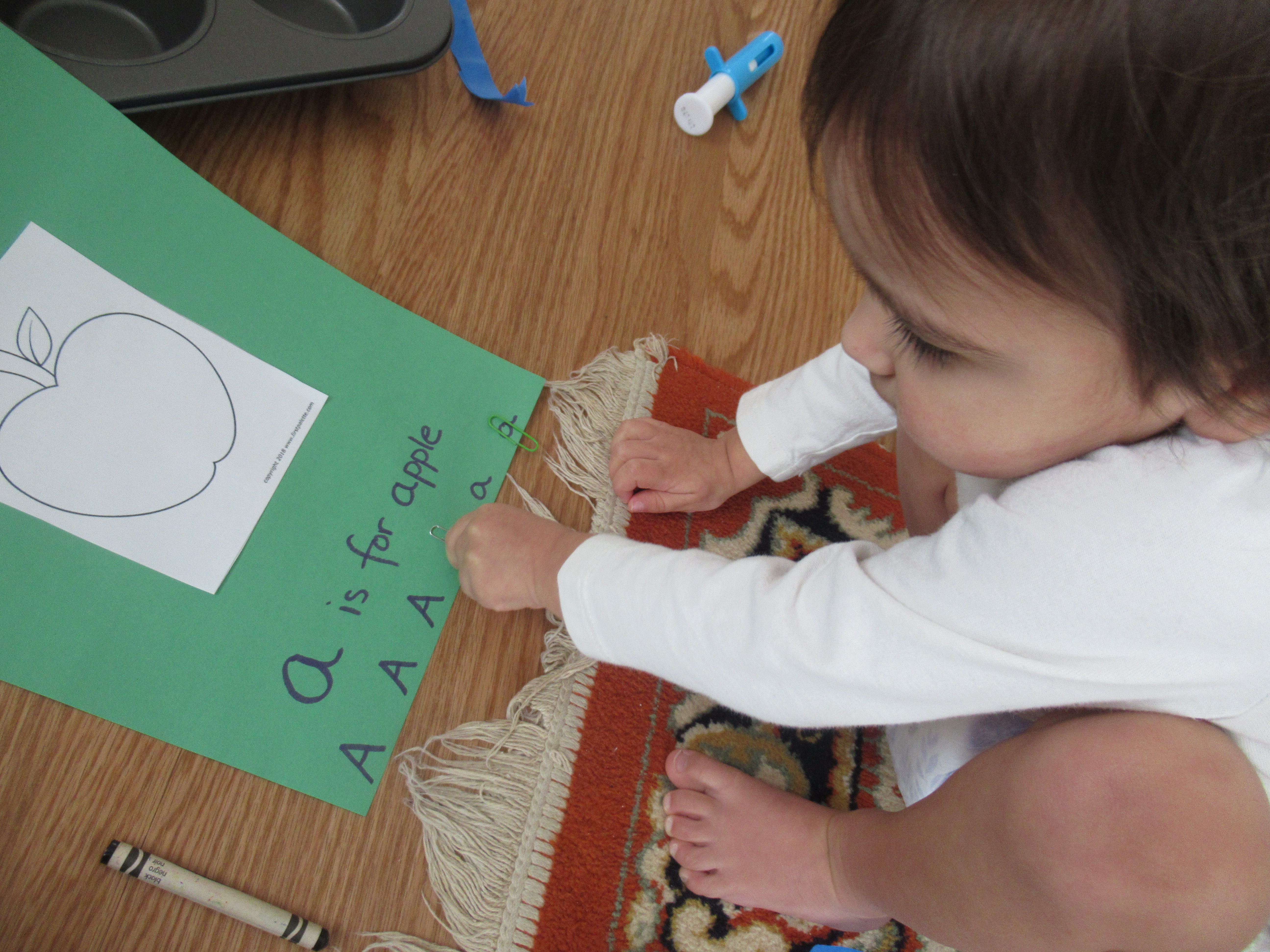
I started the week printing a picture of an item corresponding to the letter (in this case an apple picture for A), then gluing it to a piece of construction paper and writing out “A is for Apple, a is for apple”. I then wrote a few capital and lower case A/a along the bottom edge of the paper and encouraged Veronika to add a paper clip to each for some fine motor skills.
Mon-Fri Letter (2)

If your child is older, you can hide those As among other letters to make it more of a search. Veronika finished by coloring in the apple, then we hung the poster on the wall to serve as a reference point all week. I was so happy that she already recognized A, tentatively naming it for me when I asked.

Now that we had established A as the Letter of the Week, it was on to…

Tuesday: Stomp Obstacle Course
Mon-Fri Letter (5)

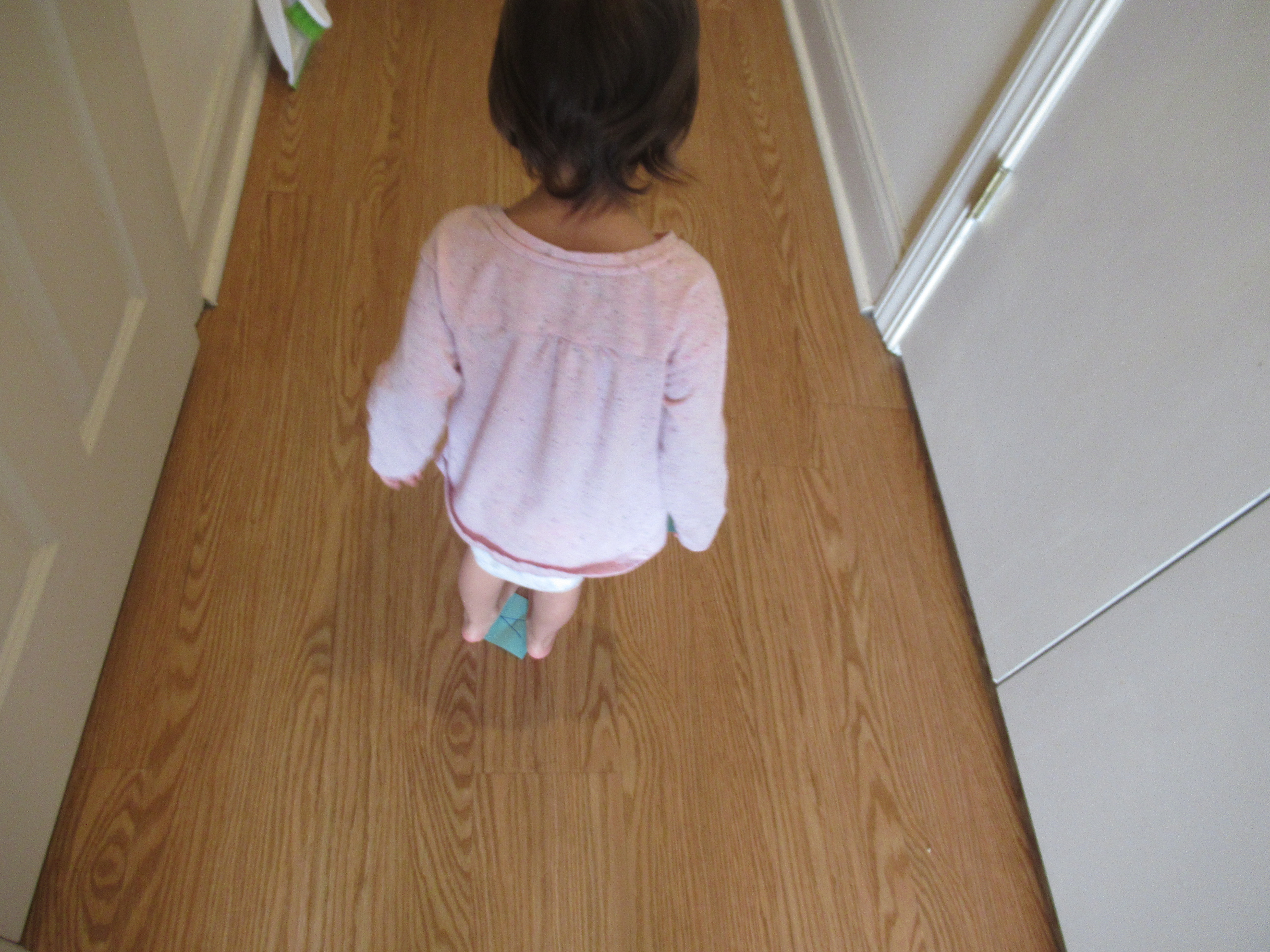
Monday was fine motor skills and Tuesday was for gross motor skills, specifically: stomping! I wrote A and a on post-it notes (I used seven, but you can go wild and do lots) and placed them around the house. Veronika’s job was to tap them if they were against the wall or stomp them with her feet if down low. She loved dancing on the floor ones, and racing to the door to tap these two:
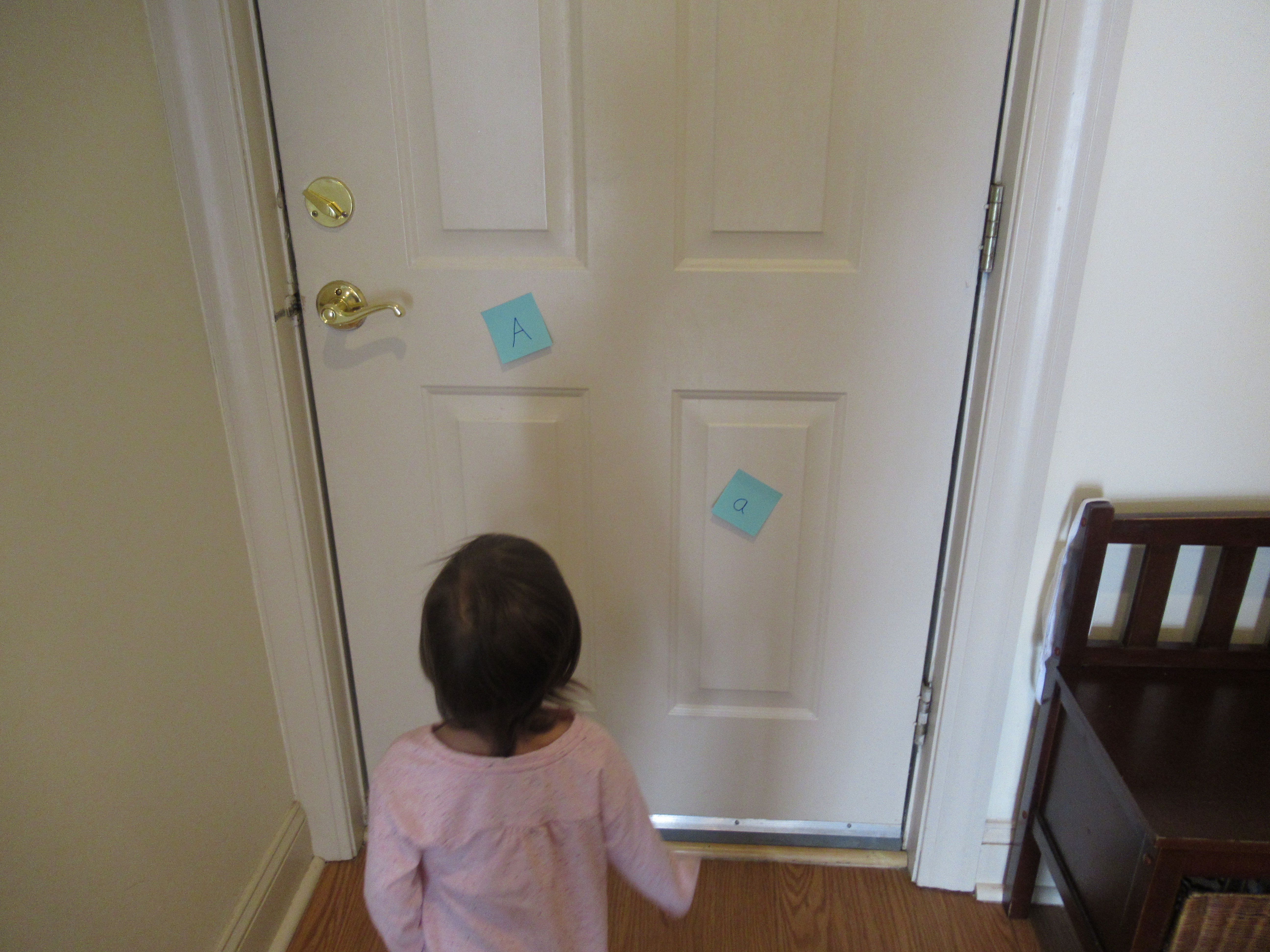
Mon-Fri Letter (6)

As she found each A, I asked her if it was upper case or lower case, a great way to help learn both versions of a letter. Once she had collected them all, we put them on the coffee table for a table stomp, normally a no-no (you can see that big grin!)
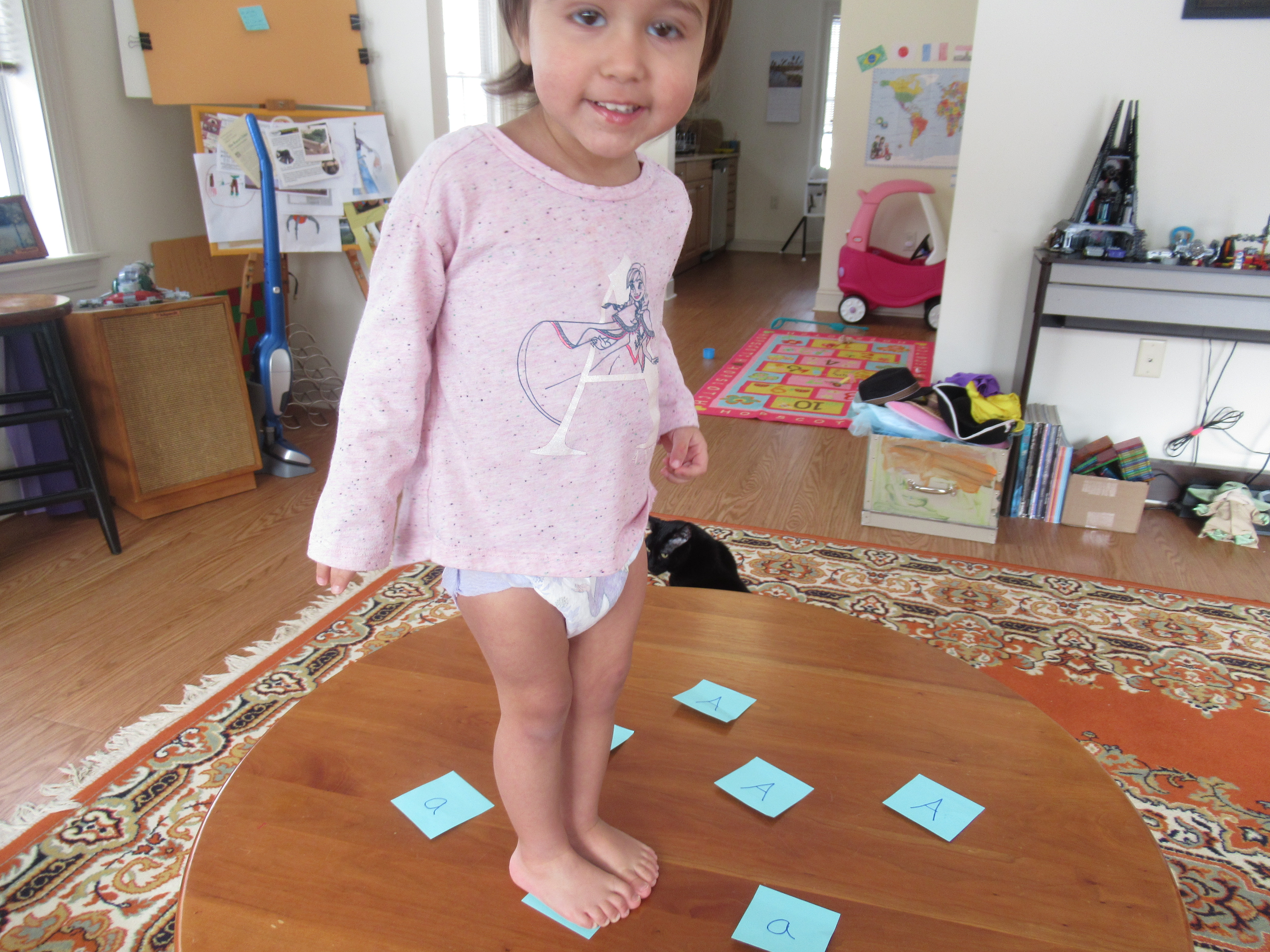
Mon-Fri Letter (7)

Wednesday: Write in Shaving Cream

This was Veronika’s least favorite of the week, though I thought she would love it! I squirted a thin layer of shaving cream onto a craft tray and then wrote out A and a. My intention was for her to trace over these since she’s too young to form the letters herself. But she was surprisingly squeamish about it and only briefly traced them with a paintbrush instead.
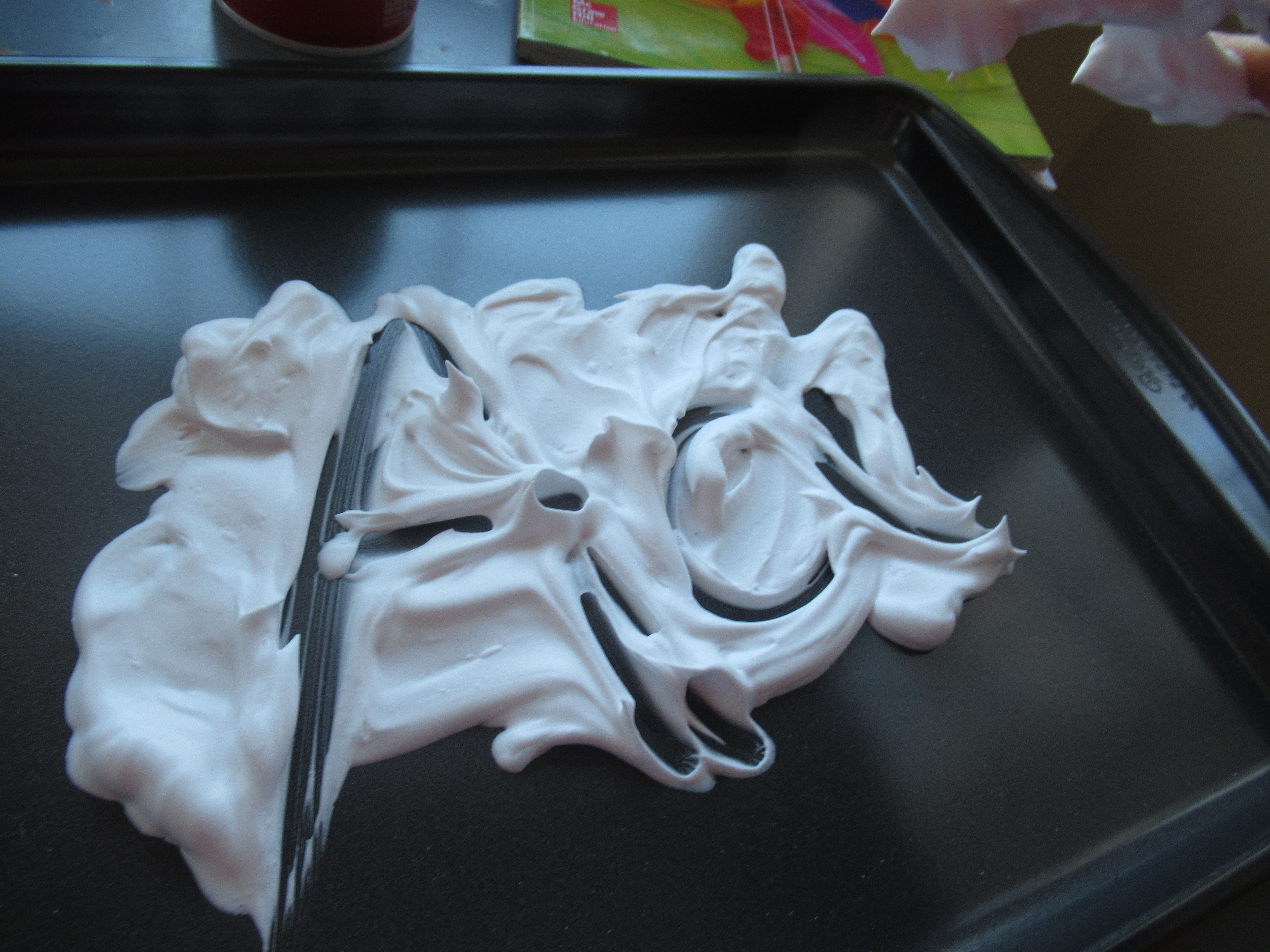
Mon-Fri Letter (13)

Thursday: Follow the Letter Grid

Mon-Fri Letter (12)

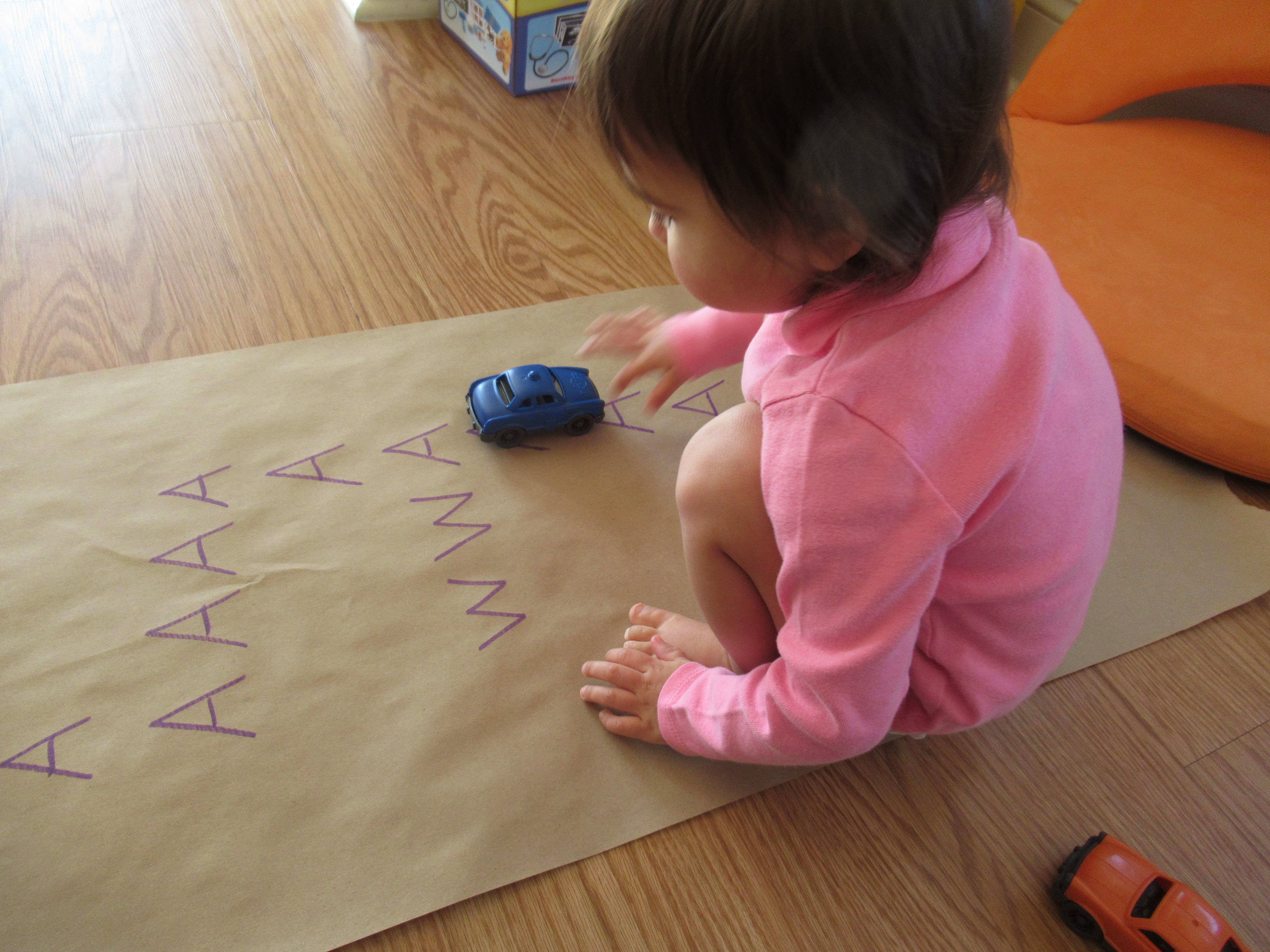
I wrote out a series of As (using only capital letters this time) on a long sheet of butcher paper, then added a few “false” trails of other letters off to the side. You can make this increasingly harder depending on your child’s age. Kids can either walk along the maze, tape along it with painter’s tape, or (in Veronika’s case), drive cars along it. She immediately recognized the A and loved scooting her cars on the “road”.
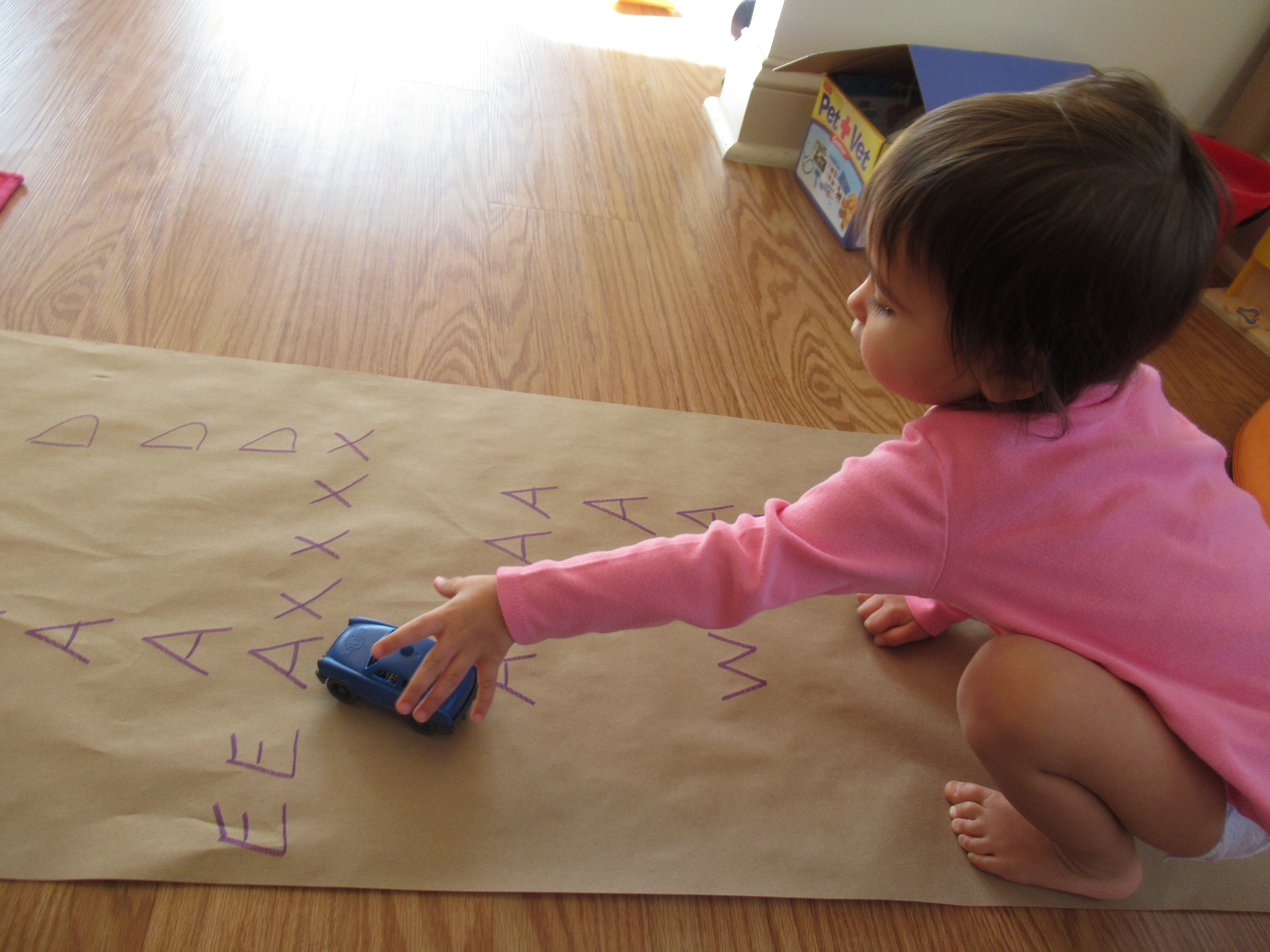
Mon-Fri Letter (11)

Friday: Chalk Letter Search

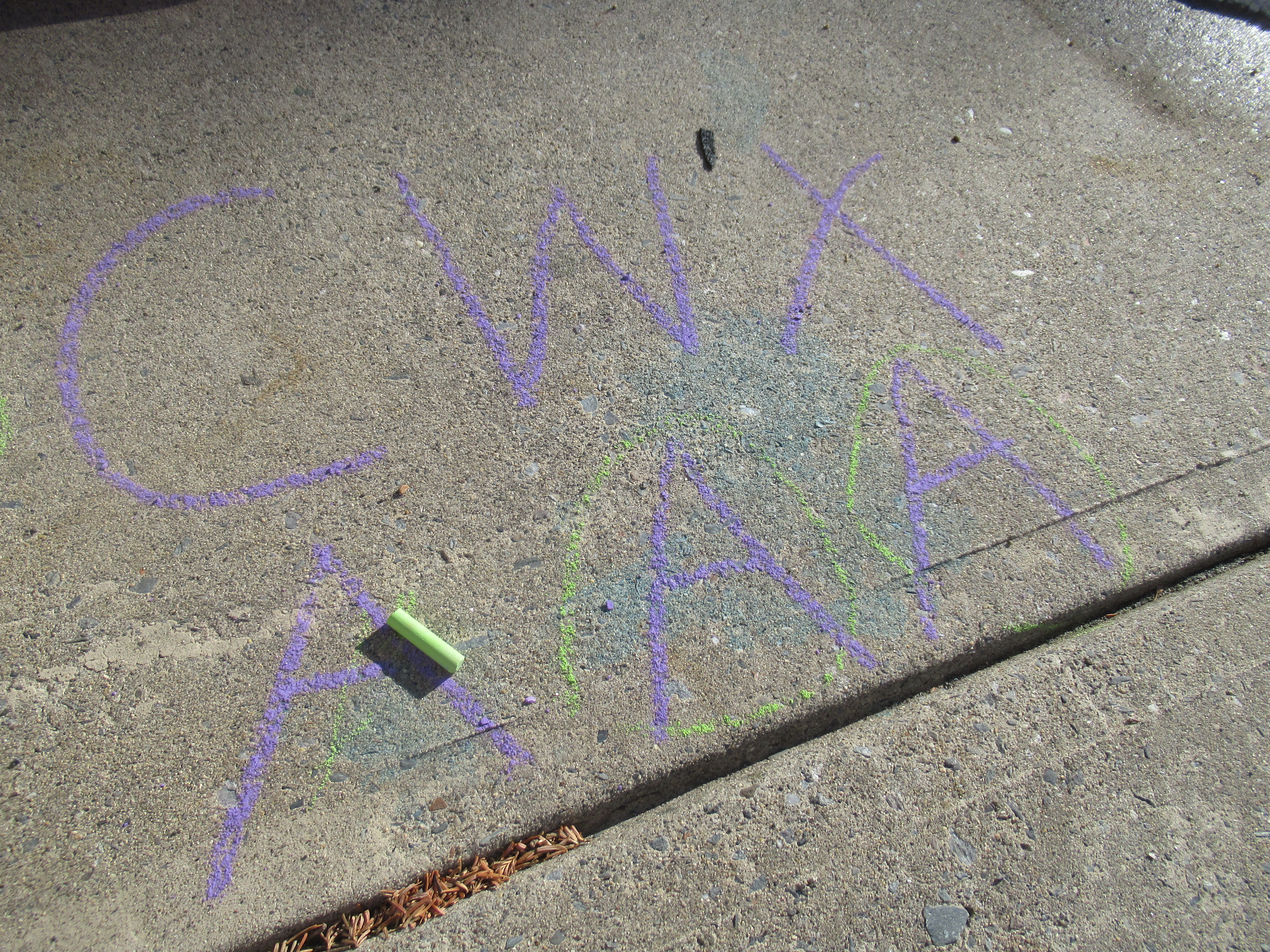
This last activity was perfect when we got a burst of early spring weather! We headed out to the back patio and I wrote several As hidden among other capital letters. “Can you find an A?” I asked Veronika. “A!” she said proudly, pointing.
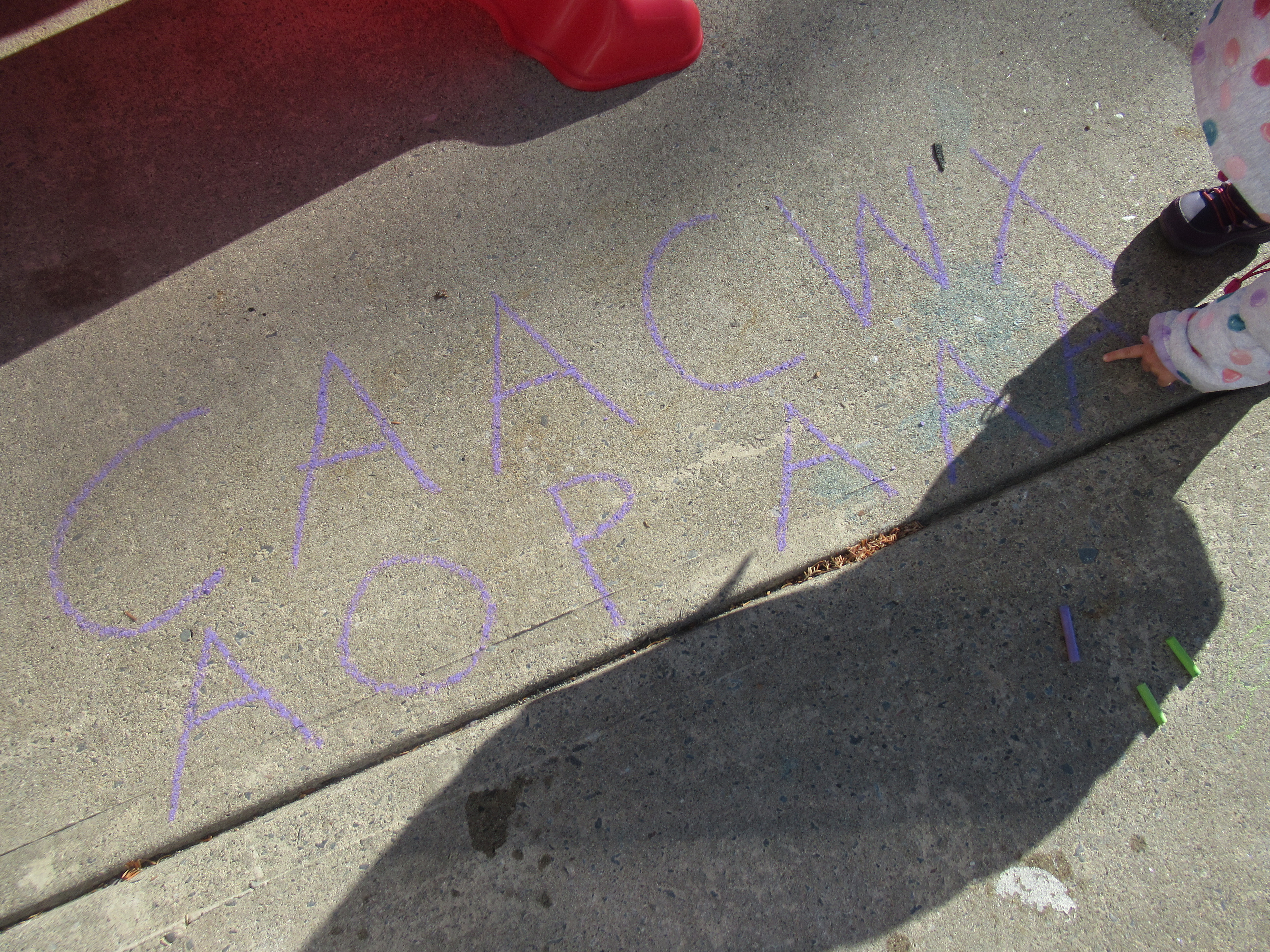
Mon-Fri Letter (8)

I wondered if she could circle it with a second color of chalk, and then had to laugh when she took my suggestion to “put green on it” literally.
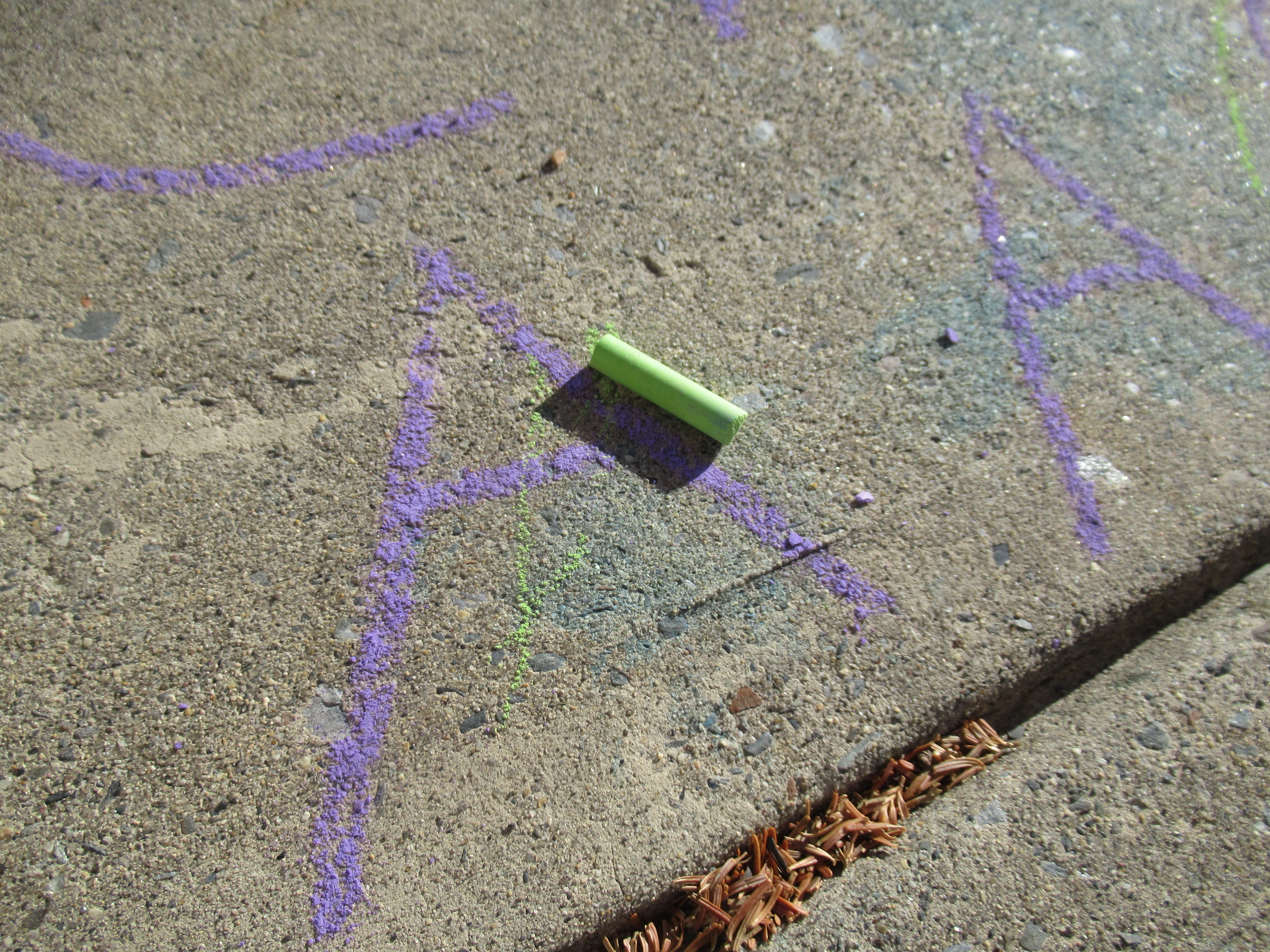
Mon-Fri Letter (9)

Note: If it’s not warm enough for chalk outside, you can do this activity on an indoor chalkboard, or even black poster board with white crayon in a pinch!
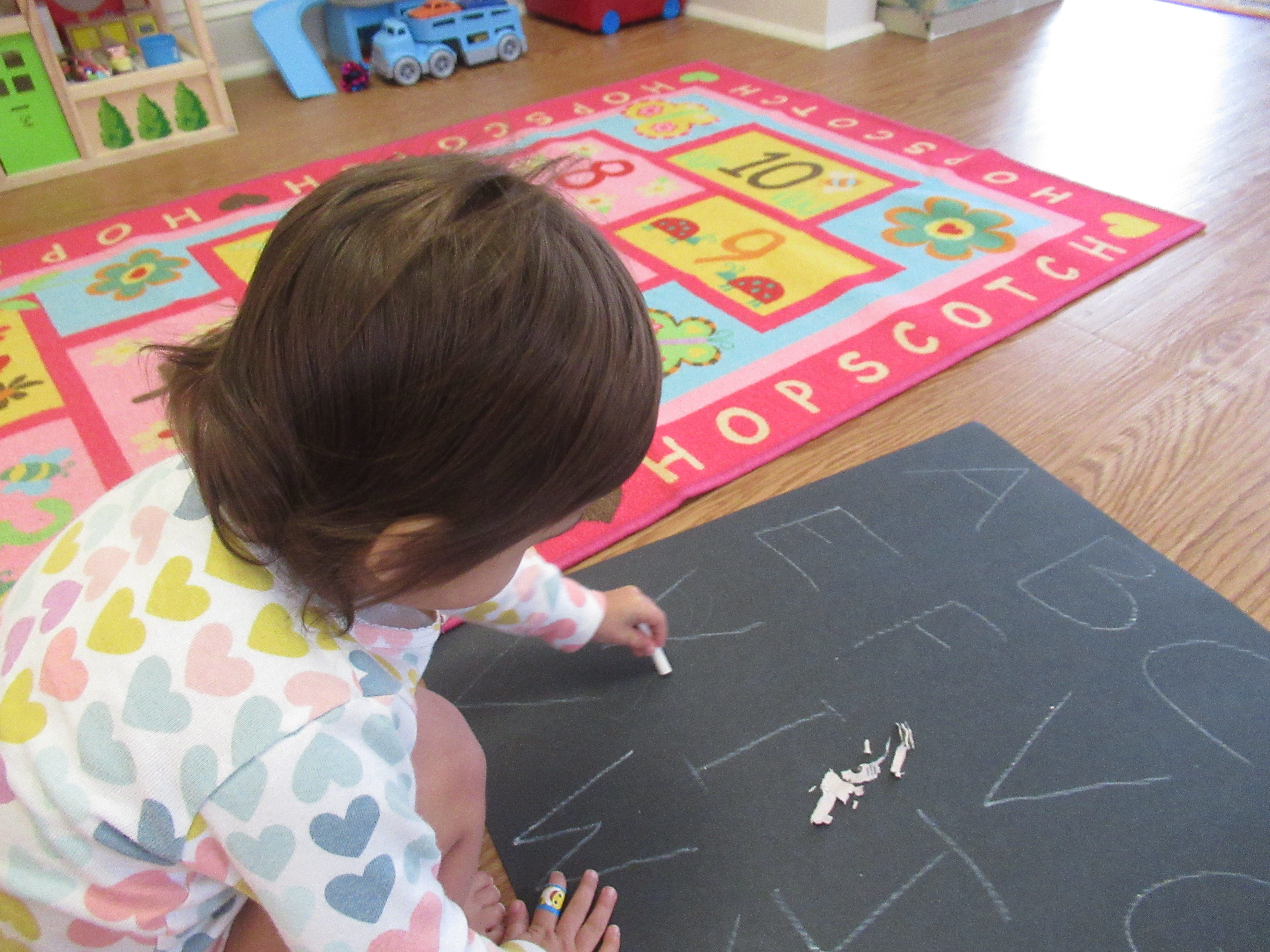
Letter Search for Toddlers (4)

We played that version recently to help her find V for Veronika among a sea of other letters.
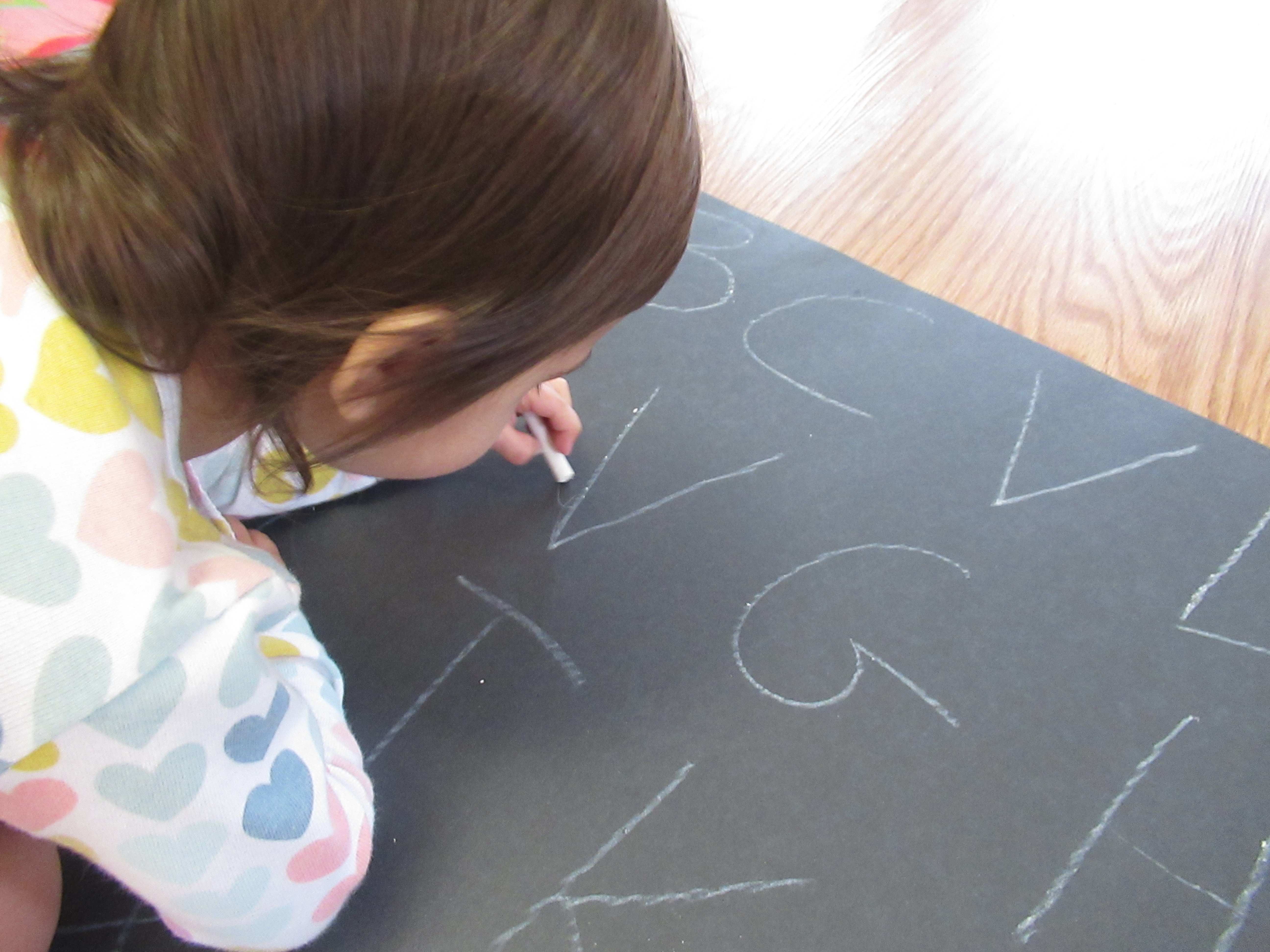
Letter Search for Toddlers (3)

Hands On suggested a few other letter activities like Bubble Wrap Pop or Follow the Tape Maze, making the full suite of activities take 7 days instead of 5. But Veronika is on the young side for those options, and I like that this set gives her the weekend off.

Will we keep this up for all 26 letters moving forward? I may simplify things, but overall this is a great and doable plan with a young toddler!
Mon-Fri Letter (10)

Pipe Cleaner Shapes

Pipe Cleaner Shapes (4)

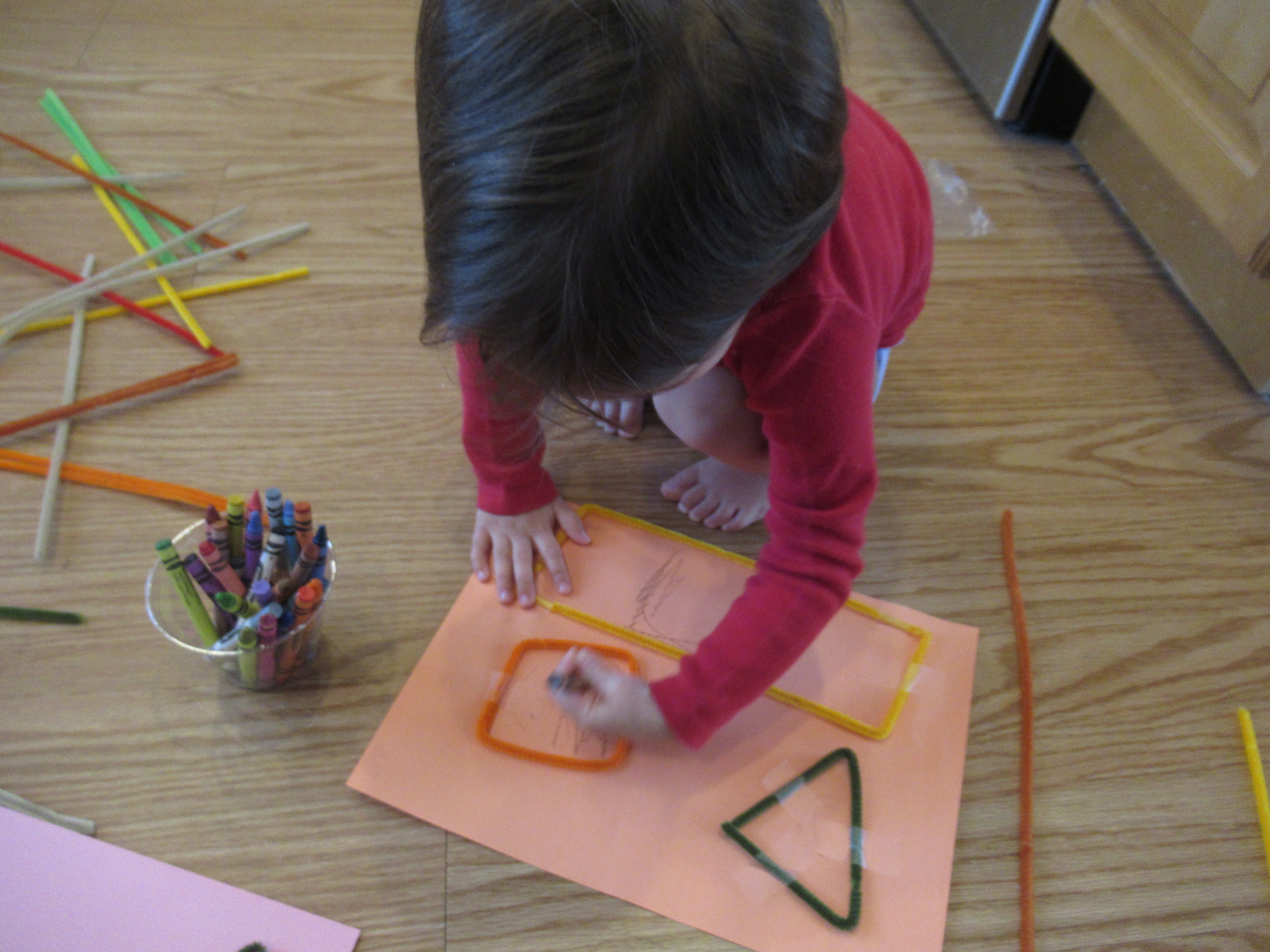
This easy project is a great way to help little ones develop the hand-eye coordination to color within the lines. In this case literally, thanks to bumpy raised lines made from pipe cleaners.

As Veronika played with a few extra pipe cleaners, I arranged others in simple shapes like triangles, squares, and circles on sheets of construction paper, and then taped them down.

Pipe Cleaner Shapes (2)

Then I simply showed her how to use crayon to color within the shapes. She loved choosing which color to use in which shape.

Pipe Cleaner Shapes (3)

It was neat to watch her reaction when her crayon came up against the pipe cleaner “bumper”, forcing her to stay within the lines. I could see her brain working as she realized she had to stop her crayon before it ran over he edges.

Pipe Cleaner Shapes (5)

In sum, this is a great early lesson on pen control, which is the first step towards drawing all those shapes…down the line.

Eat Your Letters

Letter Sandwiches (2)

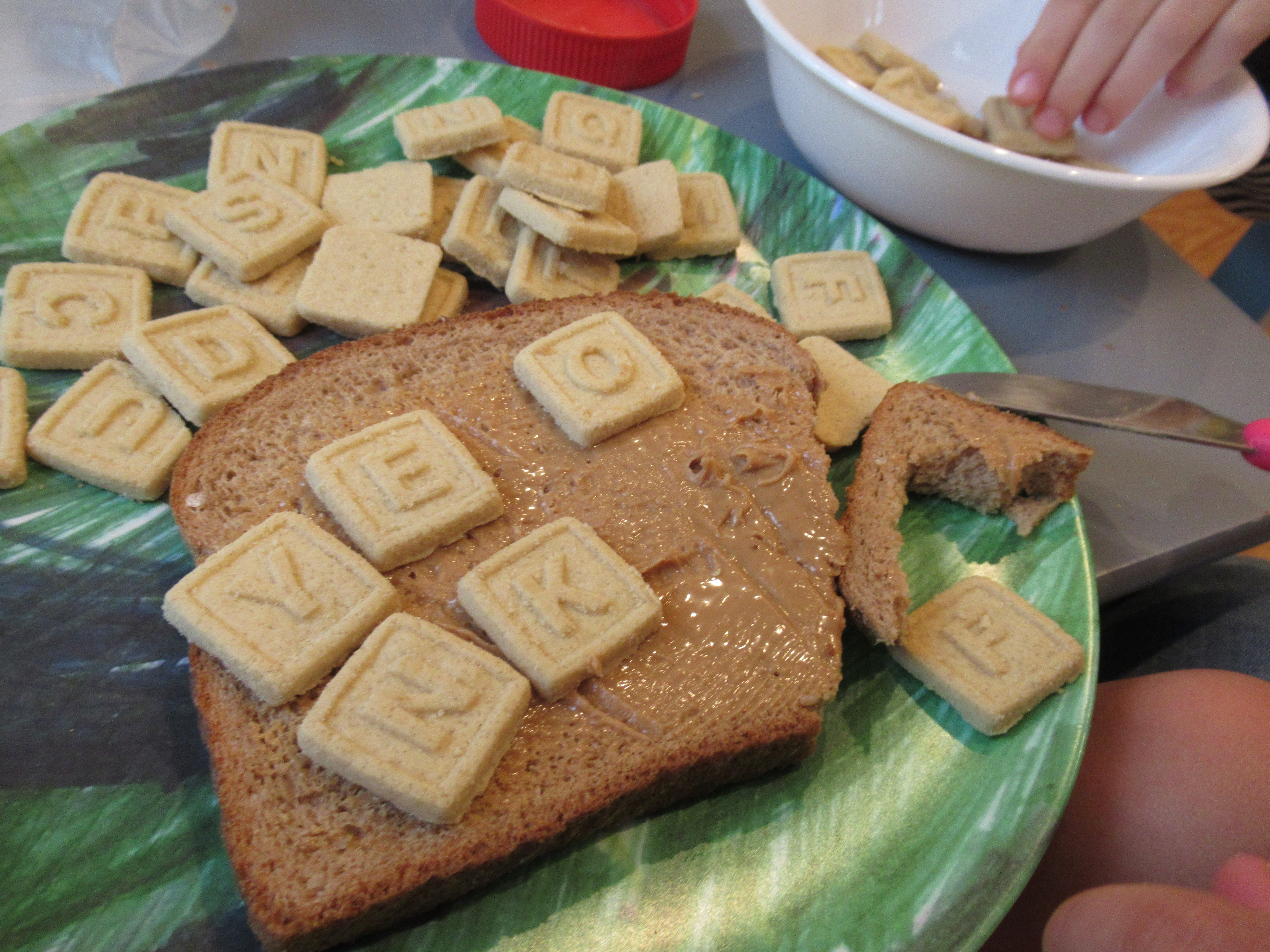
Veronika is fascinated with letters now, adding daily to the list of those she recognizes, and she loves pointing them out to me. “Letter C!” she said in the grocery store yesterday, spotting one on a sign. To reinforce her interest, I picked up a few grocery items with letters right on them!

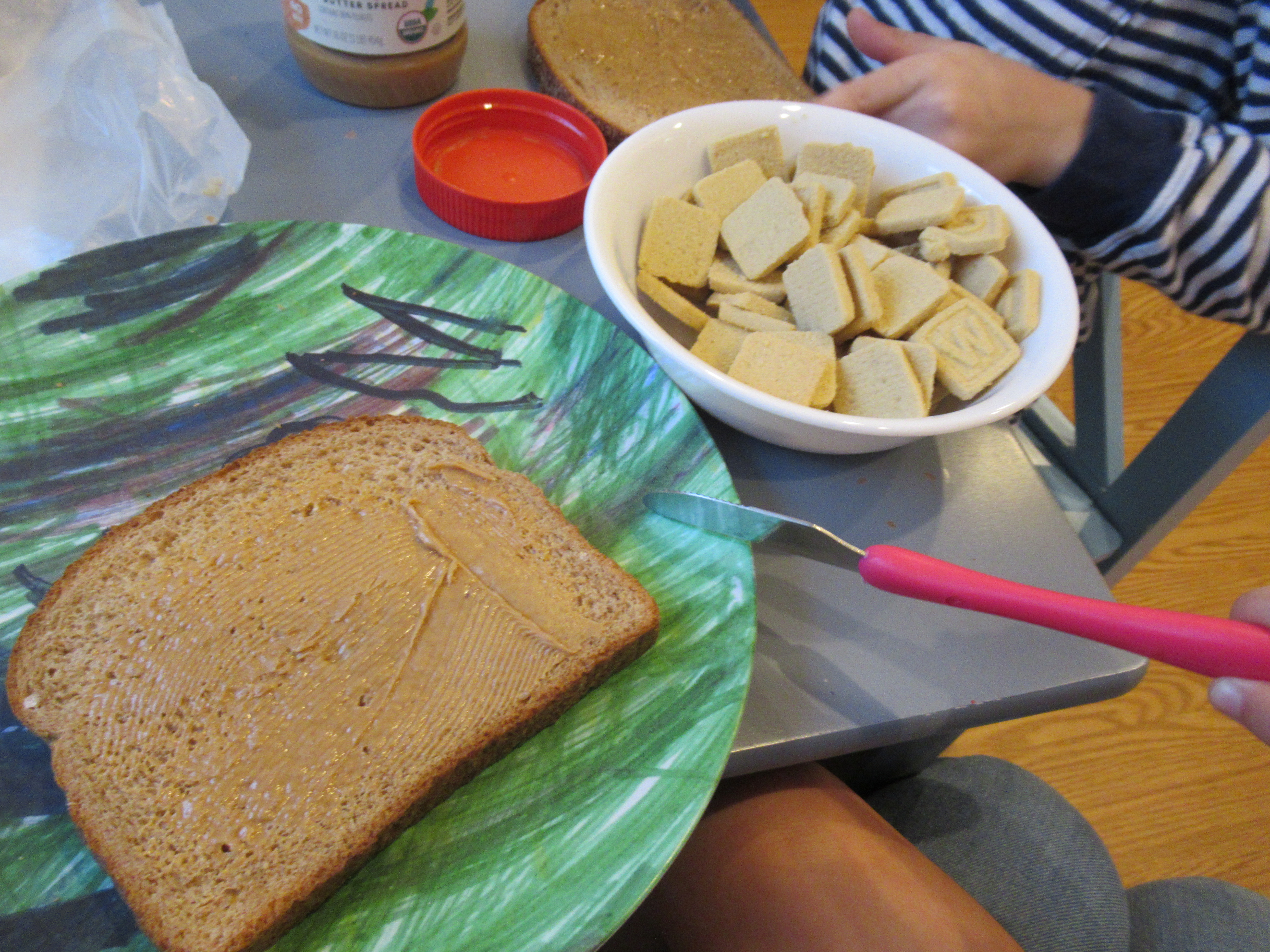
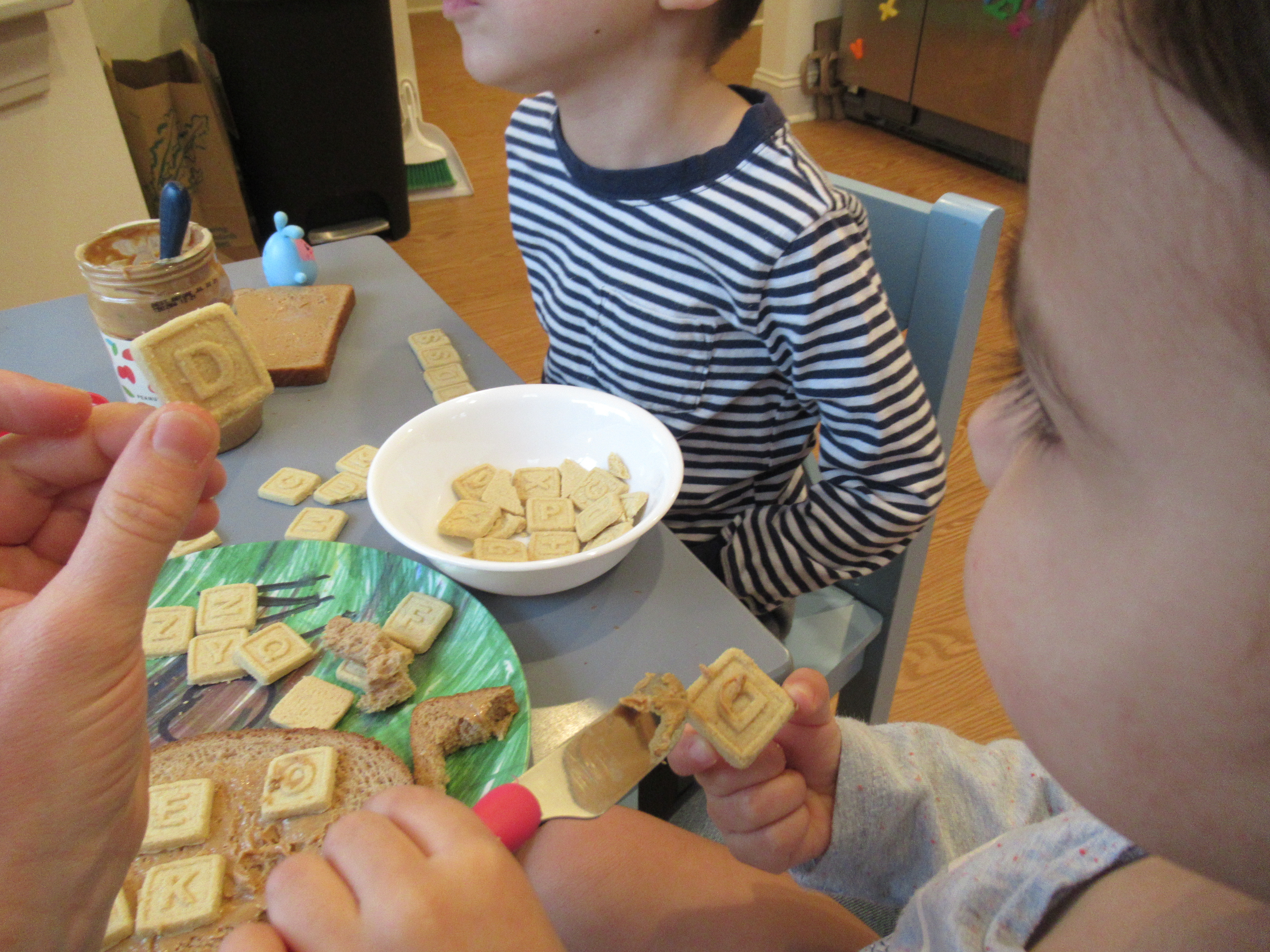
My original plan was to buy Alpha-Bits cereal but couldn’t find it at the store. Instead, I purchased letter cookies from Earth’s Best, and letter-shaped pasta from Banza. For the cookies, I first spread peanut butter on toast slices to make them sticky, which turned them into little “easels”. I showed Veronika how to sort through the letters and spelled out simple words for her (love, cat), along with her name.

Letter Sandwiches (1)

I also held up one cookie at a time and asked what letter she saw. She knew some new ones from the last time I quizzed her, including H and D now!

Letter Sandwiches (5)

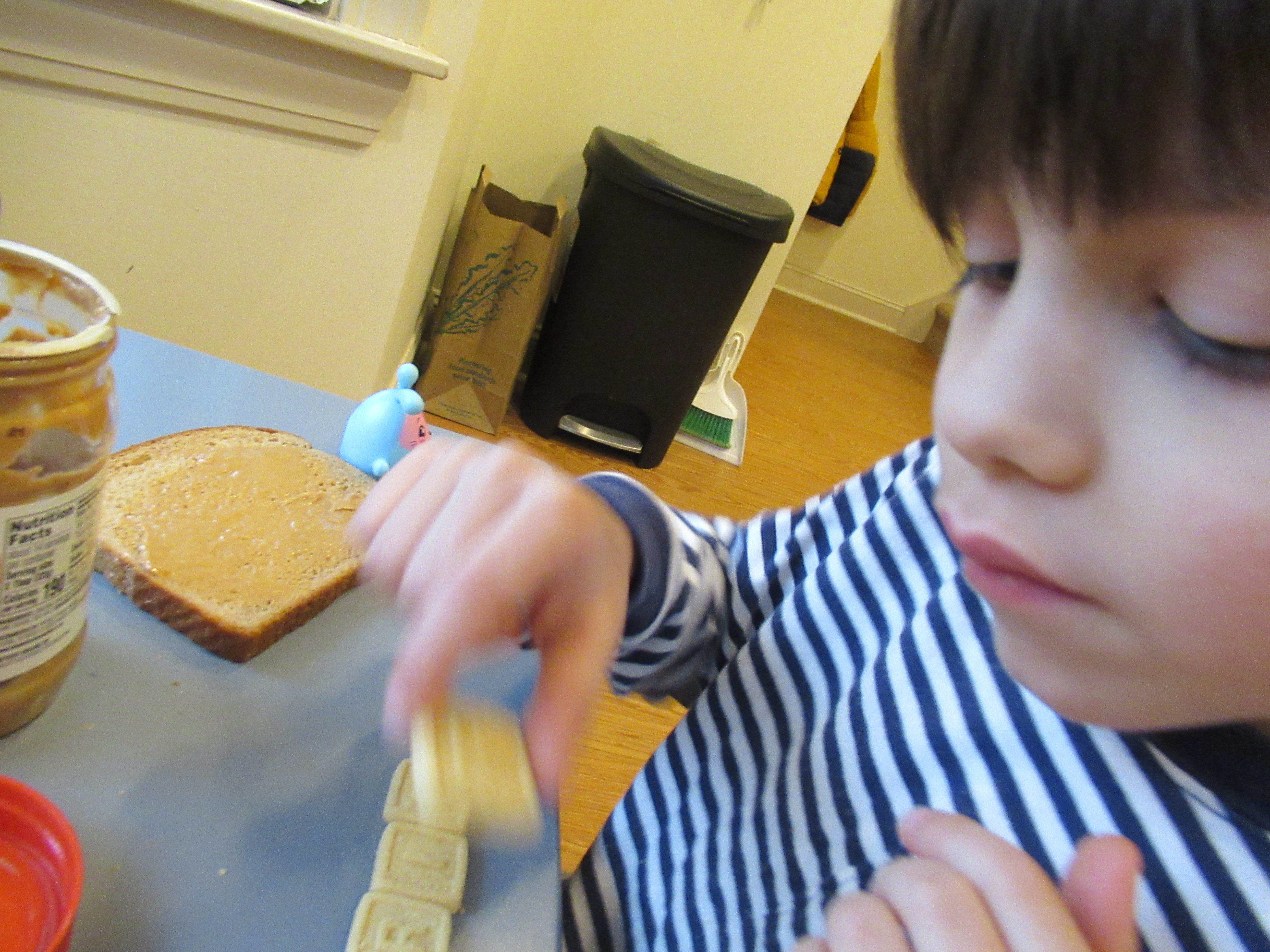
Big brother Travis quickly wanted to join in, eager to spell his name. We ran into a snag only because the kids were snacking, too, which meant we were soon missing letters we needed!

Letter Sandwiches (3)

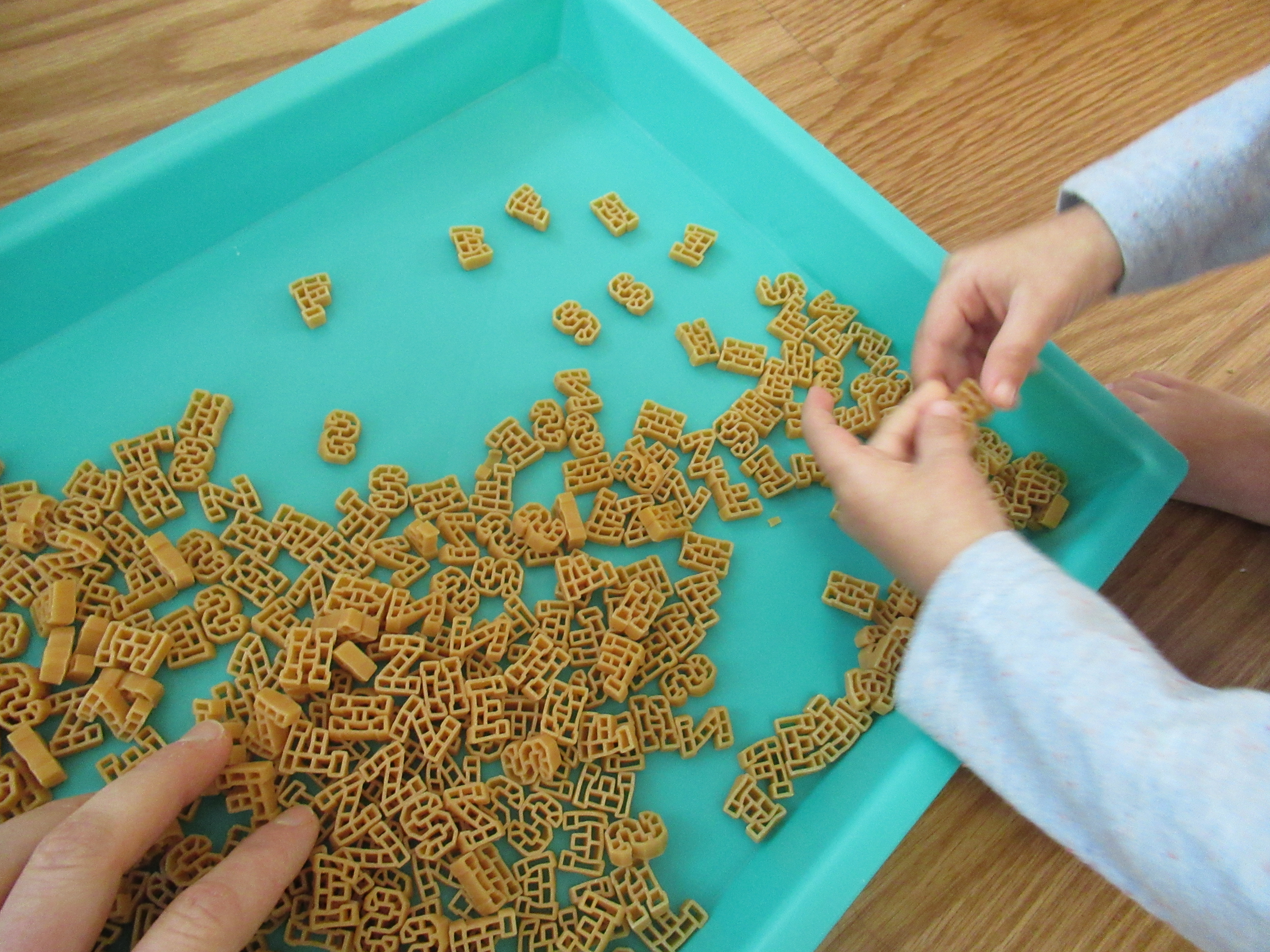
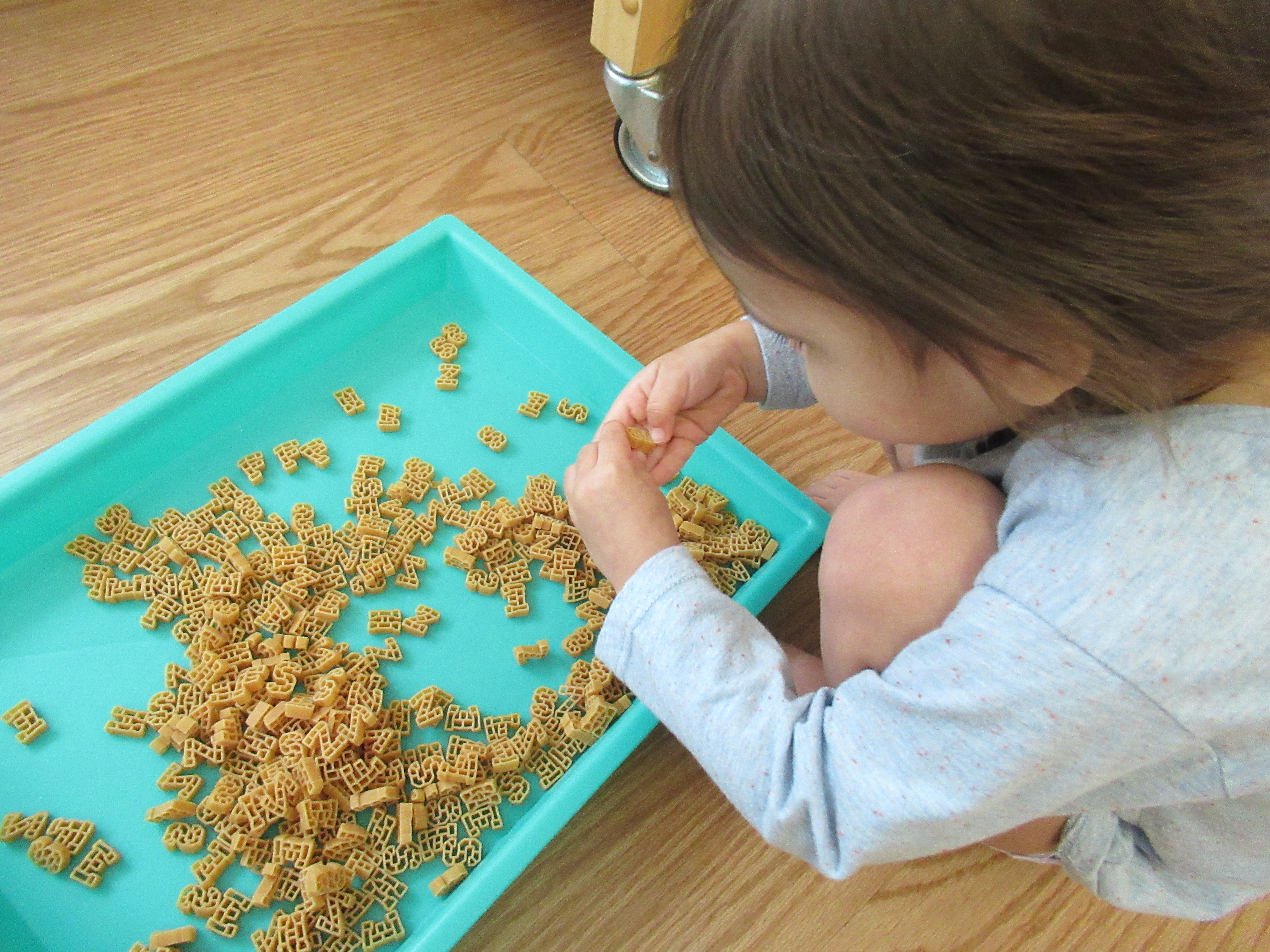
After that, I dumped out the letter pasta onto a tray for Veronika to further explore. This was more like sensory play, but also great for learning. I again held up one letter at a time and asked her which it was.

Letter Sandwiches (6)

It turned out the pasta only came in five letter shapes, so we briefly sorted them, too. “Another S!” she said proudly, adding it to the pile.

Letter Sandwiches (7)

If you do find Alpha-Bits cereal, go ahead and arrange them on those peanut-butter bread slices, then finish up the activity by eating your open-faced sandwich!

Sorting Blocks as a Graph

Block Graph (3)

Veronika made her first graph today! Okay, so there was lots of mommy help involved, but large building blocks and a large sheet of butcher paper make this particular graph quite toddler-friendly.

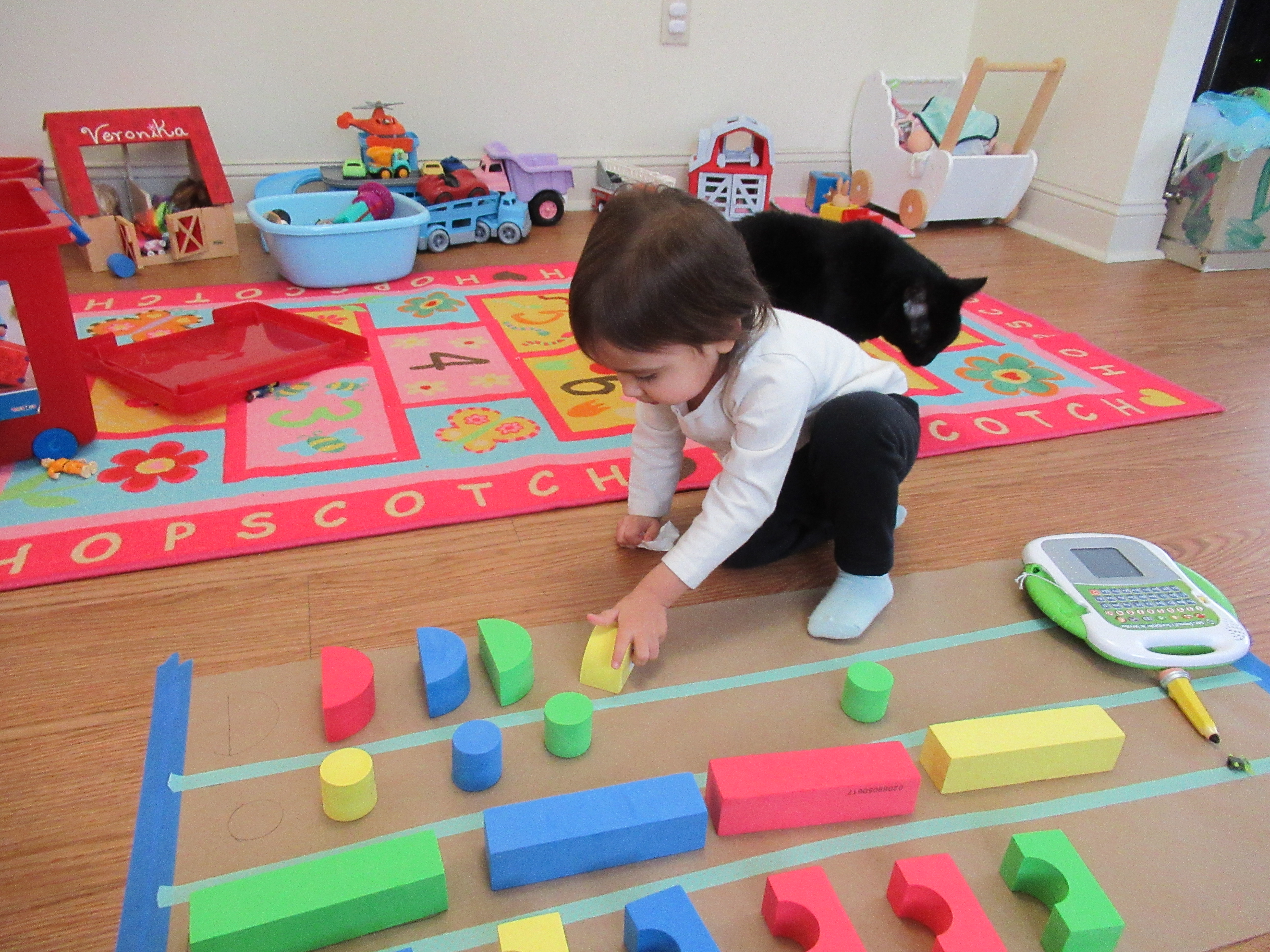
First, I taped down a long piece of paper to the floor with painter’s tape, then marked off 4 columns using washi tape. At the bottom of the graph, I traced 4 of her block shapes. I chose ones that are newer to her (archways, semi-circles) now that she’s mastered early ones like triangles and squares. And of course you can include more than 4 categories if you’re doing this activity with a preschooler.

Block Graph (1)

Now it was up to Veronika to place each block in the right column. “Where does the semicircle go?” I could prompt her. “With the semicircles!” she chimed in. It wasn’t an activity that she was motivated to complete on her own, but if I asked a leading question for a block, she knew where to put it.

Block Graph (2)

Then we flipped over the paper and repeated the activity, but this time making a graph by color!

Block Graph (5)

This version was even easier for her to complete. “It goes with the yellow,” she might say, picking up a yellow block and adding it to the yellow column.

Block Graph (6)

Did she entirely understand that we were making a mathematical graph to compare the amount of blocks by shape or color? Not yet, of course, but it was a great early intro to sorting and graphing. The large visual at the end was neat to see.

Block Graph (4)

After that I challenged her to stack her blocks by shape, too. Preschoolers can get really creative with this part, perhaps attempting a tower all out of triangles, or all out of semicircles.

Block Graph (8)

One thing is for sure: this was yet another great way to get novel play out of our blocks!

Block Graph (9)

Learning with Blocks, Three Ways

Letter Blocks (2)

I love when I can draw Veronika’s attention to her blocks in novel ways, and here were three ways to grab her attention today. As a bonus, all of them involved different types of learning!

For the first, I typed up the alphabet in big letters and printed out the page, then cut it apart so each letter was an individual square. Tape one letter per one of your child’s building blocks, and each block becomes its own specific letter!
Letter Blocks (1)

As I taped them on, we said the name of each letter and its phonetic sound, and sang through the Alphabet Song several times. Then it was time for her simply to play! But as she built towers, I named the block she was holding. “Oh, you have the G block!” I could say, or, “B block is on top of A block!”

Letter Blocks (6)

I plan to leave these little labels on so that her familiarity with each letter symbol increases every time we dump out the bin of blocks.

Letter Blocks (5)

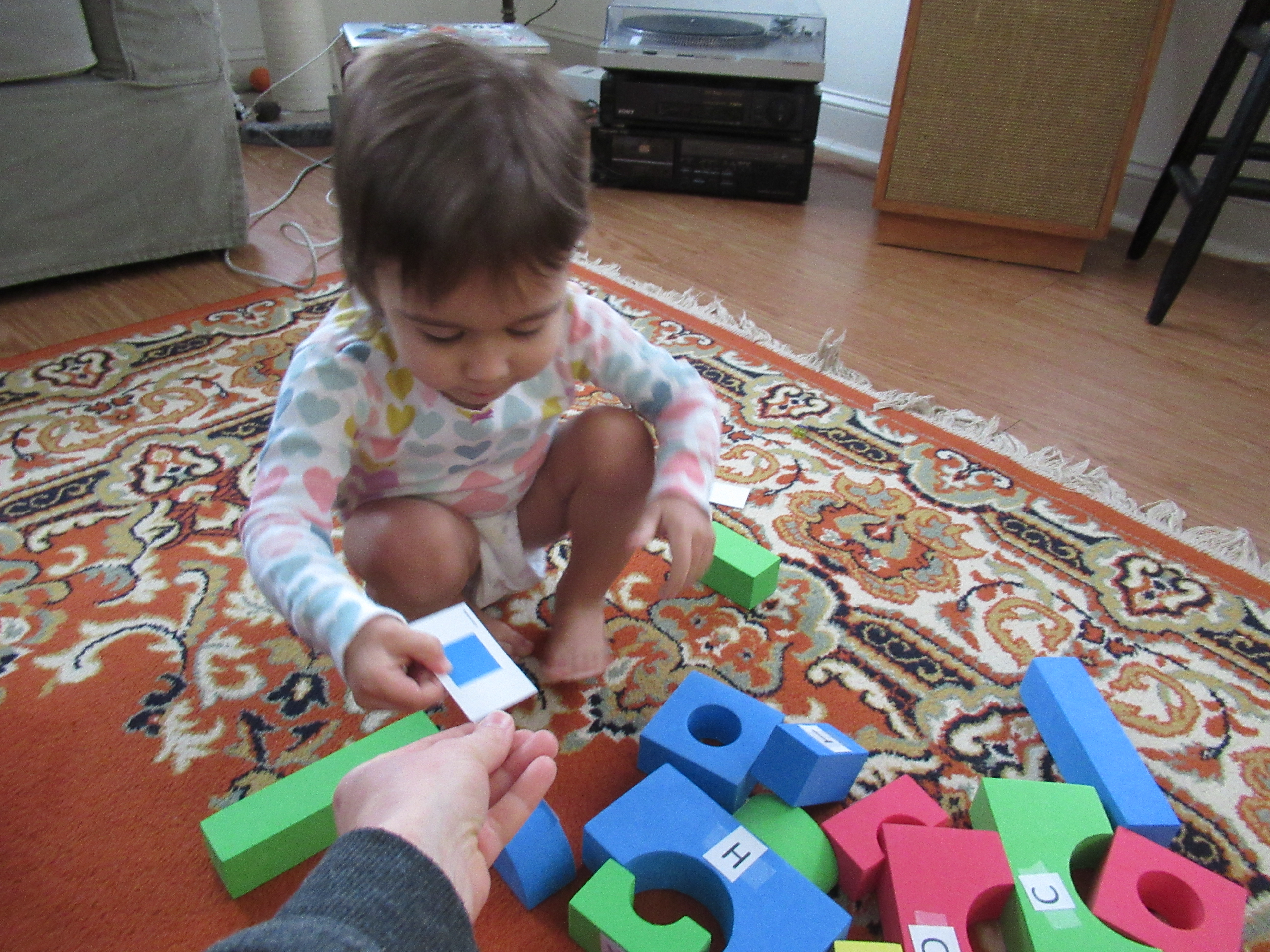
For the second novel way to play, we focused on two different skills: counting and listening to instructions. Thanks to a great tip from Hands on as We Grow, I used the cards from our Candyland board game to give her specific directions.

Listening with Blocks (1)

Draw a card and ask your toddler to hand across whatever appears on it. “Can you find me one blue block?” I asked her, holding up the Candyland card with one red square. She was an ace at handing me one block of the appropriate color, whether the green, yellow, or red that followed.

Listening with Blocks (2)

Things got a little trickier for her when I pulled a double color (a kid favorite when playing Candyland, of course).

Listening with Blocks (4)

“Can you hand me two red blocks?” I asked. She seemed confused, so I pointed to the squares on the card. “One, two!” and then lined it up with two blocks. “One, two!” I repeated. It was hard for her to focus on this challenge, so we turned to game number three…

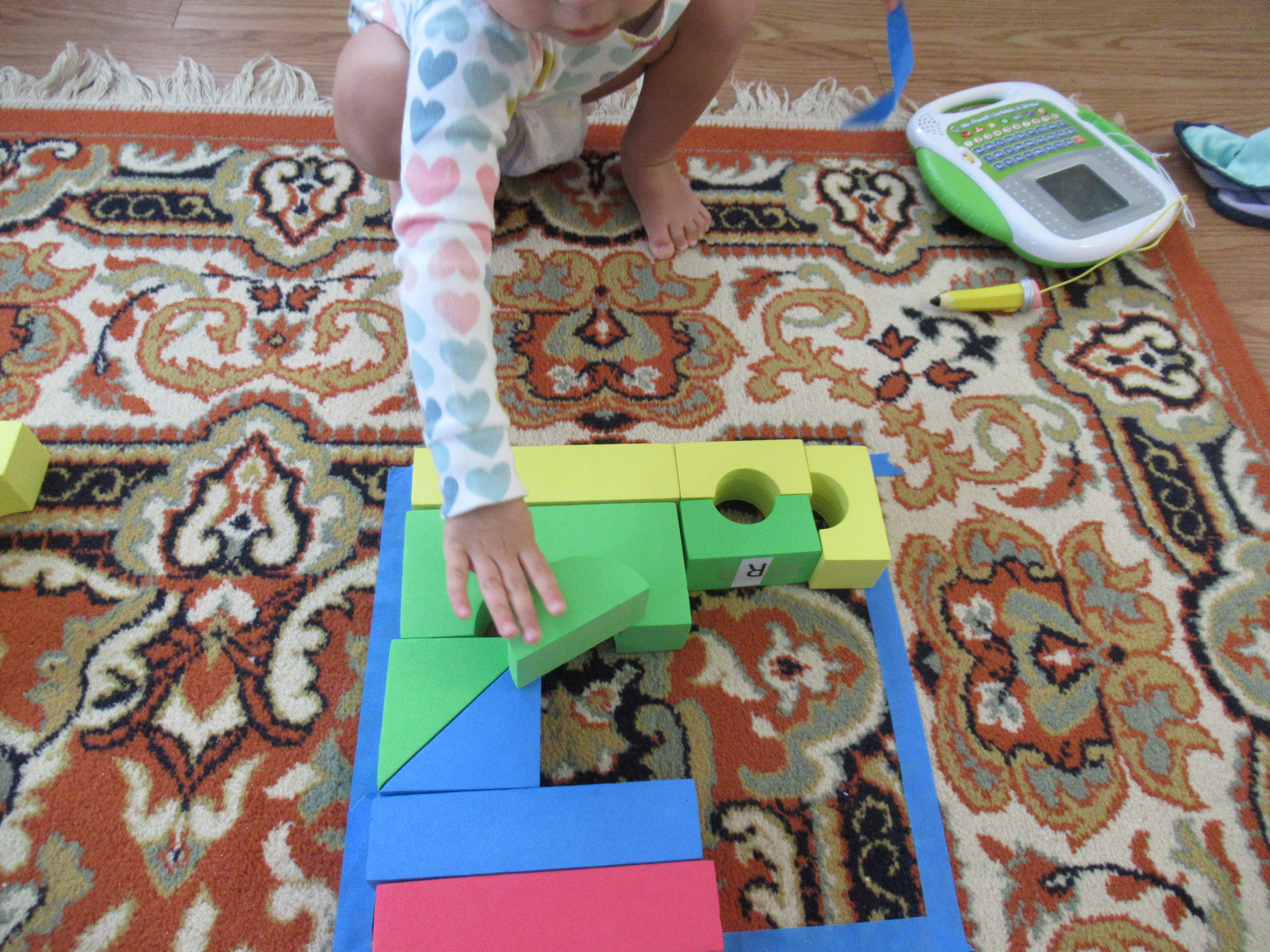
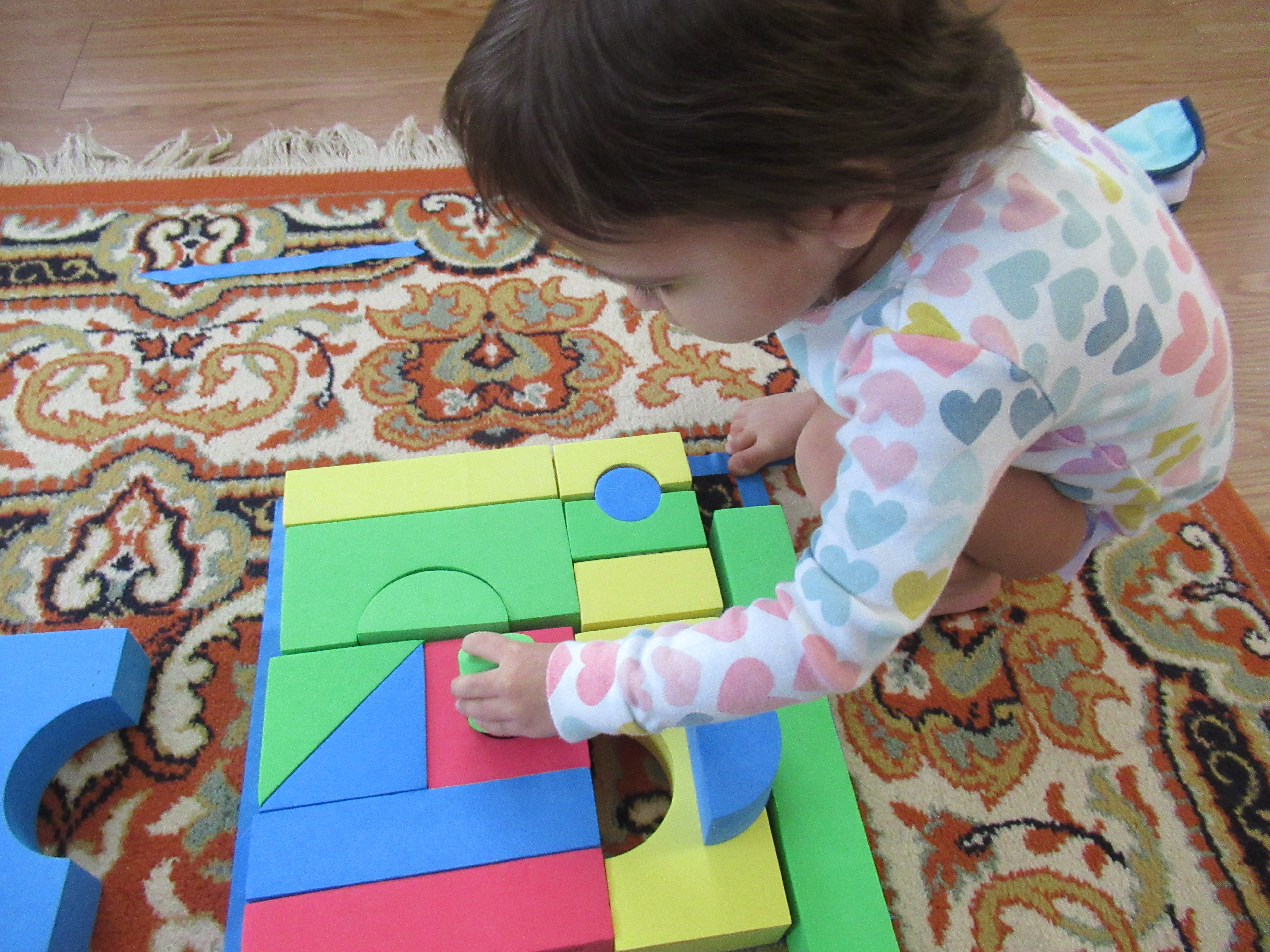
…which was actually a repeat of a block puzzle game we played a few months back, but last time I made the puzzle much too big. Tape out a small square or rectangle on the floor with painter’s tape and show your child how to arrange blocks in, puzzle-piece style!

Block Puzzle (1)

Veronika especially liked when there were small spaces to fill, like the semi-circle that completed an archway or a small circle inside a square block.

Block Puzzle (2)

Not, bad, with a little mommy help! Older kids can make their taped areas progressively larger as they grow more skilled at this.

Block Puzzle (3)

How does your toddler learn with blocks these days? Please share in the comments!

Depth Perception Walk

Distance Walk (4)

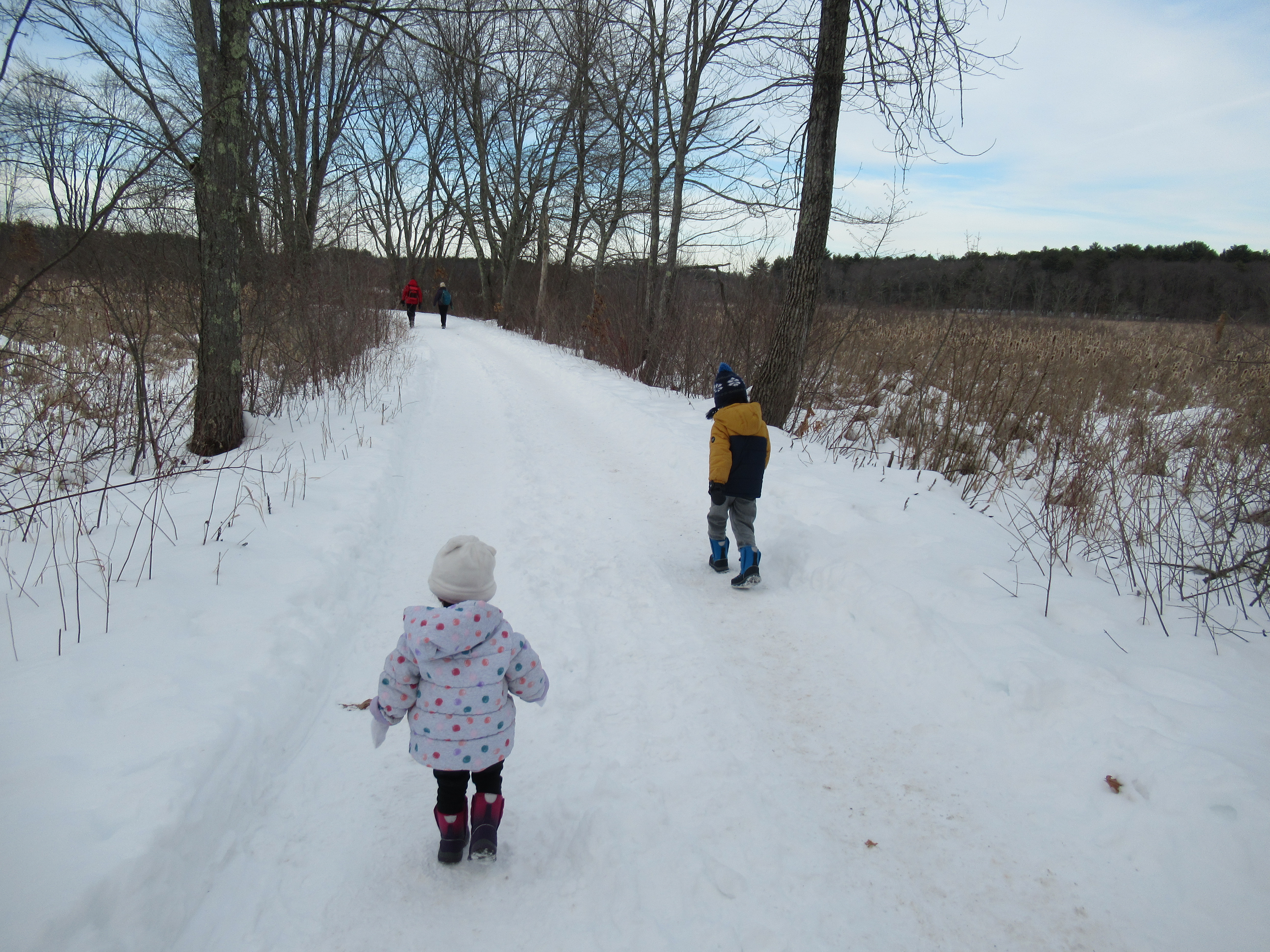
It might seem like there’s less to seek and find on winter nature walks than in other seasons, but the opportunities to leran are still abundant! To wit, we had beautiful cold sunshine today, and used the walk to play with concepts of distance and balance for Veronika!

As we walked, big brother Travis and I took turns pointing out items that were either near (“These branches are so close!”)…

Distance Walk (2)

…or far. “Those leaves are far away!” Travis said. “Let’s race to them!” I was so proud of his teaching, because the racing was his own idea, and helped highlight the difference between items close by and those we needed to get to.

Distance Walk (1)

After that we played around with how fast or slow we could cover the distances. Travis loved leading Veronika with the trail of a stick in the snow, too, sometimes close to her…

Distance Walk (3)

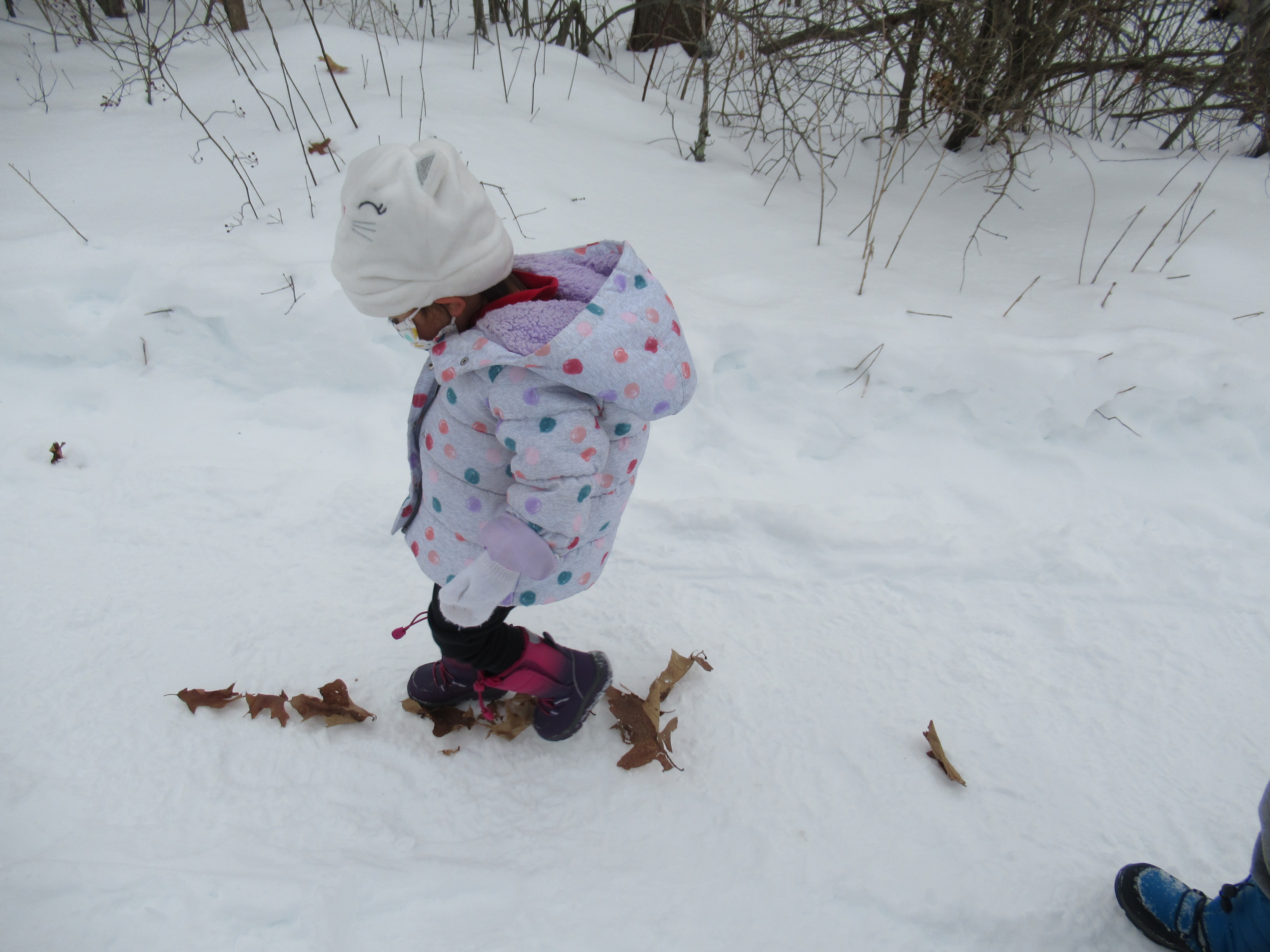
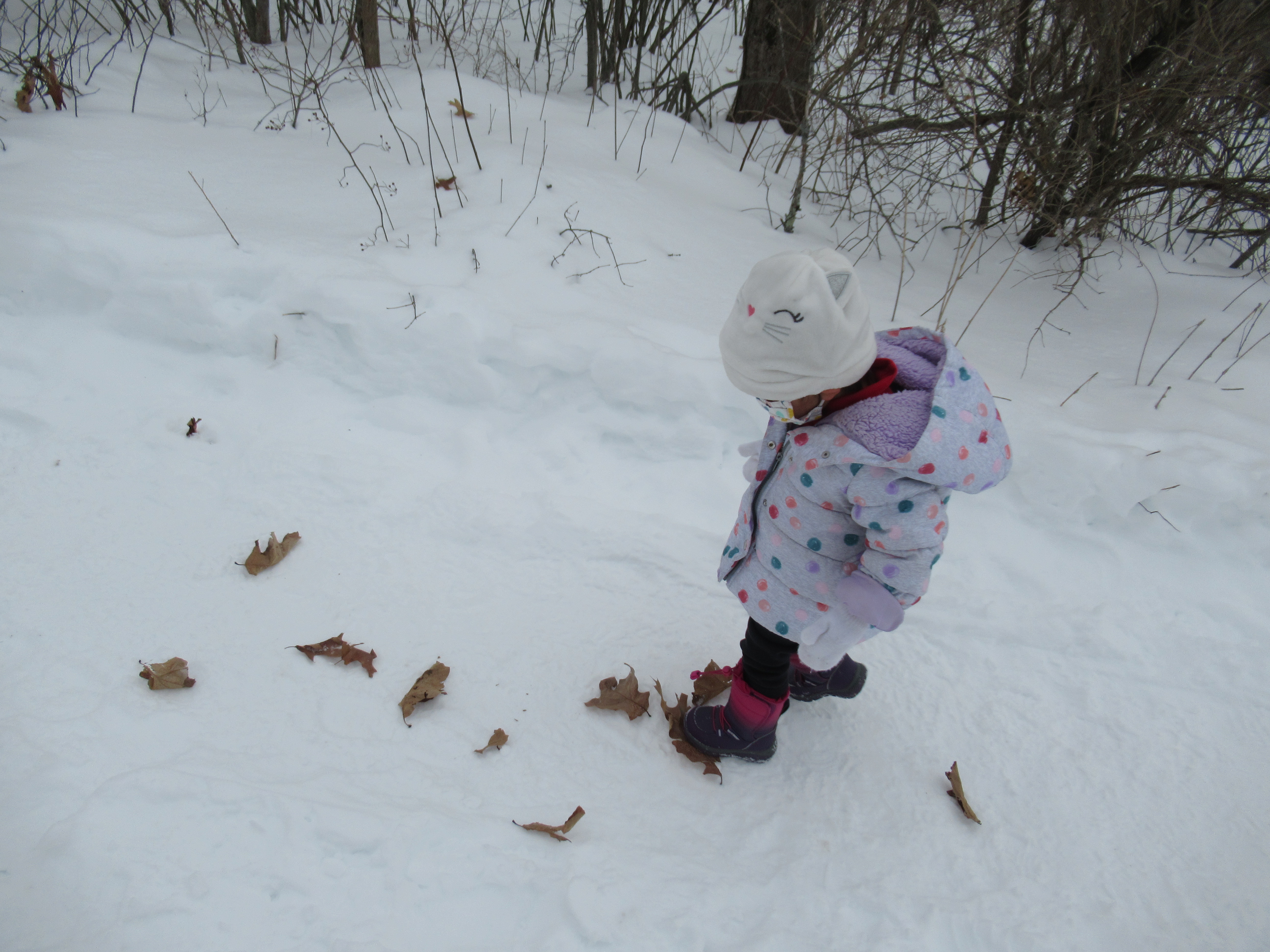
…and sometimes far up ahead. For some final fun on the return walk, we collected a few nature treasures (winter-brown leaves were the most readily available!) and lined them up like a balance beam in the snow.

Distance Walk (5)

Veronika loved testing her balance as she walked along the line. Once the leaves scattered, she repeated the task but this time her footsteps took her in a zig-zag! All in all, these activities kept us warm and active on what could have been a frigid walk.

Distance Walk (6)