Leaf Paintbrush

Leaf Brush (6)

Wondering what to do with the leaves and other odds and ends that have blown in from your fall nature walks? Turn them into paintbrushes!

We tried out a few different methods for this fun art project. Some twigs we brought home already had multiple leaves attached, and these were ready-made brushes.

Leaf Brush (1)

The other option is to gather together a few leaves of the same size and shape, and secure with twine or string around a twig.

Leaf Brush (2)

Pine needles made a brush that looked like a mini broom!

Leaf Brush (5)

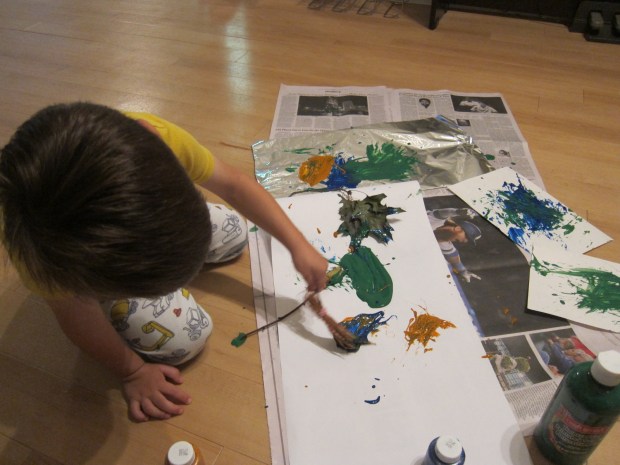
I set Travis up with his “brushes” and paints, and let his creativity go wild. We started out with small pieces of poster board to paint on…

Leaf Brush (3)

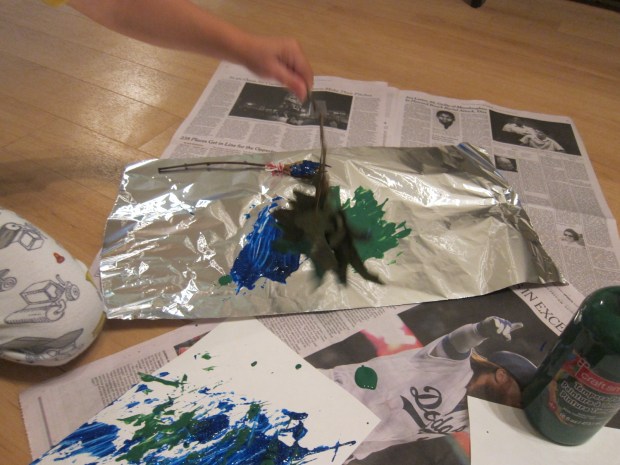
But he requested a bigger canvas, which soon had him splattering and swishing colors this way and that.

Leaf Brush (7)

He loved pouring out big dollops of paint and running the brush through them.

Leaf Brush (8)

Our verdict is that the pine needle brush definitely worked best, but all of them were fun. “Mom, is it okay if I’m messy?” he asked at one point. Embrace the chaos and say yes, and let your little artist have fun with this one! You can always wipe the paints off the floor after.

Leaf Brush (4)


Glowing Nature Crate

Koala Glowing (13)

There seems to be a feedback loop between our Little Explorers and Koala Crate subscriptions these days! Having recently learned all about glowworms through the former, our most recent crate form the latter was not just about nature but about glowing nature and touched upon… glowworms! Luckily there was very little overlap in the projects. Thanks to the booklet and crafts, we covered: glowing fungi; glowing insects; and glowing sea creatures.

Koala Glowing (14)

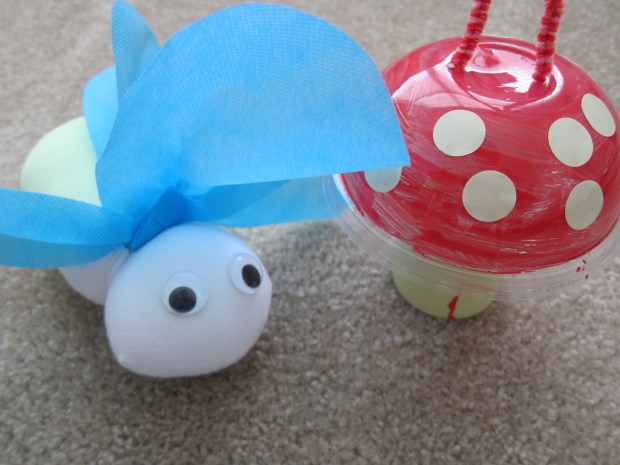
Travis loved the crafts in our kit this month. We started with the Mushroom Lantern, which featured a pitch-perfect way for preschoolers to paint; squeeze from the provided paint tube onto the mushroom’s plastic cap…

Koala Glowing (1)

And then dab on with the sponge brush.

Koala Glowing (2)

Travis loved the method so much that some additional squeezing and dabbing on newspaper had to happen.

Koala Glowing (3)

We left the mushroom cap to dry, after which it fell to me to finish the craft. Attach the cap to a cardboard tube base by threading a pipe cleaner through the cap and a foam circle (this is your lantern’s handle), and then pushing the foam circle into the tube to secure. Glow-in-the-dark stickers around the mushroom cap are the final touch, and what will make your lantern glow after charging in sunlight or other direct light.

Koala Glowing (4)

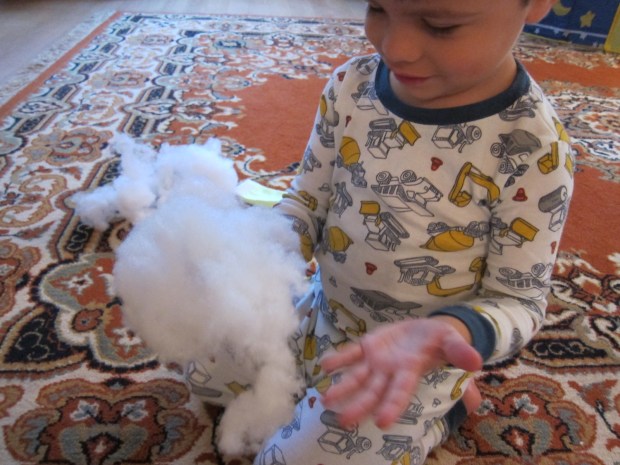
While our mushroom dried, Travis couldn’t wait to start on the next craft – the most adorable stuffed Glowing Firefly. The kit came with a sock in glow-in-the-dark material; try painting glow-in-the-dark fabric paint on a white sock to replicate this at home. Before we even began the craft, the sock itself and the fluffy roving were big hits.
Koala Glowing (6)

We’ve had stuffing projects from Koala before which Travis was a bit young to help with at the time; this time around, he inserted much of the roving himself!

Koala Glowing (7)

I added the provided rubber bands to seal off the end and head, and looped through the fabric wings. Travis squealed with how cute our firefly was once we attached 2 googly eyes.
Koala glowing (17).JPG

Then it was time to set it beneath a lamp (direct sunlight also works) to charge up. For some daylight fun, the firefly is also perfect for adorable games of catch.

As we waited, we dove right into the final project: a glow-in-the-dark Jellyfish Game. I was a bit disappointed in the mechanics of this one, both because it was very hard for little hands to put the craft together and because it didn’t last long once created.

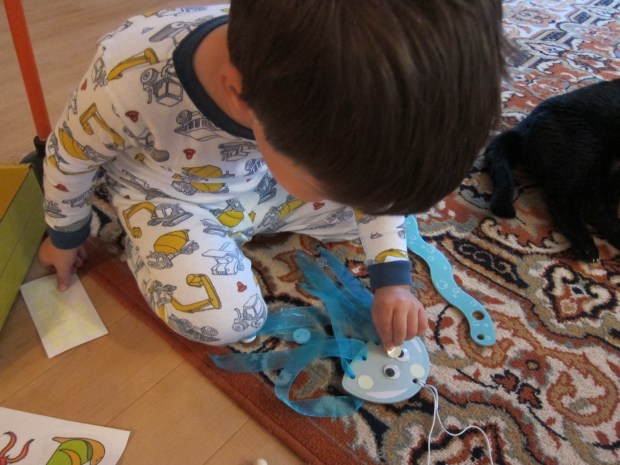
Travis could definitely help thread the fabric tentacles through the cardboard jellyfish body…

Koala Glowing (8)

And add the eyes and glow-in-the-dark stickers…
Koala Glowing (9)

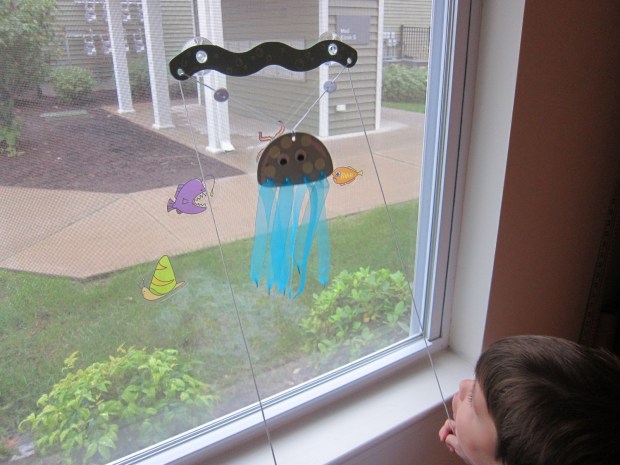
But from there it was up to me to thread the jellyfish through a provided cardboard frame and rig it up on the window with provided suction cups.

Koala Glowing (10)

To be fair, Travis went wild for the game; by tugging on the strings, children can now wiggle and wobble the jellyfish around.

Koala Glowing (12)

A couple vigorous tugs broke the frame, however, so the fun didn’t last long. I was disappointed Travis didn’t get a chance to see the jellyfish in motion after dark and all aglow. Luckily there were additional stickers to decorate our underwater scene, which Travis loved with and without the jellyfish around. So my best advice for enjoying this craft is to proceed gently!

Koala Glowing (11)

The booklet included a very cute counting poem about glowworms, which became a fast favorite of all the glowing creatures.

firefly jar (1)

We looked them up online, before acting out the glowworm activities – inching along, and curling up to sleep.

firefly jar (6)

For further glowworm fun, make a quick glowworm cave by squirting glow-in-the-dark paint into a mason jar.

firefly jar (2)

You can simply squirt in the paint, or smear it with a q-tip. Or perhaps your child will think this looks like little fireflies caught in a jar!

Firefly Jar (7).JPG

As the grand finale, we set all three toys under his lamp near bedtime, then turned out the light for a glowing extravaganza!

Koala Glowing (16)

Fall Friends

Fall Friends (9)

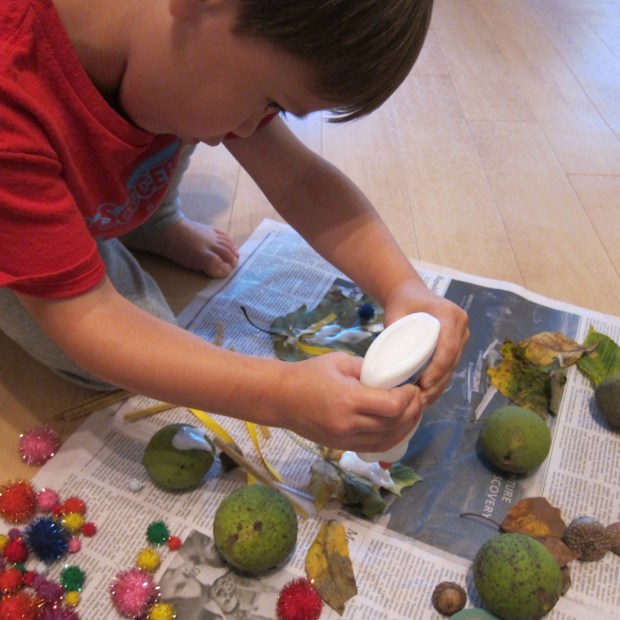
Here’s a quirky, sweet project to compliment any fall nature walk – make a collection of the items you find, then bring them home and turn them into “friends”.

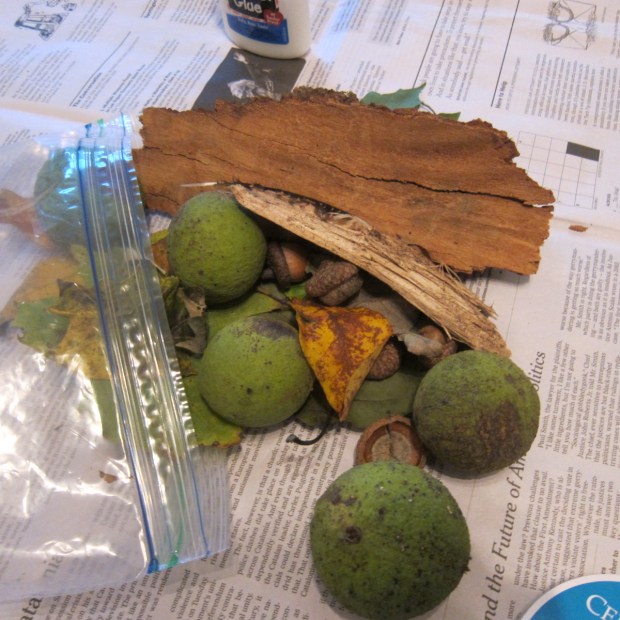
Travis loved this element to a stroll we took at a local Audubon society, delightedly filling up the bag I brought along. Although unseasonably warm weather means we didn’t find too many brightly colored leaves yet, there is no shortage of neat things to find. Big seed pods were especially a hit, as were little acorn caps, pieces of bark, and other small treasures.

Fall Friends (1)

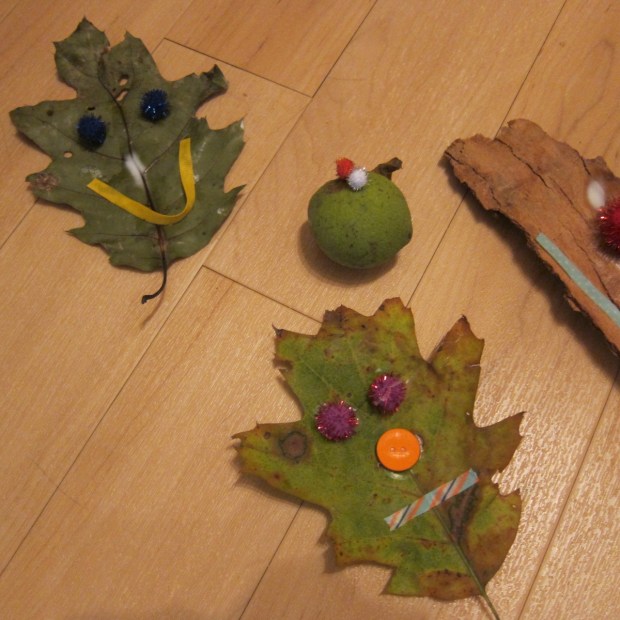
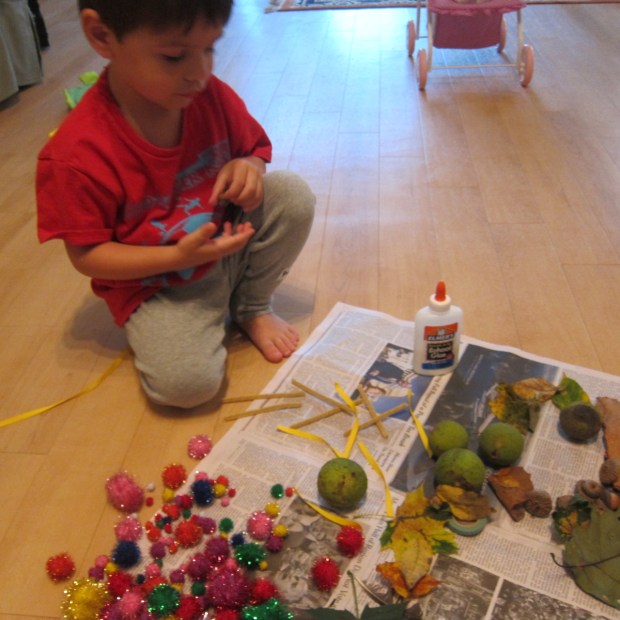
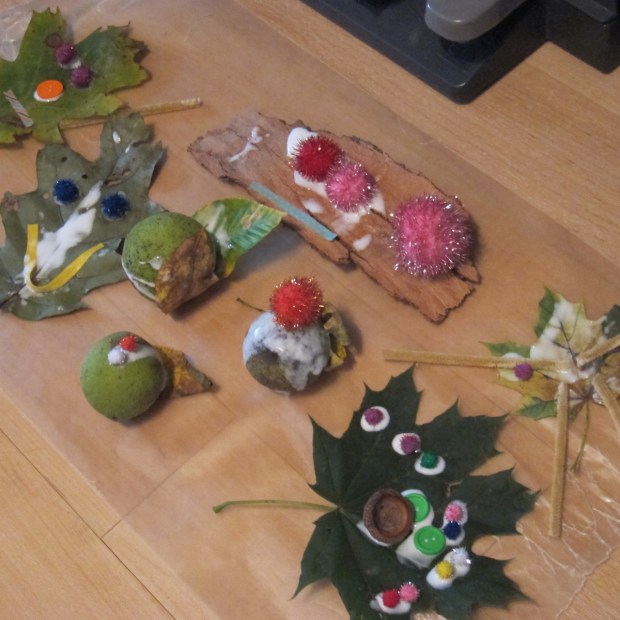
To make our friends once home, I gathered odds and ends from our craft bin – pom poms and buttons were good options for eyes.

Fall Friends (2)

Ribbon and decorative tape could make smiles. Travis thought it was funny that the tape made a straight line for an “angry friend” (who actually was his favorite!) instead of a curved smile.

Fall Friends (3)

Adults, you may need hot glue depending on what materials you’re working – pipe cleaner arms and legs needed the help of the hot glue gun, as did items we glued to roly-poly seed pods.

Fall Friends (10)

In sum, have fun with this one. What will be the body of your friend – bark, a rock, a big leaf? The only limit is your child’s imagination!

Fall Friends (7)

Pillowcase Wish Flags

Pillowcase Flags (7)

This project is yet another that I’ve tabled for over a year, since I needed a hot glue gun. Armed with my latest favorite crafting tool, it was a beautiful project after school one day this week.

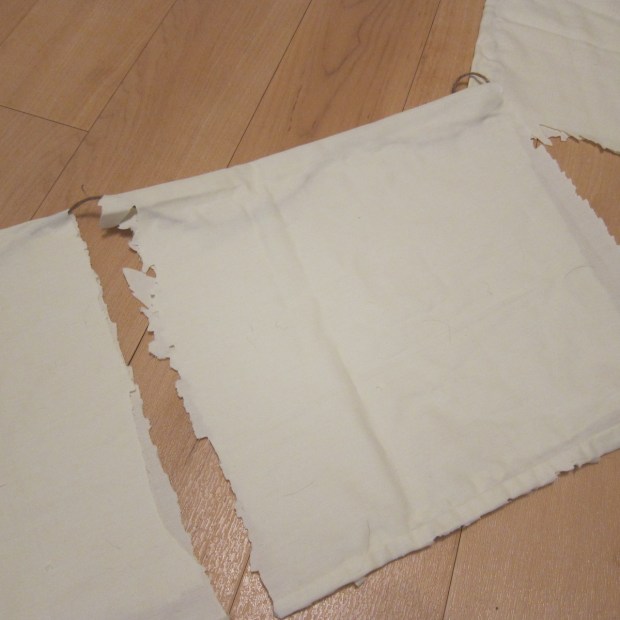
Wish flags (also called Prayer Flags) are rectangular strips of cloth traditionally found outside in the Himalayas, used to bless the countryside or impart another wish. I told Travis a bit about the history and context of the project as I cut an old pillowcase into 4 rectangles.

Pillowcase Flags (1)

Cut a long piece of twine, and arrange your rectangles in a row with the twine extending across all 4; make sure to leave enough twine at the end to hang your flags up later. Fold each rectangle in half over the twine, using hot glue to seal it down.

Pillowcase Flags (2)

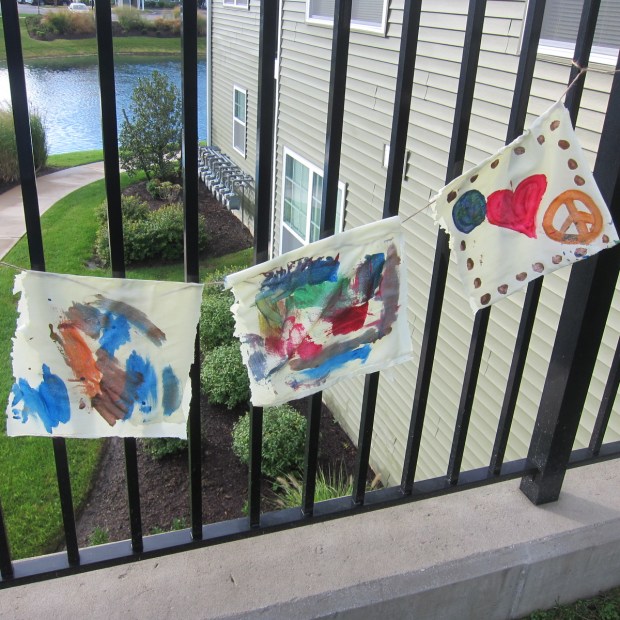
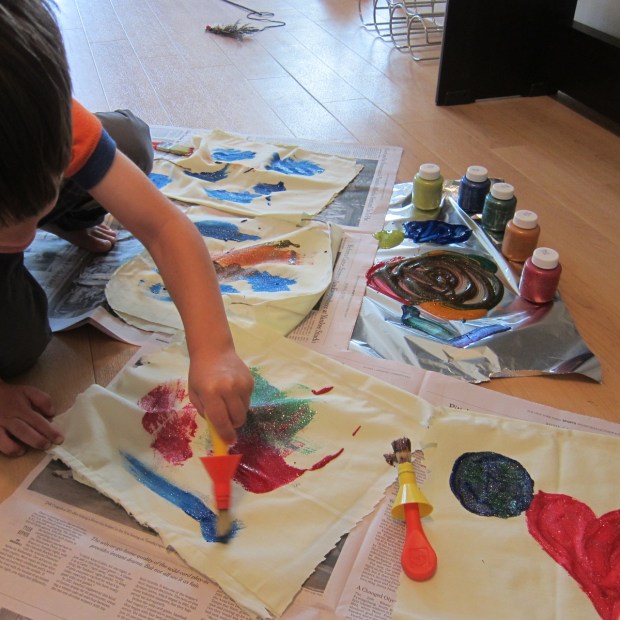
If it’s not glitter paint these days, then Travis isn’t interested, so glitter paint it was to decorate our wish flags!

Pillowcase Flags (3)

The idea was to mimic the woodblock-printed text and images that can be found on Tibetan prayer flags. Travis mostly just had fun painting, but I asked him if any of his art work represented a wish or hope he had for anyone. Older children may really want to put some thought into this part!

Pillowcase Flags (5)

Mama added a wish flag for love and peace on earth for all humans and animals.

Pillowcase Flags (4)

Once the paint dried, we hung our project outside in the sunshine – what a beautiful addition to any landscape!

IMG_0020


Pumpkin Leapfrog

Pumpkin Leap (2)

Wondering what to do with all those pumpkins from the pumpkin patch? Get in a little exercise before you carve them!

Pumpkin patches are such a fantastic outing this time of year; ideally head to one where your child can truly see where pumpkins come from (attached to the vne), instead of a big lot where pumpkins have been placed in a row.

Fall Bucket (4)

Travis was so proud picking out our pumpkins, especially since he could lift them all by himself. At home, I asked if he wanted to play pumpkin leapfrog, which earned an eager and curious “Yes!”

Pumpkin Leap (1)

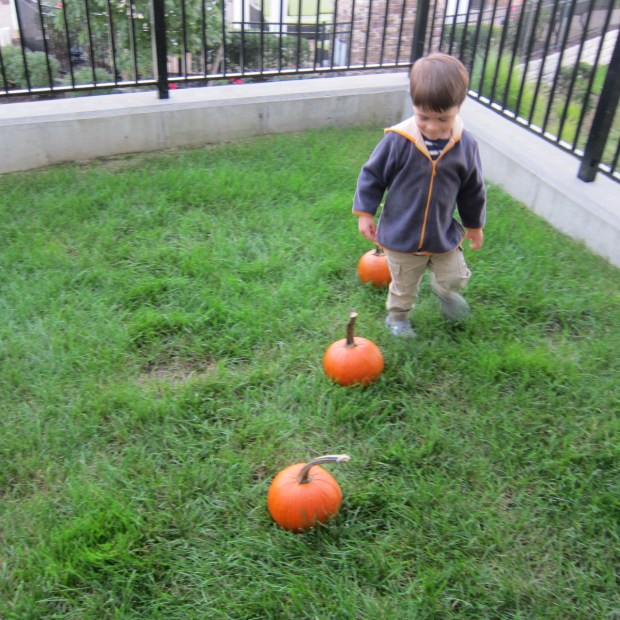
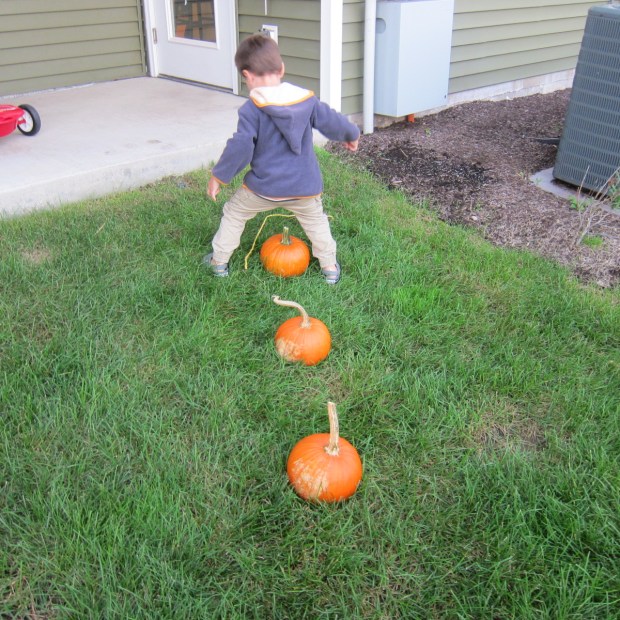
Set your pumpkins up in a line (use as many as you’d like – we had 4, but you could go up to 8 or even higher, if you want to make the course harder), and cut a line of string to mark the start and finish of your course.

Pumpkin Leap (3)

Take turns leaping over the pumpkins, and see how long it takes! You can make this competitive for older kids by using a timer, or just be silly with it for younger ones.

Pumpkin Leap (4)

Next we ran a slalom “S” course around the pumpkins, great for practicing fancy footwork.

Pumpkin Leap (5)

From there, go on and make up your own silly versions. Travis loved straddling each pumpkin, running circles around them, and more.

Pumpkin Leap (6)

The perfect activity to tide us over until its time to carve, and yet another fantastic suggestion from our Barefoot Books Kids Garden set.


Rainbow Hunt

Rainbow Hunt (10)

The next time you’re at a paint store, stock up on paint chip samples (free) in every color of the rainbow. Then you can turn your next walk in a garden into a magical rainbow hunt!

Rainbow Hunt (1)

If you don’t have a garden of your own, find the nearest botanical garden or arboretum and enjoy this game on a summer’s afternoon.

Most paint samples come in strips of 4 or 5, so I cut them into individual squares and then placed all our “rainbow chips” in a bucket.

Rainbow Hunt (6)

There are two ways to play and we tried both. First, Travis selected a paint chip at random and we hunted until we found just the right shade…

Rainbow Hunt (13)

Aha!

Rainbow Hunt (5)

Or, we spotted a flower that we liked and then found the paint chip that was nearest in color in our bucket.

Rainbow Hunt (9)

Travis loved crossing every color of the rainbow off the list!

Rainbow Hunt (12)

This game was a fantastic prompt for stopping to appreciate a garden on another level…

Rainbow Hunt (11)

for paying attention to flowers we otherwise might have missed….

Rainbow Hunt (7)

and for enjoying all the scents and textures around us.

Rainbow Hunt (4)

Another great hit from Barefoot Books Kids’ Garden cards.

Rainbow Hunt (3)

Flower Prints

Flower Prints (6)

As summer draws to a close, I’m working through a bucket list of warm weather projects before we move on to fall and autumnal activities! This fun idea from Barefoot Books Kids’ Garden kit lets you bring flowers indoors as a keepsake that will last all winter!

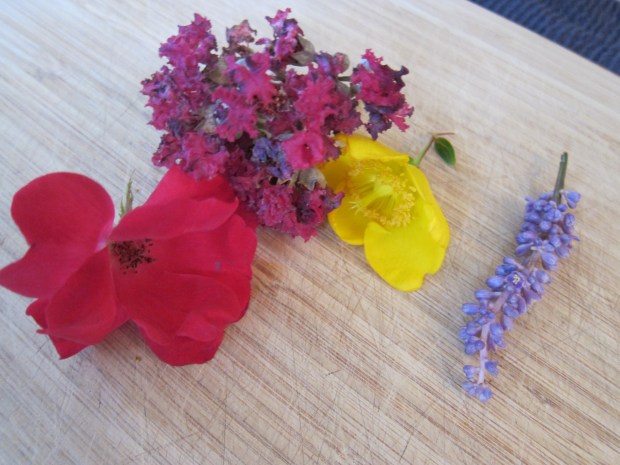
The first step of course was to gather our flowers. If you don’t have your own garden, find any pretty blossoms on a stroll through your neighborhood or a local park. Flowers that lie flat will work best, but we picked a variety just to test the results.

Flower Prints (1)

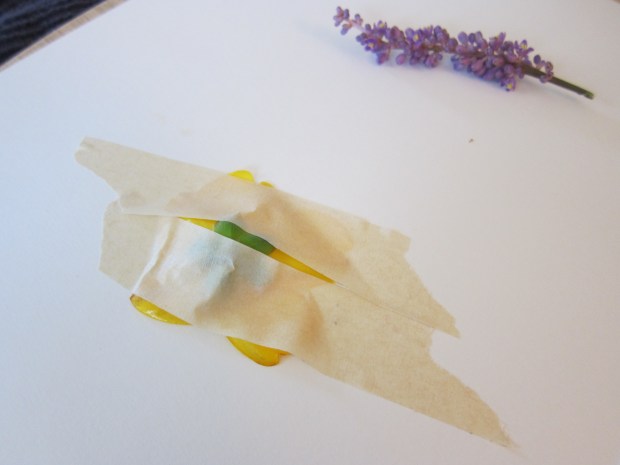
Travis was very intrigued by the set up when we returned home. On the floor, place an old dish towel for traction, followed by a cutting board and then watercolor paper.  Place your flowers, petals down, on the watercolor paper after removing as much of the stems and leaves as possible. Finally, cover your petals with painter’s tape, being sure to cover the flower completely, but trying not to let pieces of tape overlap.

Flower Prints (2)

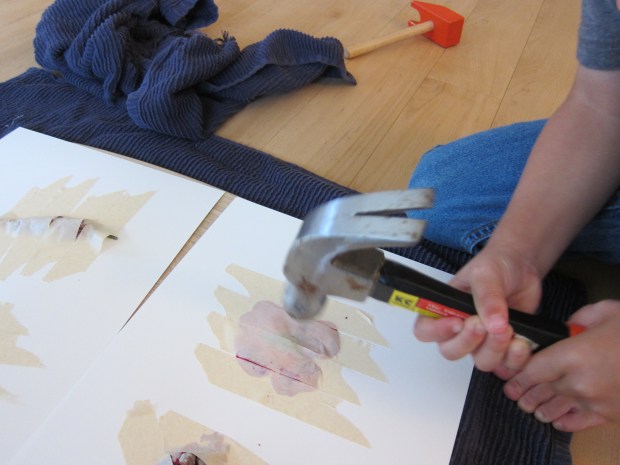
And now for the fun part! Although adults will need to do most of the hammering, Travis got to take a few swings at the flowers under careful supervision.

Flower Prints (3)

He then played along with his toy hammer while I finished the real work. You may want to peel back your painters tape a few times to make sure the color of the flower has transferred over to the paper, before removing the tape completely.

Flower Prints (5)

Peeling off the tape was great fun, too, of course.

Flower Prints (4)

Once the hammering was complete, Travis lost interest fairly quickly, but I loved the old-fashioned Victorian feel to the result. In a whimsical nod to the method by which we had obtained our prints, I “framed” them in additional painter’s tape in Travis’s room – a beautiful reminder of the fleeting beauty of summer’s blooms!

Flower Prints (7)

Mud Pies

Mud Pies (7).JPG

Kids usually don’t need any excuse to play with dirt, but at least with this project you get a lovely result! This game was yet another beautiful suggestion from our Barefoot Books Kids’ Garden kit.

To start, fill a pie plate or paper plate with soil using a hand trowel, leaving room on top. We’re new to having a backyard of our own, so Travis is loving all the play with shovels and dirt lately!

Mud Pies (1)

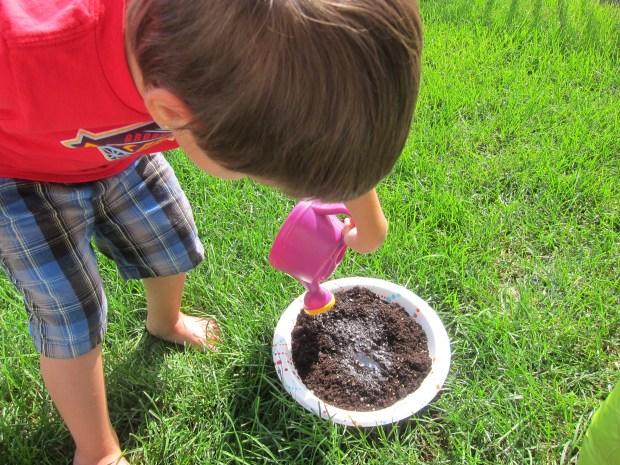
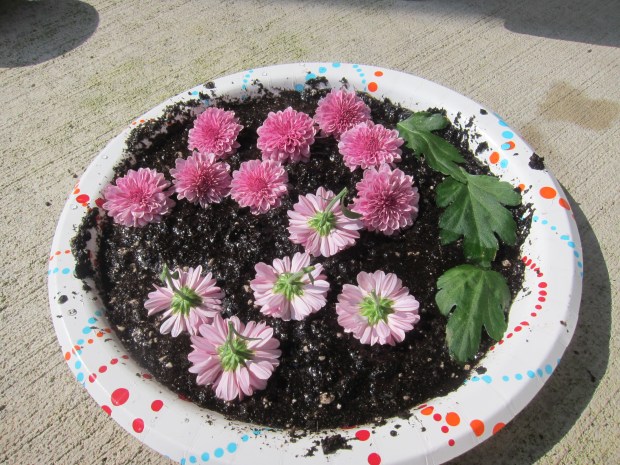
Slowly add water to the soil, stirring until you have a wonderful goopy mud. Travis loved this step of course.

Mud Pies (2)

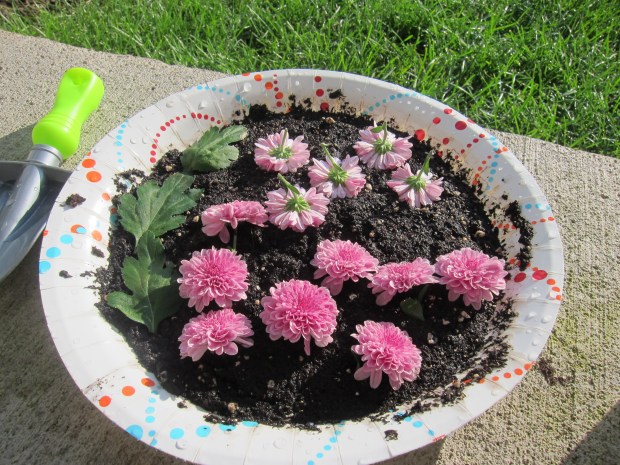
Now we needed to decorate our “pies.” Add any pretty flower clippings, leaves, or petals, and let your “baker” decorate to his or her heart’s content. I placed a few flowers facing up, but Travis preferred his facing down – a whimsical little element.

Mud Pies (4)

Leave your mud pie to bake in a sunny spot. We checked it again after 4 hours, but since the day had clouded over, it was mostly set, but still a bit mushy.

Mud Pies (6)

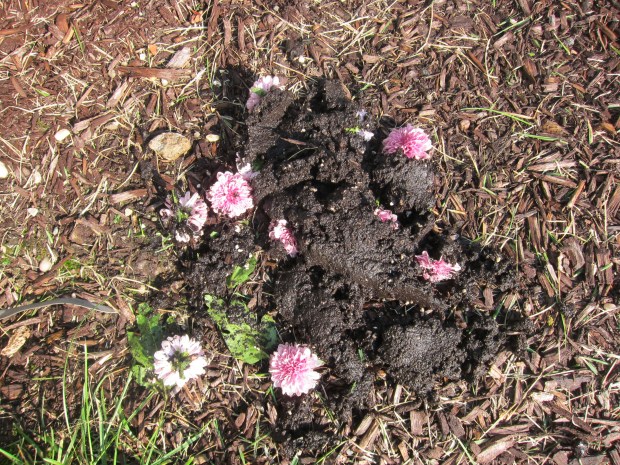
Continue checking on your mud pie for about a week to observe any changes. It might turn to mud again if you get a rainy day!

Mud Pies alt

At the end of the week, simply tip it into your garden as compost. How’s that for easy clean up?

Mud Pies (9).JPG


Hiking on an Ant Trail

Ant Trail (2)

This adorable idea came to us from Barefoot Books’ Kids’ Garden kit. All you need is a 3-foot length of string, magnifying glasses and your imagination to have a magical moment.

Our new home has a patch of grass – a novelty after years with a balcony that overlooked a dumpster – so when I asked Travis if he wanted to pretend to be an ant outside just after breakfast, the answer was an enthusiastic yes!

Ant Trail (1)

I cut a length of string about three feet long and we placed it in the grass with a few loops and coils. Using our magnifying glasses as we walked, we went inch by careful inch to try and see the world from an ant’s point of view.

Ant Trail (3)

Some of our best finds were little roots of a bush:

Ant Trail (9)

Tiny plants popping up from the soil:

Ant Trail (6)

and dew drops sparkling on a spiderweb.

Ant Trail (8)

It was fantastically fun to slow down and move so carefully, especially in this fast-paced world of ours.

Ant Trail (7)

Do your child and yourself a favor and try this game soon!

Ant Trail (5)

Mason Jar Terrarium

Mason Jar Terrarium (6)

Here’s a beautiful project if you want to save any treasured finds from your summer walks!

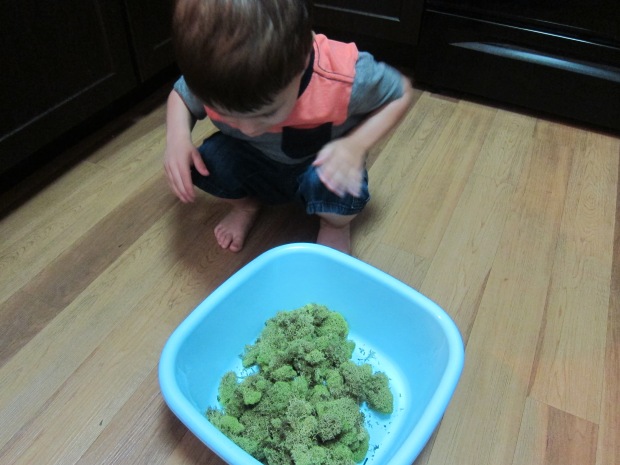
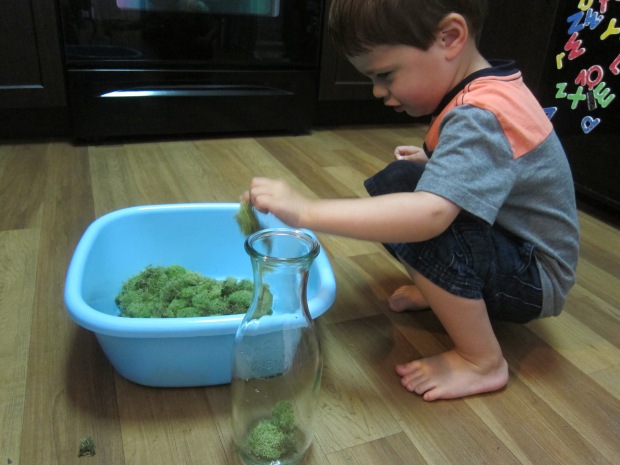
Knowing that I wanted to put a terrarium together, we first purchased dry moss at a craft store, because I didn’t want to rip any real moss from nature. This element turned out to be the biggest hit of the craft.

Mason Jar Terrarium (1)

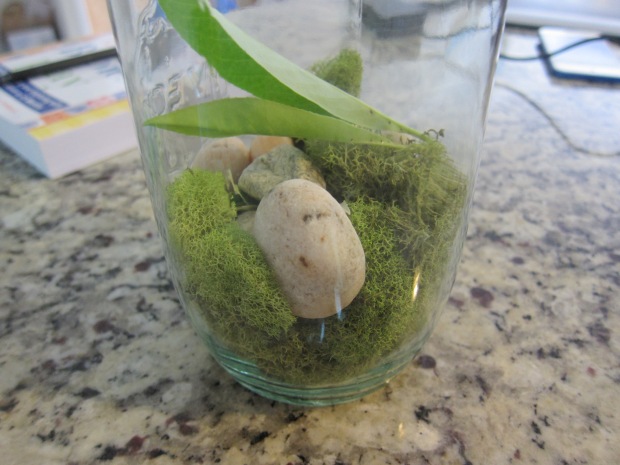
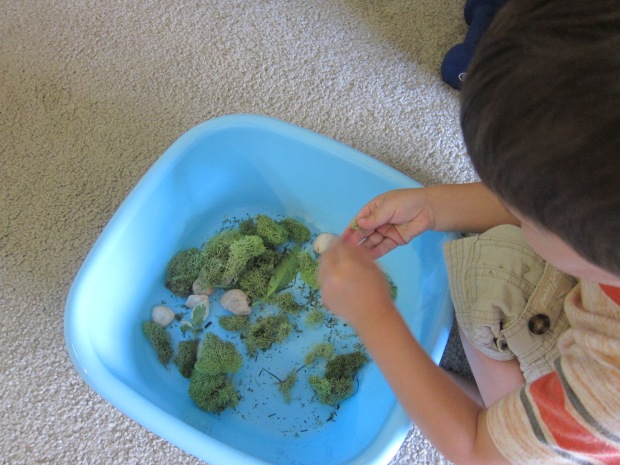
Travis fell in love with the way it felt – how fluffy it was, the way he could pull strands of it apart, etc. So before we began the terrarium, we played with it for a while in a large bin. Then it was time to add the moss to a clear glass jar.

Mason Jar Terrarium (3)

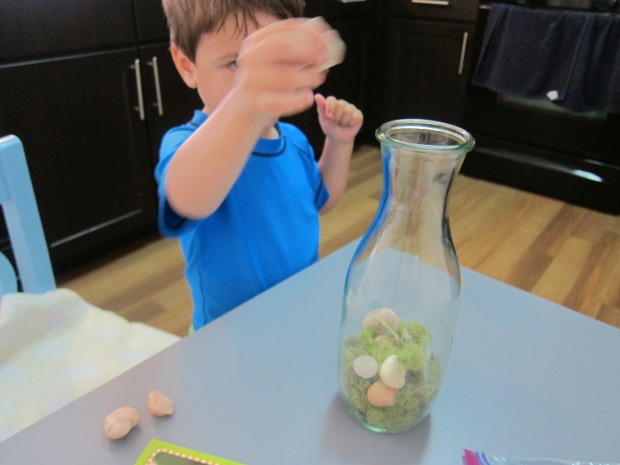
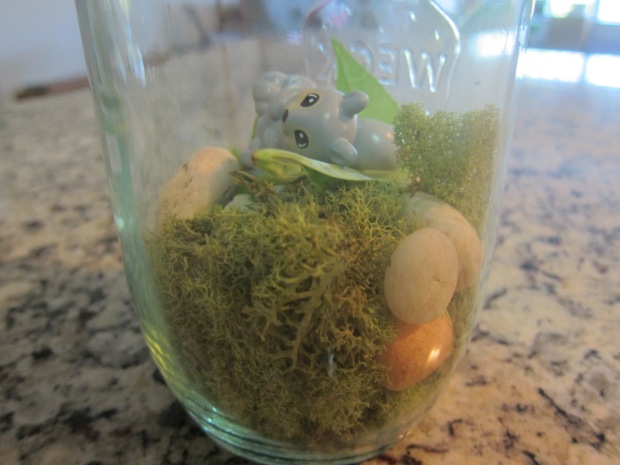
Next we were off to find other treasures! We returned to add rocks and a few leaves to our terrarium.

Mason Jar Terrarium (5)

A little sleeping squirrel added a whimsical touch.

Mason Jar Terrarium (7)

You could keep your terrarium on display for quite some time. However, ours lasted barely a day before Travis wanted to play with the elements inside again. Back to the bin we go!

Mason Jar Terrarium (8)