Park Yourself

Park Yourself (8)

This activity was great for mapping skills. And although Travis has recently practiced making maps, today the idea was to follow one instead!

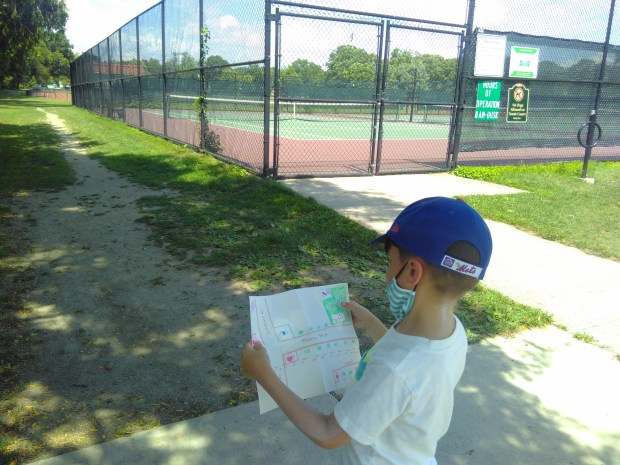
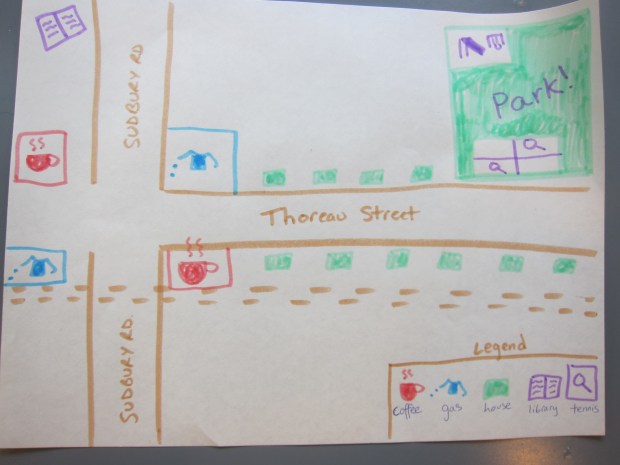
That means that the set up is a grown-up step. I drew a map of town for Travis from the park to a near-by intersection where we could leave the car. I made sure to include a legend box, lots of details like street names and symbols for main buildings, and more.
Park Yourself (1)

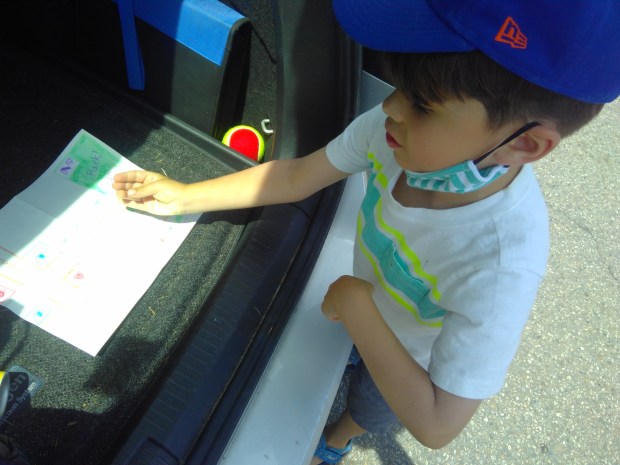
When we arrived, the first thing he had to do was orient us! Travis immediately picked out where we were based on the logo for a coffee cup I’d drawn. But now he faced a dilemma: which way to go.
Park Yourself (9)

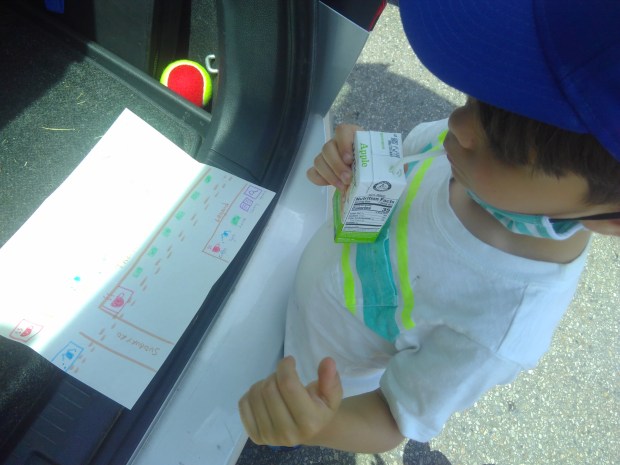
There was so much to love about the process that followed, little things I realized we’d never touched on before like reading the street signs to assign a name to each street, or understanding how to orient yourself in 3-D space based on a 2-D drawing.
Park Yourself (11)

In short order, he puzzled out the map and we arrived. Now it was time for much deserved play!
Park Yourself (6)

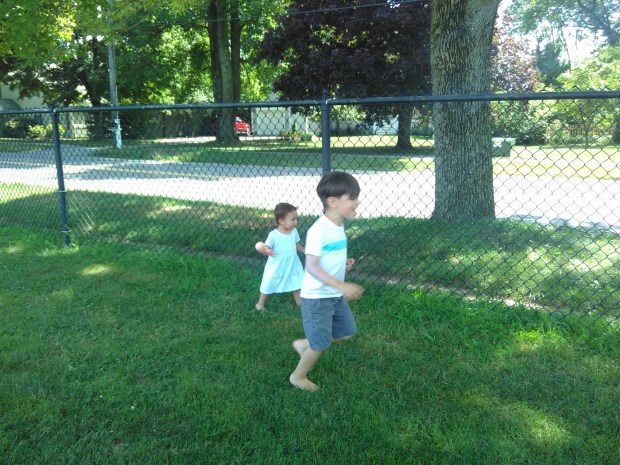
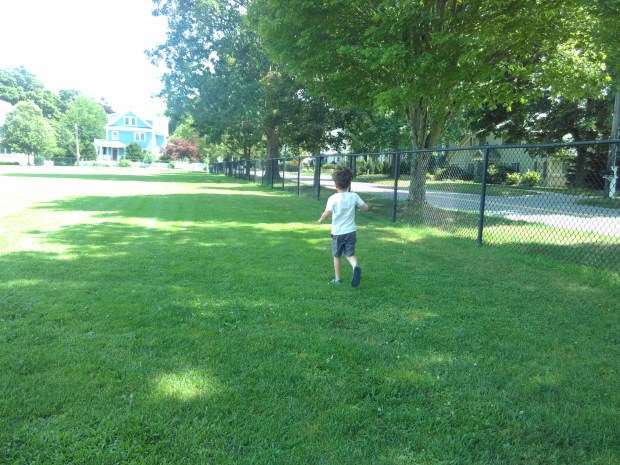
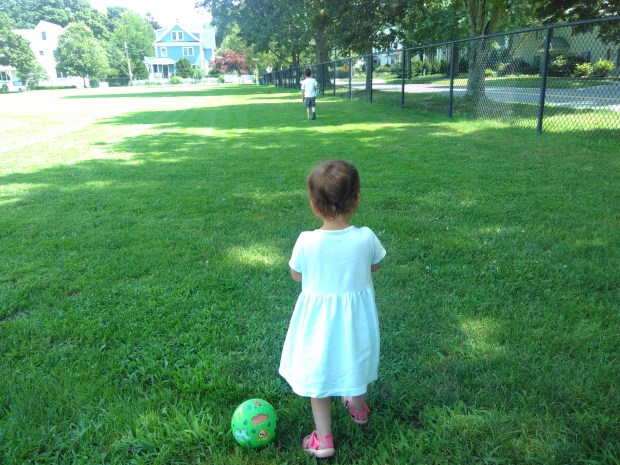
This turned into an unexpectedly awesome day in the park. The kids loved running through the grass…
Park Yourself (5)

…waving to cars through the fence…

Park Yourself (4)

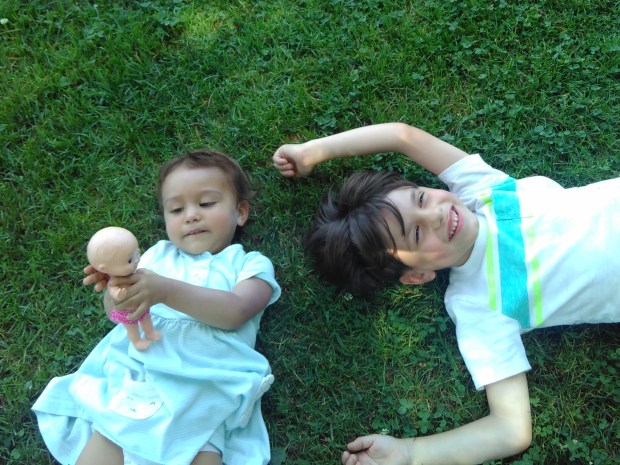
…finding clovers, and more.
Park Yourself (3)

Grandmother’s Glasses

Grandmother's Glasses (3)

I love nursery rhymes that lend themselves intuitively to hands-on play, and this one definitely fits the bill. If you don’t know this rhyme, here are the words:

These are grandmother’s glasses,

This is grandmother’s hat.

See the way she claps her hands

and folds them in her lap.

These are grandfather’s glasses,

This is grandfather’s hat.

See the way he folds his arms

and takes a little nap.

For grandmother, use a high, soft voice, and for grandfather, use a low, loud voice. You can also mime all the gestures. Circle your fingers over your eyes for glasses, pat your head for the hat, and copy the arm movements of each grandparent.
Grandmother's Glasses (1)

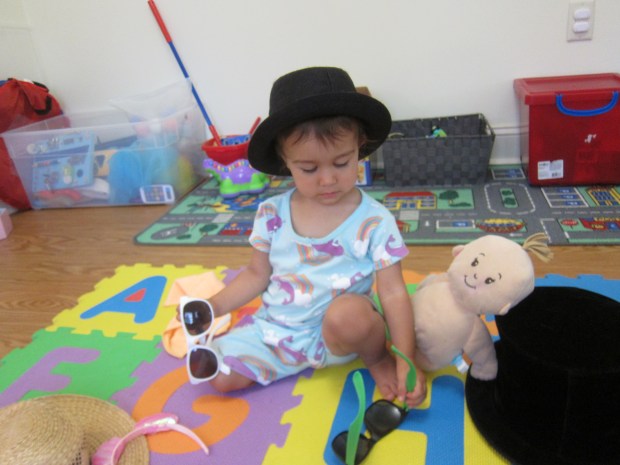
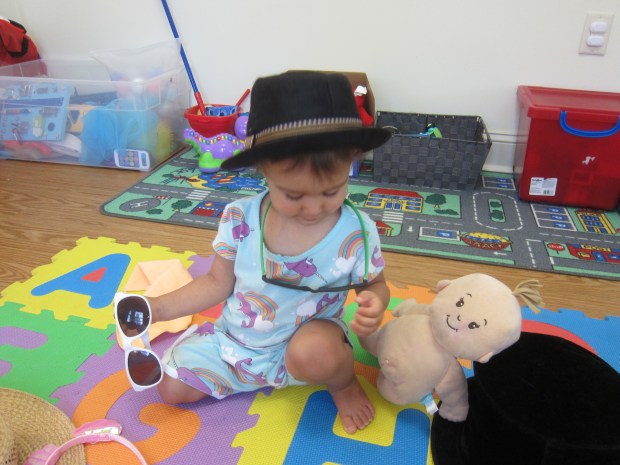
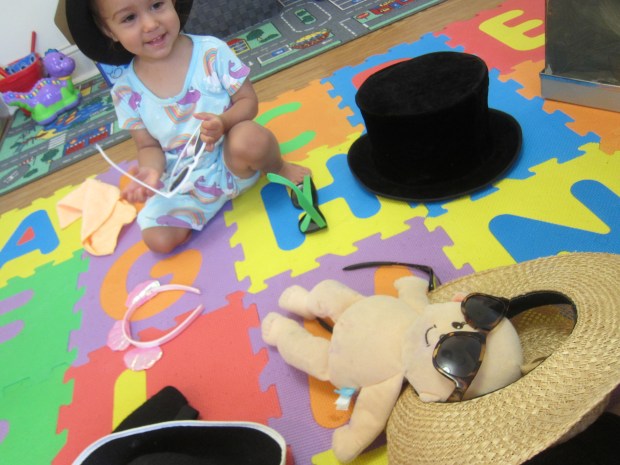
But for extra fun, today we turned the rhyme into a prompt for dress-up! I put on a different pair of sunglasses and silly hats for grandmother and grandfather, first on me, and then on Veronika.

Grandmother's Glasses (2)

She loved modeling all the accessories! And she got the giggles when dolls dressed up, too, to get in on the action. Long after the nursery rhyme fun was done, she was busy playing dress up.

Grandmother's Glasses (4)

Super Simple Color Collage

Simple Color Collage (7)

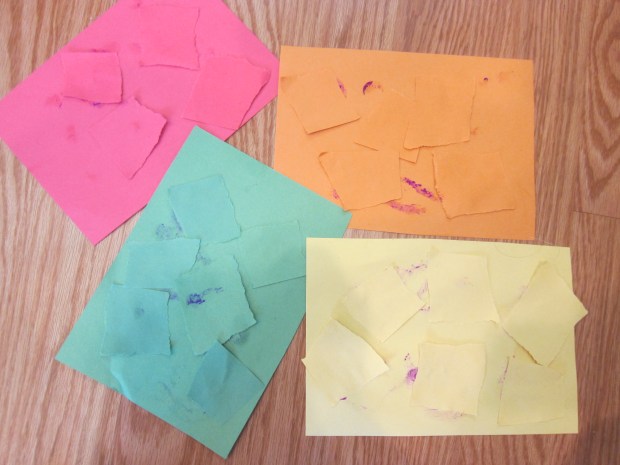
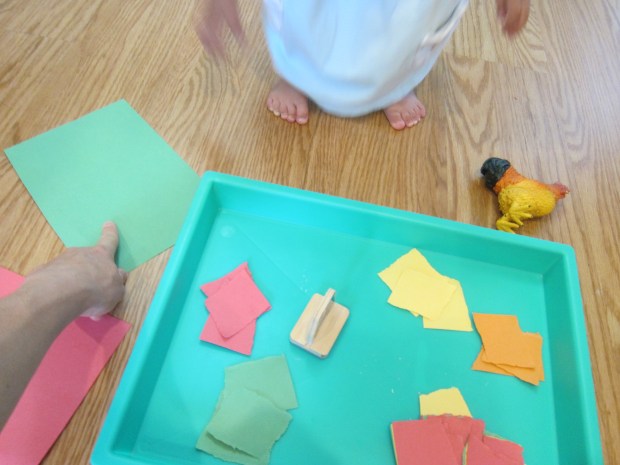
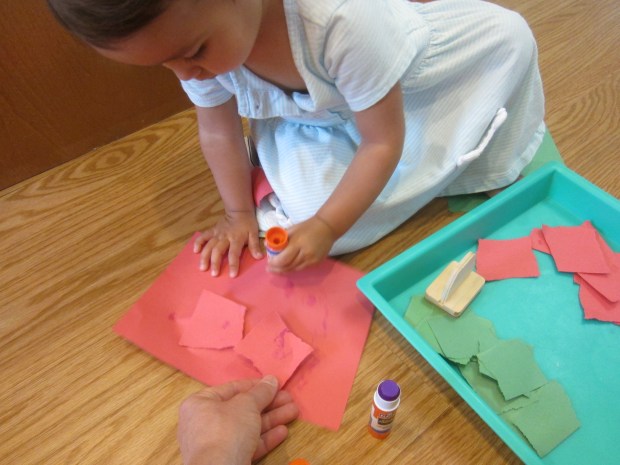
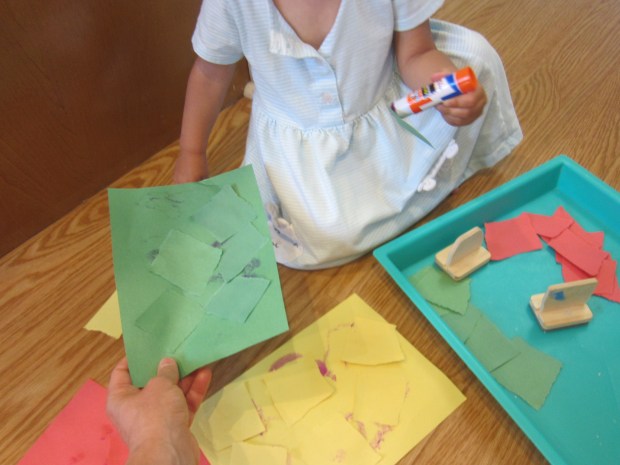
This is a great activity for a toddler who has just learned his or her colors, and it’s quite simple to set up. I laid out pieces of construction paper, and for each one I tore up scraps of paper in the same color and arranged them on a tray.

Simple Color Collage (1)

So as not to overwhelm your toddler with too many colors at once, I recommend starting with one background color at a time. “What color?” I asked her, pointing to the paper. “Red!” she said.

Simple Color Collage (2)

She was way more into the glue stick I gave her than in selecting which color of scraps to add from the tray, but I guided her back when I could. “Let’s add the red scraps!” I suggested simply, reinforcing her knowledge that the paper was red.

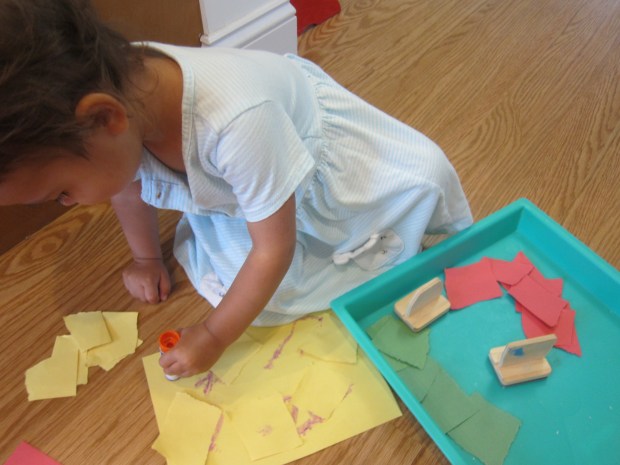
In this way, she worked through adding red scraps to red paper, yellow scraps to yellow paper, and so on.

Simple Color Collage (5)

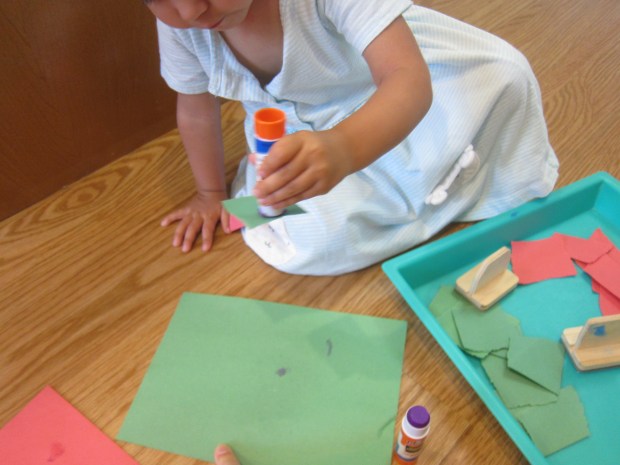
Towards the end, I made it sightly harder and showed held up a scrap of paper. “Which color should we glue this one on?” I asked. She’d gotten the gist, now, to glue green onto green.

Simple Color Collage (3)

So as the title suggests, this activity was simple to set up, simple for a toddler to do, and simple to clean up. The trifecta!

Simple Color Collage (6)


Paint Popsicles

Popsicle Painting (7)

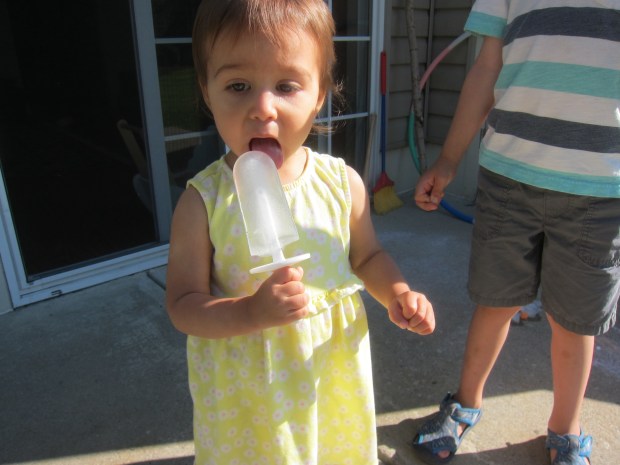
For a cool toddler art project, today Veronika and I played around with paint popsicles in a few different ways. In retrospect, I would have waited on this activity until she was a little older, since today she really just wanted to eat a popsicle! But we did get in a little art, too.

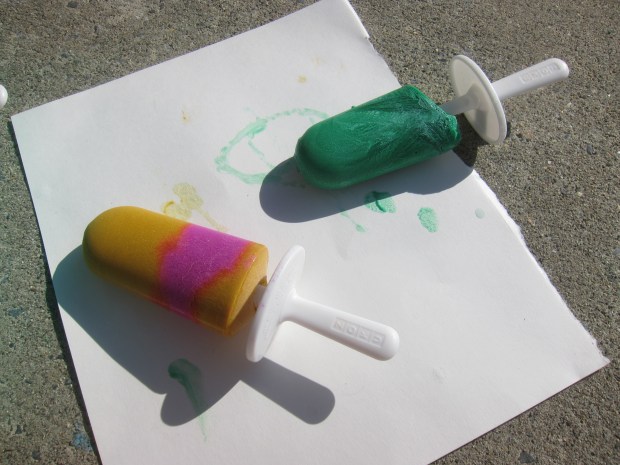
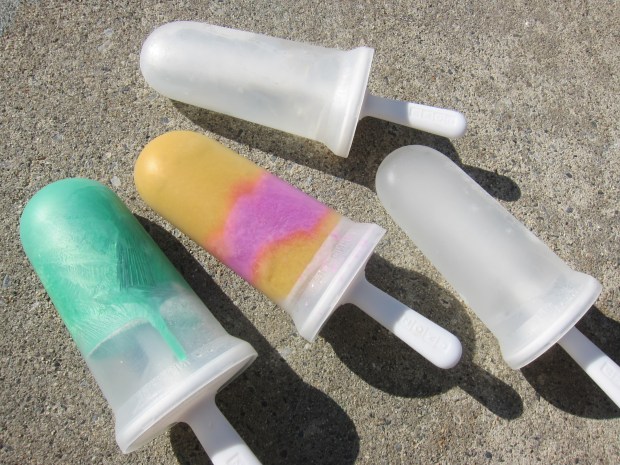
The night before, freeze two kinds of “popsicles”. I poured tempera paint (in pretty metallic colors) into two popsicle molds, and then filled two more with plain water. Insert the sticks and freeze overnight.

The next morning, we headed out to the patio, already scorching hot!

Popsicle Painting (3)

We started with the plain ice popsicles, which was when I realized we were going to have a bit of a problem. Veronika spotted the popsicle molds, and wanted a taste! This didn’t matter with the plain water, but I worried what would happen when we got to the paint version.

Popsicle Painting (4)

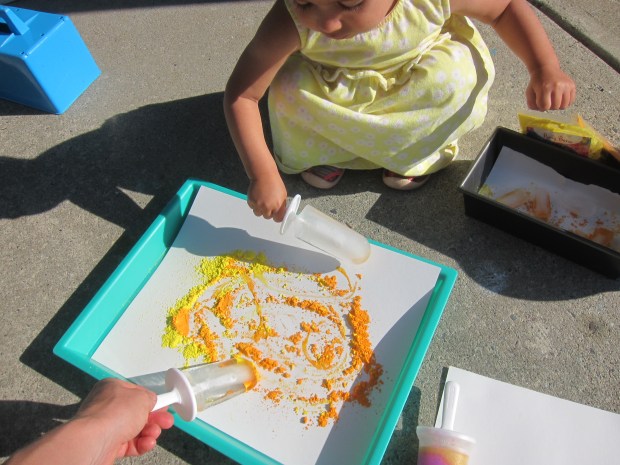
Luckily, I was able to divert her attention to the craft: sprinkle a little powdered paint on a piece of poster board or thick paper. Use the ice “popsicle” to turn it into beautiful swirls of paint. She watched for a few minutes before joining in (and I did still need to deter a few licks).

Popsicle Painting (5)

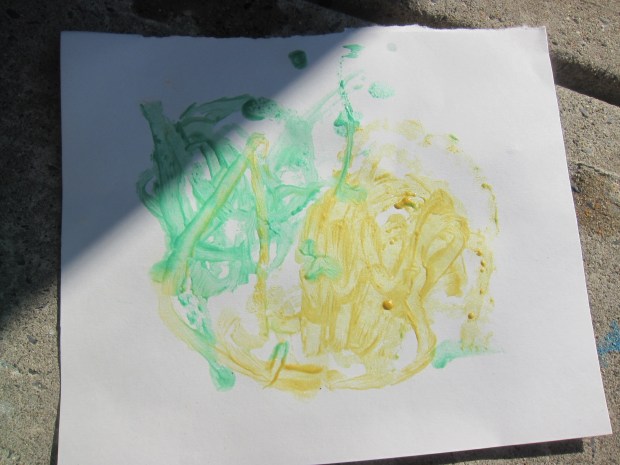
As a result, I only briefly showed her the “popsicles” made from actual paint. These are similar in concept, except now there’s no need for powdered paint. Simply swirl the icy paint over thick paper. The more it melts, the more paint gets left behind.

Popsicle Painting (9)

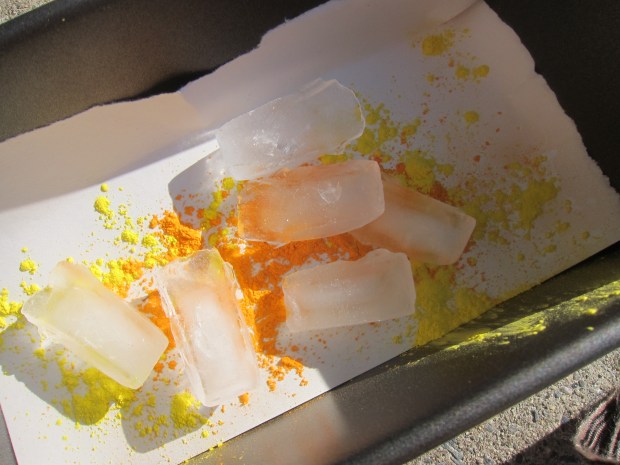
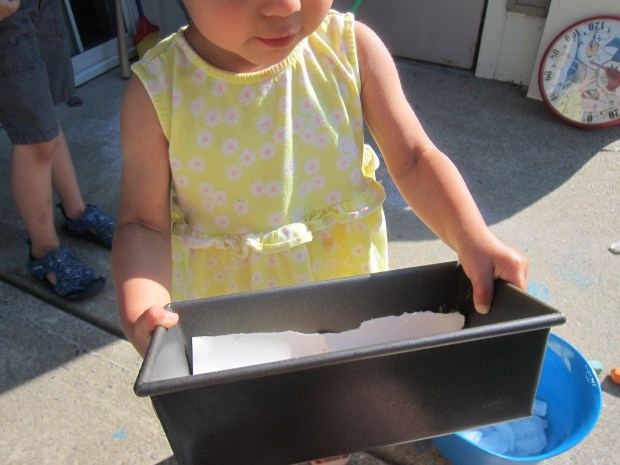
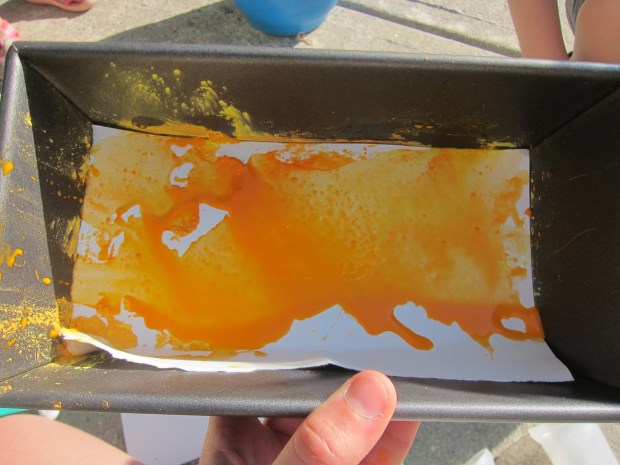
But with her temptation to eat them, I detoured to a version she would be less likely to try to devour. We sprinkled powdered paint onto paper in a container small enough for her to hold in her hands.

Popsicle Painting (1)

Add ice cubes and show your toddler how to shake it side to side. Again, the ice melts and leaves pretty swirls of color behind.

Popsicle Painting (2)

As you can guess, this activity was short-lived, but fun nonetheless!

Popsicle Painting (6)

Bubble Wrap Printing

Bubble Wrap Printing (7)

Extra bubble wrap is always great for play, and today we even turned it into part of an art project.

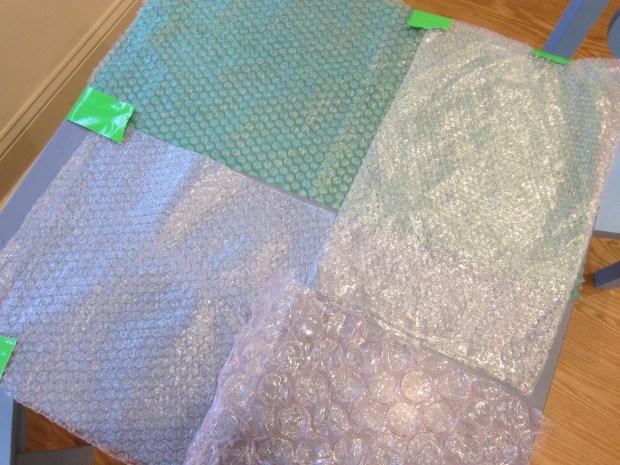
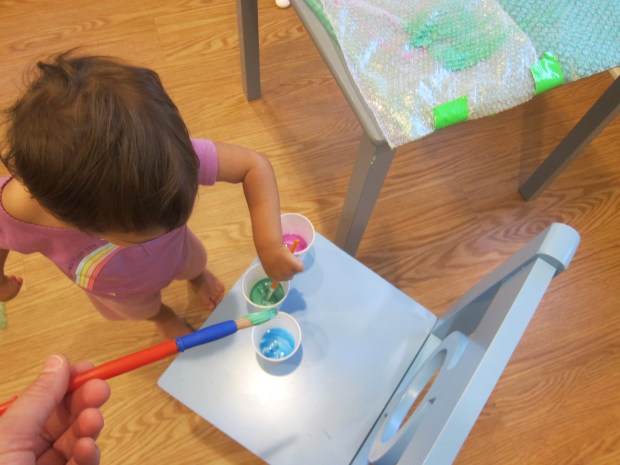
To start, I taped down various pieces of bubble wrap to the craft table securely. We’ve gotten a nice variety in packages lately, meaning our bubbles ranged from the very tiny to puffy big ones.

Bubble Wrap Printing (1)

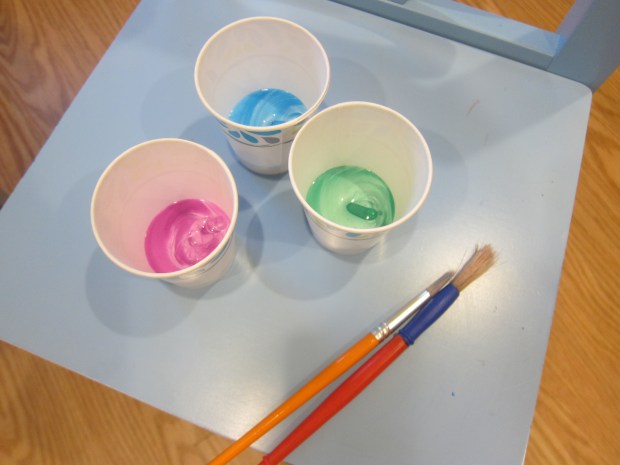
I then set out cups of paint for Veronika (in shiny metallics just for fun).

Bubble Wrap Printing (2)

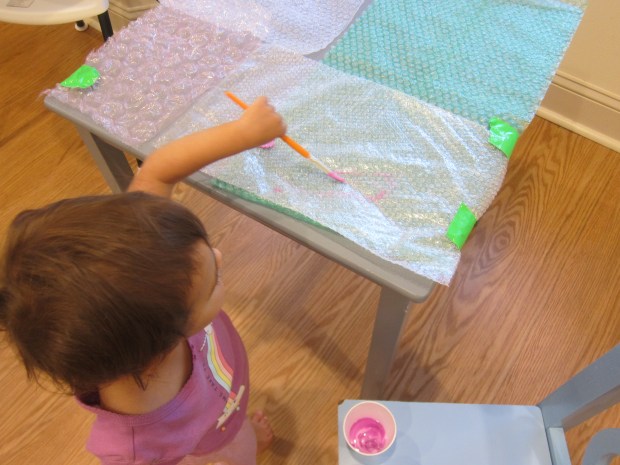
She trotted over immediately and started painting. “Ooh, pink! Ooh blue!” she said as she worked.

Bubble Wrap Printing (3)

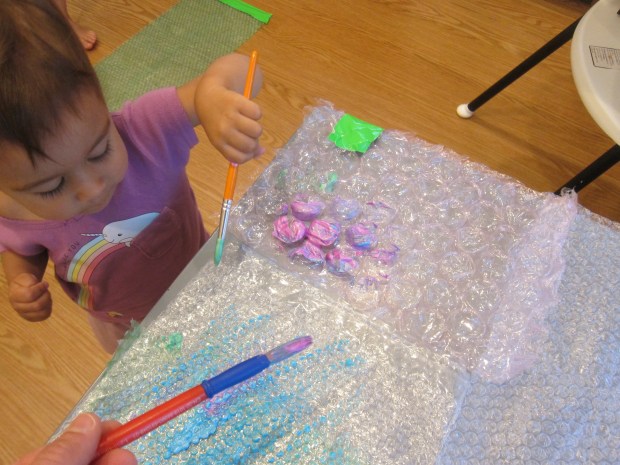
I could tell she enjoyed the bumpy feeling of running her brush over the bubbles. She stopped now and then to pop some, too.

Bubble Wrap Printing (5)

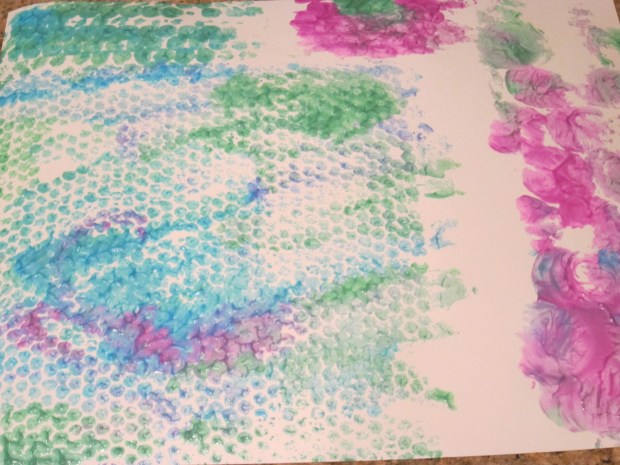
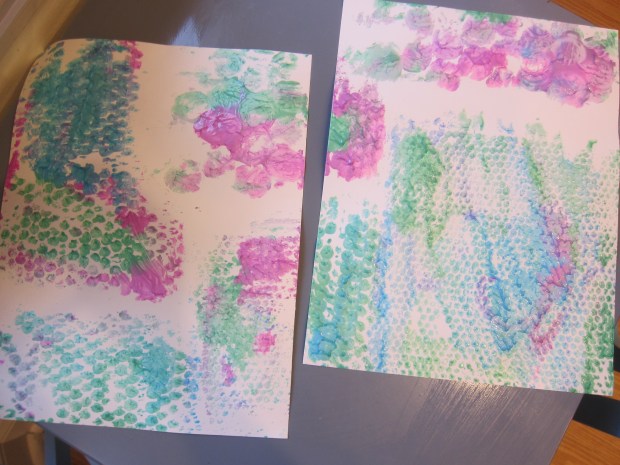
Once our bubbles were covered in a nice layer of paint, I pressed a piece of poster board on top, then lifted it up to show her the print. “Bubbles!” she said with delight.

Bubble Wrap Printing (8)

We repeated the process so we ended up with two neat prints. This is a simple craft, and perfect for toddlers.

Bubble Wrap Printing (4)


Tape Collage

Tape Collage (5)

If your toddler is at all like Veronika, then he or she loves tape. Sticking it onto things, making roads from it, you name it. The only problem? She gets impatient waiting for me to tear off a new piece for her!

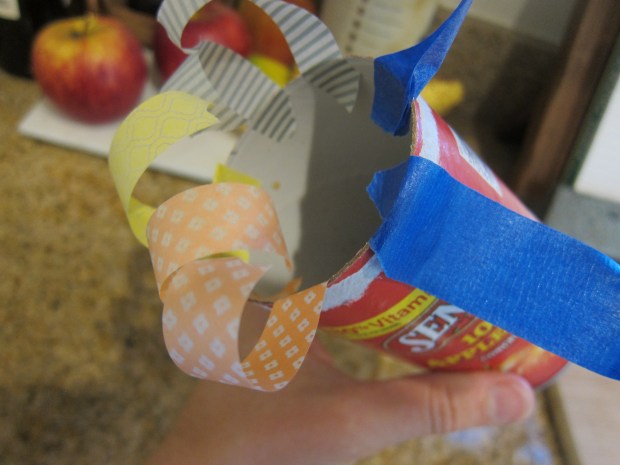
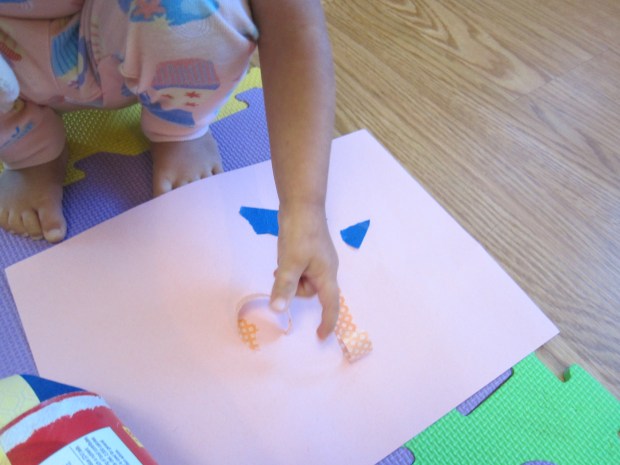
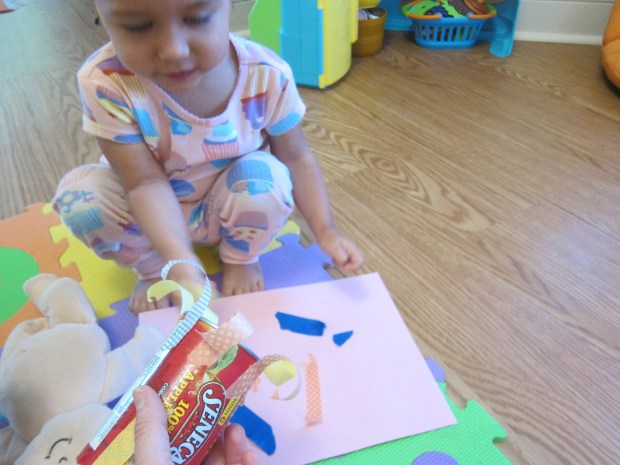
Today, to head off the problem, I made her a tape holder of her very own. I used an empty frozen juice can, which are nice for kids because they have no sharp edges. Any similar can or container would work fine. I stuck pieces of colorful tape all around the rim, using tape with different textures, such as washi tape in several colors, masking tape, and duct tape.

Tape Collage (1)

Then I gave Veronika her new tape dispenser and a piece of construction paper, and it was time to create.

Tape Collage (2)

She looked so pleased that she could pull the pieces off solo! Occasionally she still needed a little grown-up rescue when a piece of tape get stuck on her fingers.

Tape Collage (3)

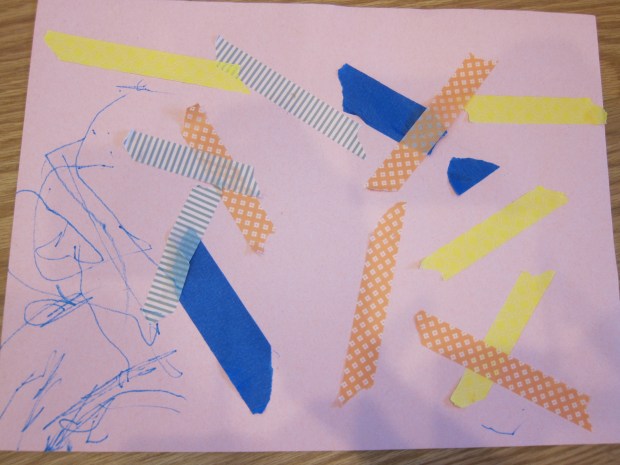
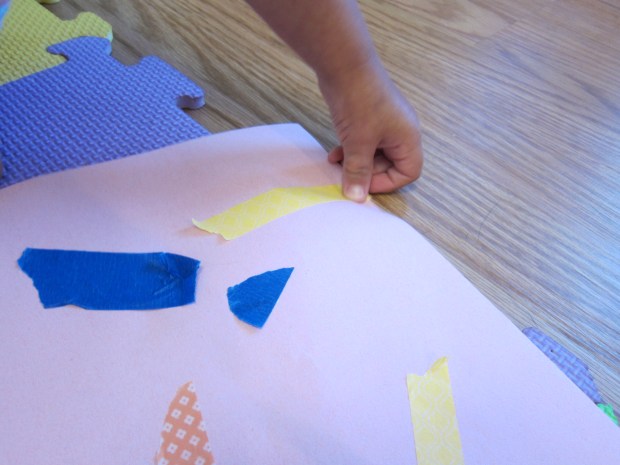
She concentrated hard on where each strip of tape should go on her paper, and then she jumped up and declared, “Markers!” I love that she had decided all her on her own what her artwork needed next.

Tape Collage (4)

A little blue marker and her masterpiece was finished.

Dance Ribbon

Dance Ribbon (6)

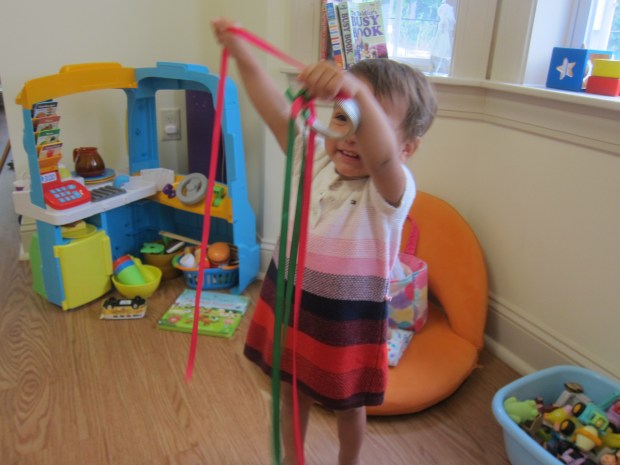
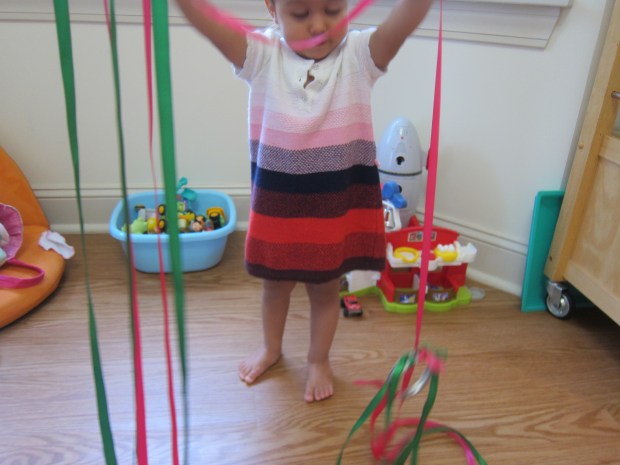
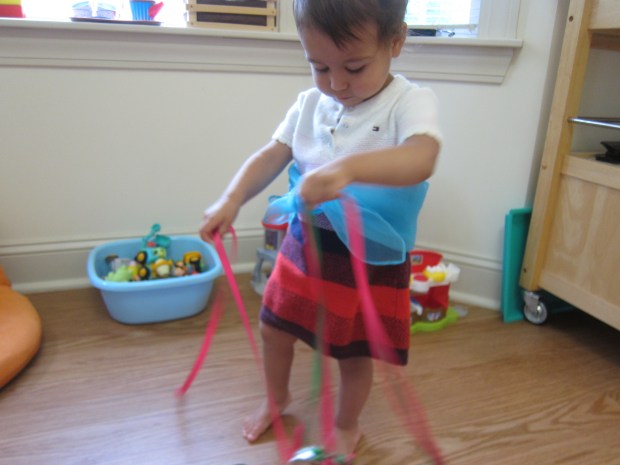
This easy dance ribbon made the perfect rhythmic accessory for Veronika’s at-home music class today! I put it together just before class, and she continued to play with it long after the Zoom session had ended.

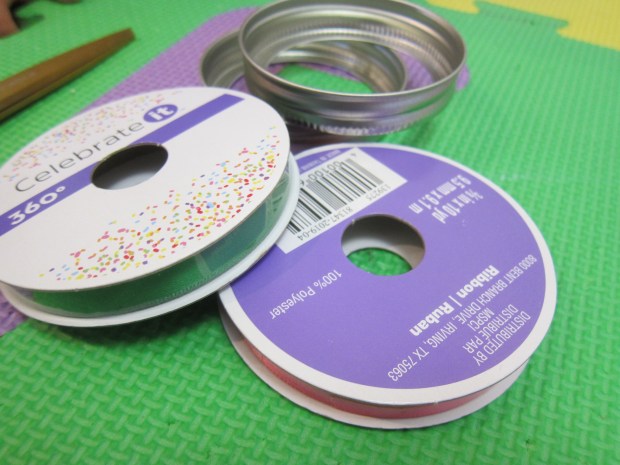
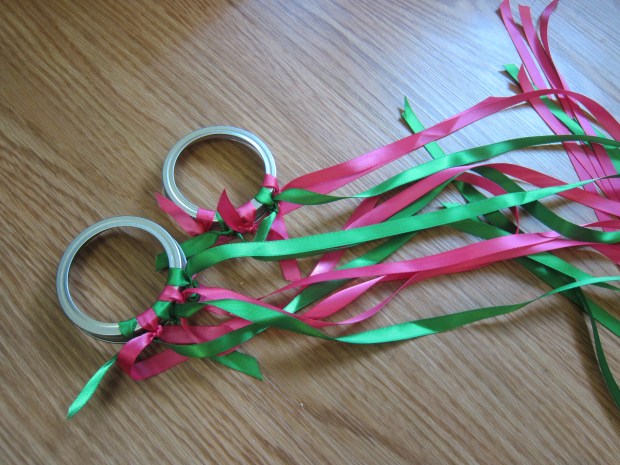
First, tie lengths of colorful ribbon to a ring that your toddler can easily hold. I used a canning ring for this, but a shower curtain ring or even key chain would work, too!

Dance Ribbon (1)

I alternated strands of green and pink ribbon. You can make your dance ribbon with one color, two, or a full rainbow!

Dance Ribbon (7)

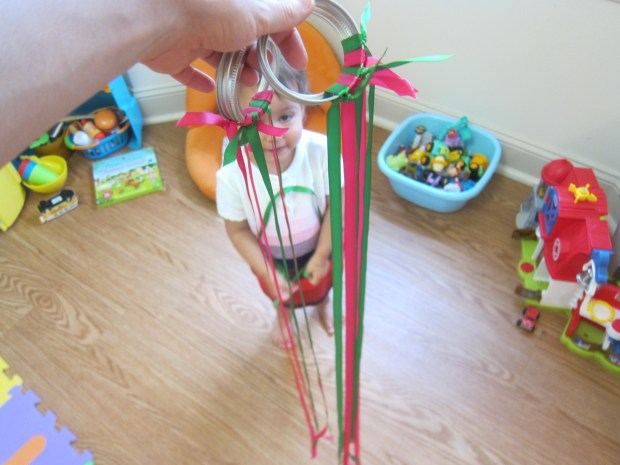
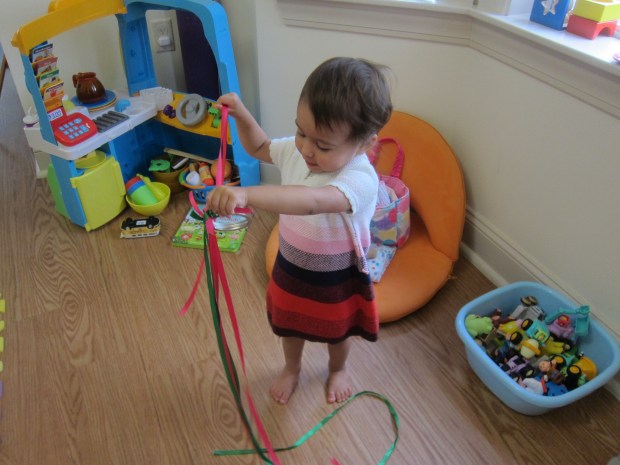
I handed the ring to Veronika and showed her how to wave it through the air to the rhythm.

Dance Ribbon (3)

A lilting, slow tune felt just right for making big beautiful ribbon circles. Your toddler can take it from there!

Dance Ribbon (5)

She loved waving the ribbons around and dancing with them, and requested a tutu to be a ballerina!

Dance Ribbon (9)

She also later found other uses for it, like pretending it was her doll’s swing on the playground! I always love watching the way toddlers can invent worlds of imagination from just a few simple materials.

Dance Ribbon (8)

Paint Dancing

Paint Dancing (8)

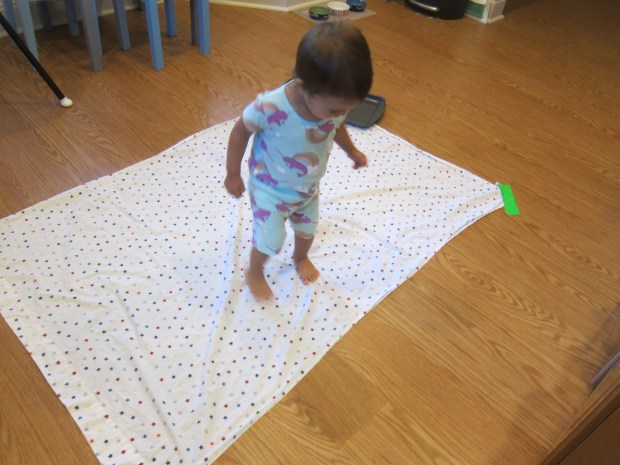
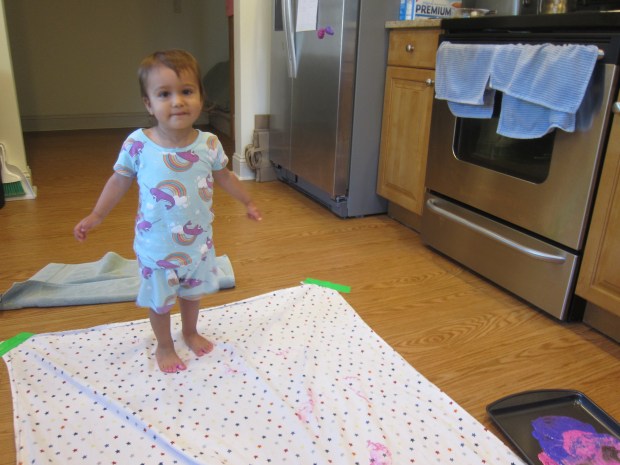
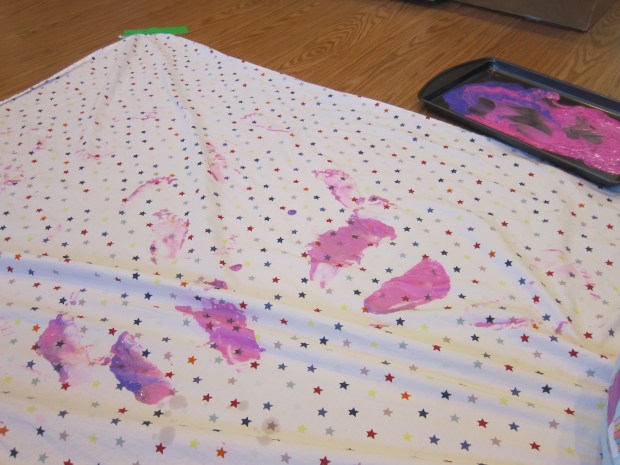
I love throwing in a sensory project for the feet now and then, such a different experience for toddlers than working with their hands! All you need for this project is an old crib sheet (or similar large piece of fabric), and a willing pair of toddler feet.

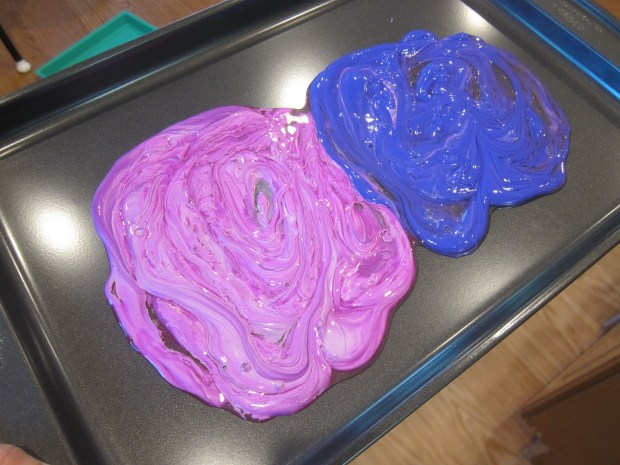
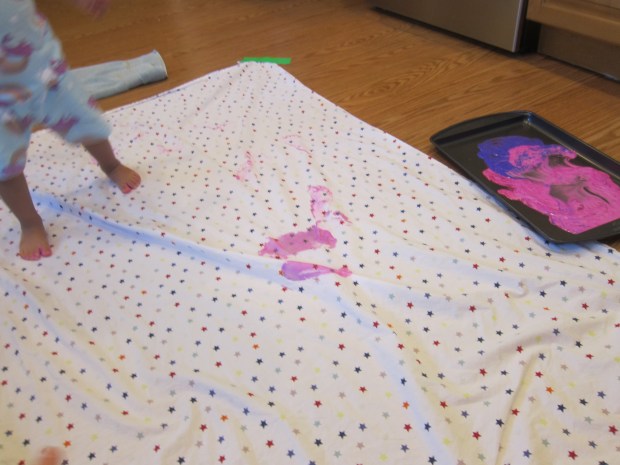
I squirted two colors of washable paint onto a baking tray and added a little dish soap to each color, which will make clean up easier in case any paint goes off the fabric.

Paint Dancing (2)

Fill a second shallow tray with warm soapy water, and have a towel handy. Then tape your old sheet down to the floor securely at all four corners. I put on some tunes (Walking on Sunshine felt just right!) and Veronika immediately started bopping and dancing before the paint was even involved.

Paint Dancing (1)

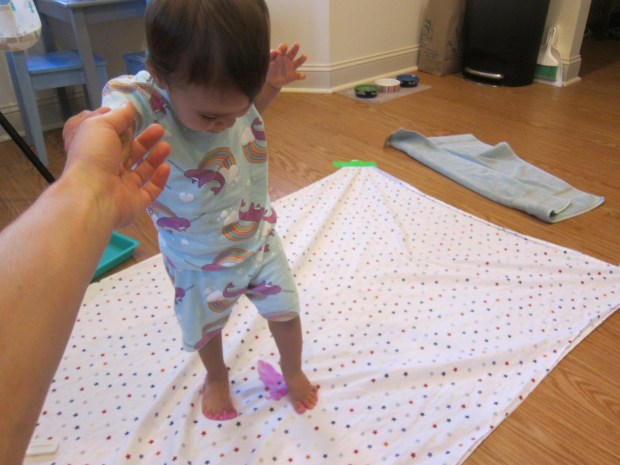
Then I dipped her feet into the paint and set her painted soles down on the fabric. “Let’s dance!” I said.

Paint Dancing (3)

She was initially hesitant when the paint was thickest, but as she began to move around, a big smile formed.

Paint Dancing (5)

We dipped her toes and repeated a few times, and mixed up the tempo for a little music lesson, too!

Paint Dancing (6)

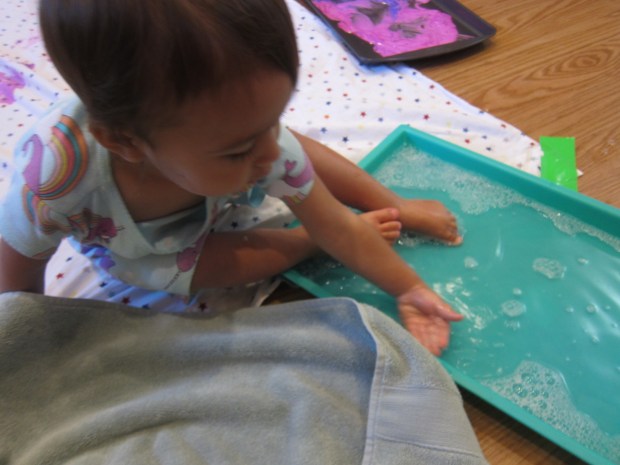
Arguably her favorite part was washing off in the sudsy water at the end. At first she just dipped in her toes, but then I turned around and found her sitting completely in the soapy tray like it was a mini bathtub. Well, time for an outfit change!

Paint Dancing (7)

Rotating Picture Tale

Rotating Picture Tale (6)

Here’s a fun way both to teach the notion of story as narrative and to ensure it’s tailored to your toddler’s interest.

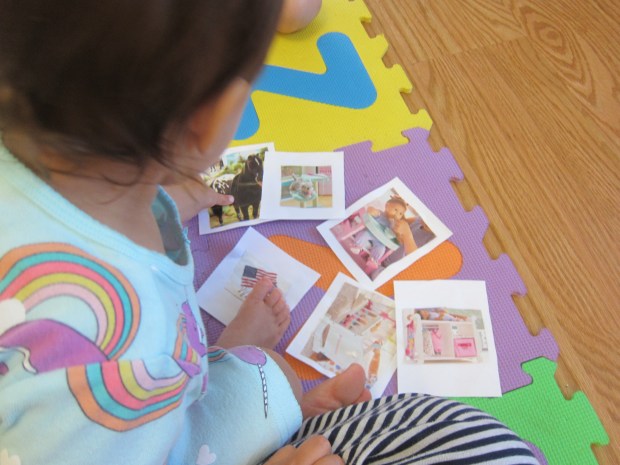
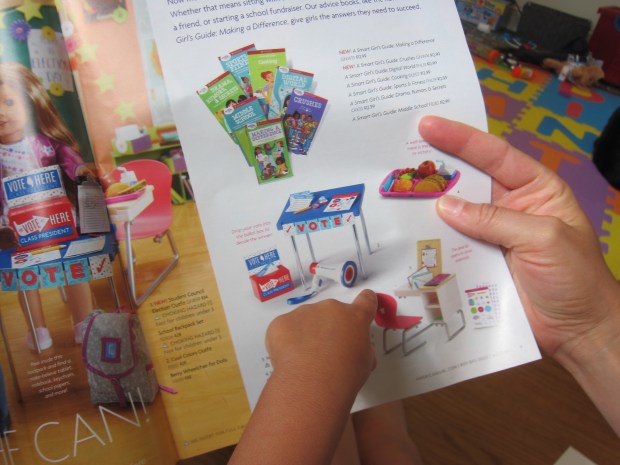
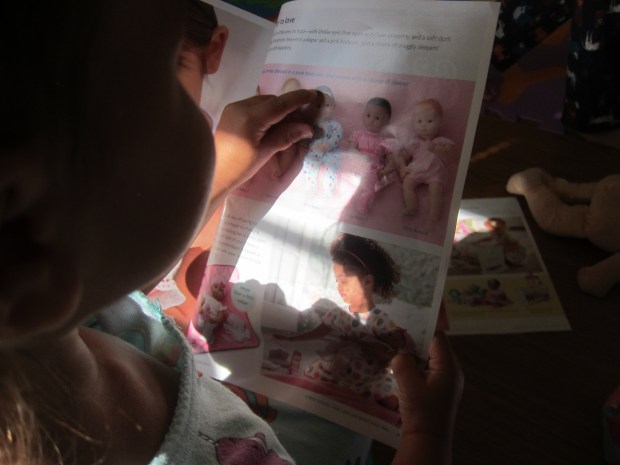
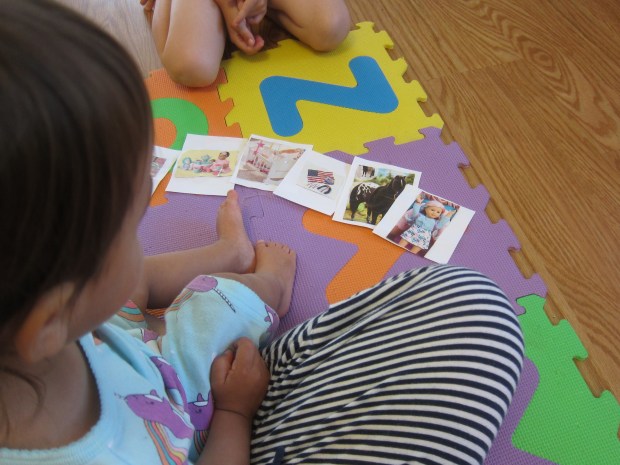
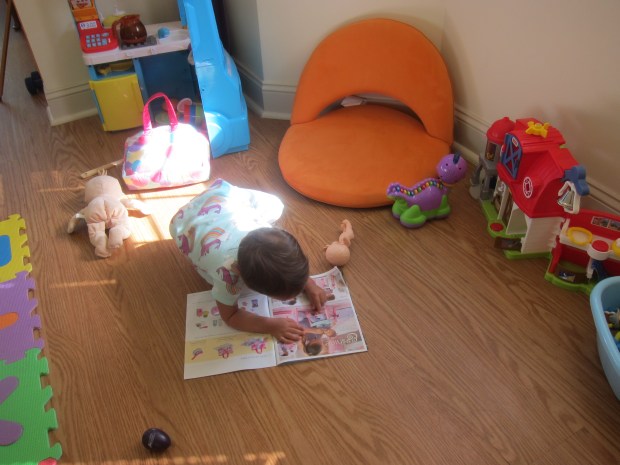
First, I sat down with Veronika in my lap to go through a few old catalogs and magazines. The idea was to pause whenever something caught her interest rather than to lead or guide her. Of course, I knew there would be lots for her to like, having selected a toy catalog to flip through first!

Rotating Picture Tale (1)

She definitely had favorites, zeroing in on faces. “Baby!” she said with delight, looking at the images of dolls.

Rotating Picture Tale (2)

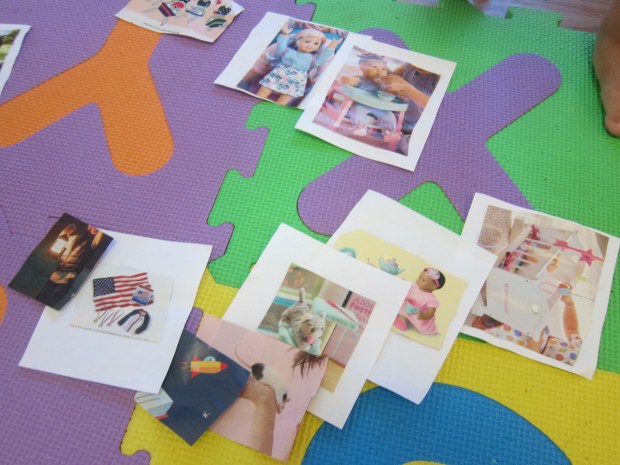
“Baby’s having a diaper change!” I made note of whatever she liked the most, then cut these out with scissors and glued each picture onto a square of white paper.

Rotating Picture Tale (8)

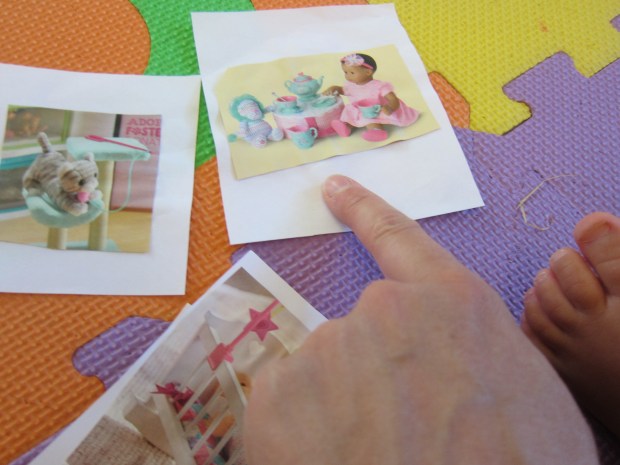
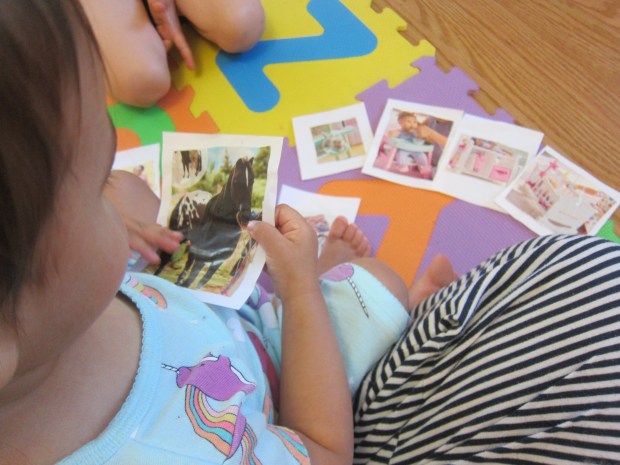
Once the glue dried, we had a story we could tell over and over. I let chance dictate, shuffling the cards and then laying them out one by one. Each card was a new element of the story.

Rotating Picture Tale (4)

As a result, there were lots of parades and tea parties and stories about animals blasting off in rockets to outer space, thanks to the particular pictures we had to work with. When the first story finished, I shuffled the cards and we did it again!

Rotating Picture Tale (5)

She loved curling up in my lap for this, making it a special bonding moment, too. She also would grab for her favorite pictures and hold them as the story unfolded. “Horse!” was a big favorite.

Rotating Picture Tale (7)

Older siblings might want a turn weaving a tale for a little sib, too, which will in turn hone those creative writing juices!

Rotating Picture Tale (3)


Fire and Flavor

Fire and Corn (2)

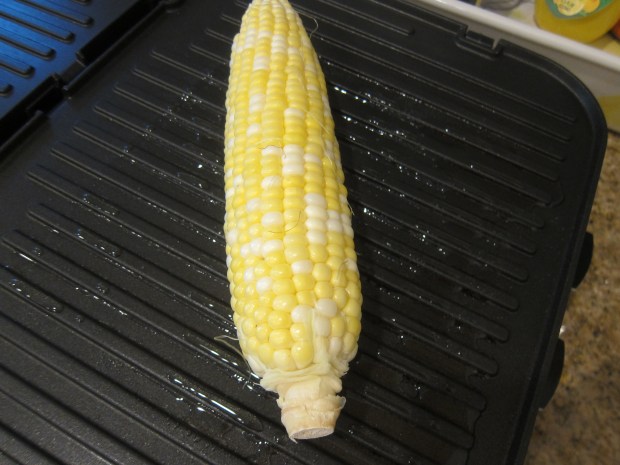
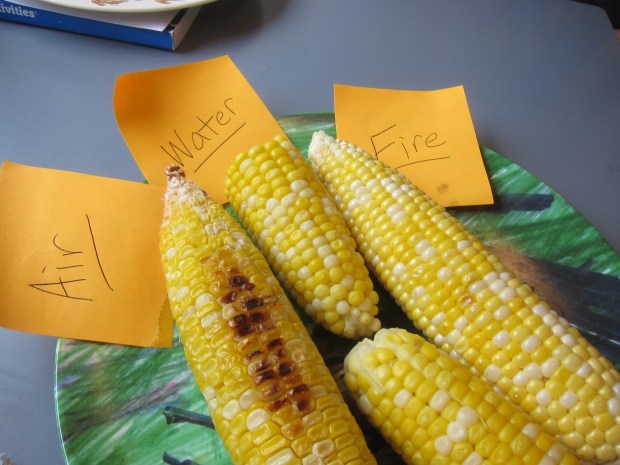
Travis has been exploring how to cook with different elements (air, ice) thanks to his latest Raddish Kids, and today we did a quick test: would the same ingredients taste different, if cooked using 3 different “elements”? We chose corn on the cob for the experiment and tested out the following: air (roasted in the oven), water (boiled on the stove), and fire (cooked on the grill). Unfortunately we weren’t truly using fire for the last, since I only have an indoor grill pan. But we still had interesting results!

Fire and Corn (1)

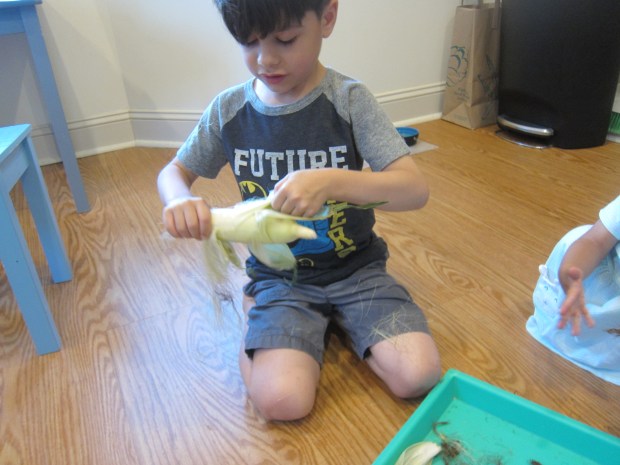
Of course first comes the fun of shucking corn. Then for “air”, roast the corn in a 400 degree F oven for about 30 minutes. Boil the “water” version for about 5 minutes in boiling water. Grill the “fire” version over your barbecue or grill pan for about 10 minutes.

Once the three methods of corn had cooked, Travis first wanted to smell them. I had never realized how different these three cooking methods smelled, but it was so apparent when they were lined up on the plate! The oven method had roasted caramel notes, the boiled one smelled sweet and fresh, and the grilled one had a toasty aroma.

Fire and Corn (4)

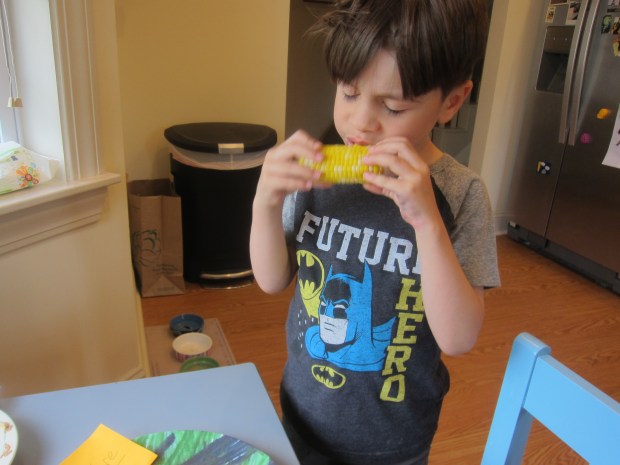
Once they cooled, it was time for a taste test. Travis far and away preferred the sweet tenderness of the boiled corn. Air (oven) was his second favorite. “It’s sweet and tart!” he declared.

Fire and Corn (5)

He decided he didn’t like the grilled one, which may again be the fault of the grill pan versus a real grill. Which method do your kids prefer? Please share in the comments!