Gallant Challenge: Lived It, Learned It

Lived Learned (1)

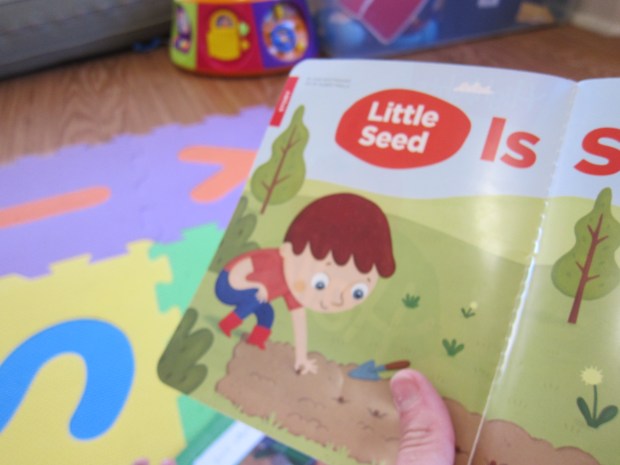
Travis always loves the Goofus and Gallant page of Highlights magazine and the inspiring stories of kids with Gallant moments. We’ve even tried to replicate some. Today, it was his turn to be the Gallant kid and inspire others, because the challenge was…to share a Gallant learning moment and impart that wisdom to other kids.

Travis and I read the challenge and then I asked him to think about just such a teachable moment that he has experienced.

He decided he’d write about times at the playground where his friend is sad. Saying “I’m sorry”, he’s learned, helps make things better.

He drew a picture, including the rocks that they like to play on at the playground. I helped him use creative spelling for the word “sorry”, then wrote out the full story on the back of the page.

Lived Learned alt

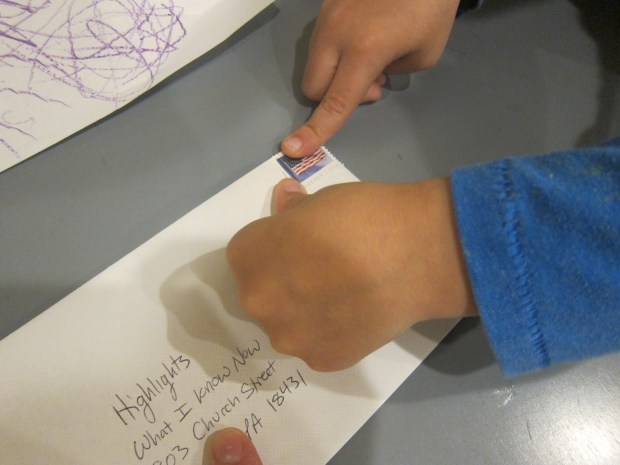
For full ownership of the project, he even affixed the stamp before we mailed it off to Highlights. Travis was so proud to share!

Lived Learned (2)

Learning About Feelings

Feeling Emotions (2)

Here’s a fun way to teach your baby about feelings as he or she begins to navigate the world of emotions; bring stuffed animals in on the action!

The very first one I wanted to illustrate for Veronika was love. I said the word and gave her stuffed animal a big hug.

Feeling Emotions (1)

She wanted to copy me right away!

Next, I sat the happy stuffed animals around me for a story time, explaining that story time makes me happy. Make sure to exaggerate the emotion as you say it. For happy, that meant a high voice and big smiles. She was excited.

Feeling Emotions (7)

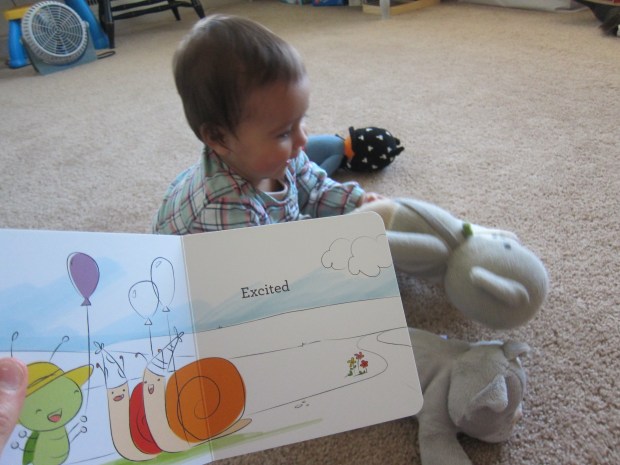
There are so many children’s books featuring emotions that you can read through. Our book included different scenarios and emotions on each page. After I read the text, I stopped and had her stuffed animals act it out.

The fox was sleepy.

Feeling Emotions (3)

Oh no and then worried.

Feeling Emotions (4)

And then “surprised!” Veronika copied my motions and put her hands up in a big, “Oh yay!”

Feeling Emotions (5)

And there was a happy ending of course.

Feeling Emotions (8)

Read through several books this way, so you can explore the gamut of emotions with your little one. Veronika looked concerned when the animals were worried…

Feeling Emotions (9)

…and thrilled when they were glad. She enjoyed this story time so much, and I did too!

Feeling Emotions (6)

Add Sounds to Feelings

Sounds to Feelings (7).JPG

There are so many sounds we automatically attach to a specific feeling or emotion. You probably do many of these already (without even thinking about it!) but it was fun to focus on such sounds for a day with Veronika. Your budding communicator may start to make these sounds back, even before words form.

So when she was happy today, we said, “hurray!”

Sounds to Feelings (5)

When I bounced her up and down or she spun around, we said, “whee!”

Sounds to Feelings alt.JPG

Then there was a big “oh no!” when her favorite stuffed animal fell down.

Sounds to Feelings (2)

And a “mmm mmm” for meals and snacks.

Sounds to Feelings (3)

And of course a sleepy “aaah” yawn sound around naptime.

Sounds to Feelings (4)

Connecting these sounds to emotions can help your little one connect the dots with what he or she is feeling, and help ease frustration in expressing emotions.

Plus saying “hurray” is always just fun.

Sounds to Feelings (1)

Express Emotions

Express Emotions (4)

Veronika had a tough day today. My hunch is because of teething, or perhaps a Wonder Week, but sometimes babies just have fussy days and we as parents just ride them out.

But it was a good reminder to focus on emotions, not just teaching her the positive ones, but also giving her words for the sad ones. So today, when I felt happy (or Veronika did), I made a big show of it on my own face.

Express Emotions (2)

And when she was sad, I mirrored that. “You’re feeling sad,” I commiserated.

Express Emotions (5)

You can do the same throughout the day (or any day!) with surprised, angry, scared, tired, or any other emotion that crosses your baby’s face. Here she is a bit worried by loud noises.

Express Emotions (1)

If you’re looking for inspiration, flip through some children’s magazines or books together and point out the various emotions.

Express Emotions (9)

Either way, it’s healthy for your little one to learn about all these emotions. And maybe a happy face in a book will cheer Veronika up!

Express Emotions (3)

Exaggerate Your Facial Expressions

Exaggerate (5)

As your baby learns about emotions and expressions, bigger is better. So today, while reading books and telling stories with Veronika, it was all about exaggeration!

My go-to stories to tell are Goldilocks and the Three Bears and the Three Little Pigs. Both of these feature a range of emotions, and Veronika echoed them back to me on her face.

Goldilocks was so excited to find the yummy porridge!

Exaggerate (1)

The bears were very concerned when they got back to the house.

Exaggerate (2)

Mama bear was surprised someone had eaten her porridge!

Exaggerate (4)

Hurray, the three pigs are safe from the big bad wolf.

Exaggerate (3)

Books with baby faces can also help your little one learn about facial cues. We love Baby Faces by Margaret Miller, which simply features… baby faces! I point out each emotion to Veronika, made the expression on my own face, and tell her what she’s looking at.

Exaggerate (6)

A useful activity to help your baby pick up on facial cues – an important skill for the lifetime ahead!

Mirror Magic

Mirror Magic (1)

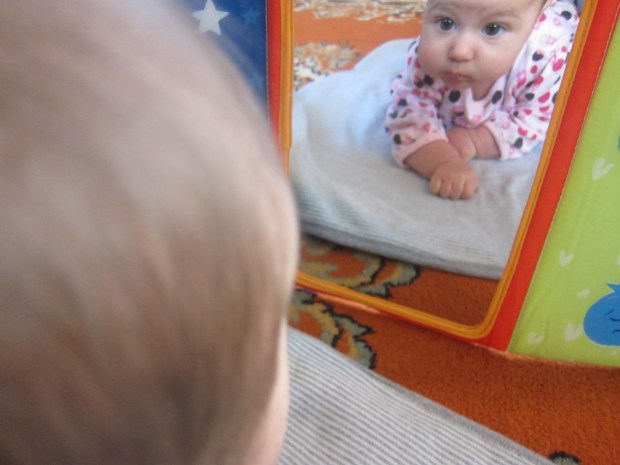
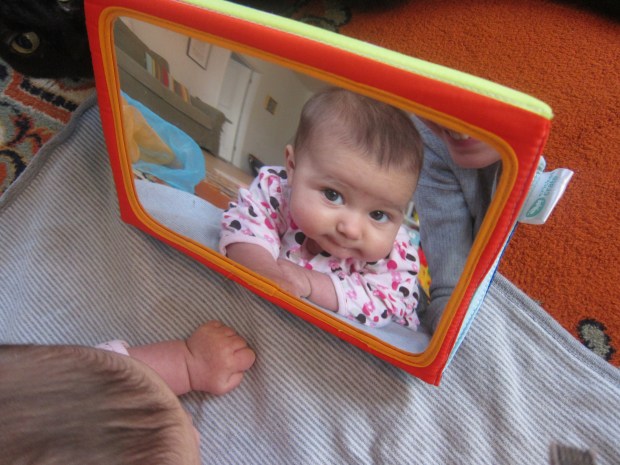
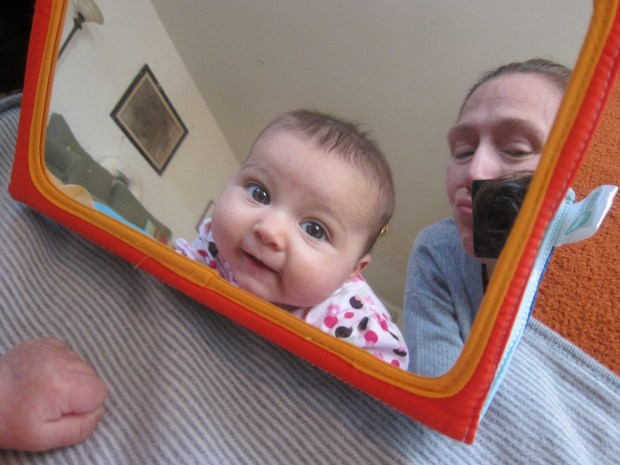
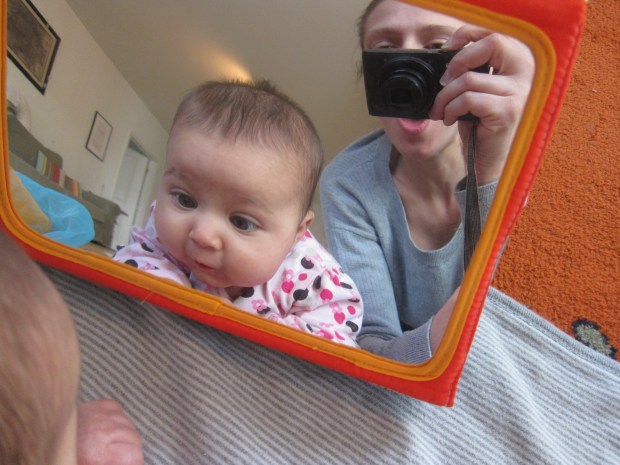
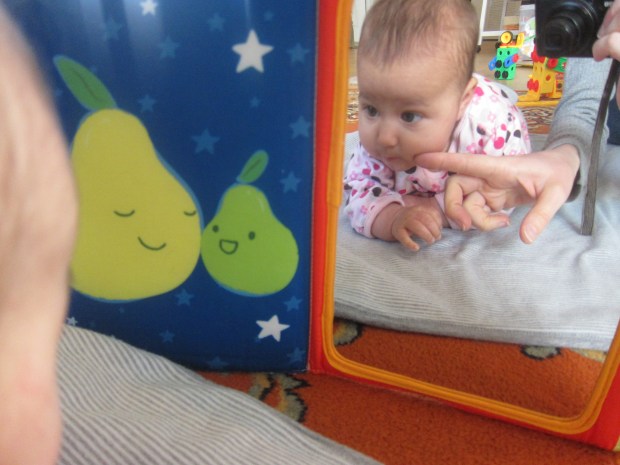
At four months old, Veronika is much more aware of the face in the mirror than she was when we began mirror games, so she and I had some fun with our reflections today. Mirrors seem magical to babies; they still don’t quite understand that they are seeing their own reflection, and yet are starting to notice that the mirror image moves when they do. So play up that magic!

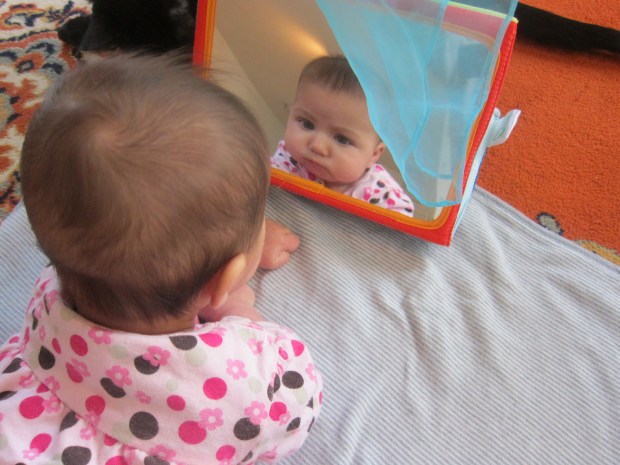
Make sure that you play with a mirror that is nonbreakable for babies this young. I set one up in front of Veronika during tummy time, and got down right next to her.

First, I simply made a neutral face and let her notice us both, but from there I moved on to emotions. As you make each expression, name the emotion. “Happy face!” I cooed to her.

Mirror Magic (5)

You can move on to sad faces or silly faces; the latter got a giggle!

Mirror Magic (6)

Now mommy’s surprised!

Mirror Magic (7)

Add other conversation pointers as you play. “This is your mouth,” I pointed out to her, or “Look at mommy’s mouth.”

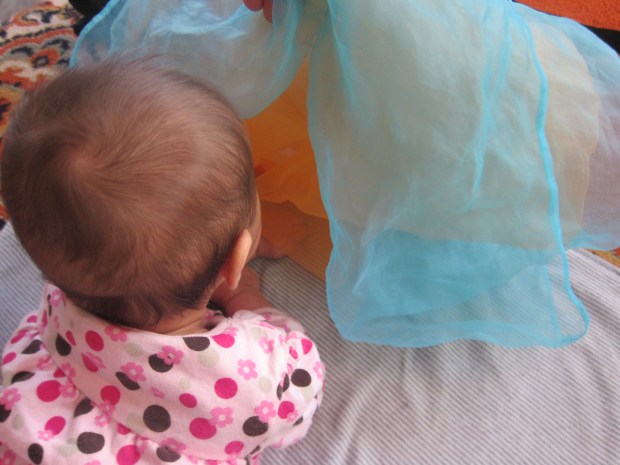
Mirror Magic (2)Then it was time to use the mirror for some real magic: making Veronika disappear and reappear. I placed a scarf over the mirror…

.Mirror Magic (3)

…then peek-a-boo!

Mirror Magic (4)

What other mirror games do you play with baby? Please share in the comments!

Faces & Emotions Cricket Crate

Cricket Faces (20).JPG

This week, Veronika and I cracked open the last of the newborn three-pack from Kiwi Co., originally termed Cricket Crate, and now having shifted to Tadpole Crate. The theme of this last box was faces and emotions, and the keepsake was just what we needed – a new tummy time prop!

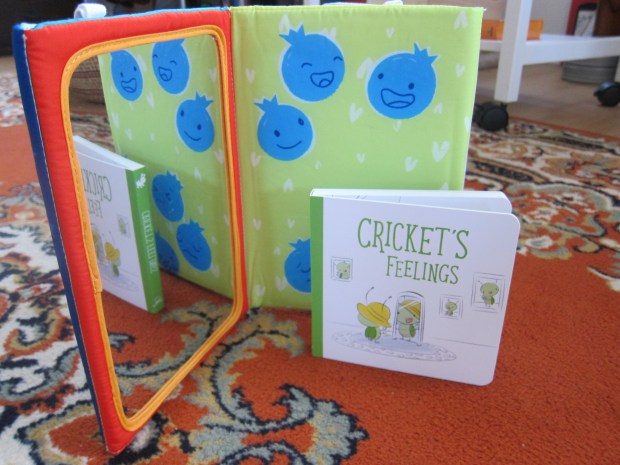
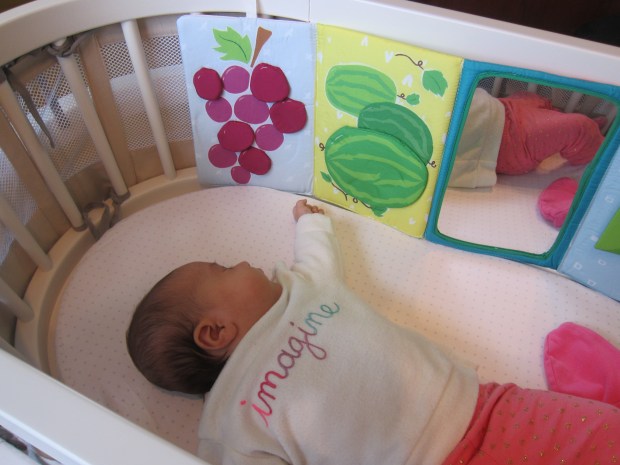
The tummy time mirror folds out in four panels on two sides, for eight visual panels total. You can lift the flaps and explore on each, where silly fruits wear different facial expressions.

cricket faces (2)

These are great for starting the conversation with your wee one about emotions – hey there, silly blueberry! Hello happy banana!

cricket faces (6)

Oh look, a sad cherry. I giggled and so did she!

cricket faces (5)

Next, we experimented with four different ways to position the mirror:

Hanging in her bassinet (Note: this is great when I need to entertain her as I cook dinner!);
cricket faces (11)

Upright for when she lies on her back;

cricket faces (3)

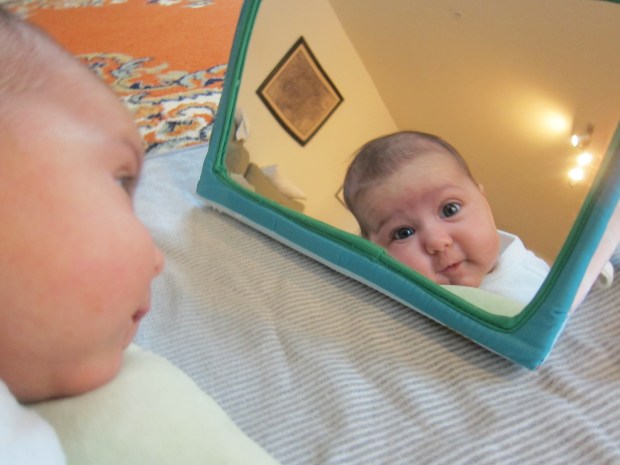
Folded into a triangle for tummy time;
cricket faces (9)

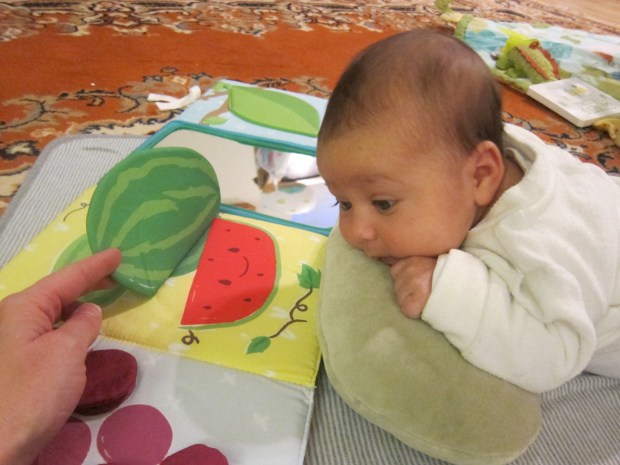
And lying on the floor for tummy time. This last she isn’t quite ready for yet, but it definitely encouraged head lifts.
cricket faces (12)

Don’t stop there! The Wonder magazine had lots of suggestions for games. First, we played ‘Look BothWays’; I used it as a way to encourage her to turn her head to the right, since she favors the left. By putting the panels on the other side, she turned her head and strengthened the muscles on that side.

cricket faces (4)

Next we played ‘Name That Facial Feature,’ similar to the game we play when she touches my face. This time, I touched the mirror, then the corresponding part on her face, naming each feature as I went.

cricket faces (7)

Lots of wonder in her eyes!

cricket faces (8)

It’s also great for helping your child learn their own name. Your baby won’t realize that the reflection is them – not until much closer to one year old – but this was a chance to say ‘Veronika,’ and point first at the mirror, then to her body. I taped a photo of her to one of the mirror panels to reinforce the notion.

cricket faces (15)

Next we played ‘Emotional Me’; I made silly faces into the mirror, naming each emotion. To further this idea, I lay down next to her on the blanket (she looked so surprised finding us face-to-face!), and held up my phone in selfie mode. She was instantly captivated – who was that baby staring back? We went through emotions – happy, surprised, sad – and you could see her trying to copy each. Take some adorable pics while you’re at it!

Cricket Faces (17).JPG

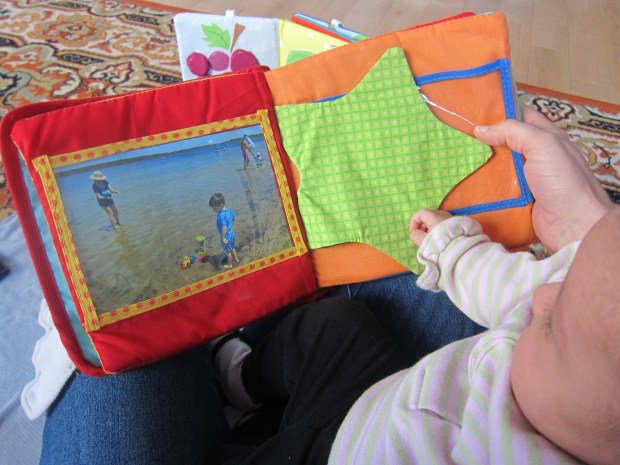
Another great way to talk about faces and people is to go through photo albums with your child. Veronika loves the one I have with crinkly textures and soft pages, full of family pics.
cricket faces (16)

Or you can even look at strangers; babies will take any faces they can get. We flipped through a magazine together, and I pointed out what each person was feeling, or if they were old or young.

Finally, start to actually engage your little one in “conversation.” Ask a question or make a comment then… Wait! Give your baby time to respond, and they will start to pick up on the rhythm of how a real conversation goes. I was rewarded with lots of little “ah ooh” and “ah geh” responses, and she seemed to happy to be “talking” with me just like she sees big brother do!

cricket faces (18)

The book this month concentrated on emotions too, aptly titled Cricket’s Feelings. Don’t be afraid of getting overly dramatic as you read each page in this book – happy, scared, excited etc. You might feel silly, but Veronika was wide-eyed!

cricket faces (14)

We also read:

Baby Faces by Margaret Miller

Huggy Kissy by Leslie Patricelli

Happy Hipp, Angry Duck by Sandra Boynton

Little Gorilla by Ruth Bornstein

Gideon & Otto by Oliver Dunrea

and From Head to Toe, by Eric Carle

Cricket Faces alt.JPG

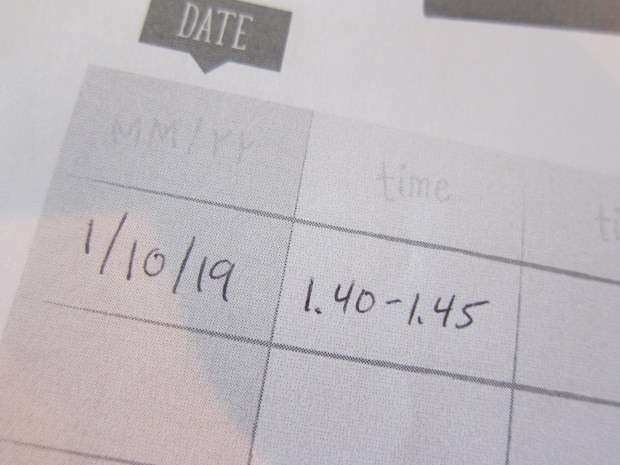
The website bonus this month was a downloadable Tummy Time tracker. This sheet was definitely a reminder for a mom like me who never makes enough time for it.
cricket faces (10)

Now it’s on my counter and jogs my memory every time I walk into the kitchen. As mentioned, this was our final Cricket Crate – eager to delve into Tadpole next, once the series is fully up and running!

Mirror Faces

Mirror Faces (1)

Babies love looking at faces, and this cute activity is a great way to get your little one looking at his or her own.

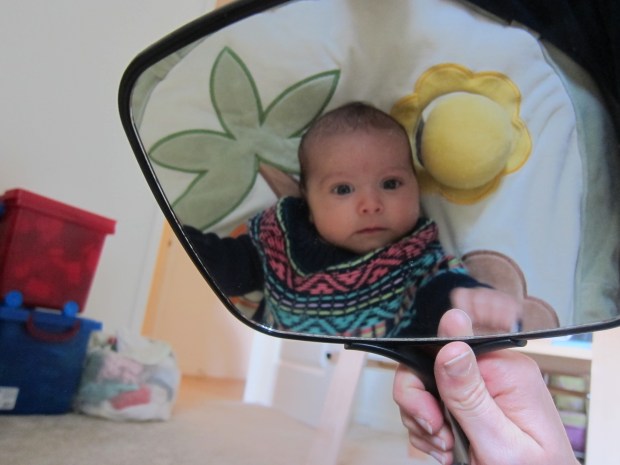
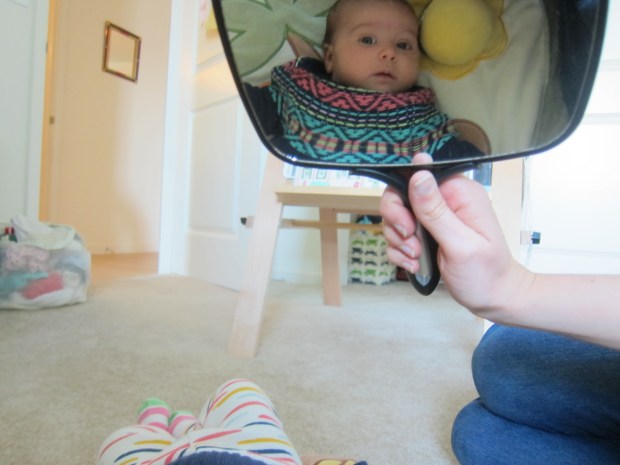
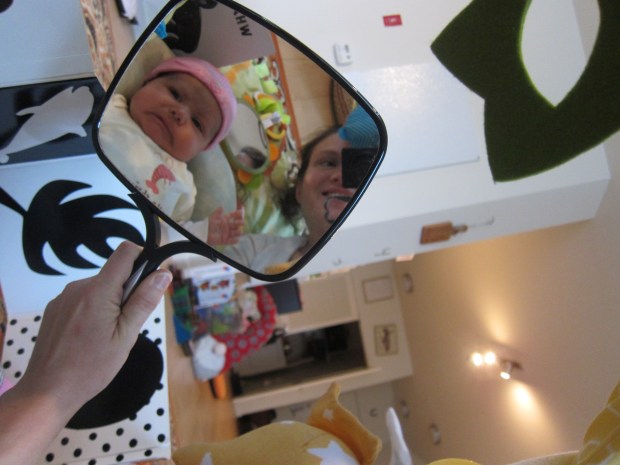
Lie some place comfortable with your baby, like a soft blanket, and hold a hand mirror up over your faces. You can just gaze at first, or point out facial features.

Mirror Faces (2)

From there I moved on to making lots of different expressions, naming them as we went. Happy, silly, sad. Oh no, grumpy!

Mirror Faces (4)

Your baby might even try to mirror what you’re doing!
Pumpkin Emotion Learning Tool

Pumpkin Emotion (7).JPG

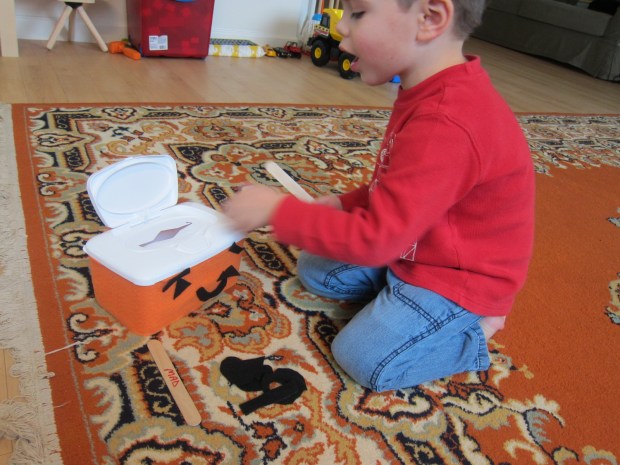
Okay, we probably should have made this jack o’ lantern-themed craft back in October, but it was still cute to play with here in February! With a lot of big preschooler emotions going on lately, the craft is a fantastic way to get talking about emotions, facial expressions, and sorting through the big feelings your kids might be feeling, no matter their age!

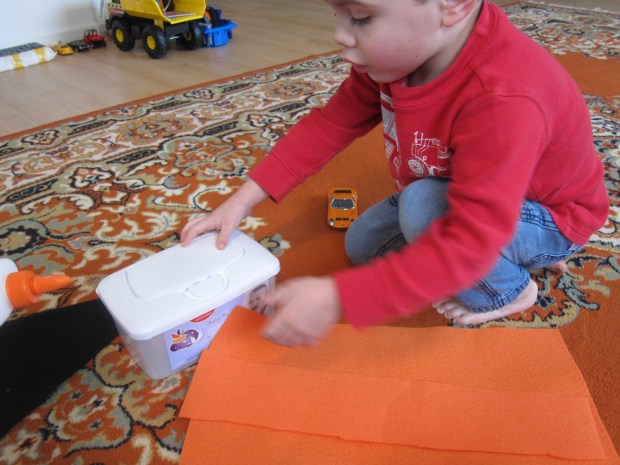
The first step is to upcycle an empty baby wipes container (the kind in a plastic bin), by covering it with orange felt.

Pumpkin Emotion (1)

We tried using regular school glue, but waiting for it to dry proved too much for Travis, so I hot glued the felt on.

Pumpkin Emotion (3)

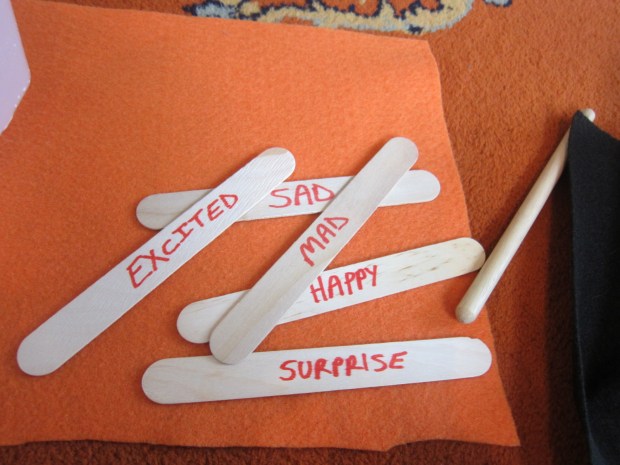
Next, I set out craft sticks and asked him to help me brainstorm emotions. In addition to common ones (sad, happy), he said a few that made me laugh, like “when I’m waiting to play with Daddy’s camera stand.”

Pumpkin Emotion (2)

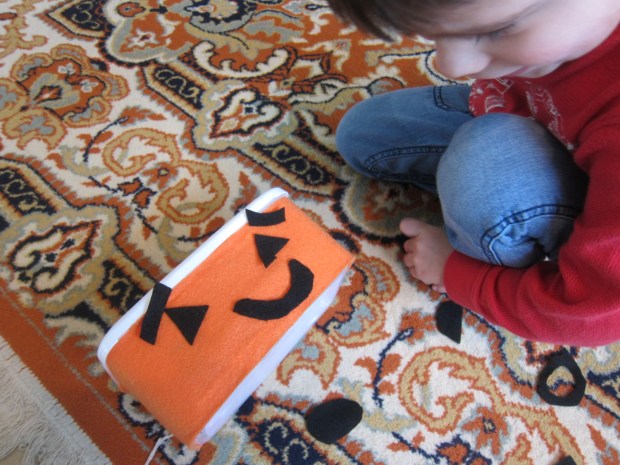
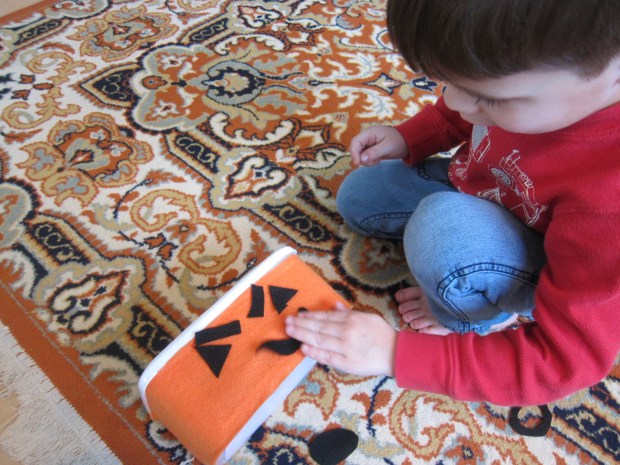
Next, I cut shapes out of black felt to go with the emotions we had created, and set all the pieces out in front of him.

We put our craft sticks in the top of the wipe container, and pulled one out – “surprised” was the first.

Pumpkin Emotion (8)

I asked Travis which mouth went with surprised, and so on. This turned into a great game not only for identifying the emotions we feel, but also what other people look like when they experience those emotions.

Pumpkin Emotion (5)

And of course, it’s just fun to set up the pumpkin with silly faces.

Pumpkin Emotion (6)

As a bonus, all of your craft sticks and felt pieces will store inside the wipe container when you’re done, ready for the next time you want to play.

Pumpkin Emotion (9)

Stress Ball

Stress Ball (3).JPG

“Terrible twos” don’t have to be terrible. A simple too like a stress ball can help your child calm down in a rough moment – and help you stay joyful as a parent! We talked a lot about feelings lately with our Koala Feelings crate, and helping your child identify frustration is a key first step in quelling a tantrum.

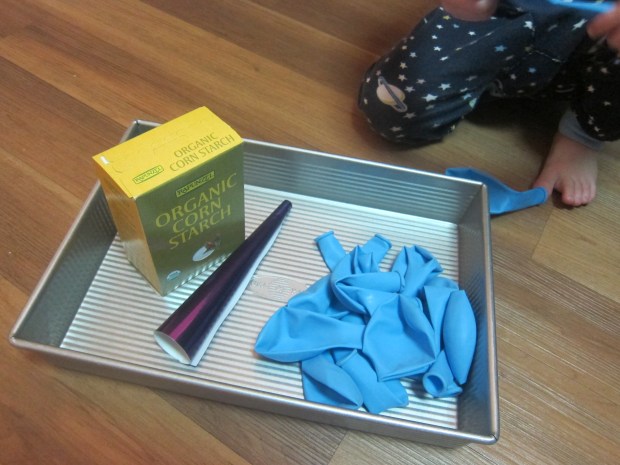
Ready to help your toddler squeeze away emotions? Grab a balloon, a funnel, and cornstarch. Lacking a funnel, we actually used an old party horn, which was shaped perfectly!

Stress Ball (1)

Inflate the balloon a couple of times to stretch it out, then insert the funnel. Gradually add your cornstarch until the balloon is filled; you may need a kebab skewer or pencil to help push the cornstarch down – Travis loved this part.

Stress Ball (2)

Now it was time to give a squeeze; he thought it was very cool how soft and squishy it was. The stress ball would also work great in situations where your child is nervous or scared!