Moroccan Spices

Moroccan Spices (1)

This lesson was a culinary extension to the recipes in the Morocco kit from Raddish Kids. Travis got to pretend to be a spice seller at his very own bazaar! For a kindergartner, the lesson was a mix between learning and sensory play (you’ll notice my toddler was eager to leap in, too). Older kids can take the lesson more seriously, researching spice blends from around the world, grinding their own spices, and using exact proportions to create their own blend.

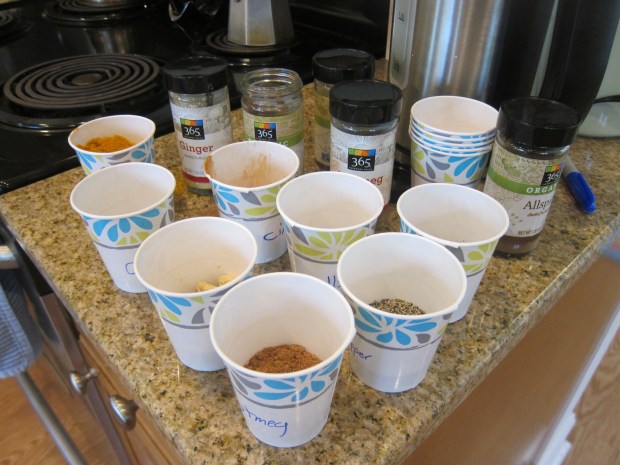
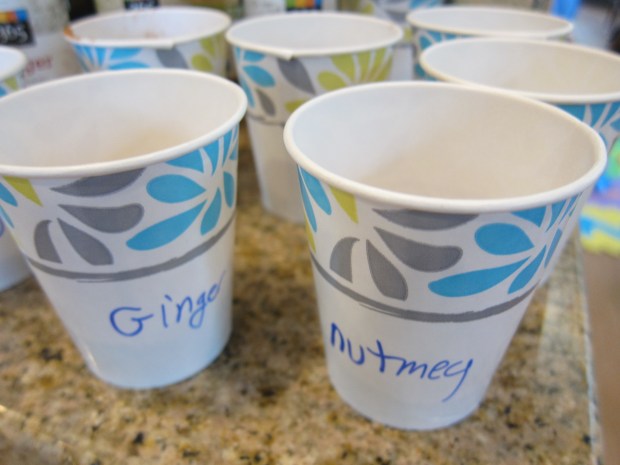
First up was being a scent detective! I poured eight common Moroccan spices into small cups and gave them to Travis one at a time. I labeled each cup just so I wouldn’t forget what was what!
Moroccan Spices (2)

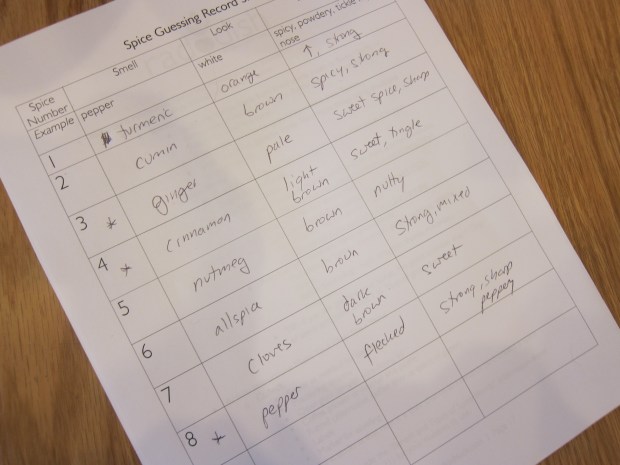
He loved smelling each, summoning up the vocabulary to describe it, and adding tasting notes and color to the provided chart.
Moroccan Spices (8)

He knew three of them without needing to be told (cinnamon, ginger, and black pepper), and I challenged him to think of why he knew these three. He correctly realized it’s because we cook with them often, whereas the other spices were less familiar!


Moroccan Spices (3)

The lesson plan then included facts about spices, where they come from, the health benefits of spices, and information on common blends like Italian seasoning or ras el hanout.
Moroccan Spices (7)

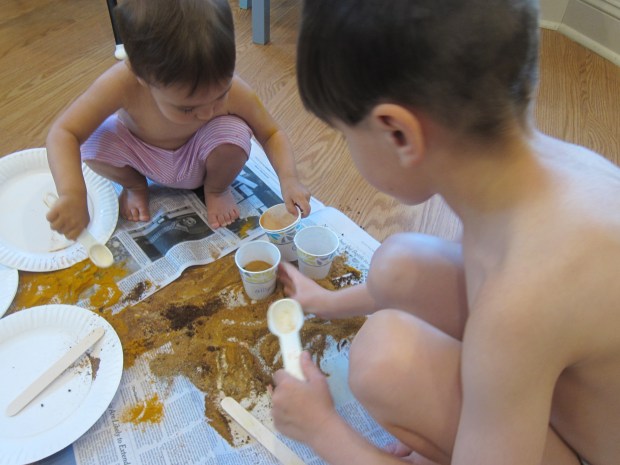
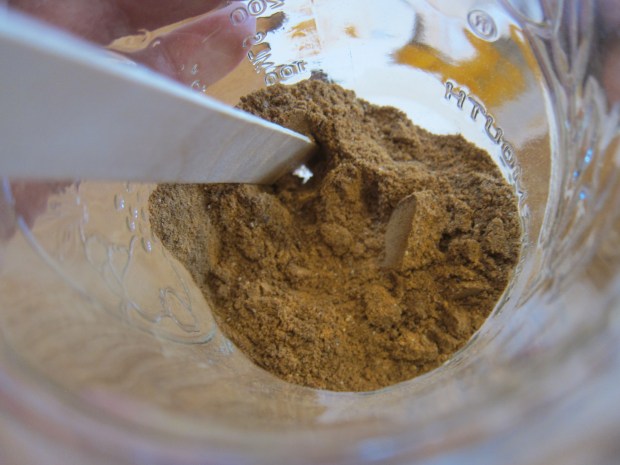
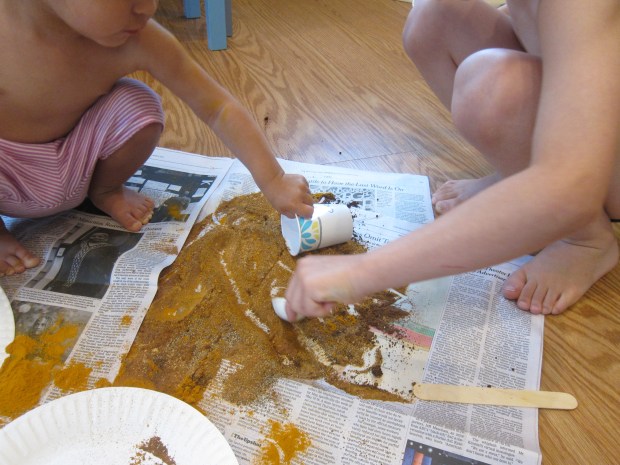
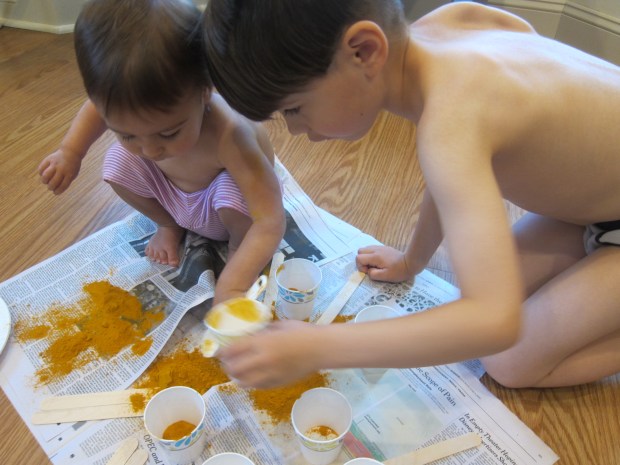
That was all a bit over Travis’s head; instiead, it was time to create his own blend! Mostly he pretended to be a spice merchant, and there was lots of spooning onto paper plates, or pouring in and out of cups. If he gave a spice a thumbs up, we added 3 teaspoons to a glass jar. If he didn’t like it, we added only 1 teaspoon, and if he rated it a medium, we added 2 teaspoons.

In this way we ended up with:

  • 1 tablespoon ground cumin
  • 1 tablespoon ground cinnamon
  • 2 teaspoons ground cloves
  • 1 teaspoon ground turmeric
  • 1 teaspoon ground ginger
  • 1 teaspoon ground nutmeg
  • 1 teaspoon ground allspice
  • 1 teaspoon black pepper

Well, wouldn’t you know, he liked it!
Moroccan Spices (5)

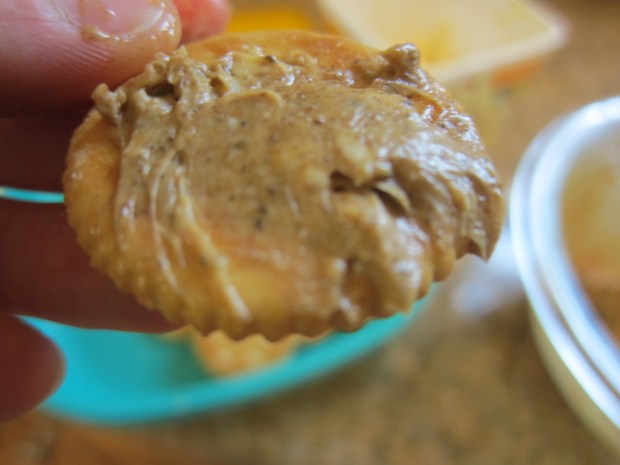
We creamed 1 tablespoon spice mix into 4 tablespoons Earth Balance butter for a spread that worked nicely on homemade bread or crackers. We might try it as a dry rub on tofu, next!
Moroccan Spices (9)

A fun book to read together was My Five Senses, by Aliki. We finished with a virtual trip to a Moroccan bazaar.
Moroccan Spices (6)

Older kids can extend the lesson plan by gifting their spice blend along with a recipe, or researching how spices are grown and harvested.
Moroccan Spices (4)


Migration Means Moving

Migration (5)

Spring is in the air, and with it all the migrating animals that might be returning to your area. So it’s the perfect time for a little lesson on migration! This lesson kicked off what will be a series of spring-themed recipes from Raddish Kids in the coming weeks.

The lesson plan from Raddish featured the movement of both animals and people. However, I felt that the topic of children migrating, particularly due to conflict, would be upsetting to Travis. So we focused on the animal aspect of migration, beginning with a few suggested videos. If your child is older, consider sharing an online read of Where Will I Live, by Rosemary McCarney. You can ask your child about times your family has moved, and reasons why people might move, or discuss what makes migration different from a vacation.

Migration (1)

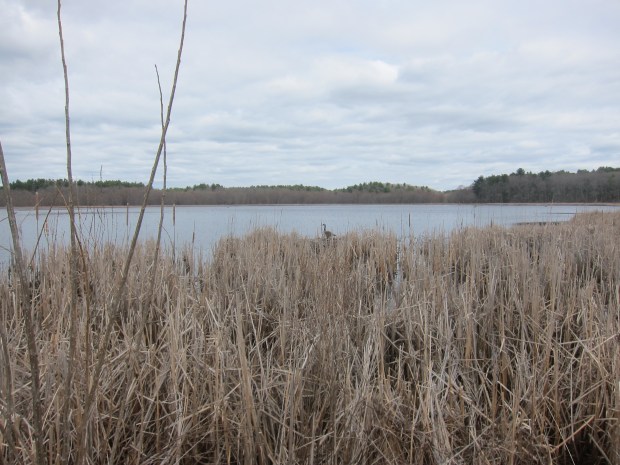
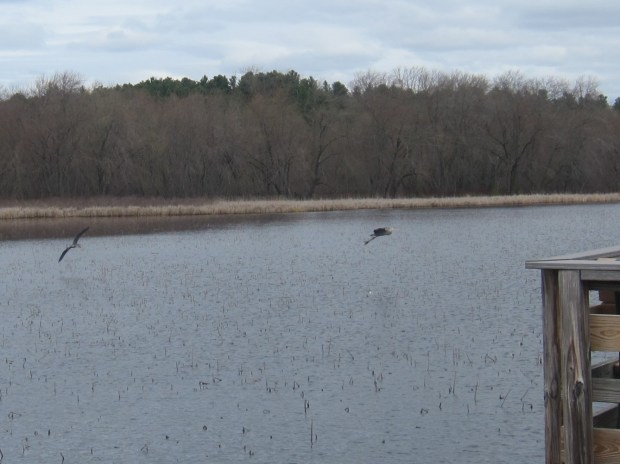
After the intro videos, we set off a nature walk in search of a migrating animal! I thought the best we might luck into was a duck or a goose, so we were legitimately thrilled to spot two great blue herons. Wow!

Migration (3)

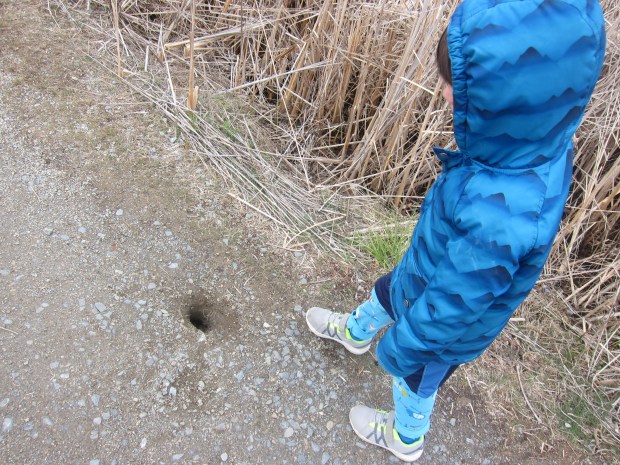
We also spotted what might have been a snake hole, which was a great opportunity to point out the difference between hibernation versus migration as a winter strategy.

Migration (2)

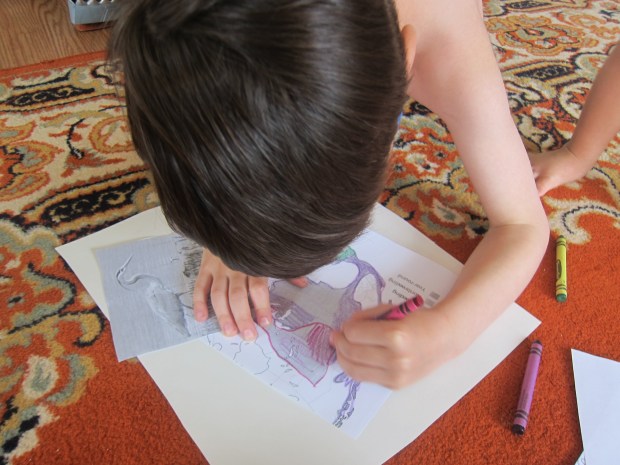
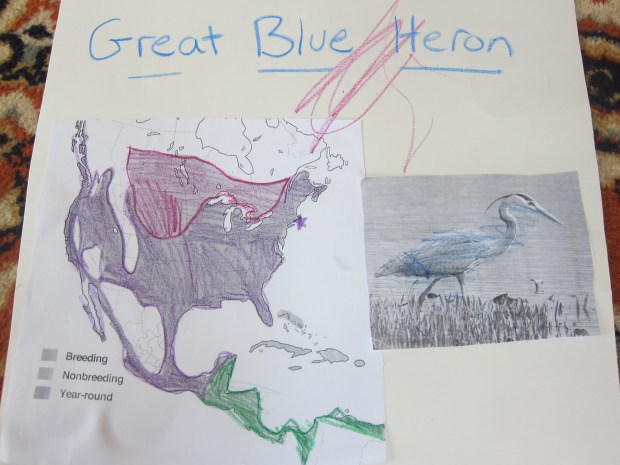
When we got home, it was time for a research project. This kind of project is new and advanced for Travis as a kindergartner, so I helped him pull up a picture of the great blue heron online, as well as a map of its range. He color-coded the map according to their winter, summer, and year-round habitats. We watched a few final videos about the bird to finish the lesson.

Migration (4)

Older kids can again get more detailed. Consider painting aspects of a particular animal’s migration, or posing bigger questions like how the animal finds its way, and how far it goes.
Mardi Gras

Mardi Gras (7)

In conjunction with a spicy, jazzy jambalaya, Travis and I did a social studies lesson today on Mardi Gras, care of Raddish Kids.

To get in the mood, fire up some Mardi Gras tunes online. As the band began to play, I read Travis some talking points about the festival. We checked out where Louisiana and New Orleans were on his U.S. map, and then discussed the party atmosphere of floats and parades. He thought it sounded neat, especially the masks!

Mardi Gras (1)

Using the traditional colors of gold, green, and purple, we “celebrated” in 3 ways. First, he drew a picture of a Carnival king; note the big purple mask.

Mardi Gras (6)

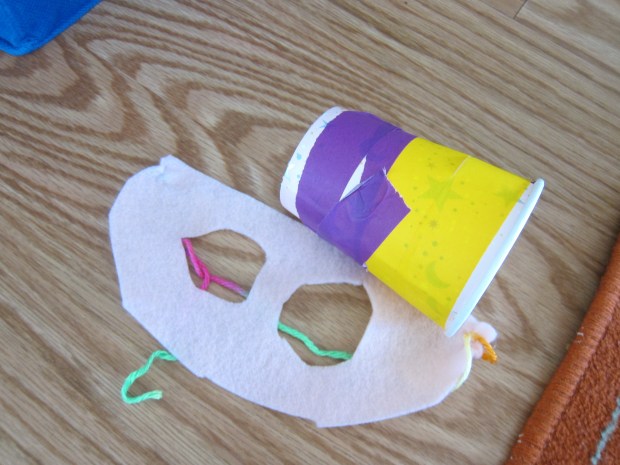
Then we made costumes! Travis helped craft a felt mask and an “armband”. The latter was a paper cup with the top cut off, which we surrounded in purple, yellow, and green masking tape.

Mardi Gras (2)

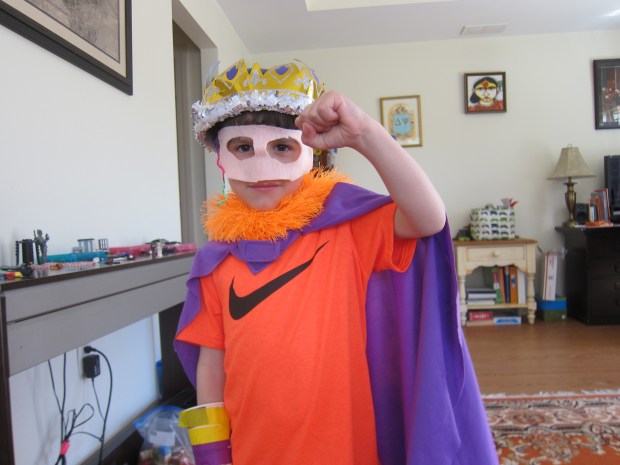
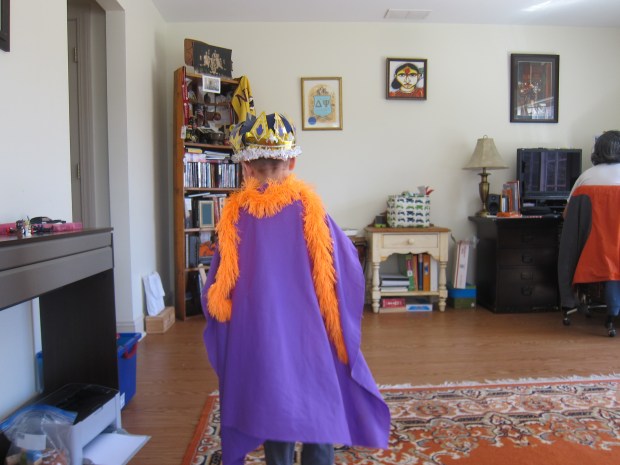
We added items from the dress-up bin, including a purple cape, a boa for sparkle, and of course a king’s crown. He’s ready to parade!

Mardi Gras (3)

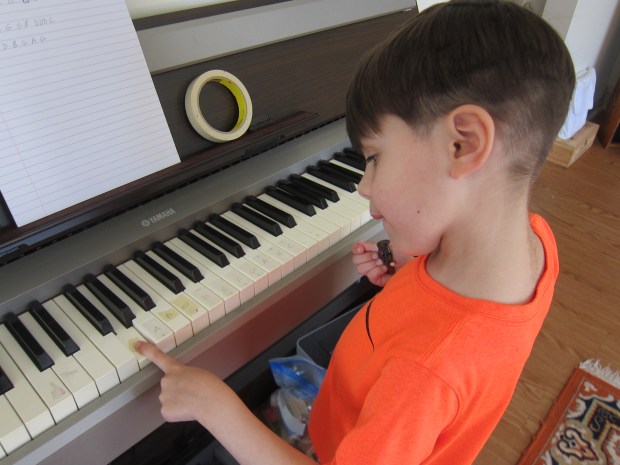
Finally, I gave him a mini piano lesson of When The Saints Go Marching In, thanks to an online tutorial.

Mardi Gras (5)

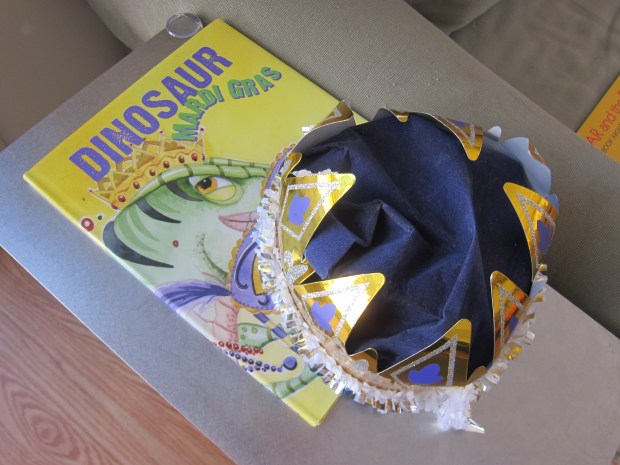
Finish up with a story about Mardi Gras. We enjoyed the silly Dinosaur Mardi Gras, by Dianne De las Casas, but you can find more serious titles at a book store or library, too.

Mardi Gras (4)

Kitchen Instruments

Kitchen Instruments (6)

Travis and I plan to make a few “musical meals” soon thanks to his latest Raddish Kids, so this morning we made some simple instruments with kitchen objects to kick off the fun!

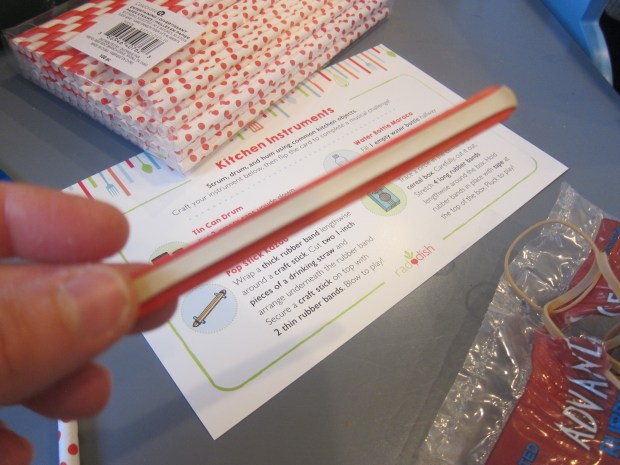
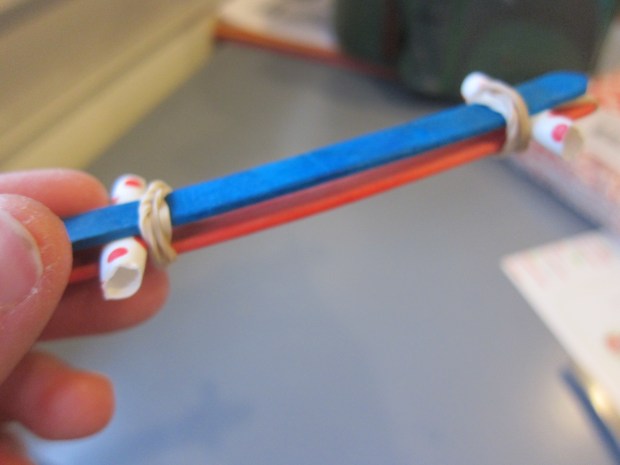
The most complicated was a Pop Stick Kazoo. You’ll need two leftover Popsicle sticks (or craft sticks) for this instrument. First, wrap one stick with a thick rubber band lengthwise.

Kitchen Instruments (1)

Cut 2 (1-inch) pieces of drinking straw and slip under the rubber band. Secure a second Popsicle stick on top using two thin rubber bands. Blow for a kazoo-like sound!
Kitchen Instruments (2)

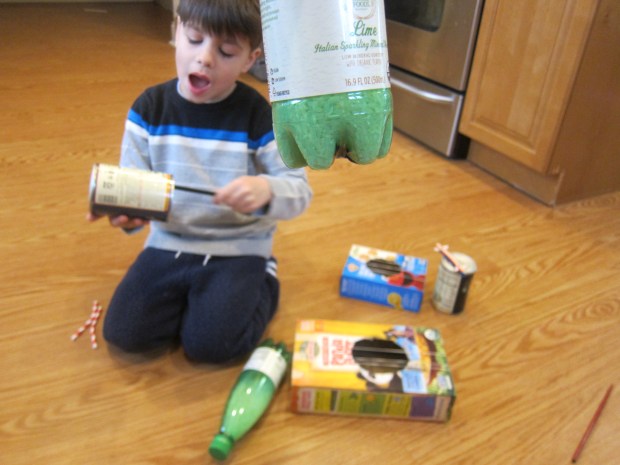
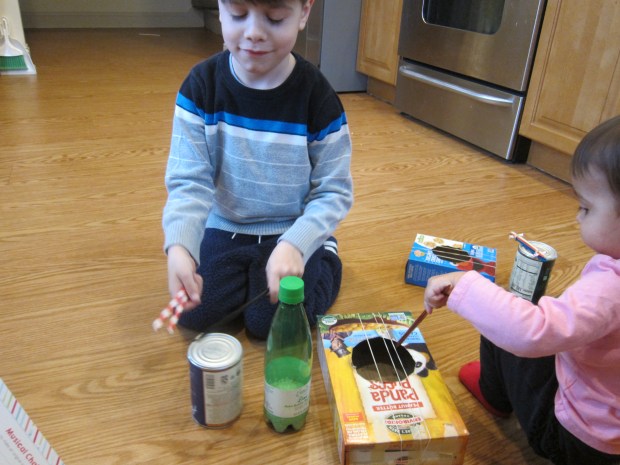
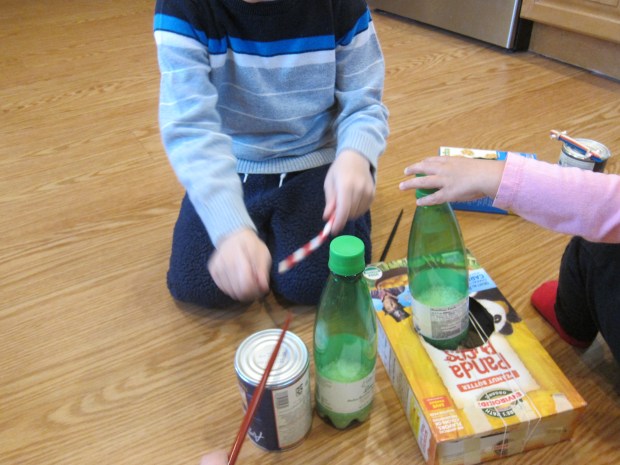
Next we made Cereal Box Guitars: Cut a circle in the middle of an empty cereal box and stretch long rubber bands over the box for the strings. We made a smaller version using a cracker box for baby sister, and decided this was her ukulele!

For Water Bottle Maracas, we filled empty water bottles about a third of the way with rice and glued on the lids.

For Tin Can Drums, simply turn empty, rinsed out metal cans upside down. Add chopsticks to play!

Kitchen Instruments alt

We sat down to rock with our band, and what fun the kids had!

Kitchen Instruments (5)

Travis’s favorite was the guitar, which he loved strumming with extra cut straws or chopsticks.

Kitchen Instruments (10)

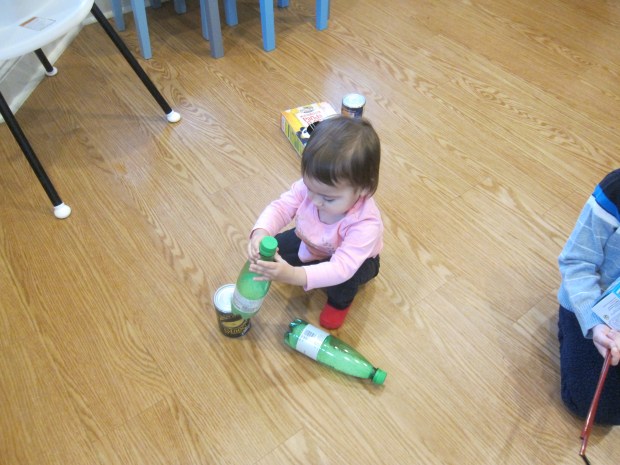
Veronika gravitated towards the shaky maracas.

Kitchen Instruments (9)

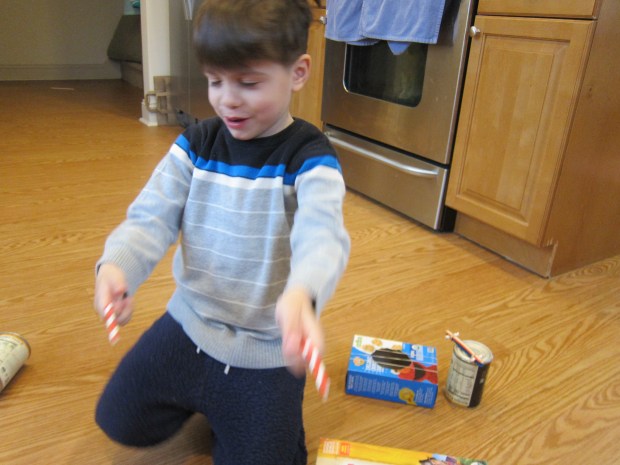
Both kids loved drumming with chopsticks. For some musical learning, we went over a few concepts. First up, Travis thought of a beat (a.k.a. rhythm, or a pattern that repeats). His was “Bo-ba, Bo-ba, Bo-ba”.

Kitchen Instruments (7)

Then we played around with speed (a.k.a. tempo). We practiced his beat super fast, and then slow on the drum.s

Next you can try making up silly lyrics, although this was harder for Travis to do on the spot. I also challenged him to add style (a.k.a. dynamics), sometimes quiet, sometimes loud.

Kitchen Instruments (12)

Don’t forget to harmonize as you all sing and play along! In sum, there’s lots of musical exploration to be had, just in your kitchen.

Kitchen Instruments var


Line Dancing Fun

Line Dance (1)

Travis is growing tired of class videos we’ve used to get our afternoon wiggles out during home school, so today I turned to Raddish Kids for inspiration. With a musical theme this month, one of the lessons was all about line dancing!

We kept the “lesson” part of it short, since really I just needed to get Travis moving. Big kids can delve further and talk about the genre of Country and any singers or song titles they know. You can also give some history of the genre. Instead, I just focused on common instruments (banjo, fiddle) and explained that line dancing allows dancers to move as a group, instead of with a partner. In other words, it’s meant to be shared!

To get our toes tapping, we listened to clips of the Boot Scottin’ Boogie and Watermelon Crawl. A few quick tutorials from YouTube showed us basic steps like the heel stomp and grapevine. Travis was a little skeptical but then we watched a quick how-to for an Achy Breaky Heart line dance.

Line Dance (2)

We cranked up the music and danced! Of course, it’s totally fine if your kids make up their own moves.

Line Dance (3)

For giggles, we finished with a clip of a line dance from Ice Age.

Show Love Around the World

Love World (9)

Raddish Kids had a heart-warming lesson this month about different ways that cultures celebrate love, specifically on Valentine’s Day, but also throughout the year. As a kindergartner, Travis is working on learning and showing empathy, so it was a nice lesson to make things concrete. First, we spent a few nights devoting story time to books about love, including:

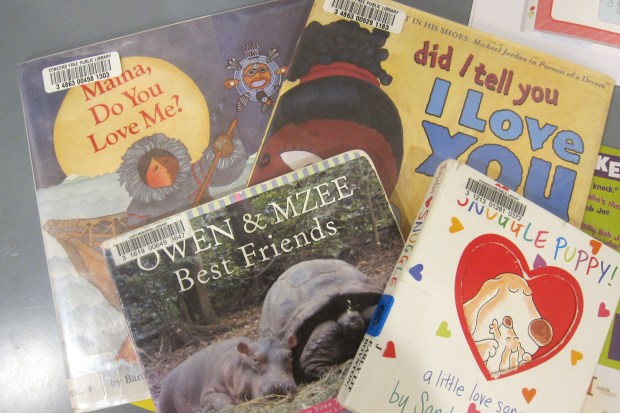
  • Snuggle Puppy by Sandra Boynton
  • Best Friends (Owen and Mzee) by Isabella and Craig Hatkoff
  • Mama, Do You Love Me? by Barbara M. Joose

Love World (1)

After each one, we discussed the type of love relationship it entailed. Sometimes it was two friends, sometimes a parent and child, and sometimes members of different species! This was a great jumping-off point for talking about what love means, and how we might express love differently towards different people (or animals).

Travis said he shows love to a parent by hugging, but love to a friend by playing.

Love World (2)

Raddish provided lots of links to learn more about other cultures’ love traditions, including silly bits like how to say “love” in Klingon. Some made Travis giggle, like walking barefoot in Slovenia. Overall, though, this section of the lesson was geared towards older children and Travis was too antsy to sit and go through all of the customs.

Instead, we jumped ahead to the project: making up his own love celebration. The provided worksheet helped direct Travis’s thinking, but he gave a lot of silly answers before honing in on a real idea.

Love World (3)

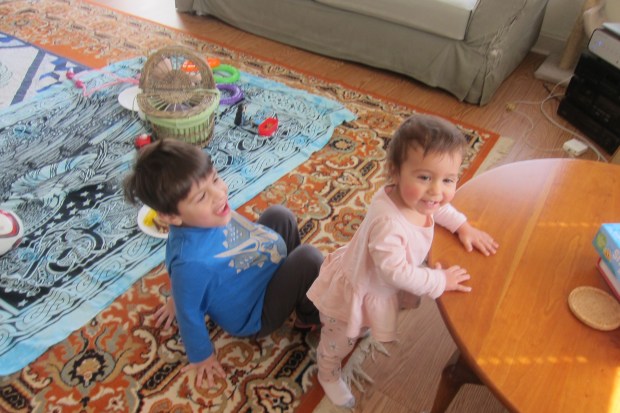
He wanted to celebrate sibling love (aww!) so we ended up combining this with a winter picnic for Veronika.

Love World (5)

I loved watching them play and share the moment together!

Finally, we put together a Love Jar. Decorate any container you like, whether a shoe box or a mason jar or anything in between. Travis drew designs on a mason jar with permanent markers, including hearts and arrows.

Love World (8)

I left out post-it notes by the jar with the idea that he can write down a moment he appreciated or loved each day.

Love World (10)

Reading these out can become a special moment each week! We finished off all the heart-shaped fun with a quick compound word game from Raddish, filling in the blanks on “broken hearts” to complete each word.

Love World (4)

Northern Lights Illuminated

Northern Lights (8)

With a few Swedish recipes to prepare from Raddish Kids this month, Travis and I sat down to learn about the Northern Lights, a neat STEAM lesson alongside the Swedish cuisine.

I started be asking him to picture dancing lights in the sky, and he immediately got very silly imagining twirling reds, greens, and blues. But I told him this really exists! An informative website and video helped him visualize and understand the concepts further. Help your child walk away with new vocab, like solar flare and solar wind.

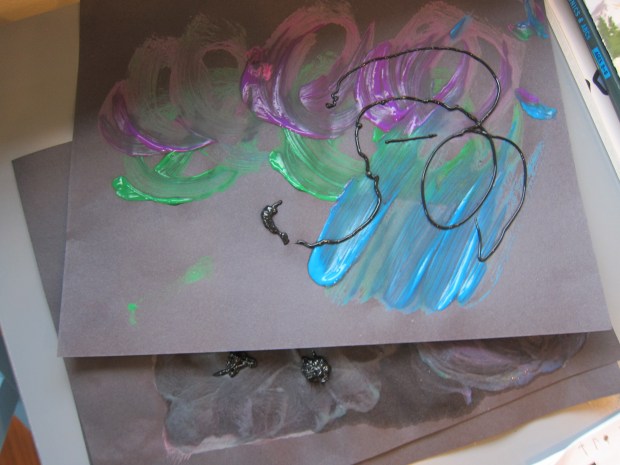
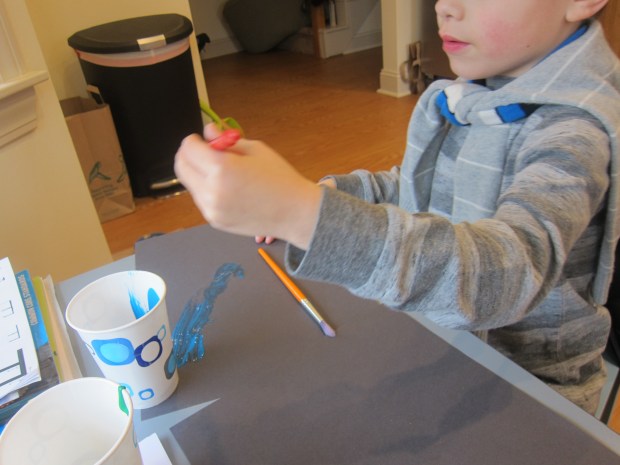
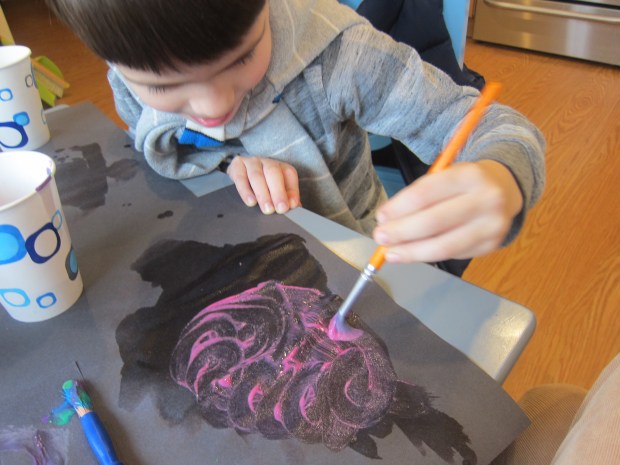
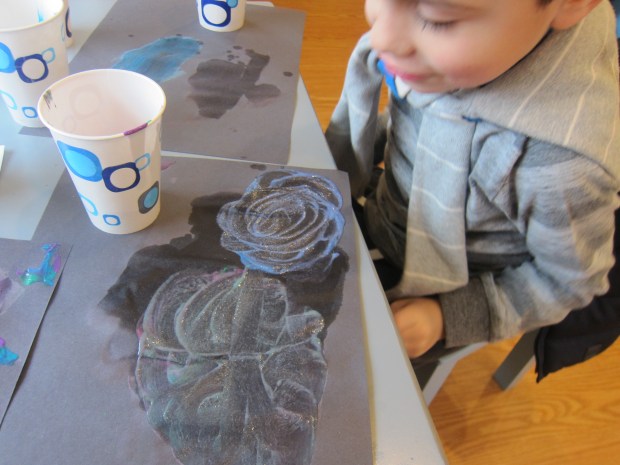
So now it was time to paint the northern lights! Using black construction paper as our background, I invited Travis to craft the lights however he felt inspired. He started with blue paint…

Northern Lights (3)

…but soon liked the way that just water looked when swirled on the black page.

Northern Lights (5)

He added in a bit of color, then more water, for a very ethereal effect.

Northern Lights (6)

As we painted, we listened to ambient music from Mannheim Steamroller. Once he finished painting, it was time to dance and be the auroras.

Northern Lights (1)

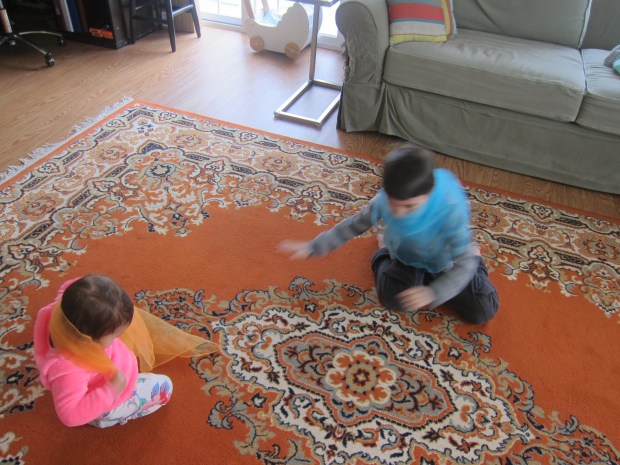
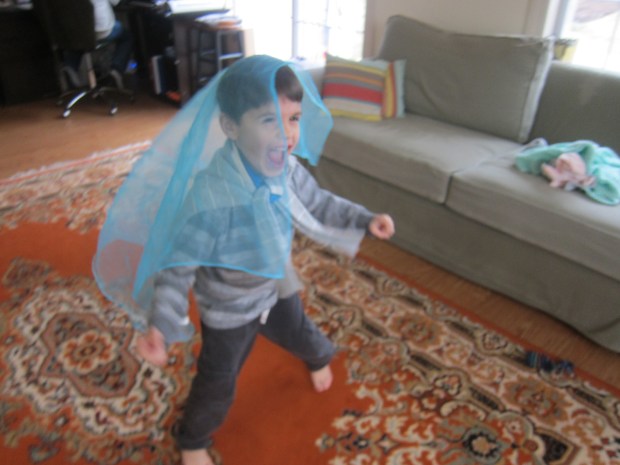
With scarves as props, he got really into his swirly, twirly, silly dance moves. And so did little sister!

Northern Lights (7)

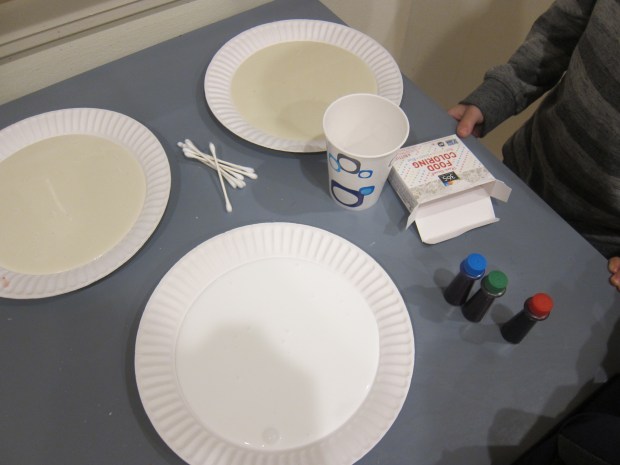
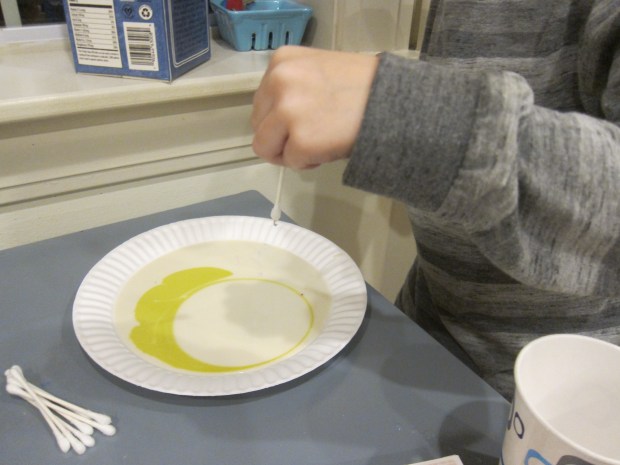
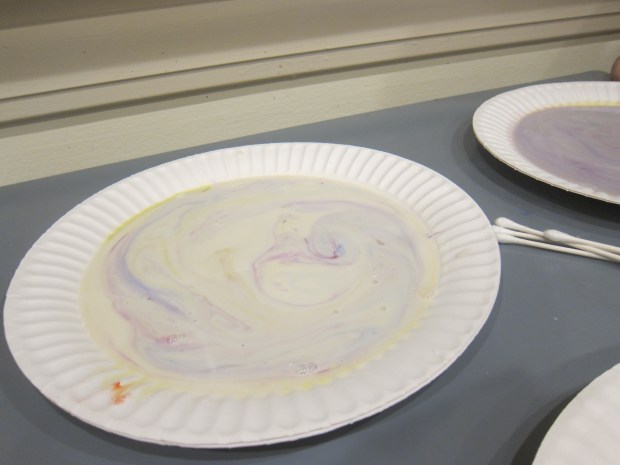
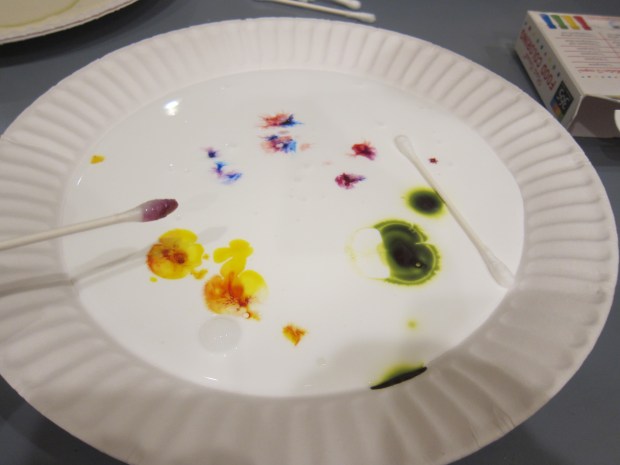
For a final scientific component, we made the “Northern lights” in food coloring and oat milk. Set out paper plates filled with the milk and add a few drops of food coloring to each.

Northern Lights (9)

Dip a q-tip into dish soap, then touch this to the milk. The food coloring will dance and skitter and mix.

Northern Lights (10)

This had a big wow factor. I had hoped for it to be a little bit of a science lesson, thinking there might be a difference between our full fat and low fat oat milks in the fridge, but unfortunately that wasn’t the case.

Northern Lights (12)

For variation, we tried it in glue, too. (Note: You can let a glue version dry for a full week, then pull it off the paper plate and hang as a “suncatcher.”

Northern Lights (11)

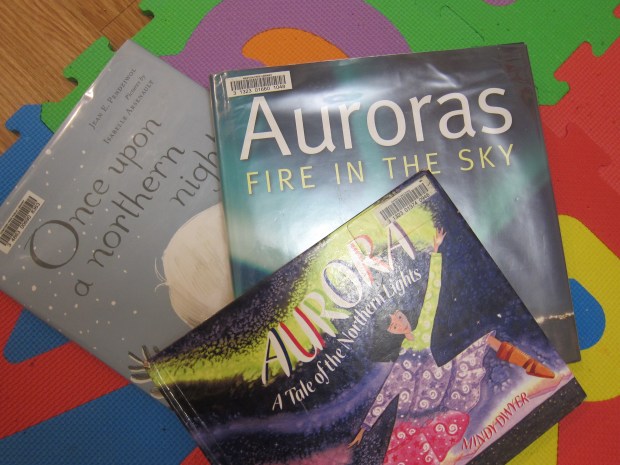
Last up was a little bedtime reading from the library. Check out Once Upon a Northern Night by Jean Pendziwol; Aurora: A Tale of the Northern Lights by Mindy Dwyer, or Auroras: Fire in the Sky by Dan Bortolotti.

Northern Lights alt

I loved that this lesson got Travis to learn, to create, and to get active!


Flavor Bases Around the Globe

Flavor Bases (5).JPG

It can be hard to get kids to try new flavors; Travis might enjoy eating his vegan chick’n nuggets, for example, but he doesn’t want them spiced in a new way! So I appreciated this unit on flavor bases from around the world, part of a lesson to go with the Raddish Kids‘ recipe Travis prepared for chickpea soup, one that used a French mirepoix as the base.

I kept the lesson very light for a kindergartner. We watched a quick video on how to chop a mirepoix (carrots, onion, celery), and then discussed how an aromatic base might differ in other countries, whether with a different fat (coconut oil in parts of Asia) or different aromatics (ginger, garlic).  Older kids can delve into math ratios for the best flavor here!

Flavor Bases (1)

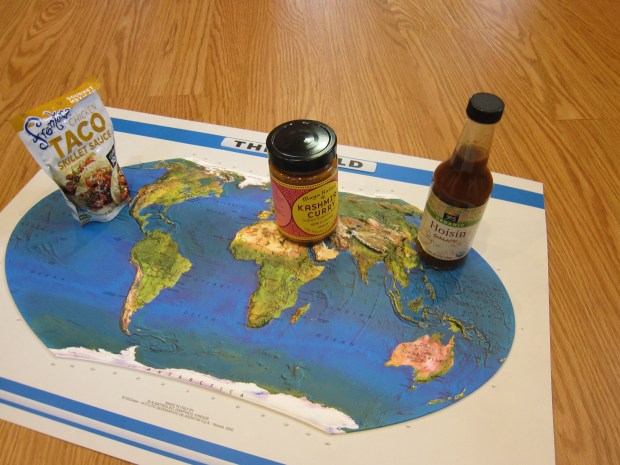
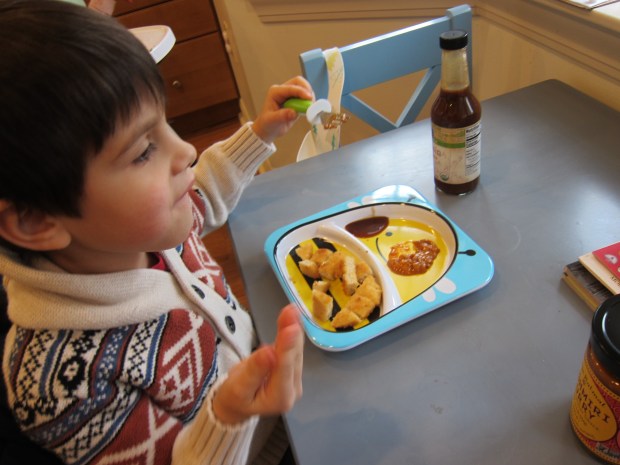
The true challenge was to cook one protein in three different flavor bases. I knew Travis would never have the patience to prepare three recipes, but instead presented him with three sauces to spice his chick’n at lunch. We checked them out on a world map next to their countries, first!

He loved dipping into each. “Not the favorite,” he declared after one bite of Chinese hoisin sauce. Indian masala got a maybe, but Mexican taco sauce was the clear winner. He kept asking for more!

Flavor Bases (4)

Have fun flipping through food magazines or cookbooks as a finale to the lesson. Travis pointed out recipes that interested him, and I helped read the ingredients that went into the flavor base. This is a great way to get your little chef thinking even deeper about food and culture.

Flavor Bases (3)

What is Philanthropy

Philanthropy (3)

Several of Travis’s subscriptions focused on philanthropy this December, and I was glad of it. I’m hoping to instill in him the idea of giving back: all year, but during the holidays in particular.

First up was this month’s Gallant Challenge in Highlights magazine. Two boys built a “Box of Blessings”, a wooden box outside their home that acted as a food pantry. Those who needed items could take them, and neighbors helped replenish it. We loved the idea, but don’t currently have the ability to build and mount a box.

Luckily, it tied in perfectly with a lesson from Raddish Kids to accompany the Corn Muffins we baked around Thanksgiving.

Start off with a read-through of The Very Hungry Caterpillar by Eric Carle. As we read, I had snacks ready to go: apples and oranges to mimic the foods the caterpillar was nibbling. If you like, have even more of the caterpillar’s food items ready for snacking!

Philanthropy (1)

Once the story ended, I asked Travis how the caterpillar felt at the beginning. Travis pinpointed his hunger, and we discussed times that he has felt hungry (like after school when he’s hangry for snack!). It helped him imagine what it might be like to feel hungry but not have access to food once home.

Philanthropy (2)

With older kids, you can delve deeper into the idea of food security here, and reasons some families might not have it: illness, unemployment, old age. I tread lightly over all that with a kindergartner, but talked instead about how we can help: donating food to those who might need it.

Open Table in particular offers the option for Kids’ Bags. Travis and I went over the list of suggested groceries together and purchased the materials to stuff a few bags for our local drop-off center.

Philanthropy (4)

Have fun decorating these! Travis then proudly filled them, assembly-line style, with items like juice boxes and packaged snacks.

Philanthropy (6)

We finished by reading a few additional books including Beatrice’s Goat by Paige McBrier and One Potato, Two Potato by Cynthia DeFelice.

Philanthropy (5)

Another great philanthropy project for even young kids is toy donation, especially just before the holidays. How do your children participate in charity? Please share in the comments!

Pie Crust Science

Pie Crust Science (2)

The lesson plan that went with Travis’s recent Apple Crumb Pie recipe delved deeper into what makes a pie crust so yummy. This was a hard one to tailor for Travis’s age, so here’s just an abbreviated version.

Start off with a read of Enemy Pie by Derek Munson, which you can find at your library or watch a full read-through online. This interesting story will whet the appetite, if you will, for pie!

Pie Crust Science (1)

Travis enjoyed watching, and afterwards we talked about what role pie had played in the story. We talked about pies we’ve made, and specifically about the components that had gone into our recent crust. I helped him remember that we had used:

  • flour
  • sugar
  • salt
  • Earth Balance butter
  • water

You can go through the reasons for each ingredient, as well as definitions for tenderness and flakiness, the two things that people look for in a “successful” crust. Another quick video clip helped Travis understand the idea better.

Raddishthen suggests letting kids become food scientists, making two different pie crusts but only changing one variable. I knew though that Travis would lose interest in taking time to bake two crusts, plus I worried two full pies would go to waste! The idea of independent and dependent variables was also a bit advanced for a kindergartner.

So instead, we baked a store-bought pie shell from our freezer that differed from our homemade crust in one significant way: palm oil as the fat instead of our Earth Balance butter. I had him do a side-by-side taste test of the crusts, both of which he declared delicious.

Pie Crust Science (5).JPG

Older kids can be much more scientific about this. Consider varying the type of flour used, the tool used for mixing, and more. Chart independent and dependent variables along a graph if your kids are old enough for that kind of math. Invite friends over for a complete taste test, if you have the time!

Pie Crust Science (4)

So this was a brief lesson for my little one, but there is lots more to explain here if desired.