Melting Race

Melting Race (5)

Here’s a clear way for even kindergartners to learn about how temperature affects states of matter: have a “race” between two toys trapped in ice, and see which one emerges first!

Before heading off to school, Travis selected two toys that fit into paper cups. We filled the cups with water and placed them in the freezer. By the time he got home, the toys were trapped in giant ice cubes. Oh no! Peel off the paper cups, and place the resulting ice blocks in larger plastic cups.

Melting Race (2)

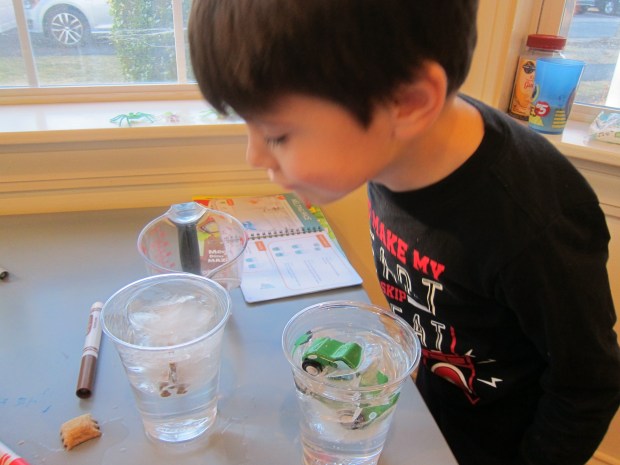
We filled these cups with water, one cold, and one warm (don’t use hot or the race will be over too quickly!). Travis was proudly in charge of pouring the cold water.

Melting Race (3)

He hypothesized that the warm cup would melt the ice faster, and the results were immediately evident. Within a few minutes, the front wheels of the truck were already out of the ice. “It’s coming free!” he exclaimed.

Melting Race (4)

About 15 minutes later, the car was completely free. Meanwhile the poor dinosaur was still in ice for hours, only breaking free at bedtime.

Melting Race (6)

Moon Crater Experiment

Moon Craters (9).JPG

Travis loves learning about the moon, and specifically how its craters were made. Okay, so this “experiment” isn’t exactly accurate, but your kids will have a blast launching “asteroids” at the moon surface to make holes!

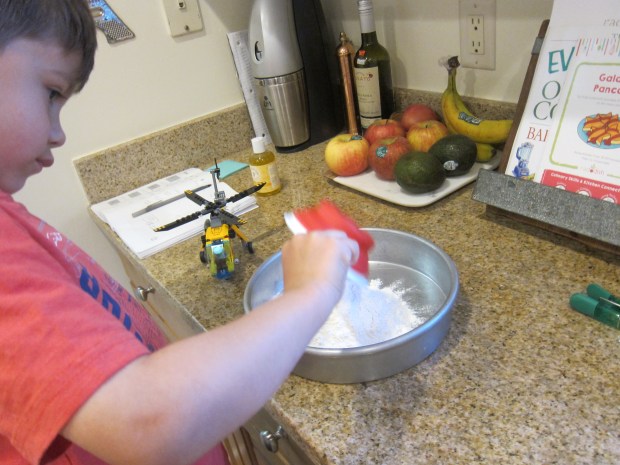
To make our moon, Travis first poured 4 cups flour into a cake pan.

Moon Craters (1)

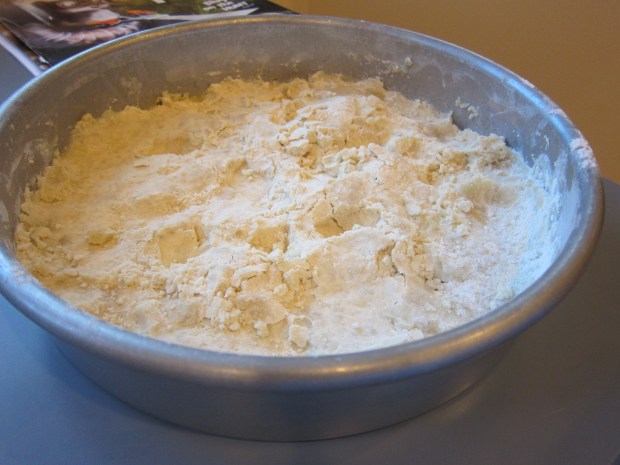
Add 1/2 cup baby oil and mix until the mixture holds together; we found that hands worked better than a spoon for this purpose. Now we had moon dust!

Moon Craters (2)

Next we headed outside to the “asteroid belt!” My proud astronaut discovered a trove of pebbles and very carefully selected some to bring inside.

Moon Craters (4)

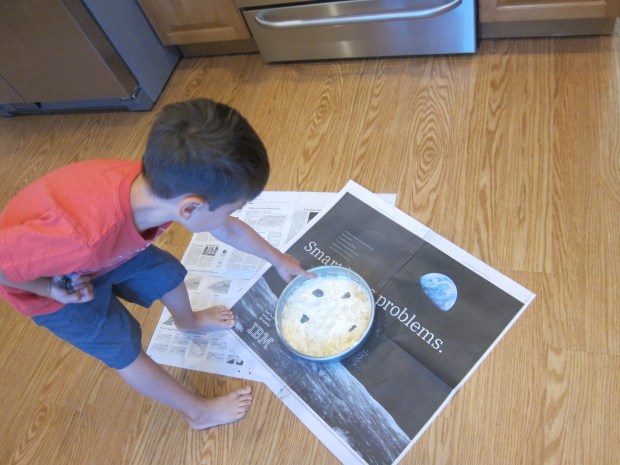
Place your moon cake pan on a layer of newspaper to avoid any mess. Wouldn’t you know, there was an ad featuring a view of Earth from the moon!

Moon Craters (7)

Travis began launching our “asteroids” one at a time.

Moon Craters (5)

He discovered that pressing the pebbles in a bit made a better crater than simply dropping them, and experimented with the difference between dropping them from up close versus up high.

Moon Craters (6)

That’s one small drop for a boy, one giant leap for imagination.

Moon Craters (8)

Grow a Science Garden

Grow Garden alt.JPG

This indoor way to show your kids how vegetables grow is almost trippy! All you need is a head of romaine and a small glass jar. Then watch the magic happen.

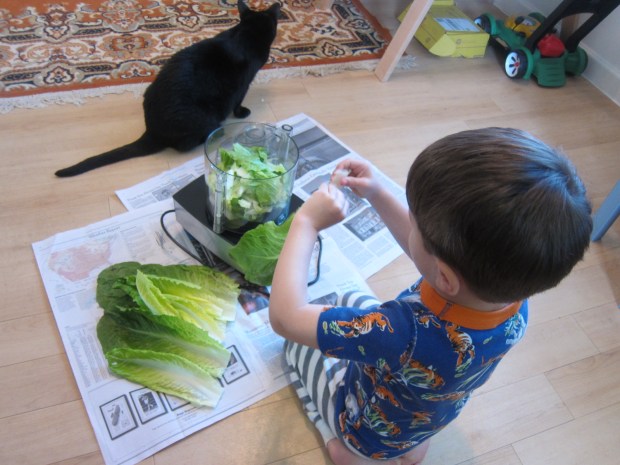
Cut the leaves from the base of the romaine. Use the leaves for a big salad of course. I also gave my budding chef some of the leaves to play with in his set of pots and pans.

Grow Garden (4)

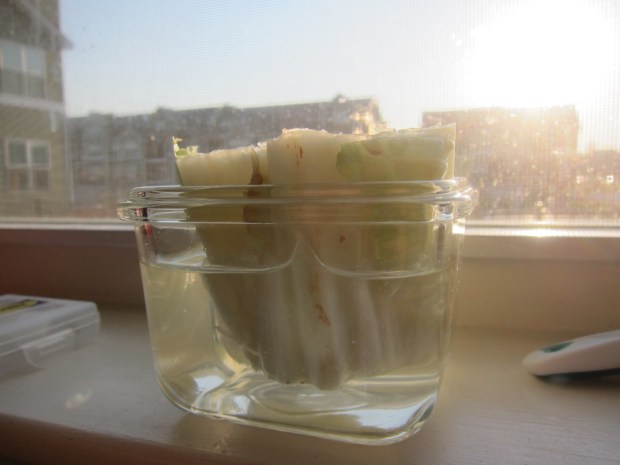
Meanwhile, trim the very bottom of the romaine head off thinly – this will help it absorb more water.

Here is a slightly skeptical Travis checking out the early stage of our experiment.

Grow Garden (2)

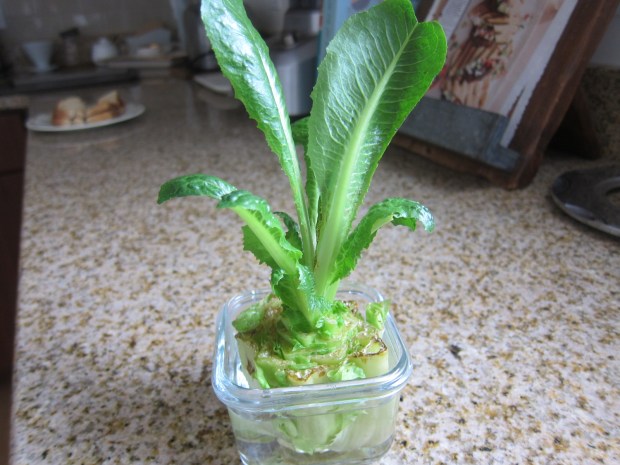
Place in a glass of water, making sure the base is completely covered, and place somewhere sunny. Change the water every day and watch your romaine sprout!

Grow Garden (3)

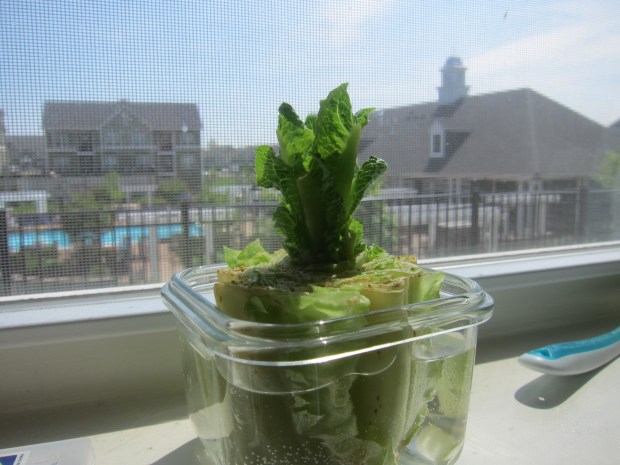
Within a day we had a few little leaves.

Grow Garden (6)

The picture at the top of this post shows growth after about 4 days. We can’t wait until we have enough for a fresh salad!

If you want to continue the fun, try the same experiment with a fennel bulb. You can also save the tops of carrots or radishes, place in a shallow dish with water, and watch for fresh greens to emerge. Thanks to Parents magazine for the idea!

Update: Here’s the lettuce about a week in, as tall as we let it grow. Honestly it was beginning to brown slightly around the edges, so I’m not sure I’d recommend growing it longer.

Grow Garden alt

But needless to say, Travis was thrilled!

Grow Garden var


Early Explorers Science

LP Science alt.JPG

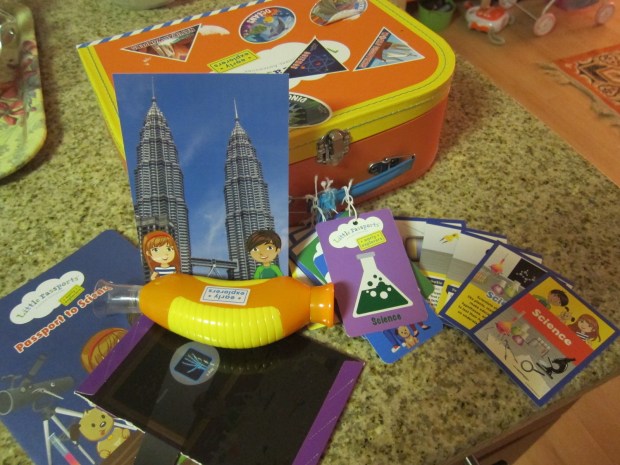
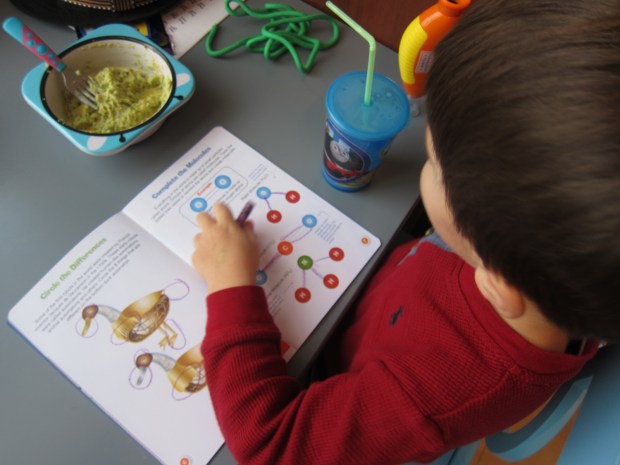
We were thrilled to discover our packet from Little Passports this month was all about science around the world. This topic lined up perfectly with Travis’s interests, so I knew it was going to be a big hit. As always, we received stickers for our world map, trivia cards, a flashlight game, and a tag for his suitcase. The Science activity booklet was so enjoyable to go through together, touching on everything from atoms to x-ray bones to historical figures like Einstein and Marie Curie. 
LP Science (4)

Science Craft:

 “Craft” is a misnomer here; every suggestion in our booklet this month was more science-y than artsy! Still, it was a neat project to put together to learn about how clouds form. I told Travis the pointers from the booklet: warm air cools quickly and misty water vapor forms – think of your breath on a cold winter day. Then I asked Travis if he’d like to recreate cloud formation at home.

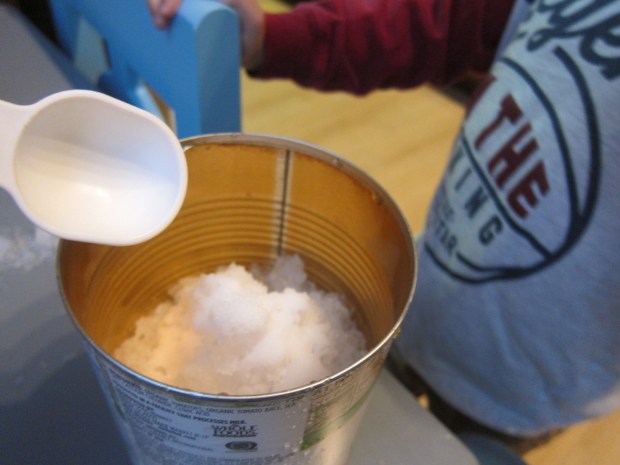
To do so, fill a large aluminum can halfway with crushed ice. Sprinkle with about 1 tablespoon salt.
LP Science (16)

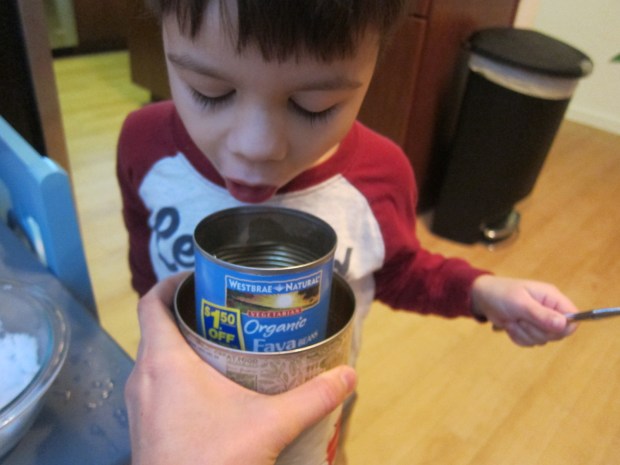
Place a small aluminum can inside the large one and let it get cold. Now blow into it. Ideally, you’ll see steam (water vapor) appear as your hot breath hits the cold can and cools down instantly.
LP Science (18)

Alas, as is sometimes the case following Early Explorer’s instructions, we didn’t have much luck. But Travis loved spooning around leftover salt and ice.

Science Science:

The next suggestion was a much bigger hit, investigating the make-up of milk (which is part of what helped Louis Pasteur invent his famous pasteurization method). Vegans: Look for a fatty non-dairy option or this experiment won’t work. We chose hemp milk, with a nice 5 grams of fat per serving.

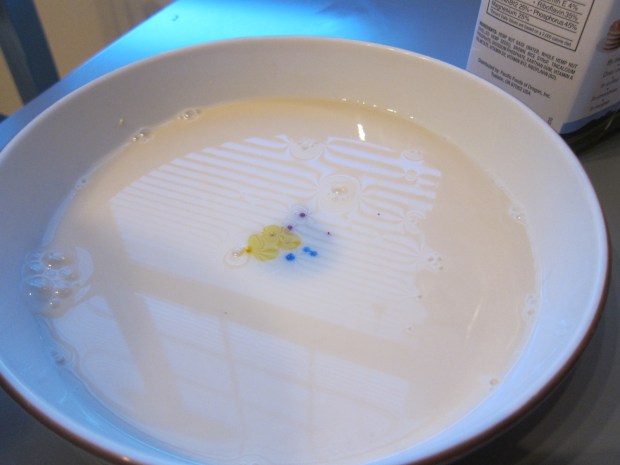
Pour 1/2 cup milk in the bottom of a shallow bowl. Add drops of food coloring in three or four different colors all together in the center of the bowl.
LP Science (10)

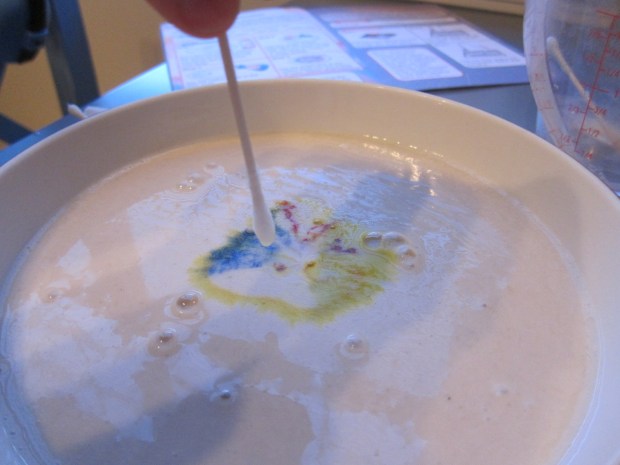
Dip a cotton swap in dish soap, then simply hold the soapy end into the food coloring (don’t stir!). The color will run away from the soap and disperse through the bowl, as the molecules in the soap move to bind with fat molecules. 
LP Science (13)

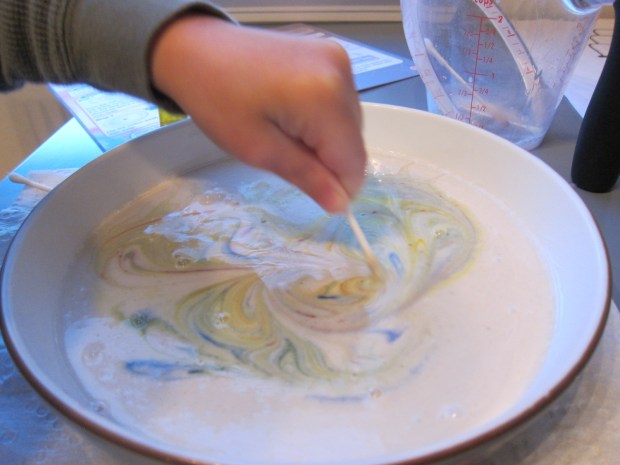
Okay, maybe mama thought this was way cooler than Travis, who had equal amounts of fun just stirring and making beautiful swirls through the milk with the cotton swabs. But we had to repeat the experiment about 4 times before he’d had his fill!
LP Science (14)

Science Keepsake:

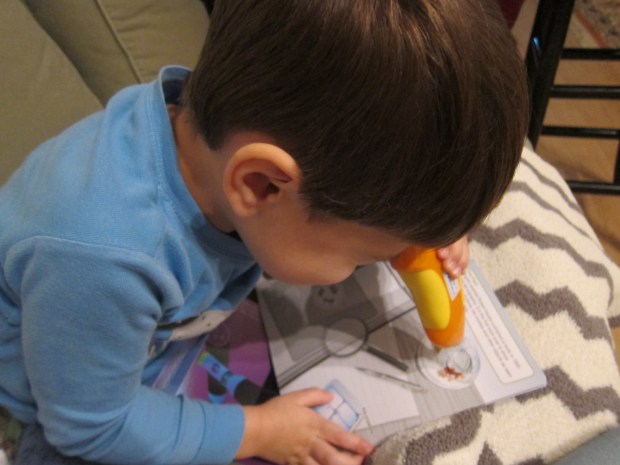
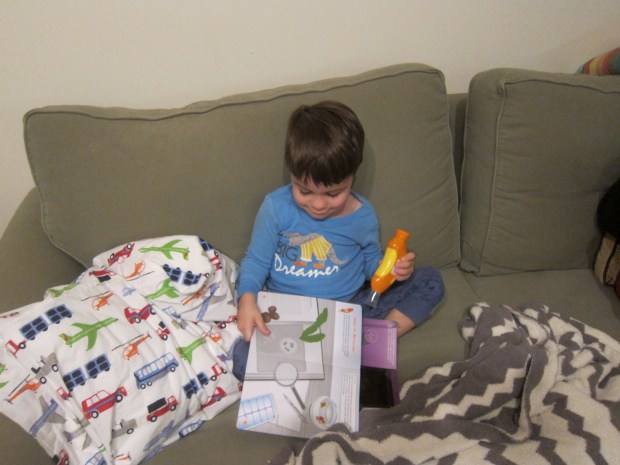
Our gift from “Max and Mia” this month was a microscope, pretty much Travis’s dream item! There was a page in the booklet designed just for it, to peer closely at images of seaweed and fish scales.
LP Science (3)

We tried it around the house and outside, where unfortunately it didn’t work quite as well. Travis loves it though, and it saved the day when we had to lie low with a stomach bug.
LP Science (2)

Science Field Trip:

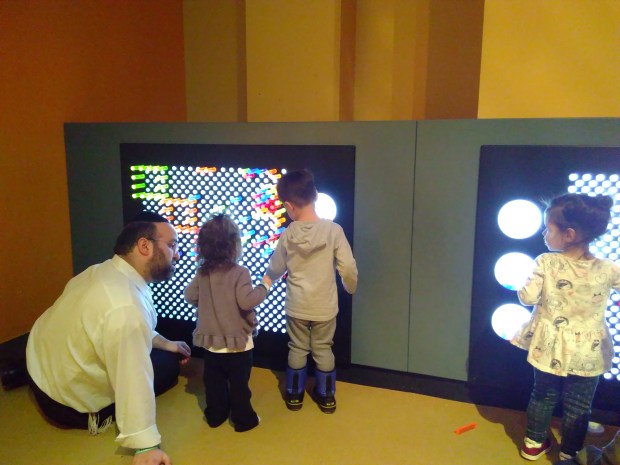
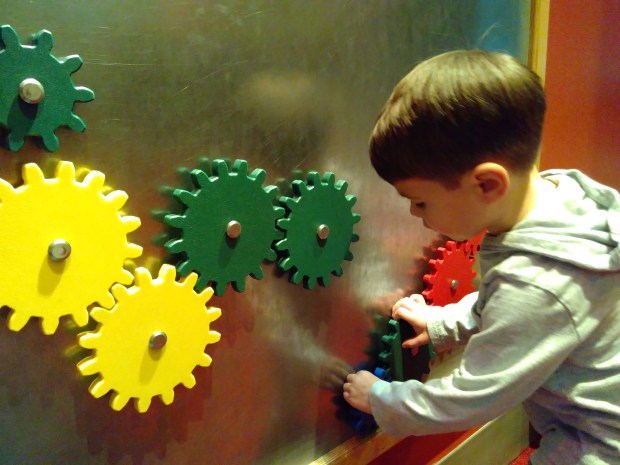
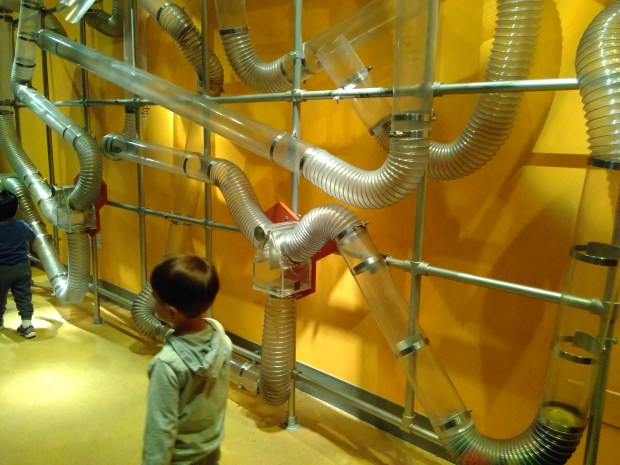
We had to head to a science museum of course! I wanted to visit one which Travis had never been to before, so we made it a special event, driving a bit out of our way one afternoon over winter break. Science museums introduce kids to so many topics that it’s hard to tell if they’re learning or just overwhelmed in the chaos, but Travis loved so many stations at the museum including: gears;
LP Science (21)

Light pegs;

science (5).jpg

A giant air vacuum tube; and so much more.
science (1)

Science Further Activities:

The booklet included one final science experiment that unfortunately didn’t work for us: Generating static electricity to move a thin stream of water.

LP Science (7)

This sounded so neat, but whether we rubbed a comb on a sweater or in our dry hair, we didn’t generate enough electricity to make any difference to the trickle from our faucet…

LP Science (8)

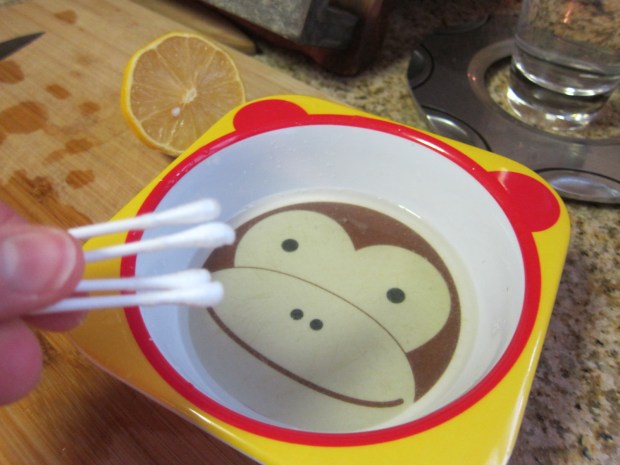
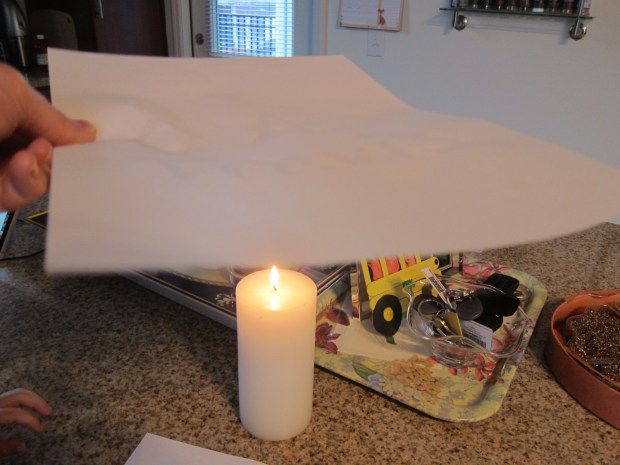
We were so into the Science topic, though, that I trolled Little Passport’s blog for other experiments. A few we had done before, but oldies can be goodies. First we repeated the old trick of invisible ink made from lemon juice. Squeeze half a lemon into a bowl and add 1 spoonful water. Use cotton swabs to make secret invisible messages on white paper.
Invisible Ink (1)

Let dry, then hold up to a light source like a candle (be careful if using a real flame) or lightbulb.
Invisible Ink (3)

This works because the lemon juice leaves acid behind, which browns faster than the rest of the paper when held near a heat source.

Meanwhile, other activities were so awesome they merited blog posts of their own, such as a leak proof bag:

Leak Proof (3)

Dancing raisins:

Dancing Raisins (5)

And turning pennies green.

Pennies Green (9)

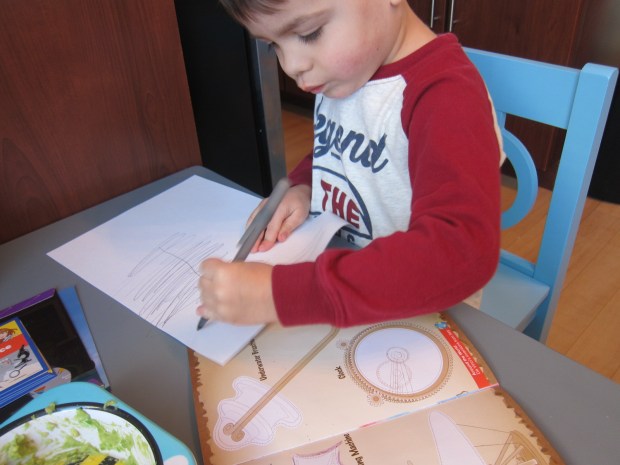
Finally, we pretended to be like DaVinci, who (apparently!) had all the same obsessions as my son – helicopters, scuba gear, airplane wings, and clocks. So we sat down to sketch “inventions” such as those four featured in our booklet. Travis said he was designing a parachute with ten handles – he’s got the right idea! 
LP Science (20)

Overall, definitely the best packet we’ve received in our Early Explorer’s journey thus far. Can’t wait for the next!


DIY Glow in the Dark Comet

DIY Comet (6)

We added a little light into an otherwise dreary rainy morning with this glow stick project. It’s perfect for any kids interested in outer space, or who are learning what comets are – or just any kid who loves glow sticks of course.

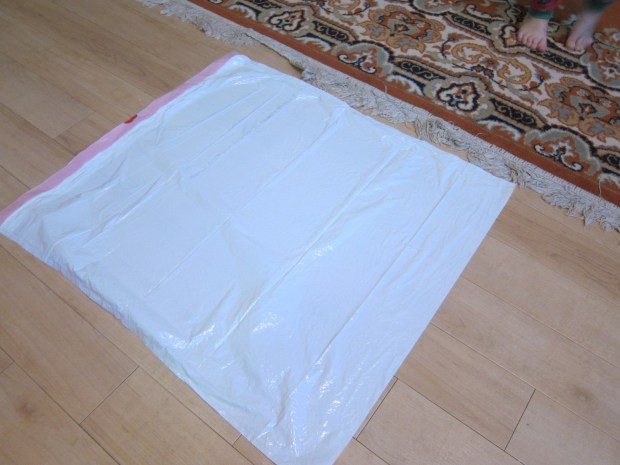
To make our comet, I trimmed the sides, top, and bottom from a trash bag, leaving us with a large sheet of plastic.

DIY Comet (1)

Travis traced around the rim of a bowl with a marker to make the center of our comet – I love how steady his hand has become at tracing!

DIY Comet (2)

To make the tail of the comet, we cut the plastic into strips, cutting from the edges up to the center circle.

DIY Comet (3)

Place a small ball in the center (such as a wiffle ball or tennis ball), and wrap up with the plastic bag; tie with a ribbon to secure. We added extra ribbons in red and orange for fiery comet flair!

DIY Comet (5)

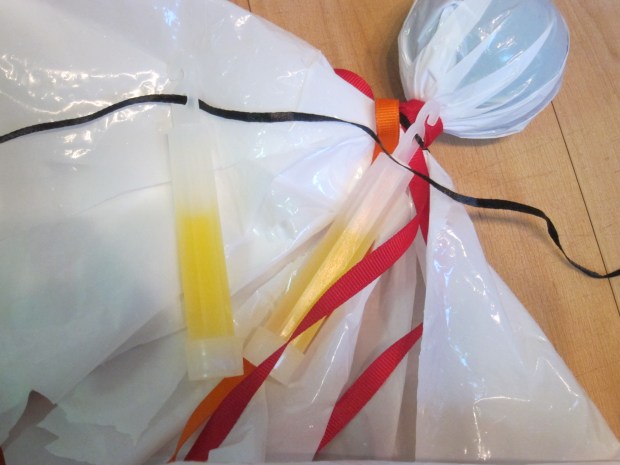
As the finishing touch, we tied on two glow sticks (go ahead and use more than two if you like, but that’s all we had in the house).

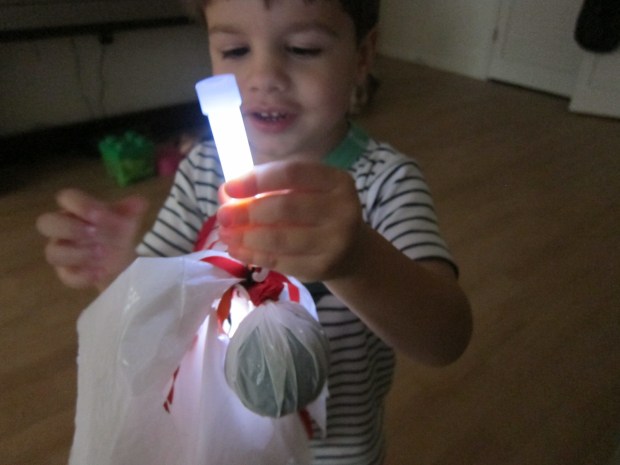
We dimmed the lights and Travis dashed around to make the comet fly. If you’re having a sunny day, you’re definitely going to want to save this project for nighttime.

DIY Comet (7)

After a while, Travis decided the comet could also be a flare for mountain recues, so we acted out a few “cliff” rescue scenarios on the couch as well.

DIY Comet (8)

What else could your glowing comet become? We’d love to hear your ideas in the comments!