Balloon Rocket

Balloon Rocket (3).JPG

If you checked out our Fun with Flight Kiwi Crate adventure, then you saw Travis and I made an indoor balloon rocket. We wanted a chance for a repeat outside, and decided it merited its own blog!

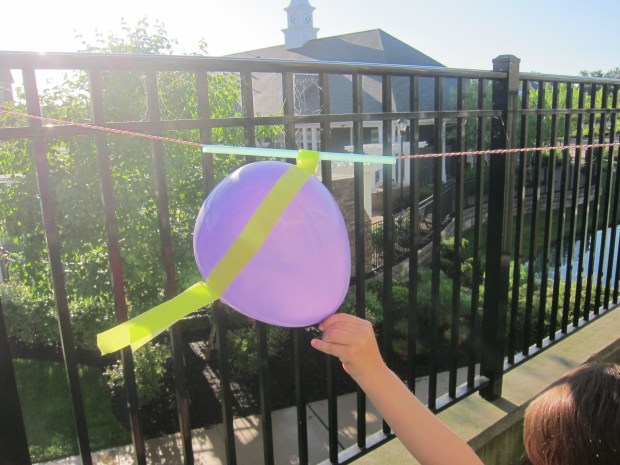
This time we made a few significant changes. First, we stretched our string between two fence posts, allowing for a longer space for our “rockets” to fly.

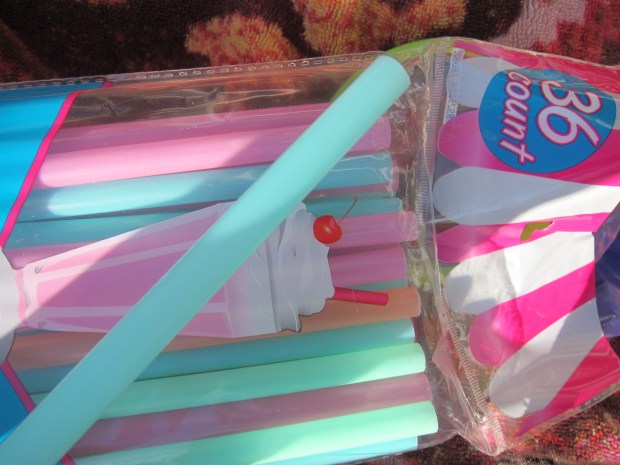
The next innovation was a wide straw (look for “milkshake straws” at the grocery store). This flies much more smoothly come time to launch! Thread the straw onto one end of your string.

Balloon Rocket (1)

Blow up a balloon – but do not knot – and tape it to the straw. Release the balloon and watch it fly.

Balloon Rocket (2)

This was just so beautiful outside in morning sunlight, too!

Balloon Rocket (4).JPG

“3, 2, 1, Go!”


Fabric Parachutes

Fabric Parachute (9).JPG

It was on a Memorial Day a few years back that Travis first saw parachuters and he’s been obsessed ever since. Here’s a cute craft you can put together to take flight right at home!

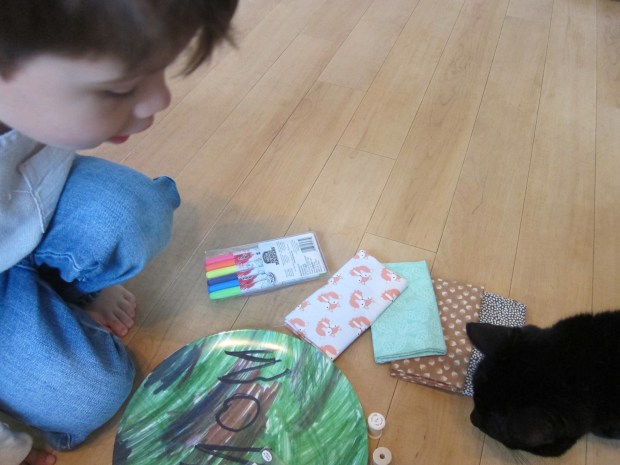
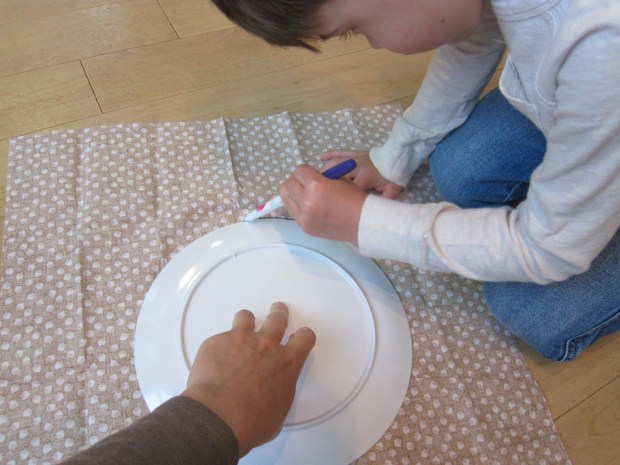
Trace around a large dinner plate with felt-tipped markers on fabric; we had lightweight fabric swatches from the craft store that were perfect, and I let Travis choose his favorite pattern for the parachute.

Fabric Parachute (1)

After he traced, cutting out the circle out was a mommy step, since fabric is still tough for my preschooler’s fingers.

Fabric Parachute (2)

Note: Travis thought the fabric markers were so neat he wanted to color on the scraps after we cut out the circle!

Fabric Parachute (4)

Mark 8 dots with pen evenly spaced around the parachute. Cut pieces of thread that are about 12 inches long and and sew these to each of the 8 dots.

Fabric Parachute (5)

I let Travis have a turn with the needle and thread which made him feel so important!

Fabric Parachute (6)

Stretch the threads to a wooden bobbin and secure with masking tape. Bright green tape added a fun pop of color.

Fabric Parachute (7)

Now it’s time to launch!

Fabric Parachute (8)

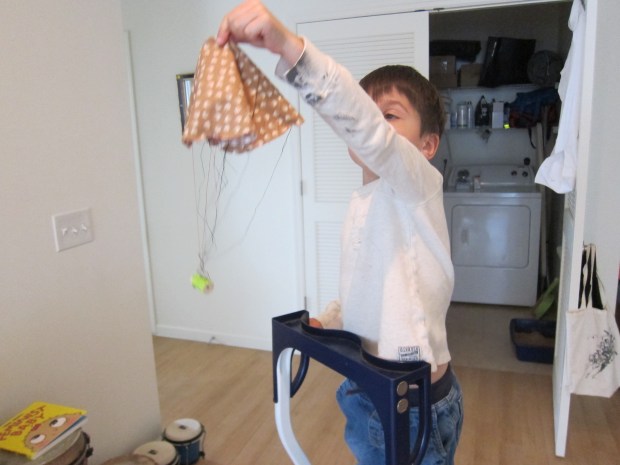
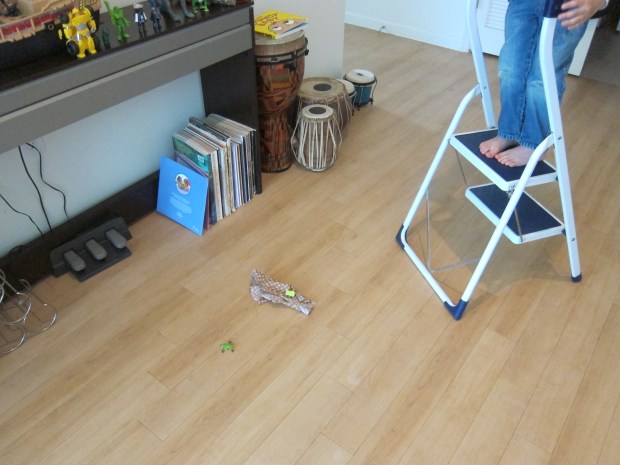
The higher you stand, the better the parachute soars (more time to catch the wind). First I had Travis try climbing on top of our step ladder. It worked great, but was extremely short-lived.

Fabric Parachute (10)

So next we headed to the playground, and launched from the highest platform!

Fabric Parachute (11)

Maraca Craft Challenge

Maraca Challenge (2)

Last month, Travis’s Highlights magazine challenged him to make robots with only a few simple items. This month, the challenge was maracas!

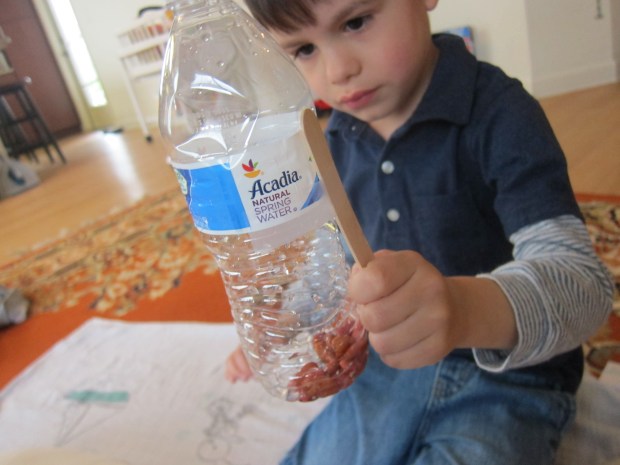
I laid out: empty plastic water bottles, dried beans, tape, and craft sticks. “How would you make these into a maraca?” I asked him.

“Let’s add beans first,” he decided right away.

Maraca Challenge (1)

He began dropping in the beans one-by-one. When I added a few faster to a second bottle, he admonished, “No, copy the way I do!” My teacher for the day!

Next, he needed to figure out how to use the craft sticks. He requested a piece of tape and soon had a handle.

Maraca Challenge (3)

Then he decided a double-handle in the shape of an X was sturdier.

Maraca Challenge (5)

Finally, the caps were reattached, and we could shake up a storm! I loved watching him puzzle through this challenge. What does your child’s maraca look like? Please share in the comments!

Maraca Challenge (4)

Rubber Band Launchers, Two Ways

Spider Launcher (13).JPG

Ok, we’ve launched marshmallows from cups and rockets from straws, so now it was time for Travis to play around with how he could launch things with rubber bands!

First up, thanks to a renewed fascination with bugs, was a Spider Launcher. This project was a little tricky; we had to redo it twice before we got the elastics right!

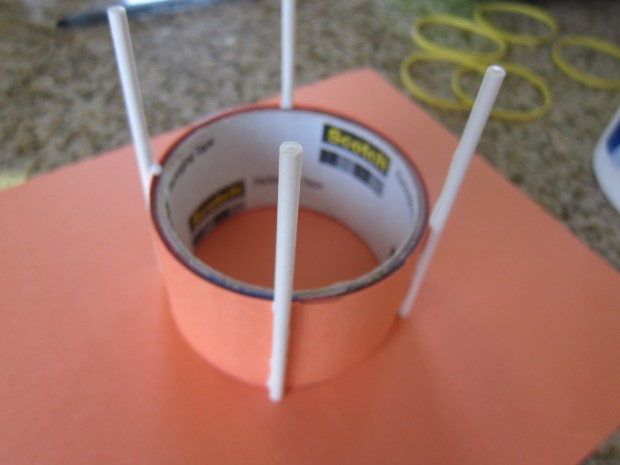
First, cover a sturdy cardboard tube (such as an empty roll of packing tape) with construction paper.

Spider Launcher (1)

We chose orange because, well, spiders and Halloween and all that, but any color would work. Glue or tape the paper on.

Glue 4 lollipop sticks around the tube so that they form a square.
Spider Launcher (2)

Leave these to dry for at least 2 hours, so your structure is sturdy. Full disclosure: we did have one pop off, and I duct-taped it back on.

To make your “web,” slip an elastic over all 4 posts. Loop it around each post, then push down to the bottom of the sticks.

Spider Launcher  (4).JPG

Slip a second elastic over the post. Completely lift the first one up and over the second elastic (so only your second elastic is now looped on the lollipop sticks, if that makes sense).

Spider Launcher (6)

Repeat with a third elastic, slipping it around the post, and then lifting the second elastic completely up and over it.

Repeat with a fourth elastic, slipping the third elastic completely up and over it. Confused yet? I hope the visual helps!

Spider Launcher (12)

Now place a toy spider in the middle. Pull back on the tautest, center of your web. Snap the elastic back, and spider flies!

Spider Launcher (10)

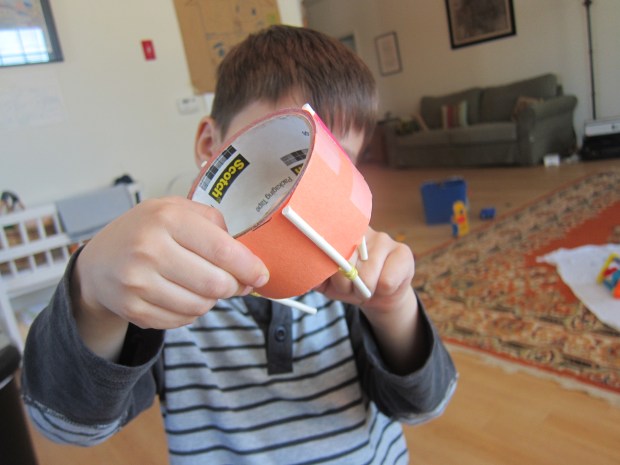
This was tricky for my four year old, but he could do it with help for bigger launches, and by himself for shorter launches.
Spider Launcher (9)

Even better, his bug toys now had a web to call home, so overall it was a success!

Since this turned out to be so complicated, I also asked him if he wanted to make a much simpler rubber band launcher, using just with a couple of elastics and a cup. Here, then, is the Rubber Band-Powered Cup Launcher.
Rubber Band Rocket (5)

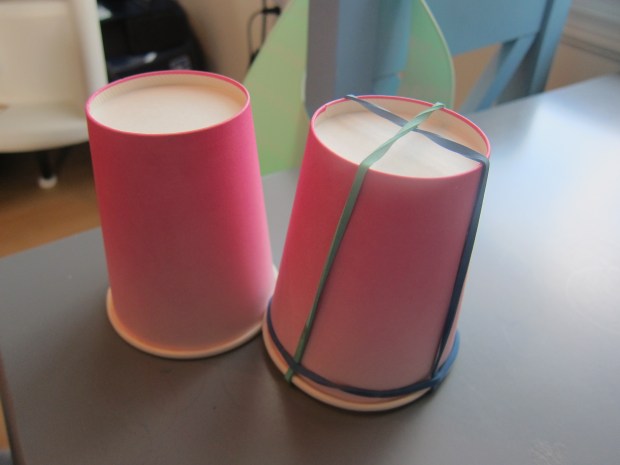
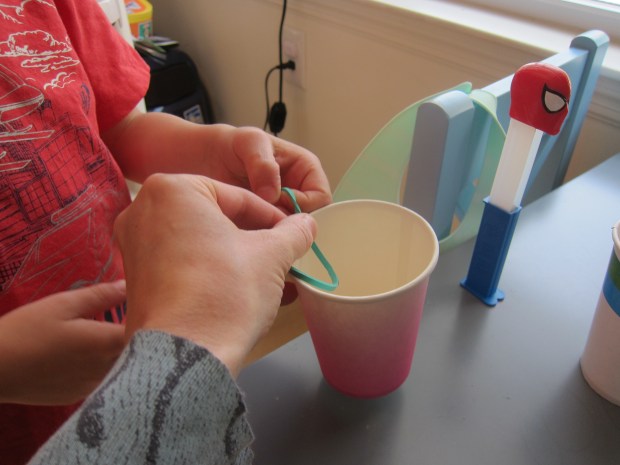
Put two rubber bands on a sturdy paper cup so they form a cross.
Rubber Band Rocket (1)

(Note: It may help to stretch your rubber bands out a few times to loosen them, or your paper cups will crumple).

Rubber Band Rocket (2)

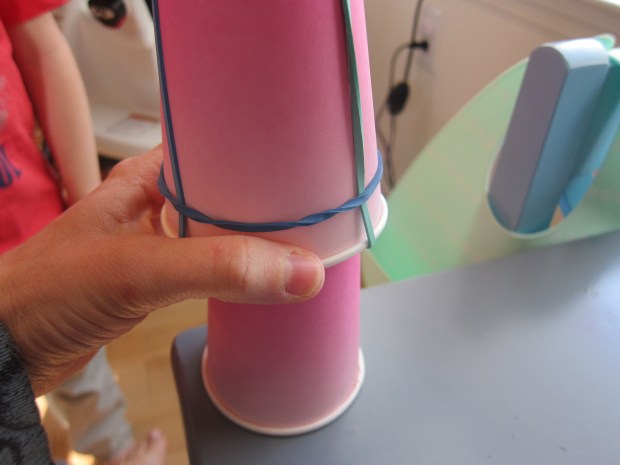
Place a third rubber band around the cup to hold the other two in place.
Rubber Band Rocket (3)

Press this cup down over a second paper cup. The elastics will go taut, and when you release… Boing!

Rubber Band Rocket (4)

This one is simple enough to do with a crowd of kids, and would be a fun one outdoors, perhaps for any upcoming Memorial Day barbecues!
Bubbling Bath Fizzies

Bath Fizzies (6).JPG

If you’re still wondering what to make for grandmas, moms, aunts, or any other special mother-figure this mother’s day, Travis and I have got you covered with this treat for the toes from Highlights magazine. The gift is equal parts craft and science, which makes it a fantastic way to engage kids in the spirit of gift-giving.

Bath Fizzies (2)

In a large craft bin, Travis mixed up the following ingredients:

1 cup baking soda

1/2 cup citric acid

1/2 cup Epsom salts

3/4 cup corn starch

Make sure to tell your child that the mixture isn’t edible, even though most of the ingredients are, especially if you’re used to cooking together!

Bath Fizzies (1)

In a small bowl, we whisked together 2 tablespoons olive oil and 1 tablespoon water. Add the liquids to the mixture slowly, stirring until combined. Kids will want to wear goggles (or sunglasses, in a pinch!) to protect their eyes, since it will bubble as you stir.

We also added blue food coloring for a pretty tint and a few drops of vanilla extract for a nice smell. The downside was that this made our mixture a little too liquidy (you want it to be slightly dry and crumbly). It seemed all right at first, but as our bath bombs dried, they puffed out. Note Travis in his too-cool-for-school sunglasses, ha!

Bath Fizzies (3)

Use an ice cream scoop to scoop out each portion, and pack down tightly. Gently release onto a paper towel and let dry for a full 24 hours.

Bath Fizzies (4)

Package the bath bombs in any pretty tissue paper or parchment paper.

Bath Fizzies (7)

We also added a little gift tag with instructions for treating those tootsies!

Bath Fizzies (8)

And of course we saved one to test out at home! Travis loved watching it fizz, before putting his feet in to soak. Don’t forget to give a quick explanation of why it all fizzes up – the baking soda and citric acid reacting together once in water, of course, which releases CO2 gas (ergo, bubbles).

Bath Fizzies (9)


Straw Rockets

Straw Rocket (8)Travis and I have been launching all kinds of things lately, from marshmallows to disks. Today, we made little rockets that could have races!

Cut squares of construction paper that are 3 inches x 3 inches. Make as many of these as you’ll want rockets.

Straw Rocket (1)

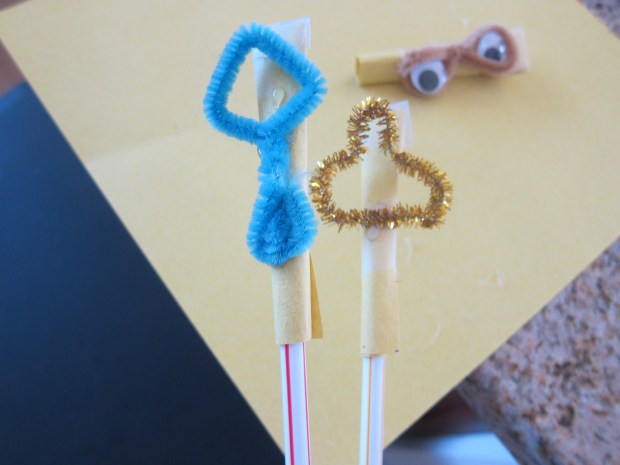
Wrap each piece of paper around a straw, making sure it is loose enough to fly off the straw when needed. We secured these with tape.

Straw Rocket (2)

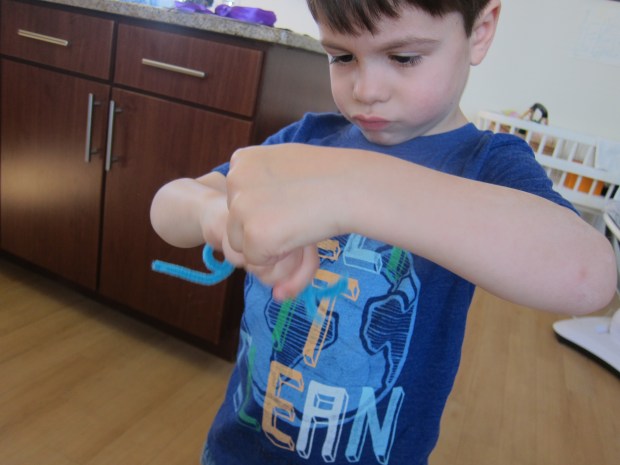
Although there’s no need to, it was fun to add decorations. Travis soon was swirling pipe cleaners into all kinds of creations!

Straw Rocket (3)

I helped with one that was recognizably a “rocket,” as well as a few silly ones. Definitely have fun with these; we even had a little alien with googly eyes.

Straw Rocket (5)

We used hot glue to affix our pipe cleaner creations to our paper pieces. Now our rockets were ready to launch!

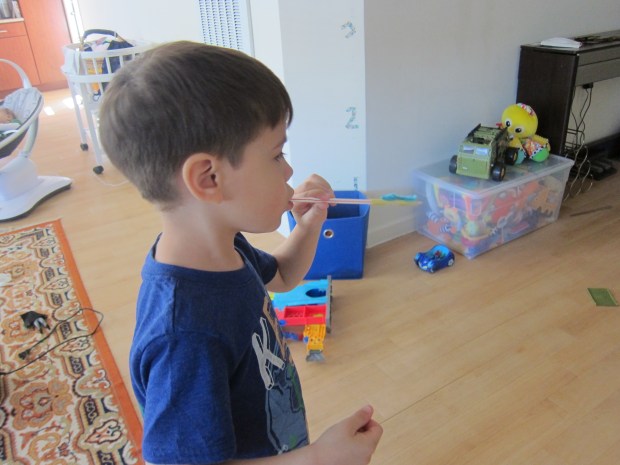
Lift the straw to your lips and blow, and see how far it flies.

Straw Rocket (7)

You can even turn it into a race, and see whose rocket flies furthest.

Straw Rocket (6)

Cardboard Tube Marble Run

Marble Run (9).JPG

This DIY marble run is a fantastic way to get your kids engineering and learning about laws of motion – all while they just think they’re playing!

I saved up cardboard tubes (from toilet paper and paper towel rolls) for a few weeks, until we had a good-sized collection.

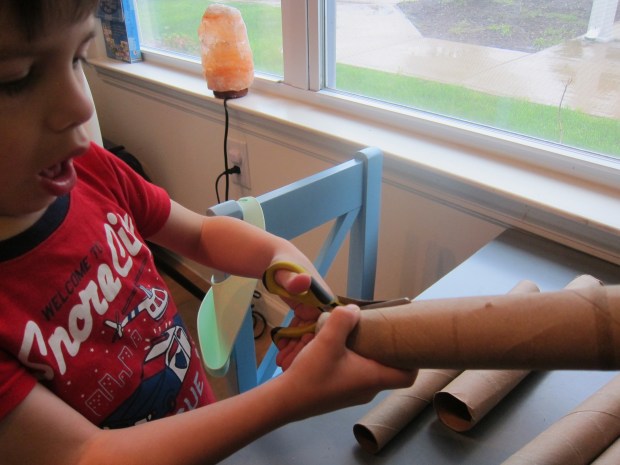
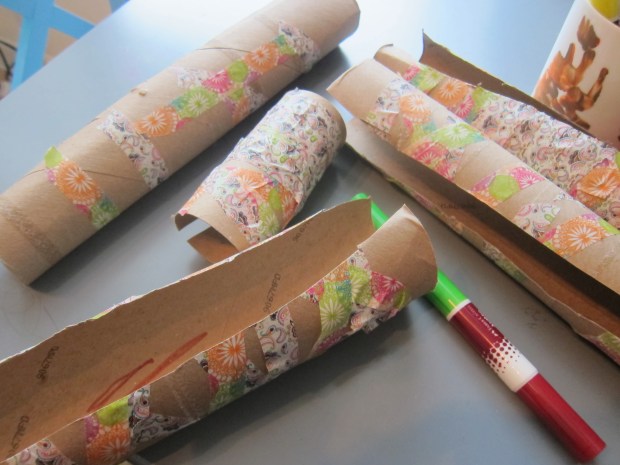
First we needed to decorate our tubes. Travis loved covering them with washi tape, and insisted on being in charge of snipping off the pieces of tape we would use.

Marble Run (2)

Next, we cut the tubes open, which he also loved doing!

Marble Run (1)

If your child wants to, decorate the inside of the tubes with marker or crayon. But at this point, Travis was so excited to design our marble run that he said let’s skip the markers!

Marble Run (3)

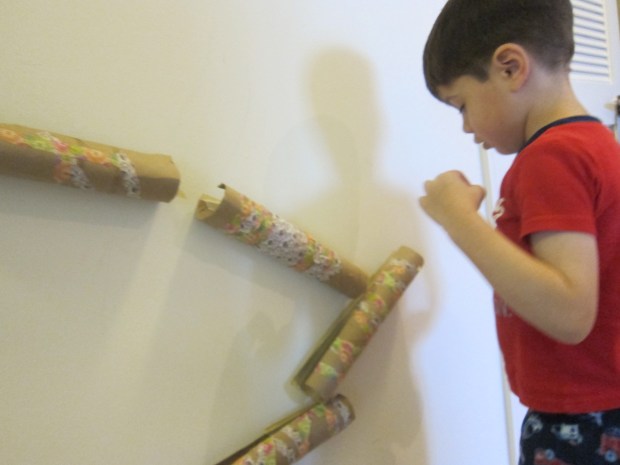
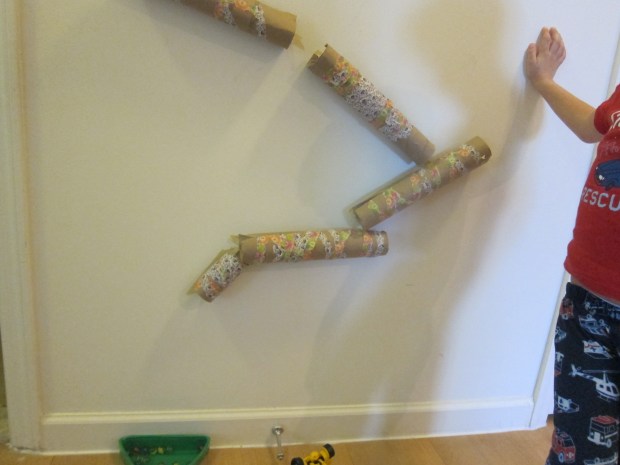
We headed over to a blank portion of wall, and I taped up the first tube with masking tape. Slowly, we decided where each tube needed to go.

Marble Run (4)

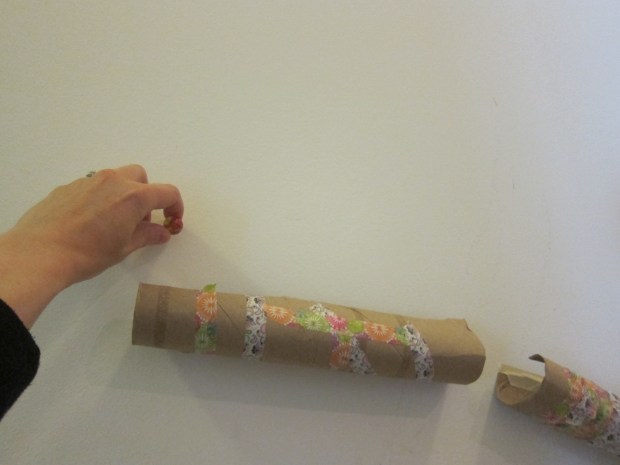
This part will involve a bit of trial-and-error, and a few test runs! Check to see where marbles bounce out or fall off tubes, and adjust accordingly.

Marble Run (7)

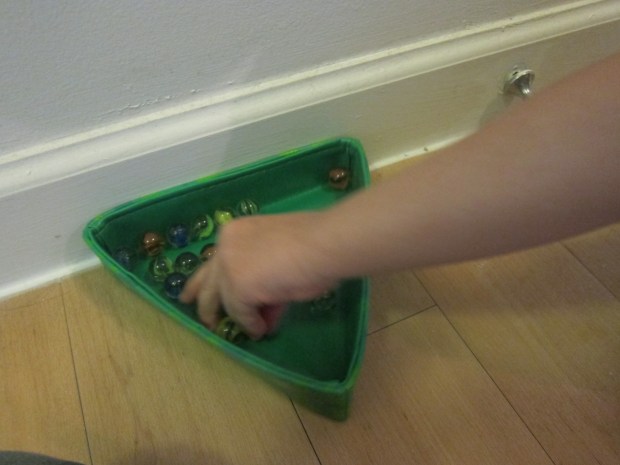
I recommend placing a small container with sides at the bottom to catch the marbles.

Marble Run (5)

We were so proud once we had a run that perfectly deposited the marbles inside our container.

Marble Run (8)

Marshmallow Launcher Redux

Marshmallow Launcher (3).JPG

Every once in a while, it’s fun to repeat an activity at one- or two-year intervals, and see the differences in the way your children play at different ages. Travis and I first made a marshmallow launcher nearly two years ago, but with some extra Dandie’s marshmallows in the pantry, today we decided to do a repeat!

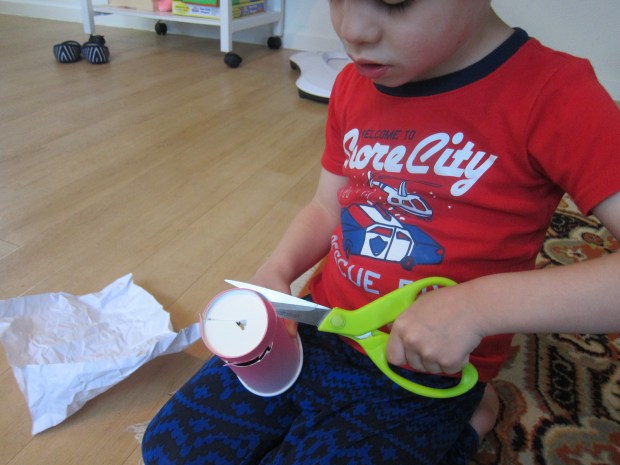
First, cut the bottom from a few paper cups, one for each launcher you want. At nearly 5 years old, Travis can handle the scissors himself, unlike at age 3!
Marshmallow Launcher (2)

I tied the end of a balloon into a knot, then had Travis help snip off the top of the balloon.

Marshmallow Launcher (7)

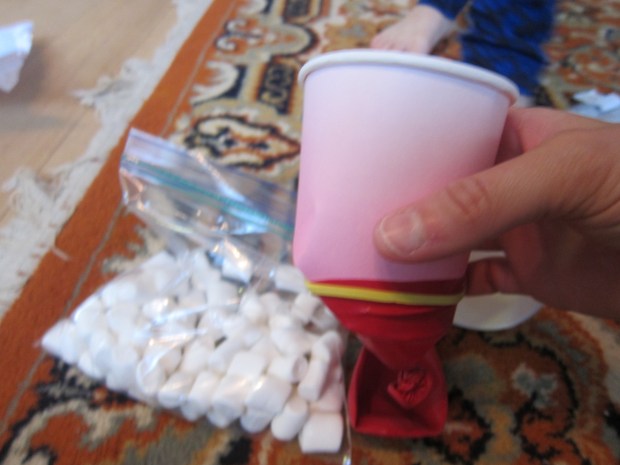
Stretch this balloon over the cut end of the cup, and secure with an elastic.

Marshmallow Launcher (4)

Place 1 marshmallow in the cup; pull down on the knot of the balloon and release. Boom!

Needless to say, we soon had marshmallow bombs all over the apartment, and an eager little boy who had to run and grab all the ammo.

Marshmallow Launcher (5)

For some experimentation, we tested what happened when we put multiple marshmallows inside, but unsurprisingly, they didn’t launch as far. Then we tried to hone our aim, using some unwitting Ninja Turtles as target practice. Here’s a quick clip:

All in all, what fun!

Marshmallow Launcher (1)

Newton’s Tower


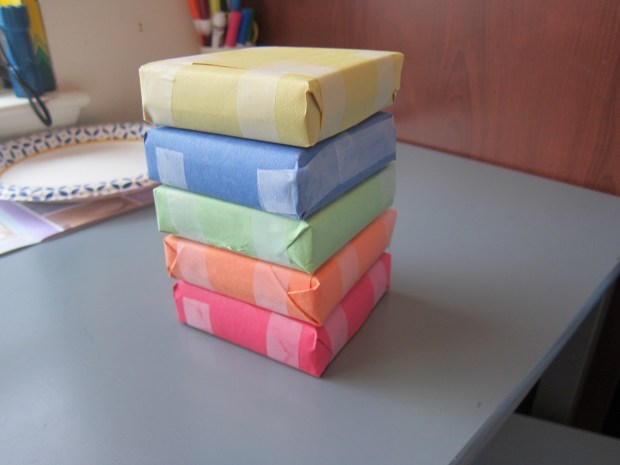
Newton's Tower (3)

Yesterday, Travis and I marveled at some good old laws of physics and inertia, making pennies fall into a cup. We wanted a repeat of this magic today, so made this tower named in honor of Isaac Newton and his first law of motion: that an object will stay at rest unless acted upon by an external force.

The idea here is to hit only the bottom box in a tower of boxes. The bottom box is moved by an external force, but not so the others. So what would happen to these higher boxes?

You’ll want to use small boxes for this experiment. I had some old gift boxes that were probably about as big as you want to go; smaller would be even better.

Newton's Tower (1)

To make them pretty, I wrapped each in a separate shade of construction paper.

Newton's Tower (2)

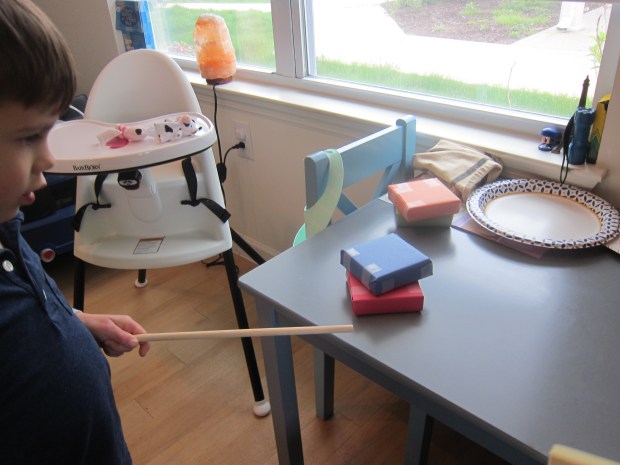
To start, Travis and I tested if we could make the experiment work only three levels high. Zoom! The orange got whacked away with a dowel, and the red and yellow stayed put.

Newton's Tower (4)

Could we make it work with four? It worked perfectly – not the orange box off to the side, now.

Newton's Tower (6)

Notice the orange off to the side there.

Newton's Tower (7)

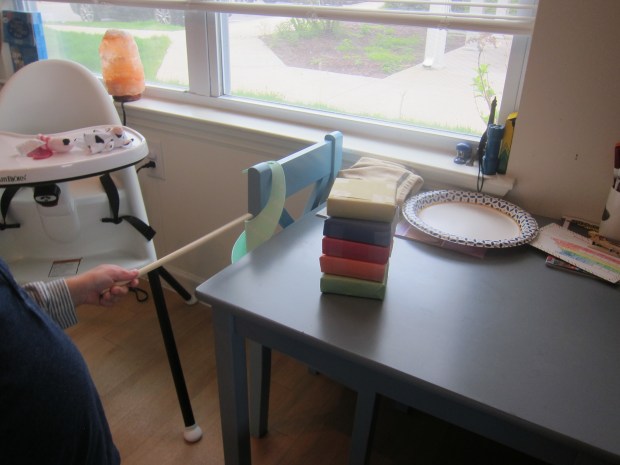
Needless to say, Travis loved a science experiment that involved whacking things with a stick. I taught him that the secret is to whack the bottom box as hard and as fast as you can. Finally, we challenged ourselves with all 5 boxes.

Newton's Tower (8)

Boom!

Newton's Tower (10)

As always, there’s something a bit magical about this every time it works.

Motion Magic

Motion Magic (%)

You’ll stun your kids with the way a penny doesn’t move in these games, a fantastic illustration of inertia. You can give a quick physics lesson – basically, things that aren’t moving want to stay put – but whether they grasp the concept or not, they’ll be amazed by the results.

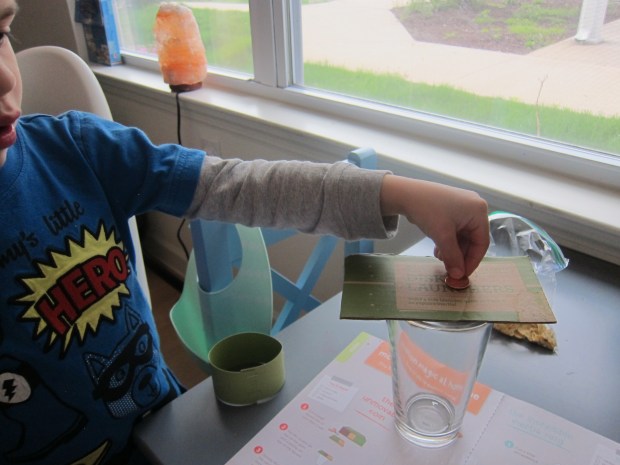
We tried out the motion magic in two ways. For the first, we cut a square of cardboard as a base (using a bit of our Kiwi Crate from the Disk Launchers set). Place the cardboard over a glass, and put a penny on top.
Motion Magic (2)

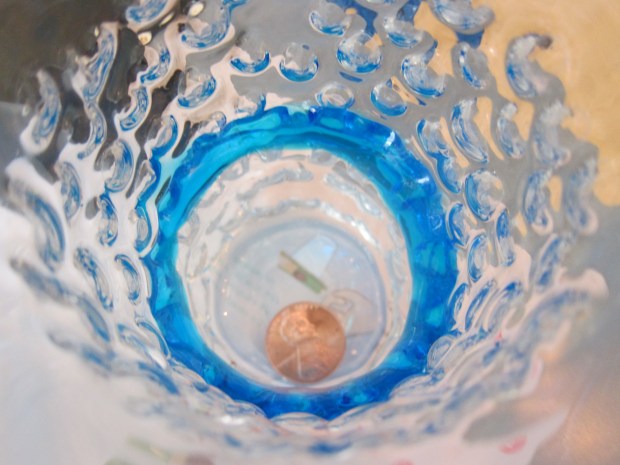
Quickly flick the cardboard away (from the side, not from underneath). The cardboard will fly away but the penny…

Motion Magic (3)

…falls in the glass! This got a whoa from Travis, who then tried himself and was so proud it worked.

There is something sort of magical about inertia, even for grown-ups. Logically we want that penny to fly away, and every time we heard the clink of the penny in the glass, we were excited.

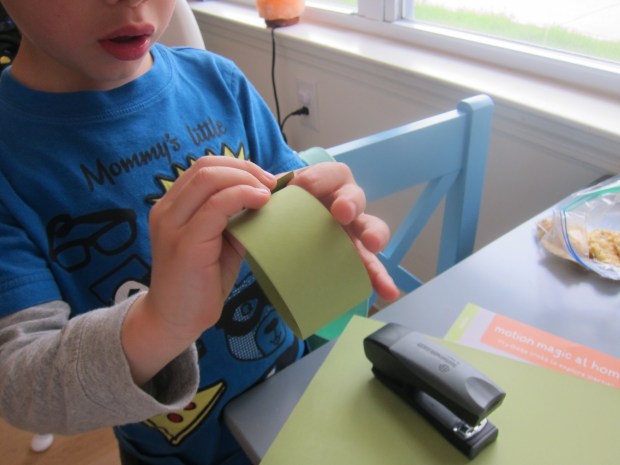
For the second method, we cut a strip from cardstock. Form it into a circle and staple the edges.

Motion Magic (1)

Place the circle over the glass, with the penny on top.

Motion Magic (6)

Very quickly, put a finger inside the cardstock circle and flick it out of the glass. Where did our penny go?

Motion Magic (7)

Down inside!

Motion Magic (9)

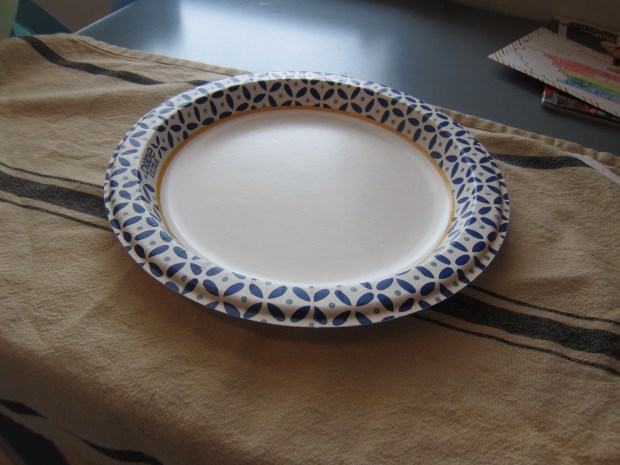
Want to really up the wow factor? Try the classic trick of pulling a tablecloth out from under a plate (you might want to use a paper plate, just in case).

Motion Magic alt.JPG

Is it magic? Nope, it’s inertia of course.