Snow Ice Cream

Snow Ice (2)

My mother recently reminded me of this activity from my own childhood, the process of taking fresh-fallen snow and turning it into a marvelous melty cupful of snow ice cream. I couldn’t wait for the next snowy day to share it with my son!

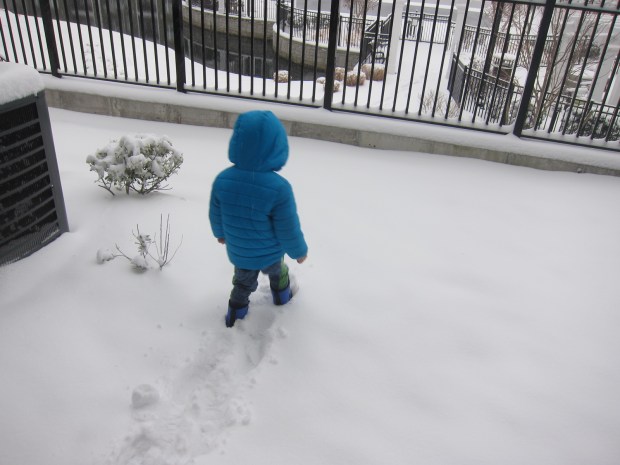
To start, we needed to collect snow of course. Make sure you head out when it’s first tracks and the snow has just fallen glistening from the sky – otherwise you’re not going to want to eat it.

snow day

My “recipe” here is in exact, and you’ll want to vary the amounts according to taste. We took our full cup of snow inside and saturated the top with almond milk until it was a bit slushy. Next we stirred in about 1 and 1/2 teaspoons maple syrup.

Snow Ice (1)

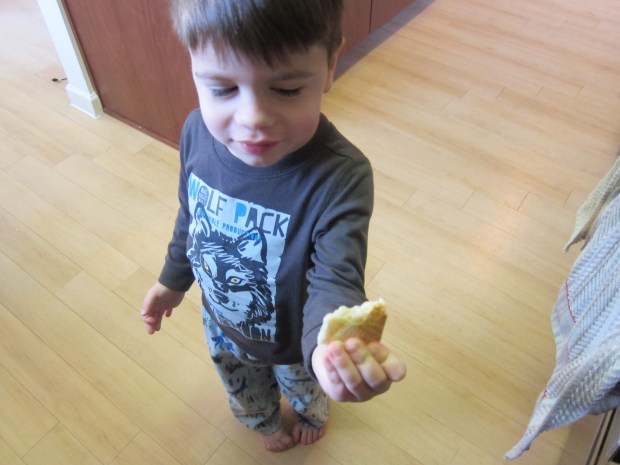
Travis didn’t stop until he reached the bottom of the cup!

Snow Ice (3)

Expanding Snowman

Expanding Snowman (12).JPG

We’ve been waiting for a snowy day around here, because snow always lends itself to exciting winter games and science experiments. With leftover Alka-Seltzer tablets on hand, I had plans for exactly how we could use the snow this time around.

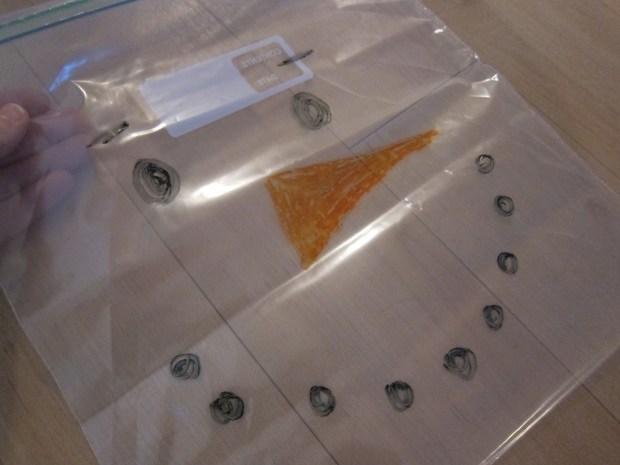
First, I drew a snowman’s face for Travis on a plastic bag. Note to self: next time use a sharpie! We had some inky orange and black hands later on…

Expanding Snowman (1)

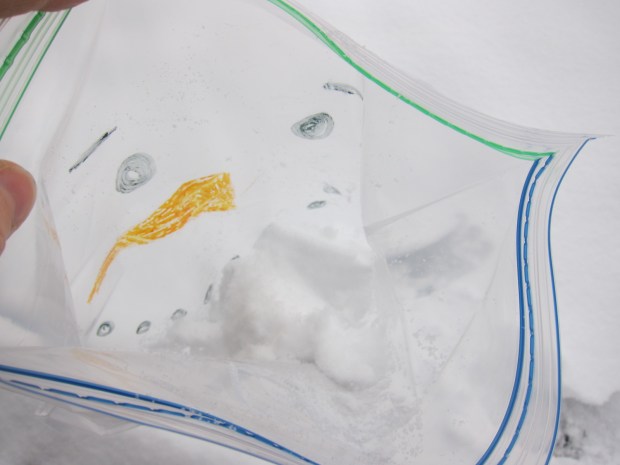
Next we needed to collect fresh-fallen snow into our bag. Make sure you fill your bag almost to capacity with snow, or this experiment won’t work. We learned by trial and error!

Expanding Snowman (2)

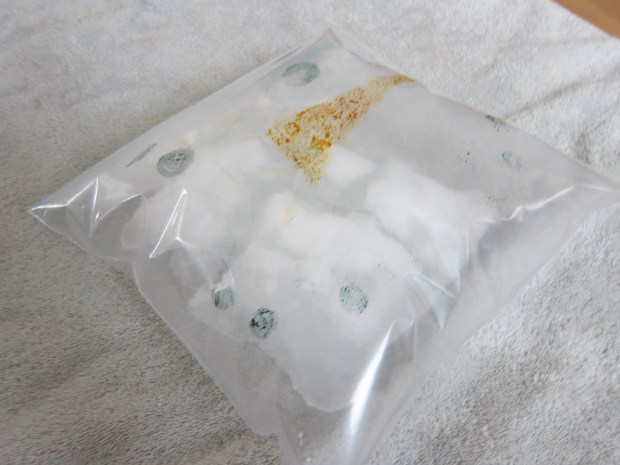
Now drop in two Alka-seltzer tablets and seal the bag. You may want to place it on a towel, just in case the bag bursts…

Expanding Snowman (10)

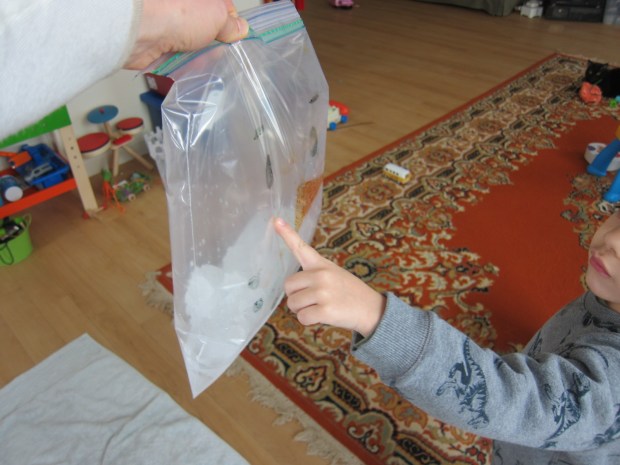
Over the course of about an hour, we checked on the bag. The tablets slowly release gas that will make your snowman puff up more and more and more.

Expanding Snowman (11)

Here’s Travis poking a bag filled mostly with gas and leftover slush by the end.

Expanding Snowman (13)

I think the process would be even better if I had left the bag outside, so the snow didn’t melt simultaneously as the gas expanded – whoops!

The whole thing takes a while, of course, because the tablets react very slowly with freezing cold water. Because he grew impatient as we waited, I filled a second bag with hot water from the tap and we dropped in a few Alka-Seltzer.

Expanding Snowman (6)

They immediately fizzed and the bag puffed up with gas, and we talked about why the reaction happened so much faster in the heat.

Expanding Snowman (7)

Can’t wait for the next snowfall and the chance for more snowy games! What do you do with your kiddos to take advantage of a snow day? Please share in the comments!

DIY Shield & Coat of Arms

DIY Shield (11)

Inspired by our Medieval kit from Koala Crate, we had to continue the fun with more games of knights and kings! Travis has a Disney plastic broadsword, so this Medieval mama couldn’t wait to show him how to make a shield to go along with it.

Start with a piece of cardboard roughly the size of your child’s chest, and trim the bottom edge into a point to make a shield shape.

DIY Shield (1)

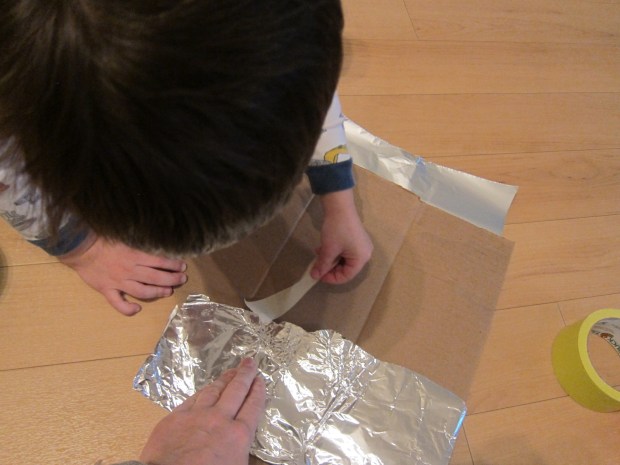
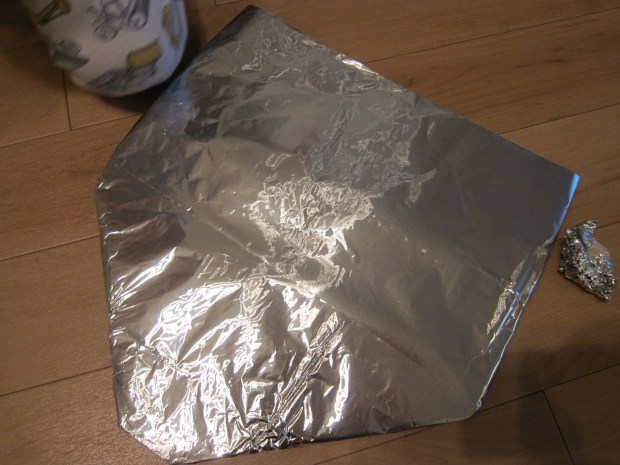
Next we covered the shield in foil for a shiny metal look, securing on the back with masking tape.

DIY Shield (2)

It’s starting to look like the Middle Ages around here!

DIY Shield (3)

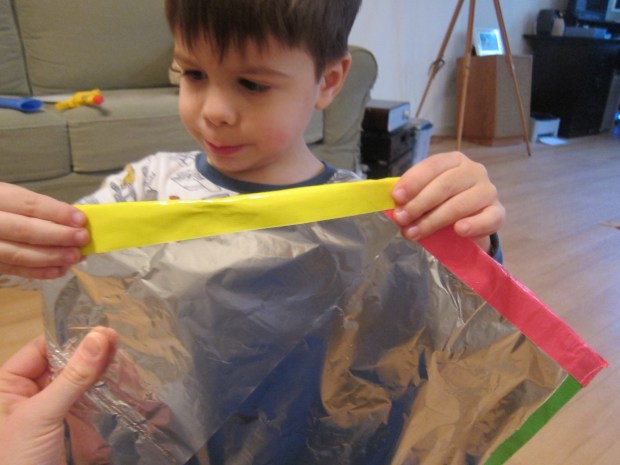
Travis adored the next step, outlining the edges of his shield in colorful duct tape. I knew I’d need all those colorful rolls that have been taking up space in our craft bin eventually!

DIY Shield (4)

Any pretty washy tape would work great here as well, and you can tape designs on the interior of the shield as well as the edges, if your child would like.

We then talked a little about coats of arms, and how knights used them to distinguish one another in battle. Travis drew a “lion” as his sigil.

DIY Shield (5)

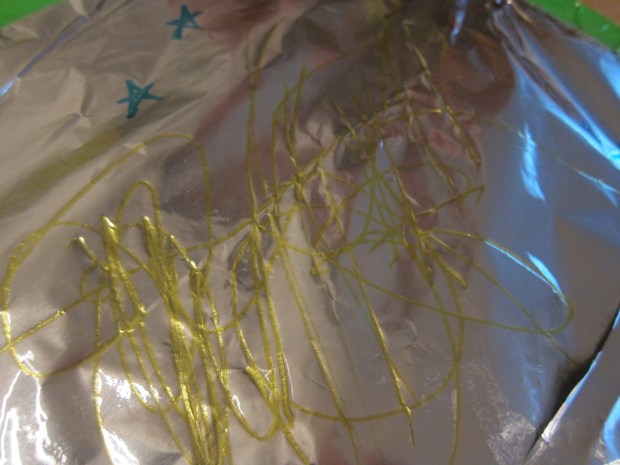
Older kids may want to do some online research and pull up information about real coats of arms, or learn about the symbolism in many of the designs. You can draw a more complicated coat of arms on paper, and tape that onto the shield. If drawing directly onto the foil, make sure you use sharpie markers; washable markers will rub right off.

DIY Shield (6)

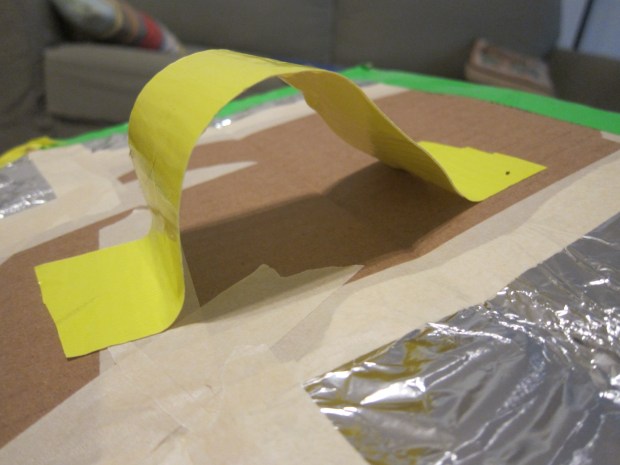
For the handle, tape two pieces of colored duct tape together, leaving one longer than the other. Apply the sticky ends of the long tape to the back for the shield in an arc. Now your knight has something to hold on to.

DIY Shield (7)

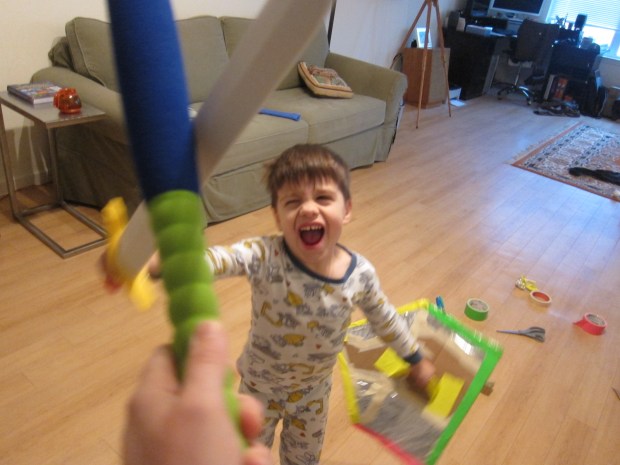
Behold brave Sir Travis!

DIY Shield (8)

Then it was time for a sword fight of course. Haha, that’s me wielding a Nerf bat to battle my son.

DIY Shield (10)

Medieval Crate

Koala medieval (15).JPG

I pretty much peed my pants when I saw our latest theme from Koala Crate – the Medieval crate! I was a huge medieval dork as a kid (and, well, still am), and couldn’t wait to share with Travis the projects and ideas about the Middle Ages.

One note in general: I’ve noticed that Koala is getting more… complex, both in terms of theme and the materials we receive each month. I’m not sure if the kits grow more sophisticated as your subscription goes on, or if this is an attempt by Koala to stay competitive in the expanding world of kids’ subscriptions boxes. This isn’t a value judgment, just an observation that our projects feel a little needlessly complicated. Still, you should be able to mostly replicate the ideas below with items from a craft store, if so inclined!

Because we’ve recently been in love with dragon stories and lore (Dragon’s Love Tacos!), it was natural to start with the Dragon Wagon project. We needed to first apply provided tissue paper circles as dragon scales to the sticky sides of a cardboard box.

Koala medieval (1)

Whoops, just in time we realized there were shiny stickers too, and made room for those.

Koala medieval (12)

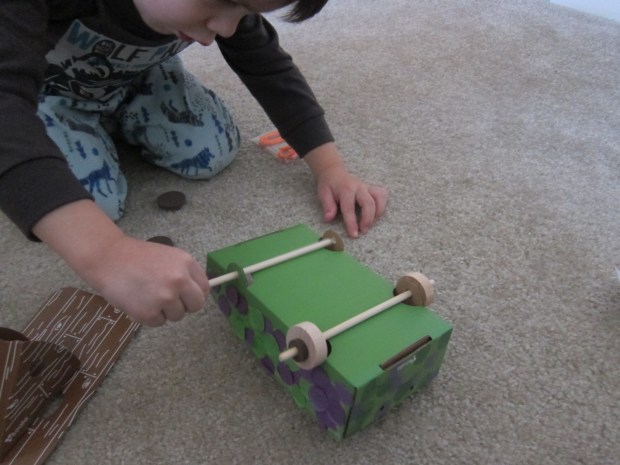
My favorite part of this crate was the dexterity Travis showed. He largely took over adding 2 wooden dowels to be the axles, then adding 4 wooden wheels and a foam circle to hold the wheels in place.
Koala medieval (2)

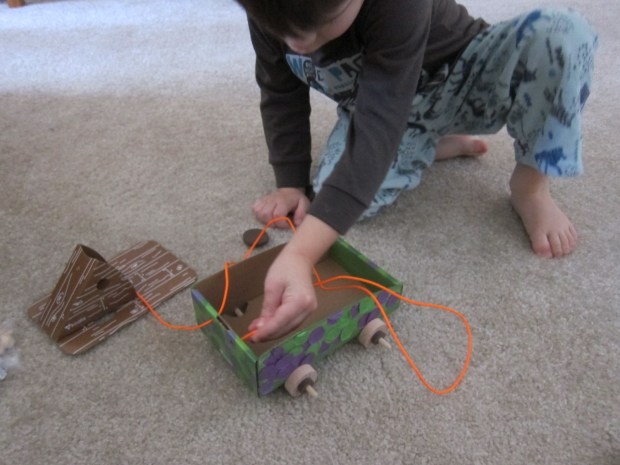
Next he threaded through the provided orange rope, to pull the wagon along.
Koala medieval (3)

We hadn’t even added the dragon and already the Middle Ages were a huge hit with my boy!

Koala medieval (4)

To add the dragon, we adhered four thin streamers of orange tissue paper to the sticky strip on a cardboard dragon head. Koala set this up very neatly so that if you huff through the open mouth, the “flames” wave.

Koala medieval (6)

Slide the dragon head into the provided slot on the wagon and your project is complete.

Koala medieval (7)

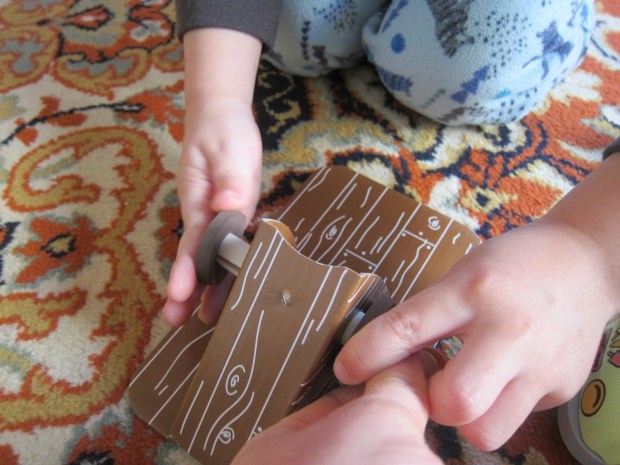
I read to Travis a bit about catapults in the Imagine magazine, after which he couldn’t want to set up the Catapult craft. Again, he insisted on doing a lot of the dexterous work solo. Slip a foam circle onto a clothespin, slot the clothespin into the hole on the cardboard catapult base, and secure it with a second foam circle.
Koala medieval (8)

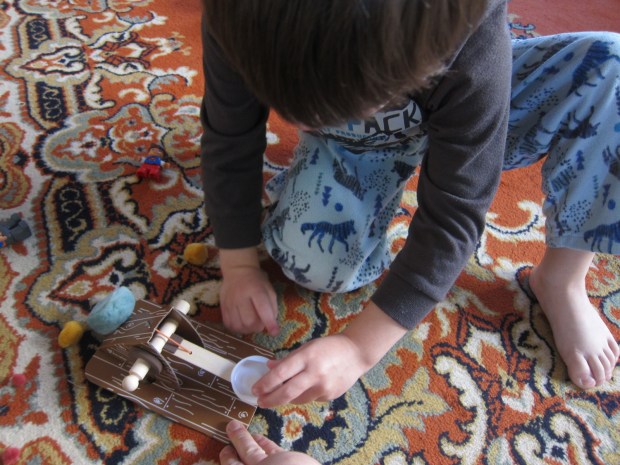
We added sticky-back foam to one end of a craft stick, and adhered the catapult dish (a small plastic circle) to the other end. The catapult then slots into the clothespin and is secured with an elastic.
Koala medieval (10)

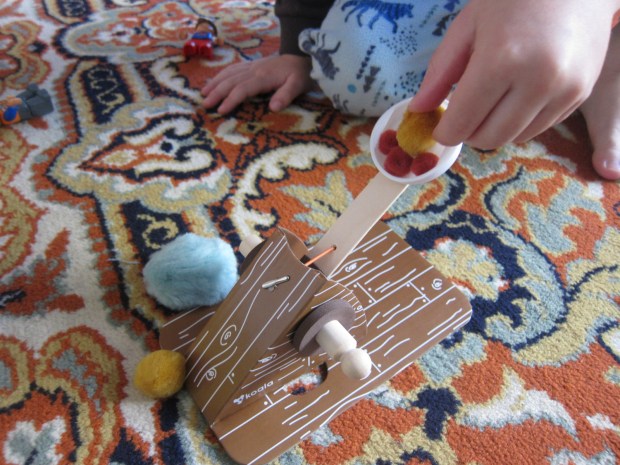
Now it was time to load up our cannonballs (er, pom poms), provided in fun, rock-like colors and various sizes. Launch!
Koala medieval (11)

For a little math in the process, set up a ruler and see how far your pom poms go. It was fun to guess which size “rock” would go furthest.

Koala medieval (18)

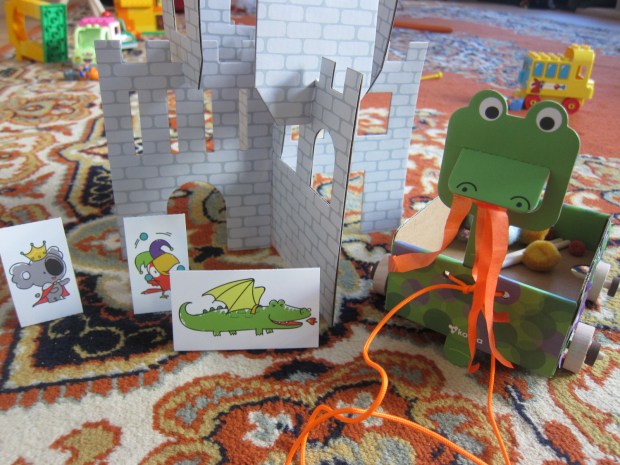
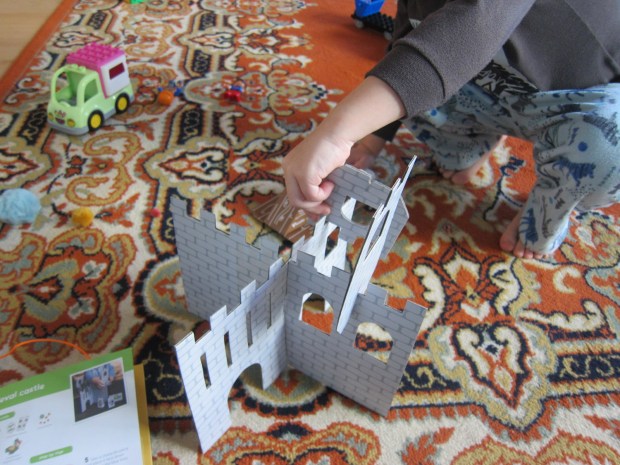
Well now we needed a target, so we didn’t waste any time before turning to the final craft, the Medieval Castle. This was simply pieces of cardboard which slotted together. Travis was a bit frustrated (the slots were tight), so I finished up the castle and folded the provided cardboard characters for him.
Koala medieval (14)

Here’s where the crate scored big points with mama on the imagination scale! Your child can have so much fun with the characters moving about in the castle, laying siege to one another, and avoiding the fire-breathing dragon.
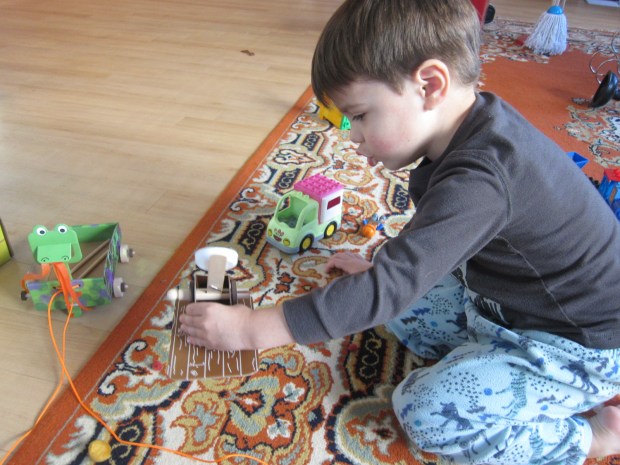
Kolala medieval (13)

Did I mention I’m a nut about the Middle Ages?
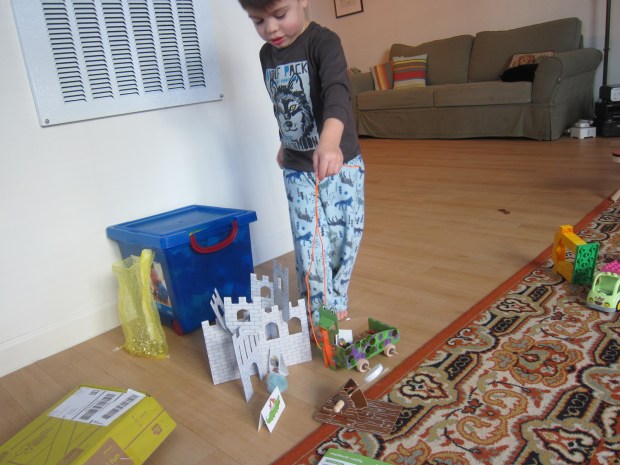
Koala medieval (17)

To continue the interactive play, we made Travis his own crown to be king of the castle, with an easy DIY pipe cleaner crown.

Pipe Cleaner Crown (8).JPG

Twist two pipe cleaners together to be the base – you may need three pipe cleaners, depending on the circumference of your child’s head.
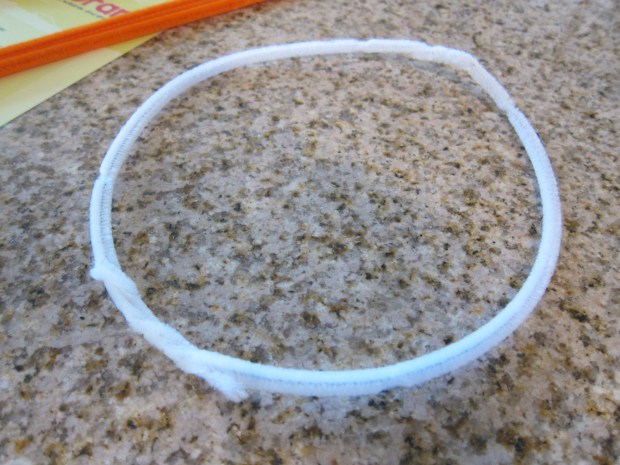
Pipe Cleaner Crown (1)

Cut 5 or 6 more pipe cleaners in half to be the points of your crown, and bend each into a triangle.
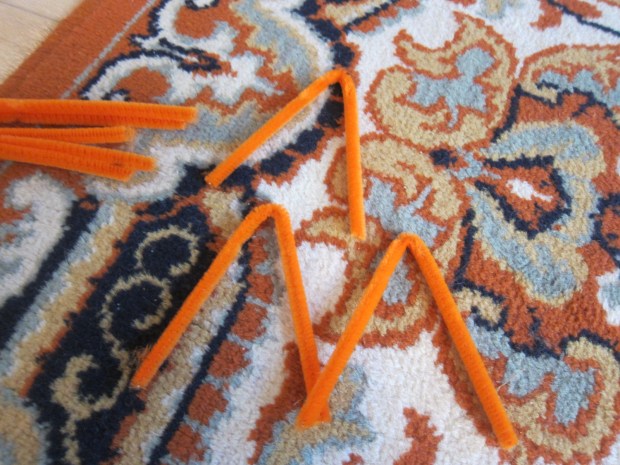
Pipe Cleaner Crown (2)

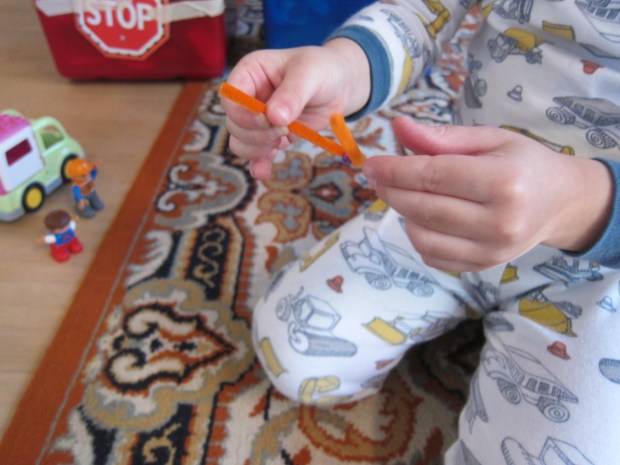
Travis and I devised a little assembly line – he threaded a shiny bead on to the point of each triangle…
Pipe Cleaner Crown (3)

…after which I twisted the ends around our base. Be sure no wire points will poke into your child’s head.

Pipe Cleaner Crown (4)

A proud king!

Pipe Cleaner Crown (6)

Thanks for medieval fun, Koala Crate!
Sailor’s Hard Tack

Hard Tack (4)

A recent trip to a maritime museum gave Travis the chance to play in a pretend galley kitchen.

whaling (4)

We returned home with a recipe for hard tack, the hard-as-a-rock cracker that was a staple on many sea voyages. We couldn’t wait to try making it!

Hard Tack (1)

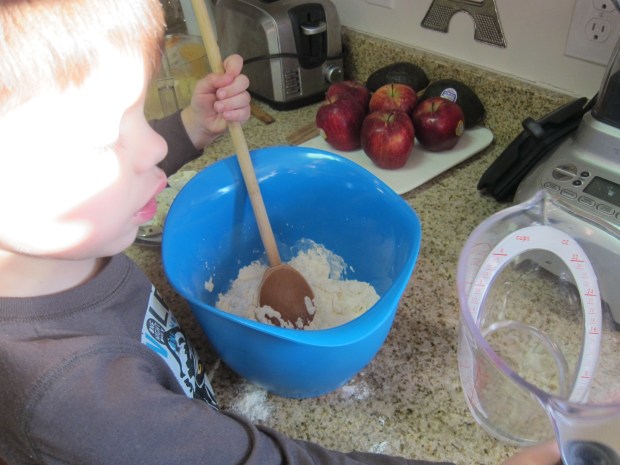
First scoop 2 cups flour into a bowl. Add 1/2 teaspoon salt.

Hard Tack (2)

Begin adding water, about 1/4 cup at a time, until you have a workable dough. Our recipe was vague, so I did a bit of research online to see how much we’d need. 1 cup of water made our dough a little too sticky, so we added an extra 1/4 cup of flour. Knead the dough about ten times, then roll out into a rectangle and score into squares on a baking sheet.

Hard Tack (3)

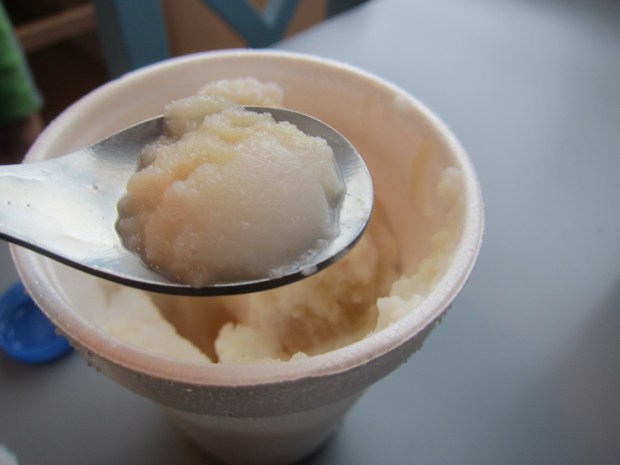
Prick the squares with a fork, and bake at 375 degrees F for 30 minutes. Turn over and bake an additional 30 minutes.

I recommend letting your little sailors test the hard tack now. It won’t break their teeth yet, and they’ll get a sense of what it was like!

Hard Tack (5)

Travis pretended he was not just any seafarer, but a pirate of course. H-arrgh-d Tack, it became!

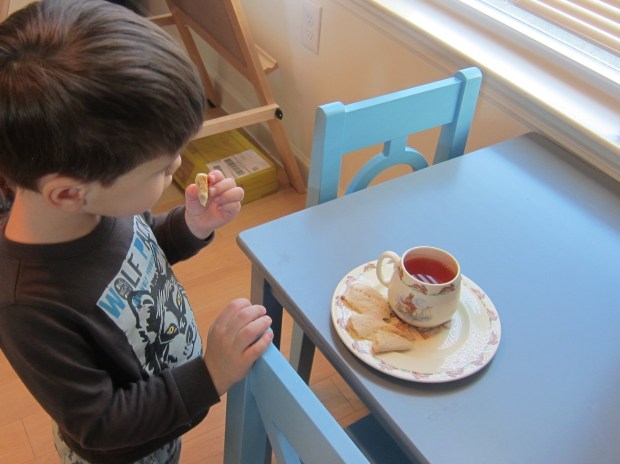
For true hard tack, leave it out on the counter for a couple of days until really really hard. To serve, you’ll need to dip in water, non-dairy milk of your choice, or tea (Travis loves a cup of caffeine-free rooibos).

Hard Tack (6)

Ahoy mateys!

Hard Tack (7)

Snow Storm in a Jar

Snowstorm Jar (4)

We’re always up for a glittery and bubbly project, and this one seemed well worth a try; I’ve seen this one popping up (pun intended!) all over the internet lately. The secret to creating a blizzard inside is a simple little Alka-Seltzer tablet.

First, we needed to mix together 1/4 cup water with enough white paint to make a nice, saturated color. Pour this mixture into the bottom of a glass jar.

Snowstorm Jar (1)

Fill the jar with 1 cup baby oil – the oil will sit on top of the water, which is precisely what makes this experiment work, the fact that water and oil won’t mix.

Snowstorm Jar (2)

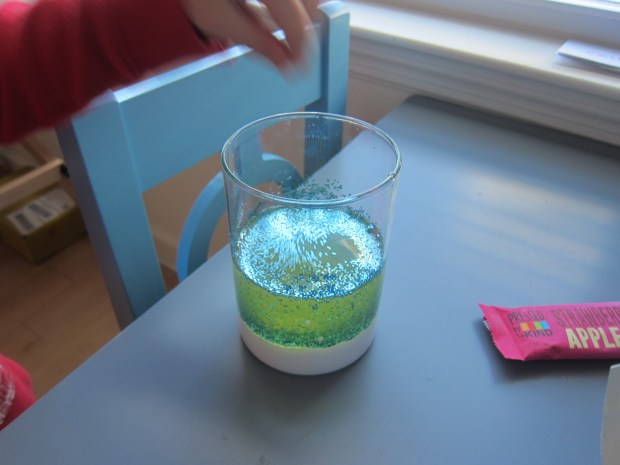
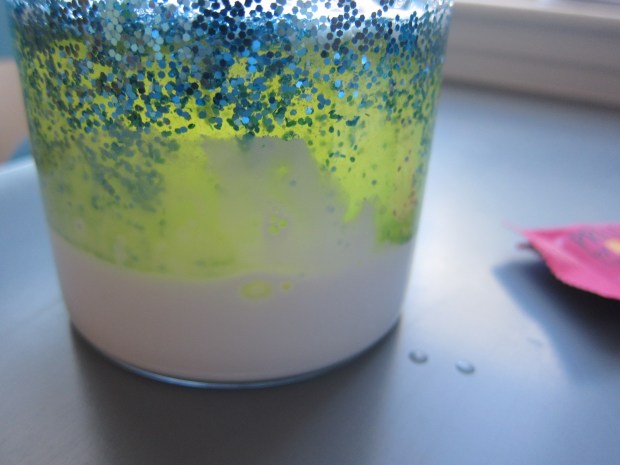
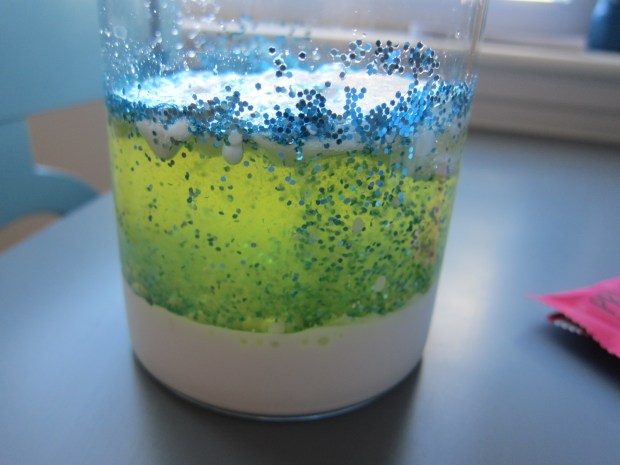
Next we added glitter. Ideally, we would have used white glitter to be snowflakes, but our storm had blue glitter. Travis dumped in a whole lot more than I intended before I could stop him, oh well!

Snowstorm Jar (3)

To make the storm happen, simply drop in an Alka-Seltzer tablet. The tablet will create pressure upwards, which makes the water rise, but then the oil pushes it back down again. The carbon dioxide generated by the tablet and the water also keeps things nice and bubbly.

Snowstorm Jar (6)

And your child gets to watch beautiful snowflakes and snowdrifts while learning that little bit of science!

Snowstorm Jar (5)

A moving project like this demanded a quick video, so enjoy!


Hot Chocolate Science

Hot Chocolate (7)

Well now here’s a tasty way to bring some science into your winter afternoon. Or to add a sweet twist to your science. Whichever way you spin it to your kids, who can possibly protest a science experiment that ends a cup of hot chocolate?

I started out by posing a hypothetical to Travis. If we made him hot cocoa for a snack, which would dissolve fastest: cocoa in a cup of cold water, one of medium (room temperature) water, or one with hot water. He picked hot (great!), so I guessed cold to play devil’s advocate. Now it was time to test our hypotheses.

Set out three heat-proof cups and fill each with 6 ounces of water.

Hot Chocolate (2)

Travis proudly helped fill the first two cups. Use caution when pouring the hot water, a step best left to grownups.

Hot Chocolate (1)

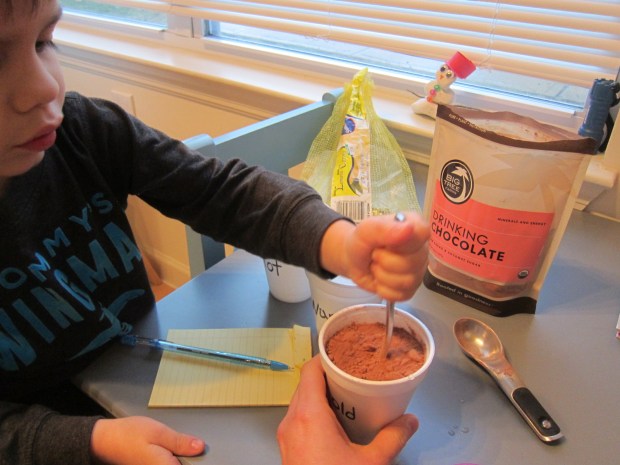
We then added 1 tablespoon of hot cocoa mix to each cup, one at a time, starting with the cold water. We tried to be scientific by timing our results with a handy stopwatch, although I confess our scientific method was spotty.

Hot Chocolate (4)

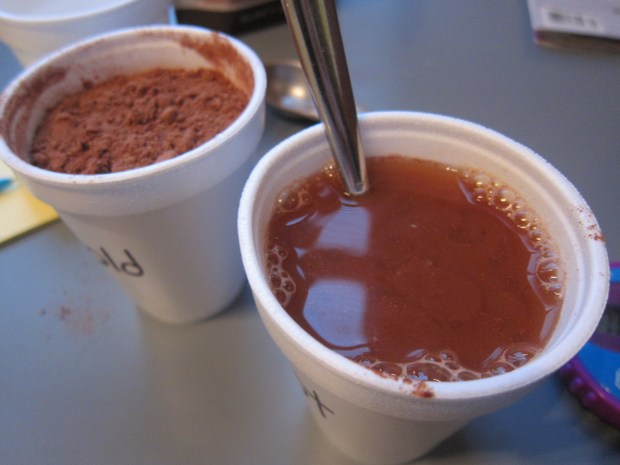
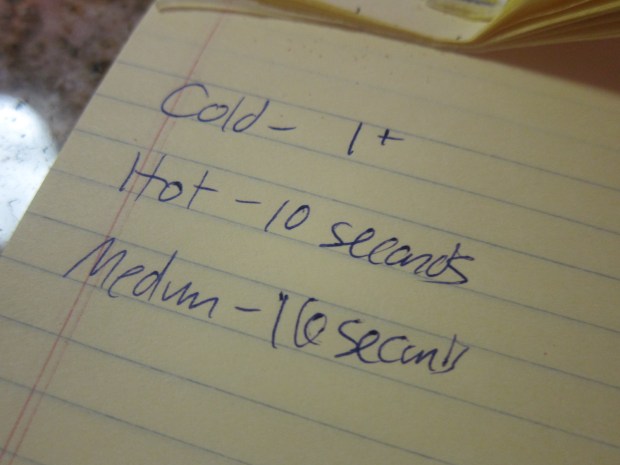
The chocolate in the cold water didn’t go anywhere, remaining powdery and clumpy even after lots of stirring. Truth be told, we have no idea how long it would have taken to dissolve, but far past our attention span on the stopwatch.

Hot Chocolate (5)

The hot water dissolved the cocoa in 10 seconds flat – a neat comparison that grabbed Travis’s attention.

Hot Chocolate (6)

Results for our medium water were a little fuzzy because it was probably hotter than it should have been. I had hoped to have water exactly at room temperature, but it was warm from sitting in the tea kettle. So that only took about 16 seconds to dissolve.

Hot Chocolate (8)

Either way, Travis got to enjoy a cup of cocoa at the end (from the hot cup, of course), and picked up a little science about how heat breaks apart molecules along the way.

Green Time: Evergreen Trees

Pine Tree alt

We’re still enjoying our first edition of Travis’s subscription to Ranger Rick Jr., which has already been the inspiration for scrapbooking, animal crafts, and more! There appears to be a recurring monthly feature called Green Time, encouraging play or activities outdoors. Me being me, my plan moving forward is to highlight these adventures on the blog!

January’s suggestion to get outside was to get to know an evergreen tree, an up-close-and-personal exploration of these verdant trees. Travis and I took advantage of mild temps (for January) and headed off to the park. When I told him we’d be getting to know a pine tree, Travis asked which one was going to be our friend!

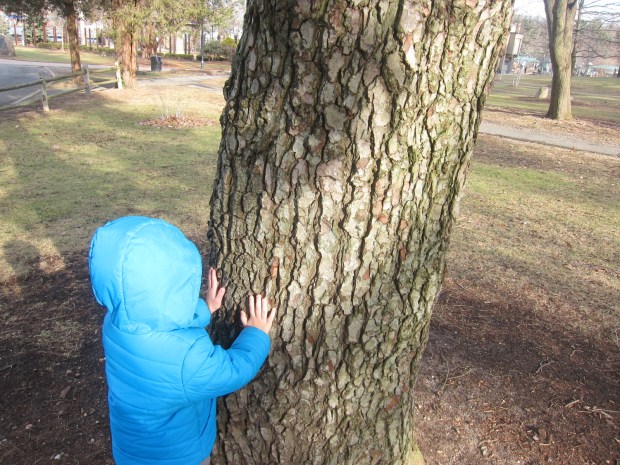
Soon enough we’d spotted it, a majestic pine. We listened for sounds, although it was hard to distinguish much nature with cars nearby and plane traffic overhead. But we did get to use our sense of touch on the tree bark…

pine tree (1)

Sense of smell on the needles…

pine tree (2)

And simply got to know our friend. Travis was dusting him off here with an extra pine needle.

pine tree (7)

Needles and pinecones were easy to spot. It wasn’t the right time of year, unfortunately, to see insects or bird’s nests.

pine tree (4)

But we loved this burl on the trunk!

pine tree (6)

Thanks for getting us outside, Ranger Rick!

Rock Snowman

Rock Snowman (6)

A recent burst of warm(ish) weather got us outside over the weekend, and my little collector is always eager to bring home treasures from our walks. In fact, I always carry a zip-top plastic bag with me when we outside just for this purpose!

Rock Snowman (3)

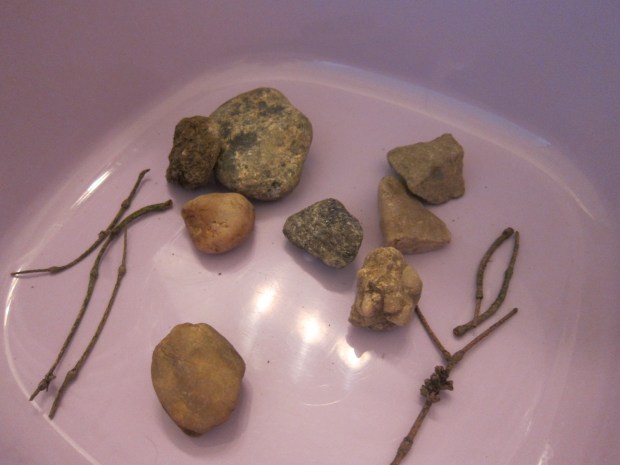
Today we returned him with a variety of rocks and sticks, so thought we could build little winter snowmen.

Rock Snowman (1)

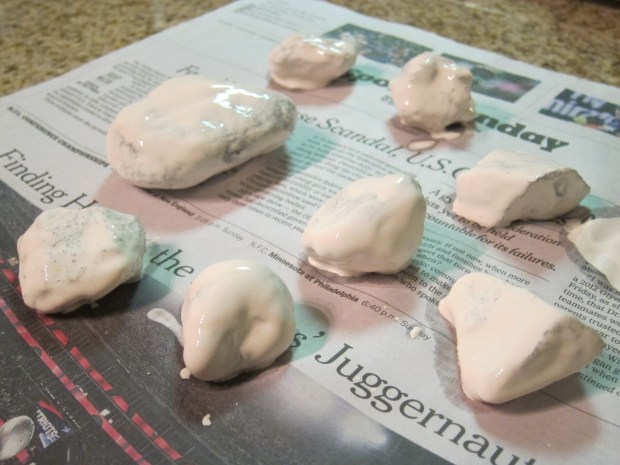
First the rocks needed a good coat of white paint, and we left them to dry overnight.

Rock Snowman (2)

When we settled in to build our snowmen, it turned out we really only had one rock large enough to be the base, which meant only one snowperson could be built. The rest of the rocks ended up as little “snowballs.”

Rock Snowman (5)

I put together the snowman for Travis with hot glue – three rocks glued together, two little sticks for the arms, and buttons and googly eyes hot glued on.

The finishing touch was a little top hat I simply made from construction paper.

Rock Snowman (7)

Don’t have rocks on hand to make a snowman? Check out our shredded paper or glowing bottle versions instead!

Arctic Animal Experiment

Arctic Animal (4)

Following up on fun and icy magnetic play, we wanted another way to play with ice indoors. Recent reading about arctic animals such as penguins and seals was the perfect launching off point. I posed the question to Travis: How do arctic animals stay warm in icy water? The answer of course lies in their blubber, the thick layer of fat under their skin. To illustrate this for your child, get messy with this silly experiment!

First, give your child a bowl of water with ice cubes, and encourage them to plunge their hand in – if they dare! Travis cautiously dipped a finger. Brr!

Arctic Animal (1)

I promised him we could keep his hand warm in the icy water with a few simple steps. First add a latex glove. This layer alone won’t do the trick, of course, but we tested just to be sure.

Arctic Animal (2)

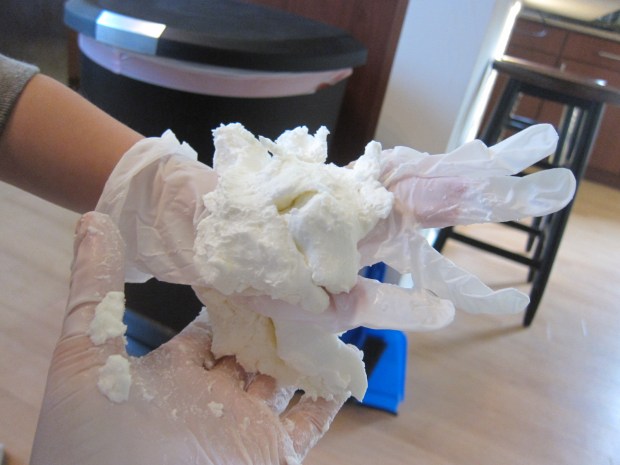
Next, dip your child’s glove-covered hand in a big vat of vegetable shortening (if you’re looking for a vegan and organic option, try Spectrum Organics). It will make a huge mess as you get your child’s hand covered front and back in the shortening (let alone take pics in the process!) but we mostly managed. Next time I would wrap the shortening-covered hand in plastic wrap to seal in all the mess.

Arctic Animal (3)

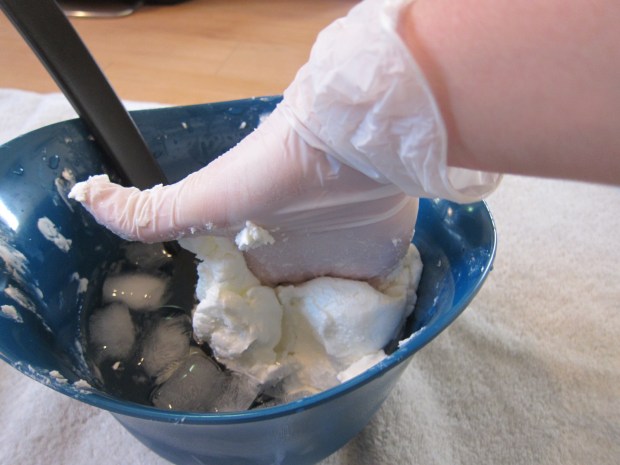
Now it was time to dip in. To be honest, Travis was significantly less impressed than I was, but he did notice that the fat-sealed hand didn’t flinch away from the cold ice cubes. I took a turn after, just to feel the difference.

Yup, here’s mama, just hanging out with her hand in icy water.

Arctic Animal (5)

Truly, you could keep your hand immersed this way for quite some time and not be bothered by the cold. If I’m ever crazy enough to do a polar bear swim, I’ll be layering up in shortening first.