Egg Carton Penguins

Egg Penguin (6)

We don’t buy eggs, but I do confess that egg cartons from my in-laws’ house make for fantastic up-cycled crafts. We got the idea to make these cute figures after a feature on penguins in our first issue of Ranger Rick Jr. We quickly decided we needed some adorable toy penguins around the house!

Egg Penguin (1)

Cut an egg carton into indiviaul compartments and paint with black tempera paint. Since the carton was originally pink Styrofoam, it took two coats of paint before we hid the color underneath.

Egg Penguin (2)

Next we made sure to gave them white bellies!

Egg Penguin (5)

I cut out orange hearts to be the feet and orange triangles to be the beaks from a sheet of orange felt, and Travis helped glue these on.

Egg Penguin (4)

Googly eyes were the finishing touch!

Egg Penguin 8)

Now we have adorable penguins to march around and bring our magazine story about the animals to life!

Egg Penguin (3)

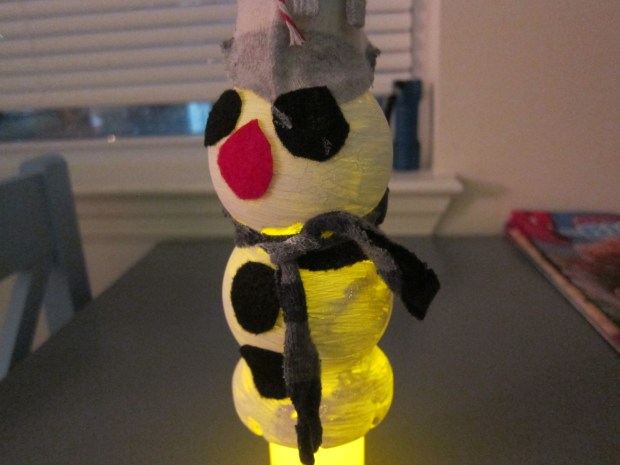
Glowing Snowman Luminary

Glowing Snowman (10)

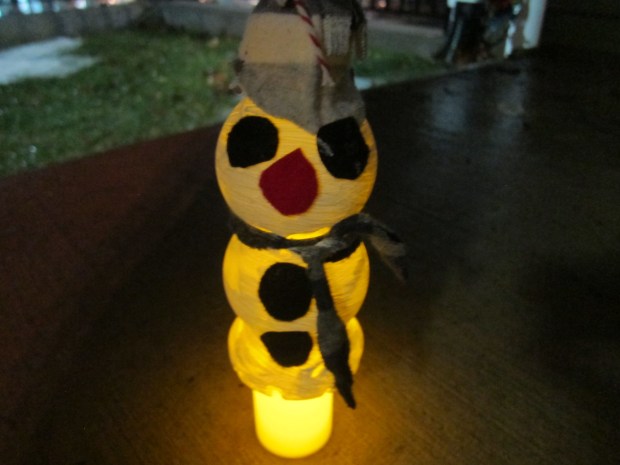
I wanted to make these adorable glowing snowmen to light up a dark blizzard afternoon recently. It turns out Travis wasn’t at all interested in putting the craft together (hey, sometimes it happens!) but he did love the end result. The snowman is another way to add a cozy glow to winter’s dark nights.

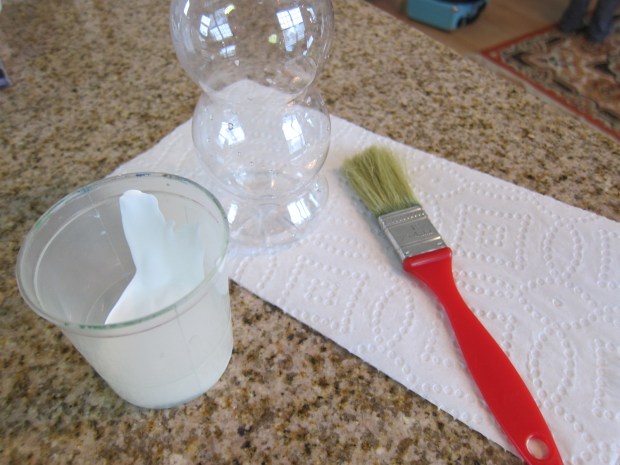
For best results, you’ll need an empty Pom juice bottle to create a nice curvy snowman. I couldn’t find Pom at the store, but did snag a kid-sized Evian bottle that worked just as well.

Glowing Snowman (1)

Paint your curvy bottle with two coats of white paint on all sides (but not the bottom), letting dry thoroughly after each coat.

Glowing Snowman (2)

You know that pesky tendency kids’ socks have of disappearing one from each pair? Use that to your advantage here!

Glowing Snowman (3)

Cut up any old or mismatched socks to make hats and scarves. For a hat, cut the toe off a sock. Tie with a string near one end, and snip those ends into strips to make a “pom pom.”

Glowing Snowman (4)

Cut a long, thin rectangle from another spare sock, and tie around the middle of the bottle as the snowman’s scarf.

Glowing Snowman (5)

To finish the snowman, we used sticky-back felt cut into circles for eyes, a nose, and buttons (which Travis finally acquiesced to sticking on!)

Glowing Snowman (7)

What a dapper fellow!

Glowing Snowman (8)

When you’re ready to make your snowman glow, simply place him atop a battery operated tea light and illuminate the night.

Glowing Snowman (9)


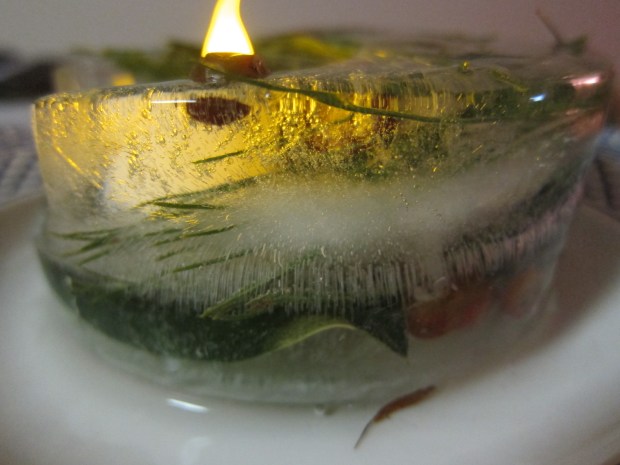
Ice Lanterns

Ice Lanterns (9)

This is a beautiful project to showcase finds from winter nature walks! It’s a multi-day project, requiring two separate rounds of freezing, but kids will love the final glowing result.

First you’ll need those winter treasures – think holly leaves, little berries, pinecones, and pine needles.

Ice Lanterns (1)

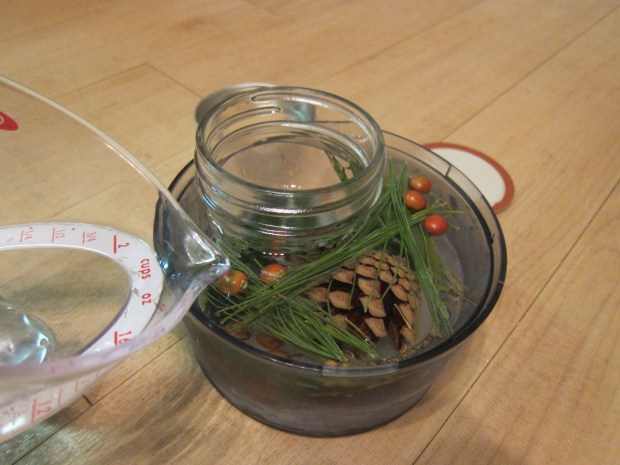
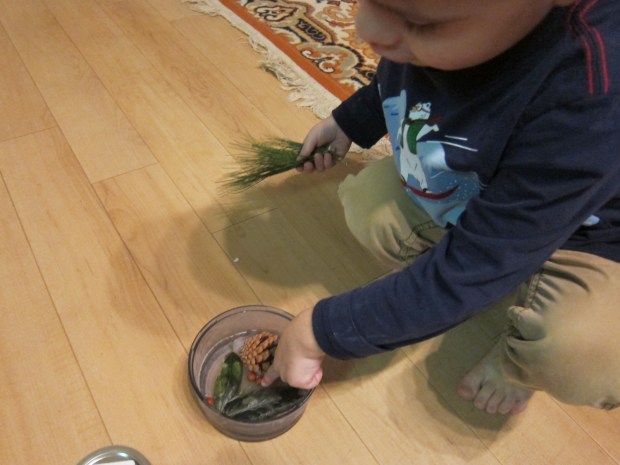
Arrange some of the items in a plastic container (or multiple containers, if you have enough nature items), and fill halfway with water. Freeze overnight.

Ice Lanterns (2)

The next day, Travis was very eager to check out the layer of ice we’d created.

Ice Lanterns (3)

Add a second layer of winter finds over the ice, and also place a glass jelly jar inside. Add water to the top of the plastic container, and freeze again overnight.

Ice Lanterns (4)

Note: If the weather is cold enough, you can even do the freezing outside!

For the final lantern, you need to release the glass jelly jar, leaving behind a hole for a candle. Fill the jelly jar with warm water just for a minute or two, and it should slip out.

Ice Lanterns (5)

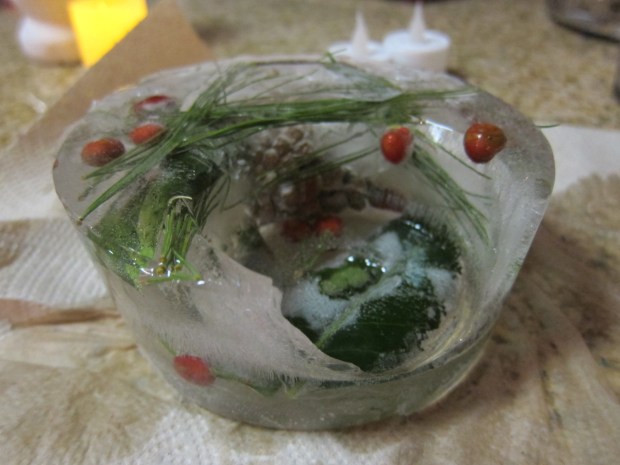
Now run water around the outside of the plastic container, and release your whole ice lantern.

Ice Lanterns (6)

Note: Because our pinecone extended past the middle of our container, our jelly jar wasn’t centered. This didn’t present a problem; it just meant that our final ice lantern wasn’t going to glow as evenly! You can see in the above photo how our candle hole is on one side of the lantern, instead of directly centered.

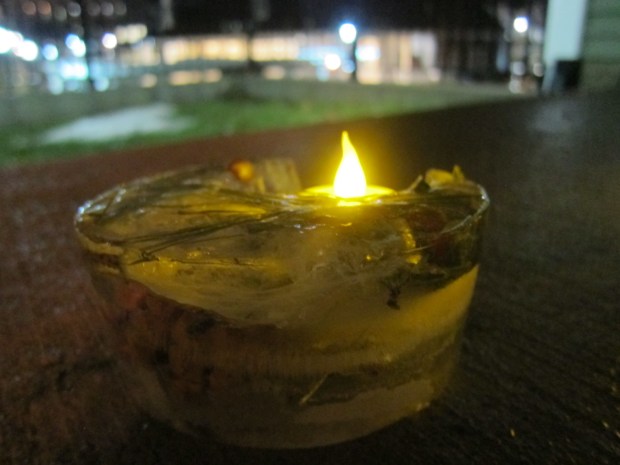
Finally, place a battery operated tea light inside, and watch the lantern light up the winter night!

Ice Lanterns (7)

You can leave these outside, or take them inside for a warm winter glow.

Ice Lanterns (8)

Snowman Wax Resist Painting

Snowman Wax (7)

It’s always fun to find new uses for that pesky white crayon in the crayon box… Sure you can draw on black paper, but this fun seasonal project has a magical feel for kids since it features a big “reveal” at the end.

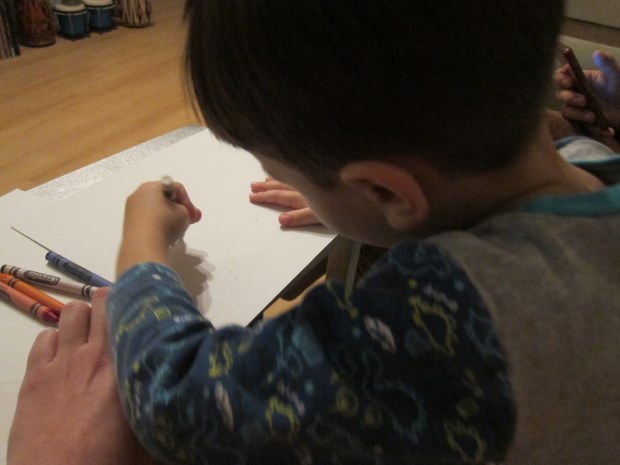
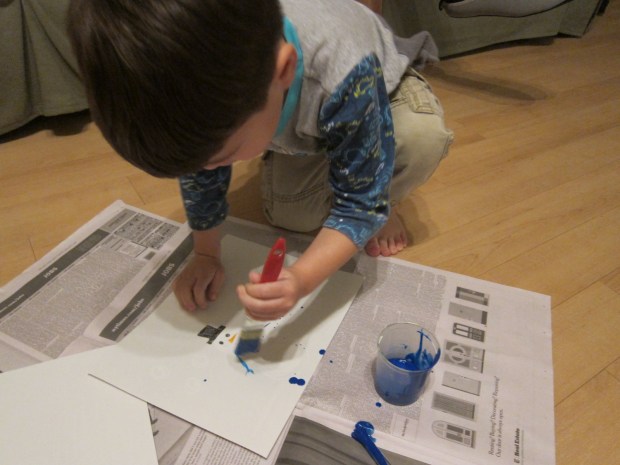
First, you need to draw with white crayon on white paper, which hopefully won’t frustrate your kids. I told Travis to imagine he was drawing anything snowy – the snow fort we’ve made outside our patio, snowflakes in the air, etc.

Snowman Wax (1)

Because I wasn’t sure how much his white scribbles would turn up in the “reveal,” I made him a separate drawing with a white snowman and big puffy white snowflakes.

Snowman Wax (2)

Now the fun part: could we magically make our white pictures appear?

To prepare the paint, thin blue tempera paint with water; you want the consistency to be closer to watercolor. I actually would make ours even thinner next time, since it was a bit dark over our final result.

Snowman Wax (3)

Travis was very excited to see where the white crayon was on the paper!

Snowman Wax (4)

Then he grew impish and slathered on the paint quite thickly. A little thinning out on my part helped reveal the snowman’s three round layers a bit better.

Snowman Wax (5)

Overall, cute and nicely seasonal. Please share in the comments if you have other fun white crayon projects at your house!

Looking for more wintery indoor fun? Check out our recent shredded paper snowmen and pinecone snow owl projects!

Confetti Launcher

Confetti Launch (9).JPG

Well, we didn’t get to this one in time for New Years Eve, but there’s nothing wrong with having messy fun with leftover confetti just to fill a winter’s afternoon! Making the launcher will be a bit tough for the littlest hands, but Travis loved watching the assembly of it until it was time to make our confetti fly. Kids in elementary school on up can help with the entire process.

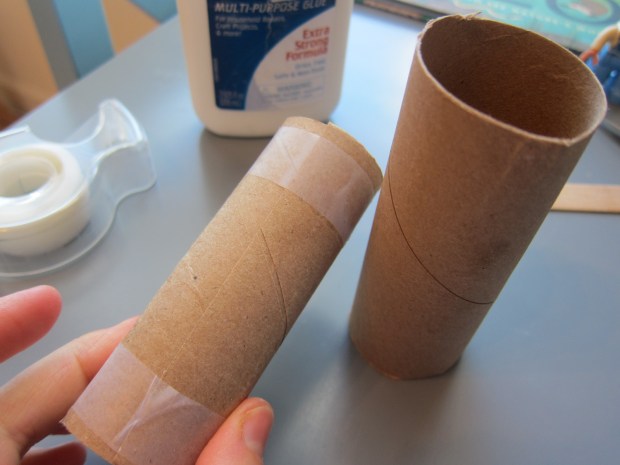
First, you’ll need two short cardboard tubes, such as toilet paper tubes. If they are the same size, cut one open and tape it so it is slightly narrower than the other.

Confetti Launch (1)

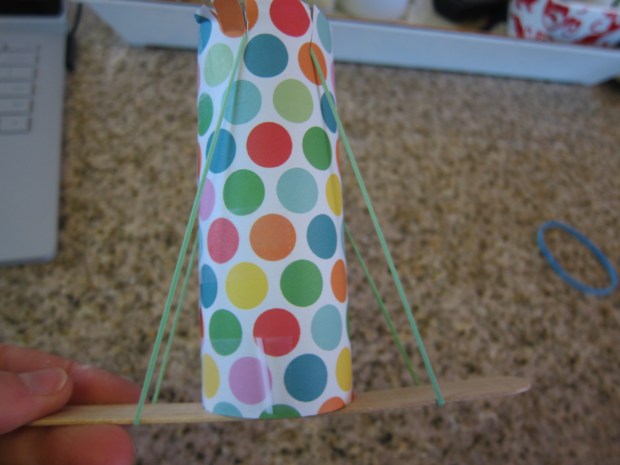
Cover both tubes in pretty decorative paper and set aside.

Confetti Launch (5)

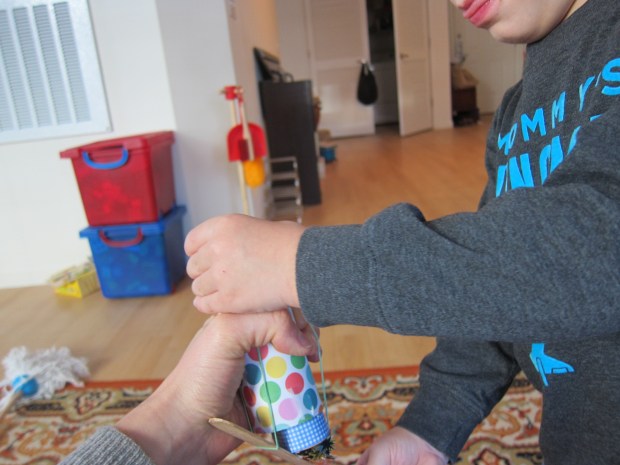
Cut two slits along each side of the top of the wider tube, and thread through a rubber band. Stretch the ends of the rubber band around a jumbo craft stick.

Confetti Launch (3)

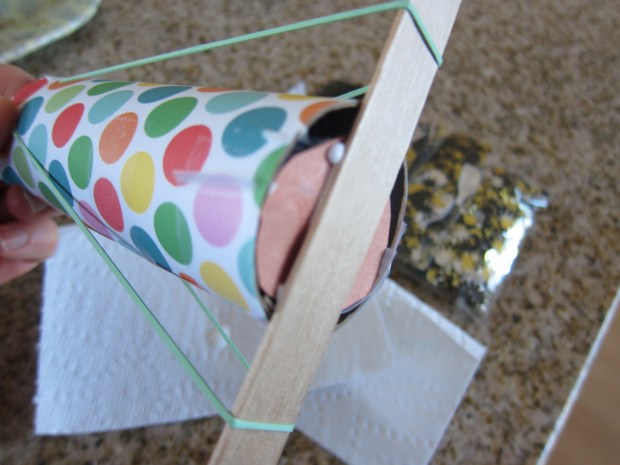
Trace the bottom of the narrower tube onto construction paper, and cut out the circle. Glue the paper to cover one opening of the tube.

Confetti Launch (2)

Now fit the narrow tube into the wider one, and glue the paper onto the craft stick. Let dry for at least one hour.

Confetti Launch (4)

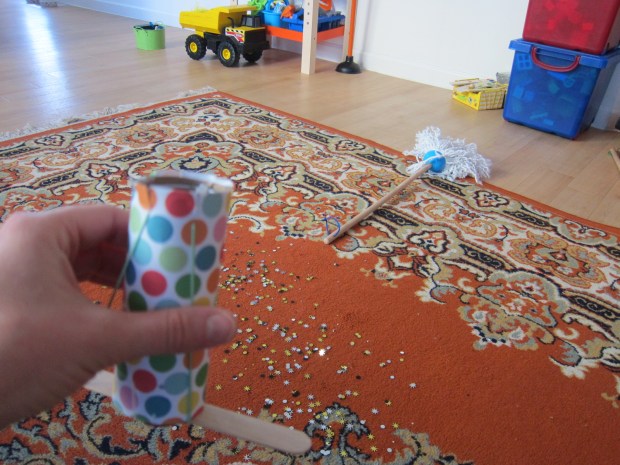
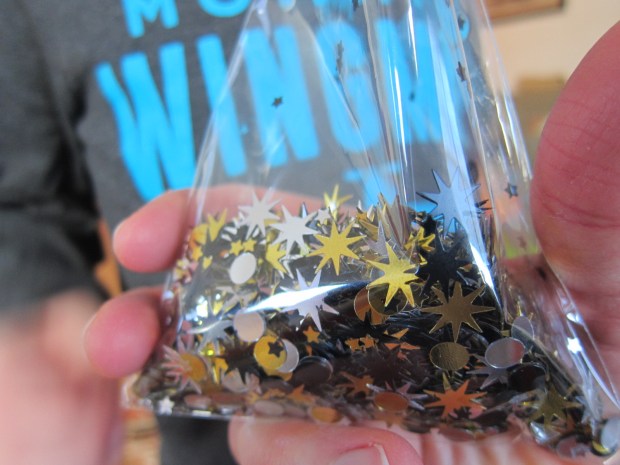
Time to launch! Travis helped sprinkle in leftover New Years confetti.

Confetti Launch (6)

Little hands will likely need a grown-up’s help to pull the launcher back far enough, so I couldn’t capture a photo right in the middle of the action but…

Confetti Launch (7)

Confetti!

Confetti Launch (8)

We had to repeat over and over of course. We’ll definitely be making this for parties and celebrations to come!

Shredded Paper Snowman

Shredded Snowman (6)

January is always a good time to clear out the old and make room for the new, and that goes for even mundane things like cleaning out old bills and files. All that paper means putting our shredder machine to good use, and the end result of all that shredding? A wintery snowman craft!

To make the snowmen, save any shredding scraps you have, and set them out in a bin or sheet of newspaper to contain the mess.

Shredded Snowman (1)

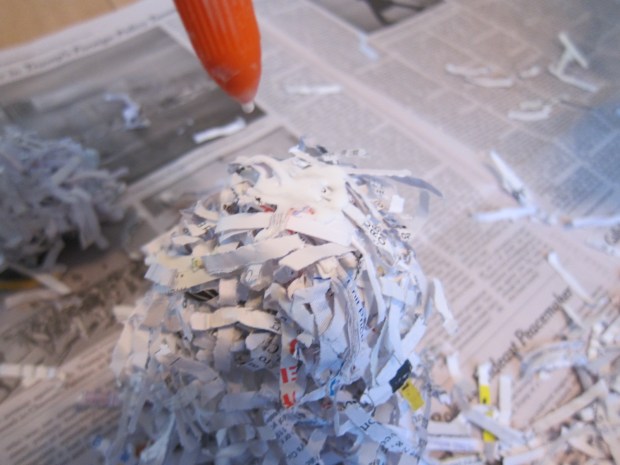
You only need to press clumps of the shredded paper together with your hands and it will stick together, as all the pieces intertwine. Nothing wrong with a good old paper snowball fight at this stage, if your kids are so inclined!

Shredded Snowman (3)

Once we had “snowballs” of various sizes, we stacked them into a snowman, gluing the layers together. Admittedly this was a little inexact – the balls looked more like lumps once glued, but the basic idea was there.

Shredded Snowman (4)

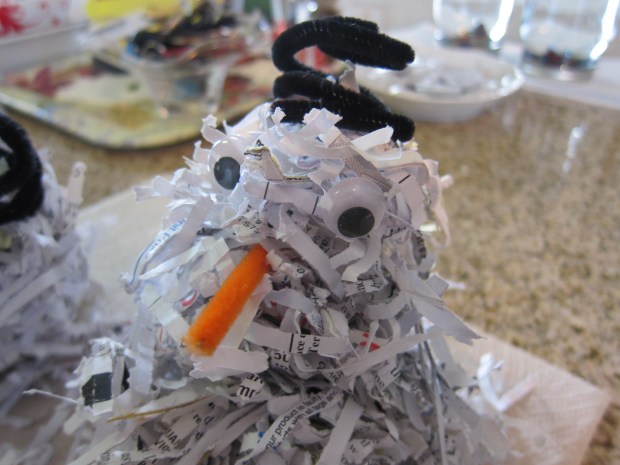
We stuck in orange pipe cleaners as carrot noses, and I coiled black pipe cleaners to be top hats.

Shredded Snowman (7)

Far more rewarding than this little craft, though, was Travis’s glee for all that shredded paper simply as a material.

Shredded Snowman (2)

He played games with it for ages, pretending it was “grass clippings” (yes, we like to pretend we’re landscapers around here) and then happily cleaning it with his toy tools.

Shredded Snowman (5)

What other fun uses can you think of for all that shredded paper? Please share in the comments! What a great way to recycle last year’s boring paperwork.

Snow Globes

Snow Globe (5)

Our snowy themed indoor fun continues, as negative wind chills are still keeping us mostly indoors. These snow globes didn’t turn out as pretty as the kind you’d buy in a store, but we enjoyed making them!

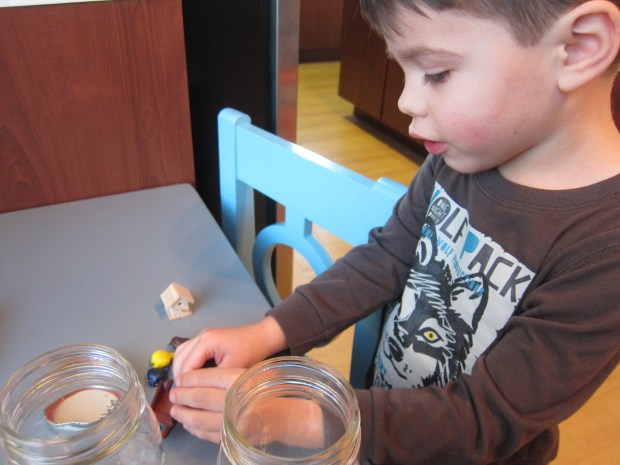
First, you’ll need to arrange little figures or miniatures, and glue to the lid of a mason jar. We had fun sorting through cute bird-themed figures we had at home, which looked great when we affixed them (I used hot glue, a grown-up step).

Snow Globe (1)

Next time though, I would use something taller, since these didn’t really stick far up enough into our swirling “snow.” But more on that later.

Snow Globe (2)

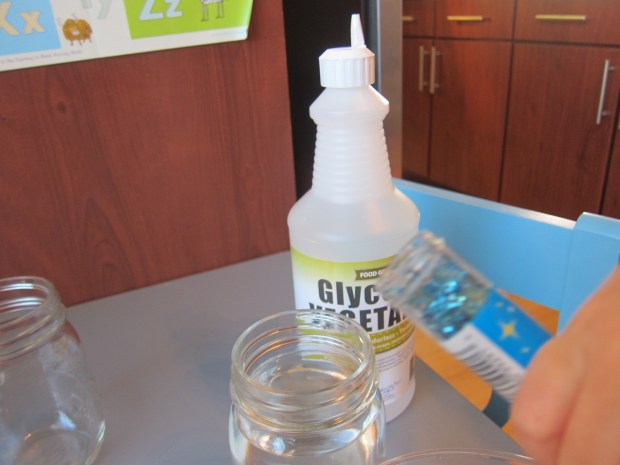
Help your child pour water into the mason jars until they are almost full. Then it’s time for the secret ingredient: vegetable glycerin. Travis loved the goopy texture. Add 1 teaspoon to each mason jar.

Snow Globe (3)

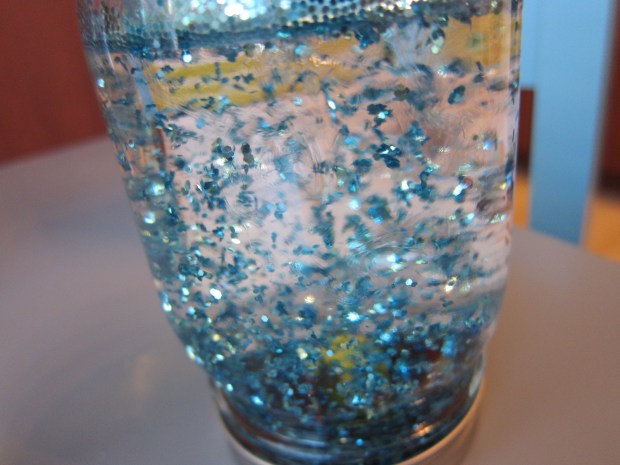
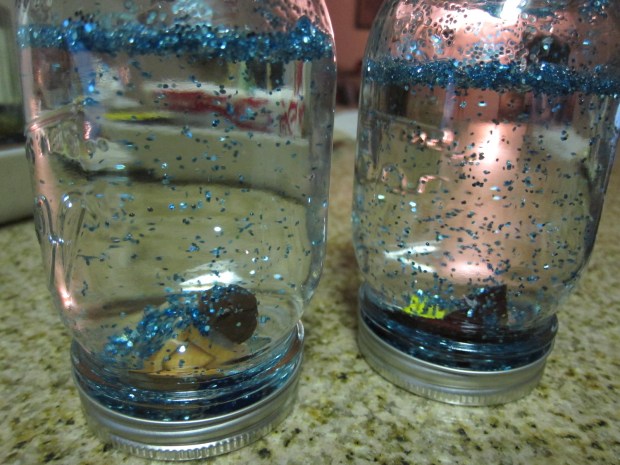
Finally, we needed to add snow…. glitter that is! Don’t overdo it, or you won’t really be able to see your figures in the jar. We might have been a little too heavy-fisted.

Snow Globe (4)

Now give them a shake to create a beautiful indoor snowfall! These would make great gifts if you want to save the idea for the holidays.


Snow Globes alt.JPG

Here it is snowing on our little birdhouse:

Snow Globe (6)

Borax Snowflakes

Borax Snowflake (1)

I’ve avoided Borax as a crafting tool until now because it can be a potential skin irritant, and of course hazardous is if ingested… but snowy days inspire snowy projects, and for this one we really needed the Borax. Luckily Travis was very responsible using it as an ingredient in our craft.

Borax Snowflake (2)

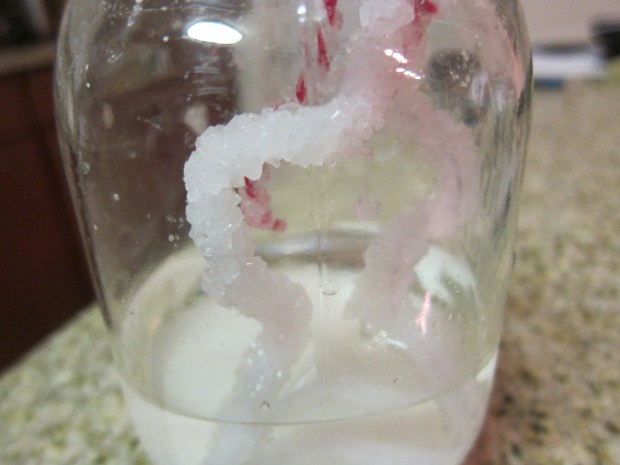
The goal was to make sparkly crystal snowflakes, but first we needed to do some mixing. Under careful supervision, have your child pour 1/3 cup Borax into a mason jar.

Borax Snowflake (4)

I added 3/4 cup boiling water, and then monitored carefully as Travis stirred to dissolve the Borax; make sure your child doesn’t touch the glass jar, as it will be hot at this point. Travis loved the slightly taboo nature of all this!

Borax Snowflake (5)

To make your “snowflakes”, bend pipe cleaners into a roughly snowflake-like design. Ours were really more like stars, with five points instead of six. Of course you could also make other shapes, including circles, squares, triangles, or just freeform.

Borax Snowflake (3)

Tie the pipe cleaner shapes onto jumbo craft sticks, and then dangle into the Borax solution. Now we needed to wait overnight!

Borax Snowflake (6)

In the morning, on yet another day of polar weather, we were rewarded with sparkling icy snowflakes.

Borax Snowflake (8)

We’re going to set these aside to make them ornaments next Christmas!

Borax Snowflake (7)


Science… Meets Art

Science Meets Art (3)

This project (from our latest High Five issue) exemplifies the STEAM acronym: a little bit of scientific discovery paired with a nifty art creation at the end. You can do both components of the project, or just the science part, or just the art part… but I recommend the whole thing because we enjoyed it from start to finish!

First up, use some science (the S part of STEAM) to make at-home paints. Fill 6 large muffin cups with 1/4 cup baking soda each.

Science Meets Art (1)

Next, add about 15 drops of food coloring to each muffin cup. We only had powdered food coloring at home (from Color Kitchen), so sprinkled about a 1/2 packet of powder per compartment.

Science Meets Art (2)

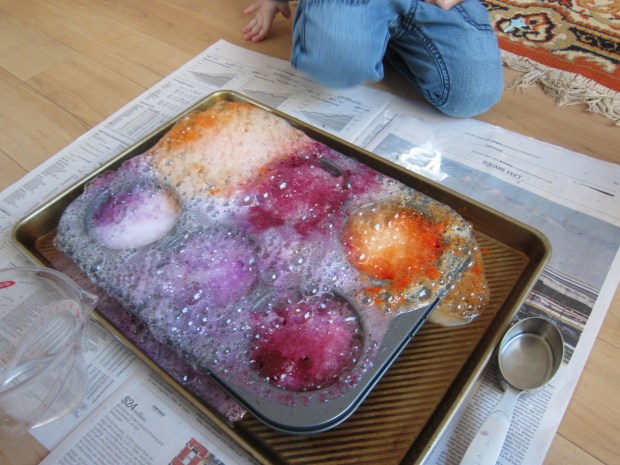
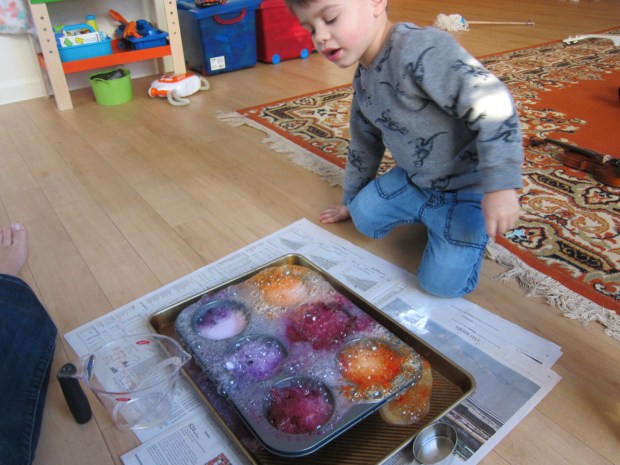
Now you’re going to quickly pour vinegar into each muffin cup, and watch the colorful explosion!
Science Meets Art (4)

Of course this is similar to many baking soda and vinegar projects we’ve done in the past, talking about how the gas created when the two substances touch makes all that foam and bubbles. But this time, we were left with a new product… paint!
Science Meets Art (5)

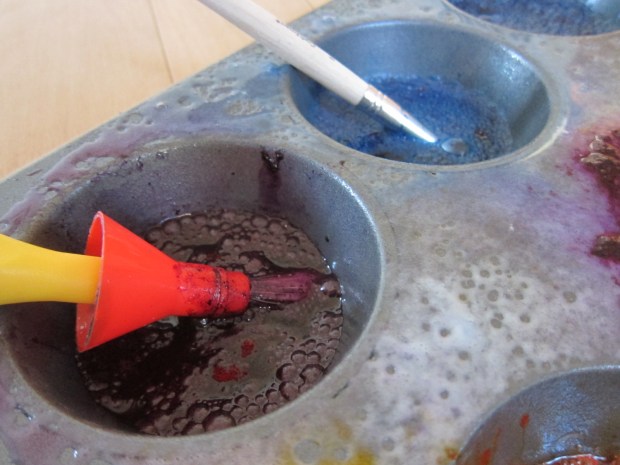
Now it was time to use the paint for the A part of STEAM. We painted white coffee filters, and Travis had a blast, mixing colors and stirring each paint very carefully – a petit artiste!

Science Meets Art (7)

Set the filters aside to dry; these are going to be your flower blossoms.

Science Meets Art (8)

As a small gripe, you’re going to have undissolved baking soda left in each paint mixture, which leaves the coffee filters a bit grainy after they dry. I found it helpful to rub off the excess baking soda over the trash can before Travis and I moved on to the final steps of the project.

Meanwhile, make the flower stems by painting jumbo craft sticks green. The only green paint we had in the house was a dot marker, but this worked in a pinch. Let dry.

Science Meets Art (9)

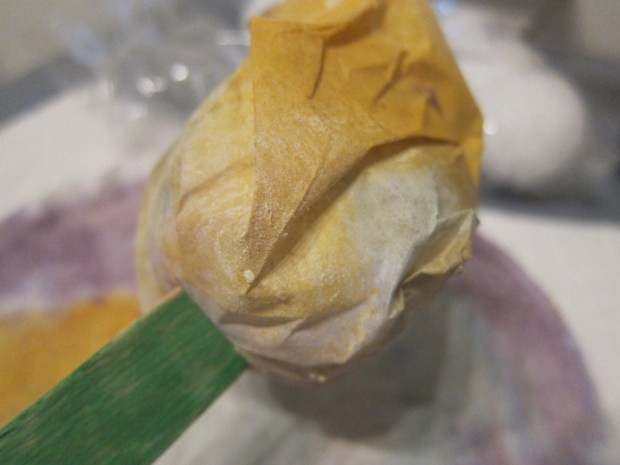
To finish the flowers, wrap each painted filter around a medium-sized Styrofoam ball. Poke one of the green “stems” up through the filter and into the Styrofoam.
Science Meets Art (12)

Glue the tips of the filter together so the ball inside is no longer visible and voila – flowers!

Science Meets Art (11)

We set them in a vase, where we got to enjoy the fruits of our labor: beautiful flowers in the middle of a snowy winter.

Science Meets Art (13)

Thanks High Five!
Science Meets Art (6)

Pinecone Snow Owl

Pinecone Owl (8).JPG

These cute owls were the perfect craft to put together on a day with two-foot-high snow drifts outside our window!
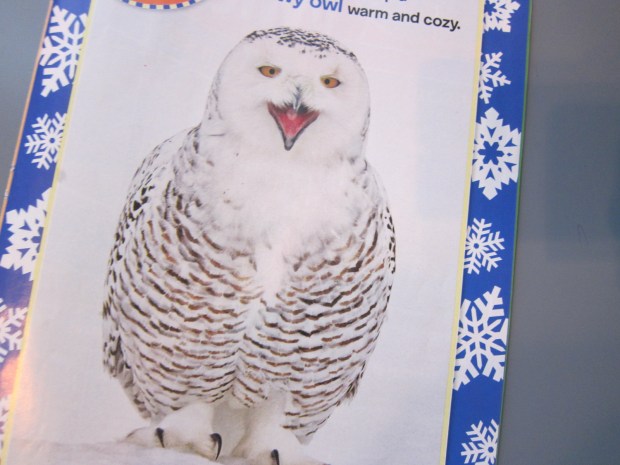
Our inspiration came from the picture of this adorable little guy.

Pinecone Owl (1)

All we needed were pinecones and cotton balls to recreate him indoors, and luckily I had both on hand.

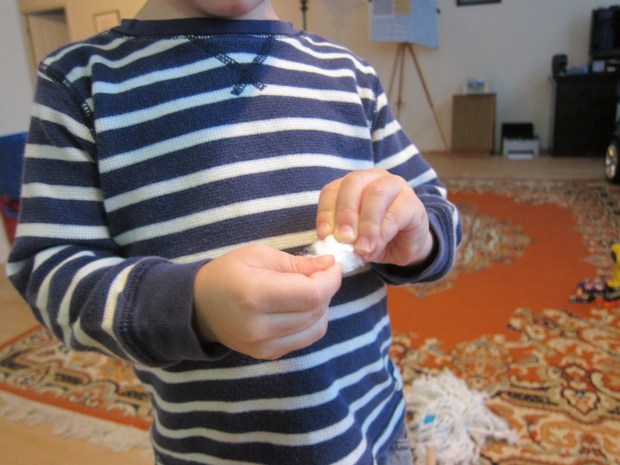
Tearing apart cotton balls always feels so fluffy and fun!

Pinecone Owl (3)

Travis helped push the cotton into the pinecone, until we had mostly filled it in with white.

Pinecone Owl (4)

As an alternative, we tried using a white feather boa for an even fluffier look, winding it in between pinecone sections.

Pinecone Owl (2)

These owls turned out so fluffy though that they looked more like snow gerbils!

Pinecone Owl (5)

To finish our owls, we added googly eyes and little beaks cut from brown felt.

Pinecone Owl (6)

They’re nice and warm inside and away from the snow!