Rainbow Hunt

Rainbow Hunt (10)

The next time you’re at a paint store, stock up on paint chip samples (free) in every color of the rainbow. Then you can turn your next walk in a garden into a magical rainbow hunt!

Rainbow Hunt (1)

If you don’t have a garden of your own, find the nearest botanical garden or arboretum and enjoy this game on a summer’s afternoon.

Most paint samples come in strips of 4 or 5, so I cut them into individual squares and then placed all our “rainbow chips” in a bucket.

Rainbow Hunt (6)

There are two ways to play and we tried both. First, Travis selected a paint chip at random and we hunted until we found just the right shade…

Rainbow Hunt (13)

Aha!

Rainbow Hunt (5)

Or, we spotted a flower that we liked and then found the paint chip that was nearest in color in our bucket.

Rainbow Hunt (9)

Travis loved crossing every color of the rainbow off the list!

Rainbow Hunt (12)

This game was a fantastic prompt for stopping to appreciate a garden on another level…

Rainbow Hunt (11)

for paying attention to flowers we otherwise might have missed….

Rainbow Hunt (7)

and for enjoying all the scents and textures around us.

Rainbow Hunt (4)

Another great hit from Barefoot Books Kids’ Garden cards.

Rainbow Hunt (3)

Flower Prints

Flower Prints (6)

As summer draws to a close, I’m working through a bucket list of warm weather projects before we move on to fall and autumnal activities! This fun idea from Barefoot Books Kids’ Garden kit lets you bring flowers indoors as a keepsake that will last all winter!

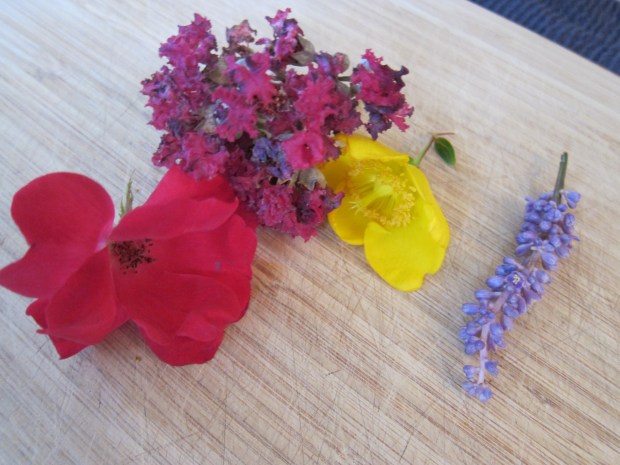
The first step of course was to gather our flowers. If you don’t have your own garden, find any pretty blossoms on a stroll through your neighborhood or a local park. Flowers that lie flat will work best, but we picked a variety just to test the results.

Flower Prints (1)

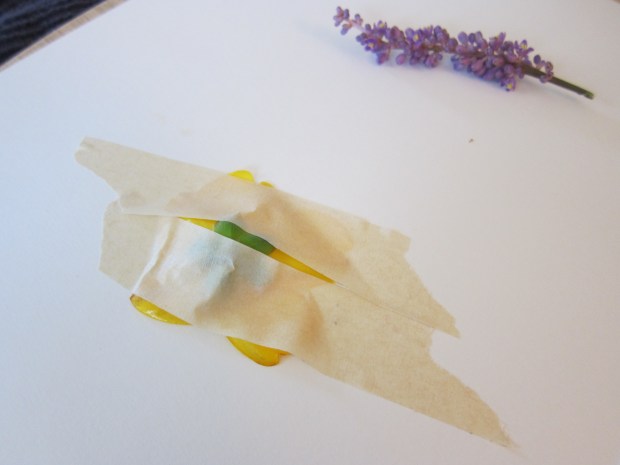
Travis was very intrigued by the set up when we returned home. On the floor, place an old dish towel for traction, followed by a cutting board and then watercolor paper.  Place your flowers, petals down, on the watercolor paper after removing as much of the stems and leaves as possible. Finally, cover your petals with painter’s tape, being sure to cover the flower completely, but trying not to let pieces of tape overlap.

Flower Prints (2)

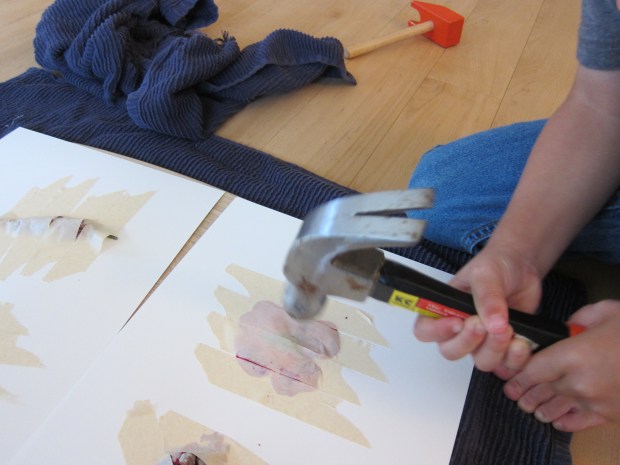
And now for the fun part! Although adults will need to do most of the hammering, Travis got to take a few swings at the flowers under careful supervision.

Flower Prints (3)

He then played along with his toy hammer while I finished the real work. You may want to peel back your painters tape a few times to make sure the color of the flower has transferred over to the paper, before removing the tape completely.

Flower Prints (5)

Peeling off the tape was great fun, too, of course.

Flower Prints (4)

Once the hammering was complete, Travis lost interest fairly quickly, but I loved the old-fashioned Victorian feel to the result. In a whimsical nod to the method by which we had obtained our prints, I “framed” them in additional painter’s tape in Travis’s room – a beautiful reminder of the fleeting beauty of summer’s blooms!

Flower Prints (7)

Color Mixing

Color Mixing (5)

I’ve recently discovered the all-natural, all vegetable-based food coloring from Watkins, which I am loving for their consistency and ease of use (no mixing required, as is the case with many natural pigments).

To have fun with the colors, we pulled out this simple game – it’s also a great way to discuss primary (yellow, red, blue) versus secondary (green, purple, orange) colors.

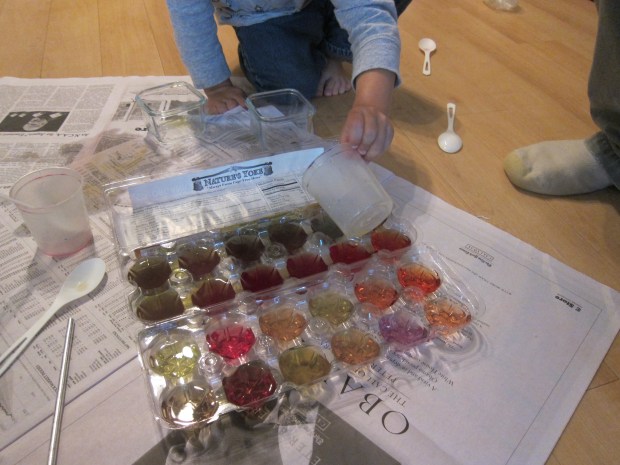
First we mixed our colors in 4 clear cups, one each of red, yellow, green, and blue. Add a pipette or spoon to each. Either one is good fine-motor skills practice.

Color Mixing (1)

We used an upcycled egg carton for the color mixing, giving ample opportunity to make new colors in the multiple compartments of this one container. Place a little clear water in each compartment, then begin adding your colors and see what happens.

Color Mixing (2)

I thought Travis might consider the game a little old-hat (we did something similar back in the spring) but he was so into his creations.

Color Mixing (7)

Watching purple and orange form were big hits.

Color Mixing (6)

He also was very interested in how he could make brown (which he says is his favorite color!), and intrigued when I said he could create it just by mixing all the colors together.

Color Mixing (4)

An easy and fun diversion for a rainy afternoon.

Mud Pies

Mud Pies (7).JPG

Kids usually don’t need any excuse to play with dirt, but at least with this project you get a lovely result! This game was yet another beautiful suggestion from our Barefoot Books Kids’ Garden kit.

To start, fill a pie plate or paper plate with soil using a hand trowel, leaving room on top. We’re new to having a backyard of our own, so Travis is loving all the play with shovels and dirt lately!

Mud Pies (1)

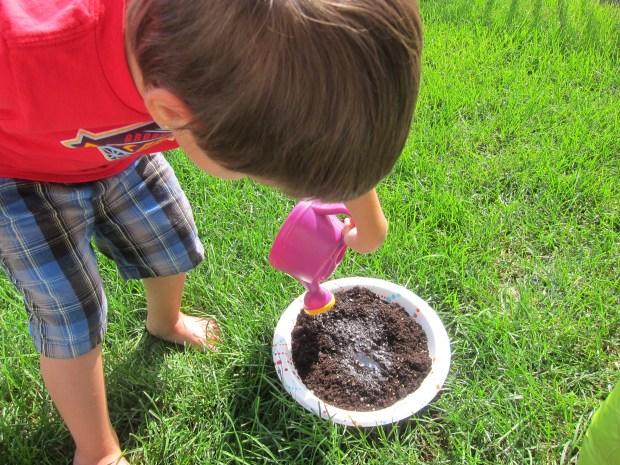
Slowly add water to the soil, stirring until you have a wonderful goopy mud. Travis loved this step of course.

Mud Pies (2)

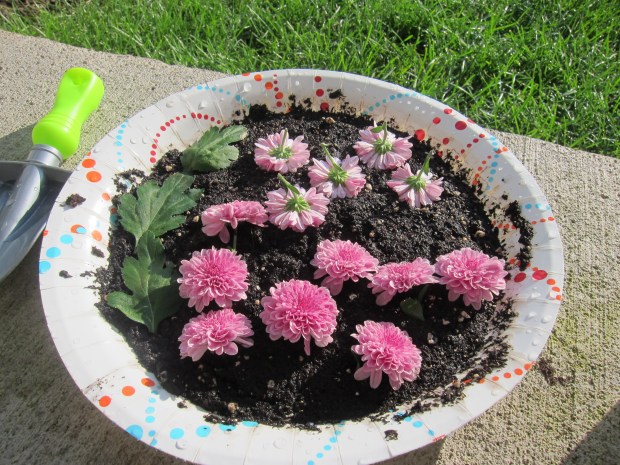
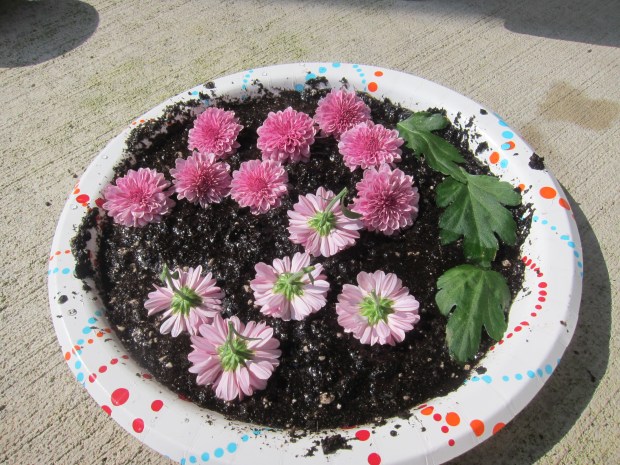
Now we needed to decorate our “pies.” Add any pretty flower clippings, leaves, or petals, and let your “baker” decorate to his or her heart’s content. I placed a few flowers facing up, but Travis preferred his facing down – a whimsical little element.

Mud Pies (4)

Leave your mud pie to bake in a sunny spot. We checked it again after 4 hours, but since the day had clouded over, it was mostly set, but still a bit mushy.

Mud Pies (6)

Continue checking on your mud pie for about a week to observe any changes. It might turn to mud again if you get a rainy day!

Mud Pies alt

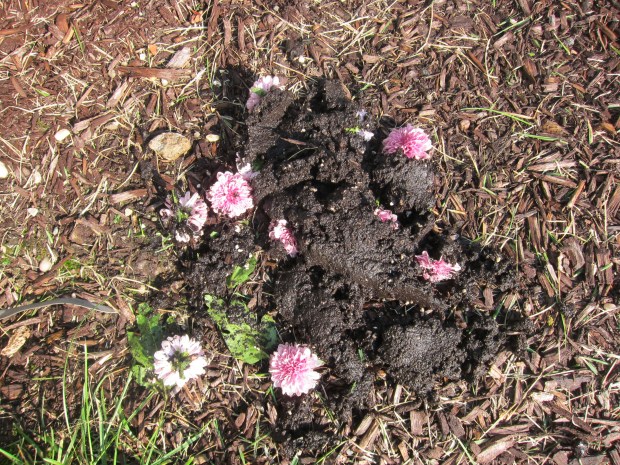
At the end of the week, simply tip it into your garden as compost. How’s that for easy clean up?

Mud Pies (9).JPG


Rainbow Kebabs

Rainbow Kebabs (3)

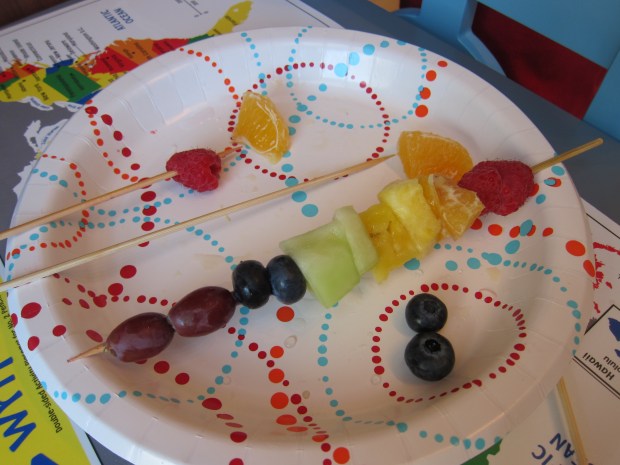
As fun as it is to draw the rainbow or craft with the rainbow, it’s even more fun to eat it! Make these simple kebabs for a healthy and educational snack.

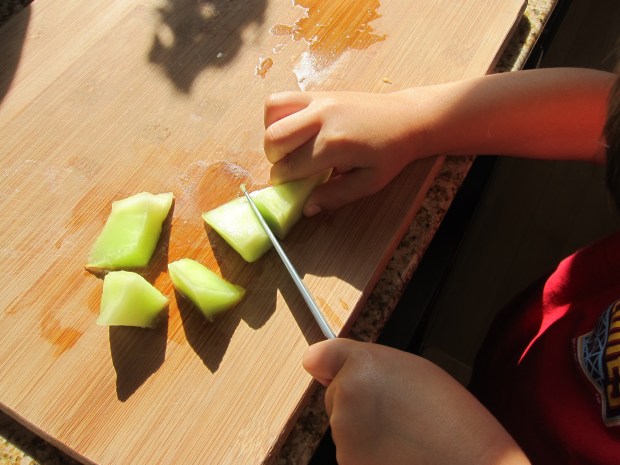
Start off with some fine-motor skills practice by letting your child use a kid-friendly knife on some of the larger fruit pieces, like pineapple and melon. Smaller items (blueberries, grapes), don’t need to be cut.

Rainbow Kebabs (1)

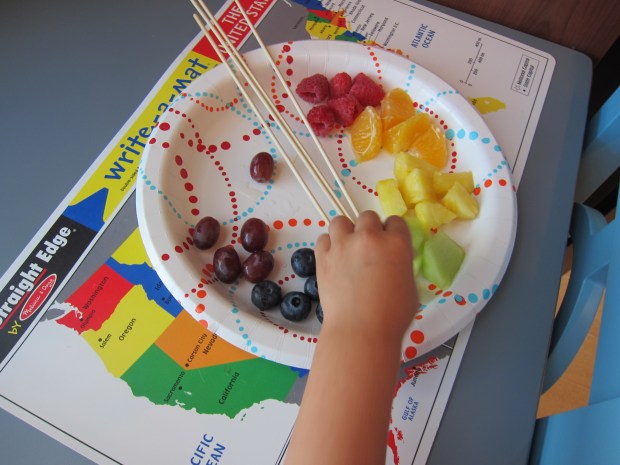
Now assemble all of your fruits on a plate, making sure you have something in every color of the rainbow. Suggestions are as follows:

Red: strawberries, raspberries

Orange: oranges

Yellow: pineapple

Green: kiwi, honeydew

Blue: blueberries

Purple: grapes

Encourage your child to thread the fruits onto their skewer in rainbow order. Travis was so busy stealing nibbles of fruit that he let me assemble most of them, though! He was most excited by the pineapple, which I don’t buy very often: “I want a yellow one!”

Rainbow Kebabs (2)

If you want to add whimsy to your skewers, consider a marshmallow “cloud” or two!

Overall, this snack ranks high for being both healthy and fun.

Rainbow Kebabs (4)


Plantable Paper

Plantable Paper (9).JPG

There’s a little bit of magic to this craft, the idea that flowers can sprout from paper. It’s a multi-day project, but you only need a little time each day to make the magic bloom.

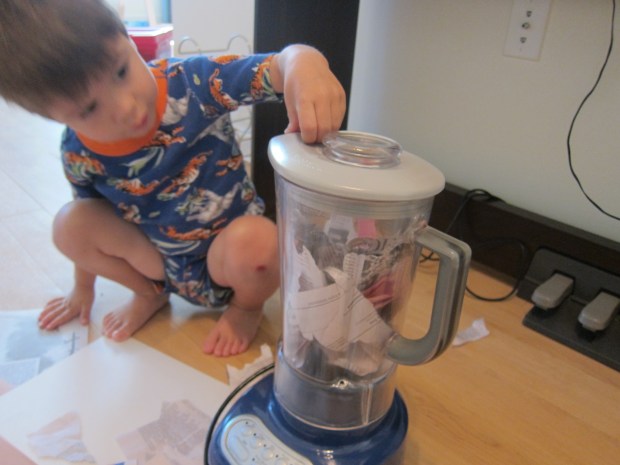
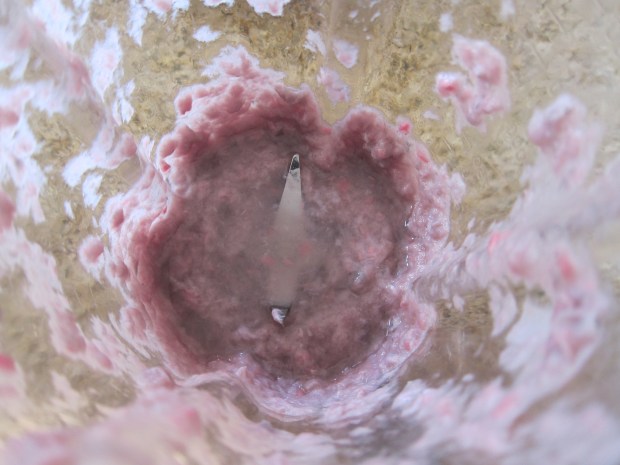
The instructions I had found online for making the paper mush were a bit vague, but worked just fine, so here’s all you do: Fill a blender about halfway with torn newspaper and scrap paper (we used pink construction paper scraps, which gave our final product a nice pink hue). Cover the paper mixture with hot water, then process until you have a mush. Travis loved the novelty of paper in a blender instead of food!

Plantable Paper (1)

Caution: Make sure to remove the center piece of your blender’s lid and cover with a paper towel while blending so steam can escape, otherwise you’ll end up with hot water splatters. Let the mixture stand for about 15 minutes.

Plantable Paper (2)

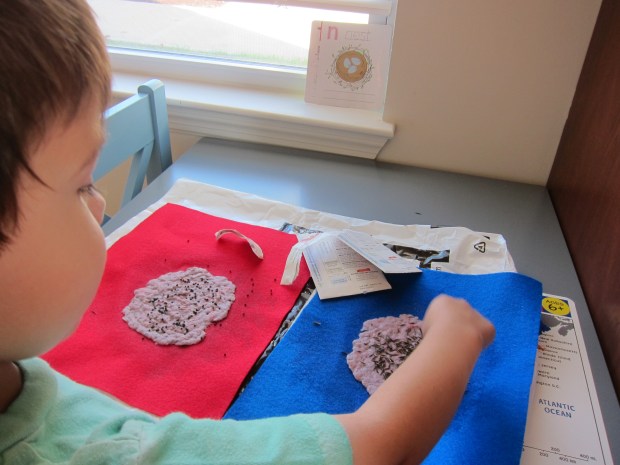
The next step is messy, so cover your work surface (I used a large shopping bag). Place two pieces of felt on top of the bag. Scoop the mush onto the felt, and have your child help you smoosh it into a very thin layer.

Plantable Paper (3)

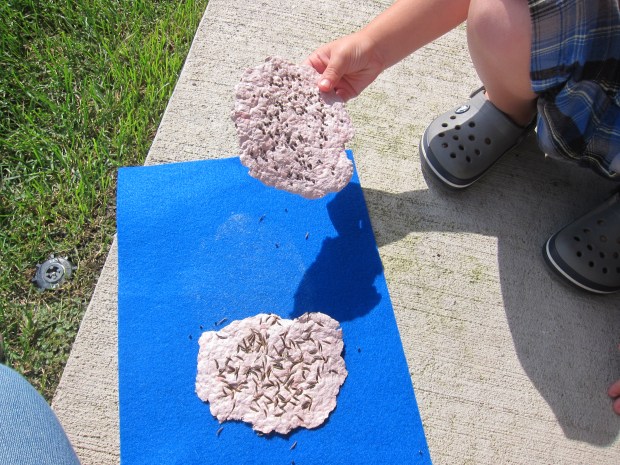
Then it was time to sprinkle on our flower seeds! We had two very different kinds – cosmos which looked almost like large cumin seeds, and larkspur, which looked more like hard black poppy seeds. I don’t do much gardening, so examining the seeds was fun for Travis and me both!

Plantable Paper (4)

Leave the mixture to dry on the felt. After the first day, I carefully flipped each piece over, then left them to dry some more. By now I could consolidate onto one piece of felt.

After two days, the mushy paper will be completely dry. Remove it from the felt and cut into shapes if desired – hearts felt just right!

Plantable Paper (8)

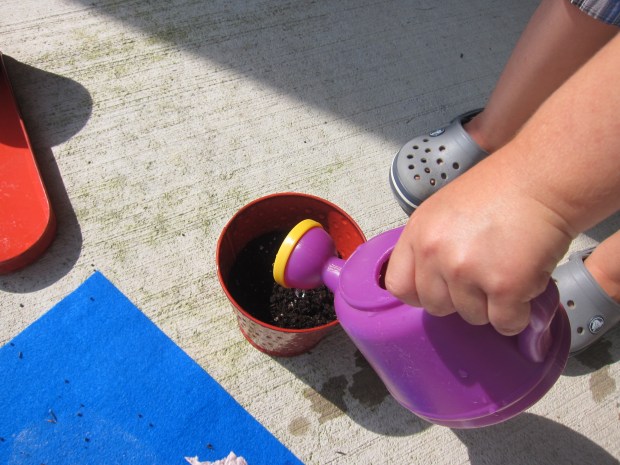
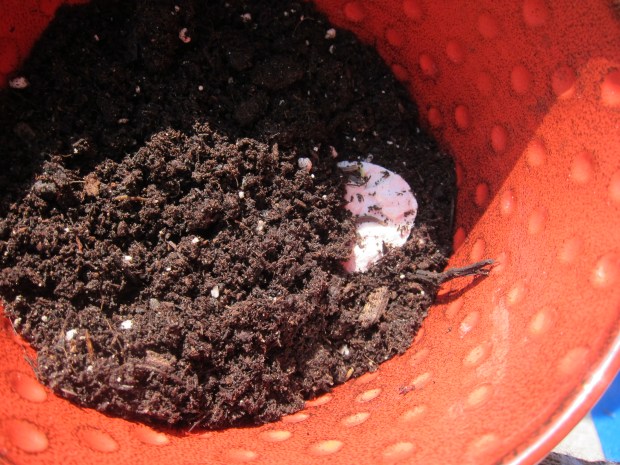
We headed outside with pots and soil, and planted our paper. Travis loved watering them!

Plantable Paper (12)

Now we just need to sit back and wait for the flowers to grow.

Plantable Paper (11)

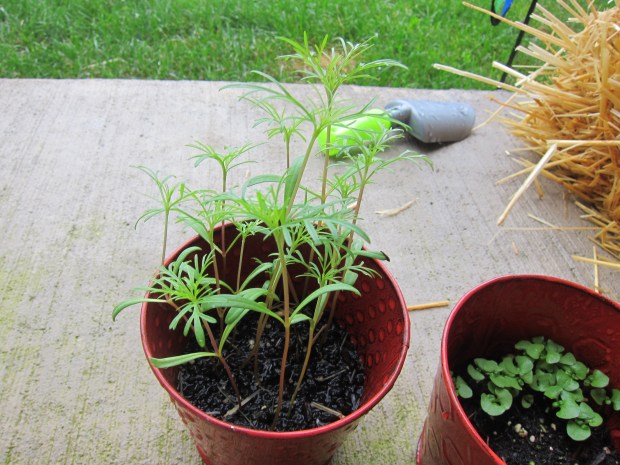
Update: It worked! Here are some beautiful shoots at day 5.

Plantable Paper (12)

Here is the growth after a couple of weeks:

Plantable Paper alt.JPG


Music Crate

koala music (15).JPG

I was thrilled when I spotted our latest Koala Crate – a music-themed kit awaited us! Music is Travis’s favorite thing in the world, so I knew this one was sure to be a hit.

As always with Koala Crate, you can recreate most of the crafts below after a trip to your local craft store.

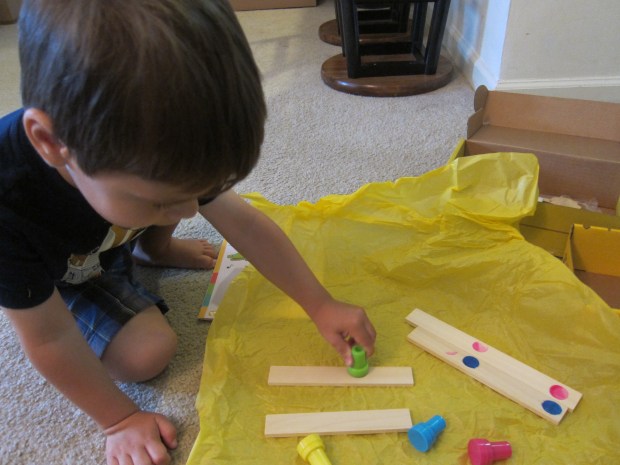
The first project was a make-it-yourself xylophone, made from a cardboard box, elastics, and wooden slats. There were some interesting learning components to explore as we put together the xylophone; for example, first he had to arrange the wooden pieces from longest to shortest.

koala music (1)

Each wooden slat then needed to receive a color-coded dot from the provided dot stamps, which would become its “note.” This was a bit of a hard concept for a three-year-old, who simply wanted to dot his stamps all over the wooden pieces any which way. So it became a good lesson in restraint!
koala music (2)

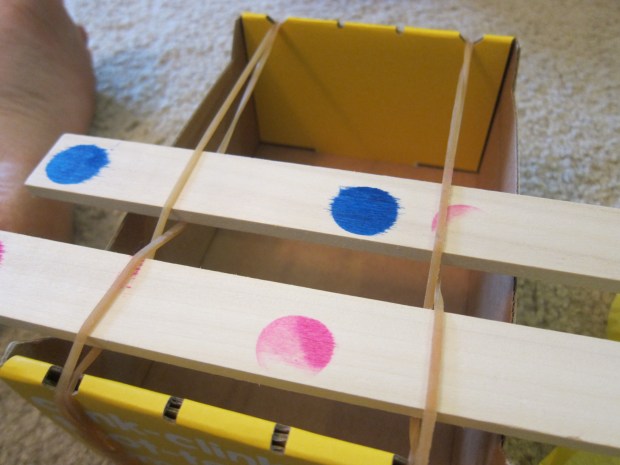
Threading the four xylophone pieces through the rubber bands required grown up hands, but Travis loved the end result.
koala music (3)

“You sing and I play!” he instructed me, and was off and running with games pretending to be a music teacher. I was pleased with the sound, very similar to a marimba or other African wooden xylophone.

koala music (4)

Now it was time to compose our own song with the provided “musical composition” sheets. By filling in each circle on the sheet with a dot stamp, kids can play a tune in order on their xylophone. All this was a bit beyond Travis’s interest – he simply had fun composing a “song” that was nearly all blue…

koala music (7)

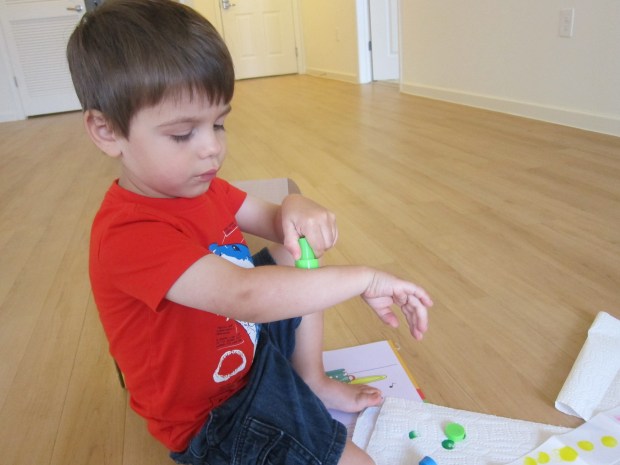
And testing out how the stamps looked on his arm…
koala music (6)

Luckily the kit came with two blank sheets, so I made one with a pattern Travis would later be able to play.

koala music (8)

In a neat twist, you can also remove the four wooden slats any time, reposition the elastics, and turn this toy into a “guitar.”

koala music (26)

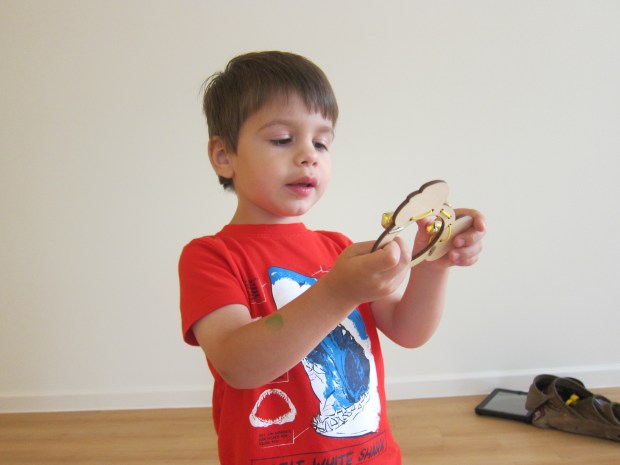
Next up was a homemade tambourine. The kit came with a cardboard (koala-shaped, very cute) tambourine base, bells, and elastic thread. Travis easily did his best threading yet as we pulled the elastic through a hole, added a bell, then looped back down again.

koala music (10)

This one was quick and easy, and enjoyable to shake along to a beat.
koala music (11)

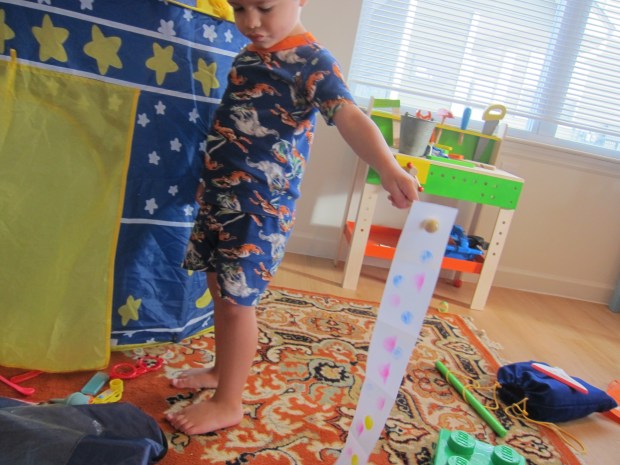
The final project gave Travis a chance to go wild with the dot stamps as he’d hoped to do on the wooden xylophone pieces. Simply dot all over the provided ribbon fabric, then let dry.

koala music (5)

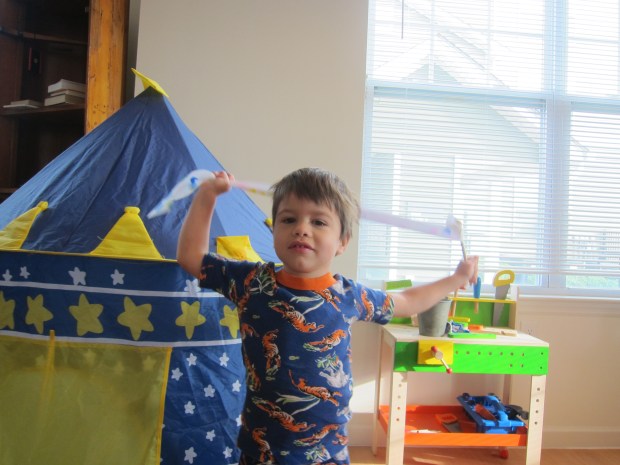
Once the stamps were dry, I looped the ribbon onto a wooden mallet and it was now a musical prop to wave around.
koala music (12)

We had fun exploring tempo (fast and slow), wiggling the ribbon like a snake, holding it overhead like a rainbow, and more.
koala music (13)

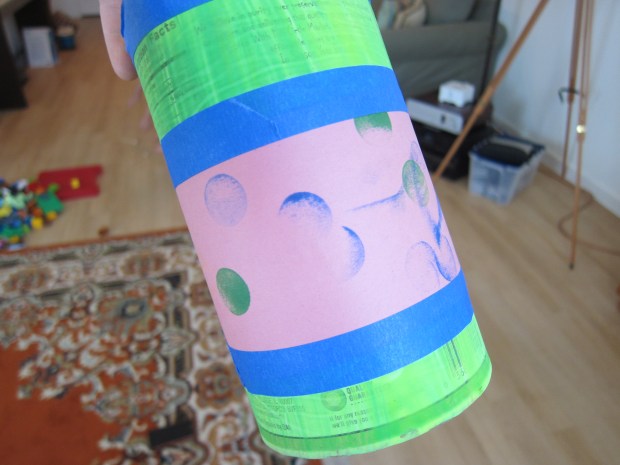
We couldn’t stop there, of course. The kit came with a suggestion for one final DIY instrument – a drum upcycled from a soup can! We decided to make two sizes of drums, so painted both the soup can and an empty oatmeal container.

koala music (19)

Once the paint dries, snip the narrow necks from balloons, and stretch the wide part of a balloon over each container as the drum skin. Secure the balloon with masking tape. We covered a piece of construction paper with the dot stamps and added that to the middle of our drums as decoration.
koala music (24)

Now it was time for a drum circle!

koala music (22)

Or a drum stack?

koala music (25)

Needless to say, a huge hit – pun intended!

koala music (21)

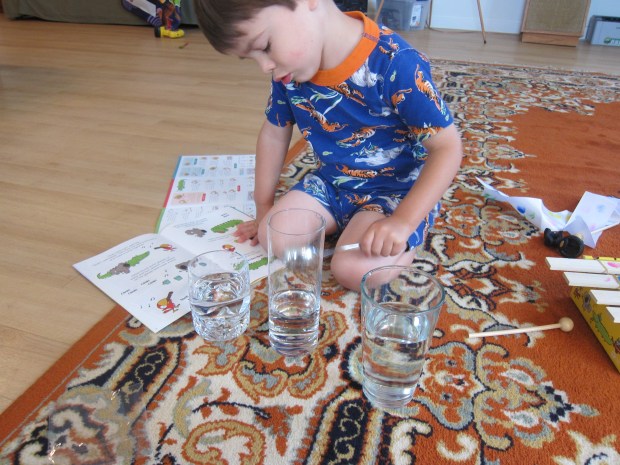
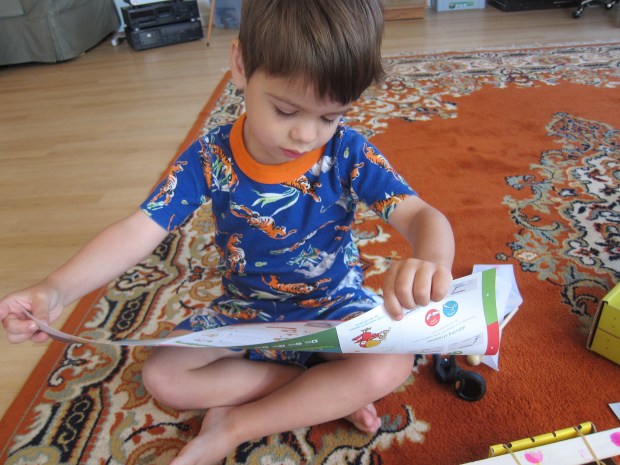
As a final note, it’s fun to watch Travis’s brain grow with this subscription. This was the first month in which he was interested in the games in our Imagine magazine, following along maze trails with his finger and more. One storyline in the magazine even prompted us to test a water glass xylophone!
koala music (16)

I love watching this boy grow, and love the ways in which Koala helps us do it!
Koala music (14)


Help the Helpers

fireman brownie (8)

Kids love the iconic figures who can be found around every town – policemen, fire fighters, mailmen – even librarians! But how often do we think to give back to these community helpers? Instead of just watching their neat vehicles go by or talking about what they do, here’s a simple idea for giving back to your community.

Now felt like the perfect time for us to do this activity, since we’re in a new town and could introduce ourselves. But whether you’ve lived in your town for ten days or ten years, there’s never a bad time to get to know local police and other helpers.

So to start, bake a batch of brownies (full disclosure: we simply used a packaged mix!) then stop by your nearest fire station, police station, post office, or library – whichever one your child likes best.

fireman brownie (1)

Making the brownies in the morning got the fun started. Whether you’re using a mix or brownies from scratch, invite the kids to pour and stir!

fireman brownie (2)

We wrapped the brownies in foil and added a card that Travis had decorated with crayon before heading off to the station!

fireman brownie (3)

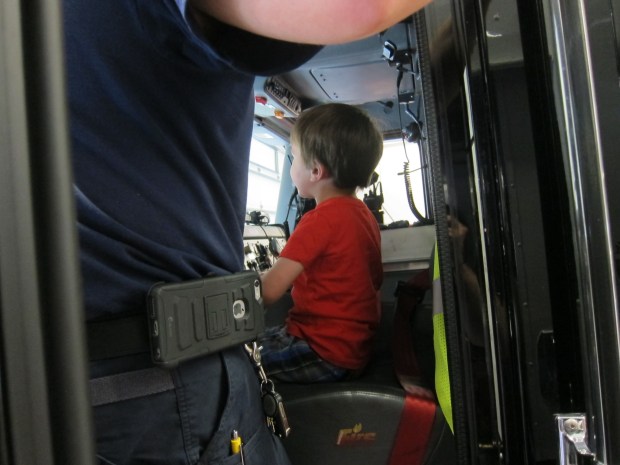
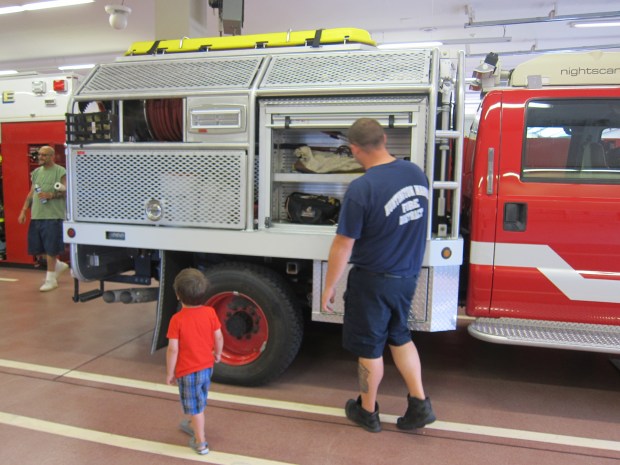
The fireman who let us in looked pleasantly bemused that we showed up bearing brownies, but happily accepted them into the kitchen. I thought perhaps we’d get a glimpse at the trucks on the way out, but Travis didn’t waste any time asking if he could sit inside them – and he was not disappointed!

fireman brownie (5)

Firefighter Luke took him into every vehicle in the station before our time there ended, and let Travis look at equipment I never even knew existed.

fireman brownie (7)

It was a beautiful and private behind-the-scenes peek, all for giving back a little.

fireman brownie (9)

What community helpers would your child enjoying visiting the most? Please share in the comments!

fireman brownie (4)


Rainbow Shape Mobile

Rainbow Mobile (9)

Travis has been a big helper decorating our new home, and this project was a fantastic way to continue recent projects where we talked about exact rainbow order. It’s also a great review of shapes before he steps into pre-k in a few weeks!

Sorry grown-ups, but this one’s a little labor-intensive on your part at the front end. Using construction paper in all the colors of the rainbow, I cut out a square, rectangle, triangle, and circle from each.

Rainbow Mobile (1)

While I was busy cutting, Travis got in some practice with safety scissors:

Rainbow Mobile (2)

Your child might also like to try tracing or drawing shapes of his or her own as you work.

Once the shapes were ready, we needed to sort! Travis has been very into sorting lately, so loved helping separate the pieces into four piles by shape.
Rainbow Mobile (3)

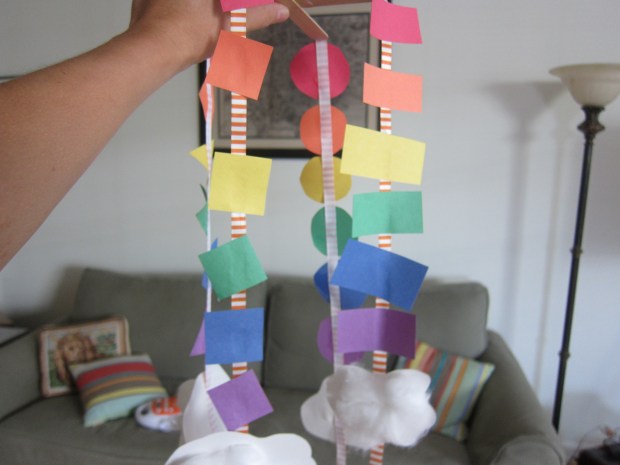
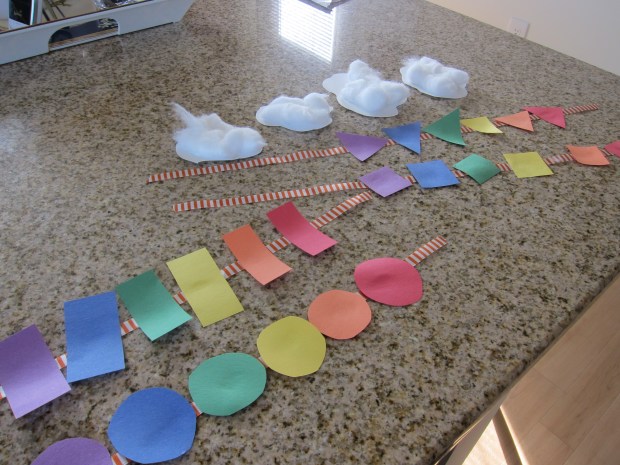
For each group, we snipped a long ribbon and then glued the pieces on in rainbow order, singing the order of the colors as we went: “Red, Orange, Yellow, Green, Blue, Purple, Makes a Rainbow.” (My apologies to indigo and violet).

Rainbow Mobile (4)

When we had finished with the rectangles, Travis excitedly asked, “Are we going to do another one??” He chose triangles next, and so on until all our shapes were glued.

Rainbow Mobile (5)

This project was gorgeous even while drying on the counter!
Rainbow Mobile (8)

While the shapes dried, we made the finishing touch – white cloud shapes with puffy cotton balls glued on. We added these below the purple shapes on our ribbons.

Rainbow Mobile (6)

To assemble your mobile, glue two jumbo craft sticks together at the middle. Note: You can have your child color on the craft sticks with marker if they’d like to, but since this part of the mobile will hang up on the ceiling, it’s not necessary.

Rainbow Mobile (7)

Glue one strand of shapes onto each of the four craft stick ends, then use a length of yarn or ribbon to suspend your mobile.

Rainbow Mobile (10)

You’ll have a rainbow to cheer you every day in your home, whether you’ve just moved in or have been there for years!

Rainbow Mobile (11)


Salt Painting with Liquid Watercolor

Salt Painting (7)

My impish three-year-old doesn’t need an excuse to pour a huge pile of salt out of the container – but this project turned the result into beautiful art! If you don’t have liquid watercolors, mix watercolor from a tube with a little water in a bowl before your child starts to paint.

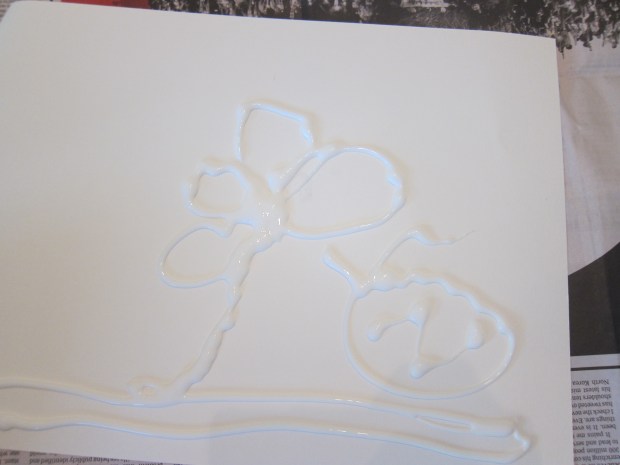
Make sure you cover your work space well for this craft; it’s a messy one! To start, we squeezed a bottle of glue onto watercolor paper to make designs.

Salt Painting (1)

Although Travis normally loves squeezing out glue (which is also excellent fine-motor skill practice), this time he preferred to watch me make designs of actual things. We ended up with a flower and an ant, alongside a few more abstract designs.

Salt Painting (3)

Now for the best part: Place your paper in a tray, and cover the glue with salt; shake any excess salt off into the tray or bin. Repeat with the remaining pictures and let dry for at least 20 minutes.

Salt Painting (2)

I set up several bowls of watercolor for Travis after the glue was dry enough, and he quickly got to work. Encourage your child to dab the color on with a paint brush (a pipette would also work very well), and to watch the color spread along the salt crystals in the most beautiful way.

Salt Painting (4)

At first Travis was making strokes with his brush, but once he got the hang of it, he began dabbing more carefully.

Salt Painting (5)

Here was our abstract take on the solar eclipse!

Salt Painting (6)

Note: This project won’t be a great candidate for hanging on walls or fridges when finished; there is too much potential for extra salt to flake off.