Our 100’s Jars Collection

100s Jar (7)

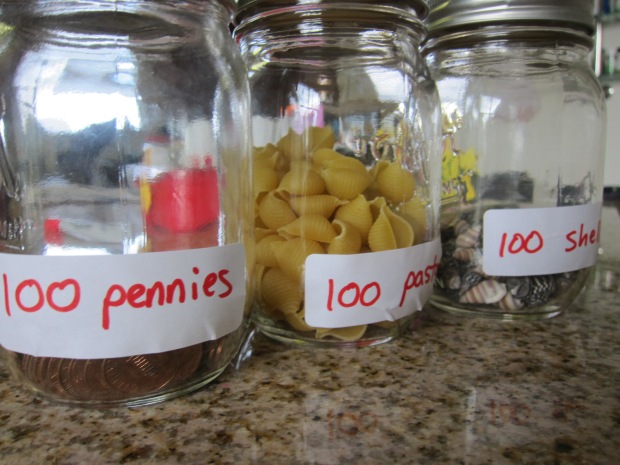
Back-to-school is just around the corner, and this activity is a fantastic way to get preschoolers and kindergartners thinking about numbers up to 100, as well as concepts like counting by 5’s and 10’s. All you need are a few empty glass jars and objects you already have around the house!

First I asked Travis if he could think of anything we had in the house that would number up to 100. He guessed toy cars (which might be true!) but I knew 100 cars wouldn’t fit in a jar.

I suggested we try coins, and soon we were emptying out his piggy bank.

100s Jar (1)

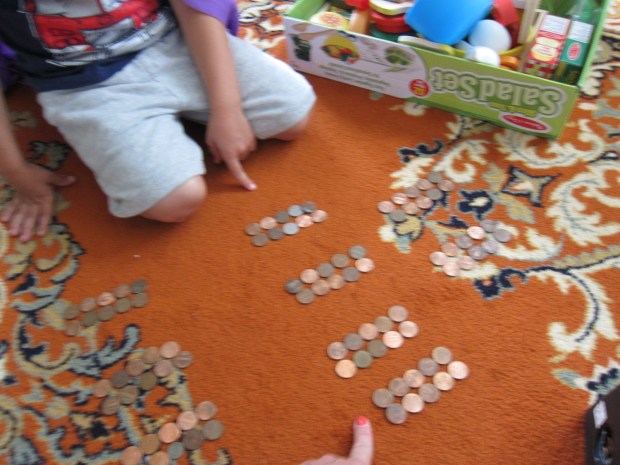
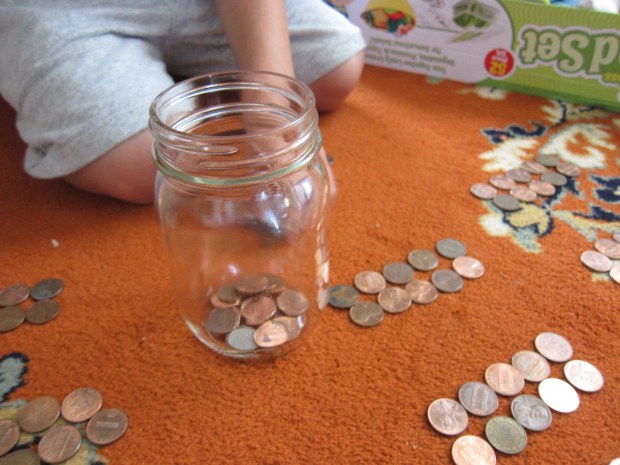
He quickly latched on to the idea that 10 groups of 10 would give us 100. I helped him count out 10 coins into each group, and then we counted the groups up: ten, twenty, thirty, and so on. Filling the jar was super exciting.

100s Jar (2)

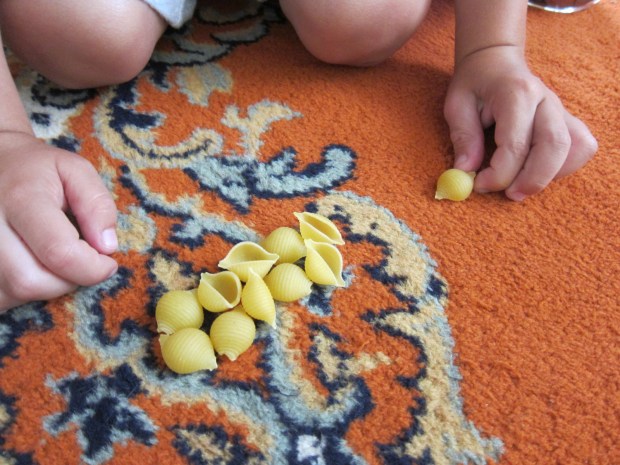
Dried pasta was a bit hit to count for the next jar!

100s Jar (3)

This also showed him that 100 pasta shells took up more space than 100 coins.

100s Jar (4)

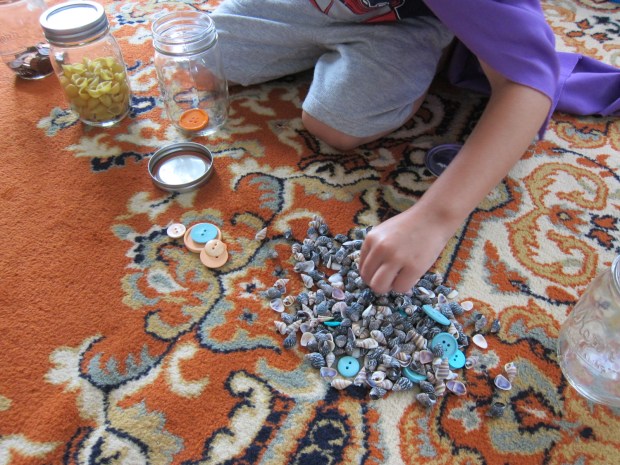
For our final jar, Travis chose shells.

100s Jar (5)

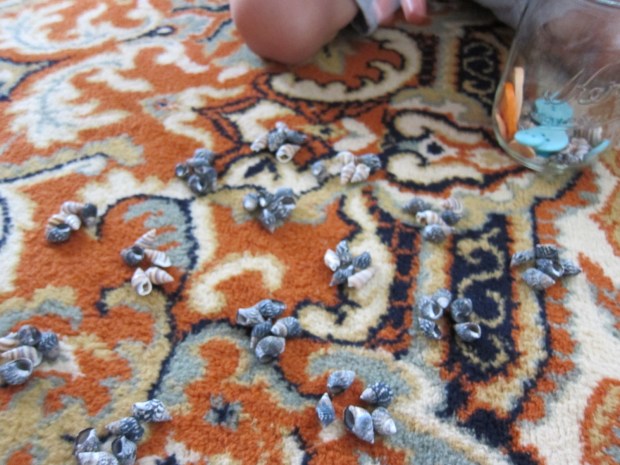
This time we grouped them into 20 groups of 5. He had a hard time following as I counted up by 5’s, but it was a good foundation to lay.

100s Jar (6)

In sum, this is a cute way to get your little one thinking about math, and so easy you can sneak it in between dinner and bath time! What do you have 100 of in your home? Please share in the comments!

Make Your Own Raisins

Grapes to Raisins (5).JPG

Ok, you’re melting in a heat wave and hot sunshine… But that will be cause to rejoice if you harness the power of that sun and show your kids how you can turn grapes into raisins.

Two years ago, we actually tried a similar trick using an oven, and I’d been waiting for the chance to make a sun-dried version. Boil a bunch of whole green grapes for 30 seconds, then immediately transfer to a bowl of ice water. Travis loved helping me make the ice water bowl!

Grapes to Raisins (2)

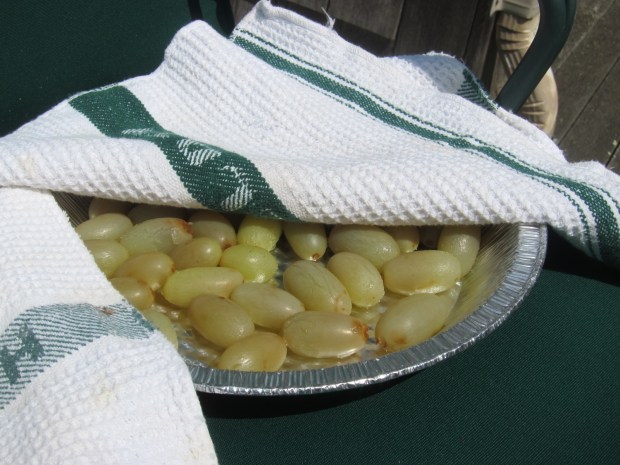
Place the grapes on foil pans, then cover with a breathable cloth and place somewhere outside that gets direct sunlight. Bonus points for weather that’s 85 degrees or above. Let the grapes stand for 3 to 5 days, then see how you’ve shriveled them into raisins.

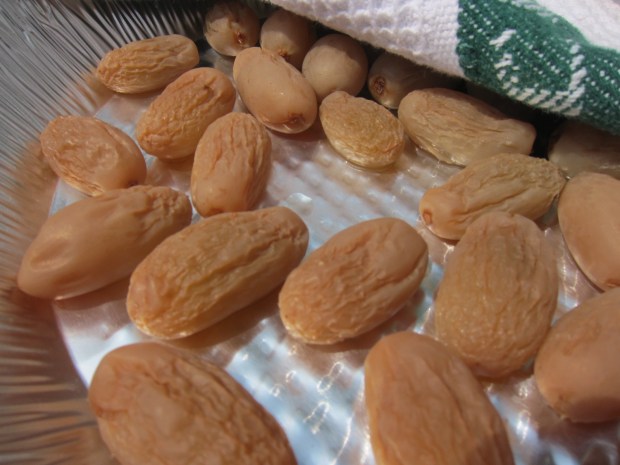
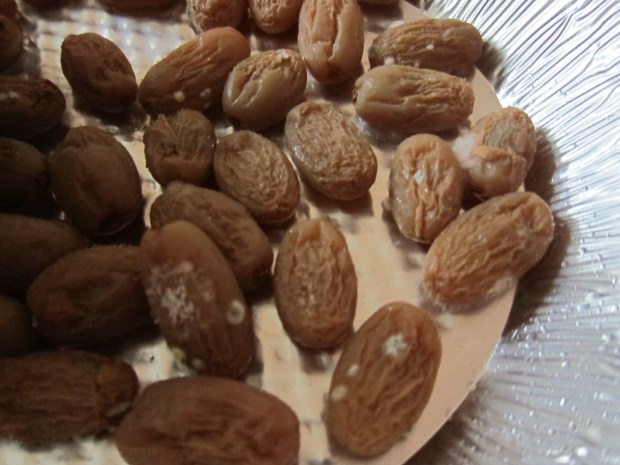
By day 1, the grapes were definitely shriveled and wrinkly on the outside, although still the same size as regular grapes.

Grapes to Raisins (3)

As the days went on, they got smaller and wrinklier but – oh no! A bout of rain caught us by surprise, and our raisins turned moldy before we had a chance to try them.

Grapes to Raisins (6)

So even though we weren’t entirely successful, I can’t wait to hear your stories about sun-dried goodies in the comments.

Exploding Sodas

Exploding Soda (4)

We’re late the to the game on this one, but better late than never! Apparently big kids and science teachers have been exploding diet soda with Mentos for years now, but this activity was definitely new to my 4-year-old, and the perfect summer science experiment. Get outside – some place with lots of room – and then watch the geysers explode!

For the most fun, purchase several large bottles of diet soda in different varieties, so you can compare the height of the geysers (big kids may want to be more scientific about this, measuring off the heights, but we simply had fun).

Exploding Soda (1)

Line up the bottles, and drop five Mentos (very quickly!) into them one at a time. Note: You can drop in as many as seven Mentos, but by five, I had to run in the other direction.


Now here’s the important step – move back! The geyser is going to happen fast, and high.

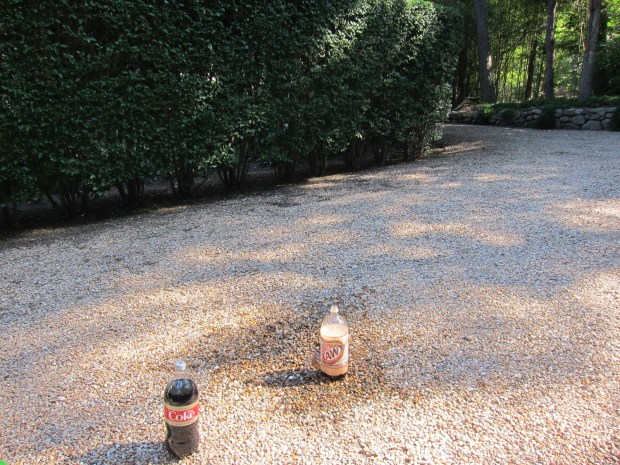
The diet root beer took me so completely by surprise that I only had time for a picture of the aftermath.

Exploding Soda (2)

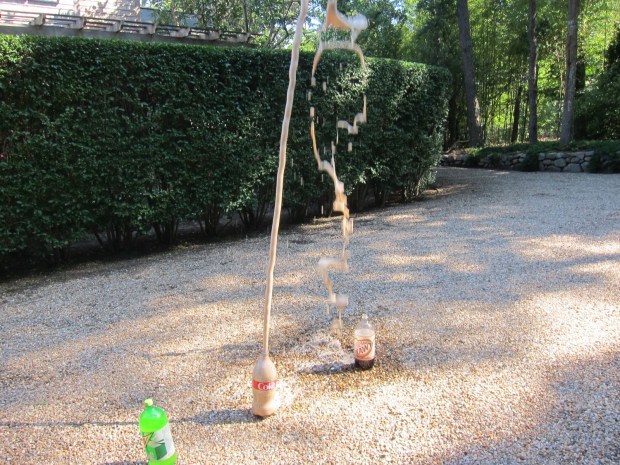
By the diet Coke, I was ready with my camera.

Exploding Soda (3)

Interestingly, diet Mountain Dew only gave us a small fizz.

Exploding Soda (6)

Travis loved hosing off the driveway in the aftermath!

Exploding Soda (5)

Which sodas did you try? Please share in the comments!

Stamped Garden Gloves

Stamped Gloves (6)

As camp season comes to a close, we’re thinking about gifts to thank Travis’s counselors for a wonderful few weeks in the sun. In keeping with all that outdoor time they’ve spent with your children for the summer, consider these kid-painted garden gloves as a parting gift!

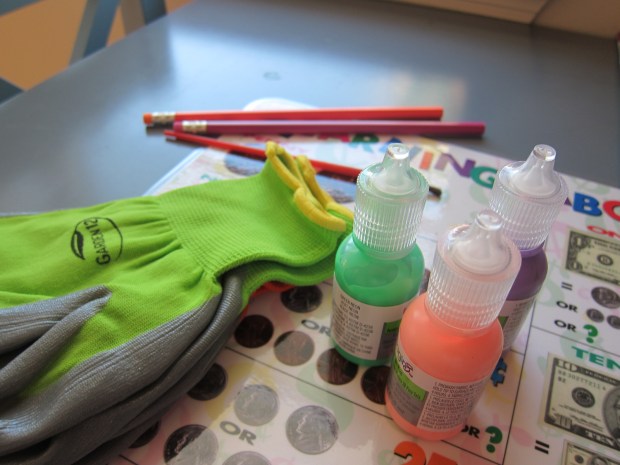
To make the project extra fun, we bought puffy fabric paints in pretty pastels, and instead of using paintbrushes, we turned pencil erasers into our tool of choice.

Stamped Gloves (1)

Squeeze out the paints onto a paper plate.

Stamped Gloves (2)

Dip a pencil eraser in a color, and stamp onto the gloves.

Stamped Gloves (3)

Travis made a set decorated with multi-colored dots.

Stamped Gloves (5)

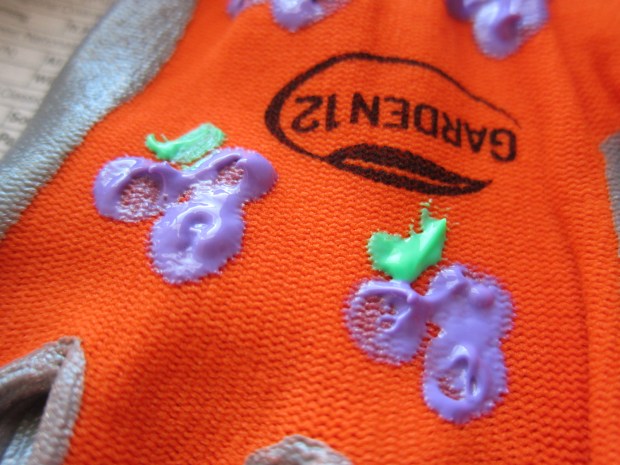
Meanwhile I showed him a slightly more deliberate method of painting: purple dots in bunches of three to be purple grapes. A little brush of green paint for the leaves completes the look. Older kids will love making this version.

Stamped Gloves (4)

To present as a gift, simply wrap up the gloves with a seed packet of herbs and some twine. They would make a wonderful hostess gift for any summer friends you visit, as well.

Stamped Gloves (8)

Game of Stones

TIc Tac Rocks (5)

This is the most beautiful game to take to the beach or poolside this summer! It’s easily portable, fun for all generations, and also a cinch to put together.

It all starts with a trip to a park or the beach to collect stones. Travis was convinced some of the rocks we found were shark’s teeth, which made the collecting that much more fun!

Tic Tac Toe (1)

Use a paint pen or acrylic paints and a small paint brush to mark half of your stones with x’s and half with o’s – you’ll need 5 of each.

Tic Tac Rocks (2)

I had two old muslin bags around the house, one small and one large, so we made two copies of the game, one for our smaller rocks, and one for the larger.

TIc Tac Rocks (3)

Paint the bag with a tic tac toe cross-hatched board. Let dry.

Travis thought our new poolside game was a delight!

TIc Tac Rocks (7)

The bag now serves not only as your board, but also as the means to clean up the stones when you’re done playing!

Tic Tac Rocks (8)

Nature’s Palette

Natures Palette (9)

This beautiful activity from High Five magazine combines a craft and a way to get outdoors. It’s quite similar to a rainbow hunt we did late last summer, but sometimes it’s fun to repeat an activity as your children age; they’ll reap different rewards from it each time!

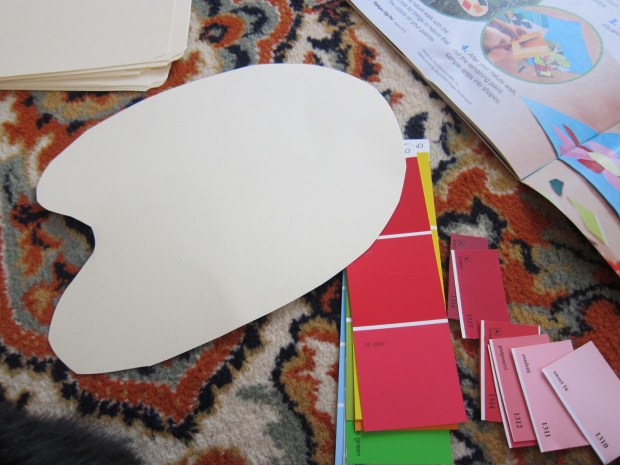
This time we started by making a proper artist’s “palette,” which immediately had Travis excited. Cut a palette shape from a file folder (I did this step for Travis, since he wasn’t sure of the shape).

Nature Palette (1)

Next, cut paint chip samples (available for free at paint stores or home good stores) into pieces, and arrange on your palette. Travis was thrilled to use grown-up scissors, with a guiding hand.

Nature Palette (2)

Little drops of color!

Nature Palette (7)

Travis immediately seized upon the fun to be had with the remaining paint chips and extra file folders, and was soon making collages and creations.

Nature Palette (8)

He mostly cut squares and rectangles, but I helped him cut a few nature shapes like leaves and flowers, and we arranged them in pretty nature pictures.

Nature Palette (6)

Then came the real nature walk! Instead of going into the forest, I detoured us to a local botanical garden, knowing we’d find the full rainbow of colors there. Travis loved seeking out different shades on his palette.

Natures Palette (10)

We thought we might have to use the sky as our blue, until stumbling upon the perfect hydrangea!

Natures Palette (12)

In sum, this activity served as the prompt for a perfect mother-son summer afternoon.

Natures Palette (11)


Rainbow Density Cylinder

Rainbow Density (7)

Here’s a neat visual way for even young kids to grasp the concept of density. You’ll get messy in the kitchen, mix up some colors, and sneak in some science to boot!

Rainbow Density (1)

While Travis was napping, I set up paper cups and all of the liquids we’d be using for the project, in this order of density:

Corn syrup (or carob syrup)

Maple syrup

Water

Almond milk

Vegetable oil

Dish Soap

Rubbing alcohol

Note: Feel free to adapt this list, depending what you have at home, including agave nectar or honey for non-vegan families.

Travis was so intrigued at the set-up, and we talked briefly about how some liquids sit on top of (are less dense) than others. Was he ready to see how it worked? Yes!

Rainbow Density (2)

We tinted a few of our liquids with food color for a better visual effect: green for the water, red for the dish soap, and blue for the rubbing alcohol.

Rainbow Density (3)

Carefully help your child pour the liquids, in order of density, into a glass container. Thinner containers will work better, such as a recycled jam jars or an old dressing jar.

Rainbow Density (6)

It may take your layers a few minutes to settle, making a rather goopey mixture at first!

Rainbow Density (5)

After we gave it a moment, our layers were more apparent – we loved the hit of bright blue from the alcohol at the top!

Oddly, the blue alcohol layer disappeared when we returned to the jar about an hour later, but here you can see some of the layers even more clearly.

Rainbow Density (9)

Travis had so much fun that I gave him extra cups and additional food color to mix up for some time.

Rainbow Density (8)

A fun afternoon in the kitchen!

Cold Peanutty Pasta

Peanutty Pasta (5)

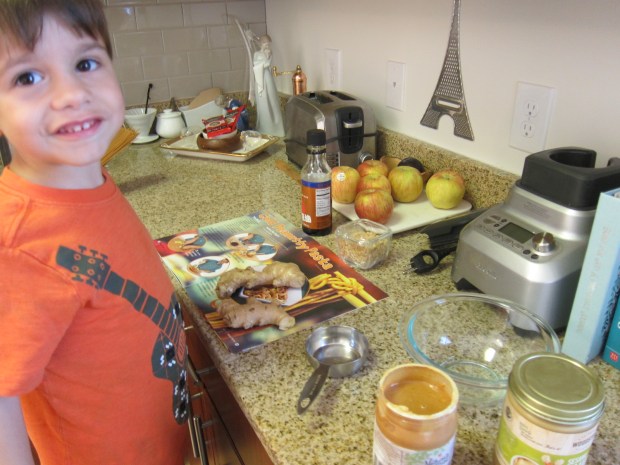
I love getting my little chef into the kitchen for each month’s recipe from High Five magazine, and this month featured a perfect summer pasta, meant to be eaten cold or at room temperature. The recipe was a great chance to hone skills including whisking and chopping with a butter knife. Plus, we got to use neat ingredients like fresh ginger root! Here’s my chef, excited to start.

Peanutty Pasta (1)

Adults, cook 8 ounces spaghetti according to package directions. Reserve about 1/2 cup pasta water, then drain the remaining pasta water and rinse the spaghetti well with cold water. Set aside.

Meanwhile, have your little chef help you combine the following in a bowl:

1/2 cup chunky peanut butter

2 tablespoons tahini

1 tablespoons chopped fresh ginger

2 tablespoons soy sauce

1 tablespoon sesame oil

1 teaspoon sugar

Peanutty Pasta (2)

Add about 6 tablespoons reserved pasta water to the mixture, and whisk until combined. If the sauce is still thick, add another tablespoon or two of the water.

Travis was so excited to try his hand at a butter knife for the next step. I cut a cucumber into rounds, and let him cut each round into quarters.

Peanutty Pasta (3)

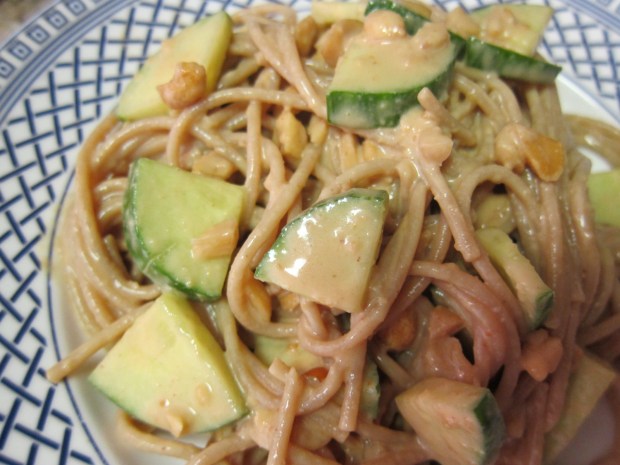
In a large bowl, combine the cooked pasta, chopped cucumbers, 1/2 cup chopped peanuts, and the peanut sauce, tossing well to coat.

Serve at room temperature or chilled.

Note: To make the recipe nut-free, simply omit the chopped peanuts and use all tahini in place of the chunky peanut butter.

Peanutty Pasta (4)


Melted Crayon Art

Melted Crayon (4)

My son loves appliances, which he loves to play with (unplugged) under careful adult supervision. So when I saw this craft involving a hairdryer, I knew we had to give it a try.

I purchased a small canvas (8×8 inches) at the craft store, and cut the wrappers off a rainbow of crayons. You’ll want new crayons with nice pointy ends for this project, so it’s not the best option for recycling broken ones.

We arranged the crayons along the top of the canvas in roughly rainbow order, singing a rainbow song as we worked, and glued them down. Let dry completely.

Melted Crayon (1)

Then it was time to make some art! Cover your work area with newspaper, aim the hairdryer at the canvas, and turn on to the highest setting. He couldn’t believe I was letting him down this!

Melted Crayon (2)

With a guiding grown-up hand, we got right up close to the crayons. Now they were really starting to melt!

Melted Crayon (3)

Let the wax cool, then find some place to hang your work of art!

Melted Crayon (5)

Colors Crate

Koala Colors (7)

I was surprised when a color-themed crate arrived from Koala Crate this month. Colors seem so basic compared to other topics our subscription has covered, more like something we’d receive toward the beginning. Happily, we found that the activities and crafts inside were surprisingly complex and engaging. The booklet also felt especially interactive this month, including a color-by-shape page, seek-and-finds, and more.

Koala Colors (1)

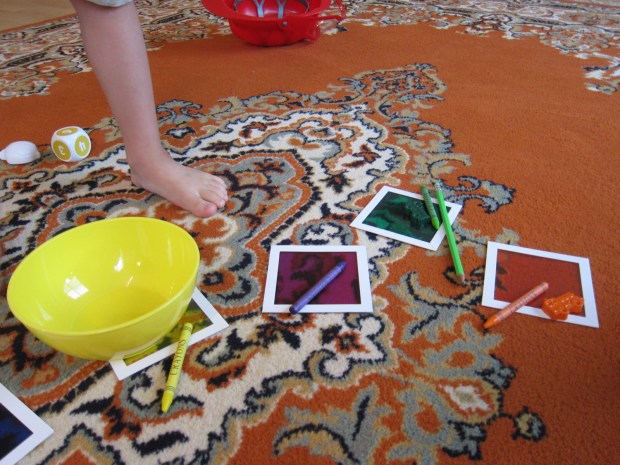
First up was the Color Scavenger Hunt, using colored cellophane squares in all shades of the rainbow and a set of dice.

Koala Colors (8)

Roll one for color and one for the number of objects, then hunt for items around the house. Travis loved this little challenge!
Koala Colors (9)

The squares can be used for multiple purposes when your hunt is done. Roll a color and then think of something in that hue. Here’s Travis drawing a few items he thought of, like lettuce and carrots.

Koala Colors (10)

You can also hold the colored squares in front of familiar objects around the house and see how the colors shift, as with this apple.

Koala Colors (11)

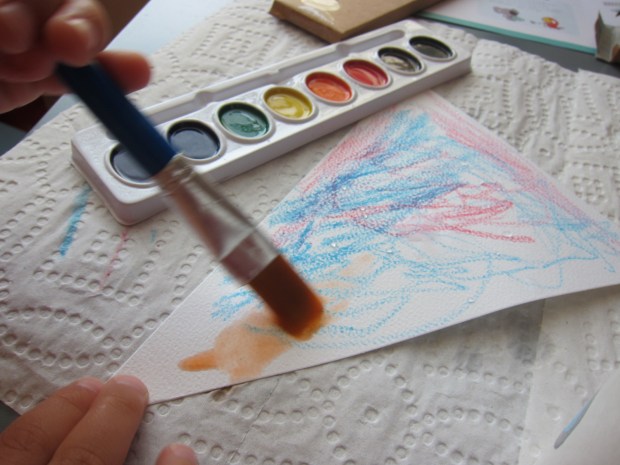
Next we made the Watercolor Banner, which kids decorate first in crayon and then in watercolor (all materials provided in the kit).

We talked about things we see with lots of colors, which soon had Travis drawing nature scenes (flowers, a swamp) on his flags. I added a flag with rainbows and one with stripes.

Koala Colors (2)

Next, use the provided watercolors to paint over the crayons (a neat lesson in “resist” painting techniques).
Koala Colors (4)

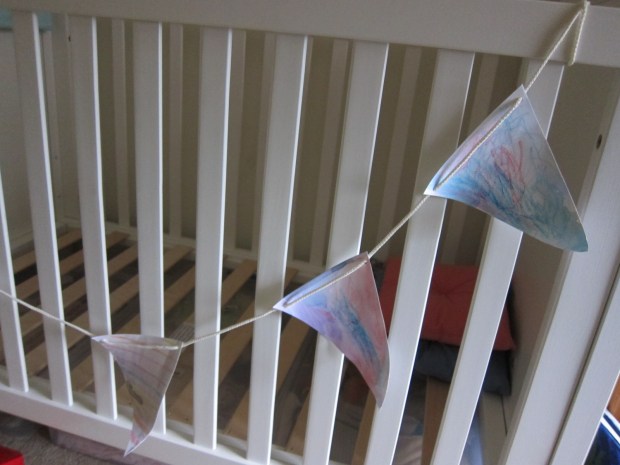
Let dry before threading onto the provided rope, then find a spot to hang your banner. Travis opted for the old nursery!
 

Koala Colors (6)

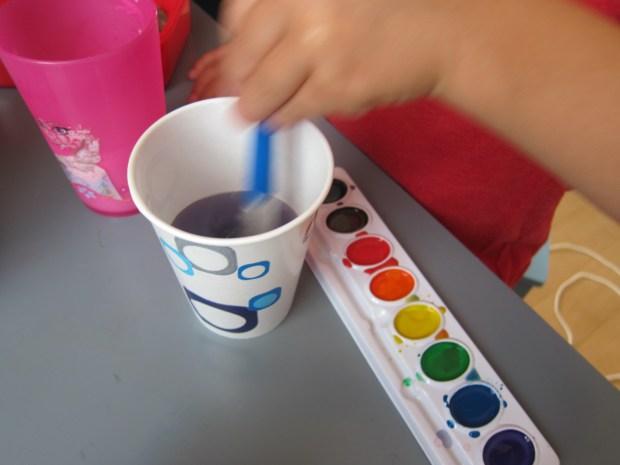
Before you put away the watercolors, have some additional mixing fun. We started with the primary colors (dip your brush in the color, then in a cup of clear water), and I asked Travis what shade he’d like to make. Oh no – he requested white! The only one we couldn’t make. But we mixed up the secondary colors first, and then discovering how to make brown was a big hit.
Koala Colors (5)

The third craft, a Colorful Luminary, was a hit – and excellent for fine motor skills. Fit the provided tea light into the provided foam base, and add thin craft sticks in a circle around it.
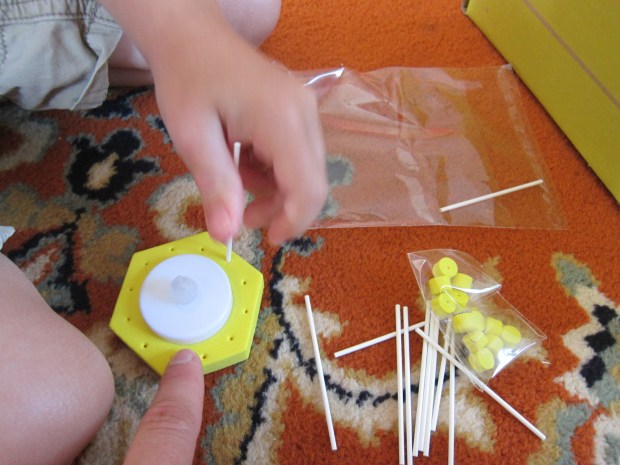
Koala Colors (13)

Now add colored beads to each stick. I asked Travis if he wanted to do all one color per stick or arrange them in a pattern, but this was a bit advanced and he preferred randomly threading them onto the sticks.
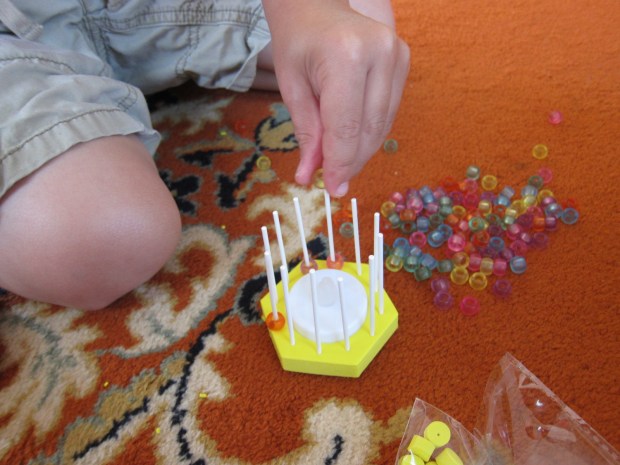
Koala Colors (14)

Cap each stick with another foam piece to seal the beads in place.
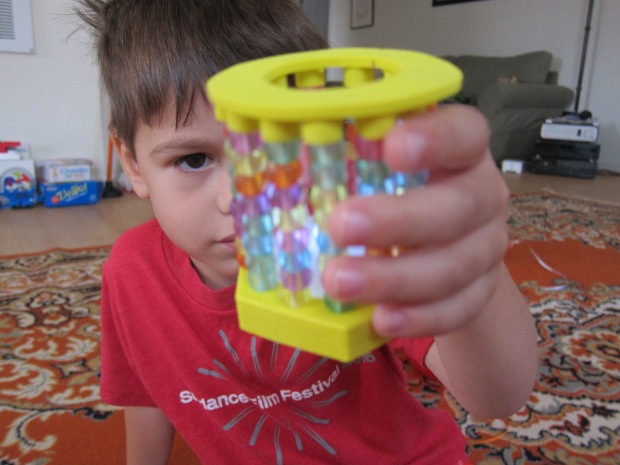
Koala Colors (15)

Find a dark spot, and set the tea light ablaze. Beautiful! We talked about the ways the colors changed when the light was lit versus unlit.
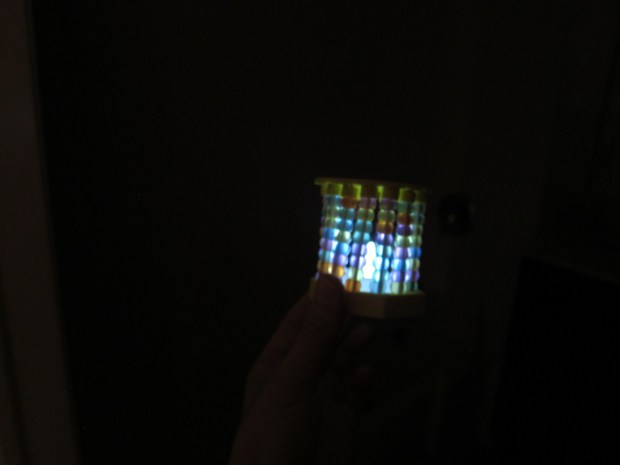
Koala Colors (16)

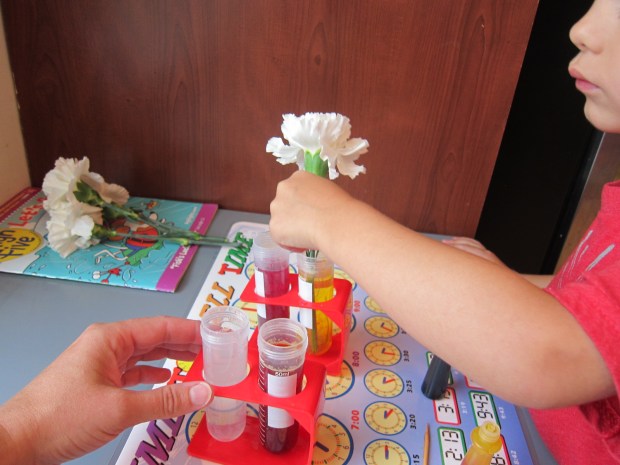
Before we put away the fun, we repeated an old activity, Dyed Flowers, made by dying white carnations with food coloring. This is a great way not only for kids to see fun colors, but also to witness how liquids travel up a plant’s stem. Fill test tubes or small cups with water, and add food coloring to each. Place a white carnation in each tube, and let sit overnight.
Koala Colors (17)

You’ll have a lovely (though faint) color in each flower by morning. Our red worked best.

Koala Colors (18)

In sum, lots of great activities here, including for kids who learned their colors ages ago.