Tie-Dye Cloth Napkins

Tie Dye Napkin (8)

This fun tie-dye project is a nice way to intro the method to kids, smaller than tie-dyeing a full t-shirt. As an added bonus, you can tuck one of the napkins into a child’s lunchbox for a sweet reminder from home while he or she is at school!

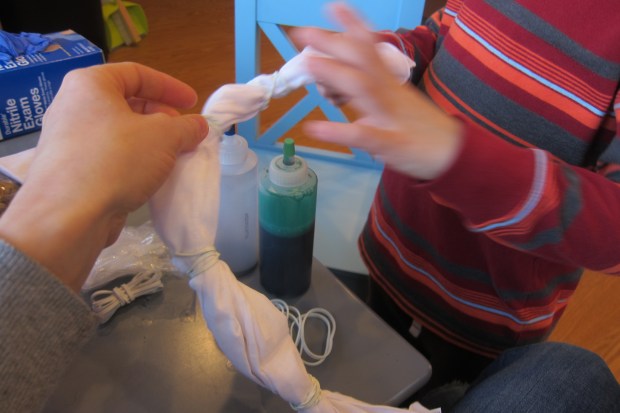
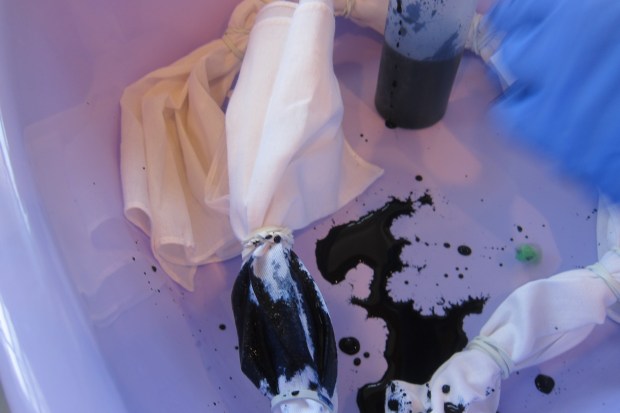
We actually started with blank handkerchiefs from the craft store, not technically napkins. Twist them tightly and secure with elastics at several intervals.
Tie Dye Napkin (1)

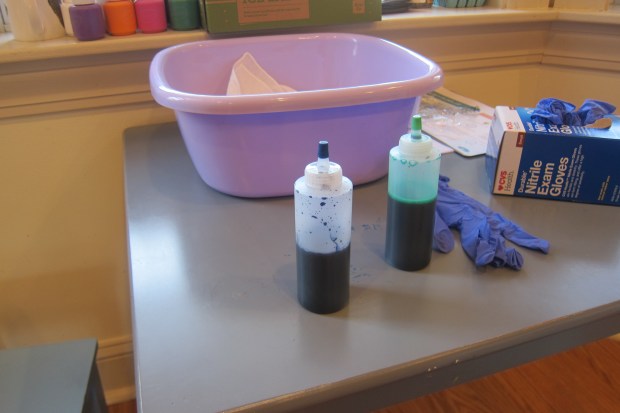
We purchased two bottles of dye that came ready to mix in a squirt bottle, one blue and one green, which made the whole project extremely easy.
Tie Dye Napkin (2)

Travis thought it was fun to wear plastic gloves as we mixed the solutions, then dyed sections of the napkin in alternating colors.
Tie Dye Napkin (4)

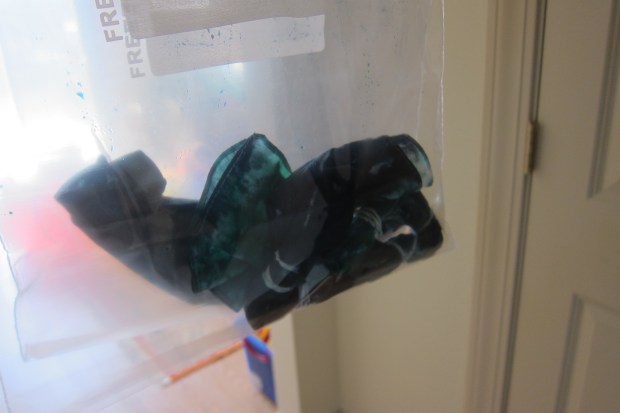
Seal the napkins in a zip-top plastic bag and let dry for 6 to 8 hours.
Tie Dye Napkin (5)

Ring out the extra liquid over a sink, then wash in the laundry machine in cool water.
Tie Dye Napkin (6)

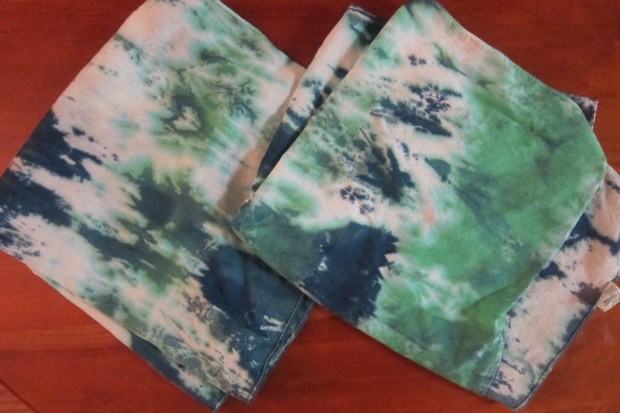
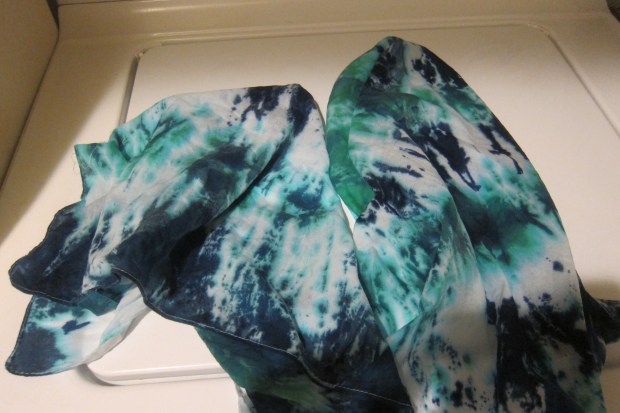
Tumble dry, and repeat if necessary. We thought these came out so pretty!

Tie Dye Napkin (7)

Heavy Bubbles

Heavy Water (3)

This neat experiment with oil and ice is a great way to teach kids about density. If your child has ever noticed how oil and water don’t mix, they’ll love what happens when you try to melt ice in oil.

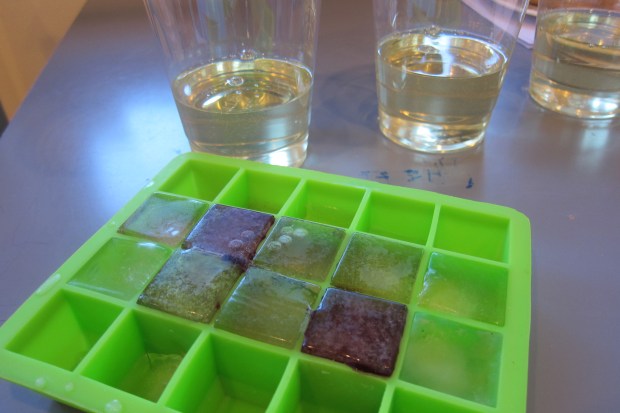
To start, Travis helped fill an ice cube tray. For fun variety in our final results I colored some of the compartments green with food coloring and some red, and left others clear.

Heavy Water (1)

Next we filled three plastic cups with vegetable oil.

Heavy Water (2)

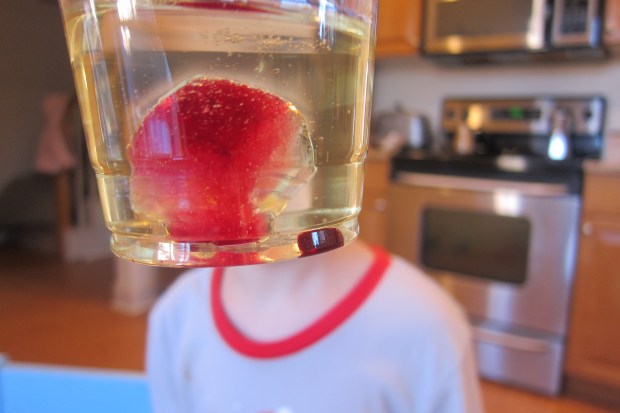
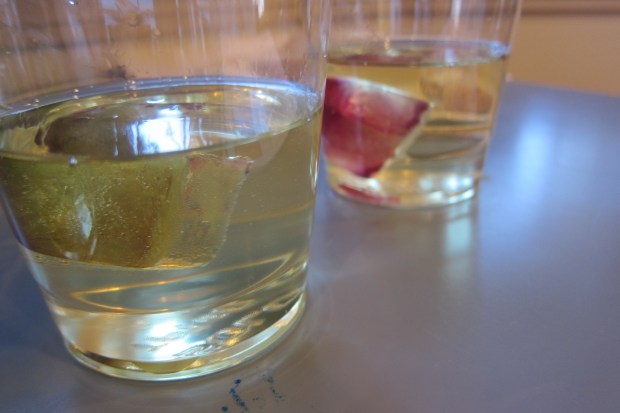
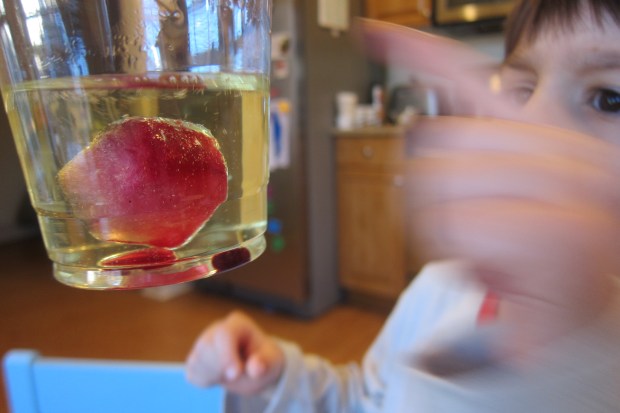
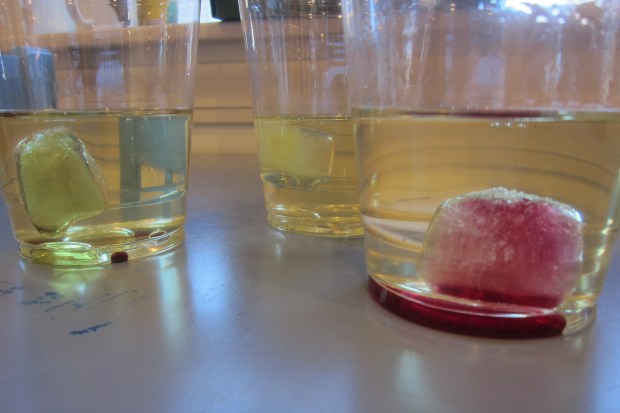
Add an ice cube to each, in your different colors. The ice will start melting off in big blobs. Because water is more dense, those blobs sink down to the bottom of the cup. What fantastic oozy fun to watch!

Heavy Water (4)

I was glad we colored the ice, because the clear ice cube was rather underwhelming to watch, but Travis thought the big globs of green and red were super cool. Quick and easy science, in sum!

Heavy Water (5)

National Polar Bear Day

Polar Bear Day (3)

I’ve wanted to introduce Travis to the idea of global climate change, and chances are other parents struggle with how to discuss the issue with their kids. As a citizen of the world, this is going to be a very real issue in Travis’s lifetime, but I also don’t want to alarm him. When I learned from Highlights that February 27 is National Polar Bear Day, I seized the opportunity to open the discussion!

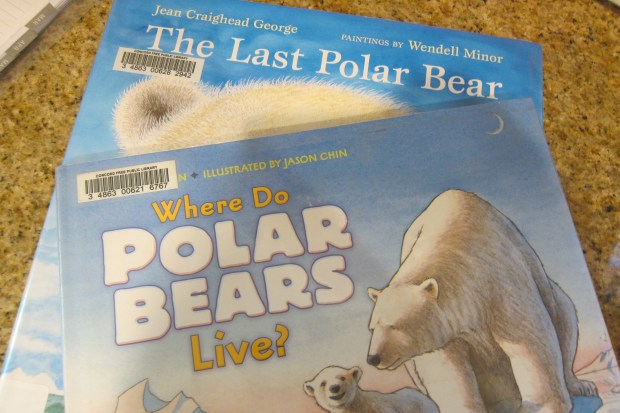
We started off with a read of two picture books that gently address the warming Arctic and the threat to polar bears as a result. Check out The Last Polar Bear, by Jean Craighead George or Where do Polar Bears Live? by Sarah Thomson, or see what your library has to offer!

Polar Bear Day (2)

After discussing his takeaway from the books, it was time to get crafty! This was a simple project, gluing cotton balls to a paper plate for a furry polar bear face.

Polar Bear Day (1)

Add a black button for a nose, and glue on wiggle eyes. Finally, I cut two ear shapes from cardstock, which we glued to the plate and covered with additional cotton balls.

Want more polar bear ideas? Try a shaving cream version instead!


How to… Feed Feathered Friends

Feed Feathered Friends (7)

Travis and I have loved hearing birdsong on recent walks to the bus stop, a sure sign that spring is near. So we loved that this month’s “How To” column in Highlights magazine was a bird feeder for our feathered friends, helping them out while the ground is still quite frozen.

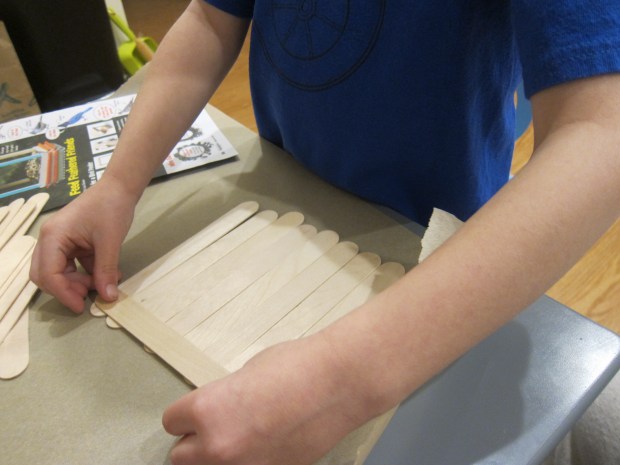
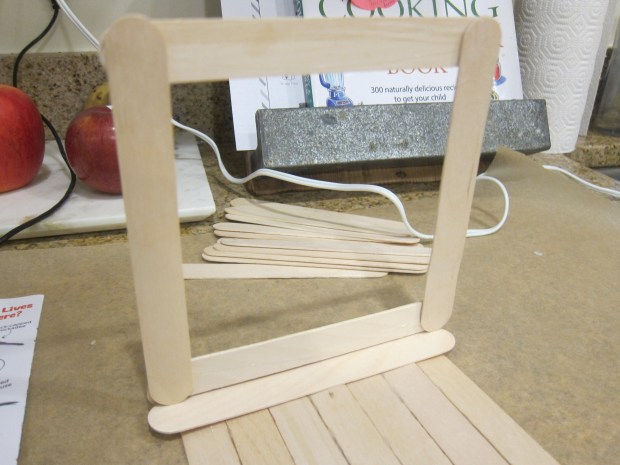
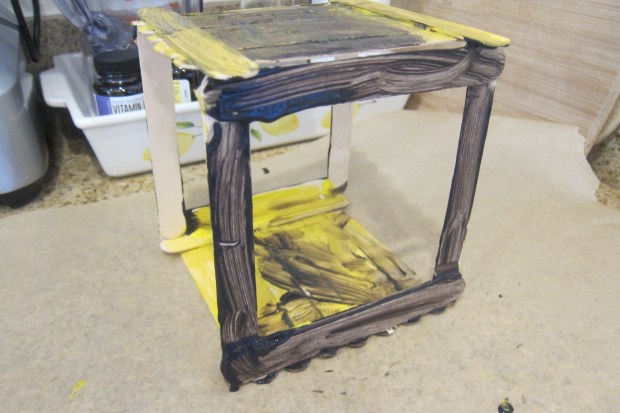
I challenged Travis to think of how he could make a strong base for the feeder from craft sticks. Seven lined up in a row with two across the top and bottom for reinforcement did the trick.

Feed Feathered Friends (1)

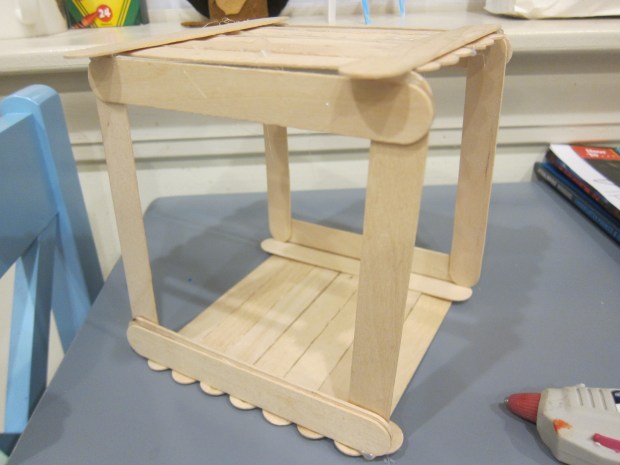
We repeated this arrangement for the roof. For the sides, glue 4 craft sticks together in a square.

Feed Feathered Friends (2)

I hot-glued everything together (wood glue would also work), and then added a few extra craft sticks for reinforcement where needed.

Feed Feathered Friends (3)

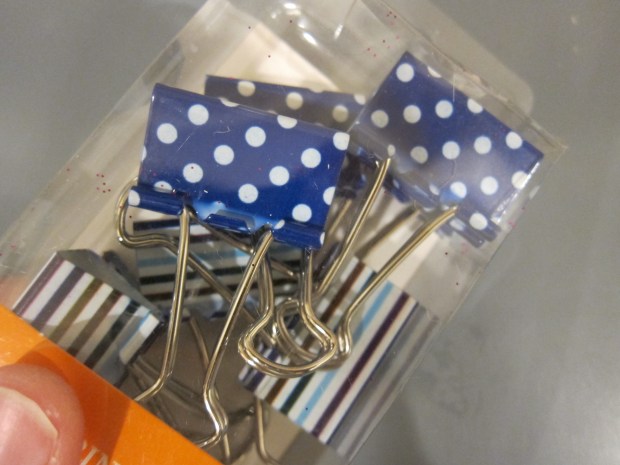
Note: If using wood glue, consider using binder clips to hold everything together until the glue dries.

Feed Feathered Friends (4)

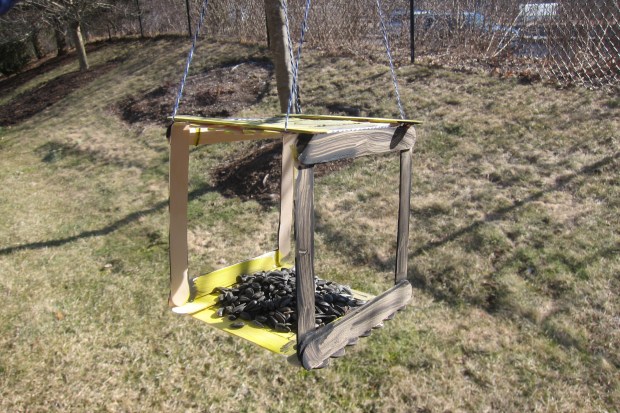
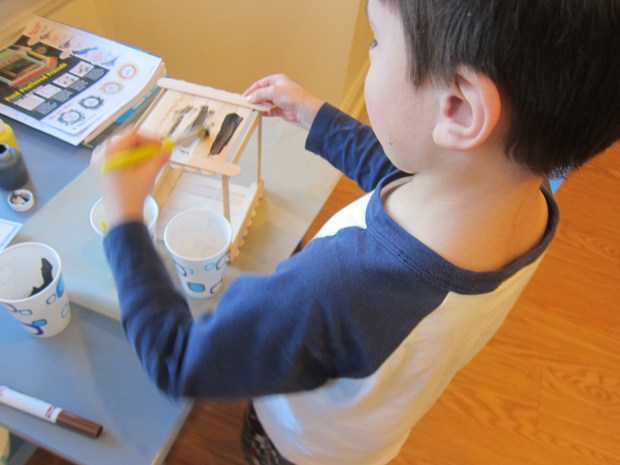
Next we gave our bird feeder a coat of paint.

Feed Feathered Friends (8)

Travis chose black and yellow – oriole colors!

Feed Feathered Friends (5)

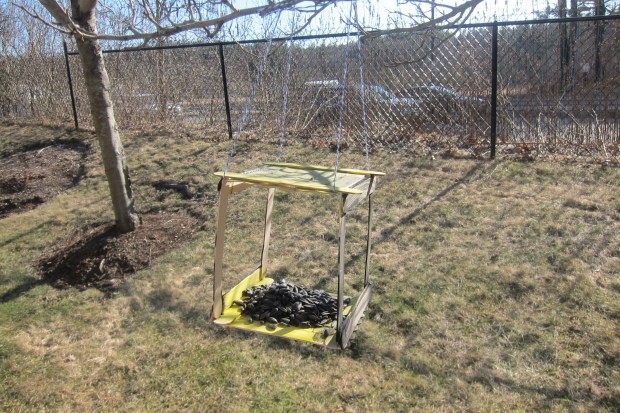
We took a special trip the store for birdseed, following Highlights suggestions for who eats what in which part of the country. We opted for black-oil sunflower seeds, popular with titmice in our region.

Feed Feathered Friends (6)

It was so warm outside that we didn’t even need our coats when we went to hang this in the sunshine. We can’t wait to watch the birds enjoy their meal.

Hedgehog Pencil Holder

Hedgehog Pencil (5)

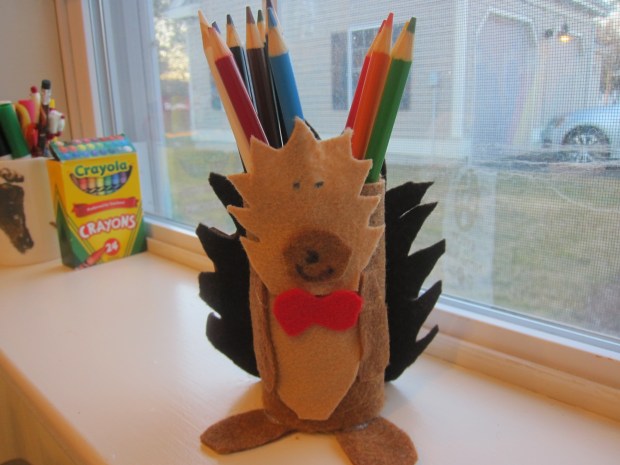
Travis has been so into coloring lately, and we need a spot for all his art supplies! This adorable hedgehog in his latest Highlights magazine came just in time, therefore. Now we can corral all those colored pencils.

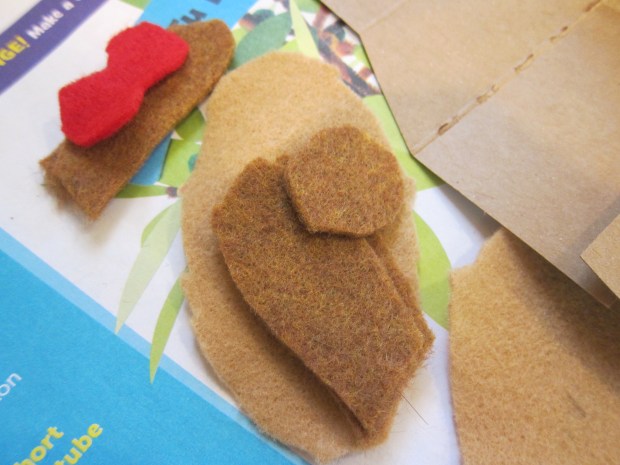
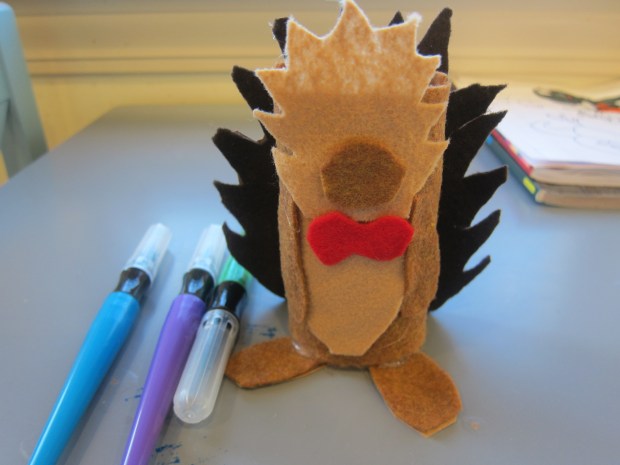
Older kids will likely enjoy cutting felt and designing all the features for their hedgehog critter solo; however, for a kindergartner I did most of the work, since cutting felt is still tough for Travis. Instead, he helped me decide what the hedgehog needed – arms, a belly etc. – and what should go where. Don’t forget a whimsical red bow-tie!

Hedgehog Pencil (2)

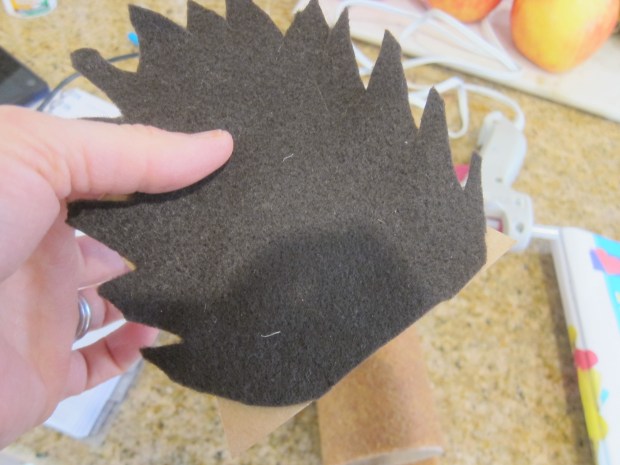
Once you have the pieces cut out, hot-glue light brown felt to an empty toilet paper tube. Then hot glue on the additional features you’ve made, including a head, belly, nose, and arms.

I hot-glued a piece of darker brown felt to a piece of thin cardboard to be the spikes.

Hedgehog Pencil (1)

Similarly, hot-glue brown felt to thin cardboard for the feet; this will make the hedgehog sturdy enough to stand. Add these to the decorated tube.

Hedgehog Pencil (3)

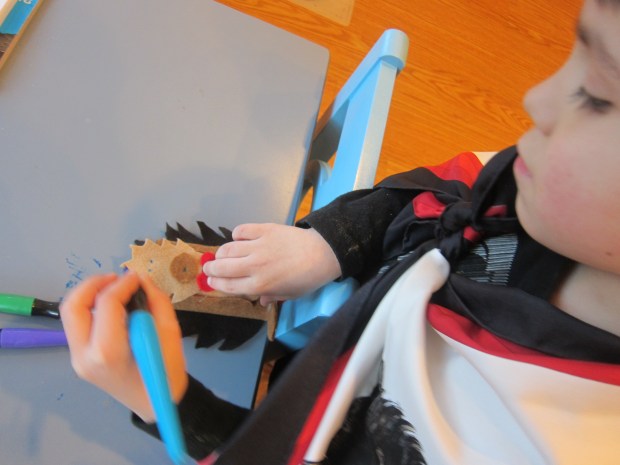
For the finishing touch, Travis added eyes and a nose with paint markers. Puffy paint would also work for this step. Slip in colored pencils and your artist is ready to create!

Hedgehog Pencil (4)

Dip-Dye Caterpillar

Dip Dye Caterpillar (9)

Putting together this charming little caterpillar takes some time, but it’s worth it in the end!

Dip Dye Caterpillar (1)

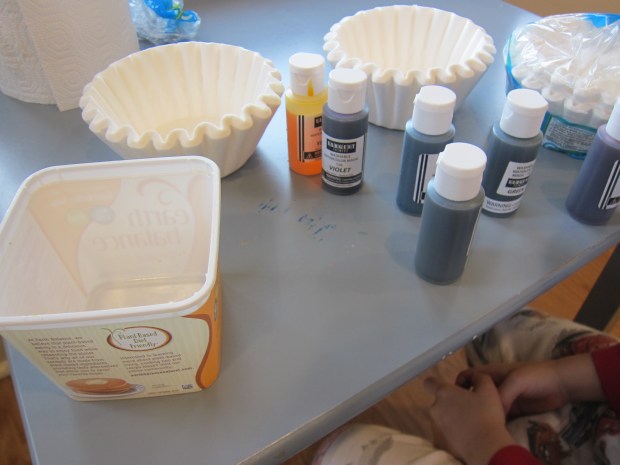
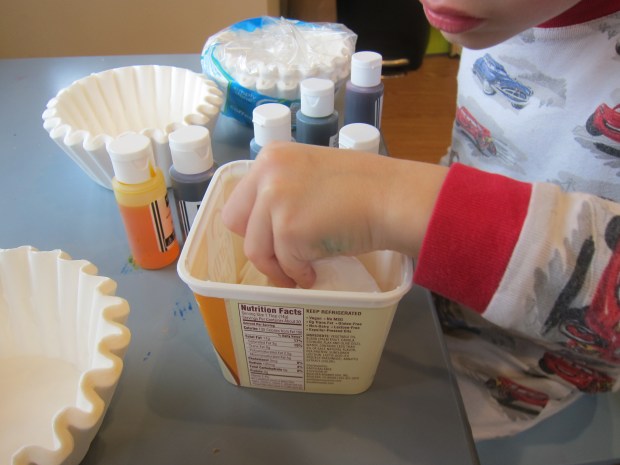
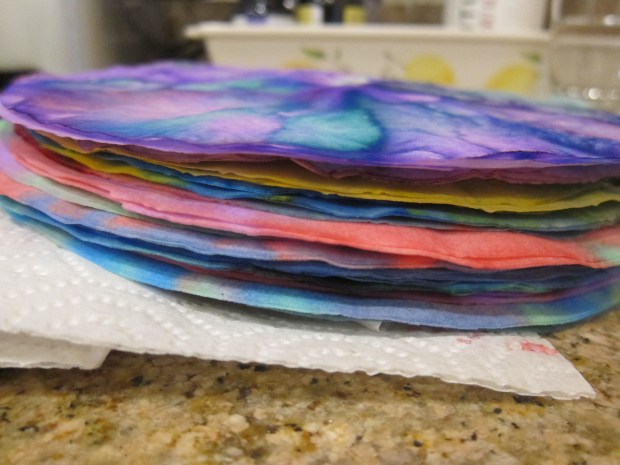
To start, you’ll want to dye as many coffee filters as you have patience for (and/or room to dry!) in liquid watercolor. For each color, I squirted a few drops into an empty butter tub and then added a few tablespoons of water. Scrunch up a coffee filter (or a handful of them is fine) and dip in.

Dip Dye Caterpillar (2)

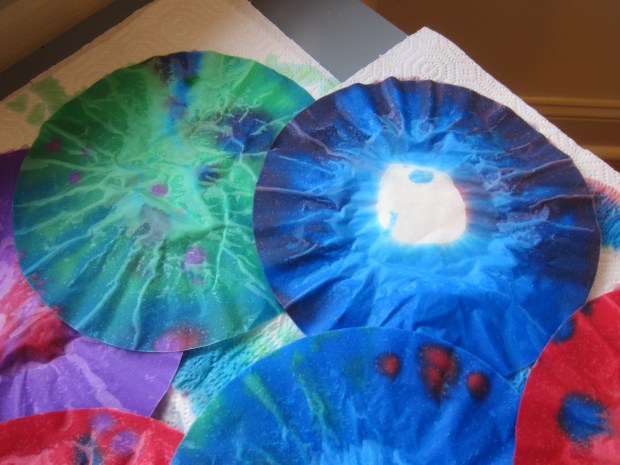
Travis loved watching the colors bleed up the filters! After a few single colors, he decided it was fun to re-dip some old ones, which resulted in a pretty mottled look on many of our filters.

Dip Dye Caterpillar (3)

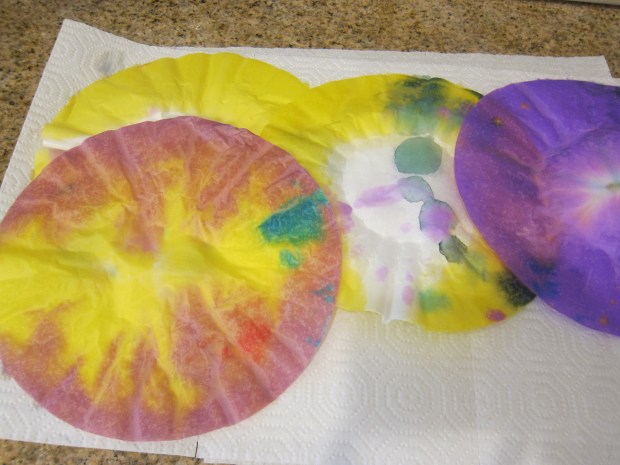
A tutorial online suggested using as many as 250 filters for this project (!), but I would guess we dyed about 50. Lay these on paper towels and dry completely.

Dip Dye Caterpillar (4)

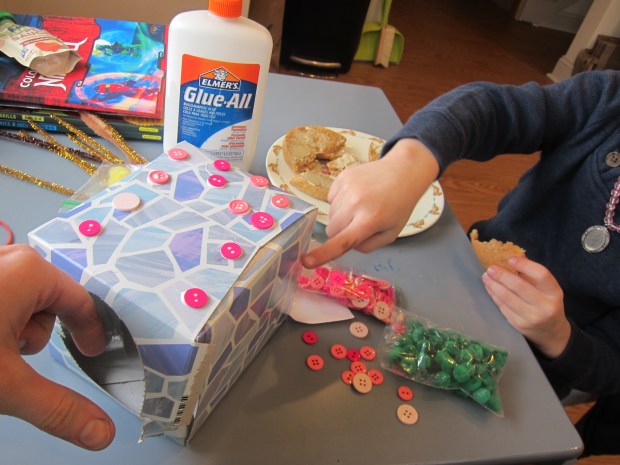
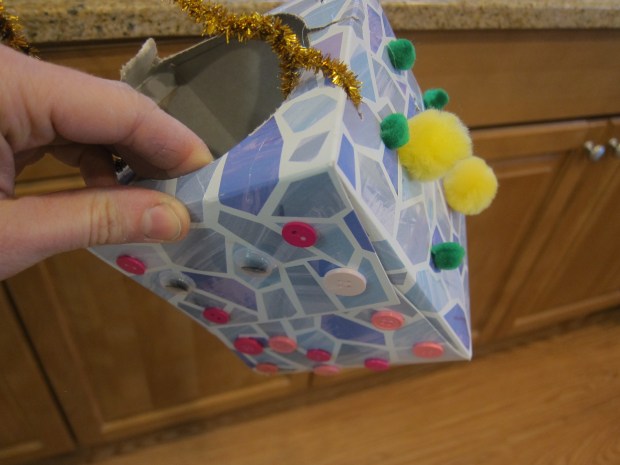
While the filters dried, we made the caterpillars head. Give your kids carte blanche to decorate an empty tissue box any way they like; it’s the perfect excuse to raid the craft bin for bits and bobs. Travis added buttons, pom poms, and wiggle eyes.

Dip Dye Caterpillar (5)

We twisted together sparkly pipe cleaners for the antennae.

Dip Dye Caterpillar (6)

Later in the day, it was time to poke holes in the coffee filters. Travis thought it was amusing to pierce each one with a kebab skewer. Kids will probably need grown-up help for this step, and to make the process move along more swiftly.

Dip Dye Caterpillar (7)

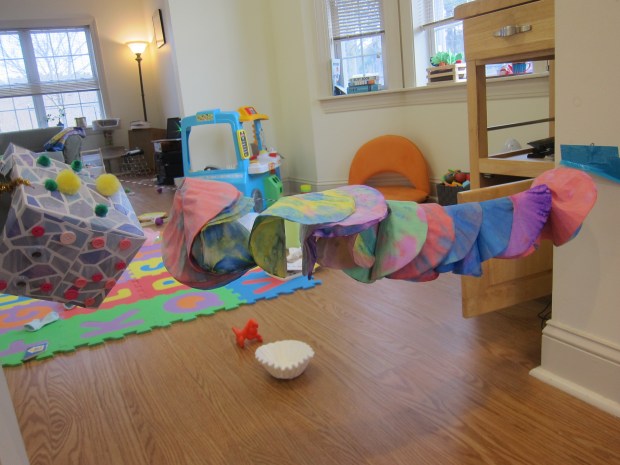
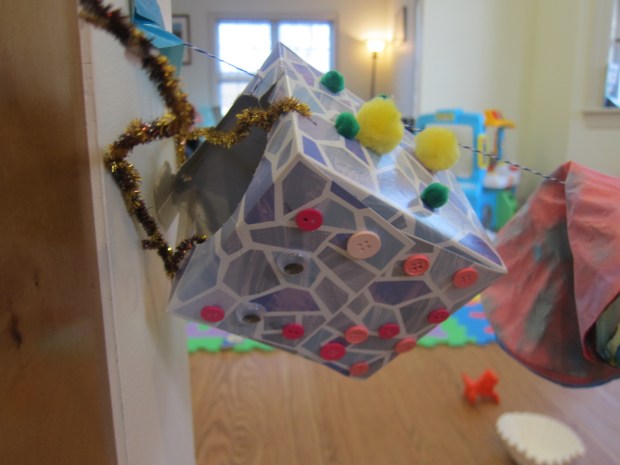
I then punched two holes in our caterpillar head, one in the top of the tissue box and one on the side. Using a large plastic needle, thread string through all of the filters and then up through the two holes in the head. Now suspend your caterpillar and watch it wiggle!

Dip Dye Caterpillar (10)

One of these would look so beautiful in a garden, but since we a) have no garden and b) it’s winter, we strung it up inside for a few days of play.

DIY Sundial

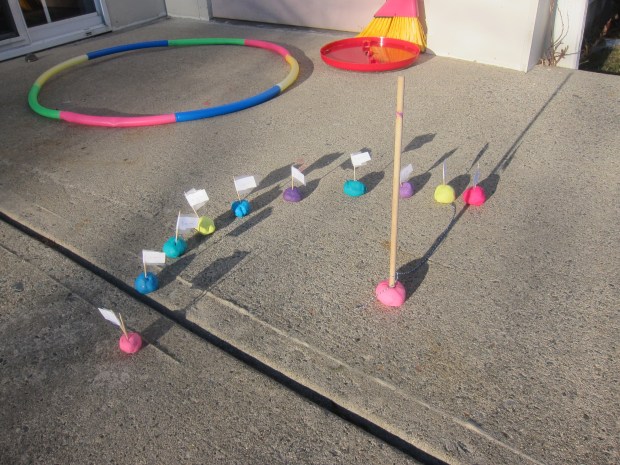
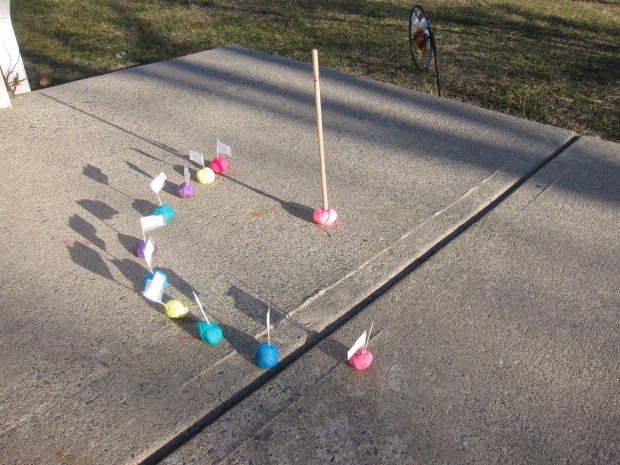
DIY Sundial (7)Of the various ways Travis and I have made a sundial, this was by far easiest for him to keep up with – and the prettiest! Thanks to a vacation day off from school, we were consistent about popping out every hour, too. The secret? Play dough.
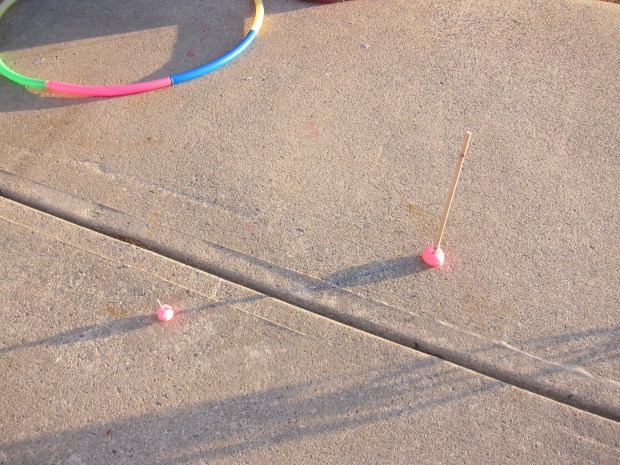
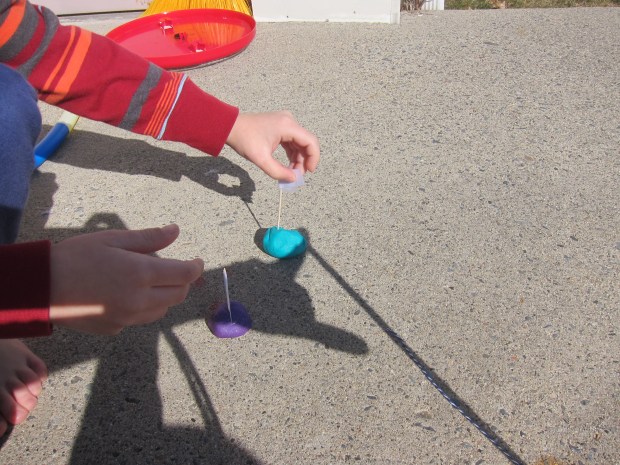
To start, we pushed a wooden dowel in a big blob of play dough. Press the play dough firmly onto an outdoor patio or similar surface. Stretch a line of string for accuracy along the shadow that the dowel casts, and set down a second blob of play dough.

DIY Sundial (2)

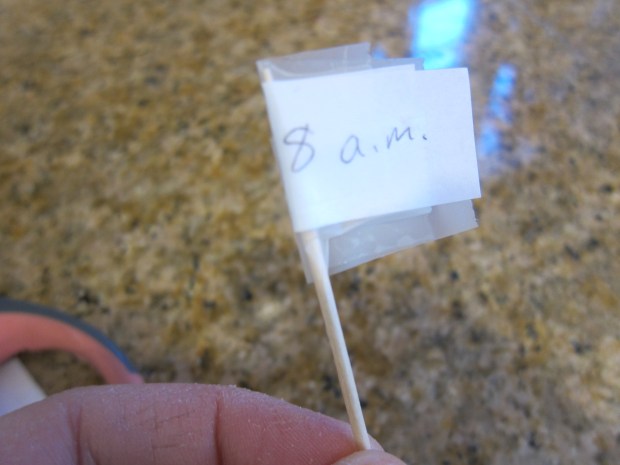
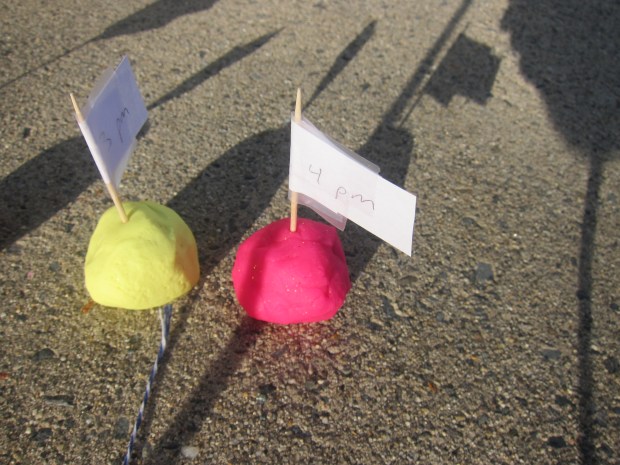
We started at 7 a.m., so marked this off as the first hour: Insert a toothpick, numbered with the time of day. (Note: you can make these “flags” much more elegant than ours, which were just taped-on strips of paper labeled with the hours from 7 to 4 p.m.).

DIY Sundial (3)

Being as accurate as we could, we dashed out around each hour over the course of this sunny day and set down a new blob of play dough and new toothpick flag. The colors looked great as they accumulated over the course of the day!

DIY Sundial (5)

We lost out winter sun after 4, so that was the final point of our clock.

DIY Sundial (8)

But Travis was wowed seeing this visual arc of how the sun had traveled. Definitely the best sundial he’s made yet.

DIY Sundial (6)

Not Your Average Paper Clock

Paper Plate Clock (4)

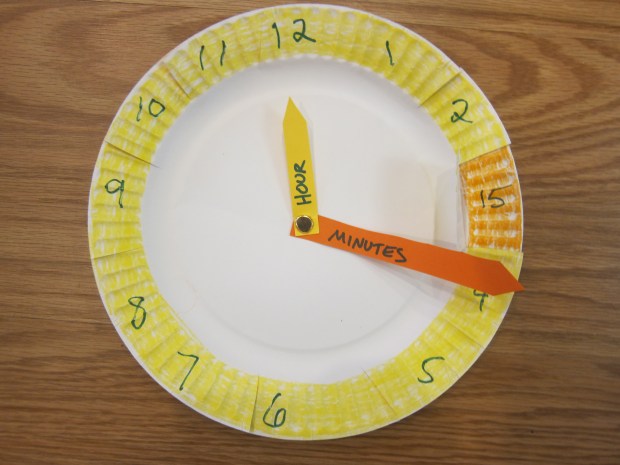
It may be true that analog clocks are gong the way of cursive writing and the dodo bird, but I still hope to teach Travis the valuable skill of telling analog time. This paper plate clock is the best way I’ve found yet to visualize hours and minutes!

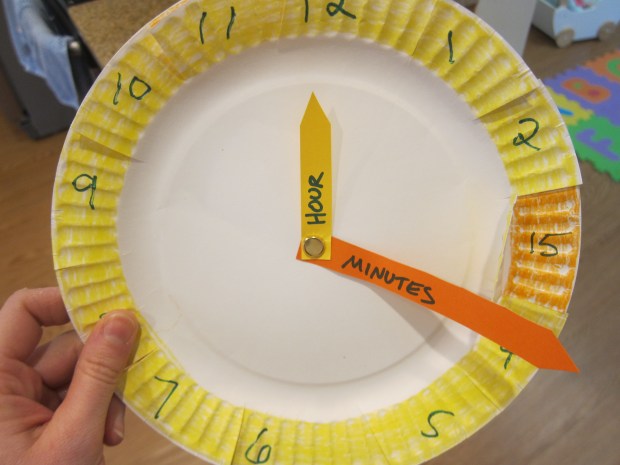
Most of the prep is grown-up work. If you have two different colored paper plates, simply use those, one atop the other. I solved the problem of having only white plates by coloring the rims with crayon, yellow for the hours and orange for the minutes.

Paper Plate Clock (1)

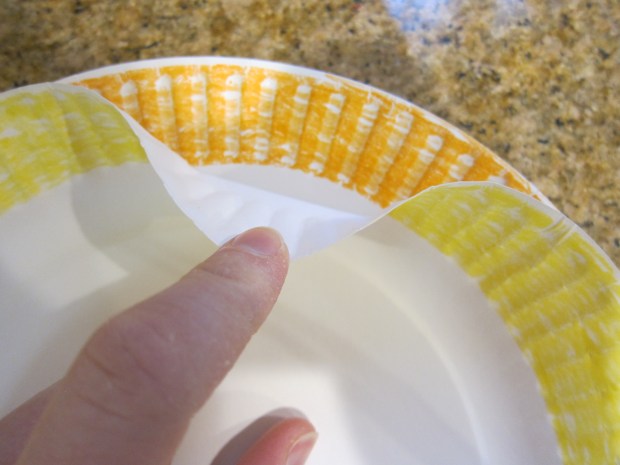
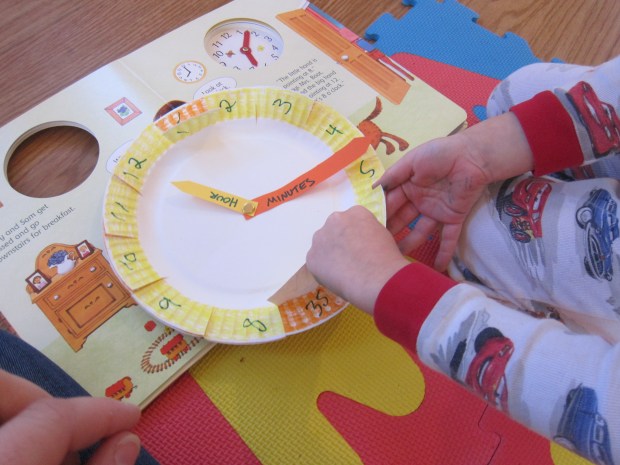
Hot glue the hour plate on top of the minute plate, making sure to glue only the center of the plates, not the rims.

Number the hours, and then cut the rims of the plate so each hour becomes a flap. You might want to make sure you’re numbering at more even intervals than I did in a hurry – whoops!

Paper Plate Clock (2)

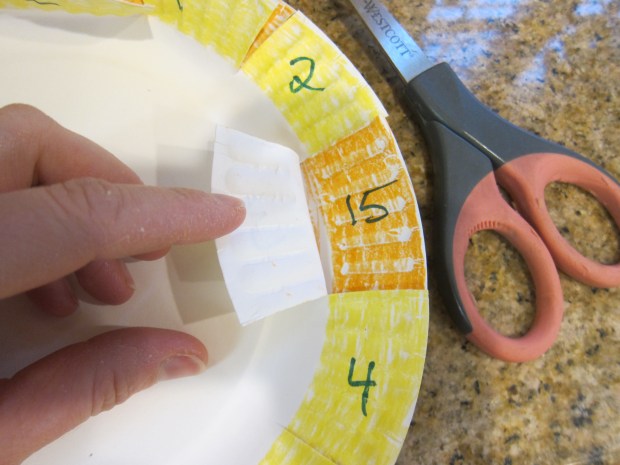
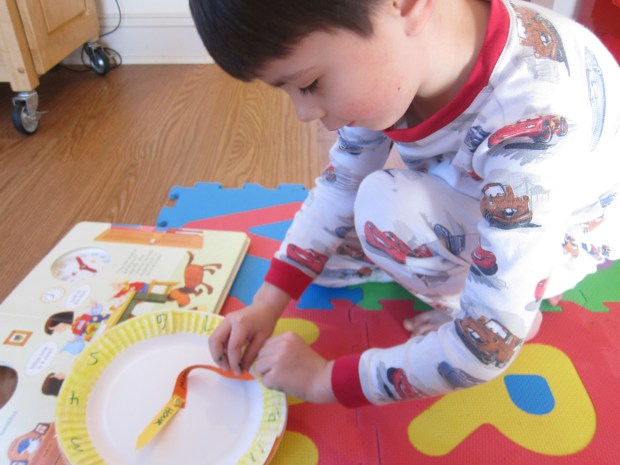
Now lift back each hour flap and write the corresponding minute on the bottom plate. I cut out two hands in corresponding colors of cardstock, yellow for the hour and orange for the minute. Insert these into the center of the clock and attach with a brad.

It was time for a time telling lesson!

Paper Plate Clock (3)

Travis loved how intuitive this clock was! First we practiced skip counting by fives, just to familiarize him with how the minutes would read around the bottom rim.

Paper Plate Clock (5)

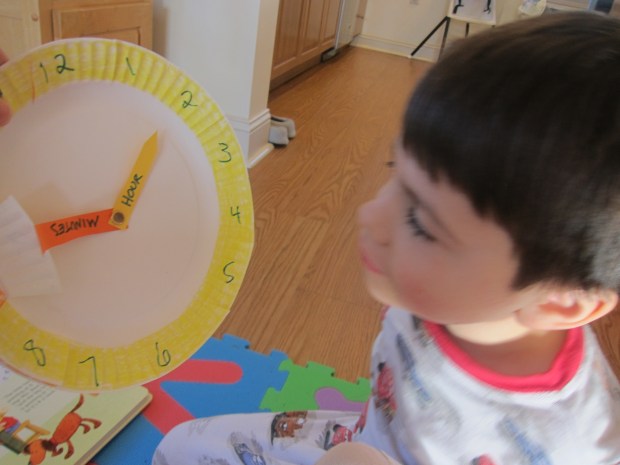
Then we had a few practice rounds. Once he latched on to how the yellow hand lined up with the yellow plate and orange with orange, he could answer almost any “pop quiz” I gave him.

Paper Plate Clock (6)

At various points throughout the day, I asked him to read our analog clock on the wall.

Paper Plate Clock (7)

“1, 10,” he said, but I reminded him: “Lift up the 10 and see what’s underneath!”

Aha! “1:50,” he said proudly. I can see how this will be an incredibly useful teaching tool.


Vikings

VIkings (3)

A lesson that came with Travis’s Swedish recipes from Raddish Kids aimed to debunk stereotypes about the Vikings, and to help kids understand stereotypes in general. Travis knows next to nothing about the Vikings, so the lesson was a bit lost on him! Still, I tailored the lesson plan for my kindergartner, and here’s what he learned:

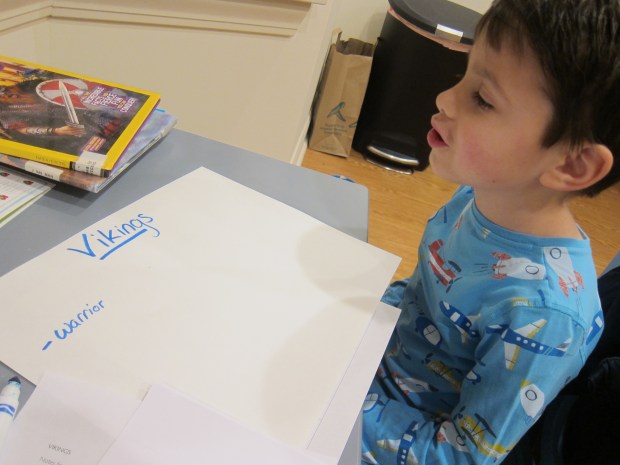
Start out with a question, asking your kids what comes to mind when they think of the Vikings. Your kids might draw this, or write about it, or act it out. Travis listed a few ideas, based solely on his knowledge of Thor in the Avengers cartoons.

VIkings (1)

I praised his observations, but told him that today we were going to look beyond the stereotypes, which we defined as “a fixed belief about a particular group of people”. It was time to find out more!

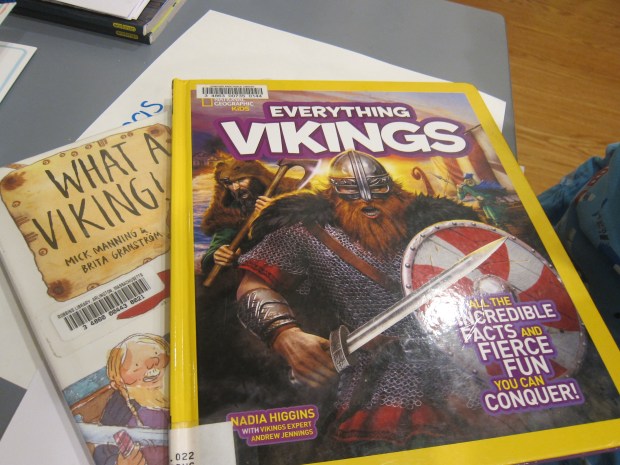
He listened attentively to a few library books, including National Geographic’s Everything Vikings and What a Viking! by Mick Manning. We then watched an informative 10 minute clip with lots of details and a fun quiz.

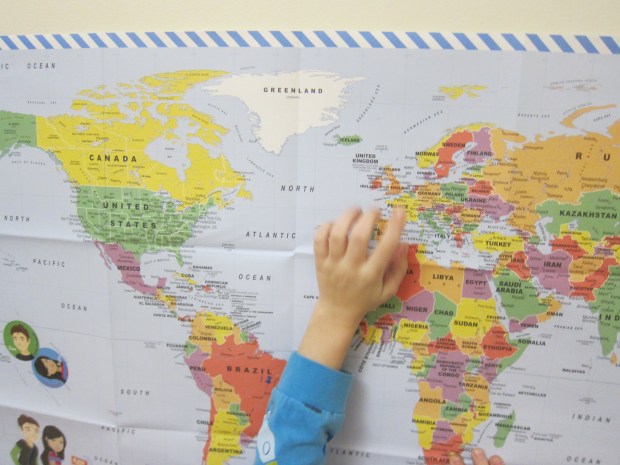
Travis could see now that there was more to the Vikings than the warrior stereotype, though to be fair this was still his favorite aspect of the culture! We looked at a map to trace some of the routes the Vikings took.

VIkings (2)

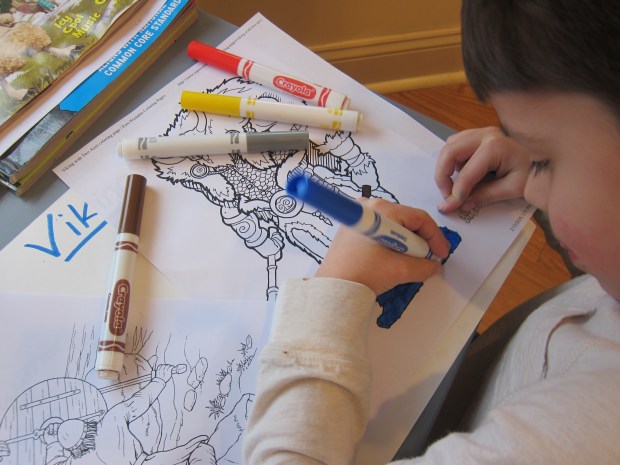
Now it was time to create a Job Positing for a Viking using his new knowledge. Because Travis loves to color, I gave him two computer images and asked him to pinpoint which was the stereotype. He was correct, although this horned-helmeted version was the one he preferred to color for his ad!

VIkings (4)

Still, now his job posting included other aspects, like needing to be a farmer and shipbuilder. There is lots within the lesson plan, too, about the role of women and children, and a provided worksheet for older kids to jot down new vocabulary they have learned. If your kids are into it, continue the lesson further have them research Viking Runes, too!


Valentine’s Day Popcorn Gift

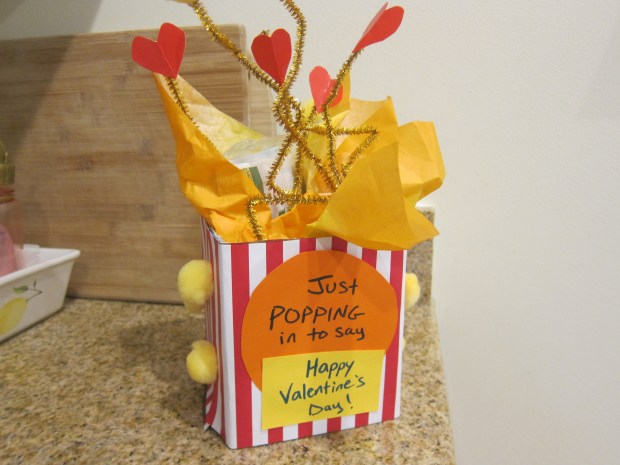
Popcorn Valentine (9)Here’s a novel way for kids to pop in and say they love someone this Valentine’s Day! This rather lengthy project wouldn’t be great for class Valentine’s since it’s big and involved, so save it for someone special like a parent or grandparent.
Popcorn Valentine (1)

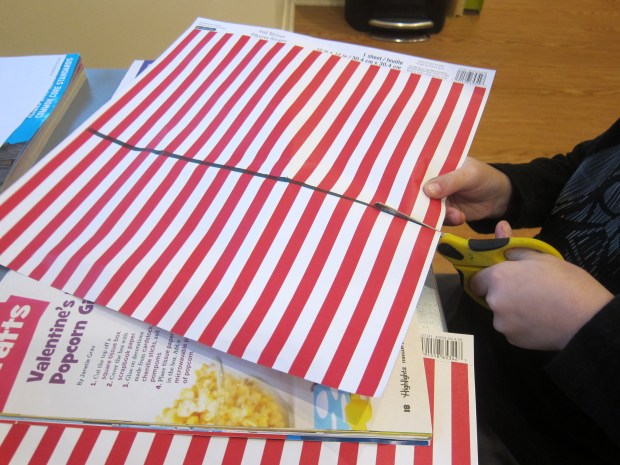
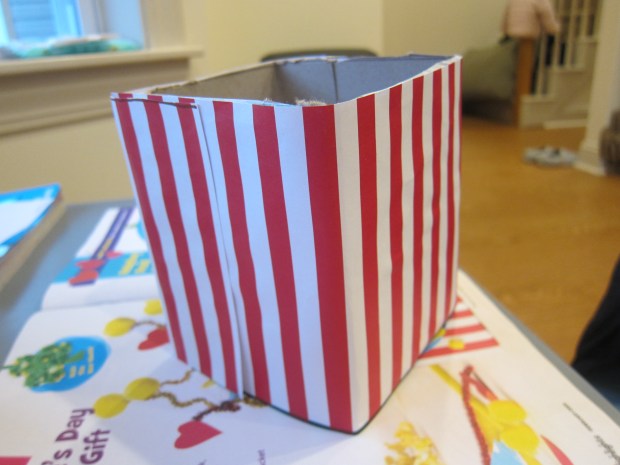
To start, Travis helped cut red and white pinstripe craft paper to fit an empty tissue box. Cut the top off the box and use a glue stick to attach the paper around the sides.

Popcorn Valentine (2)

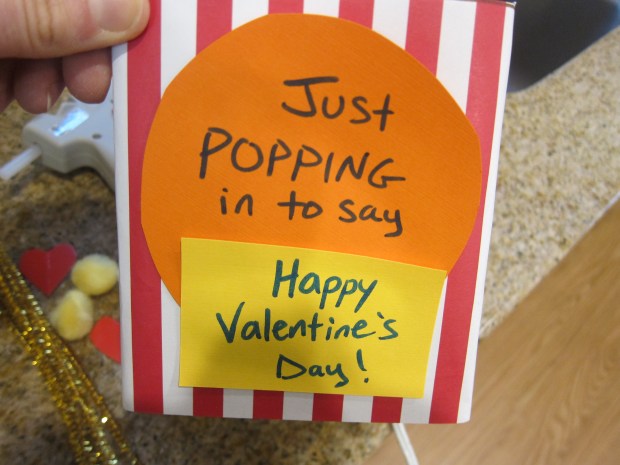
Travis needed grown-up assistance for a few of the decorations. Cut a circle and rectangle from colored cardstock (we chose yellow an dorange), and arrange on the front of the box. We wrote in the message, “Just popping in to say… Happy Valentine’s Day!”

Popcorn Valentine (3)

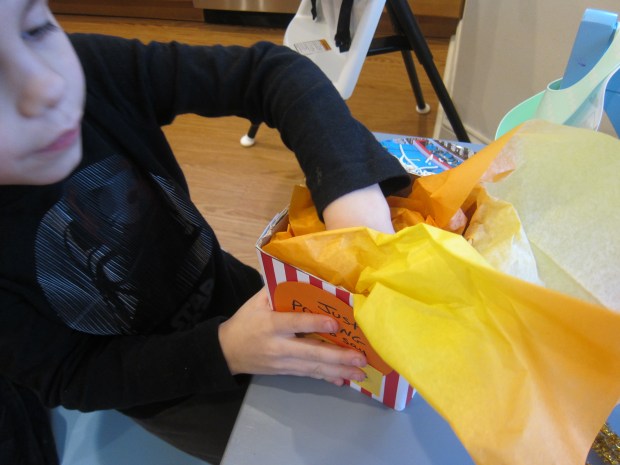
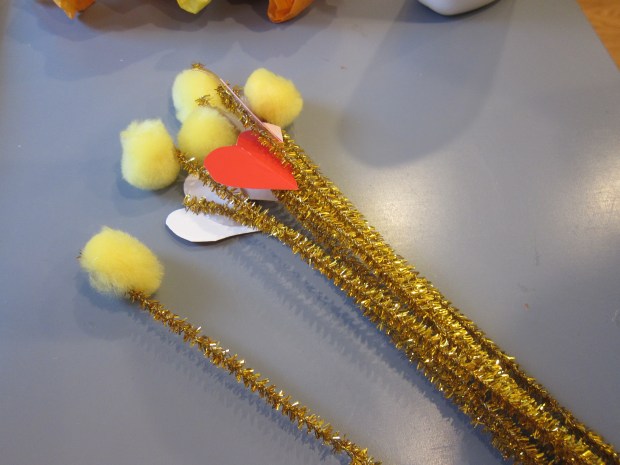
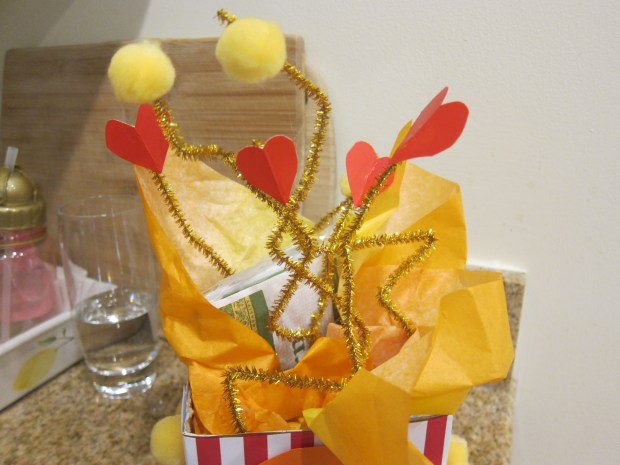
Next we hot-glued pom poms and cardstock hearts to the tips of sparkly gold pipe cleaners. Stuff a little yellow or orange tissue paper into the box.

Popcorn Valentine (4)

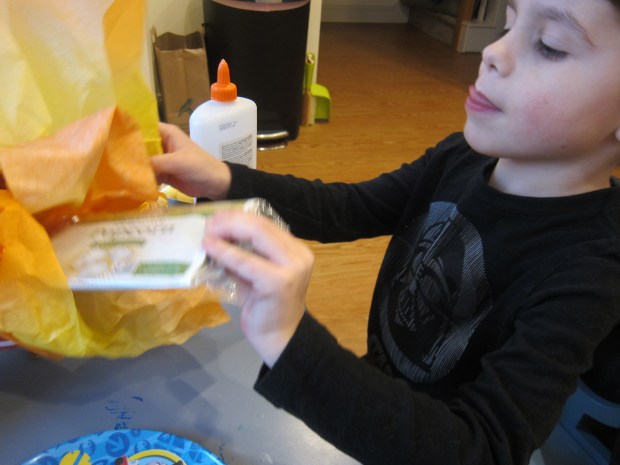
Add a package of microwave popcorn – yum! An I.O.U. for a movie night would be a fun addition!

Popcorn Valentine (5)

Travis helped bend the pipe cleaner decorations and slip them in among the tissue paper.

Popcorn Valentine (6)

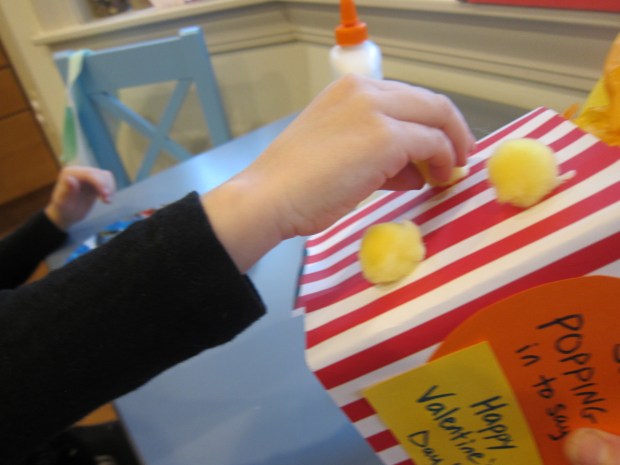
Add a few yellow pom poms to the outside of the box as “kernels”, for the finishing touch.

Popcorn Valentine (7)

He was so proud of this and made sure we hid it from daddy’s eyes until Valentine’s Day!

Popcorn Valentine (8)