Harvest Coasters

Harvest Coasters (6).JPG

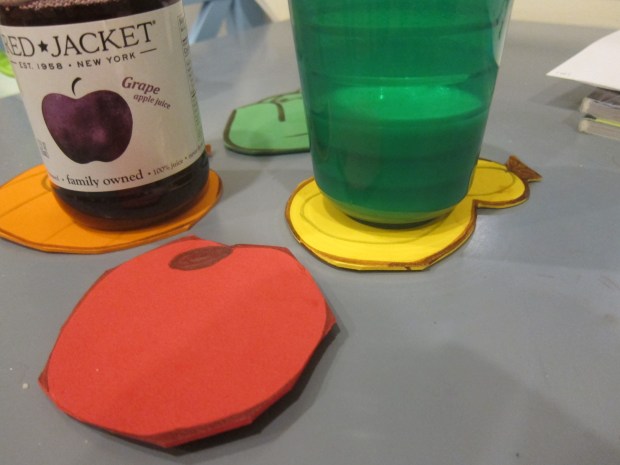
These coasters are a great project to have your kid feel involved in Thanksgiving prep, whether or you’re hosting and need extra coasters for guests, or whether you bring them as a hostess gift.

Harvest Coasters (2)

I helped Travis draw a few common fall fruits and veggies onto different colors of craft foam. He tackled a round red apple, while I made trickier shapes like a green bell pepper, yellow butternut squash, and orange pumpkin.

Harvest Coasters (1)

We added a few details like leaves and stems with marker, and cut out.

Harvest Coasters (3)

Cut circles from thin cardboard to fit the back of each shape and glue on with tacky glue.

Harvest Coasters (5)

Let dry completely before putting your festive drink on top.

Harvest Coasters (4)

Holiday nog anyone?

Harvest Coasters (7)

Giraffe Cord Keeper

Giraffe Cord (7).JPG

Let’s face it: cords are a part of our kids lives these days, whether for tablets, toys, or any of a dozen other gadgets and games. This adorable cord keeper from Highlights magazine is the perfect way for Travis to wind up his favorite robot’s cord when it’s not charging.

To start, I drew a giraffe head and neck on thin cardboard (an old cereal box was perfect), and we glued it onto yellow felt. Let dry, then cut out.

Giraffe Cord (2)

I also cut out details from other colors of felt (big kids can do this themselves). We used brown for the nose and horns, orange for the ears, and a quirky purple for the giraffe’s spots!

Giraffe Cord (4)

Travis loved gluing everything down, especially a silly white tie.

Giraffe Cord (5)

Decorate with puffy paint for a few final touches. I loved the “smile” that Travis gave his giraffe.

Giraffe Cord (6)

Once dry, cut a slit in the giraffe’s neck. This is the notch to start winding your cord. Simply continue winding around the giraffe’s long neck until everything is nice and tidy.

Giraffe Cord alt.JPG

The Power of Protein

Power of Protein (6).JPG

When Travis gets home from school, man oh man is he tired. I’m dismayed, therefore, if I look in his lunchbox and find food that has gone uneaten, as he learns to make sure he gets enough before rushing off to recess.

So the timing of this lesson plan from Raddish Kids was perfect. It gave me an entry point to talk about why he needs to prioritize certain portions of his meal, and have enough energy for those long kindergarten days.

Start with this fun challenge: I asked him to balance on one leg, which he proudly did as he counted to 10.

Power of Protein (1)

But could he do it with his eyes closed??? Whoa, now he wobbled!

Power of Protein (2)

Raddish’s talking points explain how – just like in this exercise – our bodies need balance on the inside or we might wobble and tip. You can give examples like rest vs. activity and then launch into the idea of eating foods in balance.

The main focus here was on protein. Raddish provided a whole page full of protein facts, and we watched a suggested video. For our vegan family, I filled in a few gaps, explaining how we can get protein from tofu, beans, lentils, whole grains, and more.

Power of Protein (5)

Now it was time to see what he’d learned! We went through grocery fliers and I asked him to pinpoint the protein-rich foods. (Again, this was a bit odd for our family; when there was chicken or turkey, I pointed out that we can eat vegan versions of these). The activity helped him hone his understanding of protein after guessing wrongly on a few items (like tomatoes, or banana bread).

Now it was time to put our bodies to the test! I showed him the My Plate graphic and explained we’d be charting his food for five days. He loved making tally marks.

Power of Protein (4)

My formerly fantastic veggie eater has been nixing them lately, so this was also a nice way to show him where his balance was “tippy”. After a day with only one veggie serving, he was inspired to eat lots more the following day!

Power of Protein (7)

Older kids can extend the lesson by looking at food ads in magazines, and discussing how the advertiser persuades you to eat in a certain way. Your kids may even want to make their own ad!

Overall, this was a useful lesson, though perhaps not as “fun” as other Raddish lesson plans.

Power of Protein (3)

Fruit Ripening Science is Bananas

Fruit Ripe (5).JPG

Just before Halloween, Travis made Boo-Nana Bread form Raddish KidsSpooky Kitchen crate. Now we’re finally getting around to the fruit-ripening science lesson attached to it!

Before anything else, we needed to set in motion an experiment that would take 5 days. I purchased a bunch of (fairly) green bananas at the grocery store, as well as a few riper ones.

Ask your child to describe the differences they notice between the ripe and unripe bananas. Travis pointed out the obvious color difference, first. A little probing helped him go deeper: the ripe ones were softer, and smelled sweeter.

Fruit Ripe (1)

I asked him if a banana needed anything other than itself to ripen. Somehow he knew it needed air (oxygen). Smarty pants!

Fruit Ripe (3)

But for scientific backup to this hypothesis, we experimented by placing the following:

  • 1 green banana out on the counter
  • 2 green bananas in a paper bag, folded up tight
  • 1 green banana and 1 ripe banana (for ethylene) in a paper bag, folded up tight
  • 2 green bananas in a sealed plastic bag
  • 1 green banana wrapped in layers of plastic wrap

That last was Travis’s favorite, pretending we were making a banana mummy!

Fruit Ripe (4)

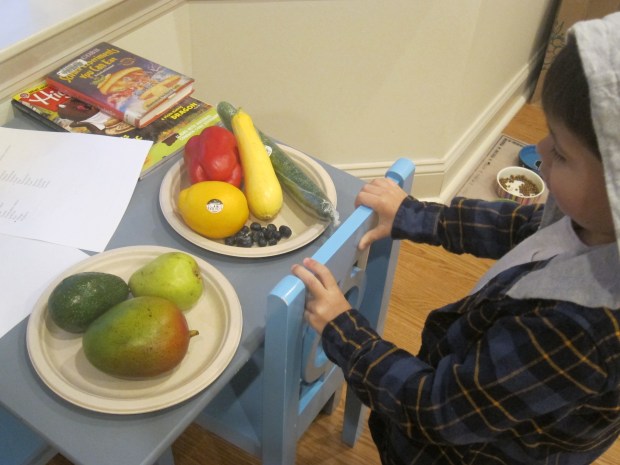
Meanwhile, it was time for a little science behind the lesson. I set out two plates for him, one featuring non-climacteric fruits i.e. they do not ripen after picking. Raddish provided a long list to choose from, and our plate included: a bell pepper, blueberries, cucumber, orange, and yellow squash.

The second plate had climacteric fruits i.e. ones that do ripen after picking. This plate held an avocado, a pear, and a mango.
Fruit Ripe (6)

“Can I eat it,” he asked right away of the mango. “Is it ripe?” At first he was stumped about how I had categorized them, guessing I had sorted them by color. But hmm, why wasn’t the cucumber on the green plate?

Fruit Ripe (7)

I loved watching him really ponder this! I guided him back to his very first comment about the mango. Was it ripe? Now he understood that one plate held fruits we needed to wait for; the other plate was fruits that wouldn’t ripen further after picking.

Fruit Ripe (10)

Time to explore! I let him have at the food just for fun. He loved peeling the squash and taking little nibbles of it, plus practicing his knife skills on the bell pepper…

Fruit Ripe (9)

…and crunching into the cucumber for a big bite.

Fruit Ripe (11)

He decided to wait until the mango was riper before peeling it. Good choice! Plus he gave the unripe avocado a big squeeze and it was solid as a rock.

Fruit Ripe (8)

Five days later, we finished with a little more science now that we had our banana results. Our finding weren’t quite as promising as hoped, likely because I had to start with green bananas on the verge of yellow and a yellow banana on the verge of green, based on what the grocery store had to sell. But we still could see that the countertop banana was the brownest/ripest and the plastic bag bananas had retained the most green.

Fruit Ripe alt

Interestingly, our plastic-wrapped banana had gotten quite ripe, so we must not have made the “mummy” tight enough.

The green bananas in the paper bag had ripened faster than the ones in plastic, since the porous paper gives them access to oxygen. But the one that also enjoyed the company of a ripe banana had both oxygen and extra ethylene, so that was riper still.

Fruit Ripe (12)

Enough science; as it turns out, leftover bananas are lots of fun to play with, even for little sister!

Fruit Ripe (13)

We enjoyed one final video of a similar experiment done with supermarket food. If your kids loved the banana experiment, try out an avocado one!

Travis and I also decided to check out the suggested book Science Experiments You Can Eat, by Vicki Cobb. We read through a couple of the experiments, but didn’t actually put any to the test.
Acorn Animal Craft Challenge

Acorn Animals (4).JPG

Travis’s craft challenge from Highlights this month was to make little animals using nothing more than acorns, wiggle eyes, and paint.

We collected a whole bunch of acorns (about 20) from oak trees nearby, which was no easy feat in 10 degree weather!

Acorn Challenge (1)

Inside, I asked him what colors he wanted to paint, thinking about what animals he might end up with. He opted for gray, so we mixed black and white together. Because he didn’t want to get his fingers messy on the small acorns, I held them while he painted.

Acorn Challenge (2)

For variety, we made a few pink acorns as well.

Once the paint dried, we glued together a few simple creatures. The stems on the acorn caps made us think of curly pig tails, so two pinkish acorns were glued together as pigs. Travis glued on the googly eyes, although the large size of the eyes made it hard for them to stick while the glue dried.

Acorn Animals (3)

The gray acorns made us think of little owls, who also received eyes.

Acorn Animals (5)

If Travis were older, I would have encouraged him to paint on little feathers, but I knew that sort of fine detail was too much for him. In sum, a cute project but not our favorite craft challenge to date.

Autumn Potpourri

Autumn Potpourri (4).JPG

How can you keep the house cozy for your kids when an early winter blast comes barreling through in November? Set this heavenly-scented potpourri to a simmer on the stove, and the whole house will be hygge in no time.

I gave Travis a quick reminder of what potpourri is before we set to work: any fragrant mixture of plant materials, like herbs, spices, fruits, flowers, or wood. Simmering the mixture on the stove gives a stronger scent than dry potpourri in a bowl, plus it adds moisture to dry air!

Autumn Potpourri (2)

Travis loved helping me slice up an orange to start. We added the orange slices to a saucepan, then added:

  • 3 cinnamon sticks
  • 1 tablespoon whole cloves
  • 1 tablespoon vanilla extract

Autumn Potpourri (3)

Take the time to make this a sensory activity, too. Travis loved smelling the spices, and even licking an extra cinnamon stick!

Autumn Potpourri (1)

Add water to the pot until it’s about 2/3 full. Bring to a boil, then reduce heat and simply let simmer. If the pot runs low on water, add more as needed. We kept ours on a gentle simmer all evening and hardly noticed the cold knocking at the windows!


Solar Eclipse Science Project

Solar Eclipse Viewer (8)

I put together a simplified version of this box back when there was a solar eclipse in our area in 2017. Today we wanted to see if the box would work for Mercury’s transit across the sun, and now Travis was old enough to help with all the steps!

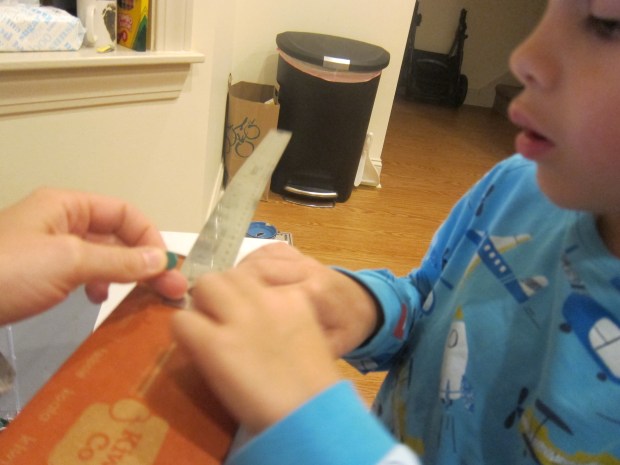
To start, we upcycled a Kiwi crate (though any shoe box would work). Measure 2 inches in from one edge and poke a push pin or thumb tack through for a small hole.

Solar Eclipse Viewer (1)

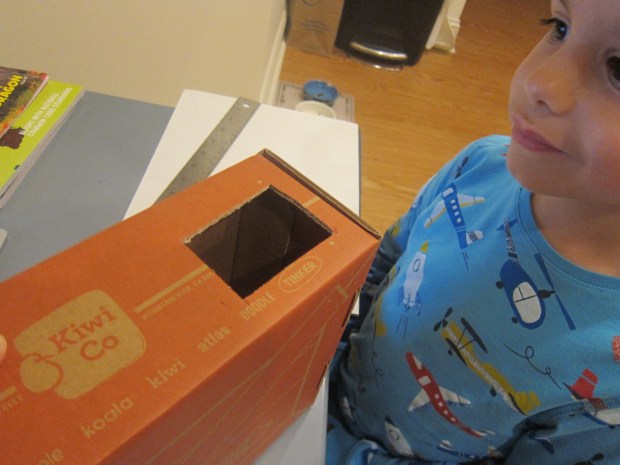
On the opposite side of that same edge, measure in 1/2 an inch and cut a square that is 2 inches on each side.

Solar Eclipse Viewer (2)

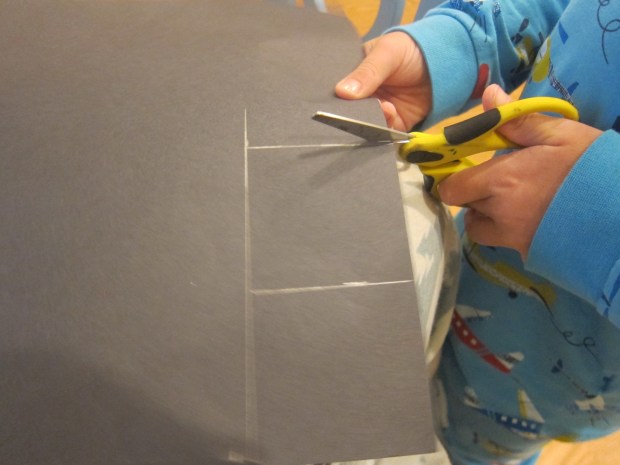
Cut a square from black paper that is 2.5 inches on each side. Travis loved cutting along the lines I measured with our ruler.

Solar Eclipse Viewer (3)

Trace the inside of a small roll of tape in the center of the black square, and cut out this circle (a mommy step).

Solar Eclipse Viewer (4)

Tape down on the inside where you’ve cut the viewing hole.

Solar Eclipse Viewer (5)

Next cut a rectangle from white paper that is 10.5 inches long x 3.25 inches tall. Use double-sided tape to attach on the inside of the box opposite the viewing hole.

Solar Eclipse Viewer (6)

Now cover any seams or cracks with tape. Travis took it very seriously to ensure that we had no points where light could filter through.

Solar Eclipse Viewer (7)

We peeked inside in the kitchen, but if course there was only darkness without any sunlight coming through our tiny pin prick.

Solar Eclipse Viewer (9)

The answer to our initial question (would the box work for Mercury), alas, was no.

Mercury entered its transit across the sun the next morning at 7.30, but it was so cloudy that the sun wasn’t visible all day! Further research suggested that Mercury would be much too tiny to spot in our viewer anyway, and what we really needed was a telescope with a proper sun filter. Instead, we checked out the transit online. And now we’re going to set aside our solar eclipse viewer for the next one… in 2024!

Gallant Challenge: Lived It, Learned It

Lived Learned (1)

Travis always loves the Goofus and Gallant page of Highlights magazine and the inspiring stories of kids with Gallant moments. We’ve even tried to replicate some. Today, it was his turn to be the Gallant kid and inspire others, because the challenge was…to share a Gallant learning moment and impart that wisdom to other kids.

Travis and I read the challenge and then I asked him to think about just such a teachable moment that he has experienced.

He decided he’d write about times at the playground where his friend is sad. Saying “I’m sorry”, he’s learned, helps make things better.

He drew a picture, including the rocks that they like to play on at the playground. I helped him use creative spelling for the word “sorry”, then wrote out the full story on the back of the page.

Lived Learned alt

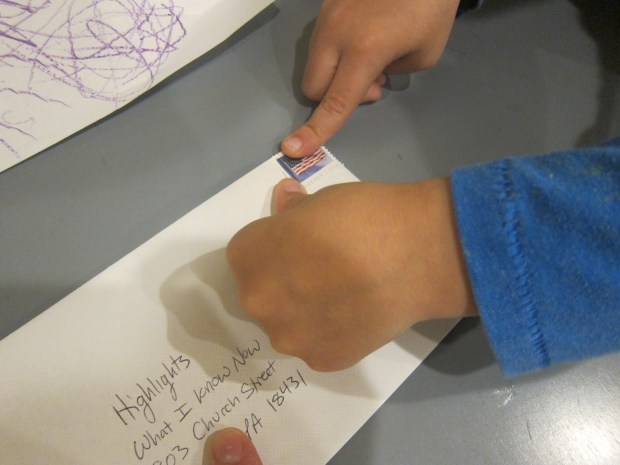
For full ownership of the project, he even affixed the stamp before we mailed it off to Highlights. Travis was so proud to share!

Lived Learned (2)

Tic-Tac-Doughnut

Tic Tac Donut (10).JPG

Here’s a crafty spin on tic-tac-toe, with quite a few twists! The game was just the thing to keep us busy on a cold morning inside.

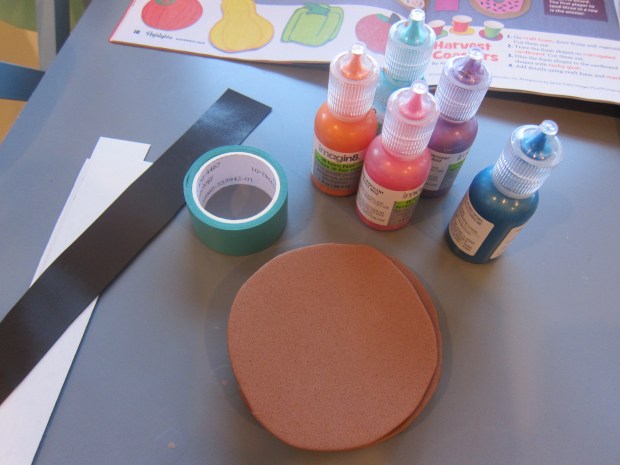
To make the playing board, cover the non-magnet side of magnetic paper (available at craft stores) with colored tape; cut the paper into strips, making 4 pieces total.

Tic Tac Donut (1)

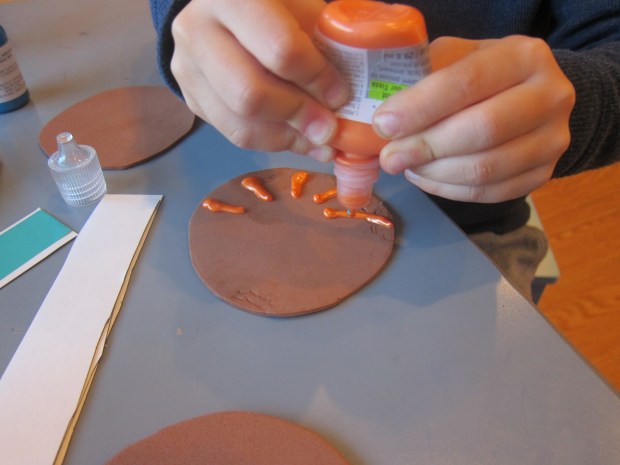
To make the “doughnuts”, cut 10 circles from brown craft form and cut out the centers. Decorate with puffy paint as frosting!

Tic Tac Donut (2)

This was definitely Travis’s favorite part, getting into the idea that he was an icer at a bakery. We got creative and decorated all 10 differently, but for more accuracy, you might want to decorate 5 with one pattern and 5 with another. We just had to remember whose playing piece was whose!

Tic Tac Donut (5)

Let the puffy paint dry completely (this might take a while, if your kids were enthusiastic with their blobs of paint!). Attach a strip of the magnetic paper to the back of each doughnut.

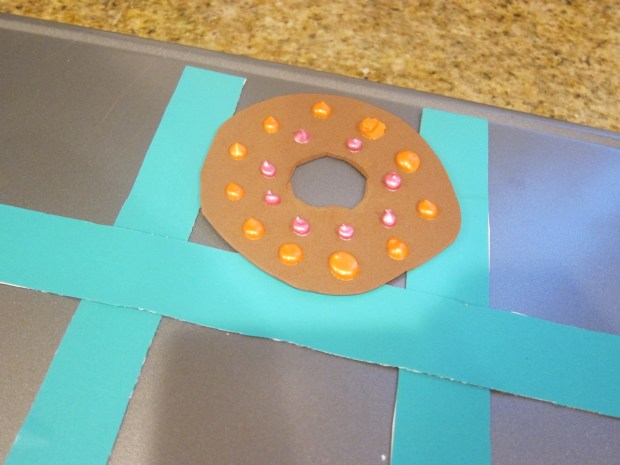
To play the game, attach the colored magnet strips to a baking sheet as the board.

Tic Tac Donut (6)

Start tossing doughnuts onto the sheet.

Tic Tac Donut (7)

The first player with 3 in a row wins! Hmm, there might have been a little cheating and reorienting going on, but Travis loved the challenge.

Tic Tac Donut (8)

Prefer your tic-tac-toe a little more traditional? Check out a few versions we’ve made in the past!

Tic Tac Donut (9)

Shades of Nature

Shades of Nature (1)

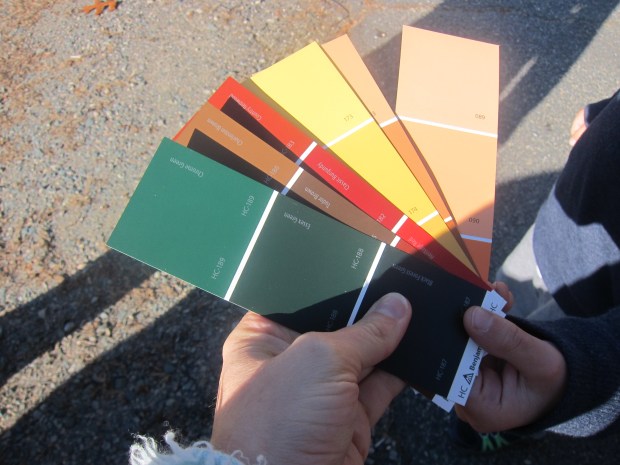
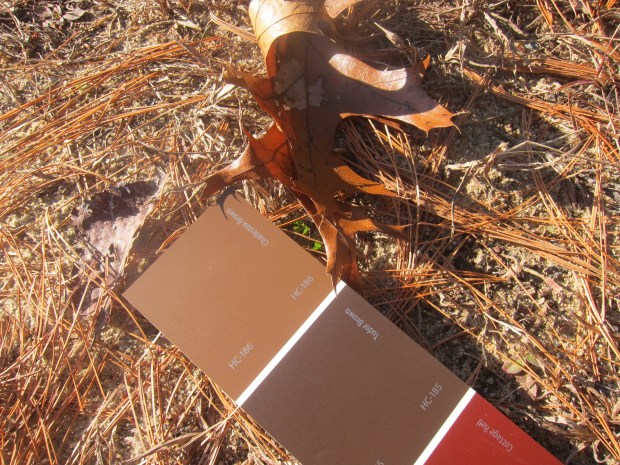
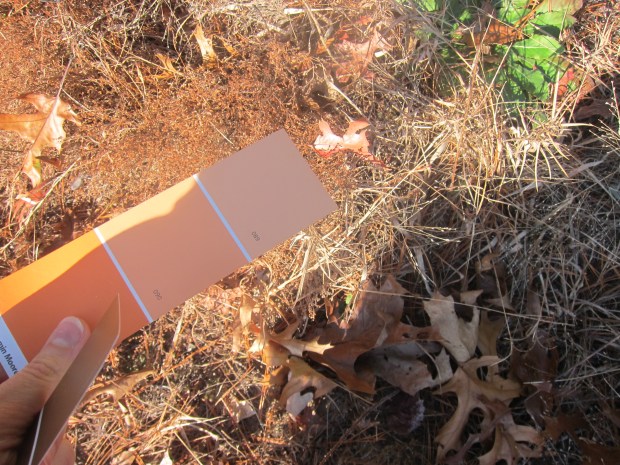
Here’s a fun twist for your next nature walk, as the last few days of vibrant fall colors leave us behind. Bring along some paint chips (these are free at any local hardware store) and hunt for fall colors!

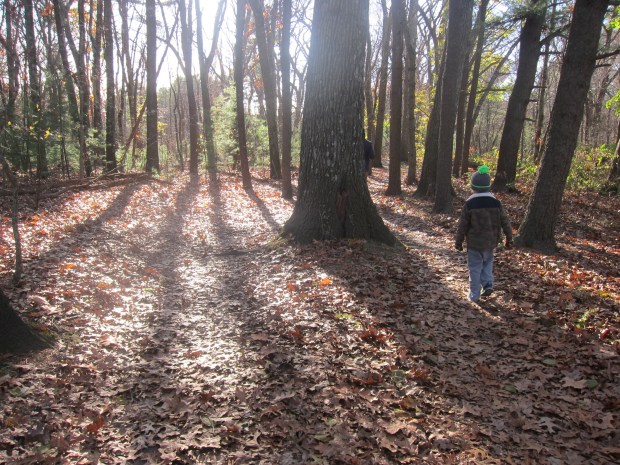
Travis and I stopped to pick up paint chips in the morning, making sure we selected lots of yellows, oranges, reds, and browns. Next stop: a local trail!

Travis noticed lots of browns right away, spanning from dark brown leaves…

Shades of Nature (2)

…to light brown grasses.

Shades of Nature (3)

Our local area is past peak leaves, but we managed to spot some deep reds left in the bushes..

Shades of Nature (4).JPG

…as well as fallen yellow leaves.

Shades of Nature (6)

Our favorite was these orange beauties!

Shades of Nature (7)

In sum, this was a nice way to add purpose to a weekend family stroll, and Travis enjoyed playing color detective!

Shades of Nature (5)