Play Parachute

Play Parachute (4).JPG

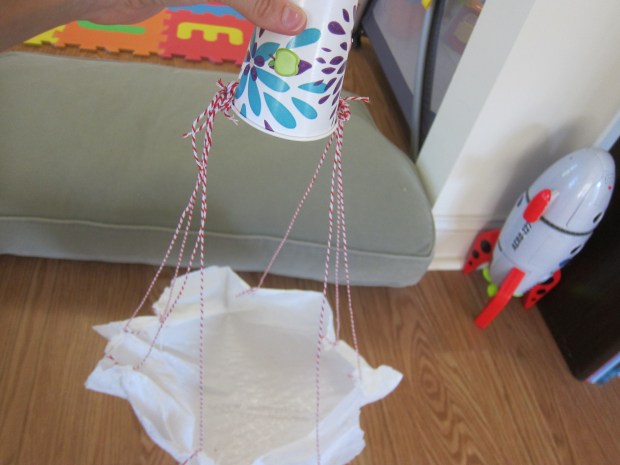
Of the various parachutes Travis has made, this one flew the best.  So read on!

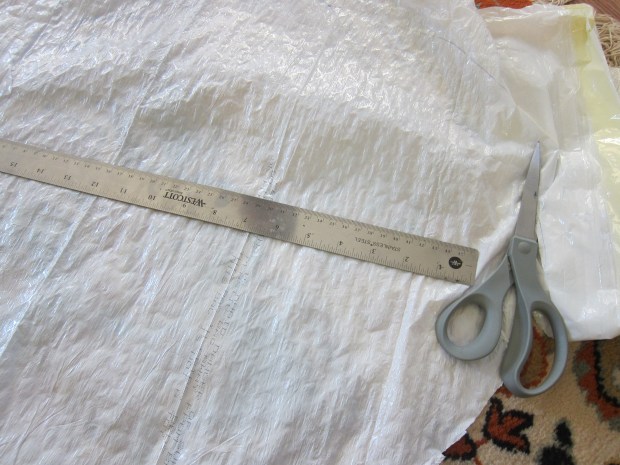
To make it, first we traced an 18-inch circle on a plastic garbage bag, great for both measuring and cutting skills.

Play Parachute (1)

Use a hole punch to make 8 holes at even intervals around the parachute. The hole punch was tough to get through the plastic, so once I had made an indent, I sometimes had to poke the rest of the way with a finger.

Play Parachute (2)

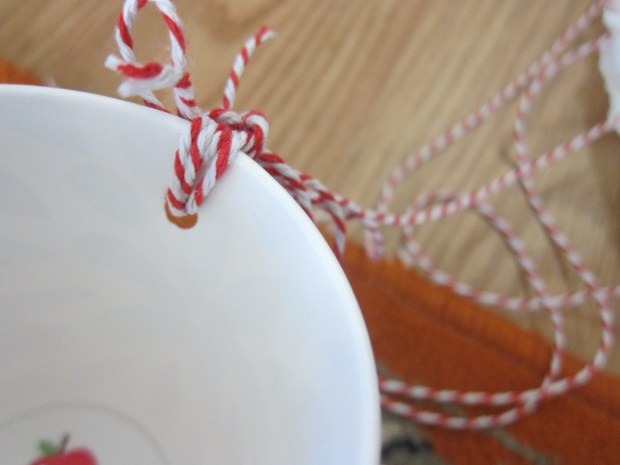
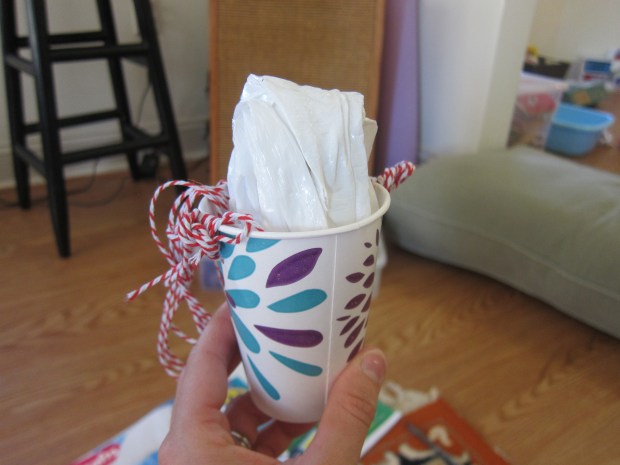
Tie a length of string into each hole, making sure they are all the same length. Punch two holes in a paper cup and tie four strings into each hole.

Play Parachute (3)

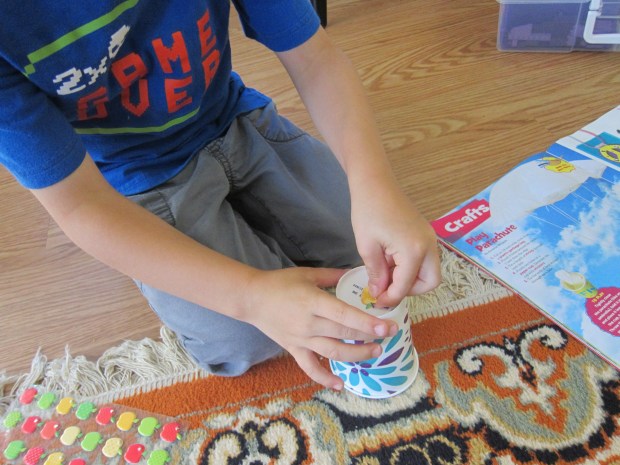
If you want, you can decorate the cup with stickers or markers. Travis added a few stickers, but truth be told wasn’t that interested in the decorating portion.

Play Parachute alt

Gather the “parachute” up like an umbrella, then fold it in half and tuck into the cup so the folded part is pointing upwards.

Play Parachute (5)

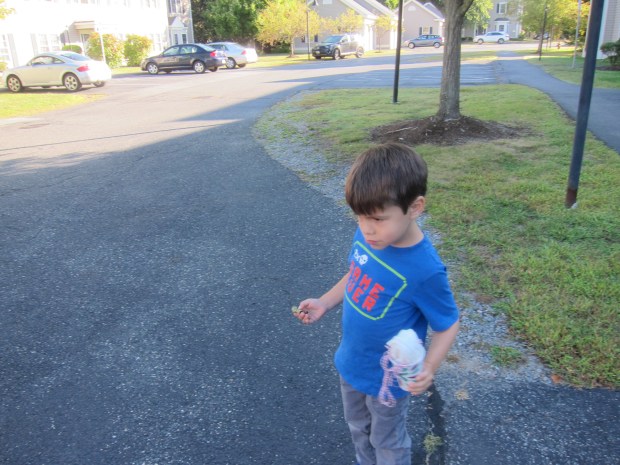
Now it was time to head outside and throw as high as we could (a mommy arm was helpful here).

Play Parachute (6)

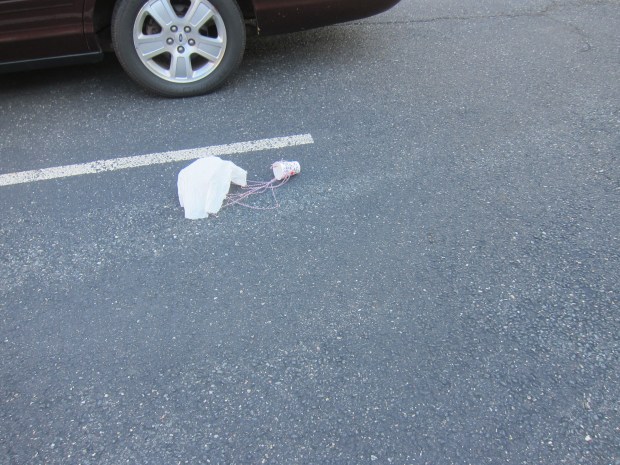
Then watch the parachute open up and float to the ground.

Play Parachute (7)

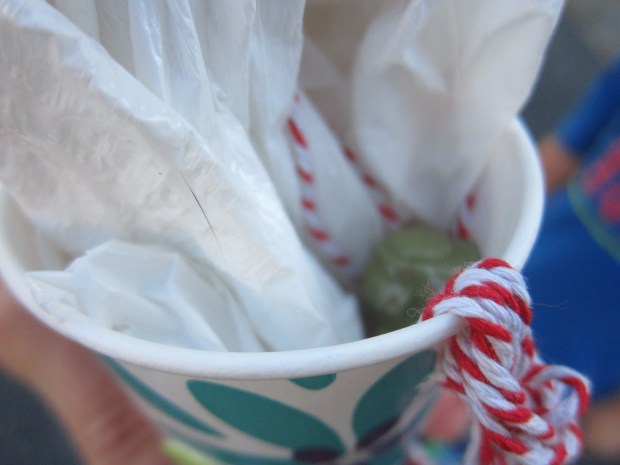
Travis wanted to add a passenger to our parachute, so we put in a brave solder (i.e. a Lego).

Play Parachute (8)

However, the parachute wasn’t able to unfurl with this little guy in the way, so I recommend letting your parachute having unmanned flights!

Play Parachute (9)


Grandparents Day Pictures

Grandparents Day (4)

Today (September 8) is grandparents day! If you are lucky enough to be near grandparents, I hope you enjoyed something special today. For those who live further away, consider having your little one draw a picture!

I suggested to Travis that he draw a picture of a favorite activity he shared with his grandparents. This turned into a picture of Darth Vader, which is probably better because the idea came from him!

Grandparents Day (3)

We added a second drawing of apple picking…

Grandparents Day (1)

…because we finished the with a beautiful multi-generational trip to the orchard!

orchard (4).jpg

It was also chance for Travis to hear stories from when they were little, like how his grandmother had a raspberry bush in her front yard. These shared outings are fantastic ways to let your kids learn about an older generation. Older kids might want to make it more of a proper interview, and can draw pictures of what they learn about their grandparents as kids.

How did you celebrate Grandparents Day this year? Please share in the comments!

Fluffy Tree Pencil Toppers

Fluffy Pencils (4)

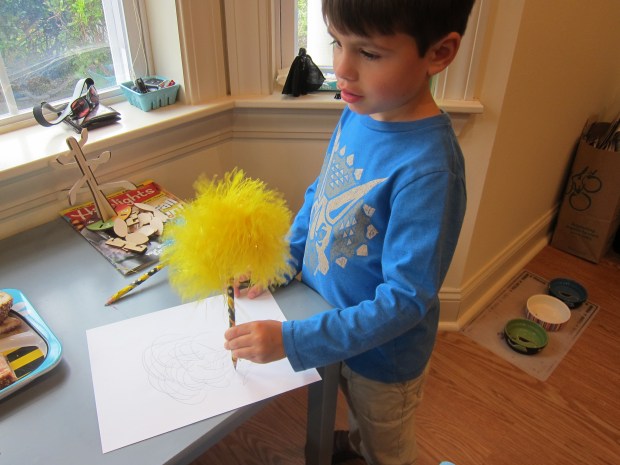
These fluffy foofy funny pencils are meant to look like the trees from The Lorax; they’re a fantastic craft if you’ve recently read the book with your child… Or just to have the coolest back-to-school pencils in the room!

To make the pencils, first wrap in tape. We used yellow washi tape and then wound around that with black.

Fluffy Pencils (2)

The trick of winding the tape at an angle was a bit difficult for Travis, but I was proud of him trying!

Fluffy Pencils (1)

Next we used craft boas and small Styrofoam balls for the tops of the trees. You can attach the boas with tacky glue, which will require a bit more patience, but Travis requested hot glue. That made this a grown-up step! Glue one portion at a time, working around until the whole ball is covered, then trim off any excess boa.

Fluffy Pencils (3)

Poke a sharpened pencil into each Styrofoam ball to make a hole; now flip the pencil around and hot glue the eraser end into the hole you’ve created.

Fluffy Pencils (5)

Your pencil tree is ready to use!

Fluffy Pencils (6)

Expanding Star

Expanding Star (6).JPG

We’re on a roll with toothpick tricks around here! This one has a nice patriotic feel to it, so might be fun to save for a holiday. But it was equally neat on a chilly September morning!

You can use plain toothpicks, but for that stars-and-stripes feel, I colored a few toothpicks with red and blue marker.

Expanding Star (1)

Snap five toothpicks in half, but don’t break them all the way through; you now have five V shapes.

Expanding Star (2)

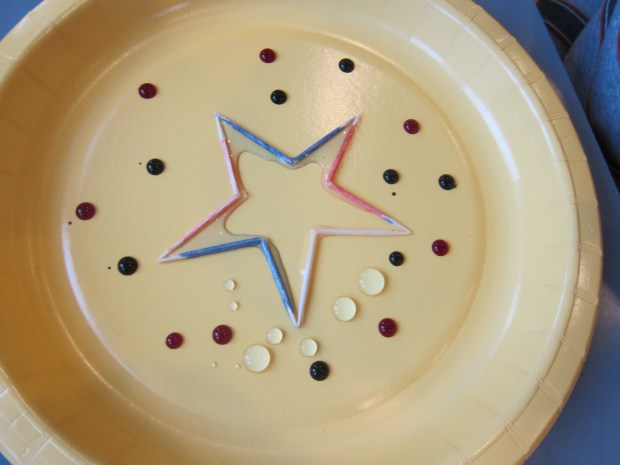
Arrange the Vs on a paper plate so they are touching. For a little added red and blue fun, we dripped a few drops of food coloring around the plate.

Expanding Star (3)

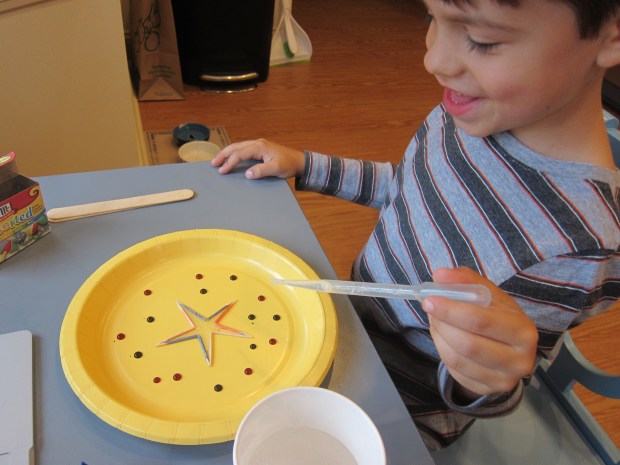
Use a pipette to drip water directly in the center of the toothpicks – excellent for fine motor skills.

Expanding Star (4)

Travis was amazed as his star began expanding outward.

Expanding Star (5)

“It’s still growing!” he marveled. The star stopped after that, but then there was lots of fun to be had dripping water over our food coloring to make big blobs, and mixing it all together.

Expanding Star (7)

Magic Marker Color Experiment

Magic Marker Color (6).JPG

This quick illustration of water’s movement might have seemed ho-hum to Travis after a few of the more complicated activities we’ve done recently, but he loved it!

Magic Marker Color (1)

To set up, I cut a paper towel into strips, each about one inch wide and four inches long. I let Travis tear them apart along my slits, which he enjoyed.

Magic Marker Color (2)

We made a line with magic marker near the bottom of each strip.

Magic Marker Color (3)

Dangle these strips into a clear plastic cup filled with water so that the paper towel is touching the water, but not the part you’ve colored in.

Magic Marker Color (5)

The water will begin seeping up your paper towel (here’s that capillary action in action again!), and Travis loved watching it.

Magic Marker Color (4)

He wanted to experiment further in so many ways. First, we continued dipping the paper towel further into the cup. This made the marker color continue to bleed upwards, until the ink was so faint you couldn’t tell anymore.

Magic Marker Color (8)

Then we colored a wider piece of paper towel with multiple markers, and draped this all around a plastic cup. Which color would creep up the fastest? He was thrilled watching the purple and green in the middle, which outperformed the others.

Magic Marker Color alt

Plus it was fun to play with leftover soggy paper towels and cups. So this quick experiment was well worth it!

Magic Marker Color (7)

Surface Tension Experiment

Surface Tension (8)

This is one of those experiments that Travis and I couldn’t get quite right, whoops! But we tried and had fun in the process, which is sometimes all that counts.

The science behind the activity is that water molecules hold with strong bonds, so much so that they’ll fill the holes of a mesh bag even when tipped upside-down.

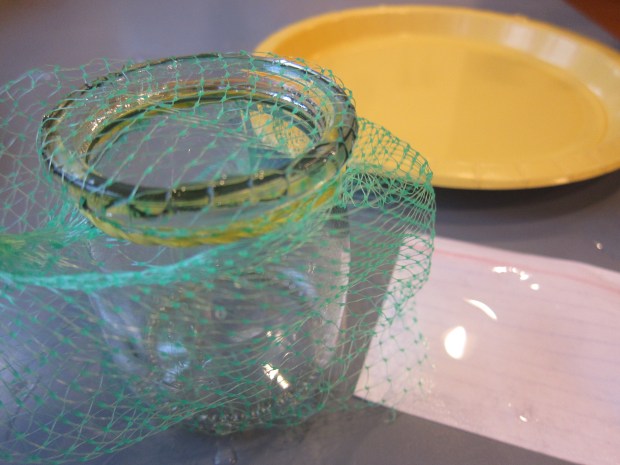
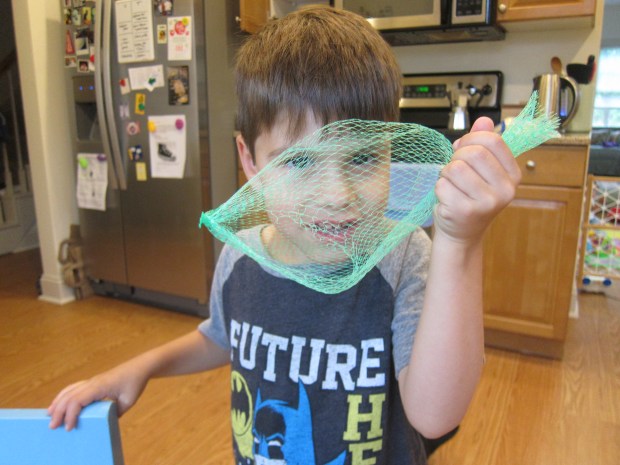
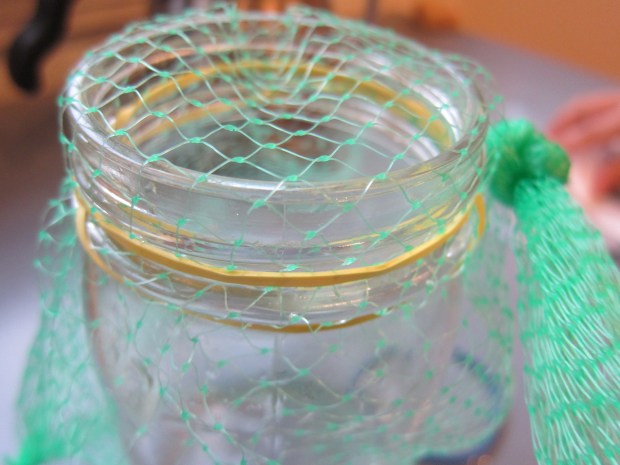
First, Travis checked out our mesh bag. It sure didn’t look like it would hold water!

Surface Tension (1)

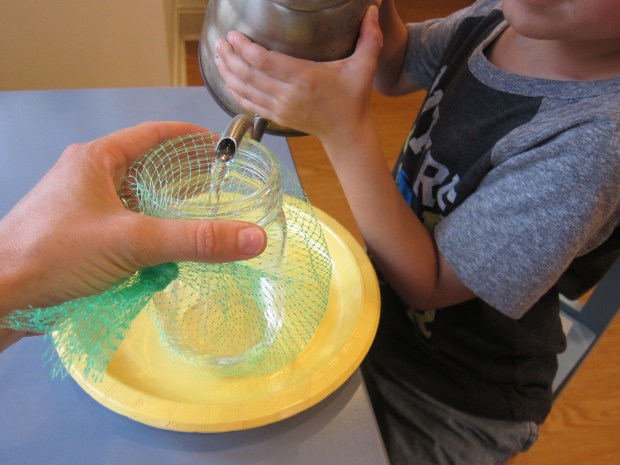
We put it over a mason jar and secured with an elastic. Fill the jar about 3/4 full with water.

Surface Tension (2)

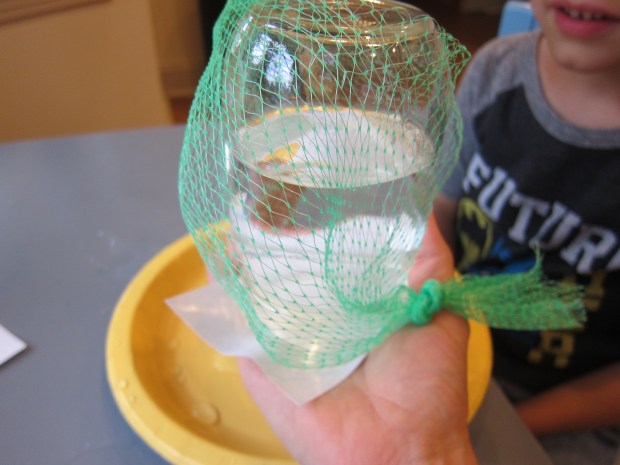
Place an index card on top and flip over. No water leaking yet.

Surface Tension (3)

Now the idea is to remove the index card – slooowly. According to the internet, sometimes it can just fall off, which works even better. Either way, the water should hold!

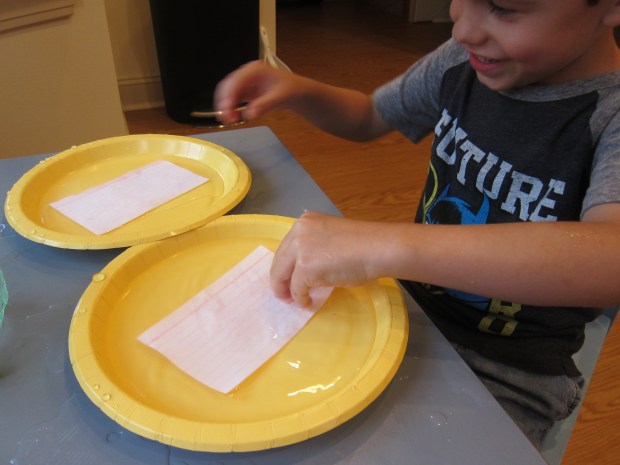
However, I think because every time we slid the index card out it wiggled the mesh bag, our experiment didn’t work.

Surface Tension (4)

We tried altering several variables. Securing the elastic tighter around the mesh didn’t make things work any better, nor did using a second, smaller-mouthed glass jar.

Surface Tension (6)

But you’ll notice from the giggles hat Travis wasn’t disappointed in the slightest. In fact, I think he liked the experiment better with the mess!

Surface Tension (7)

Did you get your water to hold? Please share in the comments!

Floating Toothpick Trick

Floating Toothpick (4)

After learning about how water molecules help each other up the roots of a tree (just imagine cute water droplets holding hands!) Travis and I tried this fun way to break those same water molecules apart. All you need is a bowl and toothpicks! My kindergartner found it slightly naughty to break the bonds, meaning he thought this experiment was hilarious!

Floating Toothpick (1)

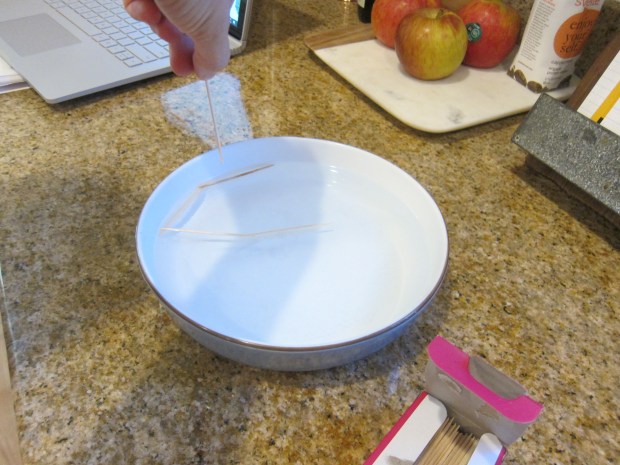
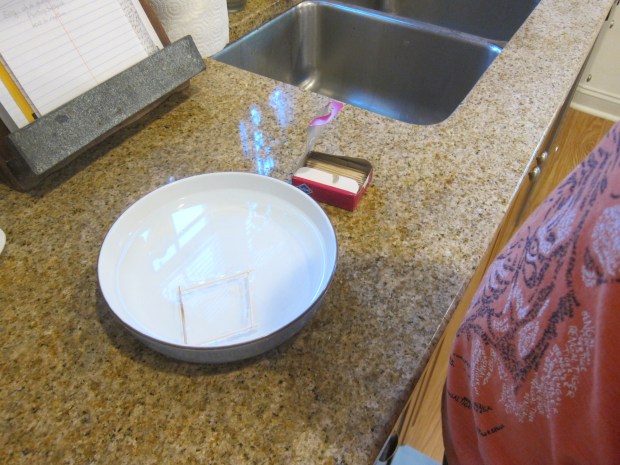
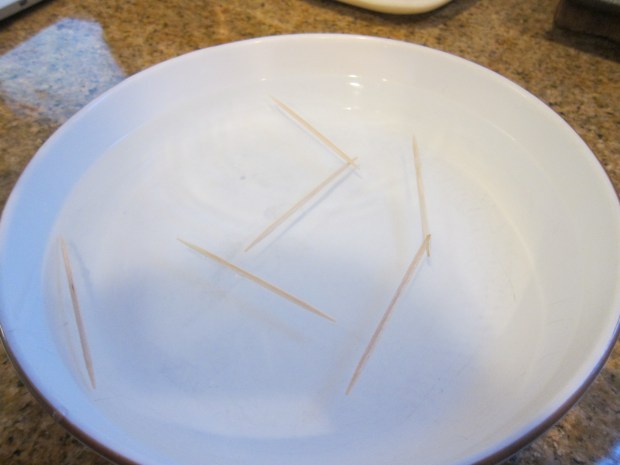
First, fill a shallow bowl with water. Wait for the water to be still, then very carefully arrange four toothpicks in a square. It helps to overlap them slightly, but not so much that they will stick together.

Floating Toothpick (2)

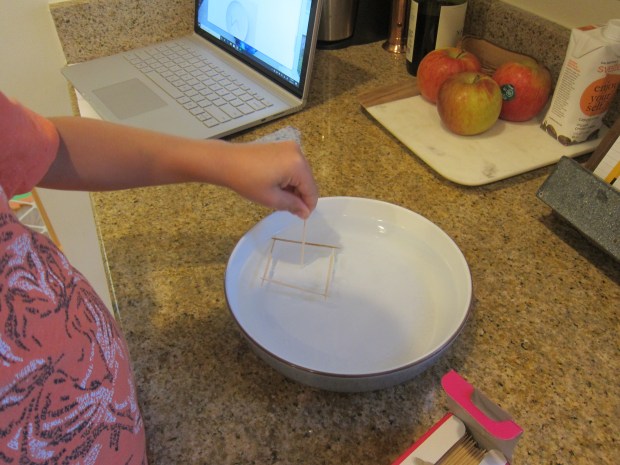
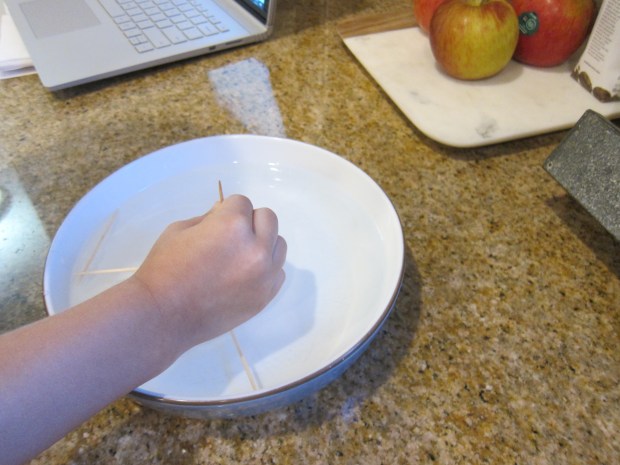
Dip a toothpick into the center of the square. Nothing happens! There is nothing to break up the water bonds.

Floating Toothpick (3)

Now dip a second toothpick into dish soap. Dip into the center of the square and… the toothpicks run away from each other!

Floating Toothpick (7)

As stated above, Travis thought this was pretty hilarious, and he wanted to repeat with our toothpicks in different configurations. We tried a zig zag, although the results weren’t as pronounced.

Floating Toothpick (5)

So then we needed to repeat the square a few times (if you repeat, start with fresh water; once the water is soapy, the effect isn’t as pronounced).

Floating Toothpick (6)In sum, a very kid-friendly way to illustrate some big (or should I say, microscopic) scientific concepts!

Capillary Snack-tion Straw

Snack Straw (5).JPG

This straw has some serious action! After learning about how trees and plants drink their nutrients up from the soil in his latest Kiwi Crate, Travis discovered he too can sip in defiance of gravity: by slurping through a straw.

Cut a watermelon into thick slices. Use a flower-shaped cookie cutter to make a flower shape from the watermelon. Insert the “flower” onto a thick straw “stem”.

Snack Straw (1)

Give a quick blow into the straw to expel the watermelon piece inside. This earned a “whoa!” from Travis.

Snack Straw (2)

We filled a glass with lemonade – any drink will do, but lemonade is a favorite around here – and then tested it out.

Snack Straw (4)

Travis provided the power for his flower’s “roots”. What a delicious way to soak up nutrients! When the drink is finished, you can eat your “flower” of course.

Snack Straw (3)

Science of Trees Kiwi Crate

Kiwi Trees (1)

Travis’s crate from Kiwi Co. this month was about the way trees and plants take nutrients from the roots upwards, in seeming defiance of gravity. Travis loved every element of this “capillary action” crate… and for good reason!

First, we needed to see capillary action in, well, action, with Capillary Action Art. Using the provided double-sided tape dots and clear slides, Travis attached on three string stems and 3 coffee filter paper flowers.

Kiwi Trees (8)

He added the provided binder clips on either side of the slide’s bottom, and two additional clips to hold everything in place. Clever: now the blender clips meant the slide could stand upright over the provided paint tin.

Kiwi Trees (9)

He dripped liquid watercolors into three of the compartments. There was red and yellow watercolor, and his booklet suggested combining them in the third compartment to make orange.

Kiwi Trees (10)

Almost instantly, the color was bleeding up the stems.

Kiwi Trees (11)

Travis was practically shaking with amazement as he watched this, especially because of how fast it happened.

Kiwi Trees (4)

When it reached the tissue “flowers,” he was ecstatic.

Kiwi Trees (3)

Kiwi must have known this would be a big hit; there are enough materials to do the project twice. Needless to say, we repeated it instantly.

As a nice finishing touch, you can use additional double-sided tape dots to place the slides into a cardboard frame, and save your artwork. Talk about STEAM!

Kiwi Trees (15)

The second activity was to Build a Balancing Tree. This required slotting together two wooden pieces as the trunk, and inserting that into a wooden base.

Kiwi Trees (23)

Wood leaves and roots allow your little engineer to tip the tree one way or another.

Kiwi Trees (18)

At first, Travis seemed disappointed. But then we put the tree to the test in a Tilting Tree Game. Roll the dice to add leaves or roots to one of the four quadrants… but if you roll the (!) symbol, there’s a natural disaster! This can be a tornado (blowing on the tree), earthquake (shaking the box it sits on), or forest fire (removing the leaves from certain colored sections).

Kiwi Trees (19)

Travis cackled every time we thought our tree was nearly complete but then disaster struck.

Kiwi Trees (20)

Okay, so this isn’t perhaps the nicest way to teach kids about natural disasters, but it sure had him thinking about the stability that a tree’s roots provide, and was a ton of fun.

Kiwi Trees (22)

We concluded with two additional activities from the booklet. First, you can demonstrate the most mundane capillary action of all with a paper towel. Pretend to spill a little water or juice on the table (Travis thought it was quite funny that mom made a mess on purpose) and then quickly place a paper towel over it. The fibers act just like the root system of a plant!

Kiwi Trees (6)

Next, we repeated a classic flower-dyeing experiment, but with a slight twist. Use any white flowers for the game, such as carnations or roses. Trim the stems at an angle, then carefully slit the stems down the middle.

Kiwi Trees (12)

Fill two cups with lukewarm water and add 20 drops food coloring (in different colors) to each cup.

Kiwi Trees (13)

Arrange two flowers so that the halved stems dangle one into each cup. I found it useful to use a paper clip to hold them in place, so the flowers didn’t tip.

Within just an hour or two, we could already see a pretty tint… on each half of the flower!

Kiwi Trees (16)

By morning, the colors were vibrant and split evenly down the middle, a fantastic visual of capillary action.

Kiwi Trees (17)

We finished with two fun suggested reads: The Tree Lady by H. Joseph Hopkins and Tell Me Tree by Gail Gibbons. In sum, we loved this crate!

Solar System Models

Planets alt

When you’re the only mom who gets her kid up and dressed and backpack packed and lunch made and head to the bus stop and then learn that the Friday before Labor Day is apparently also a day off from school… Well then whoops, you suddenly have a day to fill!

Luckily I had this little project from Raddish Kids up my sleeve, a chance to make two models of the universe: one tiny and one huge!

First I asked Travis what planet we live on. He correctly knew Earth, and was able to name a few facts about it, like how its watery.

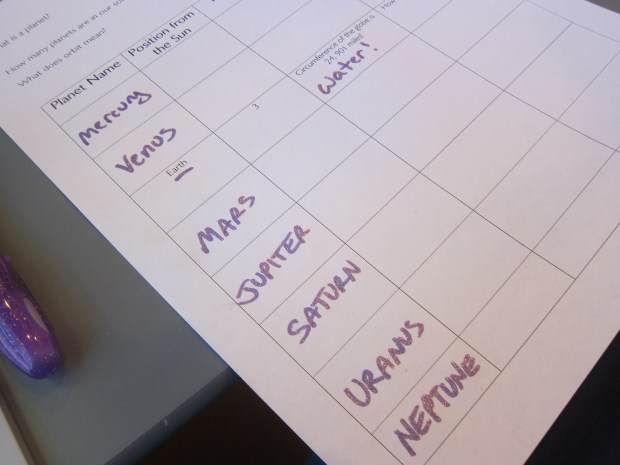
Raddish provided a chart to name the other planets, all of which my budding astrologer could fill in. He proudly gave me a fact about each, which I wrote down (in glittery galactic pens, of course). Filling in the column with further questions about each planet was a bit harder for him to grasp, but big kids can write in any pending querries here, as well.
Planets (1)

After watching a suggested video that helped him fill in a few new facts about each planet, it was time to model!

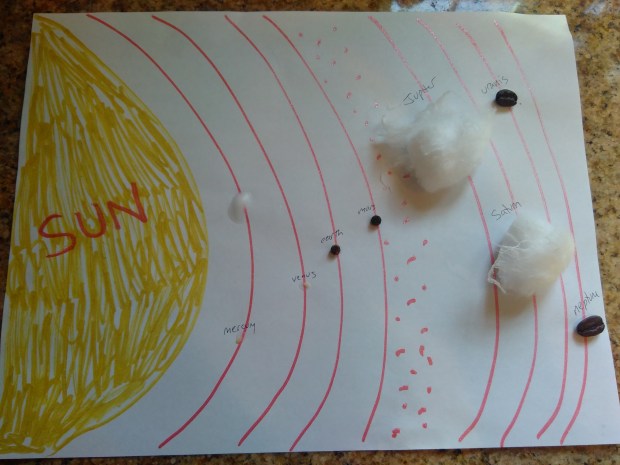
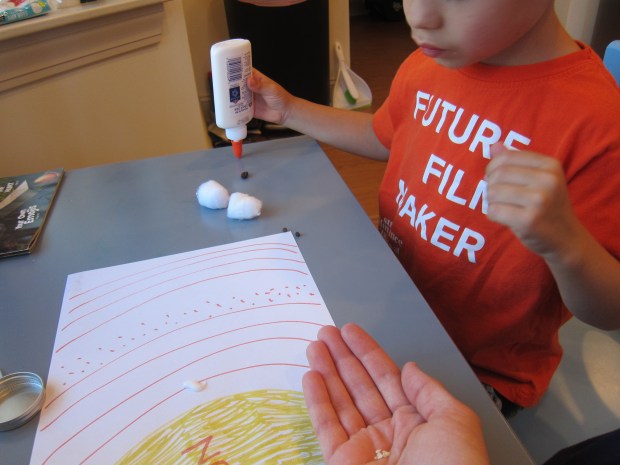
First up was the Tiny Solar System. I drew a half circle on the edge of a piece of white paper and labeled it as the sun. I drew 8 orbits, with an asteroid belt making a wide patch between the fourth and fifth lines.
Planets (2)

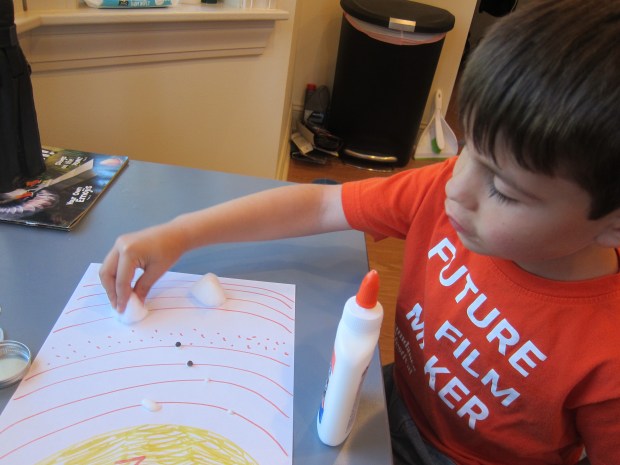
For scale models of the planets, we glued on the following:

2 sesame seeds (Mercury and Venus)

2 peppercorns (Earth and Mars)

2 cotton balls (Jupiter and Saturn)

2 coffee beans (Uranus and Neptune)

Planets (3)

Note: the scale obviously isn’t exact, but the idea here is that the relative sizes of the planets (the enormity of Jupiter, the tininess of Mercury) become apparent. This model also didn’t show the distance between orbits to scale.
Planets (4)

Travis marveled at the tiny sesame seeds. In fact they were so small we could barely see them until the glue dried!

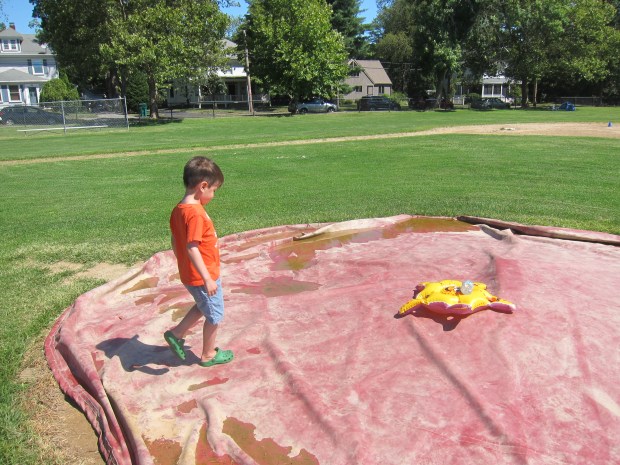
Now for the Large Solar System! We headed out to the playground with a bag full of balls in various sizes. Travis was very curious as I collected these from around the house, but was soon to see why.

I inflated a silly starfish to be the sun and put this right in the center of a baseball diamond. (Note: A beach ball would work, too, but I liked that the starfish was a sun/star shape).
Planets (5)

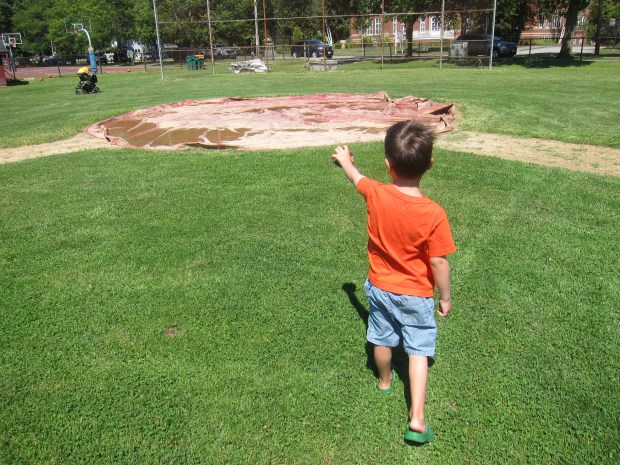
Next we walked out a full 78 steps from the sun holding a wiffle ball as “Neptune.” This took us right to the edge of the baseball field.
Planets (6)

Repeat with the following:

50 steps: wiffle ball (or tennis ball): Uranus

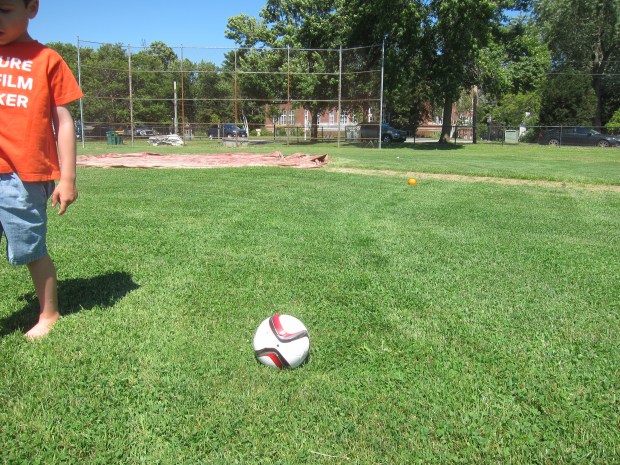
25 steps: soccer ball: Saturn

13 steps: basketball: Jupiter

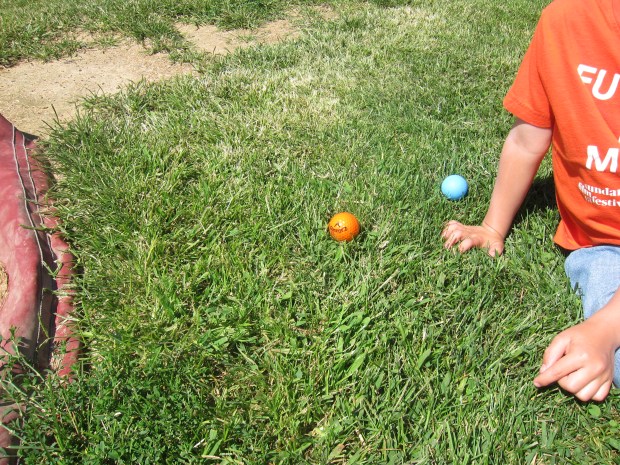
4 steps: ping pong ball (or golf ball): Mars

3 steps: ping pong ball: Earth

2 steps: marble: Venus

1 step: marble: Mercury
Planets (8)

This exercise is eye-opening even for a grown-up, revealing how truly close our rocky neighbor planets are, and how truly vast the distances are between the outer planets.
Planets (9)

I shared these fun facts with Travis to highlight the great distance across the baseball field. Each step we’d taken was equal to 36 million miles. A rover took 6 months to reach Mars, that “one step” away, but 12 years to reach Neptune! He seemed impressed, but then wanted to play soccer… There goes Saturn!

On the way home, we made up some corny space jokes.

How did Mars know what Venus was thinking? It red its mind.

Why was Jupiter so stinky? Because it passed gas.

Ha, what space joke will your kid create? Please share in the comments!

Planets (7)