Leaf-Shaped Crayons

Leaf Crayons (5).JPG

Back-to-school plus a drop in the temperature around here has us thinking about all things fall, even though it’s not quite autumn yet. Making leaf-shaped crayons was the perfect way to kick off the season!

First, we dumped out all of our crayons and I asked Travis to help me select the ones in fall colors – browns, oranges, yellows, and reds. This was a nice reminder for him of the upcoming season and what we can expect to see on the trees.

Leaf Crayons (1)

Grown-up step: peel the paper from the crayons. (Note: making a slit with an X-acto knife first helps).

Travis was a big fan of helping to snap the crayons into small pieces!

Leaf Crayons (2)

We filled a leaf-shaped silicone mold (available at craft stores or Amazon) with the small pieces.

Leaf Crayons (3)

Place in the oven at 300 degrees for 15 to 20 minutes, until the crayons are completely melted. It will help to place your silicone mold in a larger baking dish, so you can easily remove from the oven.

Leaf Crayons (6)

Let cool completely, then pop the crayons from the mold and get drawing!

Leaf Crayons (7)

Coffee Can Drums

Coffee Drum (6)

The spin drum we made the other day was such a big hit (pun intended!) that we continued the musical fun with this easy upcycled drum. It’s similar to the oatmeal- and soup-can drums we made about a year ago, but you can never have too many drums in your home collection.

Trim construction paper or craft paper to fit around an empty coffee canister, leaving it about an inch longer than the can at the bottom.

For decoration, we worked in some fine motor skills practice! Give your child any small circular object and have them trace it on the paper.

Coffee Drum (1)

While Travis turned his attention to other toys, I hot-glued the construction paper to our can, folding over and gluing the excess paper on the bottom.

Coffee Drum (2)

Then we continued the tracing, this time making the circles on a strip of colored duct tape.

Coffee Drum (3)

Cut out the tape circles (another grown-up step; cutting duct tape is a sticky affair), then give them to your child and let them line up the sticky circles with the ones on the paper. Travis enjoyed this part!

Coffee Drum (4)

For the head of the drum, I snipped the narrow end off of a balloon, and stretched over the can. “Mom, you’re not very good at this,” Travis accused. Phew, got it on the third try! Secure the balloon with another piece of colored duct tape.

Coffee Drum (5)

We threaded some ribbon around our drum as the final decorative touch. I also hot-glued pom poms onto the ends of unsharpened pencils to be the drumsticks, although this would have worked better if I had had larger pom poms in our craft bin!

Coffee Drum (7)

My happy drummer boy!

Spin Drum

Spin Drum (8).JPG

This great little craft will have little musicians marching and drumming all over your house. Perfect for a rainy day!

For the body of the drum, we used small papier-mache boxes that I purchased off Amazon, about 4 inches across. Remove the lid, and punch three holes in the box, at 3 o’clock, 6 o’clock, and 9 o’clock.

Spin Drum (1)

This step might be tough for little fingers, so add your own muscle power to the hole puncher. We even enlisted daddy’s help after my hand got tired!

Place a dowel in the bottom hole, then string twine through the side holes, looping it around the dowel in the center as you go.

Spin Drum (2)

Glue the dowel in place – I definitely recommend hot glue for this step.

While the glue briefly dried, Travis was in charge of decorating the lid with markers. He said his design was a mandolin! (Kids can decorate the side of the box, too).

Spin Drum (3)

We hot glued on the decorated lid, and then tied wooden beads to the dangling ends of string, securing them with a double knot.

Spin Drum (5)

Make sure your beads and strings are the right length to hit near the center of the box lid, before you tie off the knot. Our first try was too short, but a second drum was just right.

Spin Drum (4)

Now spin and play!

Spin Drum (6)

My impish boy soon decided his drum worked not only as an instrument but as a “spear”, too, which made for lots of imaginative play. Either way, I loved seeing him have fun!

Sandpaper Leaves

Sandpaper Leaves (7).JPG

We often think of leaf crafts as projects for the autumn, but here’s one that can be done in nearly every season (except winter!). It combines a little bit of nature, a little bit of sensory art, and a little bit of coloring all in one.

After a full family day at the park, we returned home with a collection of leaves. All of them were green this time of year (late summer), but we found leaves in as many different shapes as possible, everything from nearly oval, to trefoil, to pointy.

Sandpaper Leaves (1)

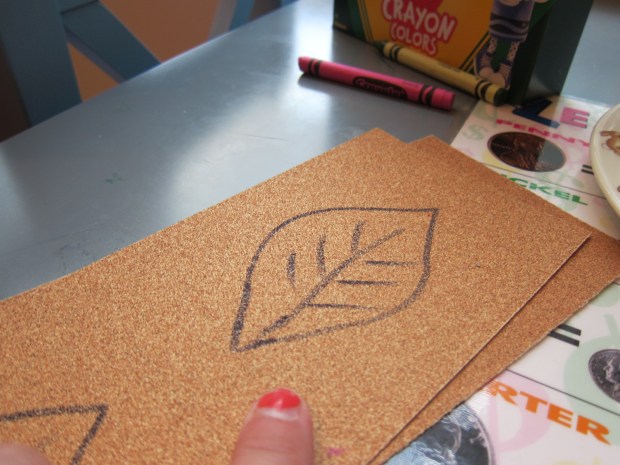
Once home, I traced the leaves in permanent marker on sandpaper, making sure to include lines for the veins (a quick little science lesson on how leaves drink their water!)

Sandpaper Leaves (4)

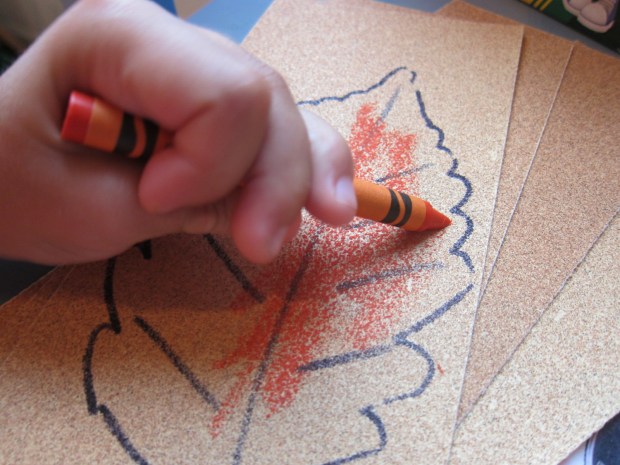
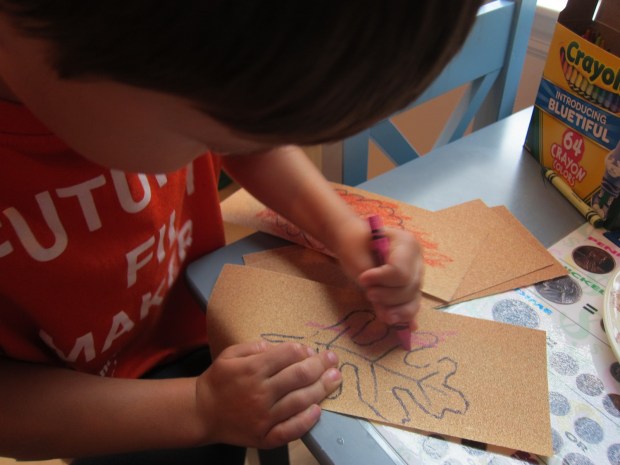
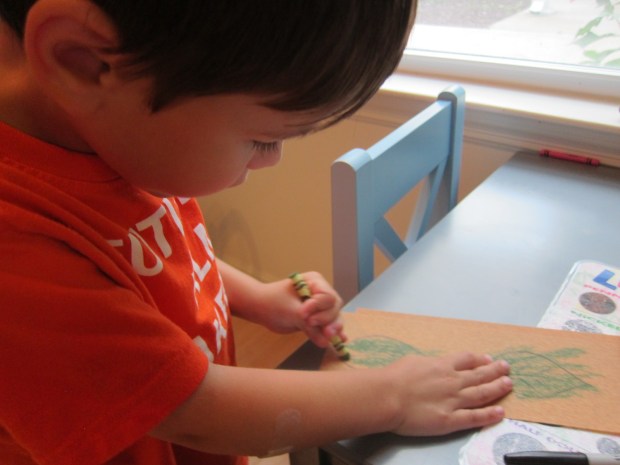
Travis loved selecting colors and filling in each leaf, with the sandpaper adding extra tactile fun.

Sandpaper Leaves (2)

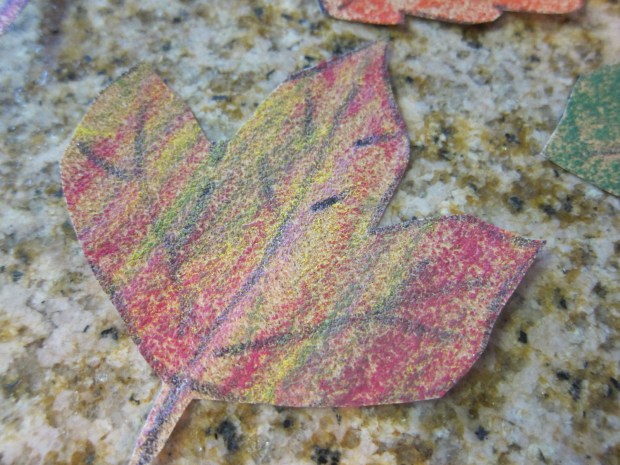
He made some leaves true to life (oranges, greens), and went beyond nature with a few others in vibrant pinks.

Sandpaper Leaves (3)

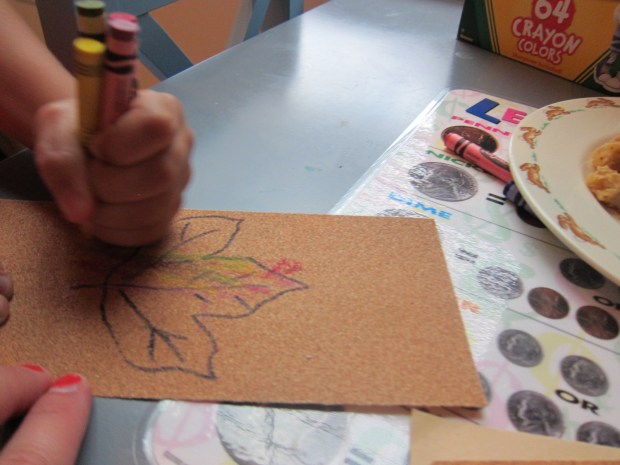
Best of all was when he grabbed a handful of crayons for a rainbow leaf – his own invention.

Sandpaper Leaves (6)

Cut out the leaves and paste up on the walls or use as pretty gift cards the next time you send a loved one something special.

Sandpaper Leaves (5)

We loved this variation on leaf art!

Sandpaper Leaves (8)

Stamped Garden Gloves

Stamped Gloves (6)

As camp season comes to a close, we’re thinking about gifts to thank Travis’s counselors for a wonderful few weeks in the sun. In keeping with all that outdoor time they’ve spent with your children for the summer, consider these kid-painted garden gloves as a parting gift!

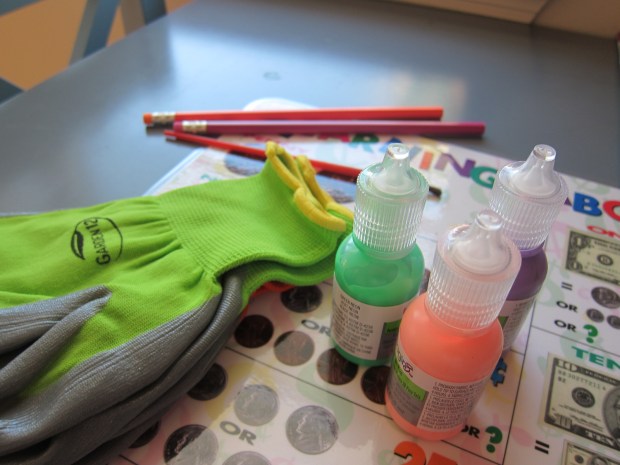
To make the project extra fun, we bought puffy fabric paints in pretty pastels, and instead of using paintbrushes, we turned pencil erasers into our tool of choice.

Stamped Gloves (1)

Squeeze out the paints onto a paper plate.

Stamped Gloves (2)

Dip a pencil eraser in a color, and stamp onto the gloves.

Stamped Gloves (3)

Travis made a set decorated with multi-colored dots.

Stamped Gloves (5)

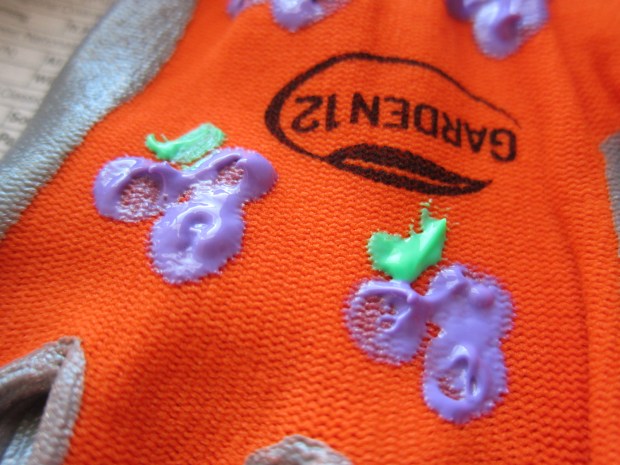
Meanwhile I showed him a slightly more deliberate method of painting: purple dots in bunches of three to be purple grapes. A little brush of green paint for the leaves completes the look. Older kids will love making this version.

Stamped Gloves (4)

To present as a gift, simply wrap up the gloves with a seed packet of herbs and some twine. They would make a wonderful hostess gift for any summer friends you visit, as well.

Stamped Gloves (8)

Nature’s Palette

Natures Palette (9)

This beautiful activity from High Five magazine combines a craft and a way to get outdoors. It’s quite similar to a rainbow hunt we did late last summer, but sometimes it’s fun to repeat an activity as your children age; they’ll reap different rewards from it each time!

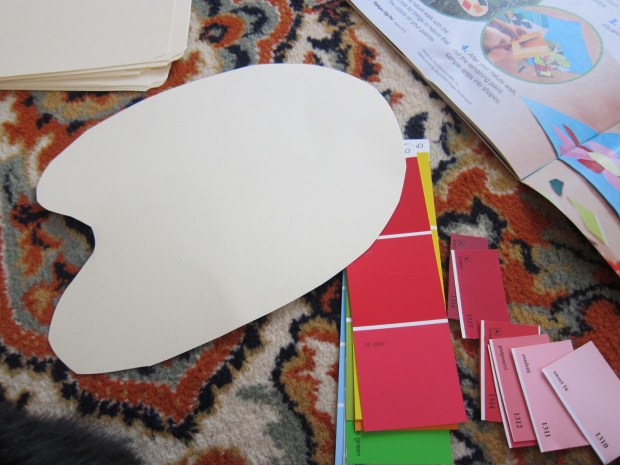
This time we started by making a proper artist’s “palette,” which immediately had Travis excited. Cut a palette shape from a file folder (I did this step for Travis, since he wasn’t sure of the shape).

Nature Palette (1)

Next, cut paint chip samples (available for free at paint stores or home good stores) into pieces, and arrange on your palette. Travis was thrilled to use grown-up scissors, with a guiding hand.

Nature Palette (2)

Little drops of color!

Nature Palette (7)

Travis immediately seized upon the fun to be had with the remaining paint chips and extra file folders, and was soon making collages and creations.

Nature Palette (8)

He mostly cut squares and rectangles, but I helped him cut a few nature shapes like leaves and flowers, and we arranged them in pretty nature pictures.

Nature Palette (6)

Then came the real nature walk! Instead of going into the forest, I detoured us to a local botanical garden, knowing we’d find the full rainbow of colors there. Travis loved seeking out different shades on his palette.

Natures Palette (10)

We thought we might have to use the sky as our blue, until stumbling upon the perfect hydrangea!

Natures Palette (12)

In sum, this activity served as the prompt for a perfect mother-son summer afternoon.

Natures Palette (11)


Melted Crayon Art

Melted Crayon (4)

My son loves appliances, which he loves to play with (unplugged) under careful adult supervision. So when I saw this craft involving a hairdryer, I knew we had to give it a try.

I purchased a small canvas (8×8 inches) at the craft store, and cut the wrappers off a rainbow of crayons. You’ll want new crayons with nice pointy ends for this project, so it’s not the best option for recycling broken ones.

We arranged the crayons along the top of the canvas in roughly rainbow order, singing a rainbow song as we worked, and glued them down. Let dry completely.

Melted Crayon (1)

Then it was time to make some art! Cover your work area with newspaper, aim the hairdryer at the canvas, and turn on to the highest setting. He couldn’t believe I was letting him down this!

Melted Crayon (2)

With a guiding grown-up hand, we got right up close to the crayons. Now they were really starting to melt!

Melted Crayon (3)

Let the wax cool, then find some place to hang your work of art!

Melted Crayon (5)

Color Wheel Gecko

Color Gecko (12)

This project requires a bit more adult set-up usual, but is so worth the effort for the learning and beautiful final product! It’s a fun way to introduce the concept of primary and secondary colors to kids and has a fun animal theme thrown in.

Geckos or chameleons are the perfect creature to illustrate the color wheel because they can camouflage, or change their color to reflect their surroundings. If you want, start off this project with a read of Leo Lionni’s A Color of His Own – then get crafting!

As mentioned, a lot of the set-up here will be for grown-ups only, unless your kids are 1st grade or above. But Travis pretended he was a teacher giving a lesson on geckos while I worked!

Color Gecko (2)

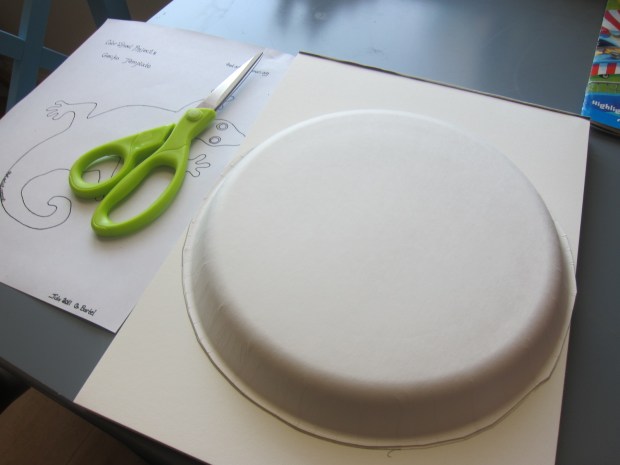
First, trace a circle onto watercolor paper using a paper plate as a guide. Cut out.
Color Gecko (1)

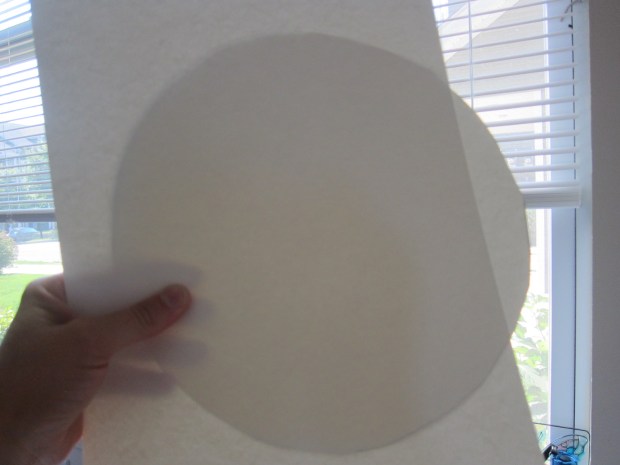
Place the circle over a second piece of watercolor paper, leaving a bit of the circle hanging off the edge (this is the handle that kids will spin later on). Use a pencil to mark where the center of the circle is on the circle itself and on the background paper. If you hold the paper up to the light, you can mark the back as well. Trust me, you’ll want this point as a guide later!
Color Gecko (3)

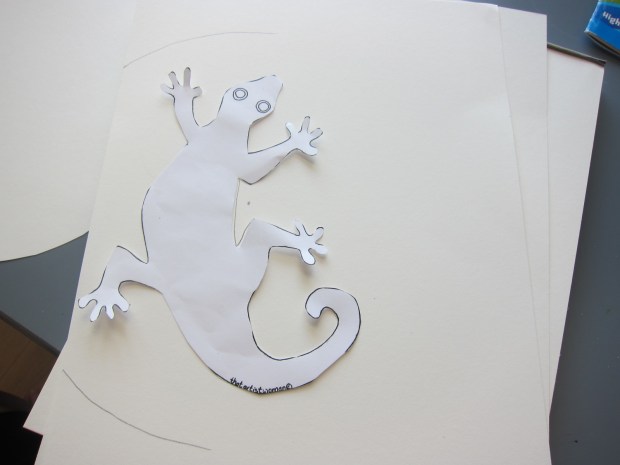
Cut out the gecko template, and trace onto the background paper, making sure he doesn’t cover that center mark you’ve made.
Color Gecko (4)

Now you need to cut out the traced gecko. Grown ups can pierce a hole with scissors and cut out, but if your kids want to do this step themselves, it may be easier to cut in half along the gecko, cut him out, and then tape the paper back together with painter’s tape. See this link for a full demo.

Now it was time to paint! Grab your circle and a set of watercolors. Travis watched as I divided the wheel into six segments and we discussed the primary colors: red, yellow, and blue. Meanwhile, he couldn’t want to start painting his own scene, talking about what colors he chose.

Color Gecko (5)

As I filled in each secondary color on the wheel, I had him guess what we’d make first. “If I have red and add yellow, we get…” “Orange!” he predicted.

Color Gecko (6)

Looks like those art classes are paying off! You can mix up your own version of each secondary color on a paper plate, or just cheat and use watercolors from your set – I won’t tell!

Color Gecko (8)

While Travis continued to paint watercolor masterpieces on blank paper, I painted a background scene for our gecko, a little tree with green leaves, blue sky, and a bit of peachy sunset (on Travis’s request). We left our watercolors to dry overnight.

Color Gecko (7)

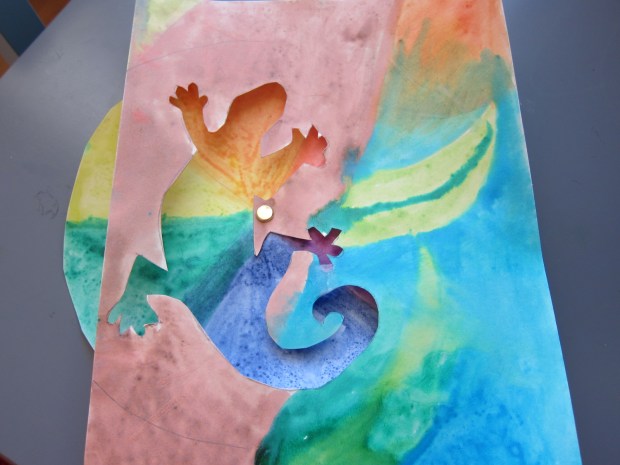
In the morning, poke a paper fastener through the color wheel and your background page, so the ends of the fastener are on the back. Fold over to secure.

Color Gecko (10)

Travis was so excited by the way the colors could spin and how he could watch his little gecko change color. “Now he’s blue! Now he’s green!”

Color Gecko (11)

This project was an absolute delight.
Garden Rock

Garden Rock (8)

A beach near us has great big rocks scattered all over the sand – not just your typical beach pebble finds, but large heavy ones to collect and take home. We decided they would make the perfect final addition to our little patio garden as decorative labels.

Note: If you can’t collect large rocks near you, check your local gardening store.

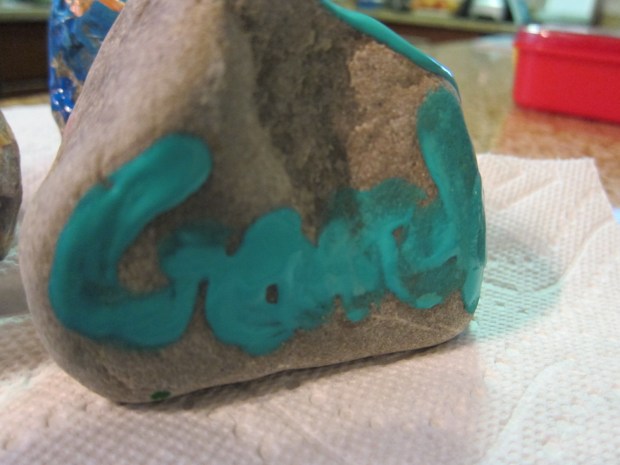
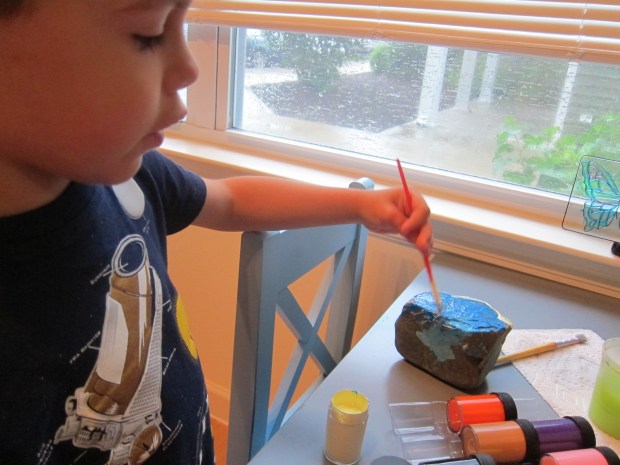
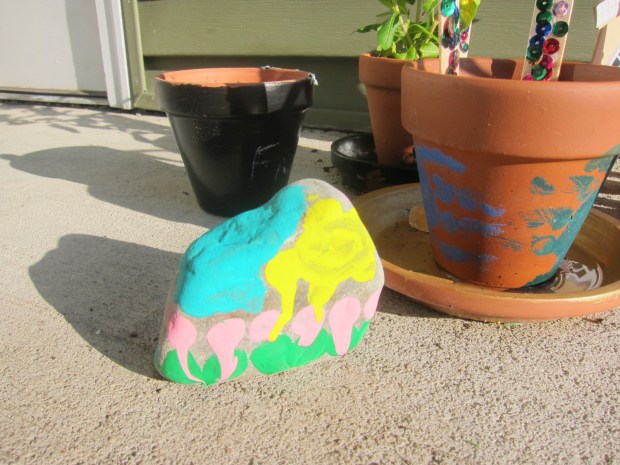
Travis was thrilled with the size of our rock canvas. I painted one rock with a garden scene (sun and flowers, although the colors later bled together; I also attempted to paint on the word Garden.

Garden Rock (6)

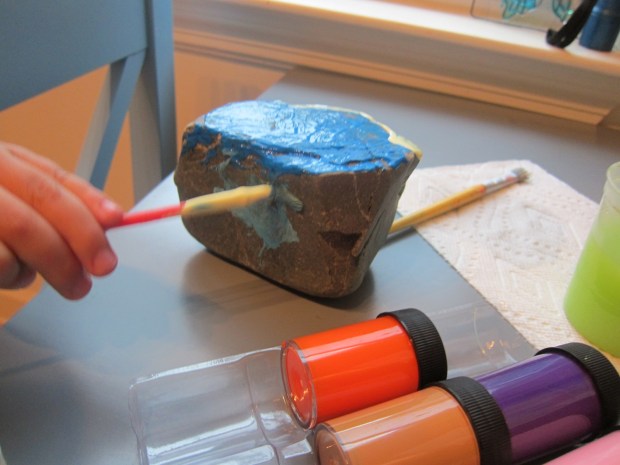
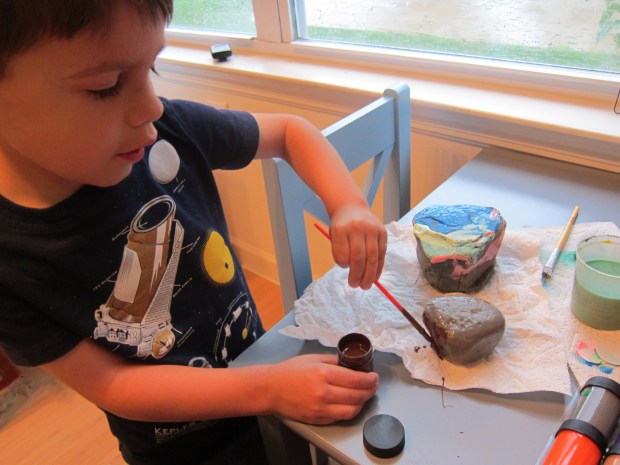
Meanwhile, he had fun swirling colors all over another.

Garden Rock (2)

I loved watching his concentration as he worked!

Garden Rock (3)

So much fun that he needed to paint a second rock.

Garden Rock (4)

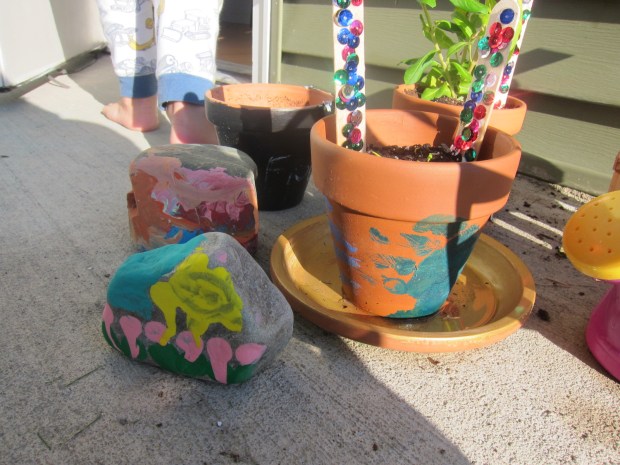
We left them to dry overnight, then settled them among our pots on the patio the next morning, taking care to find each rock the perfect spot.

Garden Rock (7)


Create Your Own Constellation

Constellations (8)

Late summer nights are the perfect chance to star gaze, look for shooting stars, and teach your kids a little about the constellations (although my own knowledge pretty much ends at the Big Dipper and Orion!).

We took the fun inside the next day with this cute idea from High Five magazine, using some recent rocks from a day of collecting at the beach. Wash and dry your rocks before beginning.

Constellations (2)

Paint the rocks black, and let dry completely.

Constellations (3)

Once dry, we painted on white stars. Although Travis didn’t quite master the shape of a star, it was fun to teach him how to draw one.

Constellations (4)

We let the white paint dry, then added a layer of glow-in-the-dark puffy paint.

Constellations (6)

Leave your rocks in the sun to activate the paint.

Constellations (7)

At night, move your rocks to the darkest spot in your house (that meant our bathroom, away from any windows!) to see them glow. I encouraged Travis to arrange them in fun shapes and make his own constellation.

Constellations (9)

A cute new way to “star gaze.”