Upcycled Easter Eggs, Two Ways

Upcycled Easter Eggs (9)

An empty cereal box is all you need as the base for the following two upcycled Easter egg projects. The first makes a beautiful table topper for your Easter holiday table (or other spring gathering), and the second looks lovely hung on a door or window!

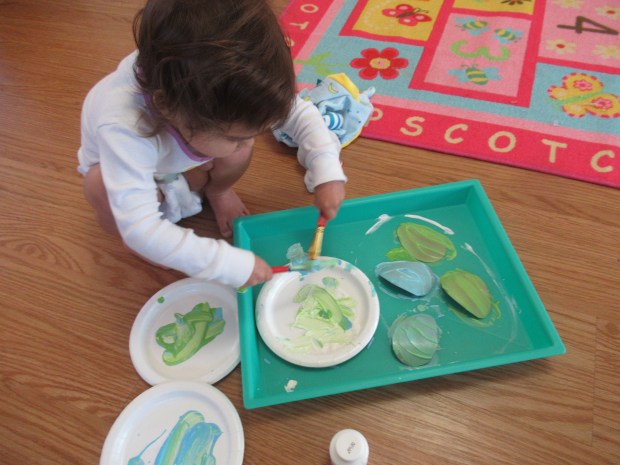
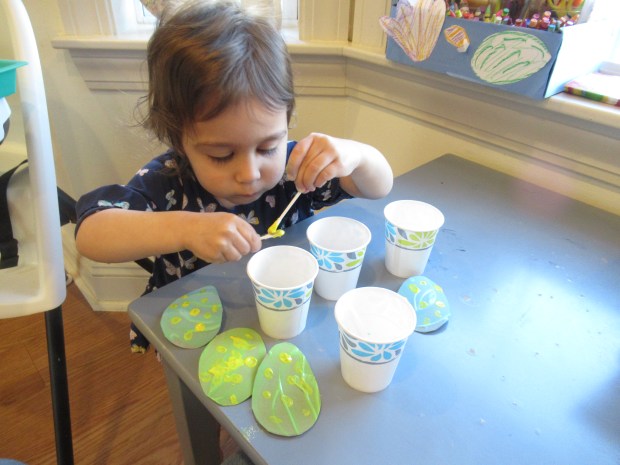
For the table topper version, I traced a small egg shape onto one half of a cereal box, and cut out 4 eggs. Veronika helped paint in pastel colors. You’ll need to let this coat of paint dry before moving on to the next step, and if your kids are impatient, give the eggs a quick stint under a hairdryer.
Upcycled Easter Eggs (2)

Next we used a q-tip (always a toddler favorite) to make dots on the eggs. Veronika loved dipping a cotton swab into yellow paint and making dots and blobs all over.
Upcycled Easter Eggs (3)

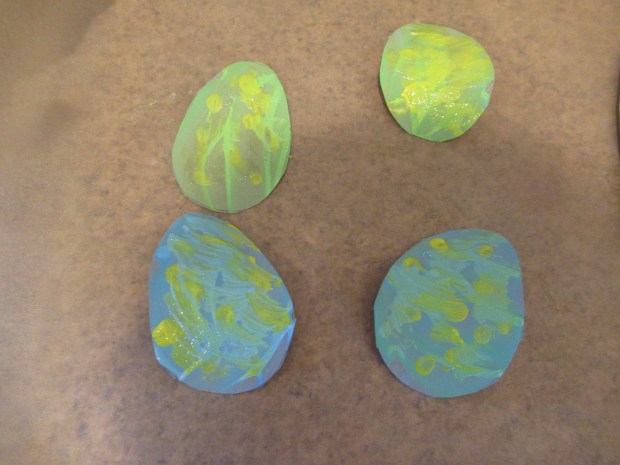
Almost done! The final step was to give the eggs some sparkle by brushing on glitter glue. We should have waited for the yellow dots to dry first, because now everything sort of smeared together, but the eggs still looked pretty.
Upcycled Easter Eggs (4)

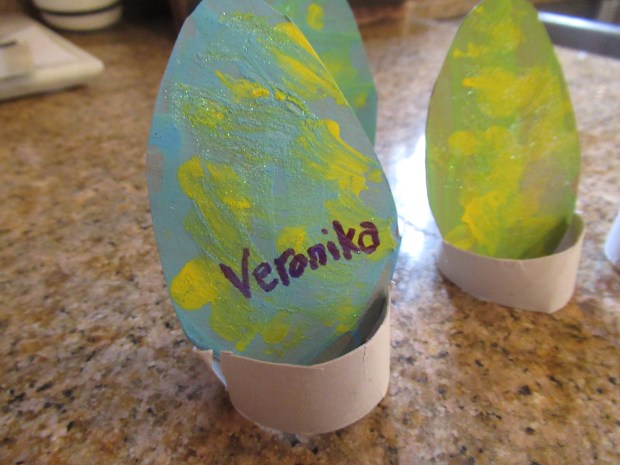
To set them up as table toppers, cut an empty paper towel tube into a few rings, about 1/2-inch thick. Make notches in each so the eggs stand upright. Leave them just like this or add names so they double as place cards!
Upcycled Easter Eggs (11)

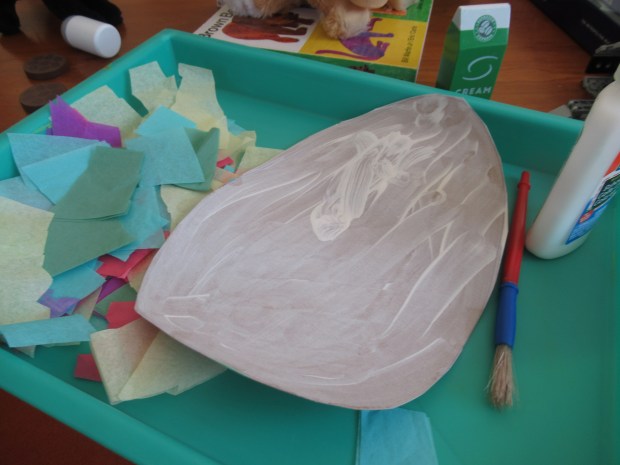
For the second upcycled craft, I cut a large egg shape from the cereal box. We gave this one a coat of white paint.
Upcycled Easter Eggs (5)

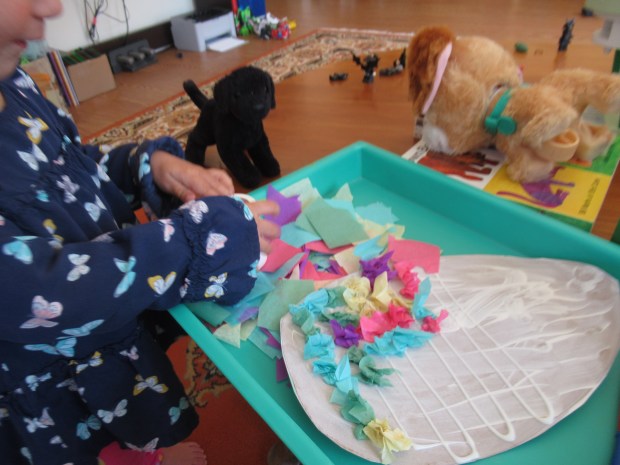
Next, I set out a tray with squares of tissue paper, all in pretty pastel shades. It’s easiest for a toddler if you cover the whole surface of the egg with white glue. This way, I could hand her a crumpled piece of the tissue paper and no matter where she placed it, it would stick!
Upcycled Easter Eggs (8)

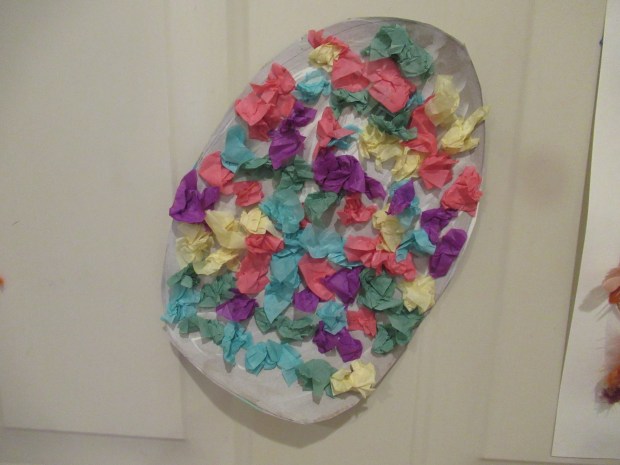
I briefly considered having her make patterns or rows in alternating colors, but quickly realized this was too advanced for Veronika. Instead, we ended up with an egg decorated in a pretty mish-mash of pastels.
Upcycled Easter Eggs (12)

Easter Egg Creation Station

IMG_2659

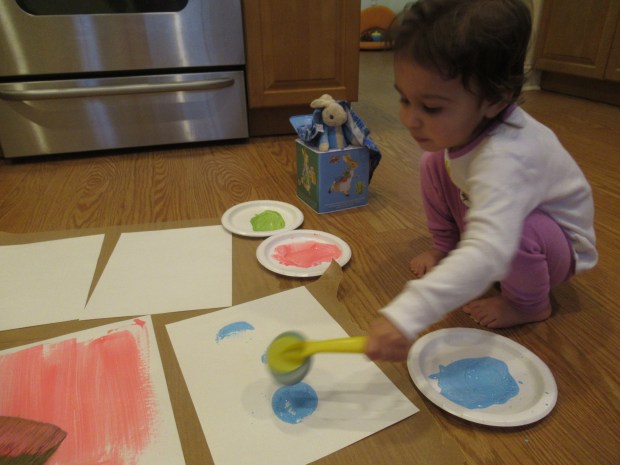
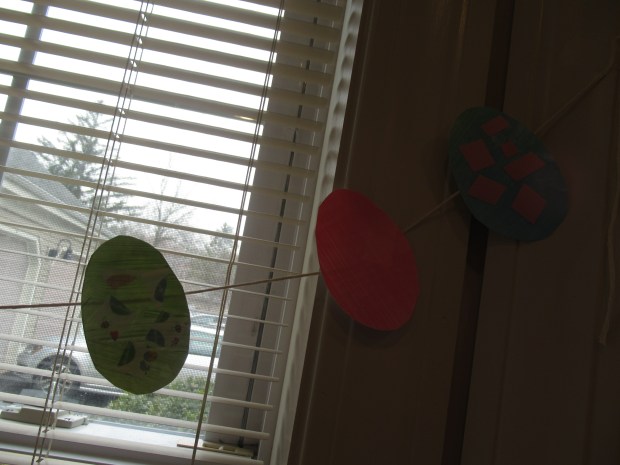
This fun toddler-friendly craft results in a beautiful Easter bunting to hang for the holiday! To start, you’ll need to paint several sheets of thick white paper. I wanted to paint these in pretty pastels, so mixed a little white paint into pink, light blue, and light green for an even softer spring effect.

IMG_2642

Invite your toddler to come paint! Veronika wanted to use a sponge like a stamp, delighting in the oval she made with each press down onto the paper. Between her stamping and my help with a paintbrush, we soon had three pretty painted pages.

IMG_2645

Of course there needed to be some exploratory hand-dipping in the paint, too! I left the pages to dry overnight, then traced an egg shape onto them in the morning and cut 4 eggs from each color.

IMG_2648

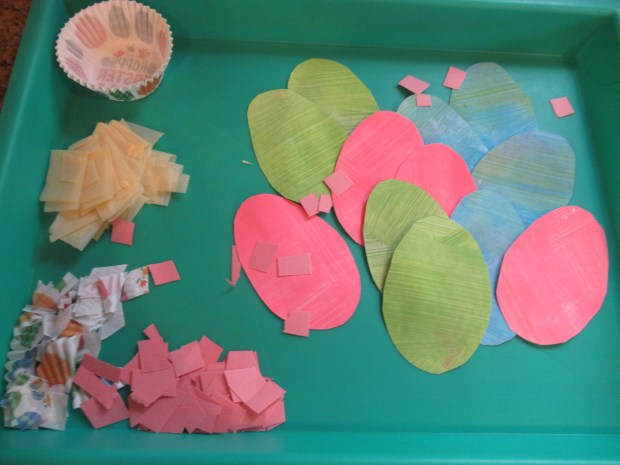
I set the egg shapes out on a tray along with a few bits to decorate them (a.k.a. a “creation station”). Choices included cut up Easter-themed cupcake liners, squares of yellow tissue paper, and pieces of pink construction paper. Lace doilies would be pretty too, whether cut into strips or small pieces.

IMG_2650

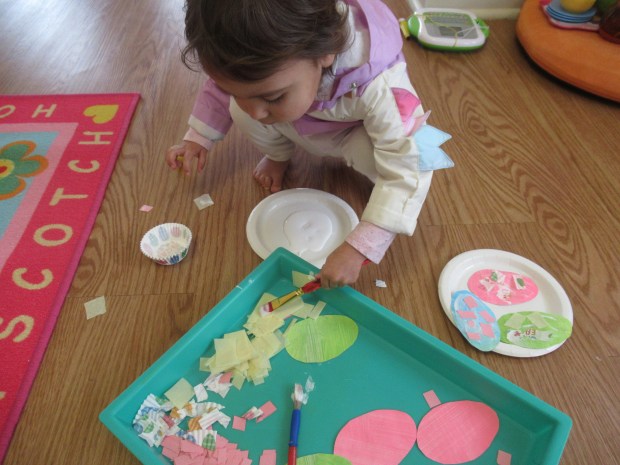
It’s up to your toddler to decide how to decorate! I set out a plate of glue that Veronika could smear liberally over each egg so that any scrap pieces she pressed down would stick.

IMG_2655

She also liked trying to brush the glue directly onto the decorative bits, or otherwise exploring the materials in a sensory way. She tired out from decorating about halfway through the eggs.

IMG_2657

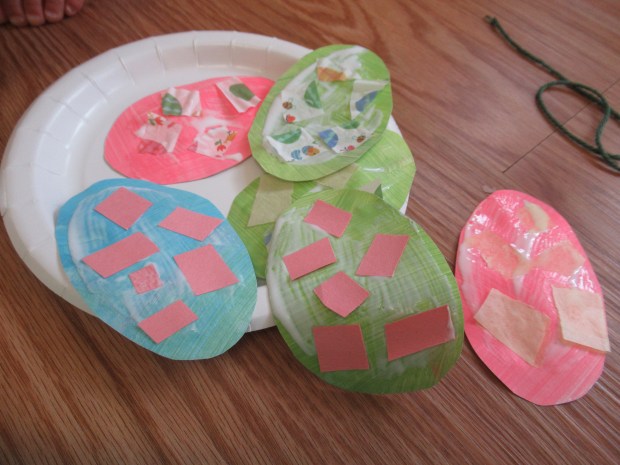
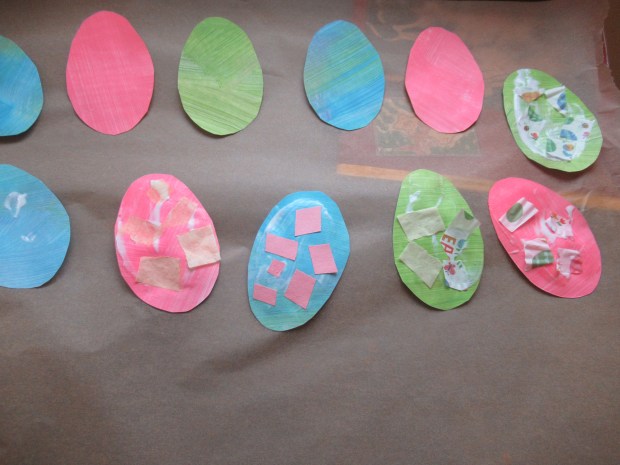
That meant our final bunting alternated a plain painted egg with a decorated one, which actually was a nice effect.

Easter Egg Creation Station a

Once the glue dried, I attached the eggs to a string and suspended the bunting above the kids’ table.

Easter Egg Creation Station c

Window Painting

Window Painting (6)

Spring weather has beckoned us outside all week, and that means we wanted to move our arts & crafts outdoors, too. There are two fun parts to this particularly toddler project. First, the painting, then the clean-up!

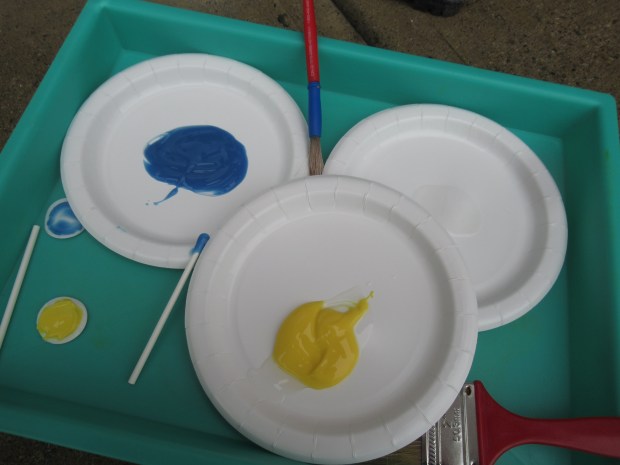
To start, I set out plates of fingerpaint. Mix a little squirt of dish soap into each color, which will make clean-up easier on the flip side.

Window Painting (1)

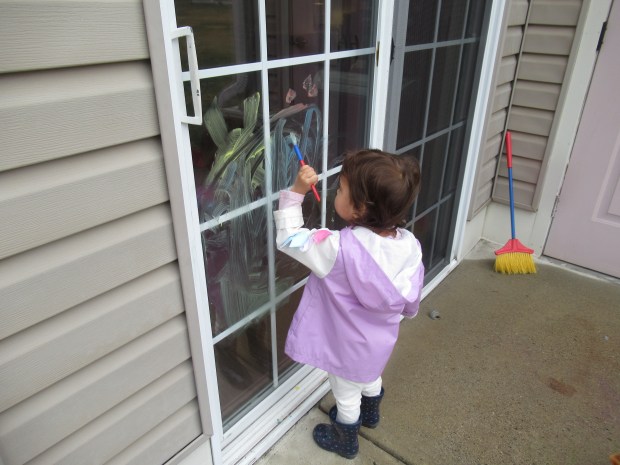
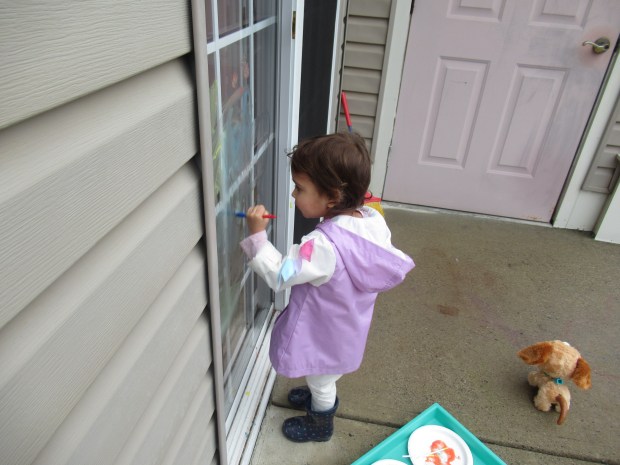
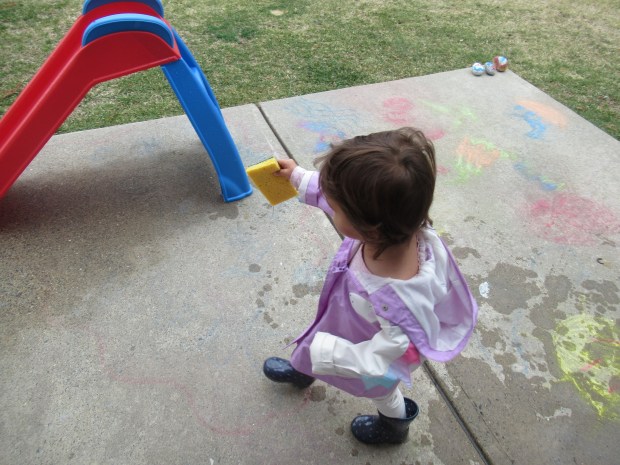
I told Veronika that we were heading outside to paint the patio door! At first she was surprised, but then she was remarkably good about it, understanding that she could paint the glass but not the wooden door frame or screen door.

Window Painting (3)

I demonstrated by painting a yellow sun and green grass, but truly Veronika needed no direction. She tested out painting up high…

Window Painting (4)

…and down low. She practiced making big swirly circular brush strokes, or sometimes jabbed the bristles against the glass which made what looked like orange footprints. When I asked her if she was finished, she said quite firmly, “No, I’m still painting”.

Window Painting (7)

She did finally tire of the project and we left the paint to dry. But the fun had only just begun! The second half of this activity is to wash off the paint. I filled a bucket with warm water and we headed back outside with our bucket and sponge.

Window Painting (9)

She loved helping dip the sponge in the water and washing all over the window. And yes thanks to that dish soap, it really does come off in a heartbeat.

Window Painting (8)

Well, Veronika hadn’t had enough fun yet; she decided the patio needed to be sponged off, too! Overall, this turned into a gorgeous afternoon-long project outside.

Window Painting (10)

Tin Foil Easter Egg

Tin Foil Easter Egg (6)

Here’s a simple and lovely way for toddlers to make Easter egg art, with the extra thrill of getting to use permanent markers!

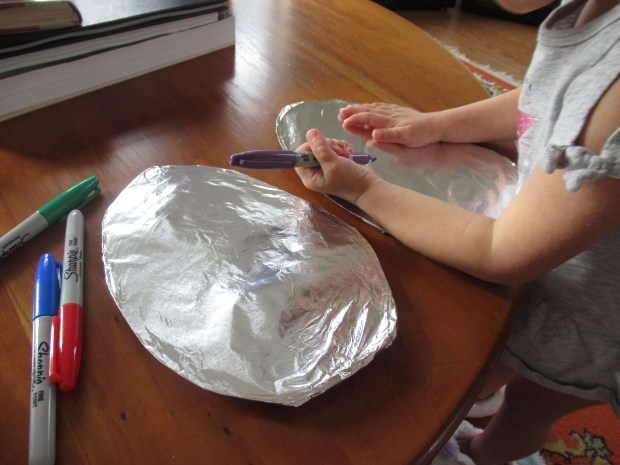
You’ll need a cardboard base as the backing for each “egg”, and I find that thin cereal box cardboard is much easier to work with than cutting through old boxes. Cover each egg shape with aluminum foil, making sure it is flat and smooth on the side you’ll be decorating.

Tin Foil Easter Egg (2)

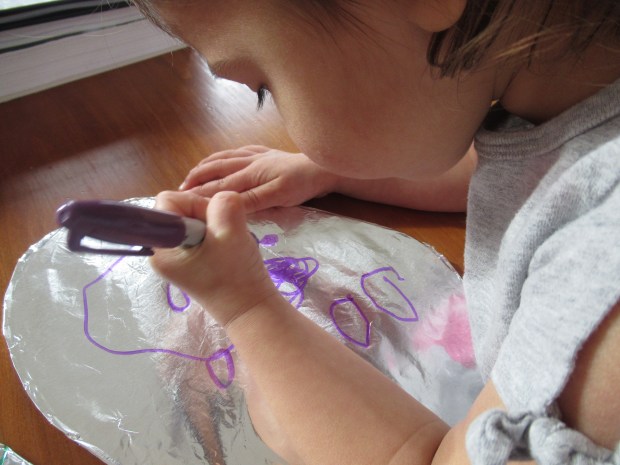
I set out sharpie markers, and Veronika and I each took an egg. She surprised me at first by making quite a few perfect circles! I hadn’t even known she could do that.

Tin Foil Easter Egg (3)

Then she began scribbling and drawing quite earnestly, telling me all about the colors she was using.

Tin Foil Easter Egg (5)

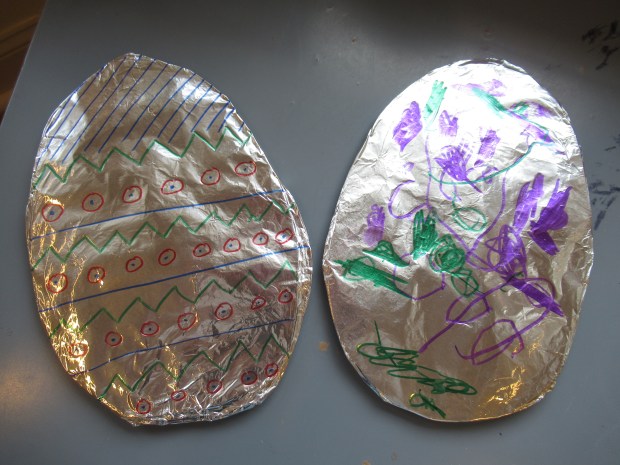
Meanwhile, I made designs on my foil egg with patterns in alternating colors, to show her how decorated Easter eggs can look. As with a recent “animal portrait” craft, I loved that one of these eggs was my grown-up example and one was purely her own toddler creation.

Tin Foil Easter Egg (8)

Motorized ArtBot Robot

Motor Art Bot (4)

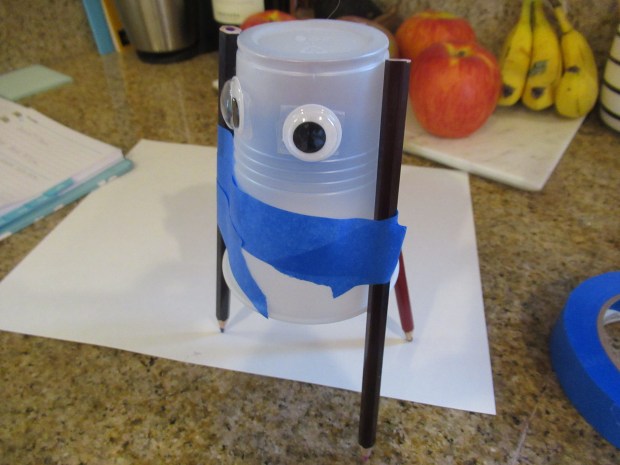
This quirky little project results in a “robot” that can draw on paper, thanks to the use of a small hobby motor. I didn’t think we’d be able to make it… until I spotted a hobby motor in my junk drawer! If you don’t have one, check with your local electronics store.

To start, secure three or four colored pencils (or thin markers) around the sides of a sturdy plastic cup with masking tape. Add wiggle eyes to give your Bot some character, or even draw on a face with a Sharpie.

Motor Art Bot (2)

Next, you’ll need to attach the hobby motor to a battery pack, and then secure all that on top of the Bot. This part was tricky, since the wires from the battery pack came off the motor unless taped tightly. The whole thing was so heavy that when we turned on the power, it often either fell down or couldn’t move far. It actually worked best if I held the battery pack lightly, my hand following along in the robot’s wake.

Motor Art Bot (5)

We did get this quick clip!

Next time I would use a much sturdier cup, and find a way to tape both motor and battery pack on the top, to see if we got better artwork. But for some novel STEM play, this was a great project!

Motor Art Bot (3)

Dream Playground

Dream Playground (8)

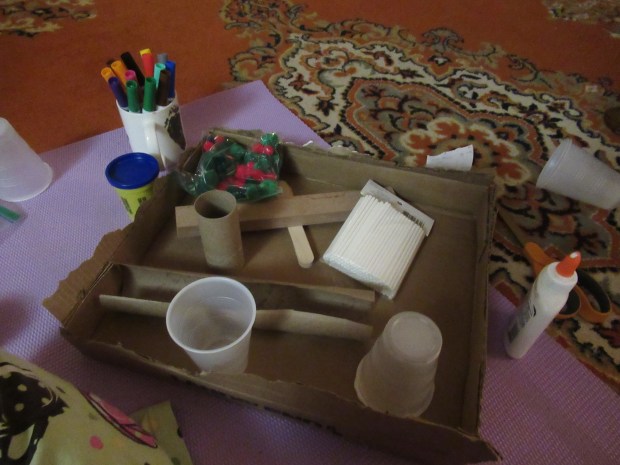
When I was in elementary school, I came up with the idea for a “trash playground”, imagining a mini playground crafted from leftover trash. For a brief moment, I was sure this idea would a) save planet Earth and b) make me famous. Imagine my delight, then, when I spotted the same idea in a recent Parents magazine: have kids raid the craft bin or recycle bin and turn the odds and ends into a playground for toys!

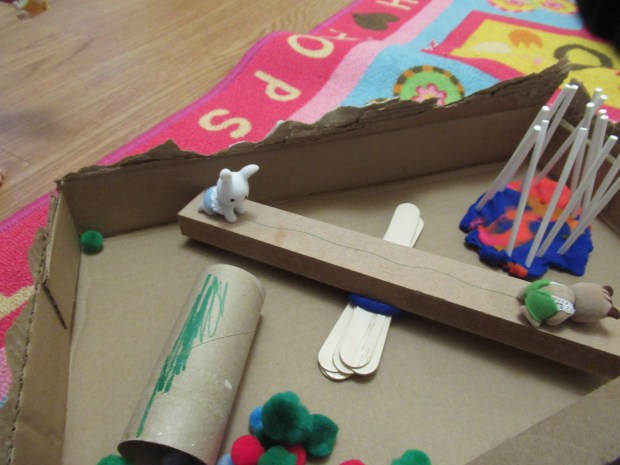
This project was great because it engaged both of my kids, but for different parts. First, Travis helped me design the playground. He loved mapping out elements like a giant slide (an empty paper towel tube taped to stacked plastic cups), a seesaw (a wood scrap balanced atop craft sticks as the fulcrum), and more.

Dream Playground (1)

He decided that the slide should lead into a “ball pit” (made from pom poms and lollipop sticks).

Dream Playground (3)

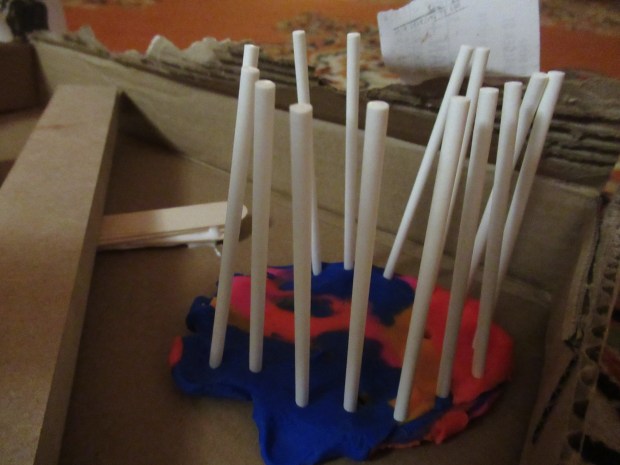
Then we needed a trampoline, which was crafted from playdough lined with more lollipop sticks.

Dream Playground (4)

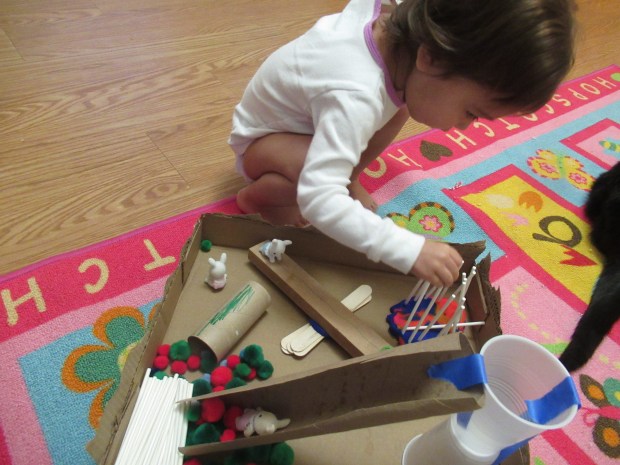
We left the glue to dry overnight and in the morning it was time for our expert toy tester (a.k.a. little sister Veronika) to test it out.

Dream Playground (6)

Her bunnies loved the slide!

Dream Playground (9)

Not to mention the seesaw and the tunnels to crawl through. She had fun in this miniature playground for ages!

Dream Playground (7)

What will your child put in a mini playground? A jungle gym? Monkey bars? Swings? We’d love to hear in the comments!

Coffee Filter Bunny

Coffee Filter Bunny (6)

Easter comes early this year (April 4), which means Veronika and I are turning our attention to all things Easter crafts even though it’s still March. This adorable bunny craft was a great one to make as we talked about the Easter bunny.

Coffee Filter Bunny (1)

To start, set out white coffee filters and let your toddler decorate with dot markers. These are perfect for toddlers because the bright bold colors appear with just a little tap.

Coffee Filter Bunny (3)

While she was dotting, I traced bunny shapes onto brown cardstock. You’ll need a circle with two long ears for the bunny’s head, as well as four ovals for paws.

Coffee Filter Bunny (4)

Veronika loved seeing the design once it was laid out against white paper. “He has paws!” she said with delight. She helped use a glue stick to secure the little bunny down.

Coffee Filter Bunny (5)

Draw on a few final features and your Easter bunny is ready to hop! I did this part for Veronika, but preschoolers can use markers to make color on the faces and ears by themselves.

Tissue Paper Baby Chick

Tissue Paper Chick (6)

Our fun with spring chicks continues, and Veronika has loved exploring the different materials from our craft bin as we make each version to mark the season. This time, she got to have fun with tissue paper!

First, you’ll need lots of squares of yellow tissue paper. You can invite your child to help rip up pieces, or preschoolers can use the opportunity for scissor practice instead. Next, I traced a circle onto white paper and cut out, and then Veronika helped smear it with a glue stick.

Tissue Paper Chick (1)

All she had to do was cover it with tissue paper. This is such a forgiving material for toddlers, since it takes very little glue to make tissue paper stick. In short order, we had a fluffy yellow chick.

Tissue Paper Chick (2)

To make the legs, twist a small piece of orange pipe cleaner around a larger piece of pipe cleaner, such that it forms three toes.

Tissue Paper Chick (4)

All that was left to do was to glue down two wiggle eyes and an orange paper beak.

Tissue Paper Chick (7)

Contact Paper Chick

Contact Paper Chick (4)

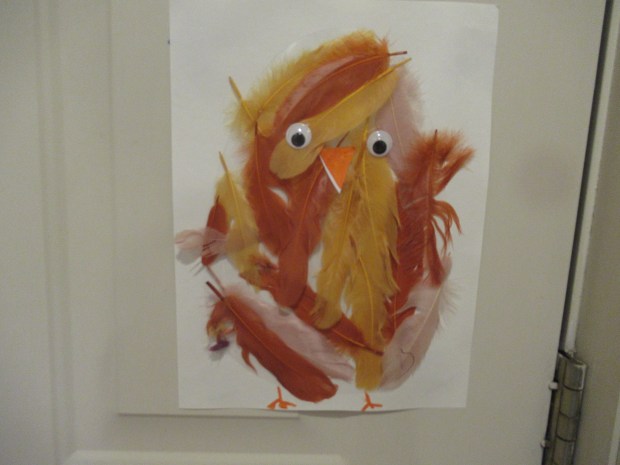
We already have one cute spring chick up on our doorway to celebrate the season, and here was a second toddler-friendly version to join the first!

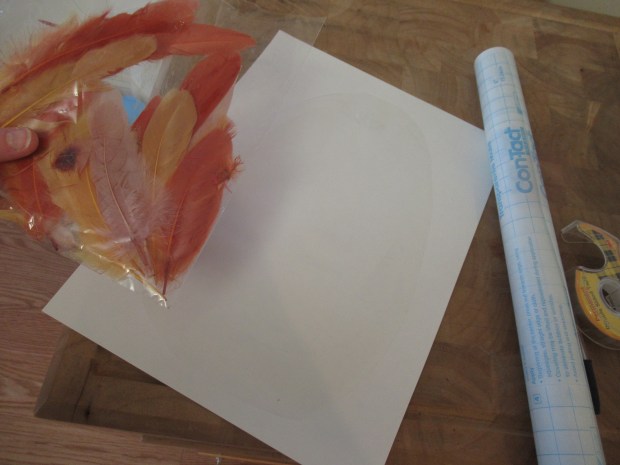
To start, I cut out a piece of contact paper in roughly the shape of an Easter egg, then taped it down to a piece of white paper with double-sided tape. The sticky side of the contact paper should be facing up.

Contact Paper Chick (1)

Next I set out a tray full of feathers for Veronika. All yellow would have been ideal for a chick, but we had a mix of reds, yellows, and oranges, which worked just as well.

Contact Paper Chick (3)

She loved picking which feather to use, plus the discovery that the contact paper was sticky and grabbed on to the delicate feathers.

Contact Paper Chick (2)

Once the egg shape was filled in, we transformed it into a chick with just a few final details: Two wiggle eyes, a beak cut from colored paper, and two legs drawn on with orange marker. Peep peep!

Egg Carton Animal Portraits

Egg Carton Animals (6)

We spotted this adorable idea for animal “portraits” on artist Nylah Khan’s Instagram, and had to try our hand at the craft. Bonus points: I found Easter decorations that came in an egg carton, meaning there was no need to purchase a chicken’s egg carton.

I cut apart the segments of the carton and each one could now be the face of a separate animal. Paint accordingly! You can plan ahead and choose your colors (i.e. pink for pigs), or just let your child choose the colors and see what animals match up. We ended up with one pink face and one yellow.

Egg Carton Animals (2)

I used hot glue to secure these segments to a rectangle of cardboard as a background. Now paint on more features! If you want to get silly, add a human body for the animal. My “pig” was wearing a pink suit and blue tie, as an example for Veronika to follow.

Egg Carton Animals (3)

Veronika loved painting features on the yellow one, telling me she was adding eyes and more. I let her painting dictate the direction this particular creature went.

Egg Carton Animals (5)

A long streak of yellow paint made it look like a giraffe!

Egg Carton Animals (4)

Once the paint dried, we hung these up for an art gallery in the playroom. I loved that one of these creations was purely a toddler’s, while the other hewed closer to Khan’s original portrait idea.

Egg Carton Animals (7)

What animals will your child make? Please share in the comments!