Turntable Fun

Veronika was feeling a little under the weather with a sniffle today, so I was on the hunt for games we could play while cozy on the couch. What could be lazier than a lazy Susan?

If you don’t own a lazy Susan (or similar turntable in your kitchen), there’s no need to purchase one just for this game. I simply grabbed the spinning turntable out of the microwave and put it to a different use!

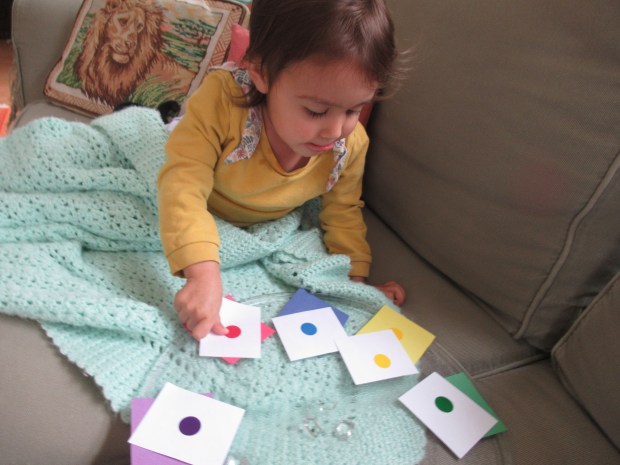
To set up, you’ll need a double set of images. First, I put colored dot stickers onto index cards that Veronika could hold in her hand. Then, I taped colored squares of construction paper with the same color dot sticker around the rim of the turntable, as shown below. Time to spin and make a match!

For each color in her hand, we spun the turntable around until that particular color was closest to her, and she placed down her corresponding index card.

She aced the entire test without a single error, and loved the way that the whole contraption could spin.

This was a cute way to keep her busy and squeeze in some learning while staying cozy! Don’t feel obligated to stick to dot stickers, either. Any set of matching images or objects will work for this game.

Find the Letter and Swat It

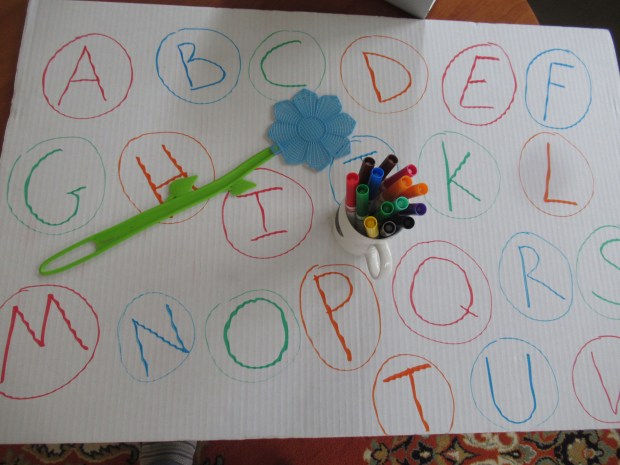
Veronika loved painting with a fly swatter last summer, and today we took that same tool and used it for a little learning instead! To start, I wrote out the alphabet on a large piece of cardboard (poster board would work too), making the letters bright and bold.

Then I simply handed over the swatter. She loves to say “splat!” every time it lands down, and I told her today we were going to “splat” the letters. We played in a few different ways. First, I asked her to swat at a specific letter, choosing those I know she is familiar with, as with S and V. She happily obliged.

Then I asked her to choose a letter, and name it for me as she swatted it. Sometimes she swatted down but stayed silent, which was a good chance to remind her the names of a few less familiar letters.

We also sang through the whole alphabet together, tapping each letter with the swatter as we sang its name.

Needless to say, she was a happy alphabet learner today!

Rainy Day Pasta Sort

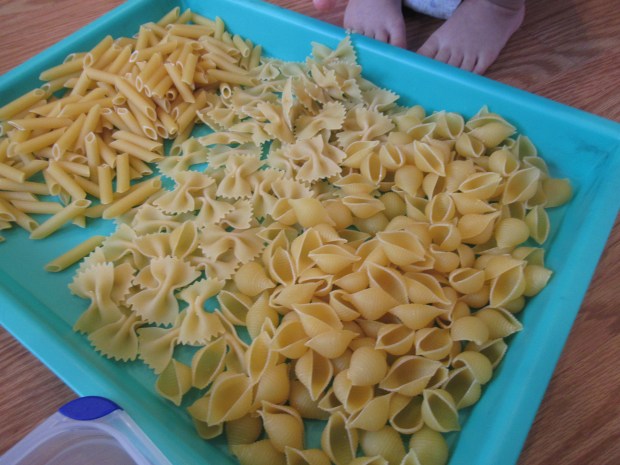
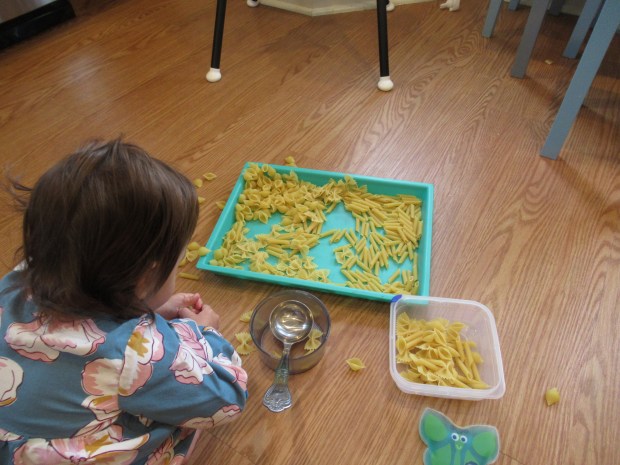
Dried pasta has so many uses, whether for simple sensory play, making big instruments to shake, or enjoying a little early learning. So when Veronika was a little aimless today, I simply poured three different shapes of pasta from our pantry onto a tray. You can aim to have very different shapes (for a young toddler) or pasta with subtler differences for preschoolers. We used: farfalle, shells, and penne.

First, I invited Veronika to explore all three shapes. She loved that the farfalle looked just like butterflies!

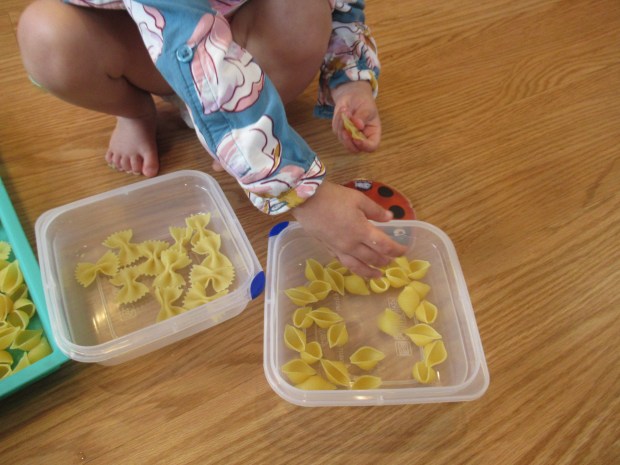
Next, I set out three small containers and challenged her to sort the pasta. The idea was a little hard at first (words like “sort” or “match” are new vocabulary for her). But once I put a few shells in one bin and then asked, “Where does the shell go?” she latched onto the idea. Soon we had three sorted types of pasta!

Of course then it became a free-for-all, with lots of sensory scooping and dumping of all that pasta. You can even dye it if you want to fill up even more time on a rainy day!

Sock Matchup

Veronika is working on the concept of “matching” lately; specifically when presented with a variety of objects, can she find the two that match. This vocab word will make the most sense to your child only in context, so start with the most classic match (or dreaded mismatch!): Socks.

To make the task one step more advanced than classic laundry sorting, I put dot stickers on each of her socks with numbers written in permanent marker. Now she had pairs of socks numbered 1 through 8, and we needed to help each one find its match!

Sometimes during this task she focused on the number to make a match.

Sometimes, I could tell she was looking more at the color or pattern of the sock instead. But ultimately, she was able to find each match!

Q-Tip Painting, 4 Ways

Whenever Veronika spots q-tips in the bathroom, she’s eager to play with them. So today we gave into that urge, and used the cotton swabs for arts & crafts instead! Below are four different methods that she and I tested out.

One: Negative Images

For the first craft, you can use any glass pie plate (or baking dish or loaf pan) as the “canvas”. I spread a little tempera paint thinly in the bottom, then handed Veronika a q-tip as her brush. Any lines that your child makes leave a negative image or etching behind.

The idea was a bit advanced for Veronika, but after she’d done some scribbling, she loved seeing the deliberate images I drew for her, like a sun or puppy.

We even tried making a print of it by pressing down a piece of white paper, although it ended up looking more like abstract art.

Two: Color mixing

Cotton swabs are just right for mixing up colors, giving a chance to teach a little about primary and secondary colors! I poured a little of each primary color (red, yellow, and blue) onto a paper plate, and first showed them to Veronika as we named each.

One at a time, we mixed them! Our red and yellow made orange, yellow and blue made green, and blue and red made purple. Now we had a full palette for…

Three: Pointillism

The tip of a cotton swab is naturally suited for making dots (although Veronika practiced making a few swirls, too), which is a great introduction to the pointillist style of painting.
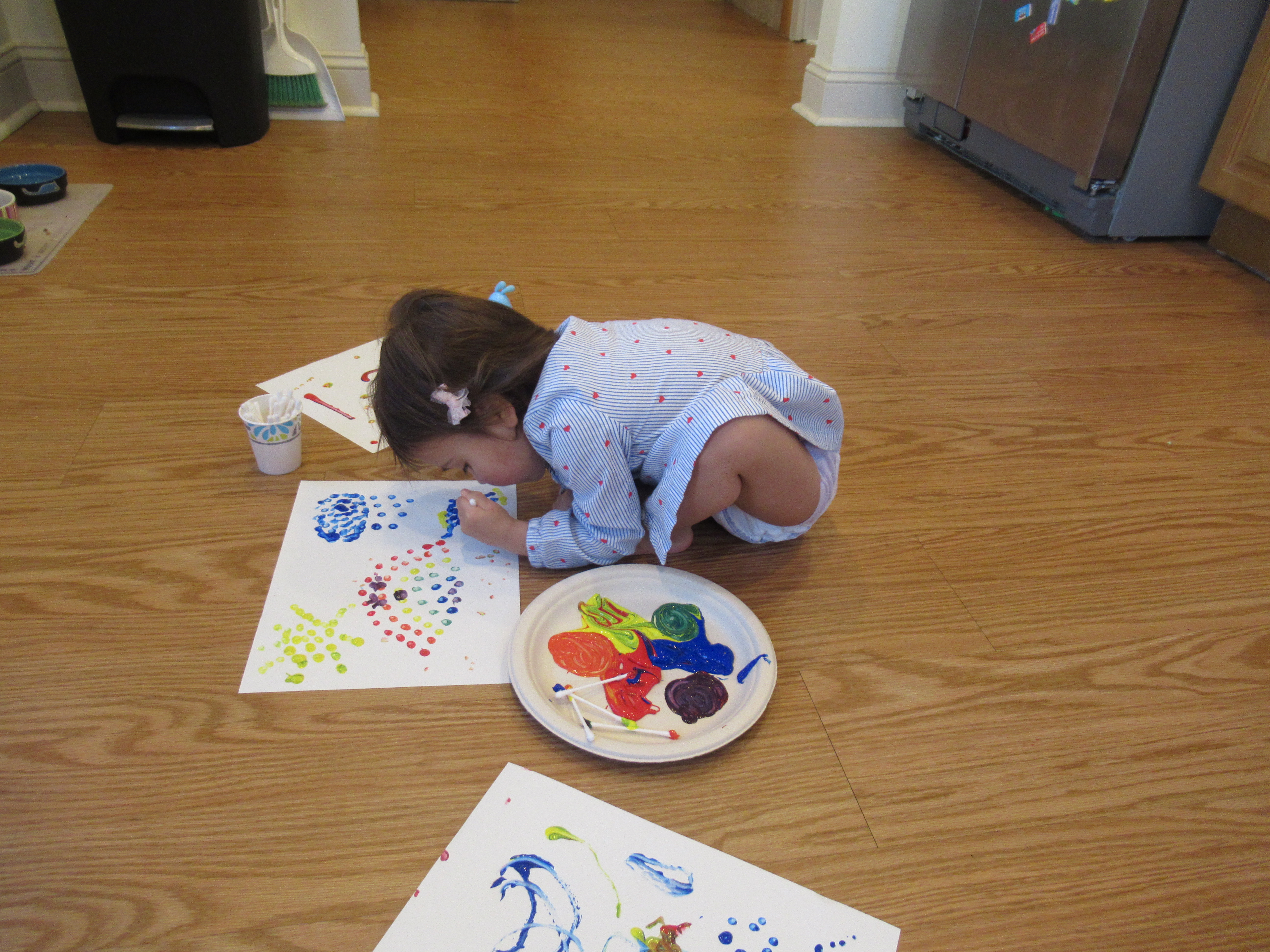
I dotted right alongside her, so pretty soon we had a pointillism rainbow and sun and clouds, with a little blue puppy beneath. Veronika loved adding to the picture I started, making very emphatic dots. My little artist at work!

Four: Counting

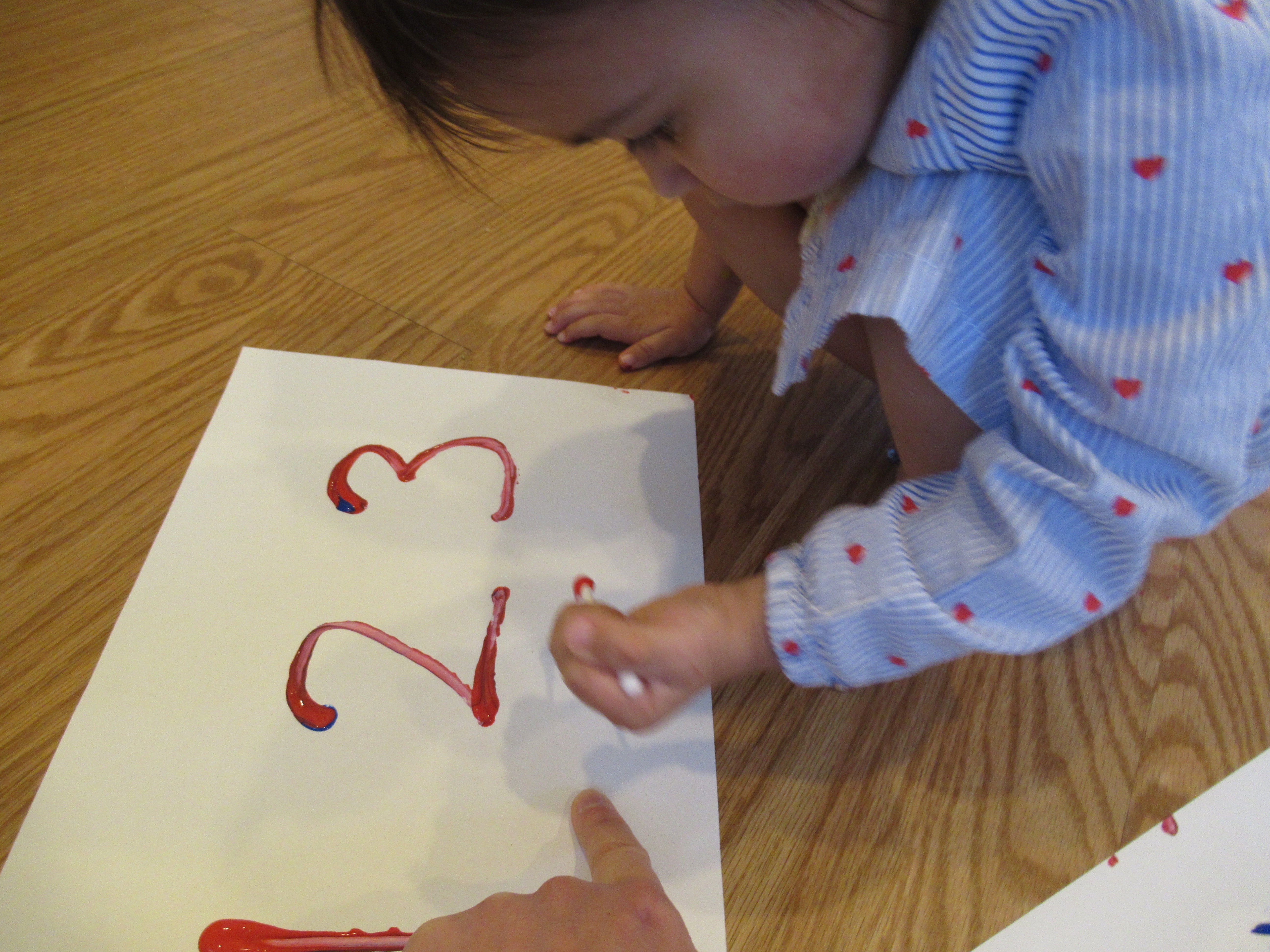
For our final q-tip activity, I wrote out the digits 1, 2, and 3 for Veronika. After encouraging her to name each number, I asked her to make the correct number of dots with her q-tip underneath. “Can you make 1 dot?” I asked her. Dot!

She was also able to do this for number 2. By 3, she just started dotting everywhere. But of course preschoolers can tackle this task all the way up to 10, or higher! For an even greater challenge, stamp out a connect-the-dots with the q-tips, then number them and have your child connect the lines.
Which of these q-tip activities does your child like best? Please share in the comments. Many thanks to Hands on As We Grow for all these q-tip ideas!

Alphabet Sand

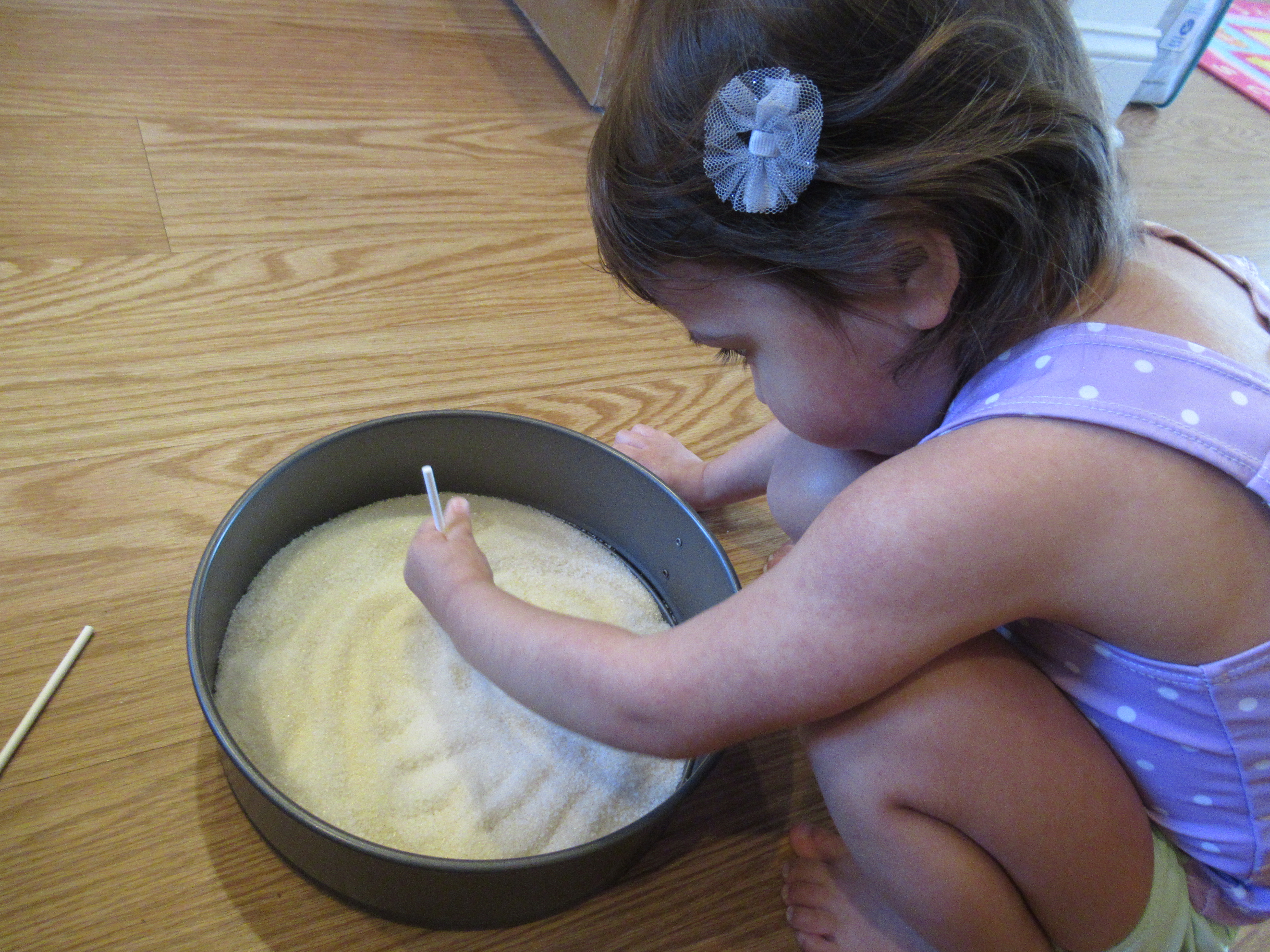
When I needed to occupy Veronika quickly today, I gave her a little tray of alphabet sand, one of those “oldie but goodie” sensory games that never fails.

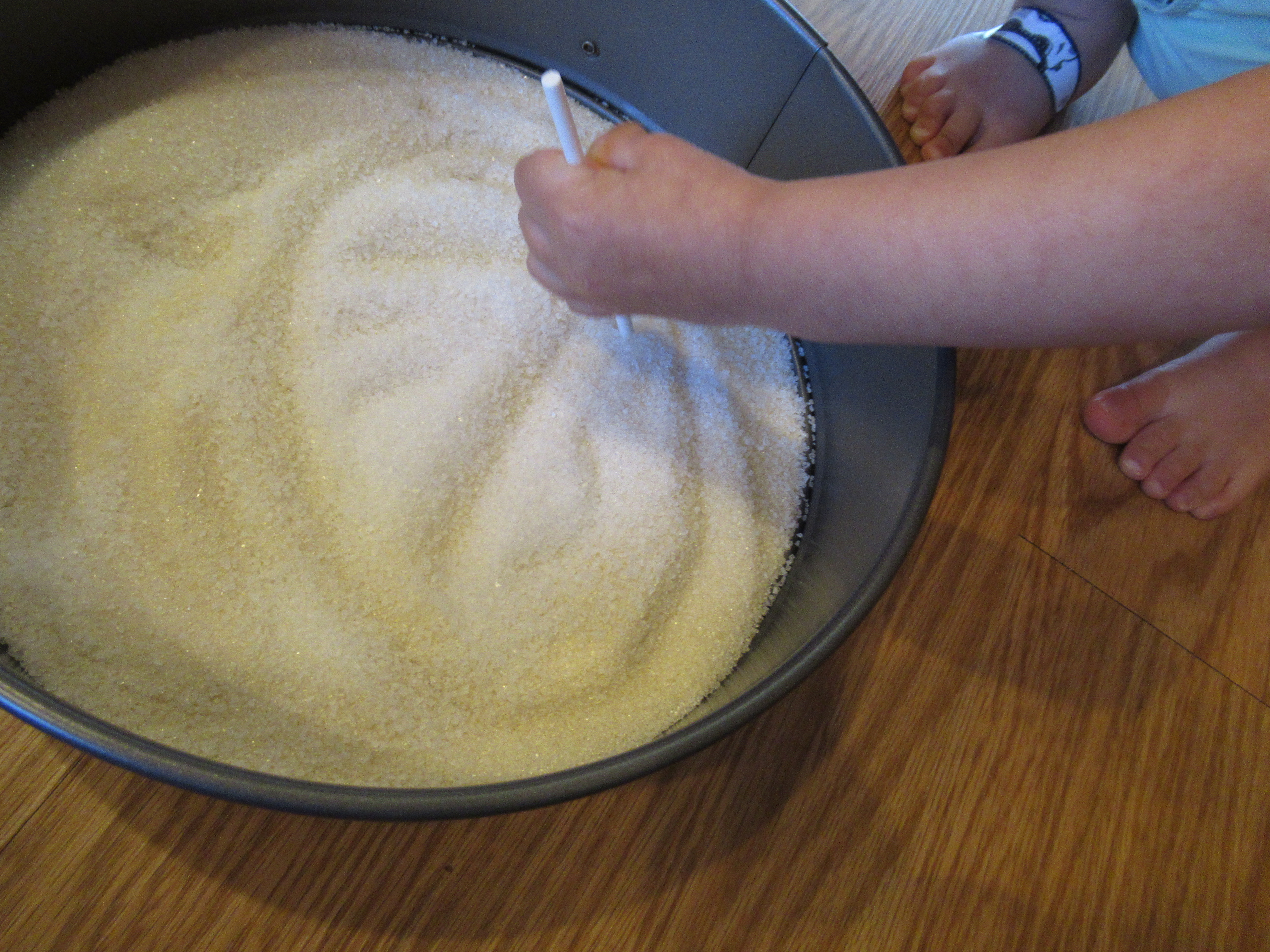
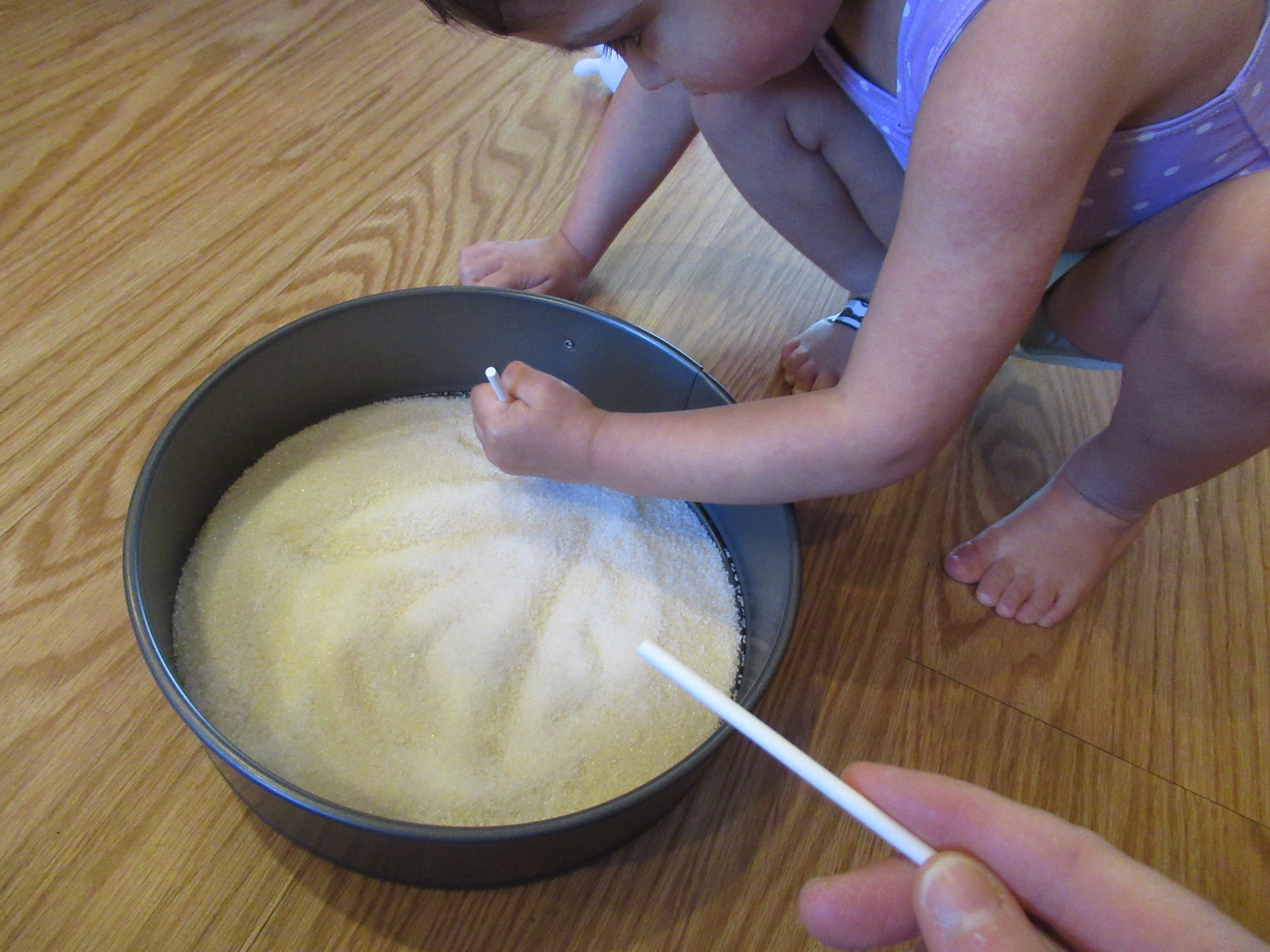
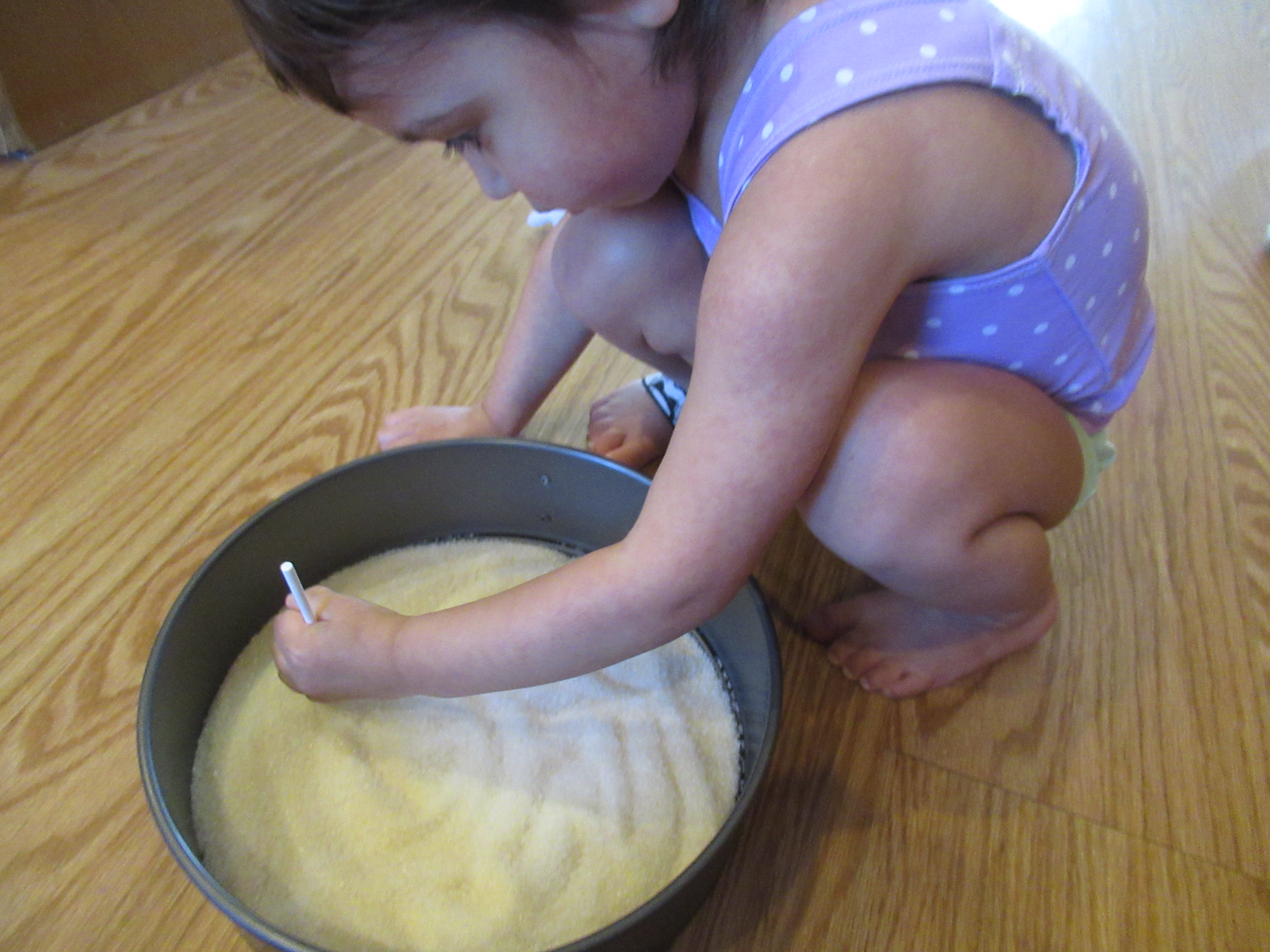
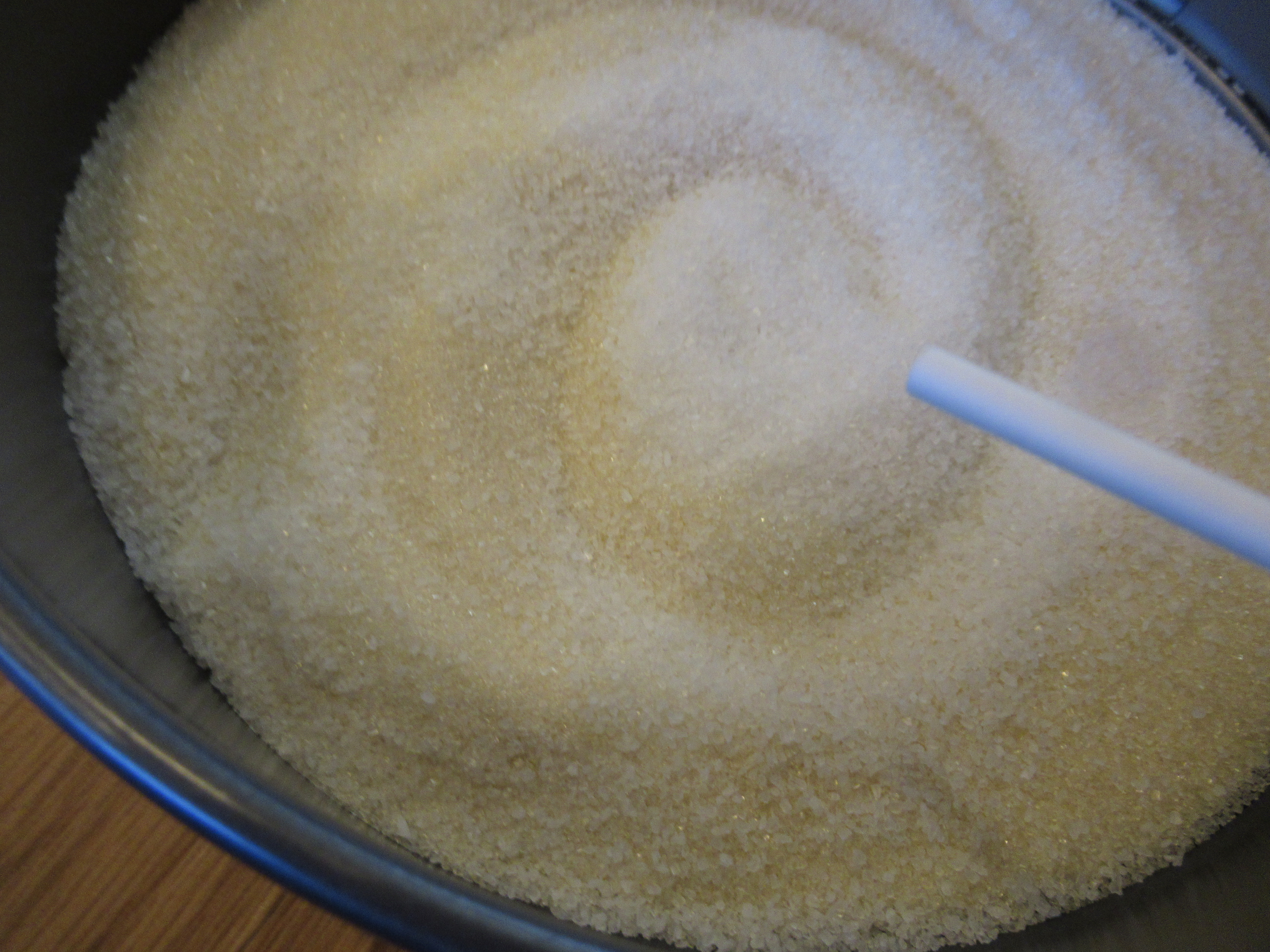
What is alphabet sand, you ask? It isn’t sand at all, but my secret mix of equal parts sugar and salt in the bottom of a cake pan. Set it down in front of your toddler and let them practice tracing the alphabet!

For early learners like Veronika, I usually start out by coaching her through a few easy examples like O, X, V, and T. We use our fingers, but also lollipop sticks, which make great “pens”.

After she’s done a few letters, she’s usually ready just to squiggle, or to draw lines and circles. She also loves to let the mixture sprinkle down into the cake pan from her fingers. When she shifts her sprinkling over to the floor, that’s when I know the game is done and we quickly sweep up.

Want something similar but a bit more challenging? Hide alphabet puzzle pieces in the mixture instead!

Dump Truck Domino Counting

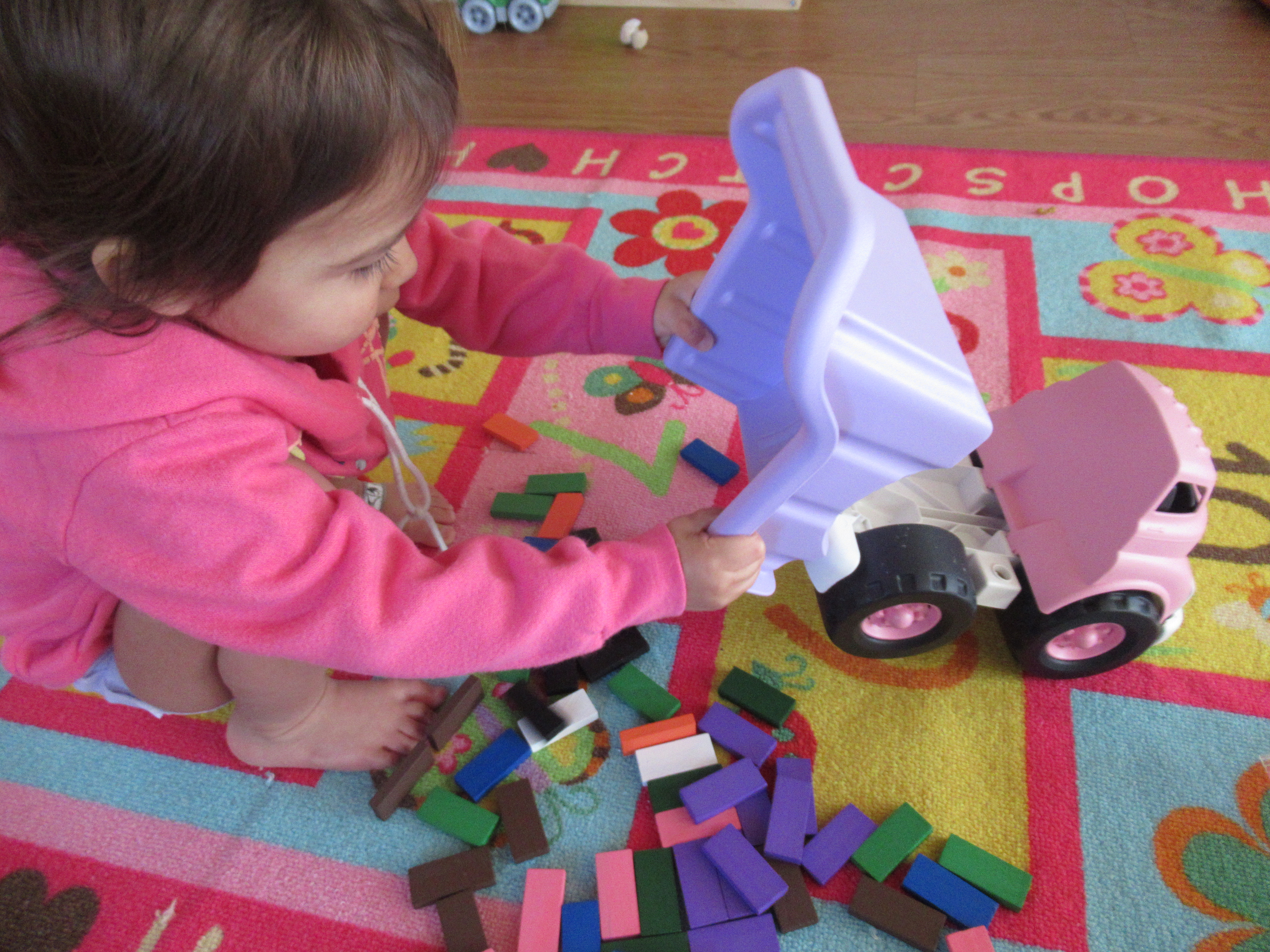
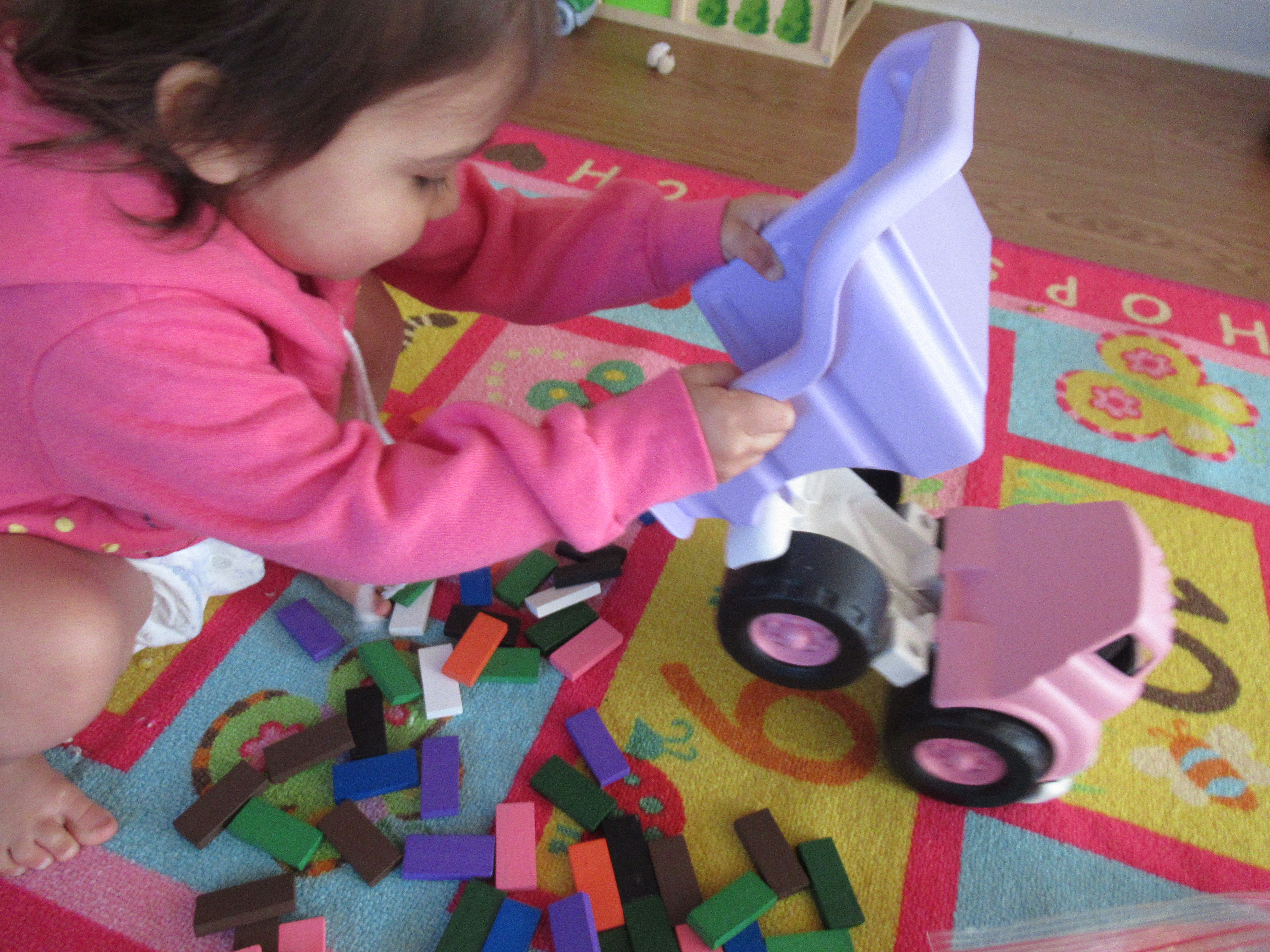
Here was a fun way to combine Veronika’s truck play with a little early counting! She can count by rote up to about 20, but it’s still early for her to connect the idea that those rising numbers correlate to one more thing added each time.

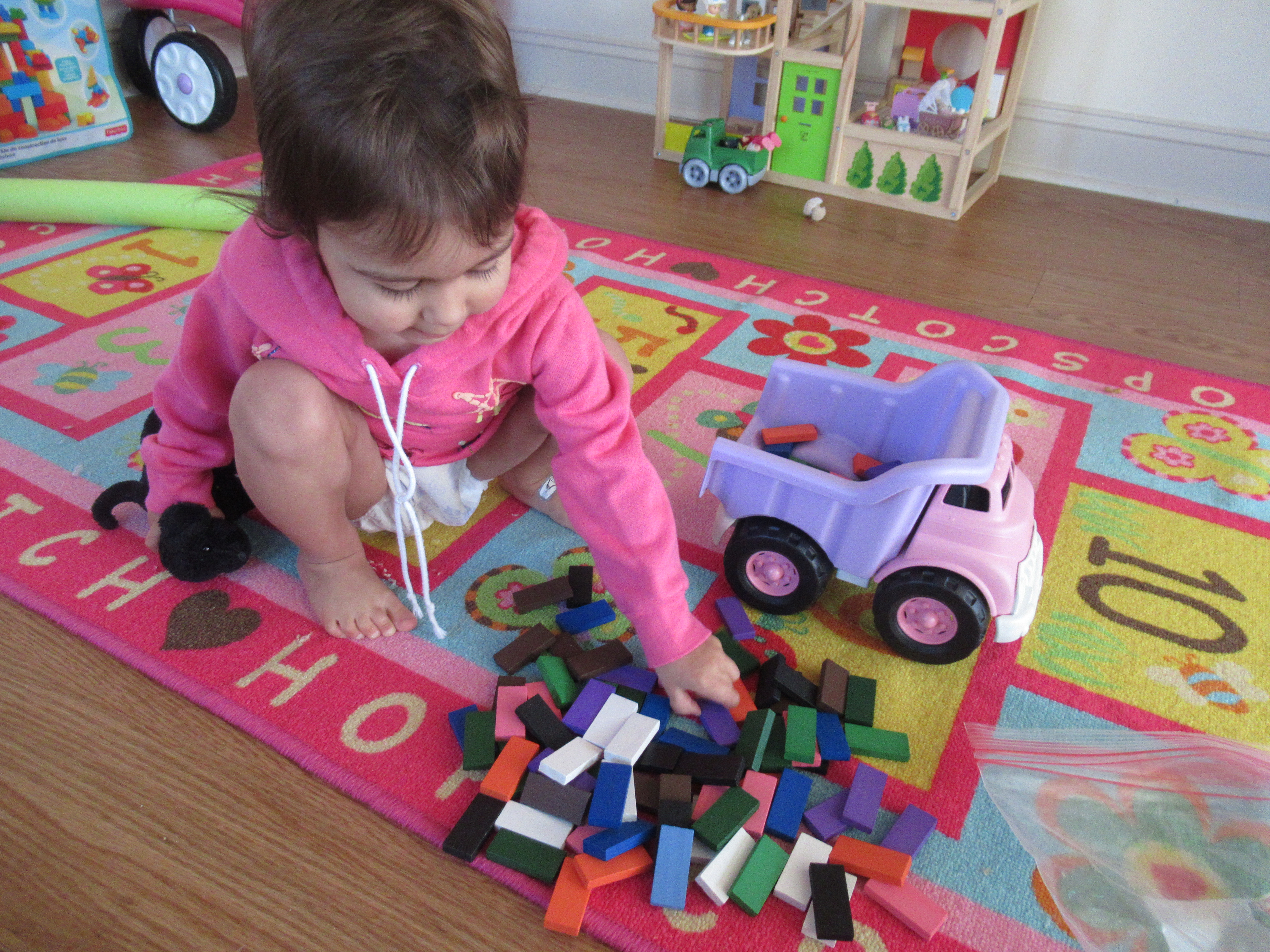
We chose dominoes for the activity because we have lots of them and they fit easily into the truck bed. My hope was that physically them out would help her make the link. First, we just started filling up the truck randomly:

She eagerly counted along as we placed each domino in, and we made it all the way into the teens before she was too tempted to… dump!

For the next round, I challenged her to fill the truck with only a certain color. This meant we only counted as high as ten, and then it was time to dump. We repeated with the remaining colors.

For older kids, you can even make predictions about the point at which dominoes will start to spill out, without having to tip back the bed of the truck at all.

We played this version toward the end, piling in all the dominoes (confession: we stopped counting!) and watching them spill out. Chances are your toddler will stay happy with trucks and dominoes for some solo play after the lesson, too.

Eric Carle Art Activity

Eric Carle Art (5)

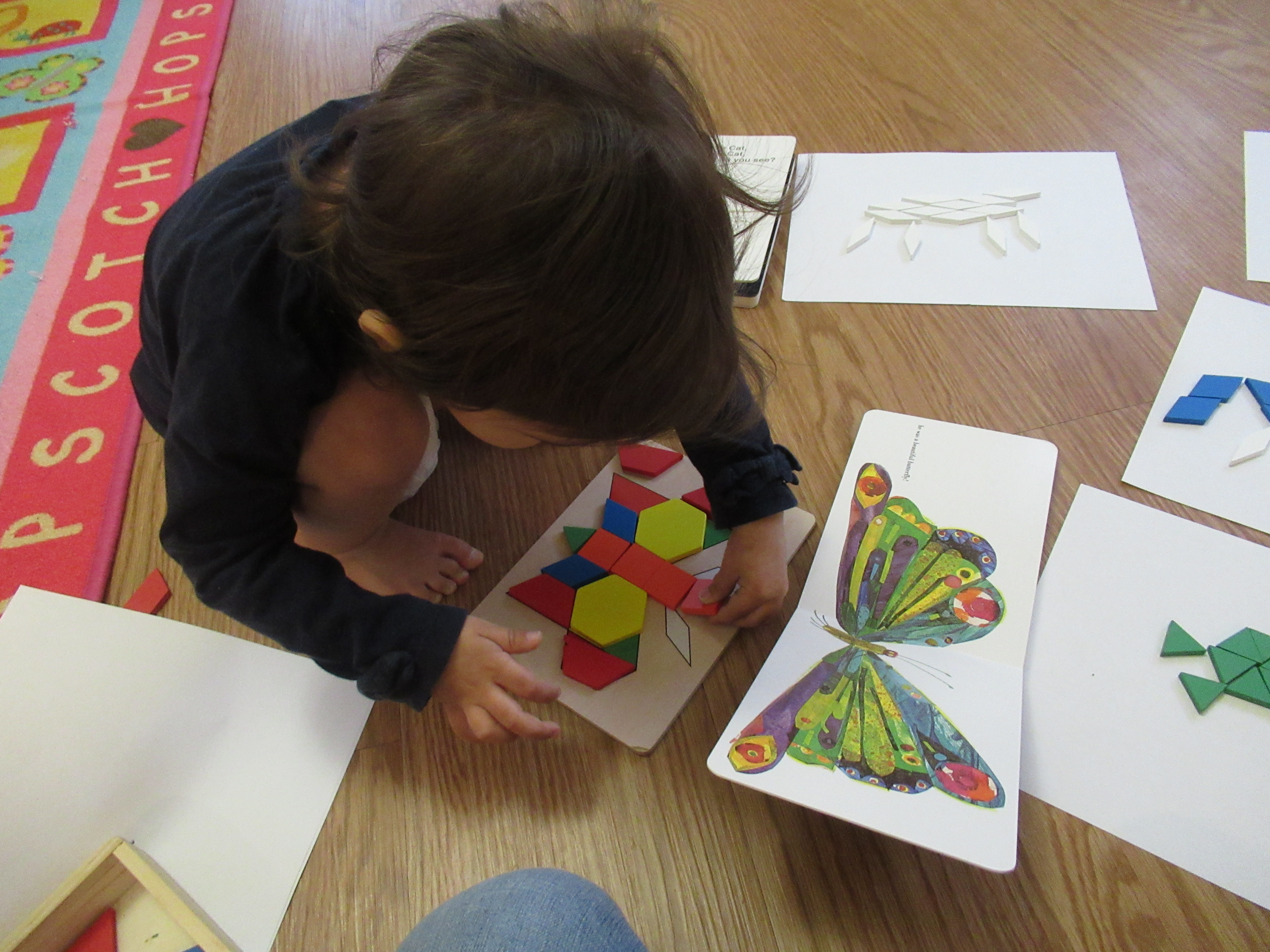
We had the opportunity to visit the Eric Carle Museum today, so I set the stage before our trip with an activity that combined the author’s books and tangrams. This is a fantastic learning game that can be adapted for varying levels of difficulty, depending on your child’s age.

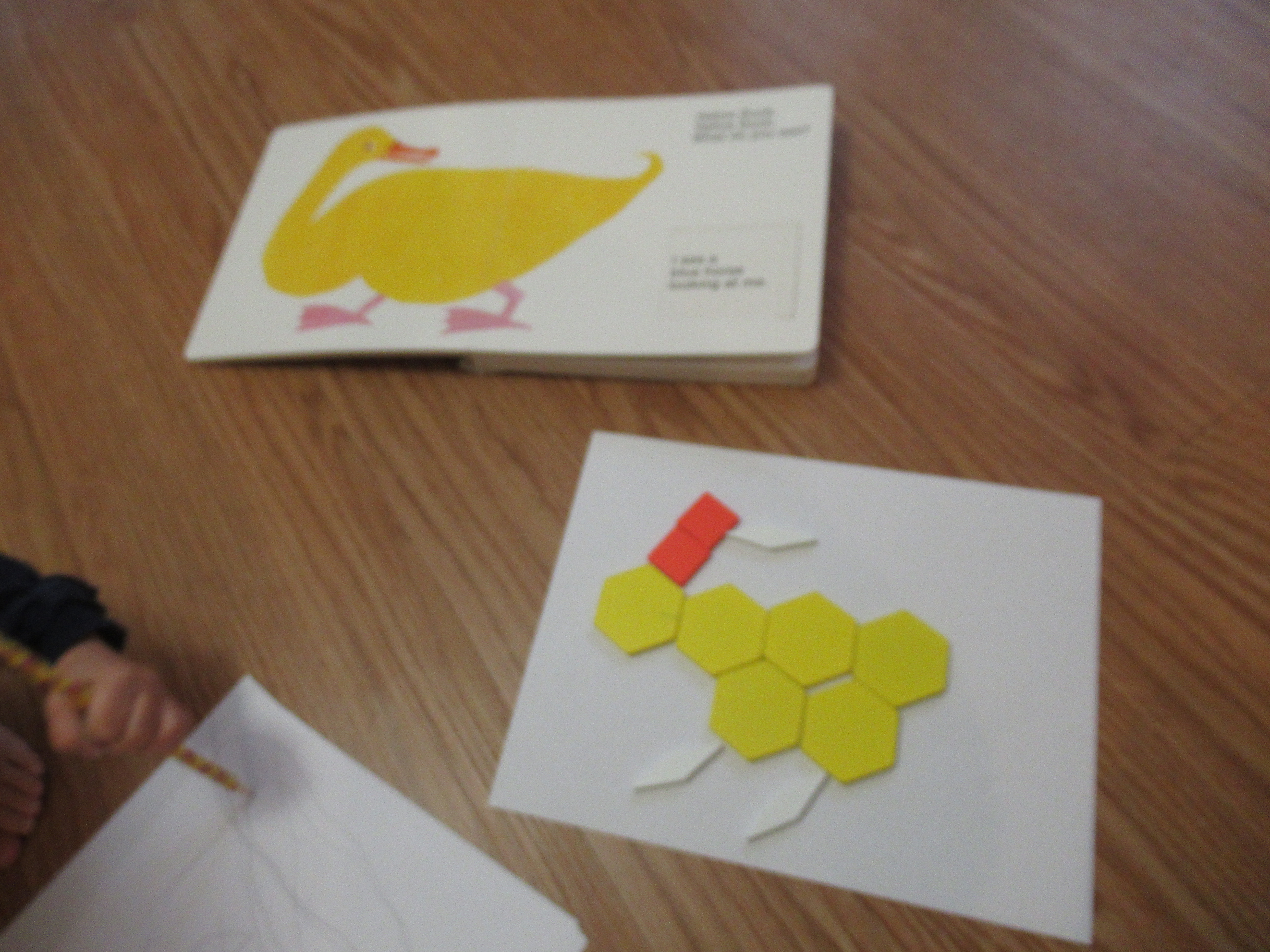
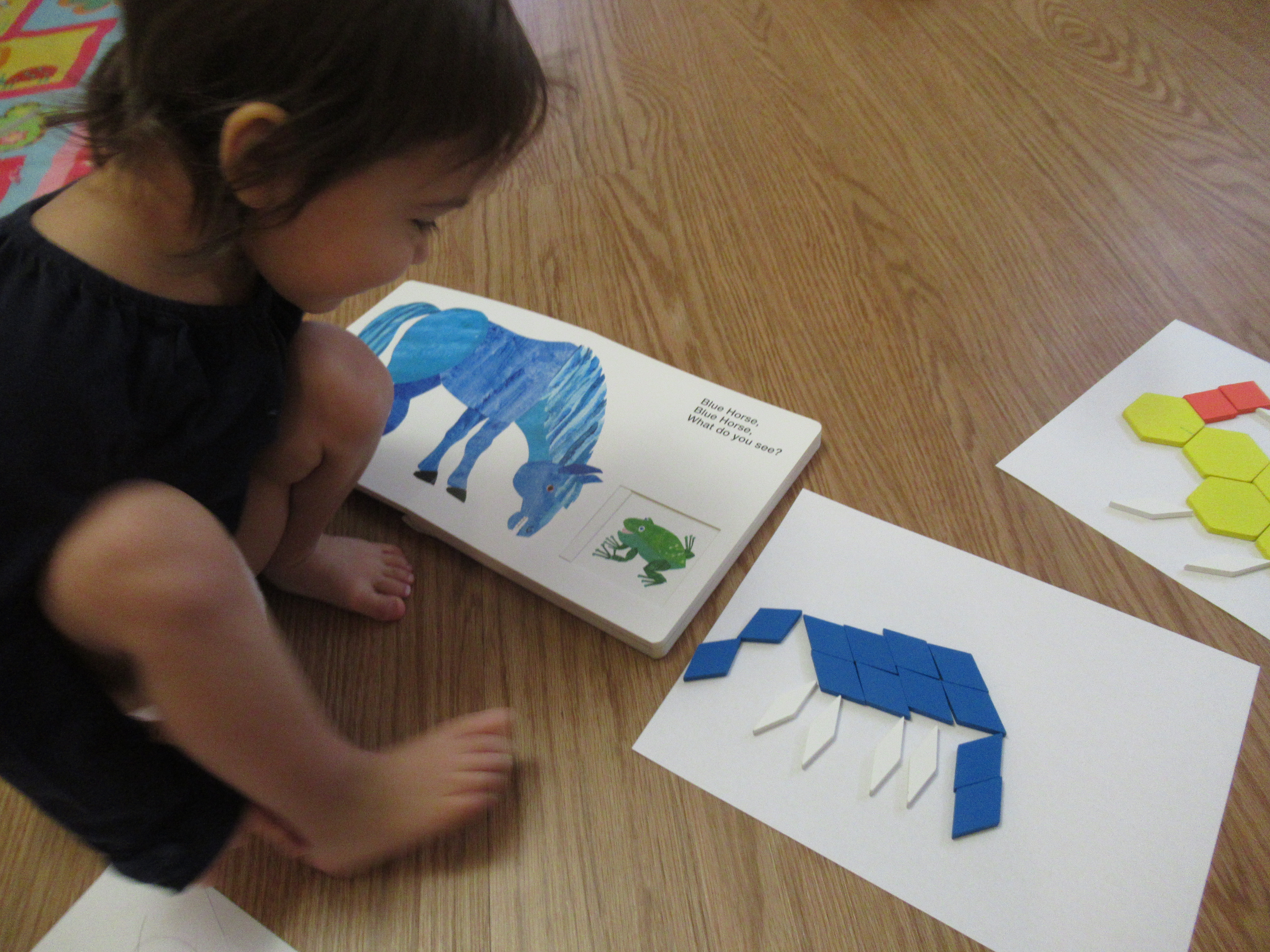
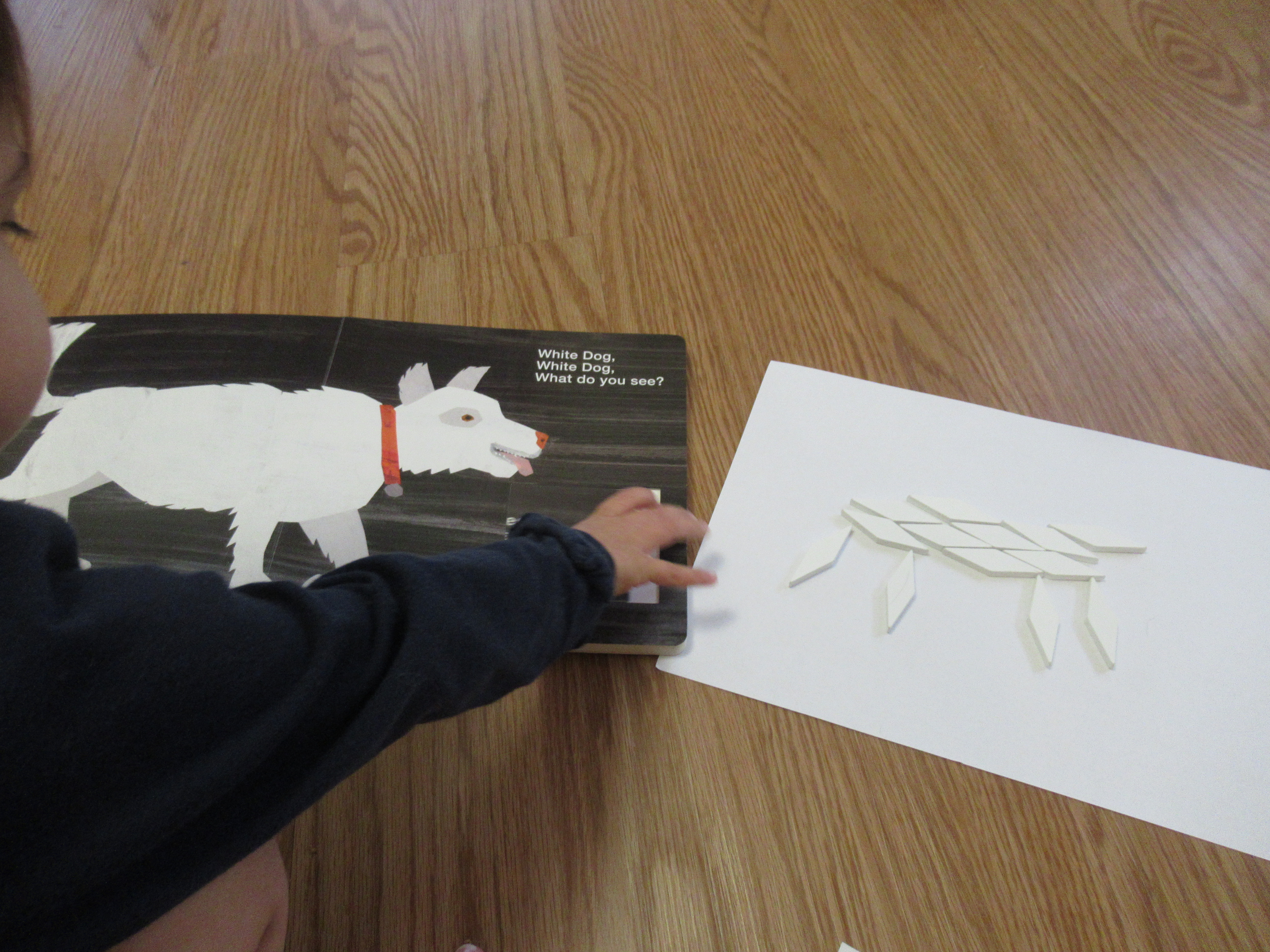
To start, we pulled out several of our Eric Carle favorites, like Brown Bear, Brown Bear What do You See.

Eric Carle Art (1)

As Veronika uncovered each animal in the story, I laid out a design in corresponding tangrams. She marveled as she saw the animals come to life on the page!

Eric Carle Art (2)

For older toddlers, draw the outline of the animal first and challenge your child to fill it in. Preschoolers can make the challenge even harder by designing their own tangram animal without a template.

Eric Carle Art (3)

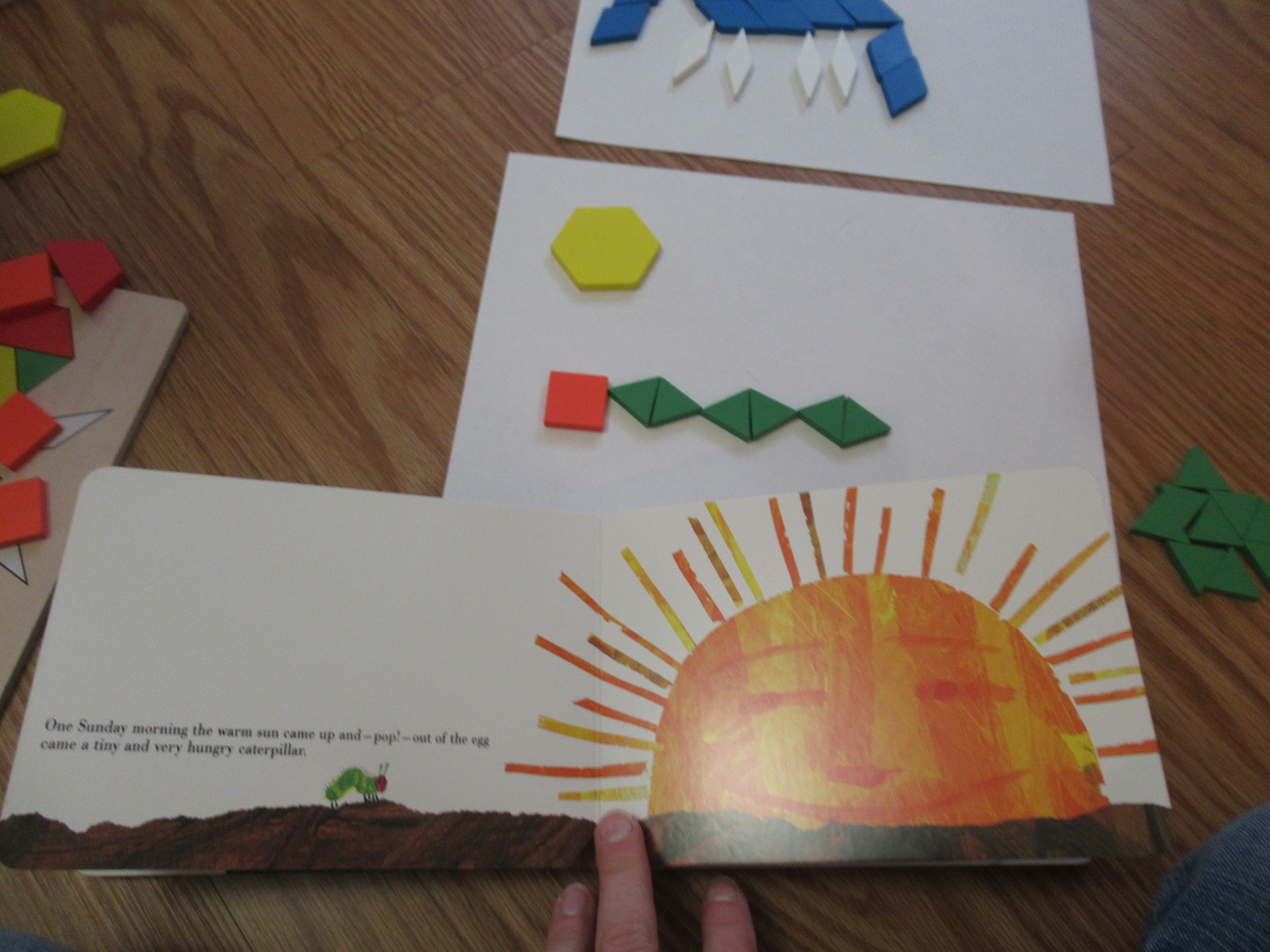
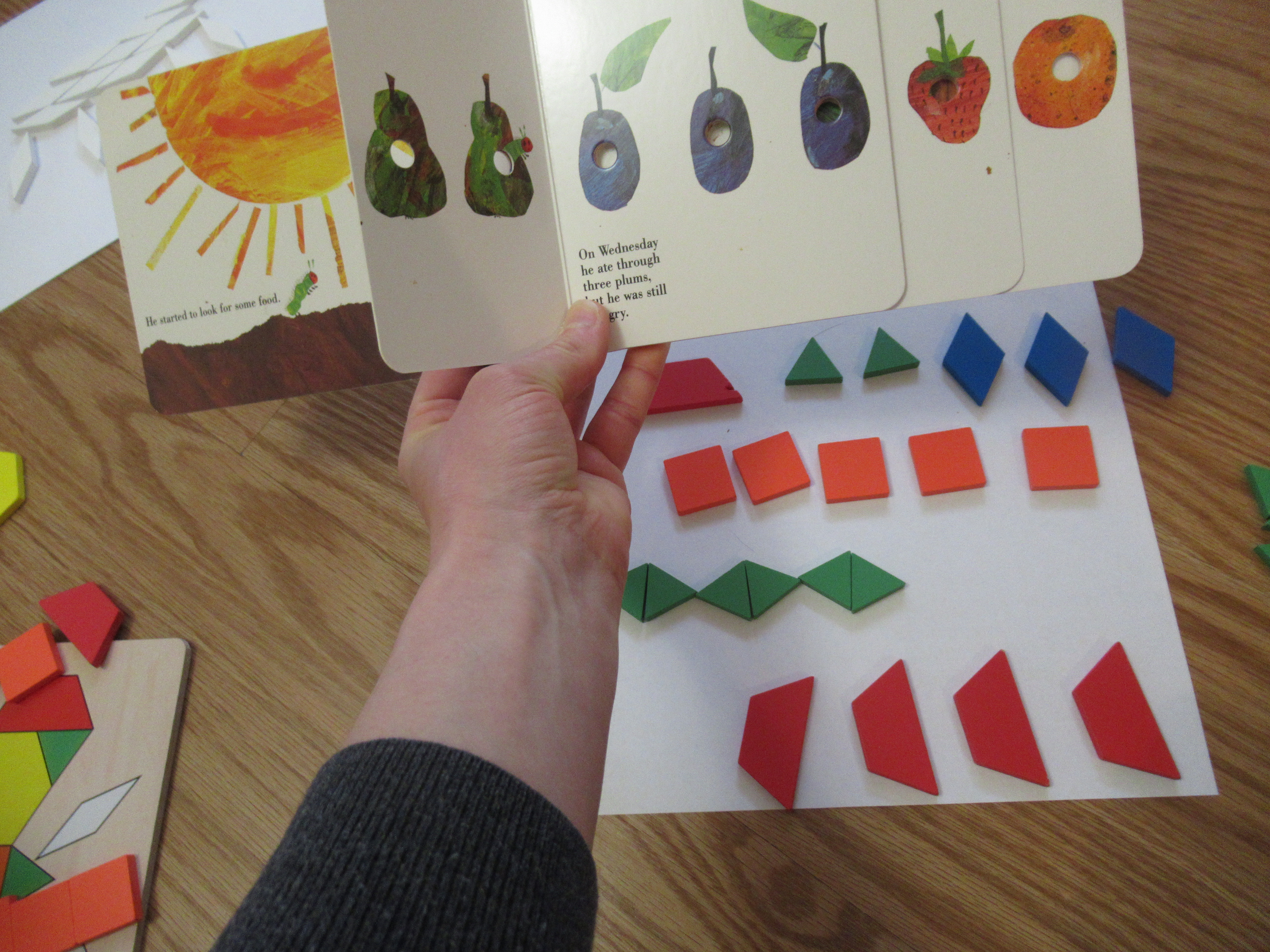
Next up was A Very Hungry Caterpillar, another favorite. For this one we “acted out” the story with tangrams on each page, starting with the little caterpillar under the sun.

Eric Carle Art (6)

This was great for counting as we got to the pages about each fruit the caterpillar ate.

Eric Carle Art (7)

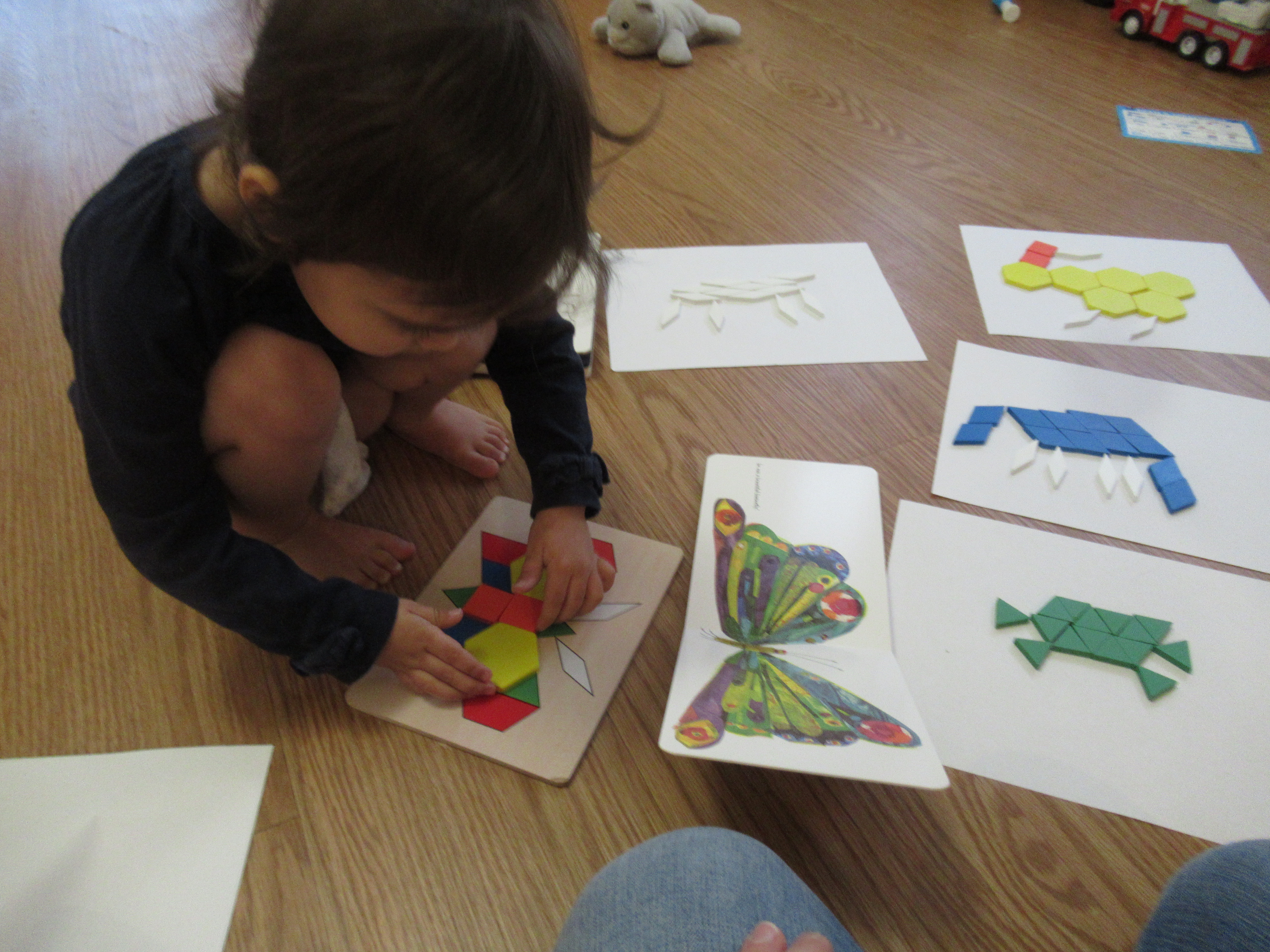
Our tangram set also includes a template of a butterfly, so this was great practice for Veronika to do the filling in. It was easier for her to think of it by color than by shape, but with some guidance she was able to follow the pattern. This was exactly the intro to tangrams I had hoped for when we sat down together.

Eric Carle Art (4)

Of course then we capped it off with a visit to the museum! If you end the day with your favorite Eric Carle book at bedtime, you’ll have made this activity frame a full day of stories, learning, and play.

Eric Carle (1)

Rainbow Rice Letter Learning Tray

Rainbow Rice Letter Tray (11)

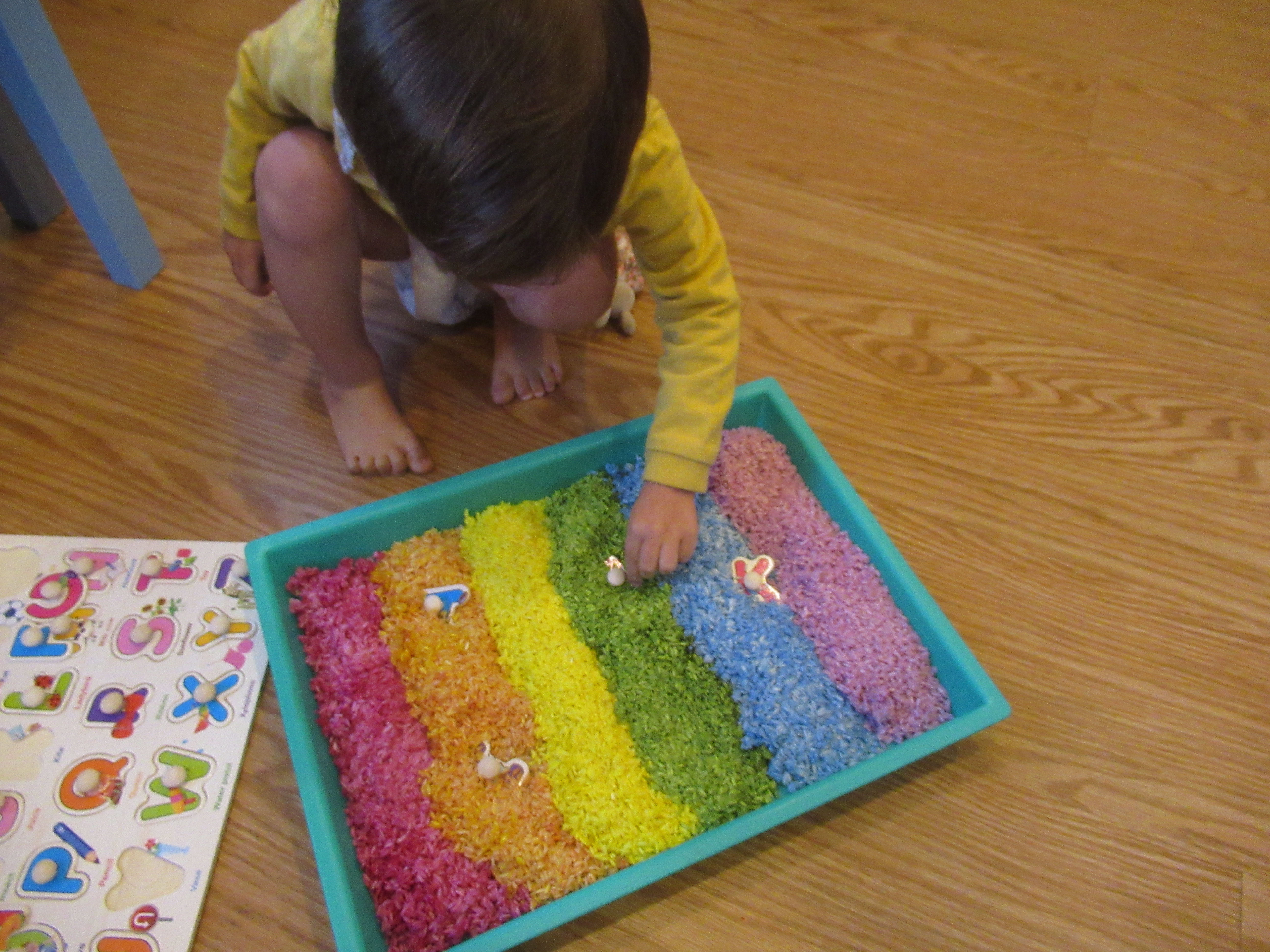
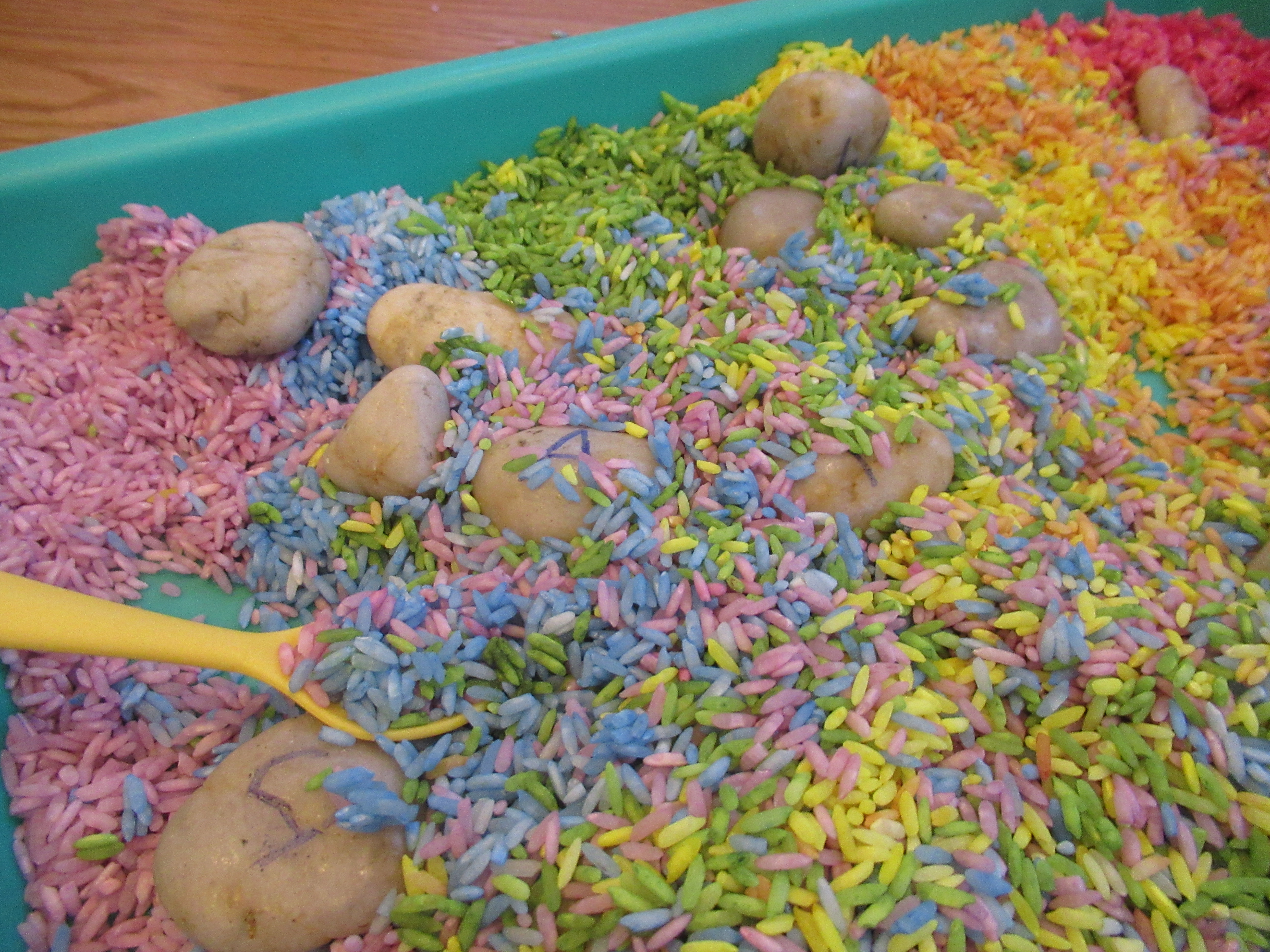
It’s been all things rainbow in our house this week as we get closer to St. Patrick’s Day. Here was a new spin on an old idea, since we’ve made rainbow rice before, but with some learning thrown in. Today, there were letters hidden in all that rice!

As a reminder, you can make rainbow rice by combining 1 cup white rice, 1 tablespoon white vinegar, and a few drops of food coloring in a zip-top bag, using 1 bag for each color desired. Seal and shake to coat, then pour onto paper plates and let dry overnight.

Rainbow Rice Letter Tray (1)

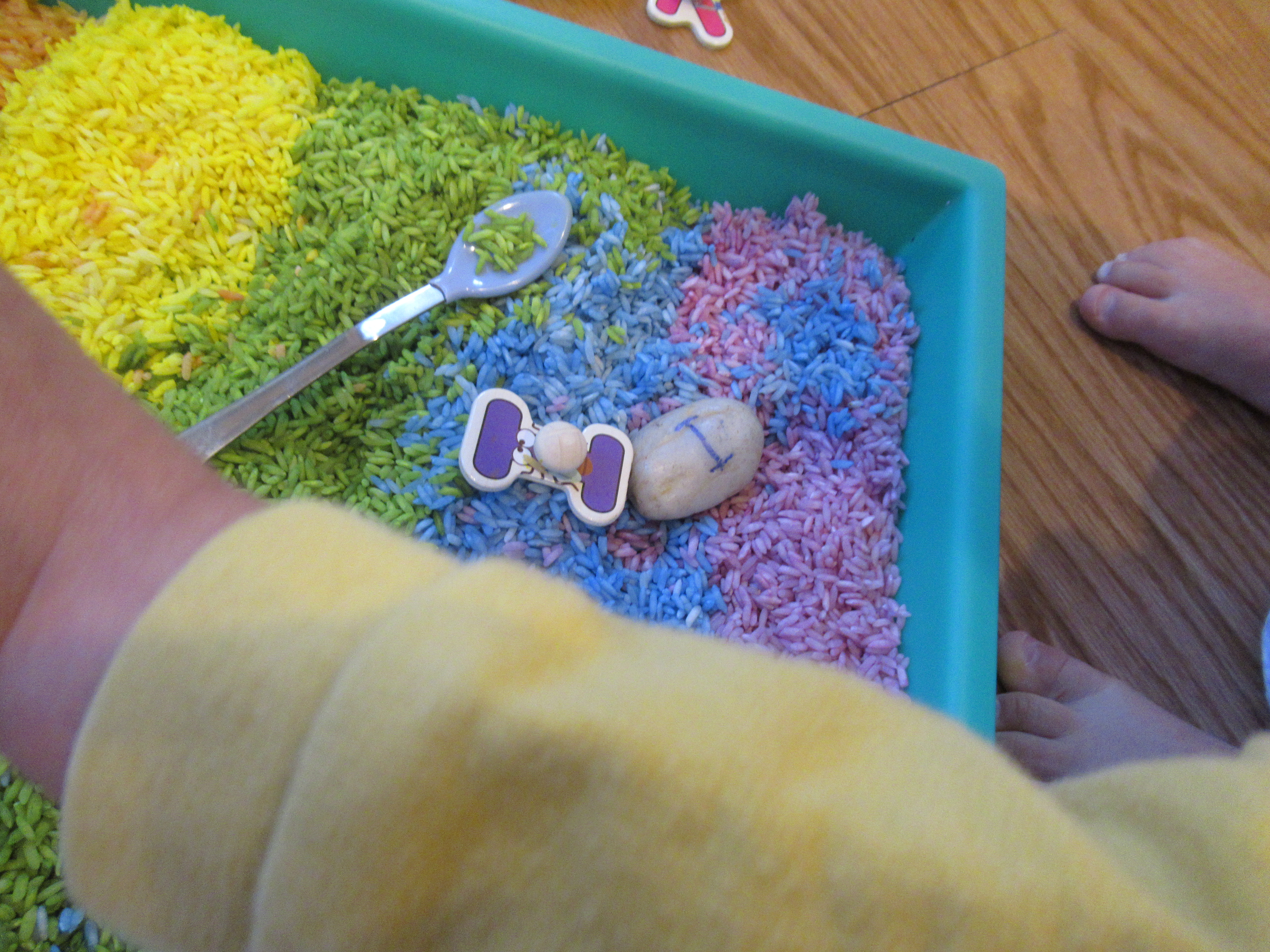
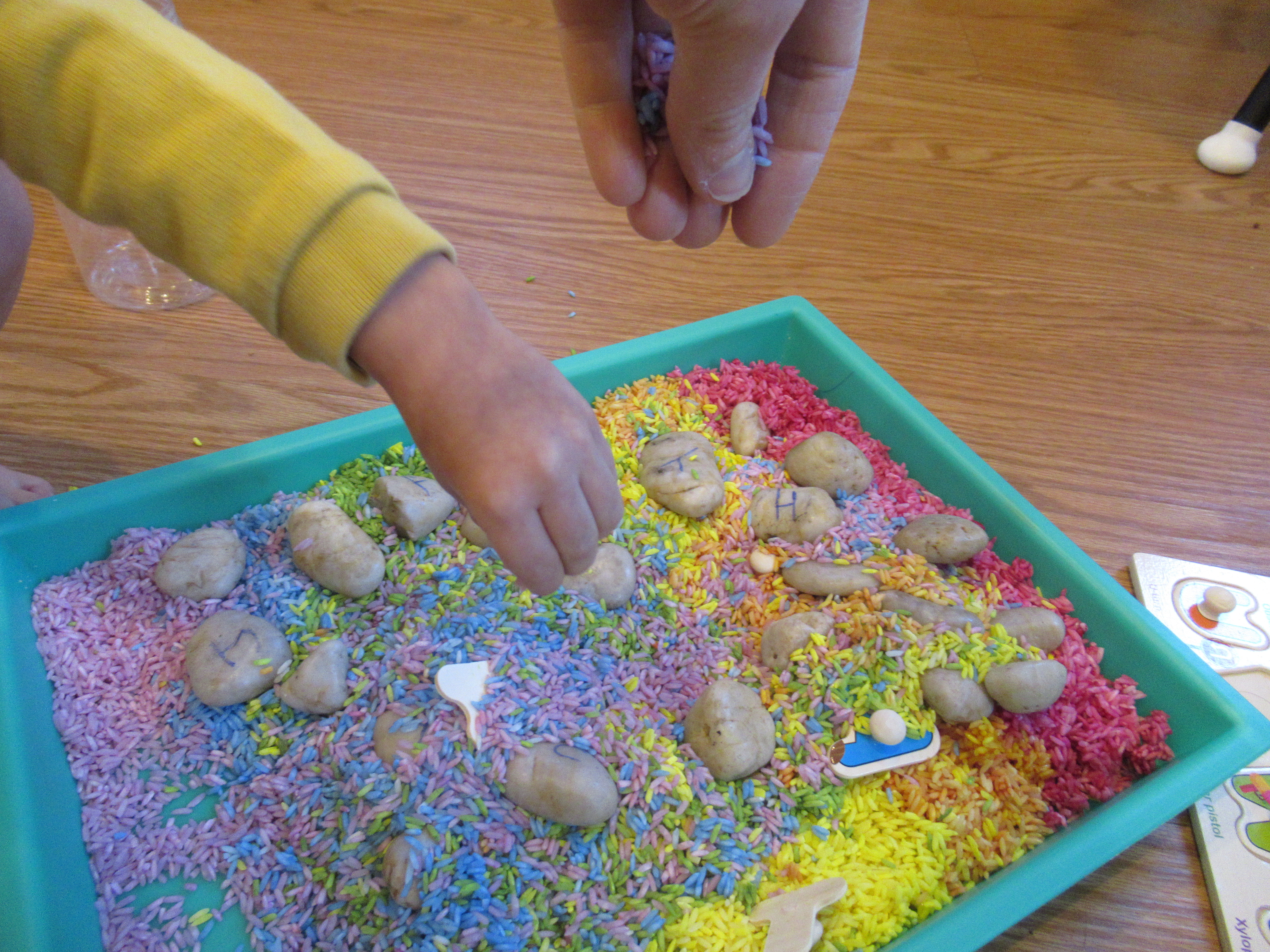
In the morning, I arranged the colors in rainbow order for Veronika. I then set out two sets of letters. The first was smooth rocks, which I had labeled A through Z with a sharpie.

Rainbow Rice Letter Tray (3)

The second were the pieces of a letter puzzle. I recommend working with only a few letters at a time for a toddler, or you risk wearing out your child’s concentration! As always, a great place to start is the letters of your child’s name, so today I placed the puzzle letters V-I-K-A (Veronika’s nickname) in the rice.

Rainbow Rice Letter Tray (5)

I pulled our each correspondingly lettered rock, and we went hunting for them! “Hmm, where’s k?” Veronika said so seriously, sifting through the rice with a spoon. “Here it is!”

Rainbow Rice Letter Tray (4)

After we had matched these letters, it became more of a free-for-all. She loved putting the rocks in the rice and burying them with the spoon.

Rainbow Rice Letter Tray (10)

Then, as she uncovered each one, we would look over at the puzzle to find the one it matched.

Rainbow Rice Letter Tray (7)

Finally, things turned into regular sensory play, which was just fine. She loved the sound the rice made as we sprinkled it down!

Rainbow Rice Letter Tray (8)

The pastel colors of the rice helped us channel spring, which is less than a week away, a very welcome thought as winter weather continues outside.

Rainbow Rice Letter Tray (6)

Tweezers & Goldfish

Tweezers & Goldfish (9)

I loved this activity the moment I spotted it on Teaching Mama, but one problem prevented us from doing it right away: store-bought goldfish are not vegan, not even the pretzels!
Luckily, I have a fish-shaped cookie cutter from an old project, and could make a batch at home (this time I used the recipe from Nature’s Path, with regular flour and mixing by hand instead of in a food processor. Veronika was so excited seeing the fish crackers in the oven, and couldn’t wait to see what we’d do with them (and to taste them!).

Tweezers & Goldfish (3)

As the fish baked in the oven, I drew six fish bowls with marker on a piece of white poster board, and labeled them 1-6.

Tweezers & Goldfish (2)

Ding! The fish were done. Well of course first we tried them for a snack. Then I set out a bowl of the fish along with a pair of oversize tweezers and the fishbowl chart.
Tweezers & Goldfish (4)

I had Veronika name each number as review; she can recognize numerals up to 10 now. Next, I told her we had to fill each fish bowl with the correct number of fish! I showed her how to pinch up one fish with the tweezers and transfer to the bowl marked 1.

Tweezers & Goldfish (5)

Working together, we pinched and transferred and counted to fill each bowl.

Tweezers & Goldfish (6)

And of course there was lots of happy snacking along the way.

Tweezers & Goldfish (7)