Wave Bye-Bye

Wave Bye (2)

The more you model the behavior of saying and waving bye-bye, the sooner your baby will understand this important gesture of human communication. Today, Veronika and I played a few fun “bye-bye” games.

For the first, I hid a toy inside a box, first saying, “Bye-bye toy!” I made sure to give a little wave.

Wave Bye (1)

She eagerly reached right into the box each time to dig out the toy, and we repeated the process over and over until she tired of it.

Wave Bye (3)

Another adorable version is to sit your child on one side of a door frame. With a big smile and wave, say, “bye-bye!” and then disappear around the corner. Immediately pop back into view and say, “hello again!” I remember this getting huge smiles from Travis as a baby, and now it was Veronika’s turn.
Wave Bye (6)

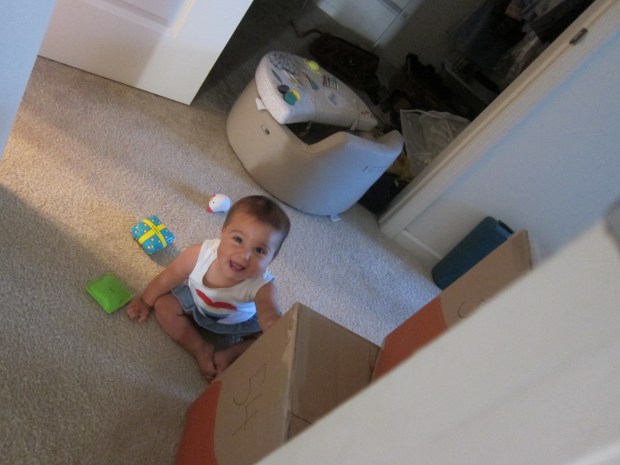
Finally, say bye-bye all over the place throughout your day. You can do this when you leave a location (“bye-bye library!”) or a person (“bye-bye Grammy!”). Veronika looks like she wants to give a wave, and the more I model, the sooner she will.

On a personal note, we turn today to say “bye-bye” to our apartment, the only home Veronika has ever known. Here’s to new beginnings and many hellos to come!

Bye New York.jpg

Banana Talk

Banana Talk (3)

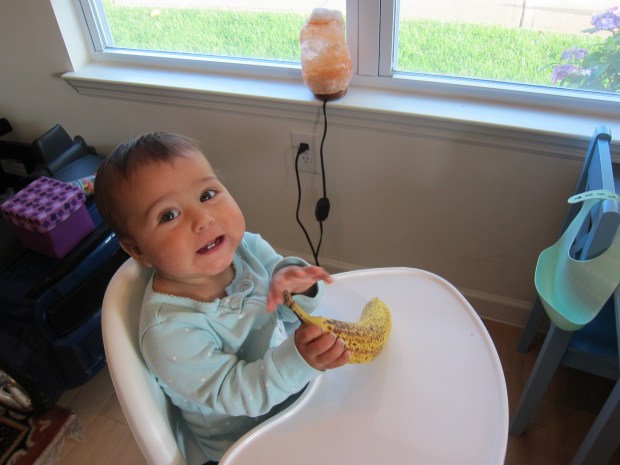
This quick game was an adorable way to play with Veronika at mealtime. It’s about concrete learning on the one hand – vocabulary, taste, texture – but also introduces a playful silliness that your baby can understand now, at eight months old. Banana phones are a classic of a reason!

I came over to Veronika’s tray carrying a banana up to my ear. Hello hello hello? I had a quick chat into the phone, and passed it to her.

Banana Talk (1)

She looked at it in wonder and wanted to grab for it, of course.

Big brother wanted to have a quick turn on the phone call too!

Banana Talk (2)

Next I turned back one edge of the banana peel and let her pull it the rest of the way down. Bananas are the perfect process food!

Banana Talk (4)

She looked amazed as she worked her way around the whole peel – and then of course we broke off bites to eat and share!

Banana Talk (5)

Reply to Your Baby

Reply Baby (3)

I had a nice realization this morning that Veronika never uses a newborn’s instinctual cries of “neh” or “heh” or “eh” anymore. Her babble is big baby babble!

My favorite these days is when I catch her in avid conversation, usually either with her food or her toys. She’ll try out new sounds (p and w are favorites in her repertoire these days), and it looks like she has a whole animated story going on in her head.

Reply Baby (1)

Today I made a point of talking back. Whether I imitate her consonants and vowels or use real words, Veronika looks so pleased when she “talks” with us.

Reply Baby (2)

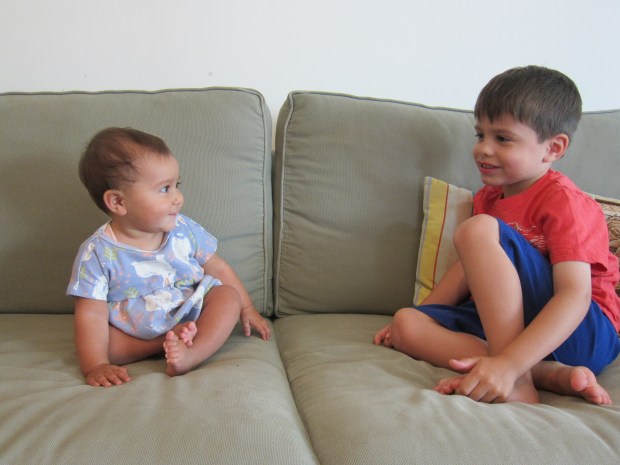
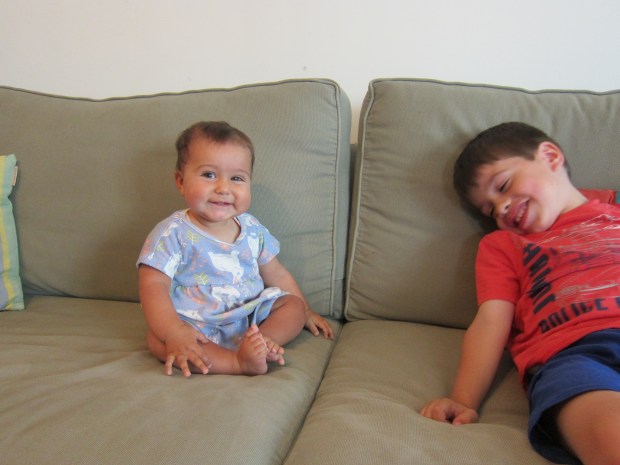
For further fun, I sat her down with big brother Travis and let the two of them have a “chat.” Travis – who is so eager for Veronika’s first word – loved this game, which soon had them laughing between the babbles.

Reply Baby (4)

Here’s a quick clip of a chat today!

Any activity like this will only help foster your baby’s language development, so talk early and often.

Reply Baby (5)

In and Out Games

In Out Games (2)

Babies just seem to love containers, especially finding one with various items inside and dumping them out. Contain that natural inclination with these variations on in and out games!

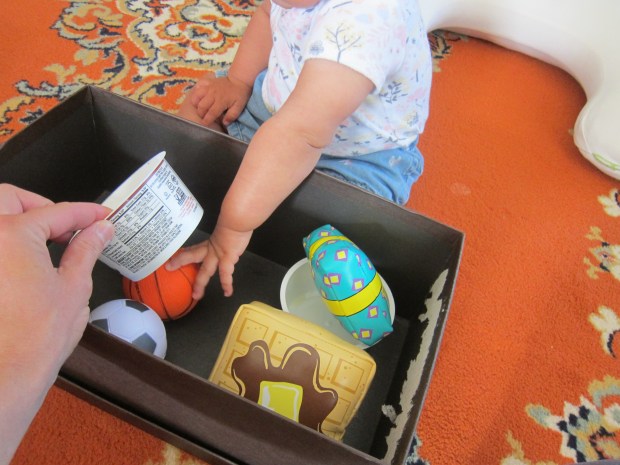
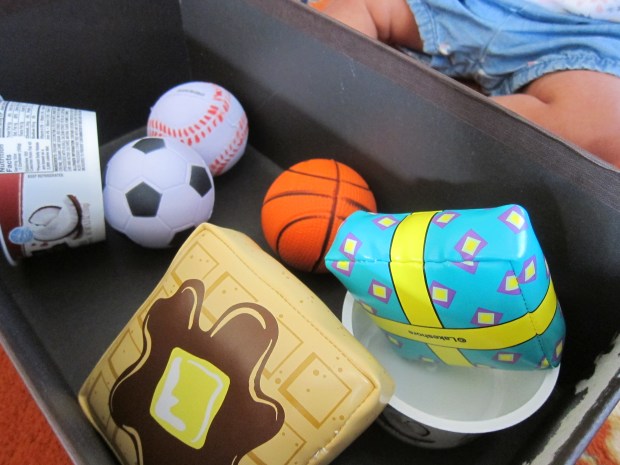
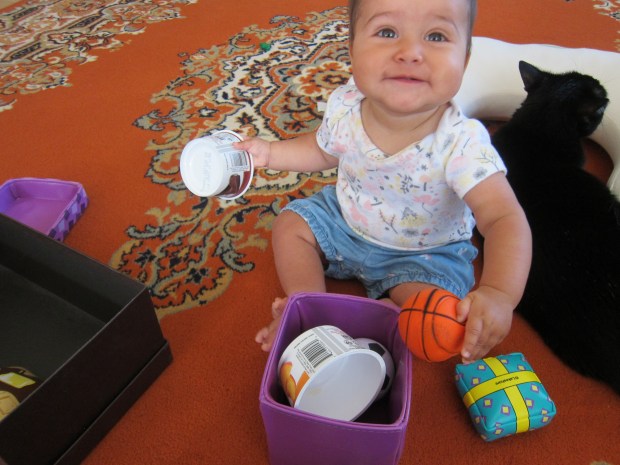
For the first version, I simply filled a shoebox with a few toys, trying to make them novel for Veronika; we had a few new squishy balls, empty So Delicious yogurt containers, and some favorite soft toys.

In Out Games (1)

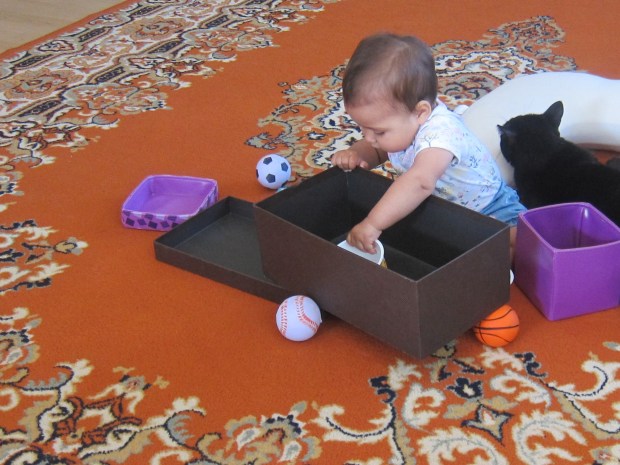
The entire goal of the game was for her to reach in and pull things out, then fill the box back up and start all over again. She was up for it!

In Out Games (5)

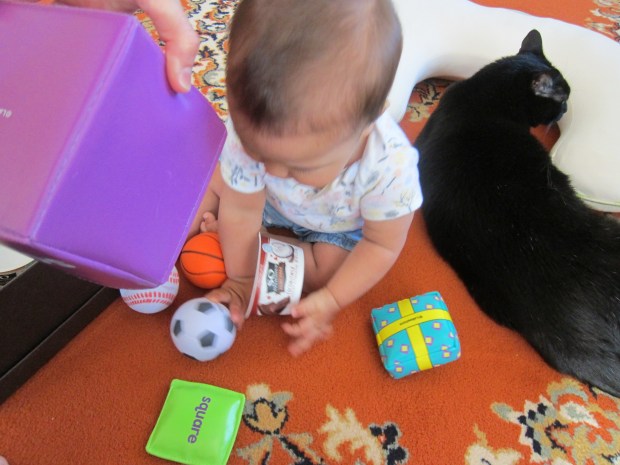
The shoebox proved to be a little too big for her to lift and dump, so I eventually transferred everything to a small toy bin. I showed her how to upend this.

In Out Games (3)

What a fun game, mommy!

In Out Games (4)

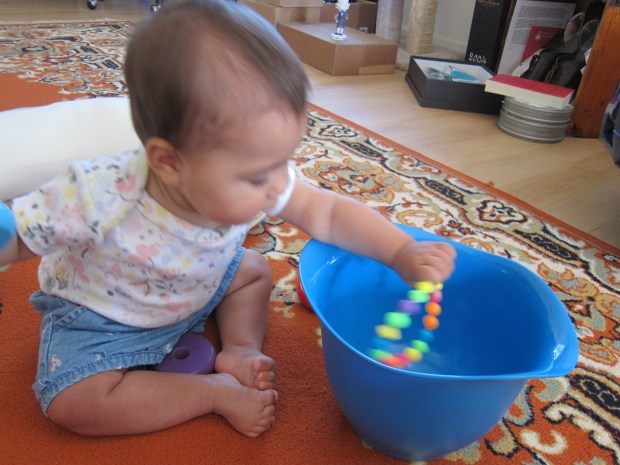
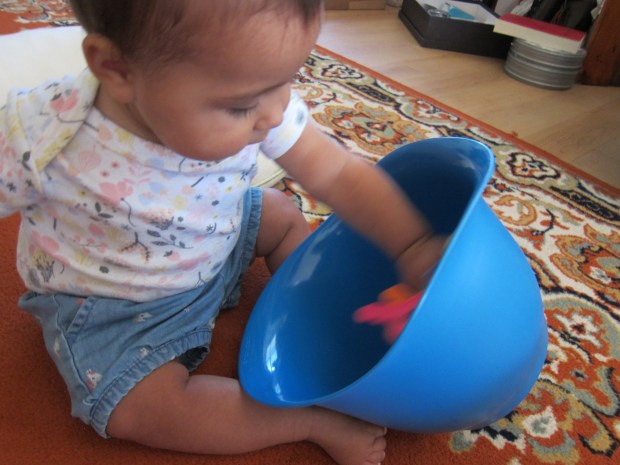
For the next version, I got a little more technical with language learning. Use a plastic bowl instead of a box (just to mix things up!) and add different toys.

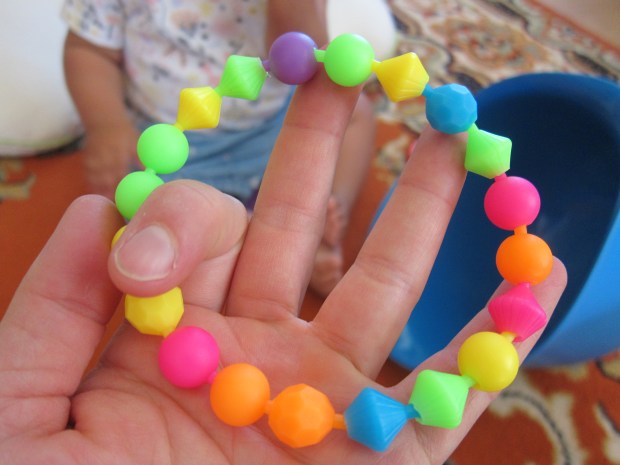
Pop beads are a fun burst of color for babies; just be sure you have these joined in secure loops, since the individual beads can pose a choking hazard.

In Out Games (8)

This time, I first said, “Put in,” and encouraged her to place items in the bowl.

In Out Games (9)

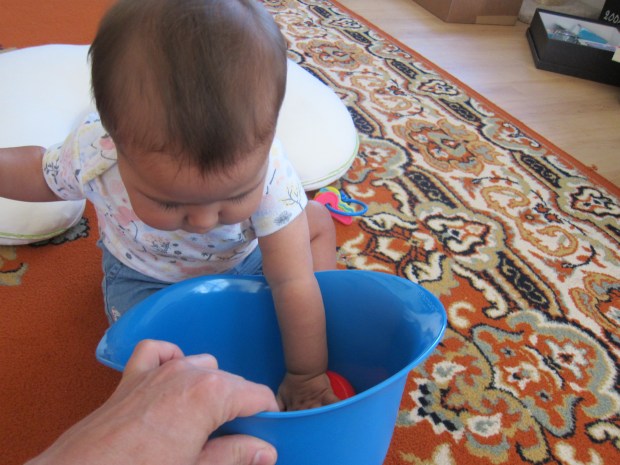
Then we reversed it: “Take out,” I said, each time she reached in a hand to grab out an item.

In Out Games (7)

Note: ‘take out’ happened a lot more than ‘put in’, which I expected! But repeating the words each time will help your baby learn the concepts.

In Out Games (10)

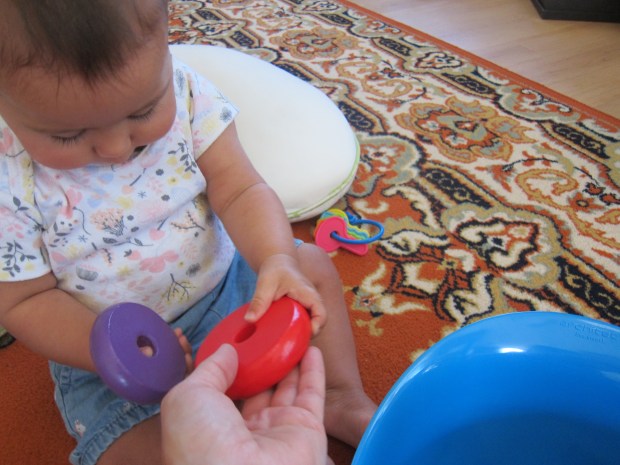
I also encouraged her to hand toys to me, using an open-hand gesture and language.

In Out Games (6)

This is a great game to play on repeat as your little one nears that exciting moment of first words!

Dressing with a Point

Dressing with Point (3)

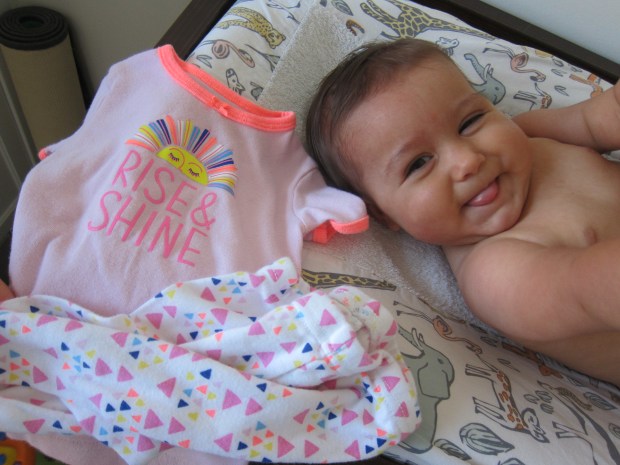
I’ve always loved to narrate to my children during diaper changes, a moment that’s rife with opportunities for vocabulary-building: I point out the names of each article of clothing; use action words (taking off, putting on); and of course simply get silly to bond with baby. Today’s point was a little different; at eight months old, Veronika is nearly old enough to point, and I wanted to encourage the motion!

To do so, as I named each article of clothing, I also pointed to it. “Shorts,” I said (pointedly of course).

Dressing with Point (2)

Veronika didn’t point back, but she did do lots of grabbing for each piece of clothing, which is sort of the general idea.

Dressing with Point (1)

I pointed out pajamas…

Dressing with Point (6)

And onesies…

Dressing with Point (5)

And dresses in the closet.

Dressing with Point (4)

Keep repeating this game, and your little one might point before you know it. I think Veronika gets the point, even if she can’t quite mimic the motion yet!


Foot Day

Foot Day (3).JPG

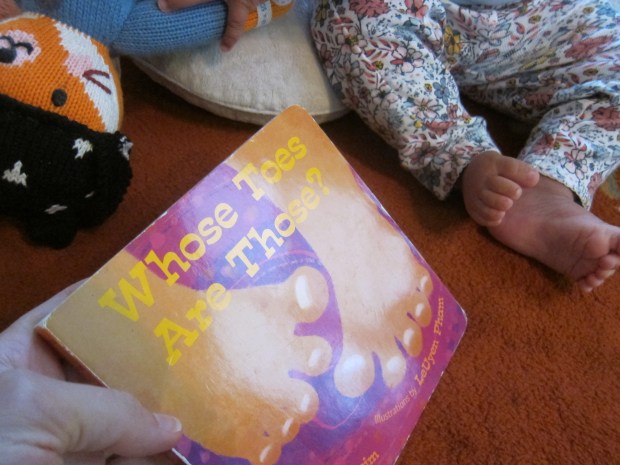
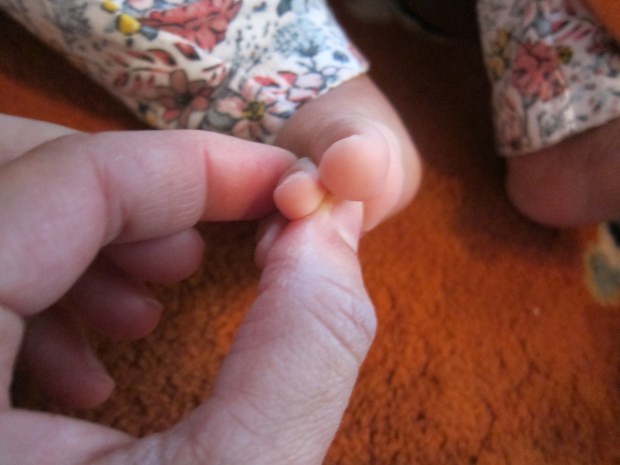
On the heels of a hands day with Veronika, today was all about feet… and those adorable piggy toes of course.

The idea, as with the day we devoted to hands, was to pick a body part and make it the focus for twenty-four hours. I recited a few nursery rhymes that feature feet (This Little Piggy is an obvious choice). I also sang ‘Clap Your Hands’, but made up verses about feet: stomp stomp stomp your feet; tip tip tippy toe; wiggle wiggle wiggle your toes etc.

Foot Day (5)

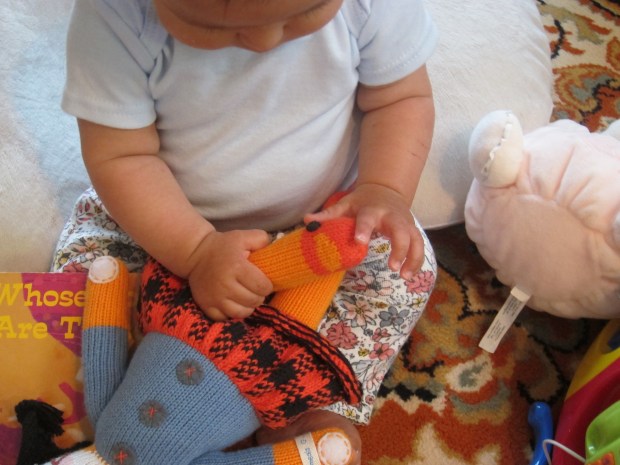
I then pulled out a few stuffed animal friends to show her their feet.

Foot Day (7)

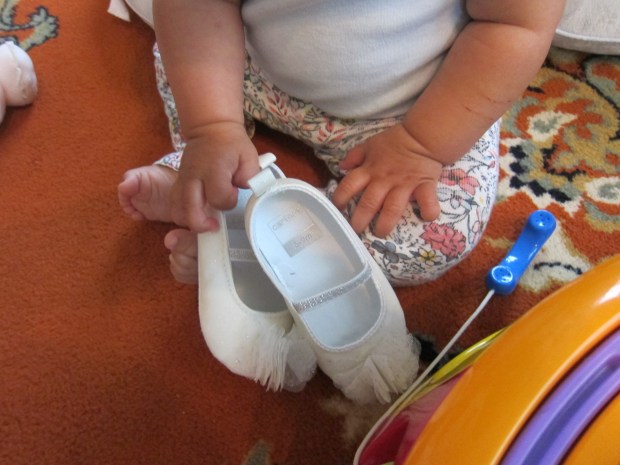
It was fun to play with a clean pair of baby shoes!

Foot Day (9)

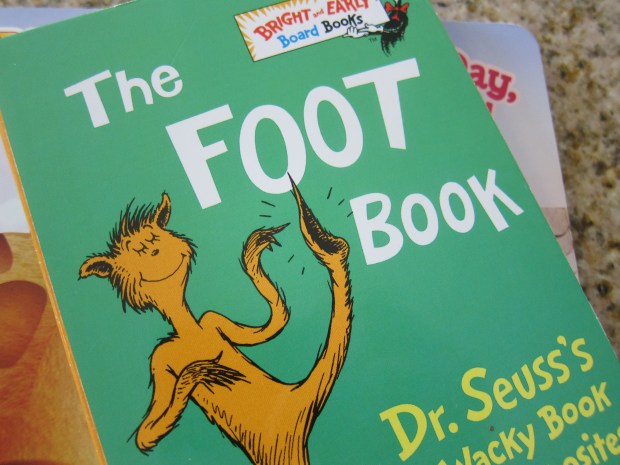
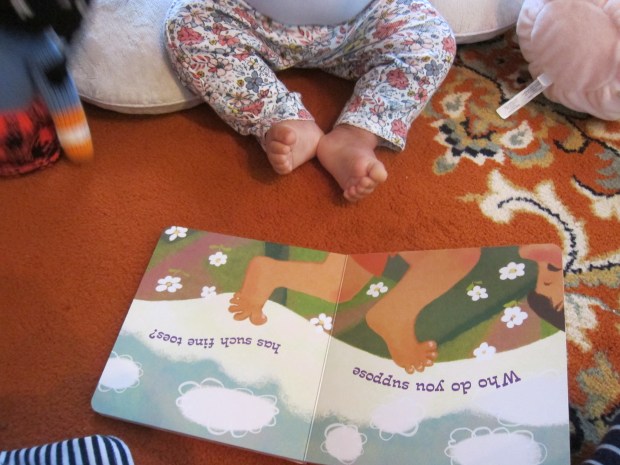
We read books about feet, including Dr. Seuss’s classic The Foot Book

Food Day alt.JPG

…and one that focused on toes.

Foot Day (4)

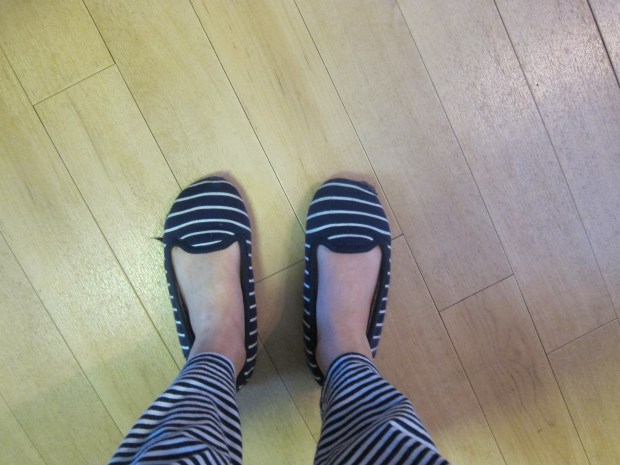
Finally, I pointed out feet to her wherever we saw them throughout the day. Look, mommy’s feet are in slippers!

Foot Day (8)


This Is the Way…

This is the Way (4)

Let’s be honest; taking care of a baby can seem like a series of repetitive steps that you do each day – feeding them, dressing them, bathing them. But don’t forget that everything you do is fascinating for your little one, still. One way to make it fun – not only for Veronika, but also for myself – is to put it to music.

My favorite song to sing as we do daily routines is “This is the Way” (to the tune of Here We Go Round the Mulberry Bush. Pretty much anything can fit into this song.

This is the way we take a bath

Take a bath, Take a bath

This is the way we take a bath

Early in the morning

Adapt the lyrics for each thing you do each day!

“This is the way we wash our hands… after having a meal.”

This is the Way (1)

“This is the way we put on your clothes…early in the morning”

This is the Way (3)

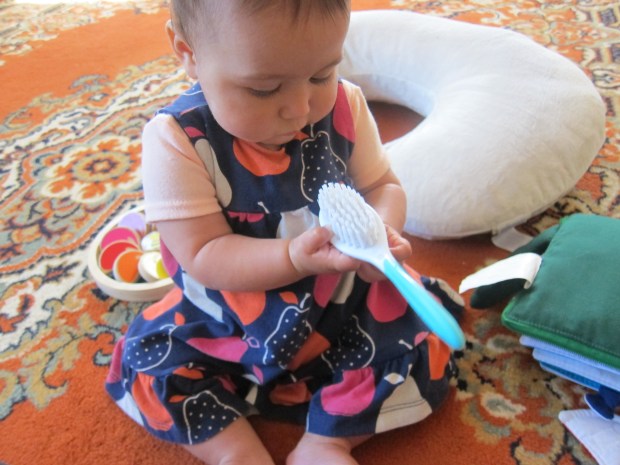
I also sing the song to her as I go about getting ready for the day, with verses for my shower, for toweling dry, and for getting dresses. You can also enlist baby to be your helper. “This is the way I brush my hair,” I sang to her, and then let her have a turn.

This is the Way (5)

Musical cues like these can help a baby understand where you are in your daily routine, and also sneaks in language learning.


Hands Day

Hands Day (4)

One fun exercise to do with your baby is to pick a body part and devote the day to it. So today, it was all about hands for me and Veronika!

To start, I sang nursery rhymes that prominently feature hands. Examples include Where is Thumbkin or If You’re Happy and You Know It.

Hands Day (1)

For the latter, I changed the words so all the versus applied to hands: if you’re happy wiggle your fingers; shake your hands; etc.

Hands Day (3)

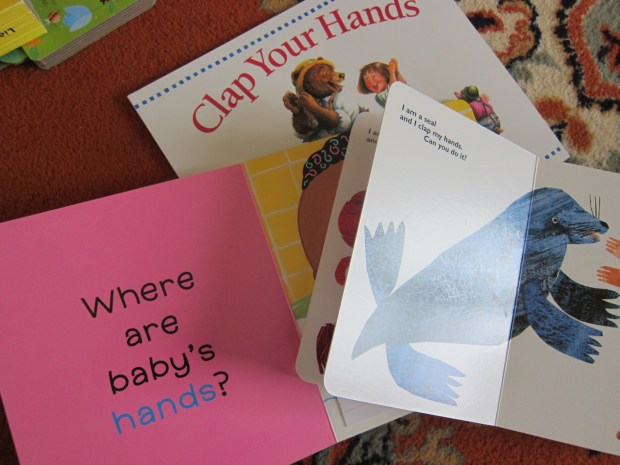
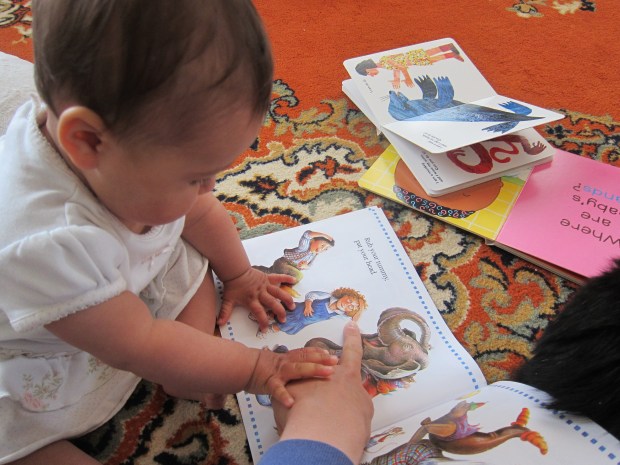
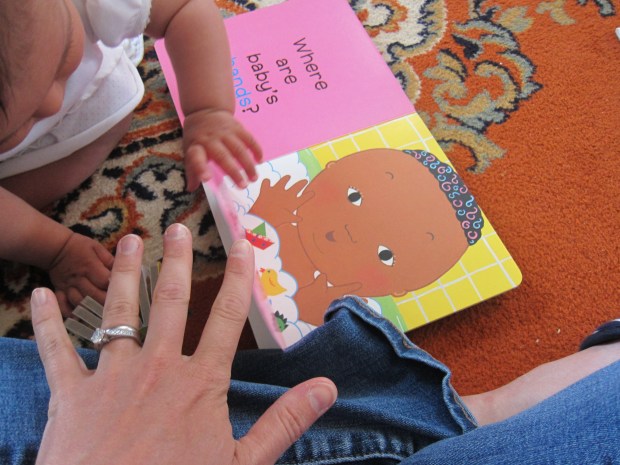
Next we read books that featured hands. There are lots of great body parts books for babies, so turn to the relevant pages and focus on those.

Hands Day (7)

I pointed to the hands of the people in the illustrations.

Hands Day (5)

I also pointed out hands throughout the day. Mommy is cooking with her hands. Mommy is writing with her hands.

Hands Day (2)

If you have paintings around the house with hands, show baby those, too!

Hands Day (8)

Personal Picture Book

Personal Book (4)

Sure, there are lots of books you can read to your baby from the library or the bookstore. But don’t forget you can also make your own!

Personal Book (3)

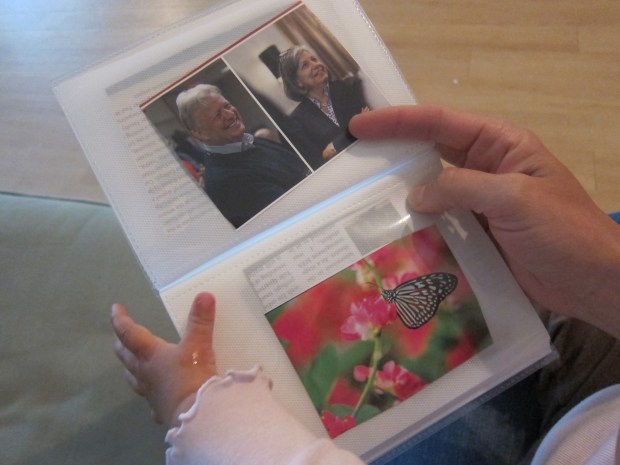
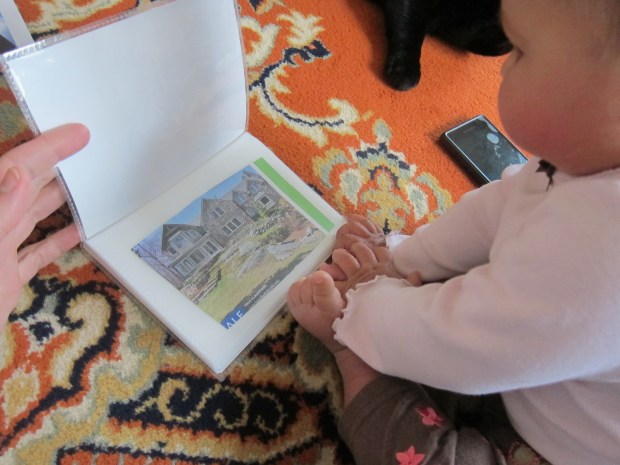
Since babies at Veronika’s age (7 months old) are primarily interested in the visuals, it’s fun to make a book with no words. I used images cut from magazines and catalogs, but your own photos can work well, too! Since the story has no words, you can change it up every time.

Personal Book (1)

I chose simple images, limited somewhat by which magazines I had around to cut up. Soon we had stories about a butterfly who moved into a house and then…

Personal Book (2)

Just use your imagination from there!

Personal Picture Book var

Try to find photos that depict familiar objects. As we “read” about the desk and chair in the story, for example, I took her over to the desk and chair in our apartment and pointed out that they were the same.

Personal Book (5)

Same goes for the picture of a little girl in our story. “Girl,” I told her, and pointed to the picture and then to Veronika. “Same!”

Personal Picture Book alt.JPG

This book is also great because a big sibling can “read” it to the baby, even if not yet a reader! I loved looking over to see Travis was making up stories for her.

Personal Book alt

In sum, a great idea, and we’ll be adding to our “story” as I cut up more catalogs.

Personal Book (6)

Babble with Baby

Baby Babble (1)

Veronika is definitely trying to tell us (and her toys!) something these days; that girl can babble! And she keeps up a steady stream of chatter when she plays or looks at us these days, as if to say, “Can’t you understand me?”.

In the past, I’ve advocated turning your baby’s syllables into words. “Ga” can become garage or goose, for example. But today, I flipped that around. If she “hmmmed,” I “hmmmed” back at her. If she said “ga ga ga” (a favorite these days), I replied “ga ga ga” or “la la la”, trying to pick up on her rhythm.

Baby Babble ($)

Wouldn’t you know, she loved it. It was as if I had learned her language, and she was praising me!

Baby Babble (3)

One way to get her going is to read the newspaper by her side. I read my news and she “reads” her Hello magazine. Pretty soon she was babbling up a storm. I responded back with my own sounds – all the news that’s fit to babble!
Baby Babble (2)

We kept it up all day, and big brother Travis loved it. “Everyone talk like Veronika!” he said on our walk. You can see her delight when he copied her.

Baby Babble (5)

This was a great way to get an older sibling more focused on your baby’s sounds, especially if they are frustrated that baby isn’t “talking” yet.