Even or Odd Race

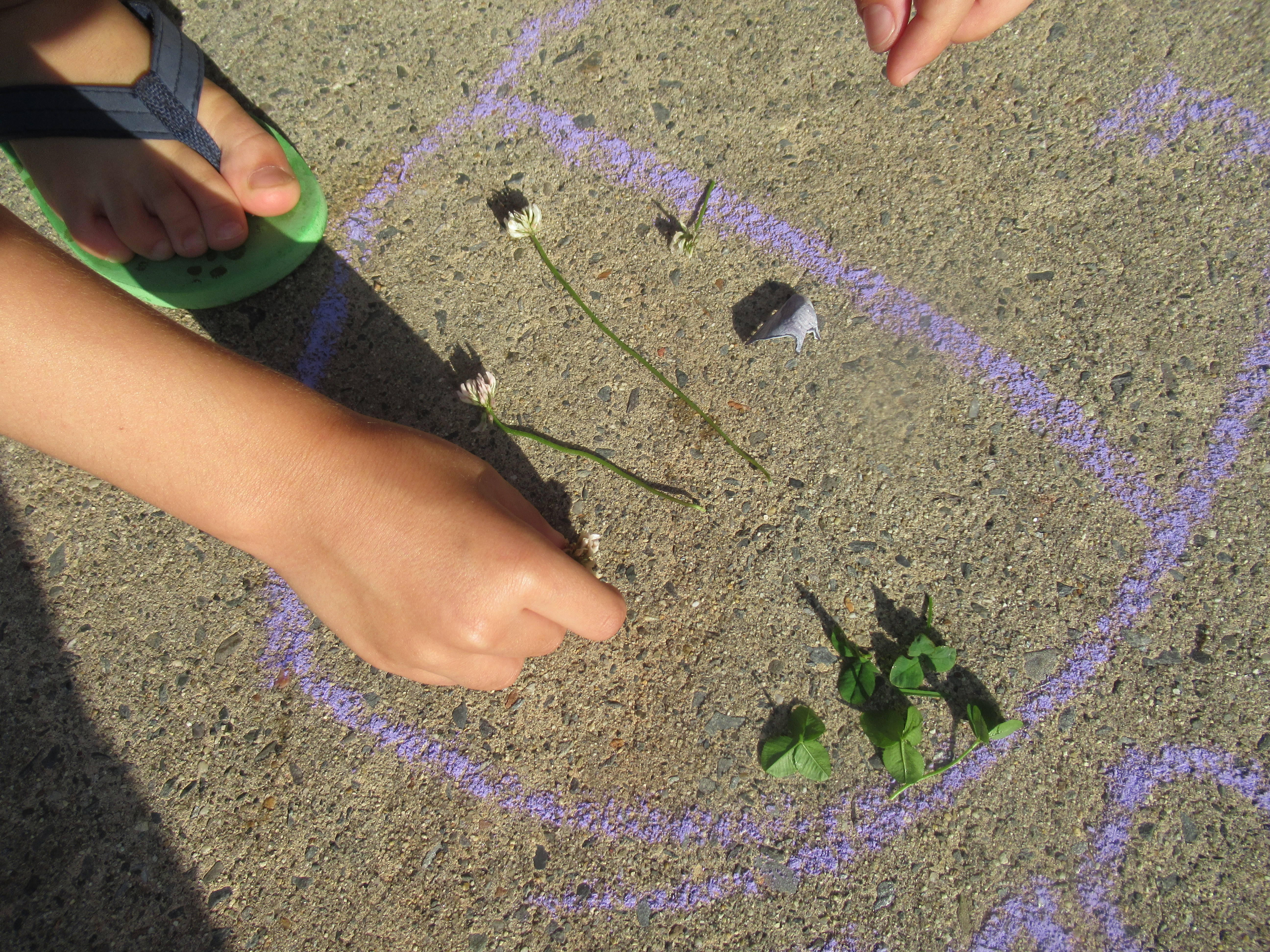
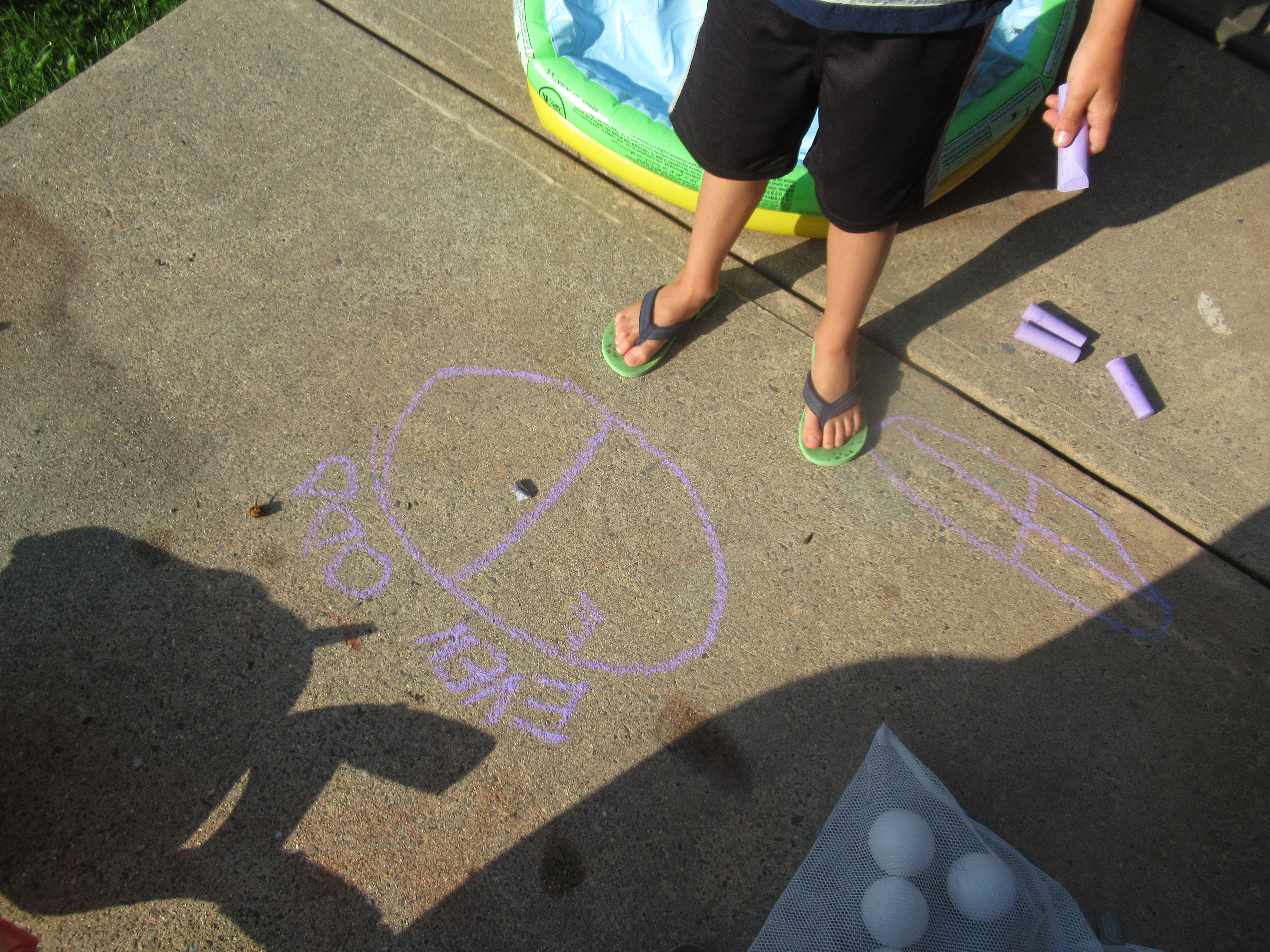
You can help kids keep math skills sharp this summer with this fun chalk game. To start, Travis drew a circle on our patio, and then a line to divide it in half (see how we were sneaking in geometry already?).

We labeled one half of the circle “even” and one “odd”. Next, toss an object into the circle (such as a pebble or shell). Depending which half it lands on, the tosser chooses a number that is odd or even. This was great review for Travis, as well as a chance to practice skip counting.

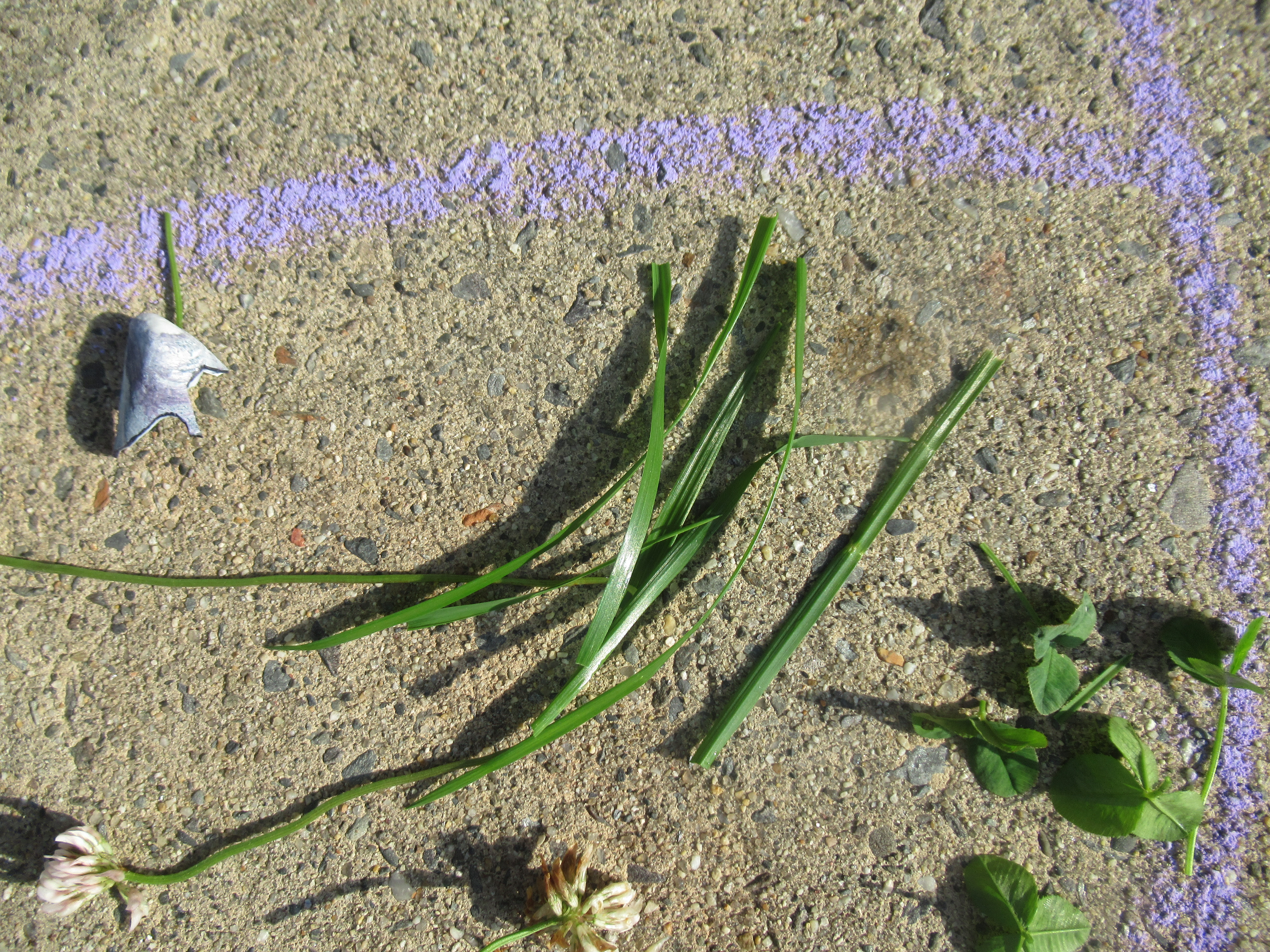
His first choice was odd (5). Pick a nature object (like sticks, rocks, or leaves) and set off on a race to find the correct number of that item. First person back to the circle wins! Travis ran back with 5 clover flowers in the first round, and 7 blades of grass for our second round.

Keep going and reviewing those evens and odds until your kids tire of the game! Note: For more of a challenge, make a rule that the number has to be between 10 and 20.

Practical Math

Practical Math (3)

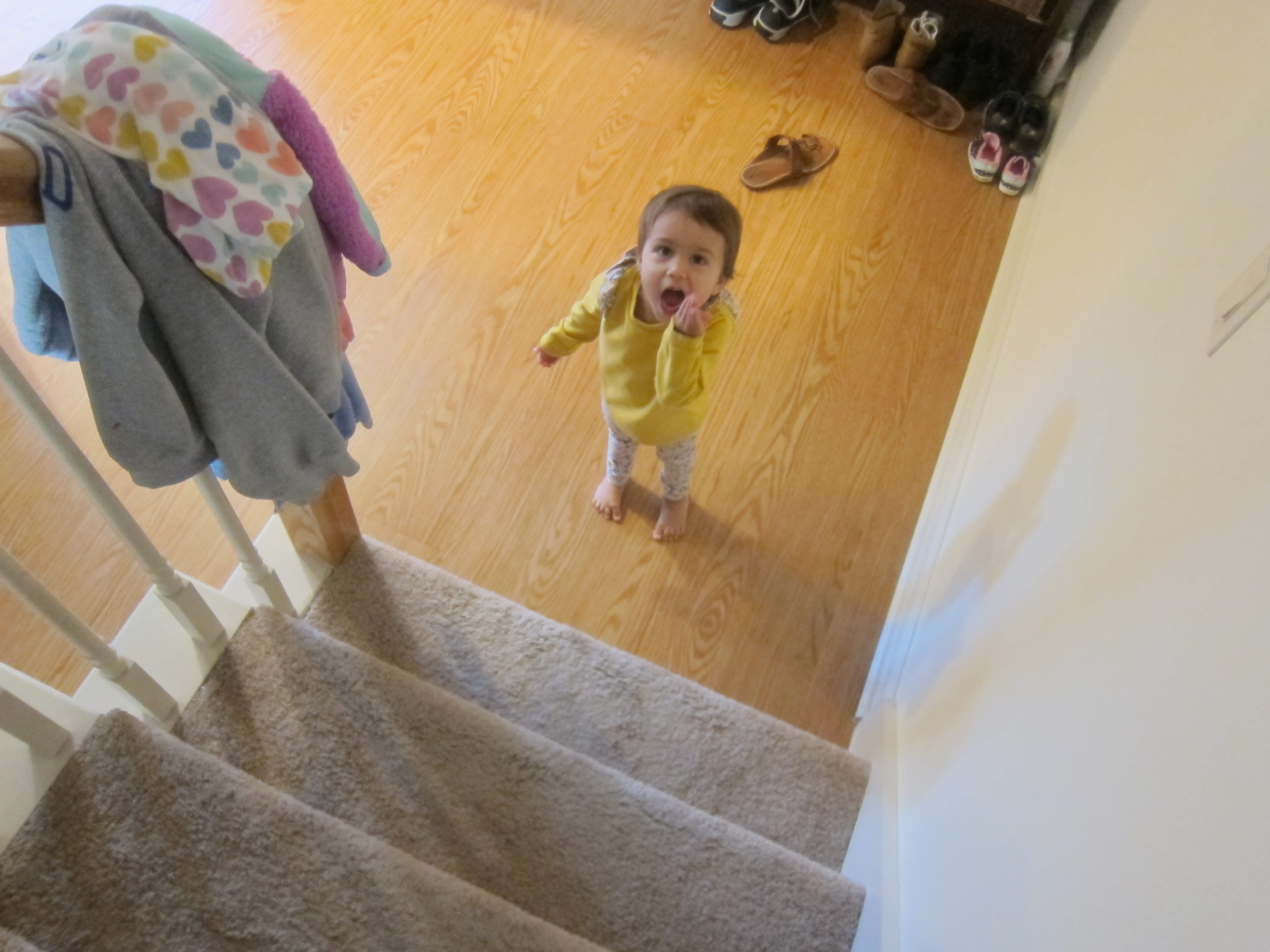
Veronika loves practicing the stairs these days, which reminded me that stairs are also the perfect place to practice… counting! While she exercises those little leg muscles, we can also exercise her brain.

As she climbs, we simply count up. Our stairs go to fifteen, which is a good stopping spot for a toddler anyway. She parrots along with me: “One, two, three.” She made me laugh when she jumped one time from seven to eleven!

Practical Math (1)

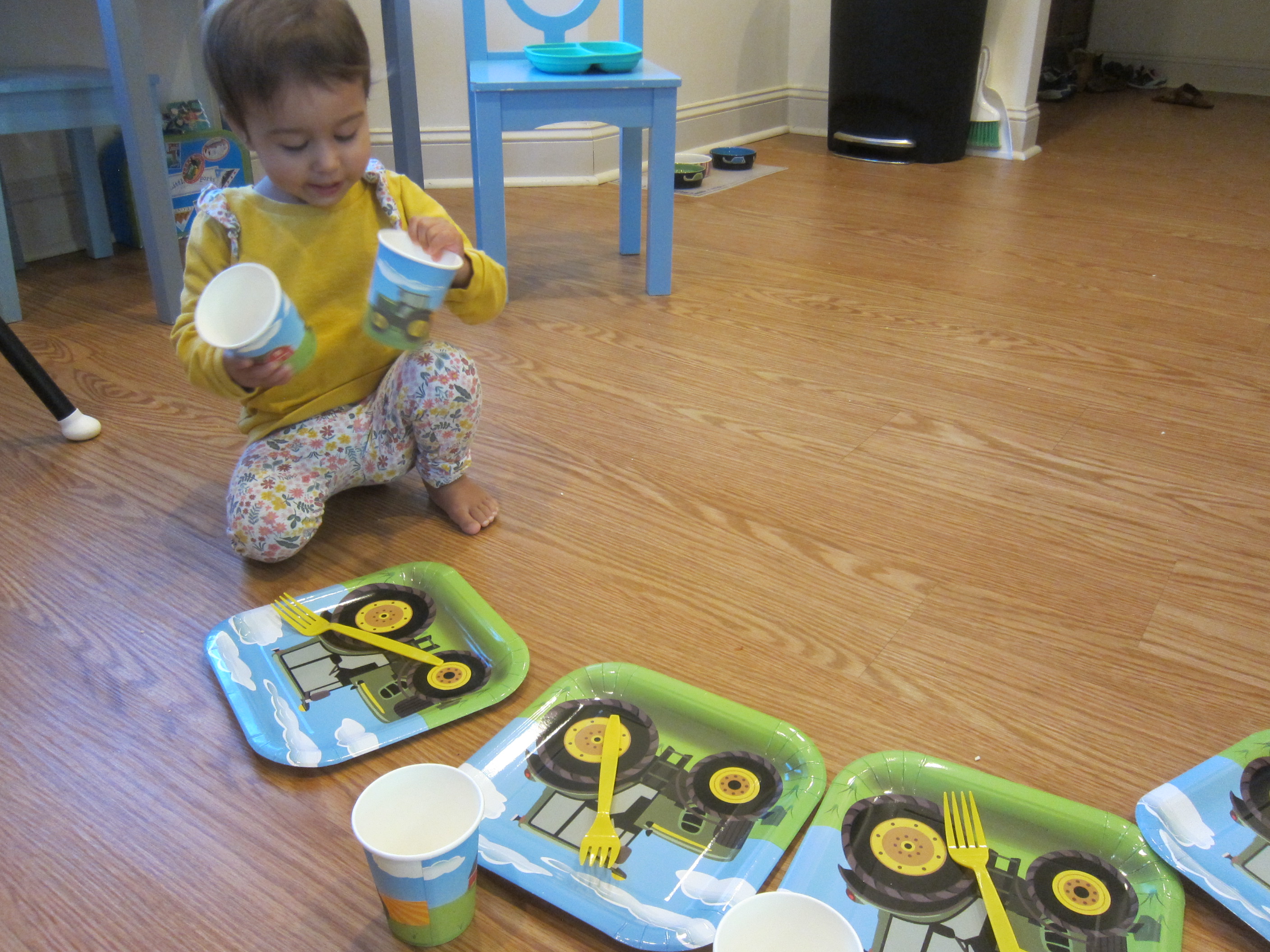
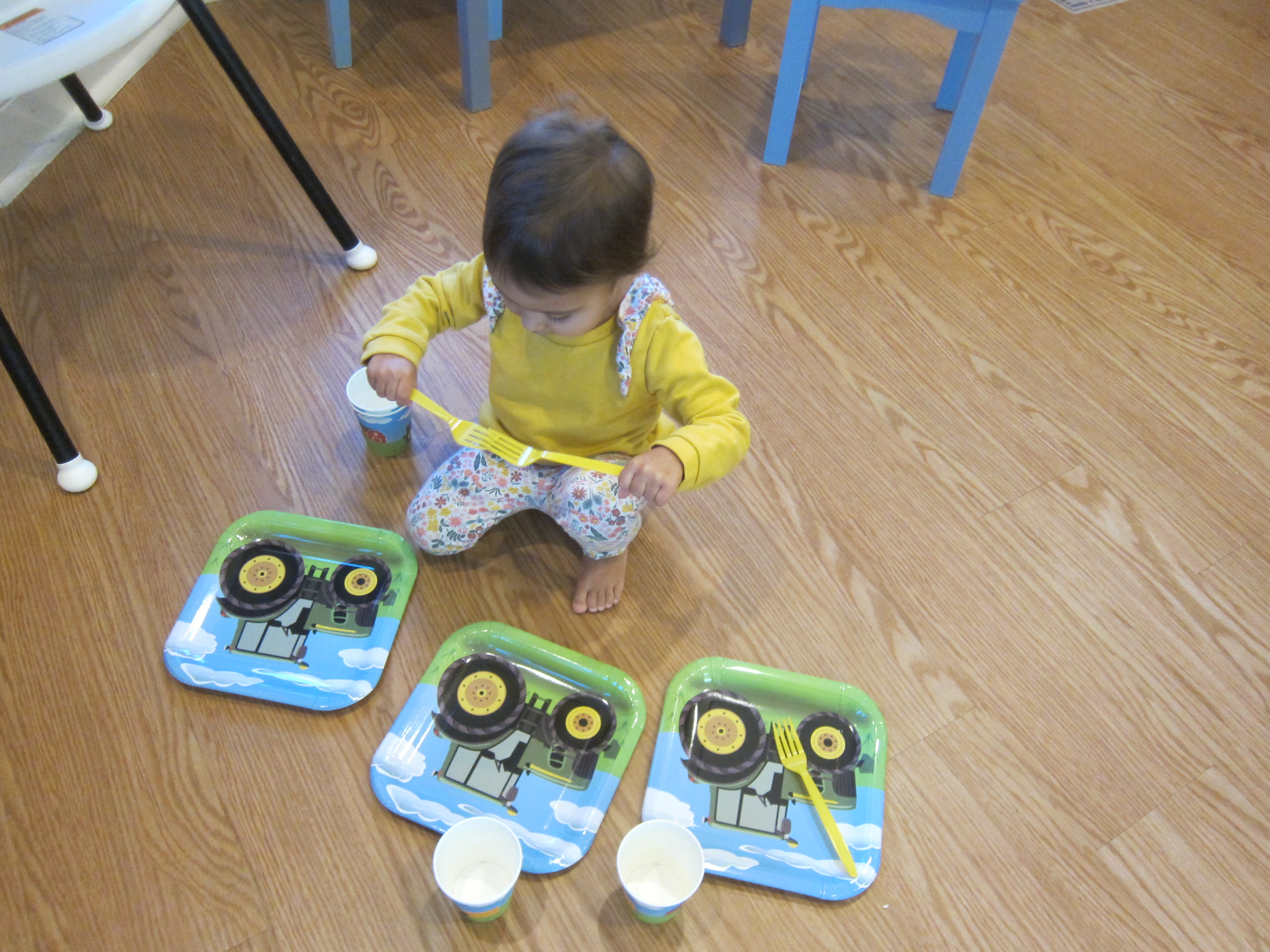
Hmm, now that we were thinking of practical ways to count around the house, what else could we easily count? I gave her a set of paper plates and cups, and we counted out place servings. One, two, three! You can do the same thing as you set the table with utensils or napkins.

Practical Math (4)

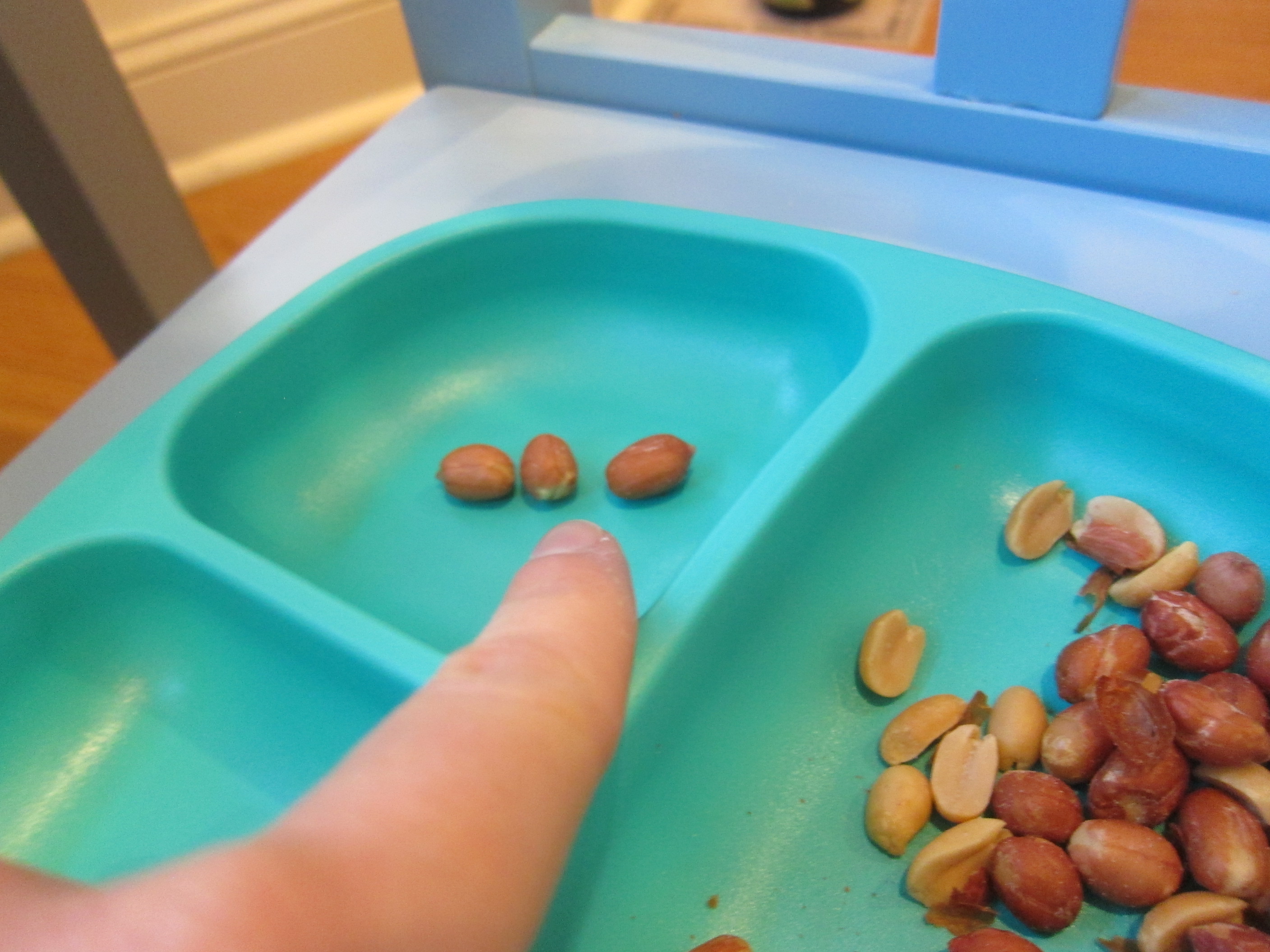
And of course don’t forget to count at snacktime. Anything like chips, cookies, nuts, or cereal pieces are perfect for counting out into piles.

Practical Math (2)

What else does your toddler like to count around the house? Doorways? Windows? Please share in the comments!

Pompom Counting Fun

More Pom Pom Fun (3)

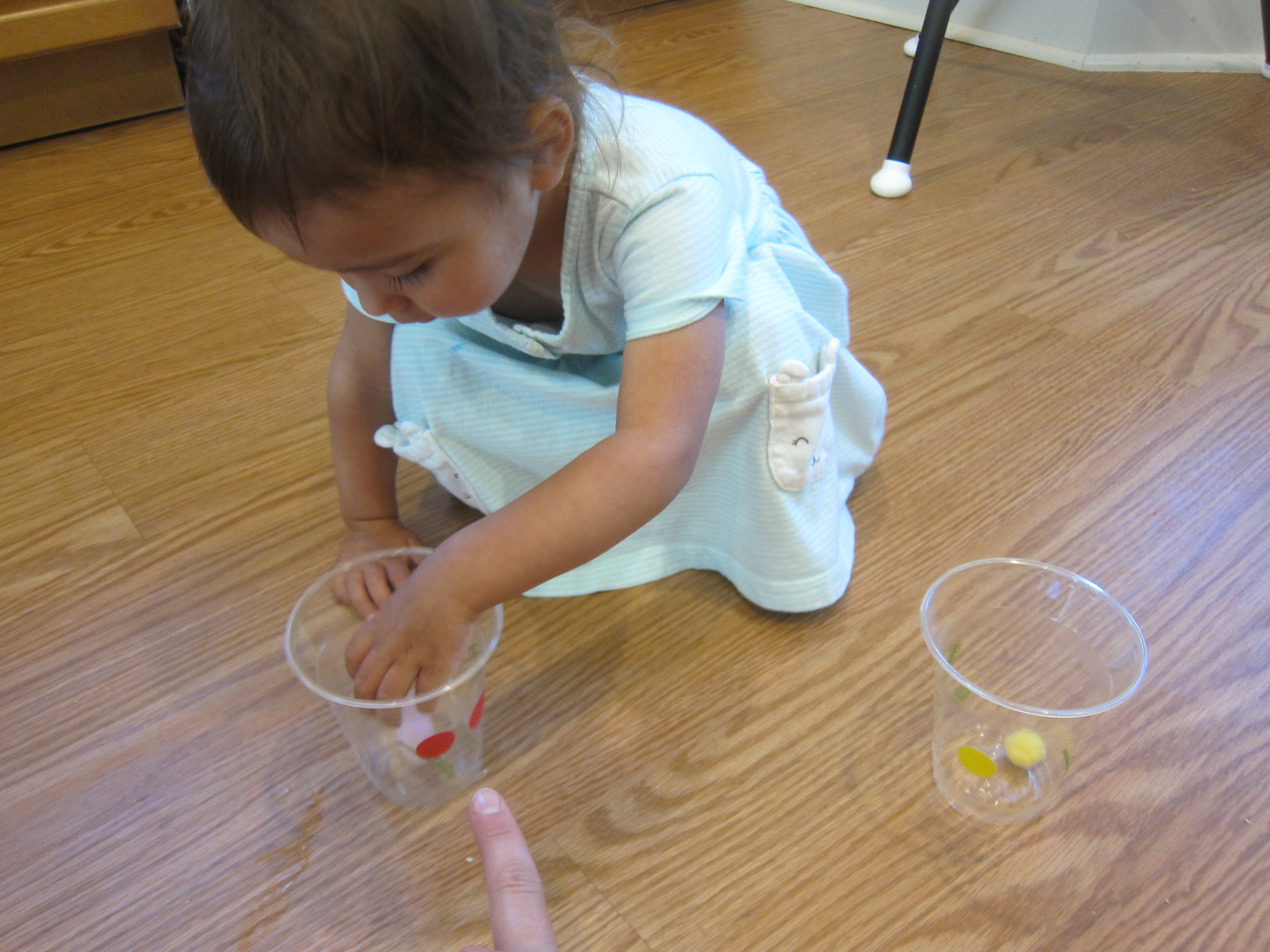
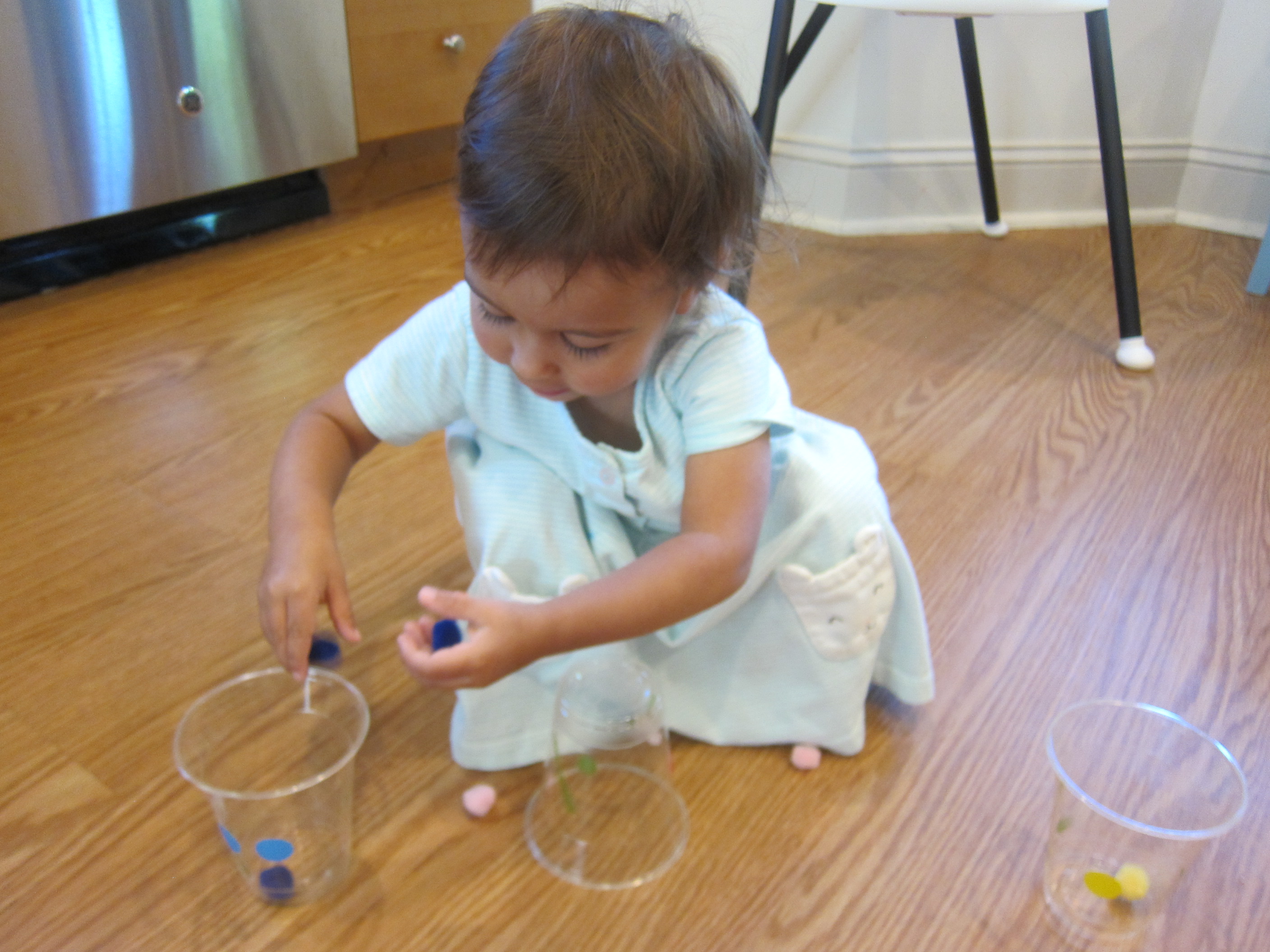
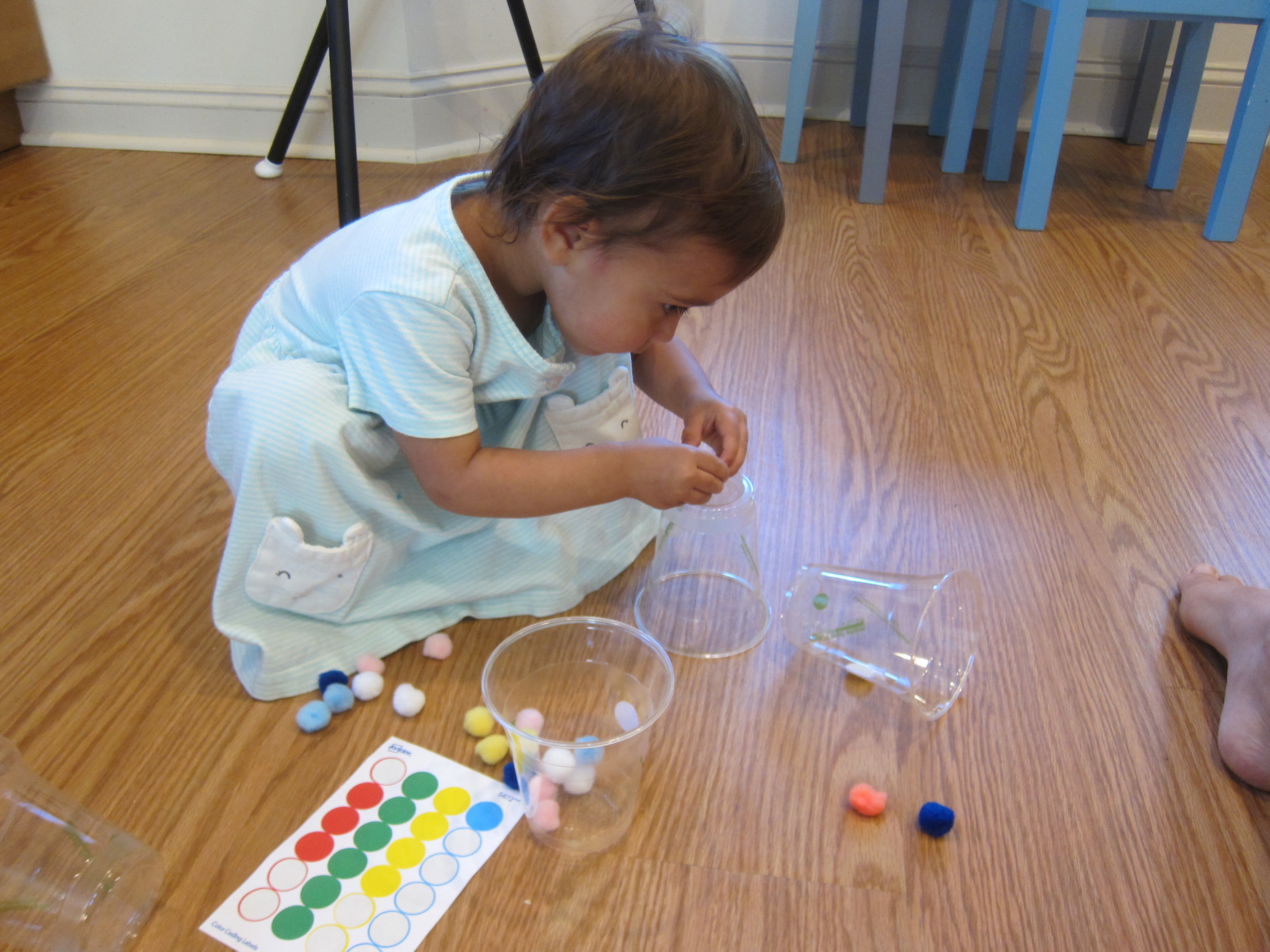
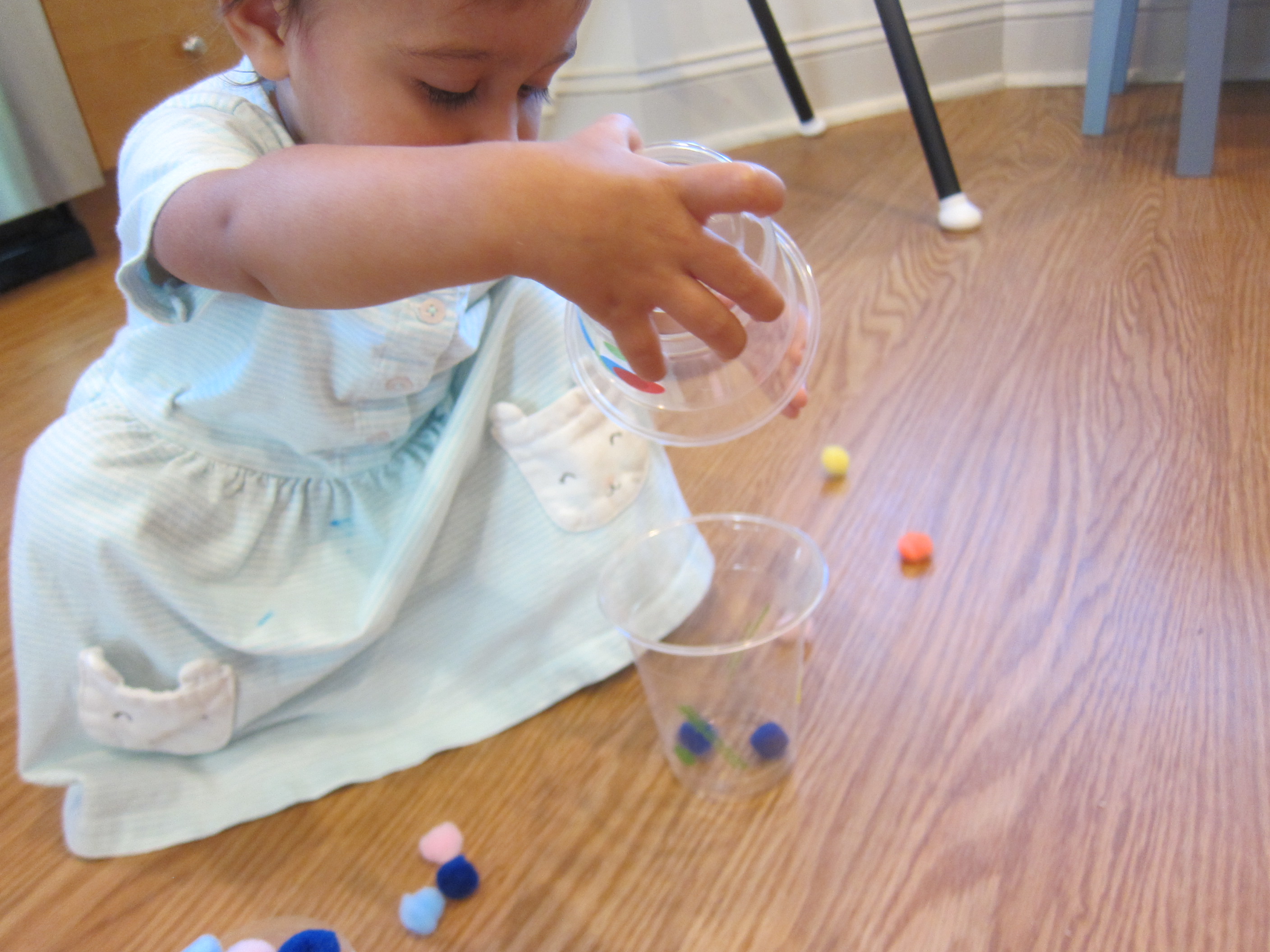
Veronika and I have been exploring early math concepts lately, and here was another fun way to do so using simple materials that she loves: stickers, plastic cups, and pompoms!

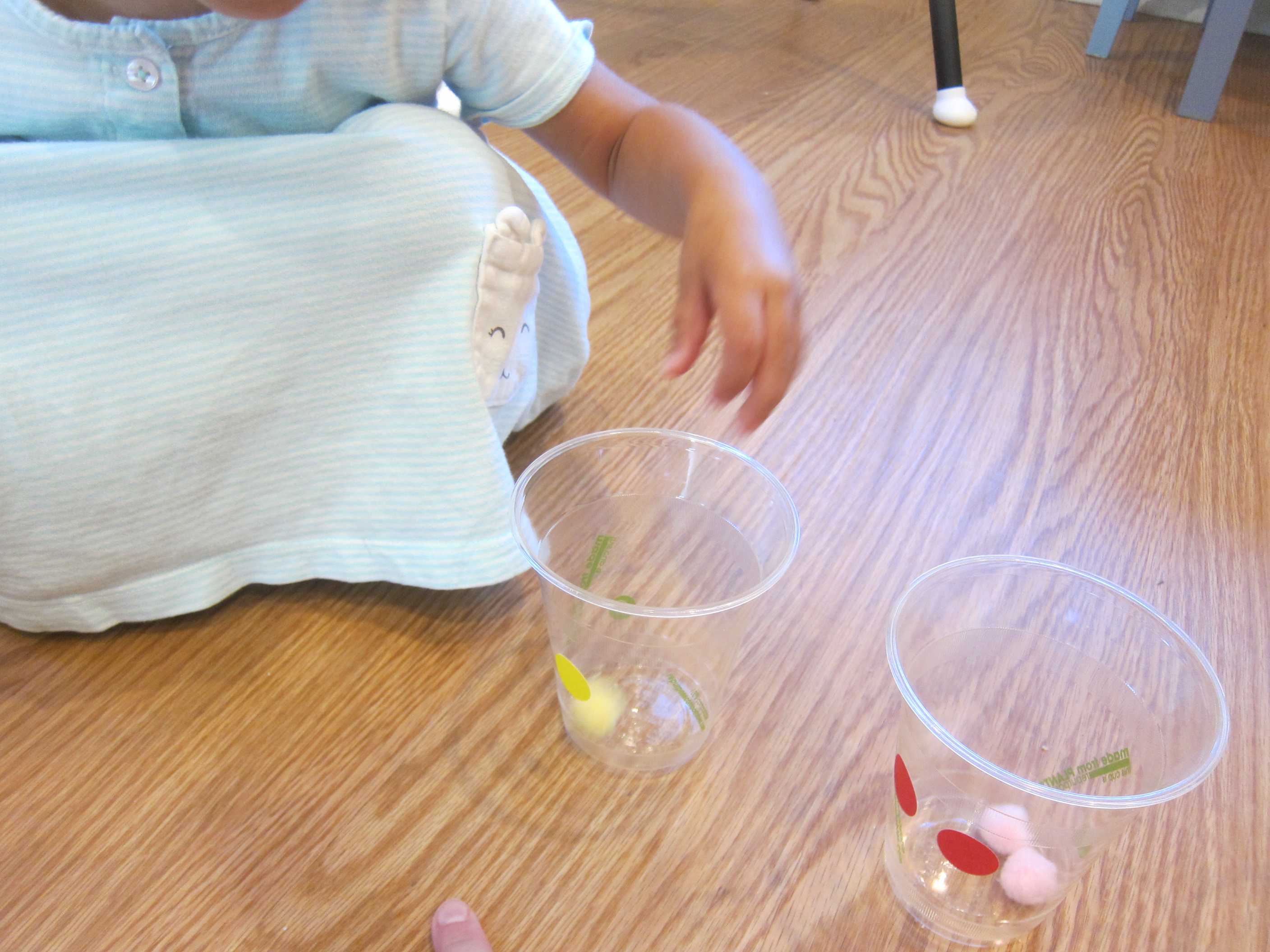
I marked three clear plastic cups with dot stickers, each cup with a different color. The first cup had 1 yellow sticker, the second had 2 red stickers, and the third had 3 blue ones.

More Pom Pom Fun (1)

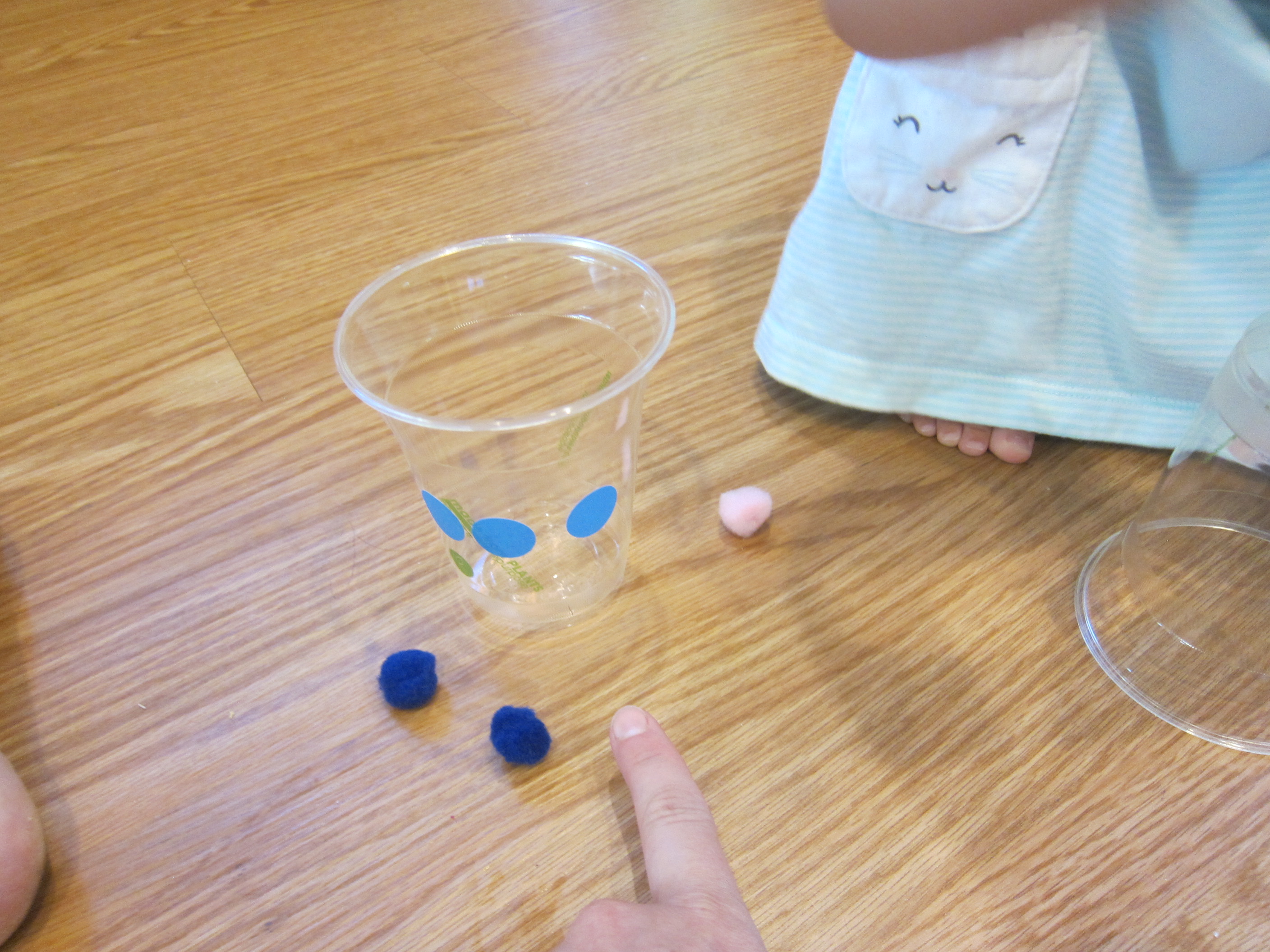
I then showed Veronika the one dot on the first cup, and told her there was one sticker. “Can you add one pompom?” I asked her. I chose to color-coordinate the pompoms to the dot stickers for clarity, but you don’t have to.

She dropped in one pompom!

Now I held up the second cup and we counted the stickers. One sticker, two stickers. “Can you add two pompoms?” Plink plink into the cup!

More Pom Pom Fun (2)

We repeated for the third cup with three pompoms. Obviously I was directing the game very clearly, which helped her get each answer “right”; don’t expect a toddler to do this game solo. But the activity reinforces the notion of counting up, and that numerals are attached to a tangible amount.

More Pom Pom Fun (4)

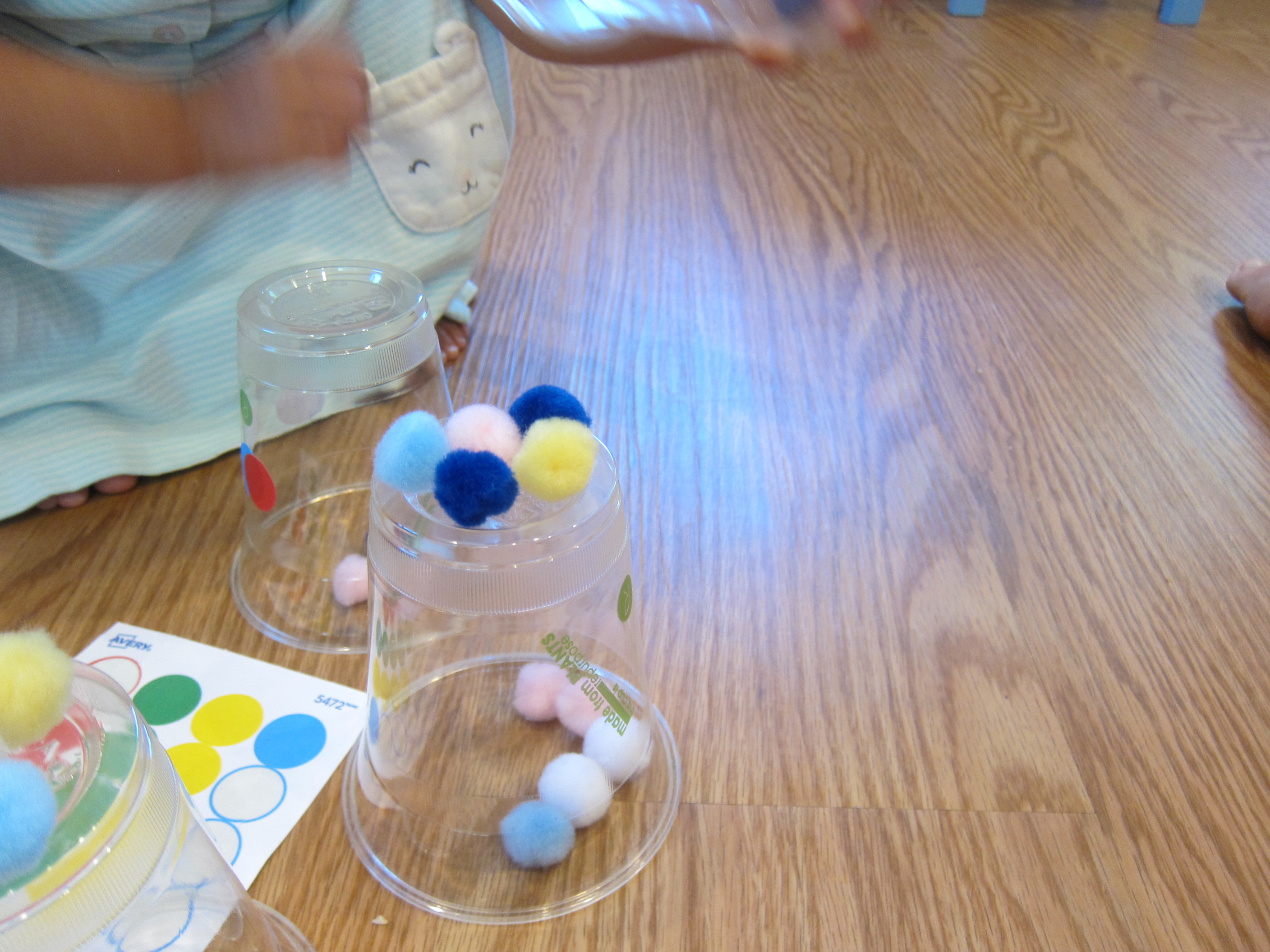
It would be been coldhearted not to let her play with the extra materials after that! There were more stickers she could happily dot onto extra cups, and lots more pompoms to play with and keep herself busy for a while.

More Pom Pom Fun (6)

While we were at it, we could talk about a few opposite concepts, like over the cup and under the cup.

More Pom Pom Fun (7)

So this activity is definitely a winner.

More Pom Pom Fun (8)

Kitchen Math

Kitchen Math (3)

After a day of math out at the park, it was time for a day of math in at the kitchen.

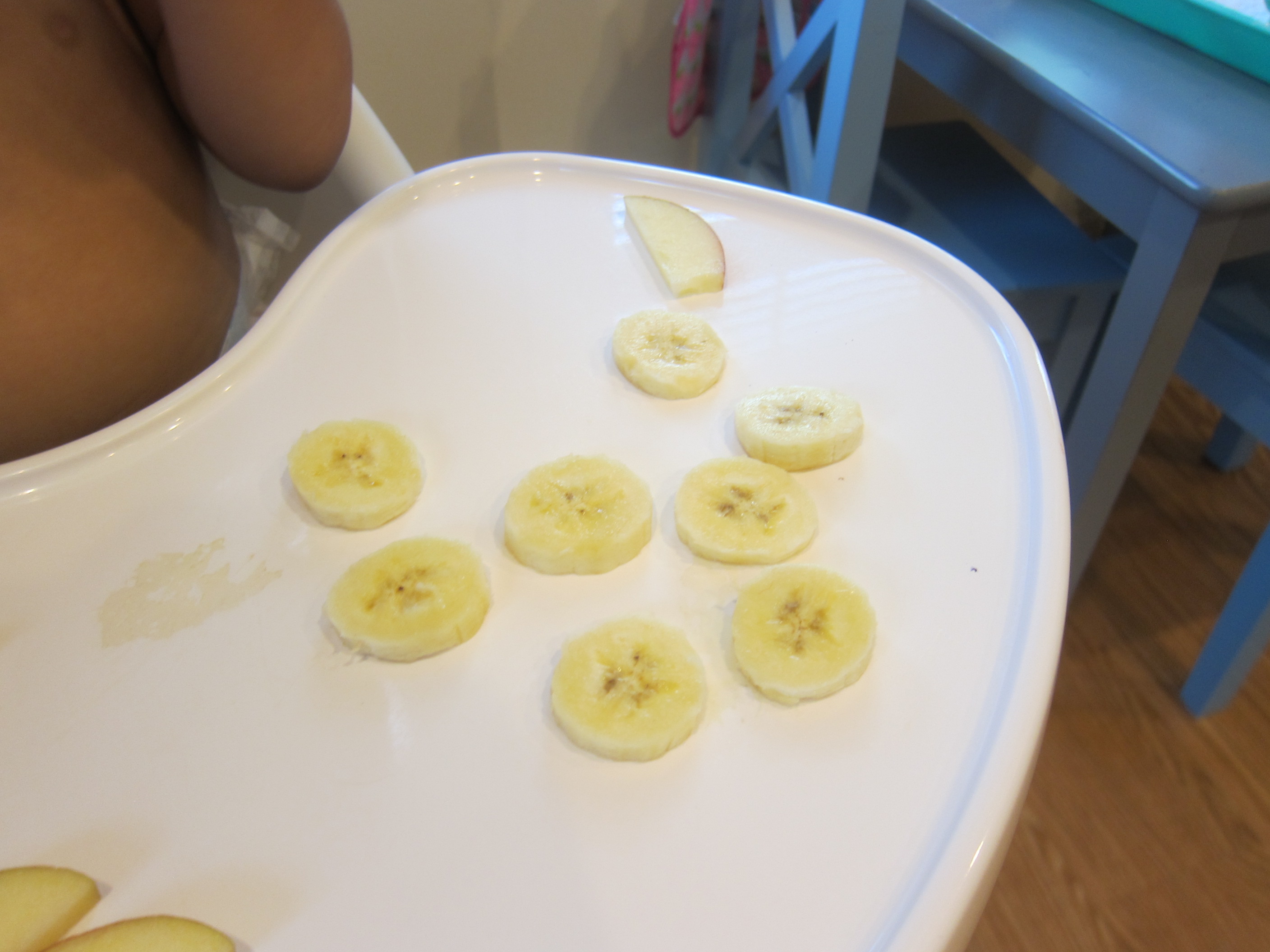
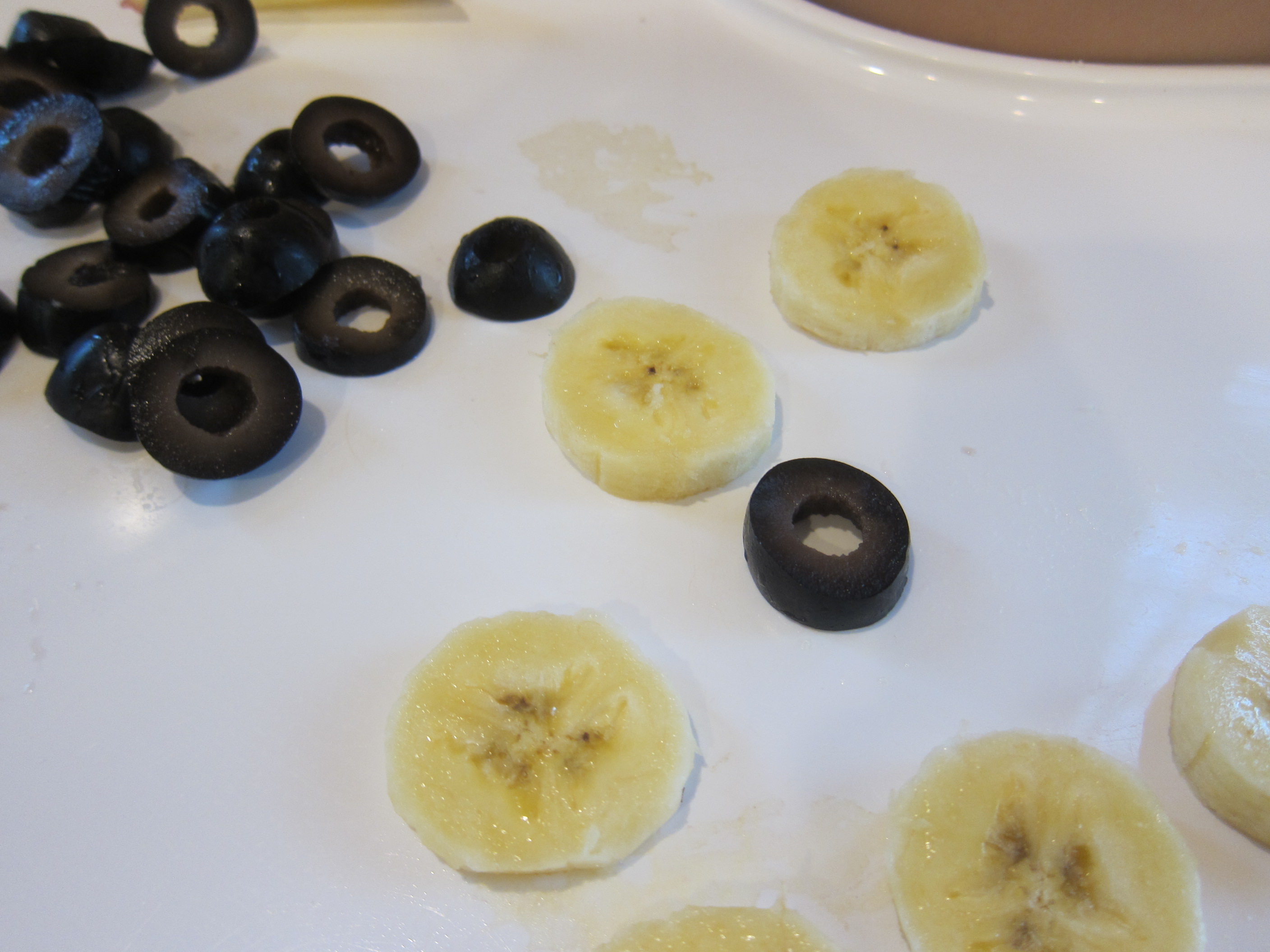
Veronika and I played around with kitchen math in a few ways. For a simple intro to math concepts, I sat her down for snack and made it all about comparisons. We used three different foods: apple wedges, bananas (cut into circles), and olives.

Kitchen Math (5)

We could discuss the circular shapes of the bananas and olives. The apple wedges were more like semi-circles! Or we could compare items; the apple was longer than the banana. The banana was bigger than the olive. And so on.

Kitchen Math (6)

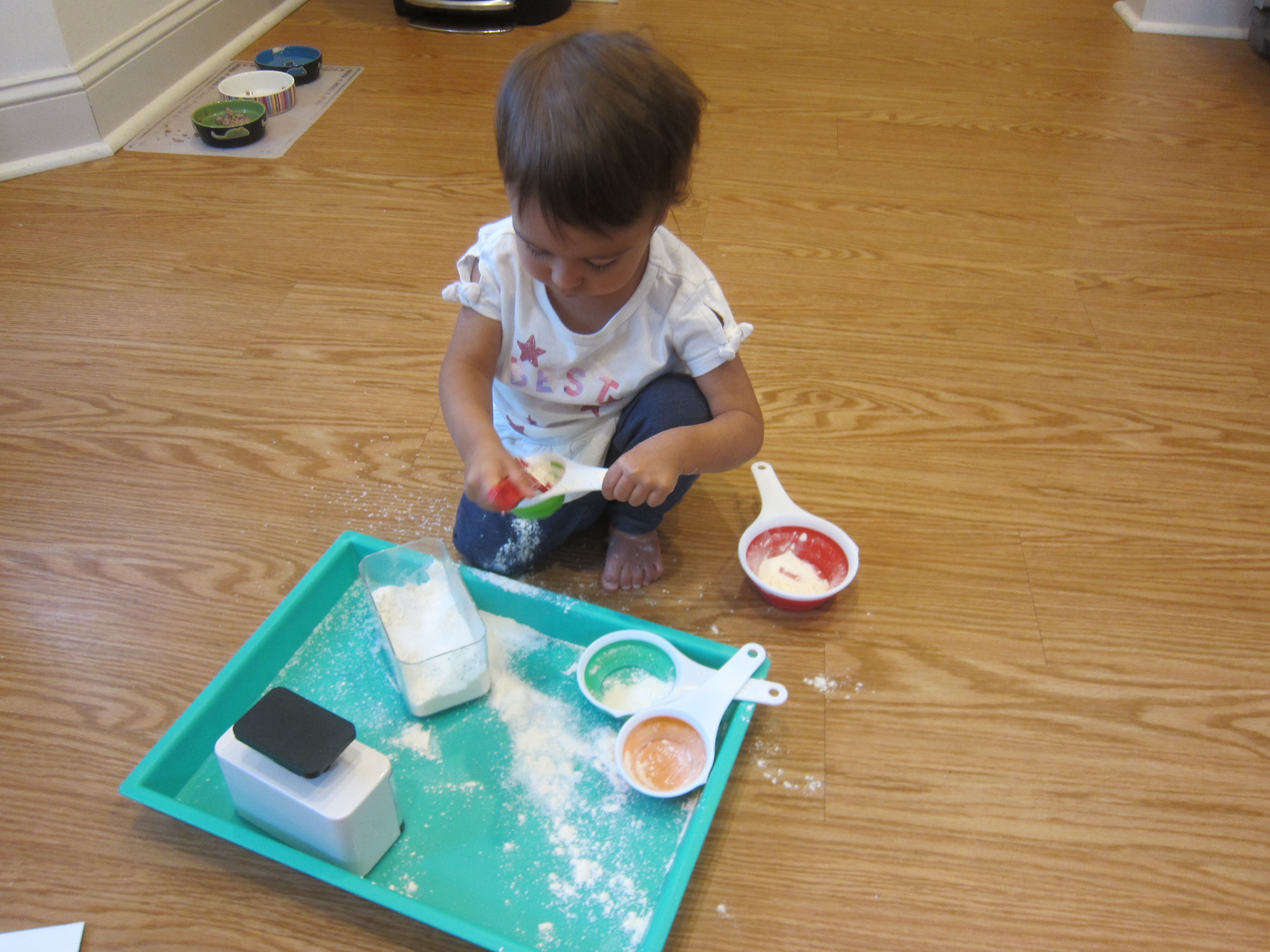
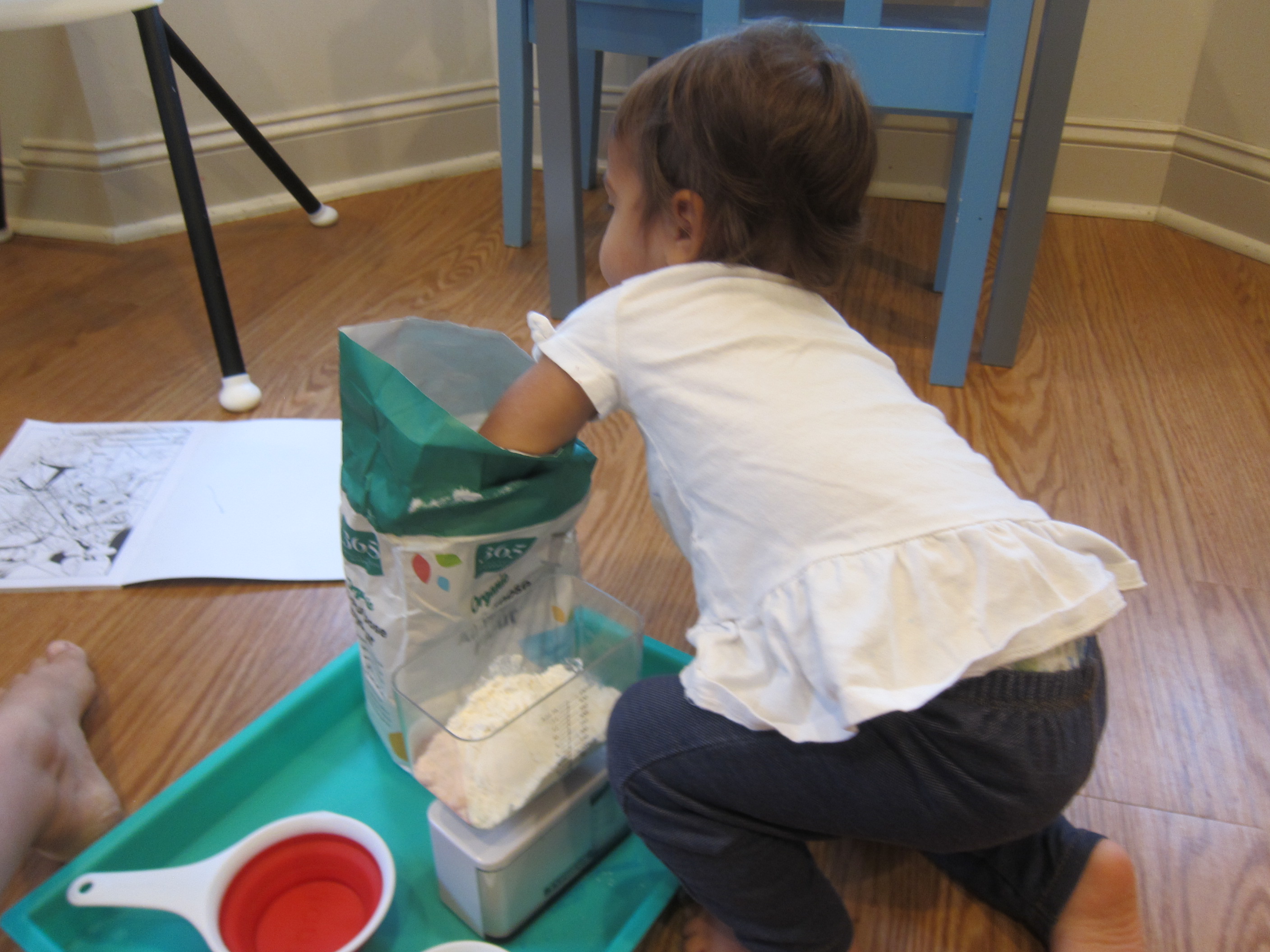
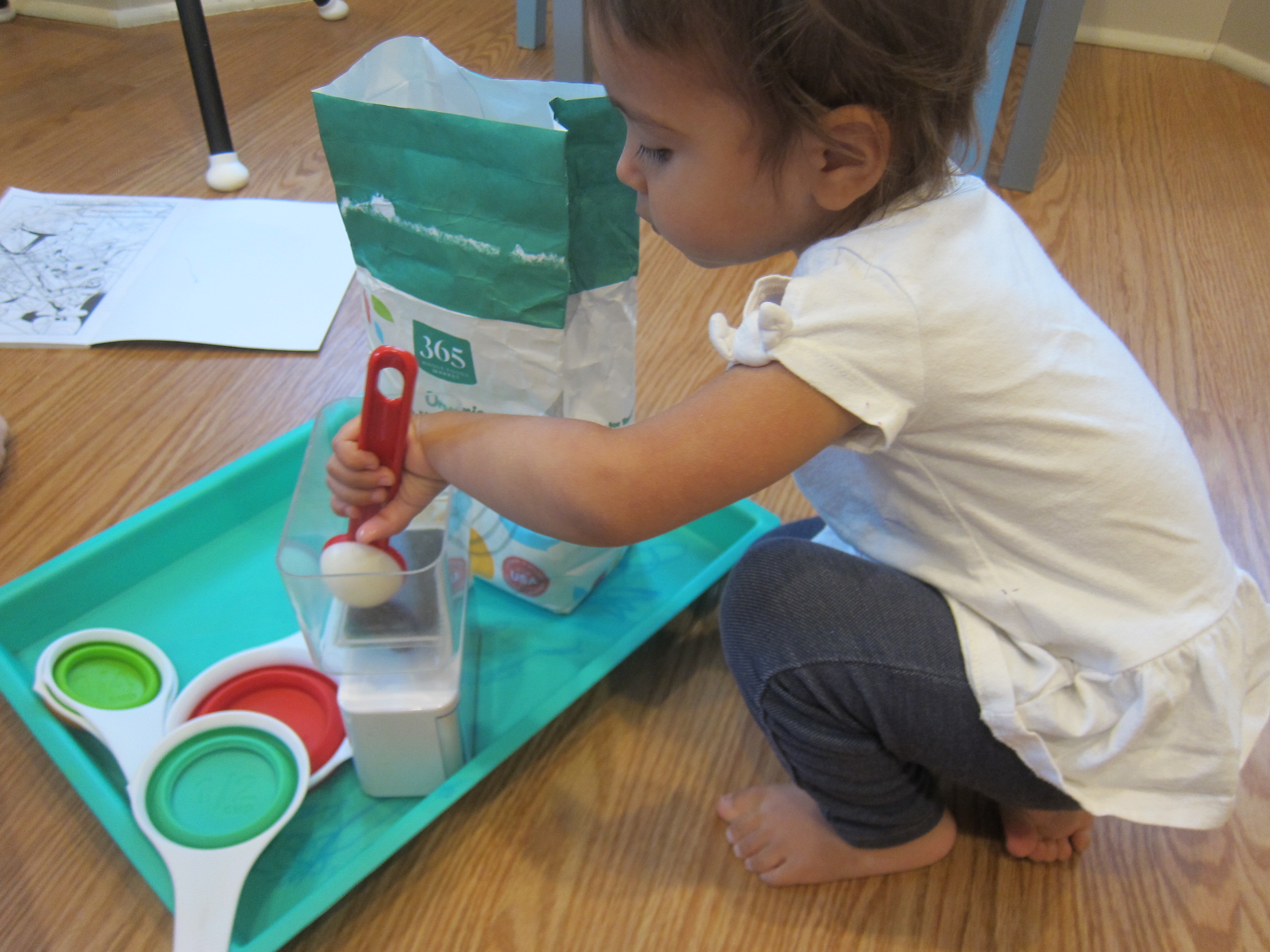
Next up was far messier math; involve your toddler in cooking! While making a cookie recipe, I set Veronika up with her own station for filling cups of flour and scooping. “Can you help me fill two cups of flour?” I asked her.

Of course she couldn’t really, but I could point out that some measuring cups were bigger or smaller than others, or use vocabulary like “half” and “third” of  a cup even though she’s a long way from understanding that.

Kitchen Math (4)

We also pulled out the kitchen scale to weigh flour together. “I want to scoop!” she said, proudly reaching deep into the flour bag.

Kitchen Math (2)

This of course made a giant mess, but I find that flour play is worth it once in a while. Plus your toddler gets rewarded with a yummy treat if you’ve really baked during the messy play.

Kitchen Math (1)

Note: If you want to introduce measuring to your toddler with less mess, consider a recipe like granola or baked oatmeal.

One, Please

One Please (3)

Here’s a quick but fun way to get your toddler thinking about counting (just to one and two for now), as well as a first lesson on using fingers to count and represent a number.

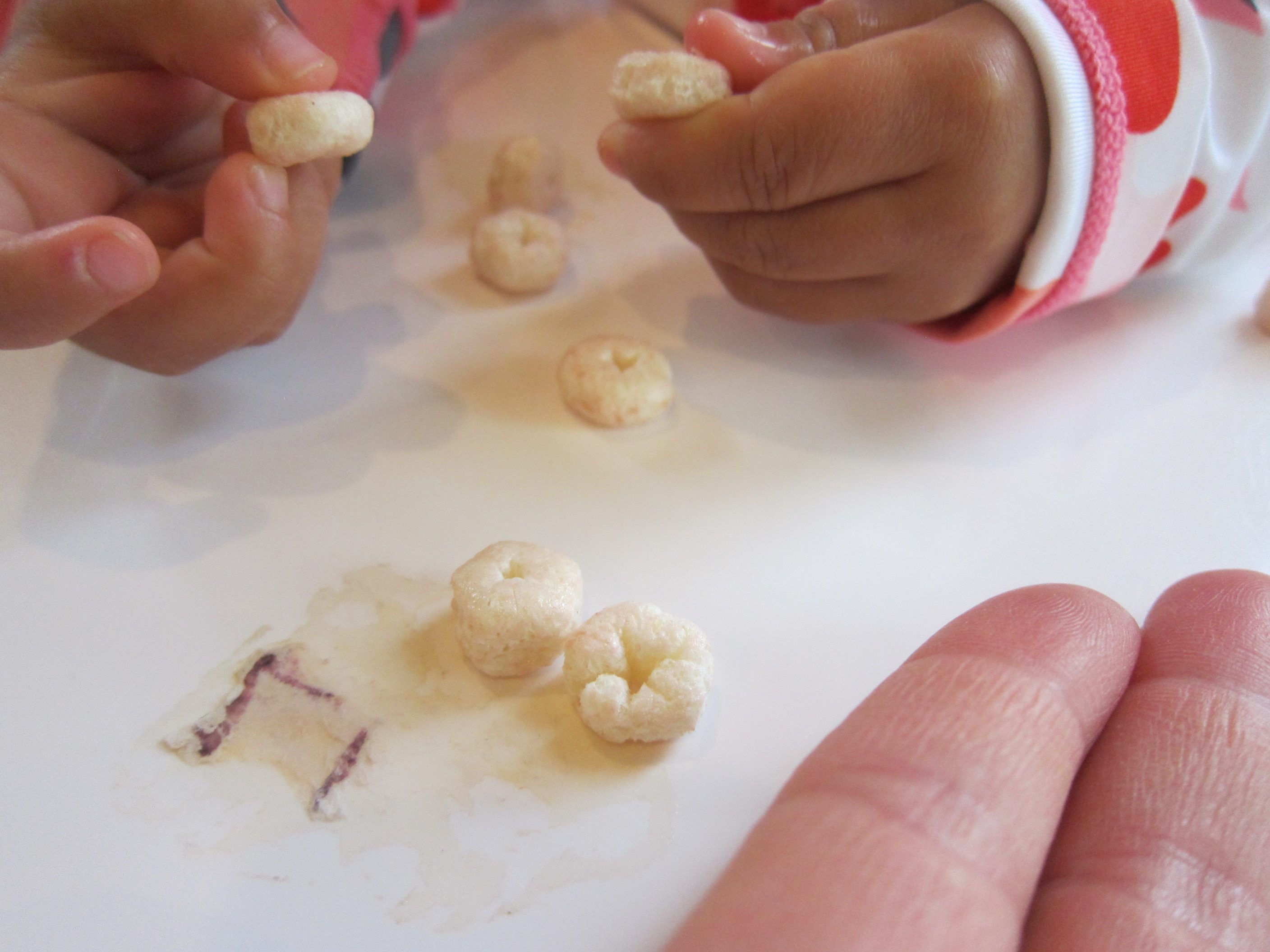
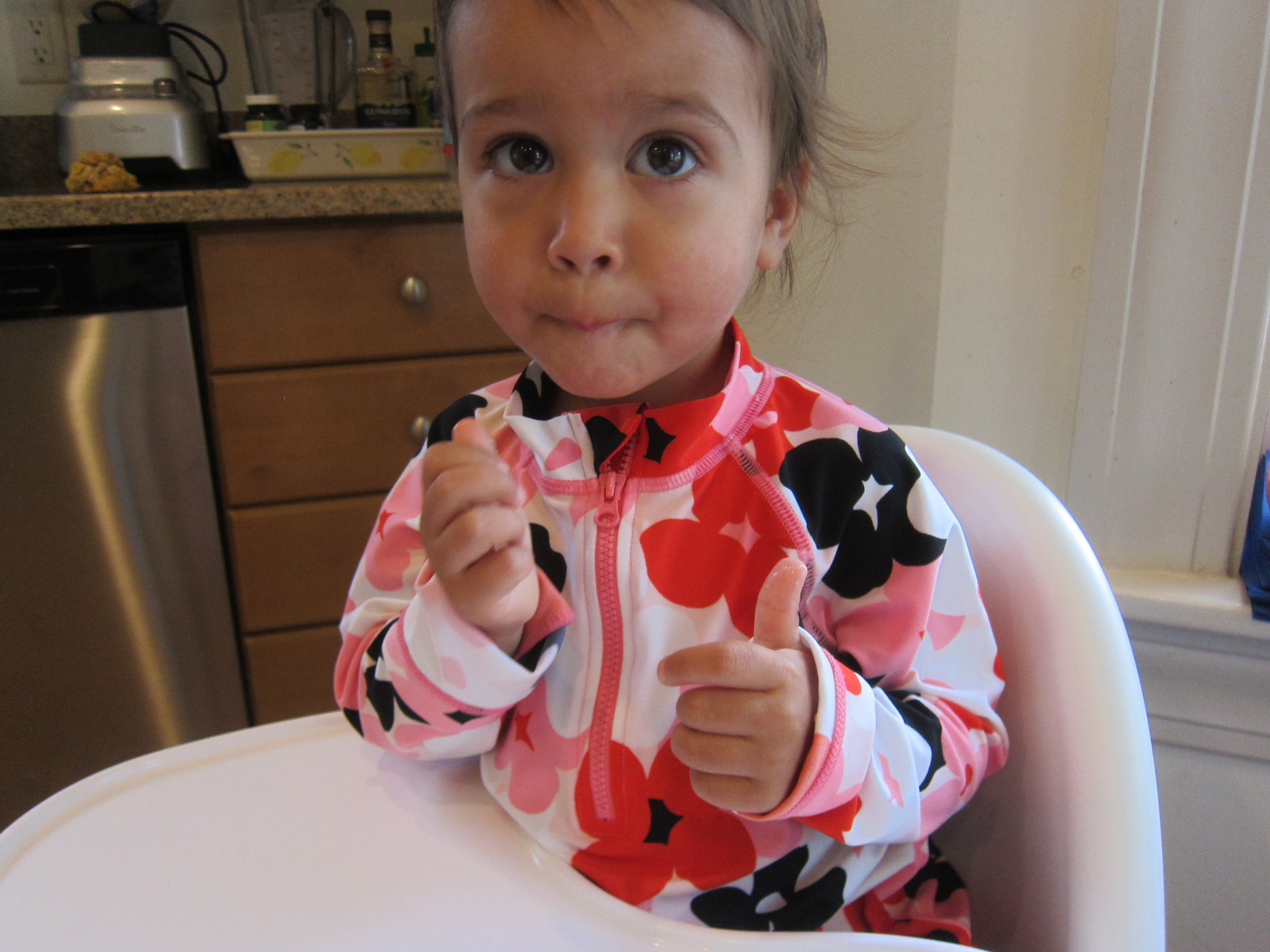
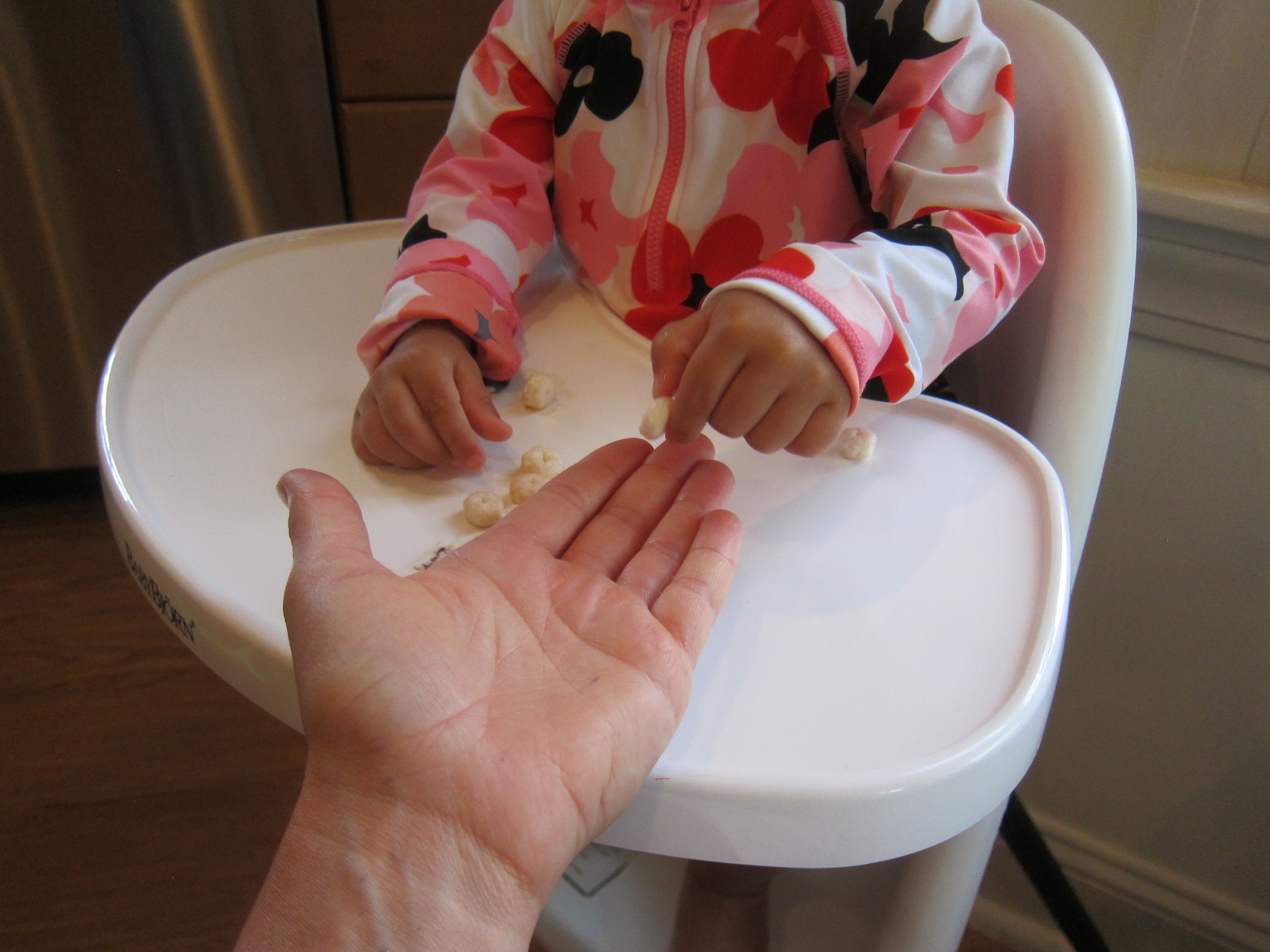
I set Veronika up in her high chair with cereal puffs for a snack, an old favorite. First I gave her one. “You have one puff,” I told her. Whoops, which quickly was back to zero!

One Please (1)

Then I put out two puffs and counted them. One puff, two puff. To make it trickier, I then put a whole handful on the tray, but asked her to give me one puff. Success.

One Please (2)

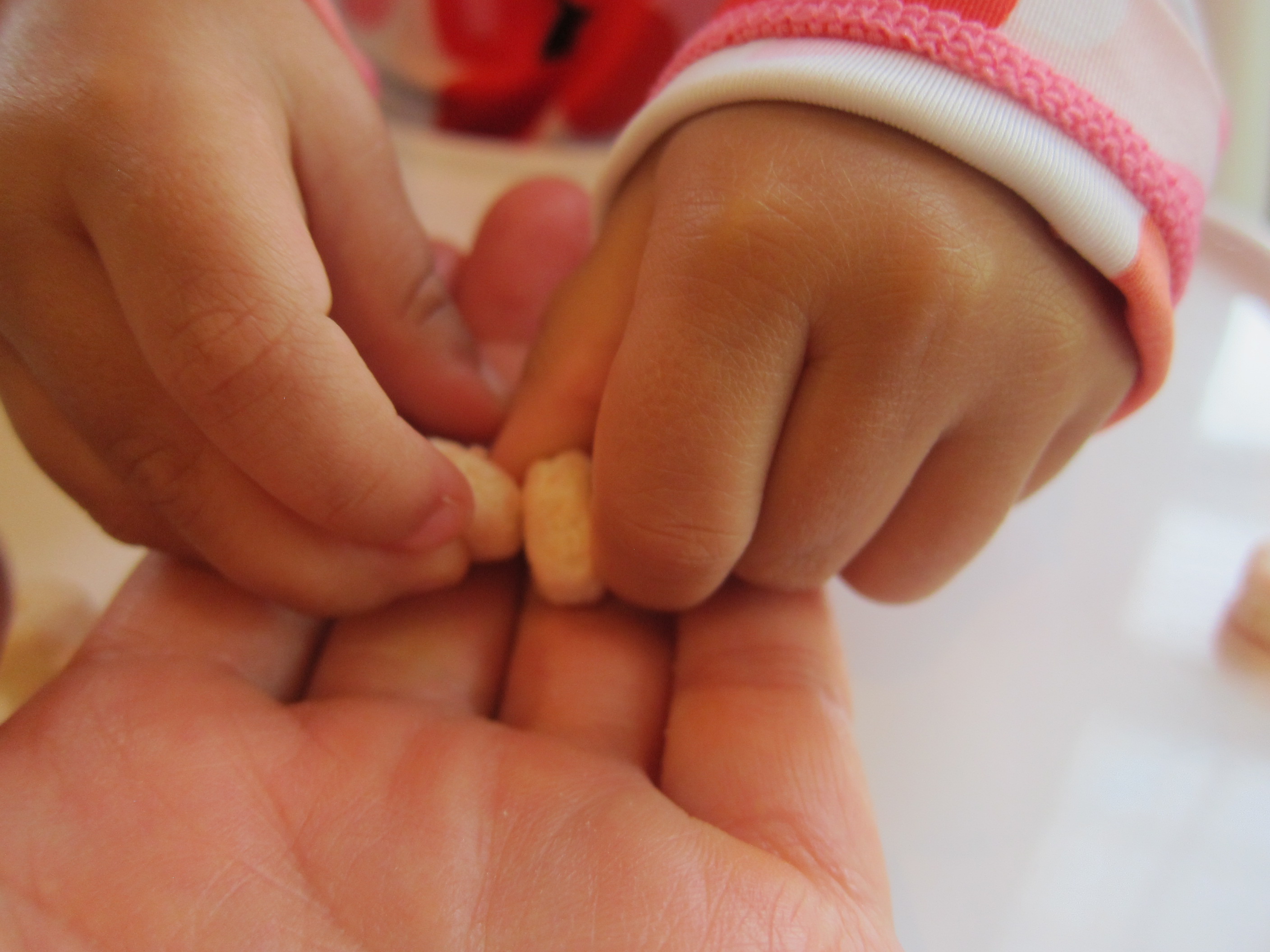
Could she hand me two puffs? Double success! I loved that she did this two-handed, one puff per hand, which was a neat insight into her brain.

One Please (4)

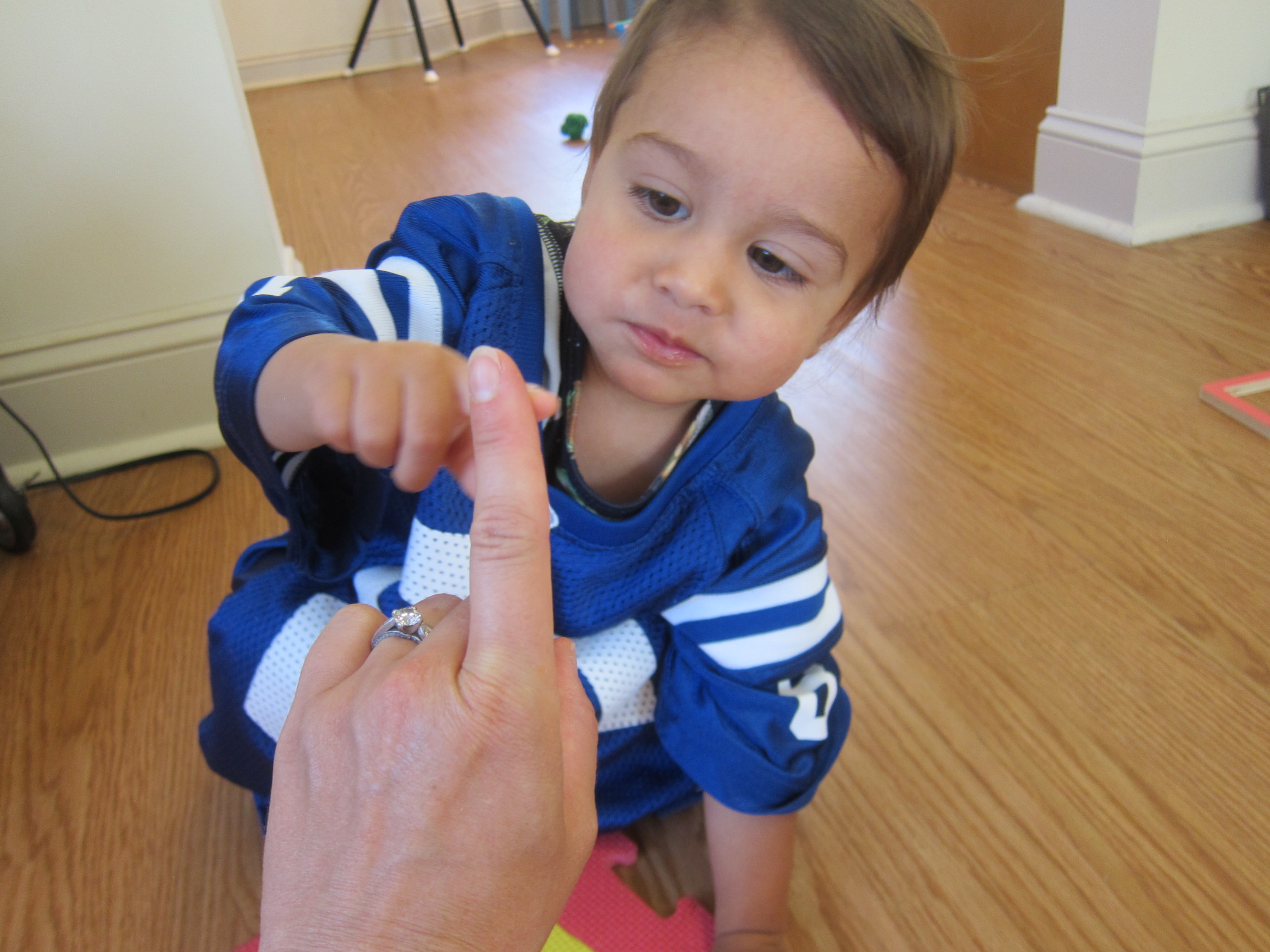
Now we turned to the concept of holding up a finger. I asked if she wanted one cracker, holding up one of my own fingers to demonstrate. Then I helped her shape her hand so only one finger was up. Repeat the word “one” and the gesture; it’s okay if your toddler doesn’t get it on the first round!

One Please (5)

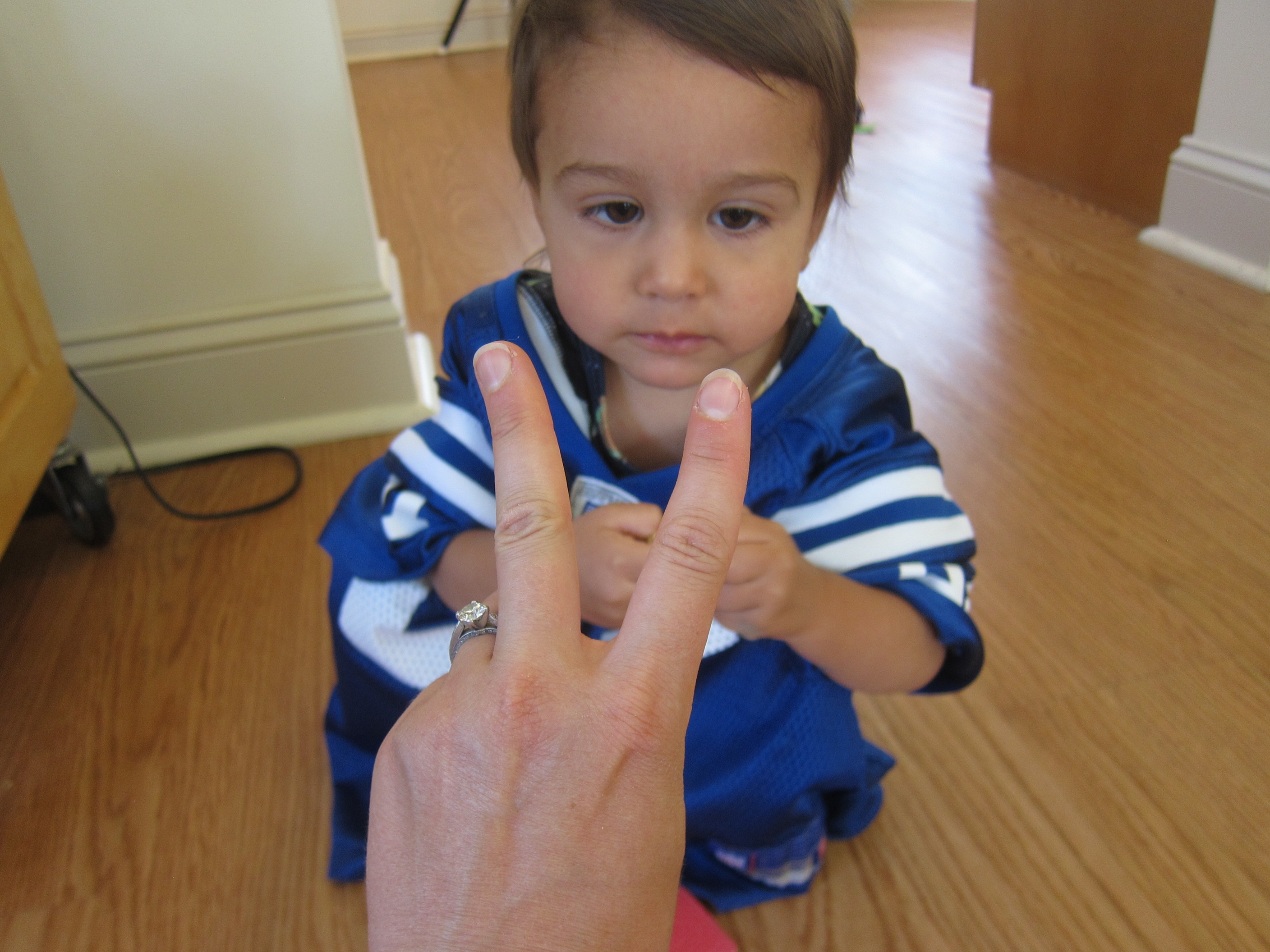
Repeat with two crackers (or a similar snack), and help your little one hold up two fingers.

One Please (6)

This was just a first foray, but a great foundation for counting down the road. Either way, my guess is your toddler will ask for more more more of whatever is on the snack menu!

Have a Ball with Math

Ball with Math (1)

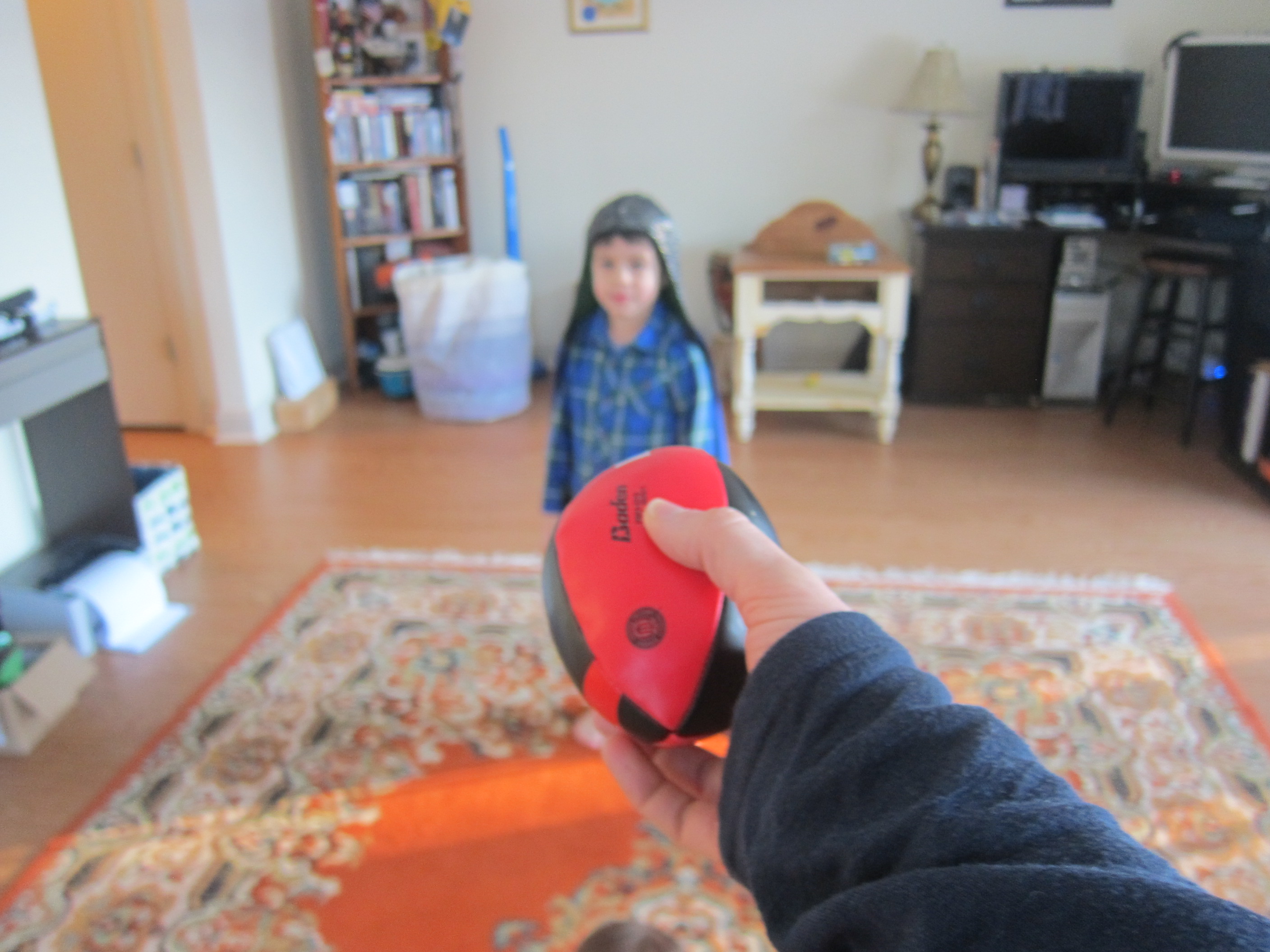
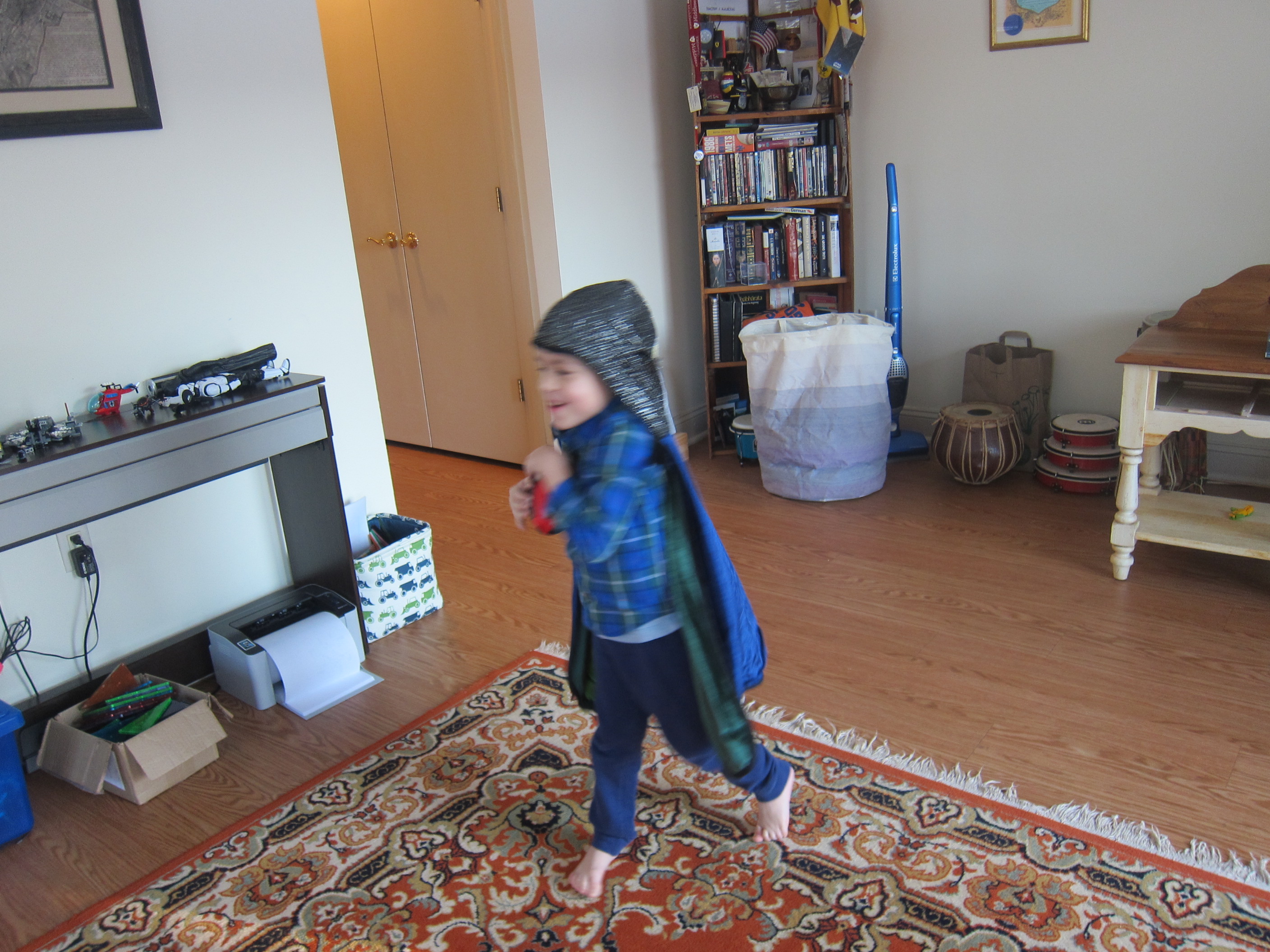
Travis has shown a keen interest in numbers and basic math lately. So today we had a ball (literally!), playing games that played around with numbers and worked his gross motor skills.

First up, we played backwards toss. Toss a ball back and forth, but instead of counting up each catch, count down. This is a great way to introduce the idea of subtraction, even before a child is ready for equations. Touchdown!

Ball with Math (2)

Next we returned to counting up, but used skip counting. He loved grasping how the numbers went from 5 to 10 to 15 to 20 and so forth up to 100. Plus I noticed improvement in his hand-eye coordination even over the course of a few rounds!

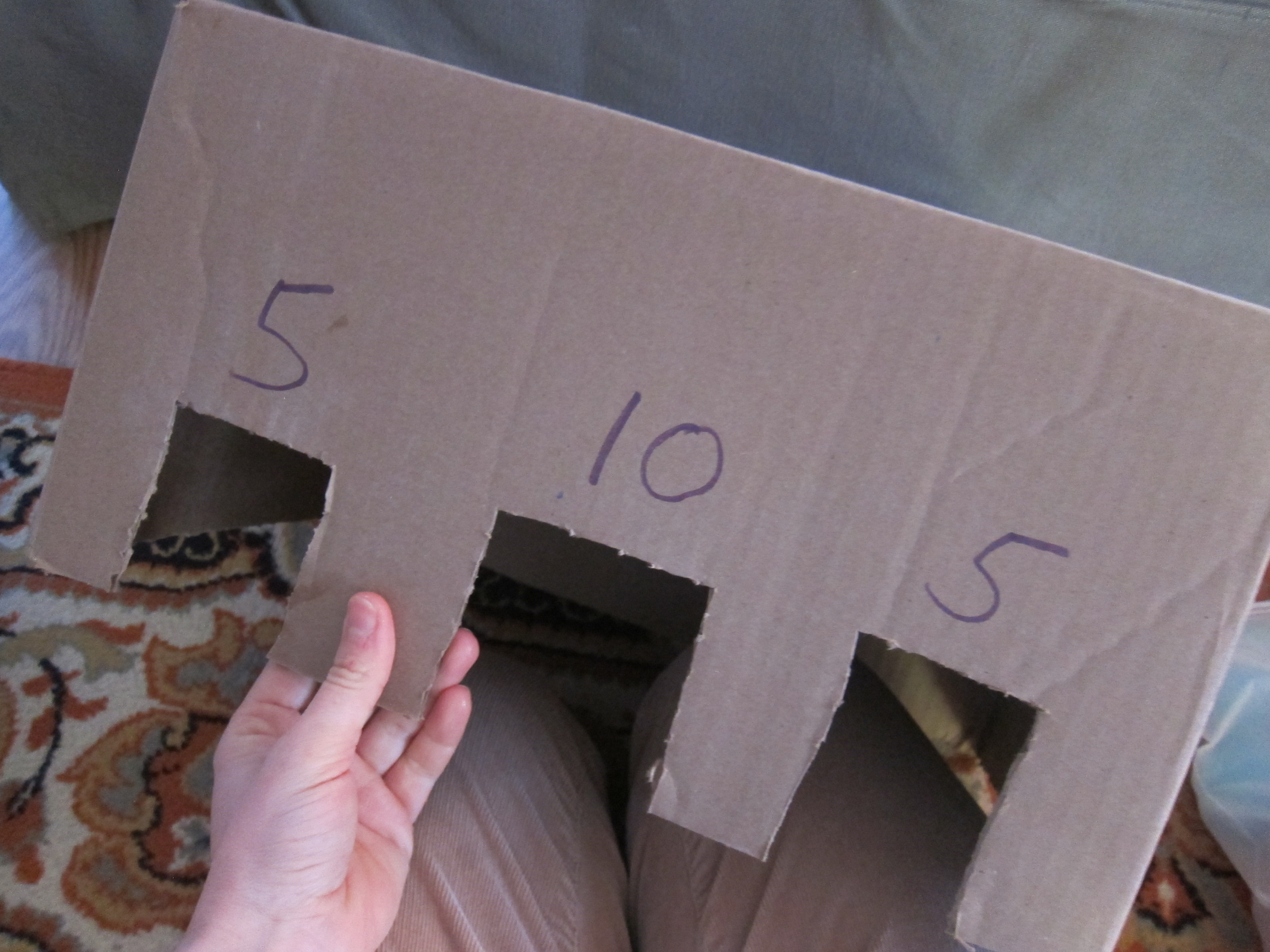
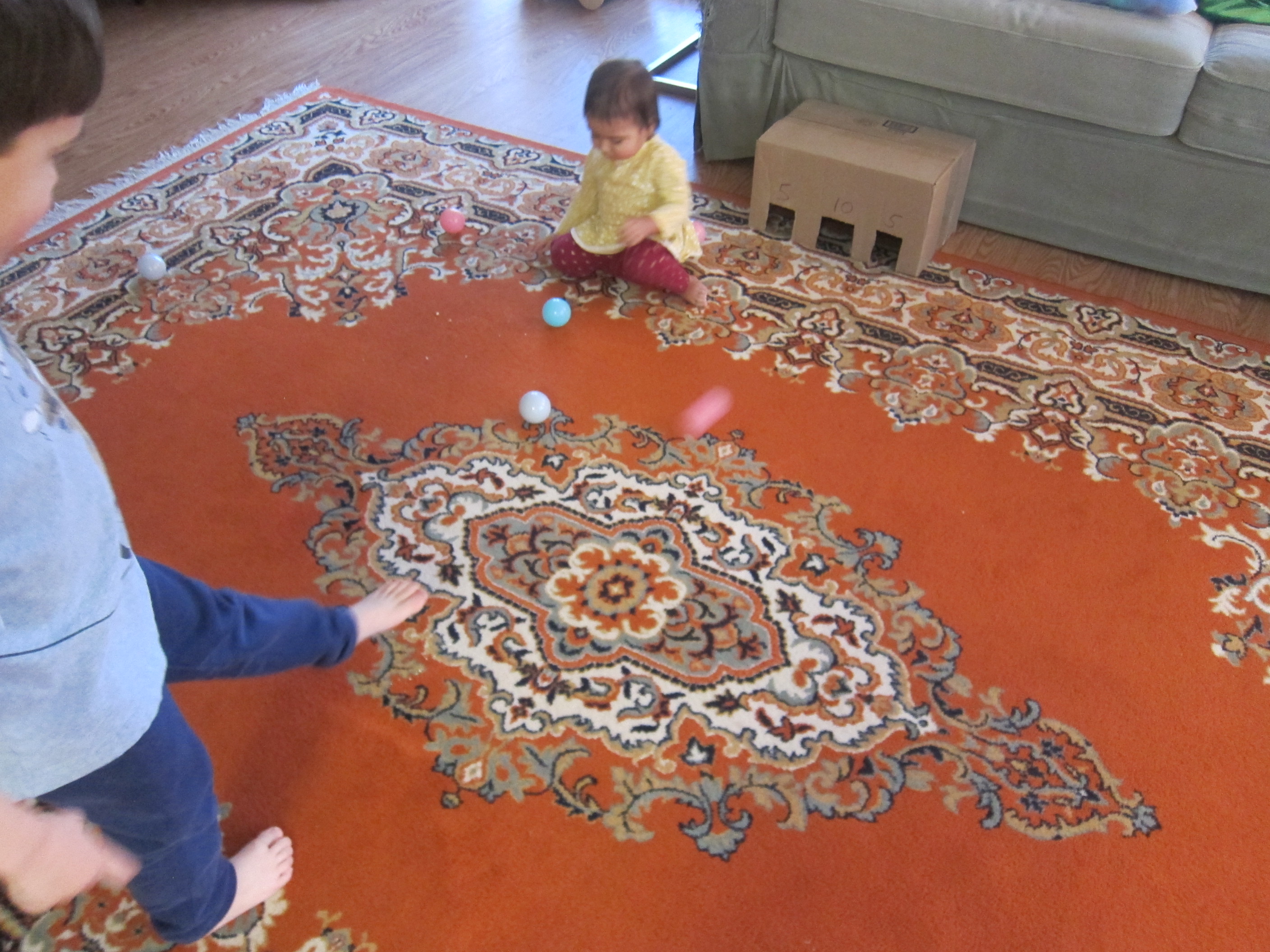
After school, we played a kicking game. I cut three holes in a piece of cardboard, each hole worth different points, again using skip-counting by 5s.

Ball with Math (3)

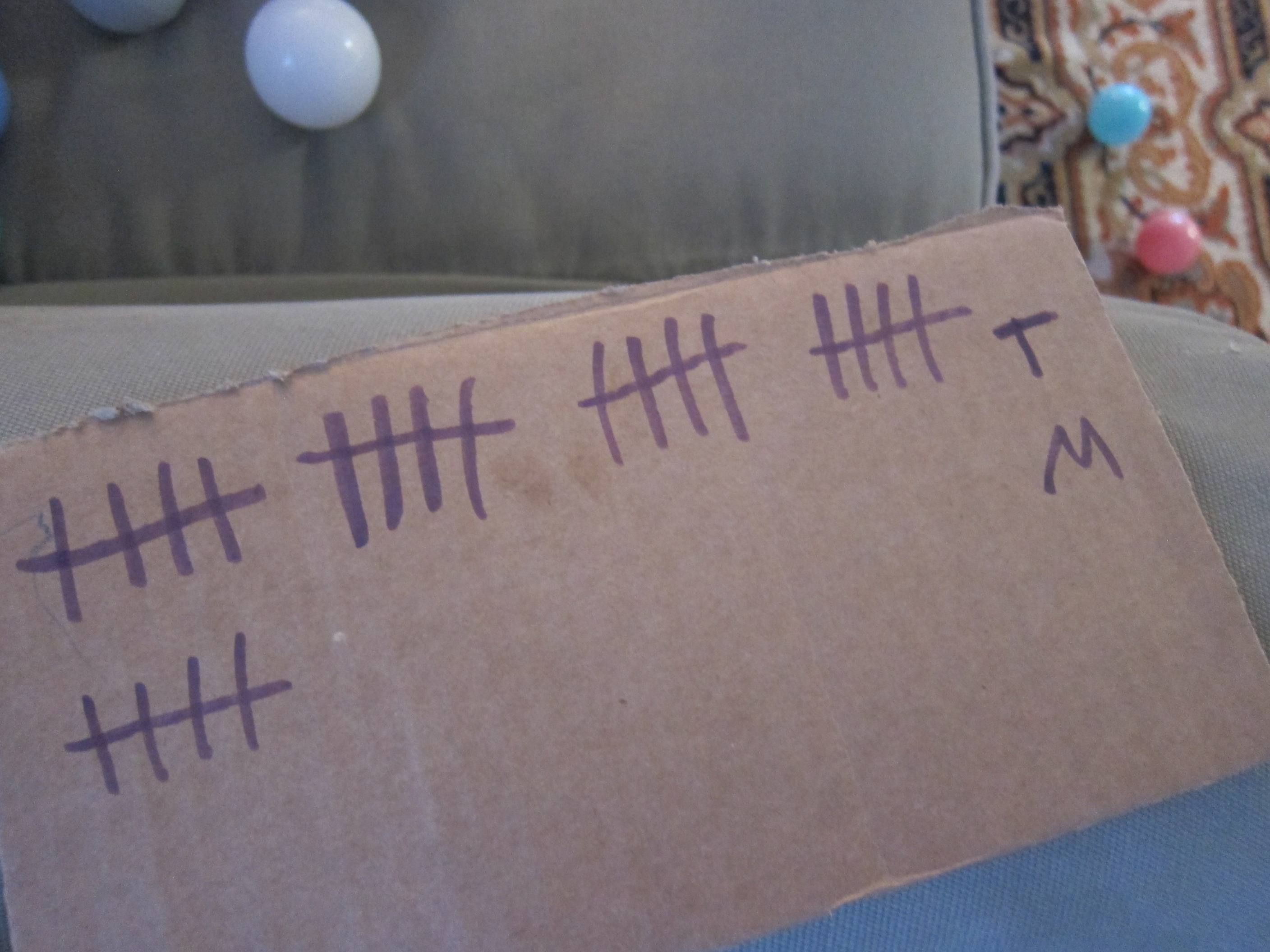
Travis was in charge of the tally!

Ball with Math (5)

I showed him how to make tally marks in bundles of 5, which we then totted up to find out our final scores.

Ball with Math (4)

Score one for the math team!

Football Math Touchdown

Football Math (4)

This math-heavy lesson from Raddish Kids was a little tough to tailor to a kindergartner, but I appreciated the challenge, and that Raddish had us thinking about new concepts and skills. We’re excited to make more ballpark fare to go along with the learning!

The lesson begins with brainstorming a list of sports. I put white poster board up on the wall just like a teacher and gave Travis a big sports-couch-voice, “Go!” He soon had a great list.

Football Math (1)

I told him today we would focus on football, and went through some of the facts that Raddish provided. Did you know that the first official football game was all the way back in 1869? We watched a quick overview of the rules and took a look at all the gear players have to wear.

Pause a moment and make a second chart with your child, focusing on what we learn from losing and what we learn from winning. I was proud of Travis coming up with items like, “You learn not to cheat” and “not getting upset when you lose”.

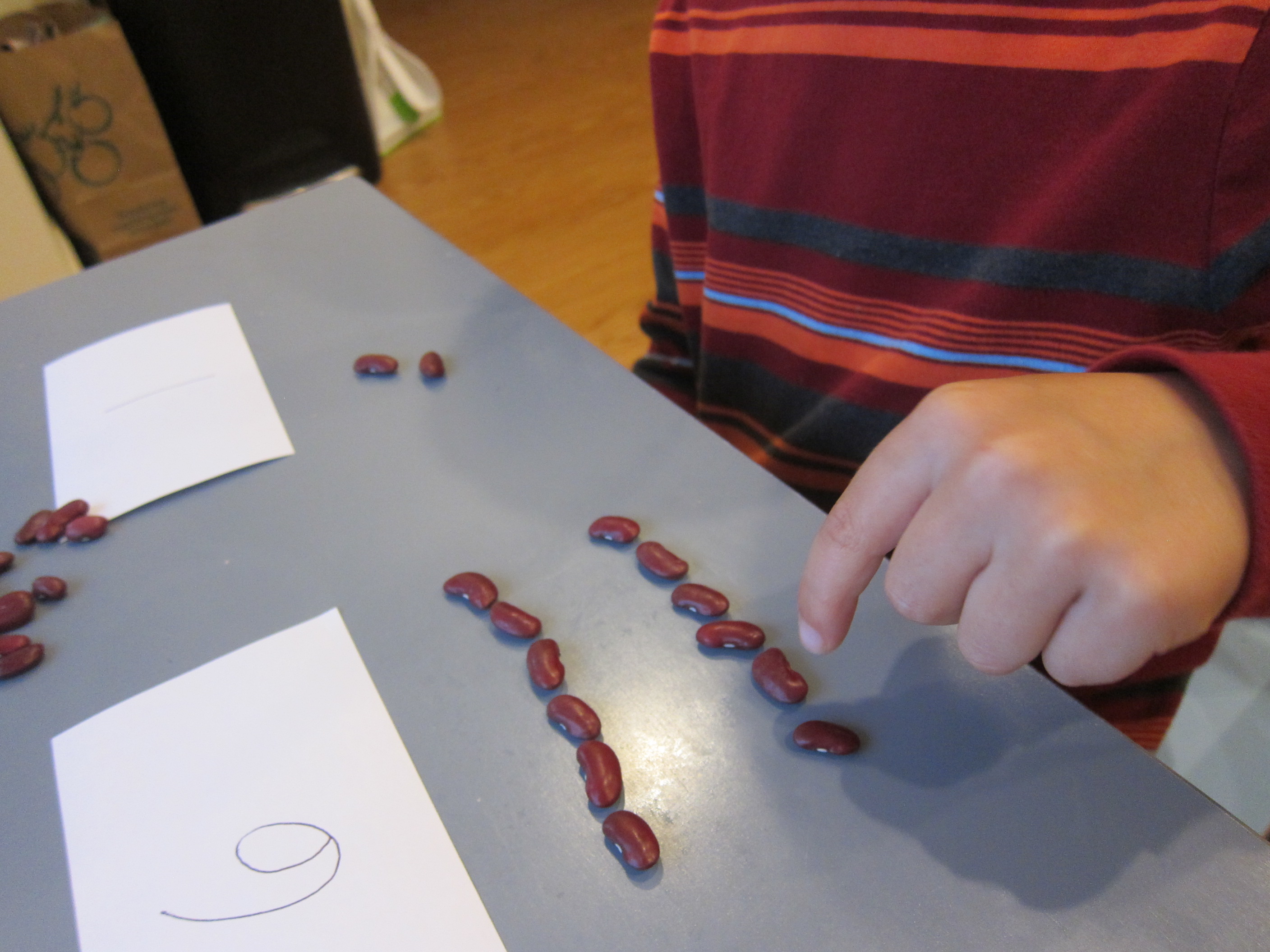
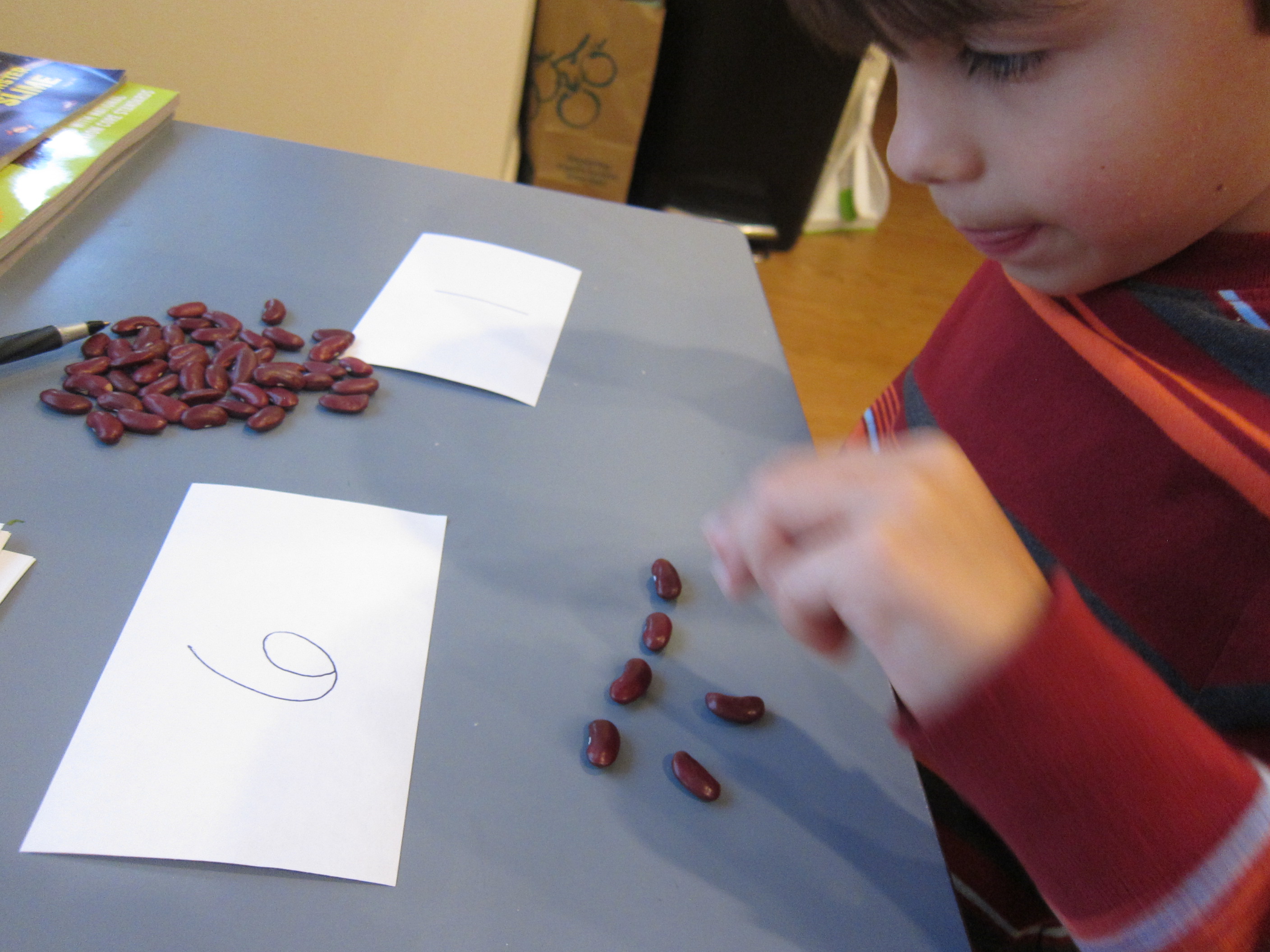
Now go over a bit of football facts and figures (6 points for a touchdown, 3 points for a field goal etc.) and set up some math problems with manipulatives. We used dried beans, and I talked Travis through three problems. First up, addition:

If the Dallas Cowboys scored 2 touchdowns and 2 extra points, how many points did they have altogether?

Travis counted out 6 beans for each touchdown, plus the extra two, then added them all up. This is a sophisticated problem for a kindergartner, and I don’t think he even realized it!
Football Math (3)

We next did subtraction:

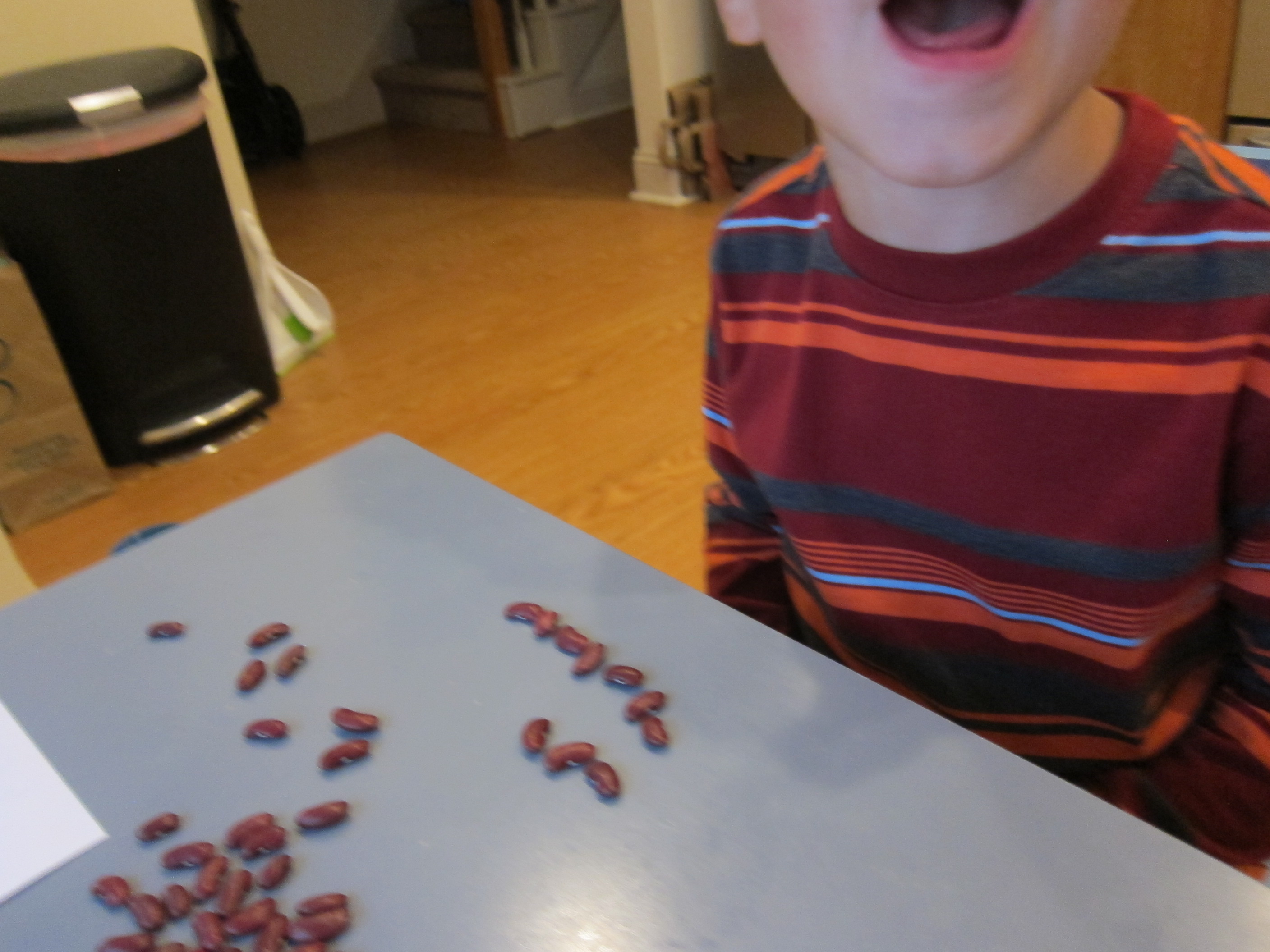
Last night the Kansas City Chiefs lost to the New York Jets by a score of 7 to 10. How many fewer points did the Chiefs have?

Again, manipulatives made it a cinch. He counted out each team’s score in beans, then took away 7 from the Jets pile. How many were left? “Three!” he declared.
Football Math (5)

Finally, fractions:

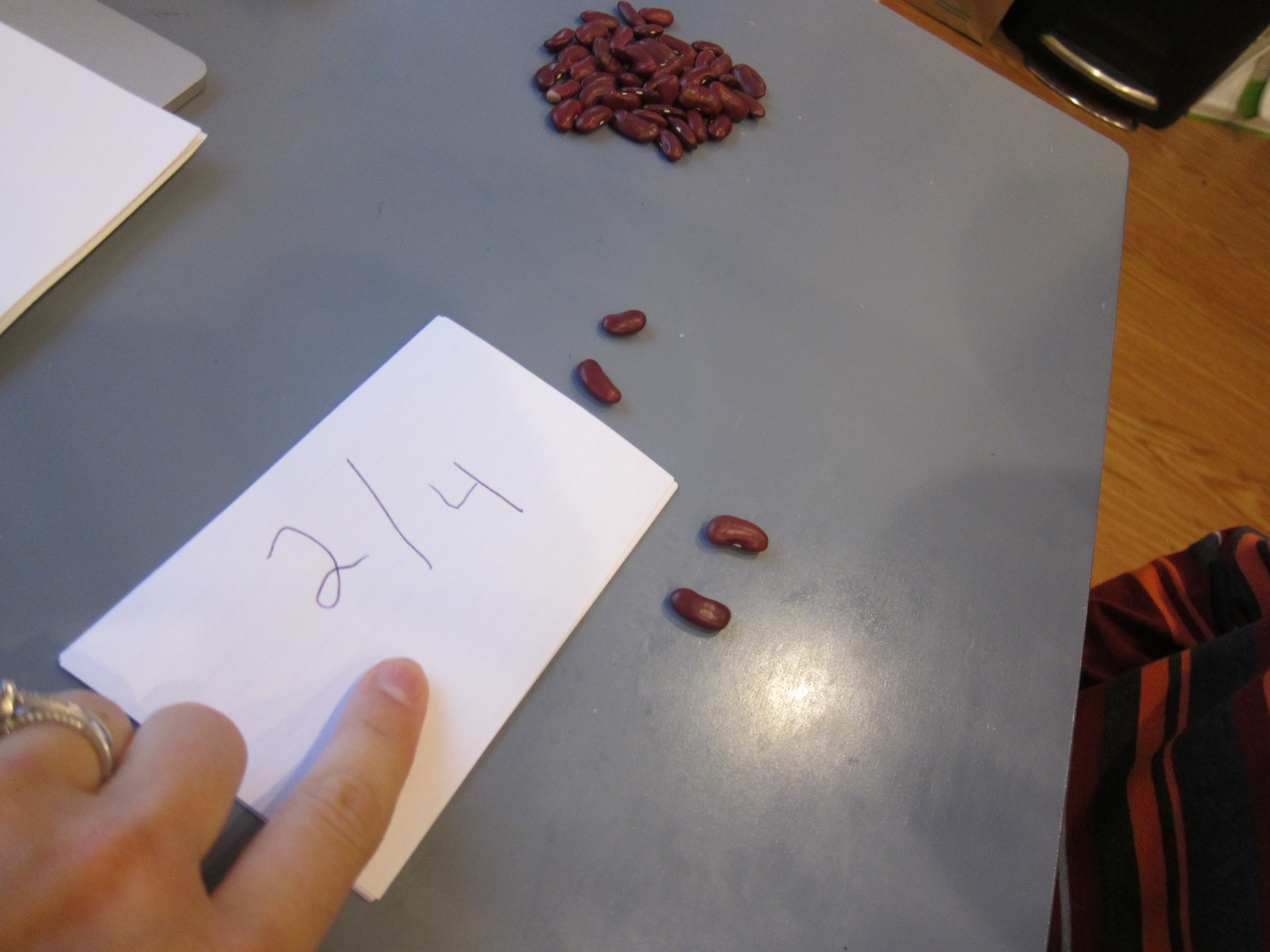
If there are 4 quarters in a game and 2 have been played, how many are left?

Beans made the answer clear.
Football Math (6)

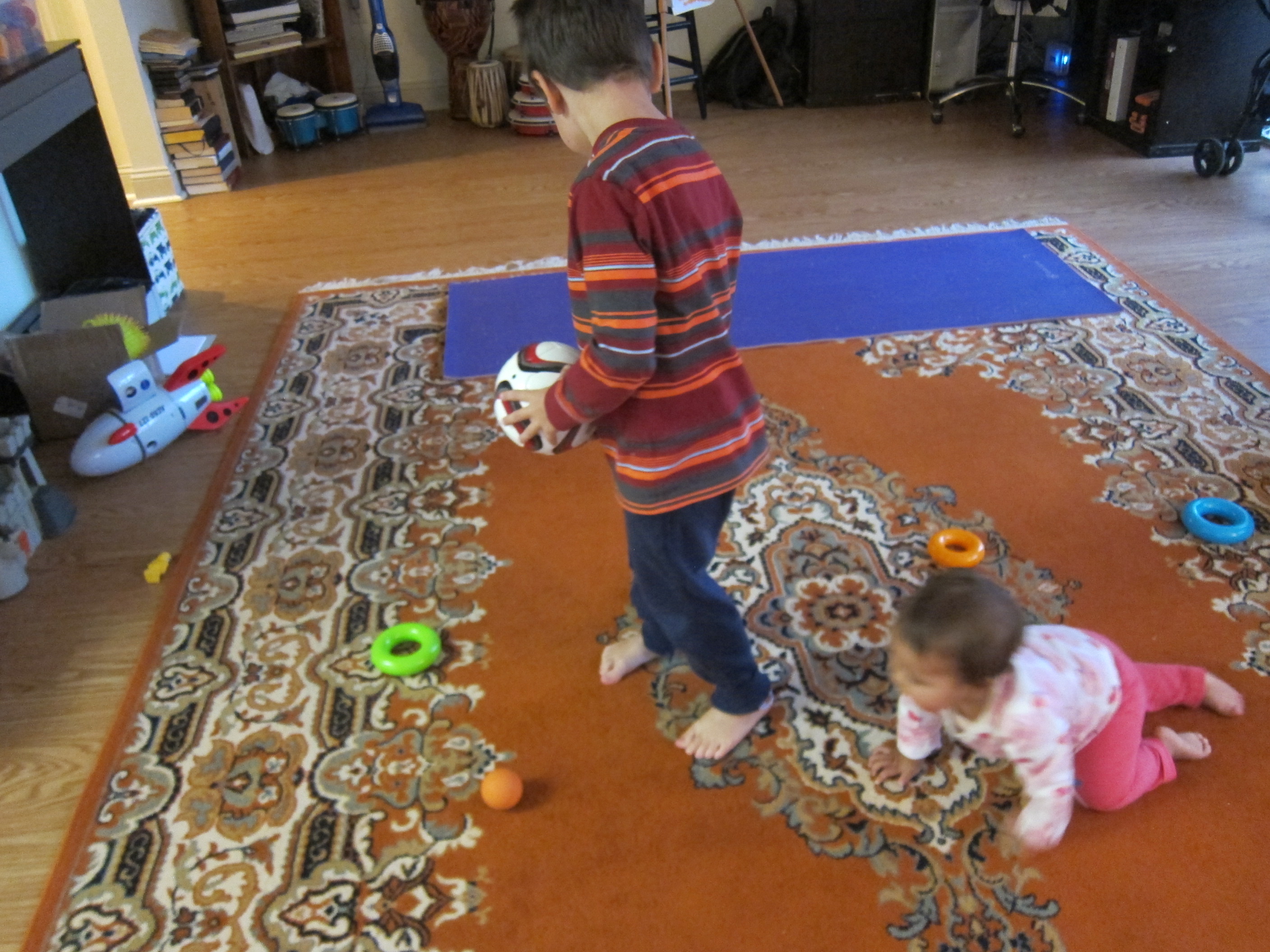
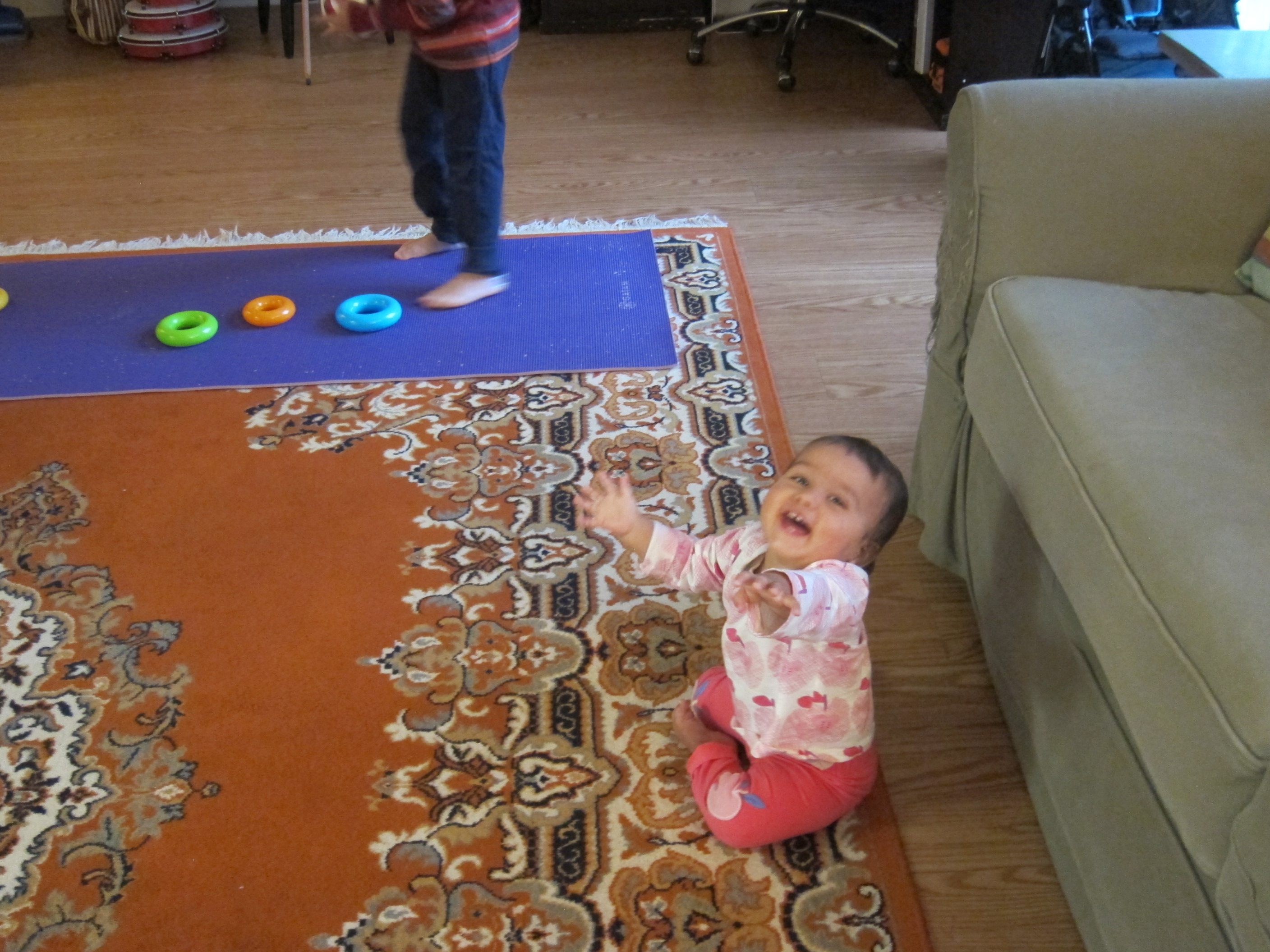
After that big brain workout, we needed a physical one! We played two fun variations on “football” that we found online, adapting them to be a mom-and-son game instead of requiring teams. For the first, I set up a yoga mat as the end zone. His job was to get as many balls as possible into the end zone in 1 minute.

Football Math (7)

For the second, he stood on a target (we used stacking rings) and had to catch a ball. If he caught it, he moved the target to his end zone for a point.
Football Math (8)

We even had an adorable cheerleader on the sidelines!
Football Math (9)

Finish up with a football read at storytime. Travis enjoyed A Running Back Can’t Always Rush, by Nate LeBoutillier

Football Math (10)


Tangram Toast

Tangram Toast (3)

Travis had a tricky time of it with tangram puzzles recently, so I made things a little more accessible in the best way possible: edible tangrams!

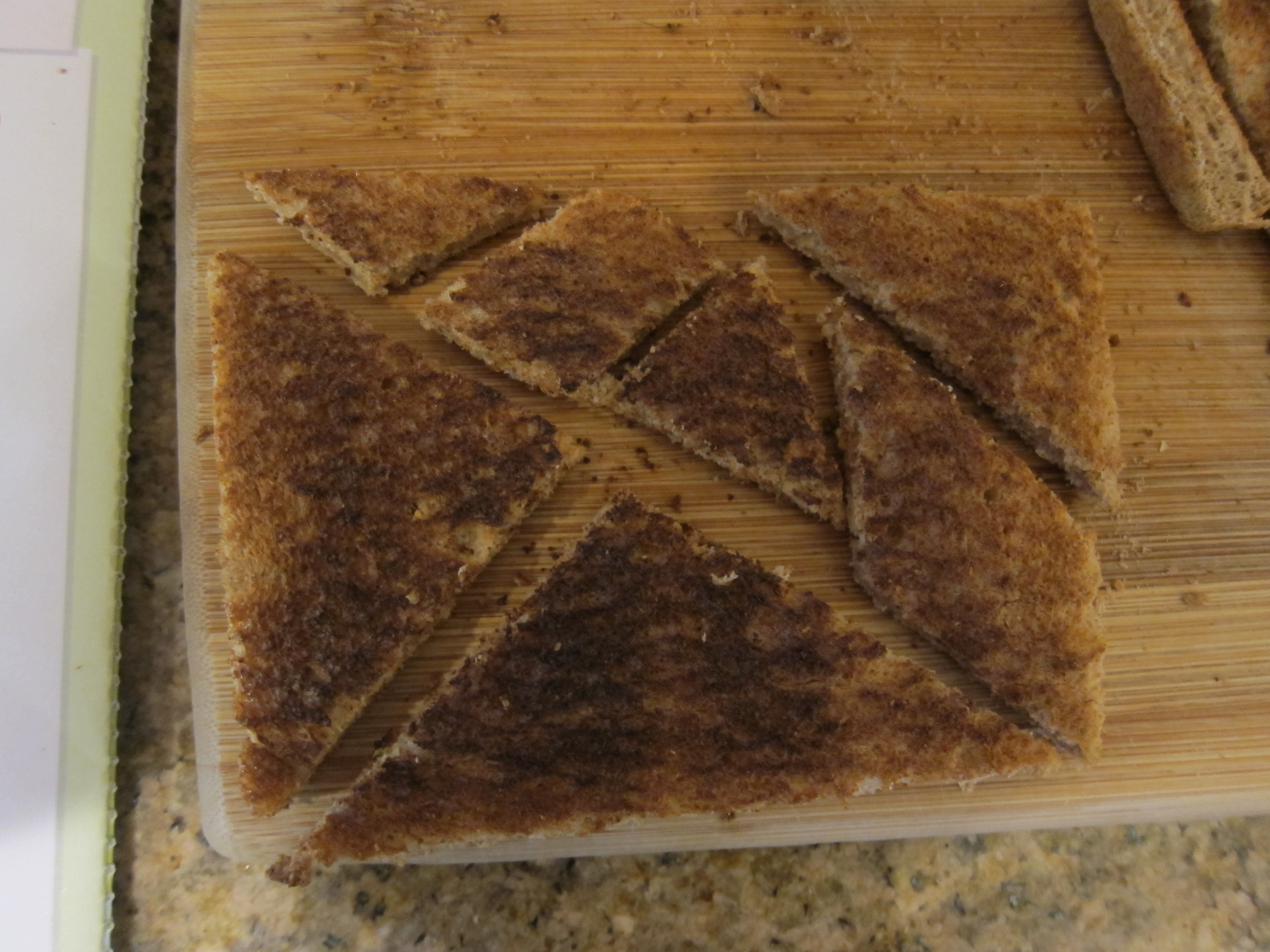
Toast slices of bread first until nice and crispy, making as many as you’d like for the project. Cut into shapes as shown:

Tangram Toast (2)

In a bowl, stir together 1/2 cup softened Earth Balance butter, 1 teaspoon cinnamon, 1/2 teaspoon vanilla extract, and 4 tablespoons sugar. Travis loved mixing all this up!

Tangram Toast (1)

Through trial-and-error, we found it easiest to make the tangrams while the toast was plain, otherwise our fingers got messy (as we learned while designing a slightly-lopsided house).

Tangram Toast (6)

So instead, we spread the cinnamon butter on after, but first Travis helped design a rocket…

Tangram Toast (4)

…and what could this jumble be?

Tangram Toast (7)

Aha a bird!

Tangram Toast (8)

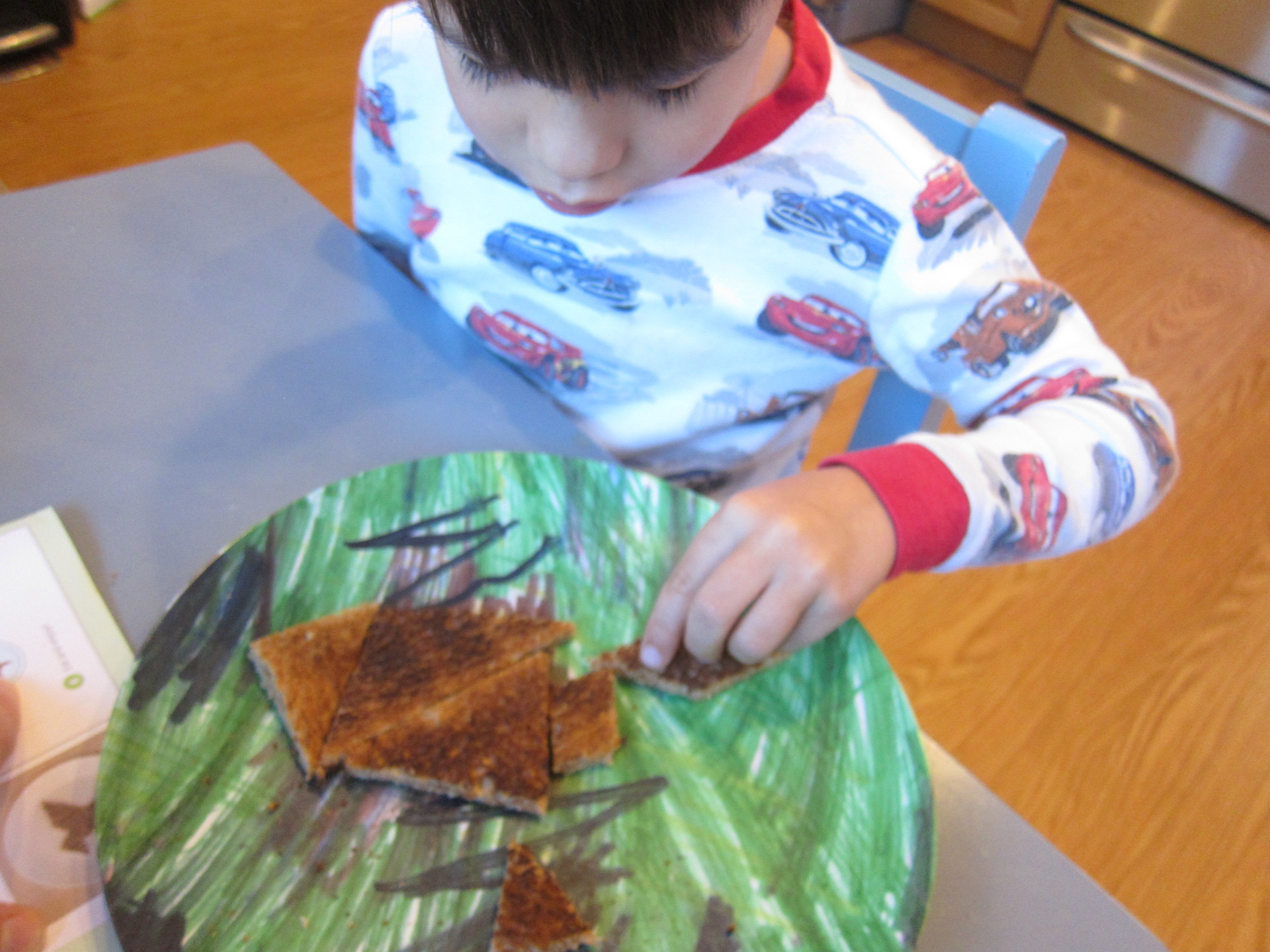
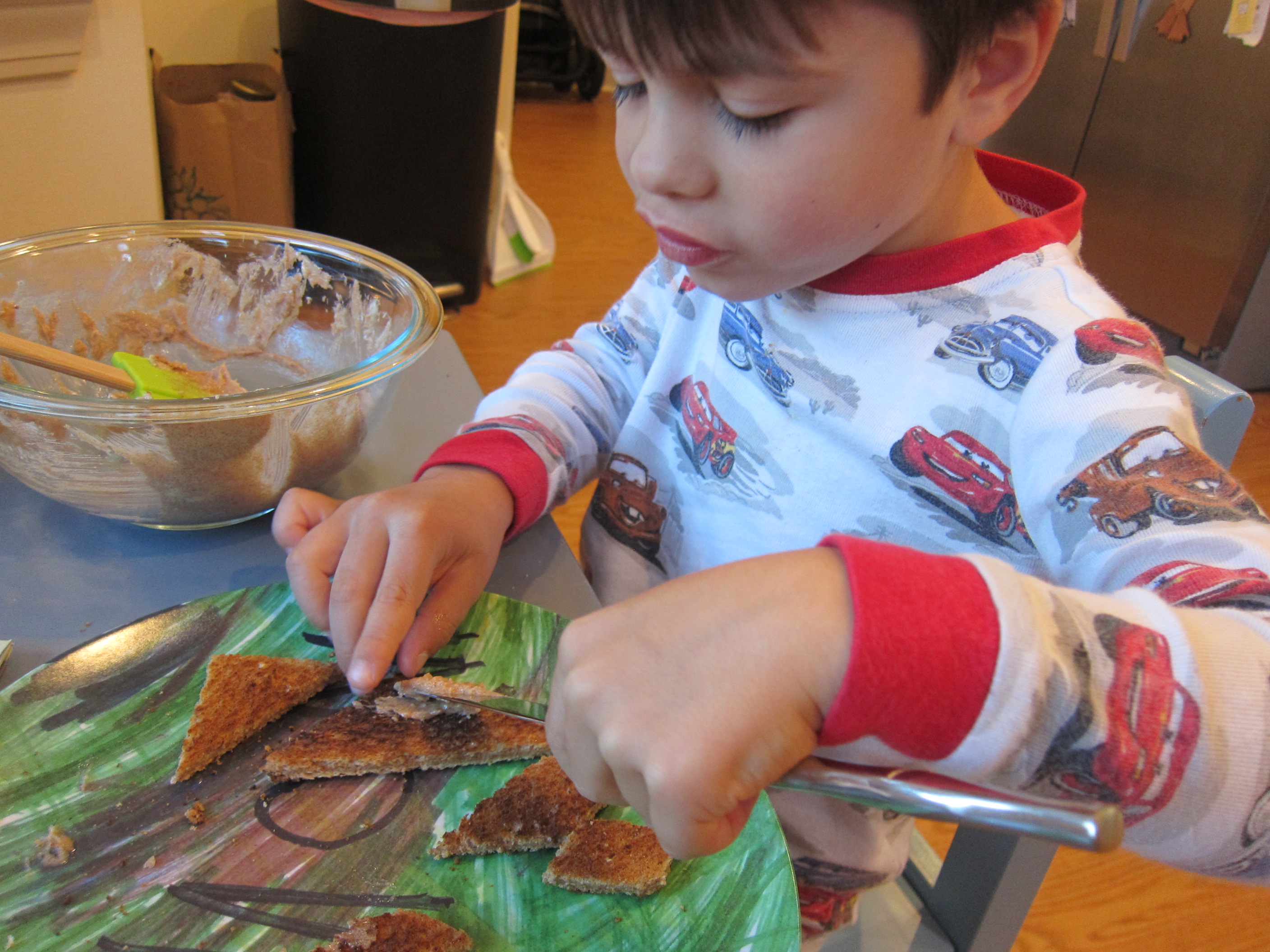
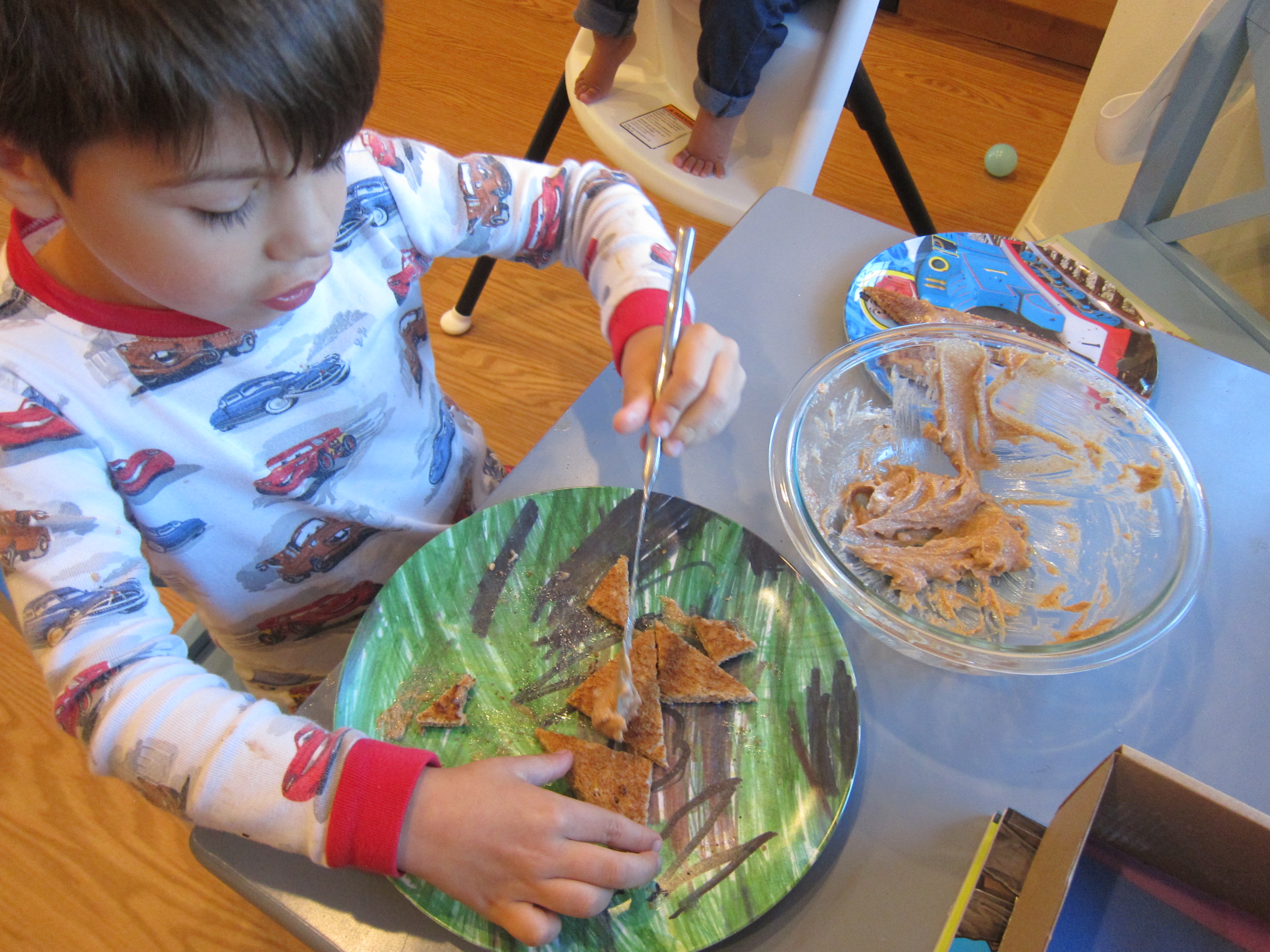
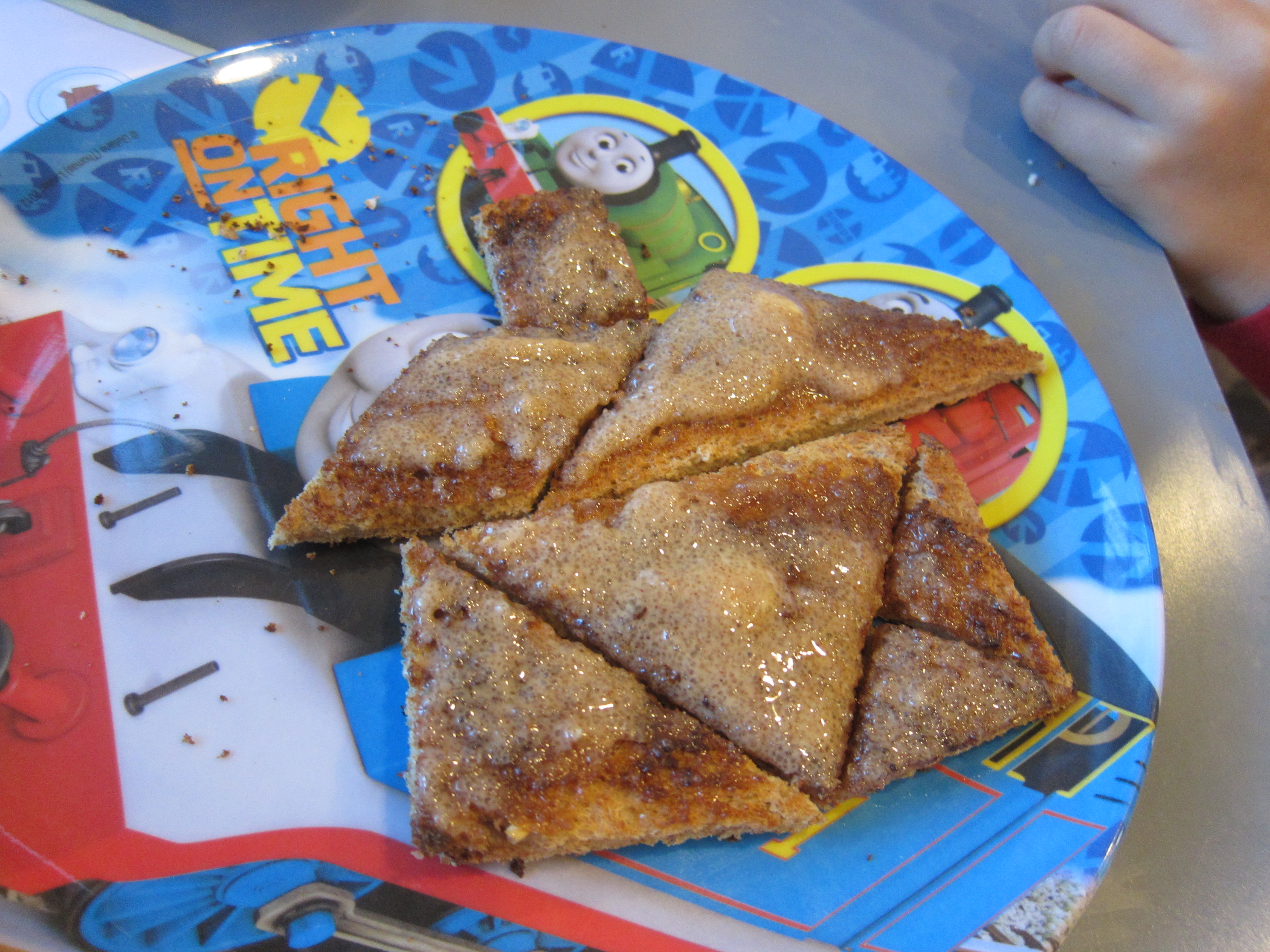
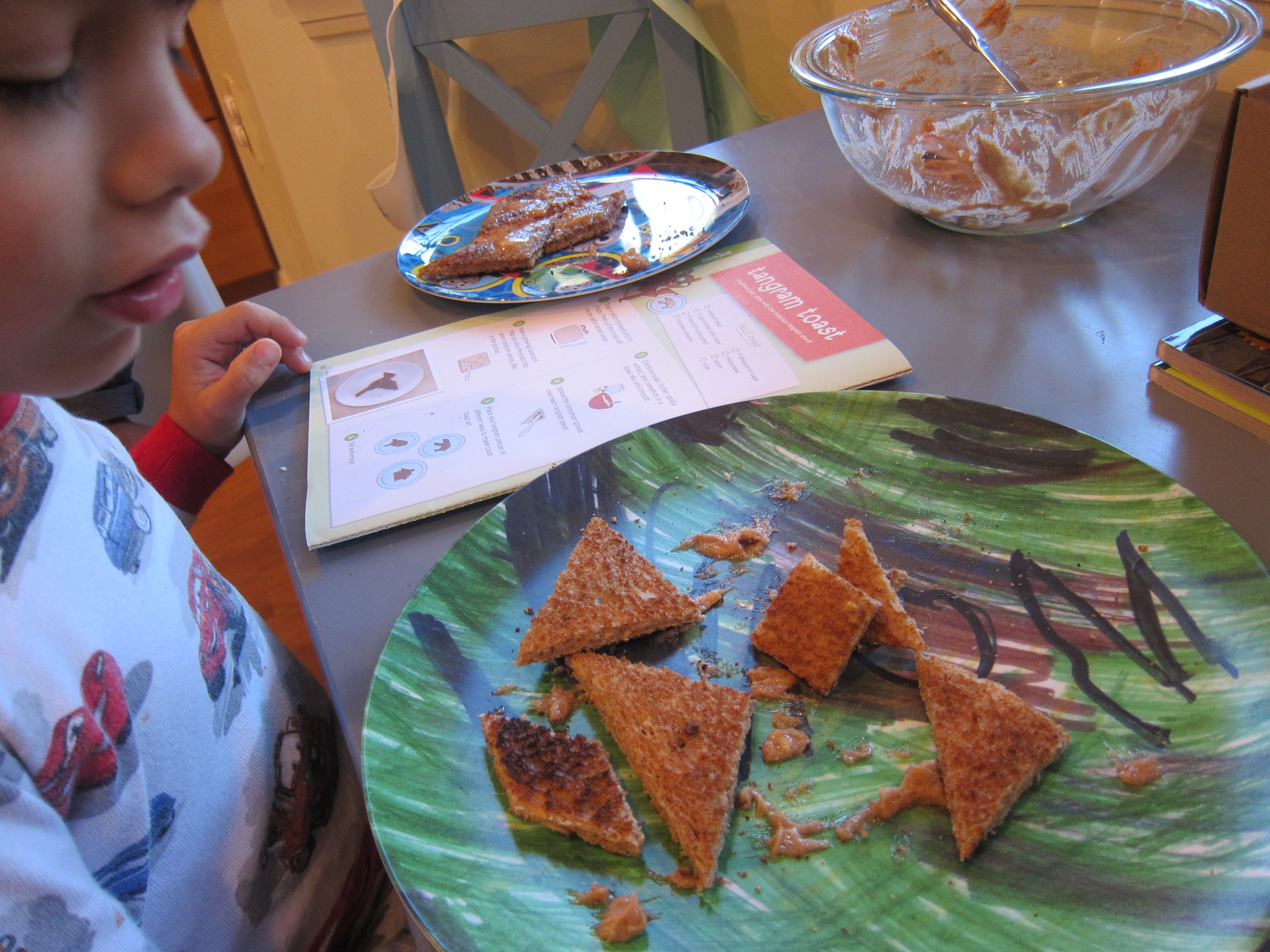
After the puzzling, he was so proud I gave him a real butter knife to spread our cinnamon-sugar mixture over his own toast pieces.

Tangram Toast (11)

He proudly served up triangles, squares, and trapezoids. This was a great way to get kids puzzling while thinking it’s just a messy fun snack!

Tangram Toast (9)

Snack Math


Snack Math (6)

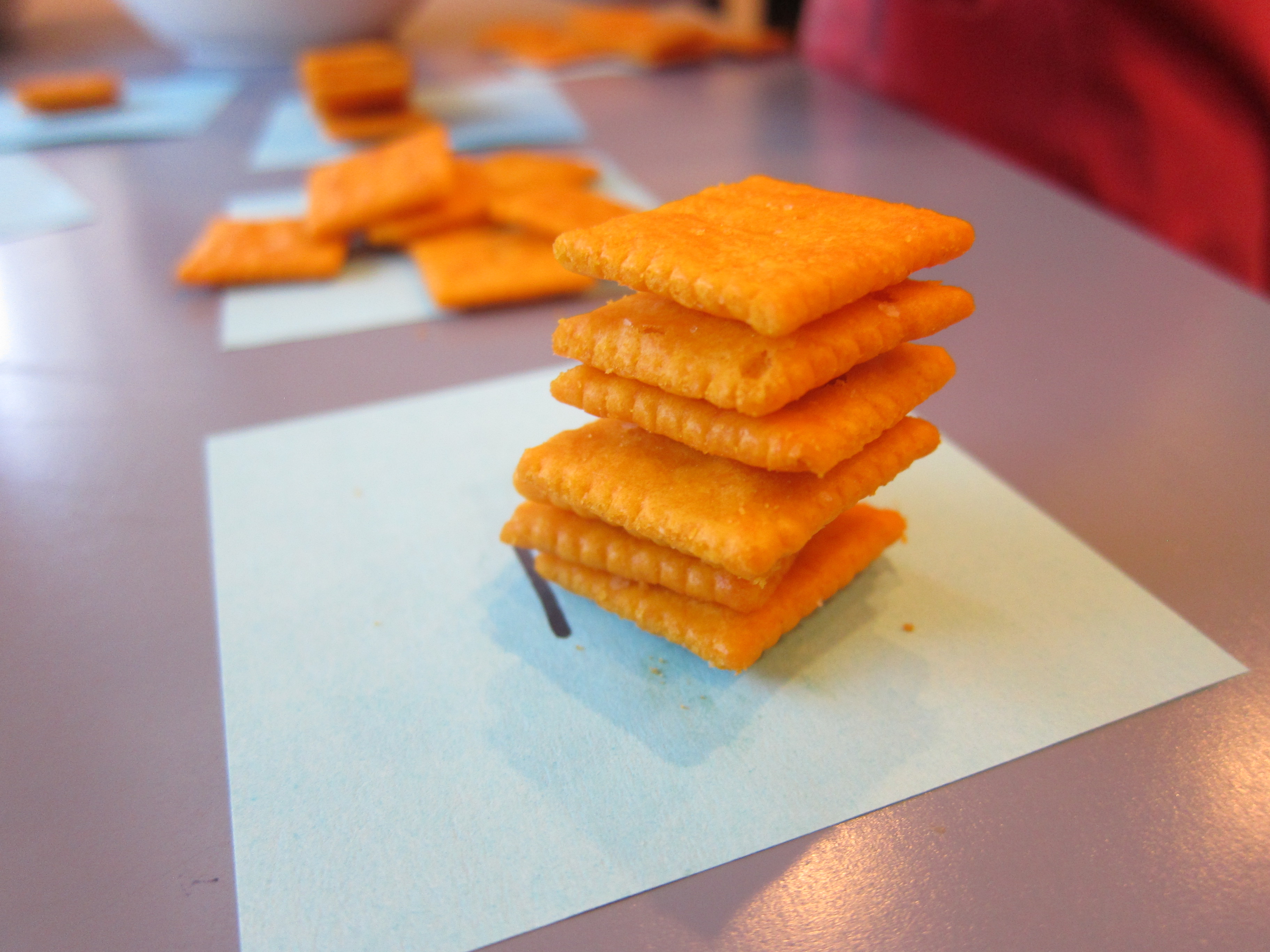
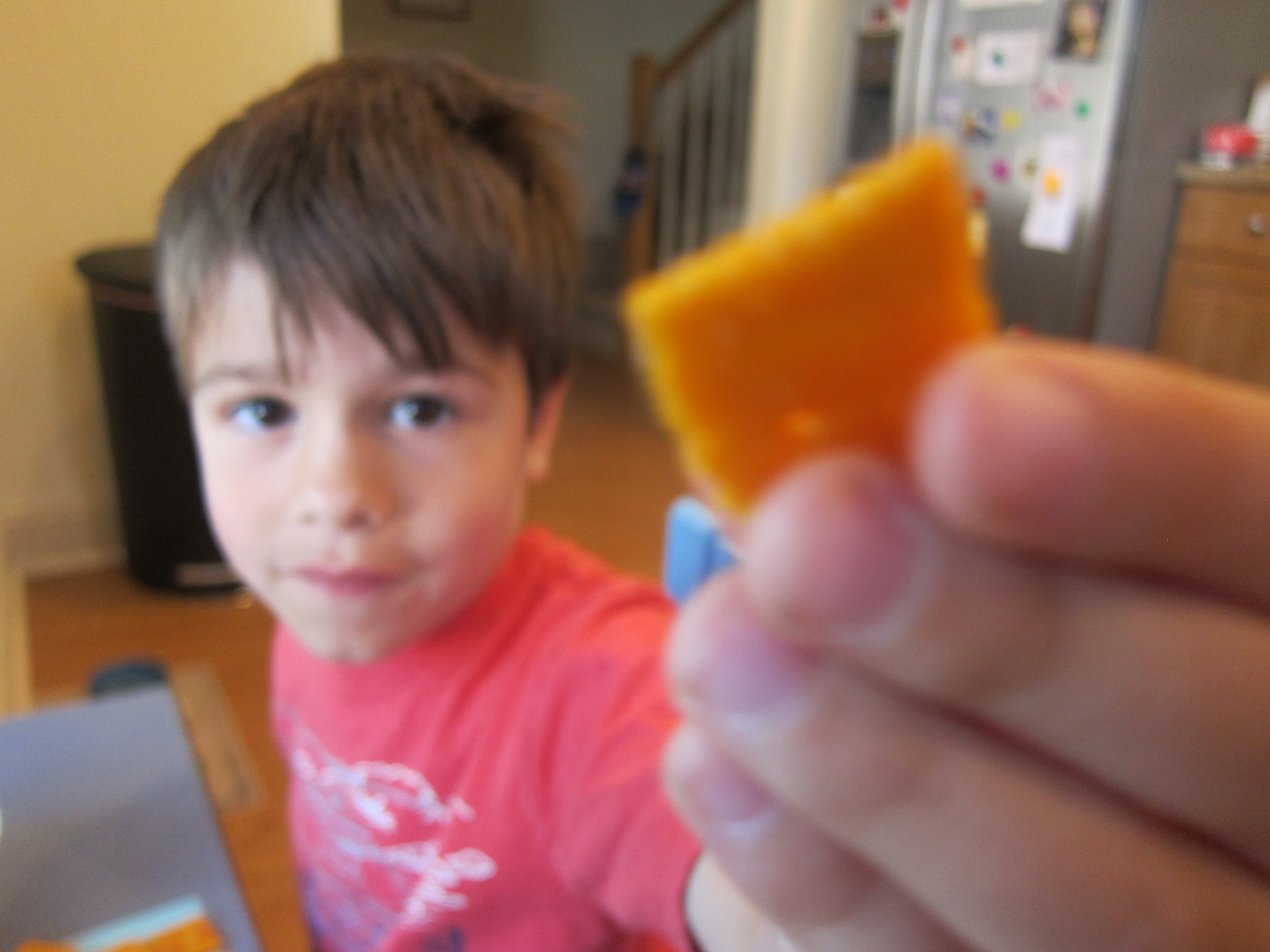
Summer is winding to a close and I’m sneaking in a few final math games before the start of (!) Kindergarten. Today Travis did a quick math review  at snack time. Ideal foods for this game are small snacks your child eats a lot of: Annie’s bunny grahams, cereal pieces, pretzel sticks, etc. We played with Earth Balance vegan cheddar squares!

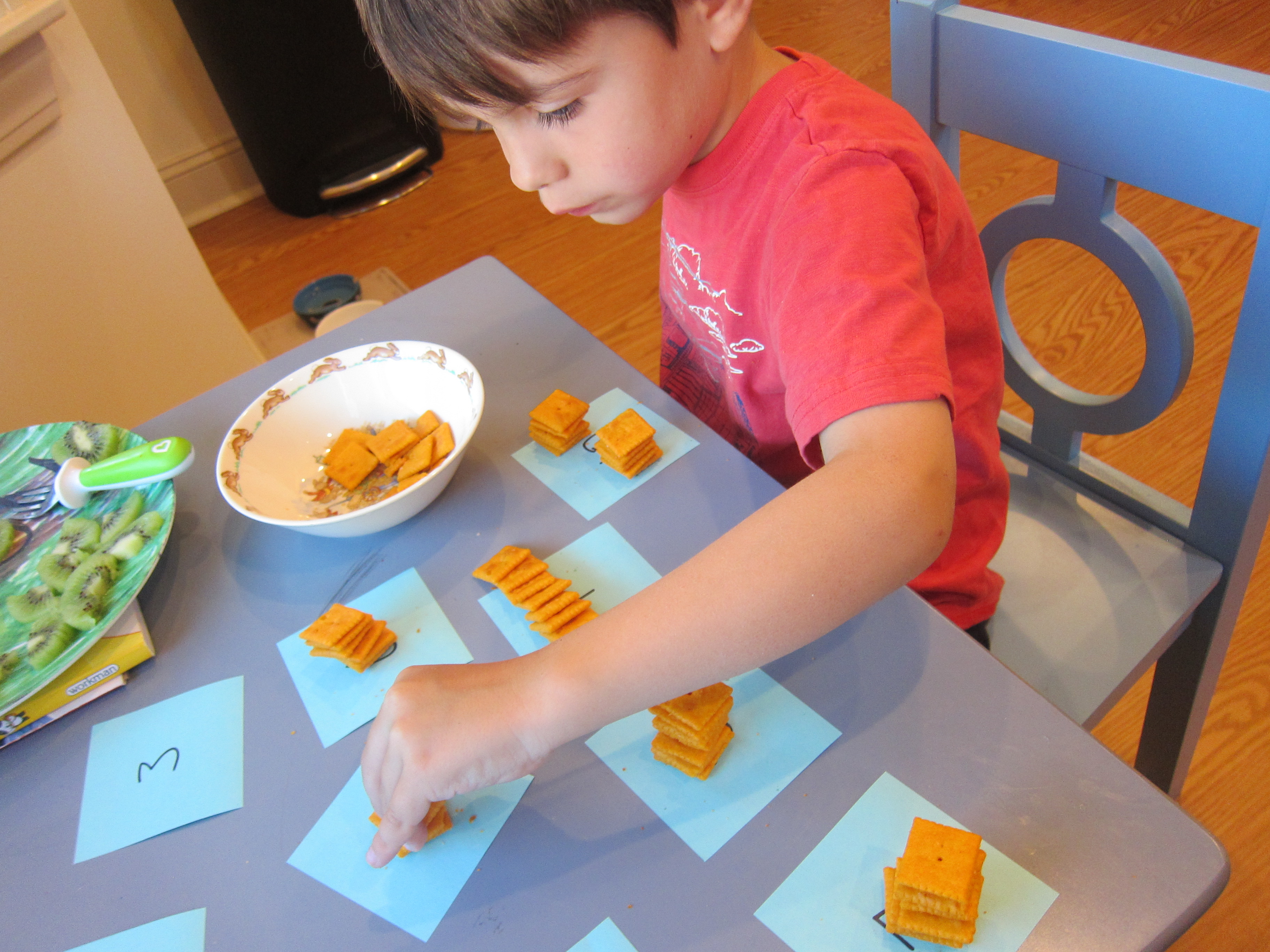
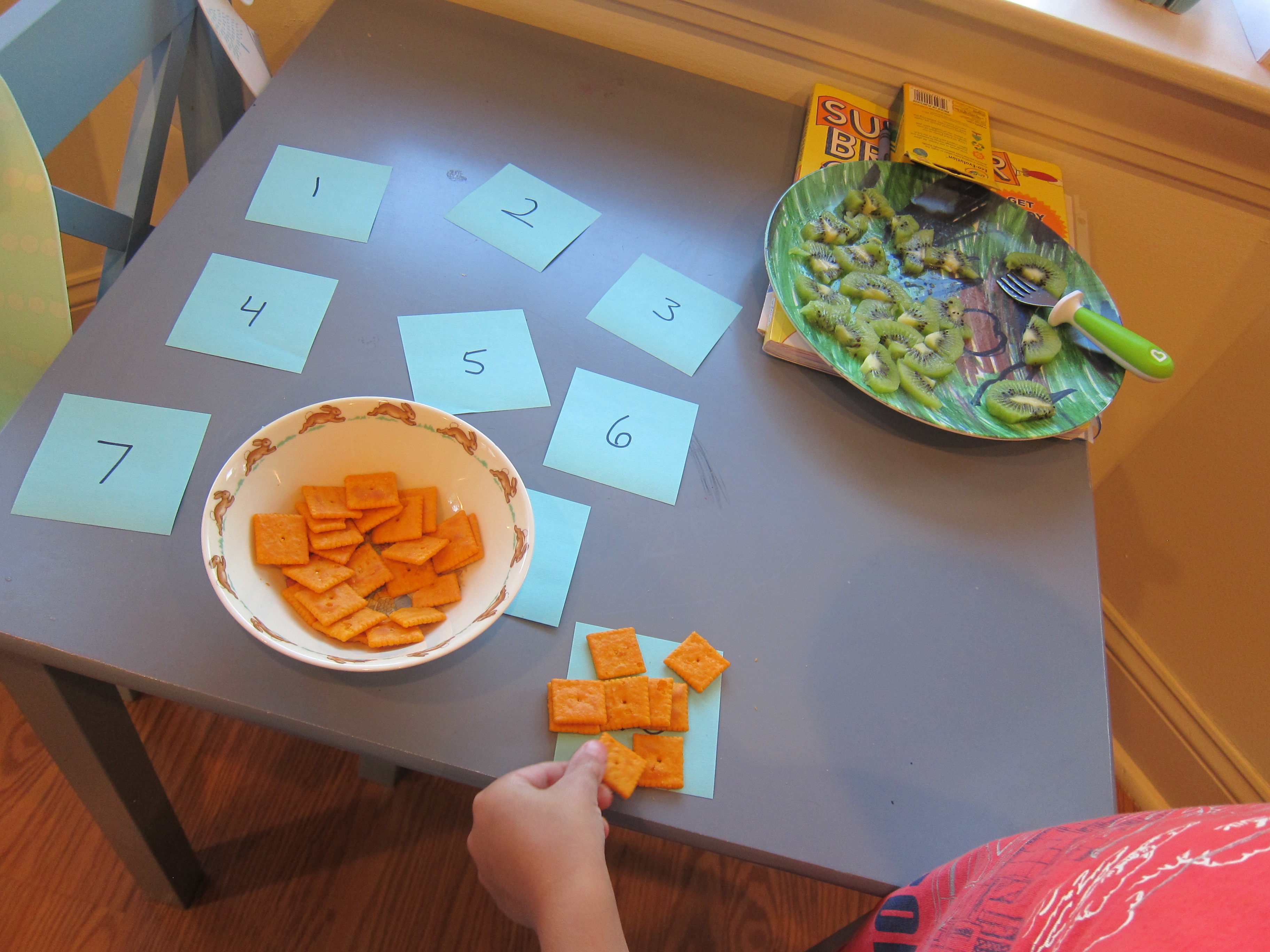
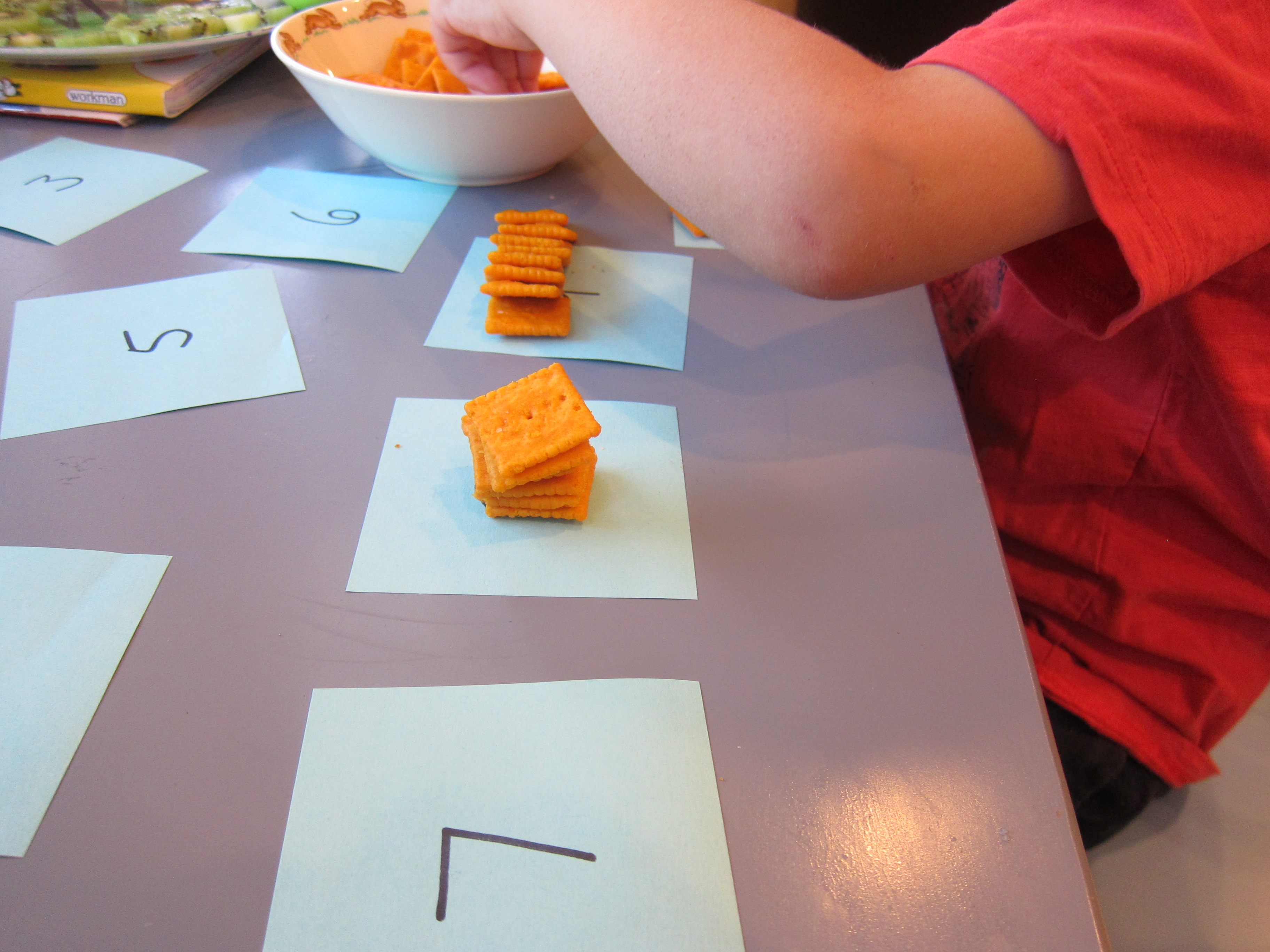
Write out the numbers 1 through 10 on post-its or index cards. Before eating, Travis had to place the correct number of cheddar squares on each post-it.

I had him start with 10 knowing that working up to larger numbers would be more daunting. Instead, it got easier as he went along.
Snack Math (2)

Unexpectedly, he loved the game! He tried to make each pile into vertical stacks, and thought it was hilarious when they toppled over.

Snack Math (3)

This was a great way to keep a math lesson light.

Snack Math (4)

He also thought it was hilarious to eat any broken cheddar squares he found, a quick lesson on fractions and halves even if he didn’t know it!

Snack Math (5)

And then at the end, he got to knock down all the towers and gobble them up.

Snack Math (7)


Nature “Size Hunt”

Nature Size (4)

This mini scavenger hunt will inject some math into your next nature walk. We had a  beautiful family afternoon along a local trail, and I challenged Travis to find a few things of various sizes compared to something else along the way. You can vary your list, but here are a few ideas:
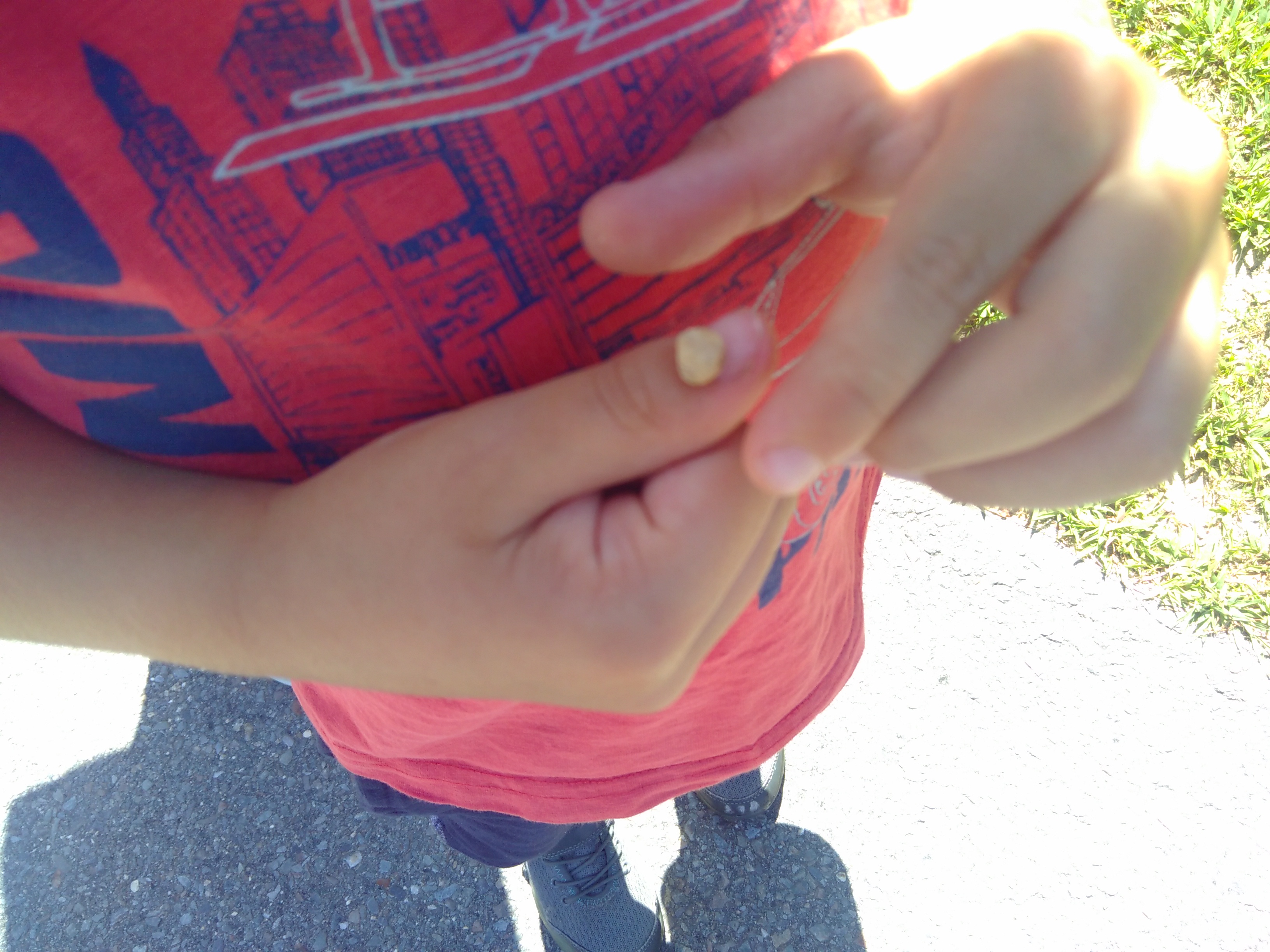
First up, he needed to spot something smaller than his fingernail. I thought he might find a bug, but he surprised me with this little pebble.

Nature Size (5)

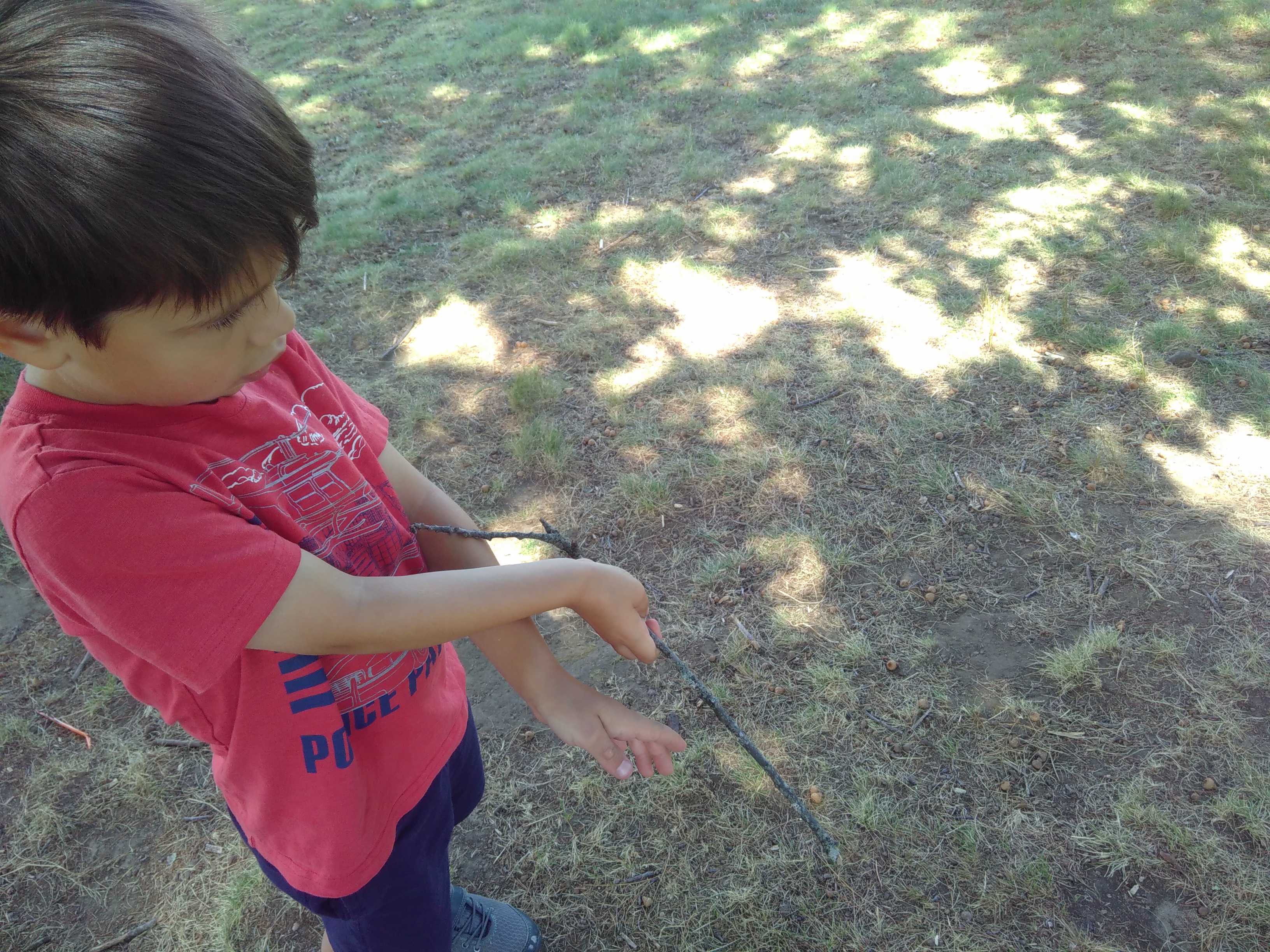
Longer than his arm? A stick!

Nature Size (3)

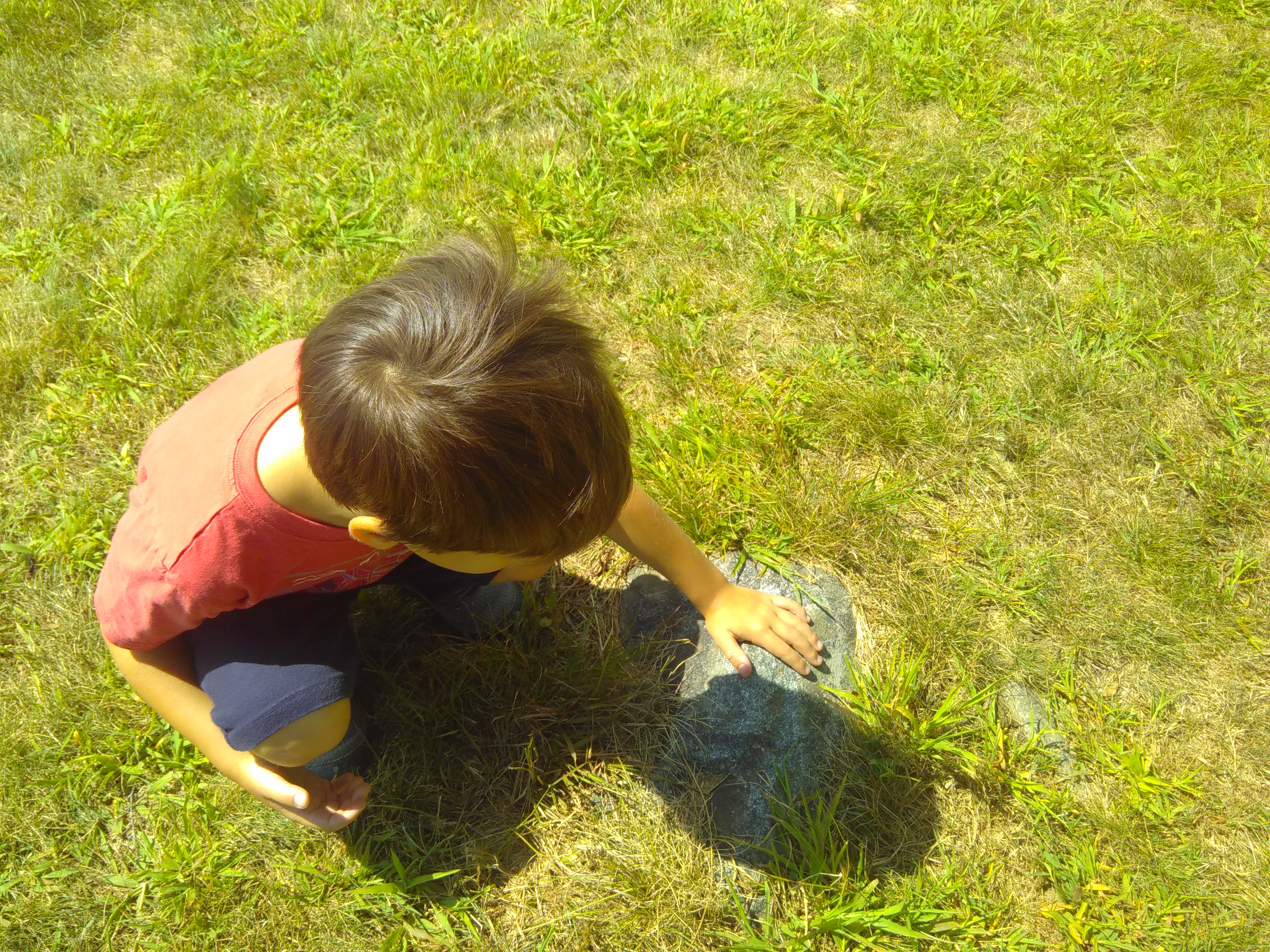
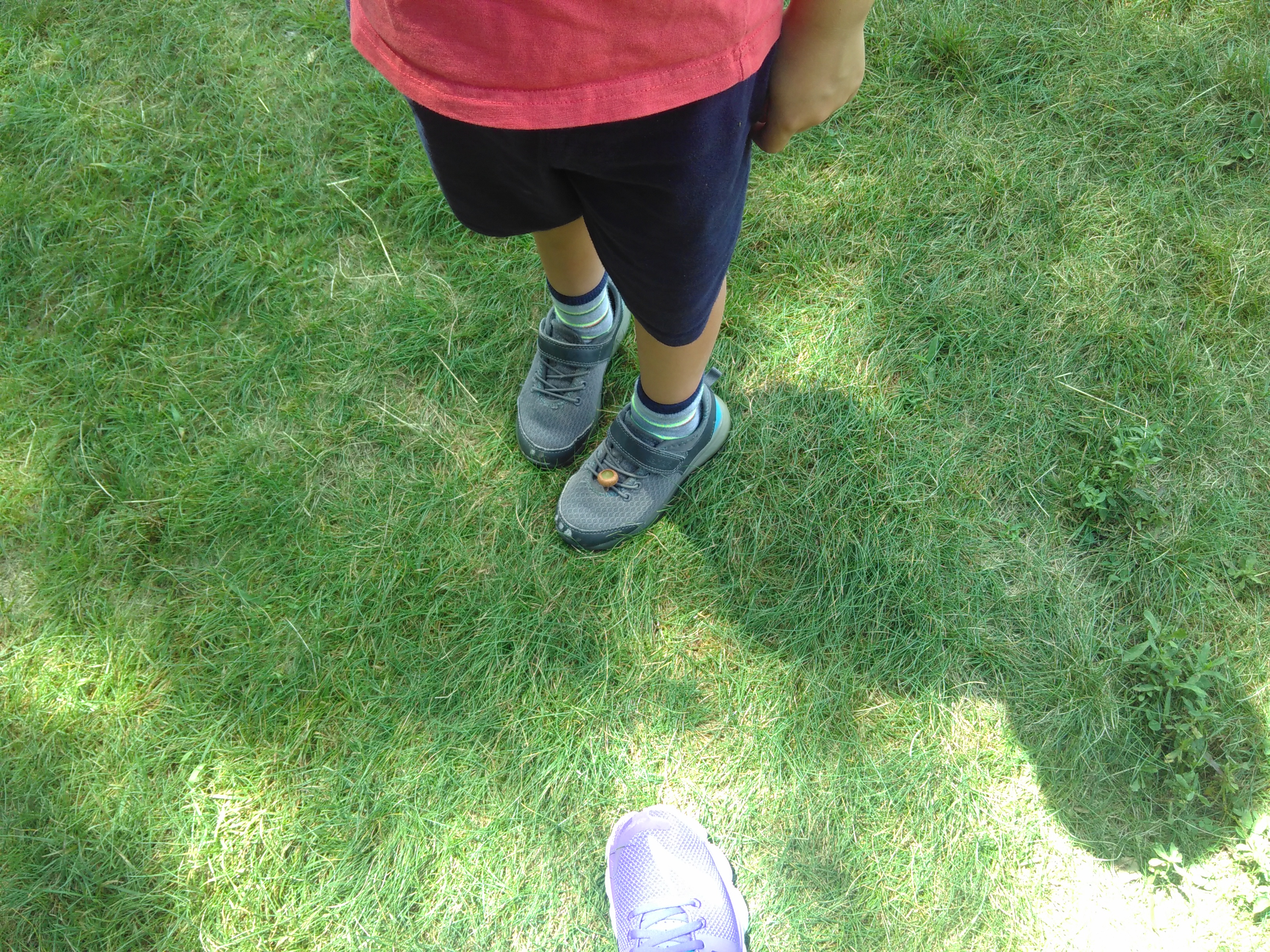
A rock was bigger than his hand, and an acorn was smaller than his foot.

Nature Size (2)

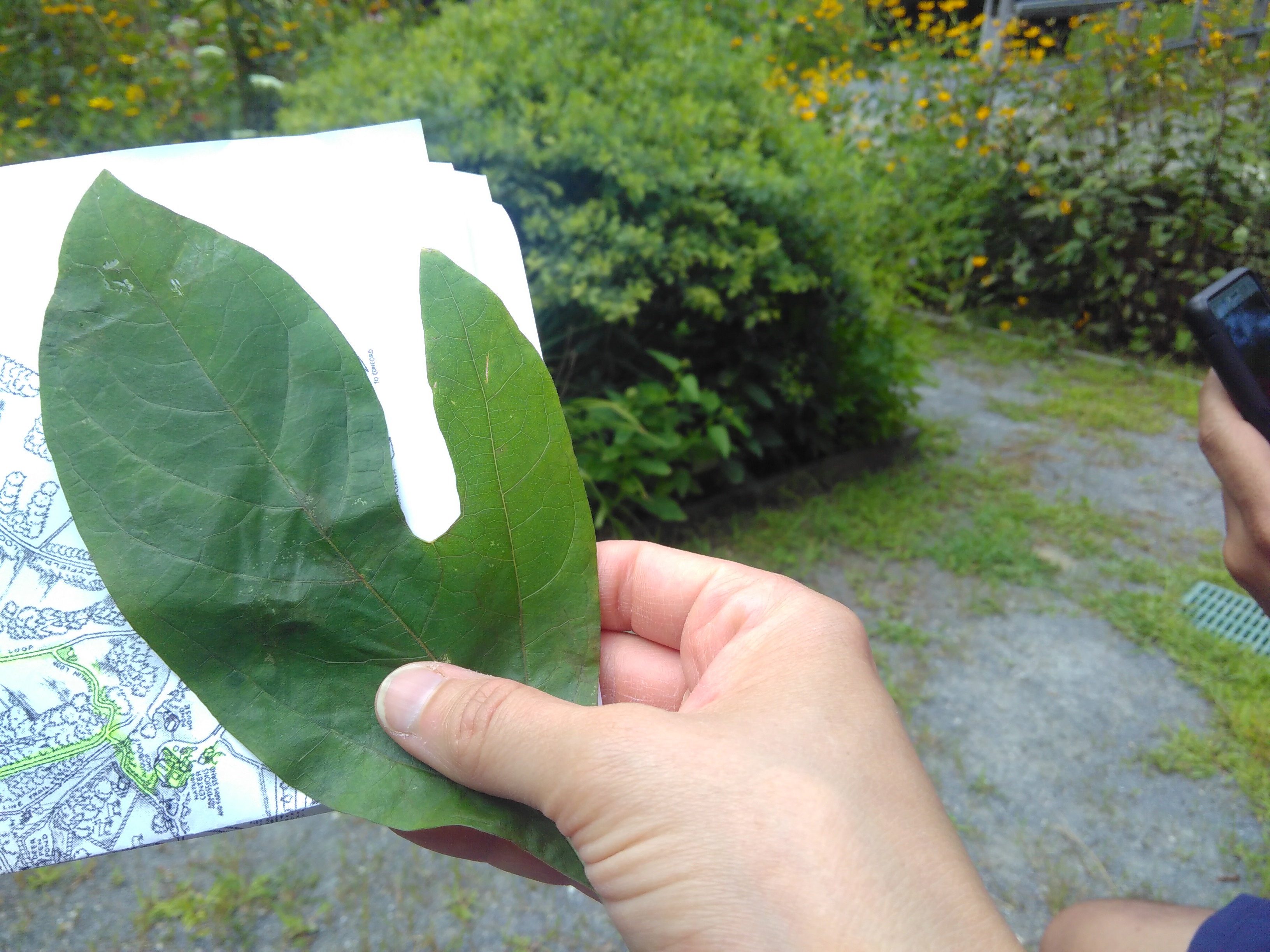
For the last one, he needed to spot something larger than a leaf. The leaf we found was cool all by itself, almost mitten-shaped! 

Nature Size (1)What items do you find on your “size hunt”? Please share in the comments!