Toddler Treasure Box

Toddler Treasure Box (2)

It’s never too early to introduce the fun of treasure hunts and pirate play, even for toddlers who don’t understand the nuances of the make-believe. Here’s a way to let even a toddler dig for “gold”!

We have a collection of old foreign coins, which are perfect for pretend play like this. I clinked a few down in the bottom of a craft bin (making sure Veronika saw), and then buried them under “gold” crinkle paper. (Note: You can pick up the latter at any party store or craft supply store).

Toddler Treasure Box (1)

Veronika immediately began taking out big handfuls of the crinkly paper to find that treasure underneath. Not only does the crinkly paper make for fantastic tactile play, but it sounds neat, too!

Toddler Treasure Box (3)

Once she reached the bottom of the bin, I made a big deal about finding the treasure.

Toddler Treasure Box (5)

“Let’s hide it!” she said. She plinked the coins back in the bin, and this time we layered everything: some paper, a coin, some paper, a coin, and so on.

Toddler Treasure Box (7)

Time to dig it all up again!

Toddler Treasure Box (9)

My little pirate kept busy with this one for quite a while even after I stopped our joint play.

Toddler Treasure Box (10)

Treasure-Map Pizza

Treasure Map Pizza (6)

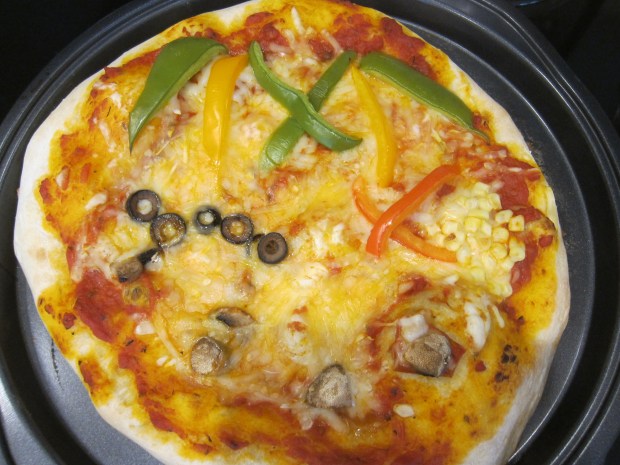
This pizza was so fun to put together, complete with a tropical island background, an X-marks-the-spot, and golden treasure! You can prepare your edible mini maps on individual pita pockets, or do as Travis did and make a full-size pizza.

Treasure Map Pizza (1)

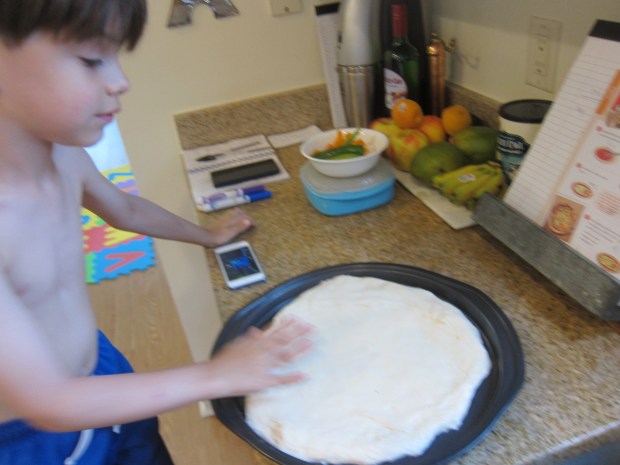
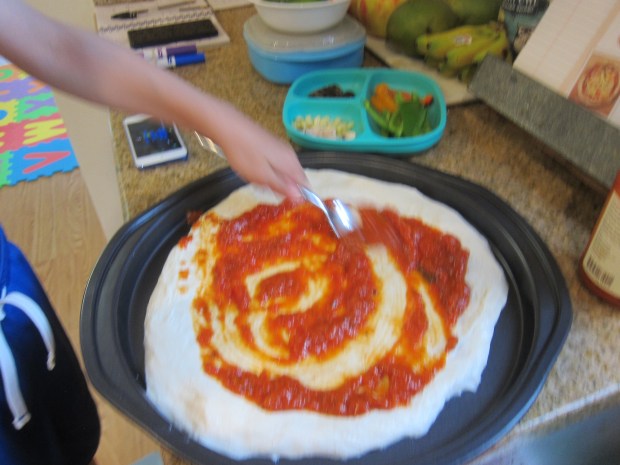
To start, pat pizza dough onto a pizza pan, then spread with tomato sauce, leaving a 1/2-inch crust. Sprinkle with your favorite non-dairy mozzarella.

Treasure Map Pizza (2)

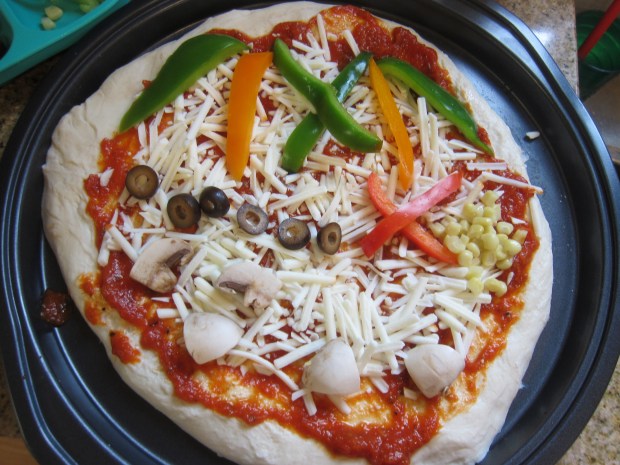
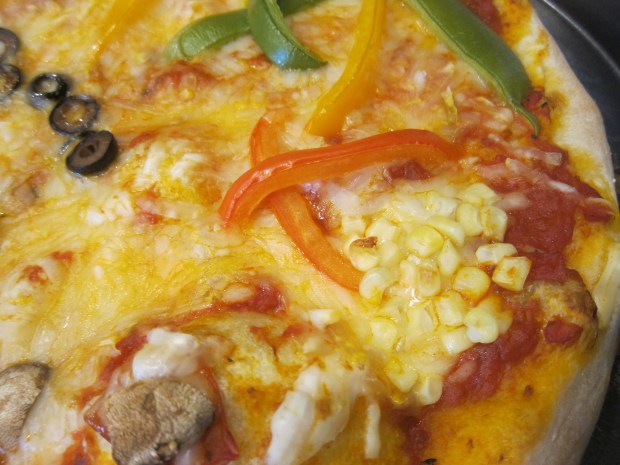
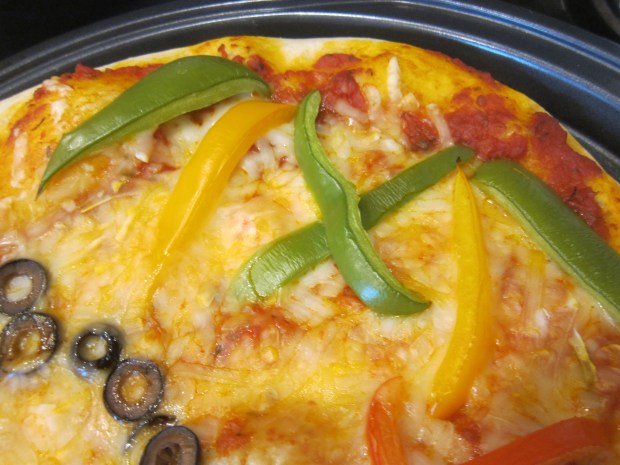
Travis loved assembling a little pirate island that included the following: two bell pepper strips to mark an X for treasure; palm trees made of orange bell pepper trunks and green bell pepper fronds; mushroom rocks; olive footprints leading to the treasure; and corn kernels as nuggets of gold.

Treasure Map Pizza (4)

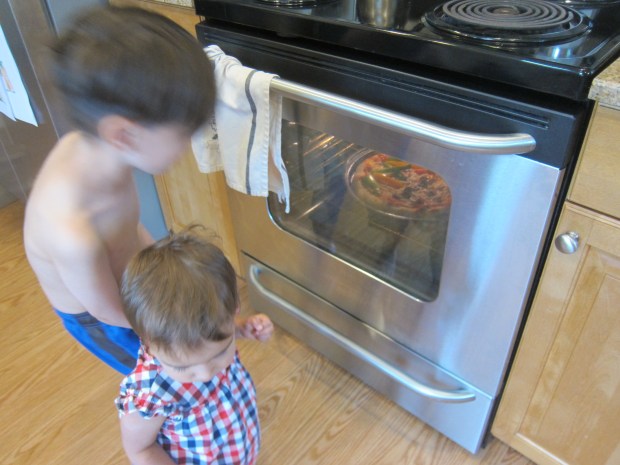
The kids had so much fun peaking while it baked!

Treasure Map Pizza (5)

Bubbles in the crust after baking even meant that we had some fun topography, like a little “hill” now below our X.

Treasure Map Pizza (7)

Then it was time to gobble up the treasure.

Treasure Map Pizza (8)

Cartography Kiwi Crate


Kiwi Maps alt

Kiwi Co terms this their Treasure Hunt crate, based around a treasure chest and search for pirate booty. The projects are an excellent jumping off point to teach kids all about the science of cartography, a.k.a. map making. Thanks to the treasure chest and gold pieces, this one is sure to appeal to kids of pretty much any age!
Kiwi Maps (4)

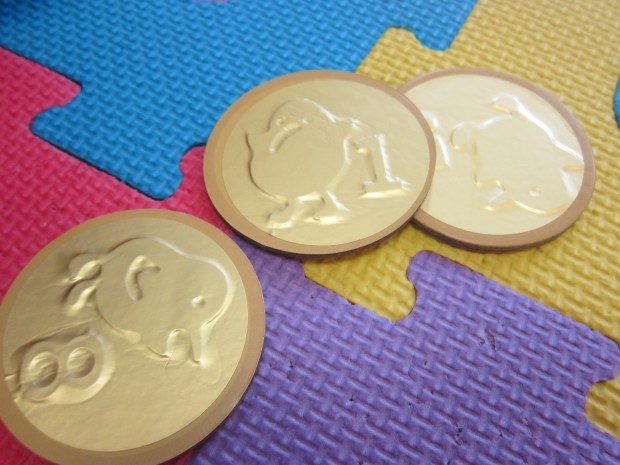
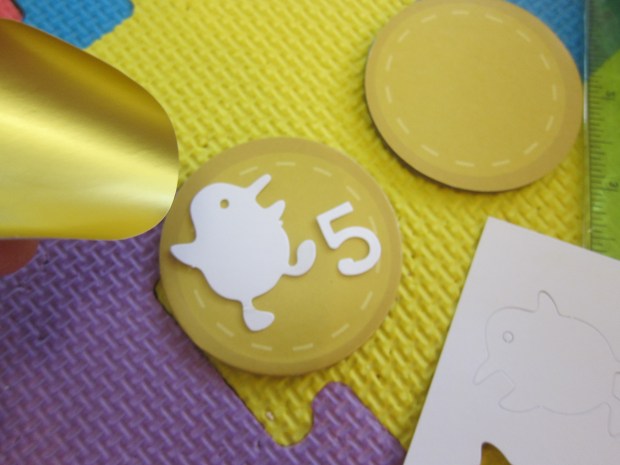
First up was making the treasure, Embossed Coins. Travis pondered very seriously how best to design each of the 3 provided gold coins, popping out templates of Steve the Kiwi and numbers.
Kiwi Maps (1)

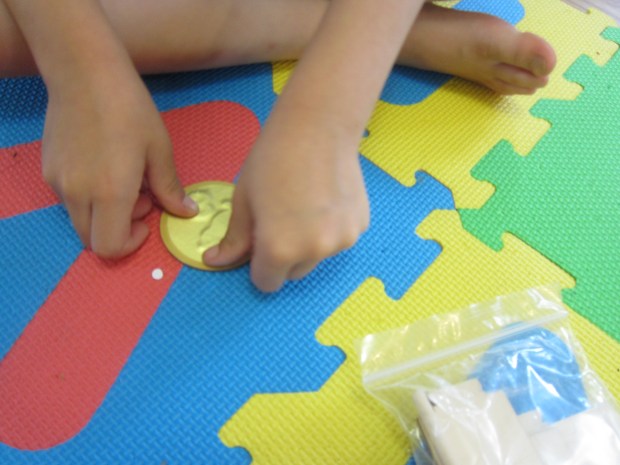
He didn’t quite understand how these could become coins until we covered his design with a gold sticker. Press down and – voila! – the design underneath appears!
Kiwi Maps (2)

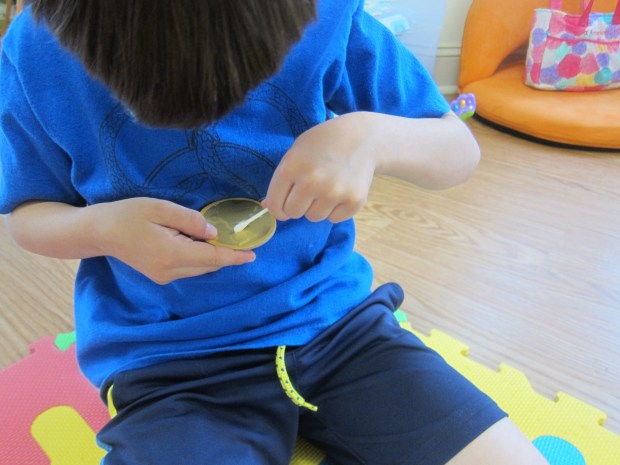
This had definite wow factor, even more so once running over the design with a q-tip for better embossing.
Kiwi Maps (3)

Next, he traded coin minting for carpentry, and put together the Treasure Chest. He was a bit distracted looking ahead (a key! a lock!) but I guided his attention back to building the chest first. This involved slotting together pieces for the base and lid, and lining up letters to make sure each piece was in the right slot. I appreciated how intuitive Kiwi Co made this step!
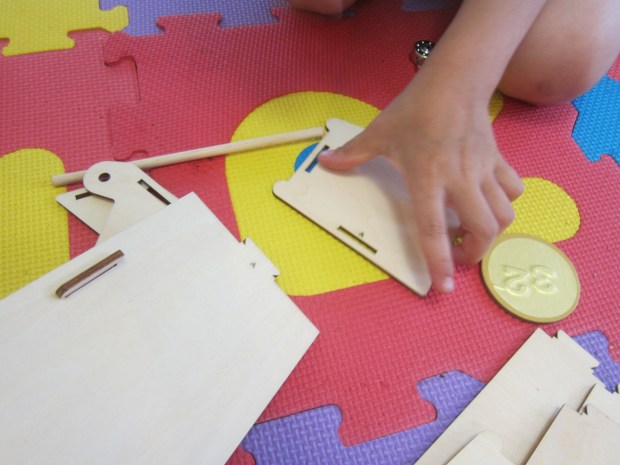
Kiwi Maps (5)

A wooden dowel is then inserted to hold the lid to the base.
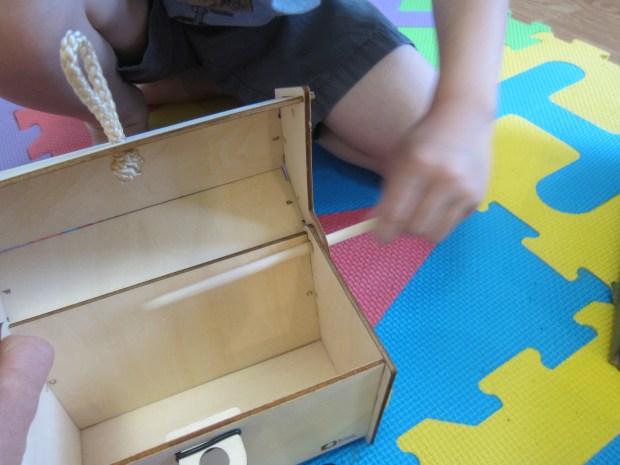
Kiwi Maps (7)

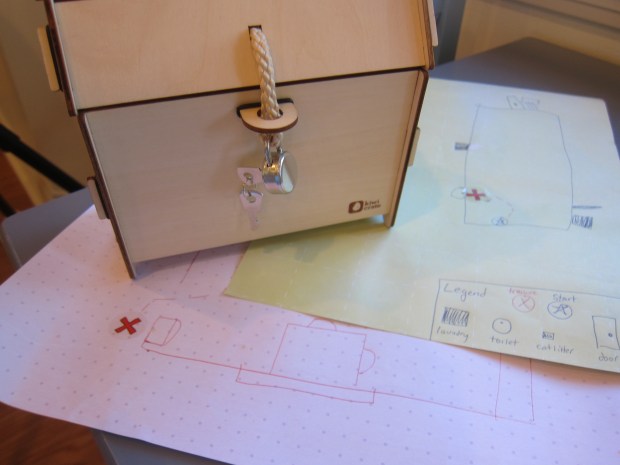
To add a swashbuckling touch, use a pipe cleaner to thread the provided rope through the chest’s latch. Add the silver lock. Travis loved practicing with the key over and over!
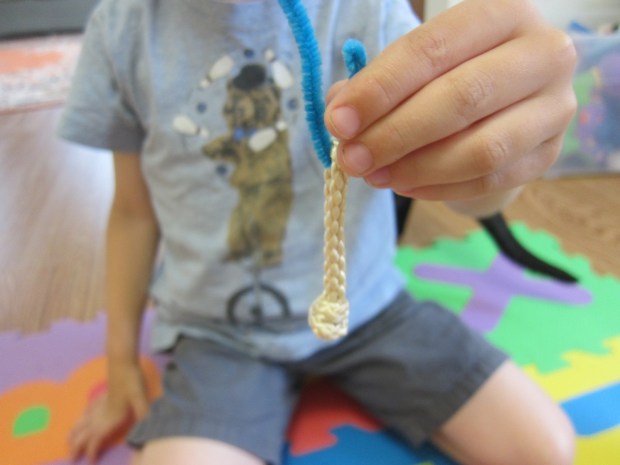
Kiwi Maps (6)

We securely locked away our gold coins and it was time to Make a Treasure Map. This activity was absolutely fantastic for getting Travis to think about how objects look from above. (I had him imagine he was a bird; in what shape would the bird perceive our couch, our coffee table, etc.).
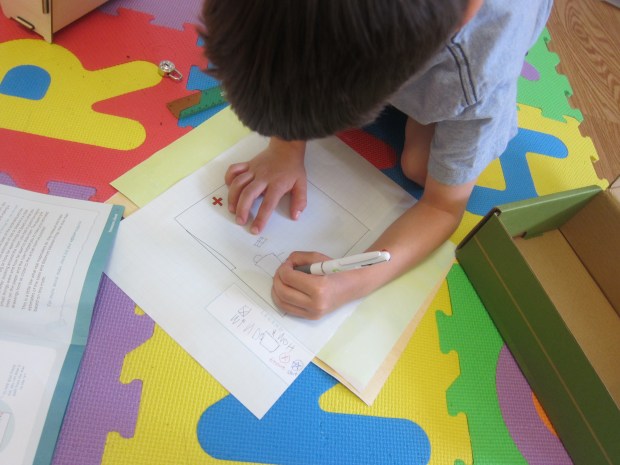
Kiwi Maps (9)

There was a marked difference between his first effort (mapping our living room)…
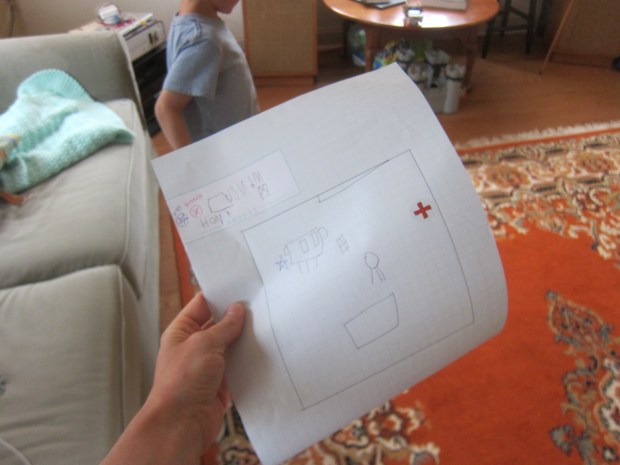
Kiwi Maps (10)

…and his second attempt (mapping the hallway).
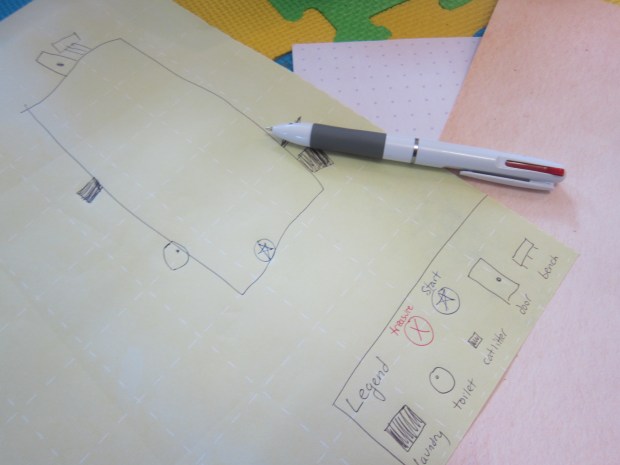
Kiwi Maps (11)

The provided pen is one of those fun ones with 3 colors of ink. We added a red X on each map for the treasure and a blue star for the start. He loved then hiding the treasure chest and sending me on a hunt.
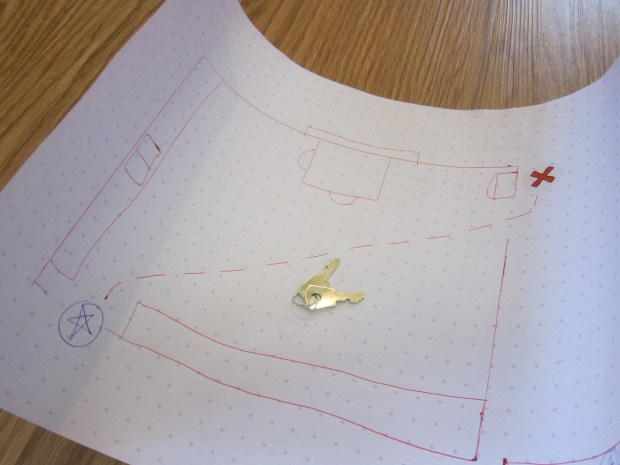
Kiwi Maps (12)

Then we flipped roles; I made a map of the kitchen and he had to puzzle it through.
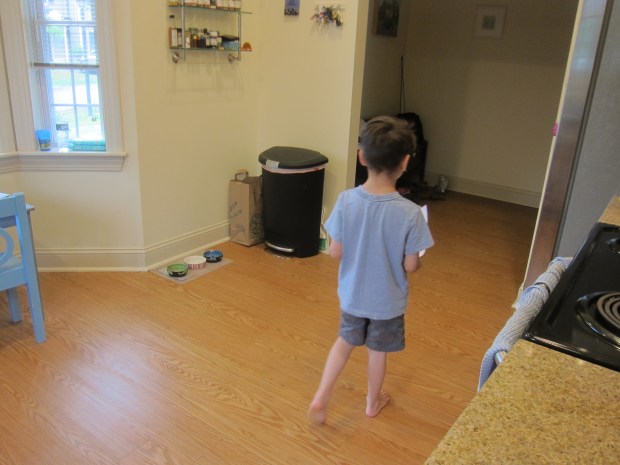
Kiwi Maps (13)

The booklet had a great explanation for kids about how they’re using math in this activity, everything from transferring 3D objects (solids) into 2D pictures, to the ideas of estimation and measurements.

As a bonus, we made Silver Pirate Coins for extra booty. Cut circles from thin cardboard (like a cereal box), then add other pieces of cut cardboard or patterns in glue on top.
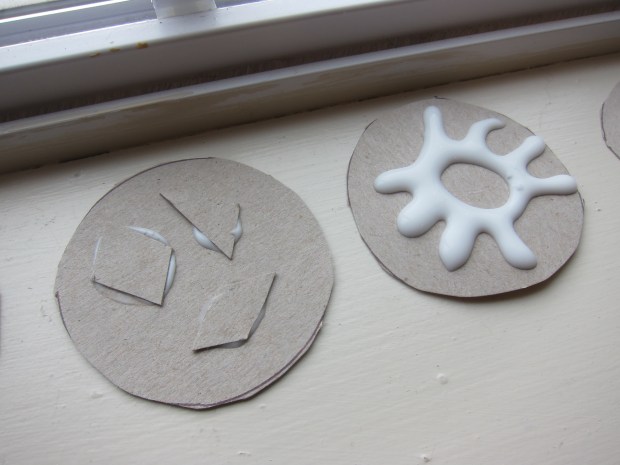
Silver Pirate Coins (4)

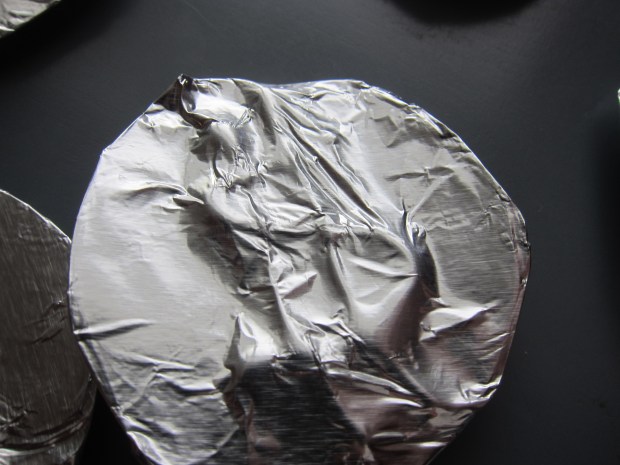
Let dry, then cover with foil and use a q-tip again to make your design stand out. We decided this worked way better on the cut cardboard version rather than the glue version.
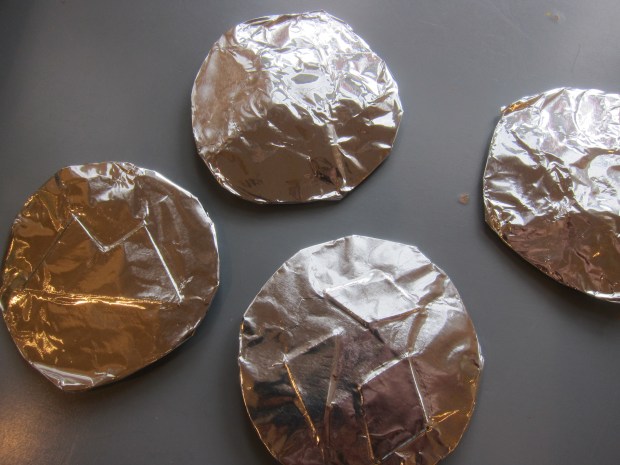
Silver Pirate Coins (5)

As always, Explore magazine had loads more information and activities to try, including another map to draw according to a provided legend.

For some fun reading to compliment this crate, check out Mapping & Navigation by Cynthia Light Brown or Small World: Maps and Mapmaking by Karen Romano Young.

Embossed Metal Coins

Embossed Coins (7)

Wrapping up some pirate fun, today Travis and I made treasure.
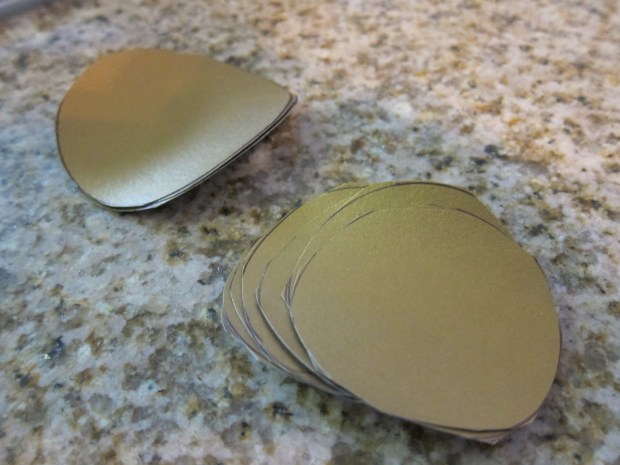
To make the coins, I traced two sizes of circles onto cardstock, and cut out.

Embossed Coins (1)

This project can be as involved as your patience is willing to make it. If you have the time and inclination, go ahead and make piles of coins! This is a more viable option if your kids are old enough to cut out the circles themselves. I confess we only had about 10 coins, but that was more than enough for my little pirate.

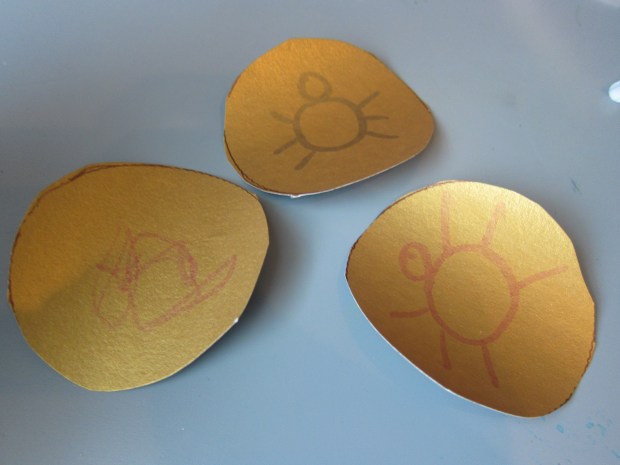
I asked Travis what image should go on the coins, and he suggested bugs.

Embossed Coins (2)

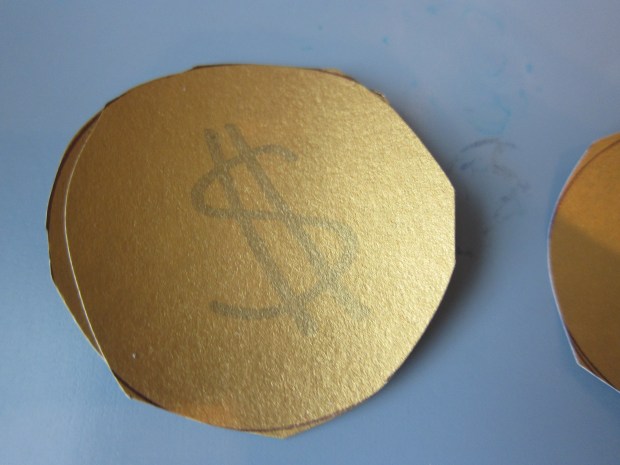
We did a large “beetle” on the bigger coins, and a dollar sign on the smaller.

Embossed Coins (3)

Go over your designs with hot glue. Once it cooled, Travis loved feeling the bumpy effect.

Embossed Coins (4)

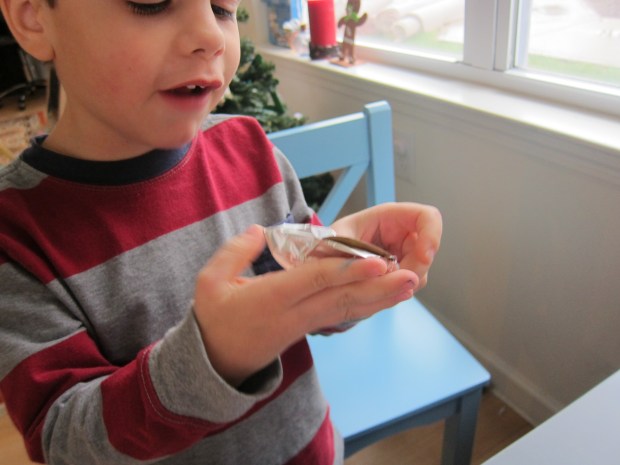
Now wrap in foil, pressing so the image comes through.

Embossed Coins (5)

Our pictures weren’t quite as clear as we hoped, but still neat to feel.

Embossed Coins (6)

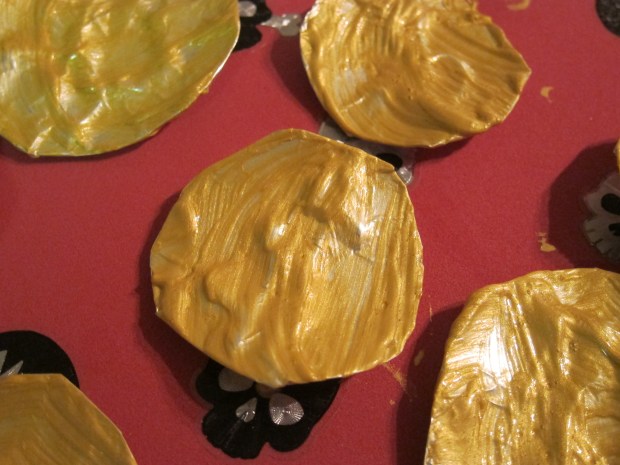
For the final step, we needed gold coins, of course. A little gold paint, some time to dry, and it was time for a treasure hunt.

Embossed Coins (9)

I hid them around for Travis to find, and he loved collecting them in a treasure chest.

Embossed Coins (10)

Even better, he loved hiding them from me!

Fruit Boats

Fruit Boat (3).JPG

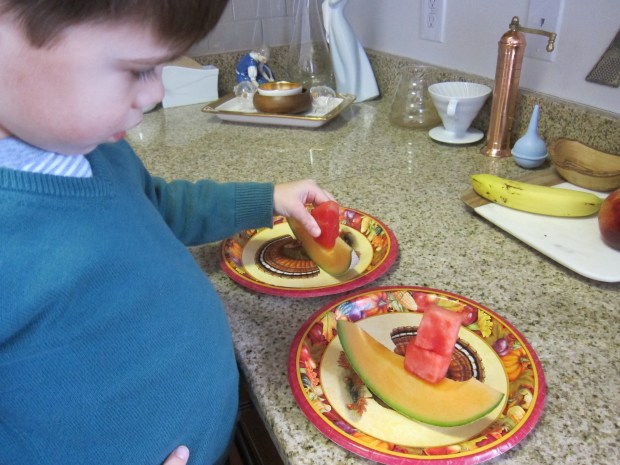
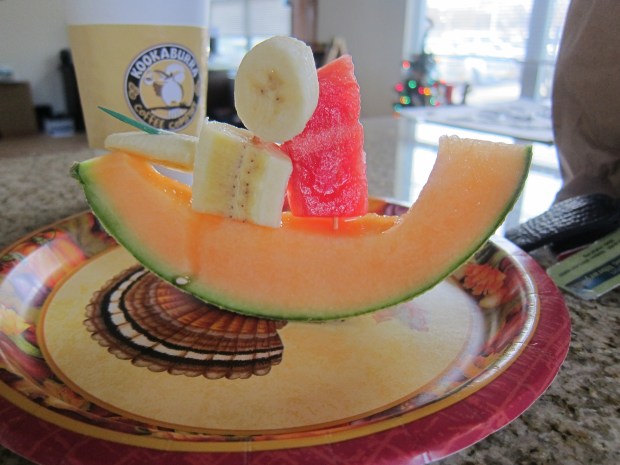
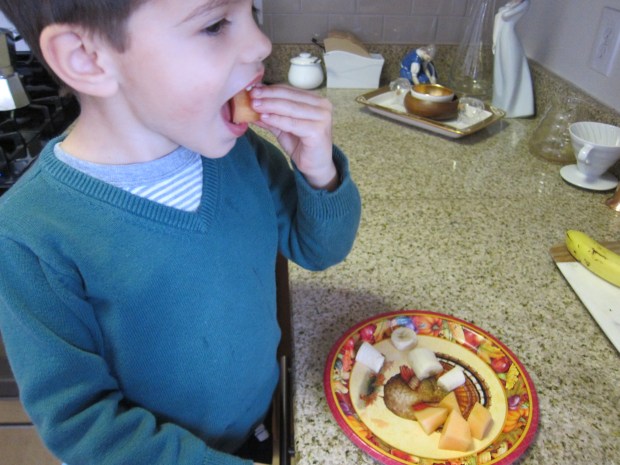
Origami boats might be fun to play with, but fruit boats are even bettert\ to eat! After a busy school day, Travis helped me create these adorable boats for snacktime.

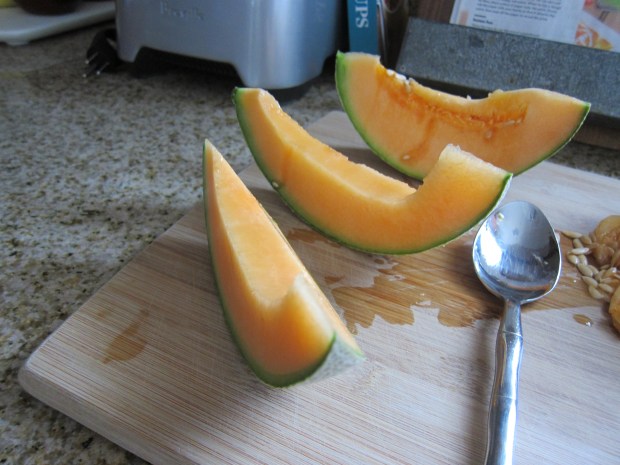
First, cut a whole cantaloupe into wedges. Travis asked at first if it was mango – it’s amazing how we forget that kids can be disconnected from food, when it’s served to them already cut up. He loved discovering that the big fruit in front of us was his favorite melon.

Fruit Boat (1)

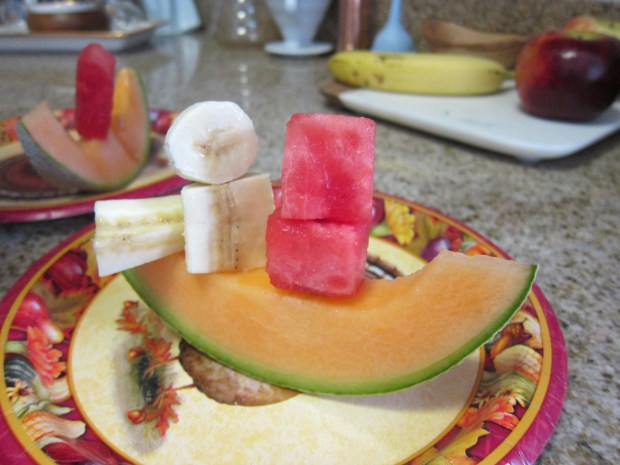
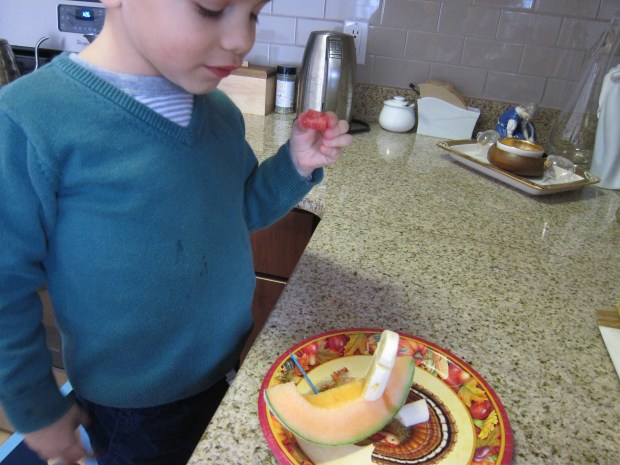
Put a toothpick in each wedge, and add watermelon pieces as the sails.

Fruit Boat (2)

For the pirate, cut a circular piece of banana as the head. Cut the banana lengthwise into pieces for the torso and arms. Use toothpicks to stick your pirate man together, and then another toothpick to affix him to the boat. We made a boat and pirate for Daddy, too!

Fruit Boat (5)

Travis loved it, and delighted in pulling apart the pirate ship piece by piece. There goes your hull, matey!

Fruit Boat (6)

A super cute and fun snack for pirate lovers.

Fruit Boat (4)


Origami Boat

Origami Boat (10)

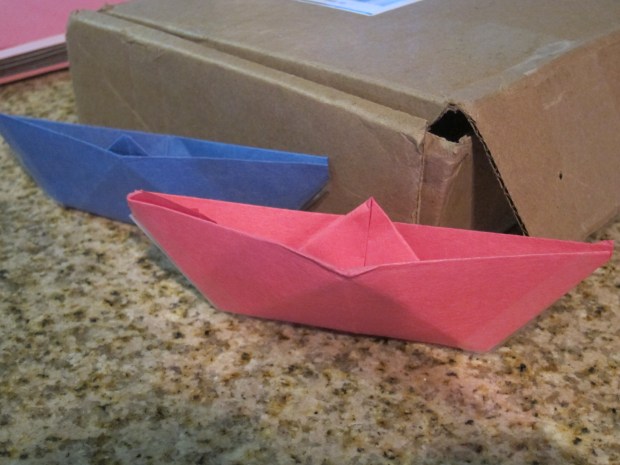
Travis and I have been finding neat materials from which to make boats, now that we’re on a bit of a pirate kick. I found the instructions for this origami boat online, and thought it looked fun. It turned out to be quite tricky, but Travis and I had a ball, laughing at our gaffes, and cheering when we got it right!

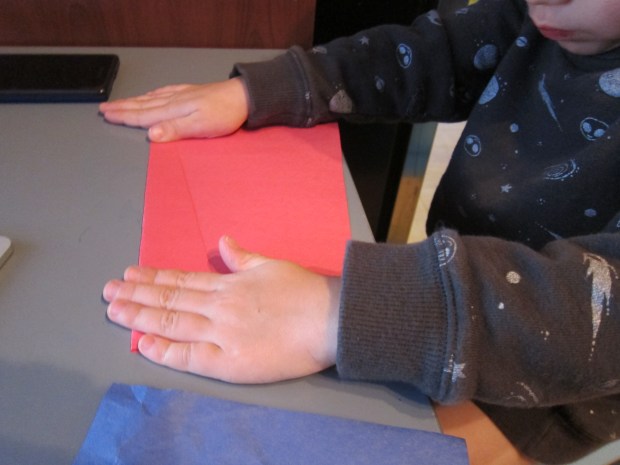
Ideally use origami paper, but construction paper works in a pinch. Either way, begin by trimming into a rectangle. Fold the paper in half horizontally, and open back up. Fold in half down vertically and leave folded.

I was so proud Travis wanted to do his own folding!

Origami Boat (2)

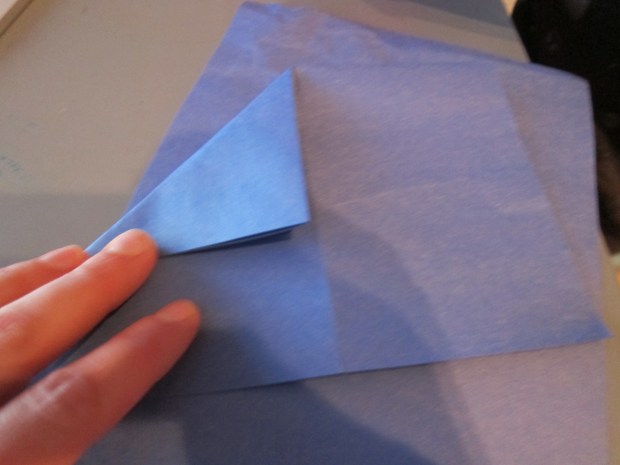
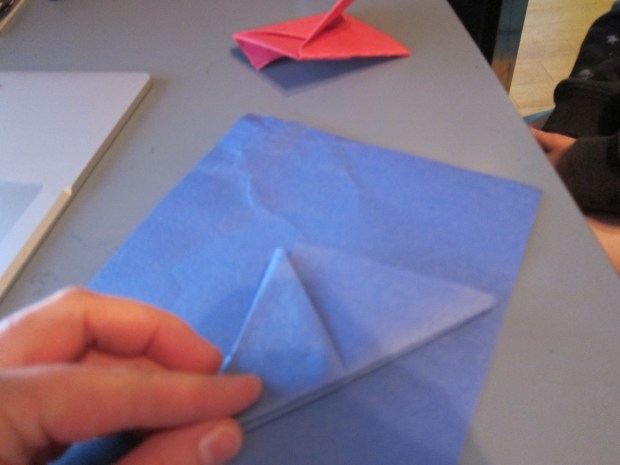
Next fold the upper two corners into the center crease, forming two triangles.

Origami Boat (3)

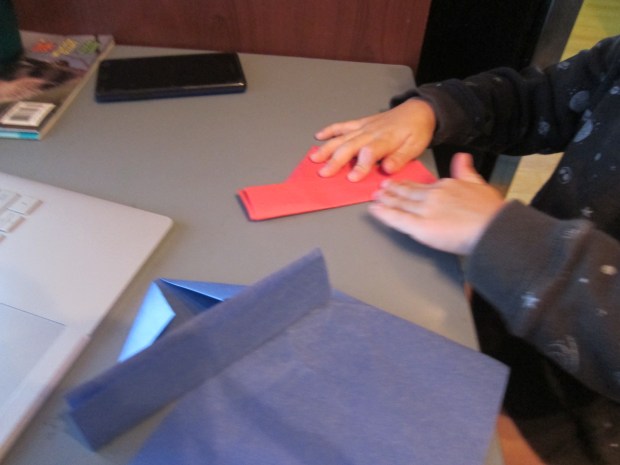
Fold up the bottom of the paper on both the back and front – now it looks like a pirate hat!

Origami Boat (4)

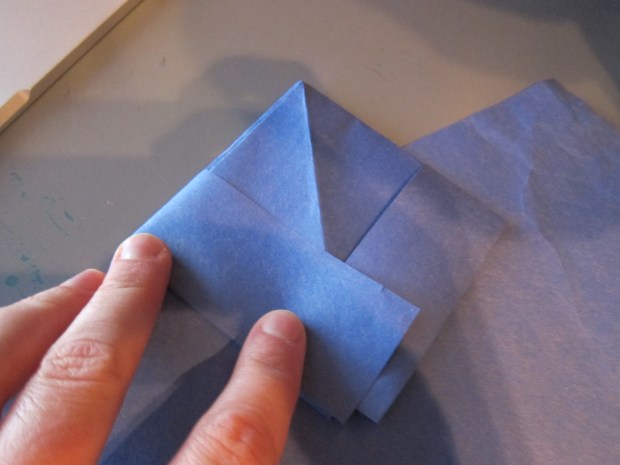
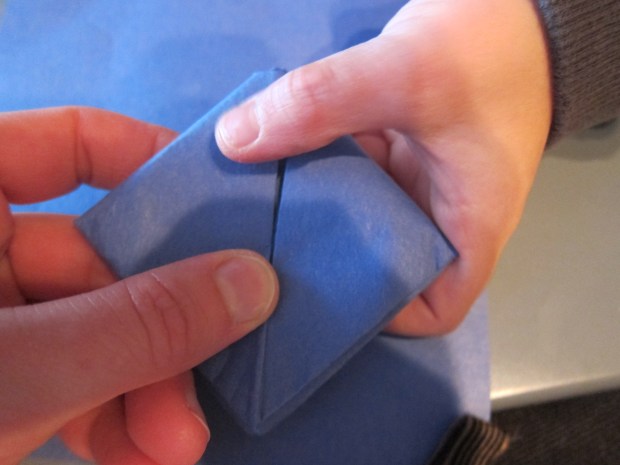
But don’t stop there. Now you’re going to push the bottom two corners toward each other, a process that really only makes sense once you feel it intuitively. It will make the paper into a square that folds flat (hint: tuck in the excess flap on the front and back).

Origami Boat (5)

Now fold up the bottom of this diamond on both front and back, pressing flat.

Origami Boat (6)

Take the edges of this triangle toward the center – another tricky step! You’ll form another square. We had a good giggle over this one as we figured it out!

Origami Boat (7)

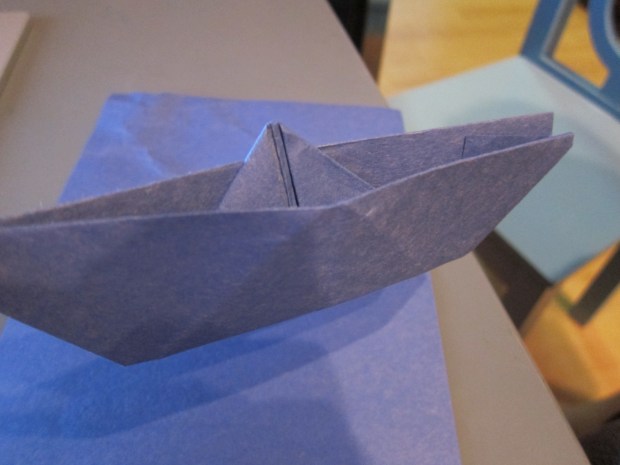
Finally, pull the top corners out, and press flat – now you have a boat!

Origami Boat (8)

It should hold pretty well, but for a little added security, I stuck masking tape on the edges.

Origami Boat (9)

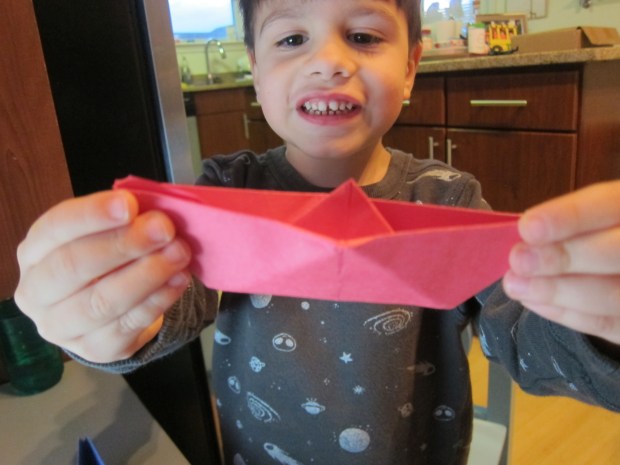
Travis was SO proud, an loved his boats so much that he requested a fleet. I soon became pretty adept at making them, so he had lots of boats to fly around the apartment.

Happy folding!

Sunken Treasure

Sunken Treasure (4)

After lots of fun dressing up as pirates, Travis and I needed to head off on a treasure hunt for “booty.” I involved a little STEM learning in the game by turning it into a test – which treasure will float, and which will sink to the bottom of the ocean?

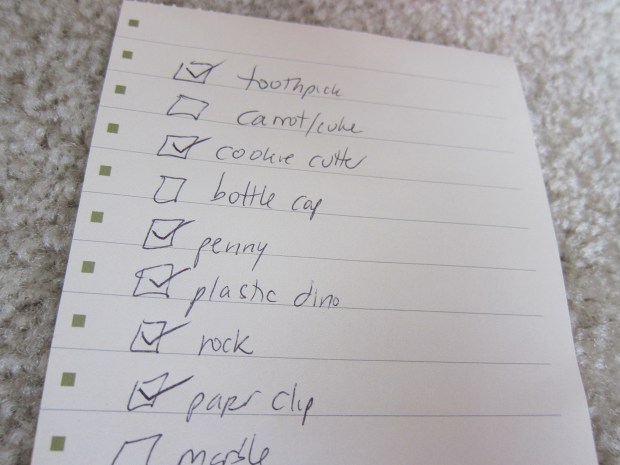
First, I made a list of items to find around the house, and Travis helped check them off as we went.

Sunken Treasure (2)

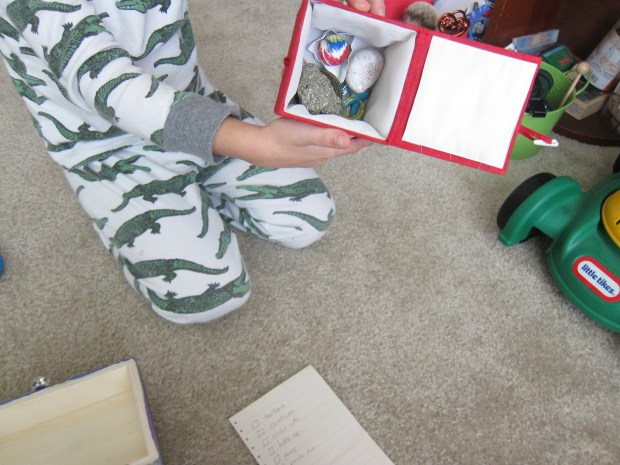
He found a little box to gather his treasures into, and already loved the game!

Sunken Treasure (1)

Items included: things from the kitchen like cucumber slices, toothpicks, and cookie cutters; things from his room like toy dinosaurs, marbles, and bouncy balls; and things from outside like leaves, rocks, and sticks.

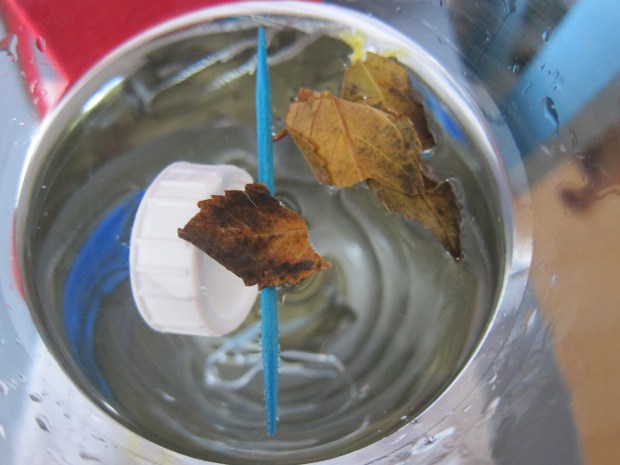
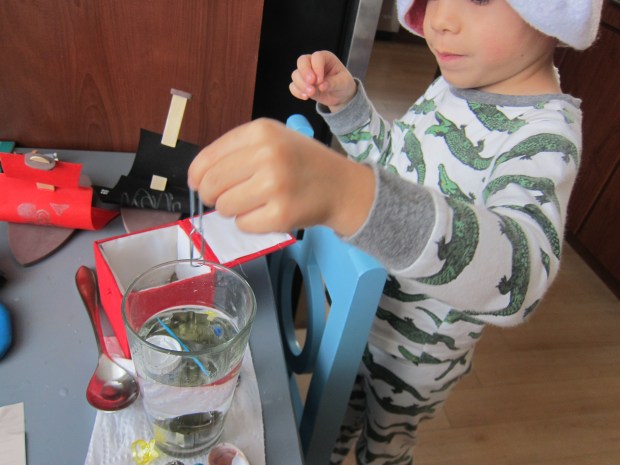
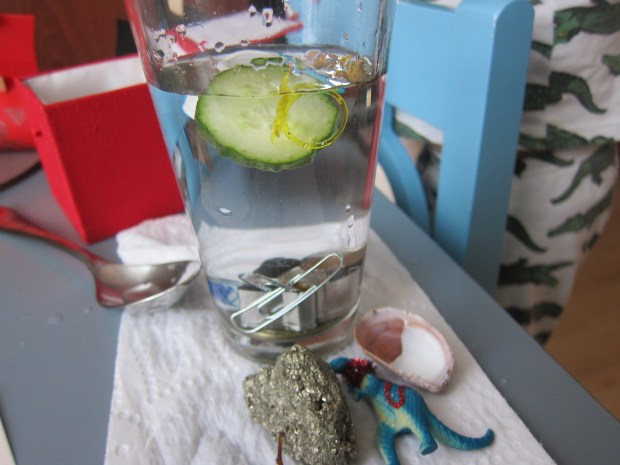
Next we filled a glass of water and set about testing all of our items.

Sunken Treasure (6)

Travis loved dropping things in the glass!

Sunken Treasure (5)

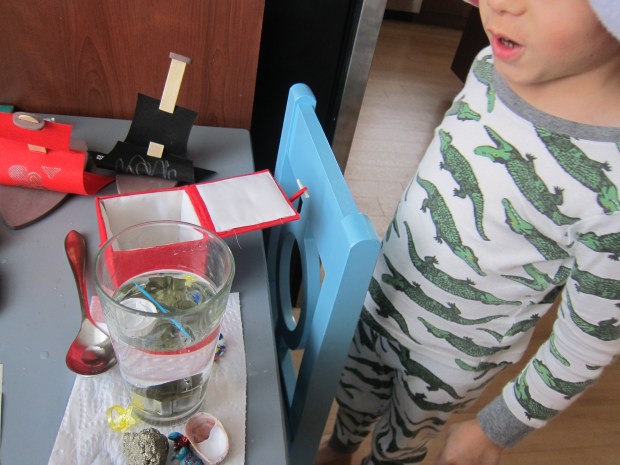
We soon detected a pattern – metal objects tended to sink and wooden ones tended to float. The rubber bouncy ball surprised us by sinking! When we were done, I fished the objects out of the glass, and “Pirate Travis” had to dry and polish all his treasures.

Sunken Treasure (7)


Popsicle Stick Pirate Ship

Popsicle Ship (5)

Travis has been learning about pirates lately (he now does a mean “ahoy matey!”), so to bring the fun alive, we made this little ship to join us at bathtime.

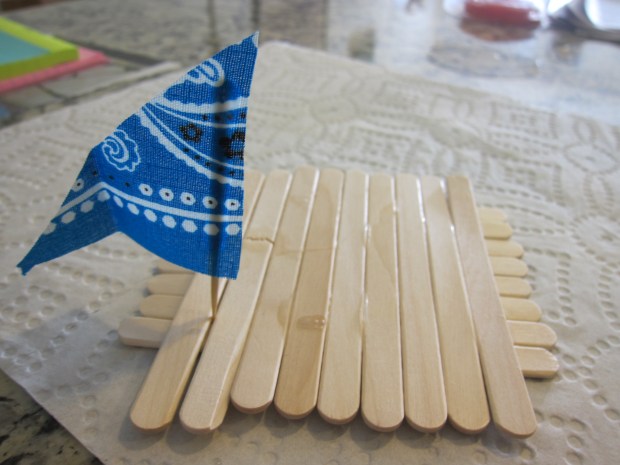
To make the raft, glue 8 craft sticks lengthwise across 8 additional sticks crosswise. Once the glue dries, it will hold everything in place. In retrospect, I recommend painting them first, or purchasing ones that are already colored.

Putting the craft stick raft together like this is largely a grown-up step, because it’s tricky to line up both layers. Travis helpfully added a few squirts of glue before I finished.

Popsicle Ship (1)

To make the mast, you really need a hot glue gun, with which you can glue one craft stick upright on the raft. Failing that, I quickly decided to use a toothpick instead, which I could wedge in the tiny space between two of the craft sticks.

Popsicle Ship (2)

Use glue to add any fabric scrap to your mast as the sail.

Popsicle Ship (3)

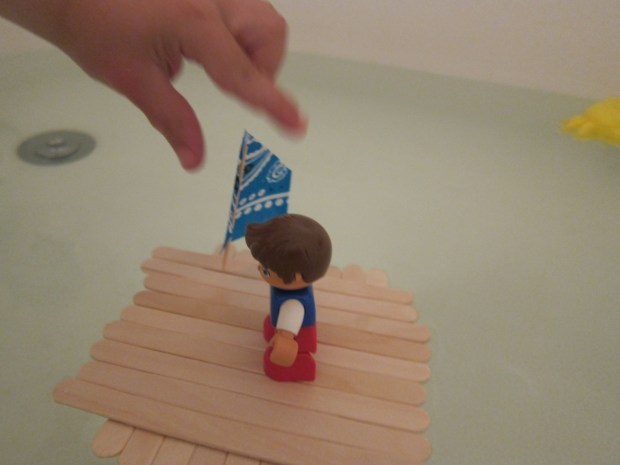
As the finishing touch, add a pirate or two!

Popsicle Ship (4)

Ahoy mateys, time to sail.

Popsicle Ship (6)