Vegetable Tofu Pot Pie

Veg Tofu Pot Pie (3)

This hearty pot pie is bursting with veggie goodness!

Ingredients:

  • 2 tablespoons olive oil
  • 2 yellow potatoes, peeled and chopped
  • 2 carrots, chopped
  • 1 onion, chopped
  • 1 cup broccoli florets
  • 4 button mushrooms, chopped
  • 1 and 1/2 cups vegetable broth
  • 1 tablespoon nutritional yeast
  • 1 tablespoon garlic powder
  • 1 tablespoon poultry seasoning
  • 1 tablespoon cornstarch
  • 12 ounces extra-firm tofu
  • 1 (9-inch) frozen pie crust
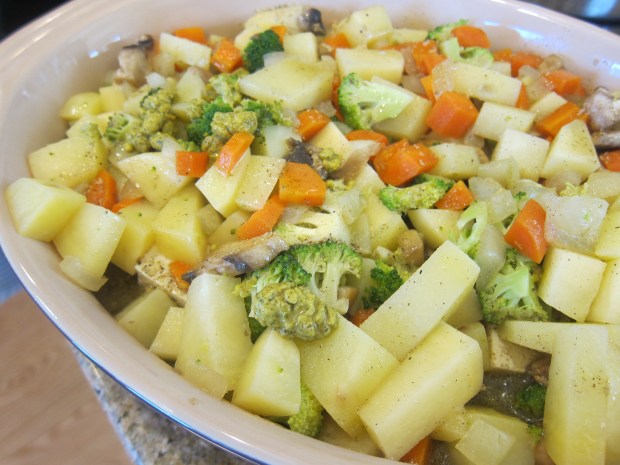
  1. Heat the olive oil in a large skillet over medium-high heat. Add the potatoes, carrot, onion, and mushrooms; cook for 6 minutes.
  2. In a bowl, whisk together the broth, nutritional yeast, garlic powder, and poultry seasoning. Whisk in the cornstarch.
  3. Meanwhile, cut the tofu into 1-inch cubes and arrange in the bottom of a 2-quart casserole dish. Spoon the vegetable mixture over the tofu and pour the broth mixture on top. Veg Tofu Pot Pie (1)
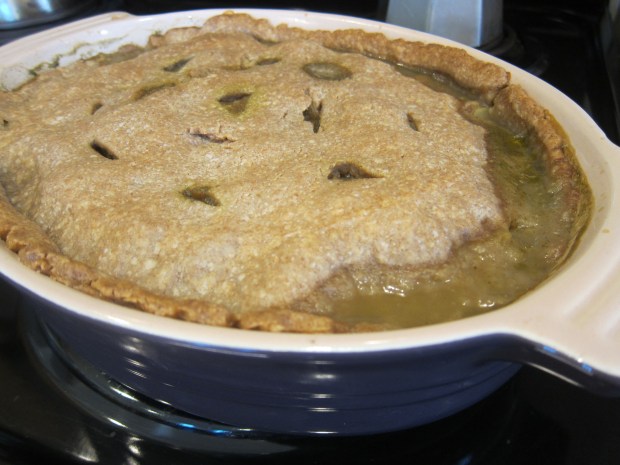
  4. Cover with the pie crust, pressing against the sides of the dish to seal (Note: Wholly Wholesome makes a vegan pie crust that comes in a circular tray. Simply thaw at room temperature for about twenty minutes and you should be able to easily reshape it into an oval baking dish, if you don’t have a circular one). Prick the top of the crust with a knife or a fork. Veg Tofu Pot Pie (2)
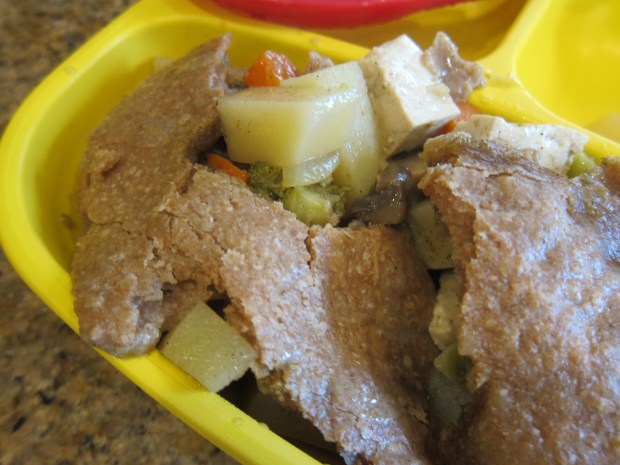
  5. Bake at 350 degrees for 50 minutes, until lightly browned on top.

Veg Tofu Pot Pie (4)

Paper Finger Boomerang

Paper Boomerang (3)

Having recently tried out a real boomerang, Travis and I brought this little paper version to our home school “recess” today!

To make the boomerang, you’ll need a perfect square. Either measure with a ruler, or cut a piece of paper, fold it in half to form two triangles and then open back up again. Trace onto thin cardboard and cut out.

Paper Boomerang (1)

Cut out a boomerang shape, making sure to measure the same distance in from each side of the square. Travis decorated with crayons, rounded the corners, and then we were ready to flick!

Paper Boomerang (2)

We were surprised since we struggled with our store-bought toy, but this little one really does circle back to you! Because it’s so lightweight, you could even use it indoors on a rainy day. Note: We made the holder simply by cutting an additional strip of thin cardboard and folding in half.

Paper Boomerang (4)

Play Dough Sound Sensory Jars

Easy Sound Sensory (12)

This project took us from morning to night since we tackled different portions of the game throughout the day! It all started when Veronika had a morning of play dough play while big brother Travis did home school lessons.

Easy Sound Sensory (1)

But she’s still more tempted to eat play dough than play with it, so I clumped it into a big ball and set it aside for another day. There we were with lots of empty little jars. They were the perfect vessel for… sensory play!

I rinsed out the jars while Veronika continued to play with the lids.

Easy Sound Sensory (3)

Once clean, I started filling each one with different items. In all, I had 12 little jars with:

  • popcorn kernels
  • marbles
  • beads
  • rice
  • coins
  • bells
  • dried beans
  • ground coffee
  • salt
  • sprinkles
  • rubber bands
  • sesame seeds

Other ideas might include: buttons, water, spices, Lego pieces, or bits of foam. It was a little tricky to set these up with Veronika watching, since she wanted to touch the items and many are choking hazards.

Once lids were sealed, she could safely play! First we just had fun shaking them, or tapping two together.

Easy Sound Sensory (4)

Then we shook each one in turn and divided them into two piles, one loud, one soft.

Easy Sound Sensory (5)

I could sense her growing frustration that she couldn’t get inside the jars…

Easy Sound Sensory (5)

…so we went through them one at a time. I gave a jar a shake and opened it up so she could see the item inside. Be sure to name the item, too! Bells, beads, and marbles seemed to especially intrigue her.

Easy Sound Sensory (7)

For bigger kids, you could even turn this part into a game. Give it a shake, and have them guess what’s inside. Travis trotted over for a try!

Easy Sound Sensory (8)

Bigger kids might also like to try a sound match-up. Narrow it down to fewer items (3 or 4), and have two canisters for each item. Can your child match them up? I didn’t expect Veronika to be able to do this, but did the exercise as an illustration in all the ways she can hear.

Easy Sound Sensory (11)

We could use lots of great vocab words as we played, like “jingling” bells and the “cha cha cha” of rice.

Easy Sound Sensory (9)

Of course then your child might just keep busy with the jars themselves for quite some time, which was certainly the case for Veronika. Like I said, this is a game that can last all day!

Easy Sound Sensory (10)

Kindergarten Home School Day 8

Home School 8 h

Pluses and minuses to our day, here on home school hump day! Read on…

9-10: ELA. Today’s suggestion, to have Travis pick a favorite book and “read” to himself for 20 minutes, turned out to be fantastic. I thought he might just look through the pictures of the Star Wars book he picked from his shelf, but he was determined to read the words. This meant it was a little more hands-on on my part than anticipated (my toddler happened to be smeared in peanut butter at the same time), but he was so determined I couldn’t turn him down. The assignment to then draw either his book or his reading nook, unfortunately, led to a temper tantrum. Emotions are high, folks.

Home School 8 a

10-10.30: A reset pause for snack and recess.

Home School 8 f

10.30-11: Math. This went great today!

Home School 8 c

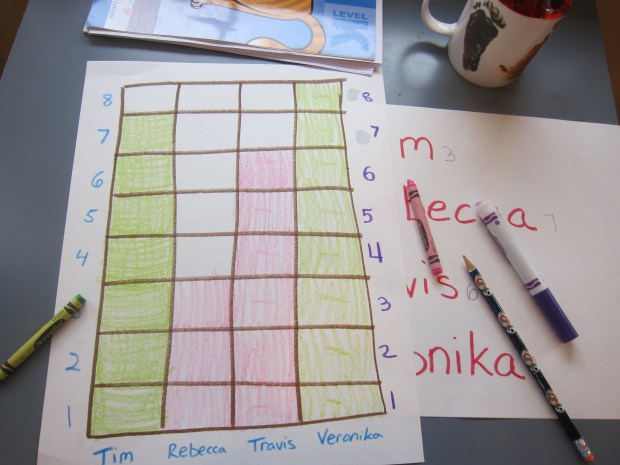
We wrote out the first names of everyone in the family, and counted the letters of each name. Then he put the results into a graph. He was disappointed that ‘Travis’ “lost” to ‘Veronika’, though!

Home School 8 d

11-12: Science. We started two projects today but we’ll have to wait for the results. First was to see if we can waterlog a large piece of wood (like a craft stick). Set one in a container of water and wait. Our guess is that it will take a week before it sinks completely.

Home School 8 g

We also made a quick rain meter by ticking off inch marks on a mason jar. It’s out on our patio to collect the rain!

Home School 8 h

12-2: Travis got a long break because baby sister needed me for a nap, then lunch, then baby sister had a “live” music class. As a result, it was hard to rope him back in for some final activities.

2-2.30: Library. This is his Wednesday special and the suggestion was to explore any topic of interest on PebbleGo. Travis chose Inventions/the telephone, and sort of clicked through the links about it, but wasn’t interested in putting together a cup and string telephone craft. He also resisted drawing his favorite book character, or watching one of our local librarians do an online storytime.

2.30-3: Movement. So I got him moving instead. Check out my quick post about Line Dancing!

Honestly, the biggest hit today was a sensory tray meant for baby sister, so hey, sometimes the learning happens inadvertently.

Line Dancing Fun

Line Dance (1)

Travis is growing tired of class videos we’ve used to get our afternoon wiggles out during home school, so today I turned to Raddish Kids for inspiration. With a musical theme this month, one of the lessons was all about line dancing!

We kept the “lesson” part of it short, since really I just needed to get Travis moving. Big kids can delve further and talk about the genre of Country and any singers or song titles they know. You can also give some history of the genre. Instead, I just focused on common instruments (banjo, fiddle) and explained that line dancing allows dancers to move as a group, instead of with a partner. In other words, it’s meant to be shared!

To get our toes tapping, we listened to clips of the Boot Scottin’ Boogie and Watermelon Crawl. A few quick tutorials from YouTube showed us basic steps like the heel stomp and grapevine. Travis was a little skeptical but then we watched a quick how-to for an Achy Breaky Heart line dance.

Line Dance (2)

We cranked up the music and danced! Of course, it’s totally fine if your kids make up their own moves.

Line Dance (3)

For giggles, we finished with a clip of a line dance from Ice Age.

Baking Soda and Vinegar with Color Fun

Baking Soda Colors (8)

This activity was intended for my toddler, but it turned out to be my kindergartner’s favorite part of the day. Since there’s some STEM involved, keep it in mind if you find yourself home schooling!

For set up, I wanted Veronika to have the option of color mixing, so I filled three cups with vinegar. I left one clear, added yellow food coloring to the second, and blue food coloring to the third.

Baking Soda Colors (1)

I then sprinkled a box of baking soda into a shallow tray. Veronika instantly liked making lines through it with the pipettes I had left out. It was sort of like an indoor sandbox for a moment.

Baking Soda Colors (2)

Then it was time to start squeezing in vinegar! I used the clear cup first, knowing the bubbly reaction was enough to get a “wow” even before we added color.

Baking Soda Colors (4)

Then we started piping in the colored vinegar. I had hoped Veronika might get in some fine motor practice with the pipettes, but that was too much for 16-month-old fingers. Big brother Travis loved using a pipette and baster, though! Then the kids poured the cups of vinegar instead, for even bigger reactions.

Baking Soda Colors (5)

The blue and yellow turned into a nice green, of course, which I’d also hoped to demonstrate.

Baking Soda Colors (9)

After that we just had a big pile of green bubbly “lava” that the kids loved scooping through with pipettes and cups for ages.

Baking Soda Colors (7)

Eventually they wanted to drip in other colors from the food coloring set, which was fine, although it didn’t look so pretty.

Baking Soda Colors (10)

A great afternoon activity!

Baking Soda Colors (6)

Peanut Butter Sculptures

Peanut Butter Sculpture (4)

This fantastic sensory activity is perfect for entertaining a toddler… and it takes care of snack time, too!

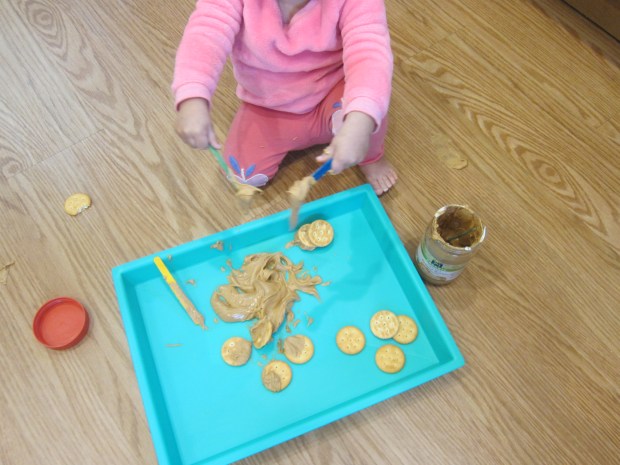
I simply spooned a large glob of peanut butter onto a shallow tray, and set out a few craft sticks (or use plastic take-out knives) and circle crackers.

Peanut Butter Sculpture (1)

Your child can use the craft sticks to make lines and movement through the peanut butter, or to build their budding knife skills by spreading it on the crackers. Once the crackers are sticky with peanut butter, you can stack them into towers and make “art”.

Peanut Butter Sculpture (3)

Veronika loved experimenting with the peanut butter, as well as nibbling the crackers and licking peanut butter right off the craft sticks.

Peanut Butter Sculpture (2)

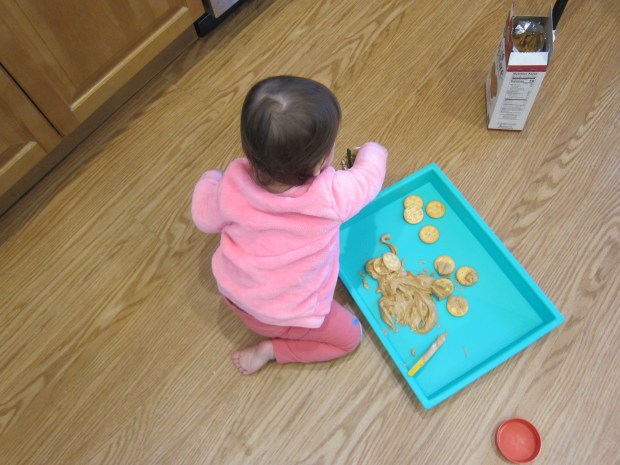
She also was intrigued by the peanut butter jar, occasionally dipping in a craft stick.

Peanut Butter Sculpture (5)

I wouldn’t recommend this activity for a toddler solo, since it’s bound to get a little messy and you’ll want to supervise.

Peanut Butter Sculpture (6)

But a great way to keep little ones busy! Note: Use another nut butter if your child has peanut allergies, or even jam for all nut allergies!

Peanut Butter Sculpture (7)

Kindergarten Home School Day 7

Home School 7 b

Travis and I only had a half day of home school today, in keeping with our town’s early release Tuesdays. It made it much easier on him, I think – and on me, too!

7-9: Breakfast, get dressed, free play.

9: ELA. Travis came over after our quick check-in for “writer’s workshop”. The assignment was to write a story with the structure of: first, next, and last. I loved watching him write about yesterday’s snowball fight. We also did one letter in his workbook (C).

Home School 7 a

9-9.30: Math: He played three different games on his class computer program involving counting the pips on dice and cards. (Baby sister was busy with tape).

9.30-10.30: Snack/recess. The kids were hungry early, so we hopped right to snack time and then headed out into the spring snow. Travis had so much fun that I let him get out his energy an extra long time. I wish I’d taken pictures!

10.30-11: We discovered the website Fluency and Fitness, a great site to get kids learning and moving. After solving a few problems on the topic of your choice (math, reading etc.), kids do a move like lunges or push-ups. He was a little antsy though…

11-11.30: …so we went off-book and finished the day with a recipe, still one of my favorite ways to spend time together. Check out our whole unit on Japan here!

Little Passports: Japan

LP Japan (23)

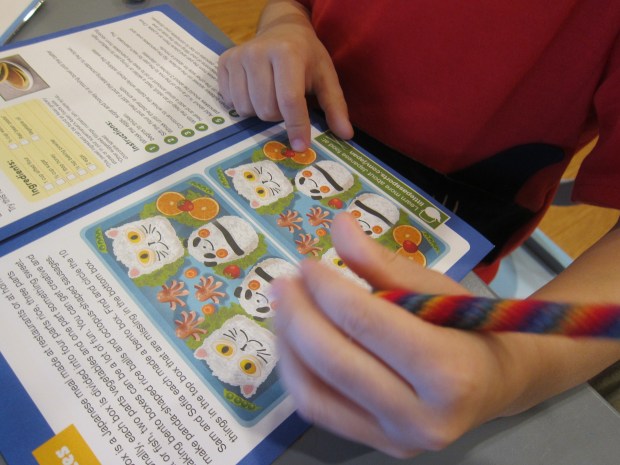
Travis’s envelope this month from Little Passports took him to… Japan! There was lots to learn and great hands-on activities in this particular kit. First up was the booklet, full of inventive activities like how to write a Haiku (spoiler: Travis’s was about eating a cookie), and a pictorial three-in-a-row search that was a fantastic alternative to a word search for non-readers.
LP Japan (2)

Of course there was also a country coin for his coin chart, a stamp for his passport, and a push pin for his world map. Bonus features online included gorgeous photos of Japan, audio recordings of common Japanese words, and a Q&A with a Japanese “pen pal”.

Souvenir:

The adorable sushi erasers that came with the package were a big hit, particularly the fact that they could be disassembled and reassembled. Travis became a mini sushi chef!

LP Japan (3)

Activities:

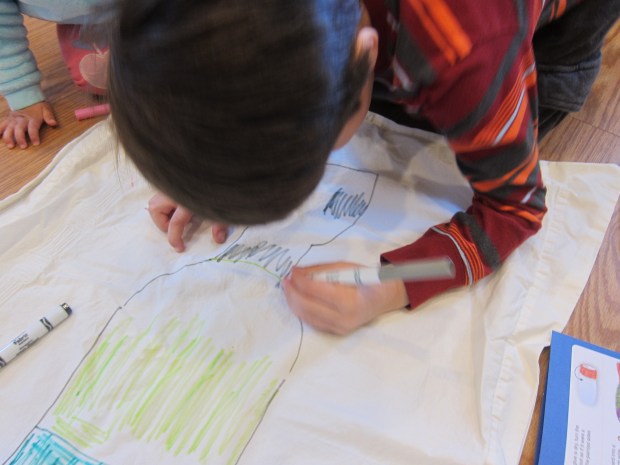
The most involved project with this kit was to make a koinobari, a kite in the shape of a carp fish traditionally hung on homes during Japan’s Children’s Day holiday (which falls in May).
LP Japan (5)

Rather than use the suggested fabric pants, which I worried would be messy, I had Travis use fabric markers.
LP Japan (6)

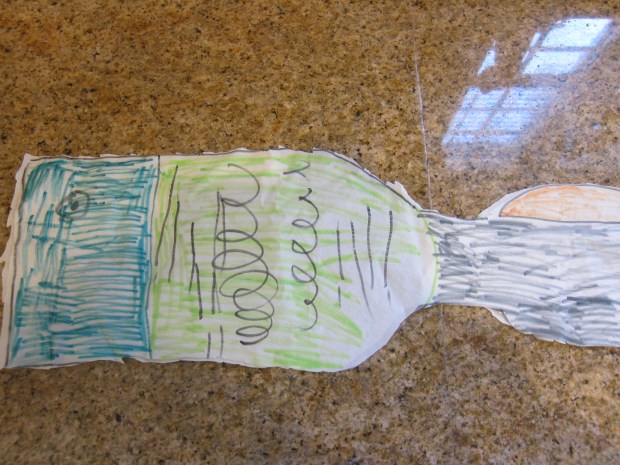
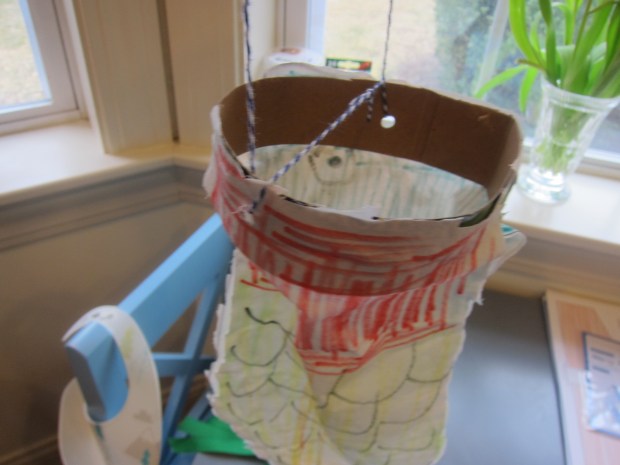
We first drew two fish outlines on an old pillow case and colored with the markers, after which I cut them out and hot-glued together on three sides, leaving the top open (alternatively, use fabric glue).

Cut a piece of cardboard from an old cereal box and glue into a loop; attach this at the mouth of the fish with more glue. Punch two holes through the pillow and cardboard, and loop a string through.
LP Japan (8)

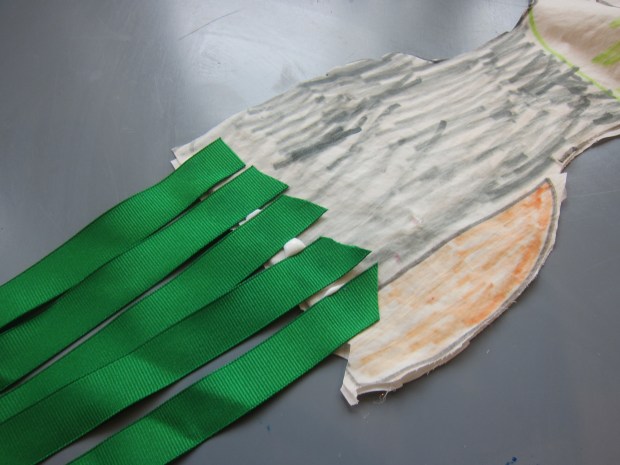
Finally, we glued on ribbons as tail streamers.
LP Japan (7)

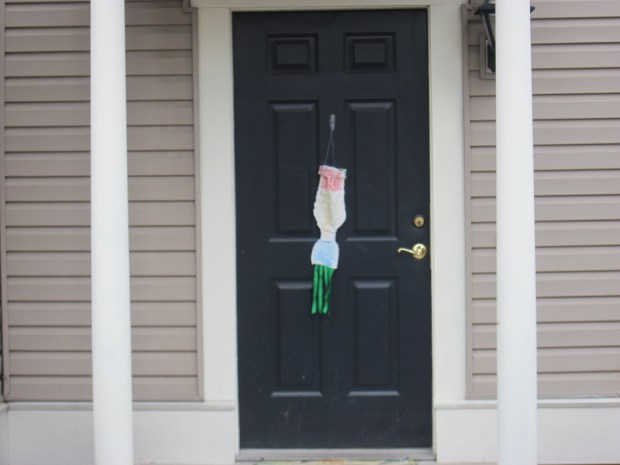
It looked beautiful on our front door.
LP Japan (9)

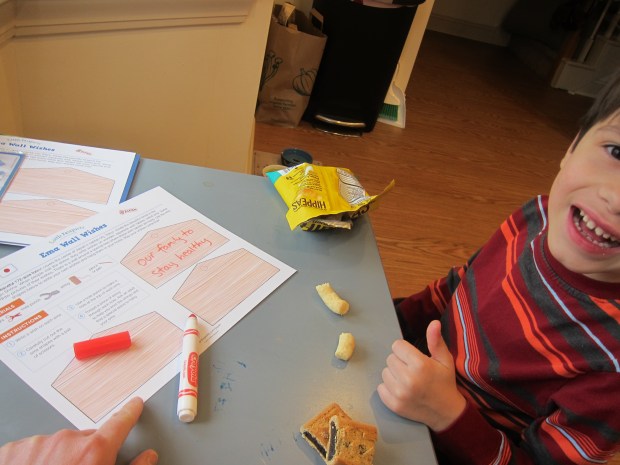
Next up was to write in ema wishes on the provided template.
LP Japan (10)

These wooden tablets, traditionally hung at a Japanese shrine, came just in time for our new era COVID-19. We strung them up along our kitchen window for good luck!

LP Japan (17)

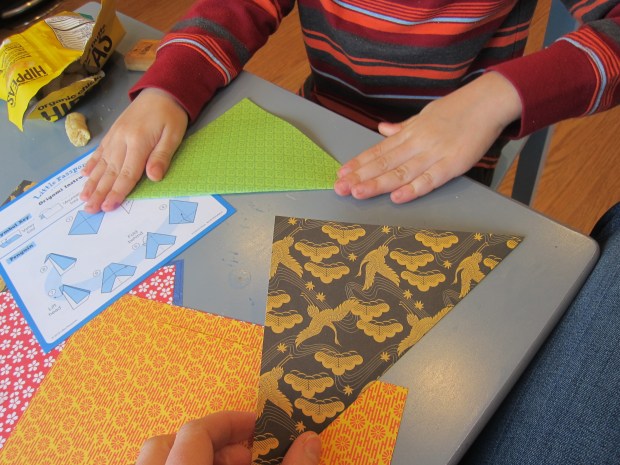
Of course we had to make origami, too. The package included fun instructions for penguins and jumping frogs.
LP Japan (12)

The frog could really jump!

LP Japan (15)

Travis wanted to make a whole army of penguins.

LP Japan (14)

Finally, he did a cute food match-up game which highlighted all four islands of Japan, and he colored in the flag for the garland begun with his Brazil package.

LP Japan (11)

Recipe:

The journey is never complete without a recipe, of course. Travis got to make dorayaki, a sweet Japanese pancake.

Ingredients:

  • 2 Ener-G eggs
  • 1/2 cup sugar
  • 1 tablespoon agave nectar
  • 1 cup sifted flour
  • 1/2 teaspoon baking powder
  • 1/2 cup water
  • Canola oil
  • Red bean paste
  • Jam
  1. To start, whisk together the Ener-G eggs, sugar, and agave in a bowl.LP Japan (18)
  2. Add the flour and baking powder to the bowl, stirring until smooth. Continue to stir while adding the water slowly.LP Japan (19)
  3. Heat a large skillet coated with a little canola oil over medium-high heat. Spoon 1/8 cup batter into the skillet per pancake and cook for about 2 minutes, until bubbles cover the tops. Flip and cook for an additional minute. Transfer cooked pancakes to a plate and repeat with the remaining batter.
  4. To serve, spread bean paste between two pancakes and eat sandwich-style! If the bean paste isn’t to your kids’ liking, try jam instead.

LP Japan (22)

Travis loved eating the dorayaki with a ramen noodle bowl, for a full Japanese meal.

LP Japan (21)

Clothespin Poke

Clothespin Poke (6)

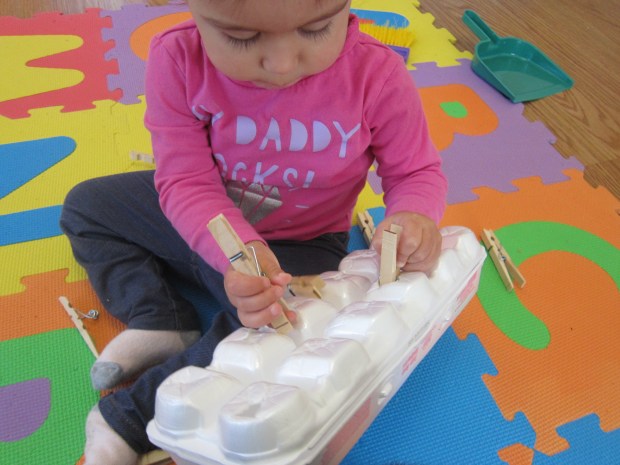
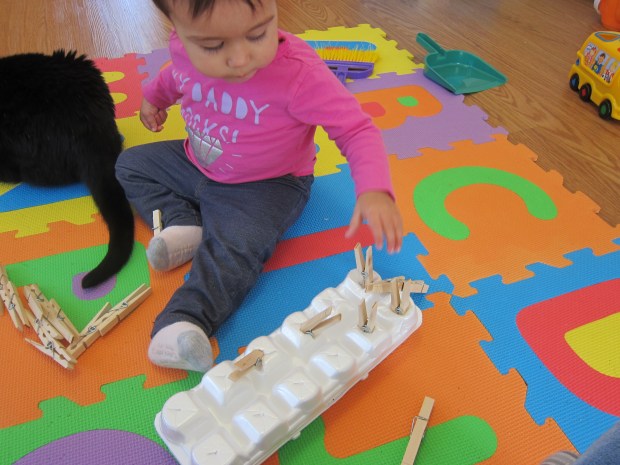
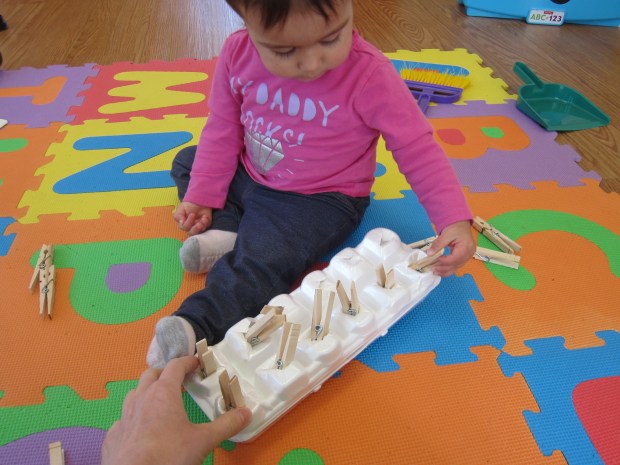
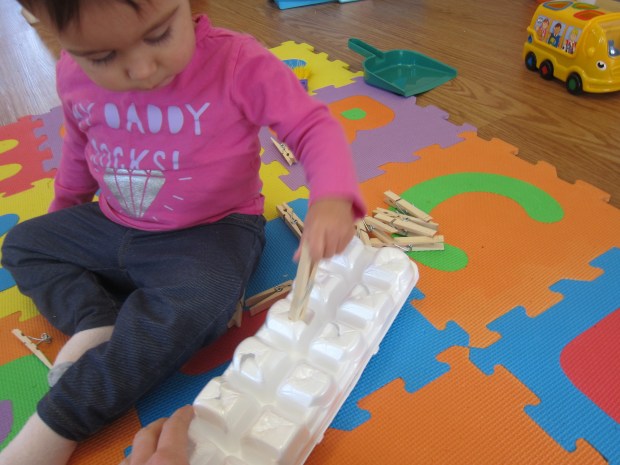
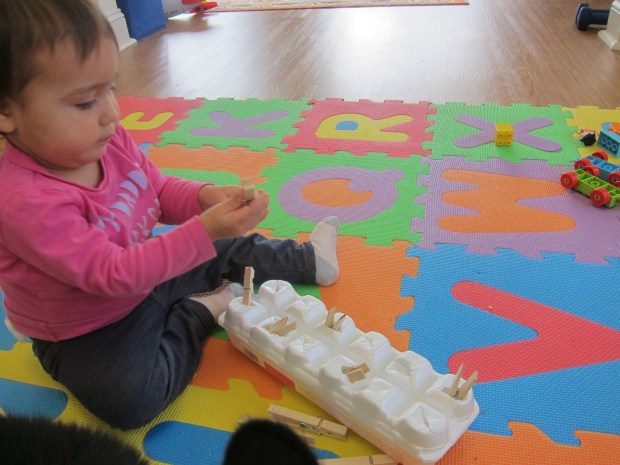
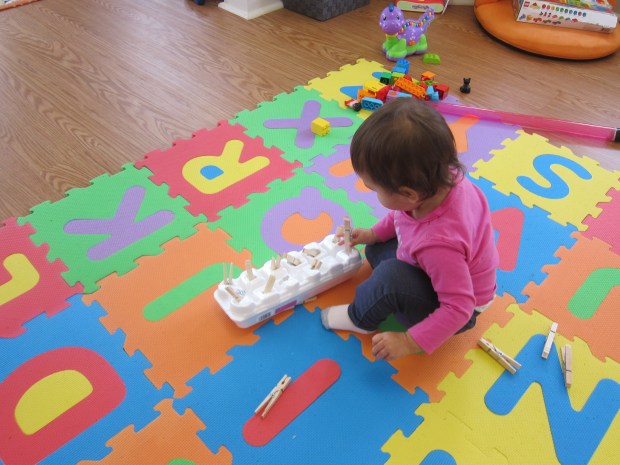
Much as with tape or tissues, it doesn’t take much to keep a toddler busy. For this game, I used an upcycled egg carton and spring-type clothespins for a simple fine motor activity.

Poke a hole into the bottom of each egg carton portion, just large enough for the clothespins to slot in (I poked the initial hole with scissors).

Clothespin Poke (1)

For the first round, I pushed all the clothespins in and presented the egg carton to Veronika, so it was her job to pull them out!

Clothespin Poke (2)

A few of them got a little snagged on the springs but she was very patient puzzling this out, and so proud when they came free.

Clothespin Poke (3)

Once she had a pile of clothespins next to her, of course she had to poke them right back in again.

Clothespin Poke (5)

And again.

Clothespin Poke (7)

And again.

Clothespin Poke (8)

I loved seeing her return to this throughout the day, pausing to insert a few or pull out a few and then heading off to other games. It was a great way to keep little hands busy!