Washing Vegetables

Washing Vegetables (2)

If you have a toddler who’s eager to help in the kitchen (say while an older sibling is cooking by your side), here’s the perfect task that he or she can tackle solo!

I set out a tray with just a little water, along with a cloth, a vegetable scrubber, and a few extra veggies. Use fruits and vegetables that you know you’ll peel later (think russet potatoes, eggplants, or citrus fruits), so it doesn’t matter if your little one actually makes the vegetables dirtier on the floor rather than cleaner.

We had a few extra eggplants and I showed Veronika how to scrub at the skin with the vegetable brush.

Washing Vegetables (1)

She was an eager helper and liked dabbing at them gently with a cloth. When the eggplants were “clean”, I showed her how to pat them dry, too. This little activity is so simple but made her feel just as important in the kitchen as big brother.

Washing Vegetables (#)

Beginner Object Line Tracing

Object Line Tracing (5)

Here’s a neat hack that allows a toddler to practice following lines like tracing, but which doesn’t require holding a pencil or marker: “Trace” with objects instead!

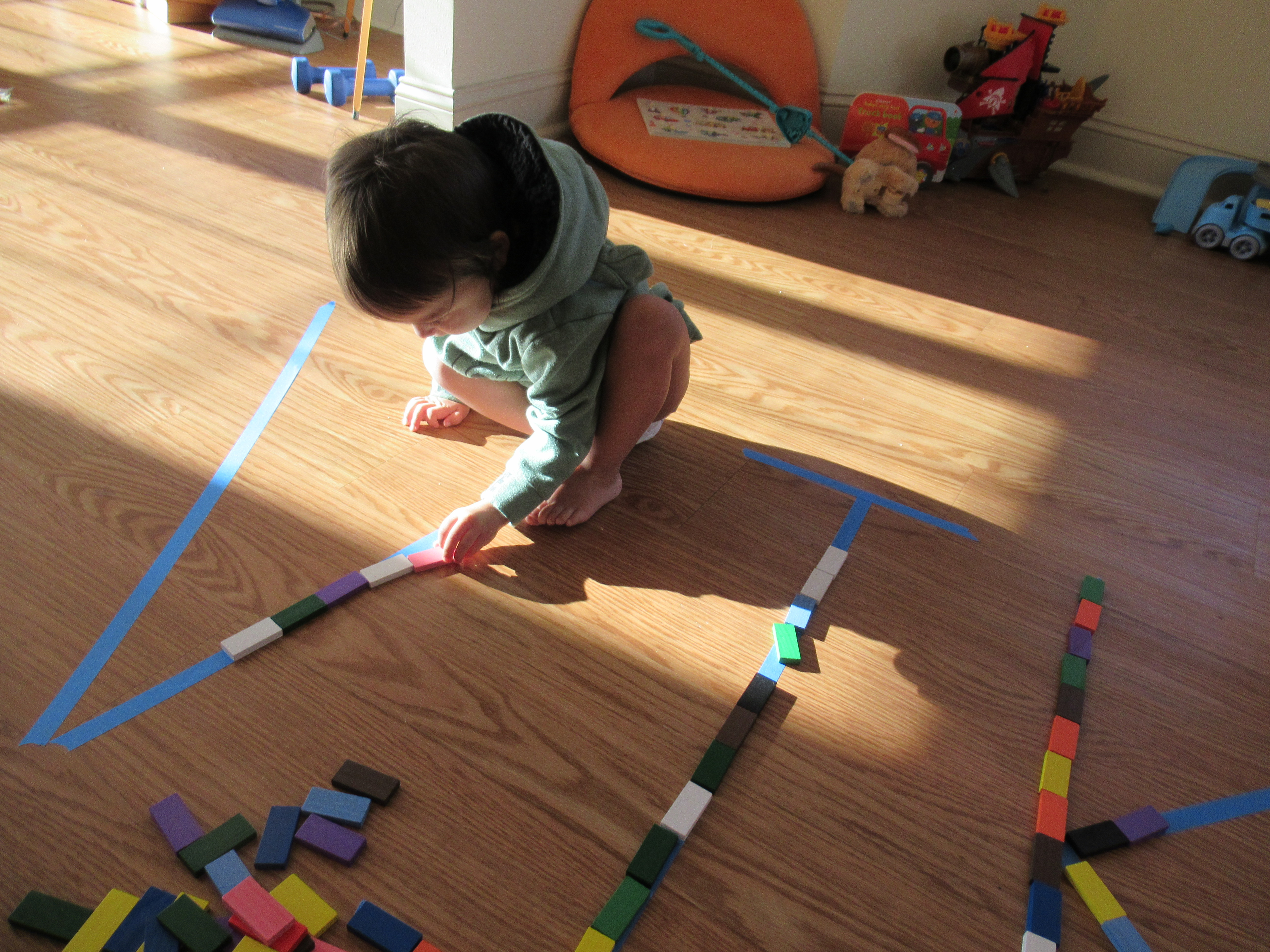
Great first letters for toddlers are always their name, since this is often the first world they’ll have to write. I like to use Veronika’s nickname so she’s not overwhelmed too many letters, so I spelled out V-I-K-A in blue painter’s tape.

Object Line Tracing (1)

Next, I showed her how to arrange our set of colored dominoes along these lines.

Object Line Tracing (6)

She caught on quickly, and although her focus often wandered (she was very interested in talking about the colors of the dominoes, too), she was easily redirected to the task and followed along as I helped her fill in all the letters.

Object Line Tracing (4)

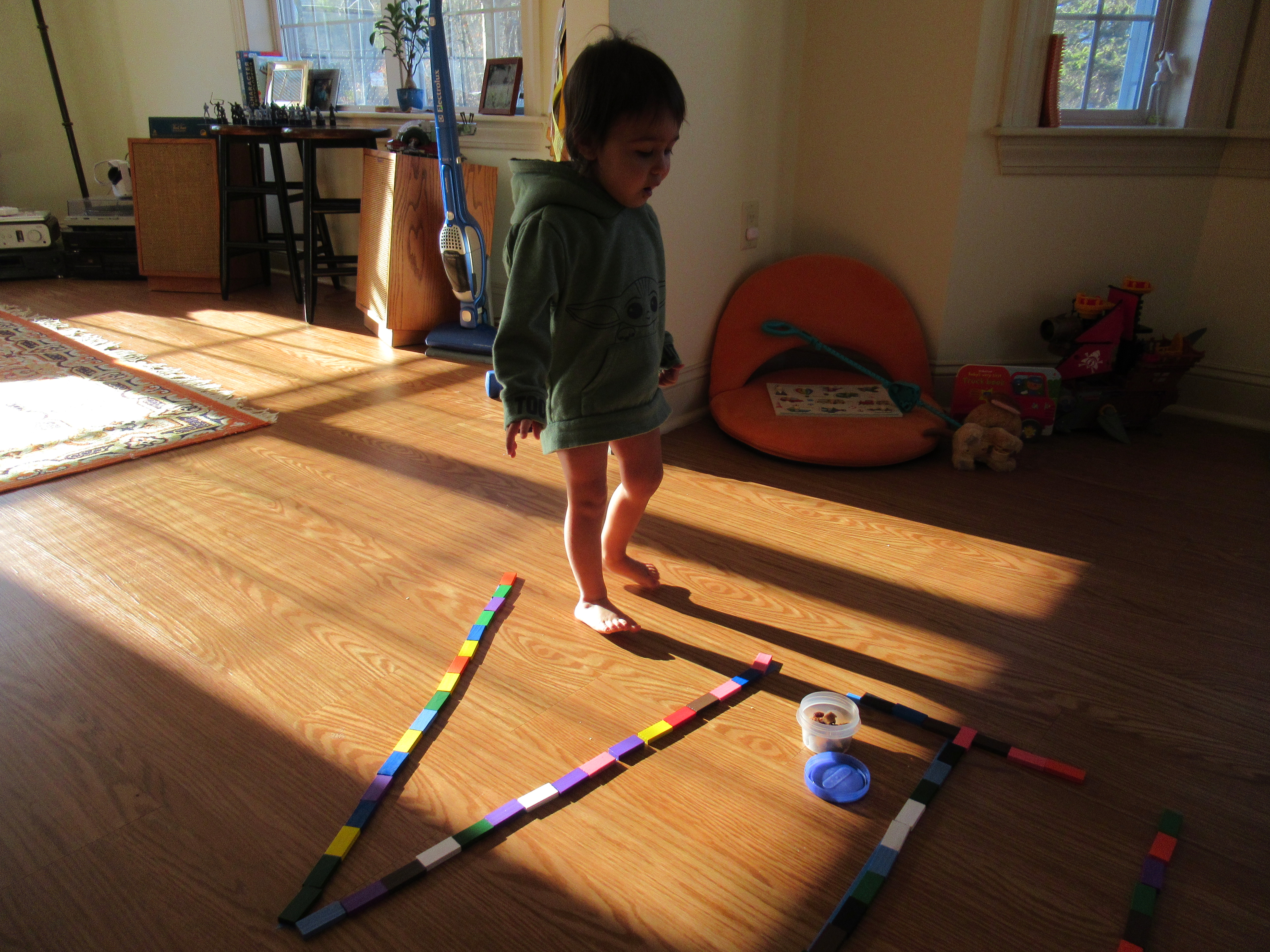
This was a great chance to say the name of each letter, too, and the sound it makes. The giant size of the tape letters definitely invited interaction! She loved standing in the empty space of the V…

Object Line Tracing (7)

…or walking along the lines of the A. In fact, you could encourage your toddler to trace the letters with his or her feet!

Object Line Tracing (8)

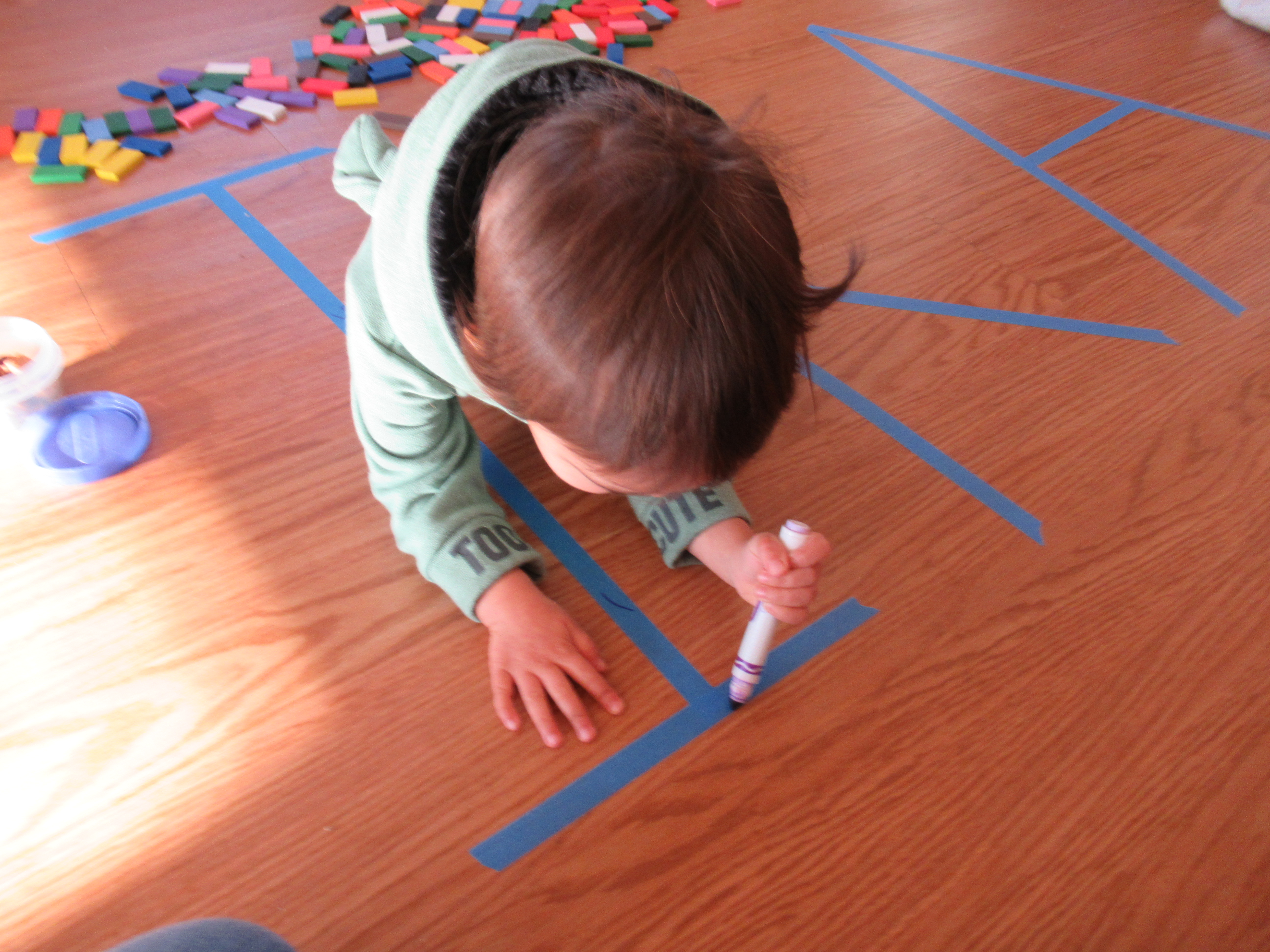
Just to gauge where she’s at with pen control, I did give her a marker at the end of our play to see if she wanted to follow the big lines of tape with it. She preferred drawing small circles or loops on the tape instead, so we’re not quite there yet!

Object Line Tracing (10)

Winter Snowflake Slime

Winter Snowflake Slime (7)

We don’t make slime often, so this winter snowflake version today was a real treat for Veronika! I did use borax powder for this particular slime recipe, but there are lots of alternatives (including saline solution or liquid starch) if you’d rather not. Since I knew Veronika would be using craft sticks to play with the material, and not her hands, I felt comfortable about the borax.

To make the slime, combine 1/2 cup white glue and 1/2 cup warm water in a bowl or tray.

Winter Snowflake Slime (2)

Next, add silver glitter: lots! I used large flakes of silver to make it look like snow in the wintry white slime. You could also search for glitter in the shape of actual snowflakes at the craft store! Finally, dissolve 1/4 teaspoon borax powder in 1/2 cup hot water. Add this to the glue mixture and it will seize up instantly.
Winter Snowflake Slime (3)

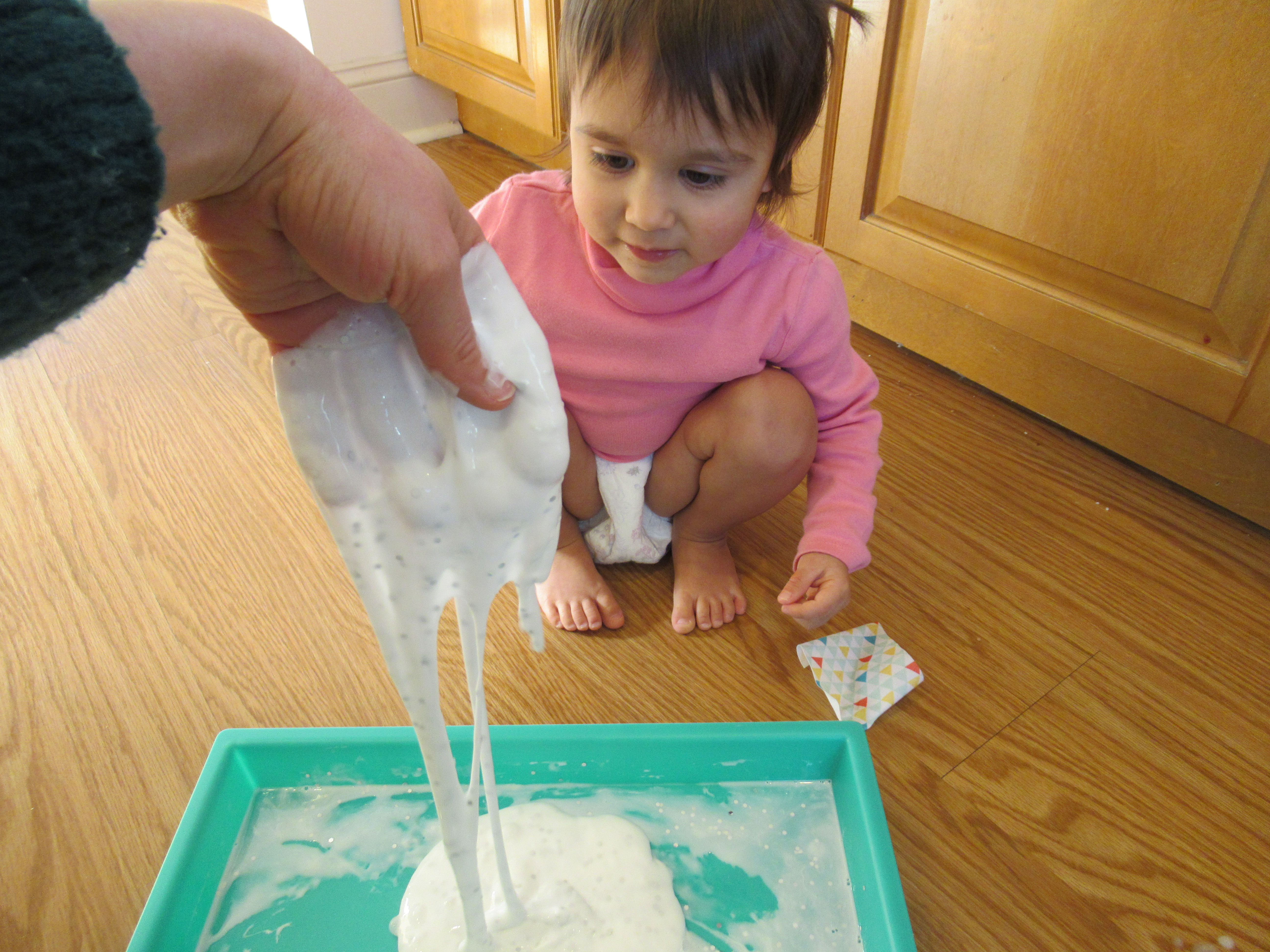
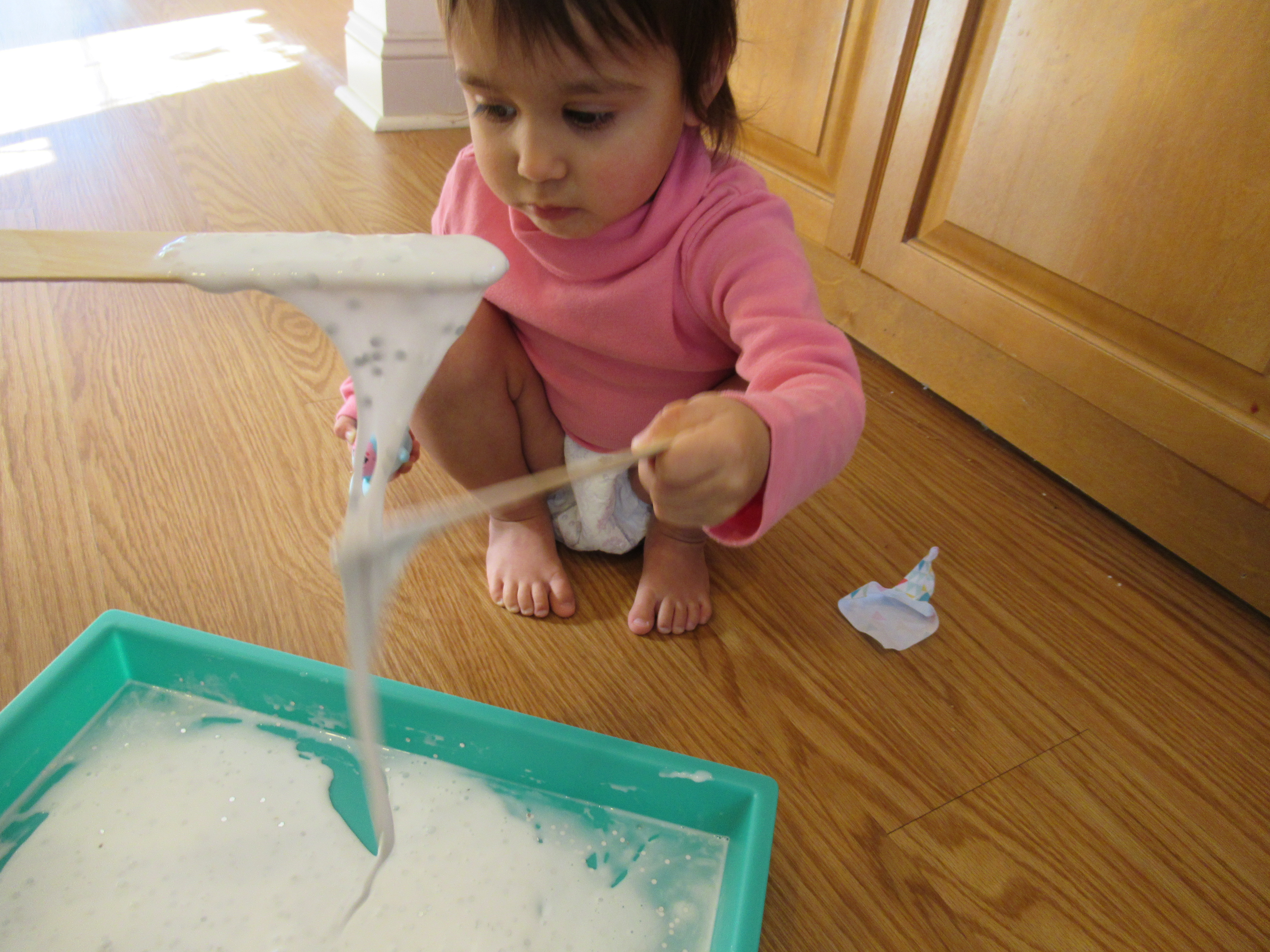
Our mixture turned out almost like ooblek, running back towards a liquid when we didn’t touch it, but seizing up as soon as we stirred or scooped. Needless to say, Veronika was fascinated. She loved watching me lift up big handfuls of it.

Winter Snowflake Slime (4)

She would stir with her craft stick and then lift it to pull up big globs before watching it dribble back down.

Winter Snowflake Slime (6)

If we touched our two craft sticks together, the mixture was so sticky!

Winter Snowflake Slime (5)

And of course the silver glitter and white color made us think of sparkly snow. If you want, recite your favorite word play or nursery rhyme about snowflakes while your toddler plays and stirs.

Winter Snowflake Slime (8)

Here’s one we like, which you can say as you flutter your fingers like snowflakes.

Softly, softly, falling so,

This is how the snowflakes go.

Pitter-patter, pitter-patter,

Pit pit pat,

Down go the raindrops

On my hat.

Winter Snowflake Slime (9)

Indoor Baseball

Indoor Baseball (4)

Veronika played her first round of baseball today! Okay, perhaps not really, but here’s a version of the sport that works even for toddlers.

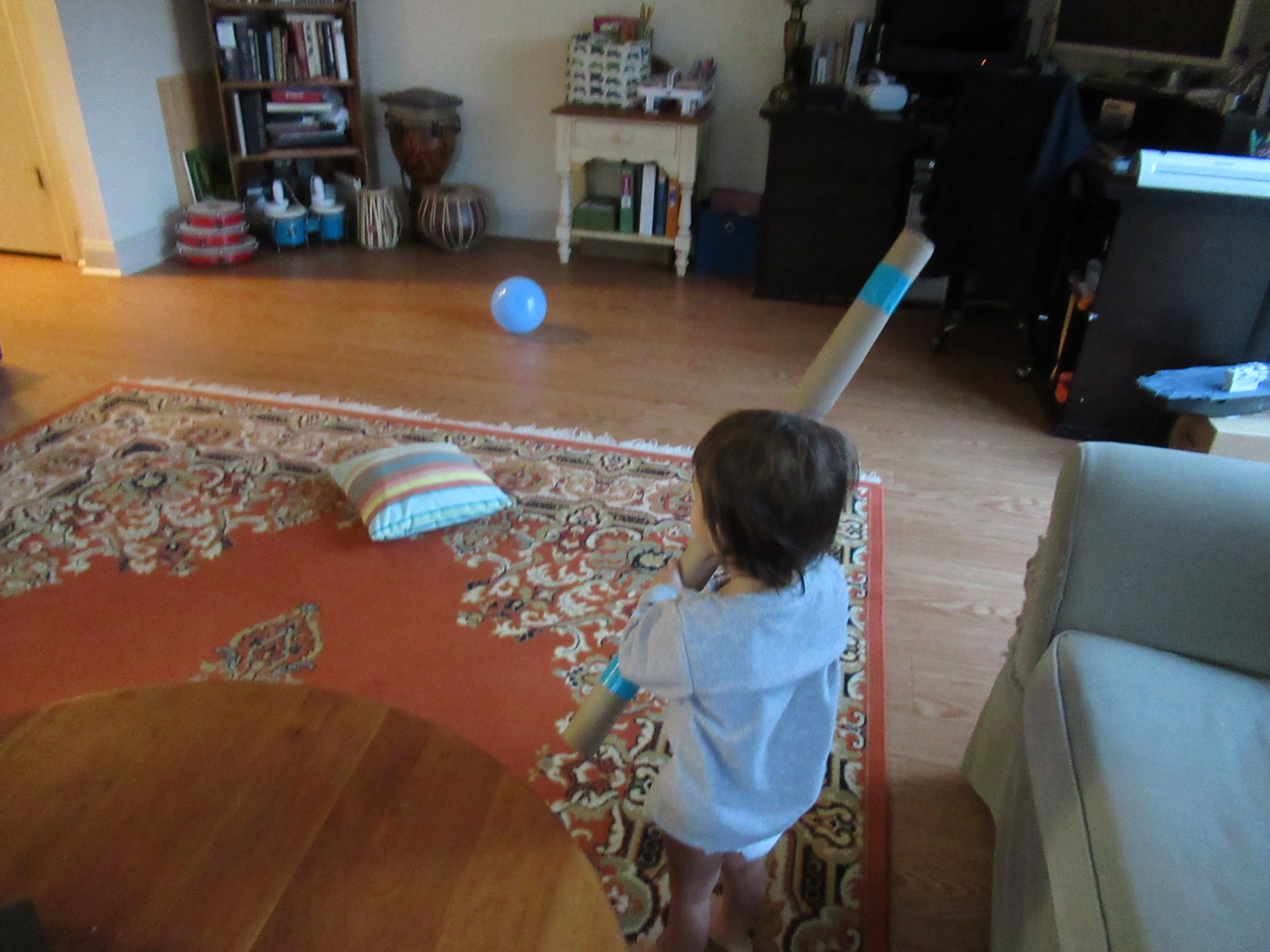
The inner tube from a roll of gift wrap makes the perfect, soft baseball bat for young children. I secured it at the ends and the middle with duct tape for durability, and then for the safest baseballs ever, I simply inflated a few balloons.

Indoor Baseball (2)

Now all we needed were cushions as the bases, and we had the whole baseball diamond!

Indoor Baseball (3)

Of course your toddler won’t understand the rules yet, but Veronika loved taking swings with the bat. Or just bopping the balloons along on the ground with it!

Indoor Baseball (5)

You can also practice tossing the balloon in the air and keeping it up with the bat.

Indoor Baseball (7)

She was an enthusiastic participant when I showed her how to run from base to base, too, even if she didn’t quite understand why. Don’t forget to shout “home run!” when you complete the circuit.

Indoor Baseball (6)

In sum, this is a fun way to introduce the sport of baseball to your two-year-old, plus you’ll get out some energy in the process!

Balls, Balls, Balls

Balls Balls Balls (2)

Veronika attends a toddler gym class once a week, and her favorite part is always when they bring out a big bin of balls and a hoop and she practices her “slam dunks”. The only problem is that she’s sad every day that isn’t “slam dunk” day! So today, we brought the ball fun home.

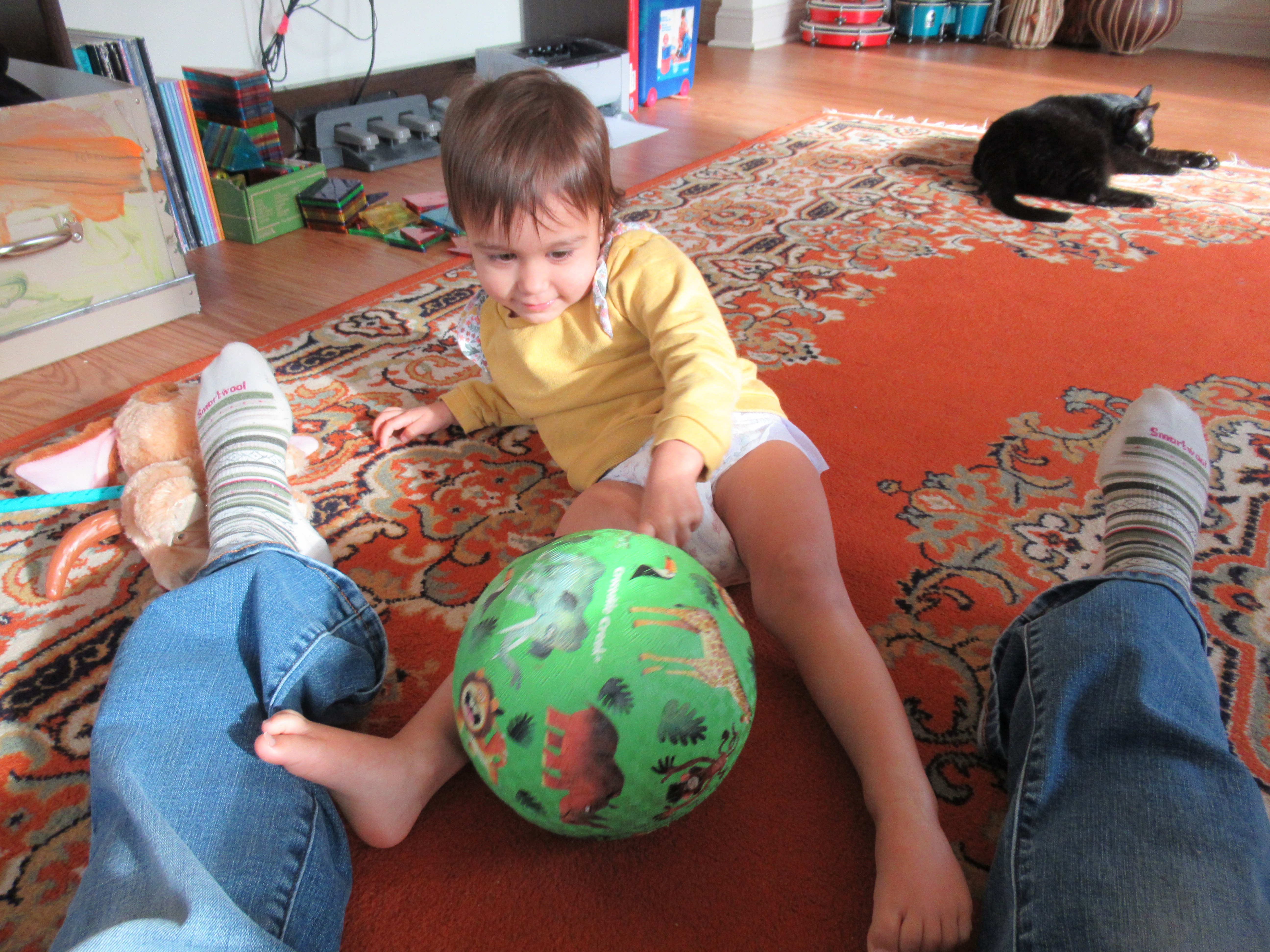
I wanted to try working on several different ball skills with her, so first we sat with our legs together to form a little enclosure and rolled a bouncy ball back and forth.

Balls Balls Balls (9)

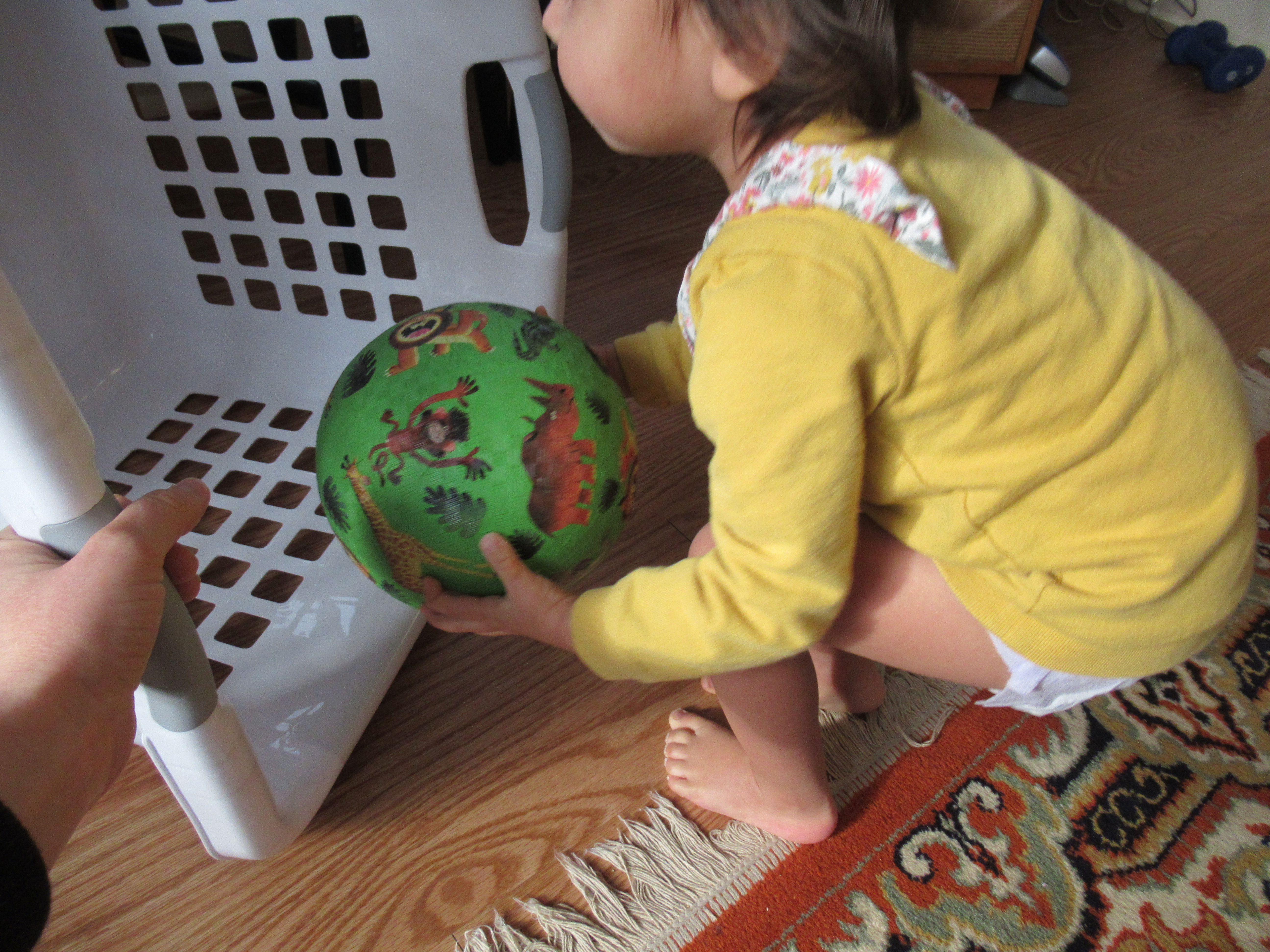
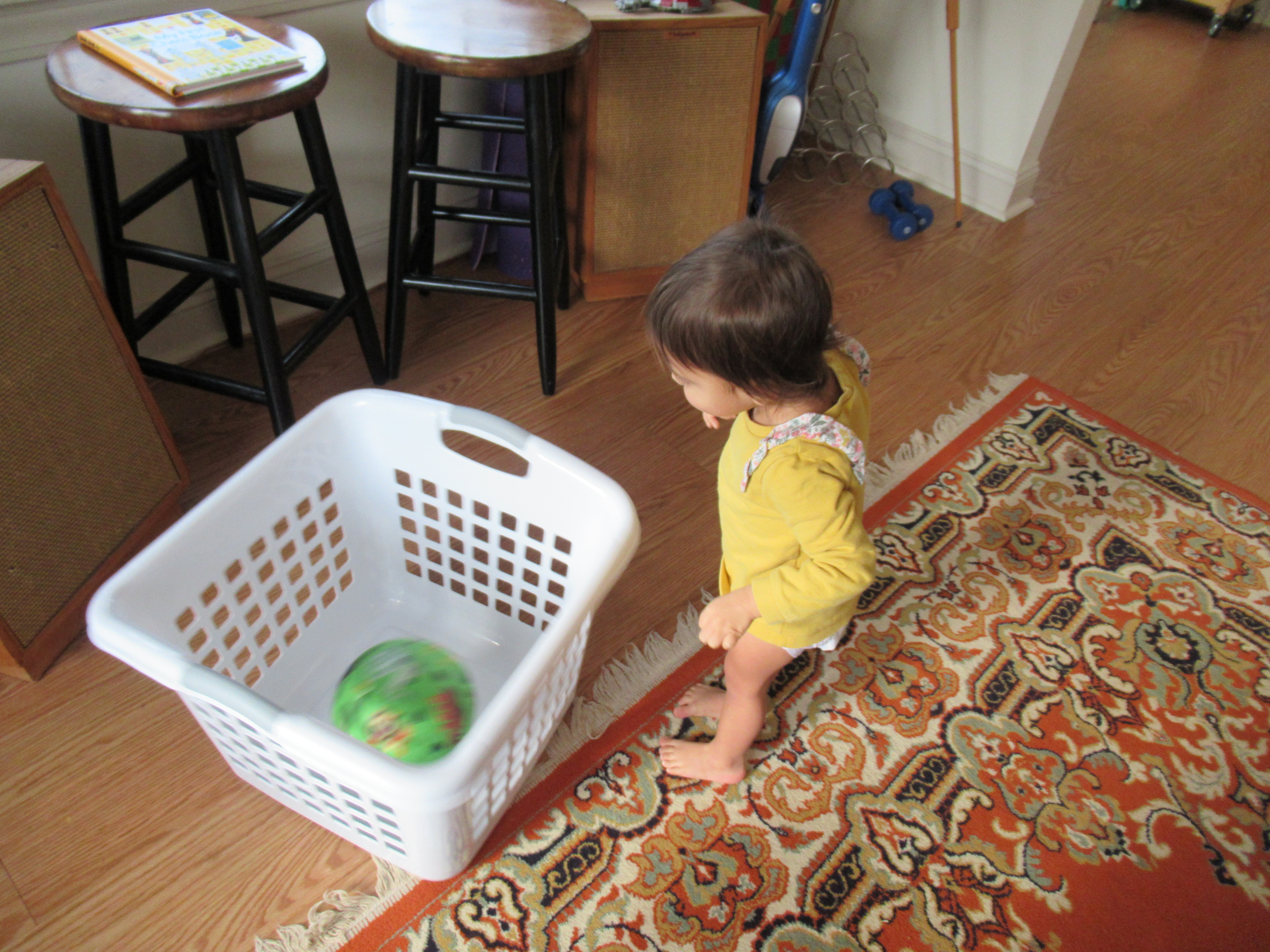
Then we upped the ante. Turn a laundry basket on its side and roll the ball into this “goal”. She initially wanted to bounce the ball in, but soon switched her focus to rolling.

Balls Balls Balls (5)

Next, we turned the basket upright. Now she could toss or bounce it in!

Balls Balls Balls (4)

Time for slam dunks! Place the basket on top of any slightly higher surface, like a coffee table or stool, and let your toddler reach up high.

Balls Balls Balls (1)

Slam dunk!

Balls Balls Balls (3)

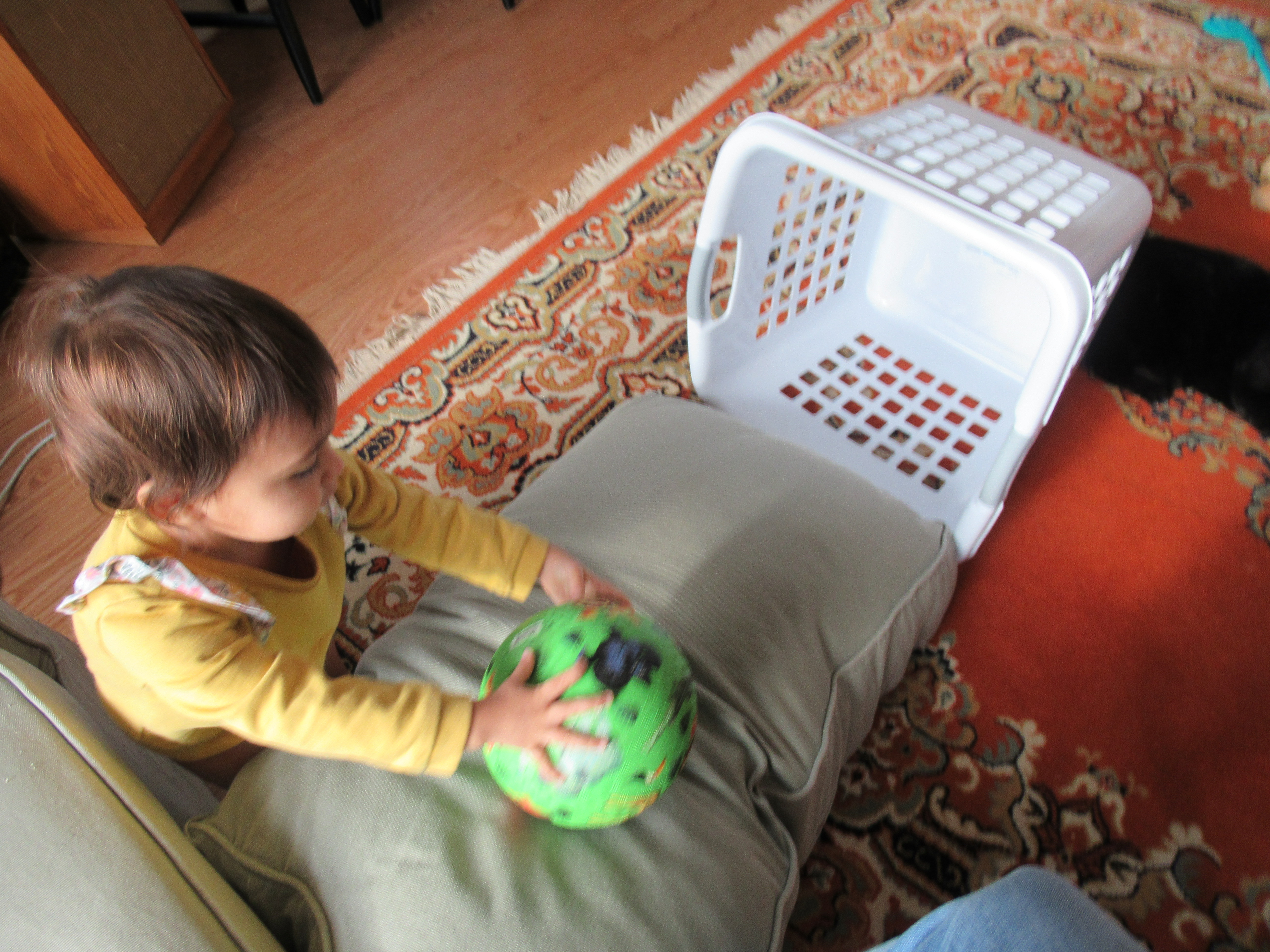
For a final challenge, we angled a couch cushion down like a ramp (you could also use cardboard or a wooden plank for this step). First we rolled the ball down into a waiting basket.

Balls Balls Balls (7)

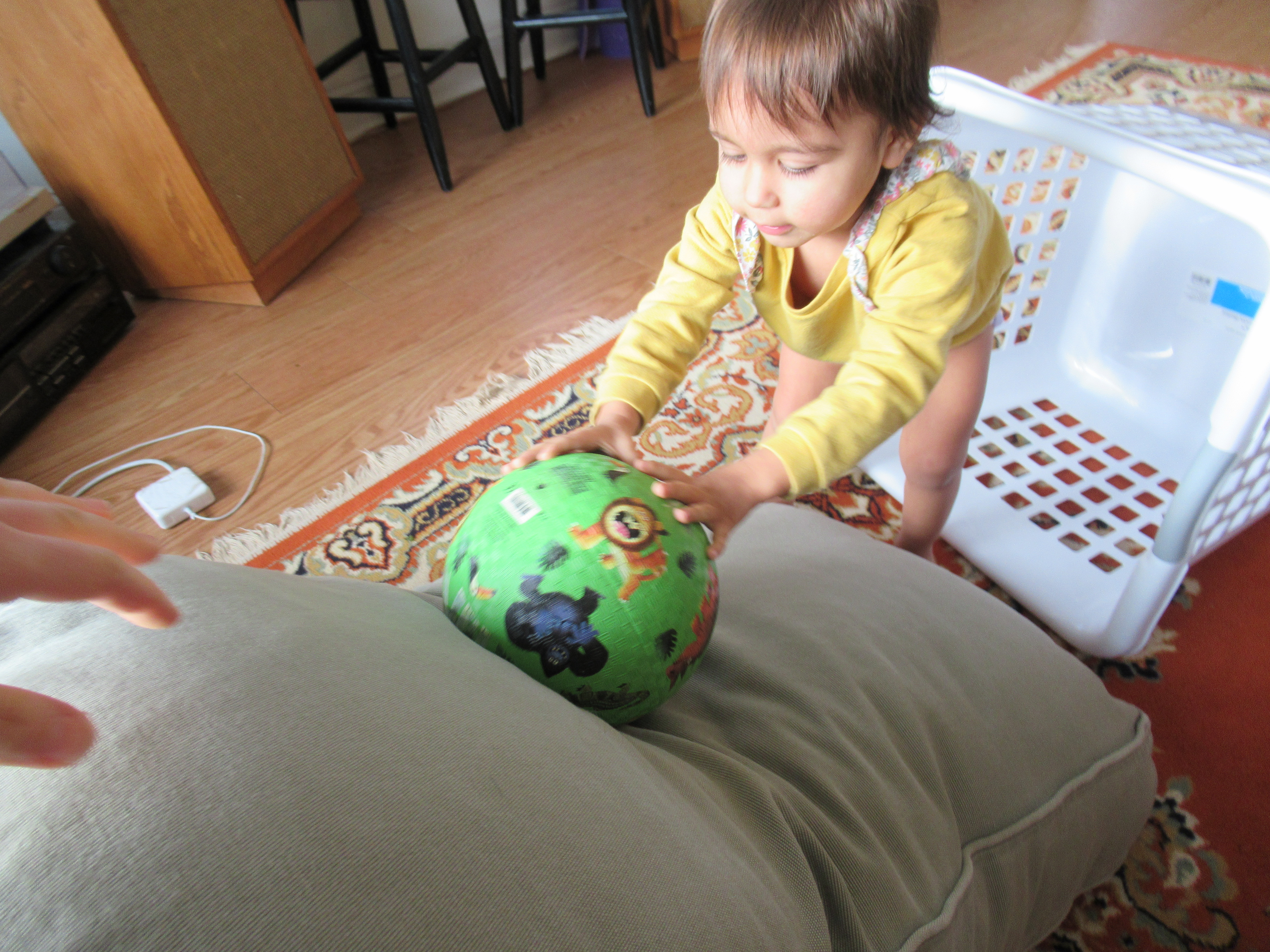
And then she rolled it up to the tip top of the ramp so we could roll it back down again. This took great concentration, as well as dexterity, on her part.

Balls Balls Balls (8)

In sum, there are so many ways to play with a simple ball at home. What’s your toddler’s favorite ball game? Please share in the comments!

Balls Balls Balls (6)

Bubble Wrap Snowman

Bubble Wrap Snowman (7)

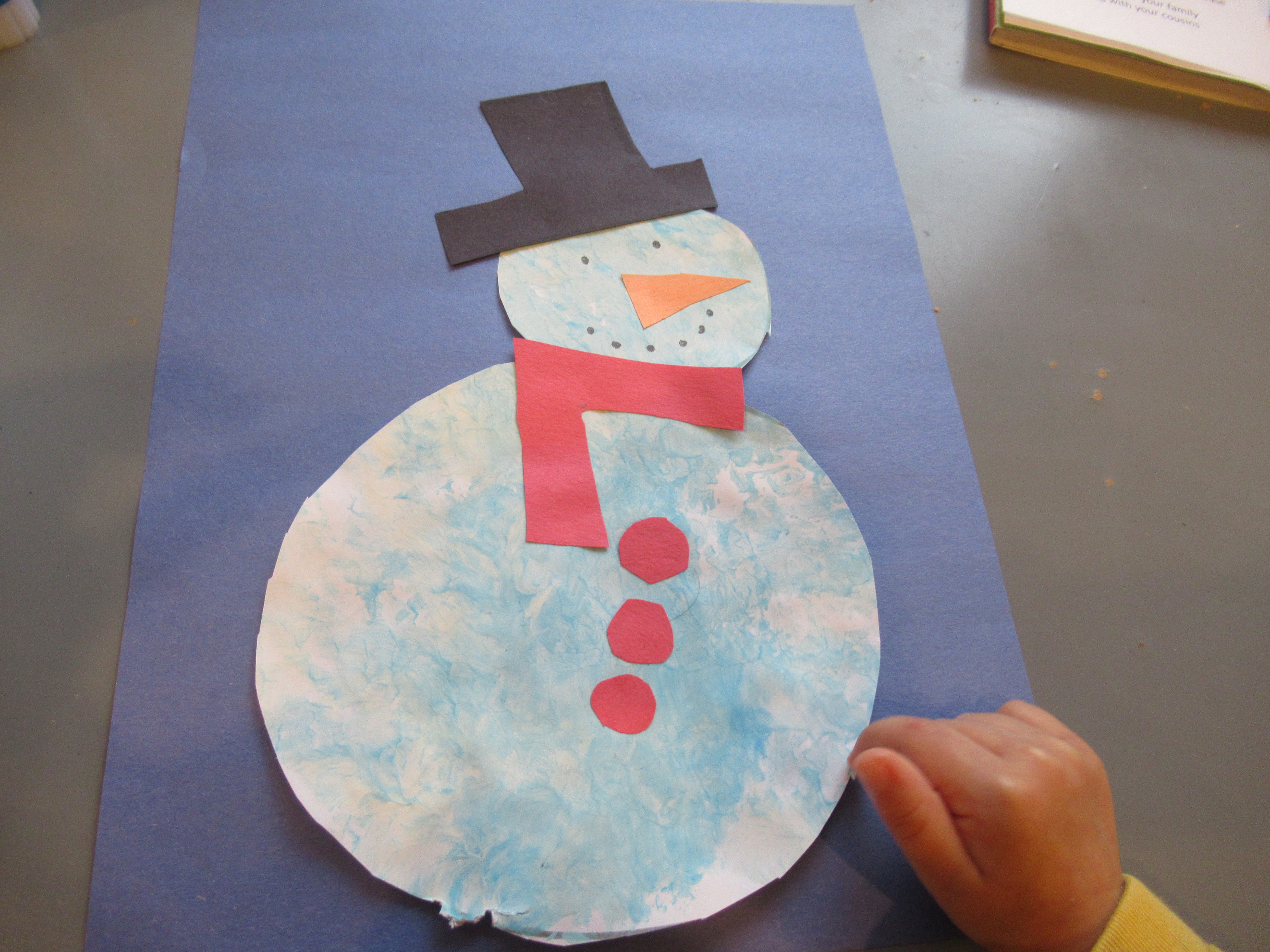
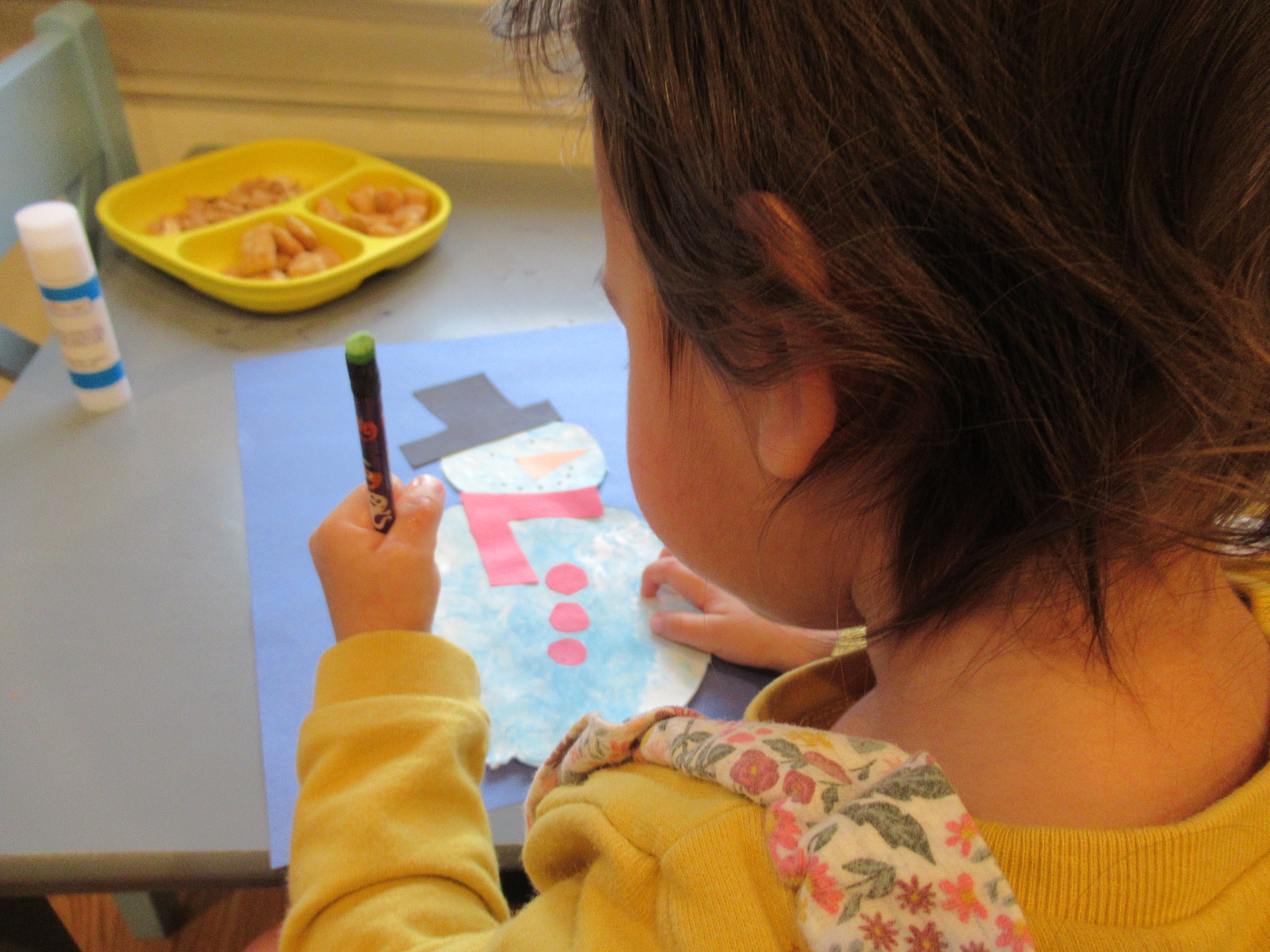
While we’re eagerly awaiting the next snowfall ample enough to build a real snowman, Veronika made do with this painted version today!

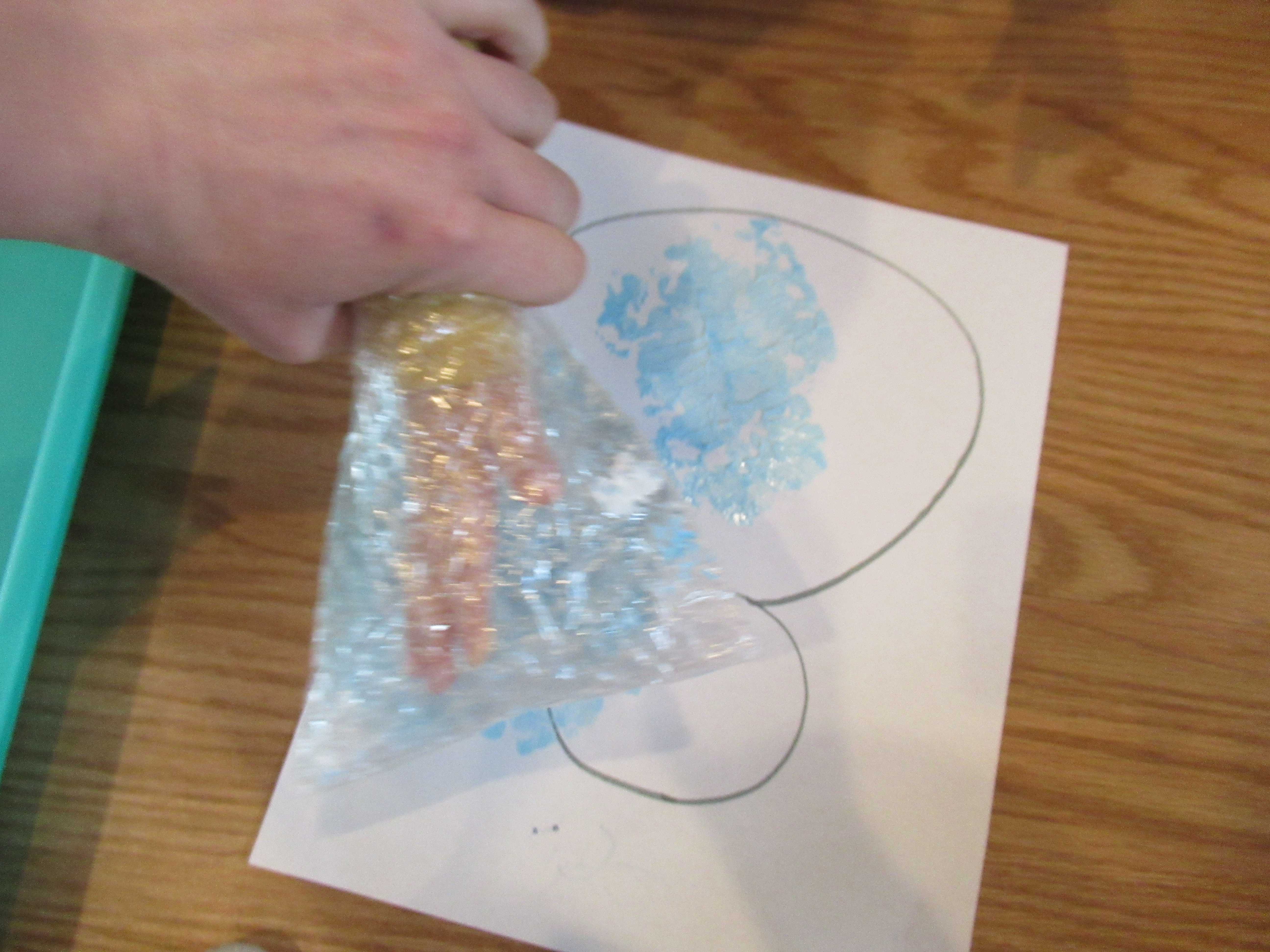
The novelty here was painting the snowman using only a piece of bubble wrap. Little bubble wrap pouches are better for this particular project than a sheet of bubble wrap, since they can easily slip over a hand.

Bubble Wrap Snowman (2)

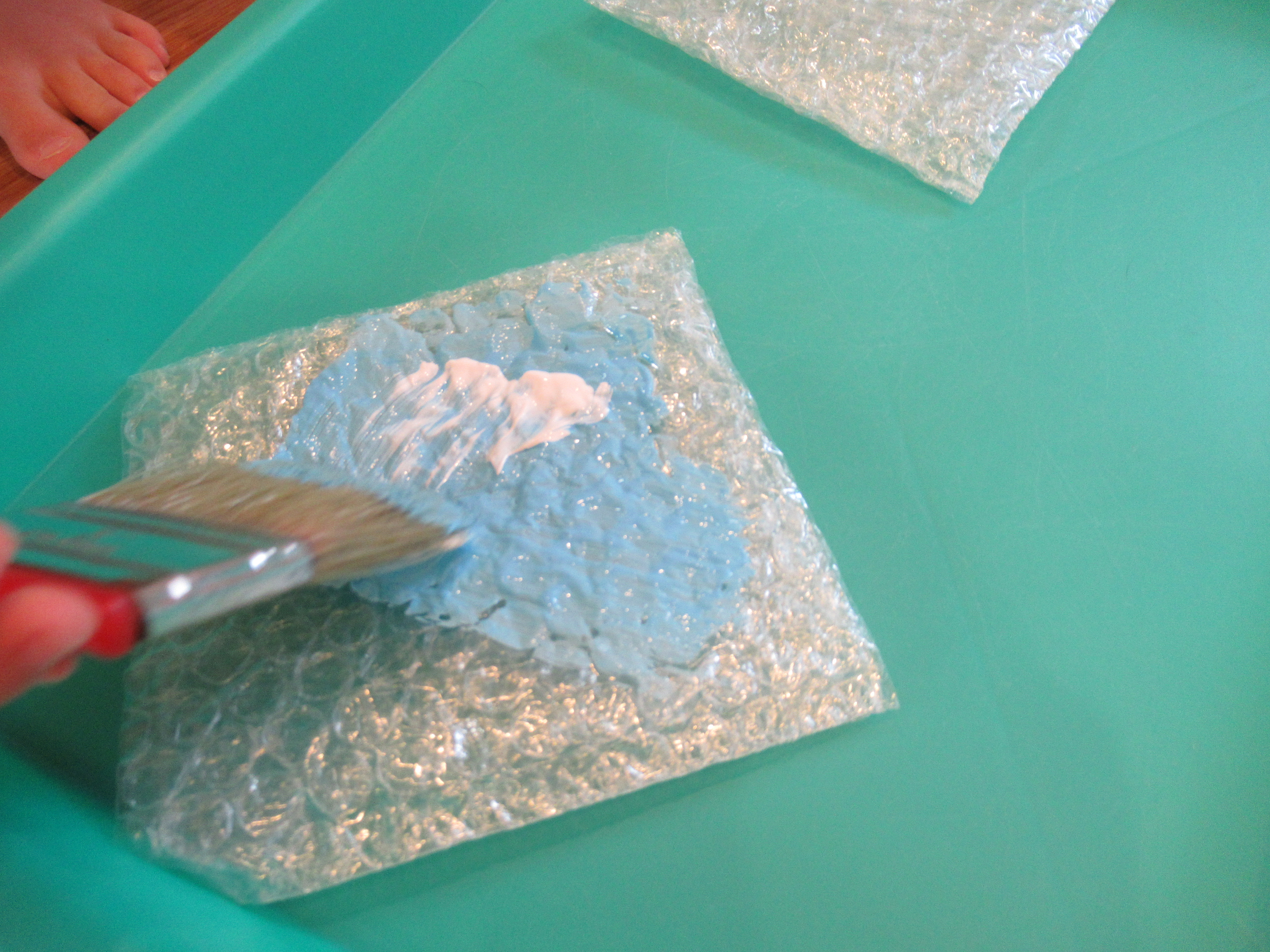
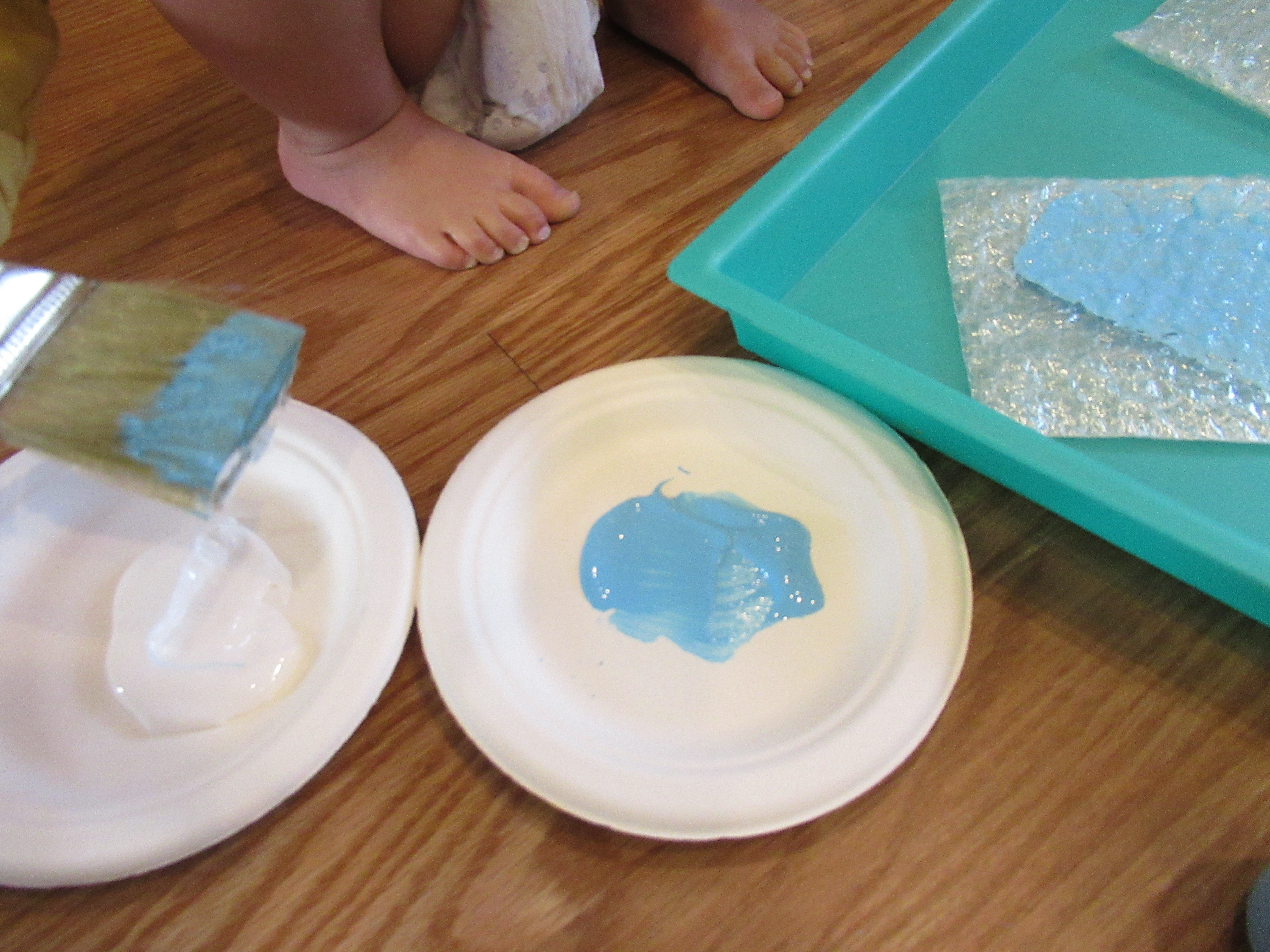
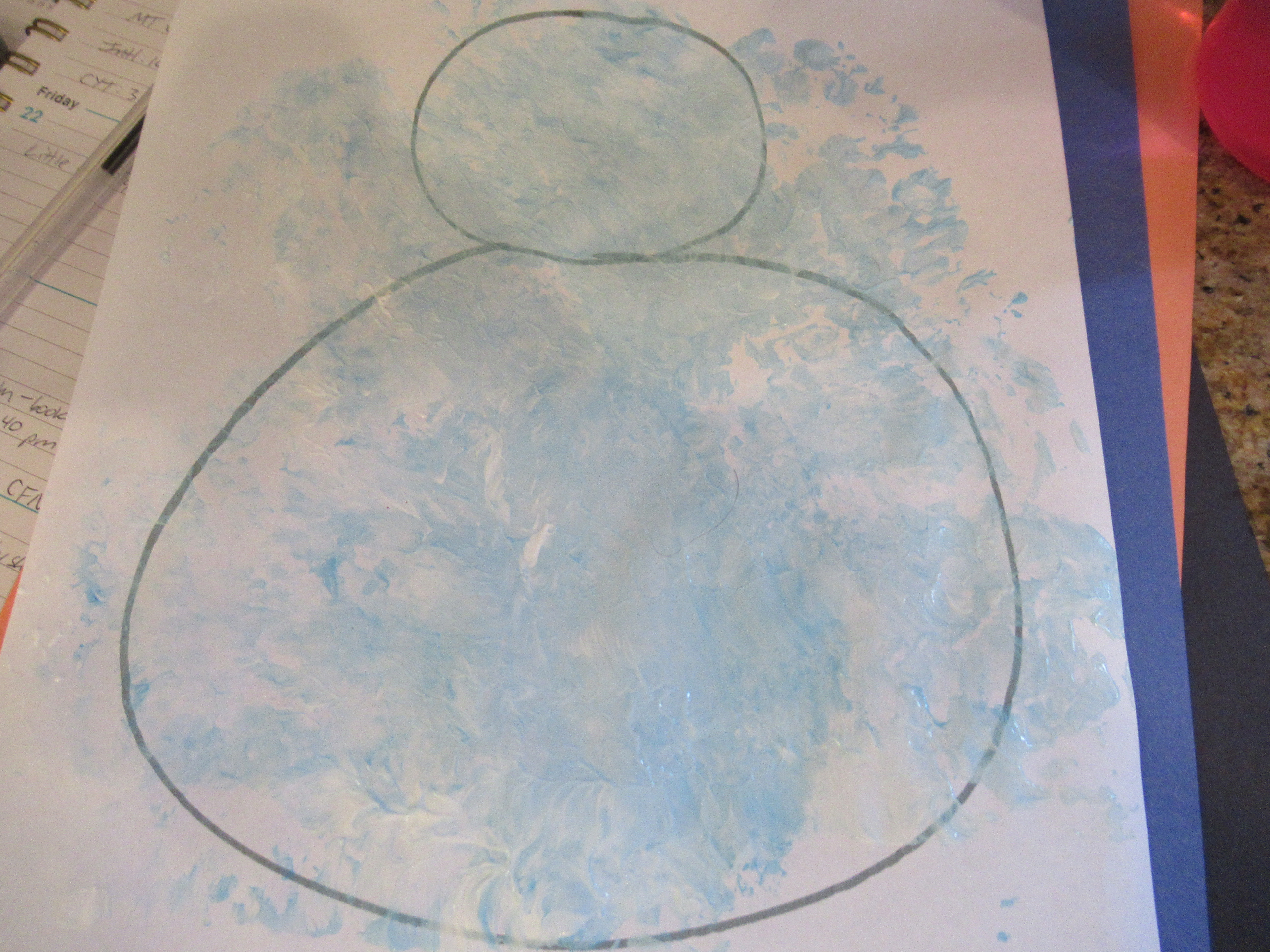
First, we painted the bubble wrap in wintry shades of white and pale blue. While Veronika painted, I drew an outline of a snowman on white paper.
Bubble Wrap Snowman (1)

I slipped the bubble wrap over her hand like a mitten and showed her how to press down. She loved this, and also wanted to check out the way the painted bubble wrap felt with the other hand. I recommend having a pack of wipes handy, in case your toddler does the same!

Bubble Wrap Snowman (3)

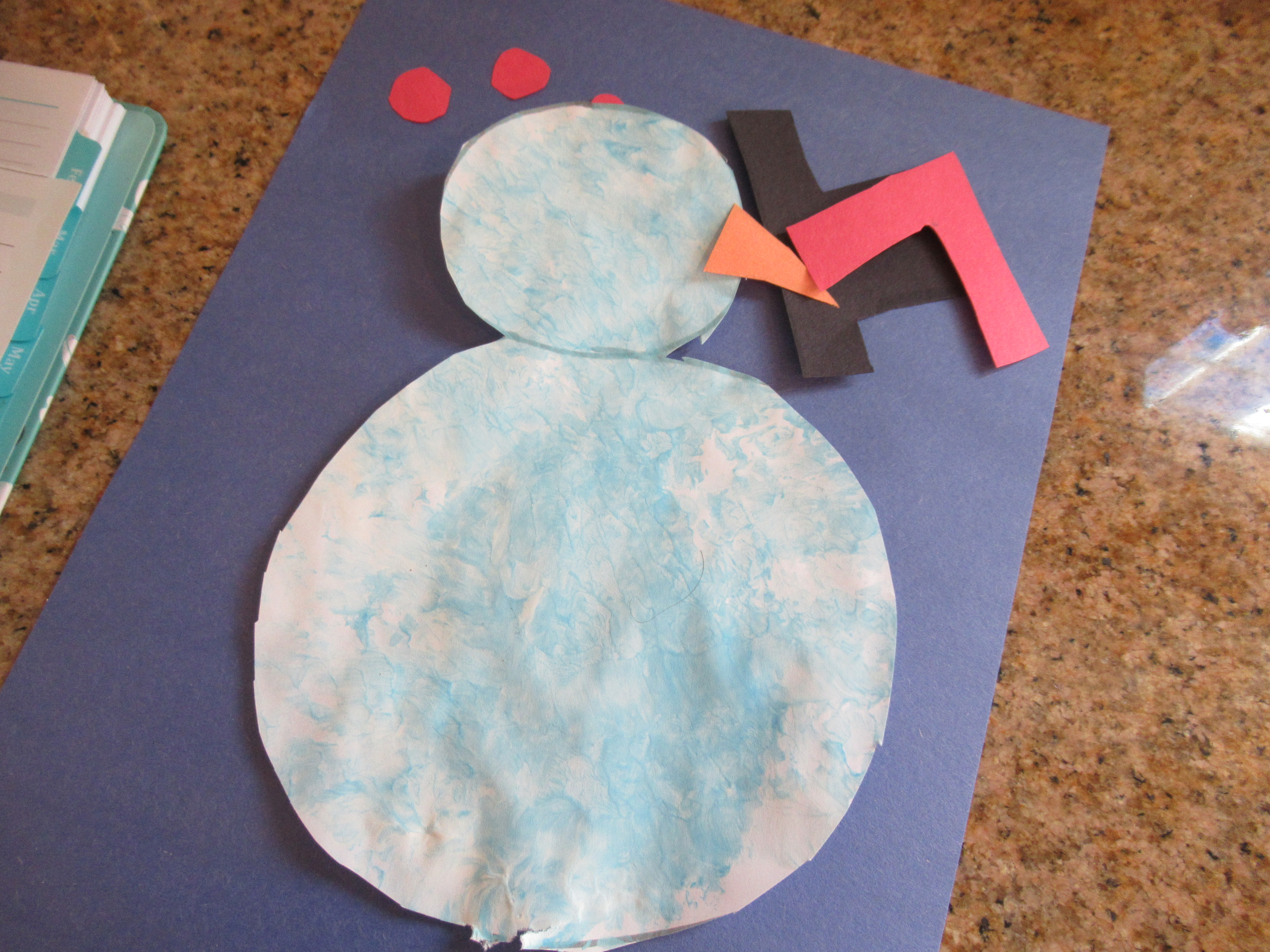
Set your snowman aside to dry, then cut out and glue onto a blue construction paper background.

Bubble Wrap Snowman (5)

Finally, I cut out a few accessories for our snowman.

Bubble Wrap Snowman (6)

For a little vocabulary exercise, Veronika named all of these as we used a glue stick to attach them: a black top hat, red buttons, a red scarf, and an orange carrot nose!

Bubble Wrap Snowman (8)

Cartons of Fun

Cartons of Fun (2)

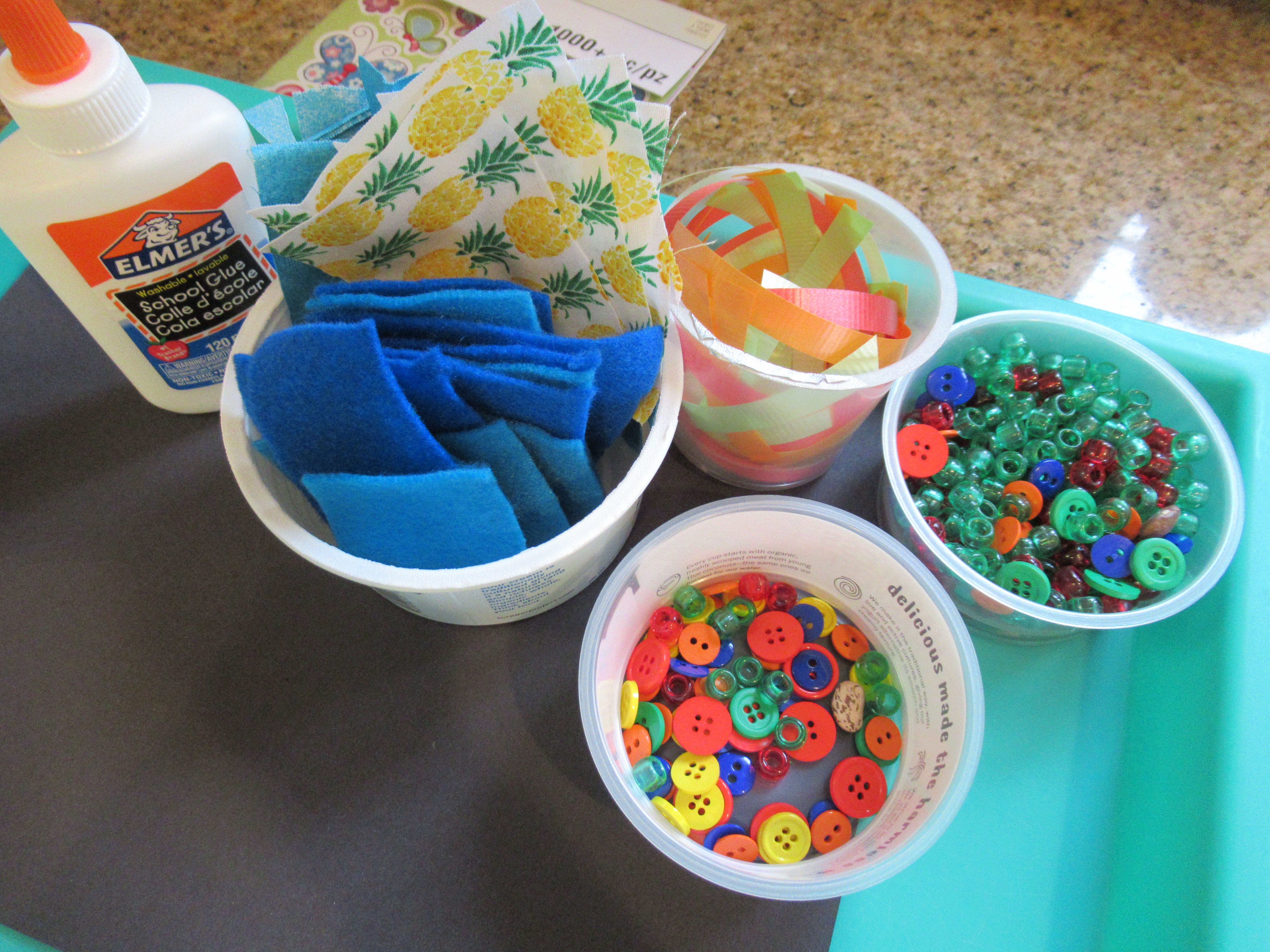
This is the type of activity that’s great to do when you’re using up the odds and ends in your craft bin before restocking. Any clean and washed food containers make great bins for small hands. I used empty non-dairy yogurt and sour cream containers, but juice cartons would work, too, with the tops cut open.

Simply fill each container with a different craft material. I presented Veronika with an assortment that included fabric scraps, felt pieces, ribbon, buttons, beads, and stickers. Then I set these down for her along with glue and pieces of construction paper.

Cartons of Fun (1)

Older preschoolers can take it from here solo! If your child is old enough, you can also provide safety scissors. For Veronika at age 2, I had to supervise the activity a bit more closely, but I tried to sit back and see how she wanted to use the materials, instead of guiding.

Cartons of Fun (3)

She liked the buttons best and wanted to glue them down. I helped her make dots of glue that she could press the buttons on. We added a few bits of fabric and ribbon to this first creation, too.

Then I made a “cake” for her with fabric scraps for the cake and ribbon as candles. This time, I added dots of glue so she could add “icing on the cake” with more buttons and beads.

Cartons of Fun (4)

For the final creation, I smeared glue all over a piece of construction paper, This meant that no matter where she pressed down an item, it was sure to stick. This page was soon covered with the fabric and felt scraps.

Cartons of Fun (5)

And don’t discount just letting your toddler fill a page with stickers. That counts as art, too!

Cartons of Fun (6)

Pool Noodle Games

Pool Noodle Stringing (5)

We had a few pool noodles in the closet that were left over from summer fun, so today Veronika and I found a few indoor winter ways to play with them!

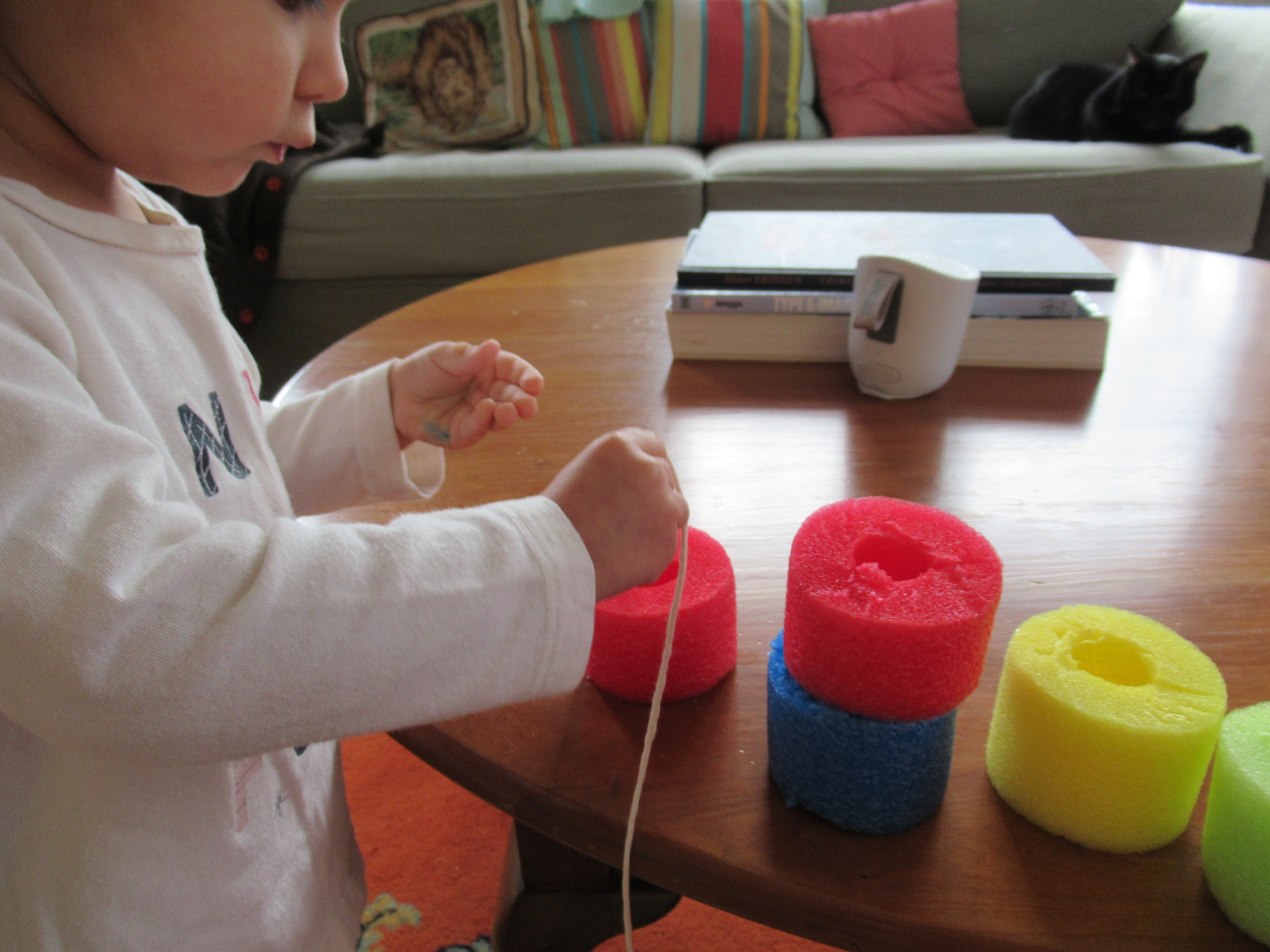
First, we tried making a pool noodle “necklace”. Cut pool noodles into smaller pieces so they are like giant beads and then give your child twine (or a rope) and thread them on.

Pool Noodle Stringing (2)

Preschoolers can get in some great threading practice by doing this activity solo. I helped Veronika by inserting the twine into the hole of each pool noodle piece, and then she would pull it through.

Pool Noodle Stringing (3)

At first this made a fun pull toy! She loved dragging it along behind her or wiggling it in the air.

Pool Noodle Stringing (4)

Once we had enough of pieces looped on, I tied the two ends of twine together to form a giant dress-up necklace.

Pool Noodle Stringing (6)

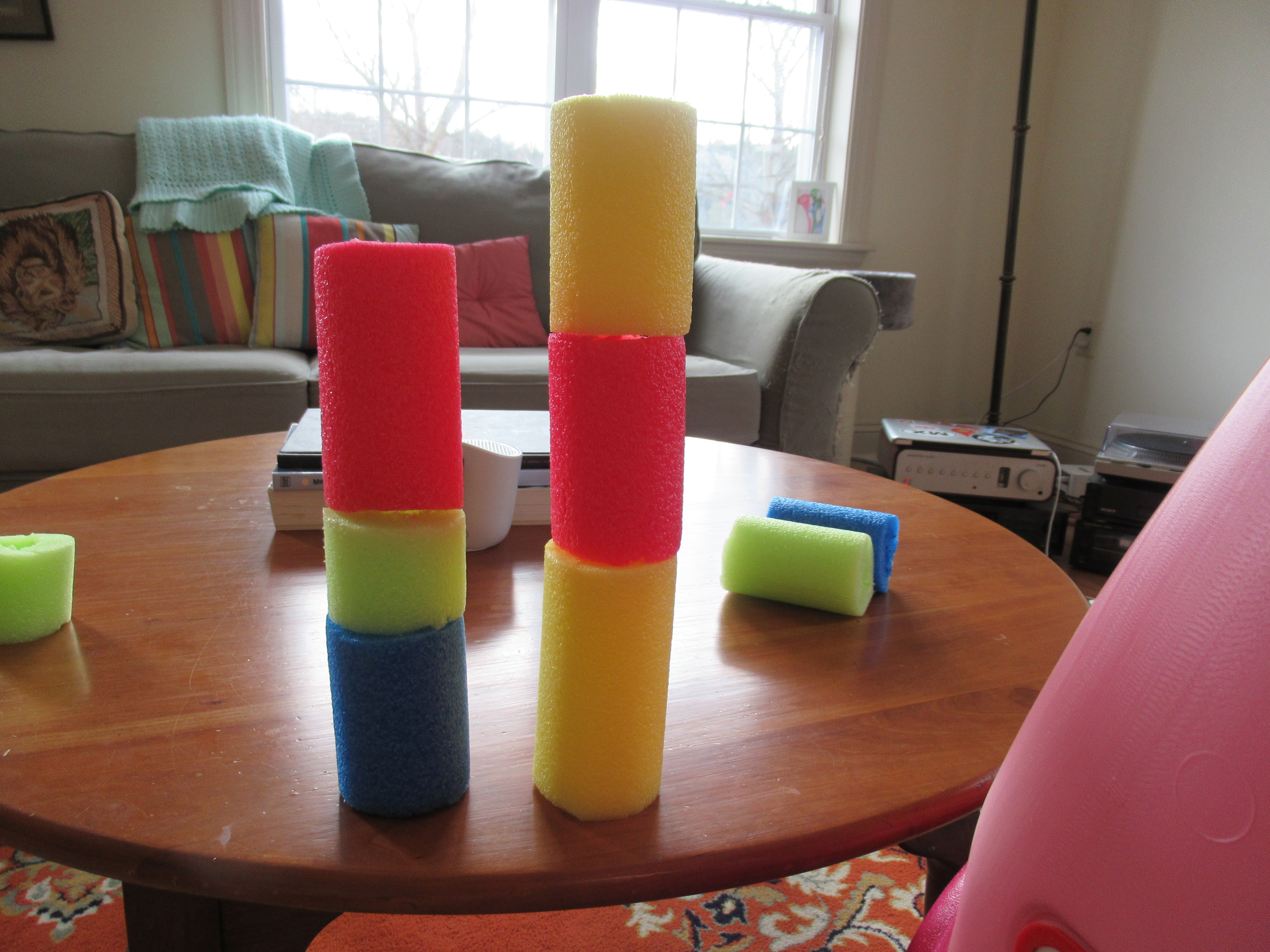
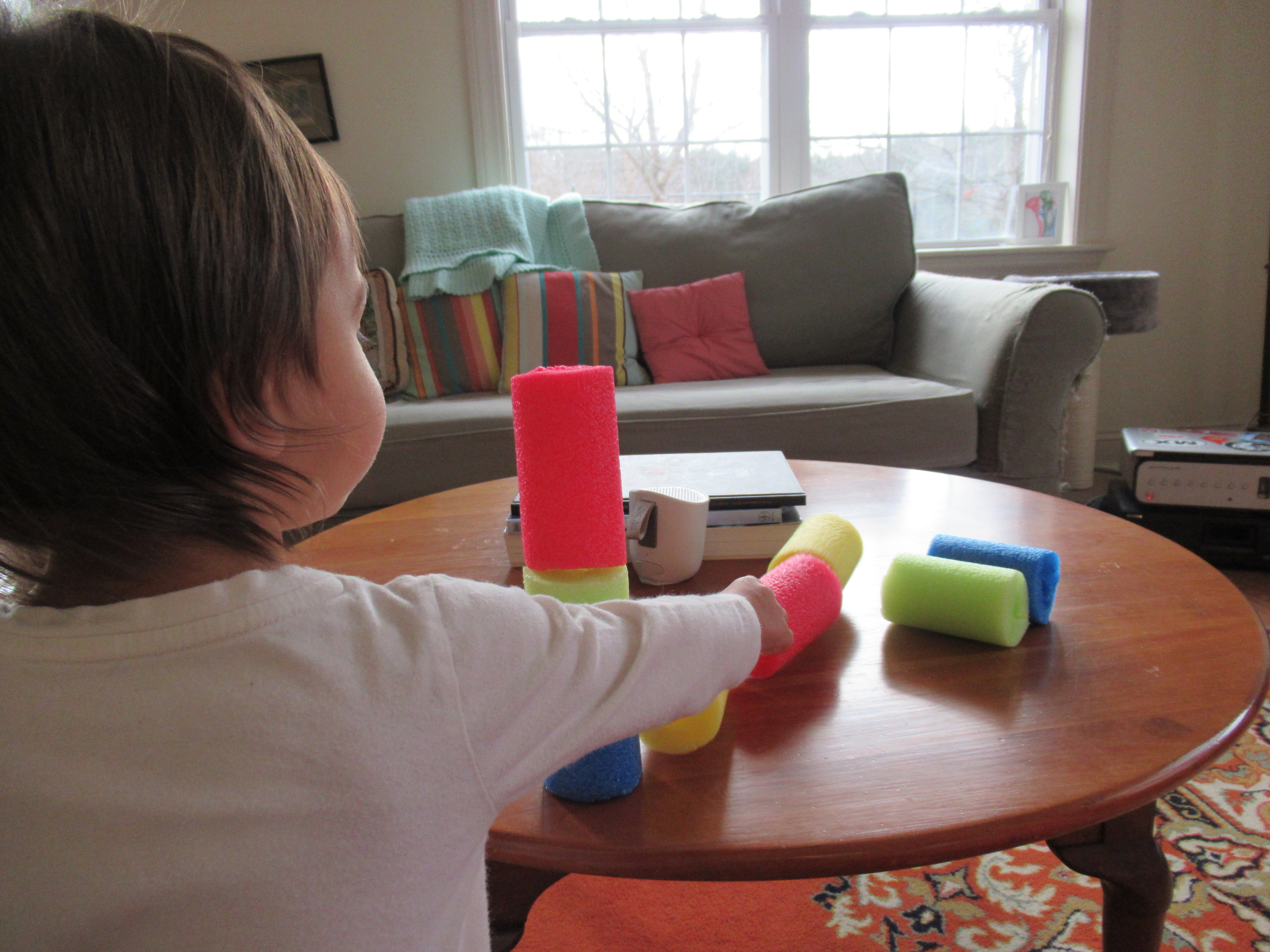
Next, I cut out slightly larger pool noodle pieces, and these were great to stack like blocks!

Pool Noodle Stringing (8)

These towers were particularly fun to push over, because the soft foam won’t hurt a thing.

Pool Noodle Stringing (9)

I loved that we found a way to reuse a summer material on a winter’s day!

Match the Tracks

Match the Tracks (4)

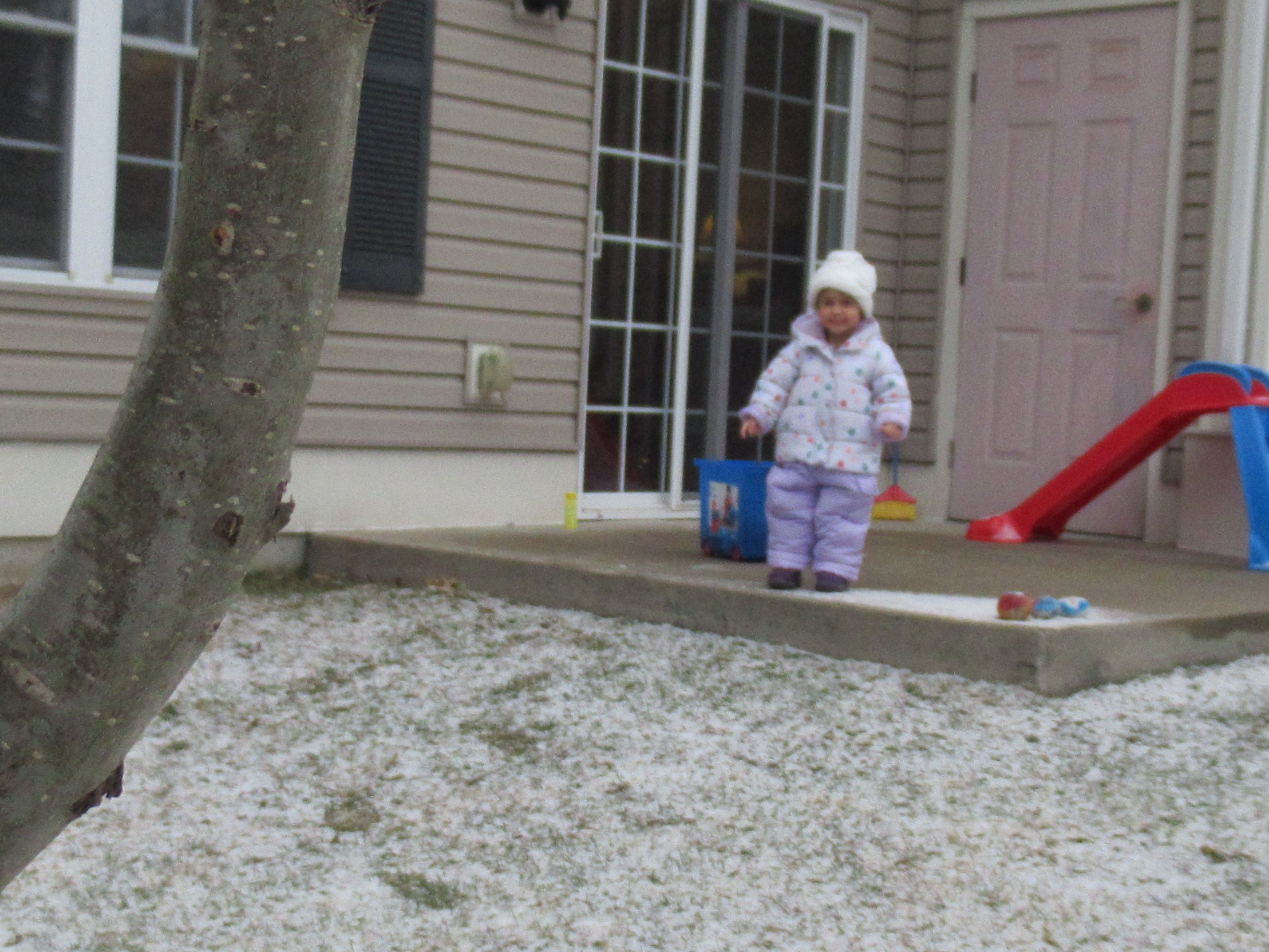
This winter twist on hide-and-seek is fantastic for early hiders and seekers (think preschoolers and toddlers), and you don’t even need much snow to play it; even a light dusting on the ground will do!

As soon as we saw it was snowing, the kids were eager to head outside, so I challenged them to find mommy… by following my tracks. Leave nice, clear footprints in the snow as you head to your hiding place. You can make your actual hiding place easy to spot or hard to find, depending on your child’s age.

Match the Tracks (1)

Veronika grinned as soon as she had the gist of the game, and eagerly followed along my prints in the snow.

Match the Tracks (2)

Peek-a-boo! She found mommy behind a tree.

Match the Tracks (3)

It was harder to get her to understand being the hider, but she did love noticing her own tracks in the snow!

The beauty of this game is that each round will gets successively harder as the tracks start to get muddled. You can challenge older kids to make a giant maze of footsteps by the end! And while they’re at it, keep an eye out for any other animals that might have left tracks in the snow.

Seek and Find Shapes Water Activity

Seek and Find Shapes Water (4)

Toddlers always love the chance for a little splashy water play, and here’s a way to combine that with shape review!

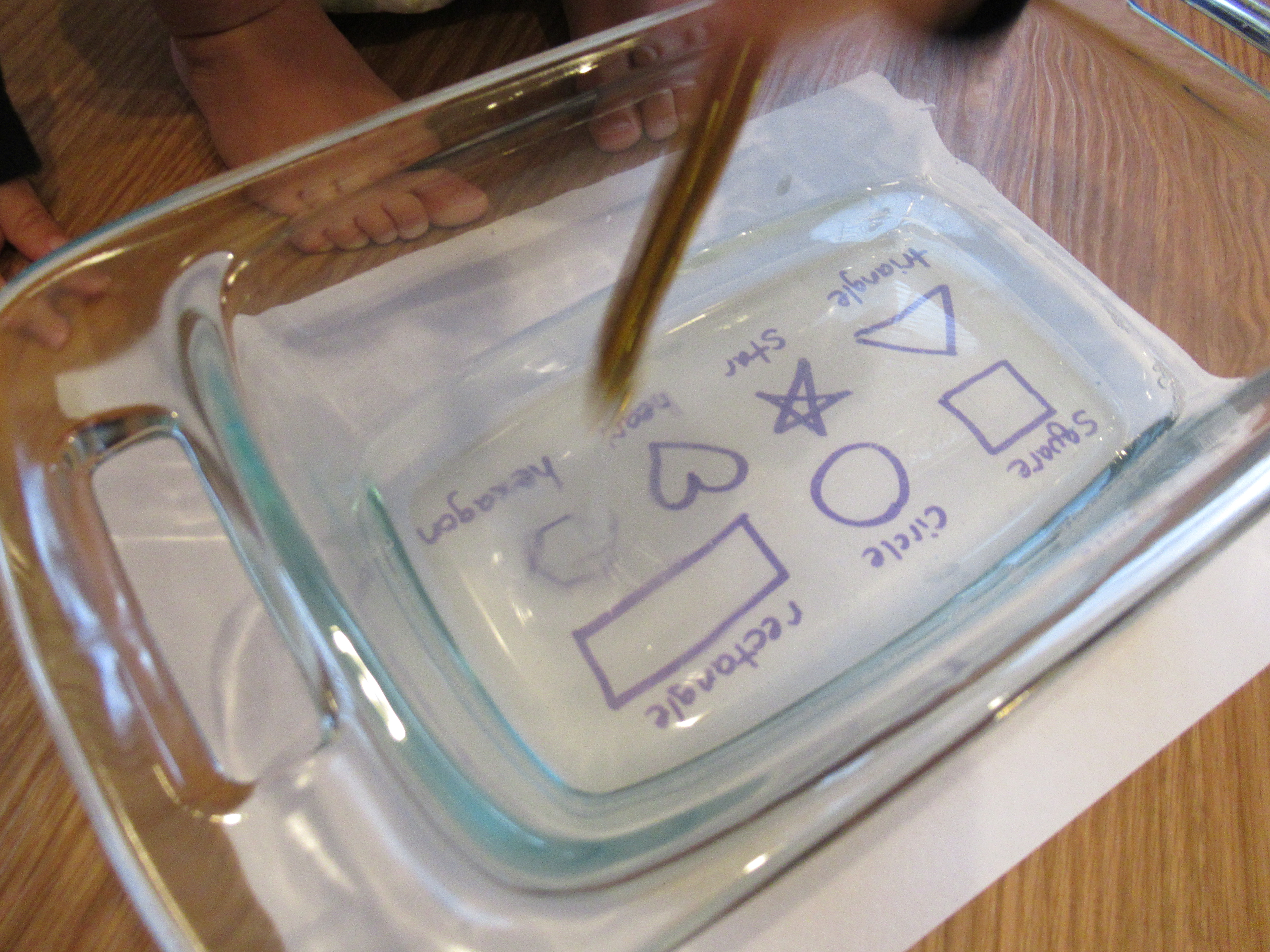
To start, I used marker to draw a few shapes on a regular piece of white paper. I also labeled them for early sight words, although Veronika is a ways off from understanding that.

Seek and Find Shapes Water (1)

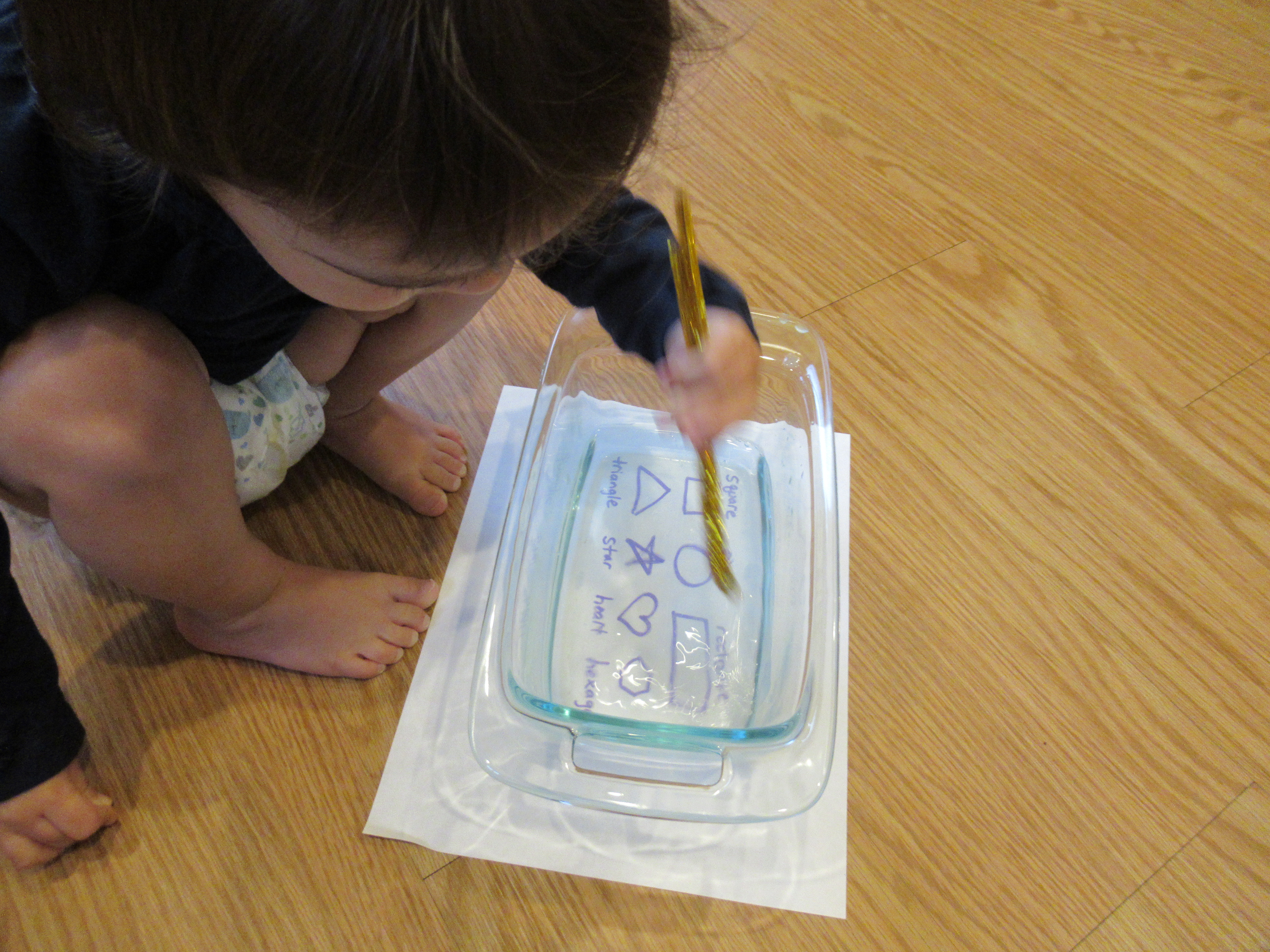
Place this piece of paper under any clear baking dish. Ideally use a large casserole dish, but even my smaller cake pan worked in a pinch. Fill the clear dish with a shallow layer of water. If your child wants colored water, go ahead and add a few drops of food coloring! But Veronika wanted to leave it clear.

Seek and Find Shapes Water (2)

Now, simply call out the name of a shape and your child can pinpoint it under the water! If you’re using a large dish, you could have a clear cup on top that your child moves from shape to shape. That wouldn’t fit in the cake pan, so Veronika used a shiny pipe cleaner as a pointer instead.

Seek and Find Shapes Water (3)

She aced this test in moments.

Seek and Find Shapes Water (5)

Even once we quickly ran through the shapes, she had so much fun looking at the shapes and swirling around the pipe cleaner for a while. Because as mentioned, toddlers always love water play!

Seek and Find Shapes Water (6)